Early Saturday morning found me in Capitola Village.
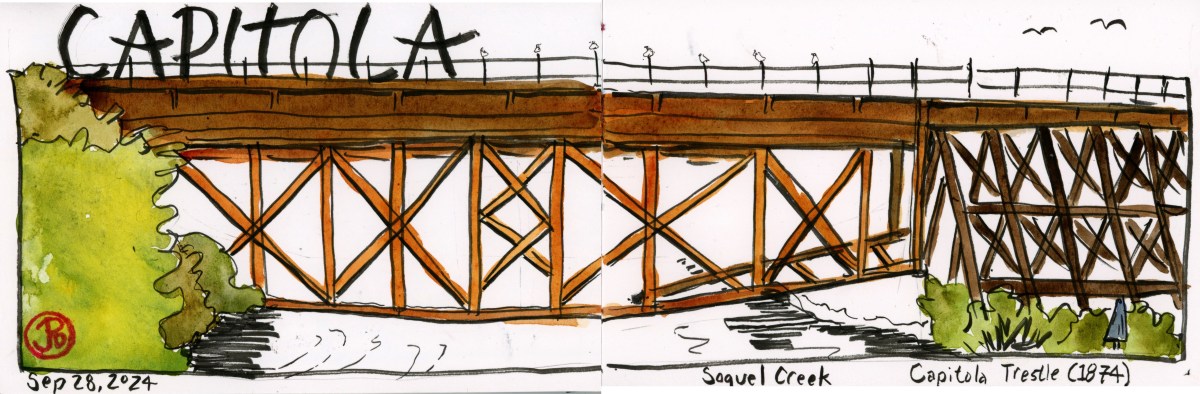
Capitola was founded in 1874 as a beachside resort and in the age before the personal automobile it owed its early popularity to the railroad.
The Santa Cruz Railroad, opened in 1876 and brought sun worshippers to Camp Capitola.
Southern Pacific took over the railroad in 1882. The SP brought beach goers to the small seaside town, passengers detraining at the new depot near the east end of the trestle, this location is known as Depot Hill.
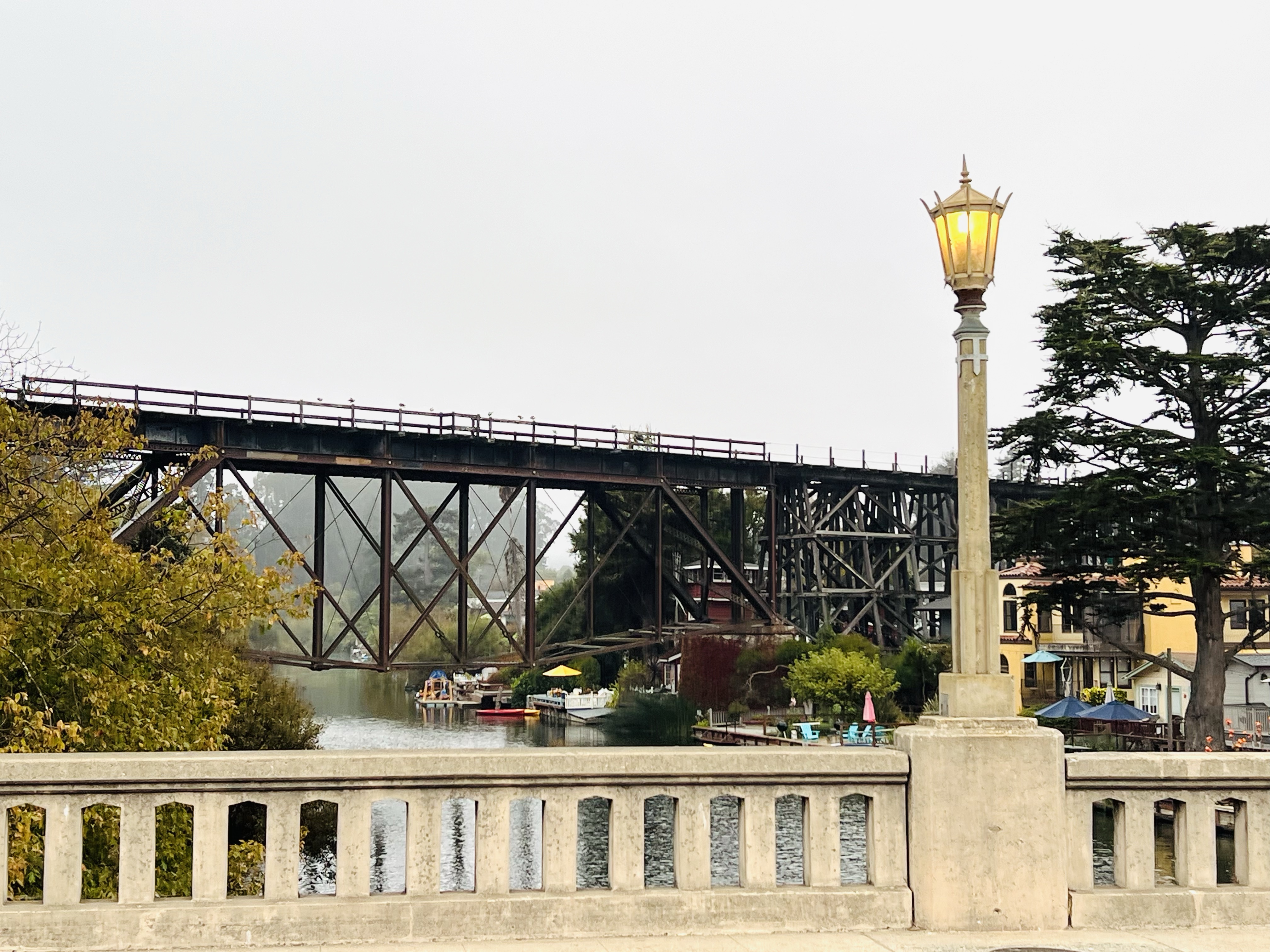
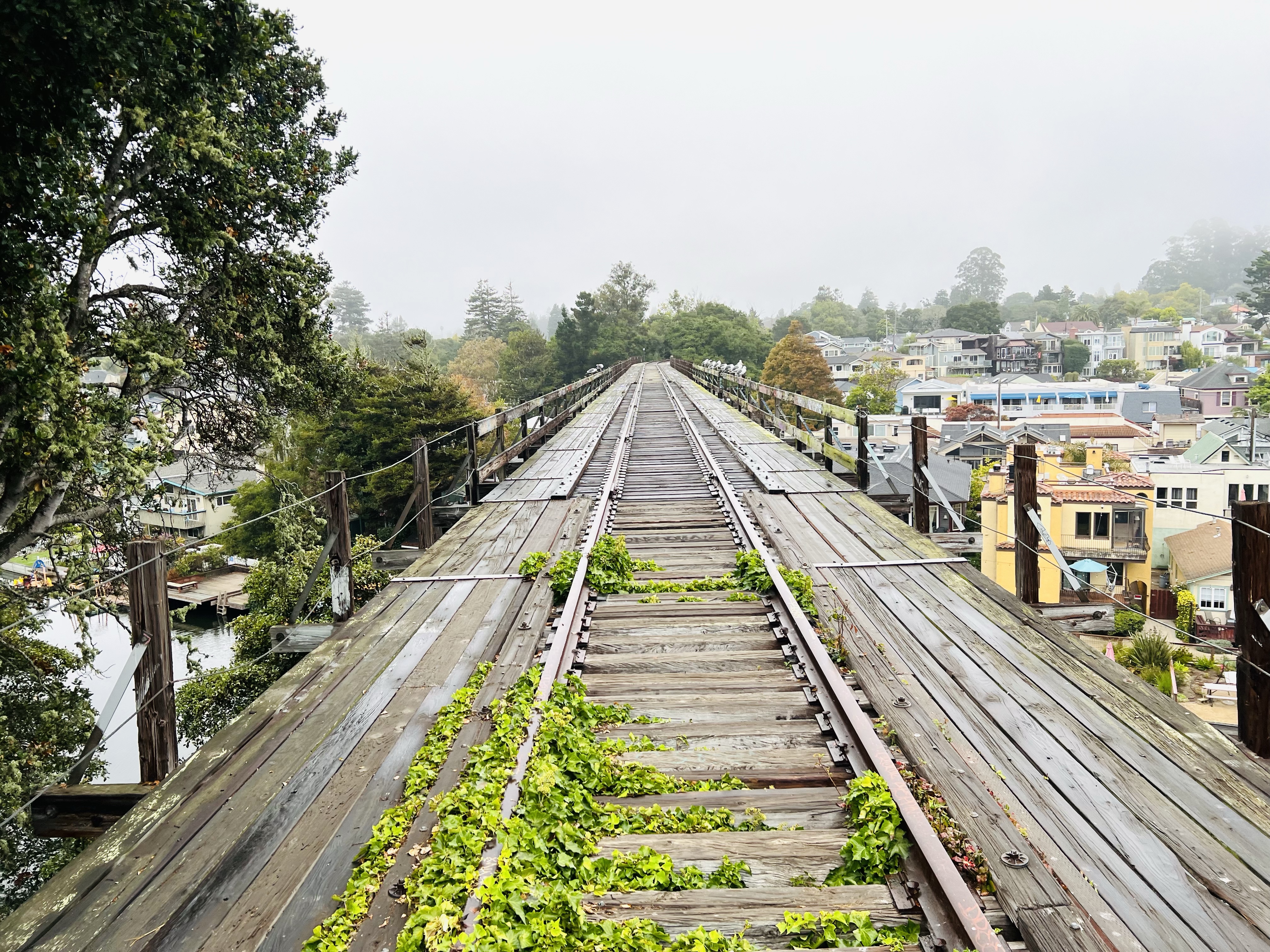
I chose my sketching position above Soquel Creek on the historic Stockton Avenue Bridge (1934) which parallels the trestle. The seaside air was wet with fog, I hoped it wouldn’t smear my ink drawing.
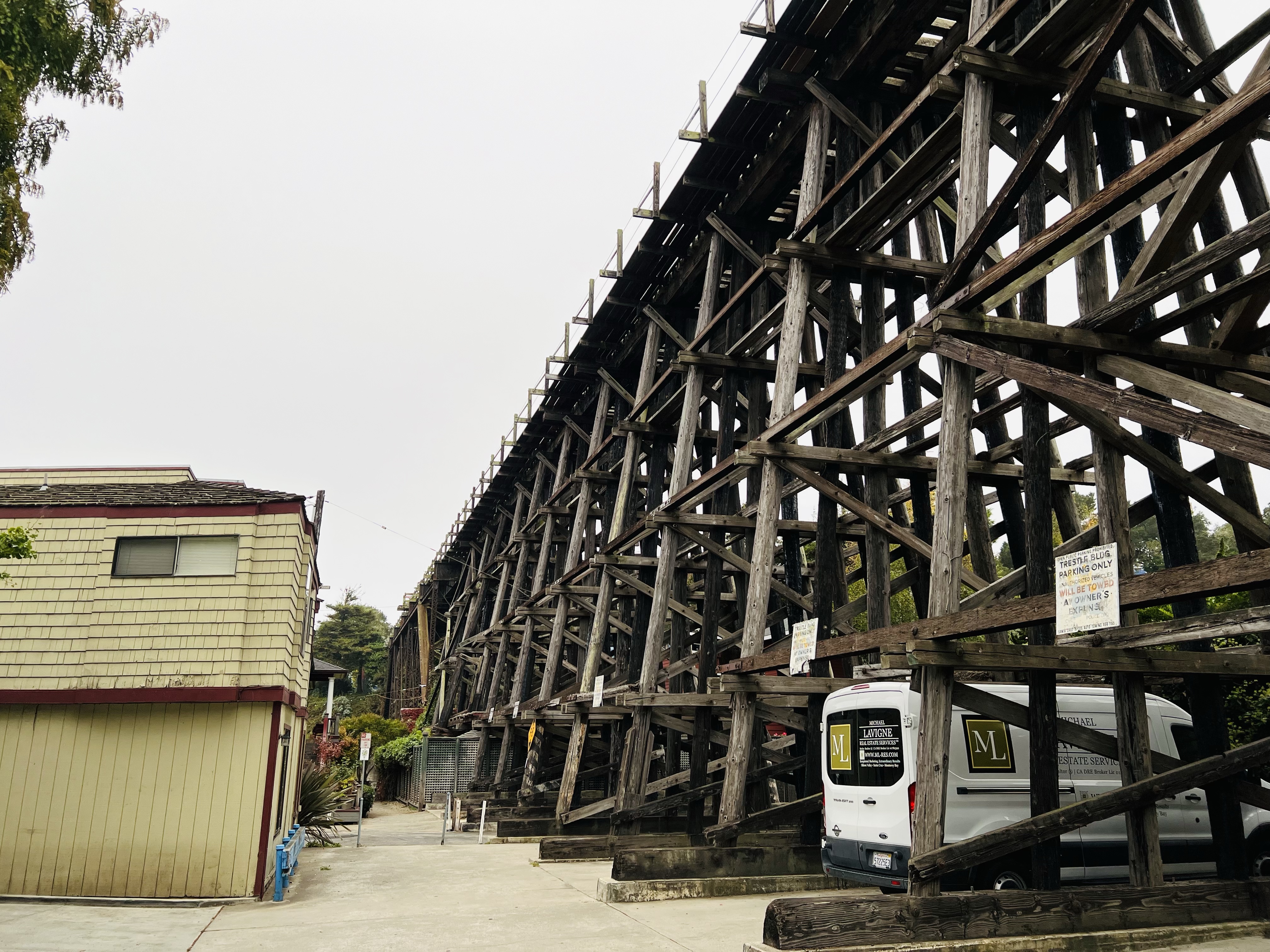
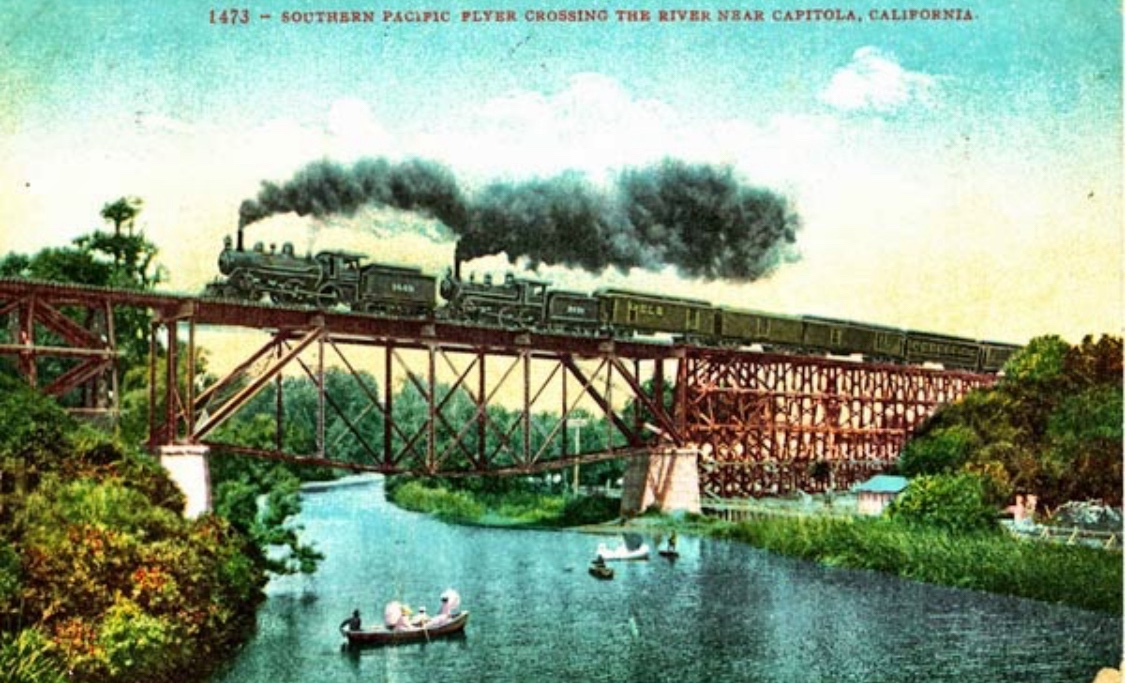
The wooden trestle over Capitola Avenue looking towards Soquel Creek. The Capitola Depot is about 100 yards behind me and up the hill. I have always loved the parking spots under the trestle (parking is a premium in Capitola Village).Colorized postcard (early 20th Century) of a double header passenger train with three baggage cars, crossing the trestle over Soquel Creek taking beach goers to Santa Cruz. This perspective is close to where I chose to sketch. Looking down the trestle in direction of the Capitola Depot and beyond, the connection to the mainline at Watsonville Junction (15.7 miles down the line). The green growth around the tracks shows this track has not been active in over ten years.
One of my Viking sketching targets was 20 minutes, as the train flies, from Copenhagen. This is the fjord-side city of Roskilde.
Roskilde boasts a cathedral where all the royals are buried, but I was here to see the famous Viking Ships of Roskilde.
It was easy to make my way west on Denmark’s very frequent and efficient metro and rail system. Everyone, if you are not already on a bike, rides the trains in Denmark.
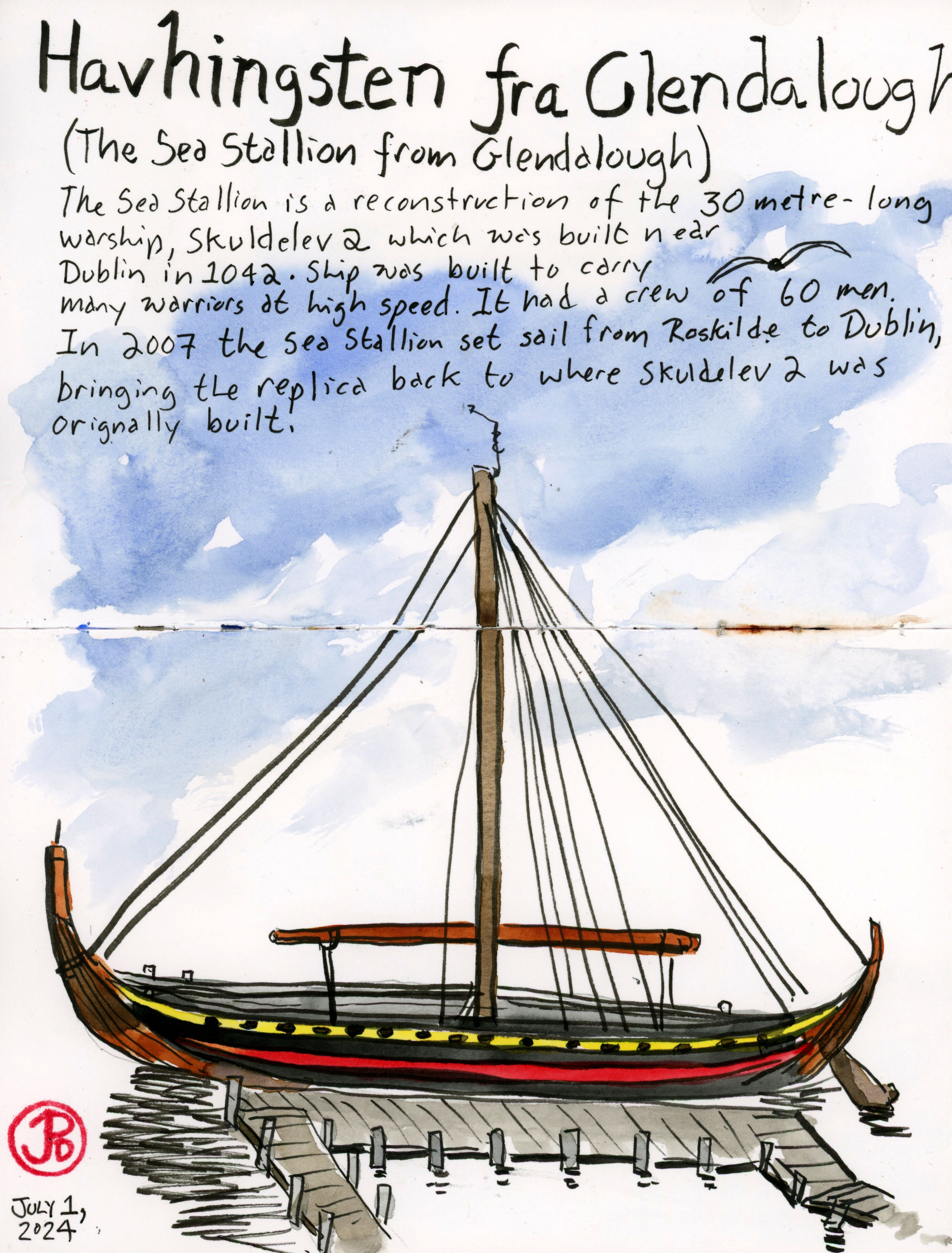
After a 20 minute train ride, I alighted at Roskilde Station and proceeded to walk north from the station to the Vikingeskibene. After about 20 minutes I came to the edge of the fjord and the Viking Ship Museum. The museum would open in 30 minutes so I sketched the Sea Stallion of Glendalough, a reconstruction of the long ship Skuldelev 2.
What’s amazing about the long ship before me is that is not just a show piece but a real sailing ship. In 2007, the Sea Stallion sailed from Roskilde to Ireland (where the original was built).
The harbor area around the museum is full of Viking ships, built with the ancient building techniques of the Viking age.
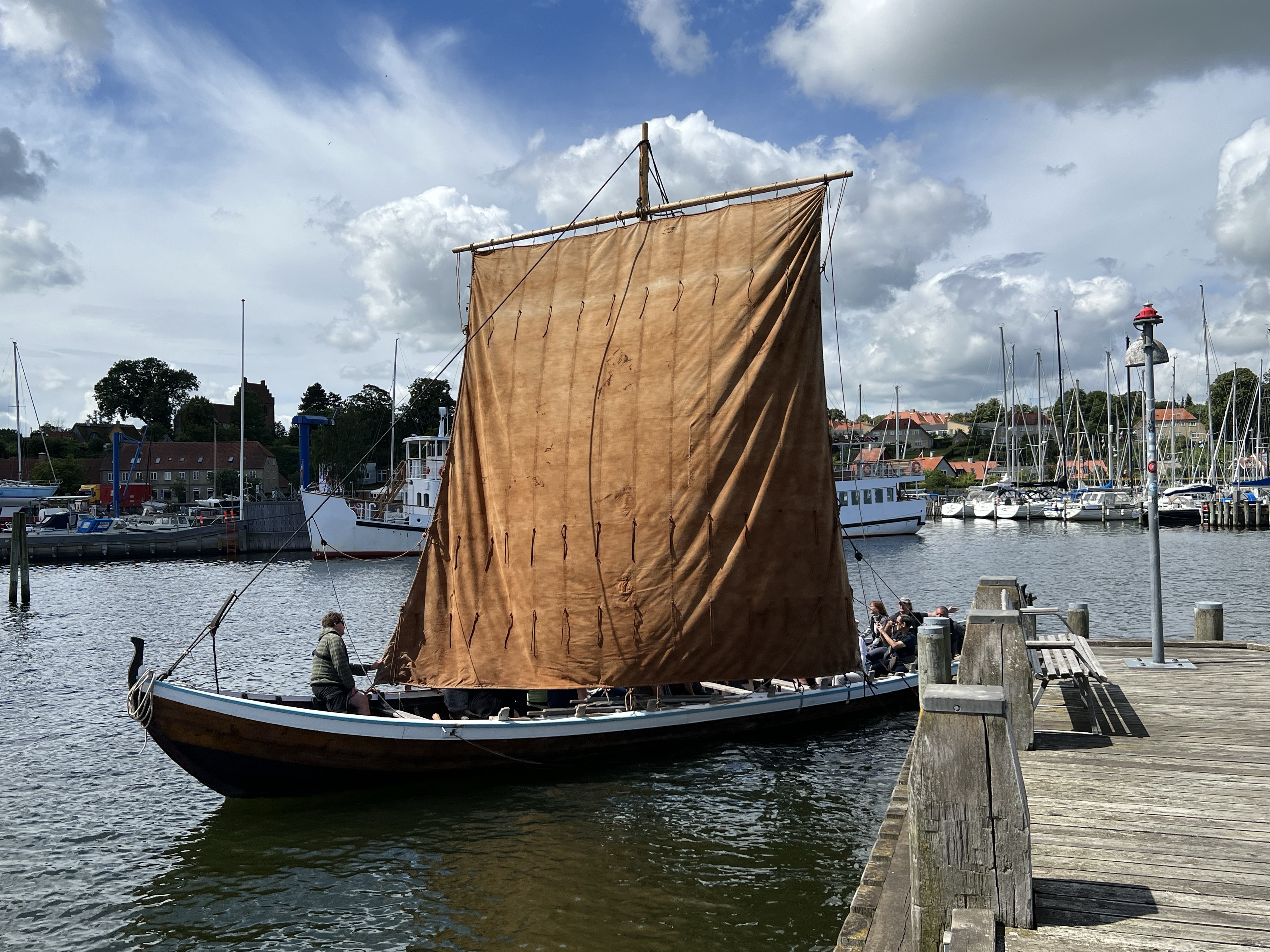
A replica Viking ship “Roskilde”, pulls into the harbor.
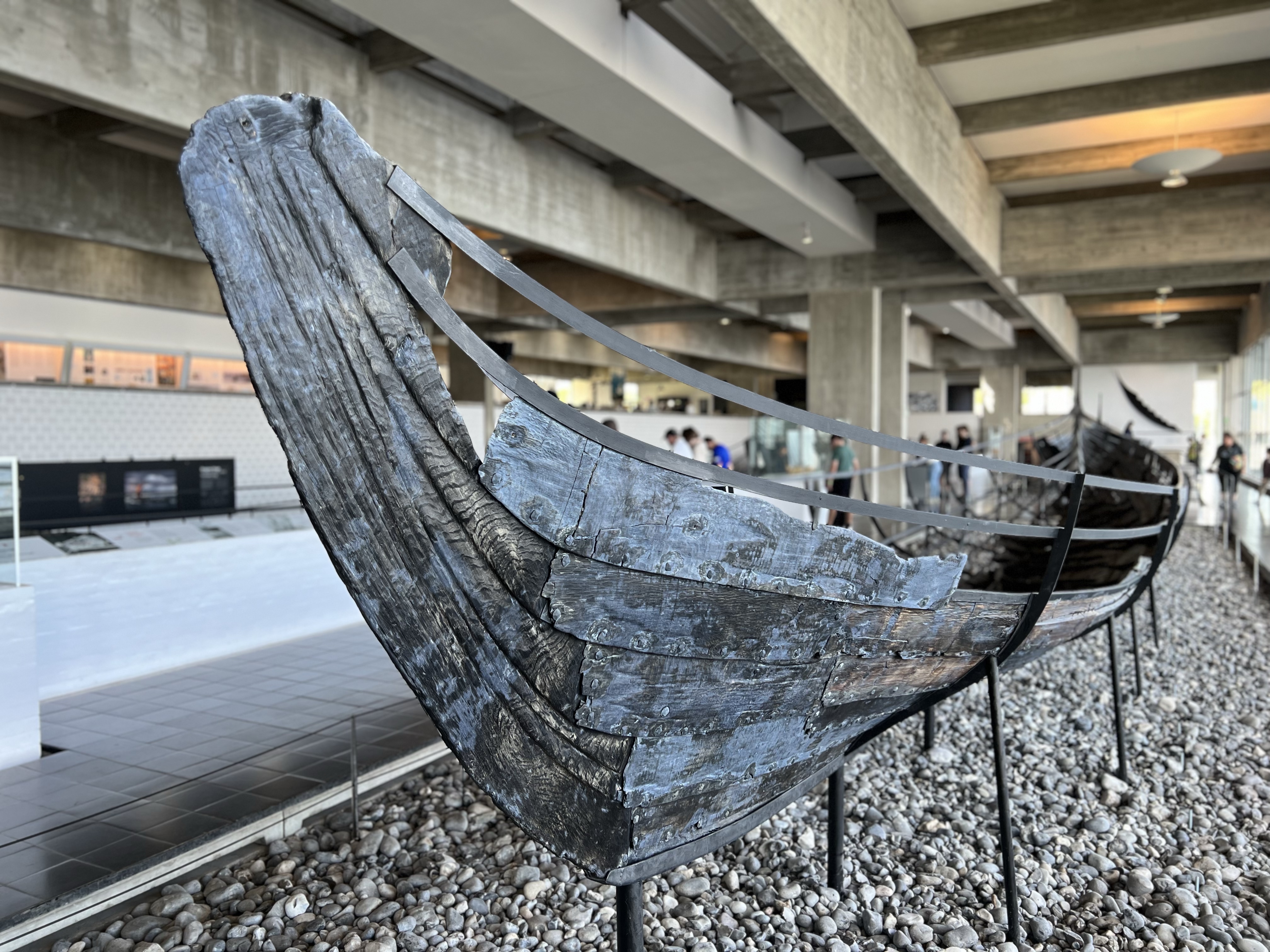
At ten, the museum opened and I was the first one in. The exhibit hall is impressive because it features parts of five Viking ships.
Why parts? Well these ships were deliberately sunk about 1,000 years ago to block a navigable channel that led to Roskilde. The ships were discovered in 1962. The most intact ship is about 75% complete.
The pieces are supported by a metal frame to give you the size and shape of the boats.
I sketched the ships from the top of the staircase, the perspective was challenging but you don’t always get to select your angles to sketch from.
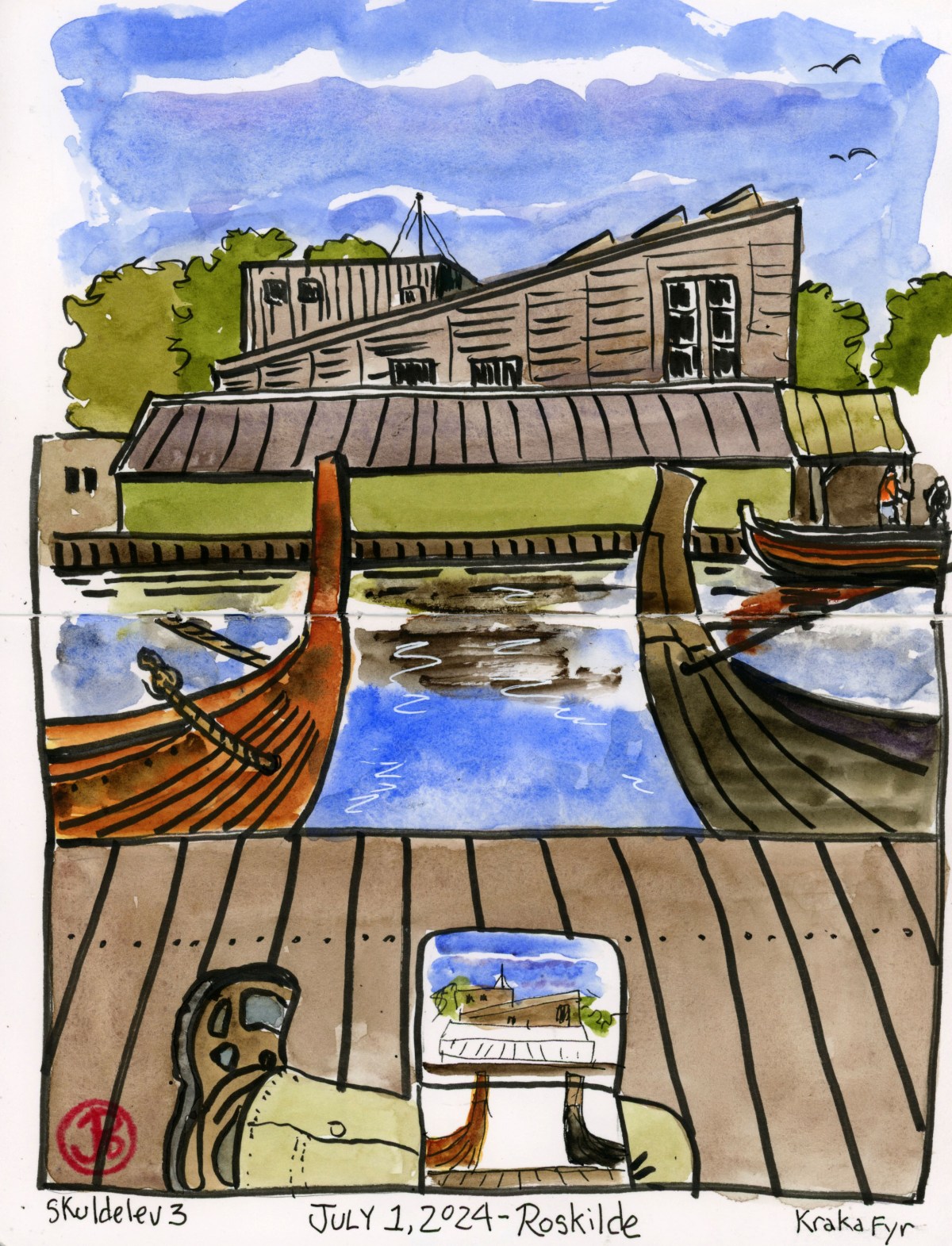
I then walked around all the ships noting the various sizes, including the impressive size of the King’s longship. I gave up trying to sketch the ships and returned outdoors to the bench where I sat before the museum opened. Now this was a perspective I could handle (featured sketch).
I think I produced my favorite sketch of my Scandinavian adventures. This was a fun perspective the draw and a sketch within a sketch self portrait to boot!
On Wednesday morning I took the T-Bane (the subway) out to see and sketch the Holmenkollen Ski Jump.
Public transportation in Oslo is so easy to use and you can get anywhere you need to go in or around Oslo. A few stops after Central Station we were no longer underground. Our train was not even on elevated tracks like the Bay Area’s BART. Indeed the 1 train was running at grade level with an exposed third rail! You got to love a people that can deal with accessible high voltage without doing something stupid.
The ride was pleasant with even crossing gates (for a subway!!) and as we climbed the hill towards Holmenkollen, the views of Oslo Fjord were stunning.
The little suburban stations that passed by reminded me of British branch line stations, small but homey. After about a 20 minute ride, I detained at the station and then walked 10 minutes up hill to the ski jump.
In someway this journey was a pilgrimage for my father, he introduced me to skiing and some of the best memories of my life are skiing with him over fresh powder. I really own my life to skiing because my parents met at the South Bay Ski Club.
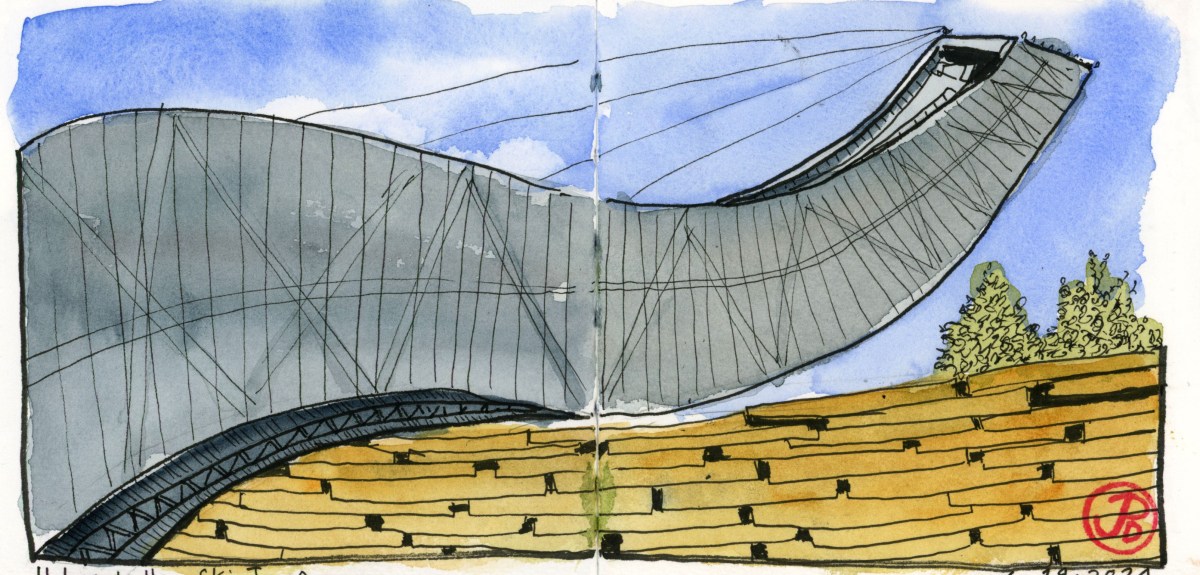
The Holmenkollen Ski Jump is a functional work of art. When I first found a vantage point I had to add its serpentine curves to my sketchbook. (Featured sketch).
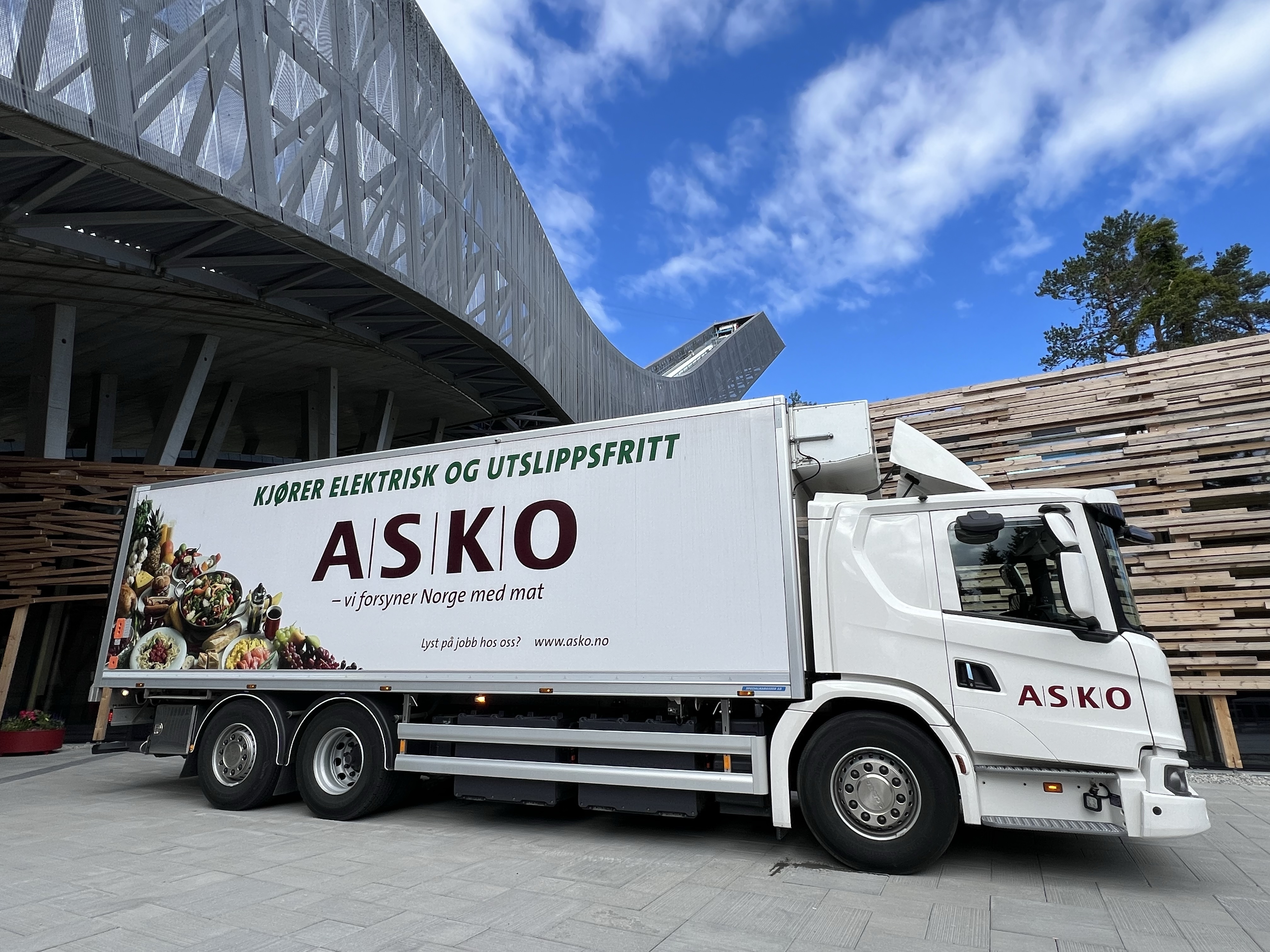
Best laid plans: this truck backed into my sketch so I had to patiently wait to finish my sketch.
After my sketch I visited the oldest ski museum in the world. For some reason it was under-lit as if the museum was in the possession of copies of the First Folio. It did not make for good sketching light.
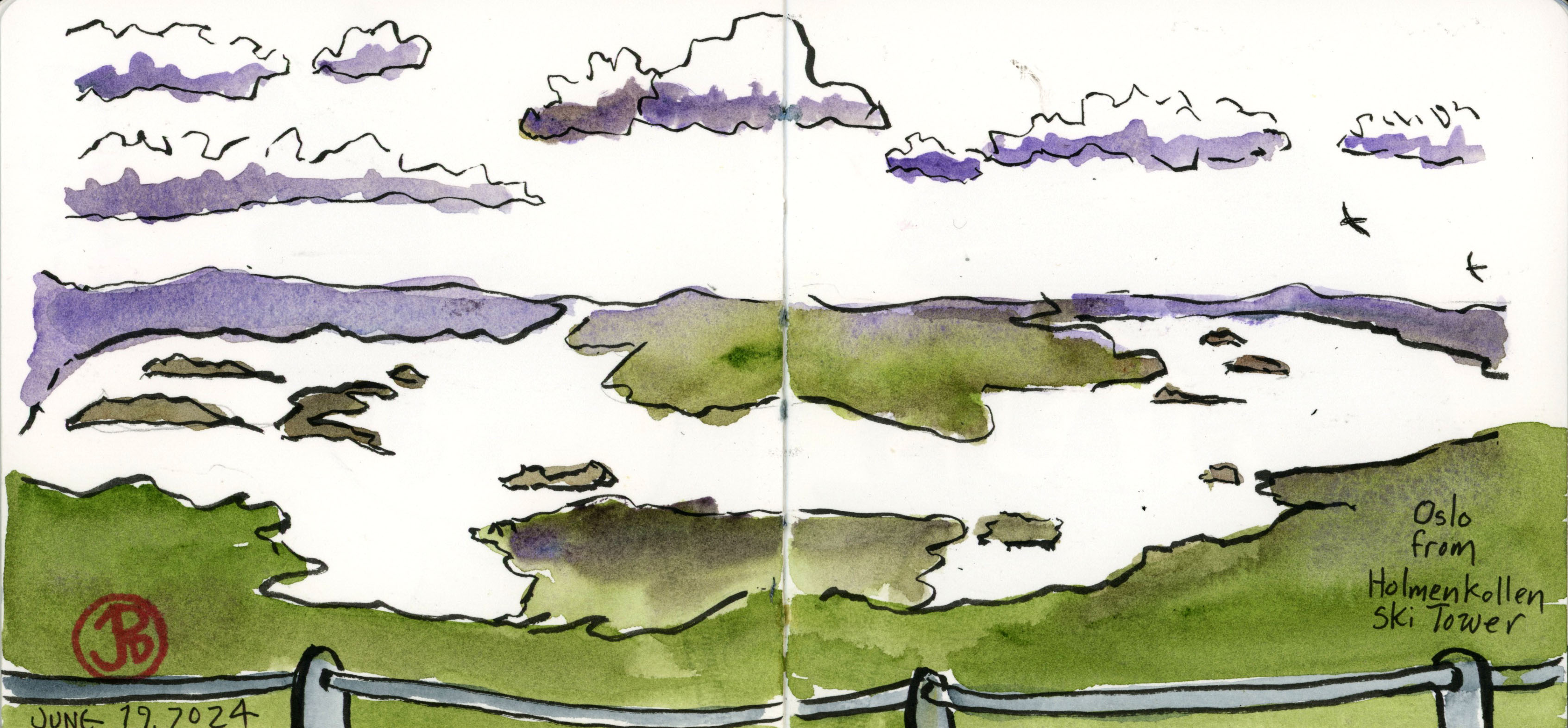
Can’t beat the view!
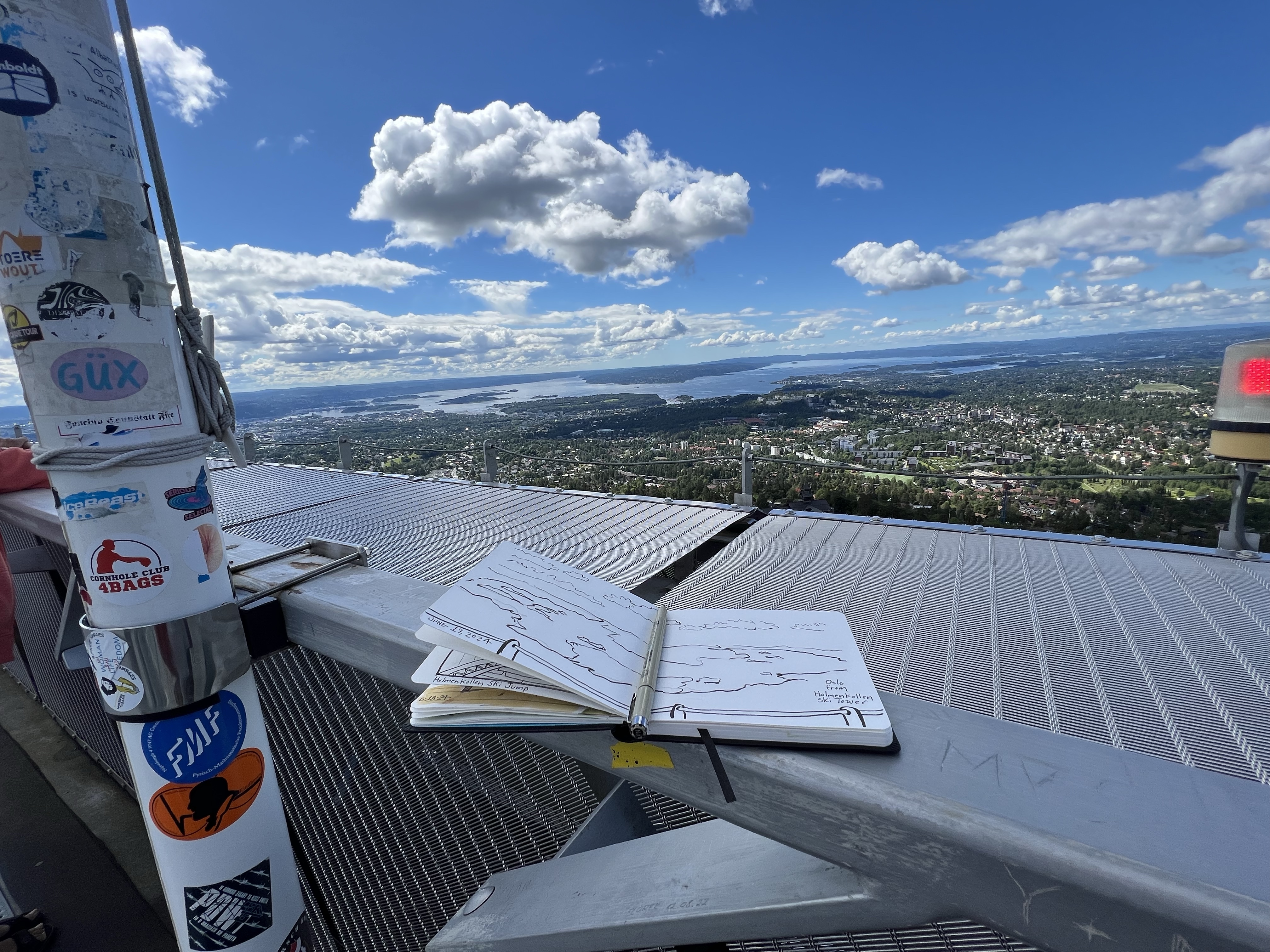
I took the elevator to the top of the ski jump and the views of Oslo Fjord were stunning. So I had to sketch it of course.
A lot of sketcher’s shorthand was involved in this one. I left out all of the buildings, as I was really just trying to focus on capturing the form of the fjord and islands. This is a landscape not a cityscape.
Vigeland park is one of the largest outdoor sculpture parks in the world. All of the sculptures are by Norway’s Gustav Vigeland.
This park is not for the prudish as it’s pure nudity in stone. There are over 200 of Vigeland’s sculptures and it can be an overwhelming place to visit for two reasons: first the sheer size of the collection, the unclothed human form in all sorts of poses and positions and secondly, Vigeland Park is one of Oslo’s top tourist sites. Tour buses disgorge camera-snapping hordes into the park and it’s hard to spend quality time with the art as you can be preoccupied with dodging selfie takers while trying not no wander into someone shot, well maybe I did a few times with purpose!
The plus side of sketching is that you don’t have to wait for the groups to get out of the way to do a sketch. Sometimes I even include them, for scale of course, in my sketch.
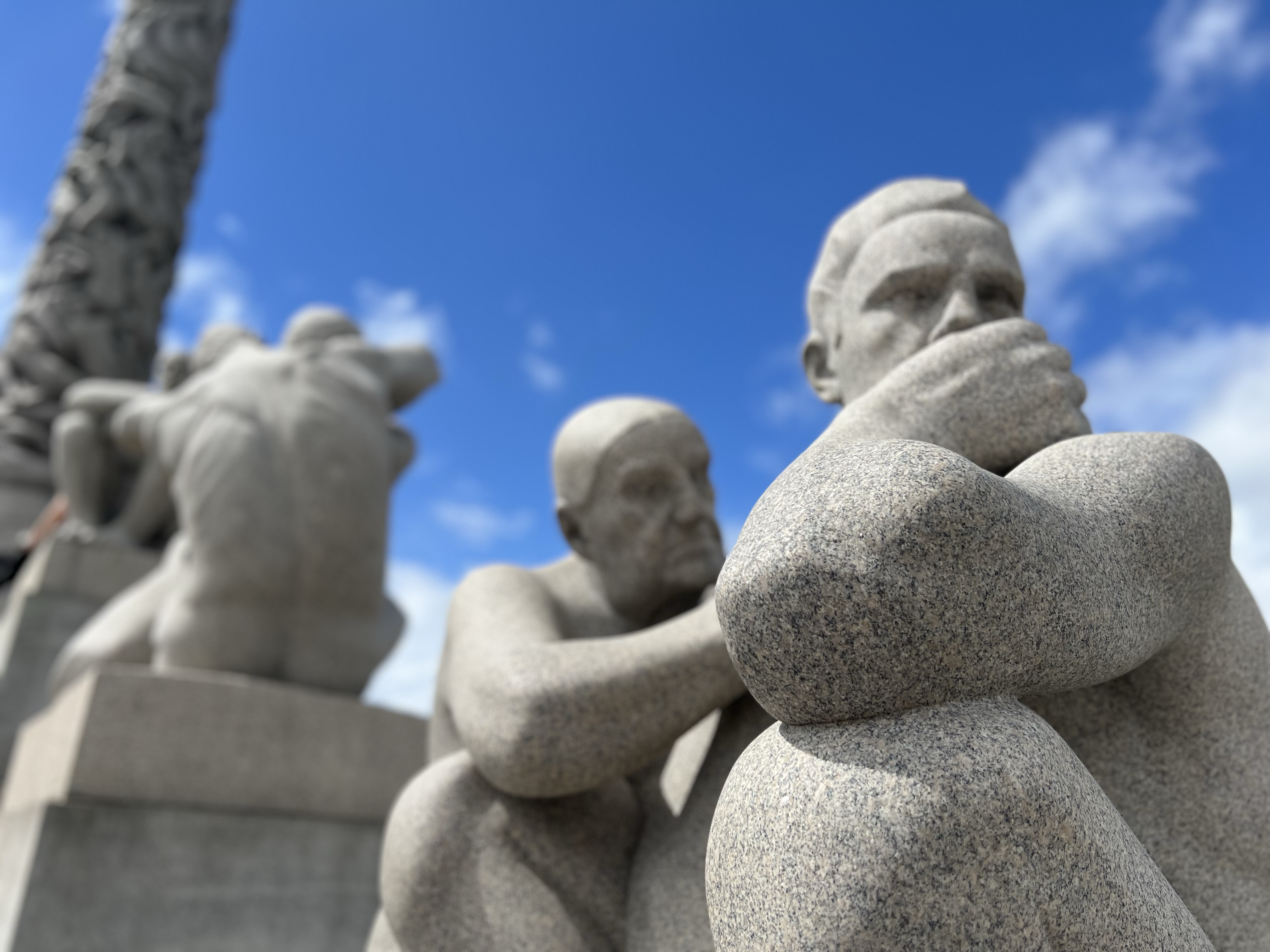
Vigeland Park is really a sketcher’s paradise. So many unmoving subjects everywhere you point your sketchbook.
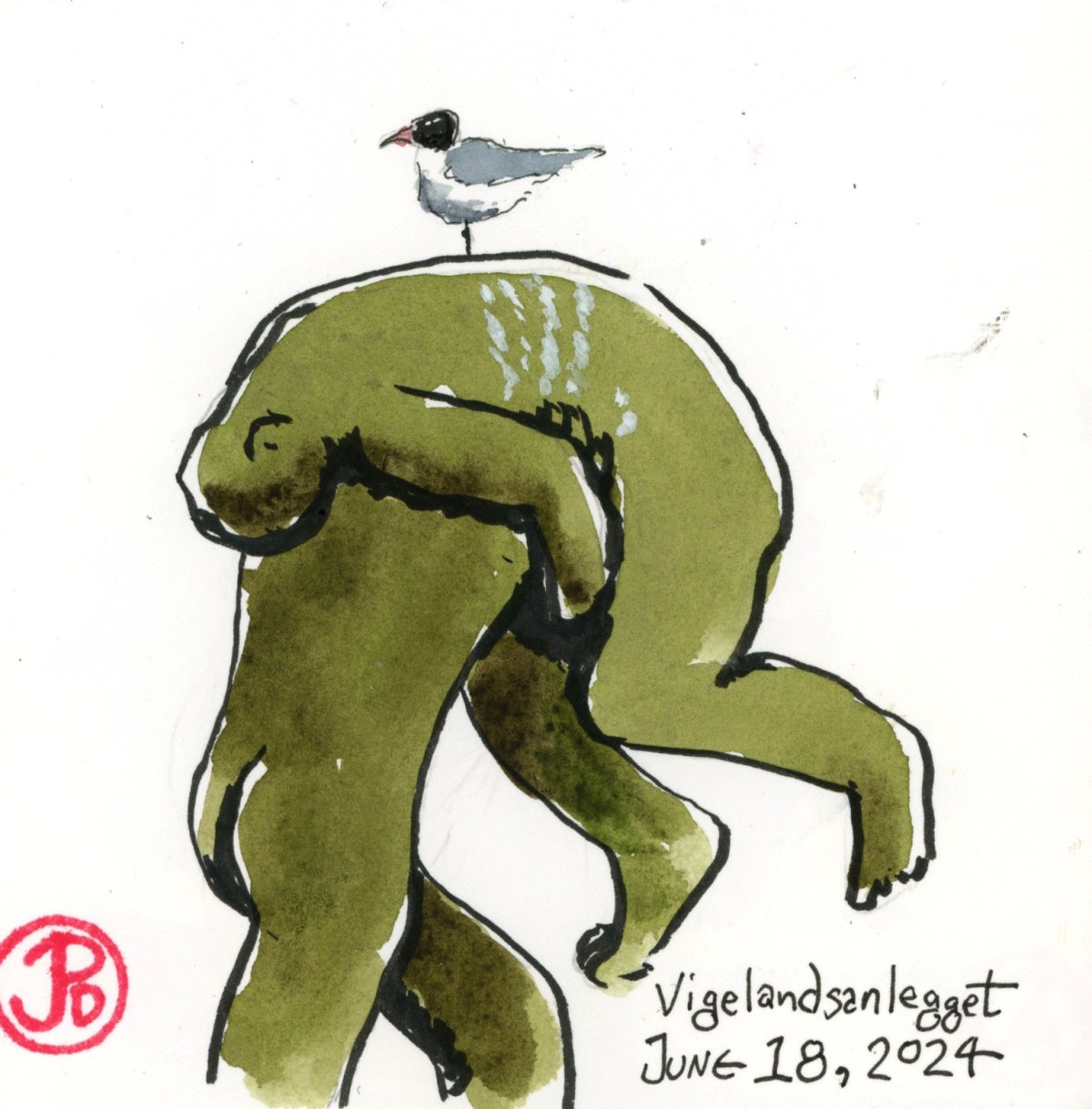
I did three sketches in my two visits. Your constant companion is the park is the black-headed gull (more brown-headed). So I felt I had to include one in a sketch. To these gulls, this elevated art is simply a nice perch and the level of white-wash on the sculptures also turns the gulls into art critics.
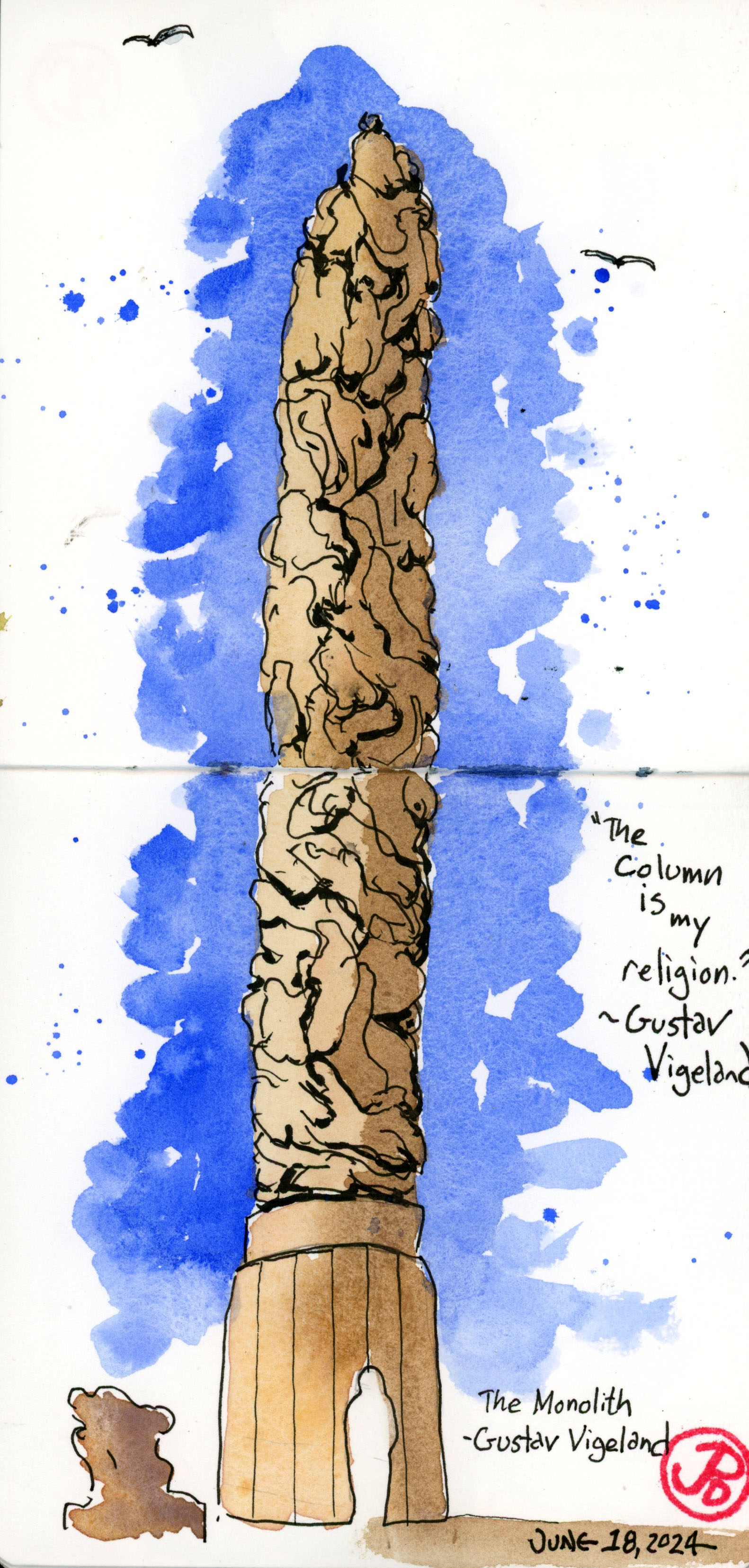
At the highest point is the Monolith. This tower humans was carved out of a single piece of granite and two 20 years to finish.
While sketching the Monolith, I kept it loose, knowing that I was not going to draw every single human figure in the column. I just want to make a suggestion to the viewer without filling in every detail. In the end I am happy with the approach.
Some of the sculptures around the Monolith are very moving; so very human. I could sketch in this park for years and always find new subjects.
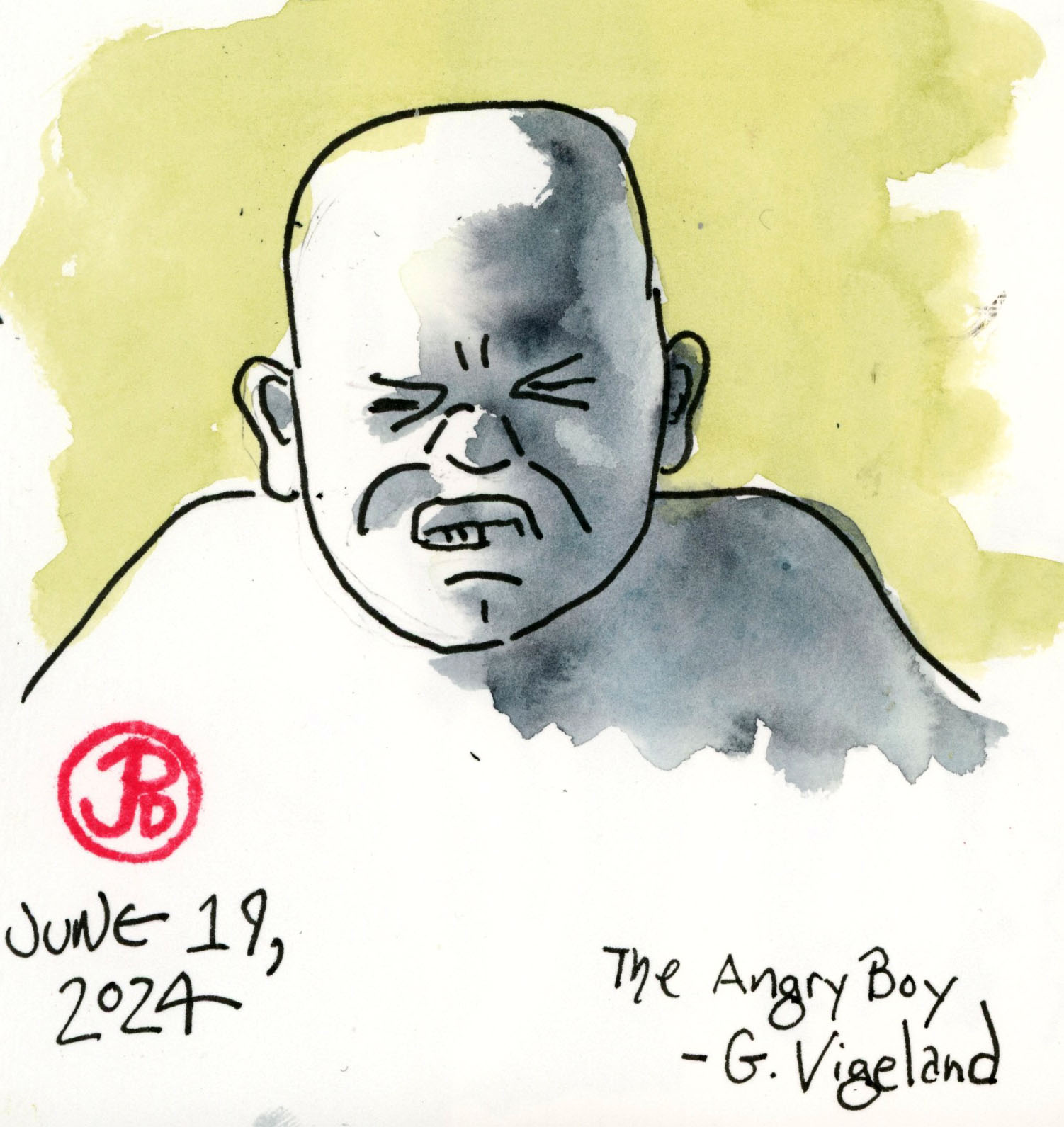
One of the most popular sculptures in the park, the number one sculptures most visitors want a selfie with is the Angry Boy. I sketch a version of the sculpture at the Vigeland Museum, near the park. This Angry Boy is not have a line in front of it so I was able to get a sketch in.
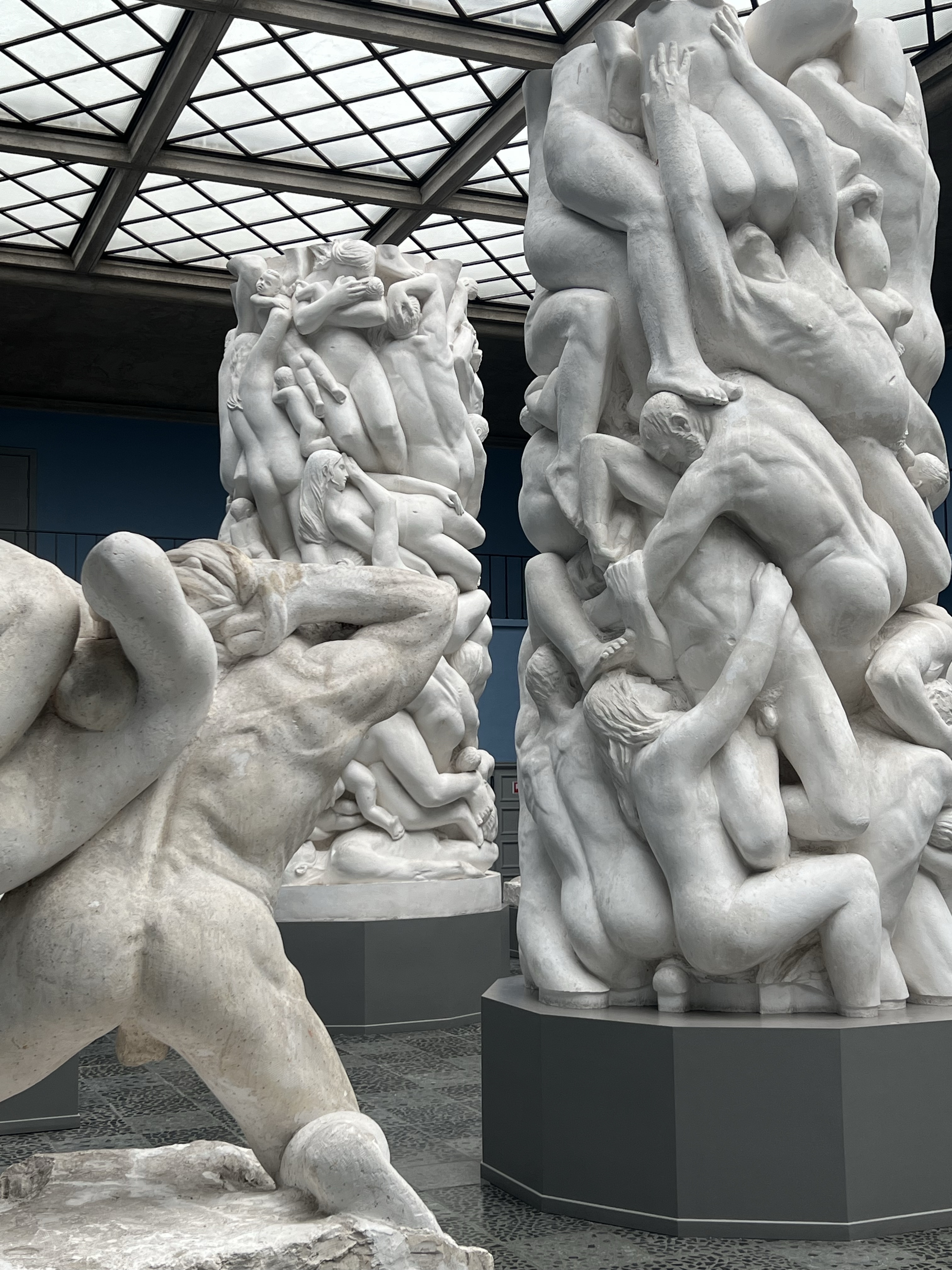
Sections of Monolith at the Vigeland Museum in Oslo. This museum gets much less visitors that the adjacent park.
High on my sketch list was the traditional stave church at the Norwegian Folk Museum.
I took the first Bygdoy Ferry to the peninsula to visit this very popular outdoor museum, which is Norway’s largest outdoor museum.
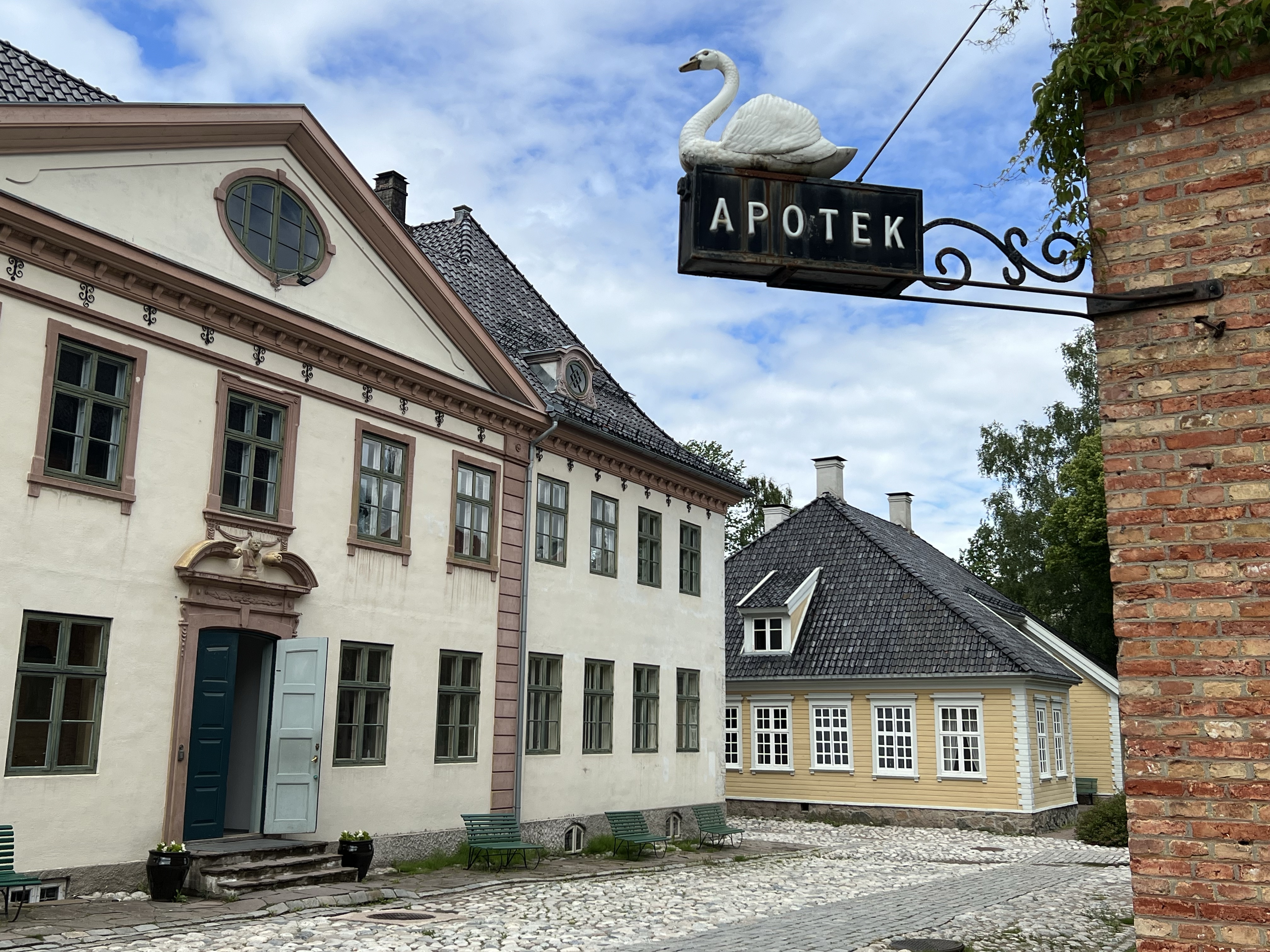
The museum has over 140 buildings from different regions of Norway spanning an impressive span of time.
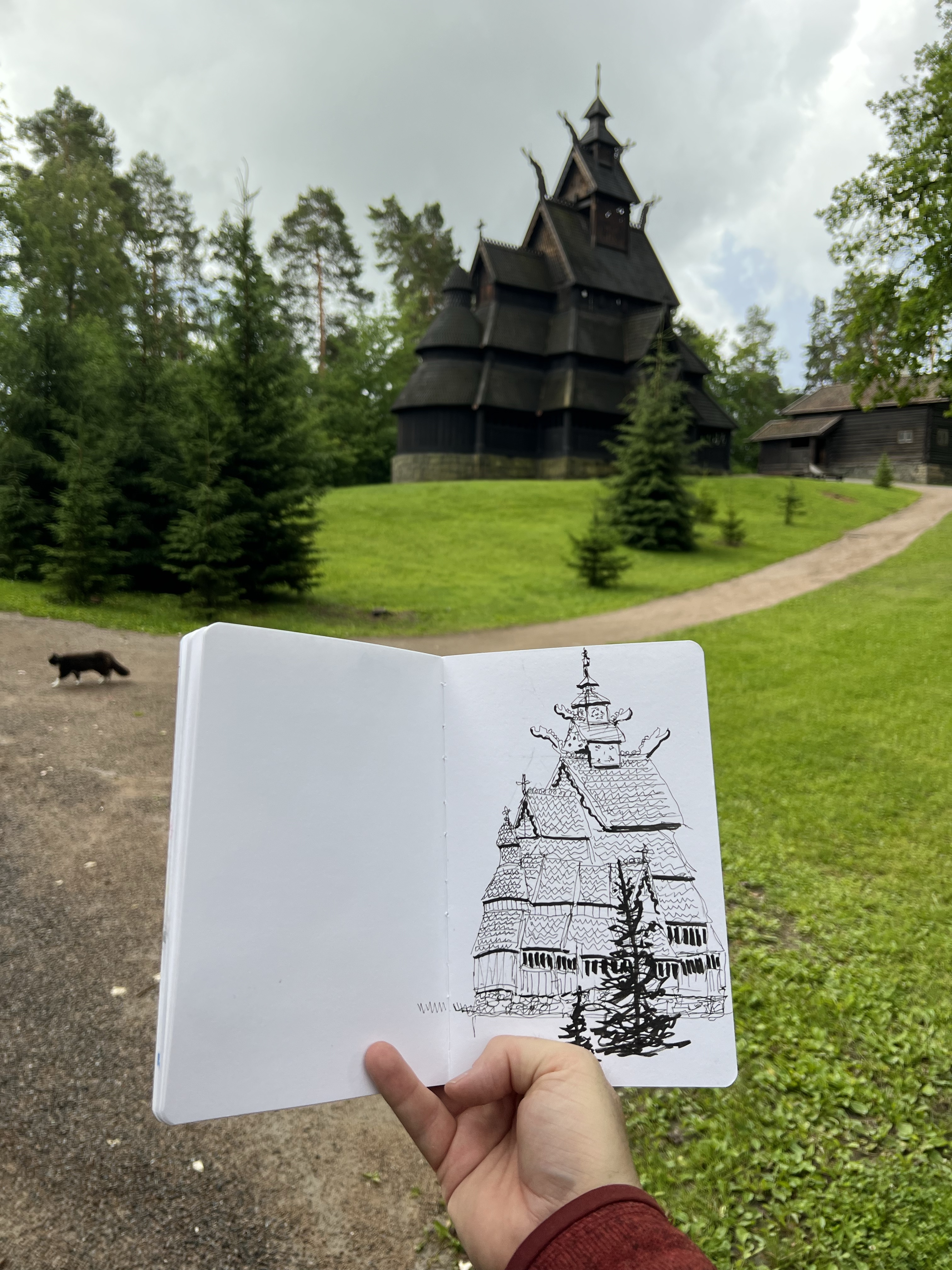
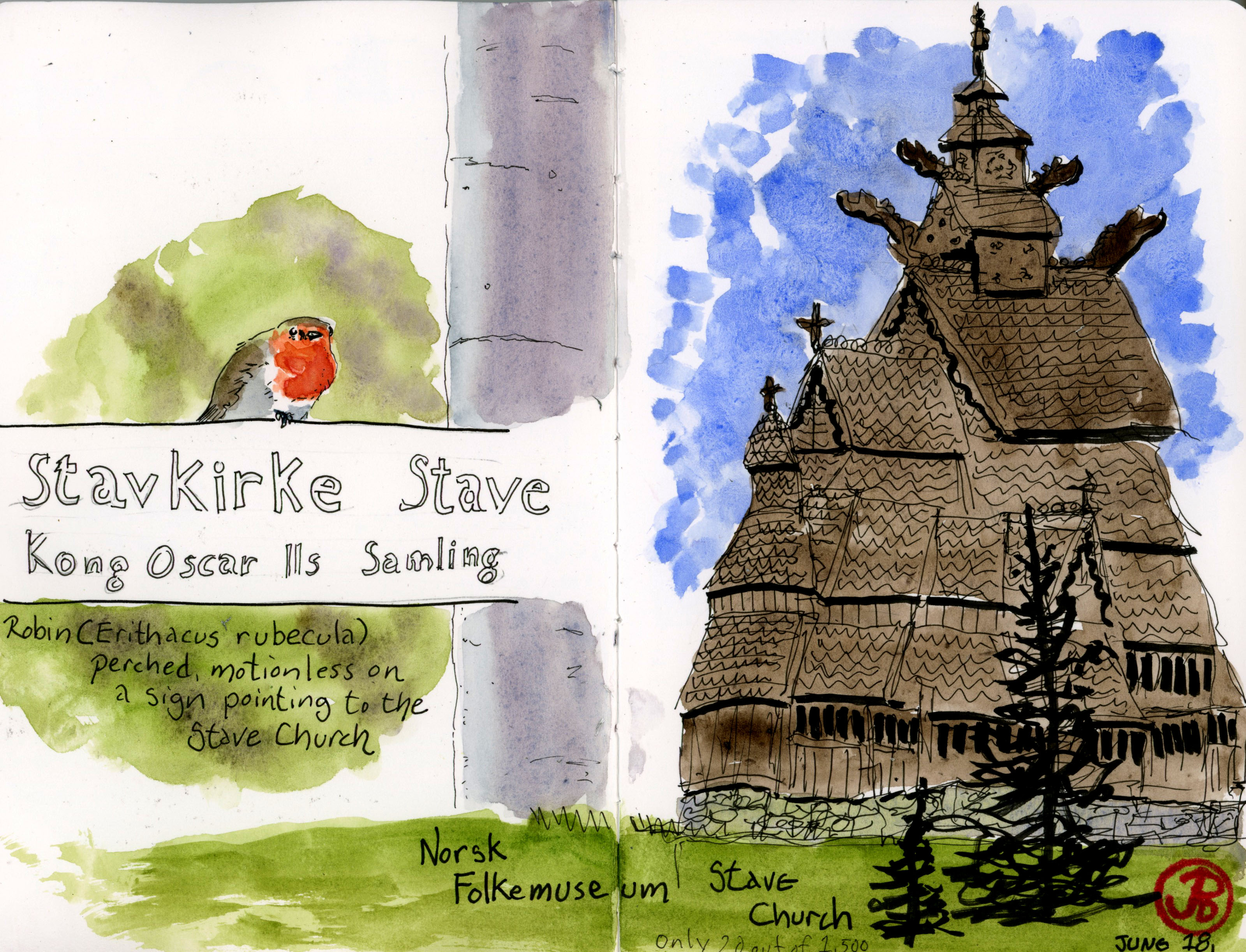
Once the gates opened at 10, I made my way to the stave church, using the map to navigate the large trail system. The church was so full of detail that I went with a very loose style, not focusing on every single shingle but choosing the form of the church.
Church, sketch, and a photobombing cat.
After my sketch I headed to another section and on the way I passed a robin statue-still on a sign. I was almost fooled into believing that this was a wooden carving until the red breast burst into life and shot off to forage in the underbrush. I add this experience to the other side of my spread.
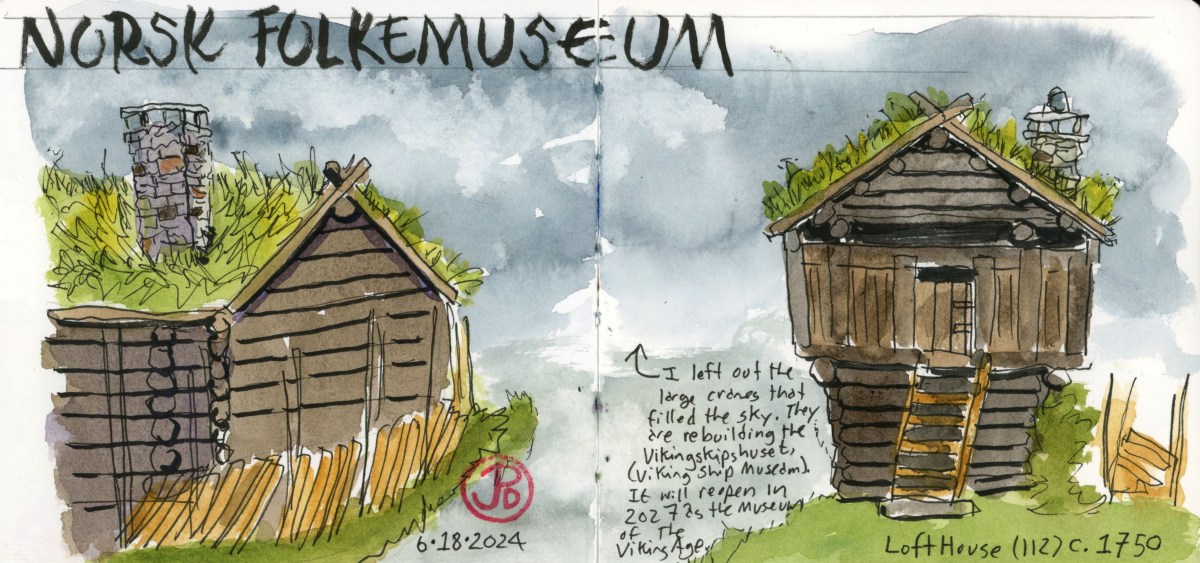
I found a collection of house farmsteads with a living roof of green so I found a bench and started sketching. My sketch was interrupted by rain so I had to finish my sketch in stages while retreating to a nearby house.
For this sketch, featured sketch, I used a little real-time editing. Behind the buildings, huge cranes reached into the air, shattering the feeling of time travel and firmly placing me back in the 21 Century. The cranes where above the site of the Vikingshipshuset (Viking Ship Museum). This museum has one of the most iconic preserved Viking ships in existence, the Oseburg Ship. The museum was closed in September 2021 for a complete renovation. The new museum will reopen in 2027.
This section of the museum felt like I had travelled forward in time from the last two buildings I sketched. I was traveling from Norway’s rural countryside to more developed towns.
Sounds like I need to make another visit to the Bygdoy Peninsula some time in the future!
Oslo is a city coming into its own as a modern Scandinavian city. The architecture around the city center is modern and I wanted to add this newer side to Oslo to my sketchbook.
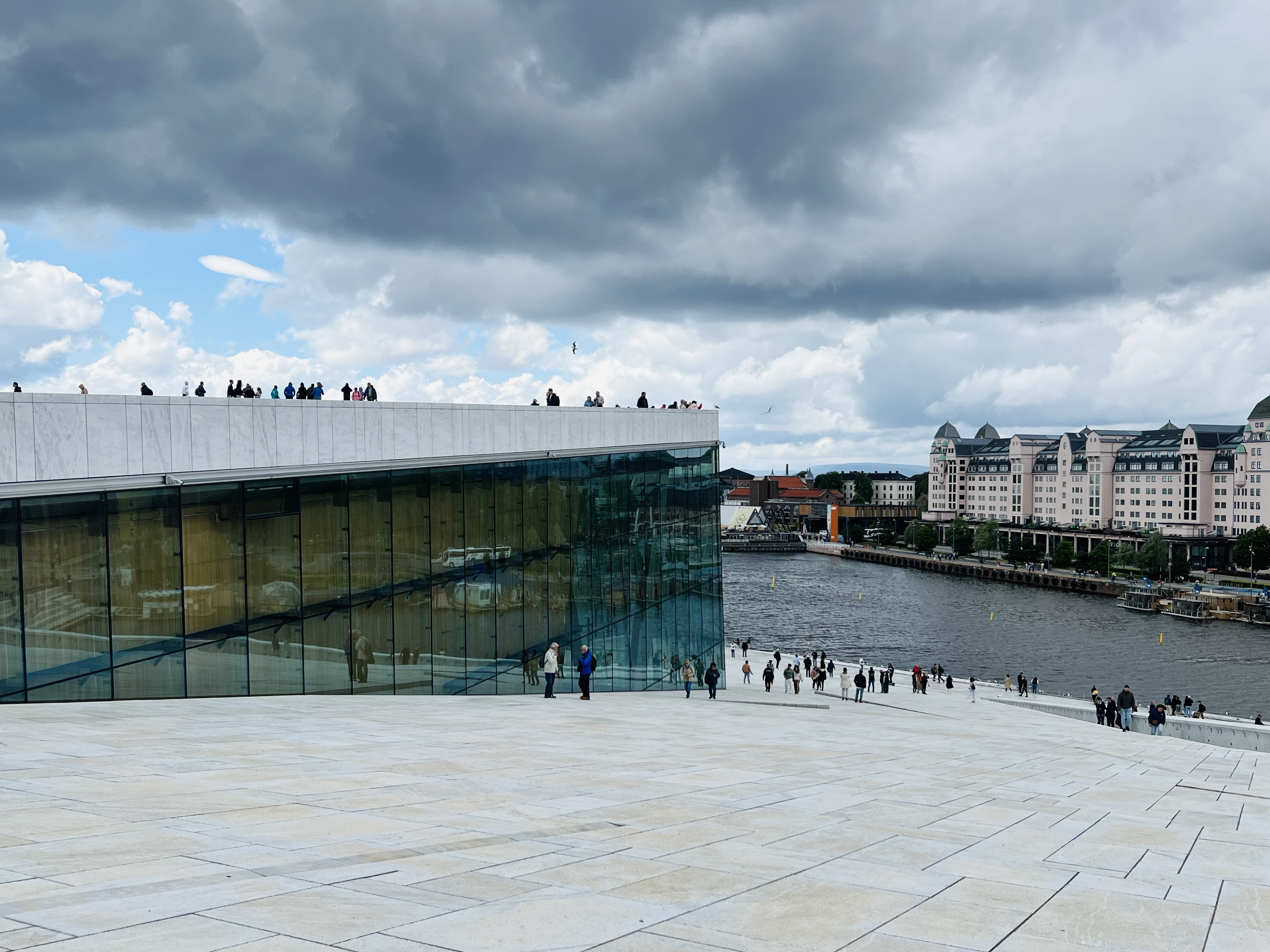
Nothing says modern Oslo more than its glacial Opera House. The innovative design lets you walk up the sloped roof for great views of the cityscape and the fjord.
The architectural glacier that is the Oslo Opera House. You can walk up onto the roof for city views.
Another modern building that made it into my sketchbook is the Munch Museum. This museum is dedicated to the works of Edvard Munch, best known for creating the second most famous painting in the world: The Scream.
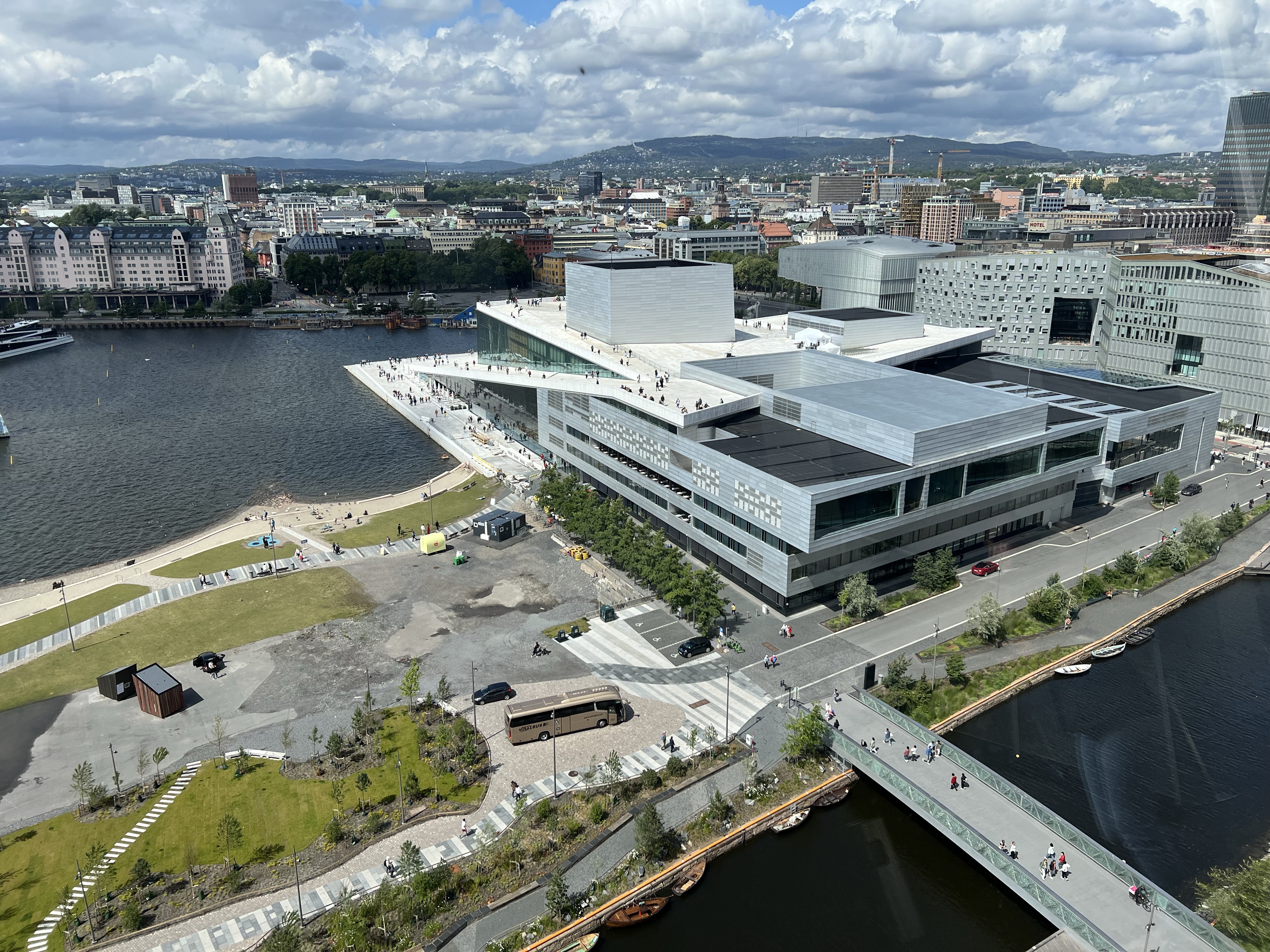
The new Munch Museum was opened in 2021 and the view from the top floor is amazing.
The view from the Munch looking down on the Opera House.
I found a perspective to sketch the museum with a garden and sculpture in the foreground. The 2022 sculpture in title The Mother by Tracey Emin.
When I travel I prefer to stay in a rented apartment rather than a hotel. While a hotel may feature a central location, an apartment puts you in a lively and living neighborhood like Grünerløkka.
Grünerløkka is a hip and lively neighborhood northeast of the city center. Once a working class neighborhood “Lokka” is now a Bohemian enclave full of cafes, bars, restaurants, and vintage shops.
The Paulus Church sketched in the rain from my local park, Birkelunden Park.
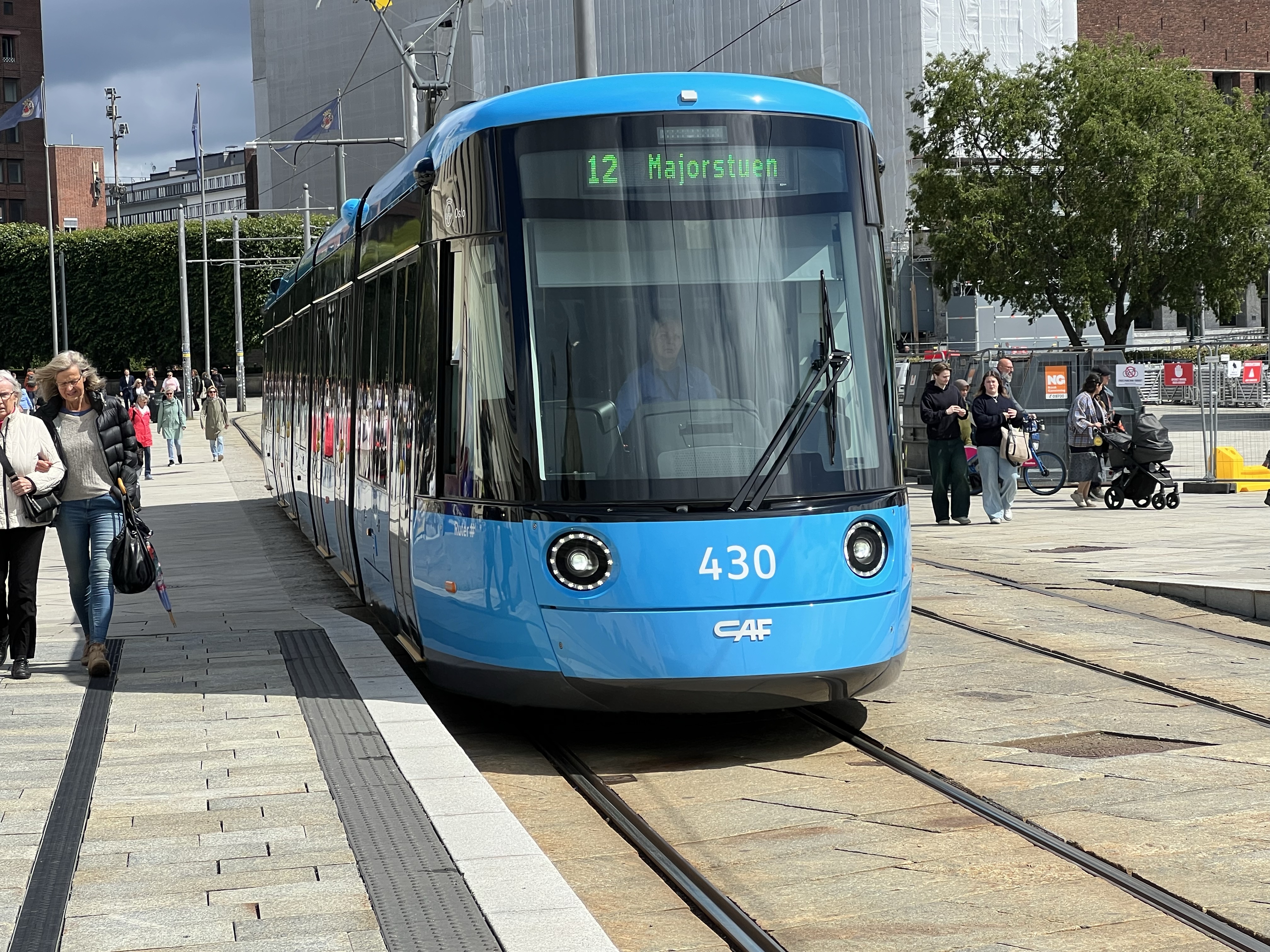
It was a short walk across Birkelunden Park to the tram stop. The lines 11 and 12 took me to Central Station. The 12 was my lifeline while in Oslo.
The 12 also took me to the ferry terminal for the boat to the Bygdoy Peninsula and the Fram, Kon-Tiki, and Norwegian Folk Museums. If I stayed on the 12 a bit longer, it stopped at the entrance to the sketcher’s paradise: Vigeland Park.
The other bonus of my Grünerløkka apartment was the restaurants, bars, and cafes that were a short stroll from my digs.
One of my favorite places to relax in the afternoons was just a half a block away from my Oslo stay. This is Grünerløkka Brygghus. I loved to sit on the cobblestones enjoying a local cold one as the trams passed by, a few feet from my right elbow. So I did a sketch of it (featured sketch).
I live a hop, slip but not even a jump from San Francisco’s largest reservoir: Sunset Reservoir.
This terminal reservoir was completed in 1960 and has an impressive capacity of 270 acres. To put this into context the sides of the reservoir are four blocks north and south and two blocks east and west. The surface area is 11 acres.
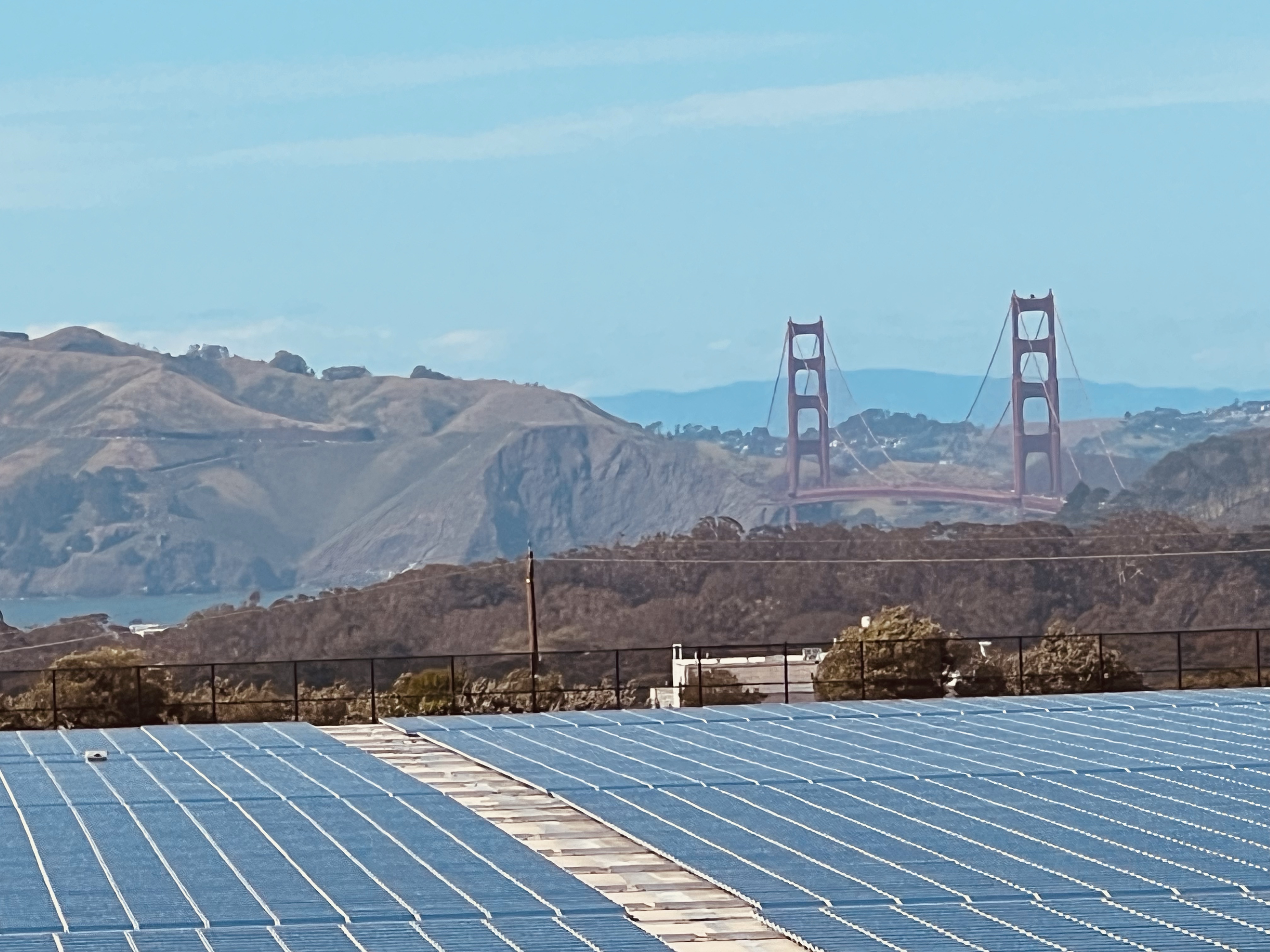
The reservoir is covered and fenced off. Over half of the reservoir is blanketed in 25,000 solar panels. The Sunset Reservoir Solar Project started in December 2010 and has tripled San Francisco’s solar generation capacity.
The irony is that the Sunset is the foggiest part of the city.
Some of the 25,000 solar panels of Sunset Reservoir.
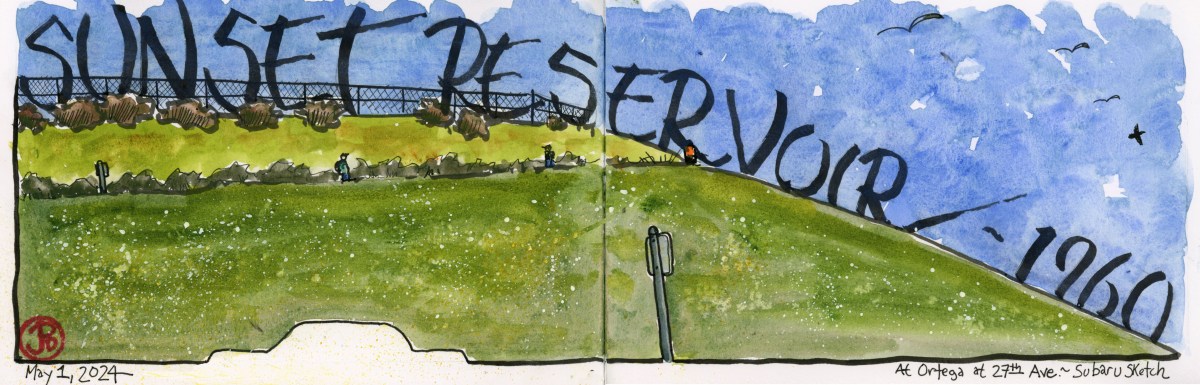
While the reservoir itself is not a sight to behold, the northwest corner (featured sketch) affords some of the best views in the Sunset. Along the embankment are walking paths and at the northwest corner are a line of benches.
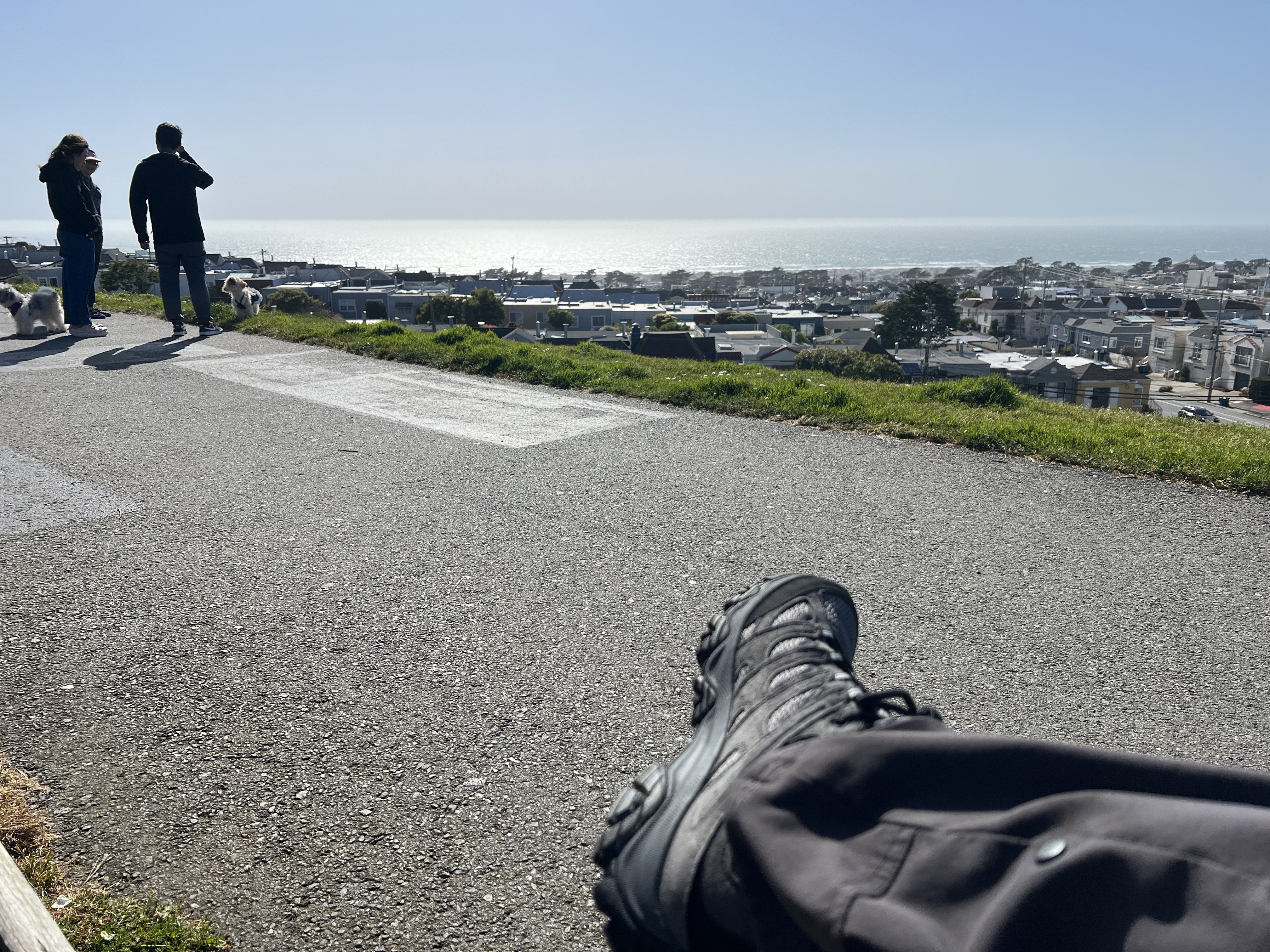
The bench-view to the north. I can almost see the Farallons. These paths are popular with dog walkers.
Here you can look out to the west towards the Pacific Ocean and on a clear day, you can see the Farallon Islands perched on the horizon like a large, gray battleship.
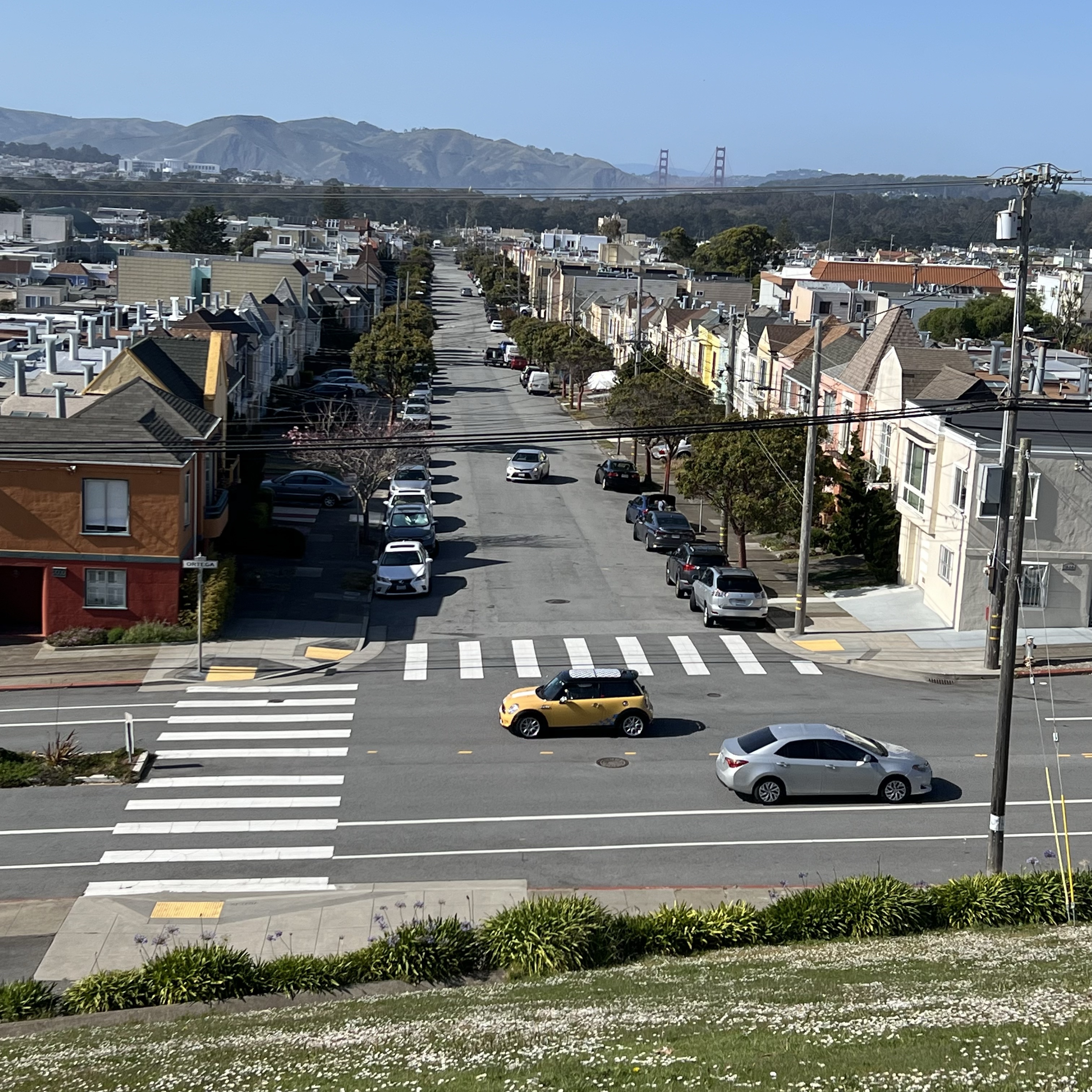
The views to the north as just as stunning taking in Golden Gate Park, the Richmond District, the Golden Gate Bridge, Marin Headlands, and Mt. Tam. On really clear days you can see outer Pt. Reyes.
Looking north down 27th Avenue towards the Golden Gate from one of the walking paths.




 Corvid Sketcher