
When it comes to train vs car, the train always wins.
In 2019, there were 2,216 collisions at railroad grade crossings. There are about 200,000 grade crossings in North America.
This number would be much, much higher without the safety equipment at the point where roadway and railway meet.
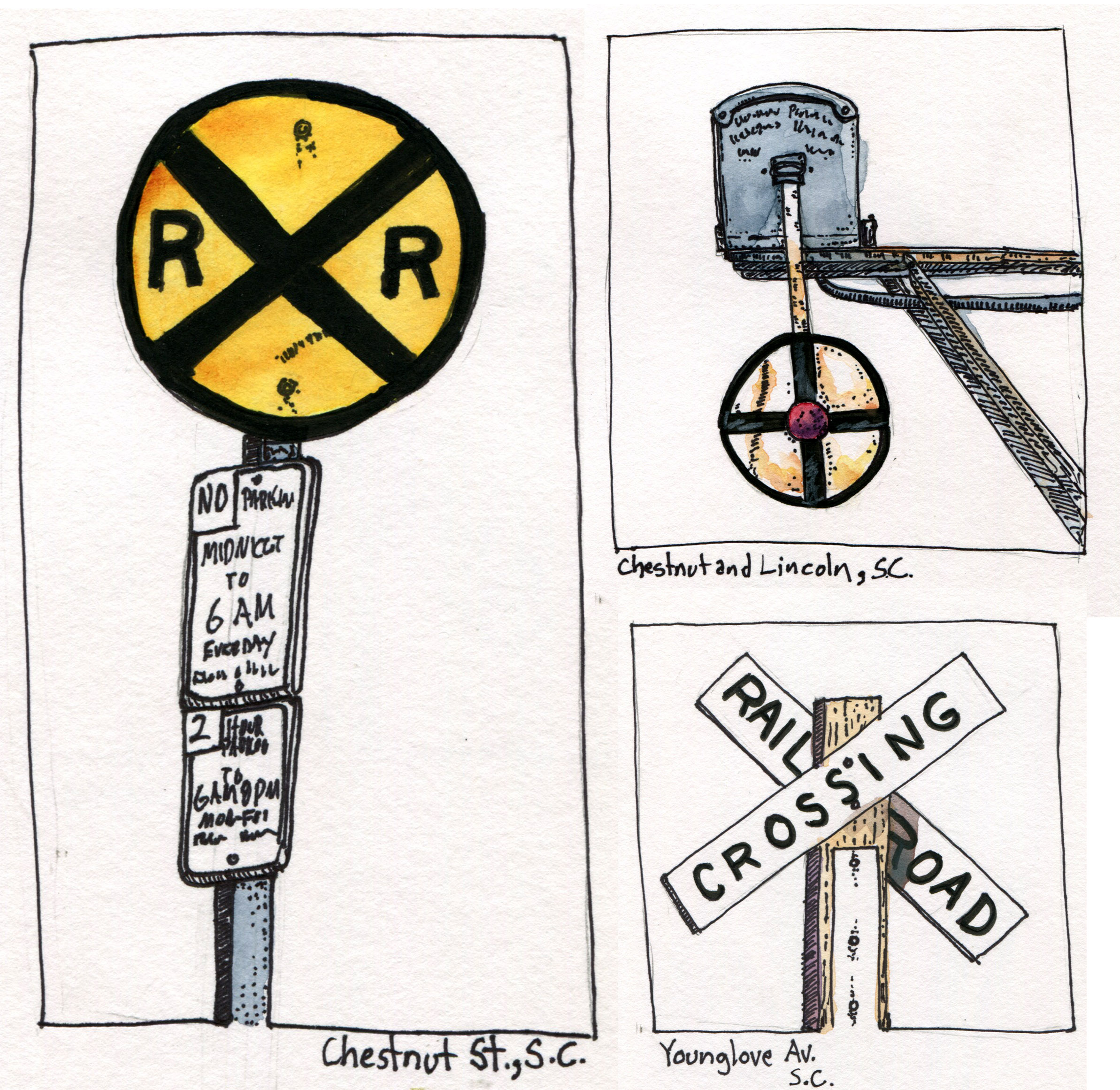
A grade crossing is where an automotive road crosses a railroad track (usually at 90 degrees). All crossings are required to have a least a sign or crossbuck, the “X” sign that reads “RAILROAD CROSSING”.
At heavily used roads and railroads, the crossing may have flashing lights with a warning bell and a gate. The grade crossing at Woodruff Lane in Marysville (featured sketch) has all the bells and whistles in grade crossings. No car wants to get in the way of a Union Pacific freight train.
In a later post about railroad semaphore, I noted that a freight train can take over a mile to come to a stop so if a car pulls in front of a train traveling at 55 miles an hour, even if the engineer applies the brakes, the car is toast.
With that in mind, a flashing, clanging, gated contraption makes a whole lot of sense.
And common sense tells us that when the warning lights are blinking or the safety arm is down, we should stop, no mater how much we may be in a hurry. It is odd that some motorist choose to ignore these warning signals and try to “beat” the train, usually with fatal consequences.
There are quite a few videos posted on youtube to demonstrate what happen when trucks and cars meet a fright train. Here is one such compilation:
You will never win with a game of chicken with a freight train.

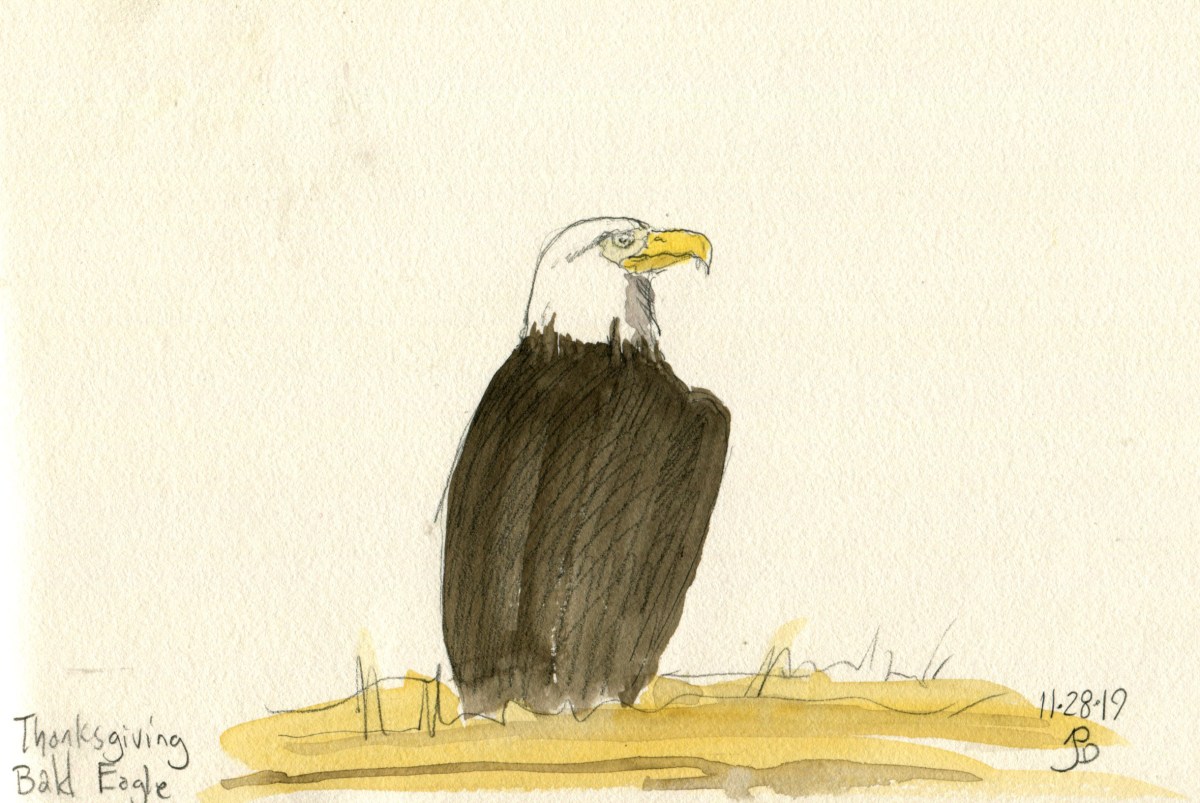


 I headed down Kimball Lane with a wintering wonderland of waterfowl on all sides and thousand of stretched out “V”s in the air. I came to the junction of Jack Slough Road and I turned right. As I headed down the road on this Thanksgiving morning I saw three wild turkeys off in a field to my left. I pulled over to get some photos, but the birds had disappeared into the brush. This was a good day to be skittish if you are a turkey! That’s when I saw my an immature bald eagle fly over. Then an adult appeared, soaring over the powerlines and then coming to rest in a field to the right.

 Corvid Sketcher