Image

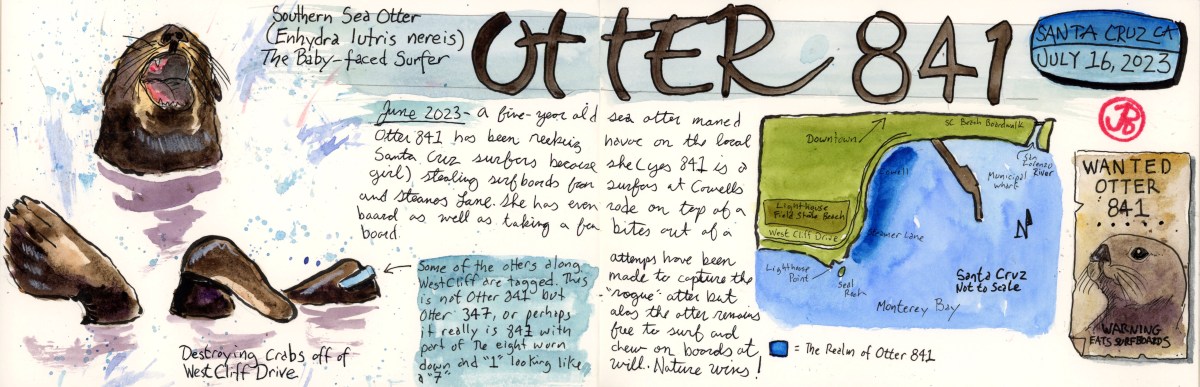
Otter 841

It is nice to see sea otters along the Santa Cruz coast. Laying on their backs, bashing a mollusk to death or eating a crab, recently caught, and still alive, one foot at a time, or rolling in the kelp, belly full, and settling in for a nap.
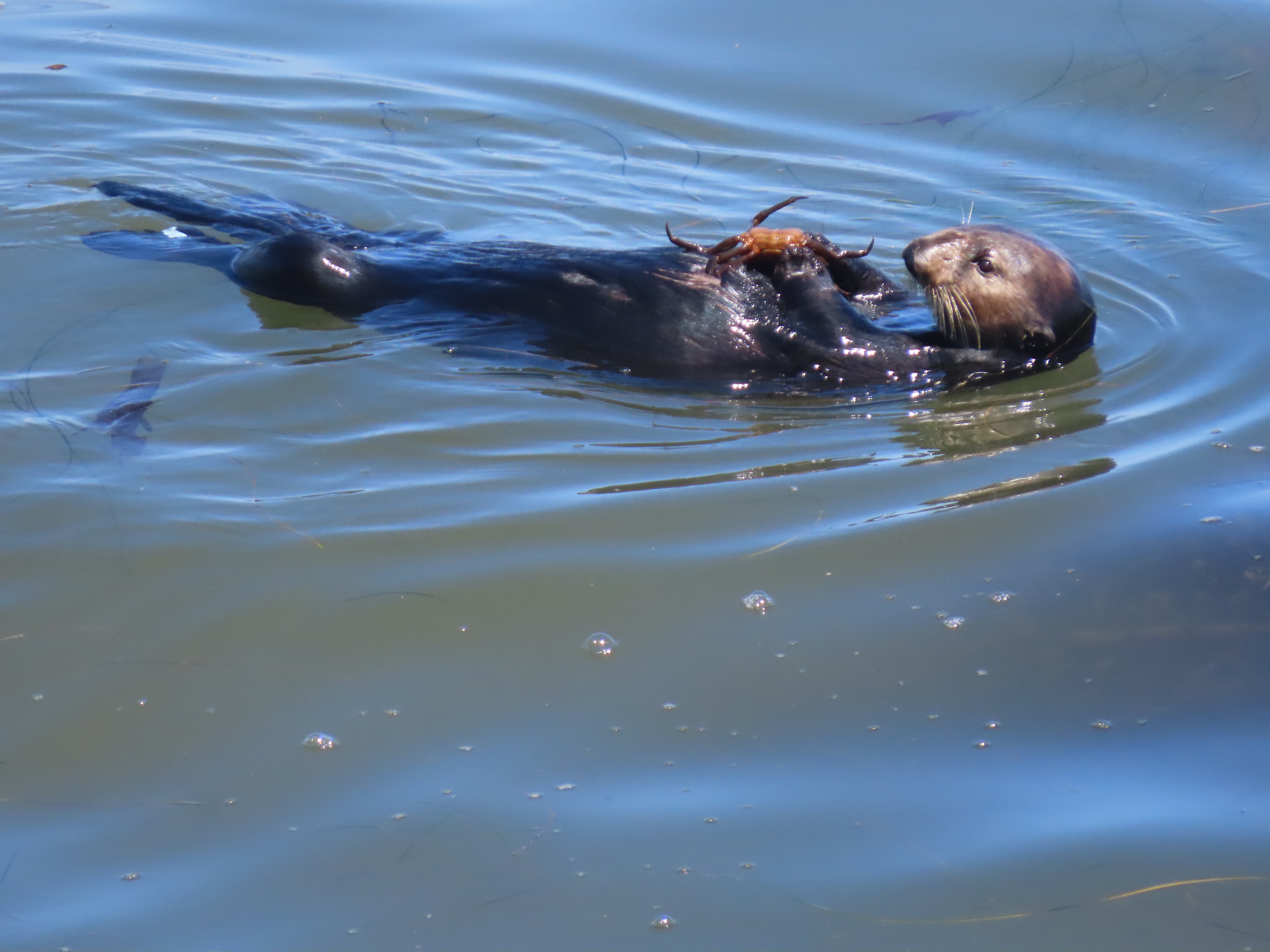
Fresh caught crab is on the menu off of West Cliff Drive.

This marine mammal was hunted to near extinction because of their pelts. Now they are protected and have prospered on the California coast.

A five year old female, branded a “terrorist” by some in the media, has grabbed the world’s attention.

This is Otter 841.

Otter 841 was born in captivity and then released to the wild. Her mother, Otter 723 was taken out of the wild because she was habituated to people and was approaching kayakers begging for food. It was apparent that Otter 723 was being fed by humans.

While in captivity they realized that Otter 723 was pregnant and she soon gave birth to our troublemaker Otter 841.

841 was released to Monterey Bay where for four years she swam under the radar.

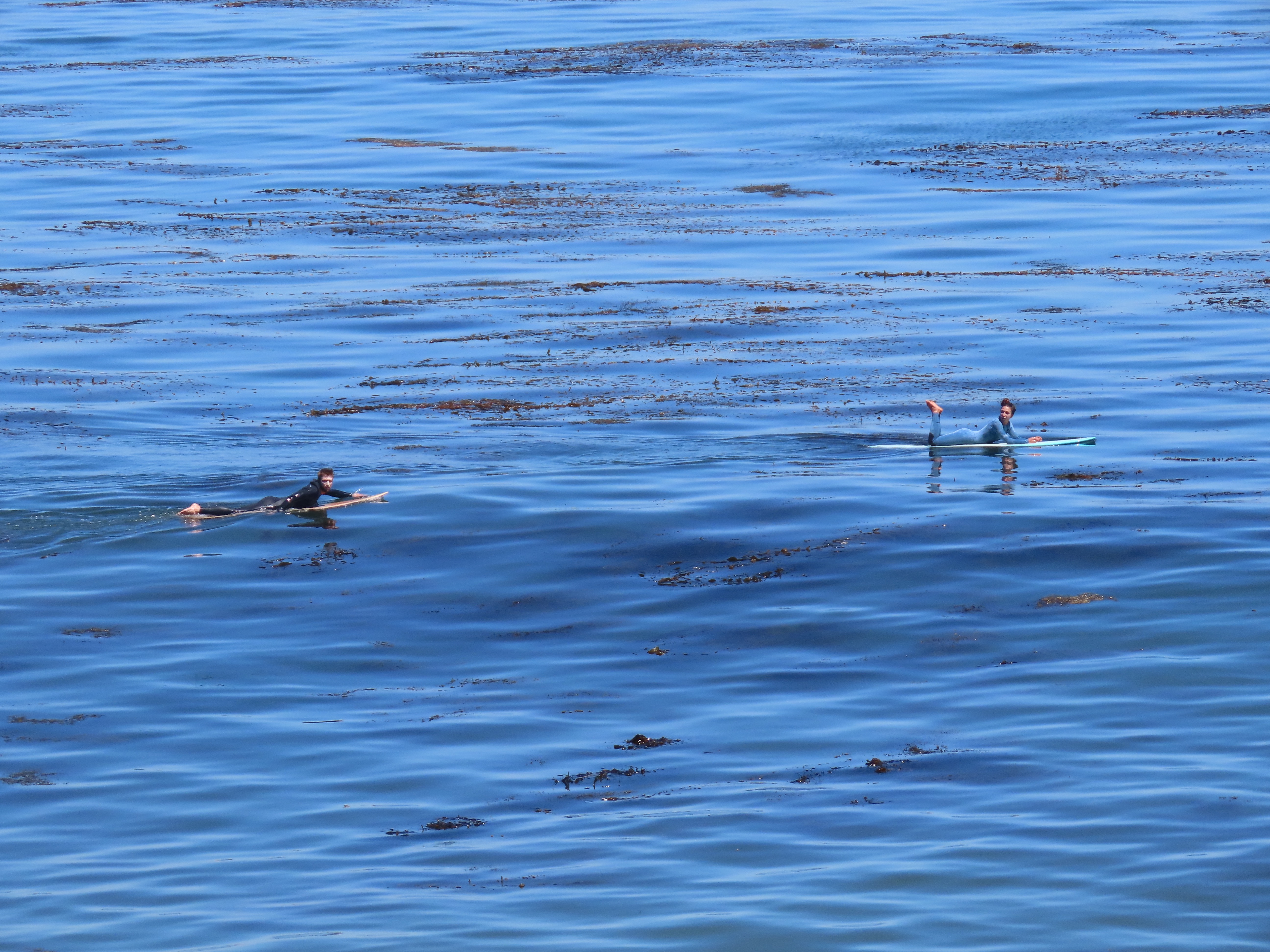
Starting in June of 2023, 841 has become a surfboard pirate. The otter has been observed and photographed jumping up onto surfboards, dislodging it’s surprised rider, in the popular surf spots of Steamers Lane and Cowells. On one occasion, 841 took some bites out of a surfboard.
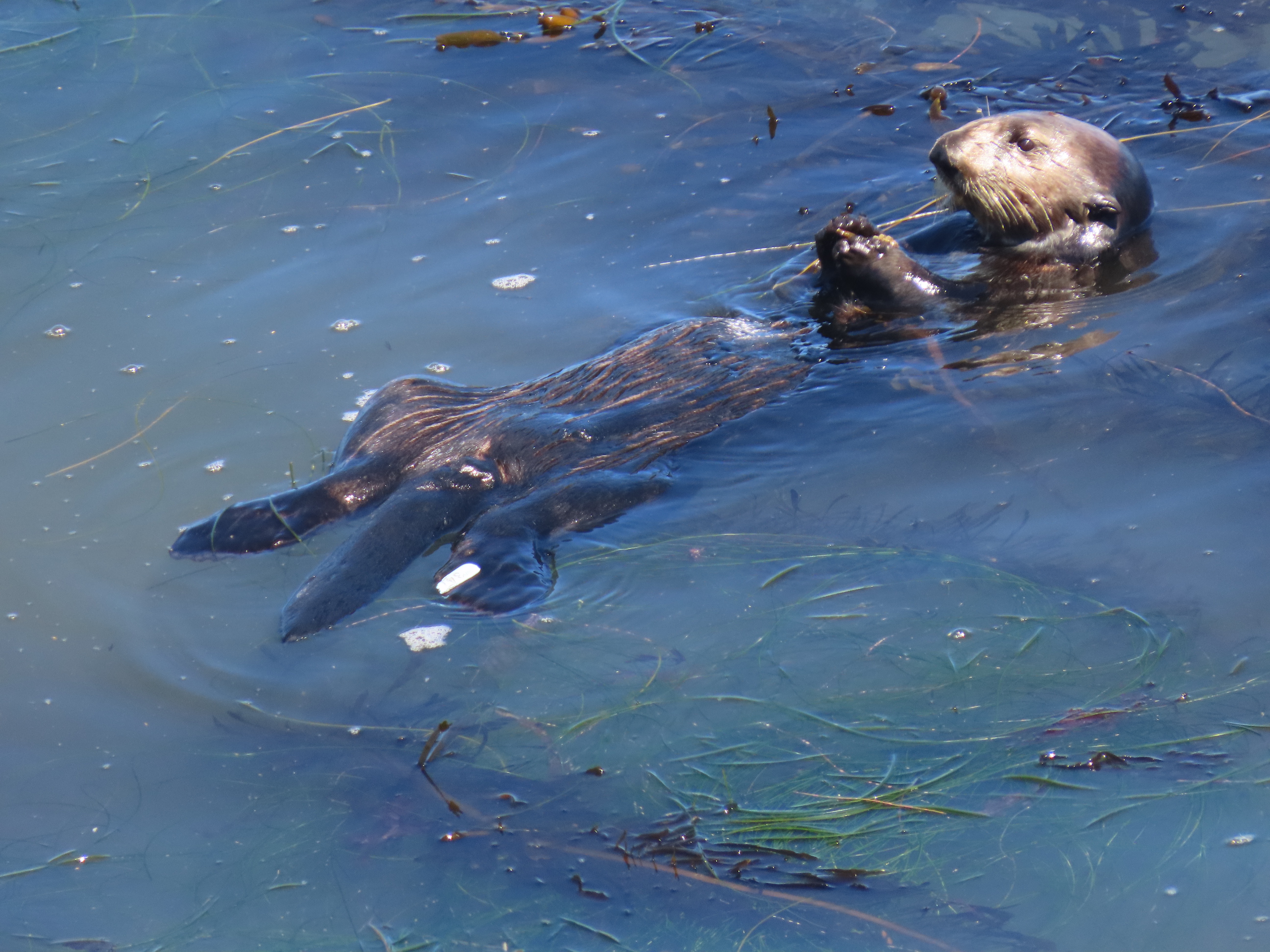
Is this Otter 841? On the otter’s left flipper is a light blue tag with a three digit identification number.
Surf at your own risk! Surfers keeping an eye on the infamous otter.

The powers that be decided that 841 should no longer be in the wild and attempts were made to capture 841 employing the cunning use of a surfboard. They tried and tried again but they could not capture the piratical otter.

And as of publishing, Otter 841 still swims free off the coast in Santa Cruz.

Don’t mess with nature because nature usually wins.
Image

Snowshoe Thompson: A Viking on Skis

Statues of my youth.

A toughstone to my father, my brother, to a place and time I would love to return to but I cannot. I am here at the place but the time is in the rear view mirror.

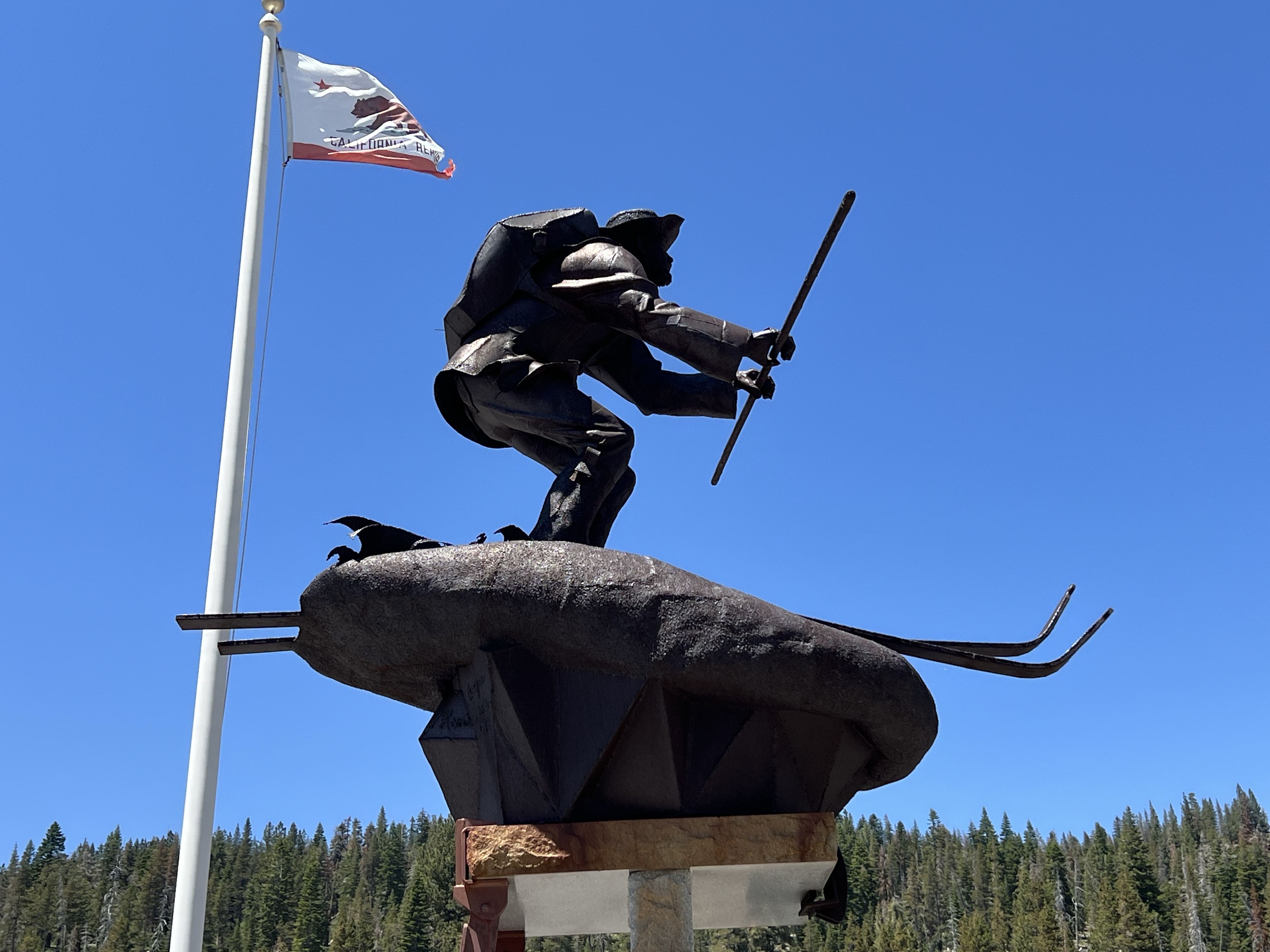
The statue of Snowshoe Thompson at Boreal Ski Resort, just off Highway 80 is one of those statue/memories.

Whenever I drive by I try to spy it. I know this statue from my youth. A dude with a beard, long skis, and a long pole held out as if he was up high on the high wire.

Bur this time I did not continue on east towards Truckee but took the exit to answer the question: who was this skier worthy of a statue?

Snowshoe Thompson was born John Tostensen in Telemark, Norway on April 30, 1827. He immigrated to the United States when he was ten years old.

His family moved around the Midwest and eventually John and his brother wound up in Placerville, Ca formerly the mining camp of Hangtown.

From 1856 to 1876 he delivered mail from Genoa, Nevada and Placerville, California. This nickname “Snowshoe” was a misnomer because he used ten foot wooden skis and a long single pole, a method he learned in his native Norway. The journey would take him three to four days.

He made these trips in all kinds of weather giving real meaning to the Postal Service mantra, “Neither snow nor rain nor heat nor gloom of night stays these couriers from the swift completion of their appointed rounds”.

Thompson was of a different time when frontier men became legends and where made of toughness and fortitude. They was no room for giving up, there was a job to do and Thompson always came through. These were the days of wooden skis and iron men!

Thompson died on May 15, 1876 and is buried next to his wife in the cemetery in Genoa, Nevada.

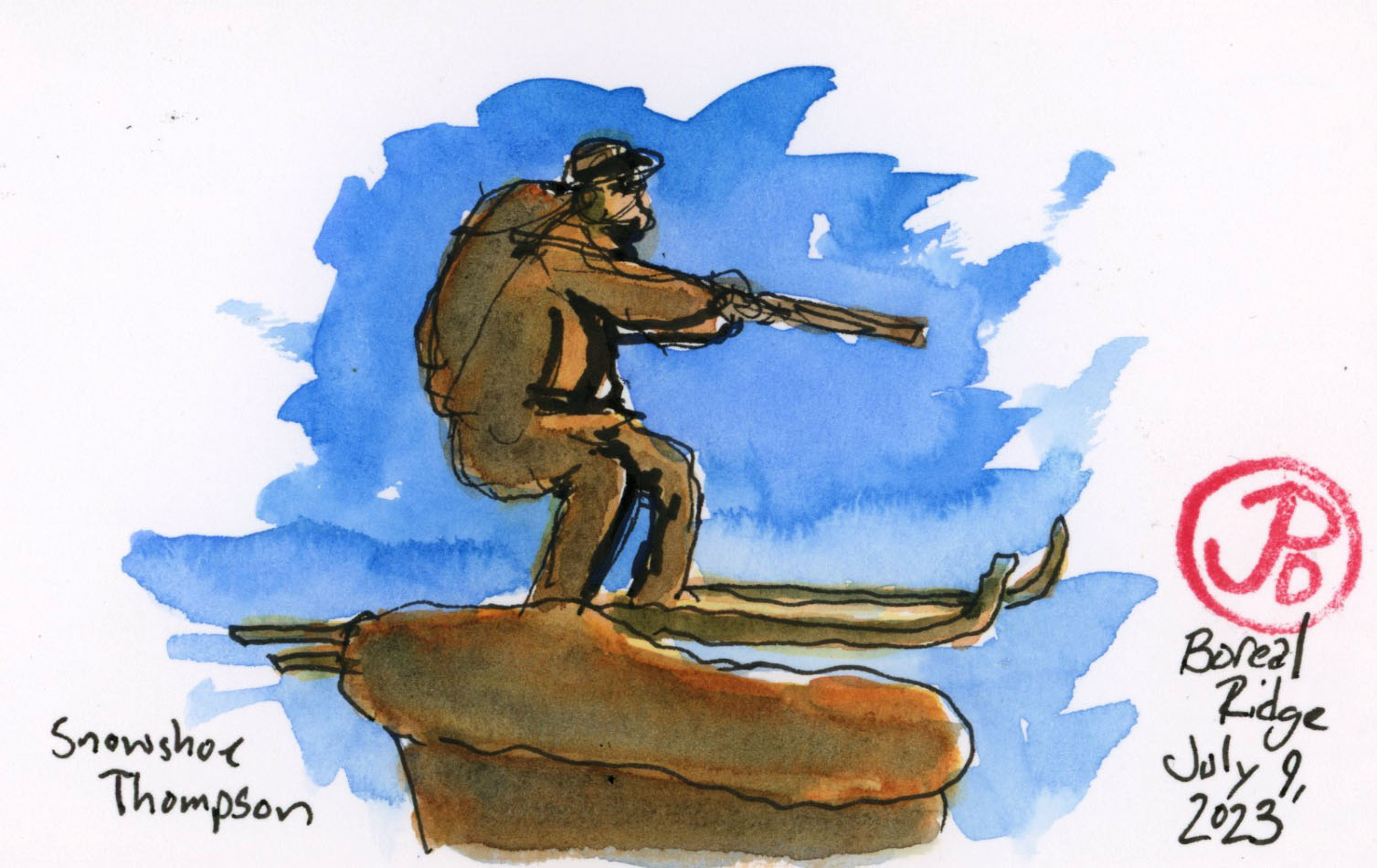
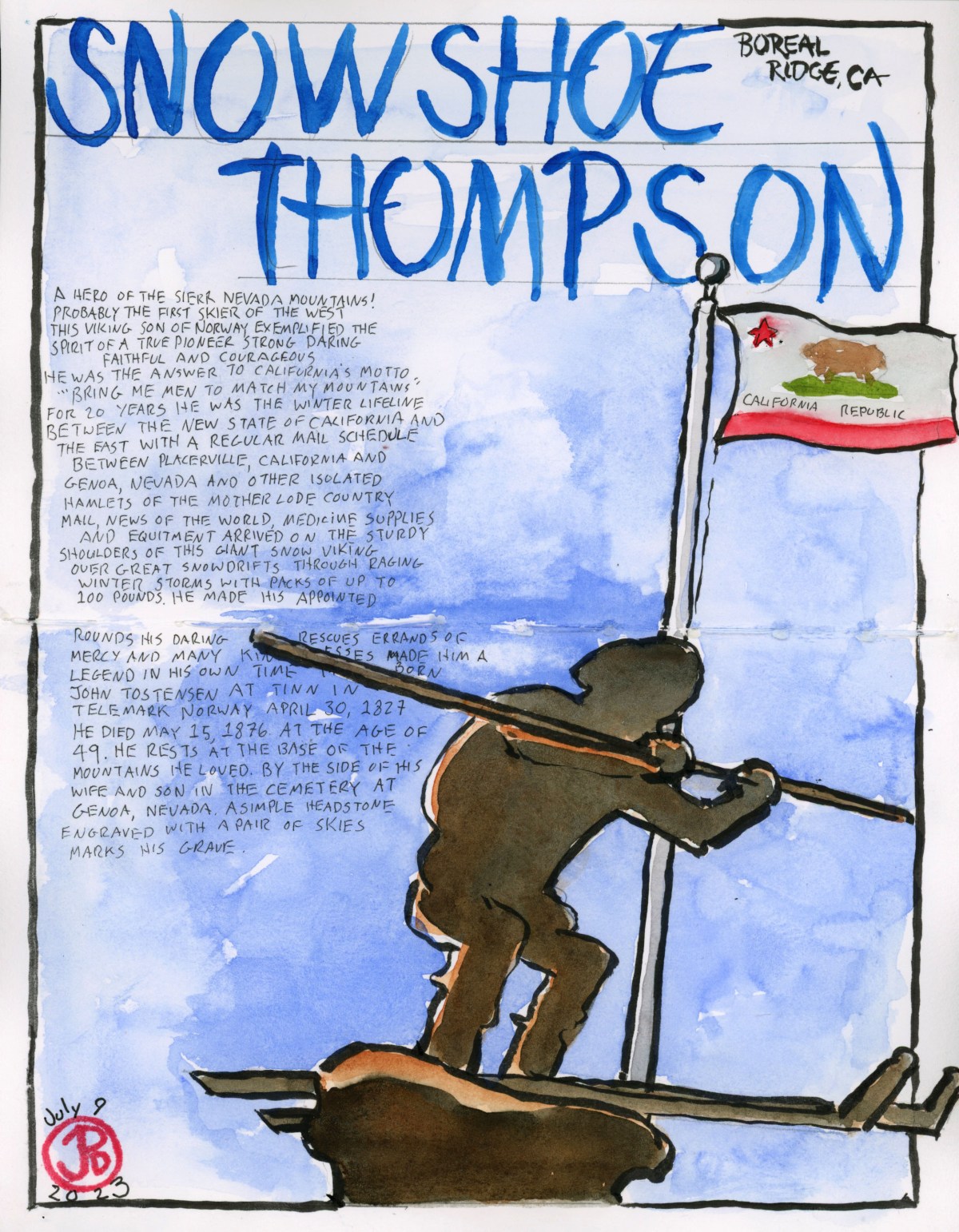
A quick field sketch of the Snowshoe Thompson statue at Boreal.

Thompson’s legacy as the Father of California Skiing is memorialized in the statue at the Boreal Ski Resort (featured sketch) and in a similar statue at Mormon Station State Historic Park in Genoa, Nevada.

Image

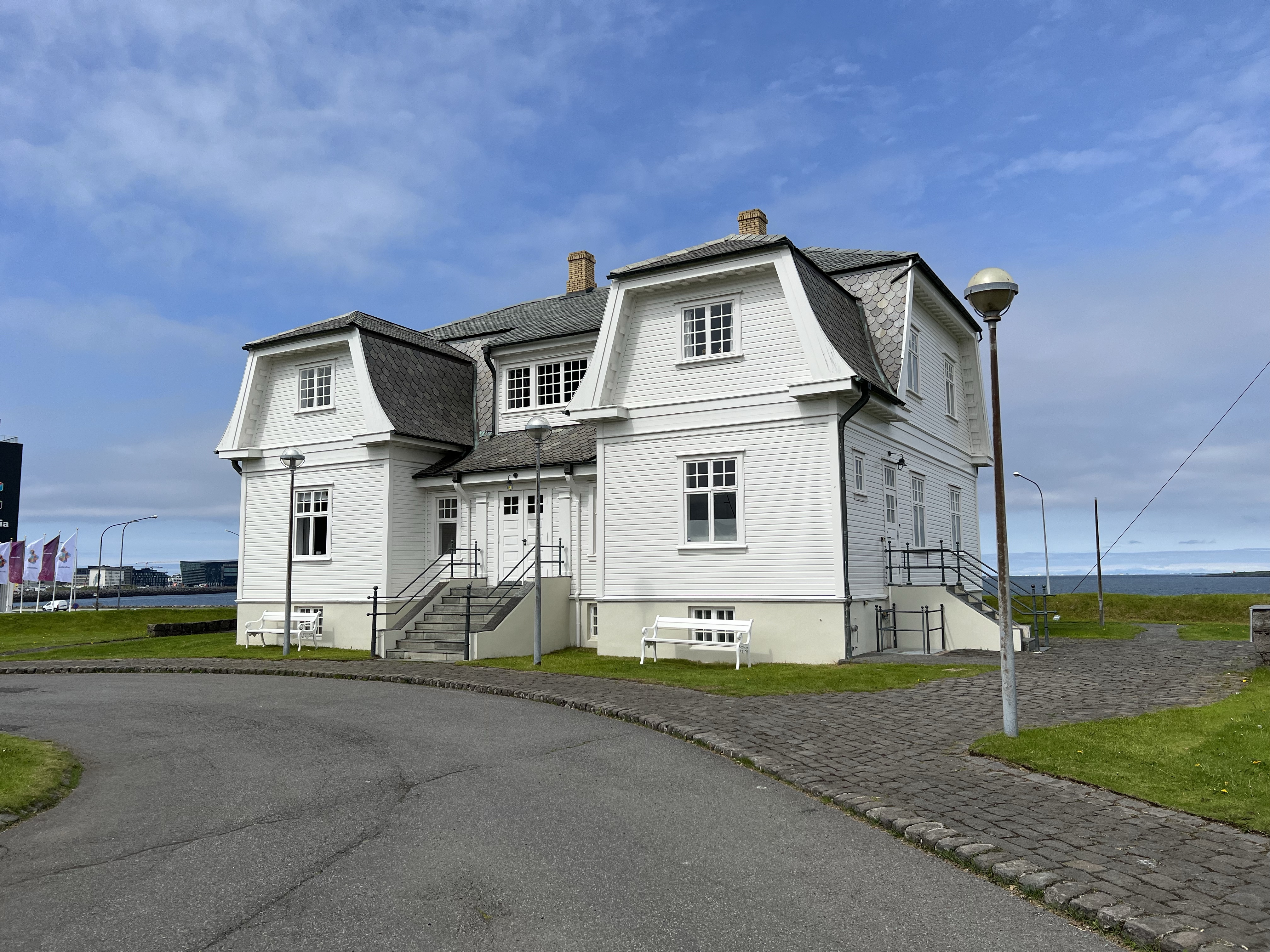
The House Full of History: Höfði House

Not far from the sea wall and a short walk from the historic old town Reykjavik is a white two story house that sits alone among a sea of green grass.

The house looks like it belongs to a member of Reykjavik’s upper middle class but it is actually much, much more than this.

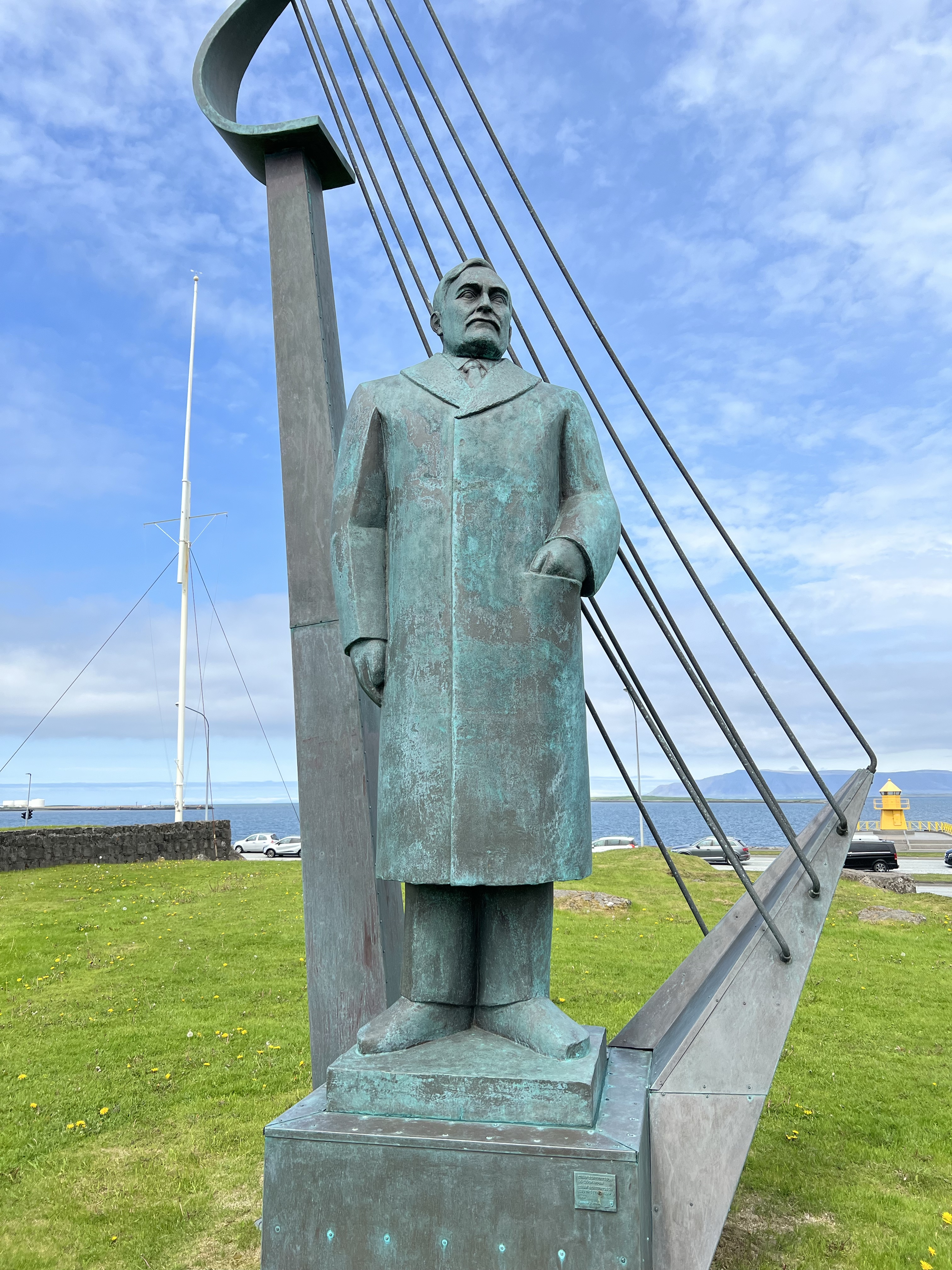
It hard not to love a nation that erects a statue to a poet (politicians already have too many airports named after them). This is just to he north of Höfði House and statue represents poet Einar Benediktsson standing in front of a harp.

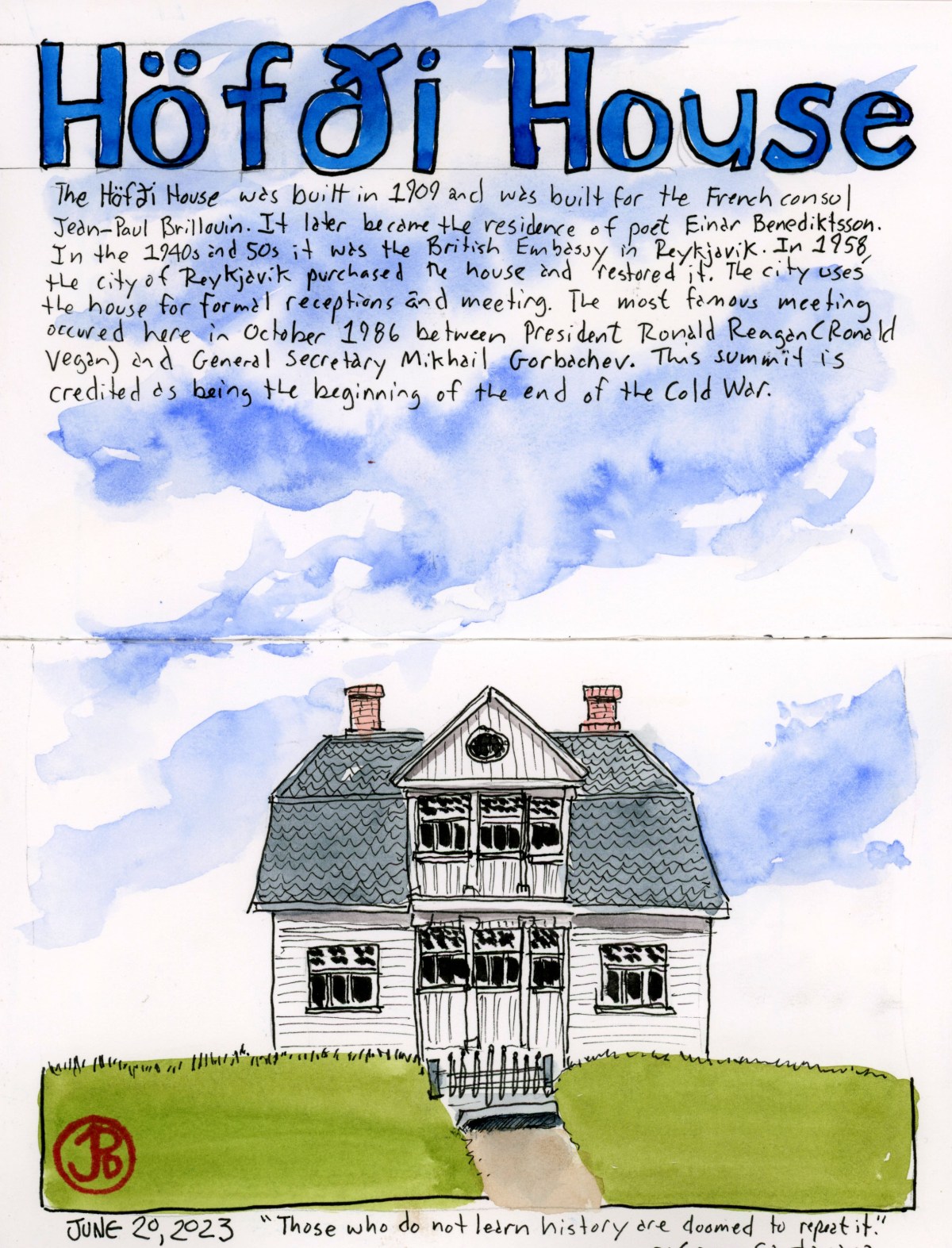
The house was built in 1909 as the French Consulate. It later was the home of a poet and then a painter. During the 1940s and 50s it was the British Embassy.

The front of the Höfði House.

In 1958, the city of Reykjavik purchased the house and restored it and since then, the house has been used for formal receptions and diplomatic meetings.

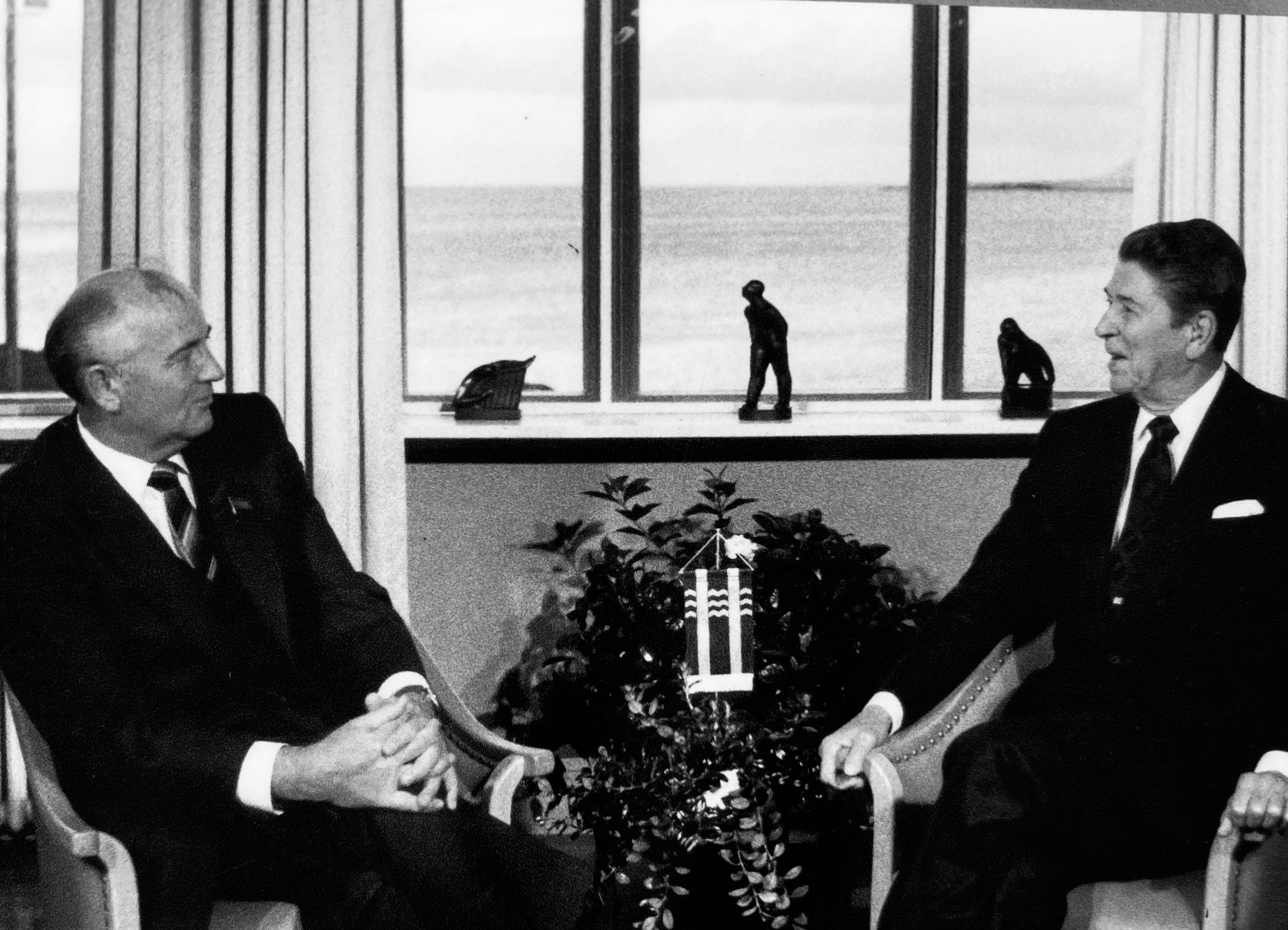
This house is really famous for a meeting that took place here in October of 1986 between Mickhail Gorbachev and Ronald Reagan. This meeting is regarded as the beginning of the end of the Cold War.

And like all good houses full of history, it is rumored to be haunted.

For my sketch, I sat on the sea wall and sketched the back of the house where the windows look out to the waters of Faxaflói Bay, while overhead black-headed gulls and fulmars flew by.

Image

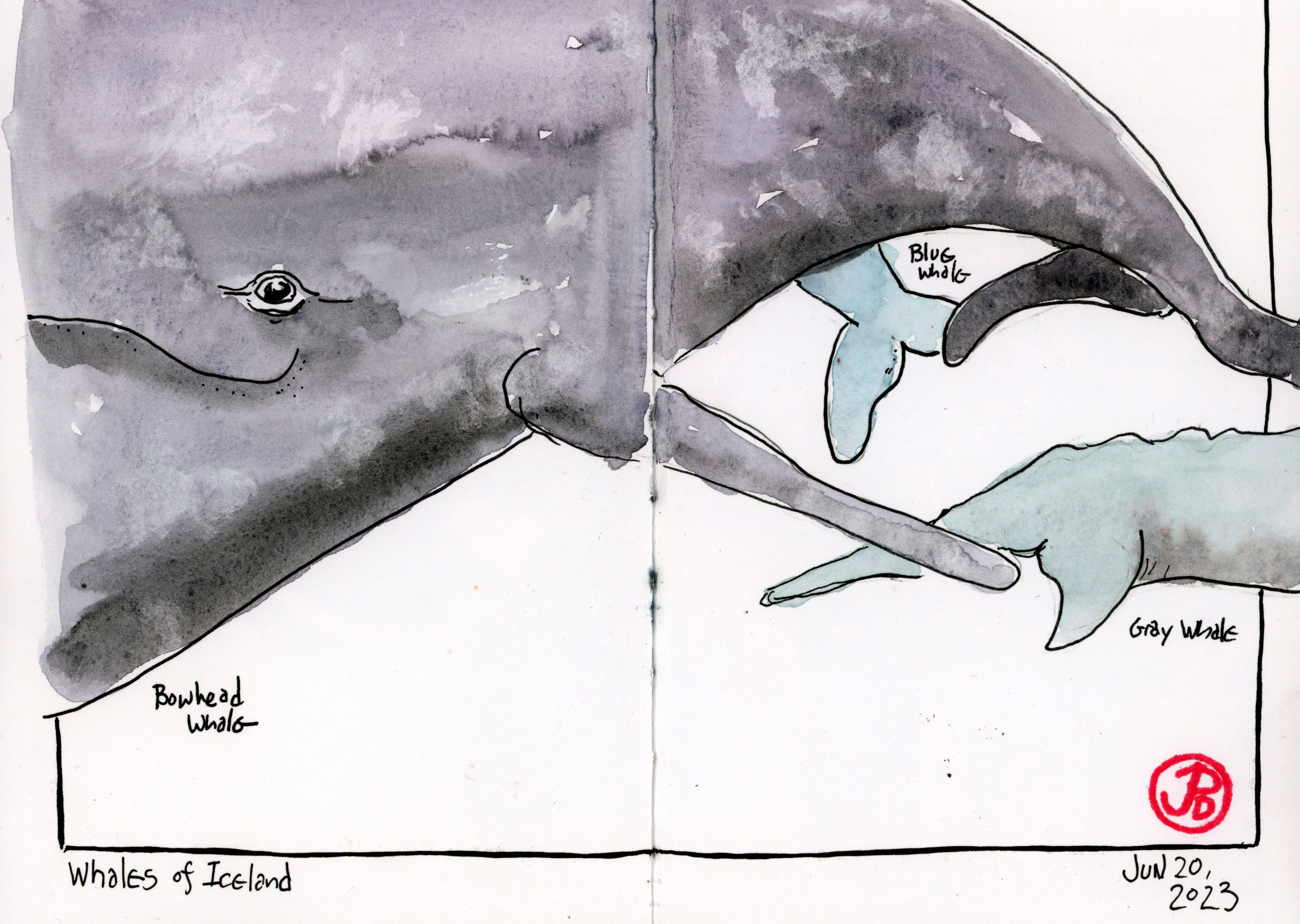
The Whales of Iceland

Whales are some of the most amazing creatures that have ever lived on planet Earth. And one Reykjavik site that really piqued my interest was Whales of Iceland!

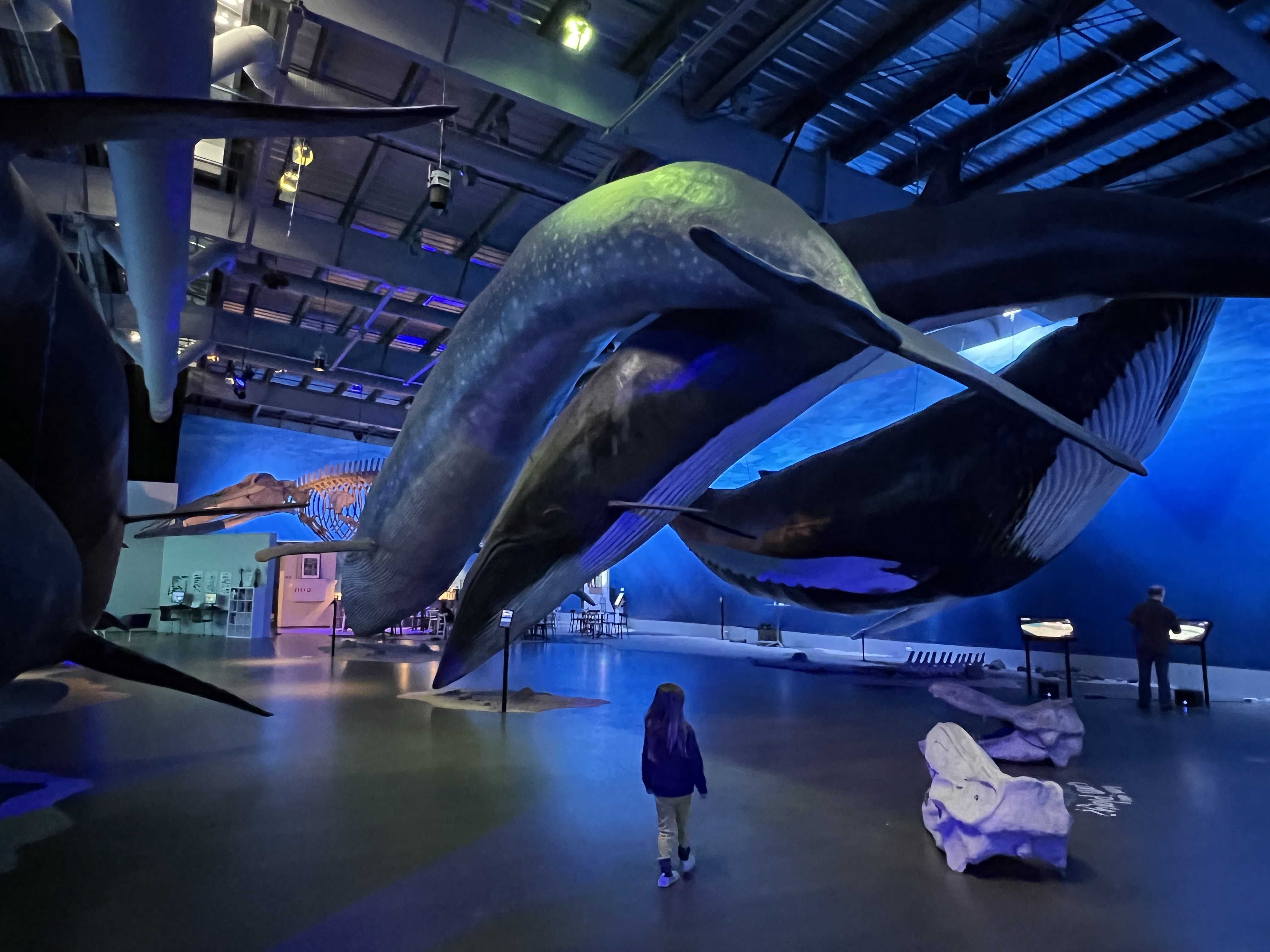
This museum is housed in a massive warehouse near the harbor and includes life sized models of all the dolphins, porpoises, and whales found off the shores of Iceland.

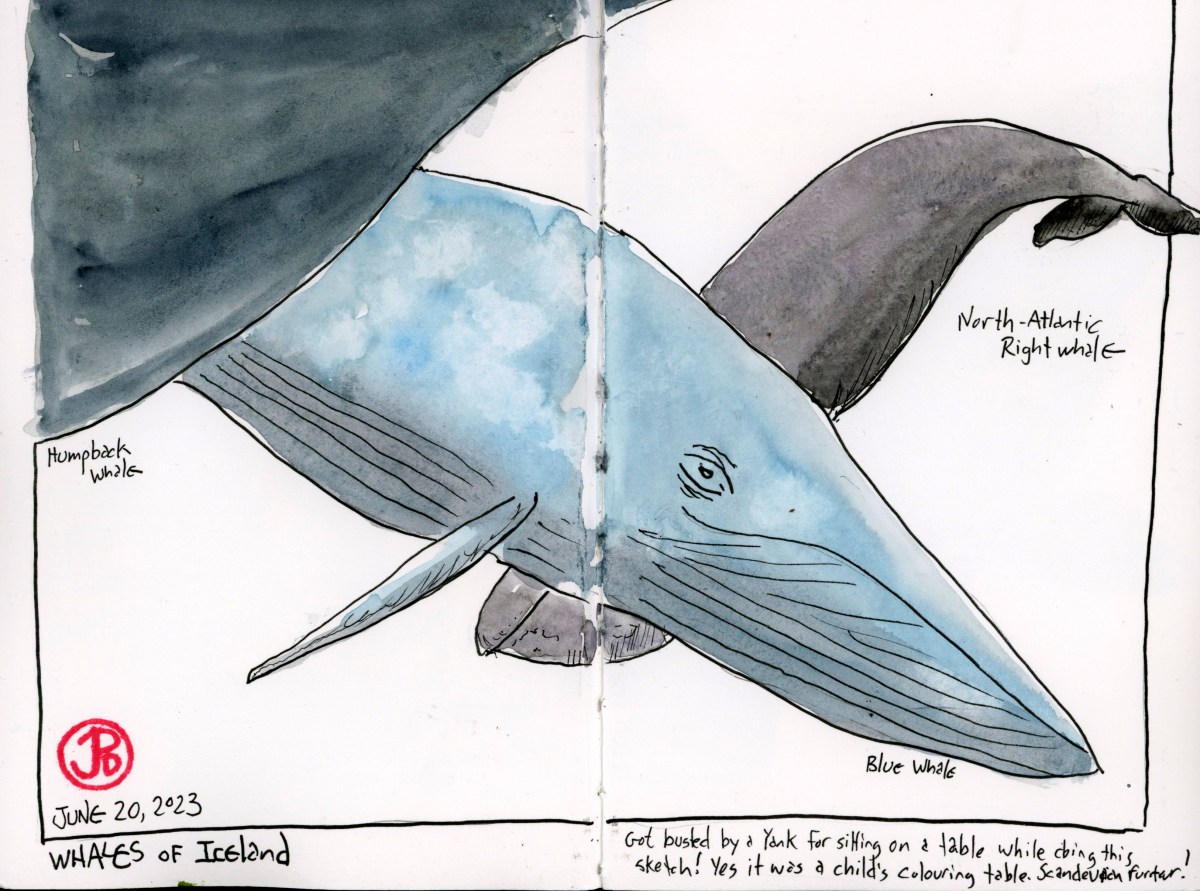
This really is a sketcher’s paradise and I found a bench located against a wall and I started to sketch the humpback, blue, and right whales that were suspended from the ceiling.

I was interrupted in mid-sketch, by a Yank (yes there are Yanks working in Iceland!) who informed me that I was not sitting on a bench but on a child’s coloring table and I was about to break it! Opps, so I found a chair and finished the sketch (featured sketch).

A small child provides scale to how large these whales really are. Perhaps she is headed towards the coloring/sketching table/bench.

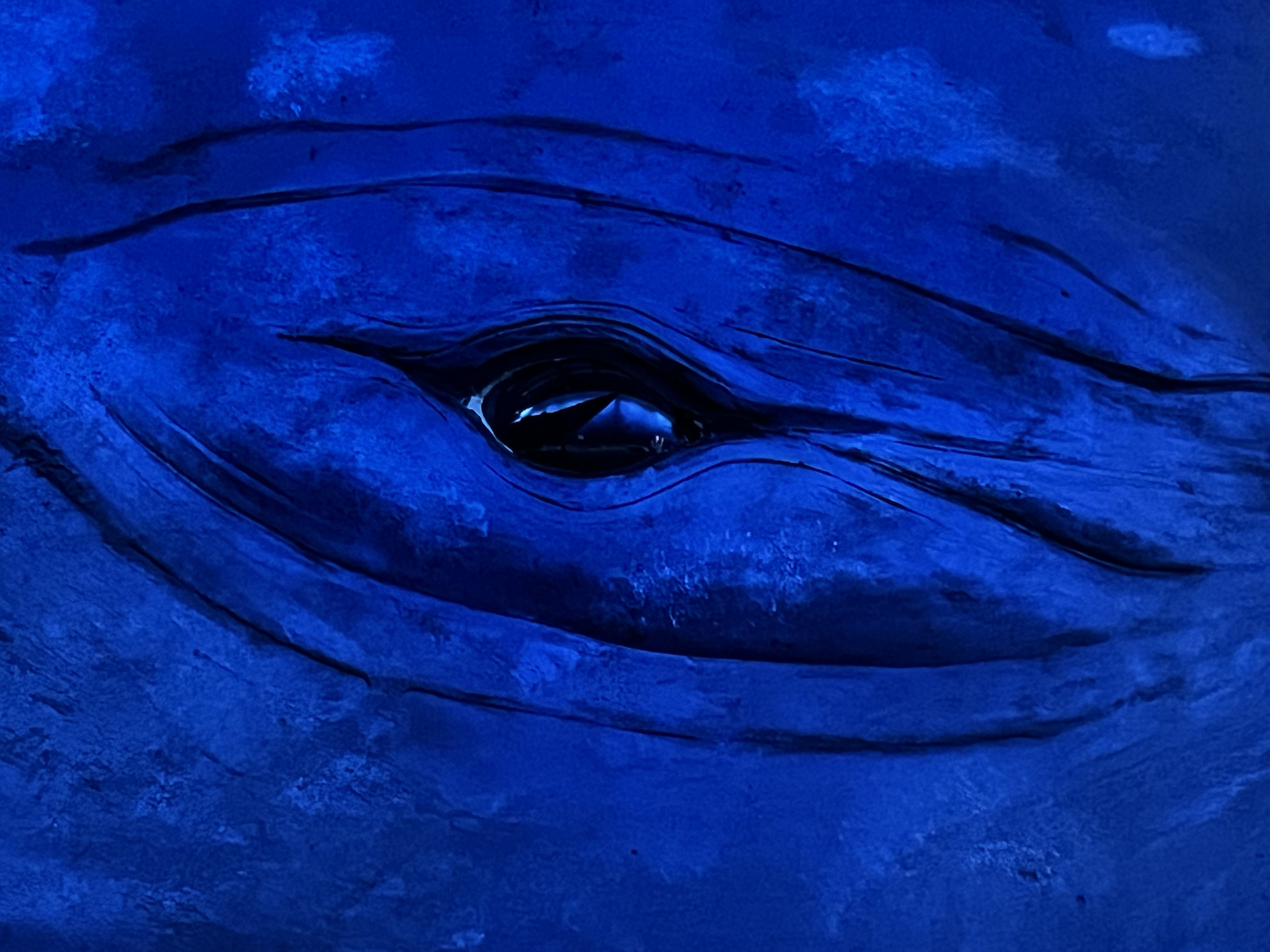
It was really interesting to see the true sizes of the whales compared to others. I had seen a handful of blue whales off the California coast but you only see small parts of the dorsal side and if you’re lucky, the fluke. Here you could see the entirety of the whales. I was impressive to see just how large the largest animal that ever lived on the earth really is!

For my second sketch I drew the bowhead whale, the whale was so large that it did not fit into the pages of my sketchbook.

The eye of the largest animal on earth: the blue whale.
Image

Birds of Iceland

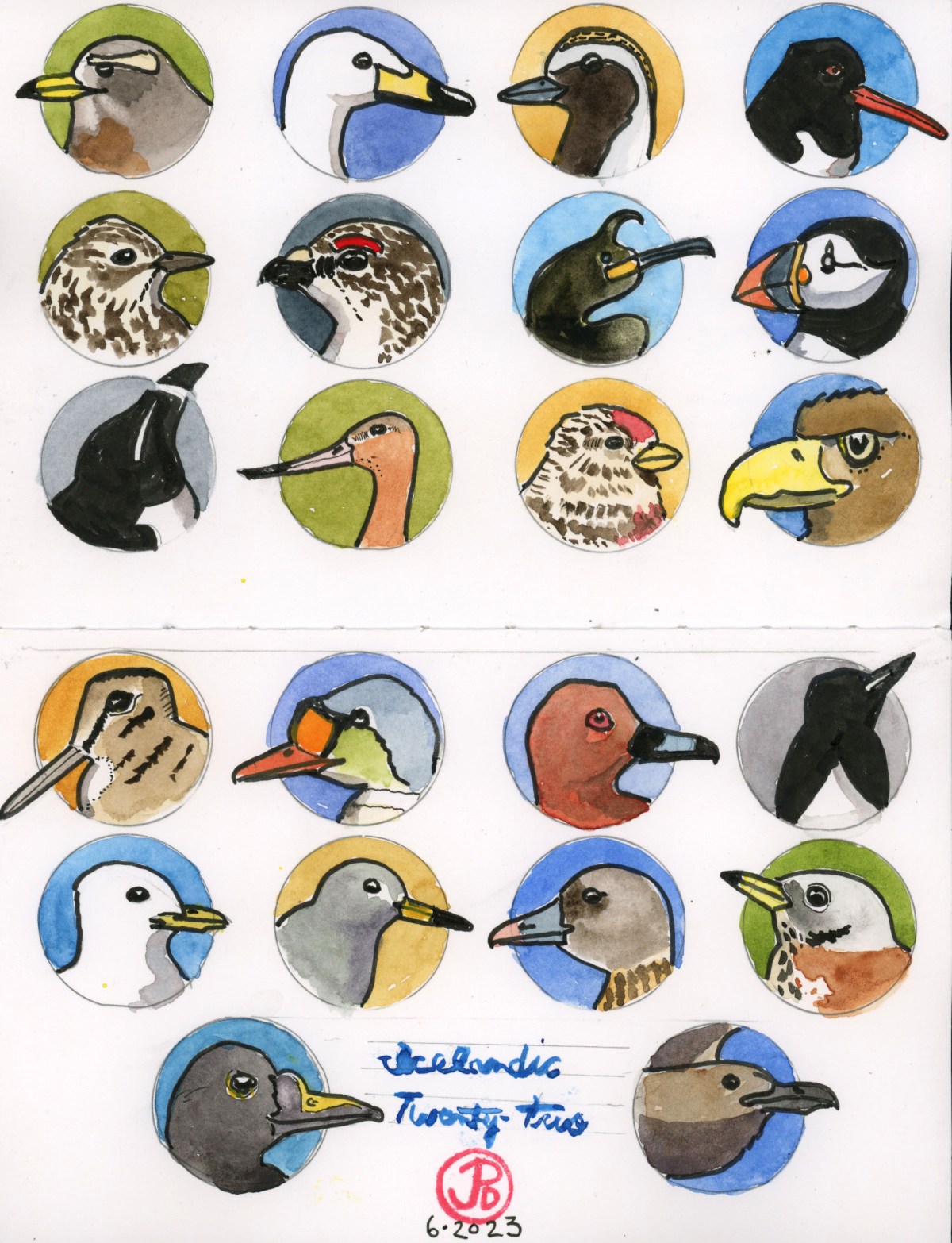
I figured I might see 20 to 25 lifers on my ten day Icelandic birding tour. This was a good goal and I hoped I’d meet it.

In the end I added 22 lifers to my world life list bringing my total to 1,740!

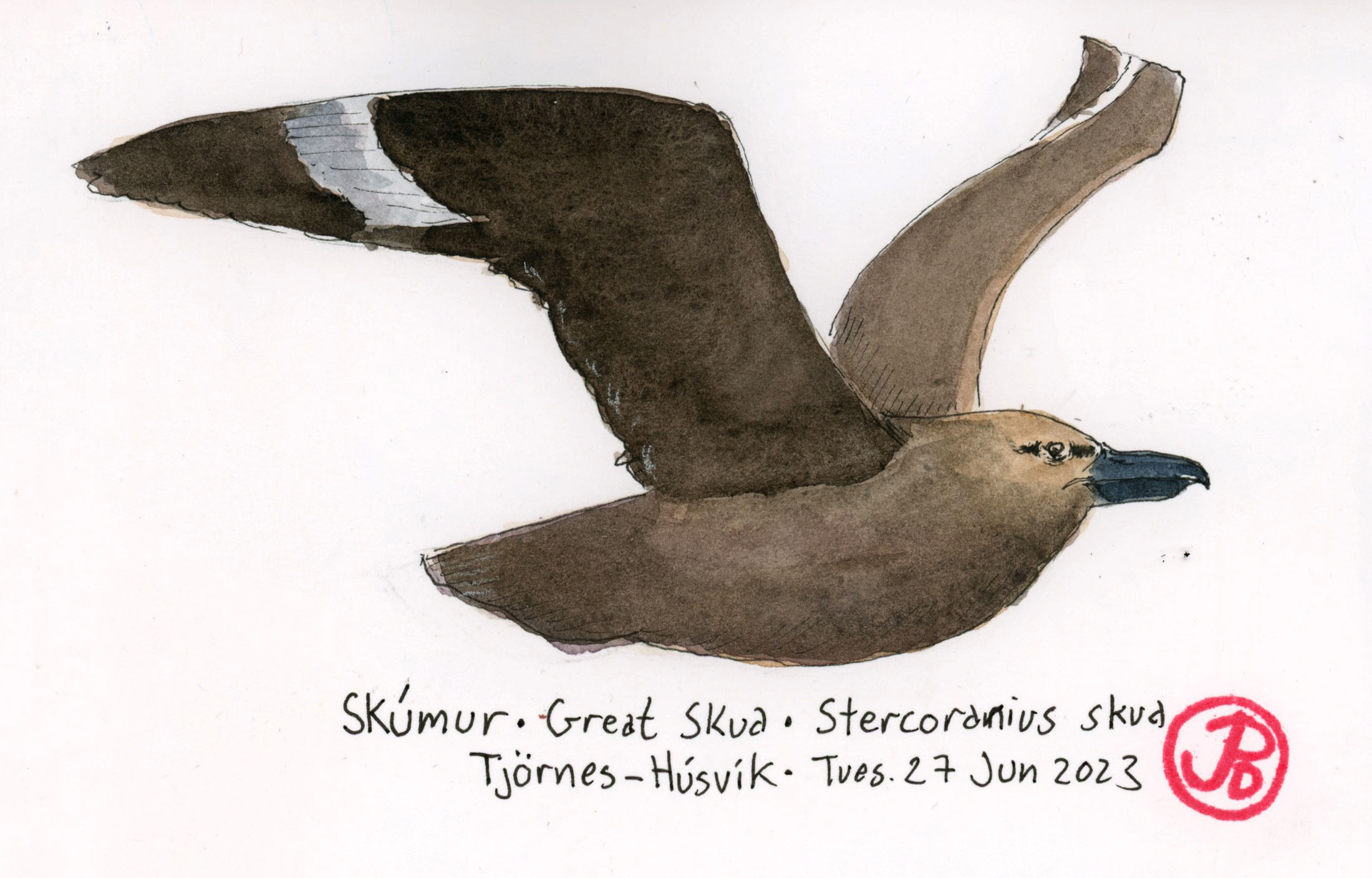
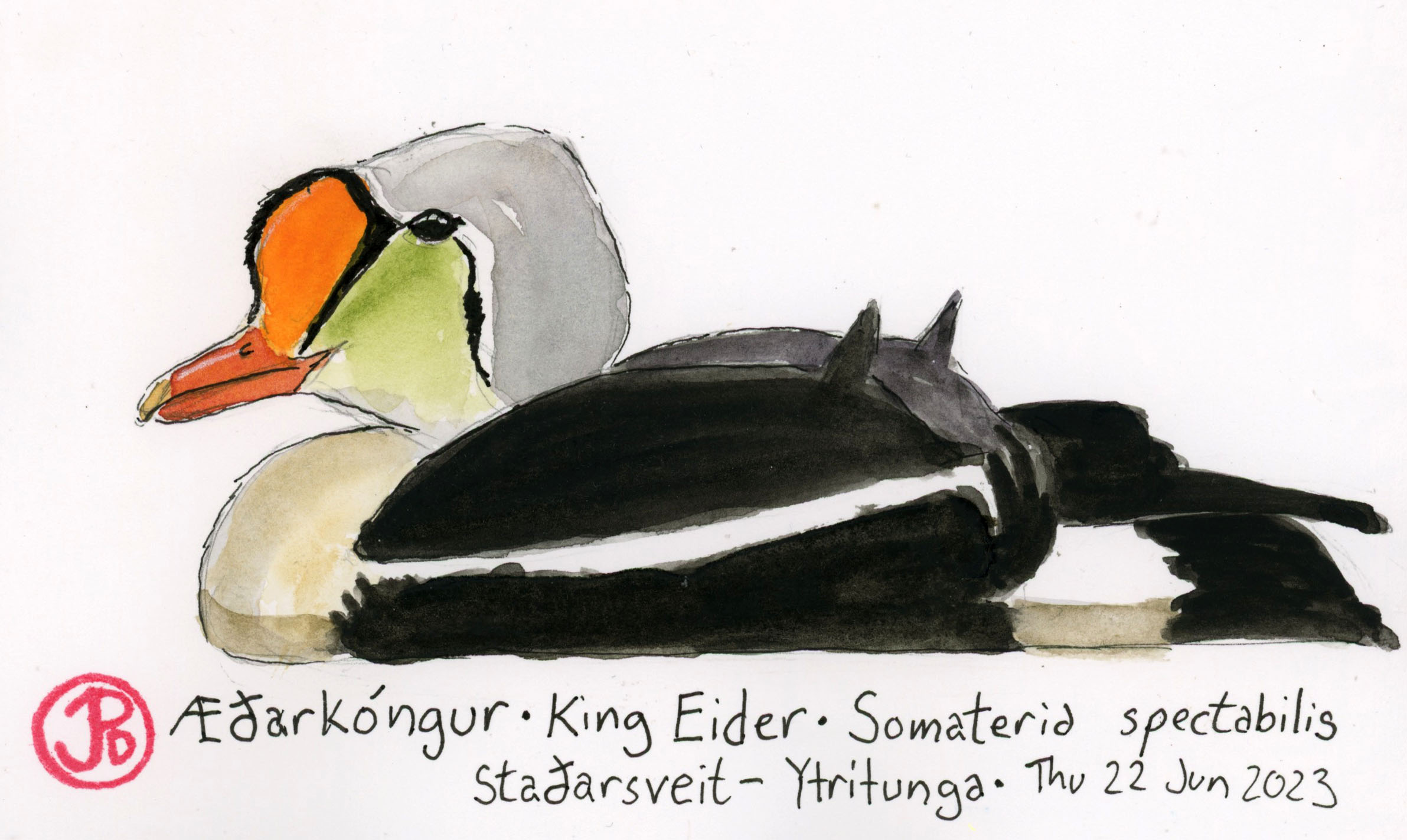
Aside from puffin of course, I had two species that stood out as lifers of the trip. One was the stunning male king eider, the other the powerful and menacing great skua!

The king eider is just one of those ducks that you see in a field guide and say to yourself, “I really want to see that bird!”. The male is such an amazing mix of color, shape, and form. So I had to sketch it of course.

Lifers weren’t the only draw for my Iceland trip, getting quality looks at birds, most in their stunning summer plumage, was another.

I had only seen Arctic terns while on pelagic birding trips off the California coast (it was a good day if you saw one or two on an eight hour cruise). Here in Iceland, the world’s longest migrant can be seen in the thousands. And from land! The terns have to come to land to breed and Iceland is that land.

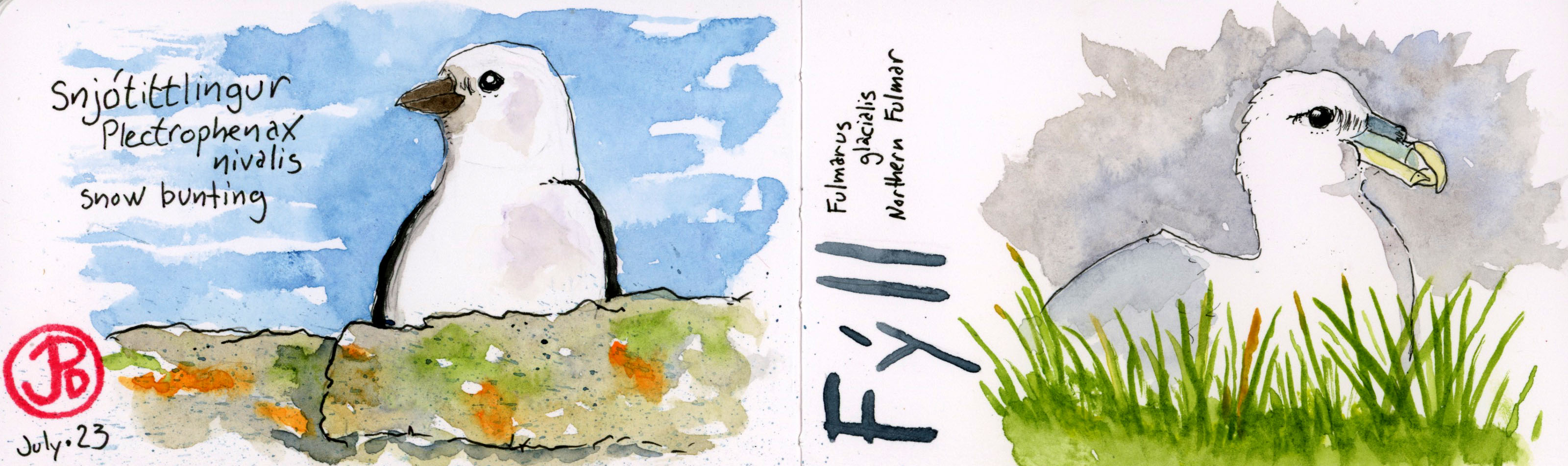
Another pelagic species that I had seen on pelagic boat trips and occasionally while doing a land-based seawatch was northern fulmar. Fulmars where everywhere in coastal Iceland where they nest on cliffs with a close proximity to the ocean. Walking along the coast, at times fulmars outnumbered gulls as they most common bird passing overhead.

One benefit of living on the California coast is that rarities often work their way down south along the coastline. Such was the case when a snow bunting over wintered on a beach in Half Moon Bay. I first saw the bird on November 19, 2022 and the bird stayed into the new year despite the epic rains of 2023. The bunting was being seen until at least late March.

Now in the summer of 2023 on a beach in northern Iceland I was watching a beautiful male snow bunting perched on a rock. He was decked out in his black and white finery and it really put the word “snow” into snow bunting!

Image

Hallgrimskirkja

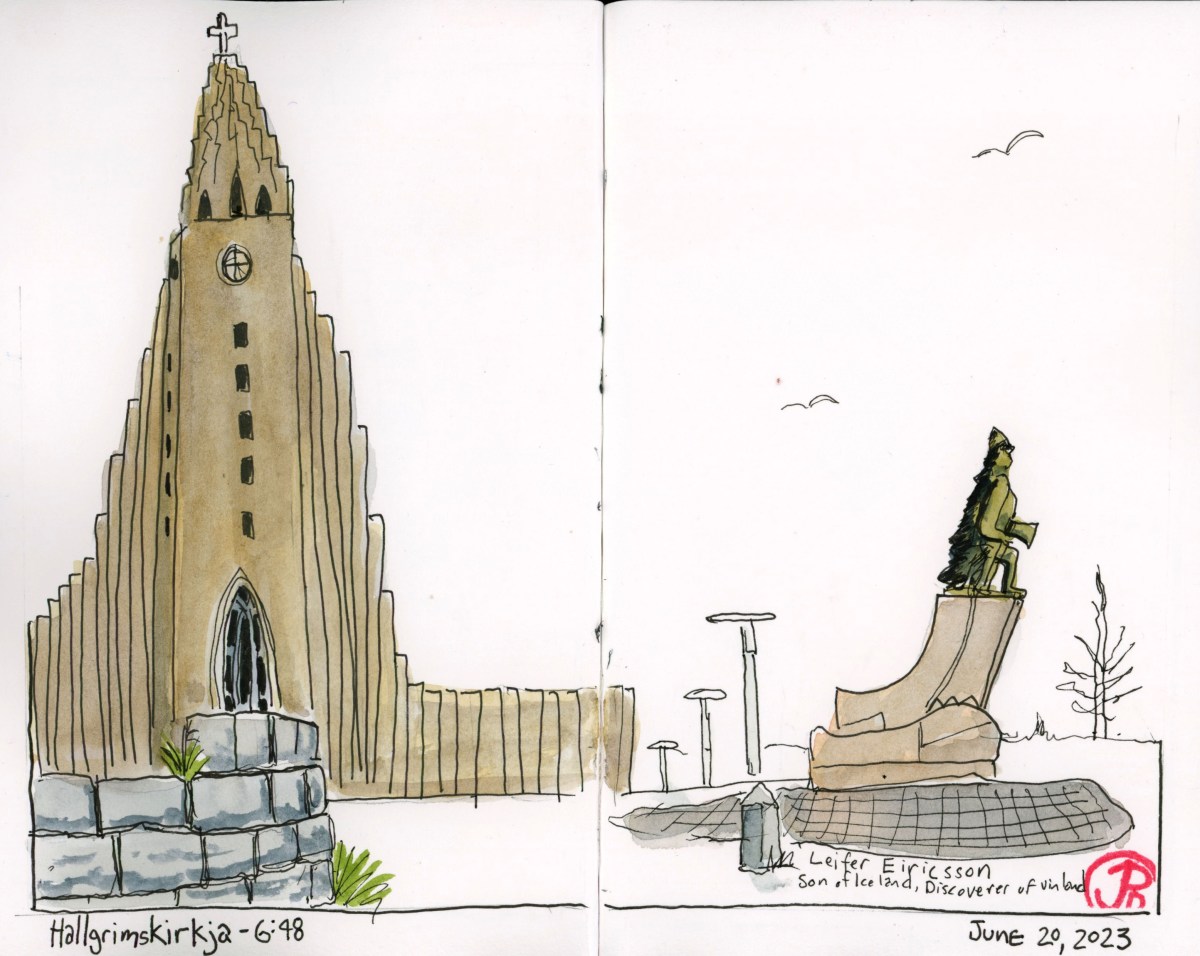
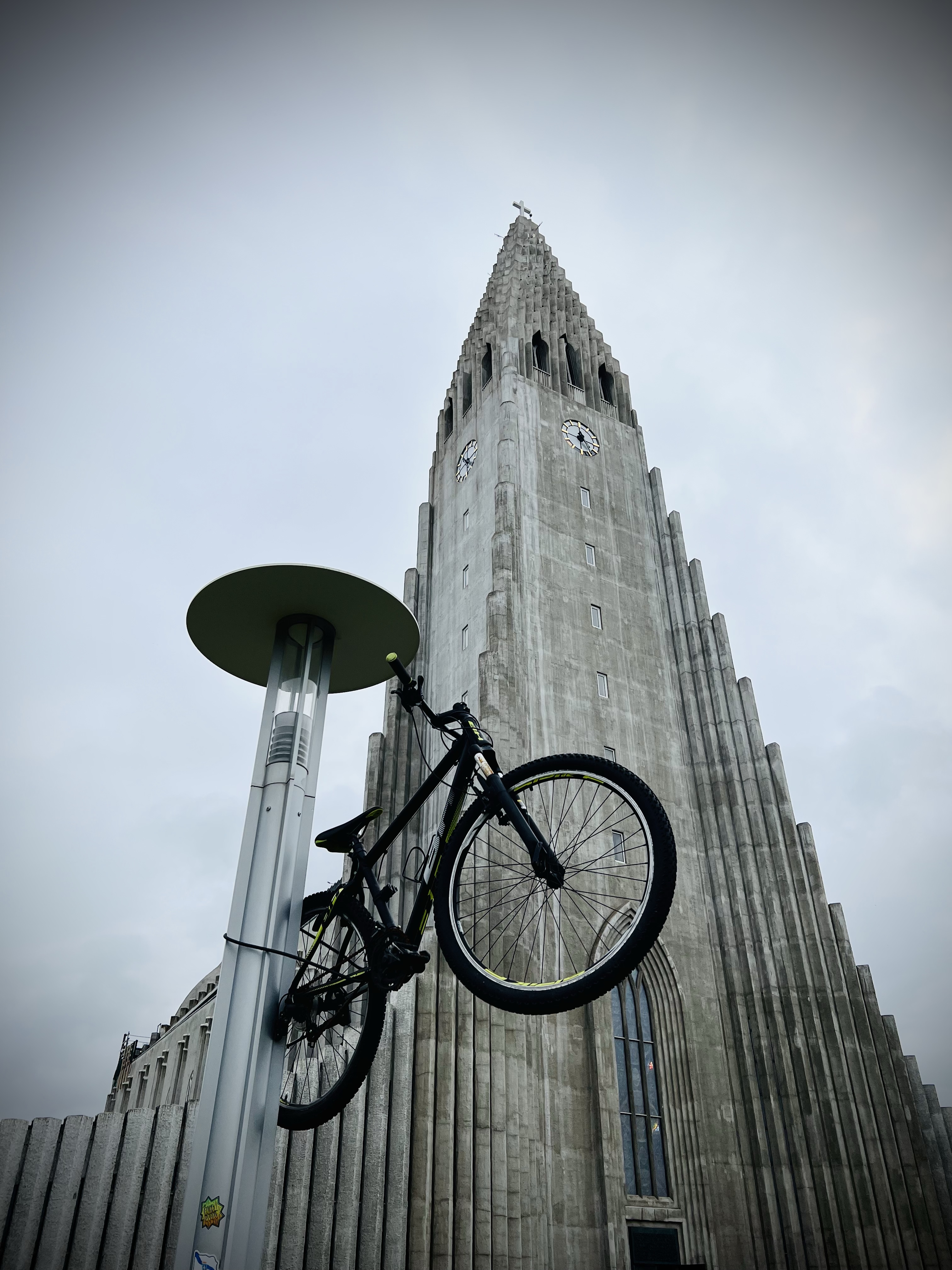
Hallgrimskirkja dominates the skyline of Reykjavik, Iceland. It’s the first thing you see as you head into the city from the airport. For many years it was the tallest building in the entire country. It’s design mimics the basalt columns found across the geology of Iceland. This Lutheran church is essentially Icelandic.

At first I thought this was some modern art but I soon realized it was really just a bicycle chained to the top of a light post, with Iceland’s largest church in the background.

Hallgrimskirkja is the largest church in Iceland. It was designed in 1945 but it was not completed until 1986. This gives hope to the continuous mass that is Barcelona’s unfinished Gaudi masterpiece La Sagrada Familia. It will be finished, someday.

This church topped my sketch list for Reykjavik. I love to sketch architecture. It is the best way to get to know a building and I sketched Hallgrimskirkja from a few different angles and perspectives. It is a building that holds up to many sketches. Here’s one:

While in Reykjavik, my apartment was a block and a half from Hallgrimskirkja, so it was easy to wander back to my home base. All I had to do was look for the tall spire, like a beacon announcing my Icelandic digs and wander towards it. It worked every time.

The church changes with the weather, from overcast to Icelandic sun.

One sketch I did was from a children’s playground at Njalsgata (half a block from my digs). The sketch was dominated by the tall spire of Hallgrimskirkja and in the foreground was my local coffee shop, Reykjavik Roasters. Here I enjoyed an double cappuccino and a blueberry muffin. Coffee in Europe always seems so much better. Perhaps it’s the porcelain. Perhaps it’s the view, perhaps it’s the knowledge of being somewhere exciting and new.

Image

Lifer on a Dirt Road

On the first day of my WINGS ten day birding tour of Iceland, we headed out from Kelavik International Airport and birded a dirt road between the airport the capital of Reykjavik.

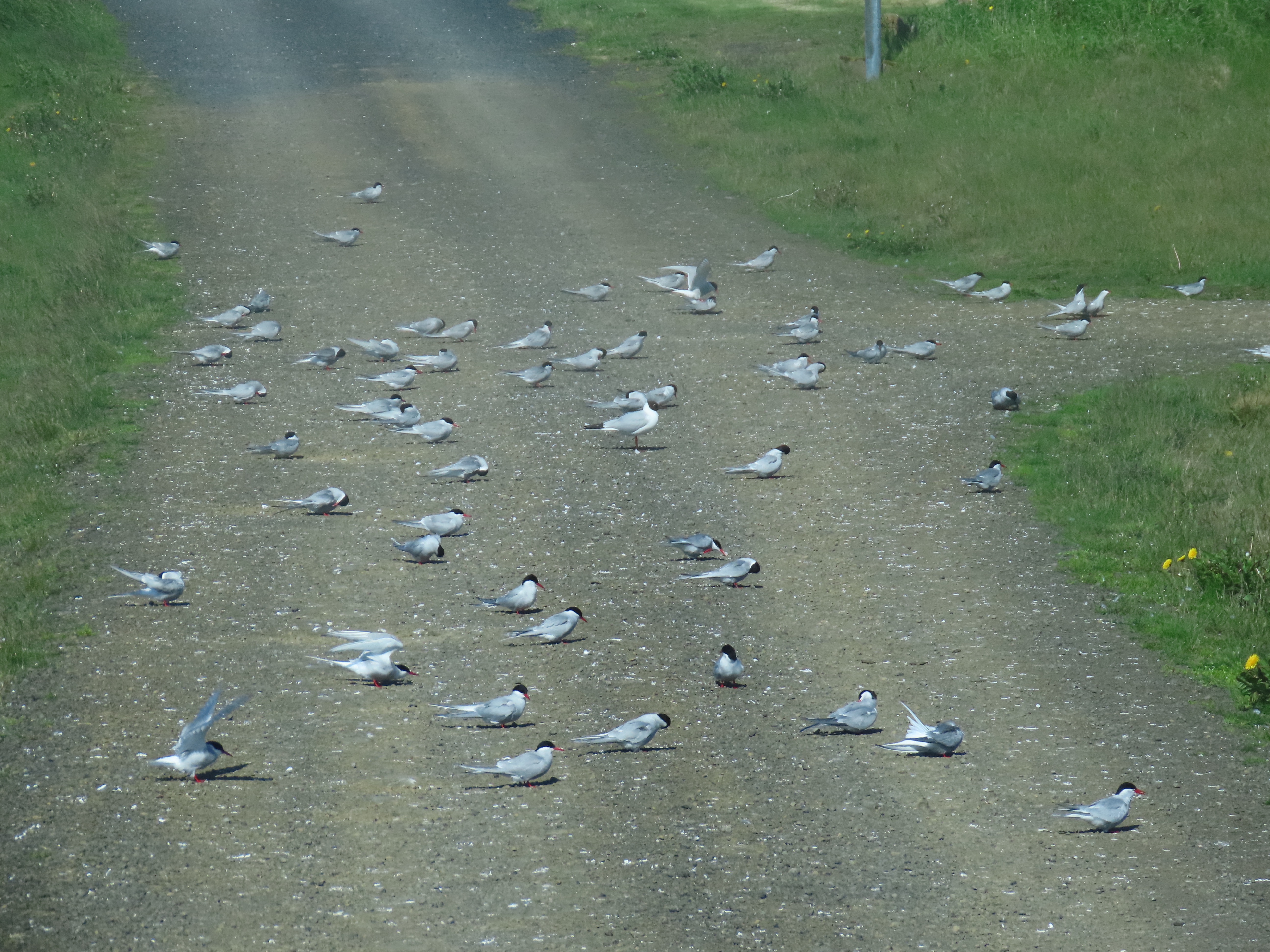
We were birding from our Mercedes Bird Mobile and it served as a moving blind, allowing us to get close to the birds, including the hundreds of Arctic terns that were roosting on the road.

One of these birds is not like the others. A black-headed gull amongst the Arctic terns.
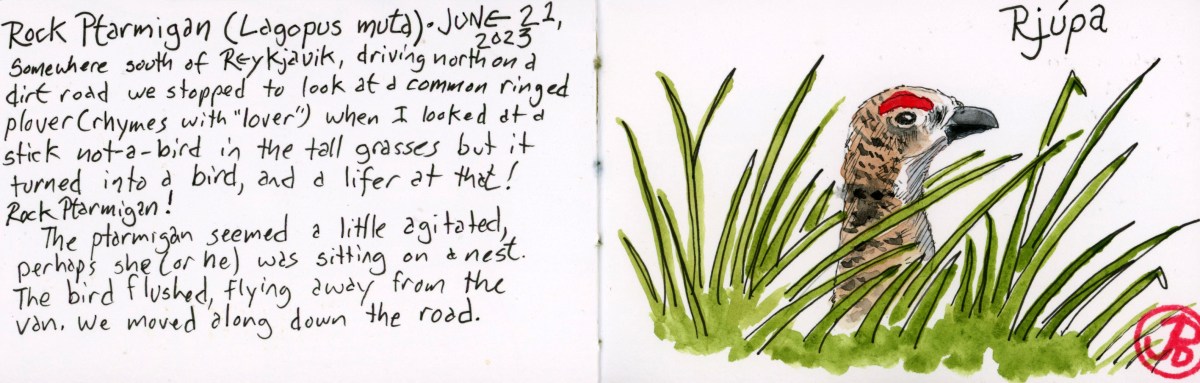
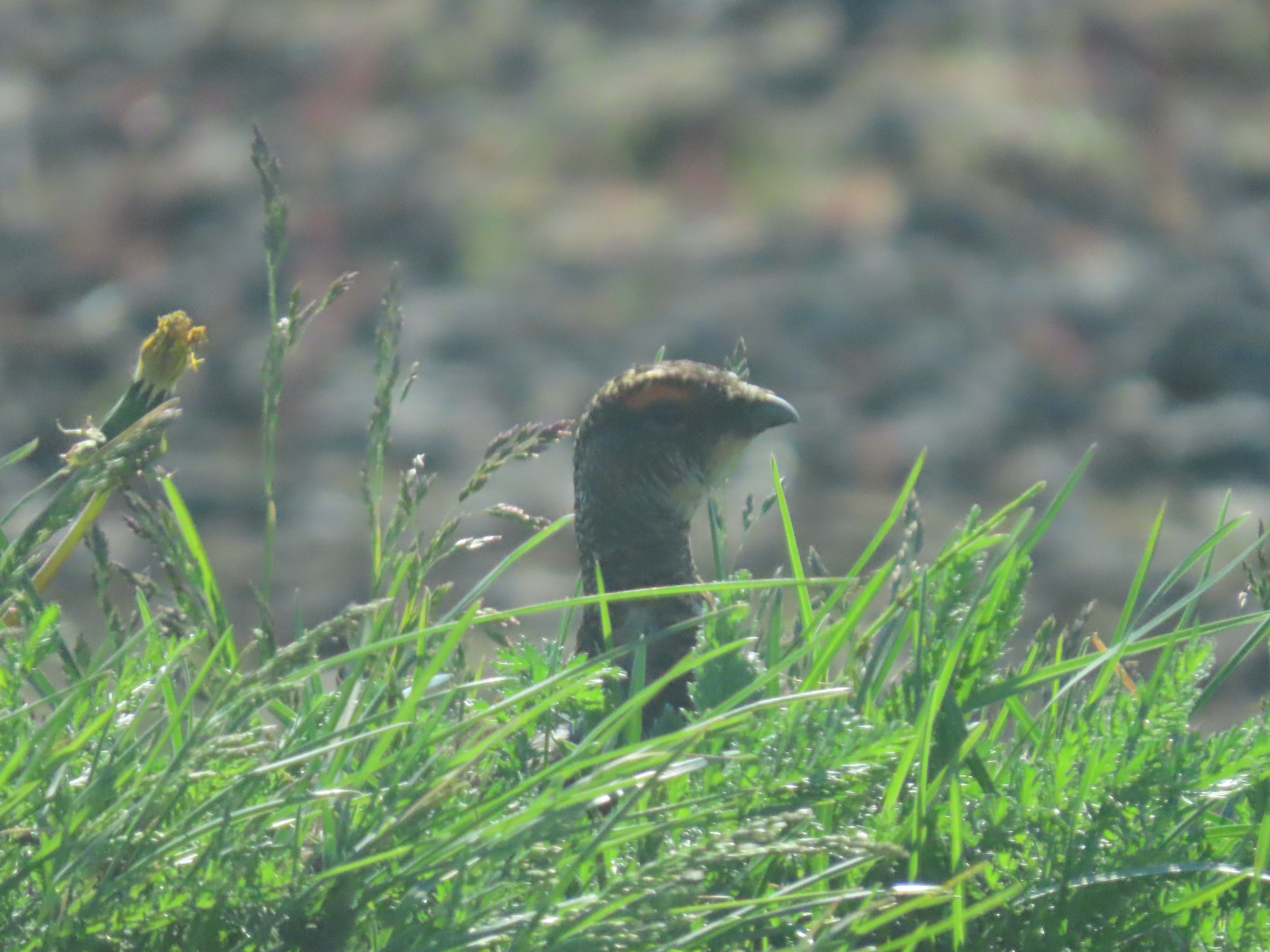
As we where driving north on the dirt road, we stopped to look at a common ringed plover (rhymes with “lover”) when I looked off to my right at what appeared to be a feathered periscope poking out of the green grasses. I put binoculars on the object and it turned into a lifer, the first one of the tour! A rock ptarmigan (Lagopus muta).

The ptarmigan seemed a little agitated by our presence. Perhaps the bird was on some eggs. The ptarmigan flushed, flying away from our van so we move off down the road.

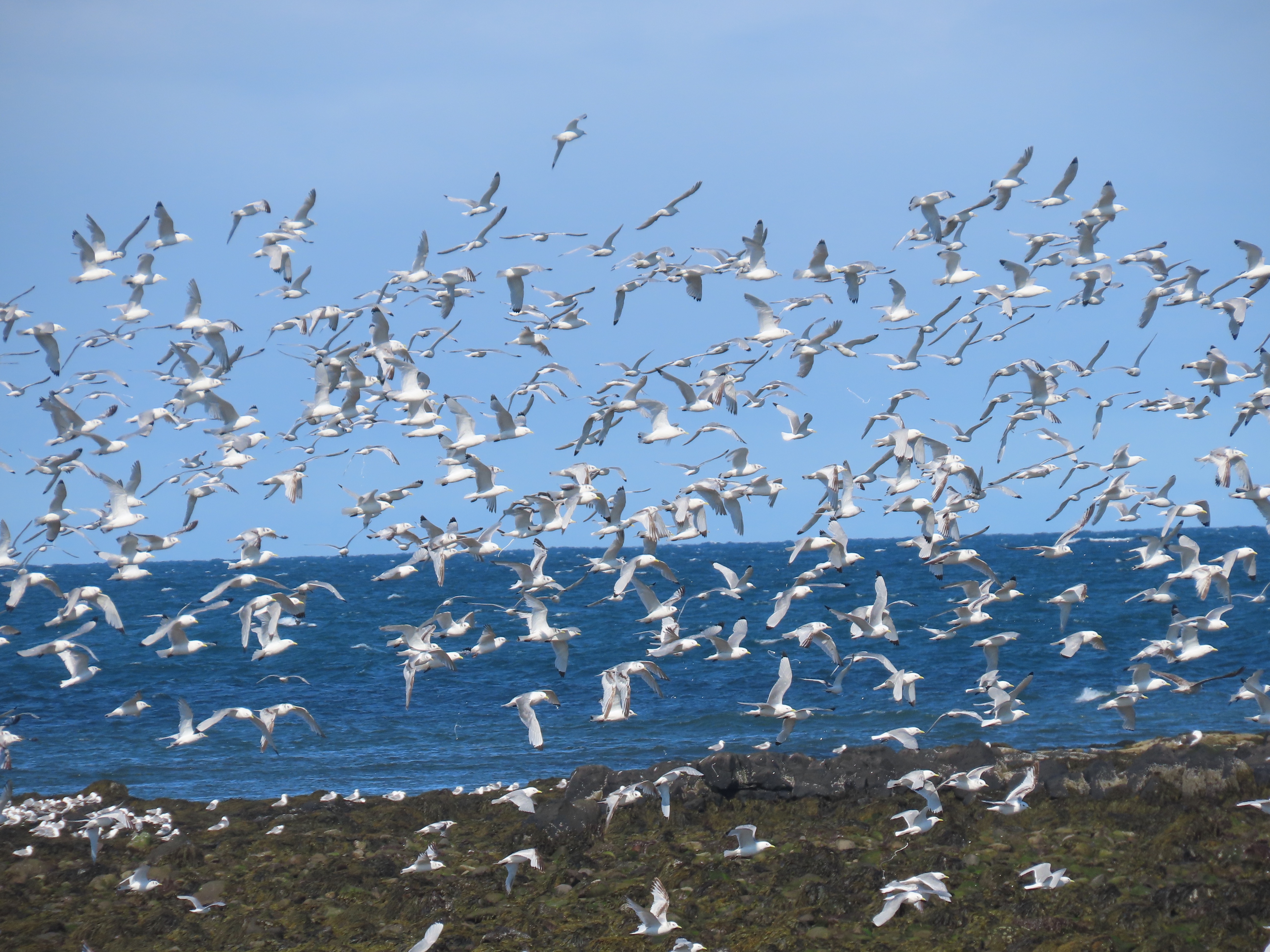
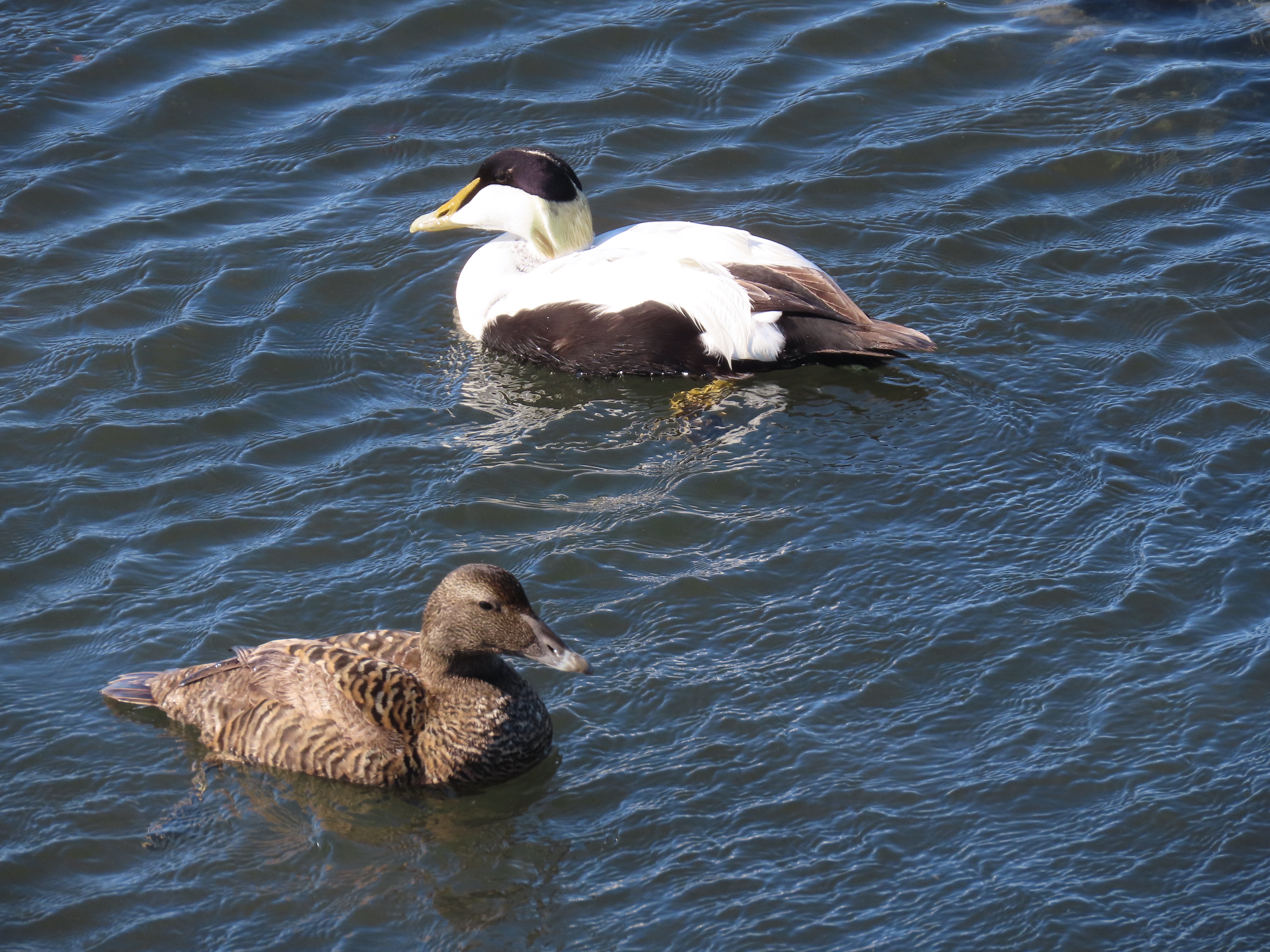
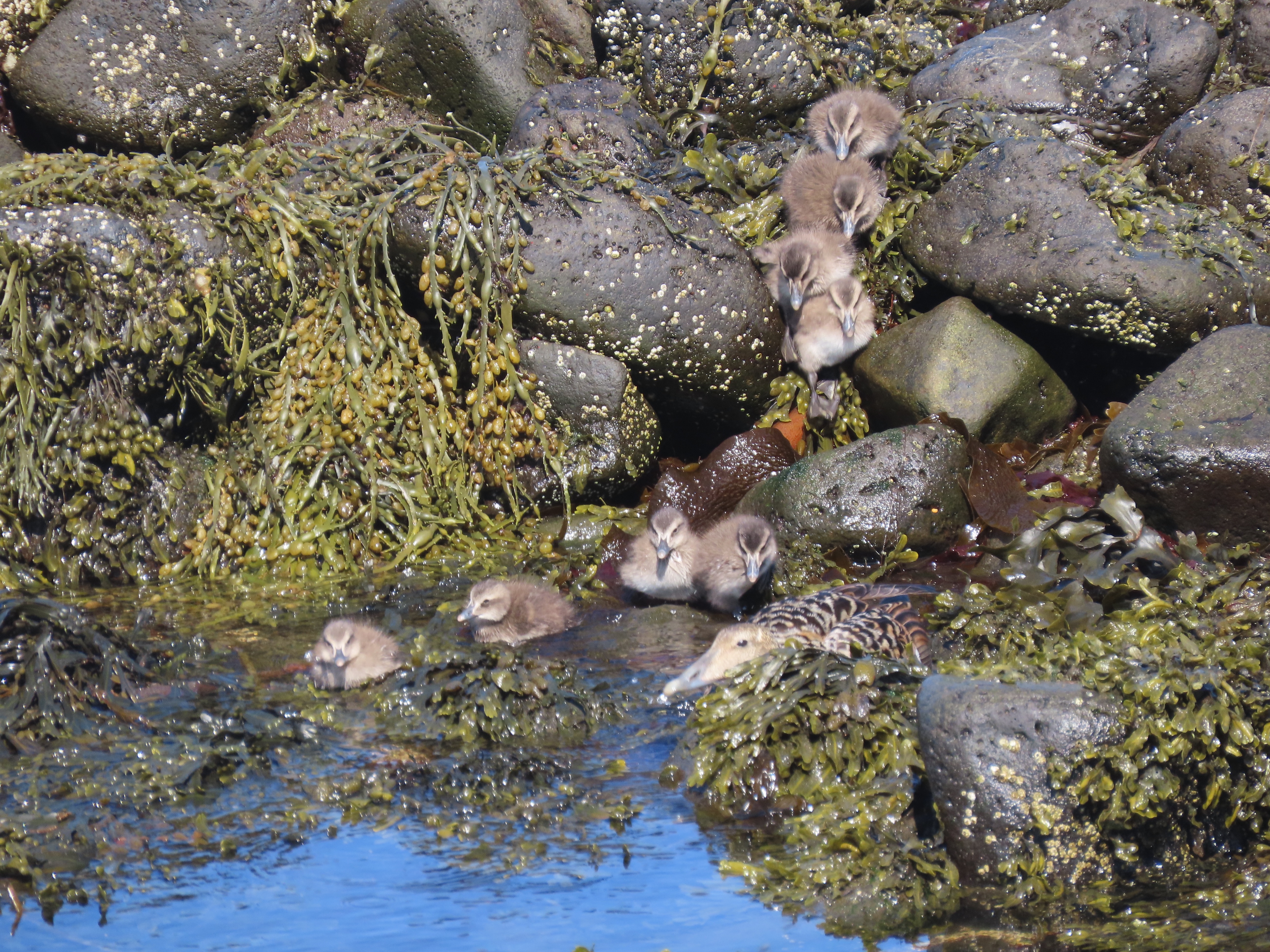
We stopped at Garðskagi Lighthouse where I saw more black-footed kittiwakes (perhaps 1,000) than I have ever seen before and just below us we had amazingly close looks at common eider both males and females with their newly hatched chicks.

Now that’s a lot of kittiwakes! On the California coast I occasionally see a lone individual roosting with other gulls in the winter. This was something amazing. And kittiwakes were in breeding plumage.
The beautiful male and female common eider, the most common duck seen in coastal Iceland.
A mother eider leading her perhaps newly hatched ducklings down to the water for the first time.
Image

SFO to SEA, SEA to KEF

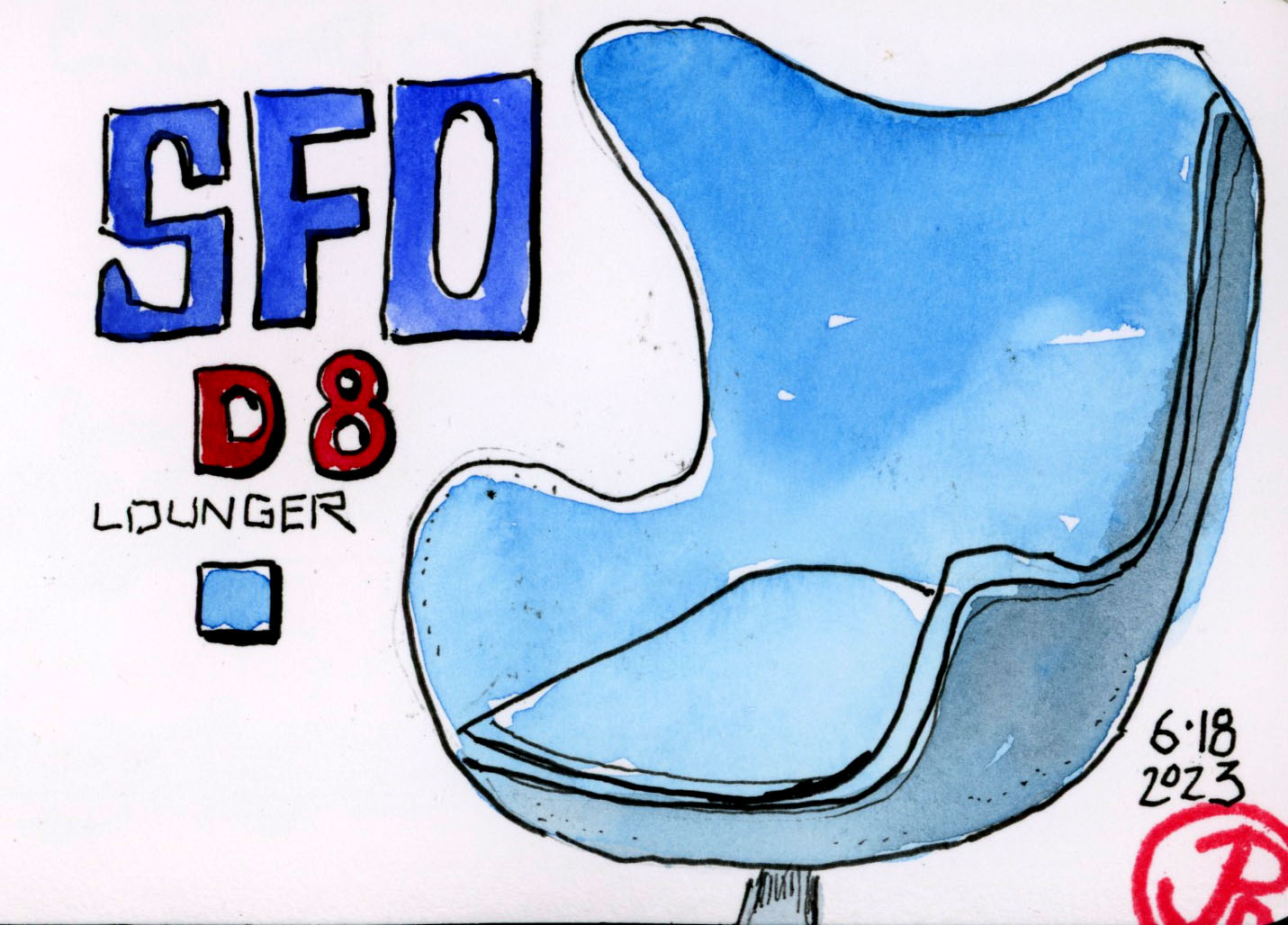
In previous SFO airport sketches I have drawn airplanes as they waited at gates. But this time I drew a swivel lounge chair. These are always prime real-estate at the airport and I found one to sit and swivel on and an empty chair to sketch.

I was pleased to know, after a bit of research, that my home international airport is highly rated amongst other airports. I guess it comes down to some simple details like where you park your butt on while you wait for your flight, and being able to swivel around to people watch.

Once on my flight to Seattle (SEA) I had a window seat in aisle 11, right in front of the starboard engine.

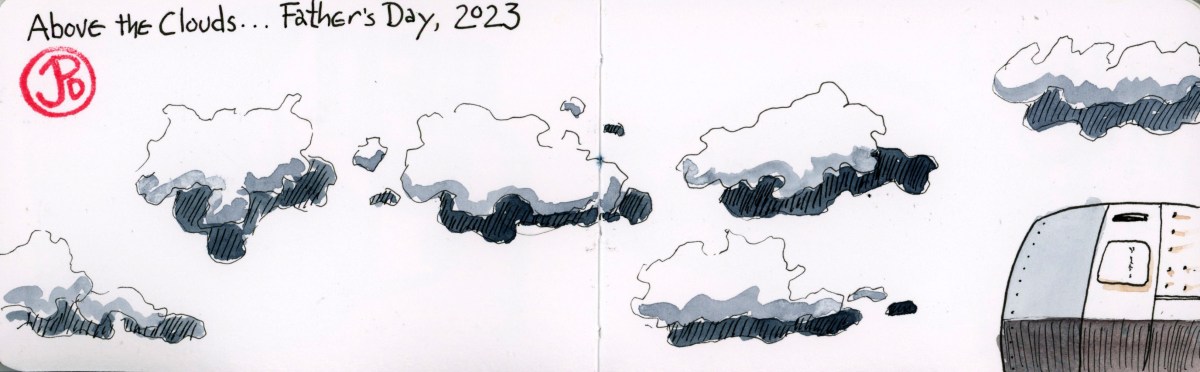
We were somewhere above Oregon or Washington, high above the clouds at our cruising altitude and I watched the clouds play across the landscape and the cloud’s shadows, well, shadowing it on the ground.

I did a sketch with my smaller panoramic journal, drawing in the starboard engine as a point of reference (featured sketch). Did I draw every cloud in my window view? We no, I used a bit of sketcher’s shorthand to sketch the most sketchable clouds.

At SEA, where it was raining of course, I transferred to my Icelandair flight to the Land of Fire and Ice.

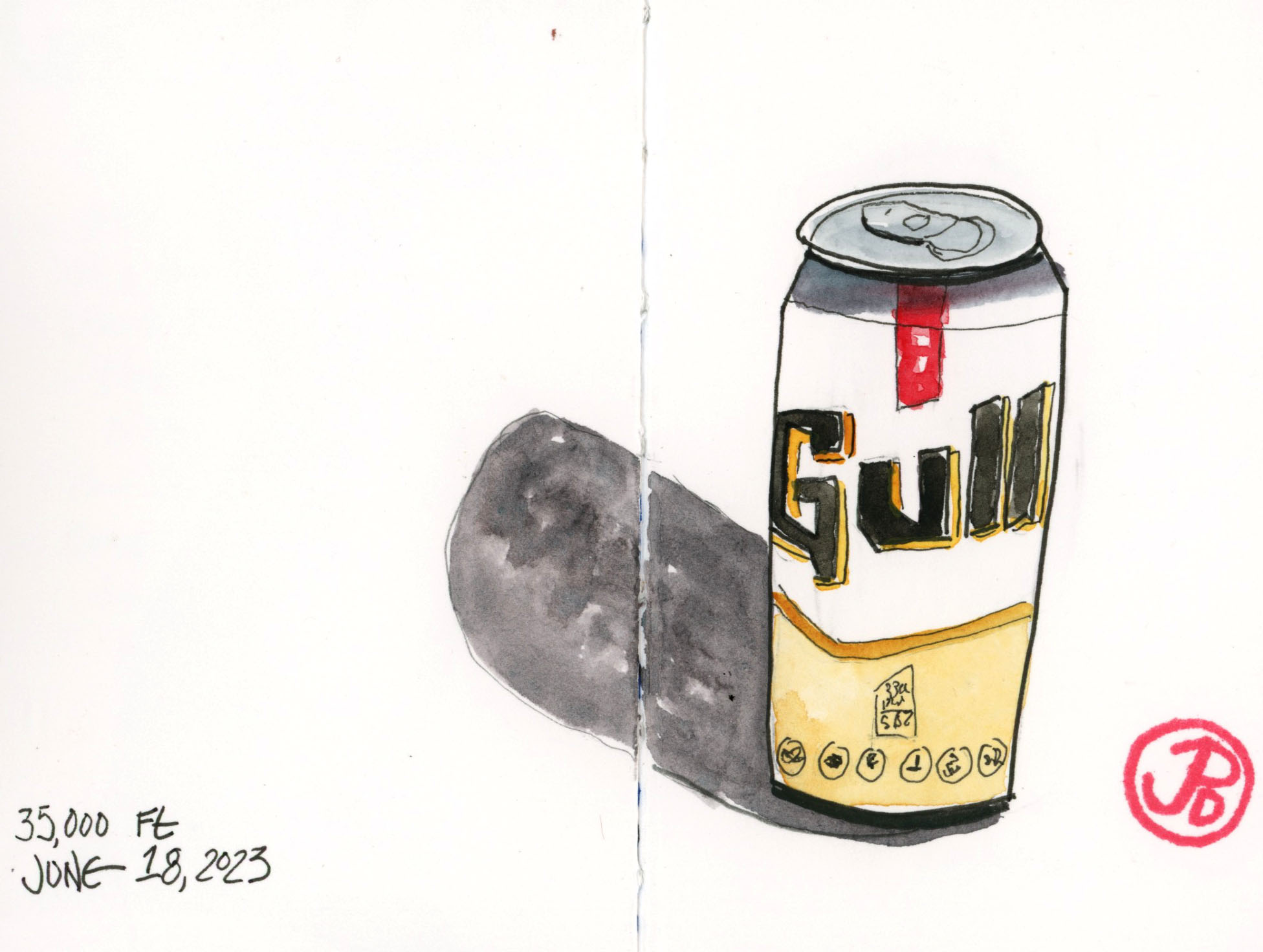
On this flight I was glad to see some Icelandic beers onboard. Being a bird nerd, I ordered a Gull Lager. It met my expectations and I did a sketch to pass the time.

Skal!

I couldn’t wait to set foot in Iceland and add more ink and paint to my journals.

Image

Reykjavik Sketches

The capital of Iceland is very walkable and sketchable.

From my apartment, a few blocks from the Hallgrimskirkja, I could easily explore Reykjavik on foot with my sketching kit in my pack. I kept my sketchbooks, paint palette, and Escoda travel brushes in a Sea to Summit dry bag, rain and watercolor doesn’t always go well together.

In this post I had included a few of my sketches I did on my Reykjavik walk-abouts.

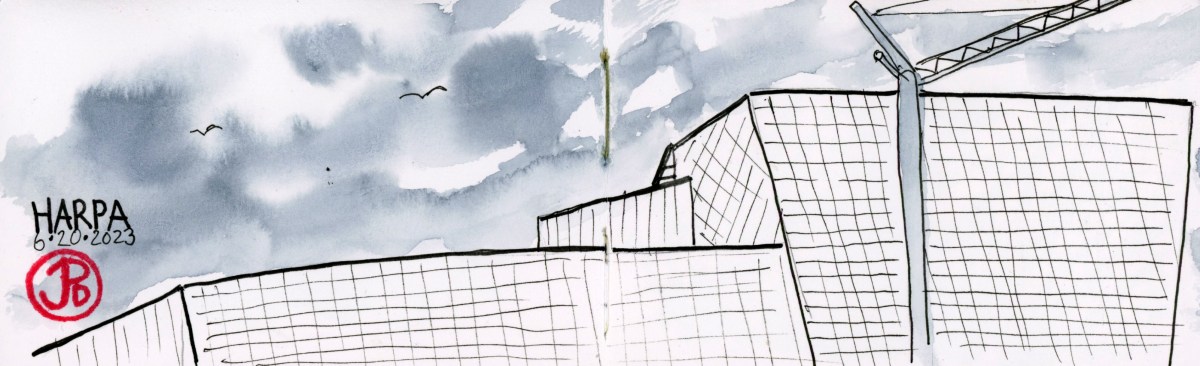
The featured sketch is the music venue Harpa, which I sketched from the hill at Arnarhóll. Harpa is the most important musical venue in Iceland. This is the home of the Iceland Symphony Orchestra and the Reykjavik Big Band. The modernistic music hall was designed by Olafur Eliasson and Harpa helped revitalized the harbor area.

Iceland does not have a great public transportation system. Buses can take you places but you really need a car to get around. The country has no rail but in 1919 the locomotive Minor was the apex of Icelandic rail. She is a diminutive 0-4-0 and is now on display in the Old Harbor, so I had to sketch it. I added steam rising from the stack which is purely artist whimsy.

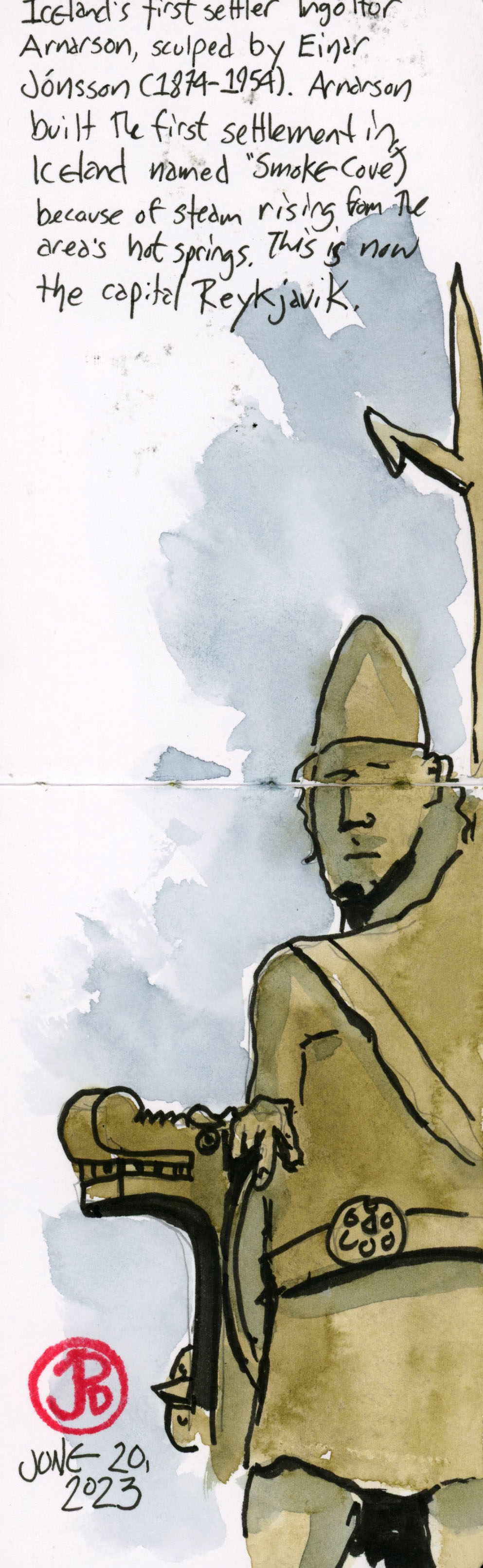
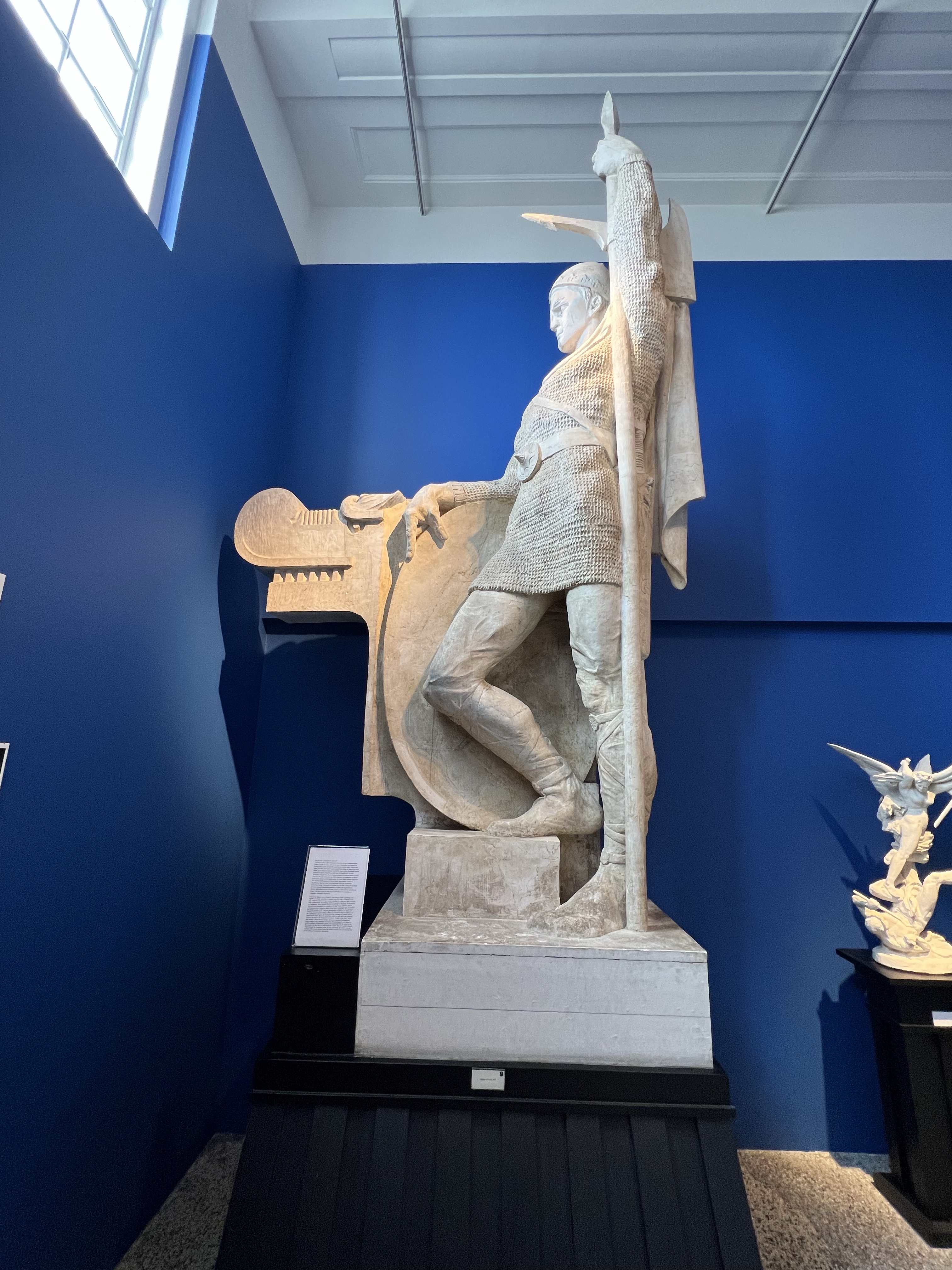
I have always loved sketching statues because they don’t move and they really tell you about the values and culture of a nation. So I sketched the Iceland’s first settler, Ingolfor Arnarson sculpted by Einar Jonsson. Arnarson noticed steam rising from the area’s hot springs and gave name to Reykjavik meaning “Smoke Cove”.

I visited Einar Jonsson’s house and museum, which is across the street from Hallgrimskirkja. This early prototype of the Ingolfor Arnarson statue that now is a much photographed icon of Reykjavik and Iceland.
Image

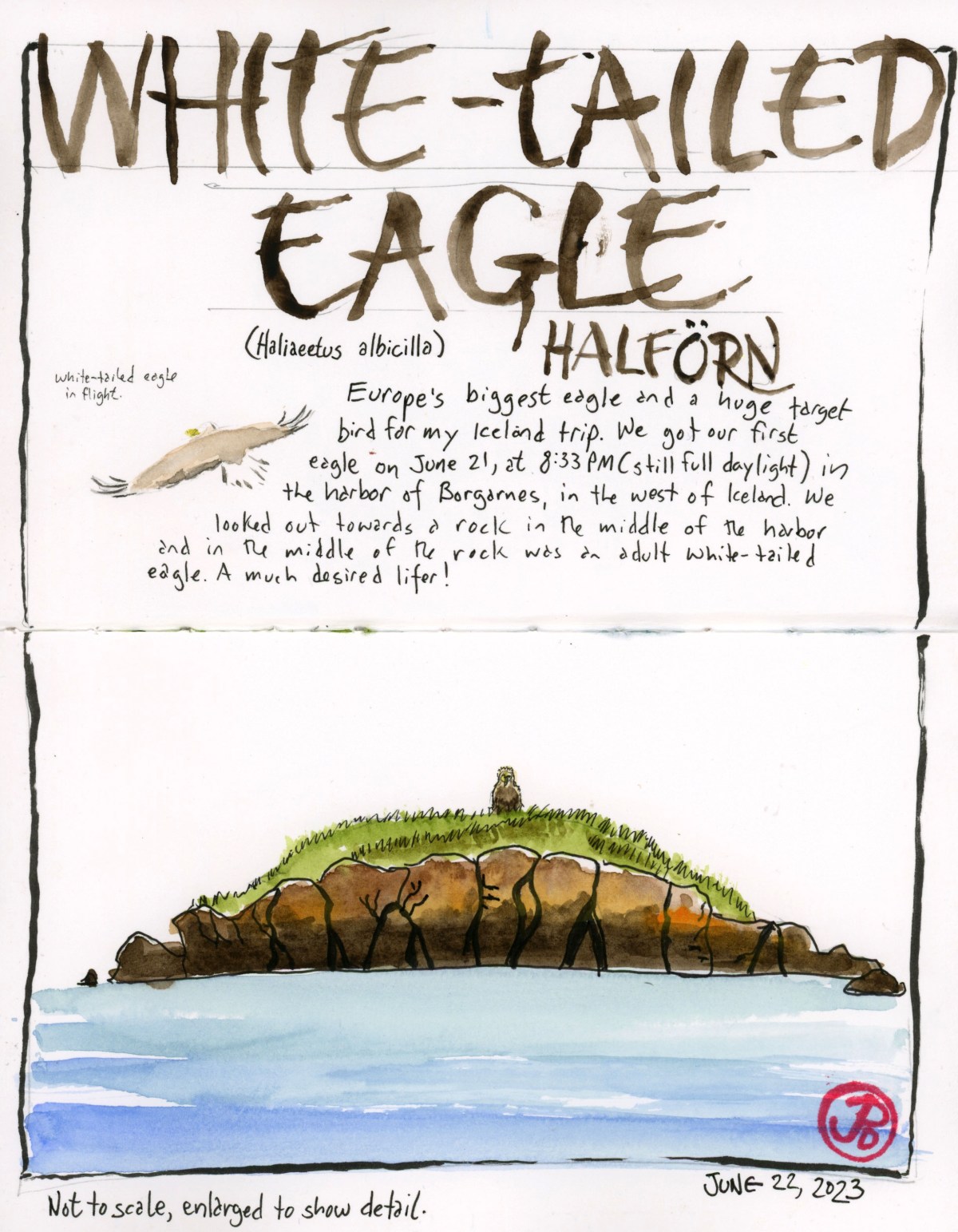
Europe’s Largest Eagle

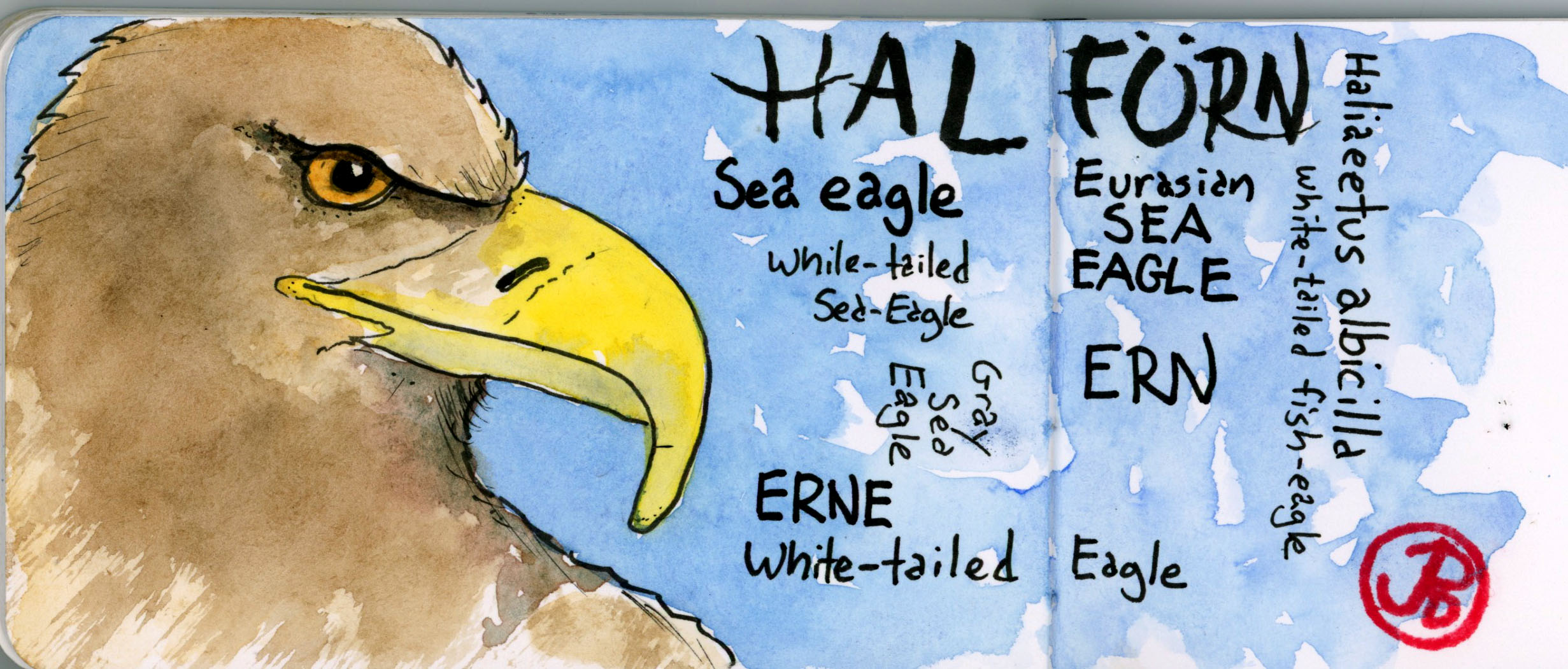
High on my wishlist was Iceland’s and Europe’s largest eagle: the white-tailed eagle.

This eagle is a sea eagle and is slightly larger than the bald or golden eagle found in North America. The white-tailed is both an apex predator and a scavenger and fills a similar niche as the bald eagle in North America.

The eagle has become rare or extinct in parts of its Eurasian range because of human and other causes.

According to a recent BBC article, white-tailed eagles has been hit hard by the avian flu. The eagle has shown declines in Scotland over the past few years. The avian flu has also caused declines in birth rates of seabirds such as gannets and skuas.

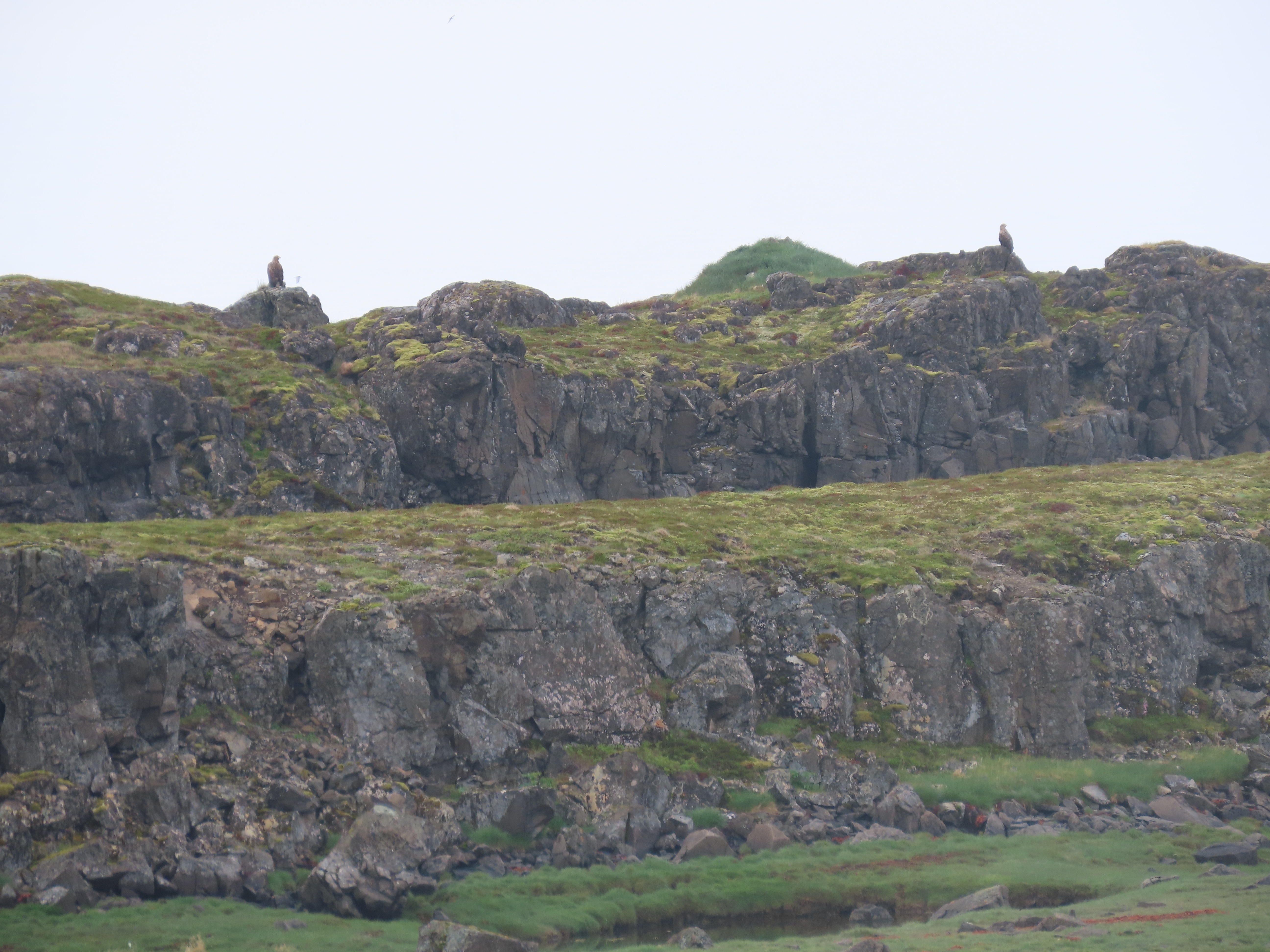
In total we saw seven individuals in the Westfjords of Iceland. Most were far off, best seen through a scope. But there was one that I first I spotted flying parallel to the road, just below us along the shore of a fjord being pursued by two territorial redshanks. It was amazing to see this sea eagle in flight with the naked eye.

Two white-tailed eagles with eaglets (not visible in photo).