We were at the dock before first light. This was our second jaguar expedition and it seemed hard to beat the six cats we saw the previous afternoon. But that didn’t stop us from trying.
In the back of my mind, it occurred to me that we could be skunked because with wildlife, nothing is guaranteed. The jaguars would either be active and out in the open or reclusive and in deep forest away from the water course. We had been very lucky to see six jags the previous outing, this was more that some of the totals of past tours where numbers of one to four jaguars seen was a pretty good haul.
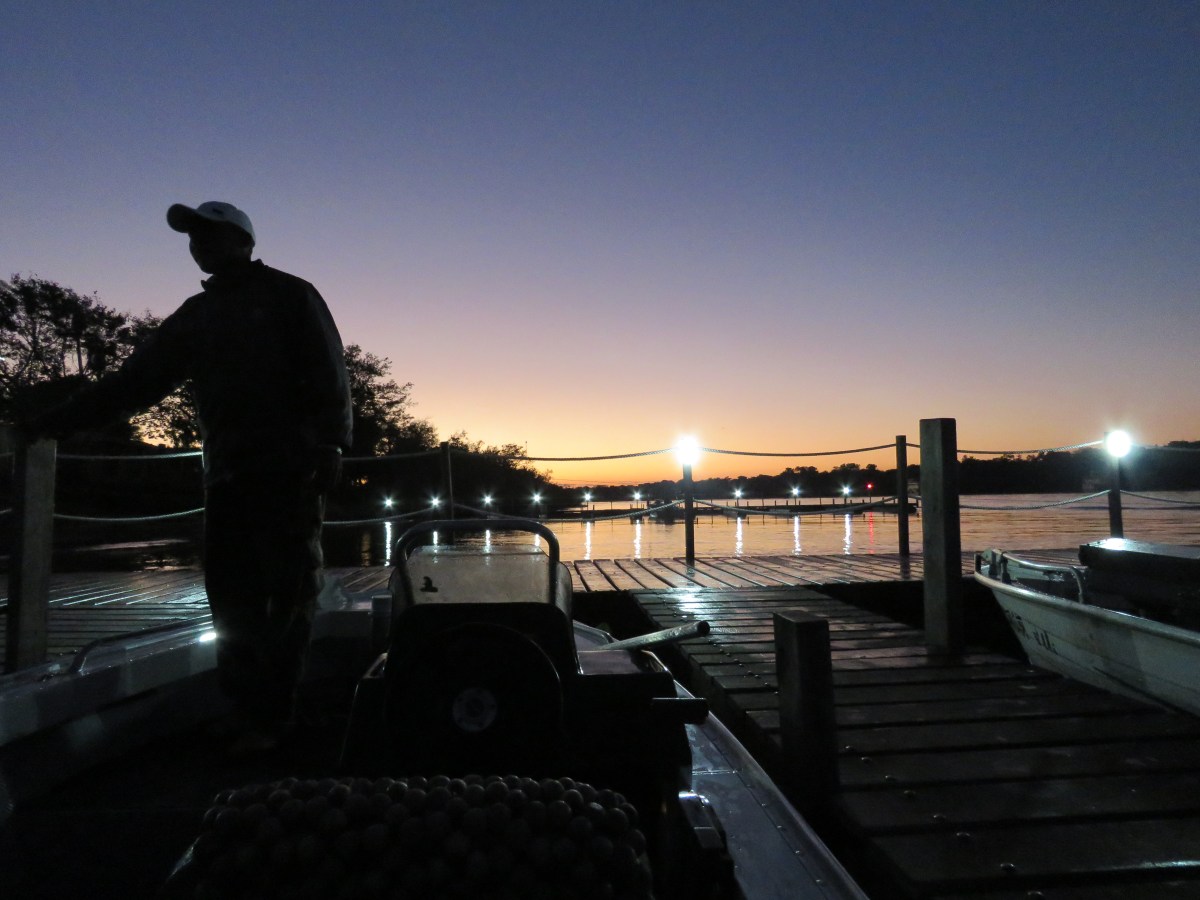
To see wildlife, it helps to get an early start and this was certainly true of finding the New World’s largest cat.
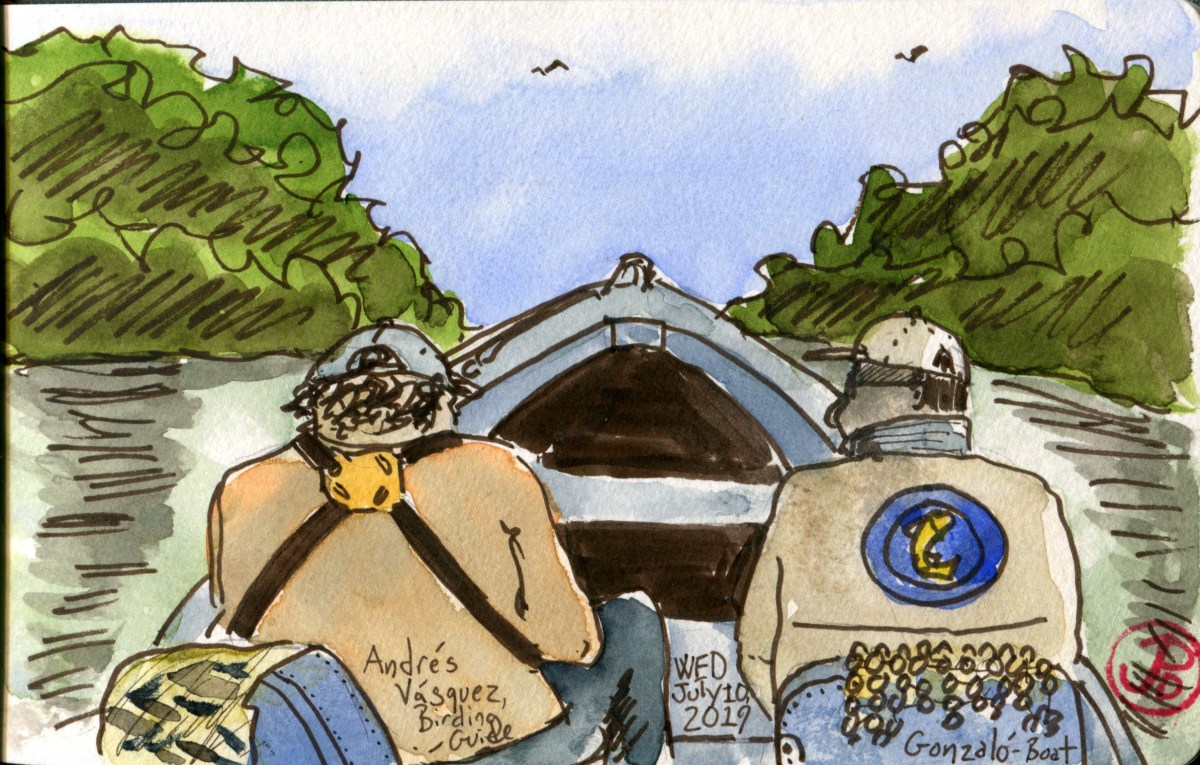
We were off up the Cuiaba River and I was glad that I packed a jacket because this was the first time I wore it in Brazil. In the previous week a cold front had moved in from Antarctica, keeping temperatures comfortable and reducing humidity. We were speeding up river to get to the tributaries where jaguar was most likely.
Within an hour we joining a flotilla of other boats, peering into the far-shore green. Two young males had been seen. And now we waited for them to appear.
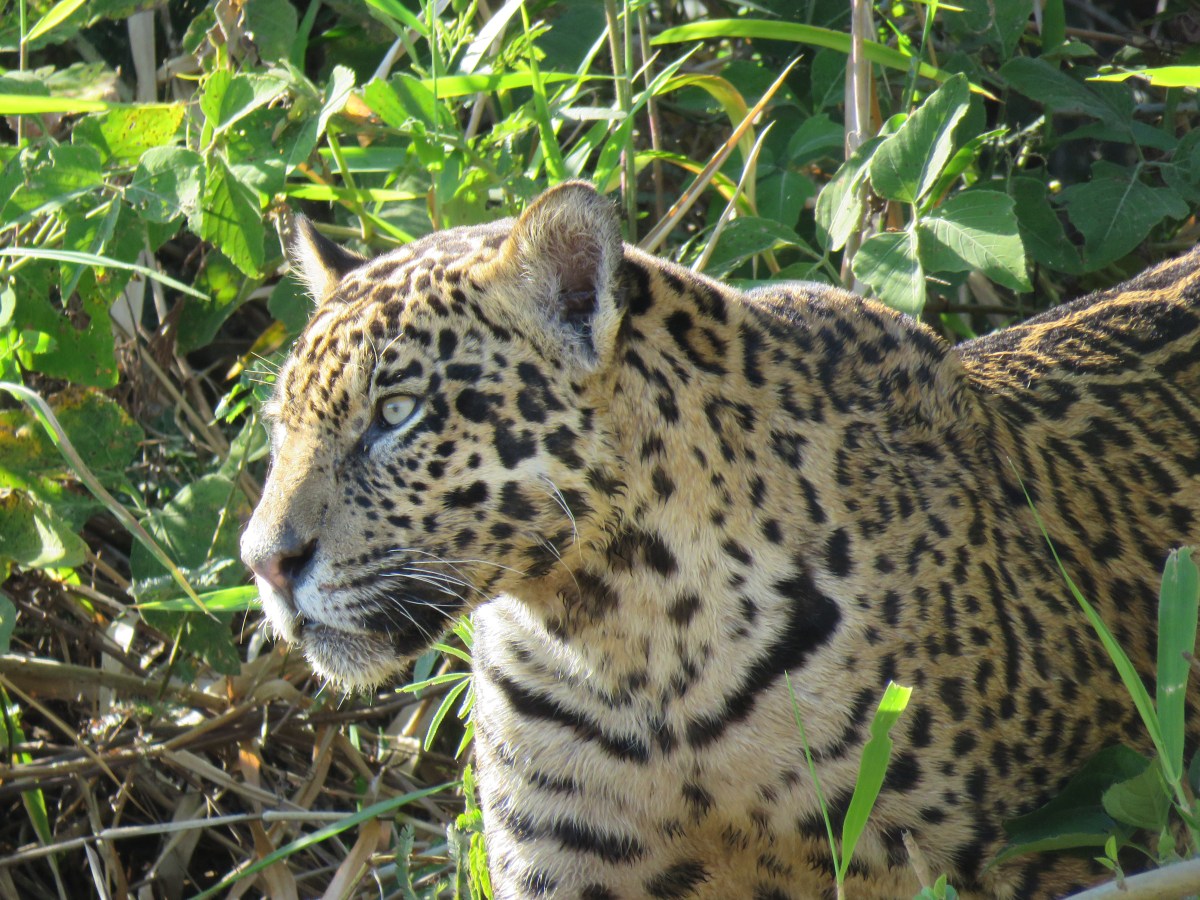
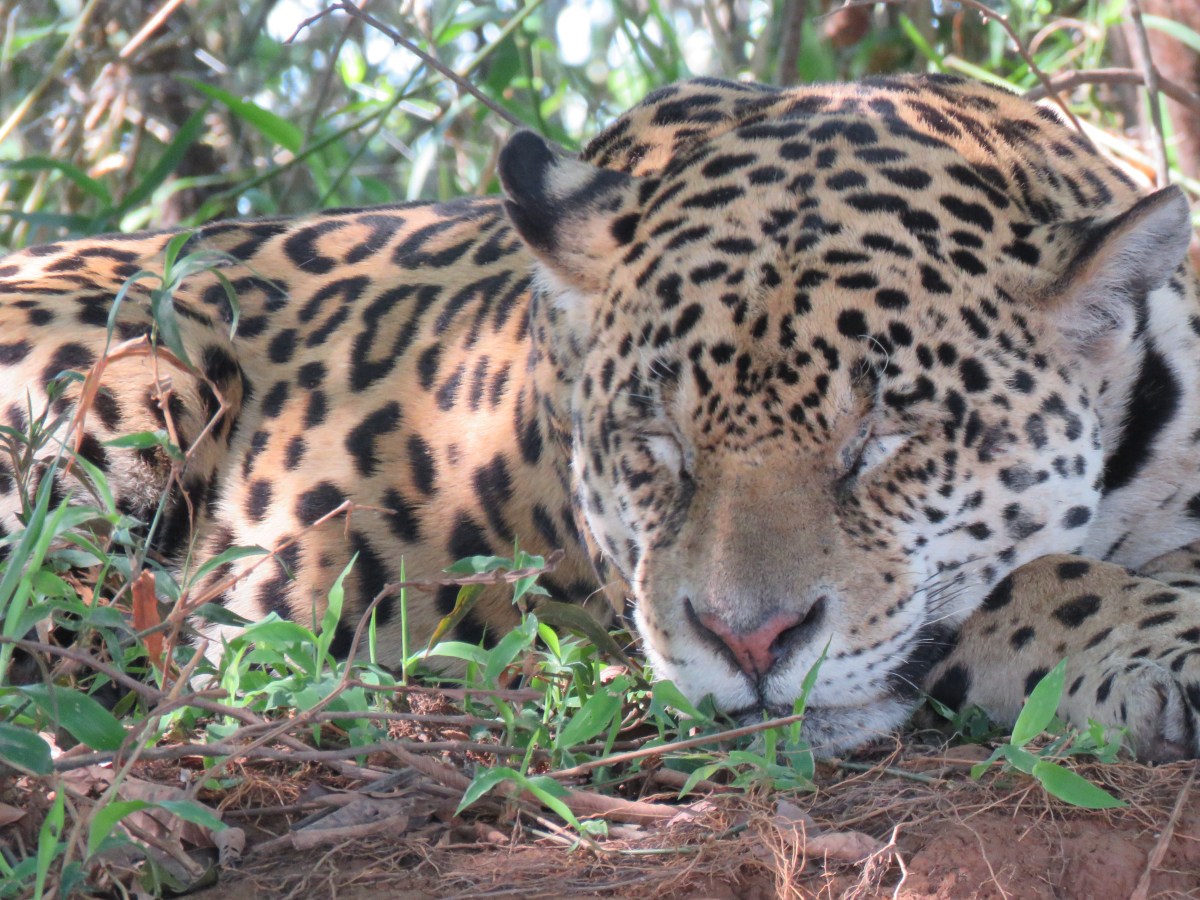
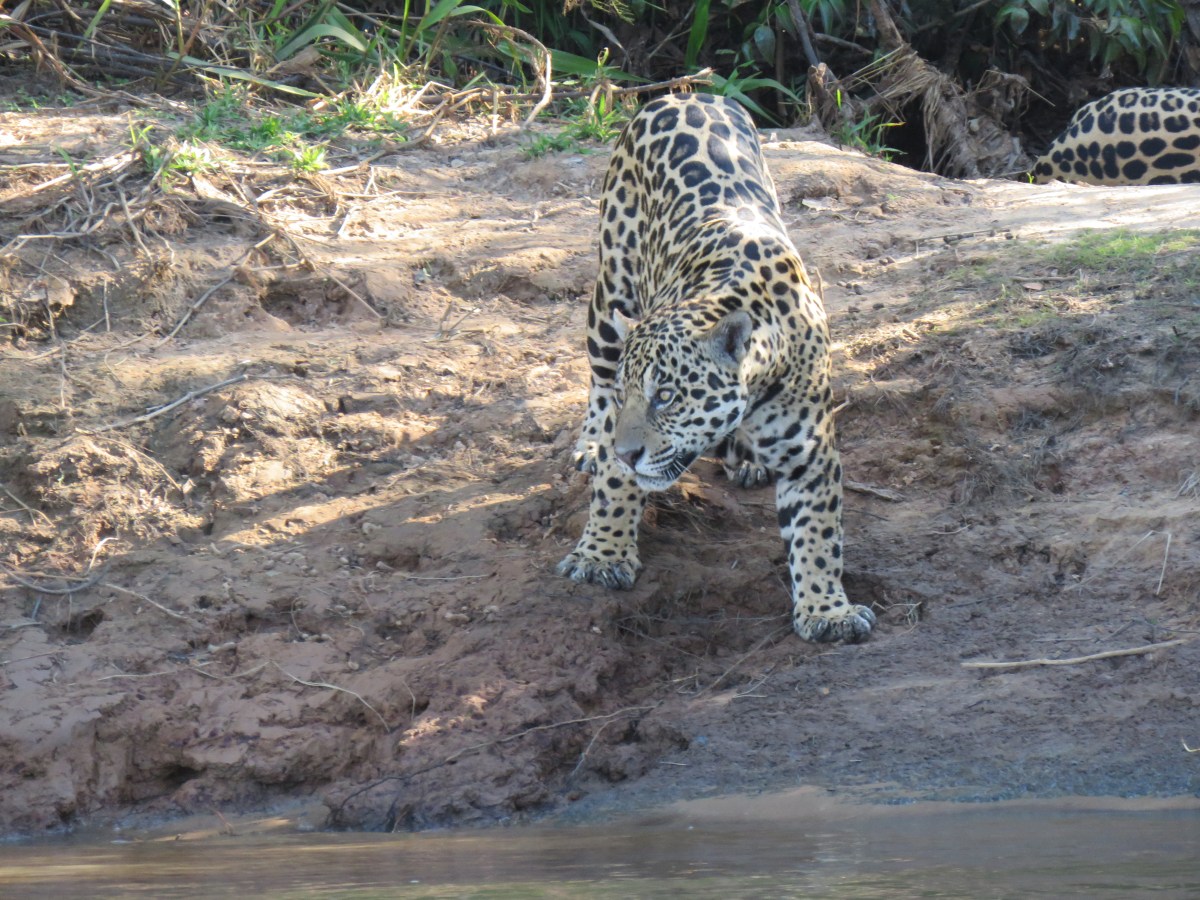
A young male appears out of the green!
The two young jaguars were heading downstream, making half hearted attempts at hunting caiman. They still have a lot to learn. They had yet to prefect their deathly pounce.
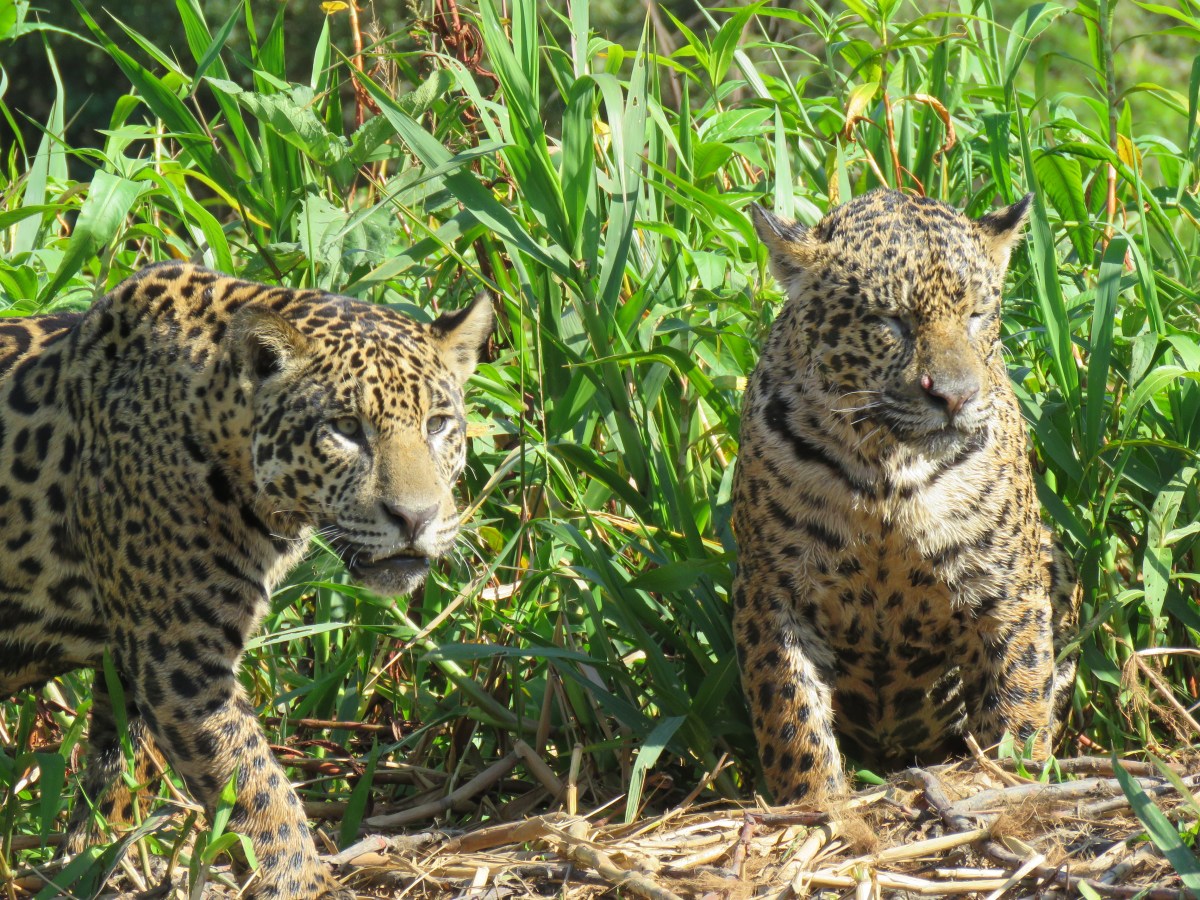
The two young males hunting along the riverside.
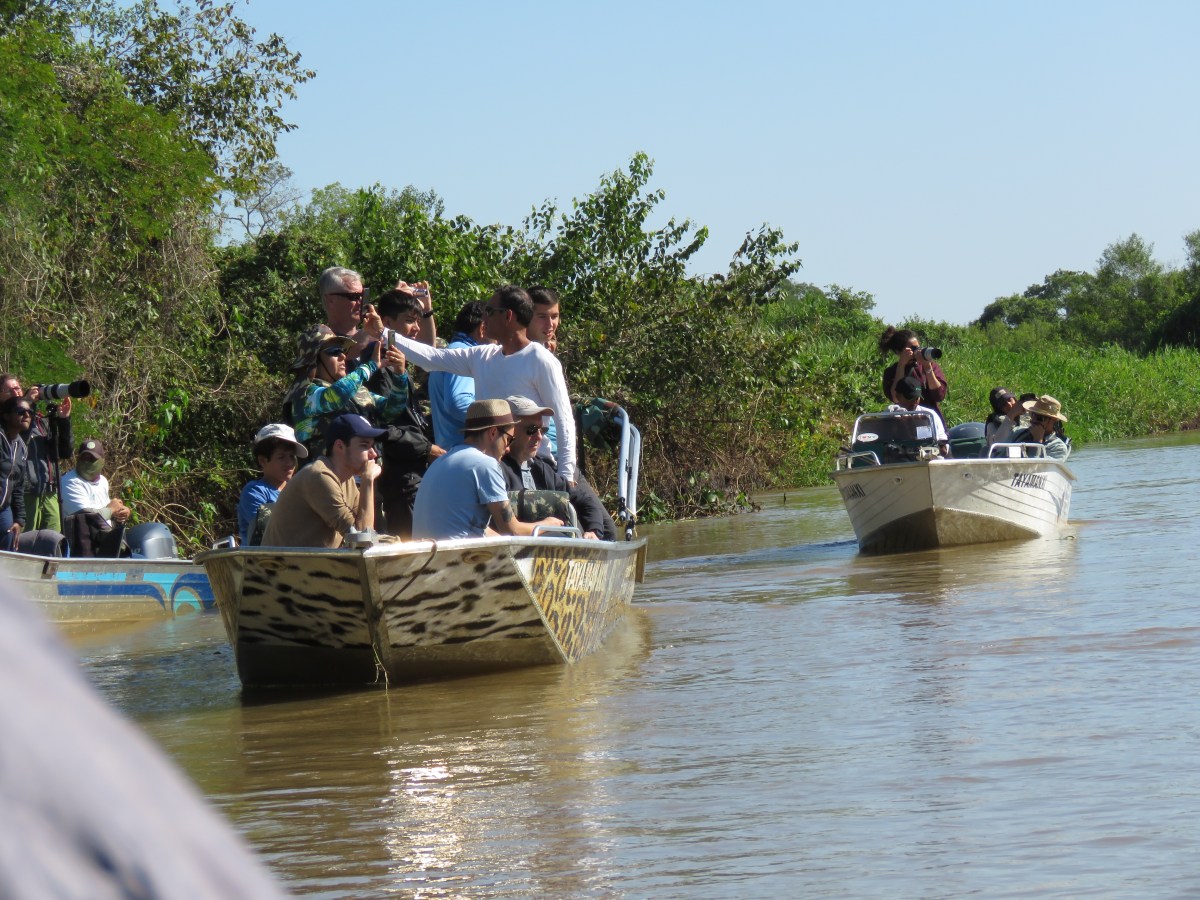
On the other side of the camera. The flotilla of ecotourists that followed the jaguars every move. There’s even a guy taking a selfie. I have very mixed feelings about the intrusion of people into the jaguar’s lives and I wondered how our presence could possible affect the jaguar’s behavior both positively and negatively.
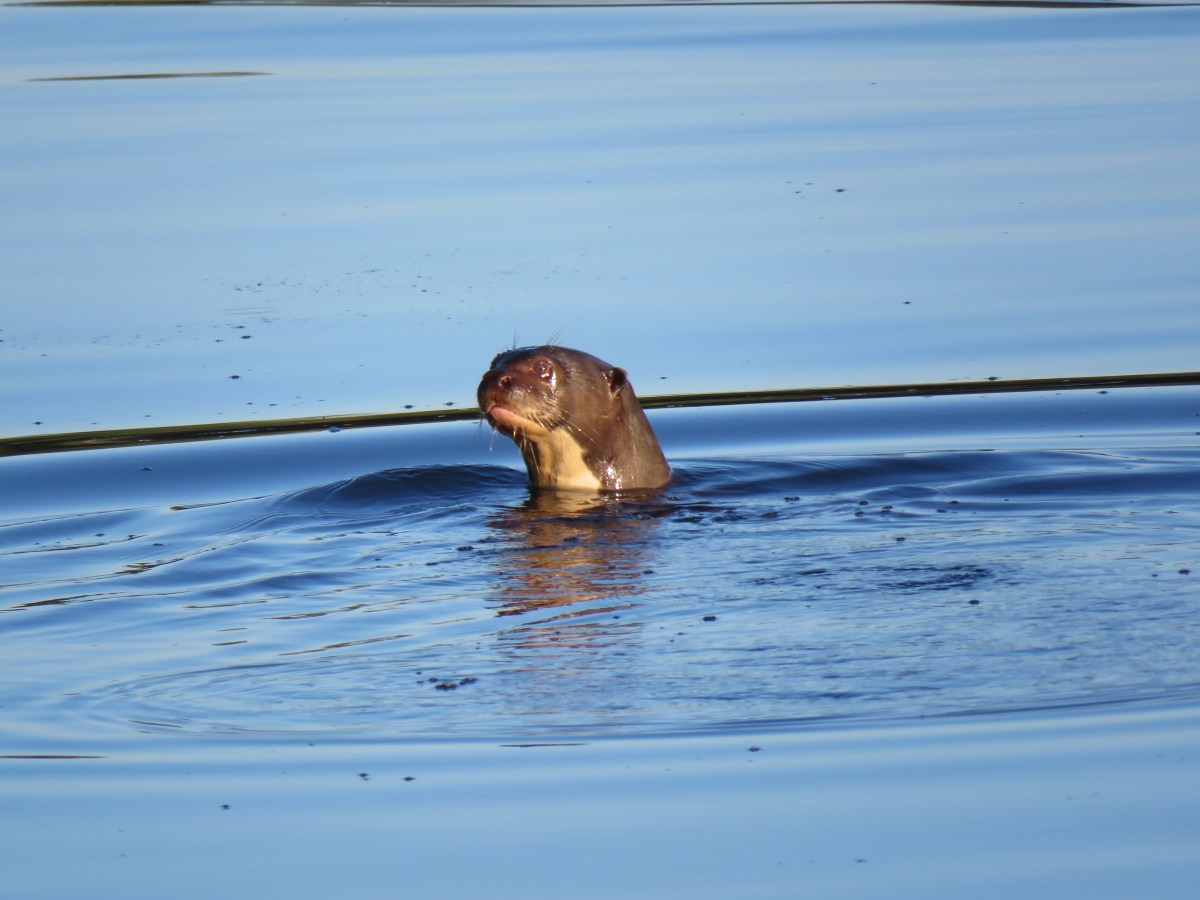
We followed the jaguars along the river. One turned back and swan across the water to the near riverbank, demonstrating what I have already read: that jaguars are excellent swimmers.
 Black-capped donacobius seemed to be our constant companions in the rivers of the Pantanal. A pair readily defended it’s patch of reeds with an auditory duet of sound.
After watching the two young cubs hunting along the river side we headed off in search of more jaguars. At this point in the morning we’d seen a total of eight jaguars.
On one of the smaller tributaries we came upon a single boat on our port side. This was nothing like the flotilla we had just jettisoned. A boat stopped by the riverside meant only one thing: jaguar.
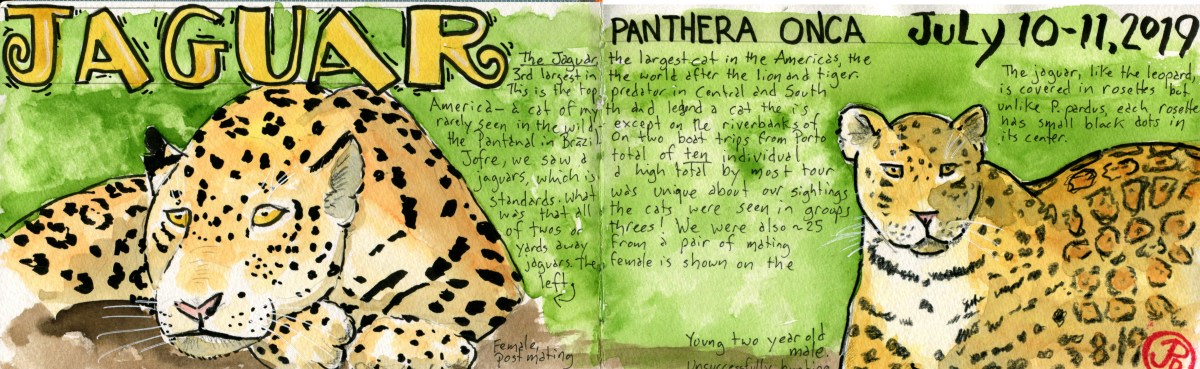
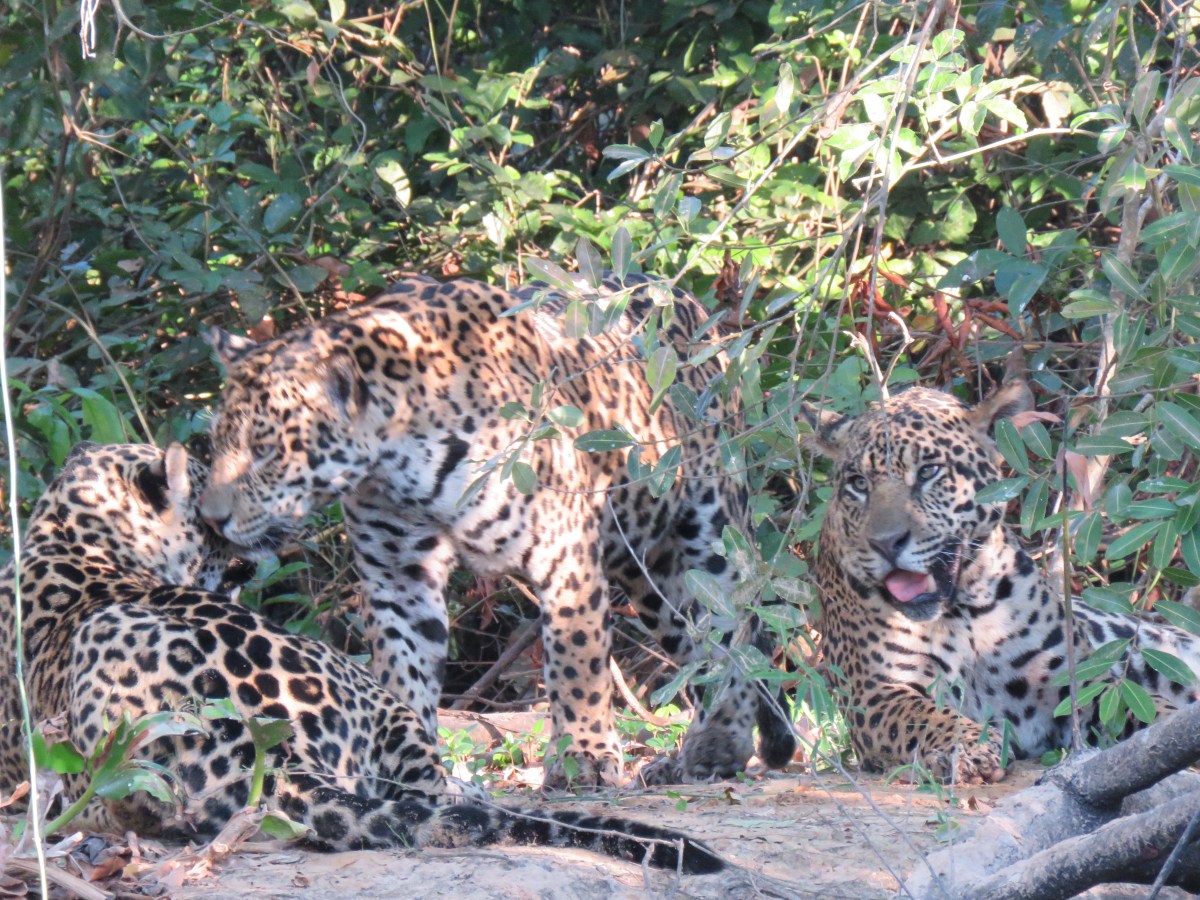
Sure enough there was a female jag on the bank 30 yards away from our boat. To our left was a large male pacing back and forth.
Over the course of the next 30 minutes we watched these two jaguars, from our boat making baby jaguars. We stayed with the amorous cats for about 30 minutes and finally decided to leave them to their privacy.
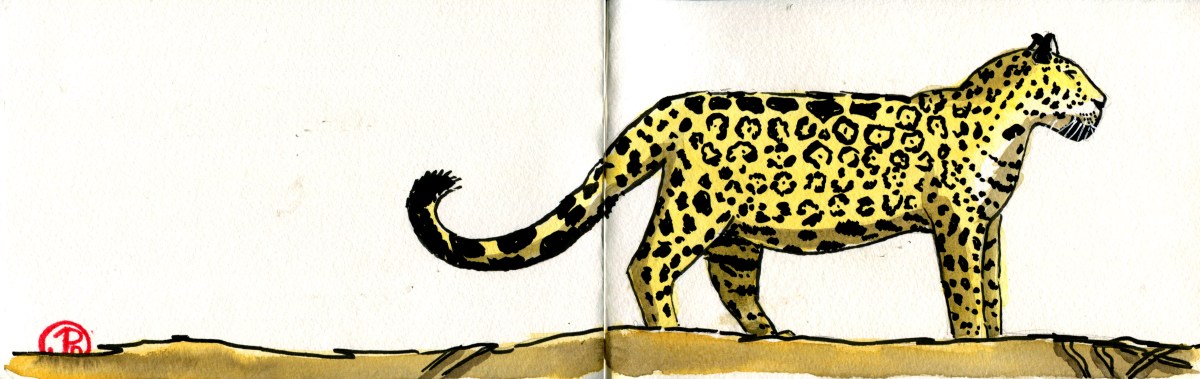
By the time we got back for lunch and after two boat trips in the Pantanal, we had seen a total of ten jaguars. We had been very lucky. This was a once in a lifetime experience that would live long in my mind and in my sketch book.


 Sunrise from the top of Tower One.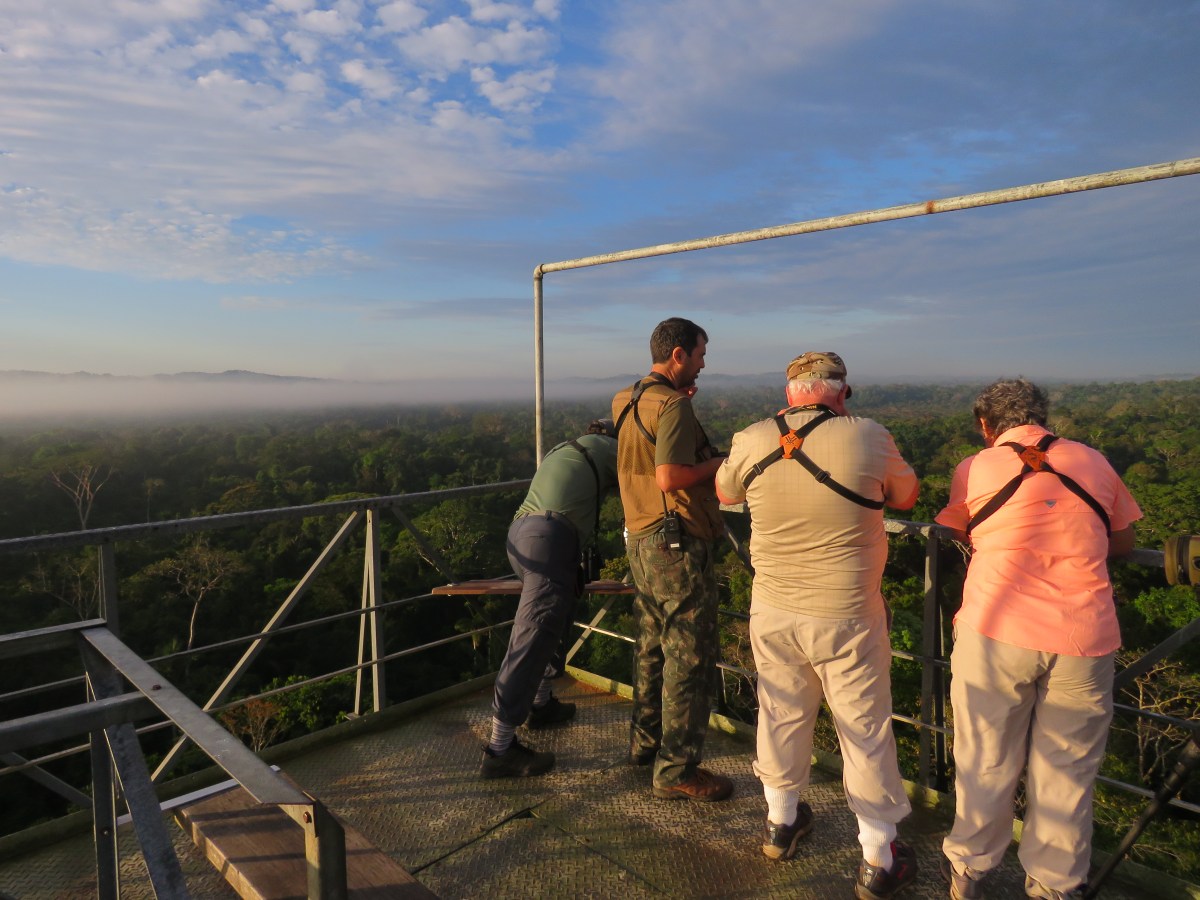
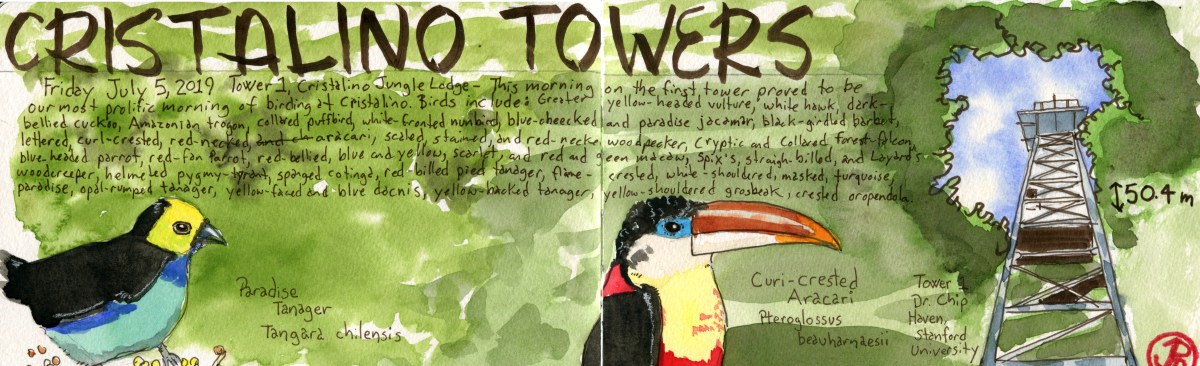
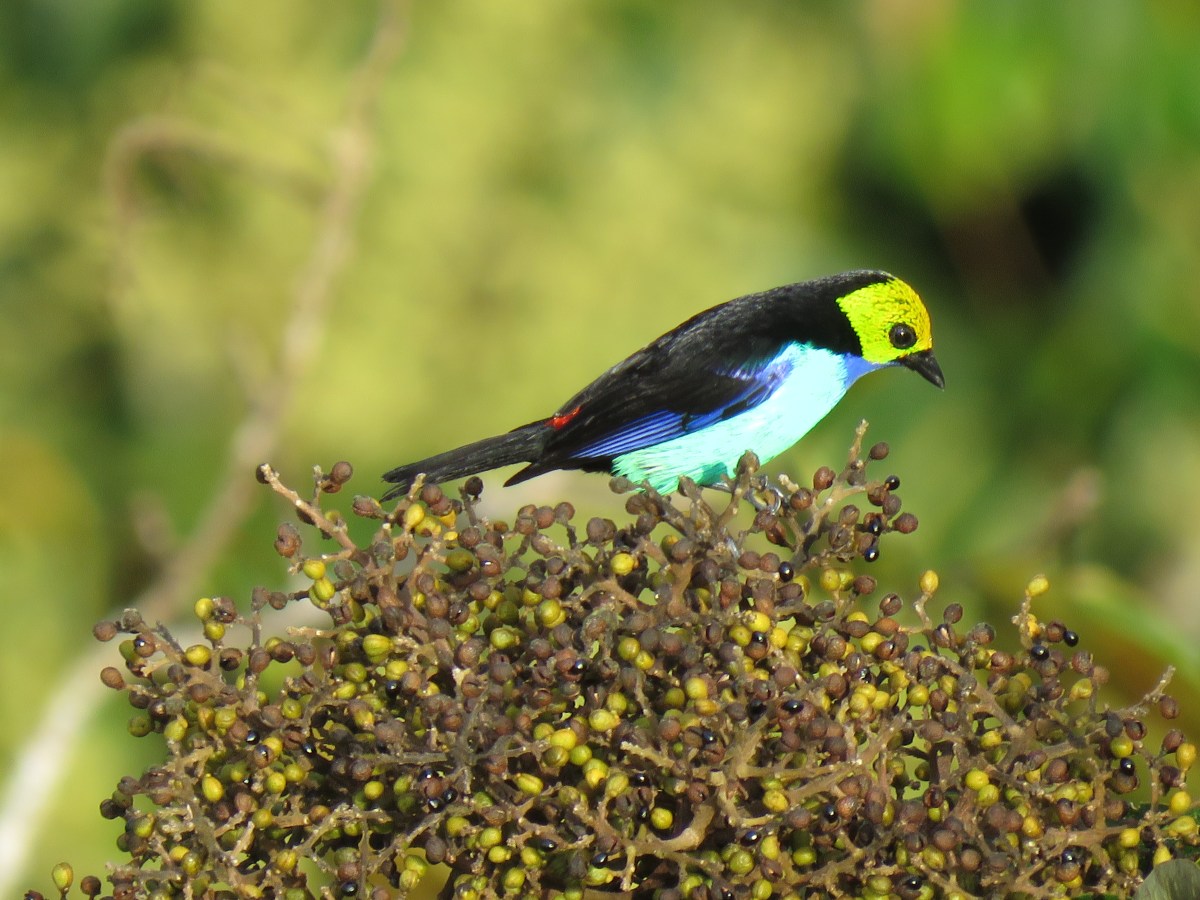 The paradise tanager is a truly stunning tanager amongst many stunning tropical tanagers to be found in the Amazon. At Tower One we finally got great looks at this canopy dweller.
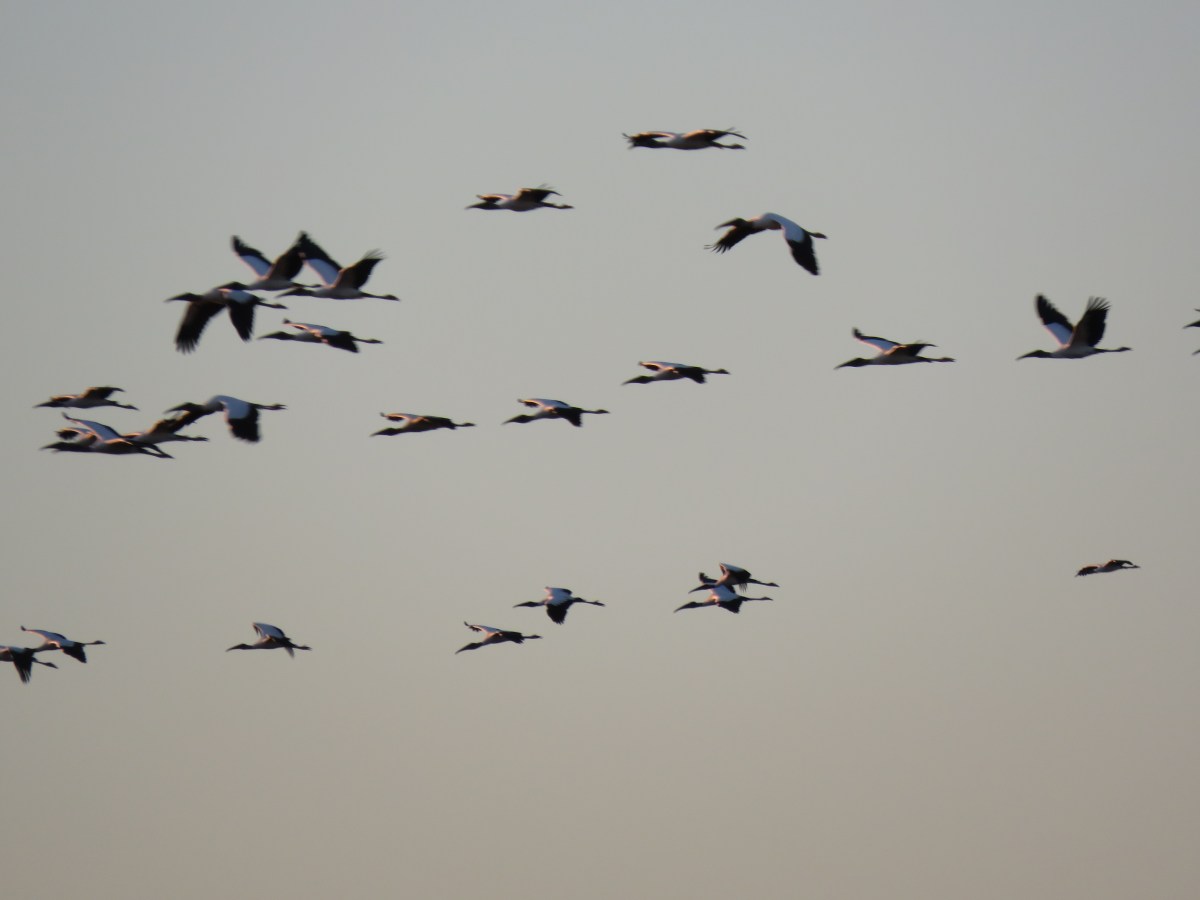 Large numbers of wood storks aka “dryheads” flying to their nighttime roosts.
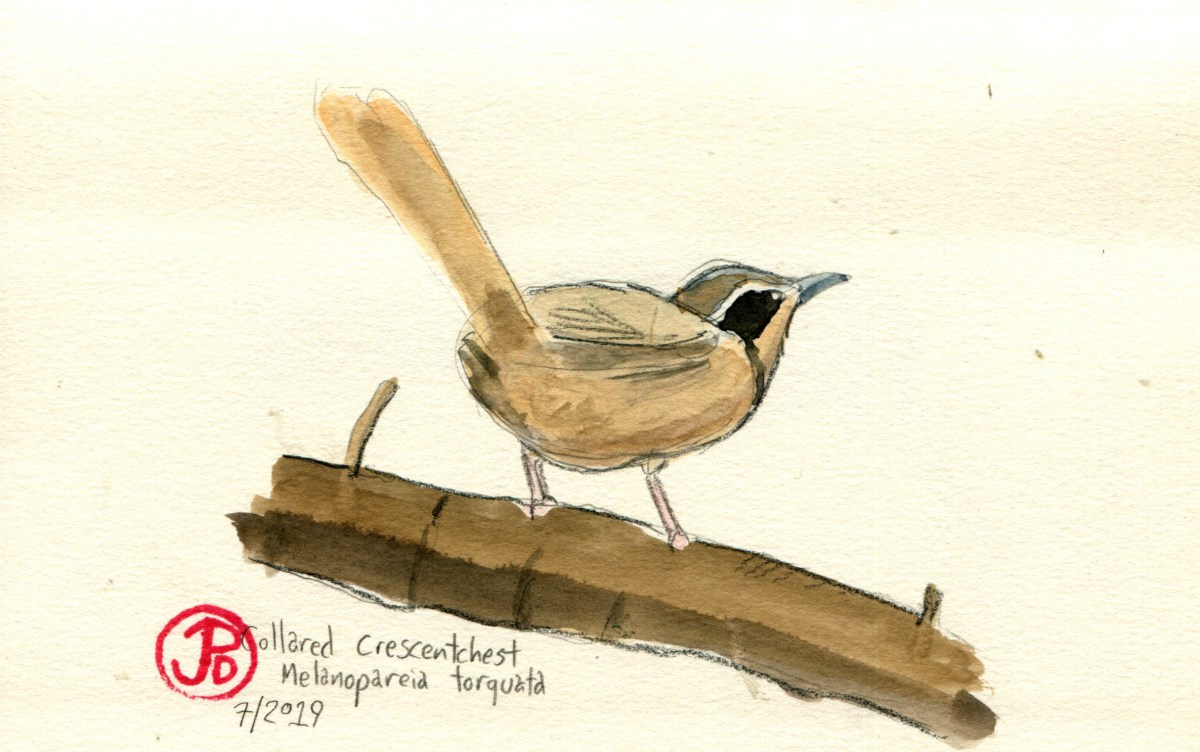
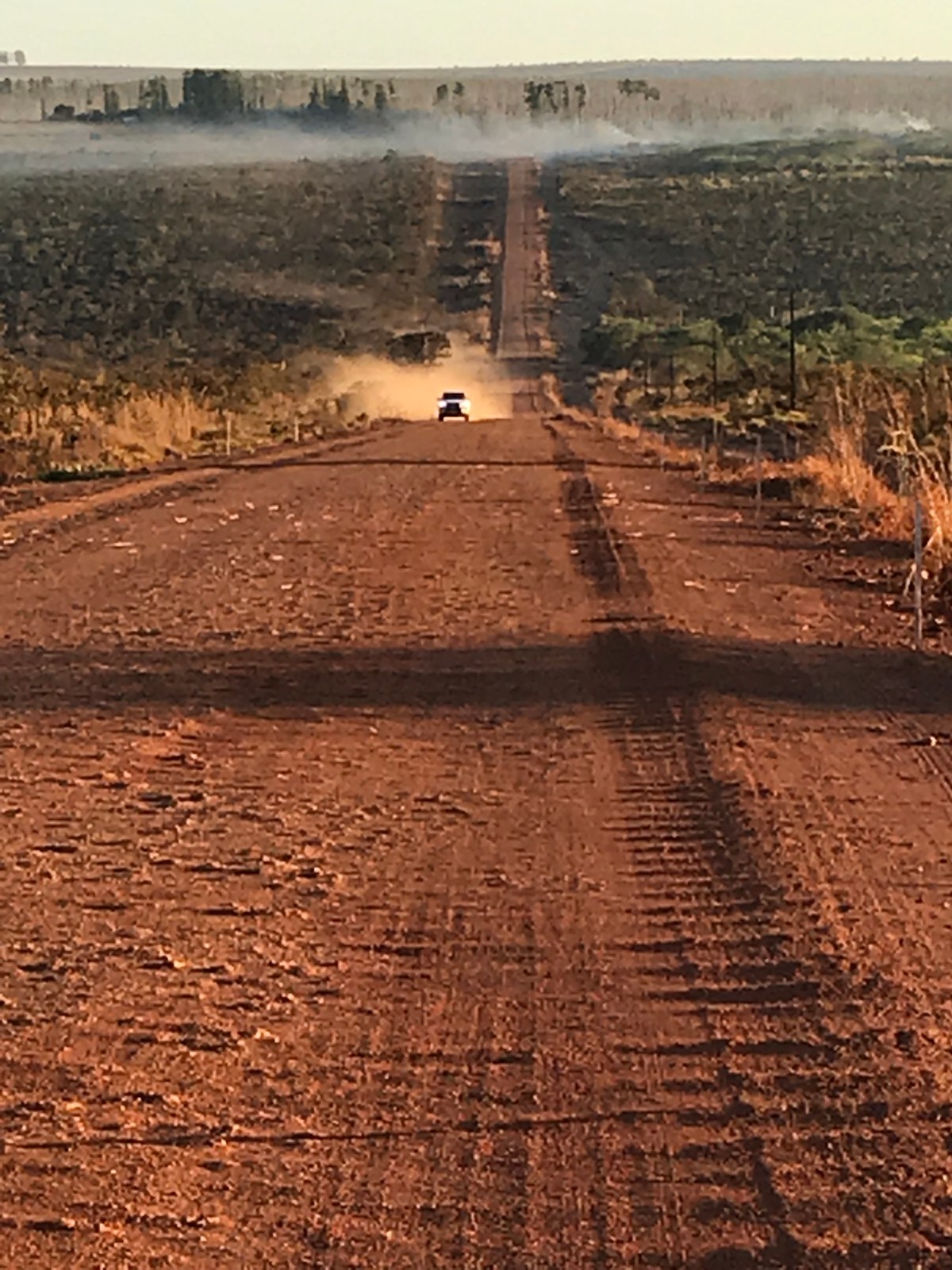 We drove half a mile in and got out and birded the roadside. It’s wasn’t long before our guide, Andrés, heard the call of the crescentchest in the bushes to the right of the road. We trekked in on foot down a dusty culvert. We weren’t far in before we found the source of the call. We spotted not one but two of these highly desirable Brazilian specialties.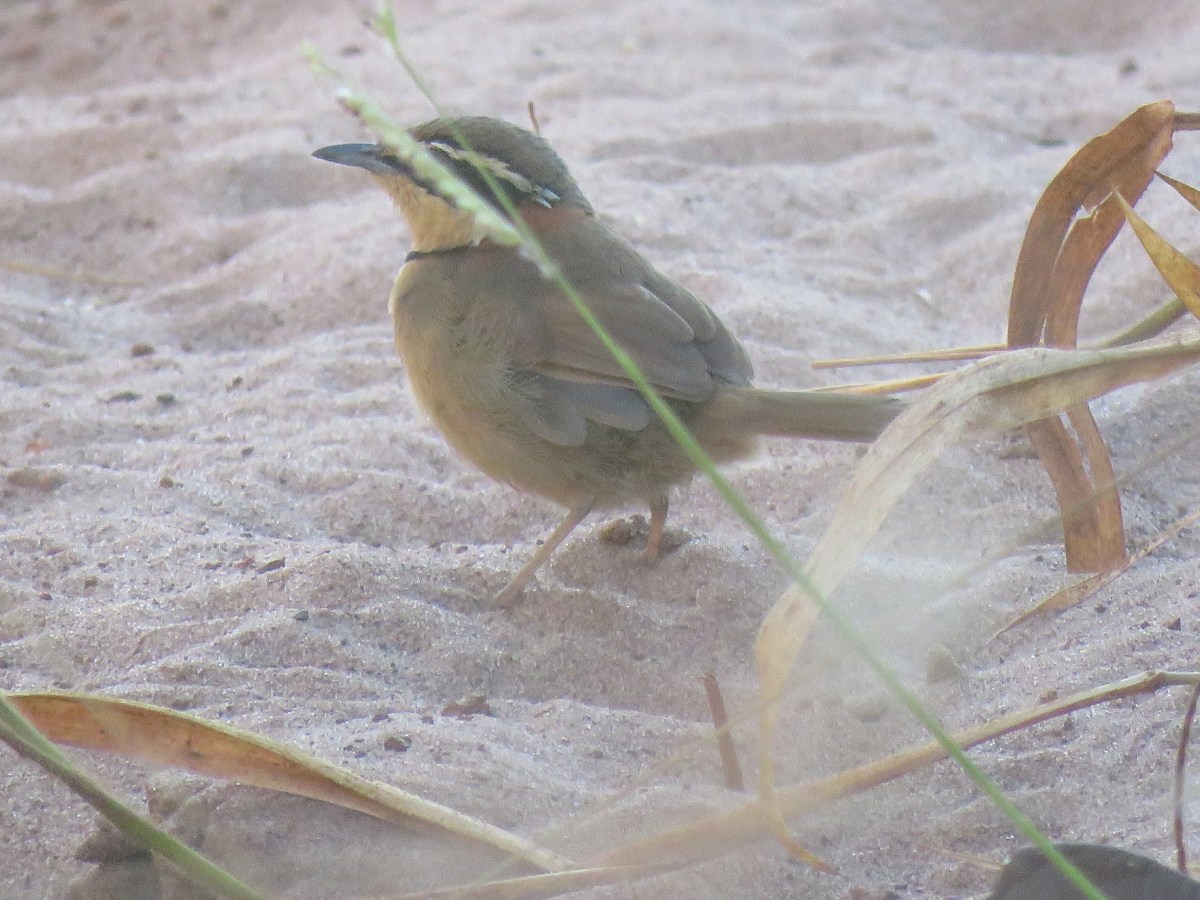
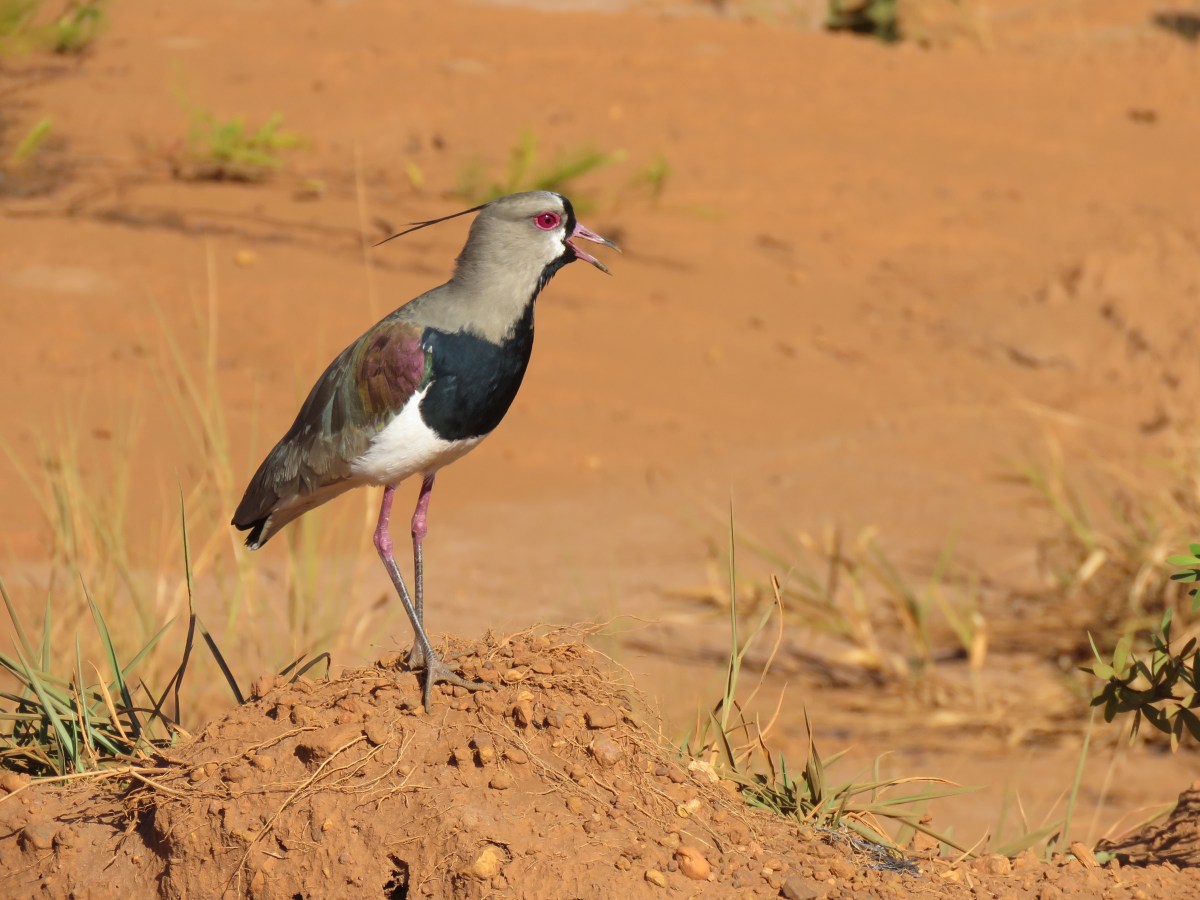 The southern lapwing is a very common bird in South America but getting quality views of this common plover against the rich earth tones of the Cerrado in good, morning light, really shows the beauty of this bird.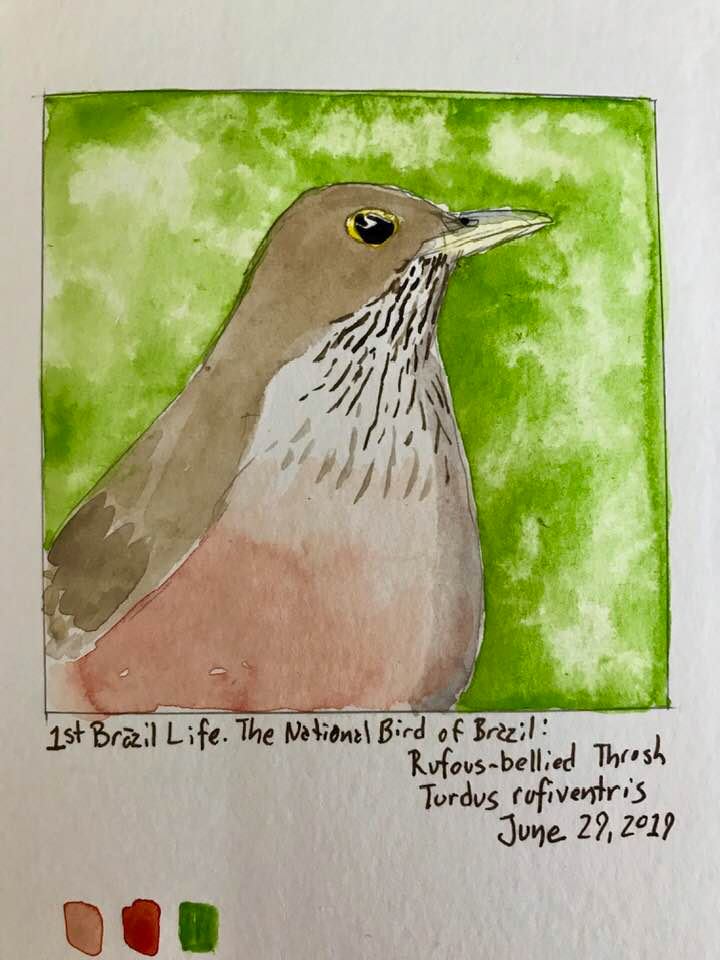
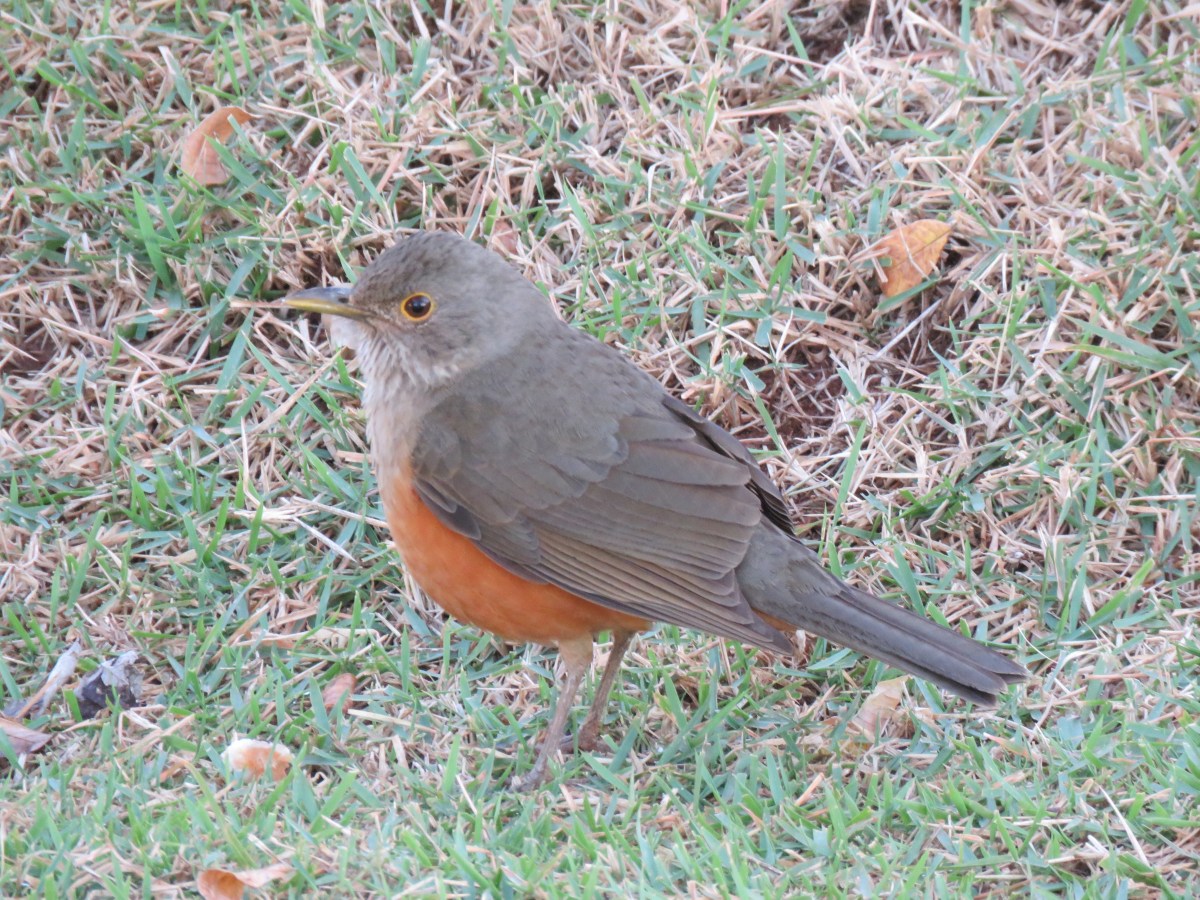 Why such a drab bird in nation full of amazingly colorful birds? Well the answer may be in the thrush’s melodious dawn song that the Brazilians love so much. Maybe it is a harbinger of the upcomming rains. The National Bird of Costa Rica is the even less impressive clay-colored thrush but it is it’s music not its appearance than endears it to Costa Rican’s and so maybe to all Brazilians. Maybe the rufous-bellied thrush is singing about the upcoming life-giving rains.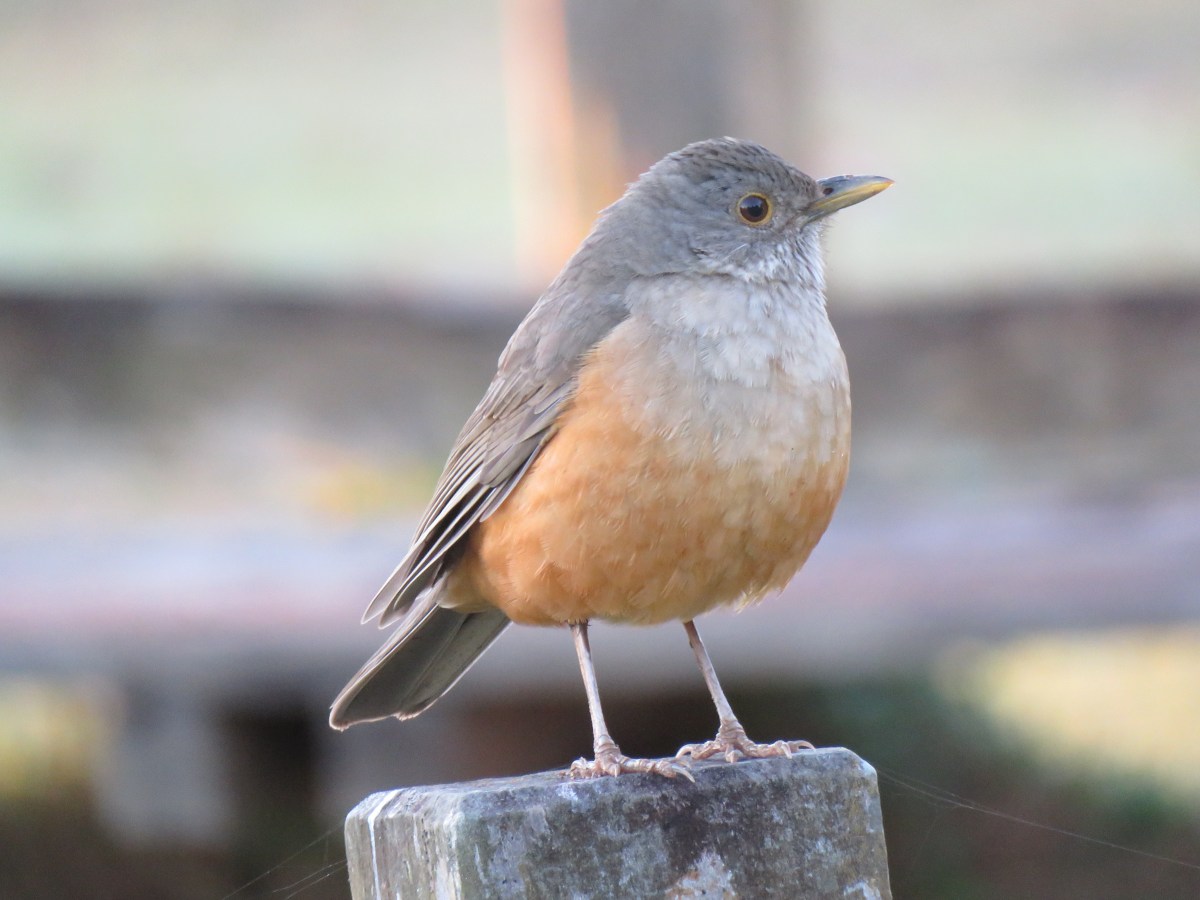

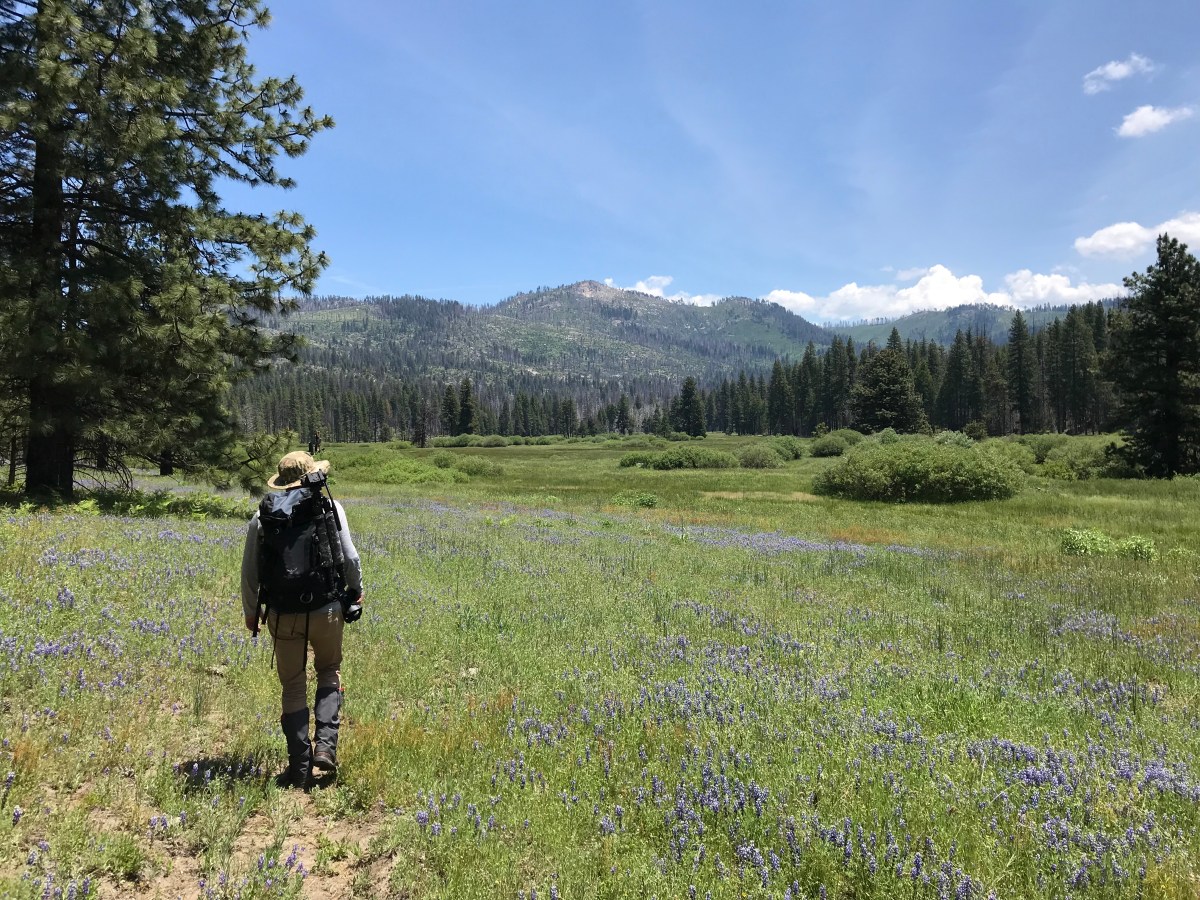 While we did not find an owl we had a lovely morning ramble through a Sierrian meadow.
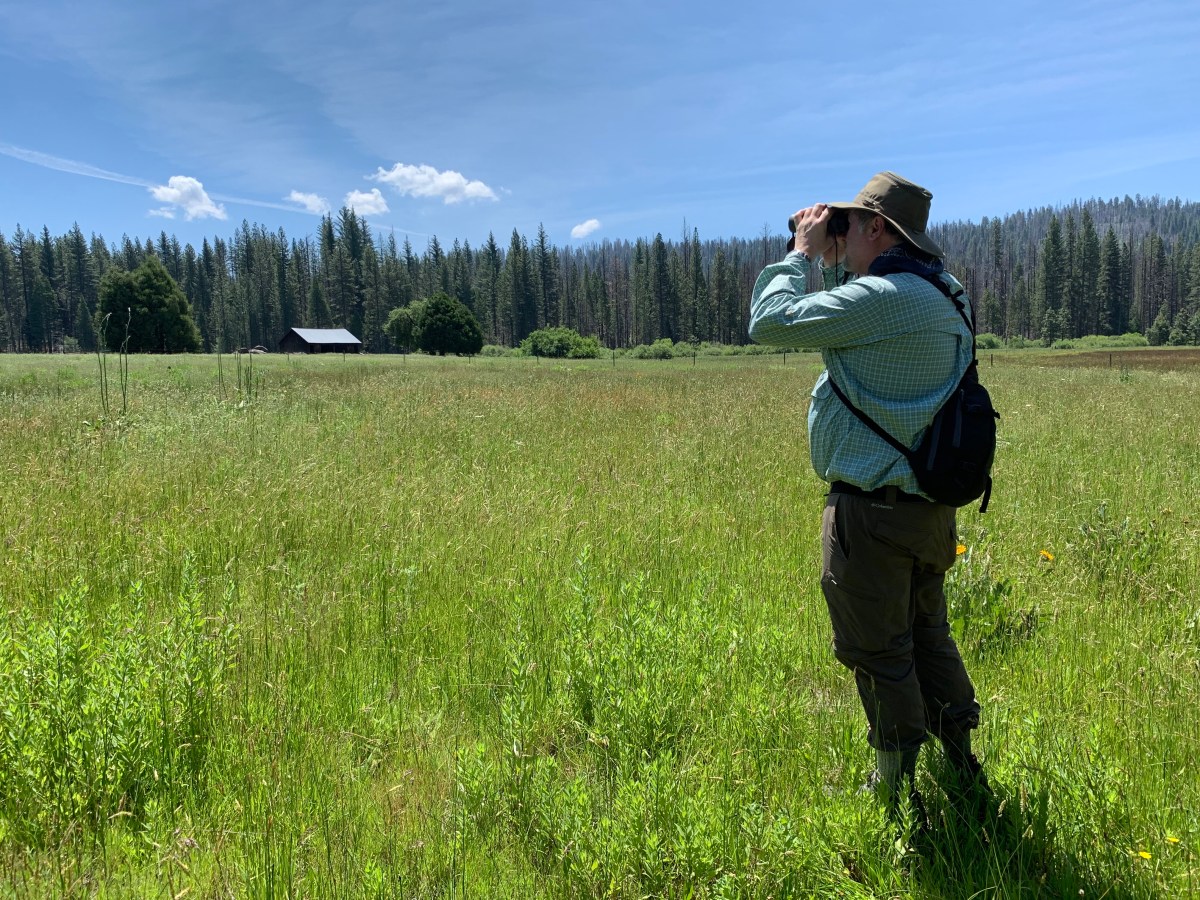 Corvidsketcher scanning the trees across the meadow for any unusual shapes. He found none.
 Corvid Sketcher