Image

Chasing an Intermodal Over Donner Summit

I once chased the California Zephyr Train # 6 from Roseville to Truckee but now I wanted to chase what really makes Union Pacific the big bucks: an intermodal freight train!

Intermodal is freight that is transported by various forms of transportation: ships, trains, planes, and trucks, for example. Most of the intermodal freight trains across the Sierra Nevada consist of double stacked freight containers, known as Container on Flatcar (COFC), or single truck trailers on flat cars, known as Trailer on Flatcar (TOFC) or piggybacks.

I first caught sight of my freight as it really began it’s climb up the western slope of the Sierra Nevada Mountains at Cape Horn, just out of Colfax. (I had just missed it’s passage through Colfax.)

I attempted to follow the train on Historic Highway 40 with some stretches on the highway that relegated Highway 40 to a little used country road: Interstate Highway 80.

Catching up with the train should not be a problem (even on windy side roads) because the average speed of a freight train climbing up to Donner Summit is between 25 to 30 miles per hour. And sometimes the freight’s speed could be even less.

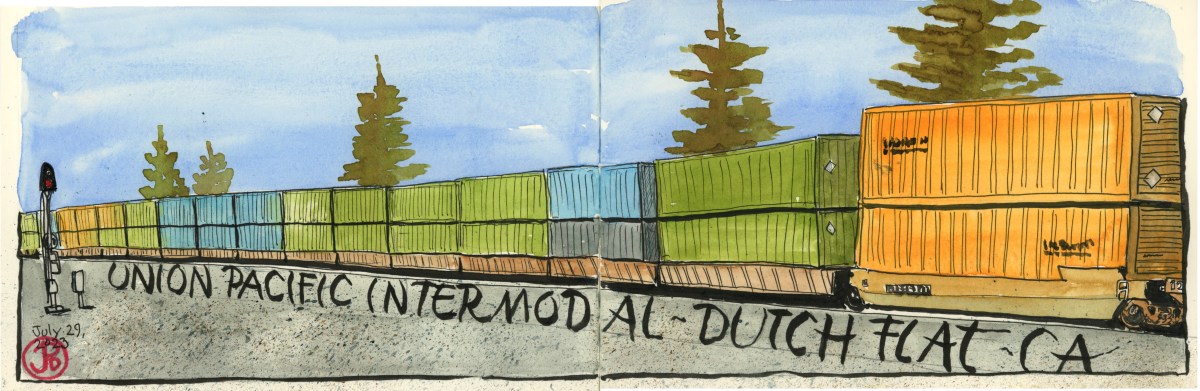
I headed east on a patchwork path of Historic 40, side roads, and Interstate 80. When I thought I was sufficiently ahead of the intermodal, I searched for the mainline. This consisted of picking either side of the road, north or south (at Blue Canon I picked the wrong side), and then driving until I came upon railroad tracks. This I did at the grade crossing at Dutch Flat. The eastbound signal light was green indicating that the train had not passed this point yet.

I picked my vantage point and after about ten minutes I could hear the rumble of the diesel-electric locomotives as they climbed the grade followed by the sounding of the horn, and then the crossing gates were triggered and the safety arms lowered to stop traffic.
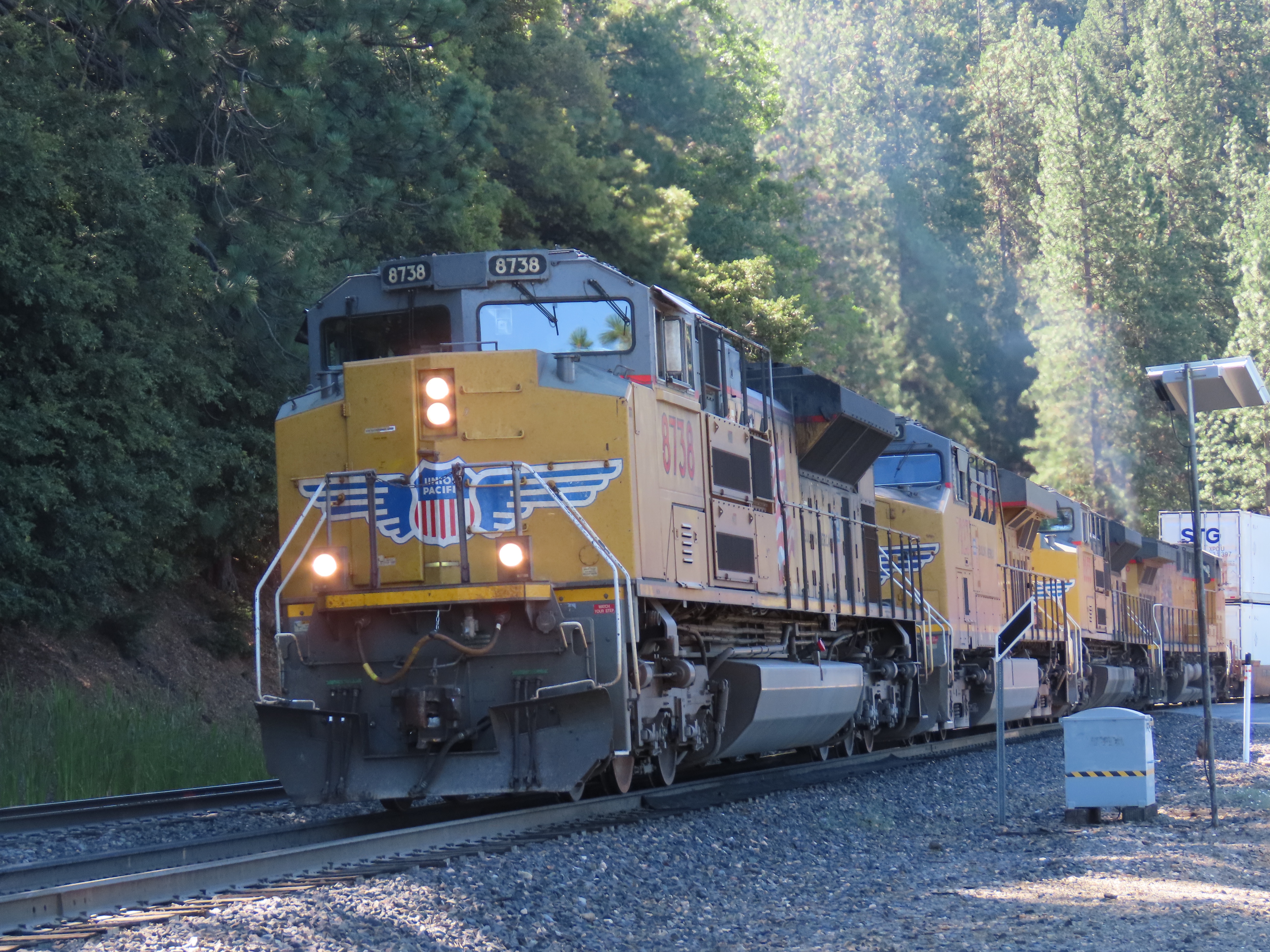
The Transcontinental Railroad reached Dutch Flat in June 1866.

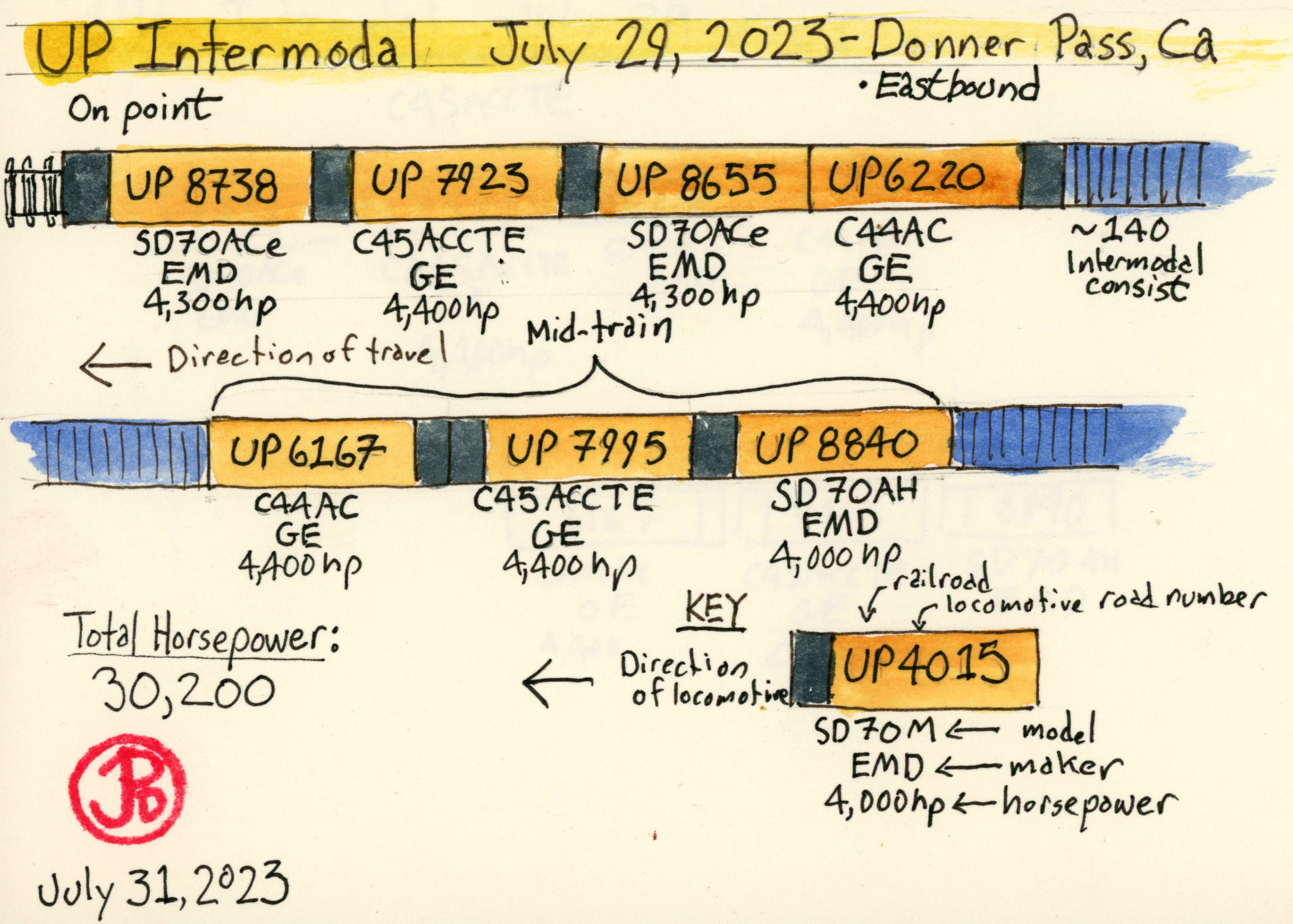
Union Pacific No. 8738 came into view. No. 8738 is an Elctro-Motive Diesel (EMD) SD70ACe. These 408,000 pound locomotives generate 4,300 pounds of horsepower and this consist featured four locomotives on point and three more mid-train. These seven locomotives generate a combined 30,200 pounds of horsepower. They need this power to pull/push the heavy loads up and over Donner Summit.

Just to provide some context, the Southern Pacific locomotive that was designed to tackle the grades and snowsheds of Donner Pass were the cab forwards. The last cab forward built, the AC-12 class No. 4294 (which is preserved ay the California State Railroad Museum in Sacramento) weighed 1,051,000 lbs (locomotive and tender) and the locomotive produced 6,000 pounds of horsepower.

When compared to standard vehicles on Interstate 80, 30,200 horsepower equals about 30 semi trucks or 150 Toyota Camrys.
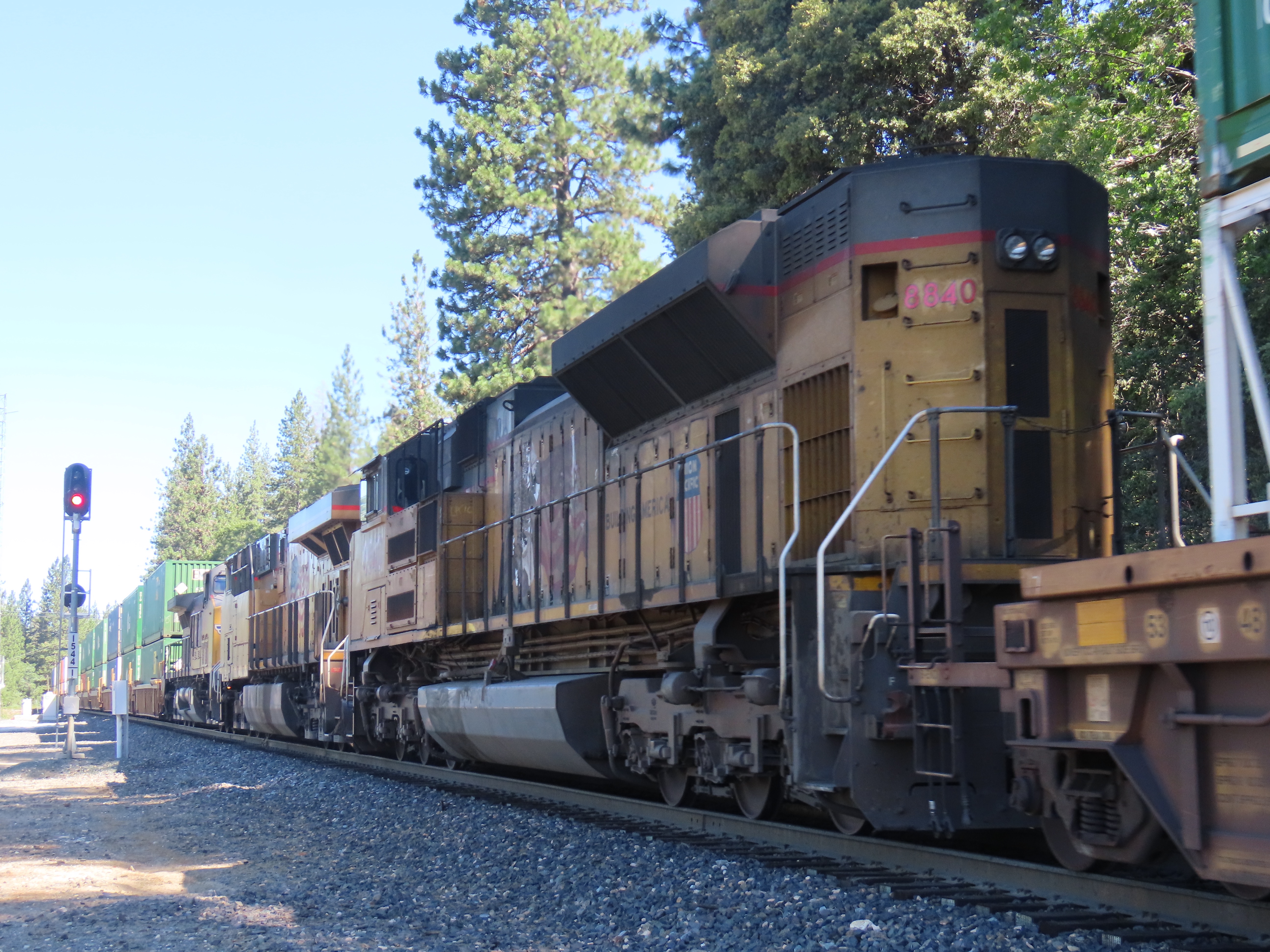
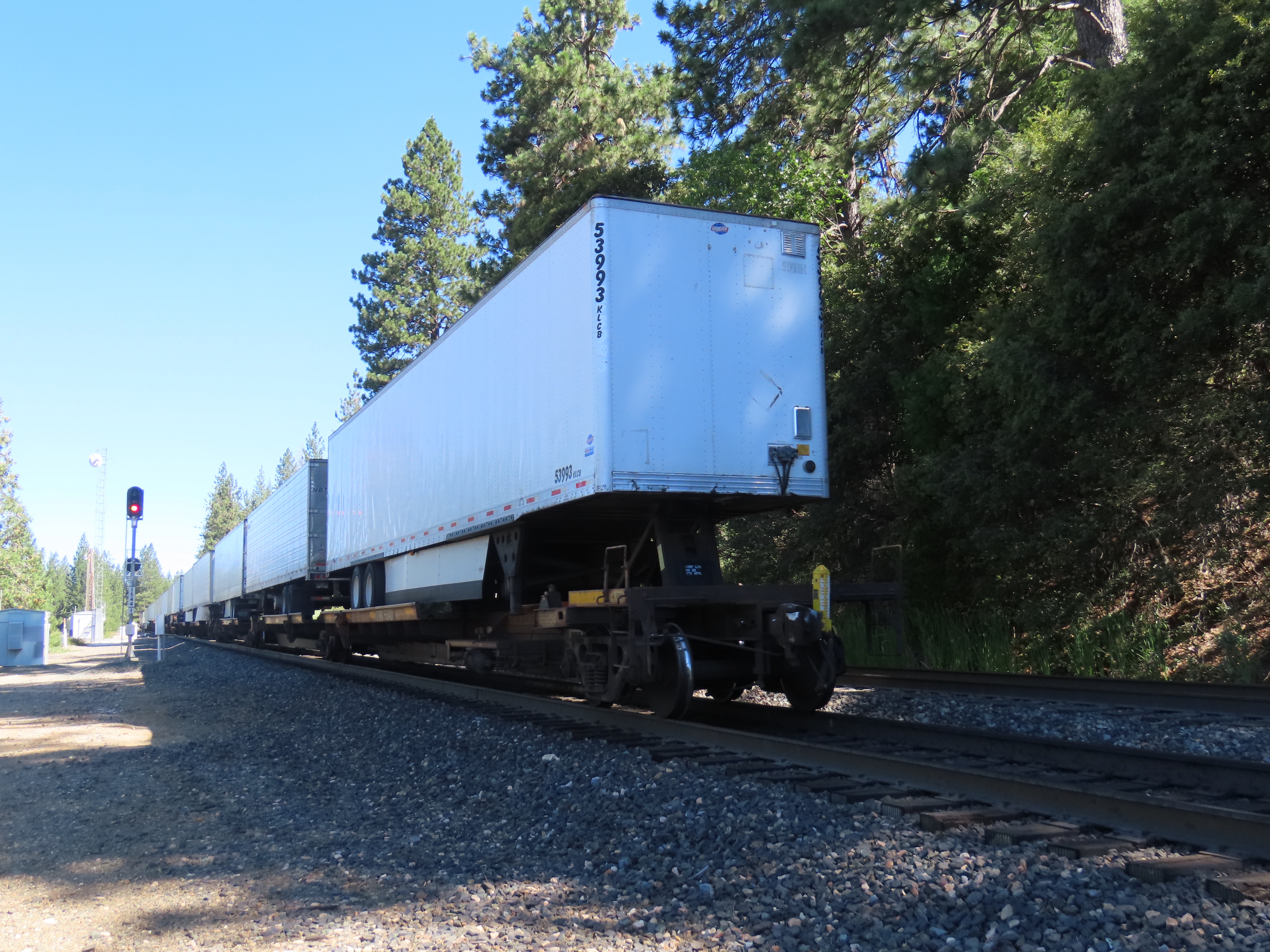
Three helpers to help push and pull the intermodal consist towards Donner Pass. The signal at Dutch Flat is now red, halting any train traffic that should come too close to the tail end of the train.
The end of the train consisted of truck trailers on flatcars or piggybacks. This was the end of the train and there was no caboose. Cabooses have not been used on mainlines since the mid-1980s. They have been replaced by a small yellow box known as an End-of Train Device (ETD). This has reduced the crew of freight trains. Now the crew consists of just two people: an engineer and conductor.

Once the train passed I drove down the road into “downtown” Dutch Flat and headed back toward the highway. I came to a grade crossing where the last few cars where just passing. The arm rose and the race was on!

I hit the highway trying to outpace the freight train as well a finding a new point to see the train. I made it to my tried and true spot at Yuba Pass, where Highway 20 merges into 80. I knew I had not missed the train because the signal on the gantry above the rails was green. I must have made really good time because I had to wait almost 30 minutes before I heard the rumble of the diesels laboring on the hill. The intermodal passed and this time I got a wave from the conductor, seated on the left side of the cab. In the days of steam, this would have been the fireman’s position and the conductor would have been riding at the end of the train in a caboose.
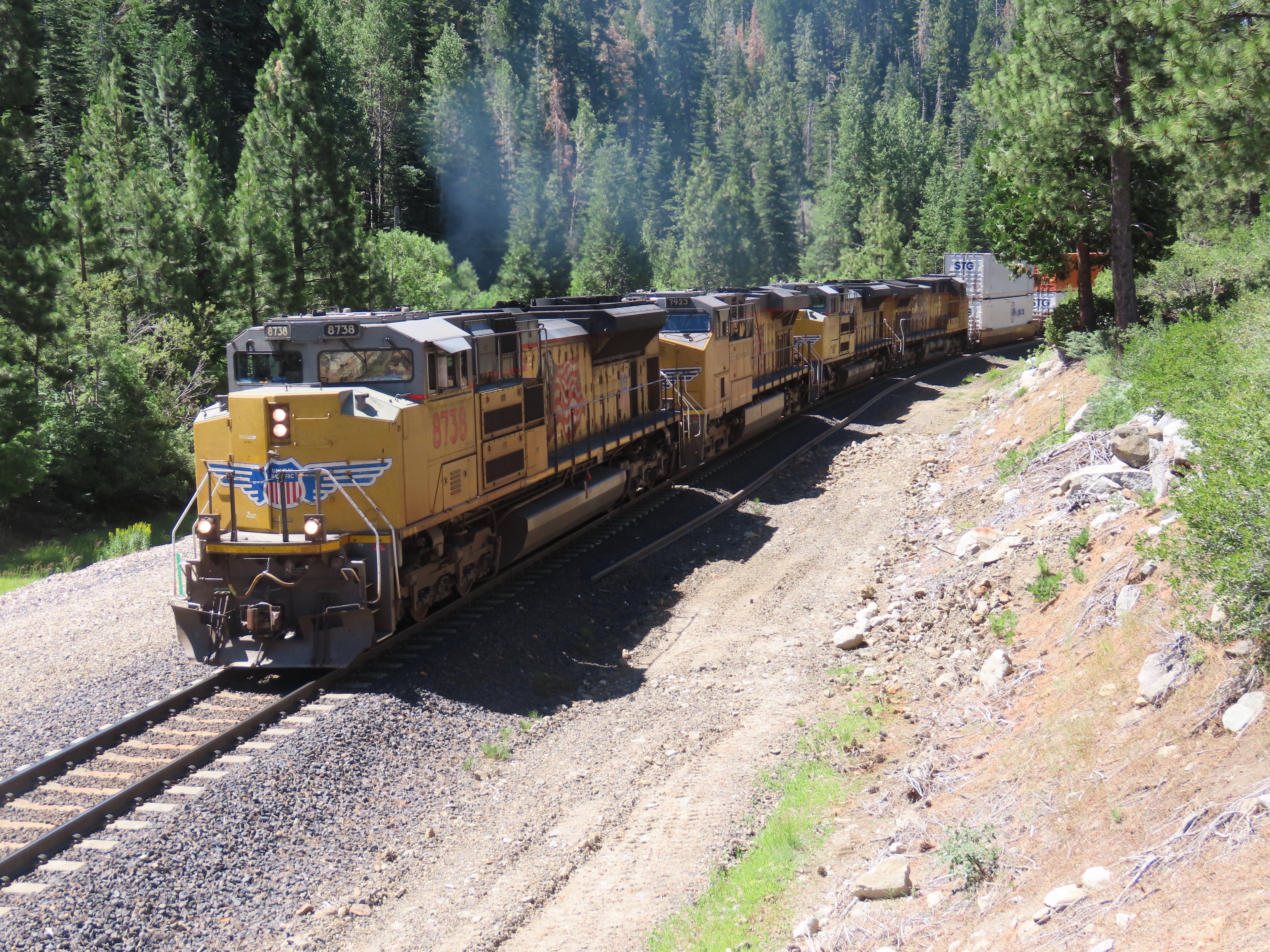
The intermodal heading into Yuba Pass.

The average length of a freight train on a Class I railroad is about 5,400 feet. At Soda Springs I wanted to do a little experiment with the intermodal to see if I could come to an estimation on how many cars where in the consist. This started with timing the train from the grade crossing at Soda Springs. How long would the train take to pass a single point? The answer was four minutes and 54 seconds. That was almost a five minute wait for any motorist at the crossing!

Now for a little railroad mathematics. I estimated that it took about 2 seconds for one car to pass so I divided 294 seconds (5 minutes and 54 seconds) by 2 and got 147 train cars. I then subtracted the number of locomotives (7) and came to an estimation that this freight train consist consisted of 140 cars. An intermodal of this length takes a lot of trailer trucks off the roads. Just how many trucks?

I estimated that about 75% of the train consisted of double stacked Container on Flatcar (COFC) which is 105 cars and the remaining 35 cars were Trailer on Flatcar (TOFC). 2 times 105 is 210, add 210 to 35 and we get 245. So this intermodal freight train removes about 245 trailer trucks from Highway 80. Every motorist motoring to Lake Tahoe or Donner Lake should be thankful these Union Pacific freights that put in the hard work that make life a little easier.
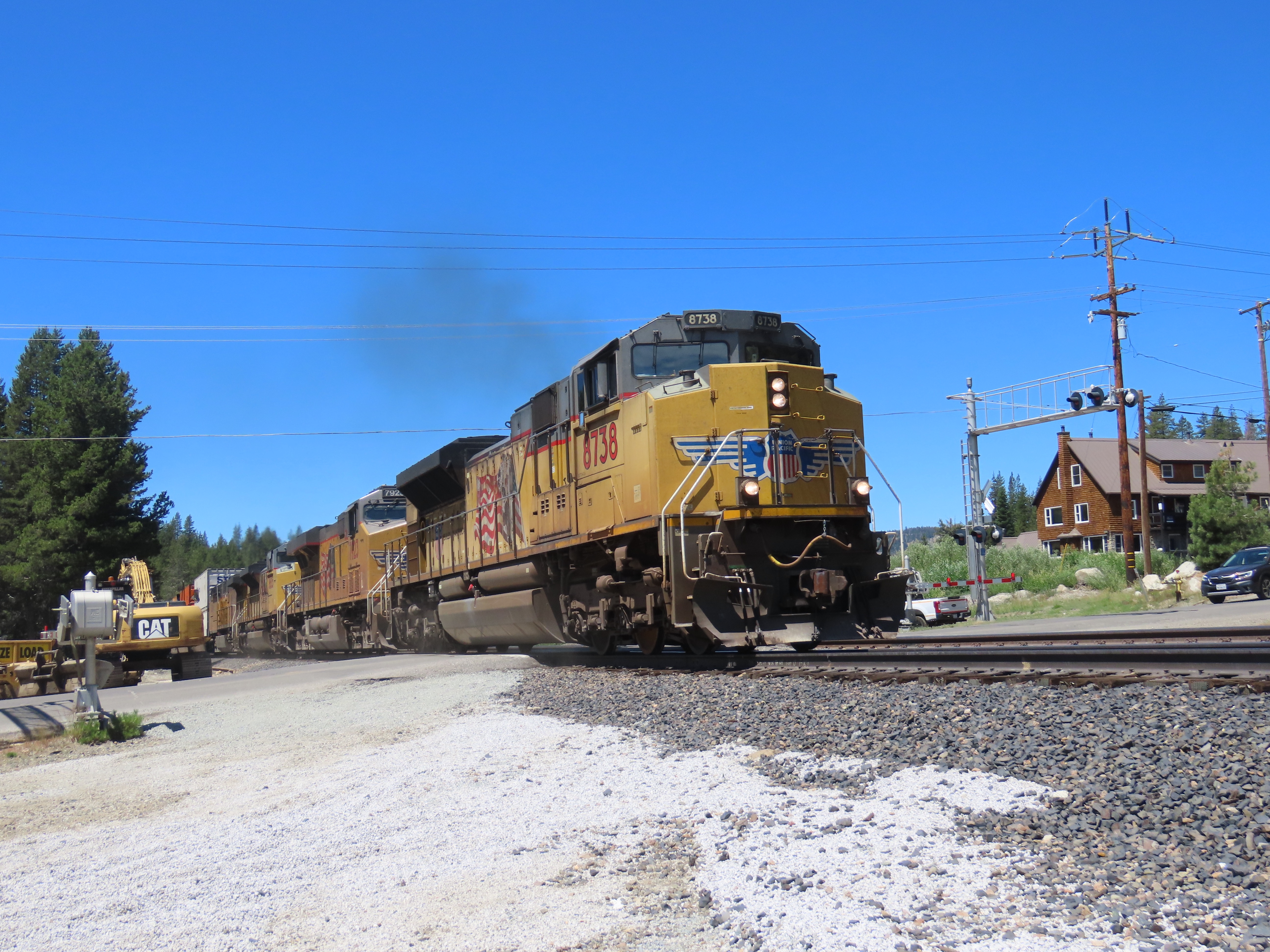
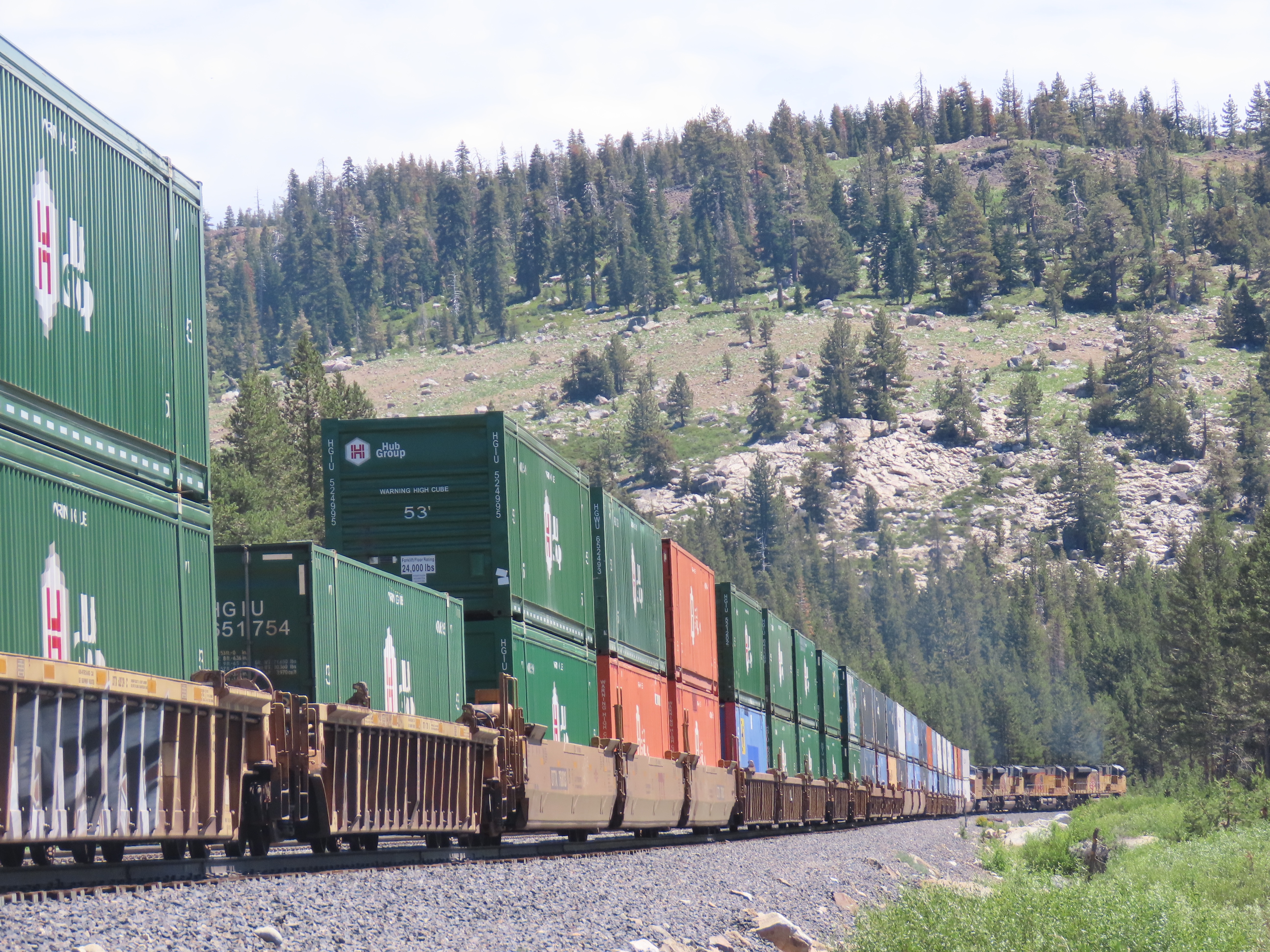
The intermodal at the grade crossing at Soda Springs, almost at the top of it’s climb to Donner Summit.
The train with it’s 140 cars, heading towards Donner Summit near Sugar Bowl Ski Resort.

Based on my field photos I was able to get the road numbers of all seven locomotives on the freight train. Using a Union Pacific roster I was able to identify the maker and model of each locomotive and it’s horsepower output. There where three EMD (Electro-Motive Diesel Inc.) and four GE (General Electric) locomotives. I put this information into a locomotive map showing the road number, model, maker, horsepower, and direction of travel for each locomotive. The total horsepower output for all seven locomotives was 30,200 hp.
Image

Iceland Falcon

A raptor on my wishlist for Iceland is the Iceland falcon or gyrfalcon, the world’s largest falcon.

I believe that if you wait long enough, birds will come to you. Such was the case with the gyrfalcon.

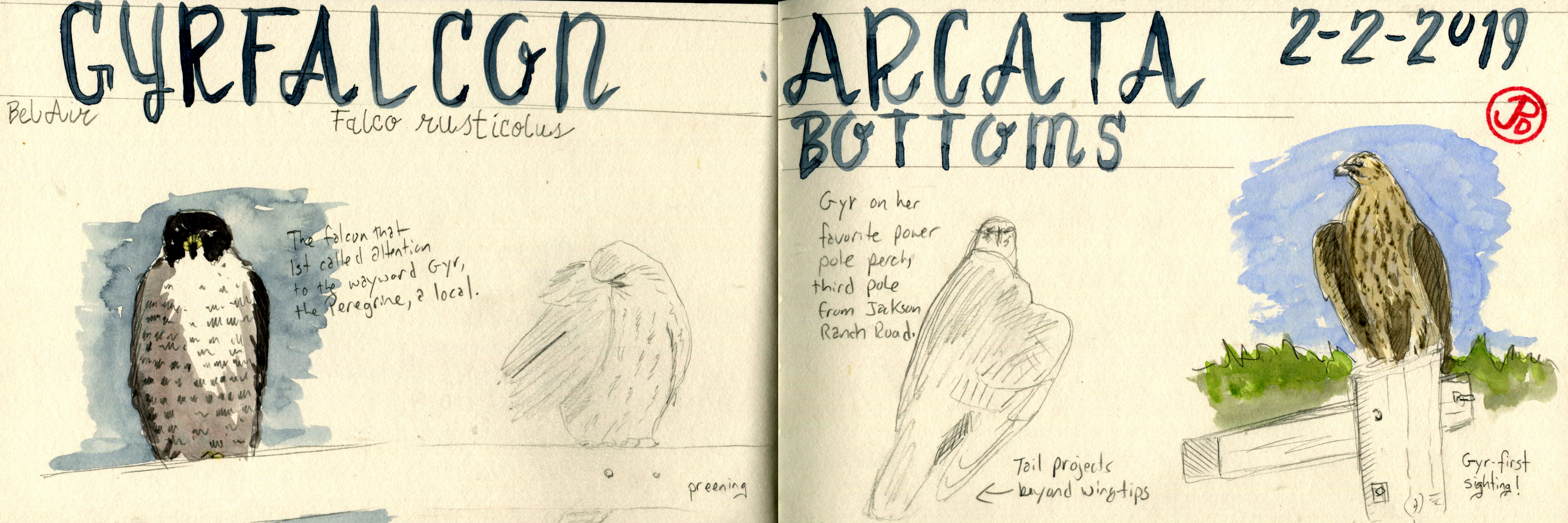
On February 2, 2019 I saw my first gyr at the Arcata Bottoms in Northern California. What an amazing view of this female gyr that perched on power lines and then hunted coots near the road where we where the lone audience to nature’s sometimes cruel theater! This was one of my best observations of any raptor in the field.

A spread of field sketches about a long sought after lifer, the gyrfalcon.

So gyrfalcon would not be a lifer on my Iceland birding saga but seeing the Iceland falcon in Iceland would be a special experience. But first we had to find one.

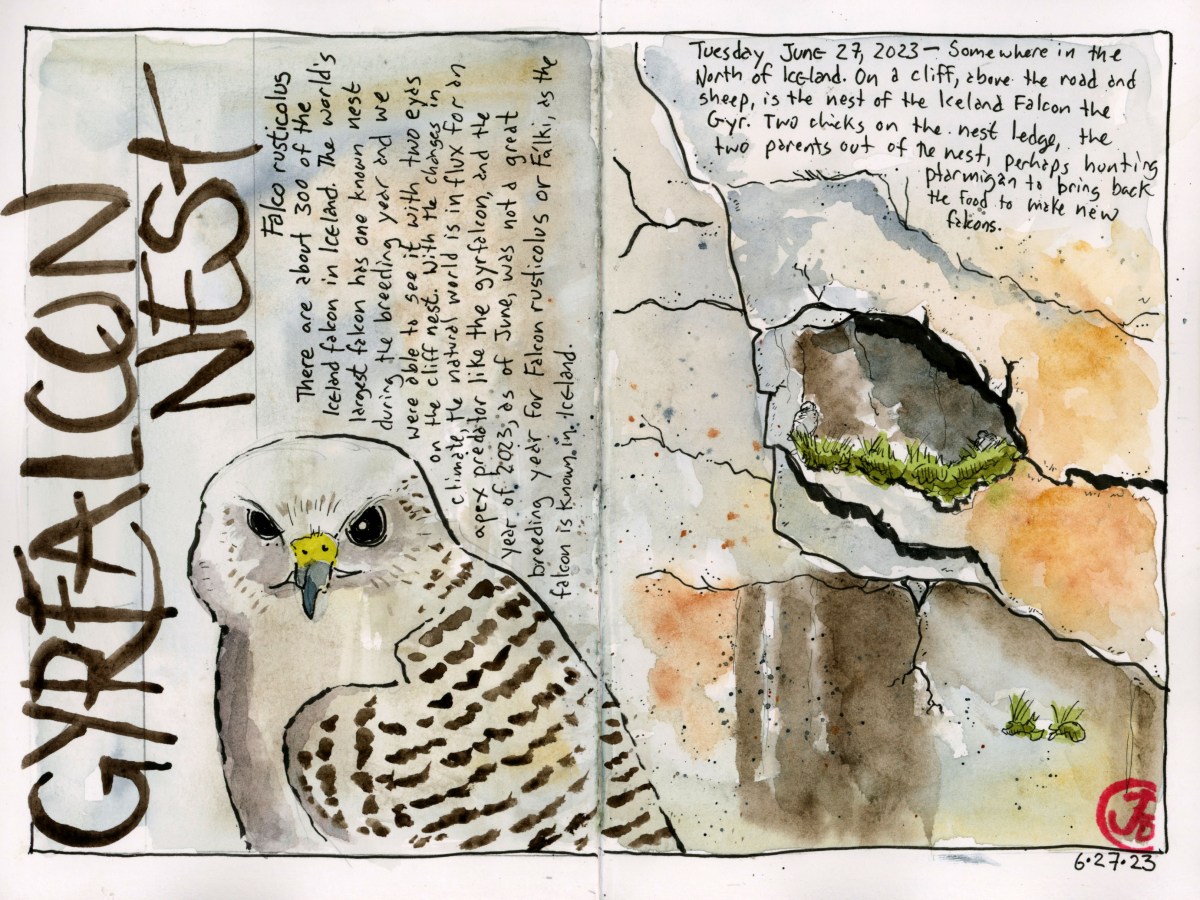
Our guide had staked out a gyrfalcon nest on a cliff with two chicks. Through the scope, we could just pick out the chicks, sitting on either side of the nest but the adults were nowhere to be seen. They were probably off hunting to feed their future falcons.

This nest is believed to be the only active nest in Iceland this breeding season. Whether avian flu is to blame or a crash in prey populations, the reasons are unclear.

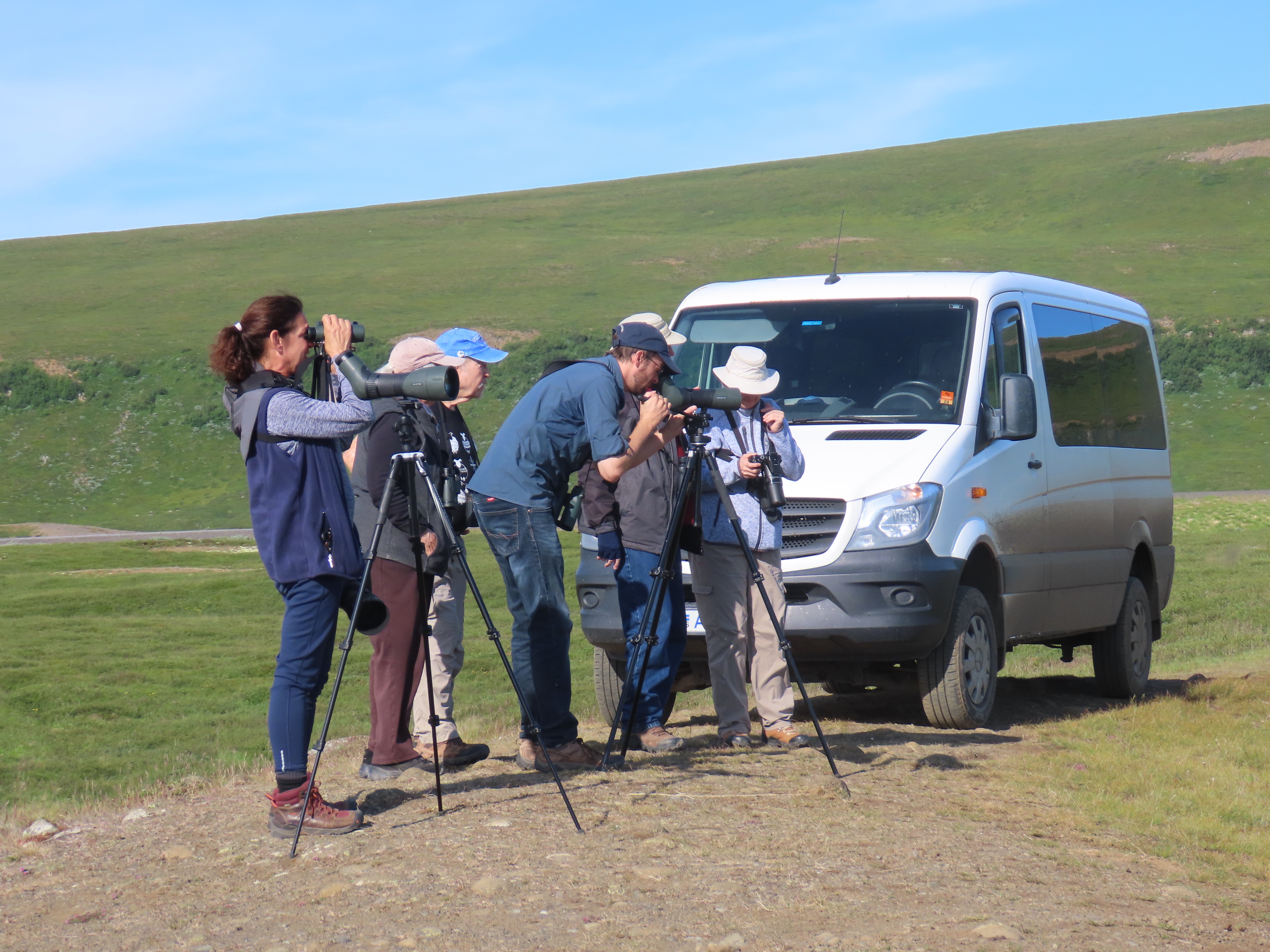
Our birding posse enjoying views of the gyrfalcon nest.
Ain’t that the truth!
Image

Seabird Cliffs of Látrabjarg

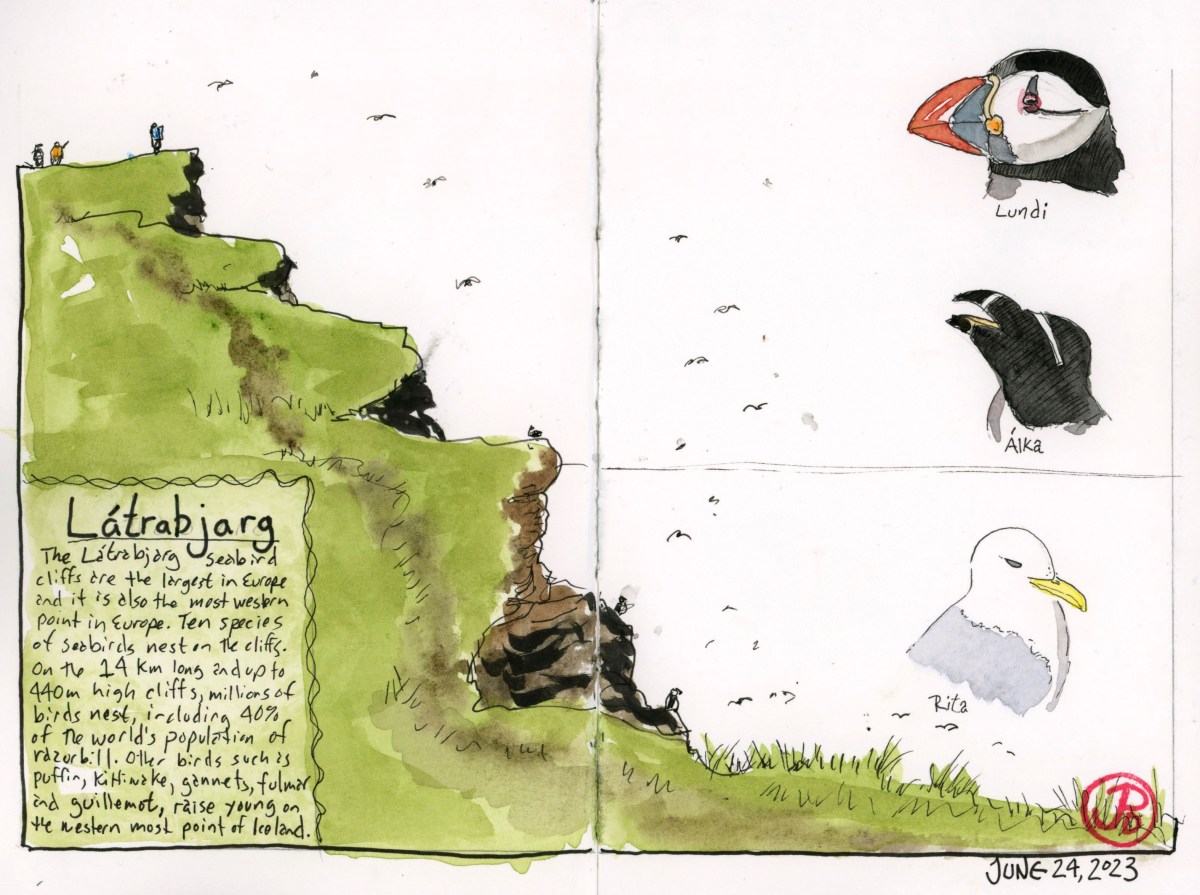
One of the visits that I was really looking forward to on my Icelandic birding trip was to see the seabird colony at Látrabjarg, the most western point in Europe.

In the Land of the Midnight Sun where the sun never truly sets in the summer, the best time to visit the bird colony is in the early evening, when many birds have returned from the sea to their nest burrows after feeding.

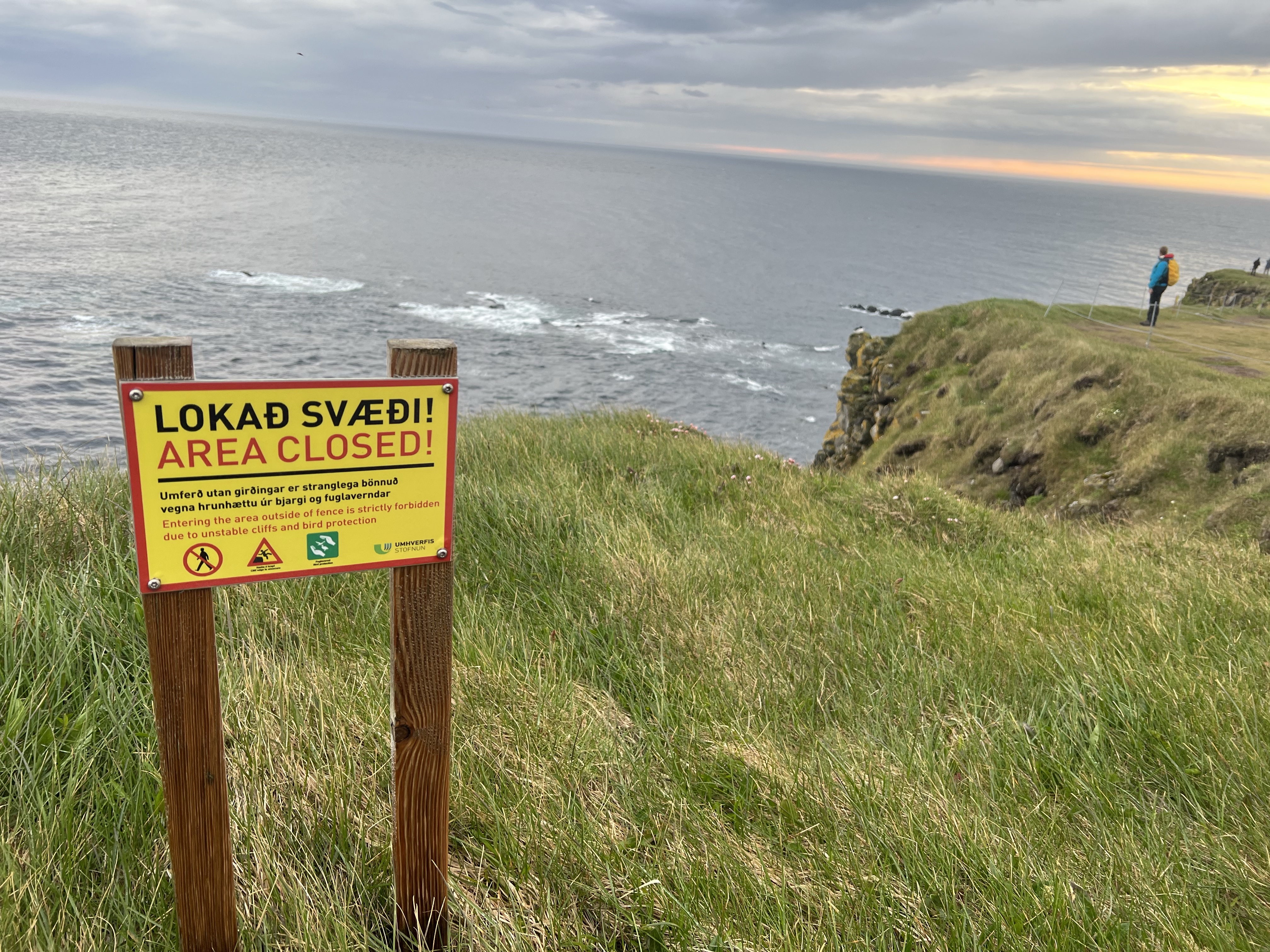
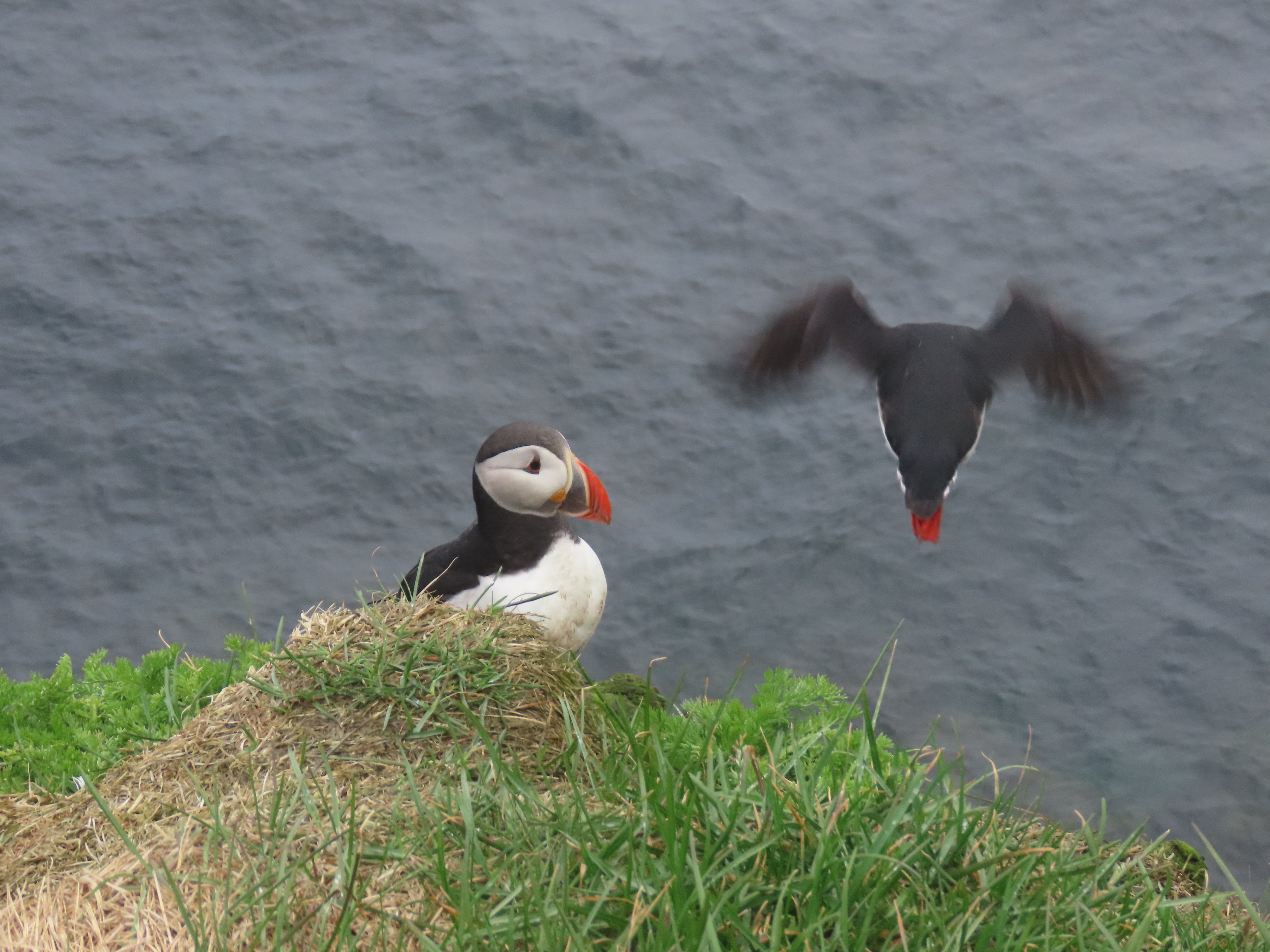
Luckily it is easy to get close to puffins without getting too close to the unstable cliffs.

The cliffs at Látrabjarg are the largest sea bird colonies in Europe. Here puffins, razorbills, kittiwakes, murres, guillemots, and fulmars breed. About ten million birds are present here during the summer breeding season but we were only viewing a small portion of the cliffs that spans about eight and a half miles long with a maximum height of 1,400 feet, nearly the height of Chicago’s Sears Tower (1,451 feet).

The Látrabjarg Cliffs were high on my sketchlist and I was determined to add this natural wonder into my Iceland sketchbook. The problem: rain was forecast for our evening visit. Now rain (or wetness in general) does not go hand in hand with field sketching, especially when using ink or watercolor. So I had to find shelter to start my sketch.

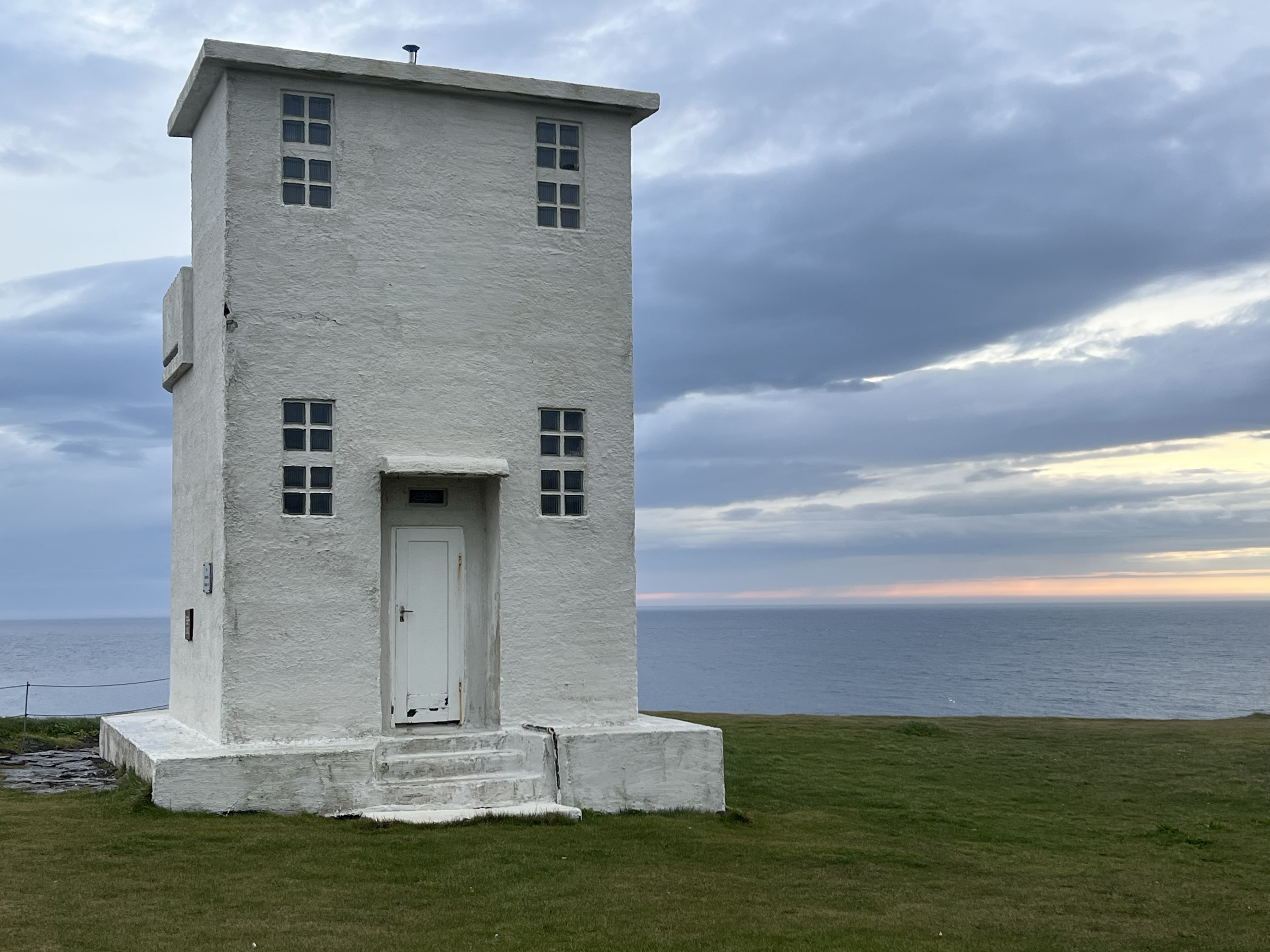
The westernmost lighthouse in Europe provided a weather break so I could get my initial anchor sketch in (featured sketch). In the finished sketch a few telltale ink smudges bear witness to the drizzly weather on our Látrabjarg visit.

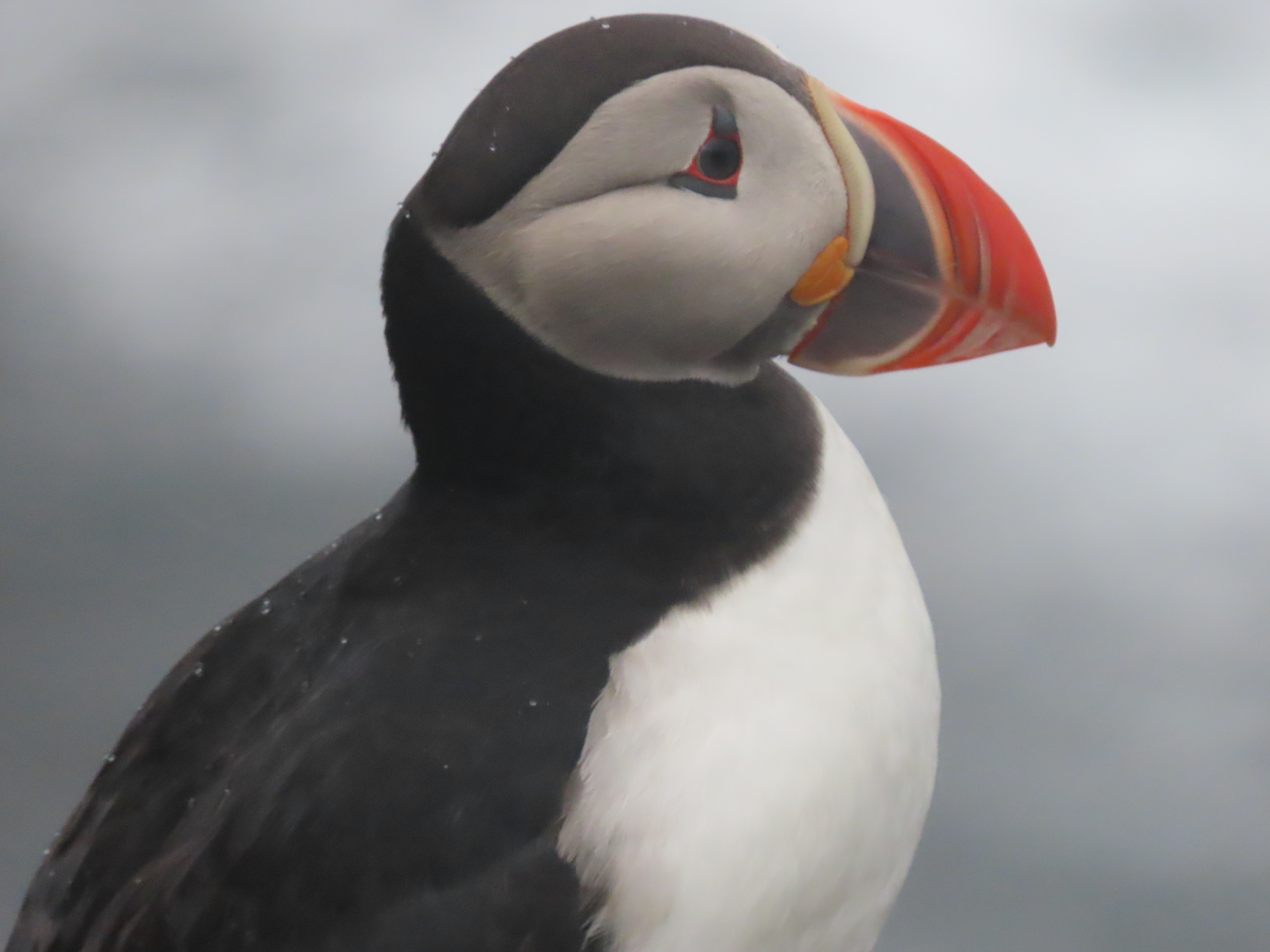
The big draw to visiting these cliffs are the large numbers of seabirds and the close proximity to one of Iceland’s most beloved breeding species: the Atlantic puffin.

You can get close to puffins, very close at the nesting colony. This one was about six feet away.

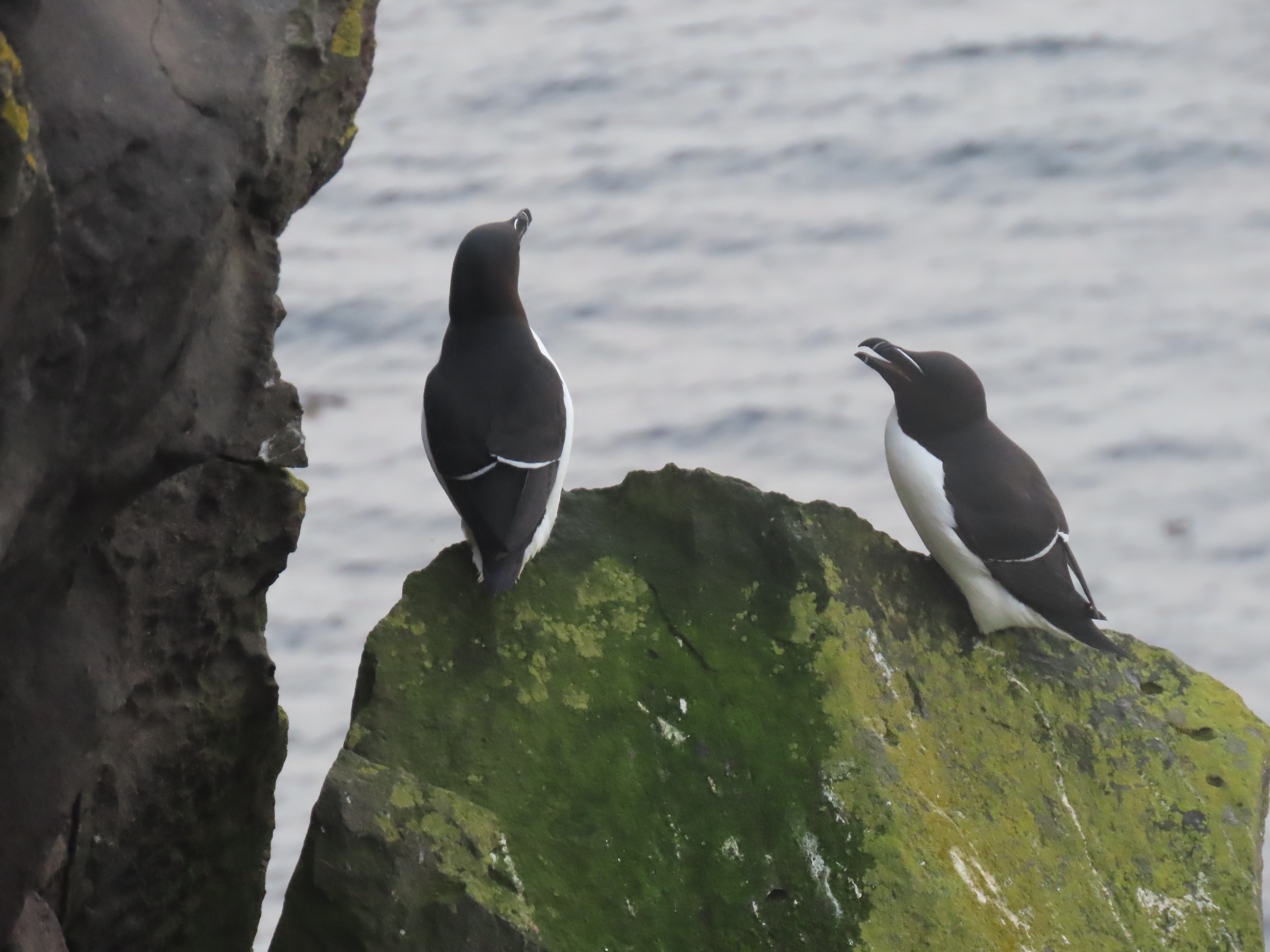
Seabirds nest at different levels of the cliff with puffins occupying the tops of the cliffs, followed by razorbills, and towards the bottom, kittiwakes. This is represented by the vertical portraits of the three species on the right side of the sketch. Seven other species of birds also use the cliff for nesting.

40% of the Razorbill population breeds at the Látrabjarg cliffs.
Image

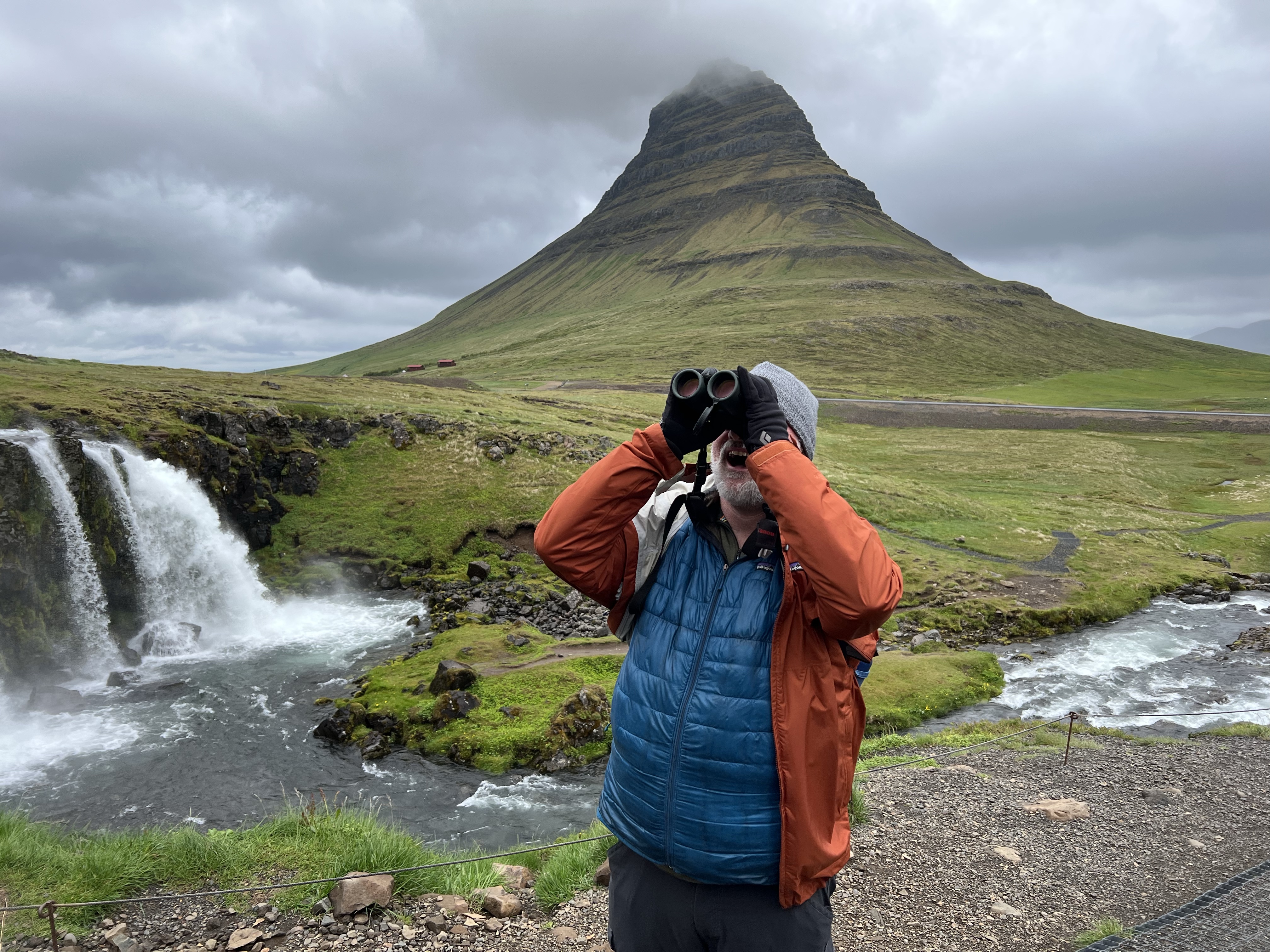
Kirkjufell

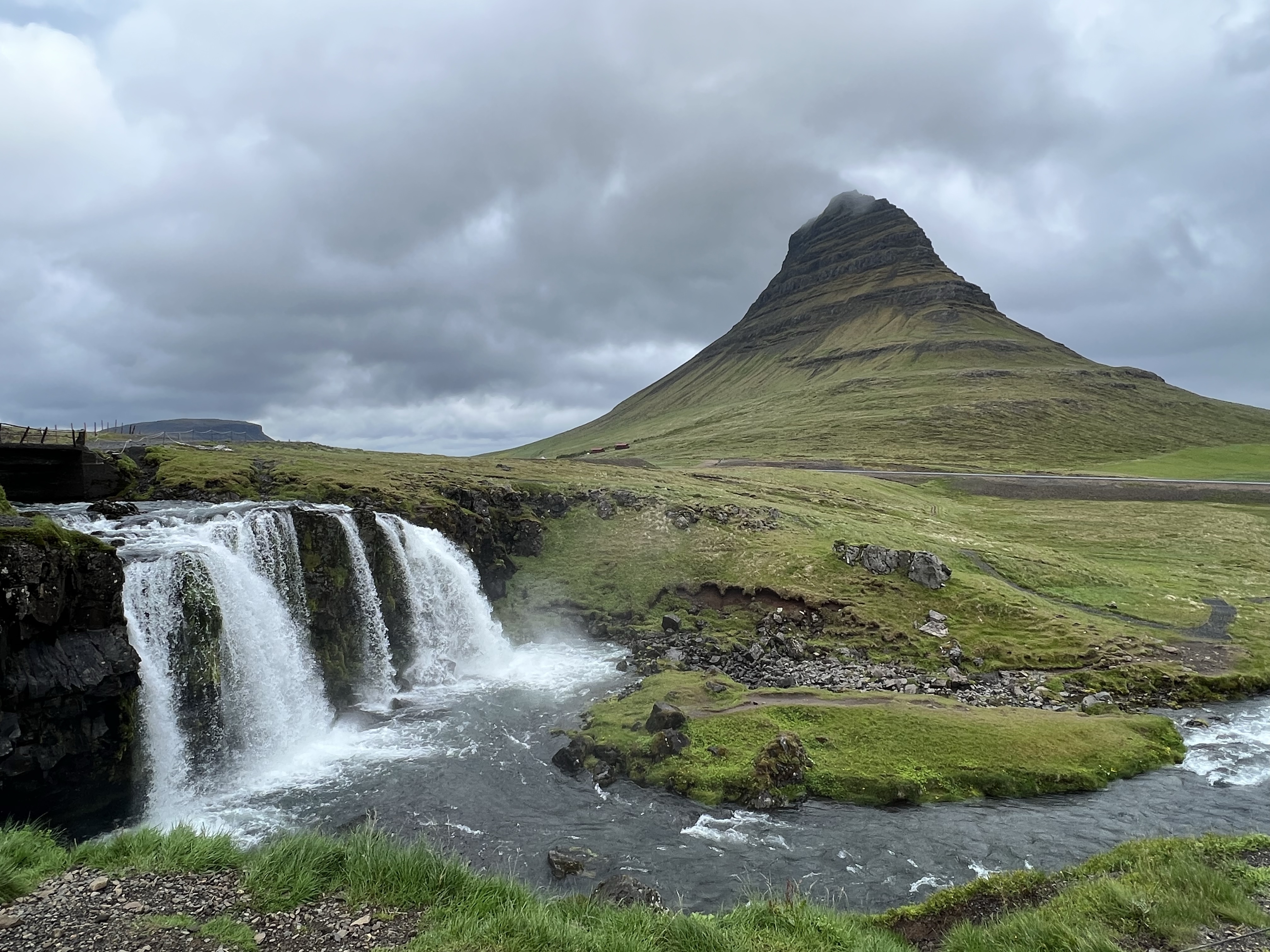
Near our digs in Grundarfjordur is Iceland’s most photographed mountain: Kirkjufell. Which is translated as “Church Mountain” because it’s shape resembles the roofline of a kirk (church).

I have seen this mountain in guide books and on maps, never knowing where in Iceland it was or even what is was called. The mountain was always photographed with the waterfall (Kirkjufellsfoss) in the foreground (Iceland boast over 10,000 waterfalls). The mountain has been used as a filming location in television series such as Game of Thrones.

This scene seems desolate, requiring a long hike or drive to get to.

This was further from the truth as a major road runs between mountain and waterfall and a port, big enough to handle cruise ships, is a quick five minute drive away. As for the long hike, it is three minute ramble from car park along a paved path to the famous vista.

The famous vista of Kirkjufell.

I knew I had to sketch this iconic Icelandic icon and I hoped the weather would be accommodating.

It is said of Icelandic weather, “ If you don’t like the weather, wait five minutes.” It seems you can experience all four seasons in a quarter of an hour.

When we arrived there was rain and wind. Icelandic wind seems more intense that other climes. When I stepped out of the van, the rain nearly ripped my raincoat off!! The wind was so intense that it was blowing water from the waterfall upstream and over the foot bridge!

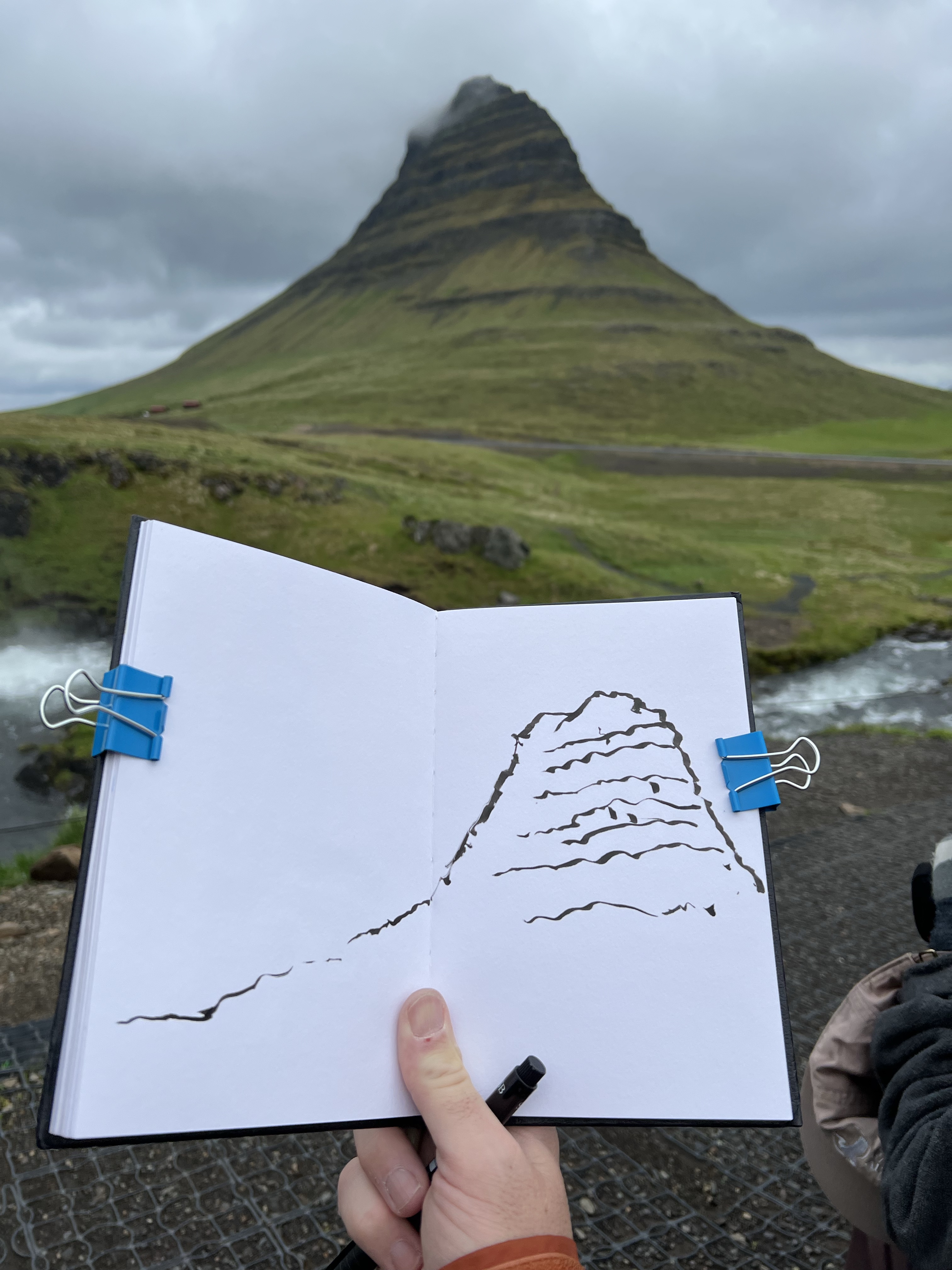
Clips are essential for field sketching in windy and wet Iceland.

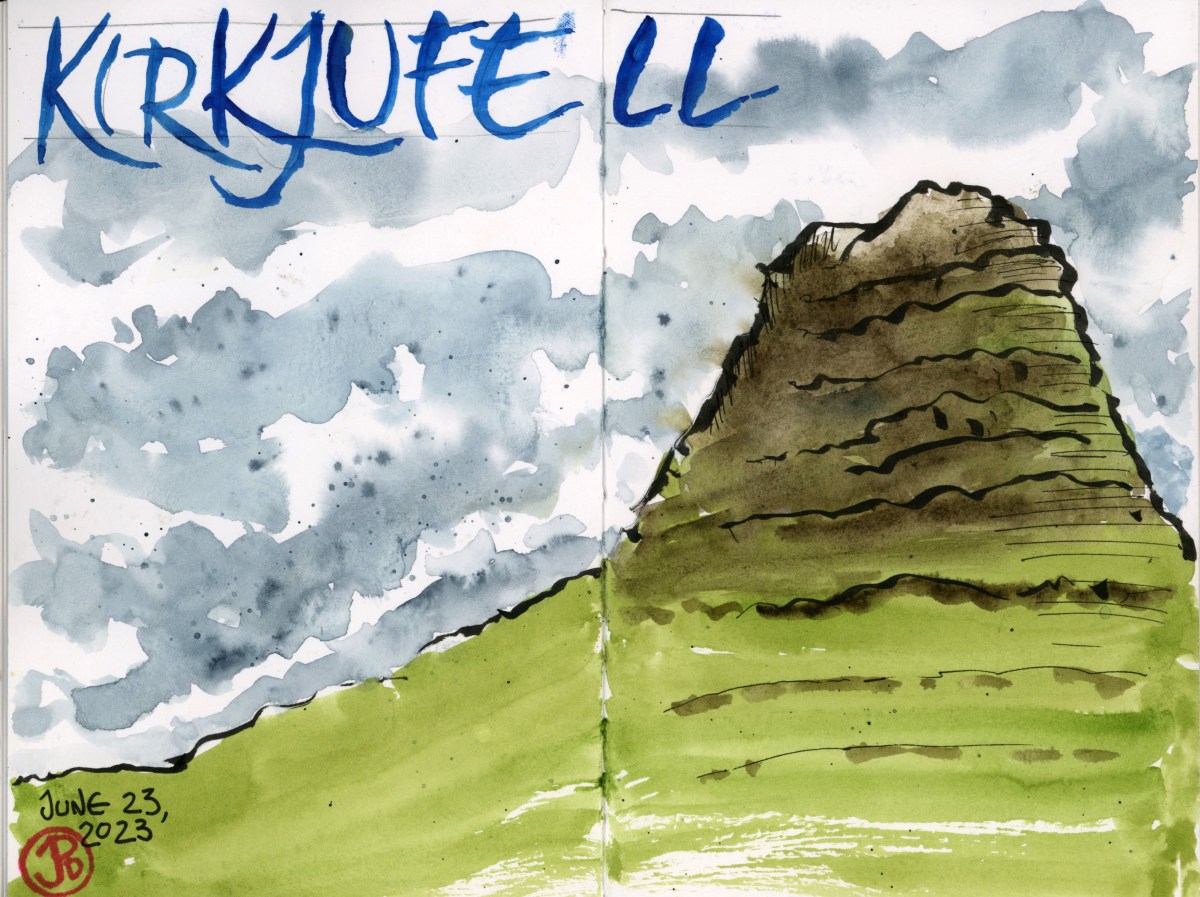
But I was determined to get Kirkjufell into my sketchbook, by hook or by crook! Having clips to keep my sketchbook open in heavy winds was a big help. Between periods of precipitation, I sketched the mountain quickly with my brush pen and I was happy with the result despite the inclement weather.

Corvidsketcher birding in Iceland. What’s that? A colony of fulmars.
Image

Otter 841

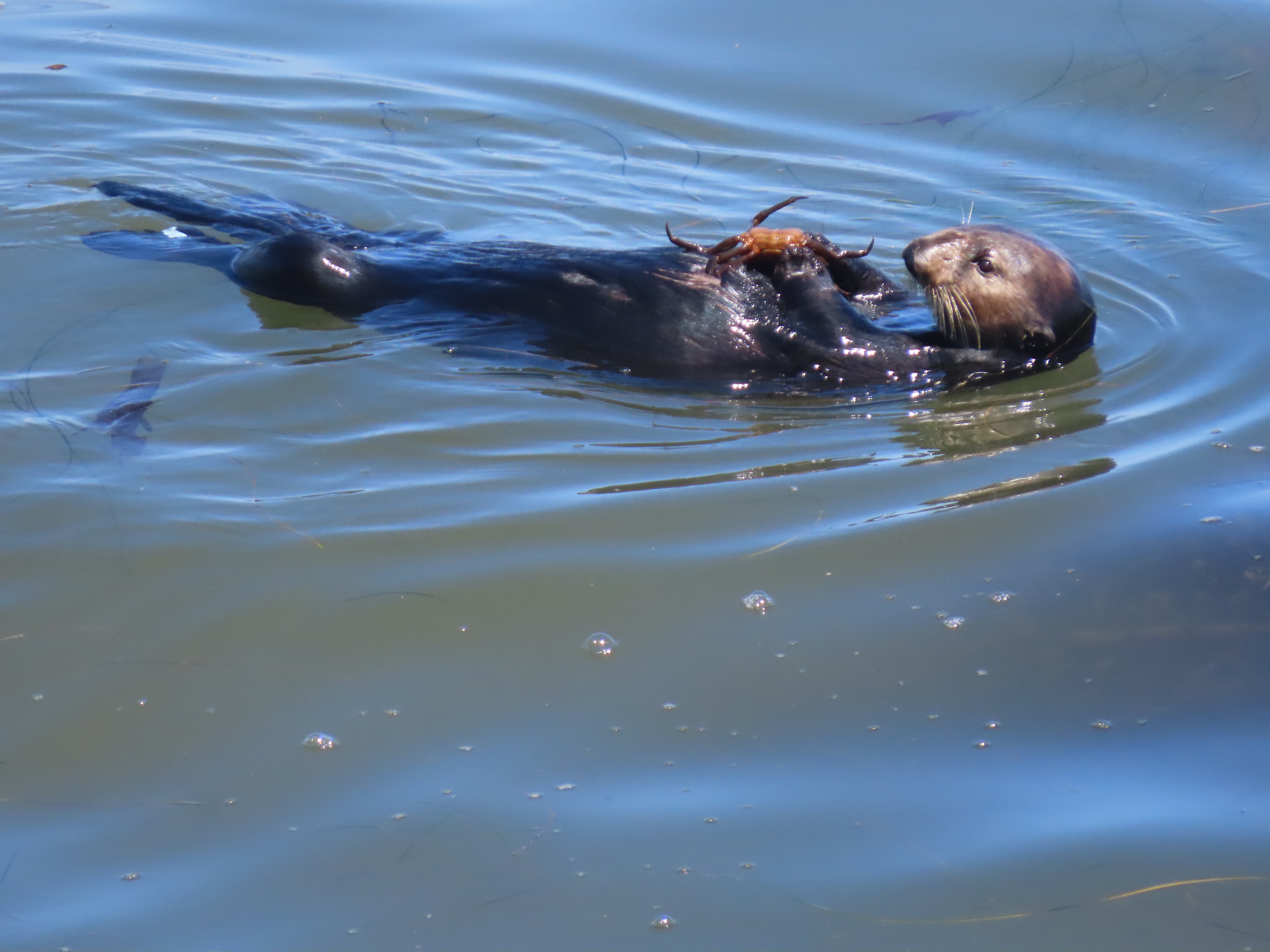
It is nice to see sea otters along the Santa Cruz coast. Laying on their backs, bashing a mollusk to death or eating a crab, recently caught, and still alive, one foot at a time, or rolling in the kelp, belly full, and settling in for a nap.

Fresh caught crab is on the menu off of West Cliff Drive.

This marine mammal was hunted to near extinction because of their pelts. Now they are protected and have prospered on the California coast.

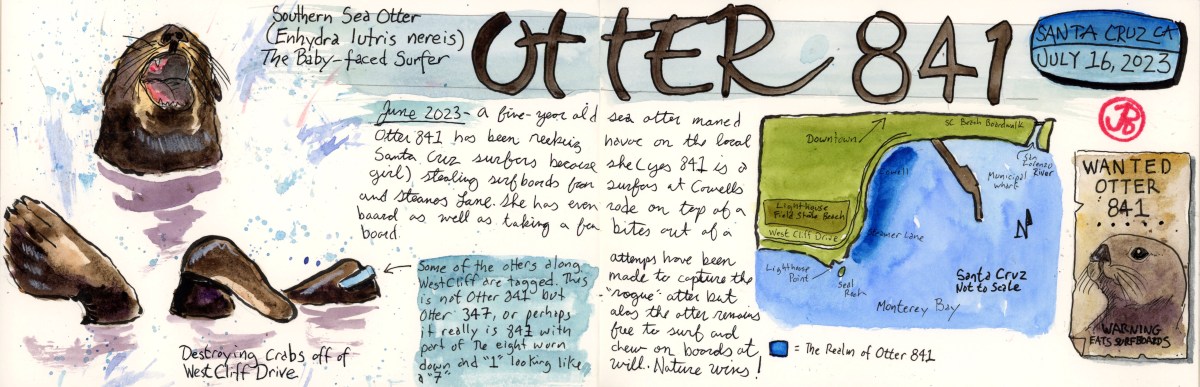
A five year old female, branded a “terrorist” by some in the media, has grabbed the world’s attention.

This is Otter 841.

Otter 841 was born in captivity and then released to the wild. Her mother, Otter 723 was taken out of the wild because she was habituated to people and was approaching kayakers begging for food. It was apparent that Otter 723 was being fed by humans.

While in captivity they realized that Otter 723 was pregnant and she soon gave birth to our troublemaker Otter 841.

841 was released to Monterey Bay where for four years she swam under the radar.

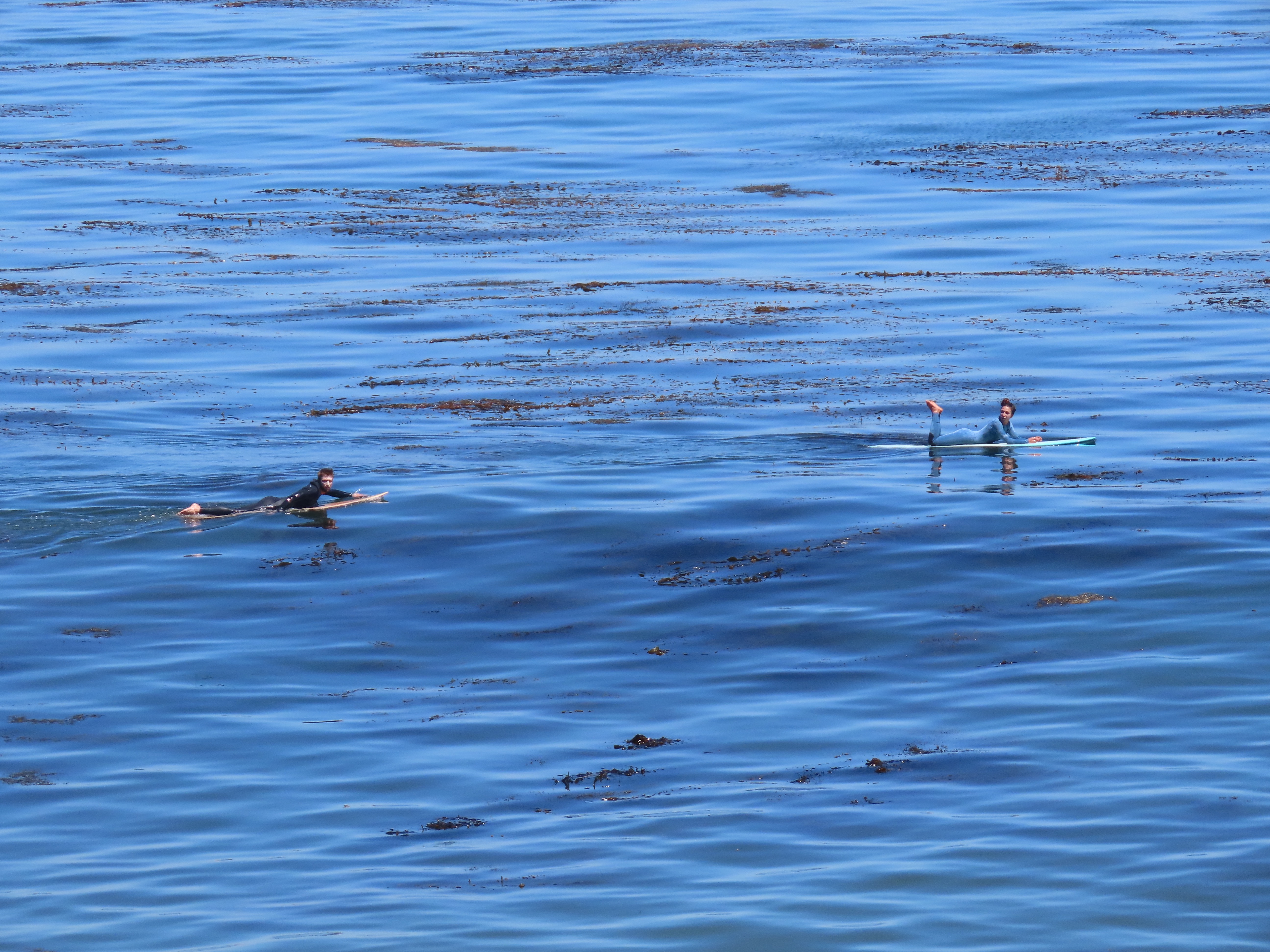
Starting in June of 2023, 841 has become a surfboard pirate. The otter has been observed and photographed jumping up onto surfboards, dislodging it’s surprised rider, in the popular surf spots of Steamers Lane and Cowells. On one occasion, 841 took some bites out of a surfboard.

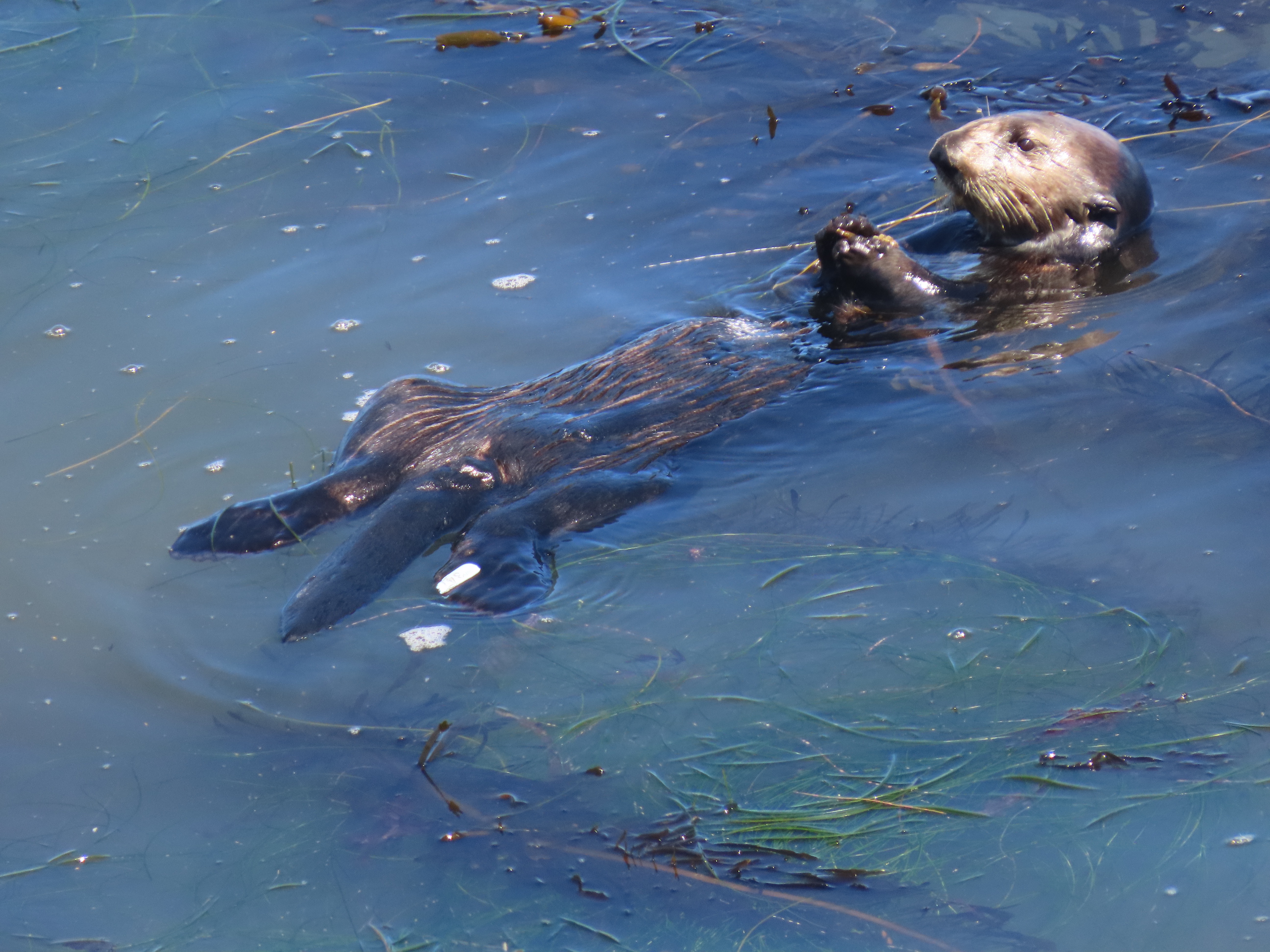
Is this Otter 841? On the otter’s left flipper is a light blue tag with a three digit identification number.
Surf at your own risk! Surfers keeping an eye on the infamous otter.

The powers that be decided that 841 should no longer be in the wild and attempts were made to capture 841 employing the cunning use of a surfboard. They tried and tried again but they could not capture the piratical otter.

And as of publishing, Otter 841 still swims free off the coast in Santa Cruz.

Don’t mess with nature because nature usually wins.

Image

Snowshoe Thompson: A Viking on Skis

Statues of my youth.

A toughstone to my father, my brother, to a place and time I would love to return to but I cannot. I am here at the place but the time is in the rear view mirror.

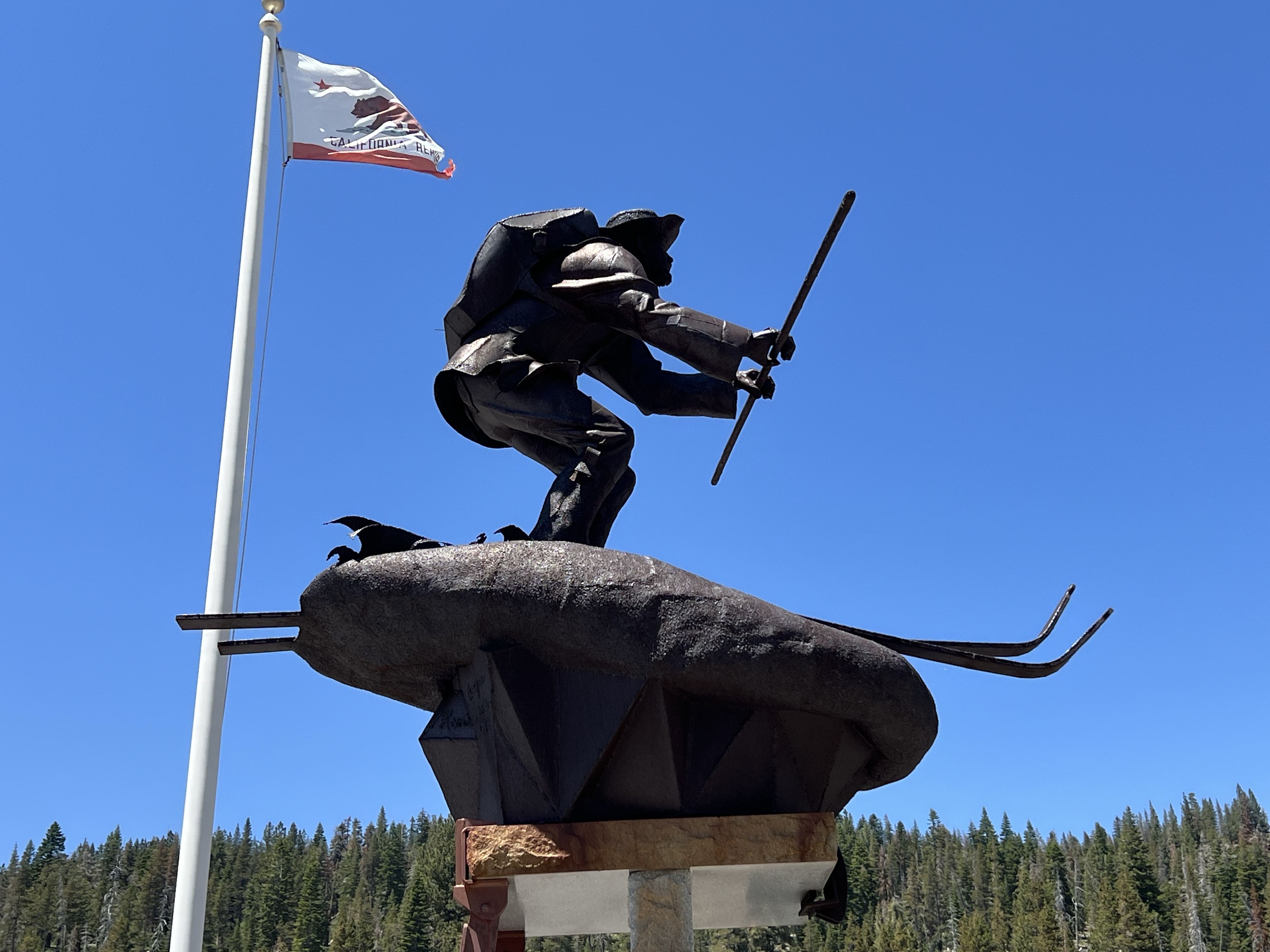
The statue of Snowshoe Thompson at Boreal Ski Resort, just off Highway 80 is one of those statue/memories.

Whenever I drive by I try to spy it. I know this statue from my youth. A dude with a beard, long skis, and a long pole held out as if he was up high on the high wire.

Bur this time I did not continue on east towards Truckee but took the exit to answer the question: who was this skier worthy of a statue?

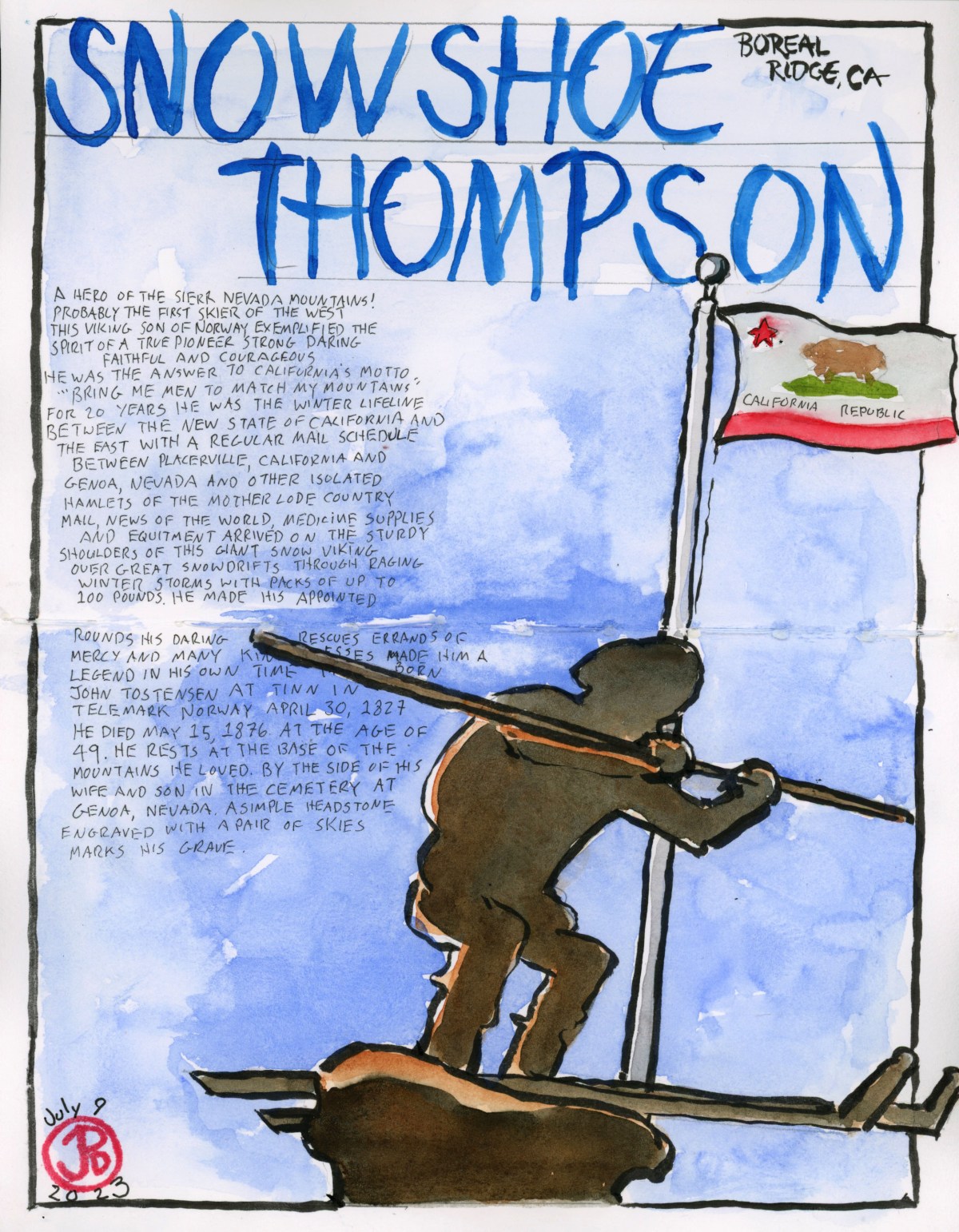
Snowshoe Thompson was born John Tostensen in Telemark, Norway on April 30, 1827. He immigrated to the United States when he was ten years old.

His family moved around the Midwest and eventually John and his brother wound up in Placerville, Ca formerly the mining camp of Hangtown.

From 1856 to 1876 he delivered mail from Genoa, Nevada and Placerville, California. This nickname “Snowshoe” was a misnomer because he used ten foot wooden skis and a long single pole, a method he learned in his native Norway. The journey would take him three to four days.

He made these trips in all kinds of weather giving real meaning to the Postal Service mantra, “Neither snow nor rain nor heat nor gloom of night stays these couriers from the swift completion of their appointed rounds”.

Thompson was of a different time when frontier men became legends and where made of toughness and fortitude. They was no room for giving up, there was a job to do and Thompson always came through. These were the days of wooden skis and iron men!

Thompson died on May 15, 1876 and is buried next to his wife in the cemetery in Genoa, Nevada.

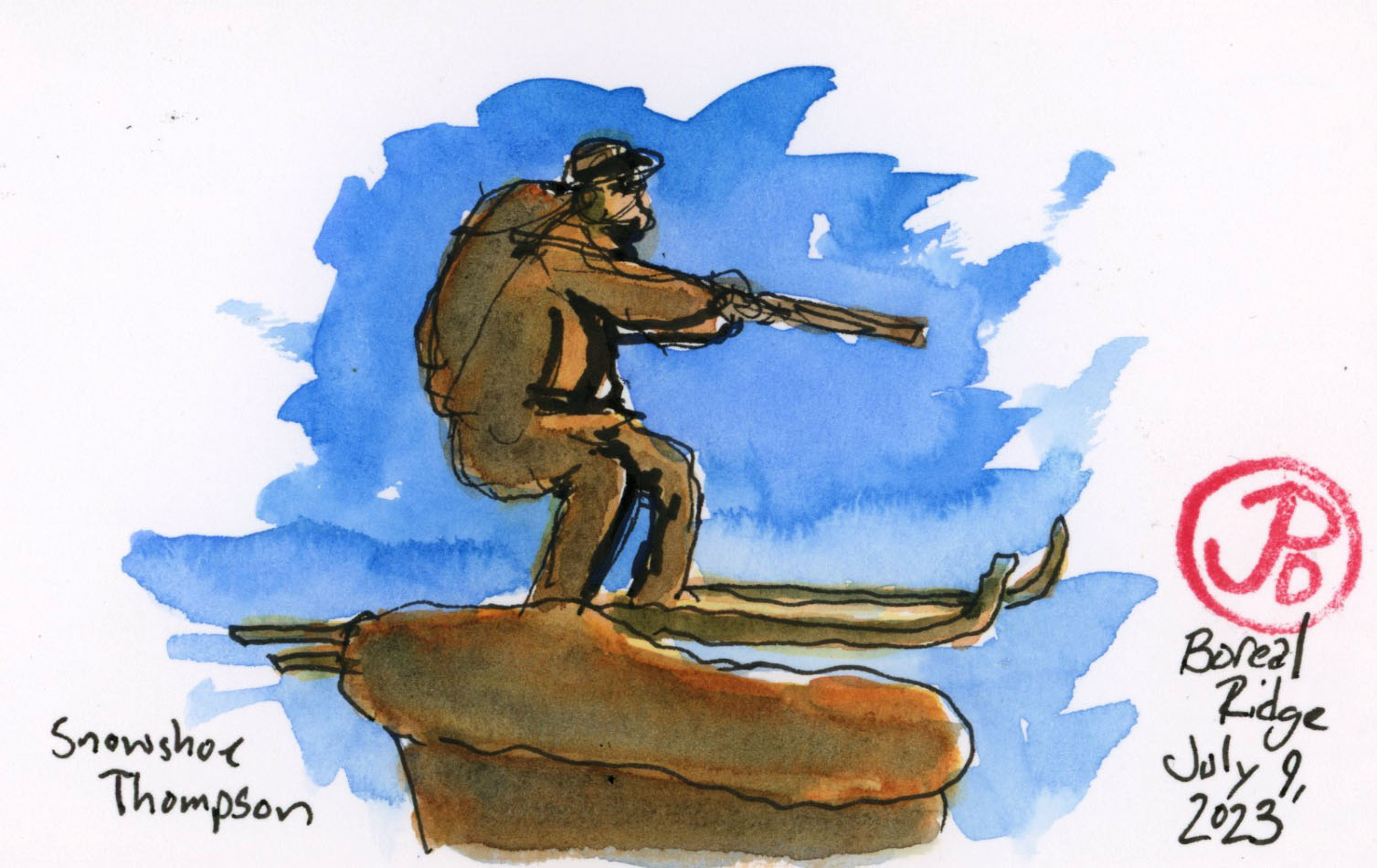
A quick field sketch of the Snowshoe Thompson statue at Boreal.

Thompson’s legacy as the Father of California Skiing is memorialized in the statue at the Boreal Ski Resort (featured sketch) and in a similar statue at Mormon Station State Historic Park in Genoa, Nevada.

Image

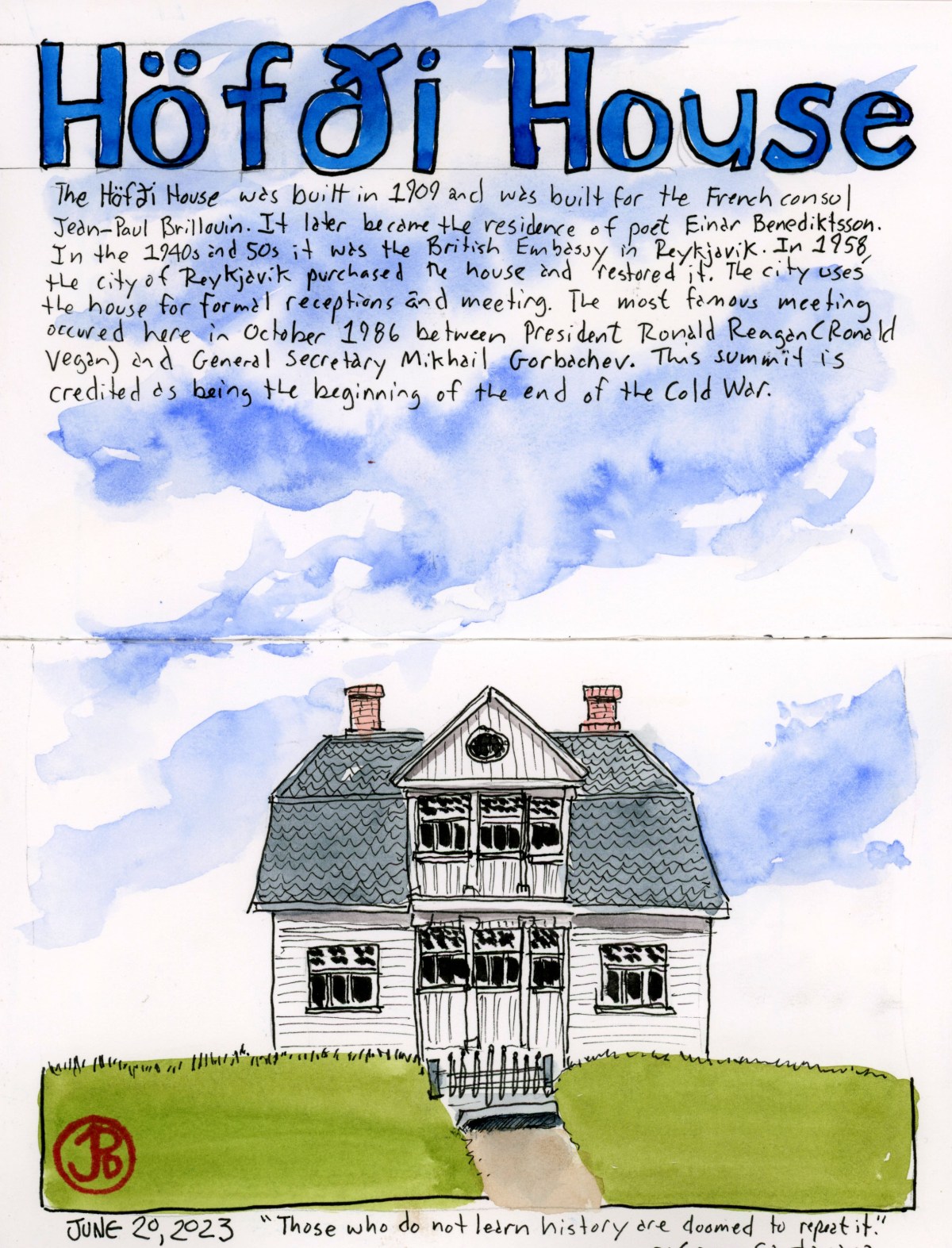
The House Full of History: Höfði House

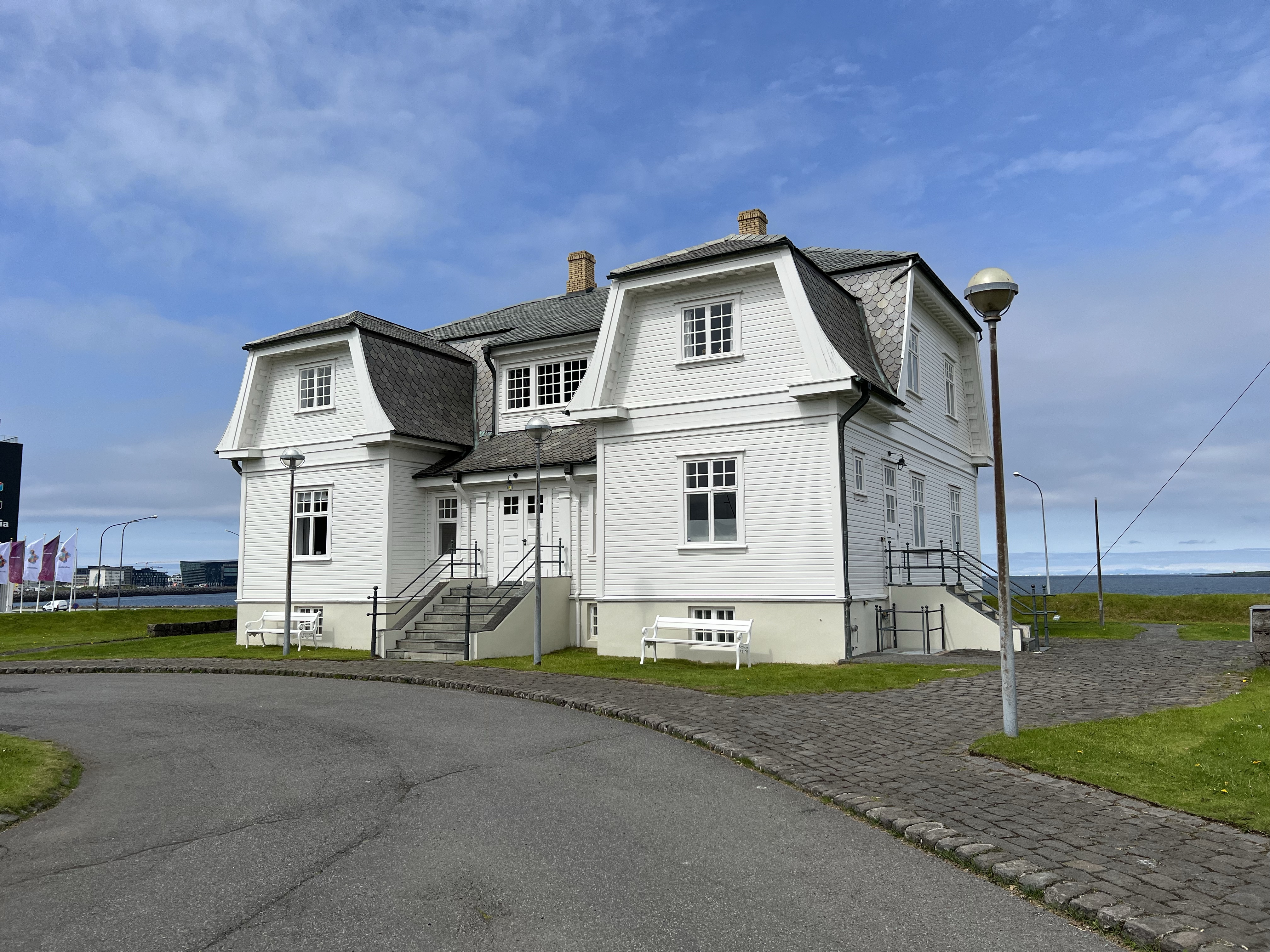
Not far from the sea wall and a short walk from the historic old town Reykjavik is a white two story house that sits alone among a sea of green grass.

The house looks like it belongs to a member of Reykjavik’s upper middle class but it is actually much, much more than this.

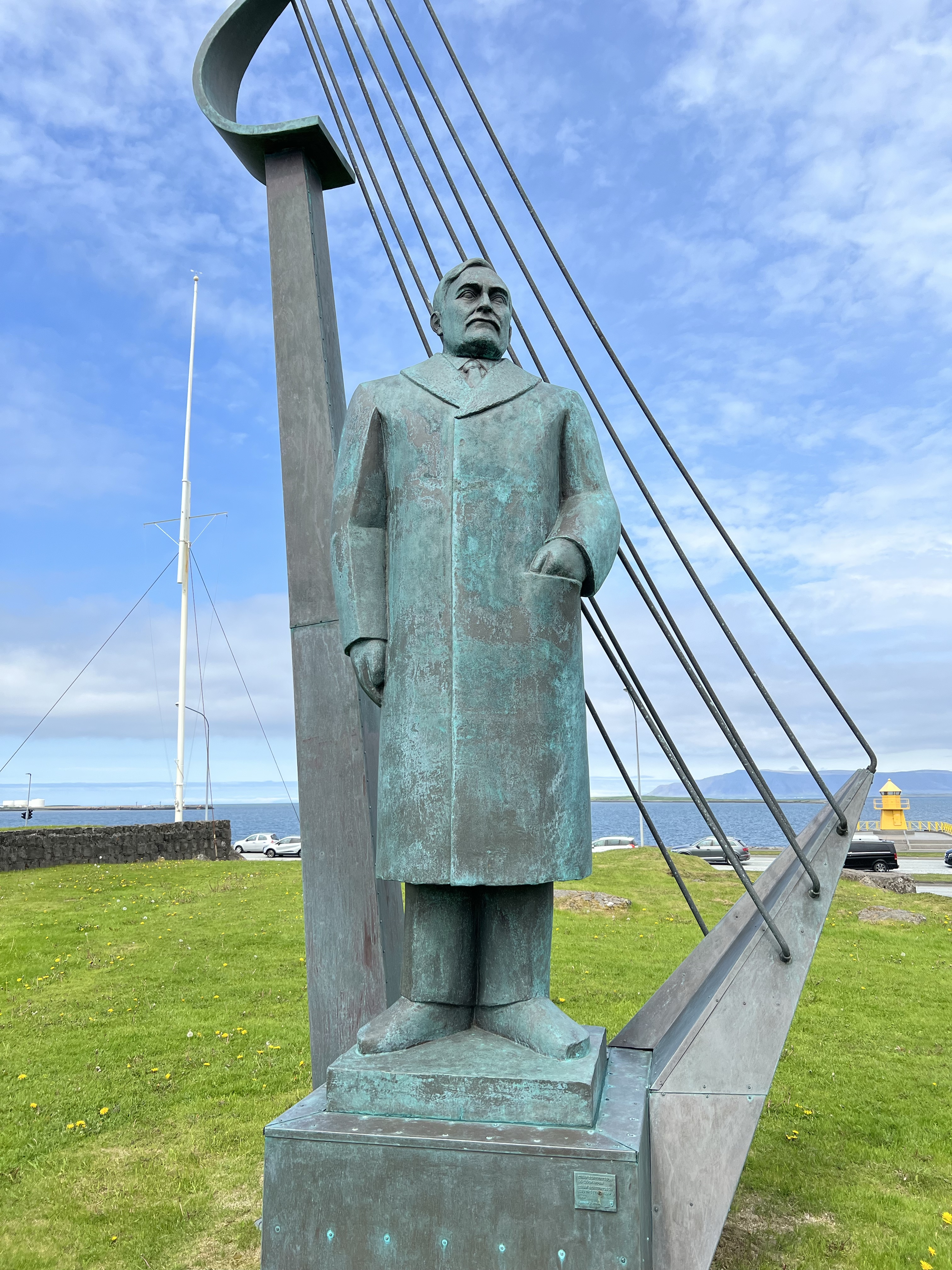
It hard not to love a nation that erects a statue to a poet (politicians already have too many airports named after them). This is just to he north of Höfði House and statue represents poet Einar Benediktsson standing in front of a harp.

The house was built in 1909 as the French Consulate. It later was the home of a poet and then a painter. During the 1940s and 50s it was the British Embassy.

The front of the Höfði House.

In 1958, the city of Reykjavik purchased the house and restored it and since then, the house has been used for formal receptions and diplomatic meetings.

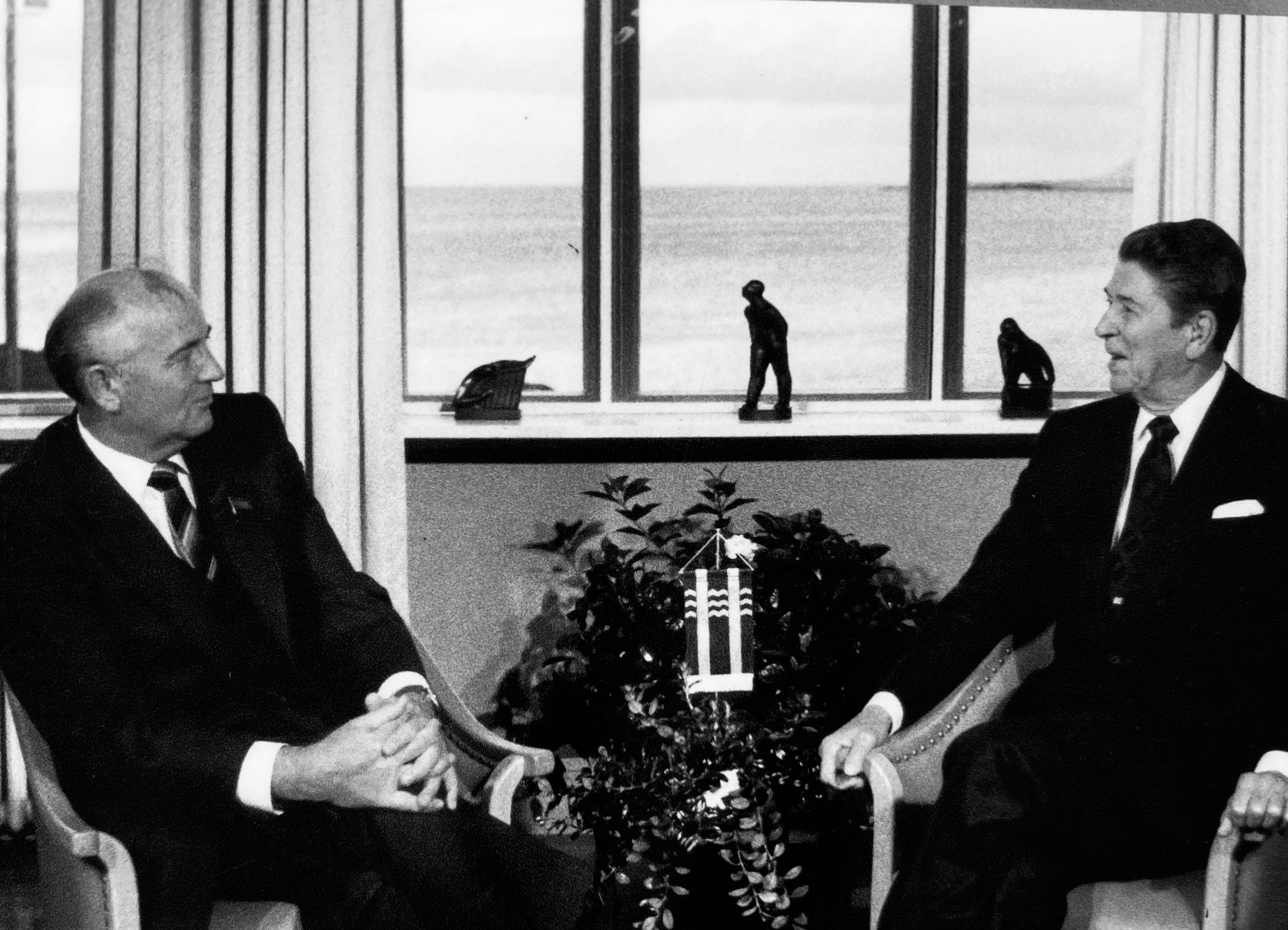
This house is really famous for a meeting that took place here in October of 1986 between Mickhail Gorbachev and Ronald Reagan. This meeting is regarded as the beginning of the end of the Cold War.

And like all good houses full of history, it is rumored to be haunted.

For my sketch, I sat on the sea wall and sketched the back of the house where the windows look out to the waters of Faxaflói Bay, while overhead black-headed gulls and fulmars flew by.

Image

The Whales of Iceland

Whales are some of the most amazing creatures that have ever lived on planet Earth. And one Reykjavik site that really piqued my interest was Whales of Iceland!

This museum is housed in a massive warehouse near the harbor and includes life sized models of all the dolphins, porpoises, and whales found off the shores of Iceland.

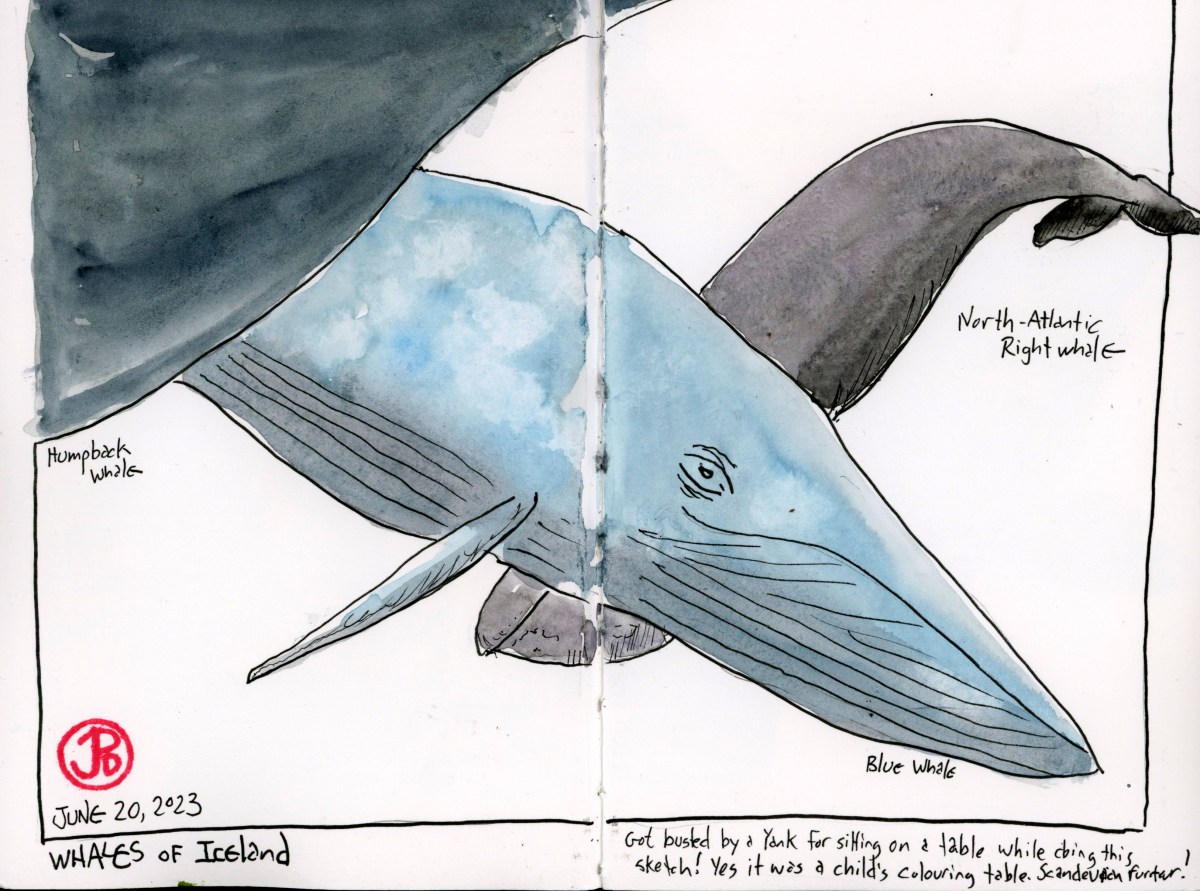
This really is a sketcher’s paradise and I found a bench located against a wall and I started to sketch the humpback, blue, and right whales that were suspended from the ceiling.

I was interrupted in mid-sketch, by a Yank (yes there are Yanks working in Iceland!) who informed me that I was not sitting on a bench but on a child’s coloring table and I was about to break it! Opps, so I found a chair and finished the sketch (featured sketch).

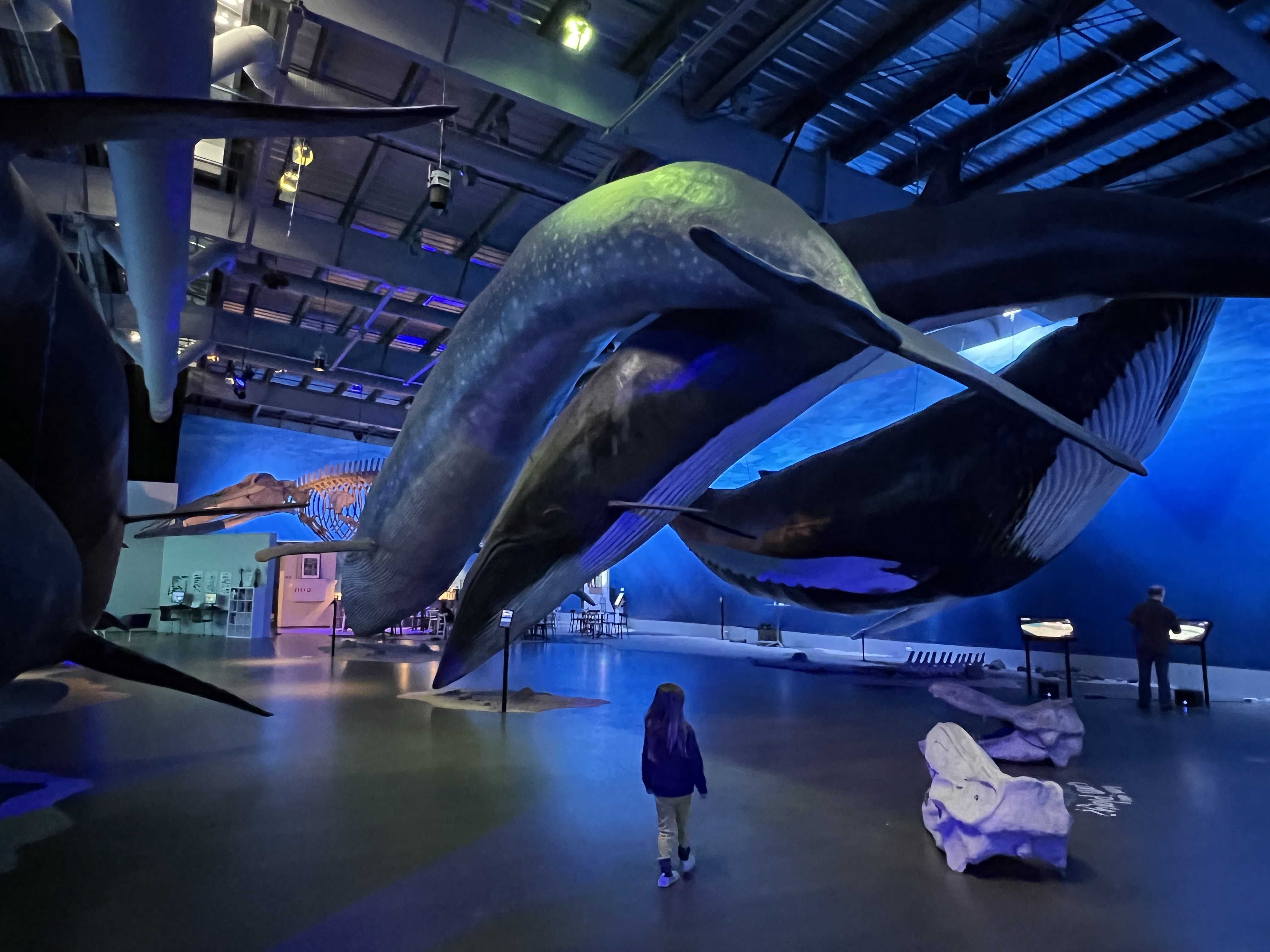
A small child provides scale to how large these whales really are. Perhaps she is headed towards the coloring/sketching table/bench.

It was really interesting to see the true sizes of the whales compared to others. I had seen a handful of blue whales off the California coast but you only see small parts of the dorsal side and if you’re lucky, the fluke. Here you could see the entirety of the whales. I was impressive to see just how large the largest animal that ever lived on the earth really is!

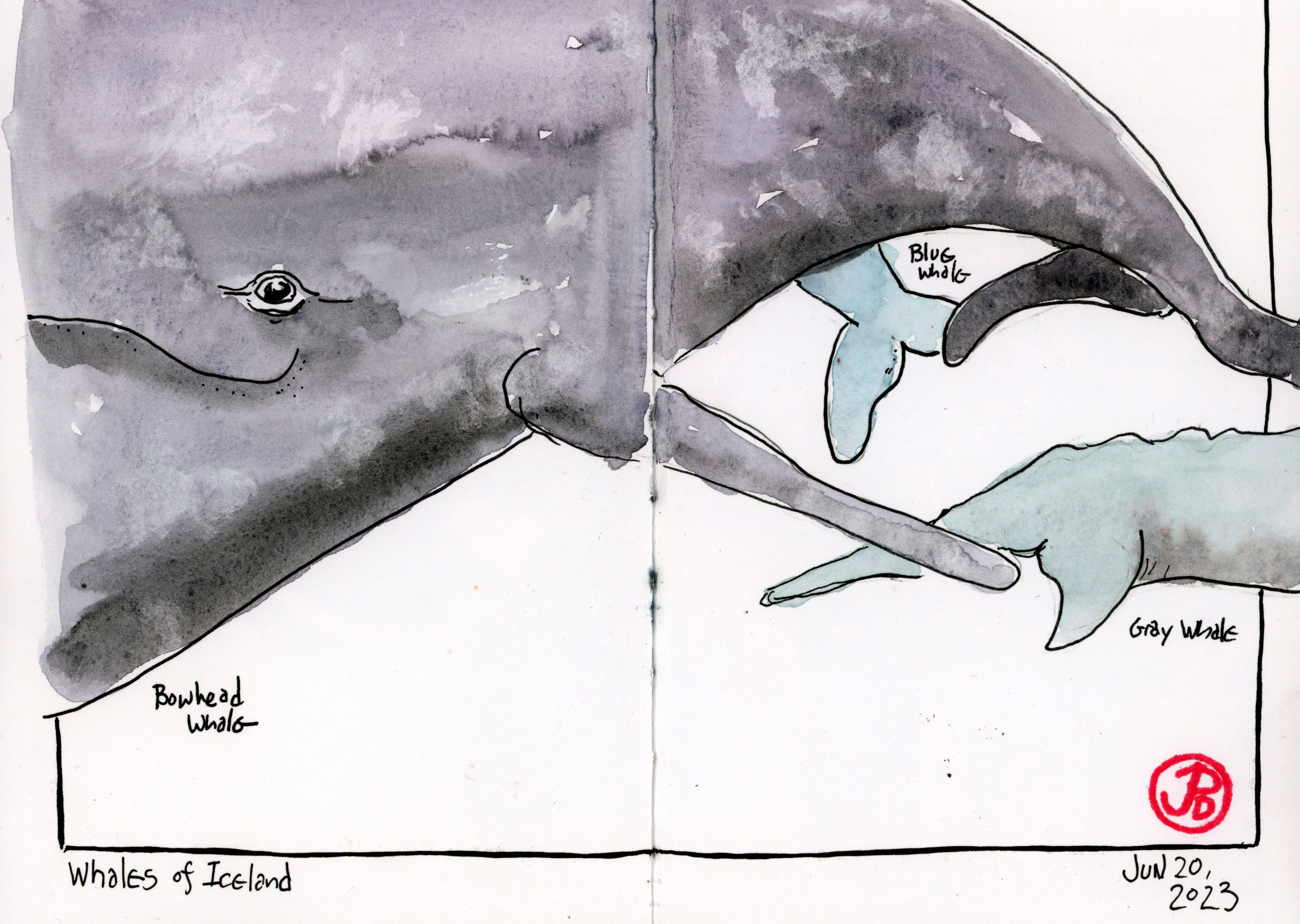
For my second sketch I drew the bowhead whale, the whale was so large that it did not fit into the pages of my sketchbook.

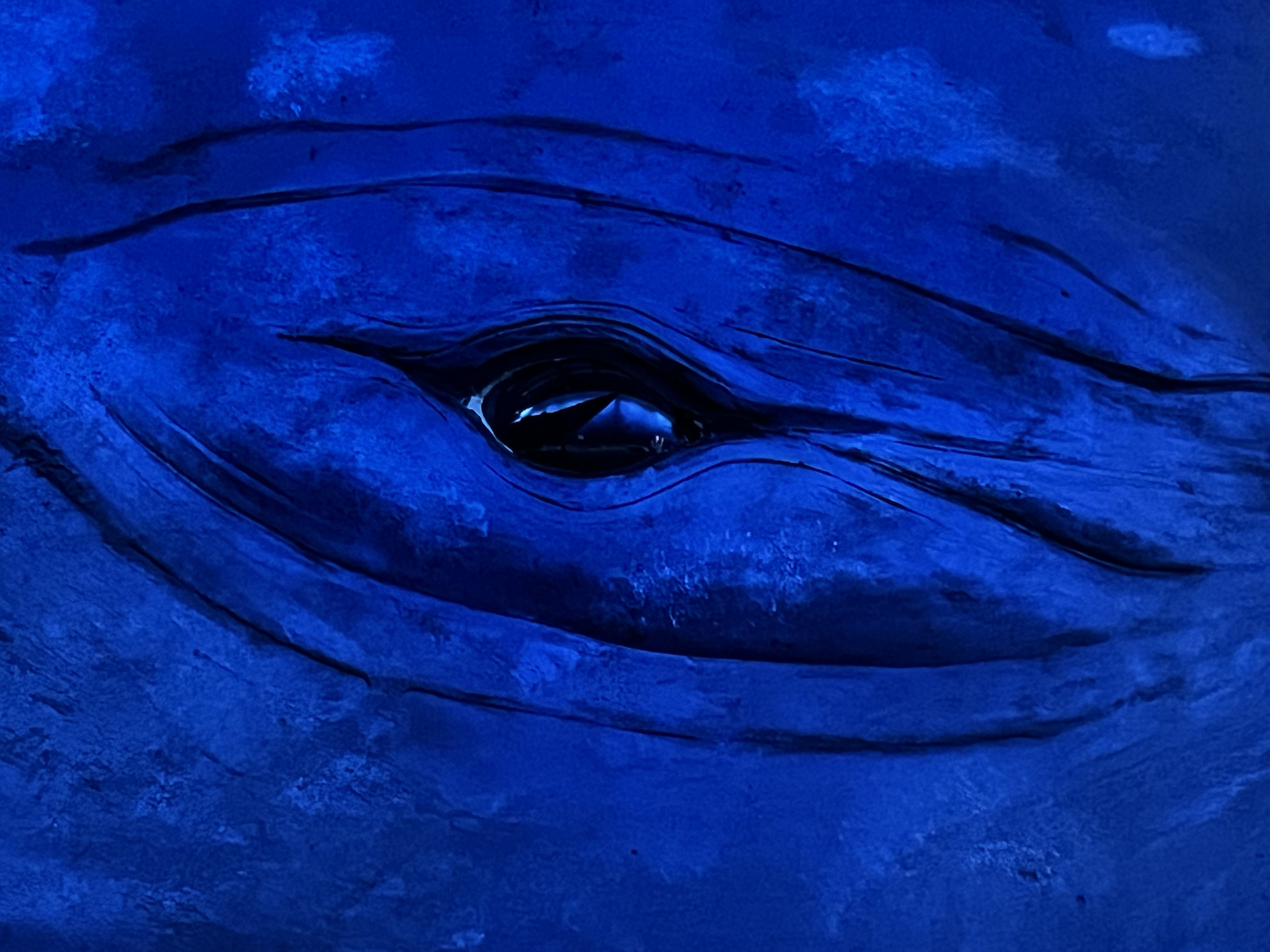
The eye of the largest animal on earth: the blue whale.
Image

Birds of Iceland

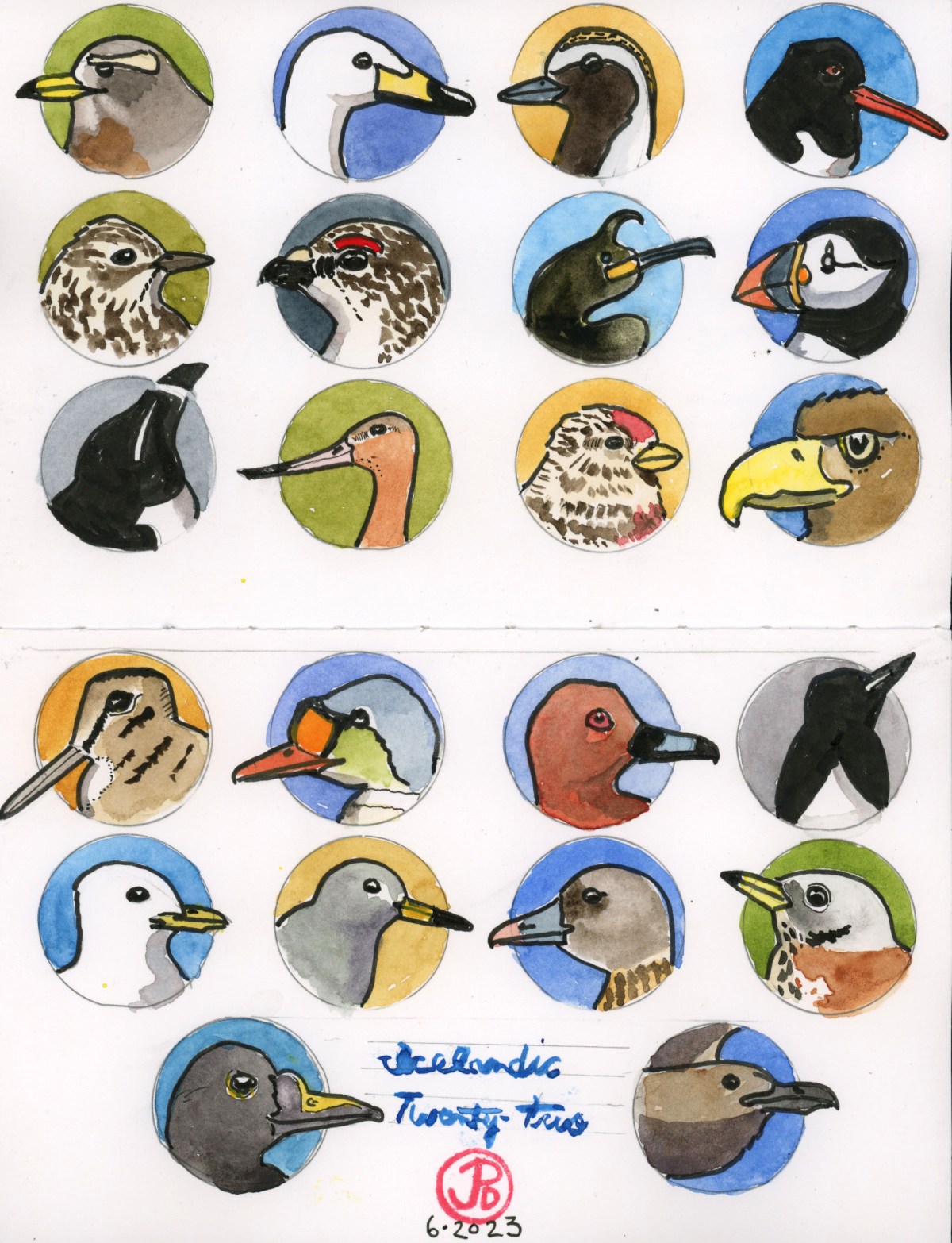
I figured I might see 20 to 25 lifers on my ten day Icelandic birding tour. This was a good goal and I hoped I’d meet it.

In the end I added 22 lifers to my world life list bringing my total to 1,740!

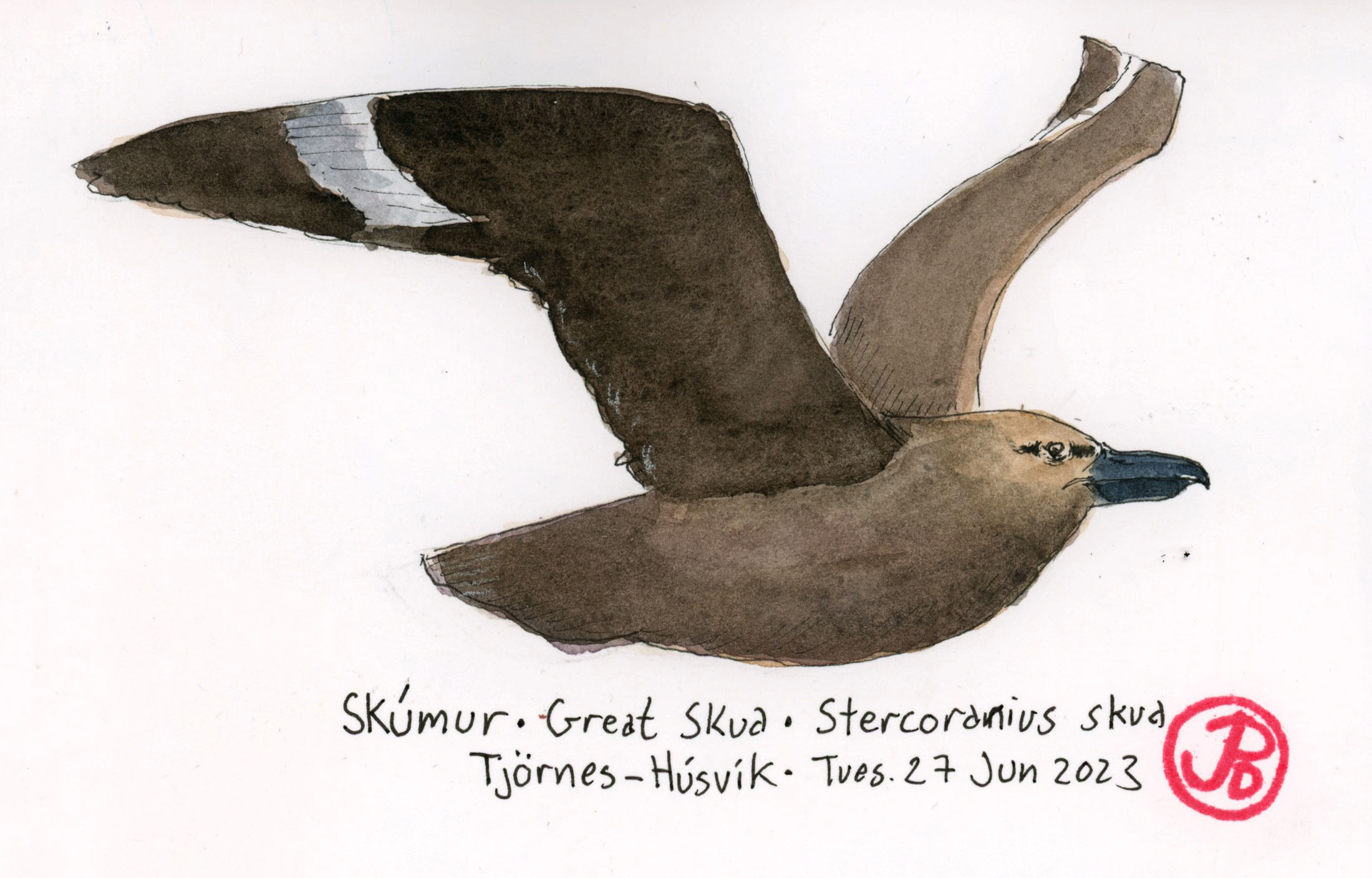
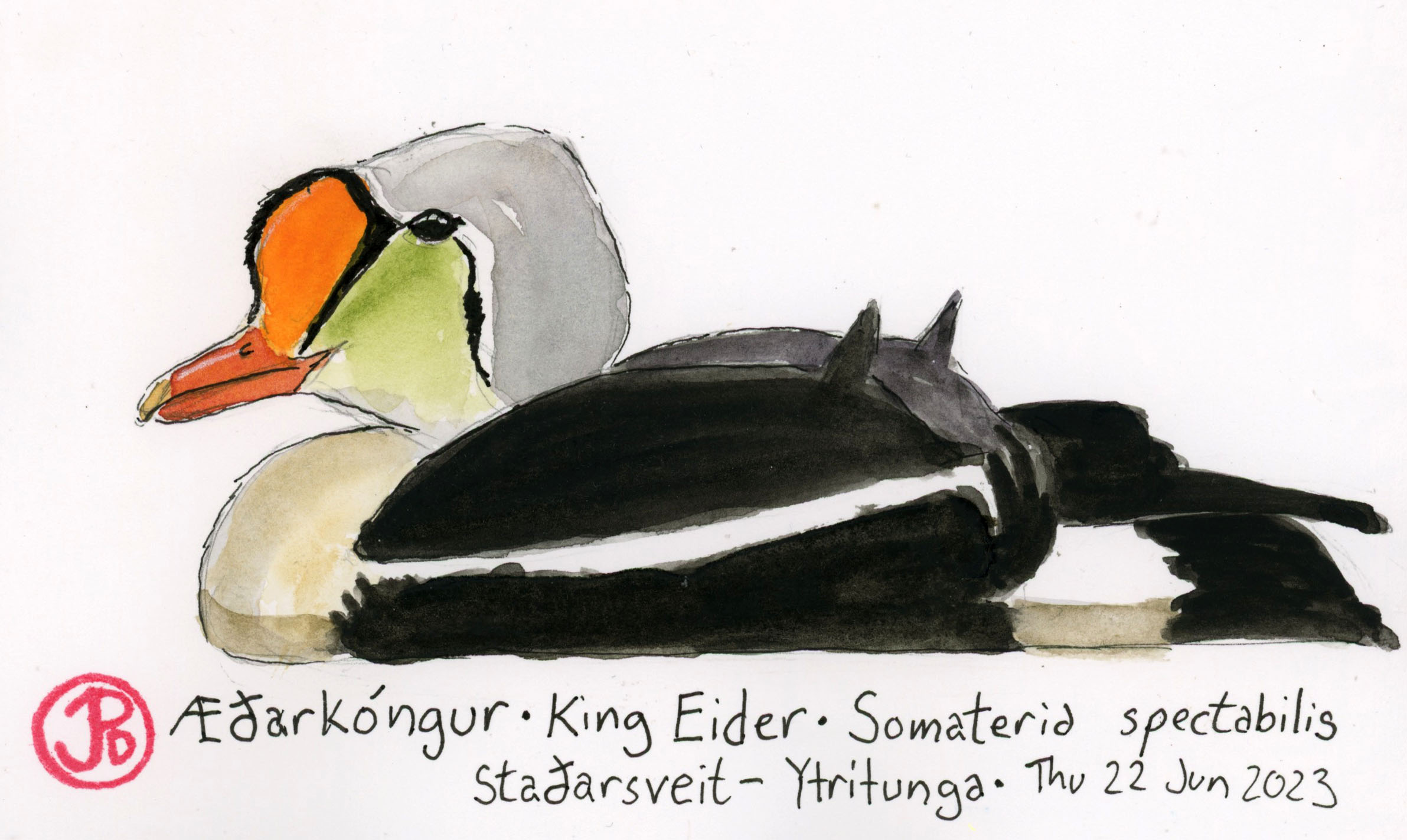
Aside from puffin of course, I had two species that stood out as lifers of the trip. One was the stunning male king eider, the other the powerful and menacing great skua!

The king eider is just one of those ducks that you see in a field guide and say to yourself, “I really want to see that bird!”. The male is such an amazing mix of color, shape, and form. So I had to sketch it of course.

Lifers weren’t the only draw for my Iceland trip, getting quality looks at birds, most in their stunning summer plumage, was another.

I had only seen Arctic terns while on pelagic birding trips off the California coast (it was a good day if you saw one or two on an eight hour cruise). Here in Iceland, the world’s longest migrant can be seen in the thousands. And from land! The terns have to come to land to breed and Iceland is that land.

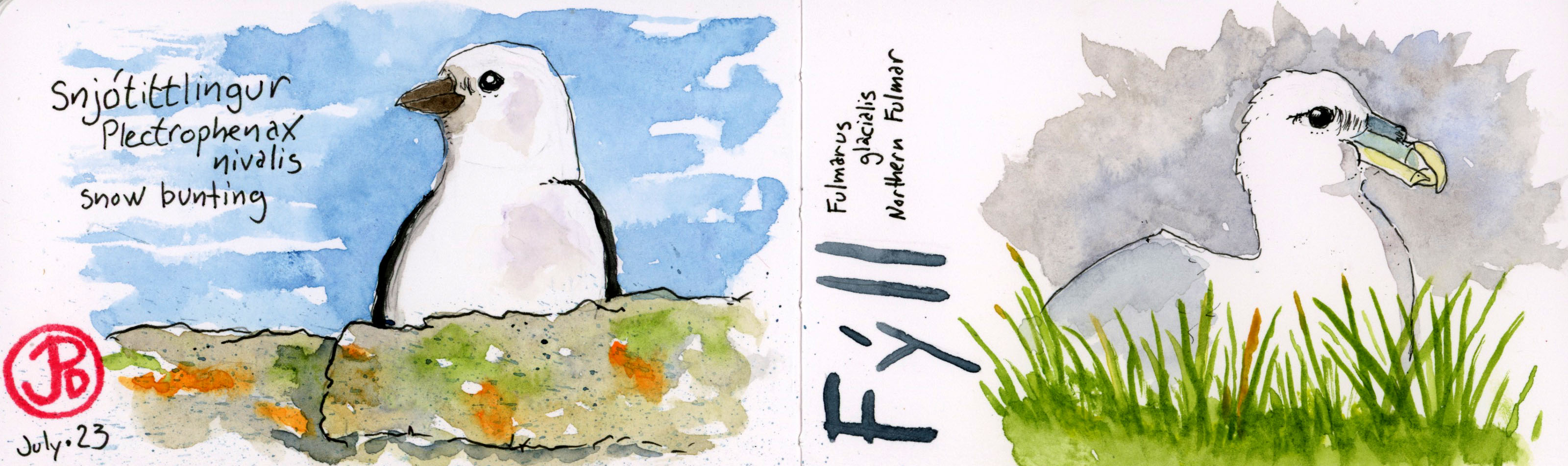
Another pelagic species that I had seen on pelagic boat trips and occasionally while doing a land-based seawatch was northern fulmar. Fulmars where everywhere in coastal Iceland where they nest on cliffs with a close proximity to the ocean. Walking along the coast, at times fulmars outnumbered gulls as they most common bird passing overhead.

One benefit of living on the California coast is that rarities often work their way down south along the coastline. Such was the case when a snow bunting over wintered on a beach in Half Moon Bay. I first saw the bird on November 19, 2022 and the bird stayed into the new year despite the epic rains of 2023. The bunting was being seen until at least late March.

Now in the summer of 2023 on a beach in northern Iceland I was watching a beautiful male snow bunting perched on a rock. He was decked out in his black and white finery and it really put the word “snow” into snow bunting!

Image

Hallgrimskirkja

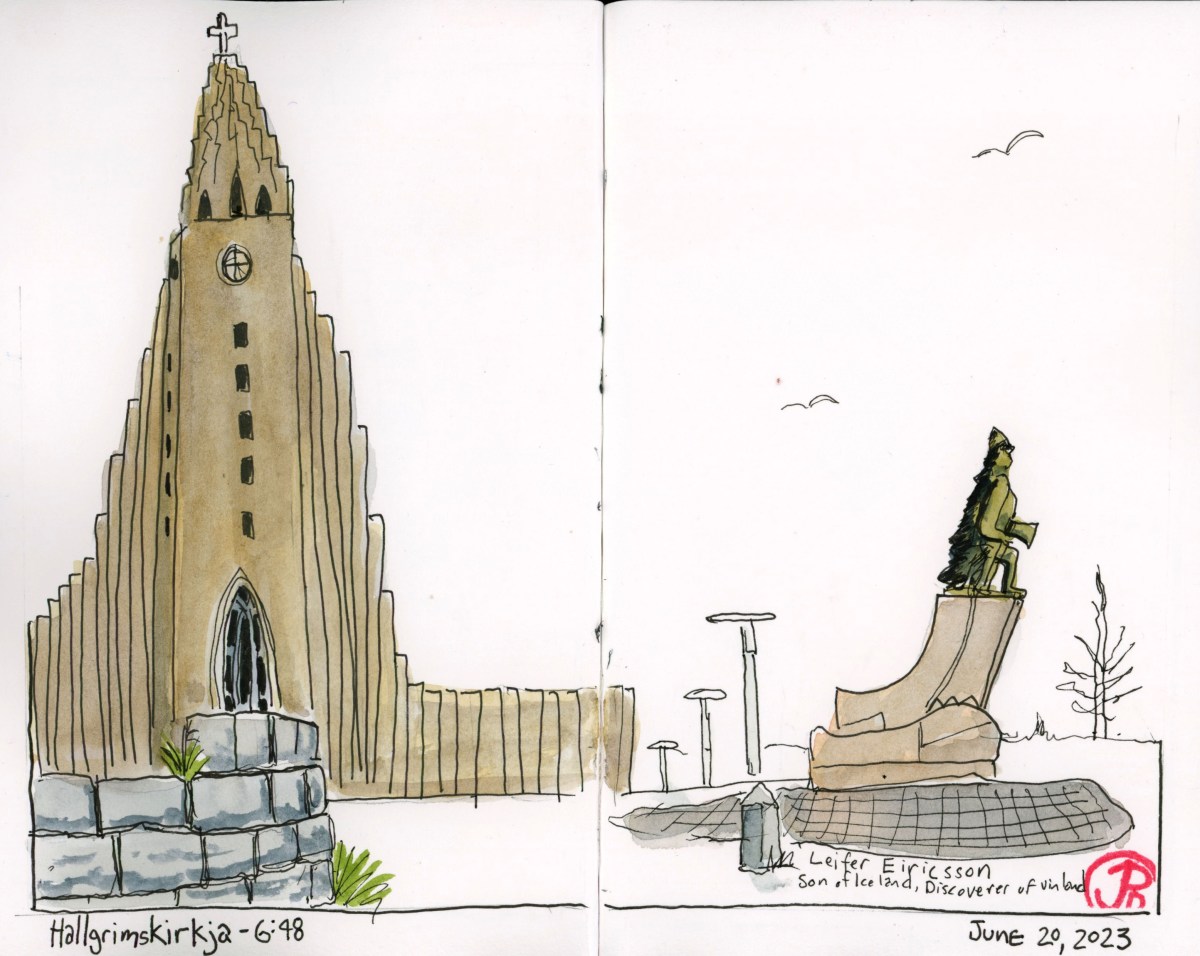
Hallgrimskirkja dominates the skyline of Reykjavik, Iceland. It’s the first thing you see as you head into the city from the airport. For many years it was the tallest building in the entire country. It’s design mimics the basalt columns found across the geology of Iceland. This Lutheran church is essentially Icelandic.

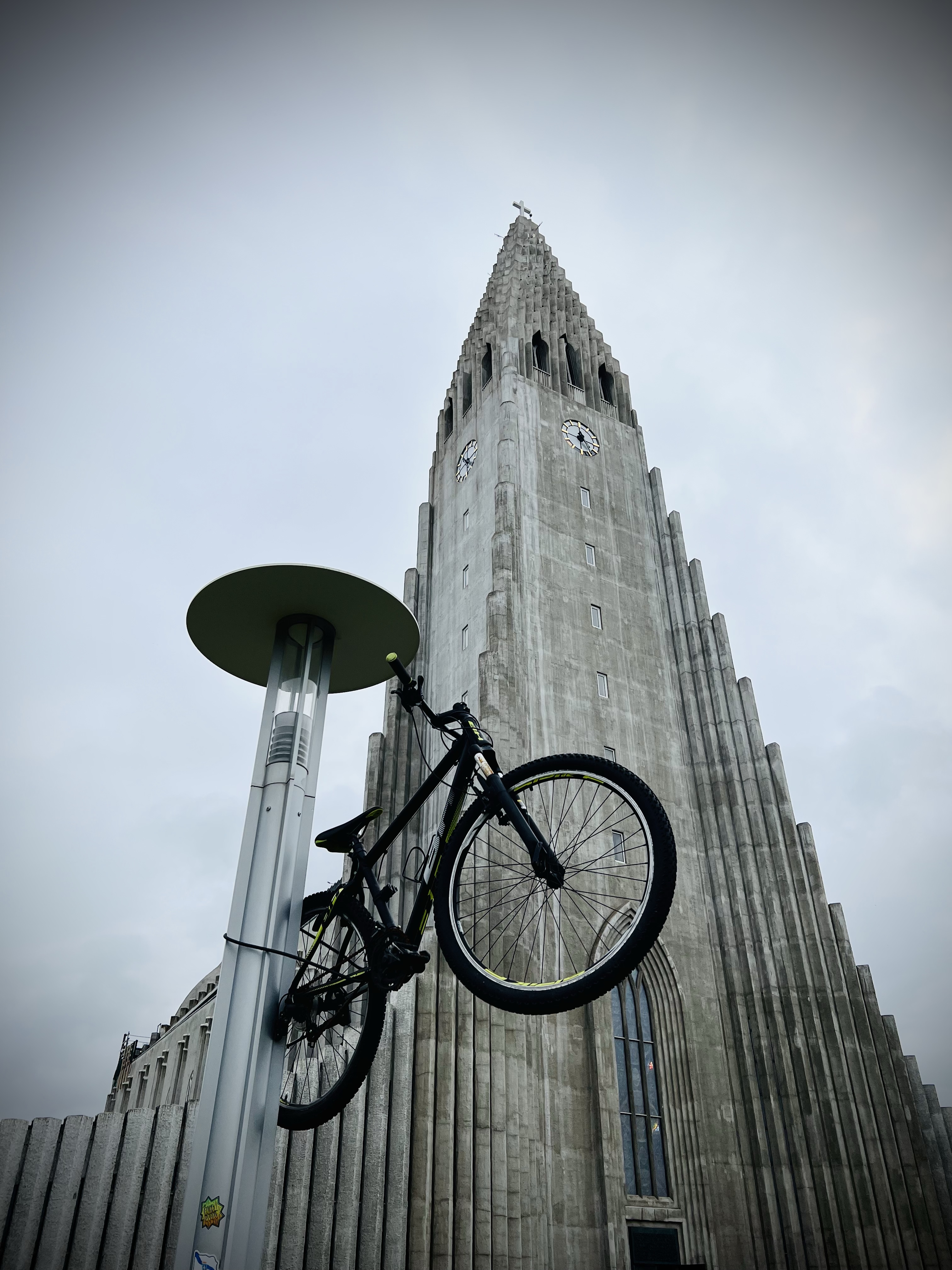
At first I thought this was some modern art but I soon realized it was really just a bicycle chained to the top of a light post, with Iceland’s largest church in the background.

Hallgrimskirkja is the largest church in Iceland. It was designed in 1945 but it was not completed until 1986. This gives hope to the continuous mass that is Barcelona’s unfinished Gaudi masterpiece La Sagrada Familia. It will be finished, someday.

This church topped my sketch list for Reykjavik. I love to sketch architecture. It is the best way to get to know a building and I sketched Hallgrimskirkja from a few different angles and perspectives. It is a building that holds up to many sketches. Here’s one:

While in Reykjavik, my apartment was a block and a half from Hallgrimskirkja, so it was easy to wander back to my home base. All I had to do was look for the tall spire, like a beacon announcing my Icelandic digs and wander towards it. It worked every time.

The church changes with the weather, from overcast to Icelandic sun.

One sketch I did was from a children’s playground at Njalsgata (half a block from my digs). The sketch was dominated by the tall spire of Hallgrimskirkja and in the foreground was my local coffee shop, Reykjavik Roasters. Here I enjoyed an double cappuccino and a blueberry muffin. Coffee in Europe always seems so much better. Perhaps it’s the porcelain. Perhaps it’s the view, perhaps it’s the knowledge of being somewhere exciting and new.