Image

Friday Junco Rescue

After work on Friday, as I was about head to my car when my colleague told me that there was a bird trapped in a light.

I know sounds very odd. Well being the resident bird rescuer, I went to find out.

In the past, whenever, a bird gets caught inside one of our classrooms or even our large group instruction room (LGI), I would get the call to try to liberate the bird safely and identified the species at the same time! I have to say thus far, that I have had a 100% success rate.

But around the backside of our LGI, I was about to meet my biggest challenge.

Around the perimeter of the building, there are lights along each exterior wall and I finally came to a light on the far back side that had a rusted cage over it.

For what purpose this cage served I’m not really sure. Perhaps it was to prevent teenagers from throwing rocks at the light to try to break it. (I was a teenager once!)

But now this cage served another purpose, a bird trap, because inside frantically flying about was a bird.
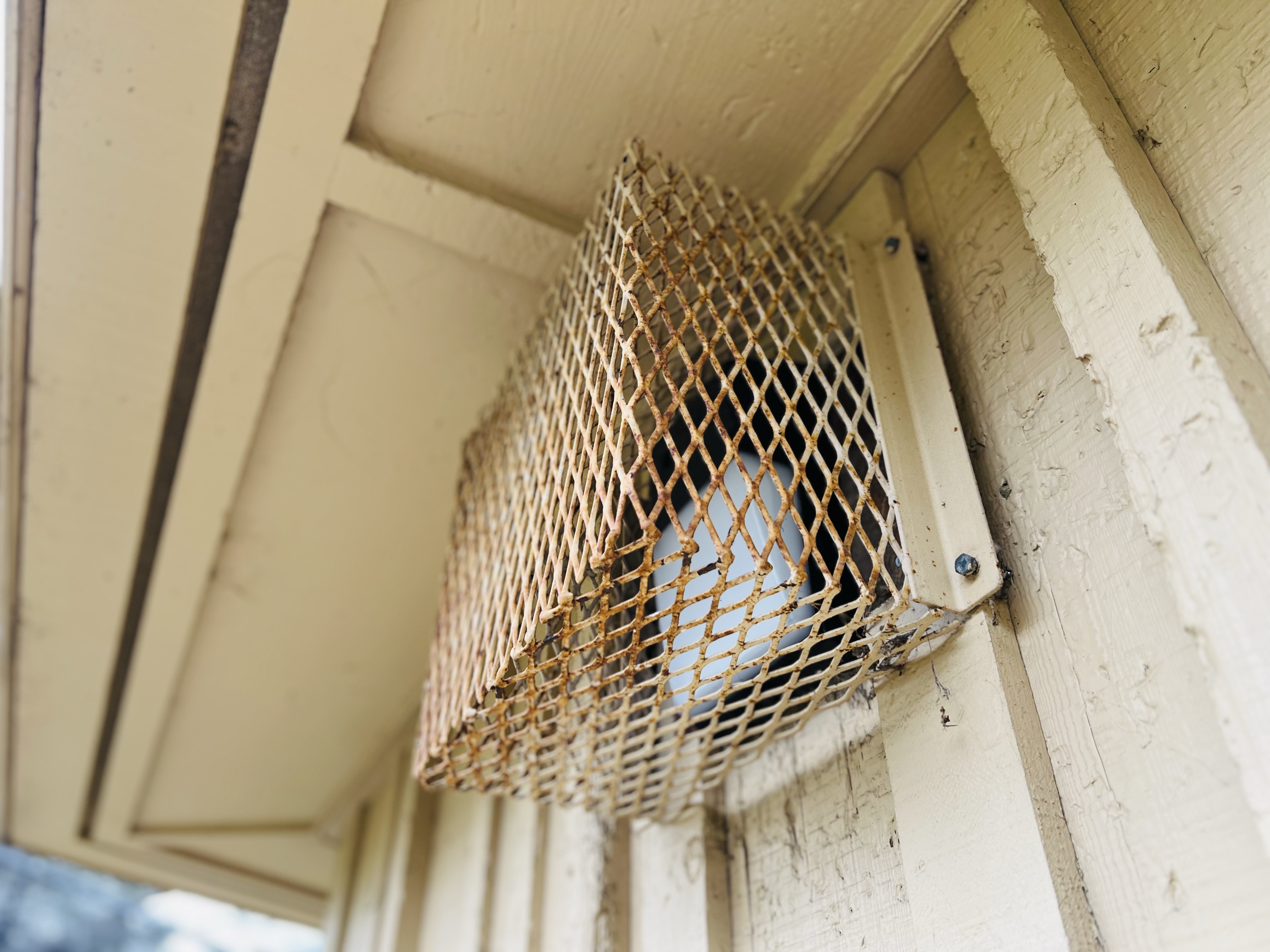
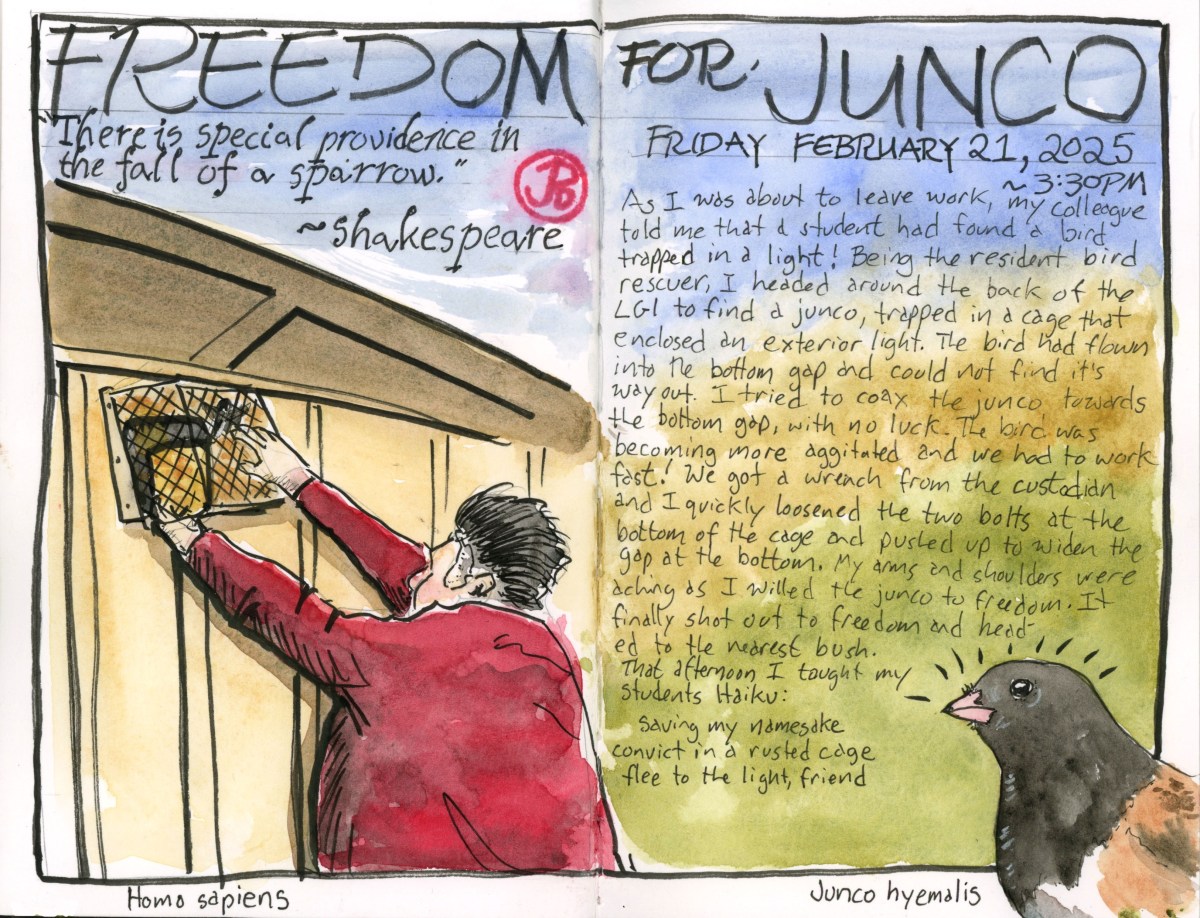
A dark-eyed junco in fact. The adult bird was frantically flying about, being hemmed in by its rusty cage. I could see at the bottom of the cage that there was a 1 inch by 9 inch gap which I assume was how this junco improbably had entered it’s prison. What were the chances?

I grabbed a few sticks hoping to direct the bird toward the gap in the bottom. I poked one stick through and it came out the other side. I figured if I cut off some space above, it would move the junco closer to its freedom.

The junco perch on the stick instead.

The cage was secured onto the wall by four bolts, I figured if we could get our hands on the right wrench, I could remove some bolts and push the cage up and increase the egress. Cue our night custodian.

We borrowed a crescent wrench and I stood up on a plastic folding chair and worked on loosing the two lower bolts. The junco was frantically flying around its rusted cage. The bird was highly stressed and I had to work fast, turning the wrench at quarter turns.

The first bolt came out fairly quickly but the second was a bit more of a challenge. I realized that removing one was not enough and I need the two bottom bolts removed and hoped this would allow me to push up on the cage a create the doorway to freedom!

I pushed up on the cage and willed the junco to fly down. It eventually did find its path to liberty and disappeared into the nearest bush wondering what had just happened, or so I imagine.

Well I certainly did my good deed for the day!!
Image

Martinez Sketching

I arrived a few hours early in Martinez before meeting my friend for lunch. I wanted to do some sketching around the Martinez AMTRAK Station.

The train station in Martinez is a busy place. While I was sketching, three Capital Corridor trains passed through.

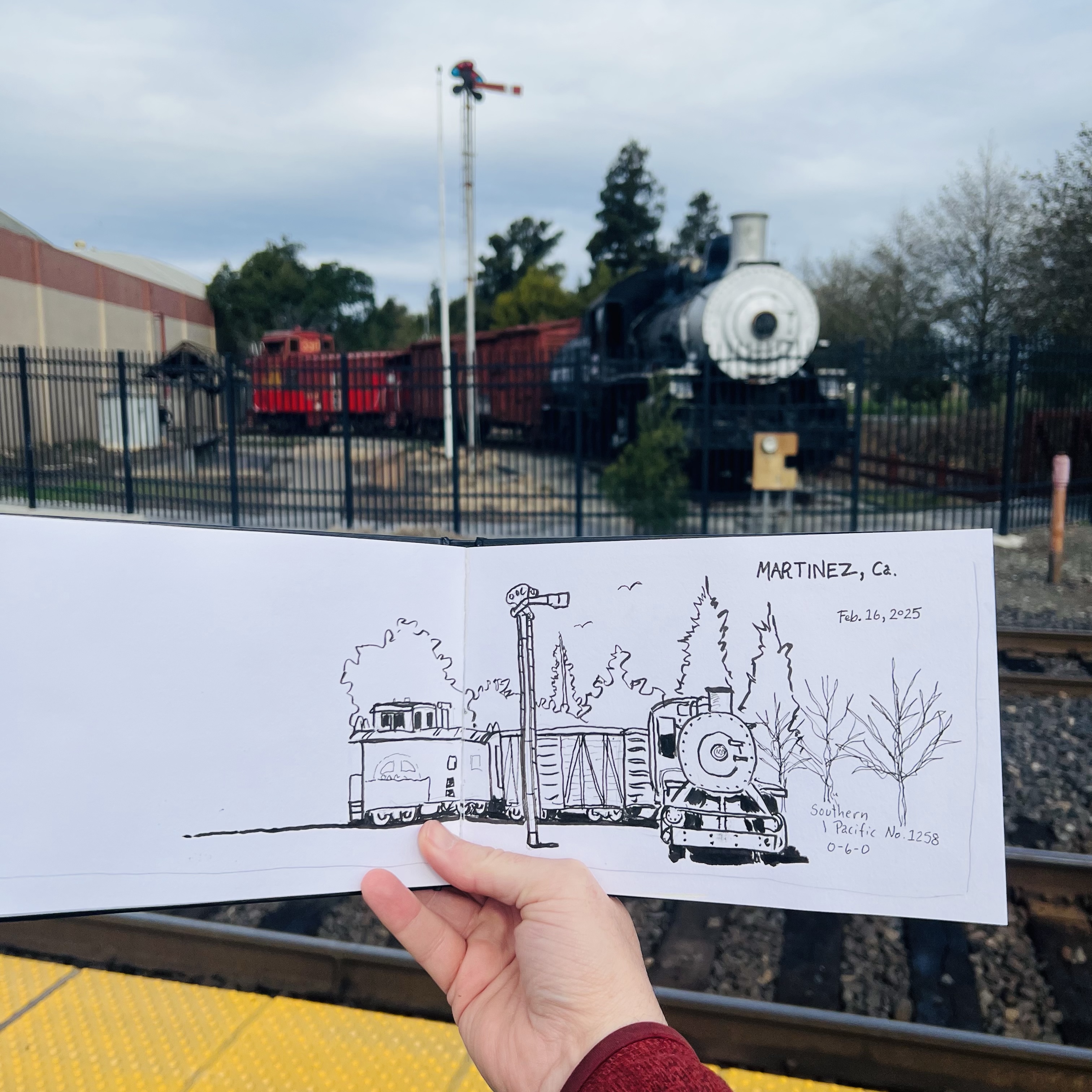
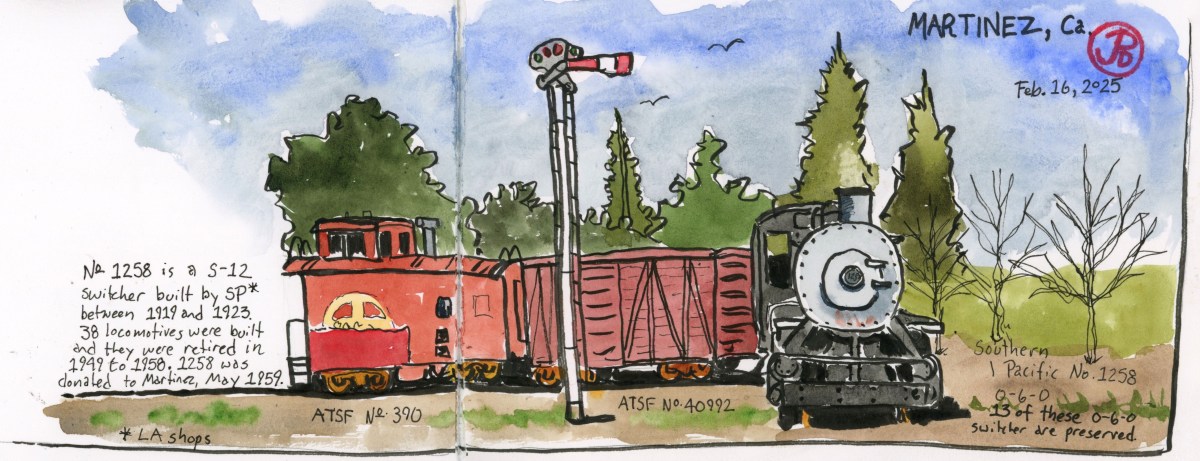
On my last visit I wanted to sketch the Southern Pacific locomotive, with its odd consist of Santa Fe cars, on static display across from the station but I didn’t get around to it. I wanted to add it to a spread on my next visit (featured sketch).

Southern Pacific No. 1258 is an S-12 switcher steam locomotive built at the SP shops in Los Angeles. 38 locomotives where built in this class and there are 13 0-6-0 SP switchers preserved, more than any type of Southern Pacific locomotive built.

Switchers are not sexy nor classy like the GS locomotives. There epitomize function over form. The real workhorses of the Southern Pacific freight yards.

After sketching 1258, I headed to the other side of town to sketch the house of Martinez’s most famous resident.

This resident is the writer and naturalist John Muir. He lived here among the fruit orchards with his wife and family.

Muir married into the Strentzel family in 1880. The Strentzels had been farming the land, mainly fruit ranching, since the 1850s. Muir lived here, except when he was off traveling, from 1880 until his death in 1914.

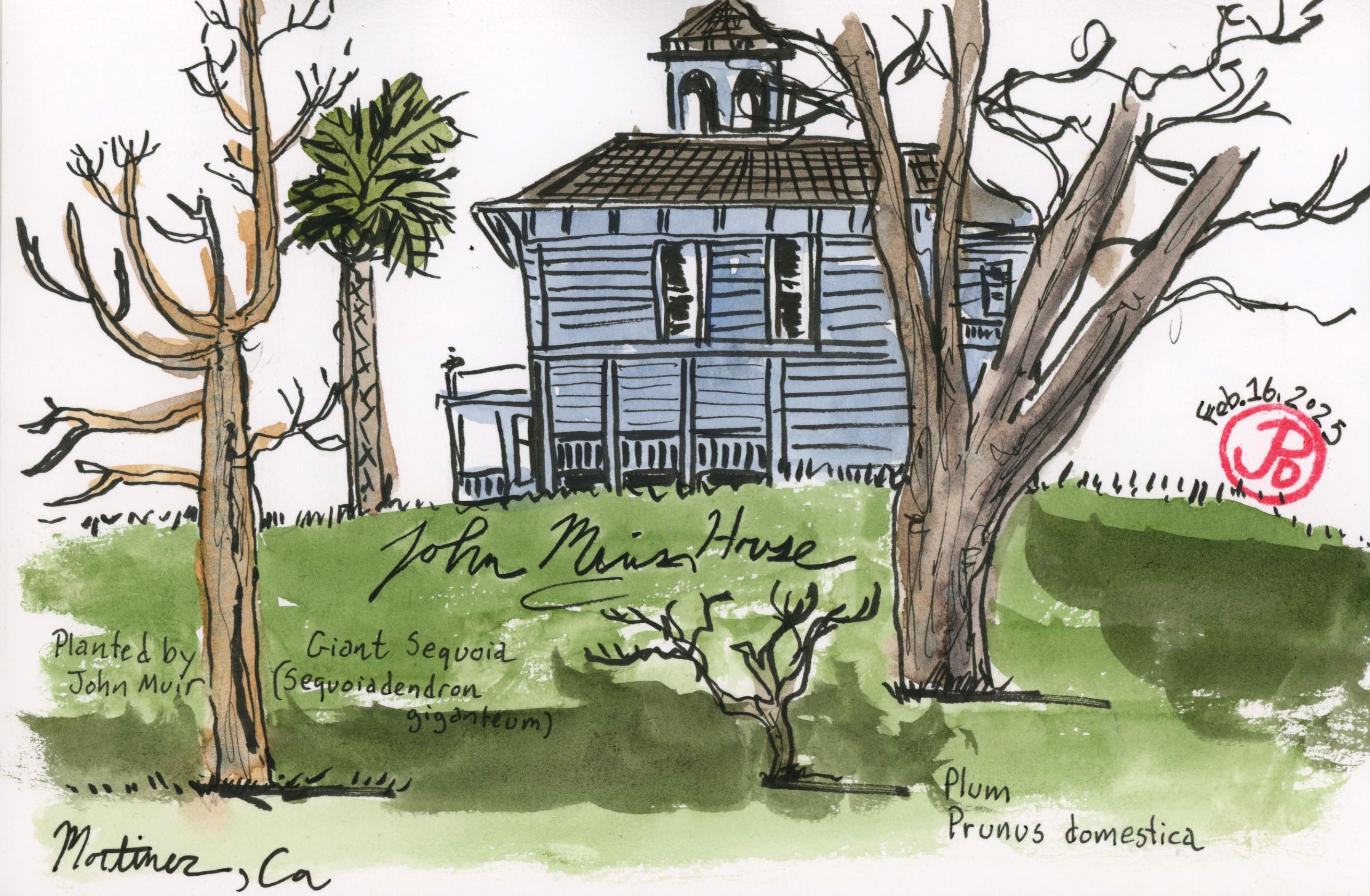
I knew I wanted to do a sketch of the 1882 Italianate house but I needed to find the right perspective.

The touchstone for my sketch was the not-so-giant sequoia that Muir planted years ago. The tree has failed to live up to its name in the Martinez climate.

My Muir-sequoia-bench sketch.

I found a bench with the sequoia in the foreground and the Muir House in the background up the hill.

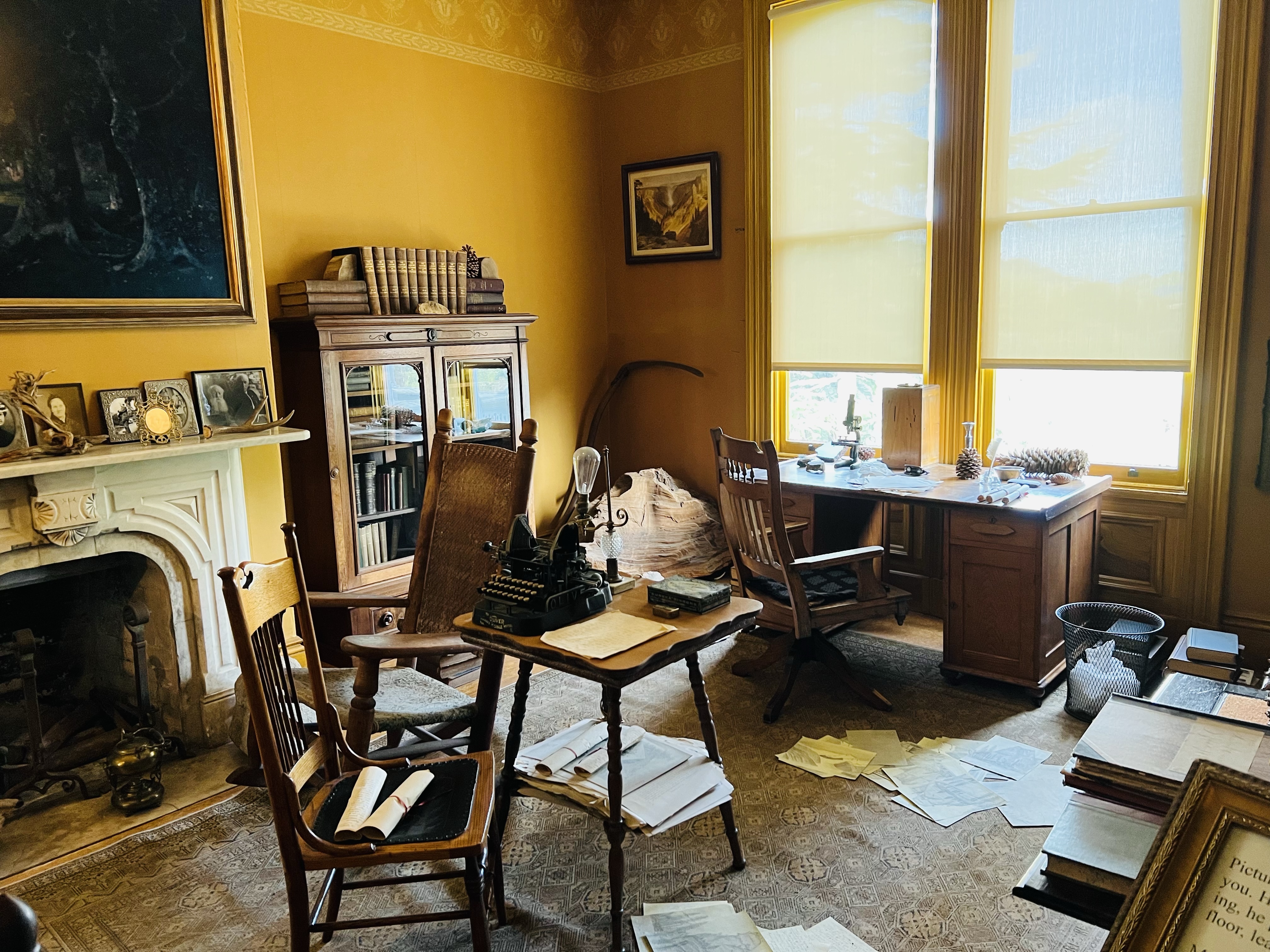
My favorite room in the Muir House. Muir’s “scribble den”.
Image

Western Railway Museum

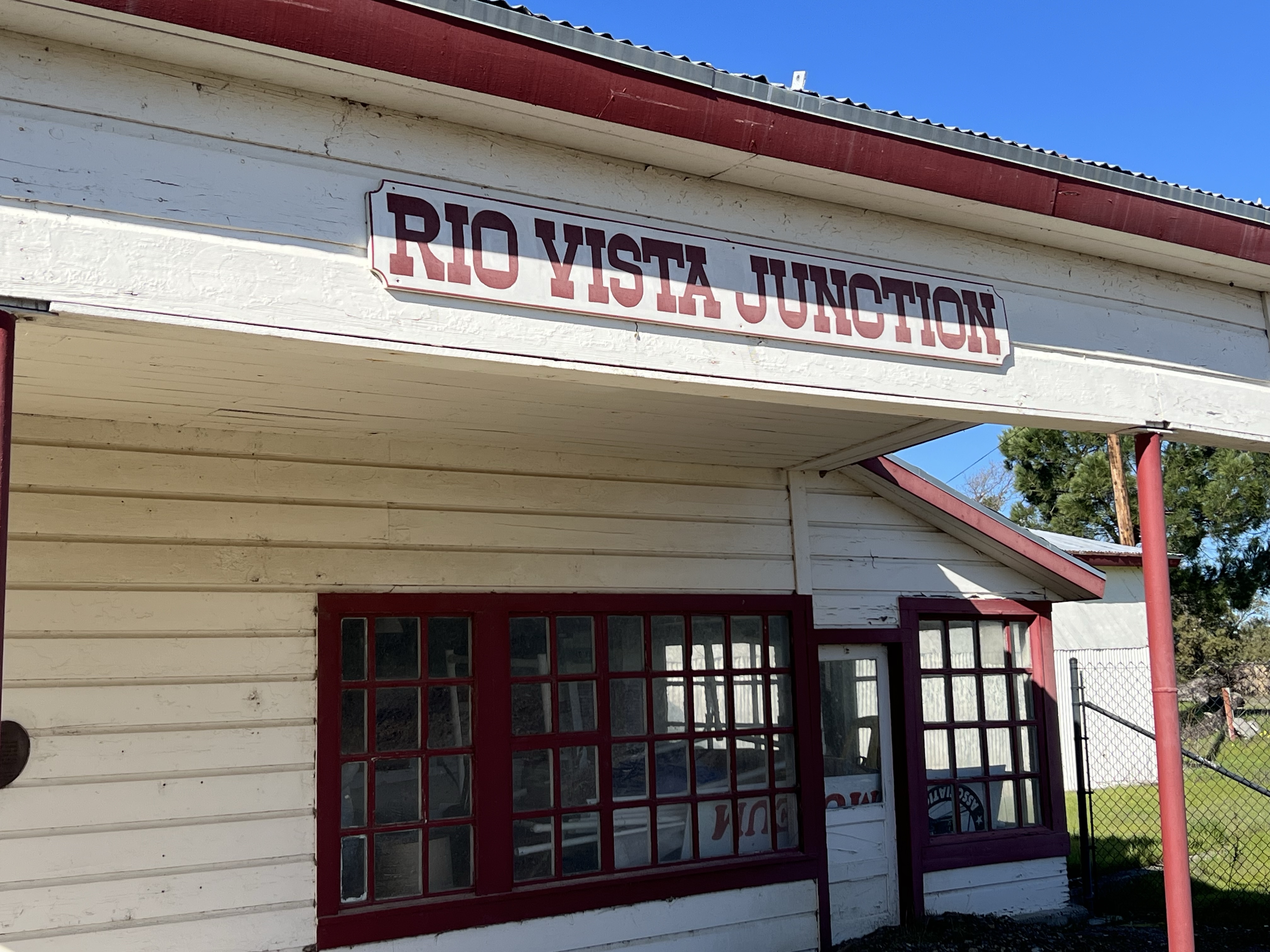
I have memories that stretch back over 40 years of visiting Rio Vista Junction as a child, now called the Western Railway Museum.

The museum was not as polished and a little more threadbare back then. Lot of passion for trains and streetcars but perhaps without the funds.

My father grew up as an only child in San Francisco during the age of steam, streetcars, and streamlined buses.

Dad spent much of his youthful free time riding the streetcars into the dunes before the Sunset District was developed. He told me that the operators, always Irish, would let my father take the controls while the operator ate his lunch. Such scenes are unthinkable now in the age of lawsuits, codification, and over parenting.

When I was growing up, my dad shared his passion for transit. And the active rolling stock of the museum of Rio Vista was one of my classrooms.

And when I return to the Western Railway Museum, I feel my dad’s presence.

It’s not hard to find evidence of my father at the Western Railway Museum. Just inside the front door, his name is listed as a primary donor.

The old visitors center and gift shop has been replaced by a grand building reminiscent of a train depot that has a gift shop, displays, a cafe, and a research library. The new visitors center was dedicated in 2001.

When I visited the research library, there were many cardboard boxes with my father’s name on it. He was quite the collector. I was told that so far, 12,000 items from my father’s collection had been catalogued.

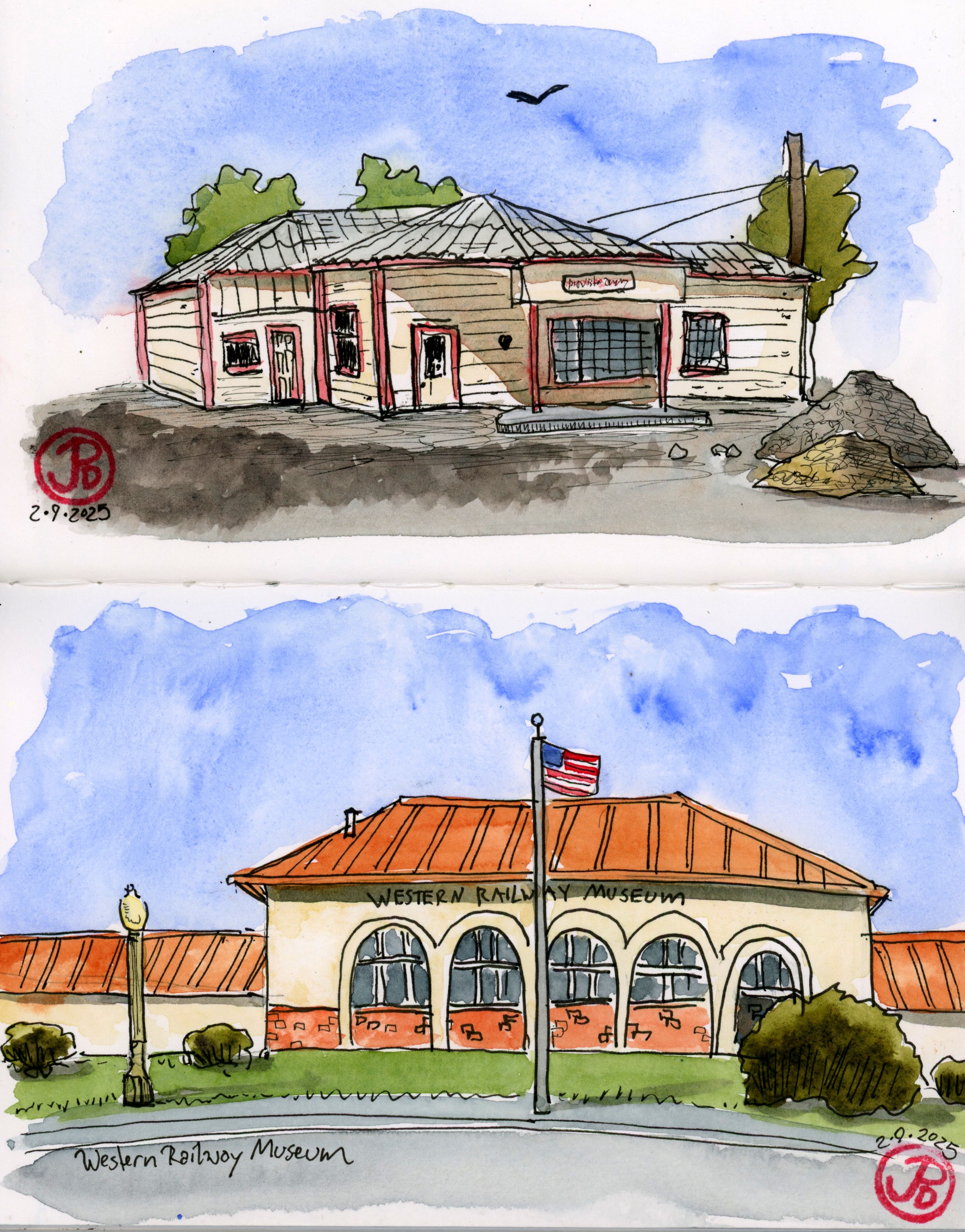
Both centers are still in existence and I sketched both as a contrast to the growth of the museum.

The former visitors center and service station.

The old visitor center is close to Highway 12 and the Sacramento Northern mainline and was formerly a service station. I assume this is where passengers caught buses to Rio Vista to the east.

And it seems gasoline was not the only service offered at the station. An E Clampus Vitus plaque near the front entrance reads, “Here between 1942 and 1948, the painted ladies serviced the needs of our men from Travis AFB. Closed by order of an unsympathetic sheriff.”

The old and the new, sketched in one spread.

The museum was founded as the California Railway Museum in 1960 on property at Rio Vista Junction by the rails of the Sacramento Northern Railway (the museum purchased 22 miles of the Sacramento Northern in the mid-1990s.)

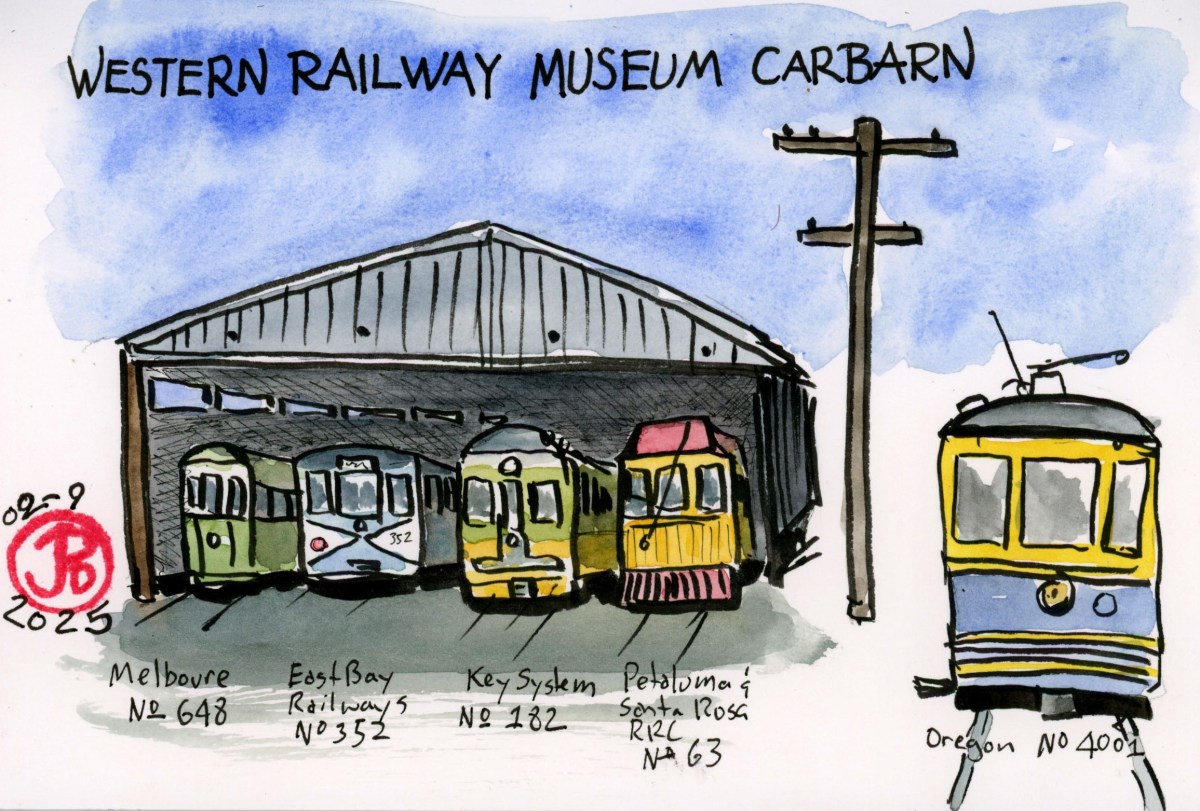
After sketching the two visitors centers from two different eras, I sketched the old carbarn.

The cars facing out (left to right) are a Melbourne car No. 648, East Bay Street Railways No. 352, Key System No. 182, and Petaluma and Santa Rosa No. 63. In the foreground to the right is Portland Traction Company No. 4001. 4001 was waiting for passengers to board.

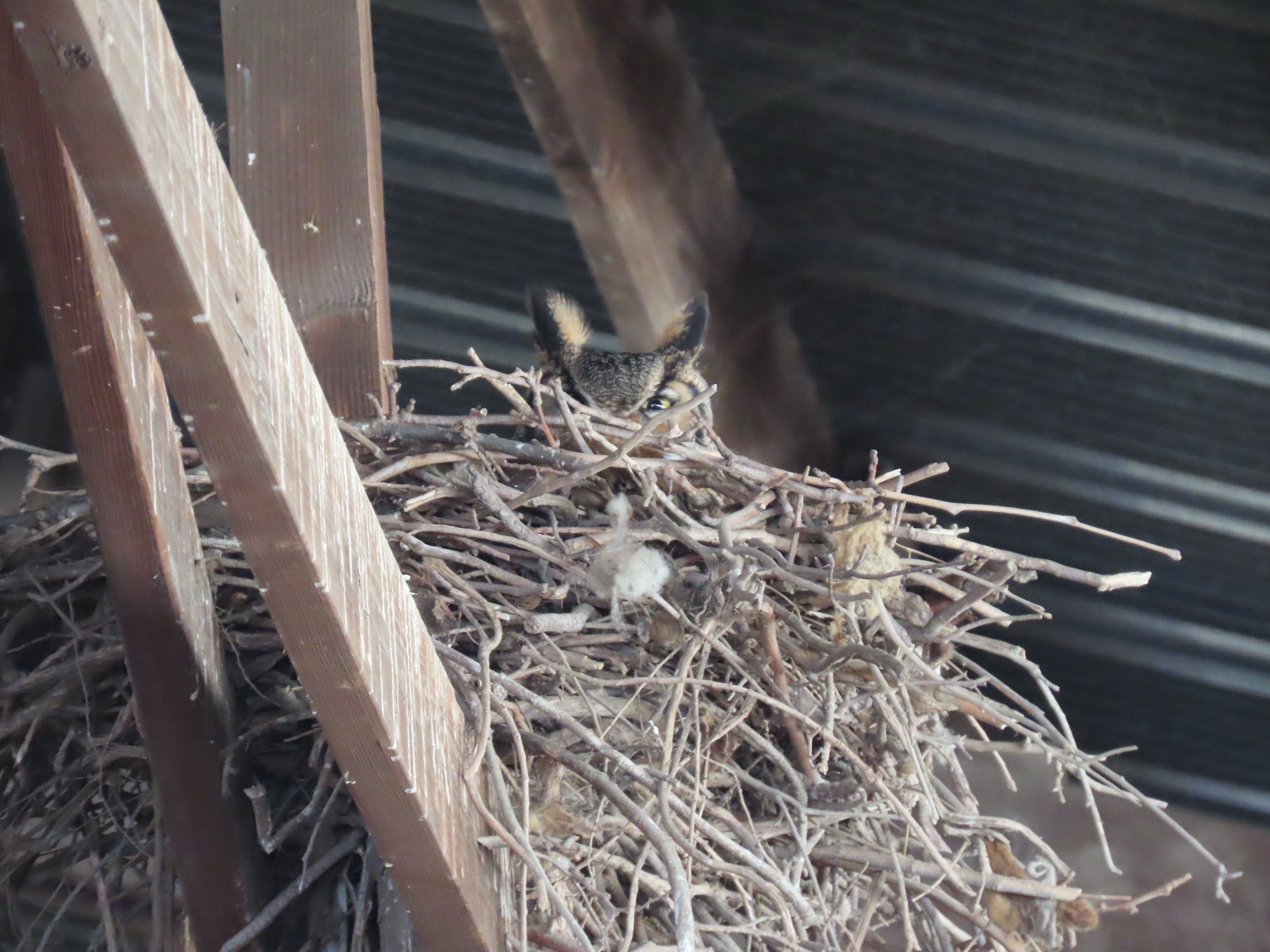
There was one other surprise in the open air carbarn. Earlier I had seen a great horned owl fly from the barn and head to the eucalyptus grove in the picnic area. While I was walking inside the barn I had noticed a very messy nest, it looked like ravens. As I walked near the nest I realized I was being watched.

This was nest was occupied by a great horned owl.

Image

Little Notebook

Before any journey I buy a pocket worthy notebook to record information: notes, maps, travel times, diagrams, field notes, drawings, quotes, addresses, checklists, packing lists, reads and watches, and other tidbits.

While I’m abroad this notebook and the information contained therein is as valuable as my passport.

This is a notebook that I use for pre planning and also as a travel journal for thoughts on the road.

For this trip I bought a Leuchtturm 1917 A6 (3.5 by 6 inch) black notebook. I prefer blank pages over dotted, ruled, or squared. Each page is a canvas of thoughts, facts, fictions, and drawings.

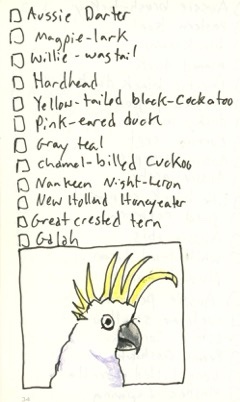
The interior paper is thin and does not take watercolor very well. For this sketch of a sulphur-crested cockatoo I used color pencil. Above the drawing is a checklist of birds I hoped to see in Sydney.

Leuchtturm means “lighthouse” in Deutsch and the company is based in northern Germany. This family-owned stationary company was founded in 1917 in Aschersleben. The company’s motto is “Denken mit der Hand” which translates to “Think with your hand”.

The first and last pages are of a thicker paper and I usually do some watercolor drawings about the destination I will be traveling or some of the fauna I hoped to see.

This summer I will be traveling to Australia! And most of my watercolor drawing are of animals I hoped to see in the Land Down Under and sights I hoped to see and sketch while there.

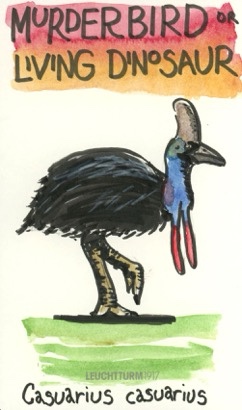
The southern cassowary tops my Australian bird wishlist.

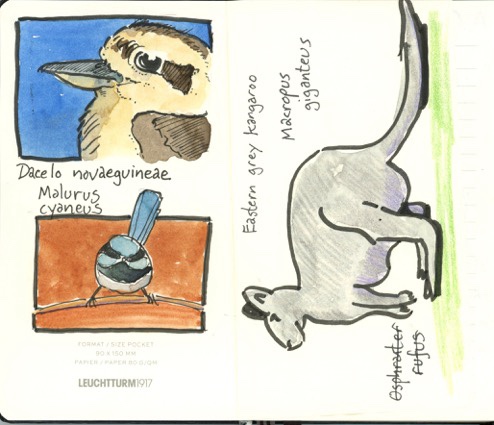
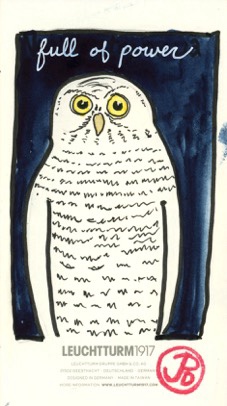
Some of the creatures featured in my notebook, so far, are: southern cassowary (the murder bird), laughing kookaburra (“in the old gum tree”), superb fairy-wren, eastern grey kangaroo, super- crested cockatoo, and powerful owl.

I hope to see Australia’s largest owl, the powerful owl, in one of Sydney’s many parks.
Image

The Railroad of Las Gallinas

Rails are notoriously cagey birds. To see one well, takes lots of patience and a good deal of luck.

When I first started birding the Holy Grail bird was the clapper rail (now called Ridgeway’s rail).

The best place to see them in the Bay Area was historically Palo Alto Baylands. And it helped to be there at high tide, preferably a King tide.

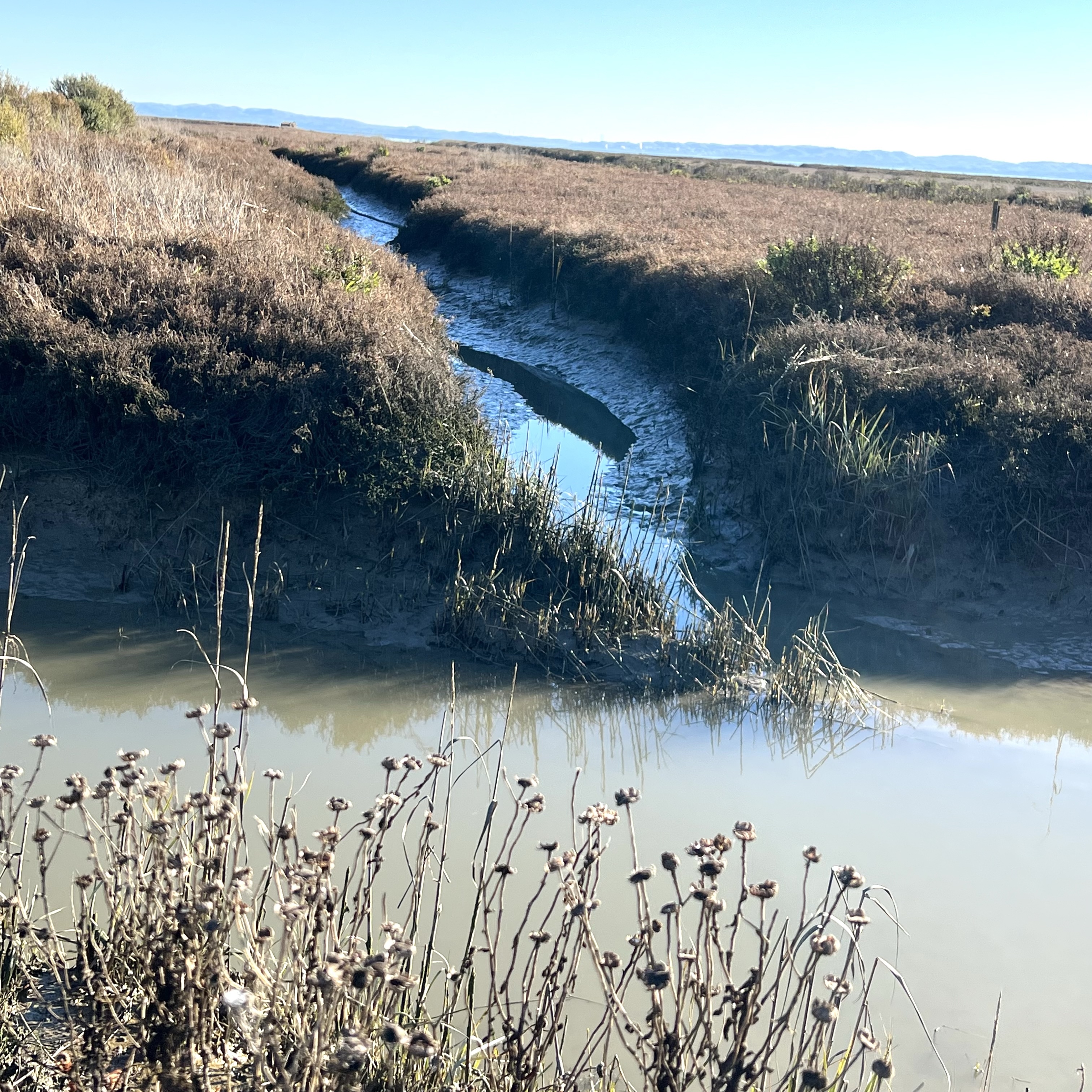
You wait on the boardwalk and look down a channel through the march, a railroad, and get a fleeting glimpse of a rail swimming across.

The idea was that the high waters would flush the rails up making them easier to spot.

I had fleeting views, at low tide.

There are other places of the unbroken marshes that once ringed the San Francisco Bay. That’s why the Ridgeway’s is a gem to see because it is uncommon and elusive and threatened. The rail is on the Red Watch list meaning it is a species of the highest conservation concern. So seeing one is always special.

One of my favorite birding areas Las Gallinas Valley Sanitary District, also happens to be a great place to encounter a Ridgeway’s. You may not always get a good view but you can usually heard them.

A railroad line at Las Gallinas.

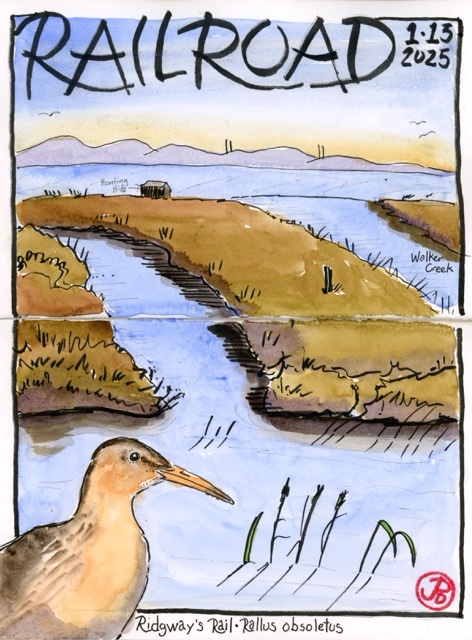
You do have to walk as far east as you can to the marches buffer the bay and Miller Creek adds its water to the bay. To the left is a channel, a railroad, where I have seen rails before.

I walked out to the point, at a very high tide, and sketched the view (featured sketch).

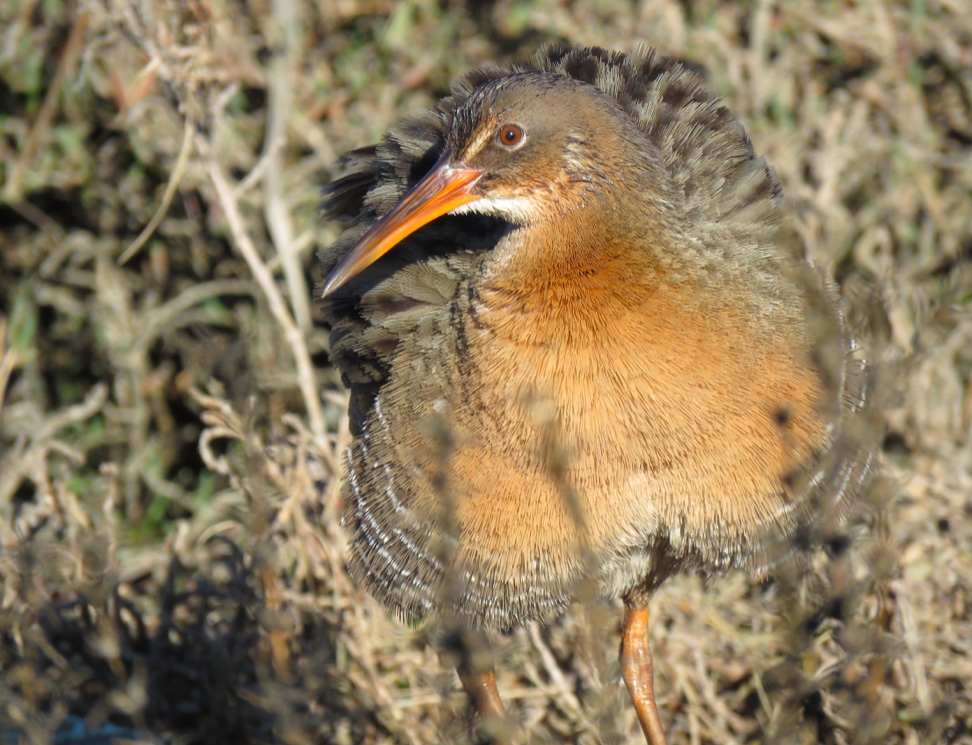
A great view of a Ridgeway’s rail in beautiful light at Bayfront Park. These sights are not too frequent.