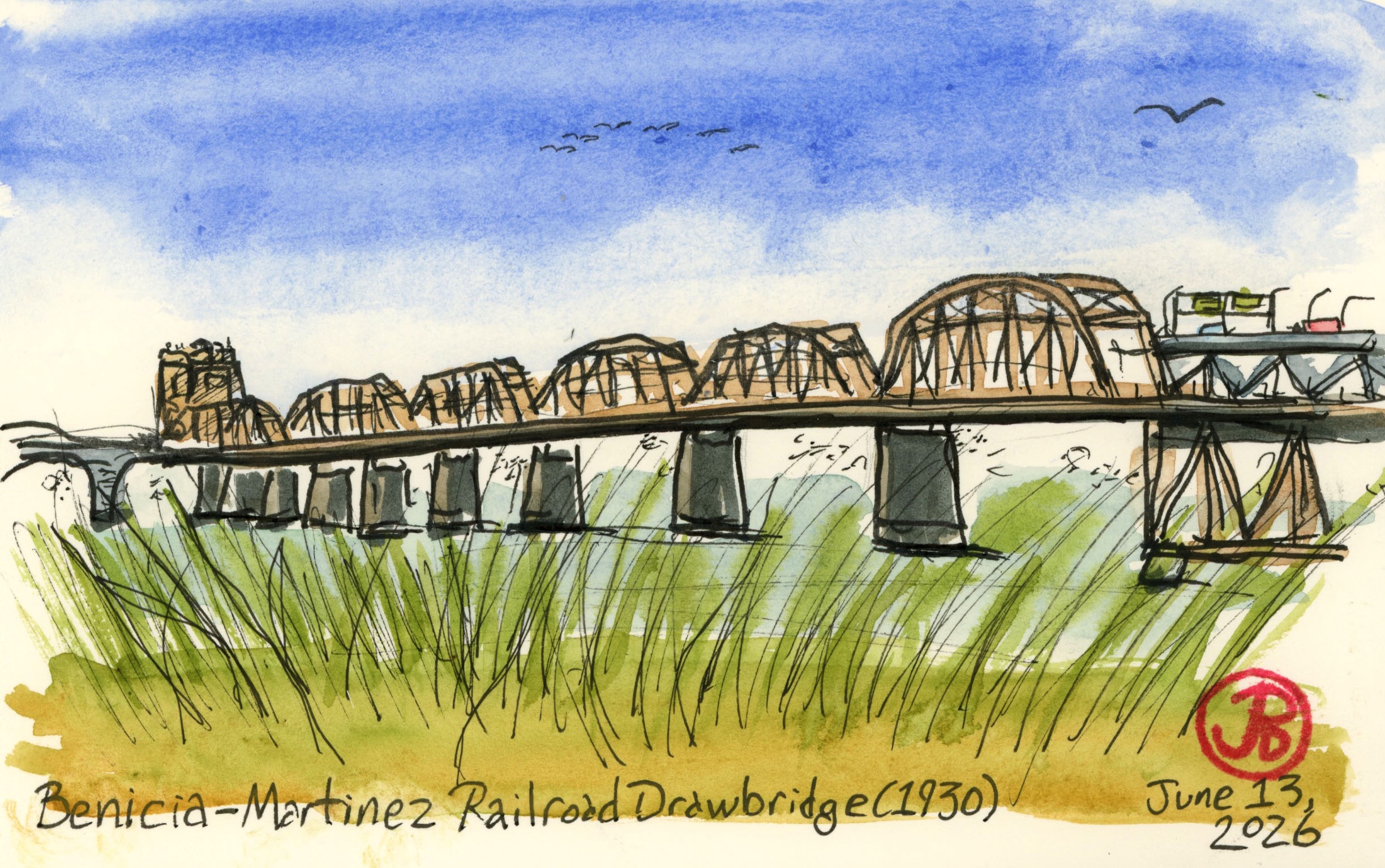
After sketching some Bay Area railroad ferry history, I wanted to sketch the 1930 railroad bridge that killed off the ferry between Benicia and Port Costa.
As rail traffic increased (both passenger and freight) and the rail ferries aged and needed repair or replacement, this caused more delays on the Overland Route (not to mention delays caused by fog). Southern Pacific looked into building another ferry but soon realized that a rail bridge spanning the strait was the best solution.
The railroad bridge was built for Southern Pacific Railroad between the years 1928 to 1930.
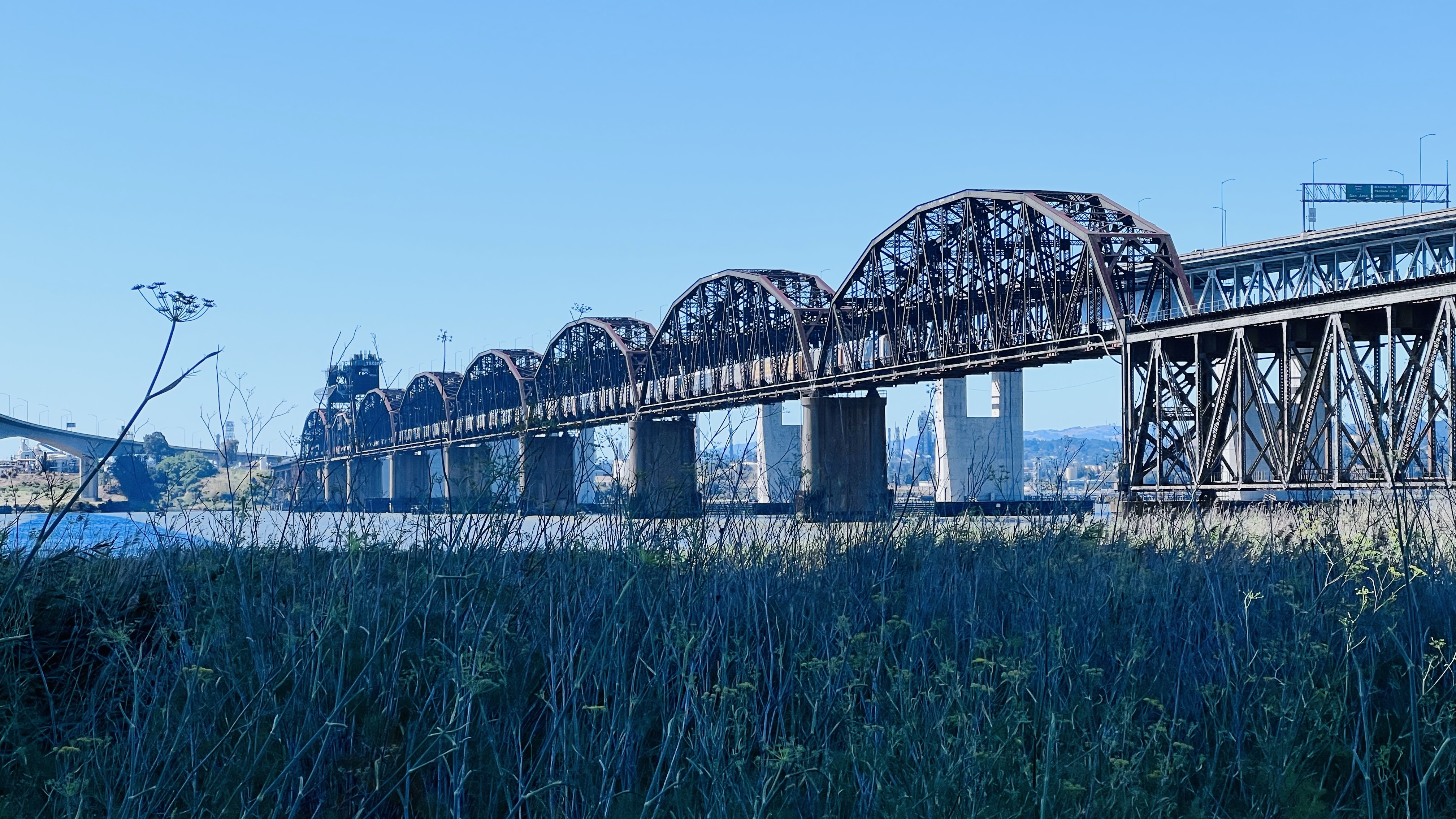
The bridge is impressive because it is the second longest railroad bridge (5,603 ft 6in long) in the country and the longest west of the Mississippi.
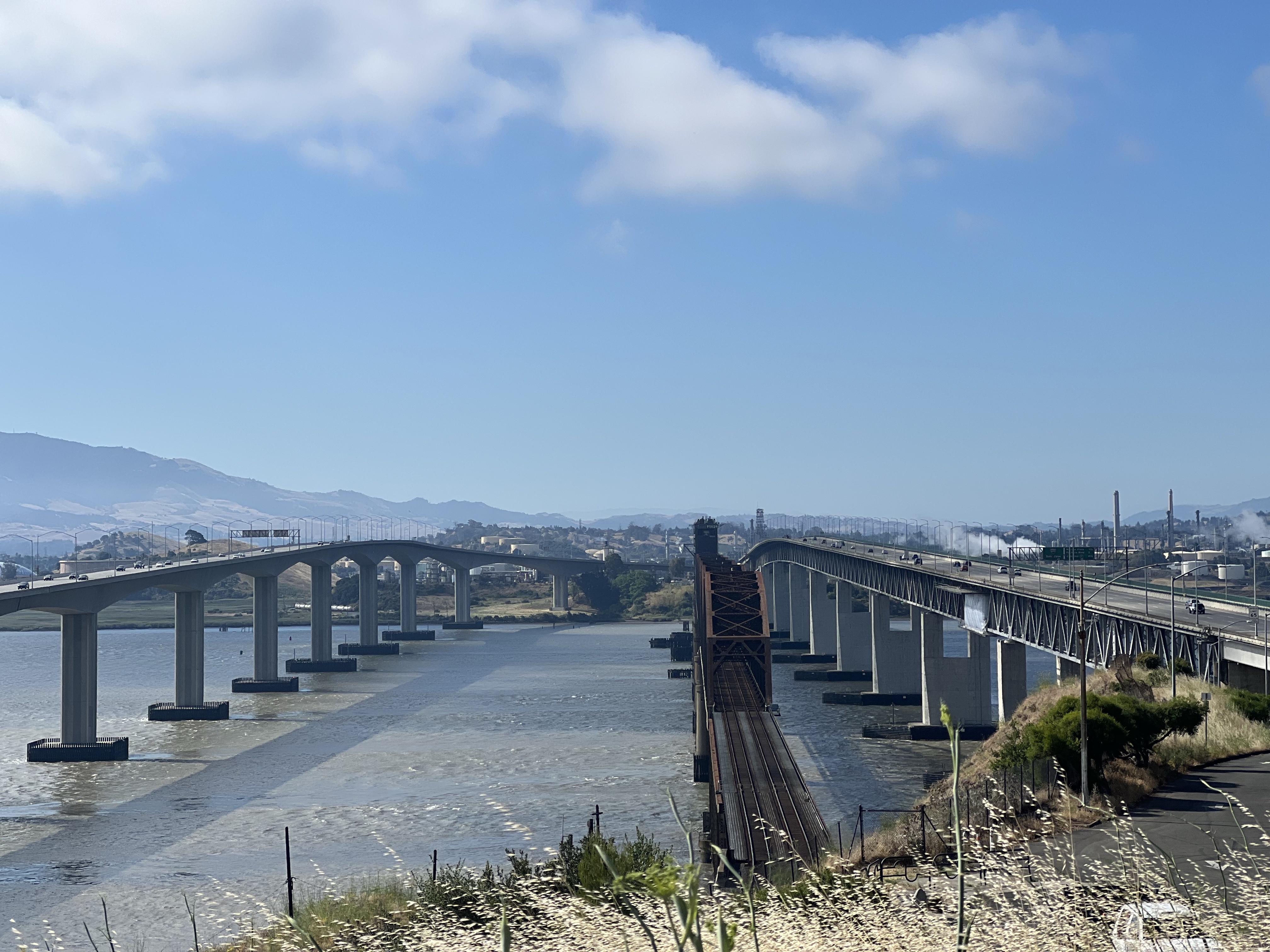
The railroad bridge is now flanked to two automobile bridges that cross the Carquinez Strait. One span was built in 1962 while the other completed in 2007.
The longest railroad bridge west of the Mississippi.
Because the bridge is relatively low to the water, 70 feet in fact, a midsection is a drawbridge that allows tall ships to pass through the strait. When the drawbridge is opened, it gives passing ships 135 feet of clearance.
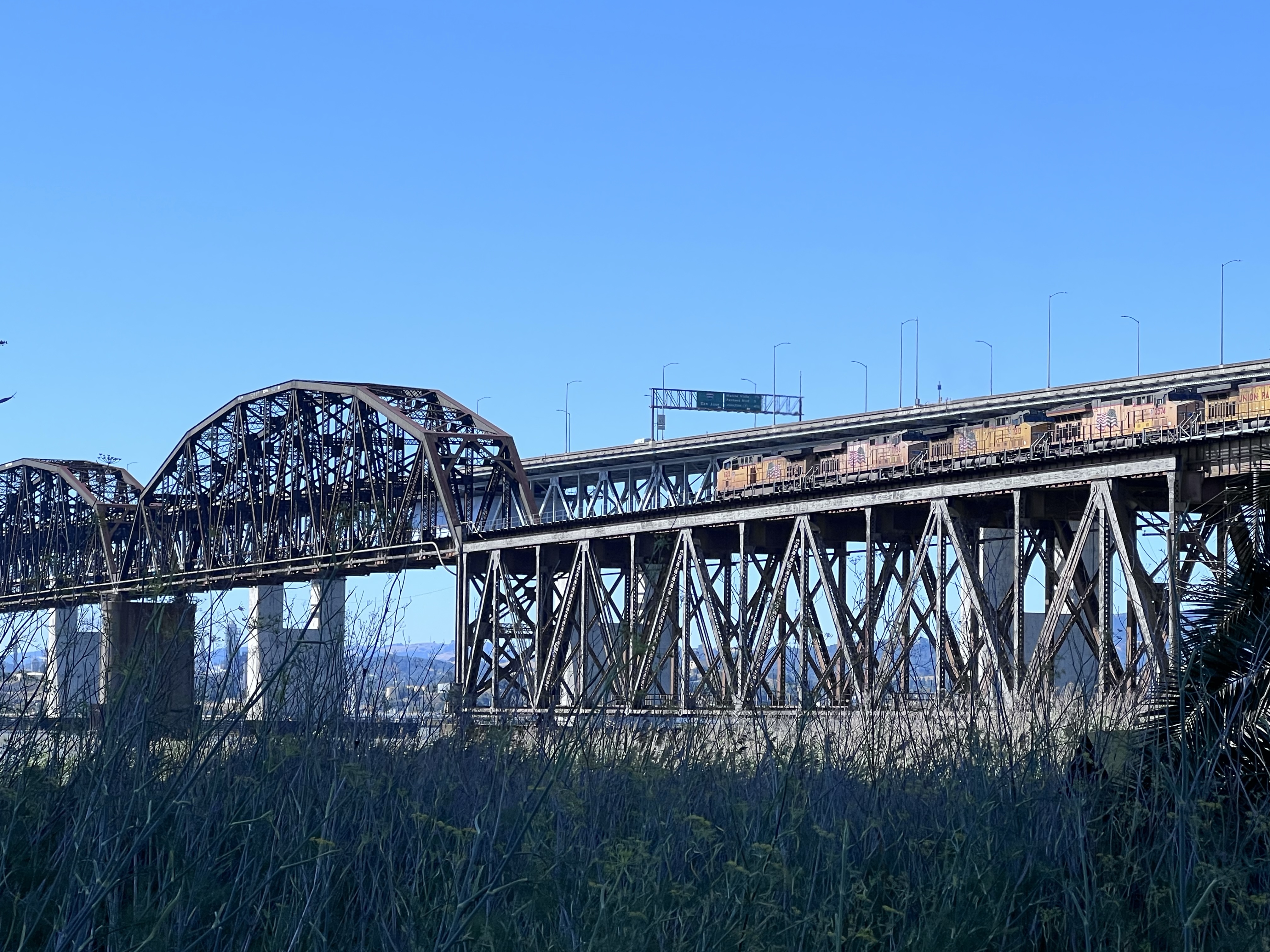
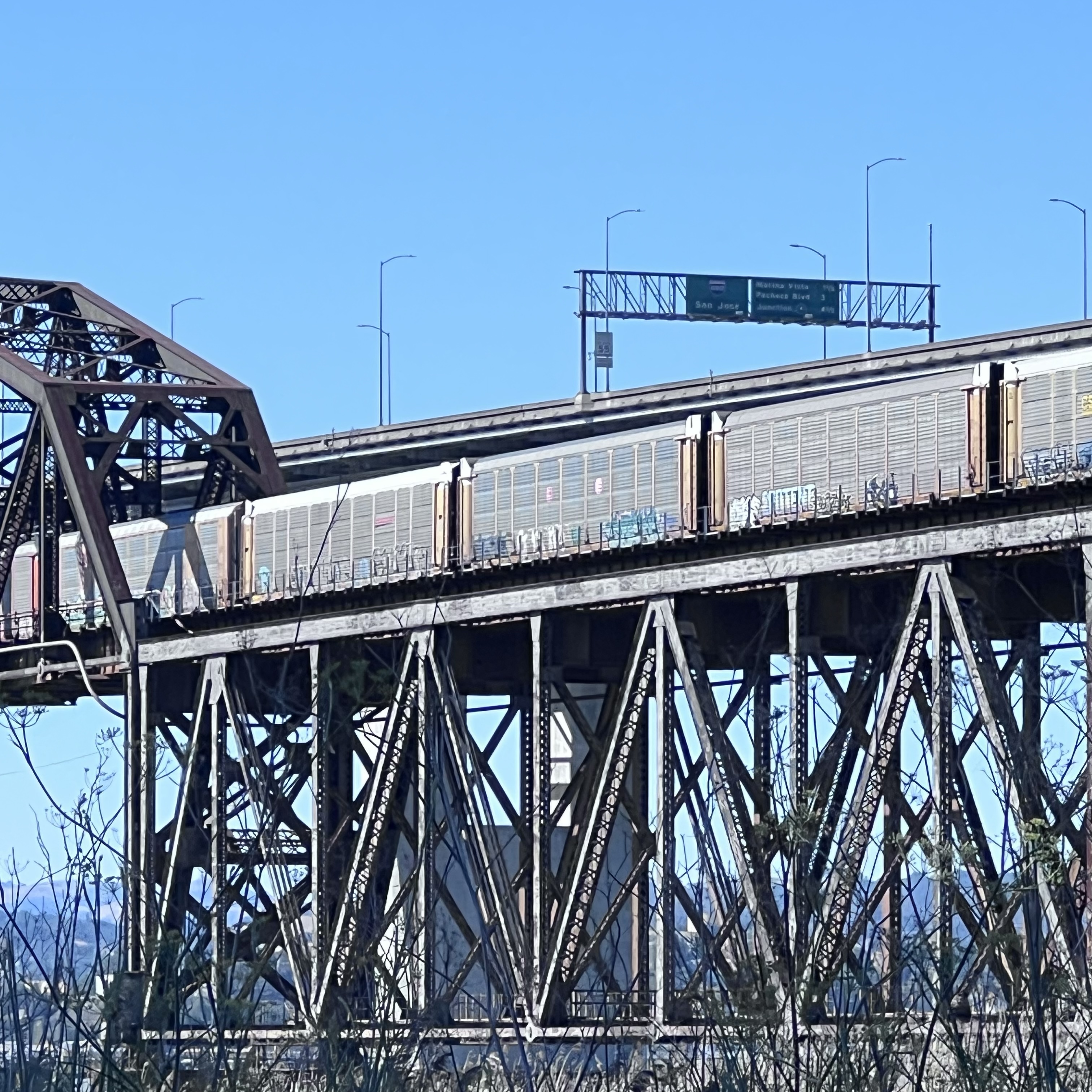
Five locomotives are on point of this Union Pacific westbound mixed consist freight as it comes onto the bridge. This long freight train would take quite a few ferry passages to shuttle across the strait before the bridge was built in 1930. Modern freight trains can be one to two miles long.There were quite a few car carriers on the consist. The area on the Benicia side is new car transfer point.
Foamer at the Bridge
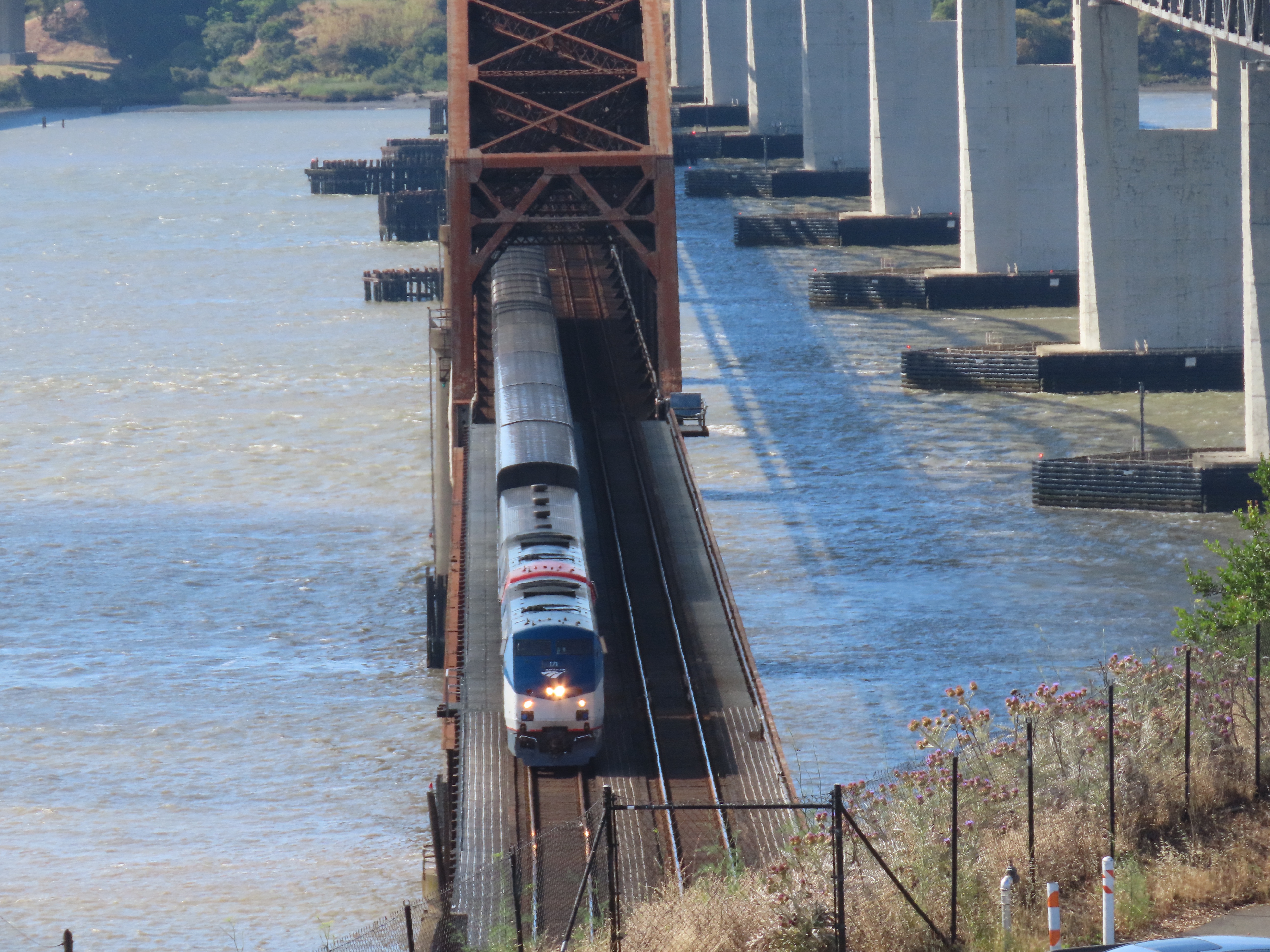
On a Sunday morning I headed up to the northern side of the Benicia- Martinez Railroad Bridge to the vista point, flanked by the two road bridges, to watch some trains transit the historic bridge.
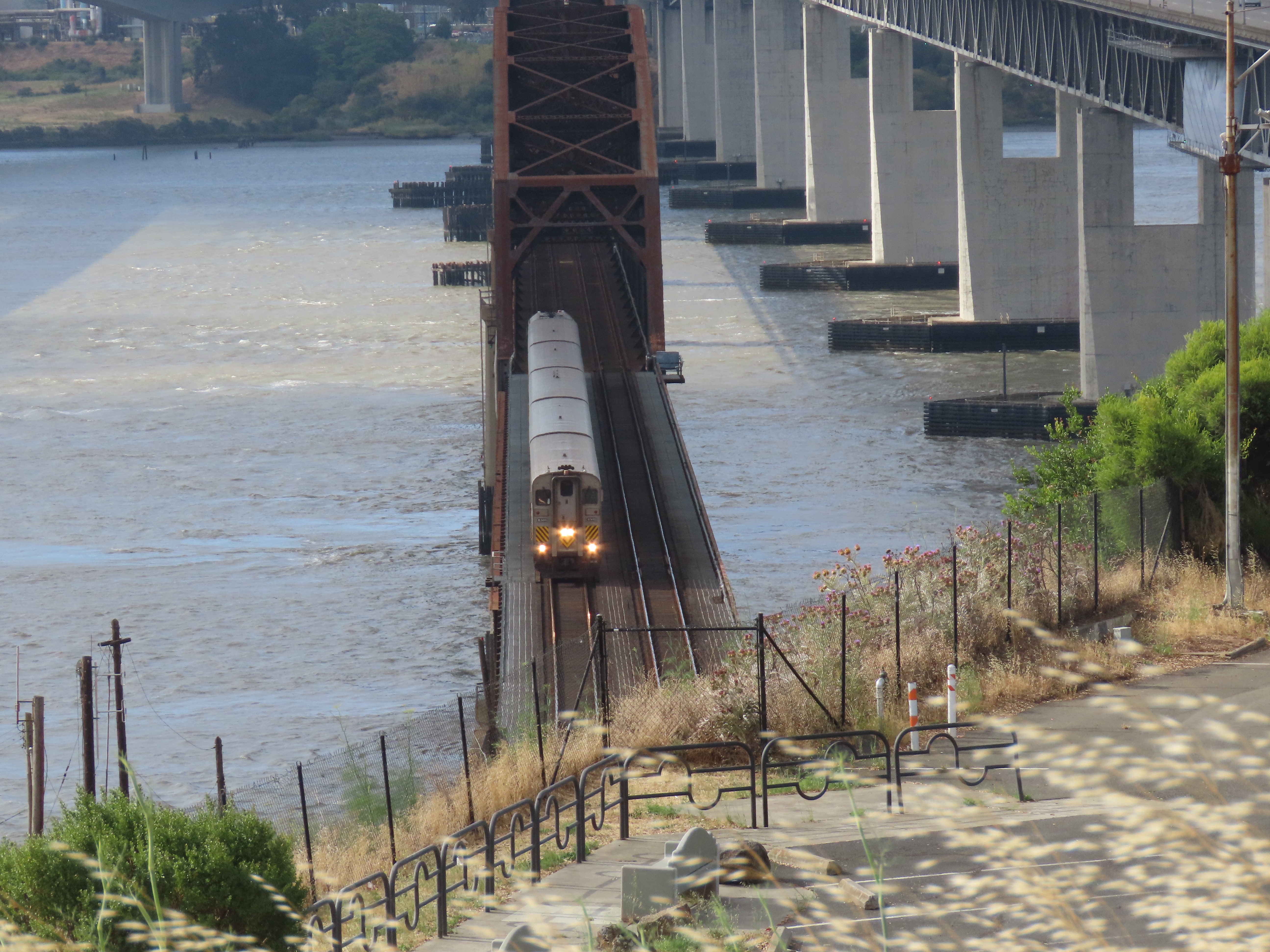
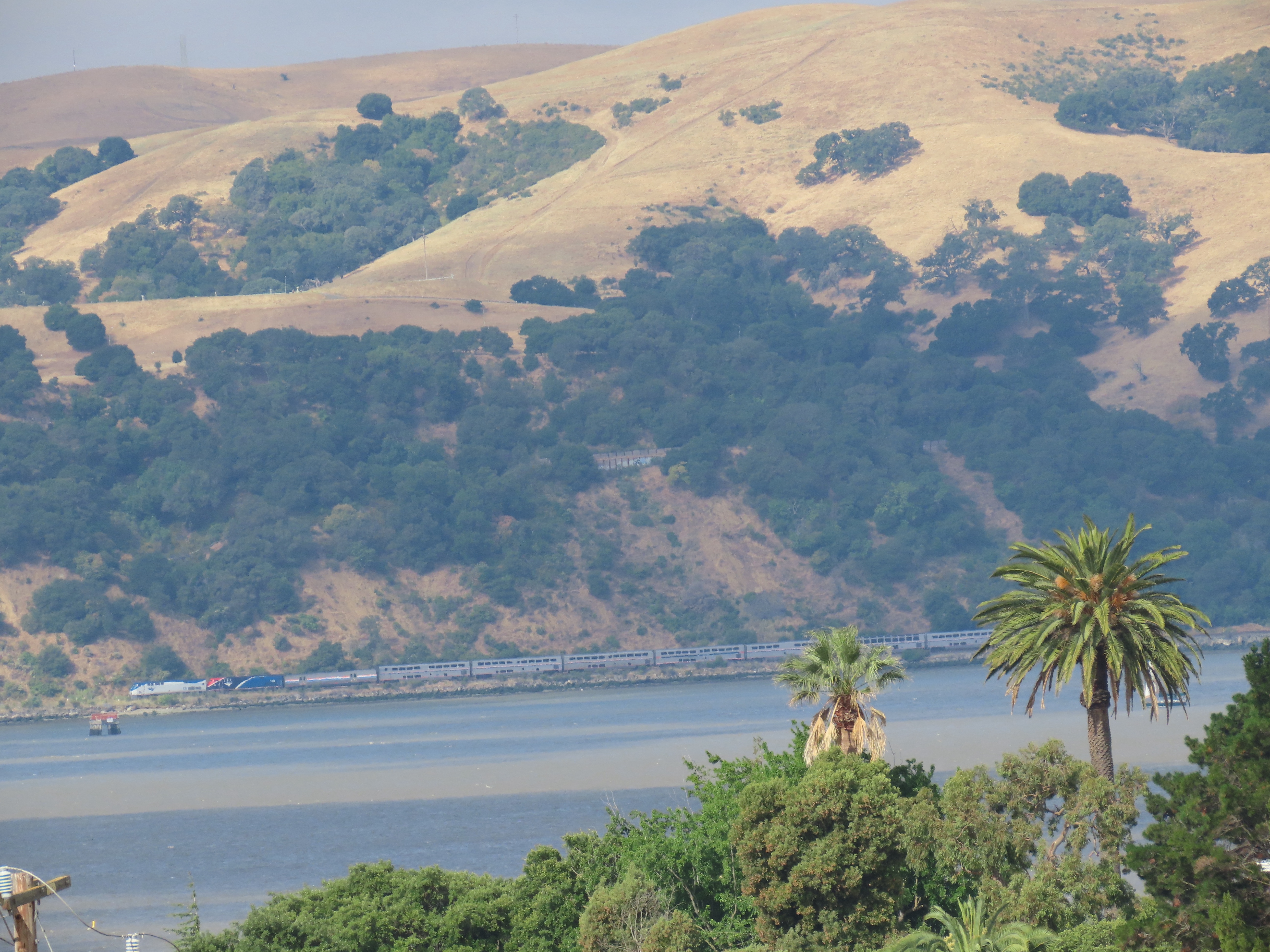
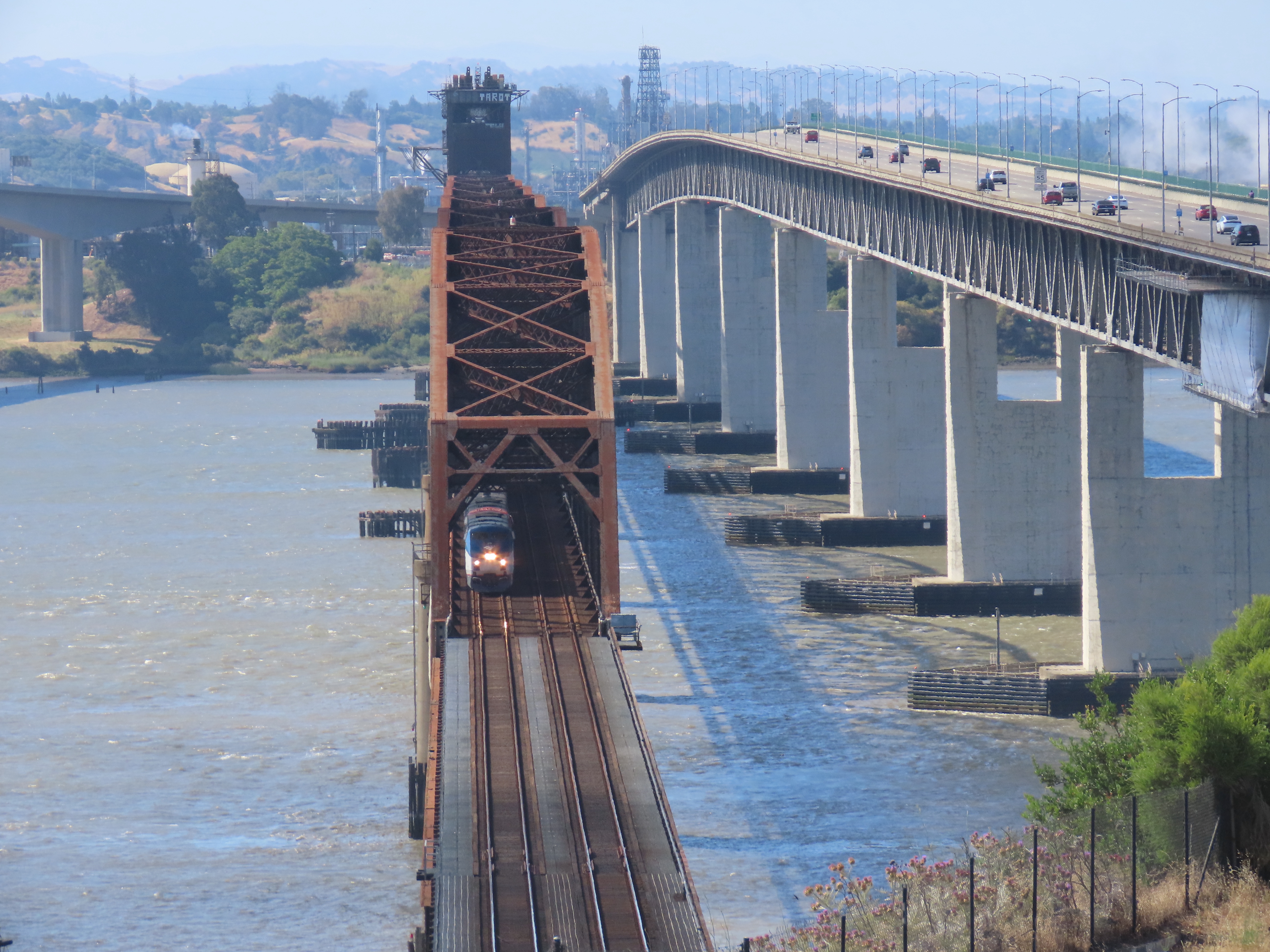
The view southeast from Vista Point. The railroad bridge is in the middle. The newer road bridge (2007) is on the left, the other (1962) is on the right. A northbound Capital Corridor train number 720 crossing the bridge. This trains’s final destination is Sacramento. The good thing about the Vista Point is that you can see northbound trains approaching across the Carquinez Strait like California Zephyr train number 6 running three minutes late. Once the train departs Martinez it will cross the bridge about four minutes later. California Zephyr Number 6 crossing the bridge. Next stop Davis.I have yet to cross the bridge on the Zephyr as I usually board the train further north in Colfax.
I arrived a few hours early in Martinez before meeting my friend for lunch. I wanted to do some sketching around the Martinez AMTRAK Station.
The train station in Martinez is a busy place. While I was sketching, three Capital Corridor trains passed through.
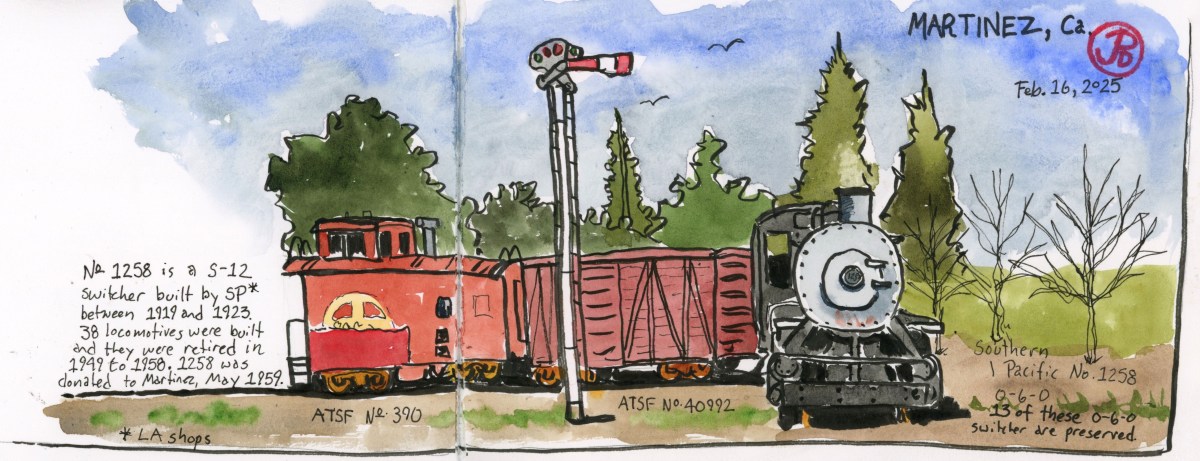
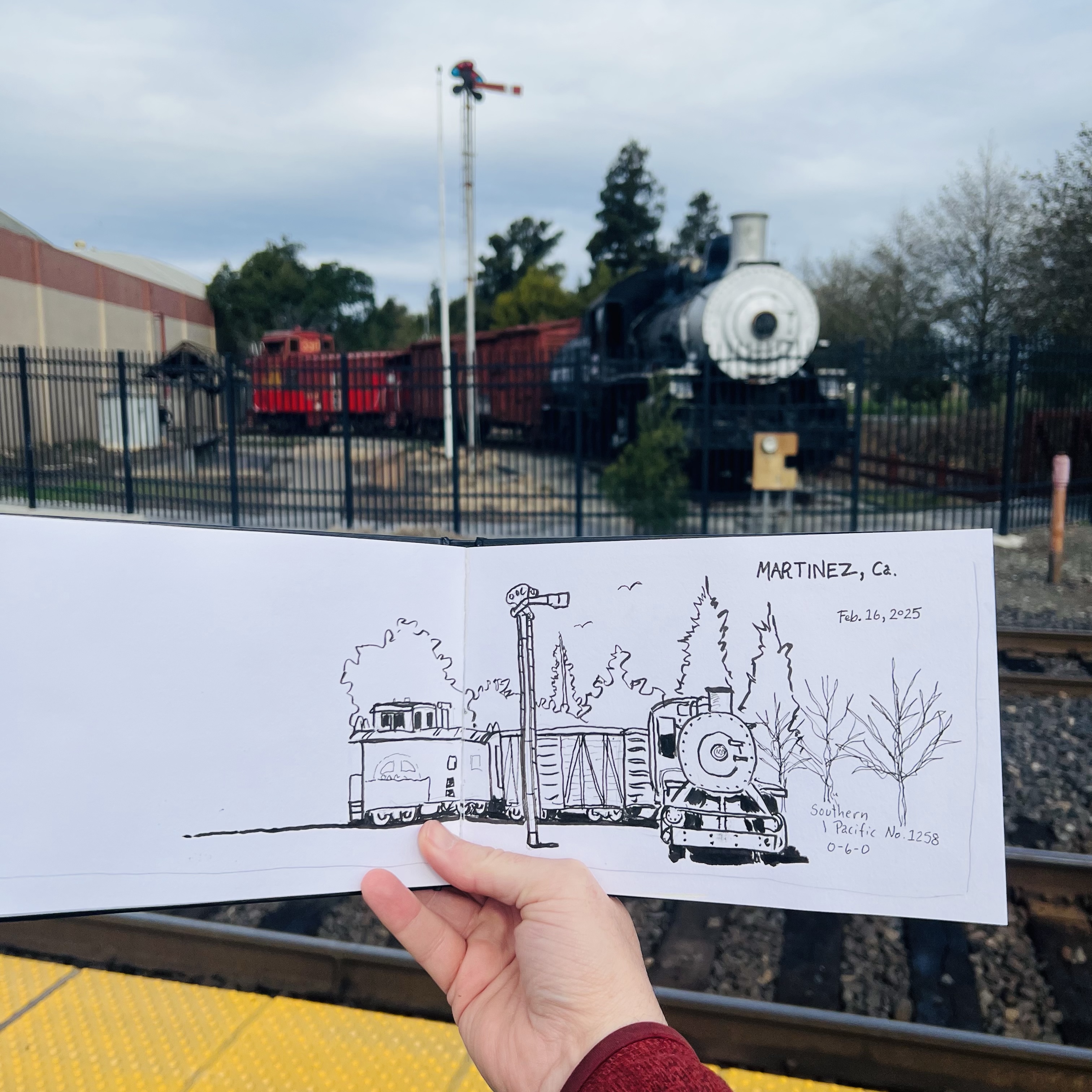
On my last visit I wanted to sketch the Southern Pacific locomotive, with its odd consist of Santa Fe cars, on static display across from the station but I didn’t get around to it. I wanted to add it to a spread on my next visit (featured sketch).
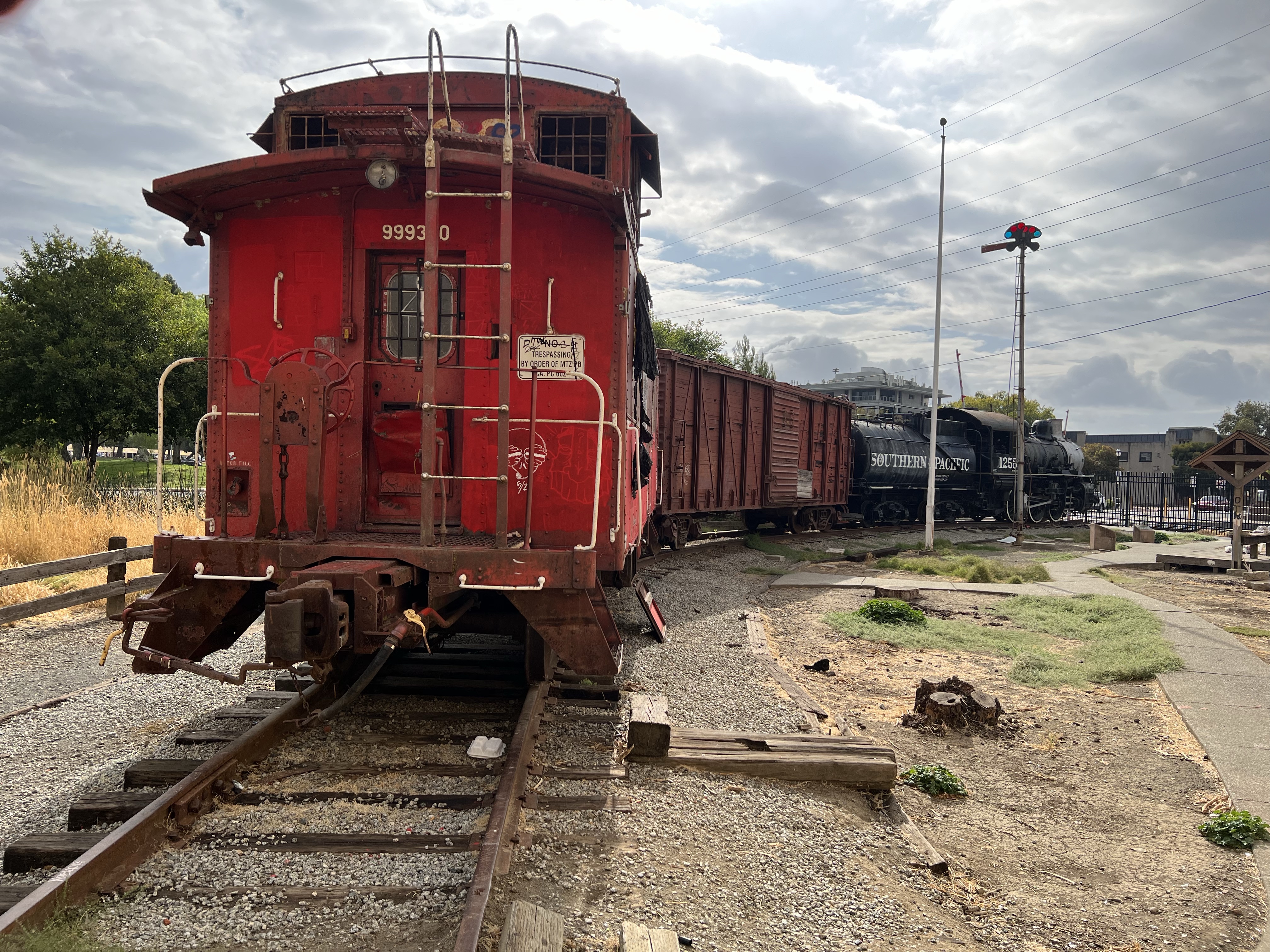
Southern Pacific No. 1258 is an S-12 switcher steam locomotive built at the SP shops in Los Angeles. 38 locomotives where built in this class and there are 13 0-6-0 SP switchers preserved, more than any type of Southern Pacific locomotive built.
Switchers are not sexy nor classy like the GS locomotives. There epitomize function over form. The real workhorses of the Southern Pacific freight yards.
After sketching 1258, I headed to the other side of town to sketch the house of Martinez’s most famous resident.
This resident is the writer and naturalist John Muir. He lived here among the fruit orchards with his wife and family.
Muir married into the Strentzel family in 1880. The Strentzels had been farming the land, mainly fruit ranching, since the 1850s. Muir lived here, except when he was off traveling, from 1880 until his death in 1914.
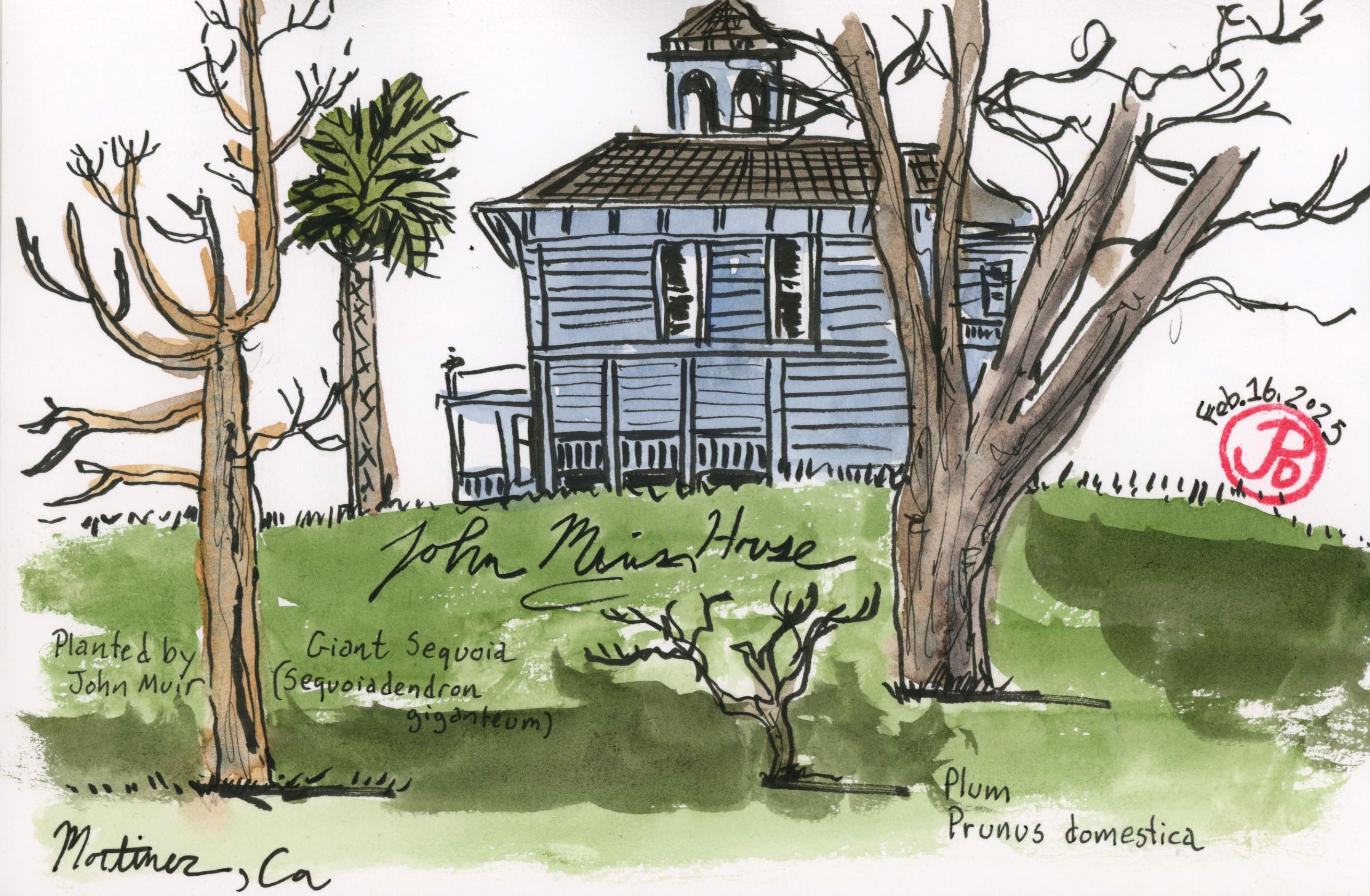
I knew I wanted to do a sketch of the 1882 Italianate house but I needed to find the right perspective.
The touchstone for my sketch was the not-so-giant sequoia that Muir planted years ago. The tree has failed to live up to its name in the Martinez climate.
My Muir-sequoia-bench sketch.
I found a bench with the sequoia in the foreground and the Muir House in the background up the hill.
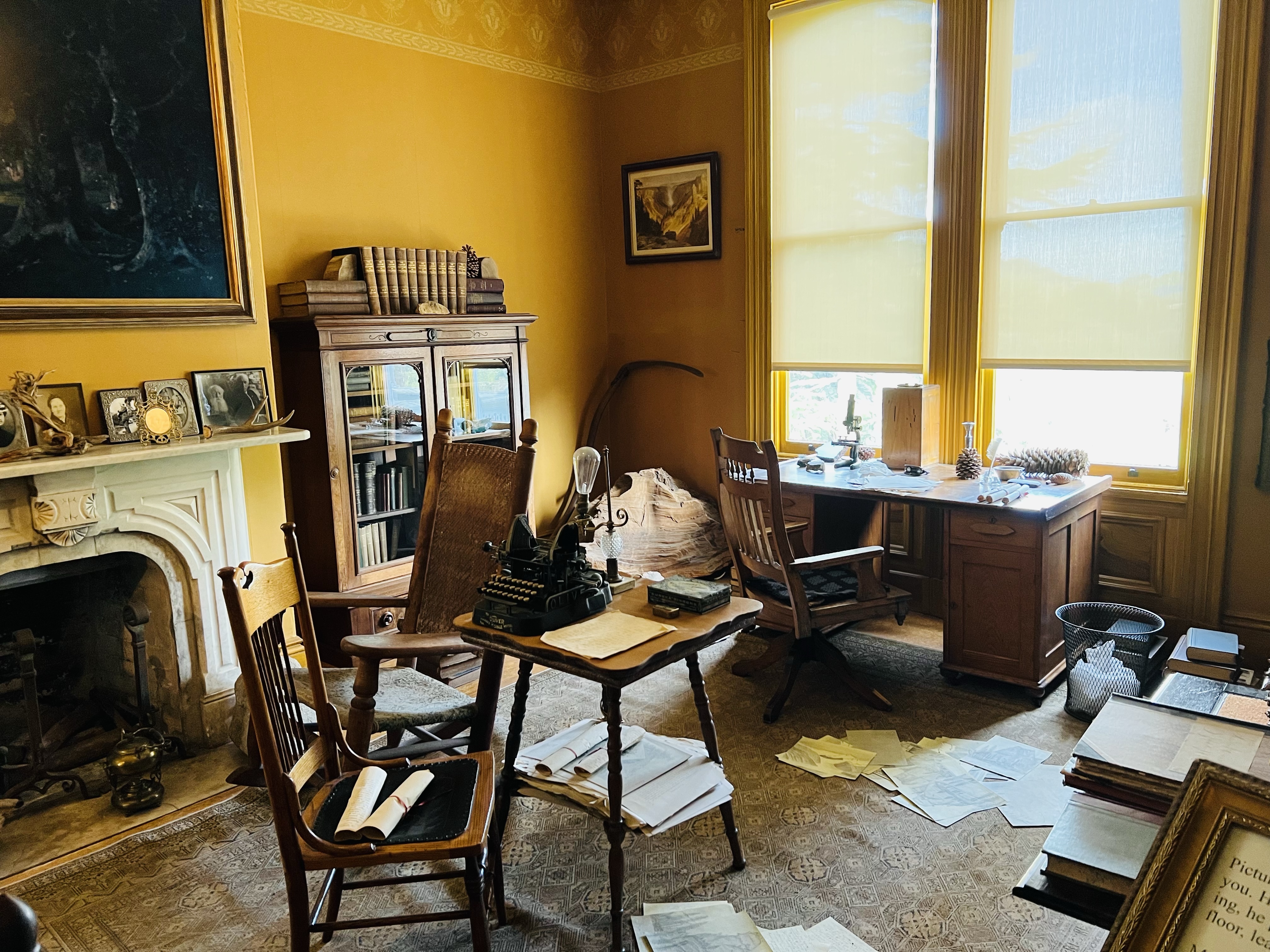
My favorite room in the Muir House. Muir’s “scribble den”.
I was meeting a friend in the East Bay city of Martinez and I had a little time to sketch before lunch.
Martinez is a hotbed of railroading with both the Union Pacific and BNSF passing through as well as some marquee passenger trains such as the Coast Starlight and the California Zephyr making stops at the Martinez AMTRAK station. And the Capitol Corridor commuter takes on passengers traveling north and south on shorter journeys.
The California Zephyr Train No. 6, at the old Southern Pacific Depot in Martinez. This train is heading east to Chicago. To the right in the background is SP switcher 1258 on static display.
There would certainly be something to sketch here and I was going to start with a historic train trestle.
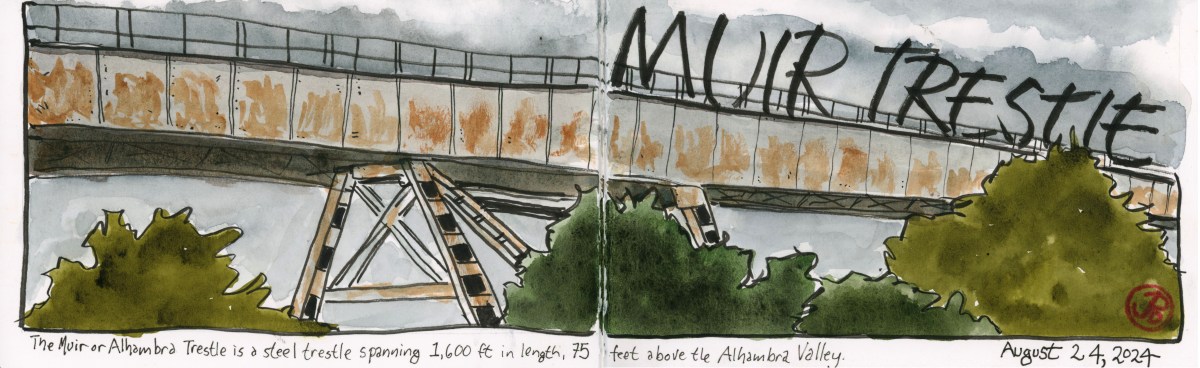
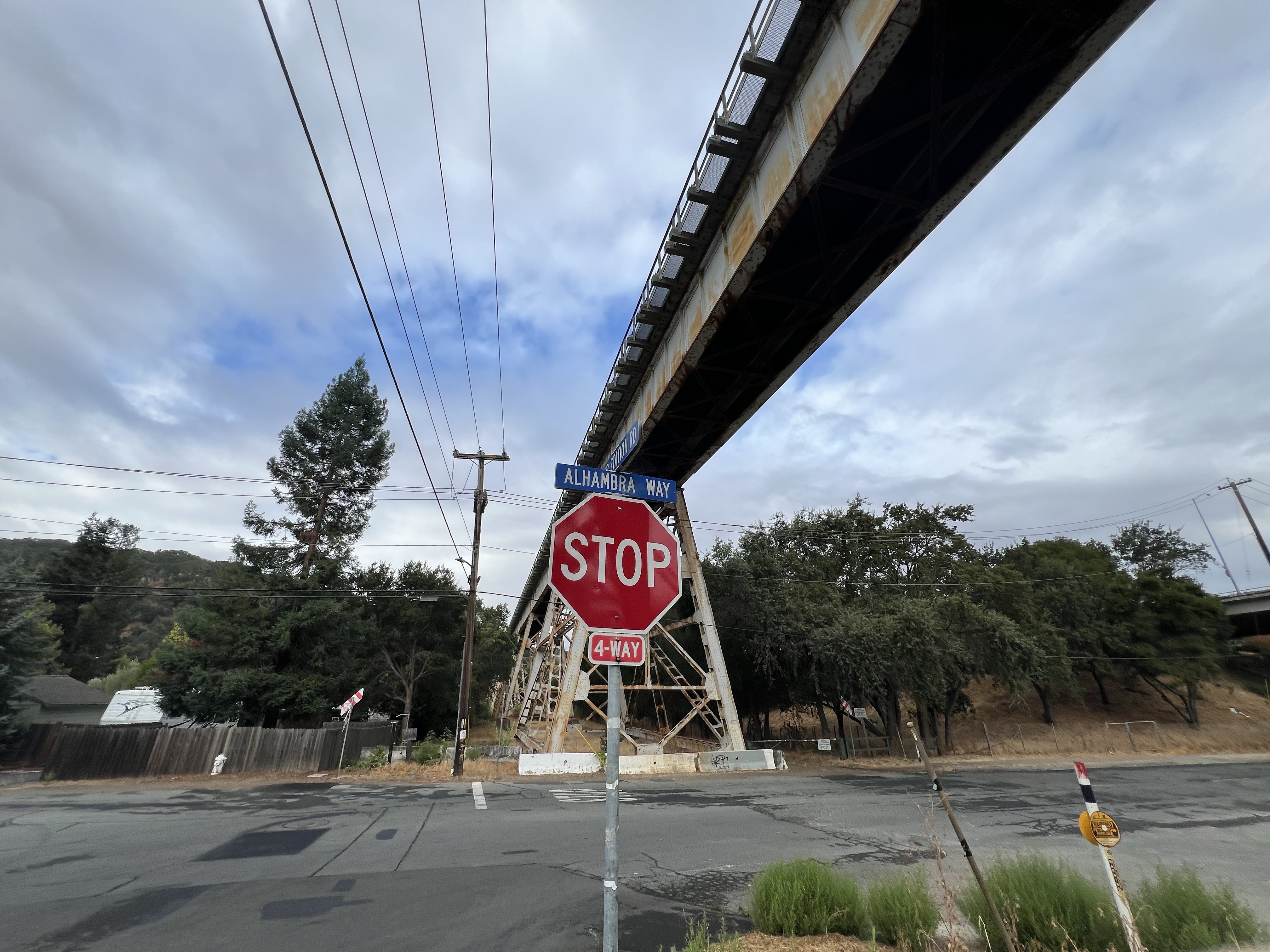
I parked at the Mount Walda Trailhead. Soaring above me was the 1,600 foot long steel Muir Trestle (aka the Alhambra Trestle). The single track trestle was so long that I could only see and sketch one section of it before it disappeared into the trees to the east. The trestle rises 75 feet above the roads, trees, and houses it crosses over.
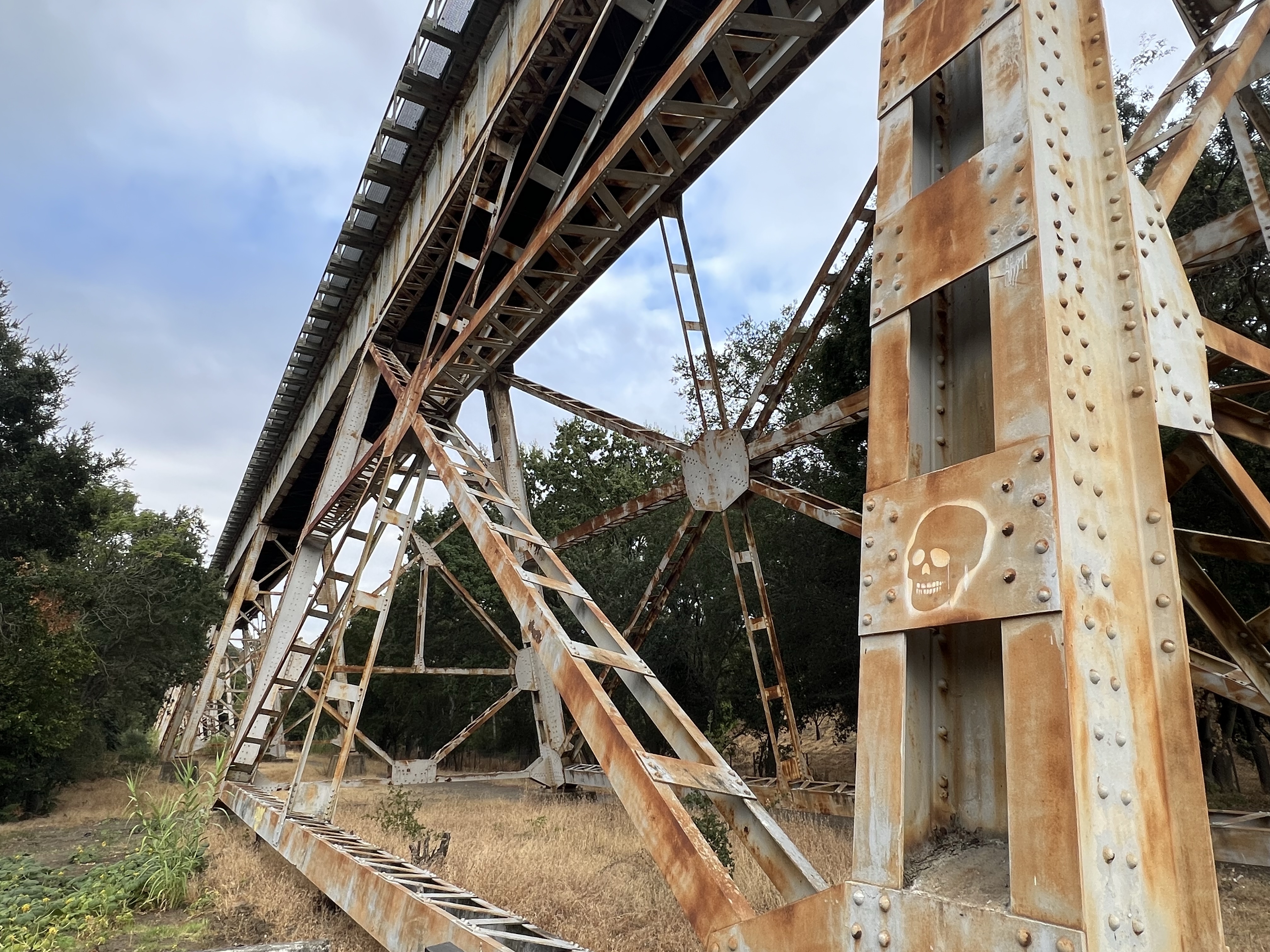
A detailed view of the steel supports of the Muir Trestle.
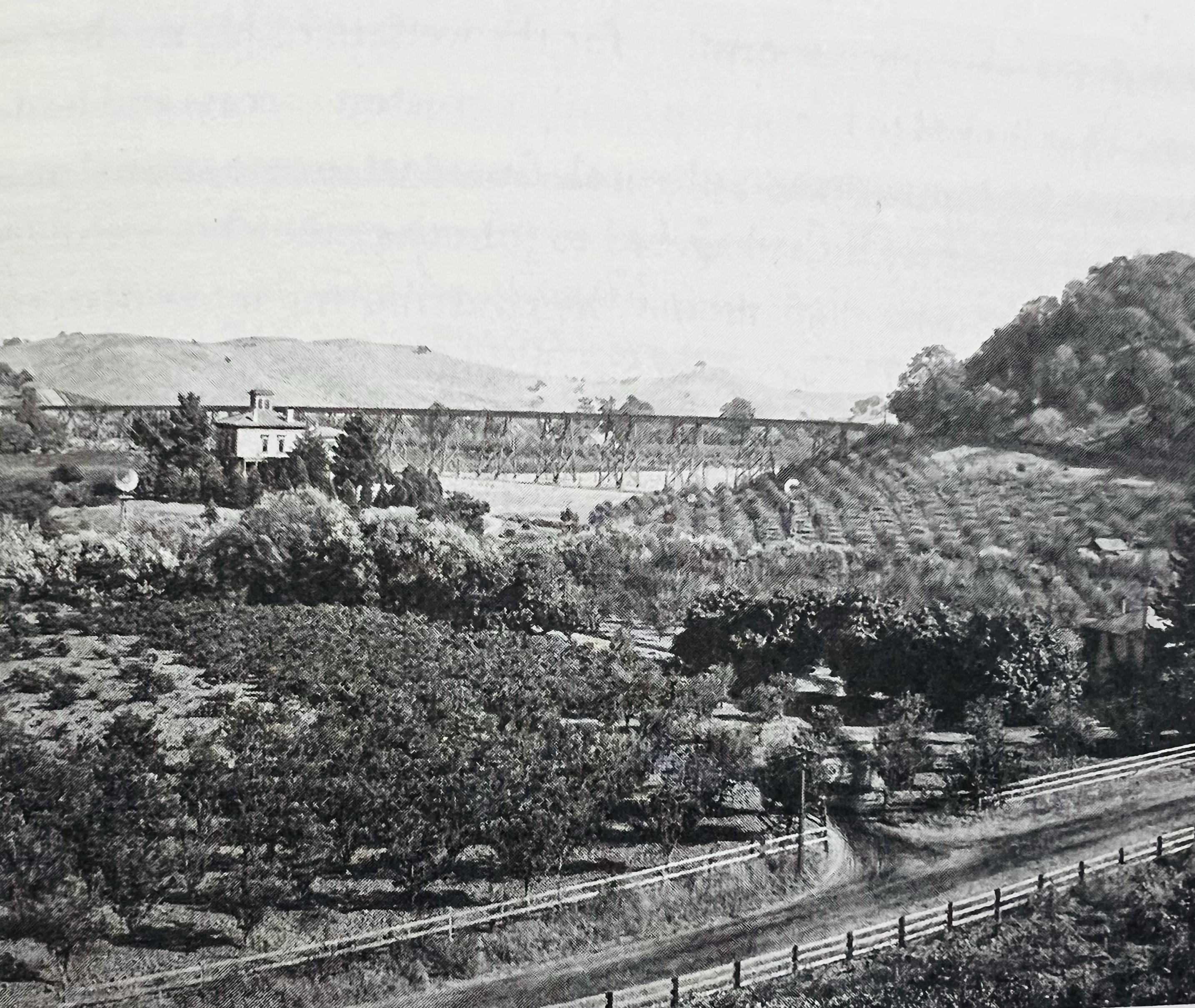
The trestle is within the John Muir National Historic Site. To the north is Muir’s Martinez home. Muir and his wife Wanda sold the land for the trestle for $10 and a lifetime rail pass to the San Francisco and San Joaquin Valley Railway. The original wooden trestle was built through a pear orchard and completed in 1897.
This is a historic photograph of the Stengel-Muir ranch in 1897. The Muir house is on the top left and the trestle is viable behind the house. At the time of the photograph, the trestle was constructed of wood.
At the eastern end of the trestle there was a passenger and freight station named Muir Station. The station is now long gone but is immortalized in a street that parallels the rails named Muir Station Road.
From this station Muir could ship his produce to Oakland or to the port in Martinez.
One of Muir’s neighbors in the Alhambra Valley was John Swett, Muir close friend. Swett was the State Superintendent of Public Education and is known as the “Father of California Public School”.
In 1898, Santa Fe purchased the line and it became their Valley Division. This division still exists as BNSF’s route from Richmond to Fresno.
The Muir Trestle from the intersection of Alhambra Way and Muir Station Road.
I took up a sketching position near the trailhead and started my drawing. The trestle above me is on the Stockton subdivision and is used by BNSF intermodal freight. There was no train crossing during my sketch.
SP 0-6-0 switcher No. 1258 and its consist of a wooden box card and Santa Fe caboose 390 on display across the tracks from the AMTRAK station. The locomotive is in sad shape, missing some hardware like her bell and whistle.