Image

Bygdoy Peninsula: Kon-Tiki

I waited at the dock for the 9:10 ferry to Bygdoy.

There are three museums that focus on maritime history and I was really looking forward to seeing and sketching a balsa wood raft that was captained by a famous Norwegian.

While I spent some time at the Fram and the Norwegian Martime Museums, I was really here to see the Kon-Tiki!

Before my trip I had read Thor Heyerdahl’s book about the adventure, seen two movies about the trip, including the Oscar winning documentary by Heyerdahl. I had done sketches about the raft and its captain and now I was about to see the actual vessel.
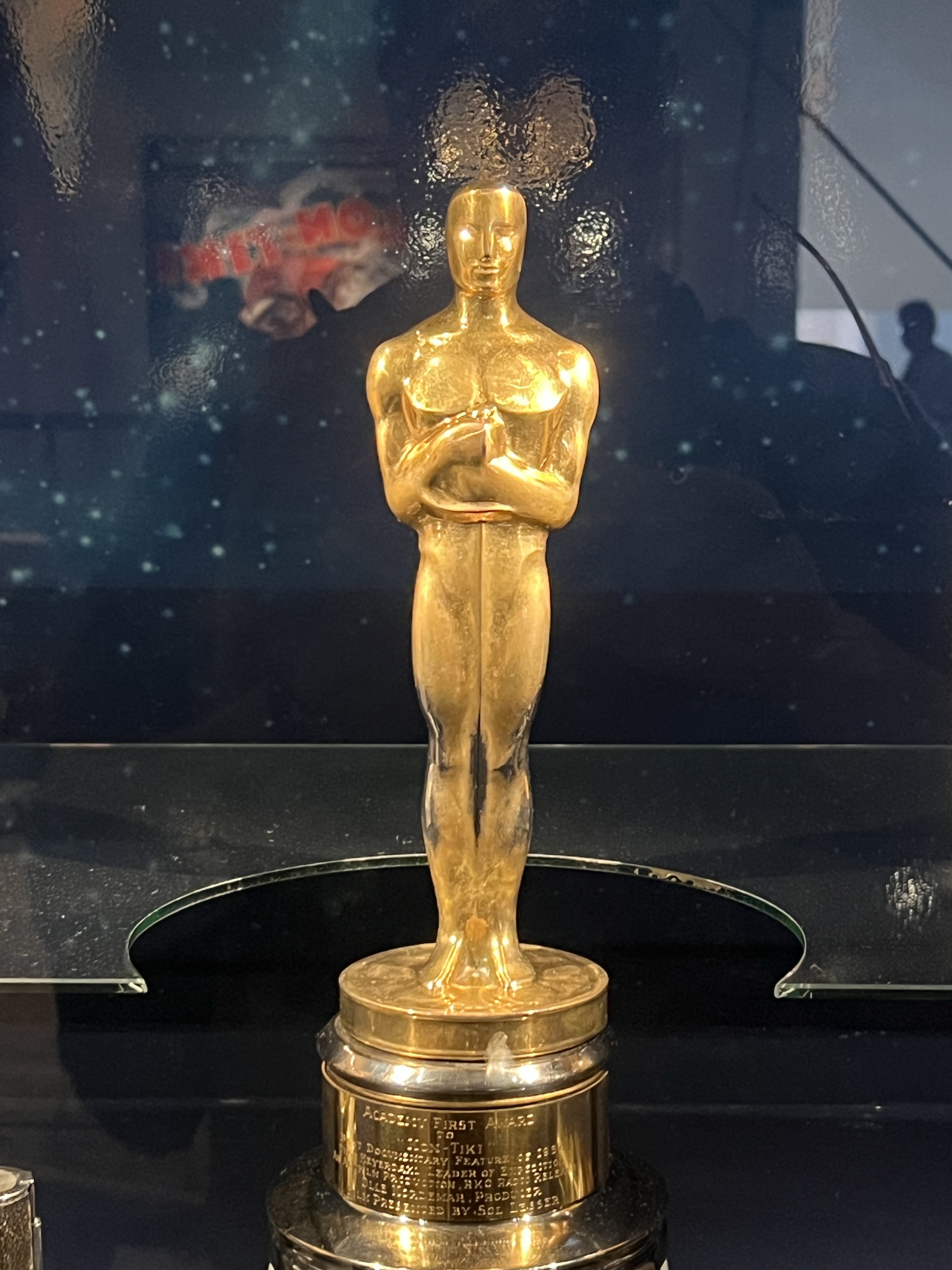
Heyerdahl’s Academy Award for best documentary.

The first time I remember reading about the Kon-Tiki was from a Time-Life book called Dangerous Sea Creatures. In the book was an excerpt from Heyerdahl’s massively popular account of the voyage. The passage was about the crews first encounter with a whale shark (this certainly is not a dangerous sea creature!).
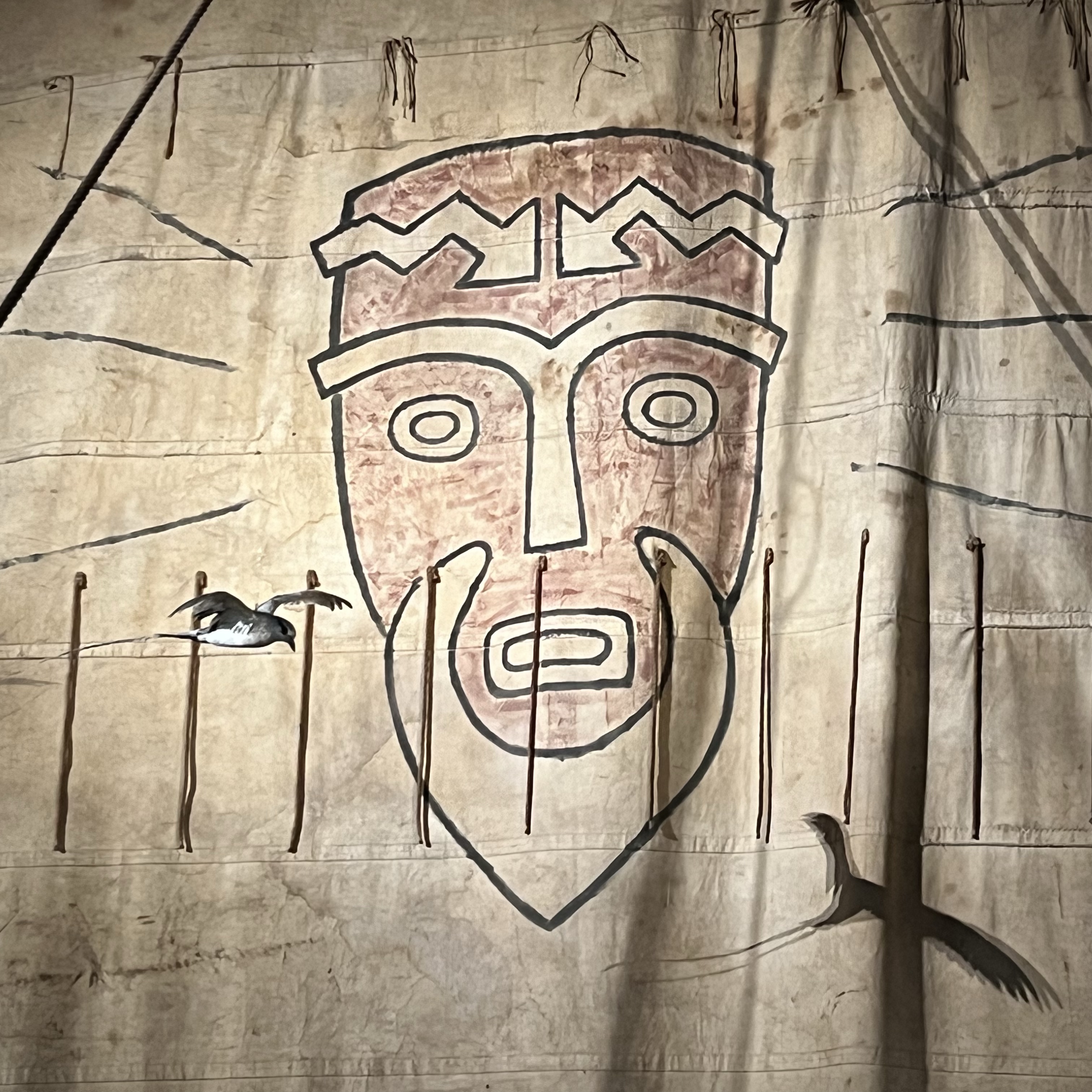
The sail with Kon-Tiki painted on it.

It was amazing to see the famous balsa raft in person that I had read about and which was also featured in the Oscar winning documentary about the voyage. The story of the Kon-Tiki is almost unbelievable had it not been documented. The heroism that the crew engendered on a journey that could very well have ended their lives and at a time when there had very rudimentary forms (ham radio) of communicating with the mainland.
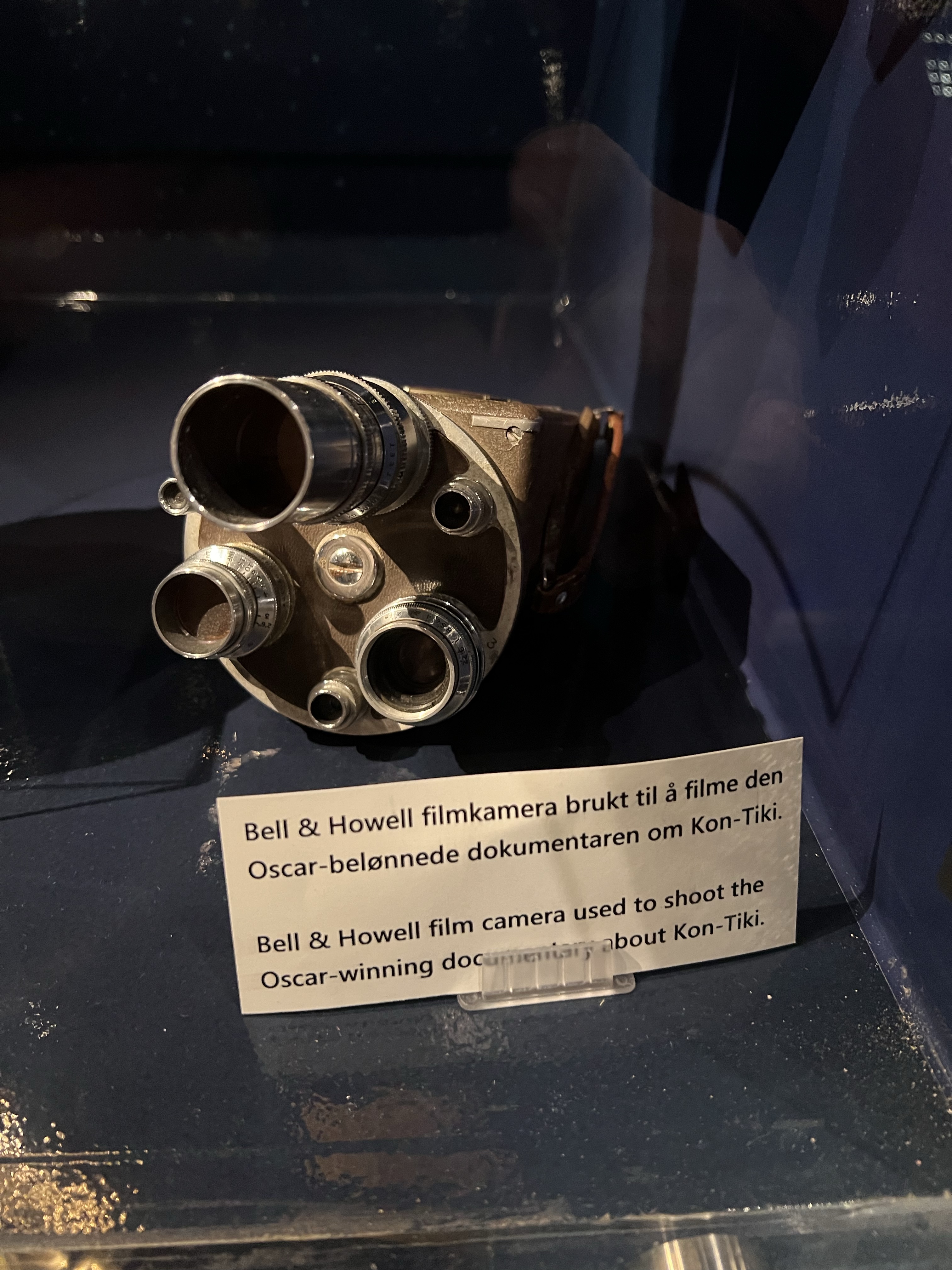
The Bell & Howell film camera Heyerdahl used to film the documentary.

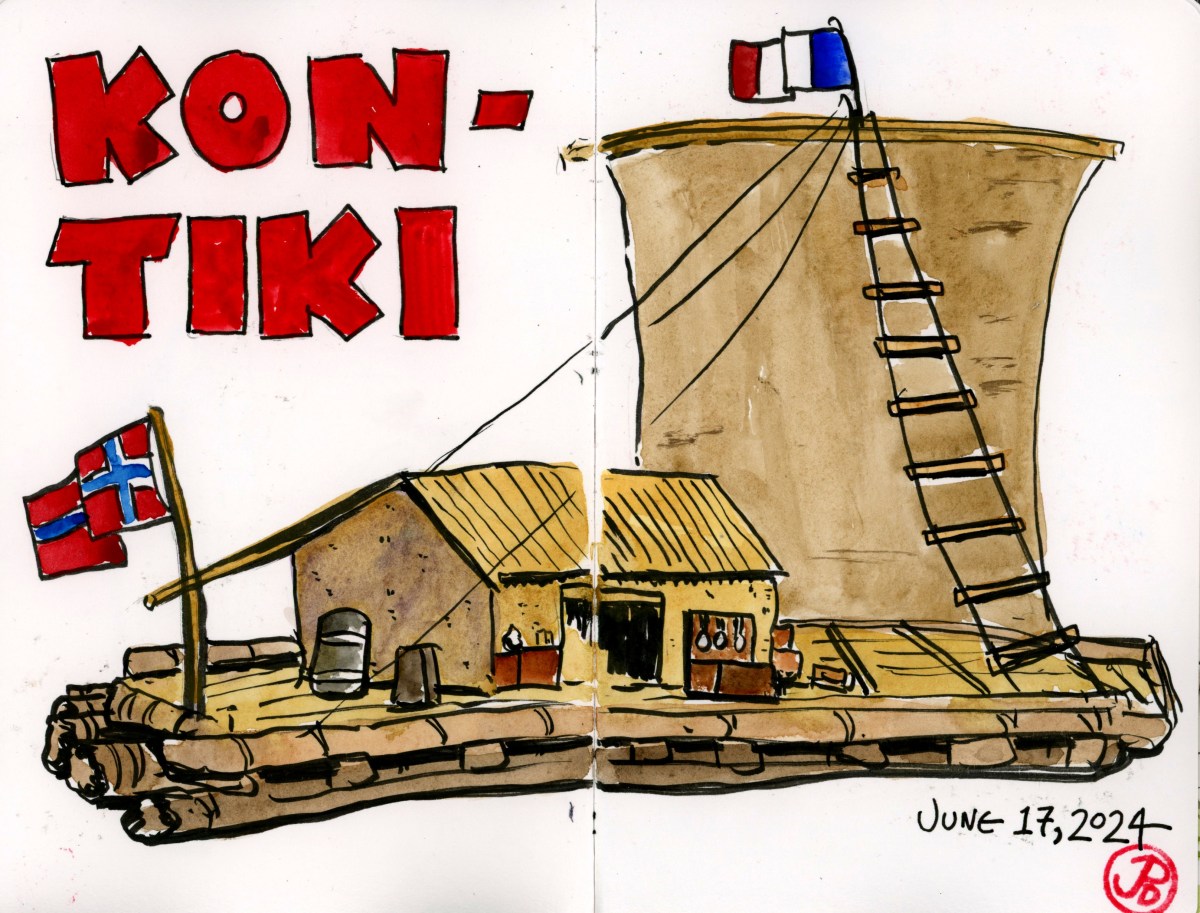
I started a sketch of the Kon-Tiki head on and was not pleased with progress so I aborted the sketch and picked a different perspective. I choose a seat on the starboard side near the stern. With a change of perspective, I was able to add the mythic raft from my childhood to my journal (featured sketch).

Another ship on the Bygdoy Peninsula was to be found at the Fram Museum. This was the ship that Roald Amundsen sailed through the Northwest Passage named the Gjoa. In 1909, the ship was donated to the city of San Francisco where it was on display at the western edge of Golden Gate Park until 1972. The ship was then given back to Norway where it is now on display in a large A-frame building at the Fram Museum.
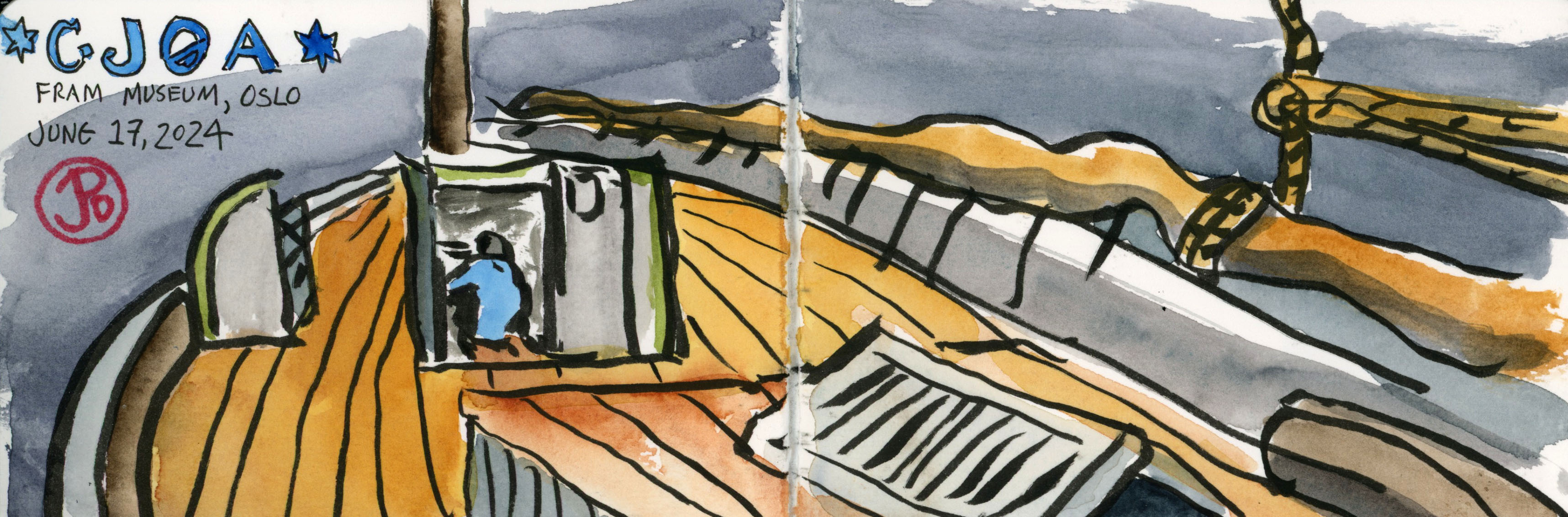
Sketching the Gjoa was a bit of a challenge as I could get far enough away from the ship to capture the hull and mast so I sketched the deck from the port side stern.
Image

Shaking Hands With Oslo

After a sleepless ten hour flight from SFO to Copenhagen and a short flight from Copenhagen to Oslo, it was now time to shake hands with Oslo.

My focus was sketching in Central Oslo. I left my digs in Gunderlokka and walked across the park to catch the 11 tram to the town center.

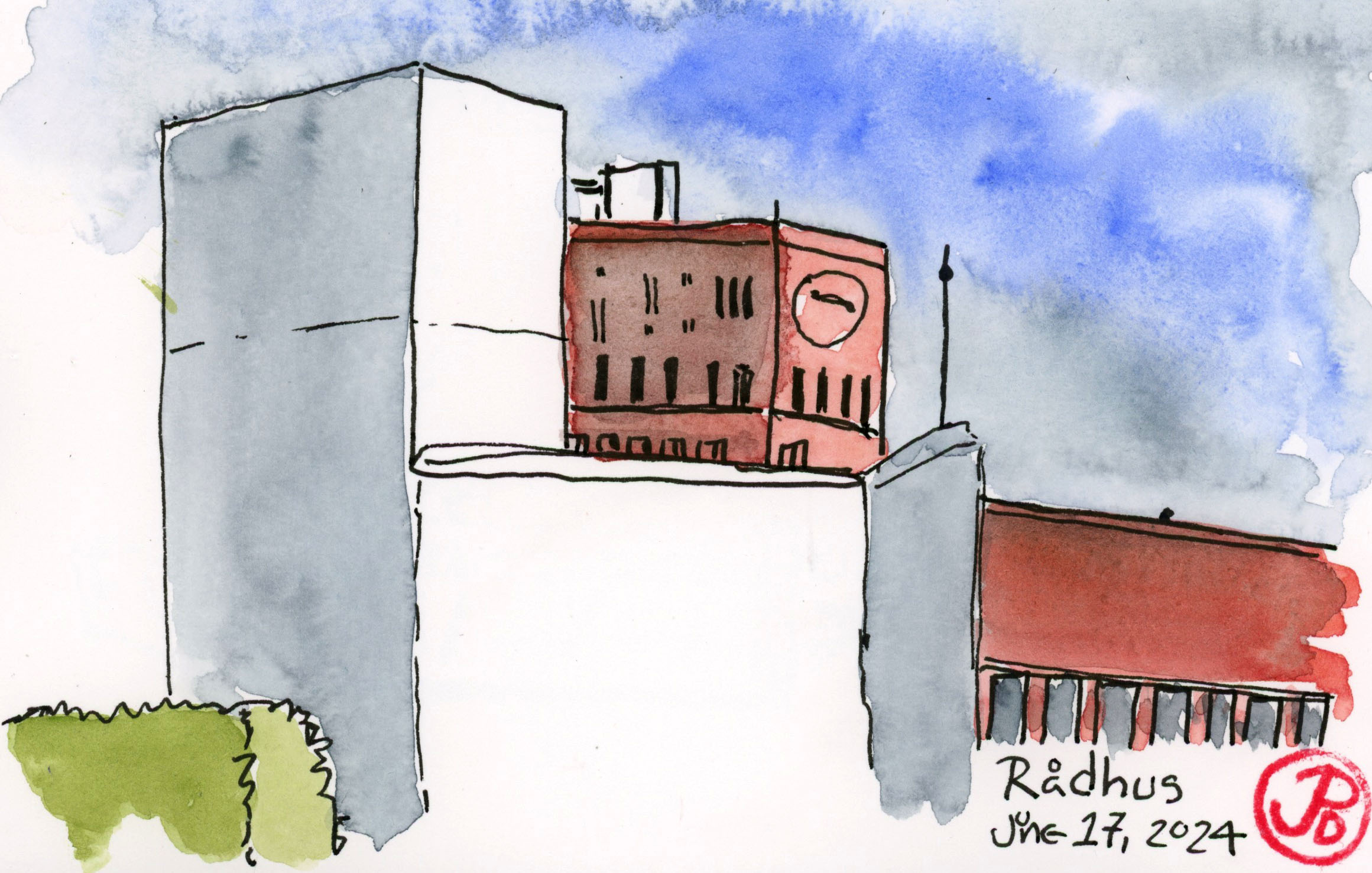
I eventually sketched the Radhas, one of it’s towers was covered in scaffolding and I thought provided and interesting contrast to the tower to it’s right.

I got off in front of the National Theatre. One of the buildings on my sketch list was the Radhas. Unfortunately one of the red brick towers was covered in scaffolding so I passed on a sketch and instead found a bear sculpture on a fountain near the Radhas. Perhaps it is a polar bear!

There is lots to sketch in Norway’s capital city. Architecture, both old and modern, fjordscapes, and plenty of public art. And I was even able to sketch a life bird.

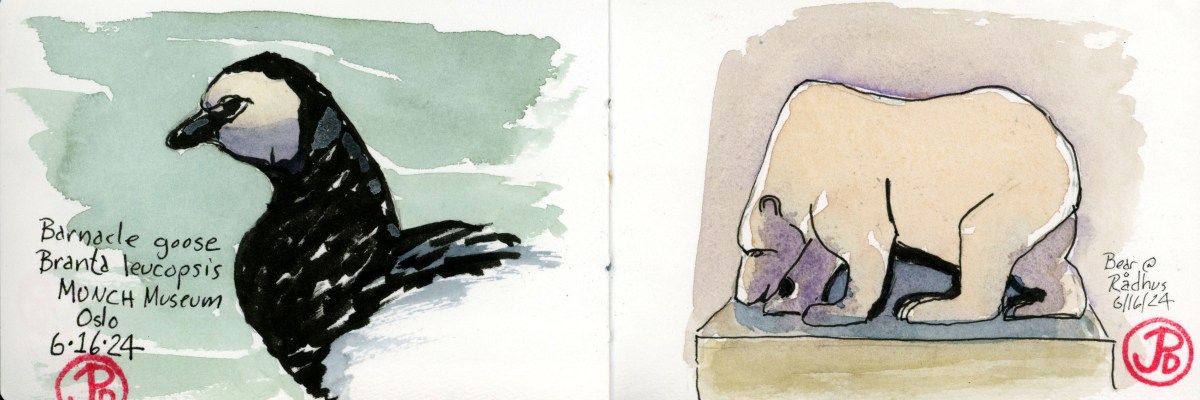
On a visit to the Munch Museum, I saw a family of Barnacle geese, two adults and two goslings.

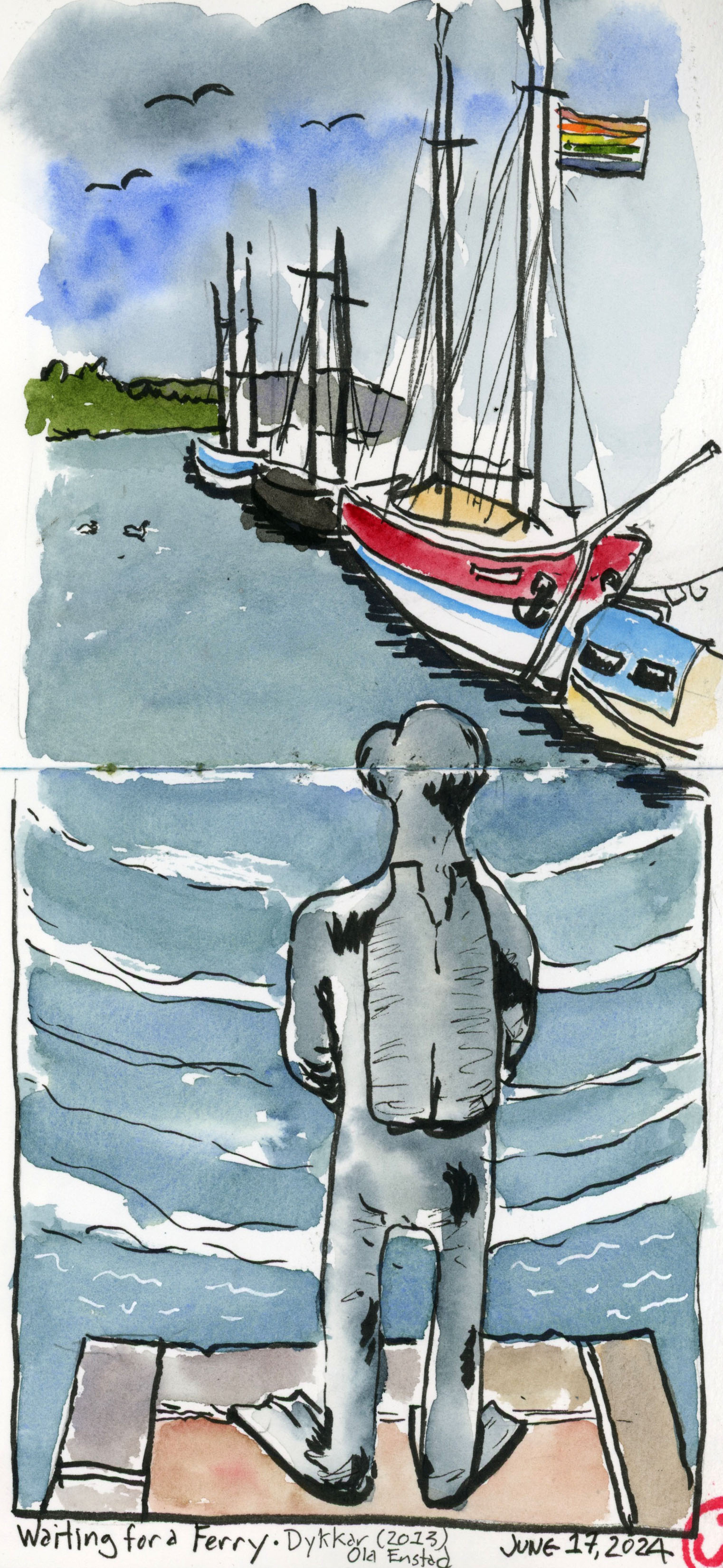
I always love to sketch public art, such as the bear in the featured sketch. I found the statue at the harbor, Dykkar (2013) by Ola Enstad. So I sketched it from behind as I was taking the very of the diver looking out to line of ships and the fjord of Oslo.

Image

Polar Shades

Protecting your eyes is very important in the Land of the Midnight Sun. In the summer the Polar day can last for 24 hours.

The sun is intense and extreme in the Polar regions in the summer, with rays being reflected from snow, ice, and water into your naked eyeballs.

That’s why you need to clothe your eyes in Polar shades!

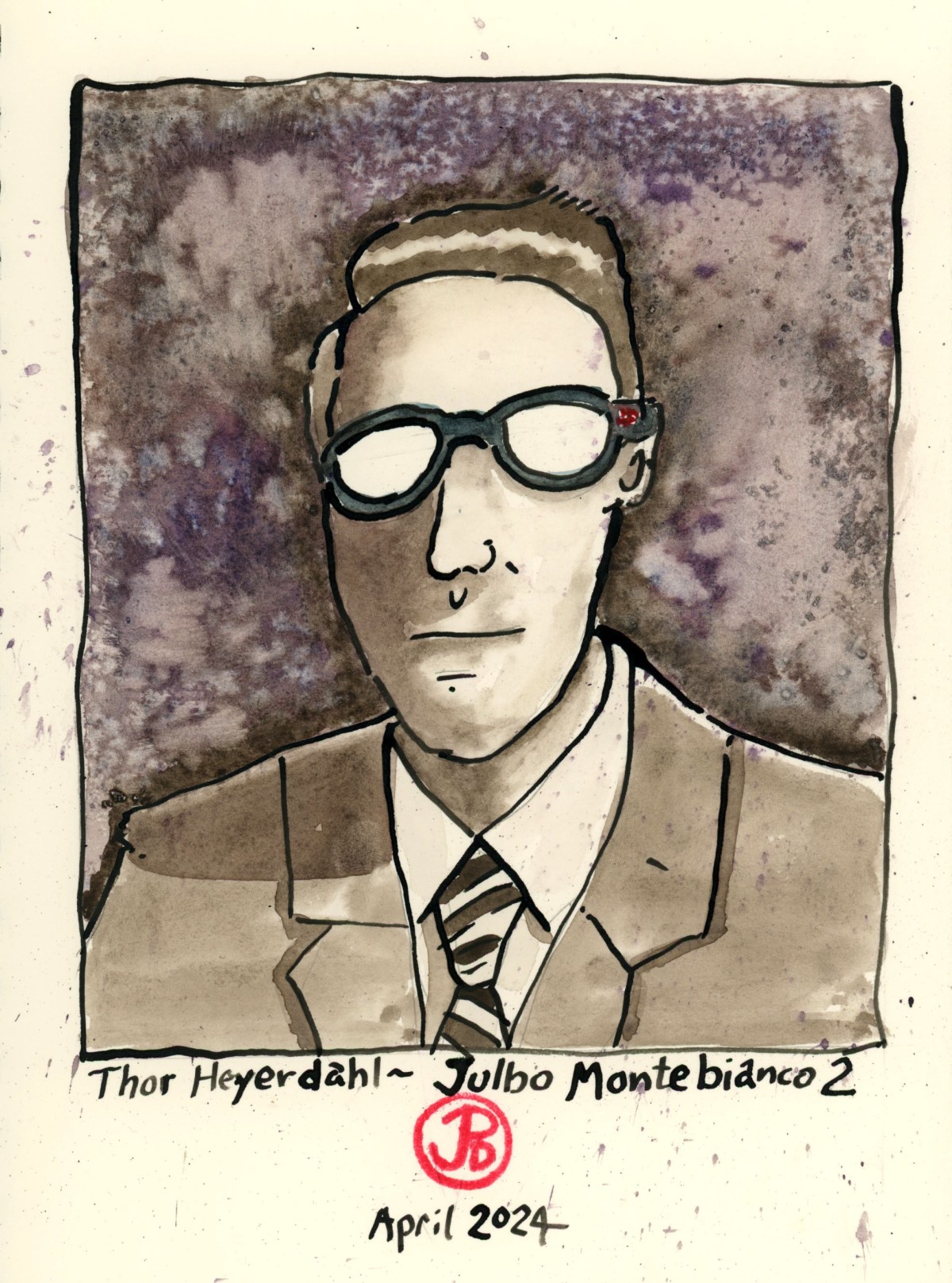
I chose to dress my eyes with the Julbo Montebianco 2.

These French glasses are made for high altitudes and snow sports. The Spectron 4 lens blocks out 100% UV rays as well as a, b, & c rays. The glasses also come with removable side shields which protects your peripheral from intense blinding light.

I also like the fact that Julbo has been making eyewear for explorers and adventurers since 1888. And I would be carrying on with the explorer’s tradition.

With so many hours of daylight, you need a different type of eyewear to get some shuteye during the summer Polar “night”.

I found this out on my summer of 2023 birding trip to Iceland. High up on a summer Scandinavian packing list is a quality sleep mask. Most of my accommodations had blackout shutters but a few did not and having a sleep mask gave me much needed shut eye.

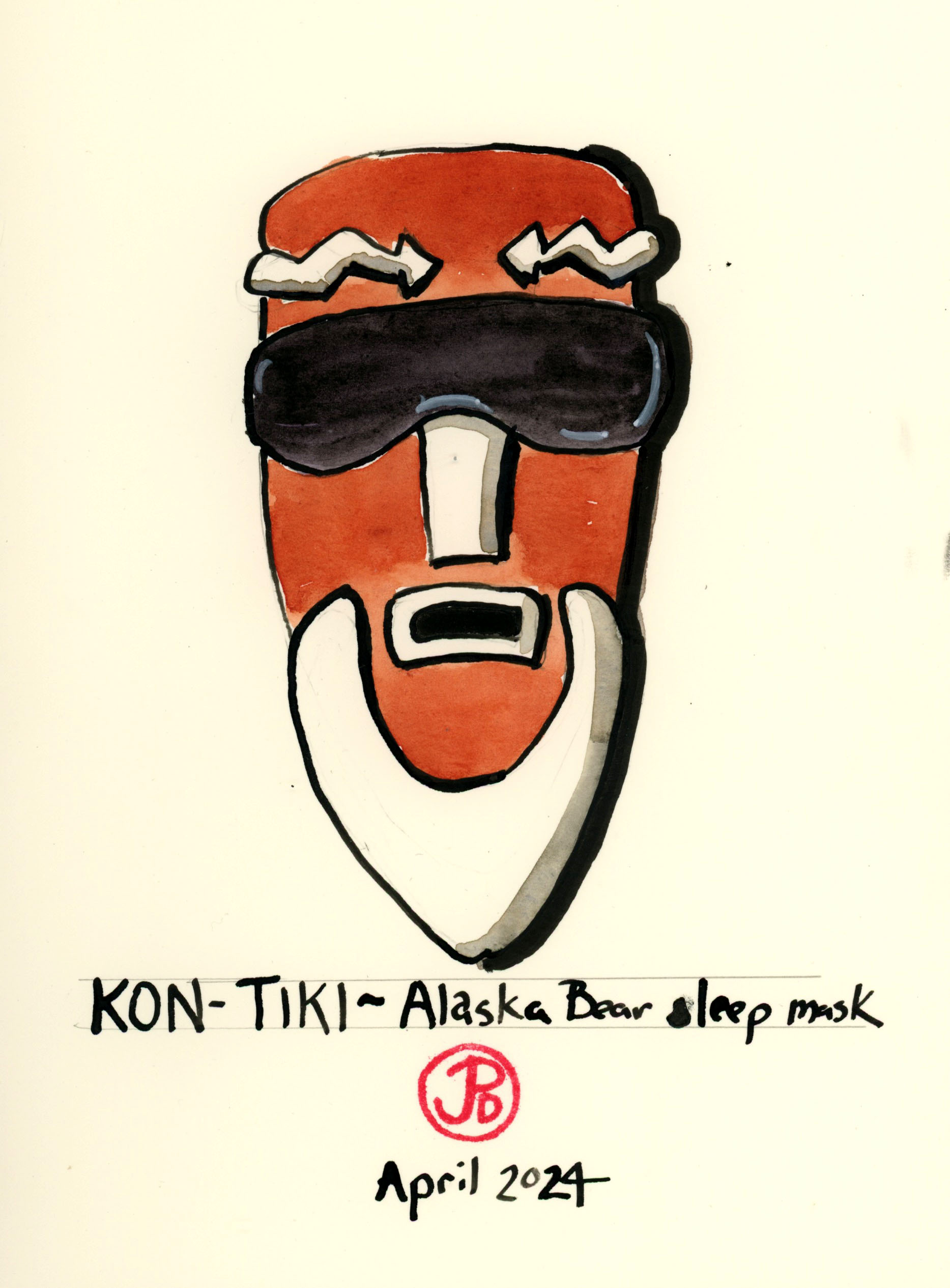
My sleep mask of choice for Scandinavian is the Alaska Bear (could it be a polar bear?!) sleep mask. This mask is comfortable and does it was it designed to do: keep out the light.

Image

Beginnings: Point and Shoot Journals

A new adventure means a new sketchbook.

In the past few years my “go to” travel sketchbooks has always been Stillman & Birn Beta or Delta Series. I love the paper and the different sizes in both soft and hard covers.

Now I wanted to try a new sketchbook so I settled on Hahnemulhe’s 100% cotton cold press sketchbook. This is a hardcover book with very high quality paper for watercolor.

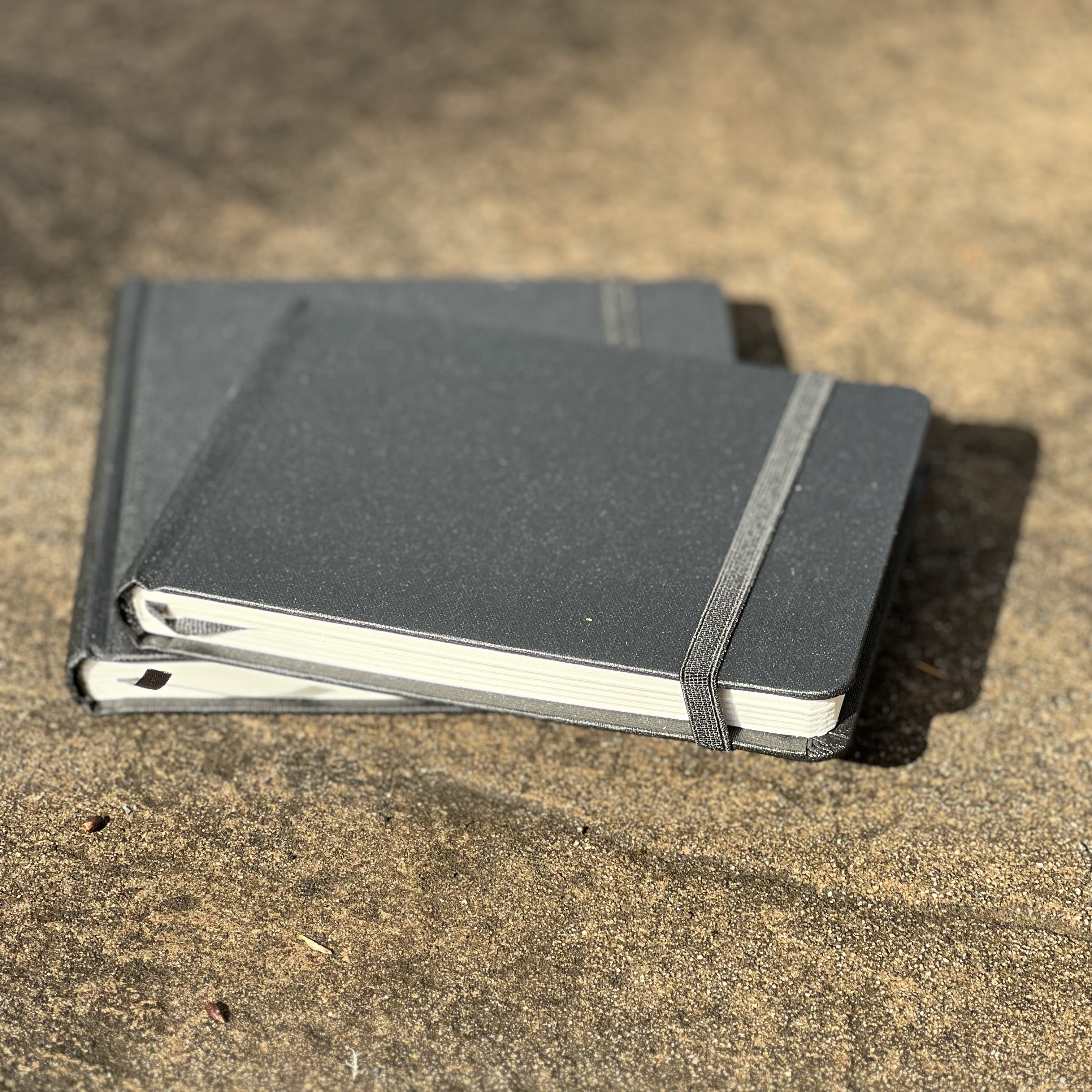
For Svalbard I want to downsize, so I chose two journals: a 4″ by 5.5″ panoramic journal and a 5.5″ by 5.5″ square journal. These would fit in well with my lighter one-bag travel ethic and, I thought, if you use a smaller journal, you are encouraged to sketch more because you have less paper to cover. I figured a smaller journal would be easier to do quick, gestural-loose sketches while on my polar cruise. I think of them as my “point and shoot” journals. I still could do detailed sketches with many watercolor washes, but I like the versatility of these journals and I can’t wait to take them to Scandinavia and sketch!

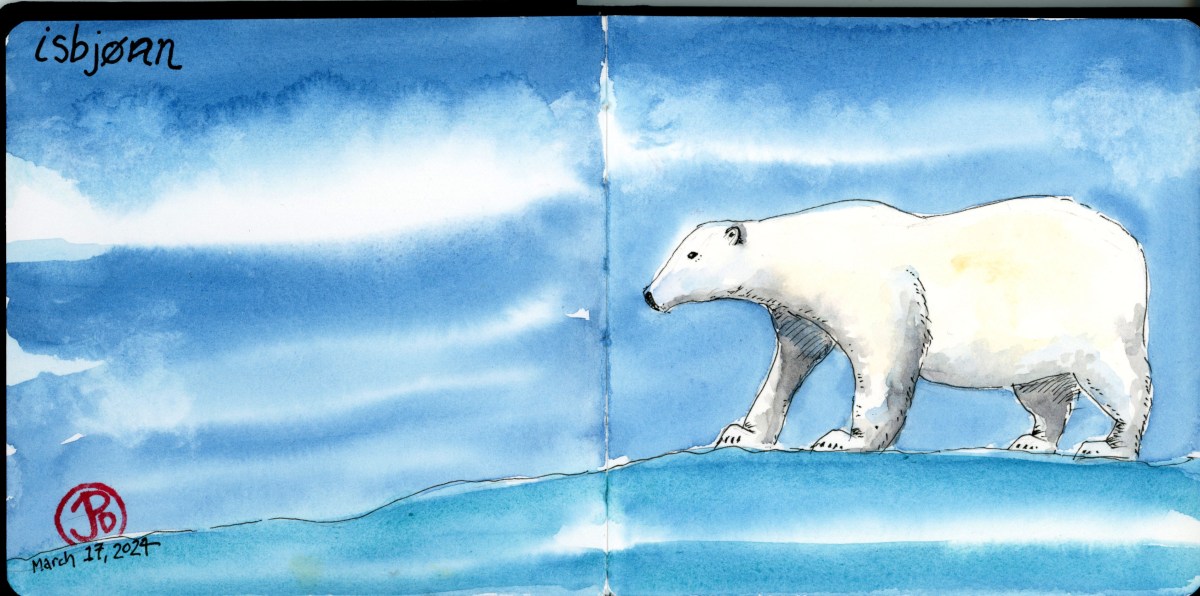
For my opening sketch in the square journal, I chose to paint across the gutter giving me a panoramic spread of 5.5″ by 11″. The spread is the isbjorn (Norwegian for polar bear). This is the number one target mammal on any Svalbard cruise. I loved the way the 100% cotton paper handled the washes (featured sketch).

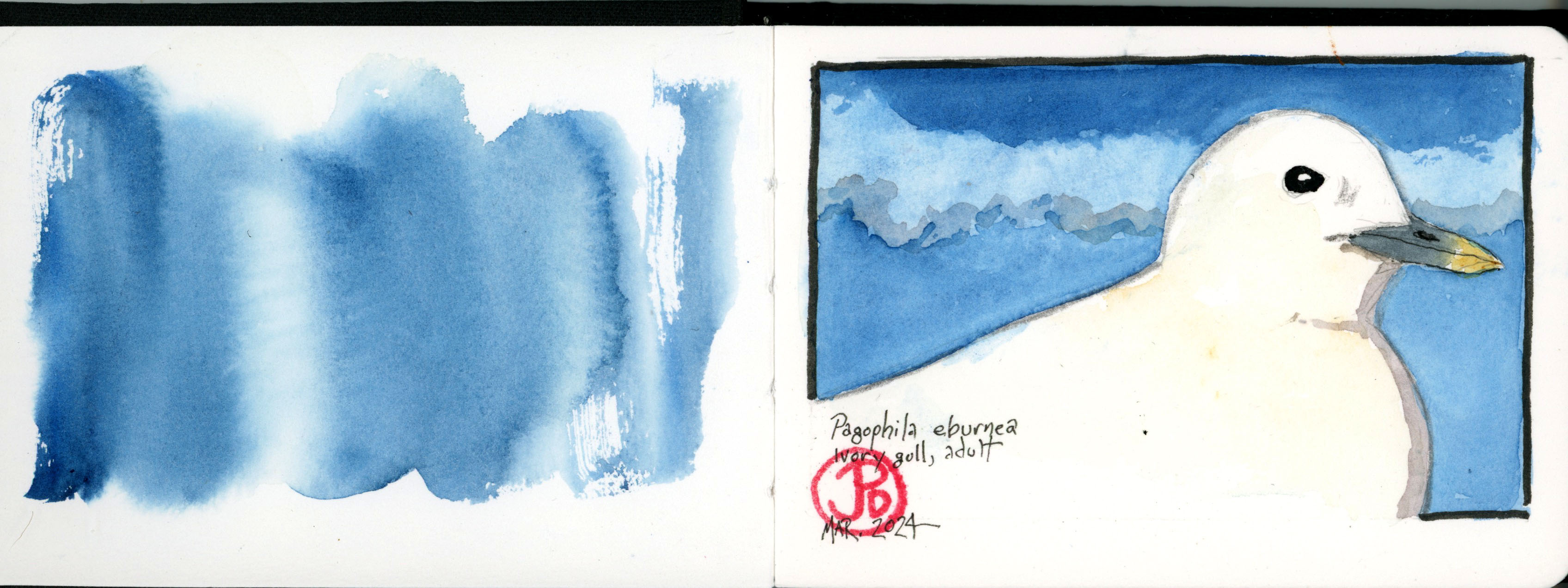
The introductory sketch of my smaller panoramic journal was the number one target on my bird list: the much sought after ivory gull. This all white gull is only found in the Arctic Polar region. Finding an all white gull in an all white landscape was going to be a challenge! But I was up for it (Bring it on!)

Point and Shoot Watercolor Journals.

Image

Osprey Daylite Sling

In my quest to downsize my travel gear, I was looking for a smaller sketching bag to carry my journals, brushes, paints, and pens on my Polar adventure to Svalbard.

My go-to sling bag has been Patagonia’s Atom 8L. I love this bag but it was a bit too big and I wanted a better fit for the smaller Hahnemuhle watercolor journals I would be bringing.

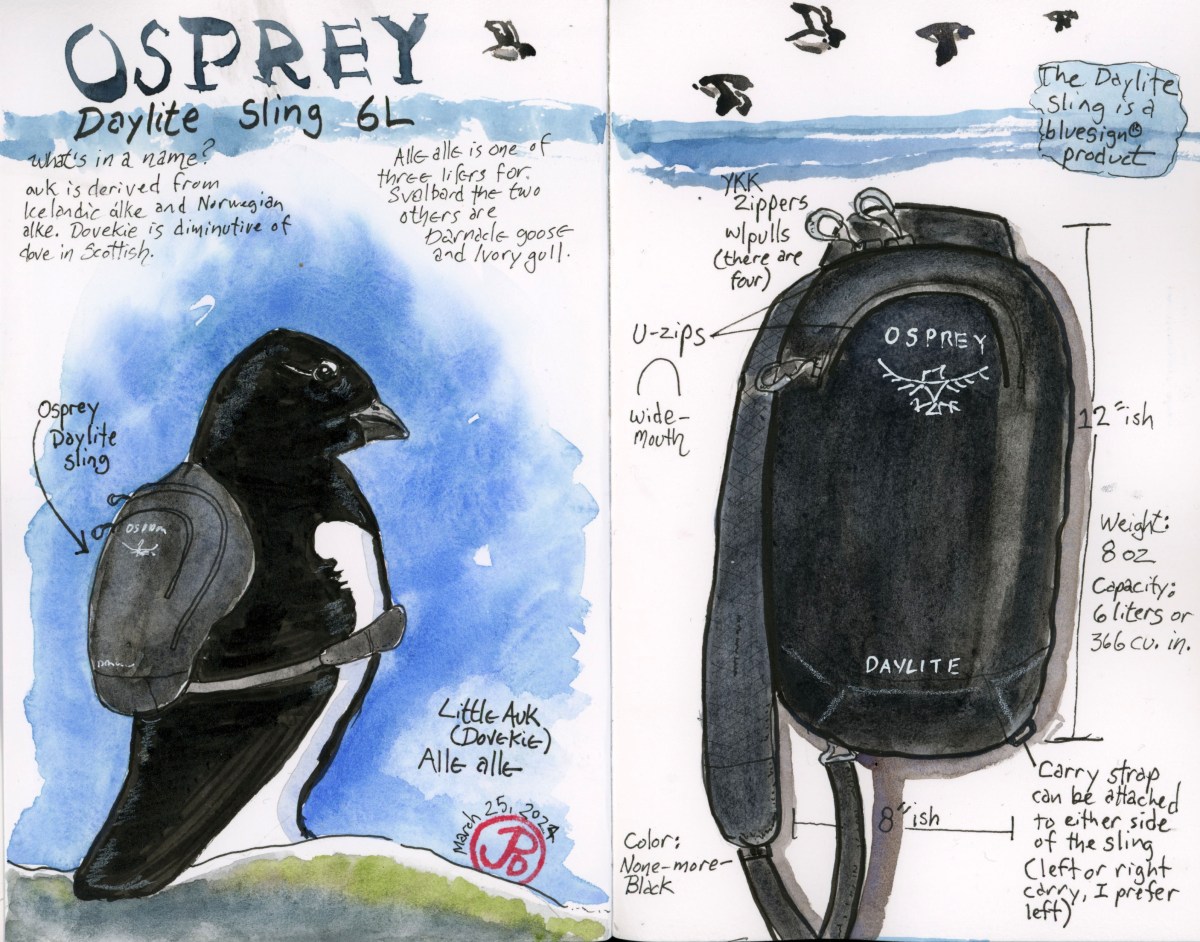
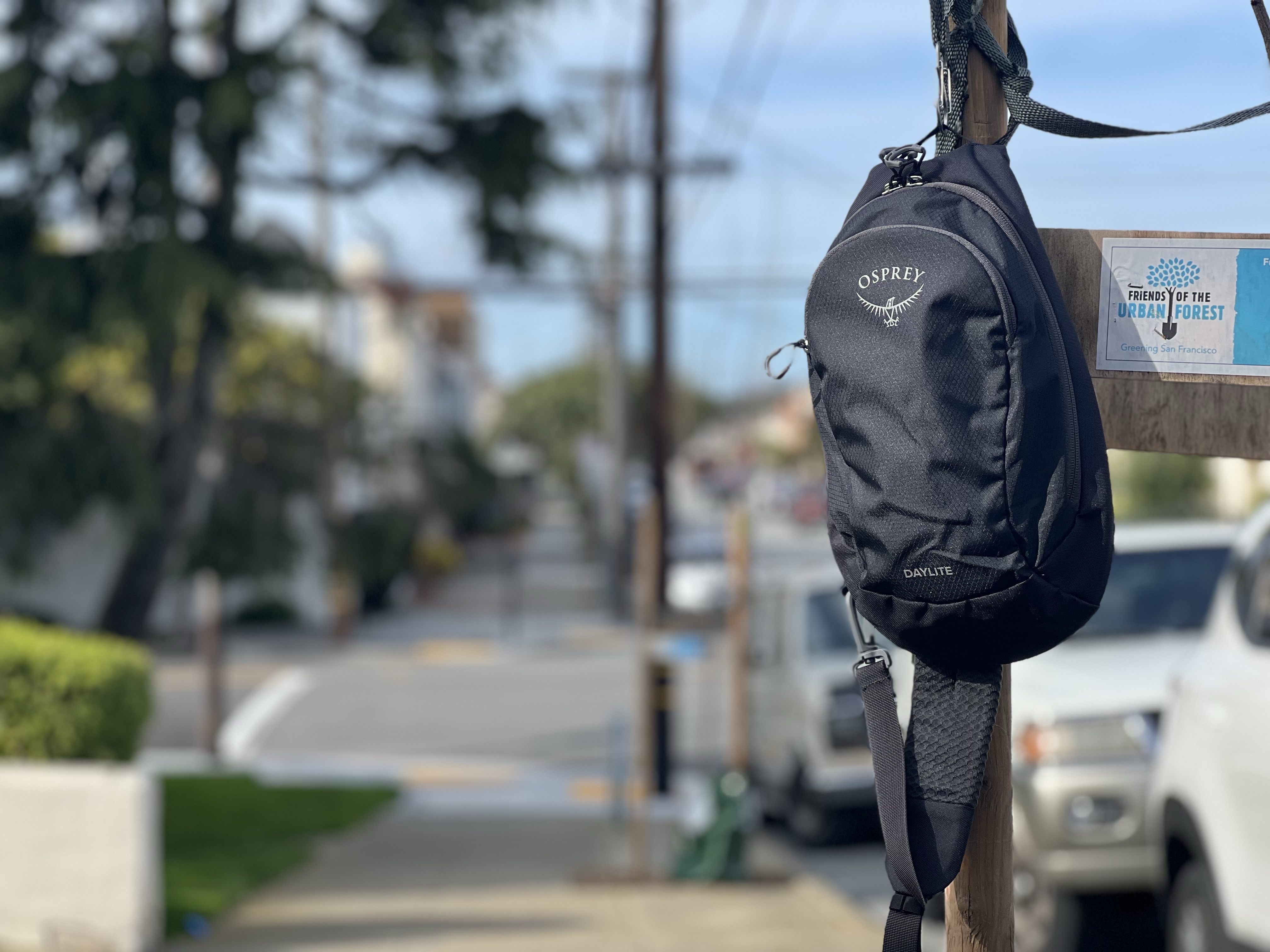
So I decided on the Osprey Daylite Sling. This bag has a 6 liter capacity, it can be worn on the left or right shoulder (I prefer the right), and it has two wide U-zipper mouths to allow access to the interior.

This is my fourth Osprey bag. They are quality built and very comfortable to carry and as an added bonus they were founded just down River Street from my cabin in Santa Cruz.

I did a spread about my new bag featuring a little auk or dovekie modeling the bag. This is one of three lifers I could get in Svalbard (barnacle goose and ivory gull are the other two). The chances of seeing little auk are high because they are the most populous bird in Svalbard.

The Osprey Daylite in its natural urban habitat.
Image

Packing For the Arctic

There is one part of travel that I really enjoy: planning.

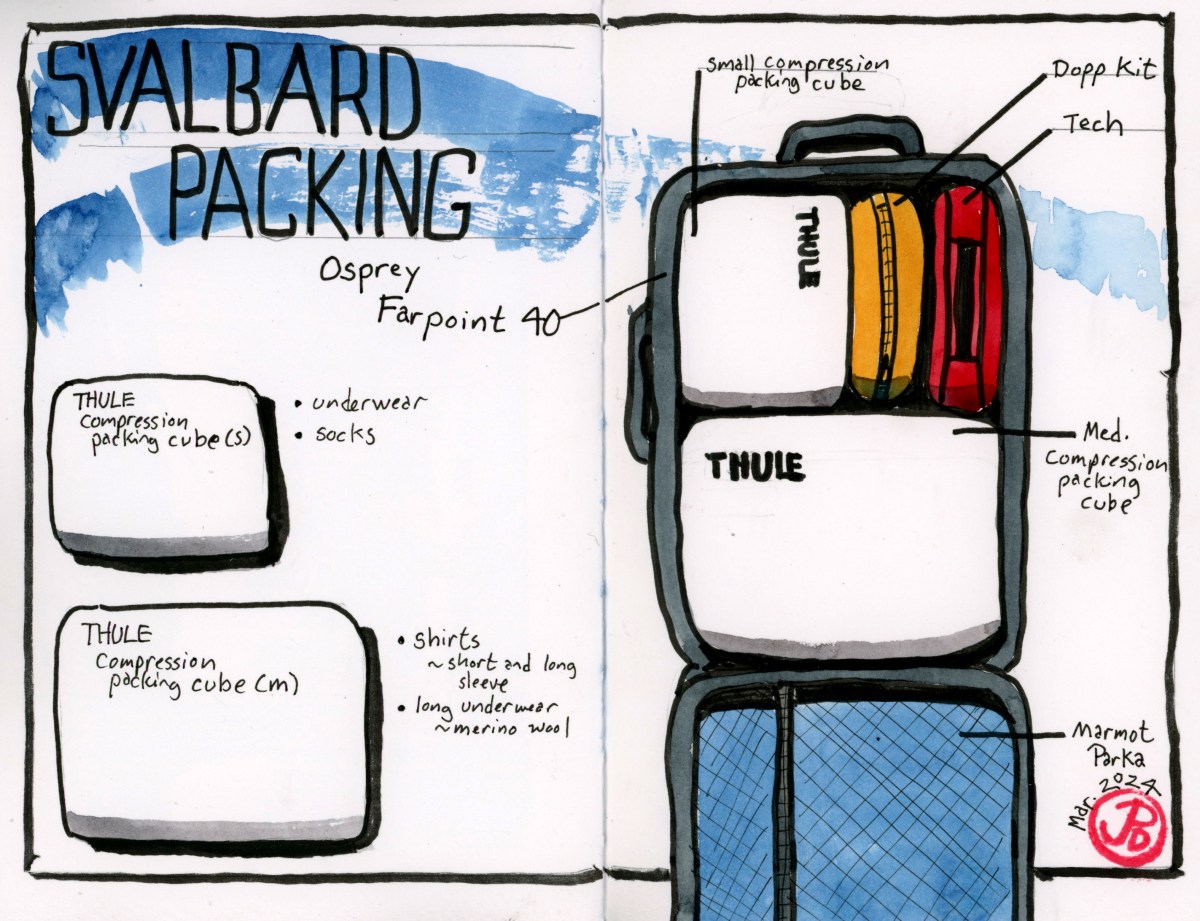
As part of the planning process, I use my journal to map, plan, and diagram. In this case I used a spread to explore packing for the polar summer in one carryon bag.

Was it even possible? Well I was going to find out.

The secret is using compressible packing cubes (it’s fitting that I’m using Thule from Sweden). This way I can pack more into my Osprey Farpoint 40 and the packing cubes help me stay organized on the road.

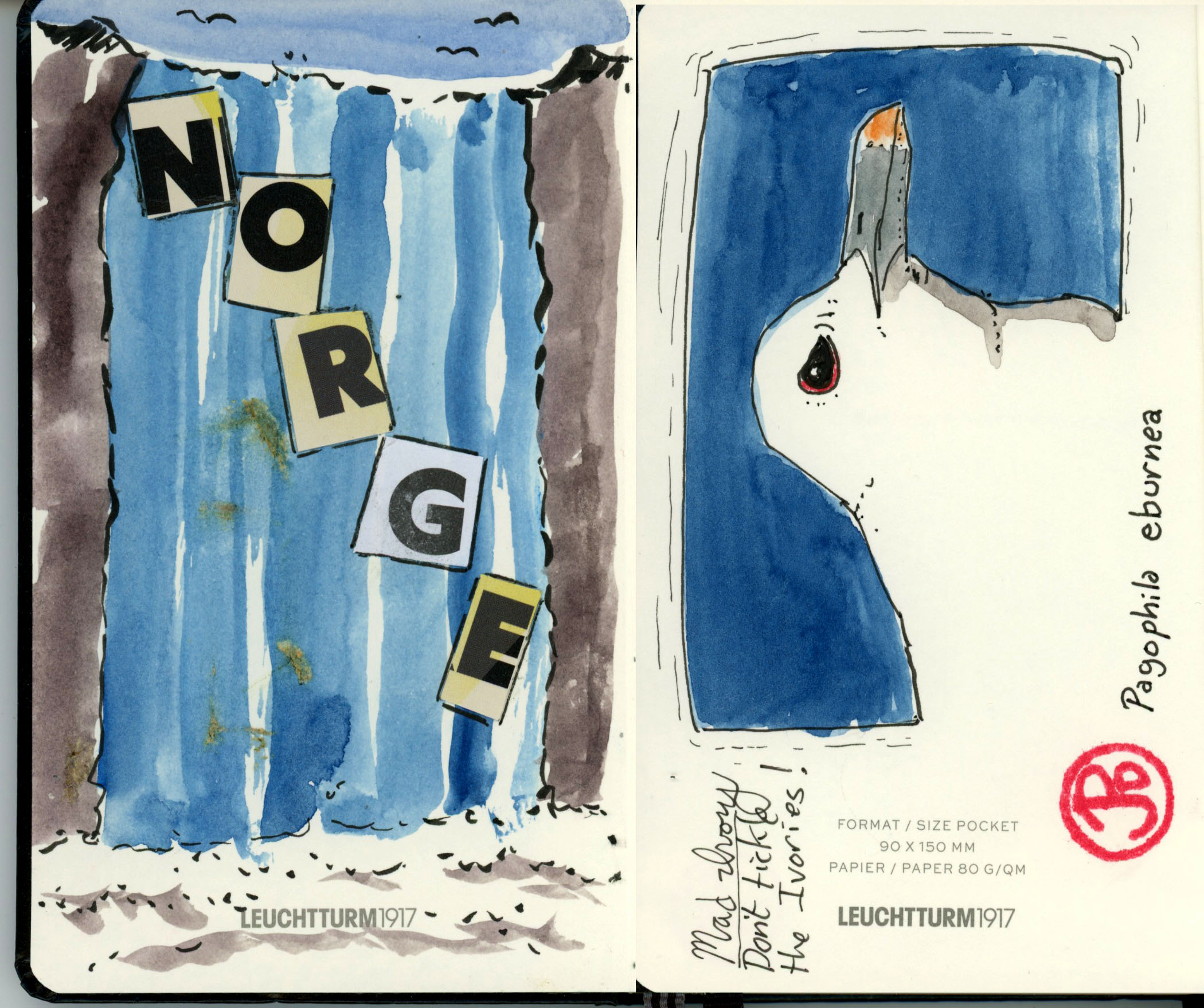
Before any important journey I also start a notebook. For my Svalbard adventure I chose a 3.5 by 5.5″ (90 X 150 mm) Leuchtturm1917 notebook. I do a lot of my preplanning in these notebooks and it is my constant companion while I’m on the trip.

I use it to write and note down details, lists, checklists, and thoughts and I often write blog posts in these small notebooks which easily fit into a pocket. And sometimes I do quick pens sketches too.

This is the front page of my Norway/Svalbard journal. To the right is a gull high on my wishlist: ivory gull. The cartoony gull reminds me of Kehar in the animated version of Watership Down.
Image

CalTrain Electric

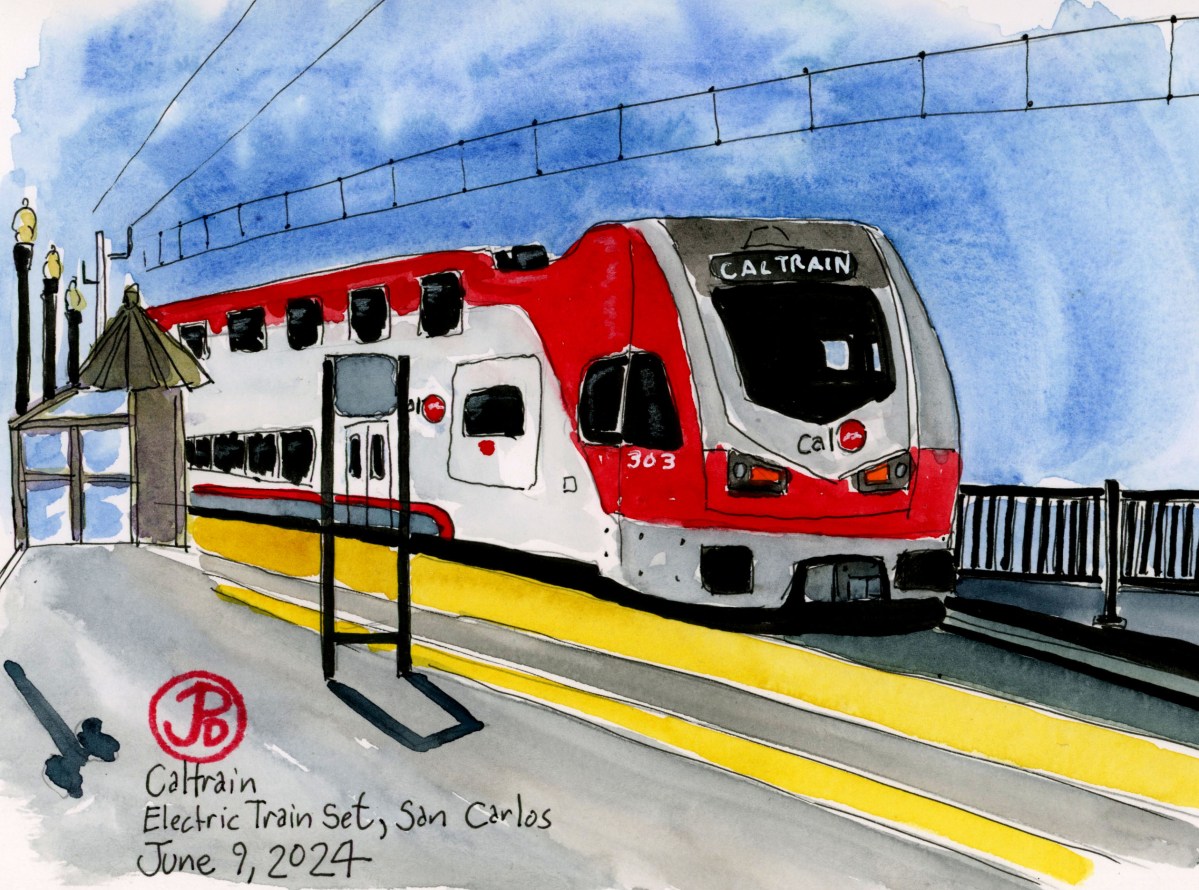
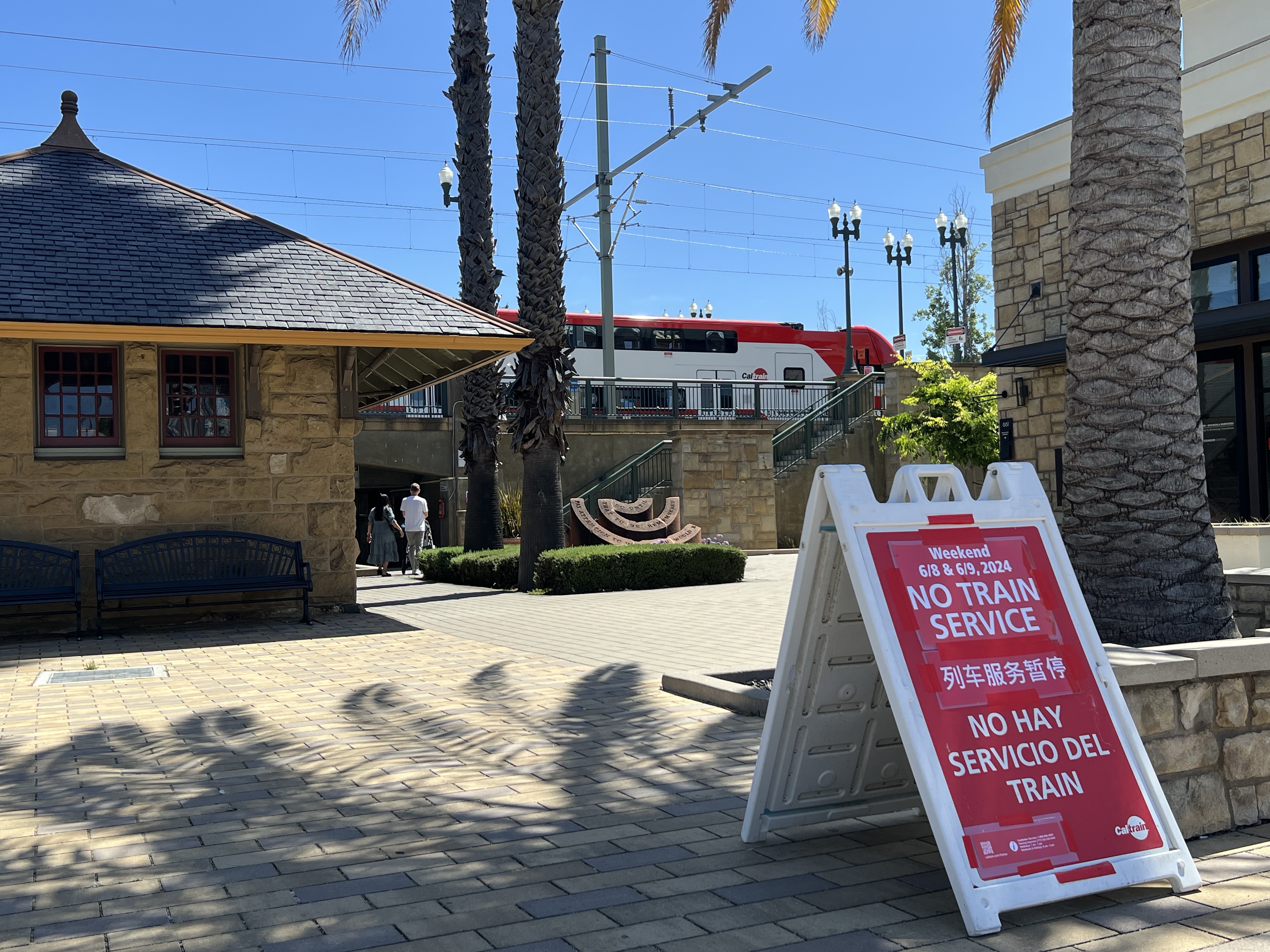
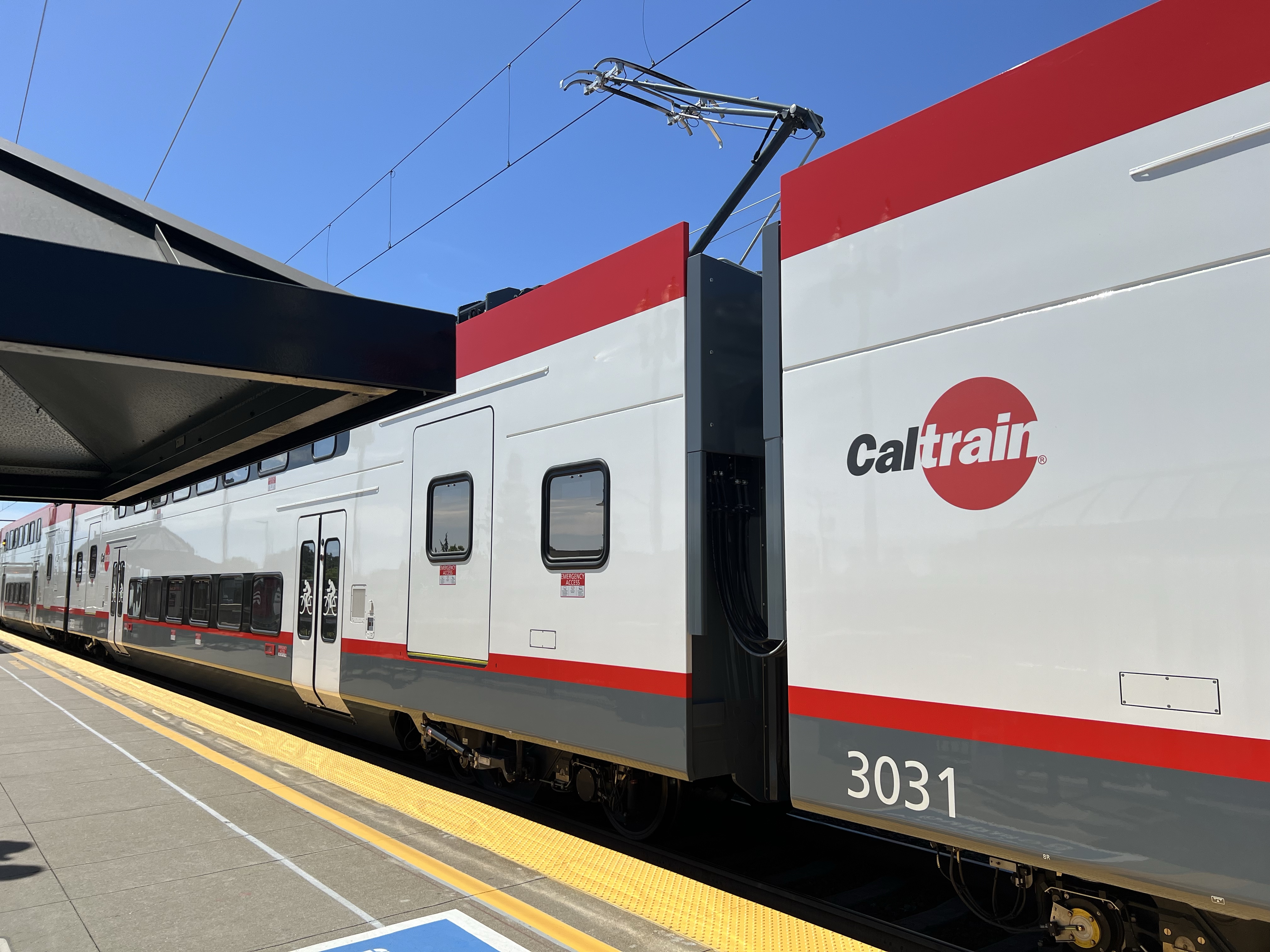
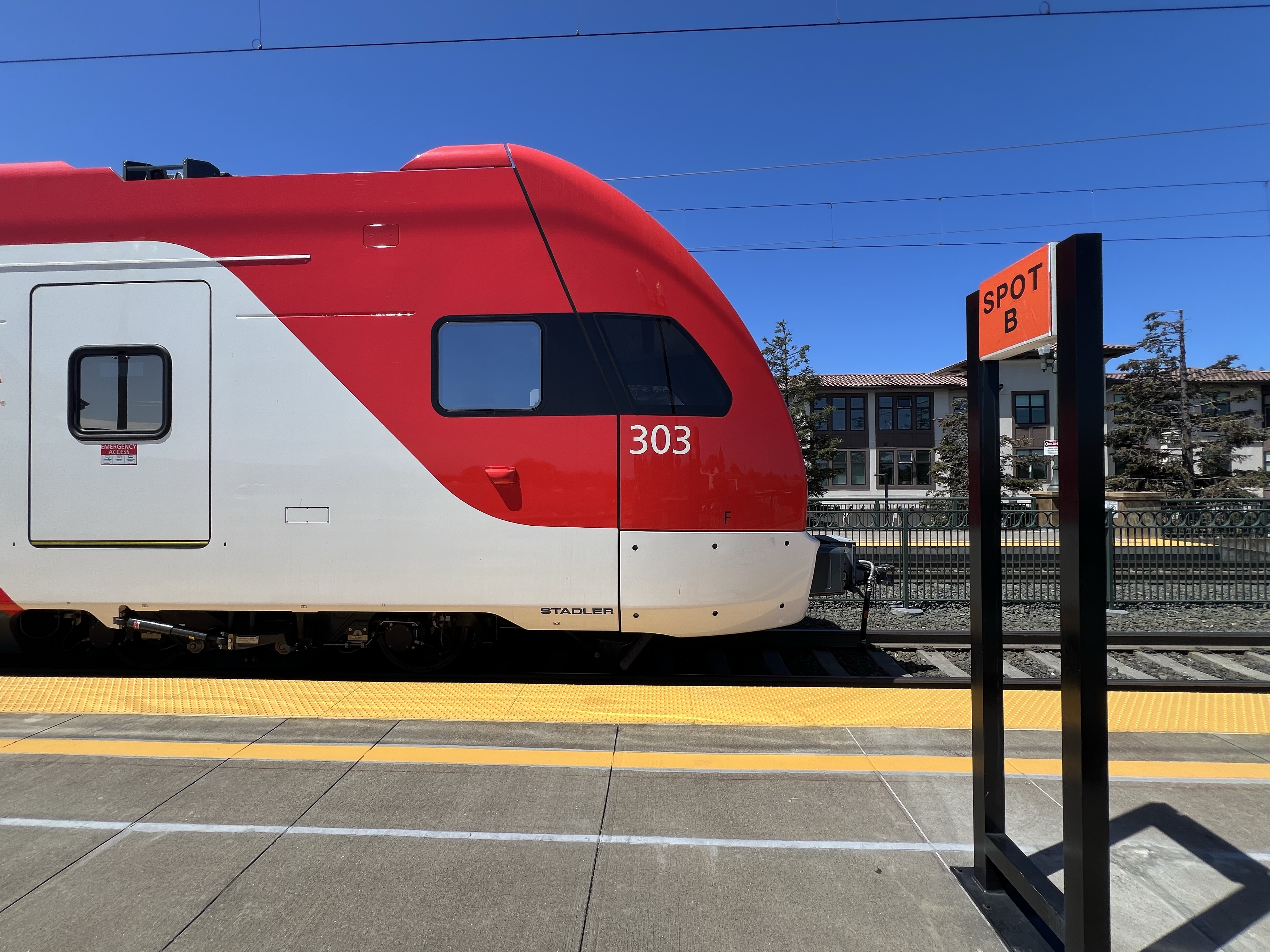
On a recent Saturday morning I had a pleasant surprise as I drove north on El Camino Real at San Carlos. At San Carlos Station was one of the new electric CalTrain sets.

The new trains are built by Stadler, a Swiss-based train manufacturer. The company was founded in 1942 and is headquartered in Bussnang, Switzerland. The company has a factory in Salt Lake City, where Stadler will build 24 train sets for Caltrain.

The train sets are known as BEMUs which stands for battery-equipped electric multiple unit.

I parked, thinking that the train would surely have left the platform by the time I walked to the station but as I walked down San Carlos Avenue, the train was still stationary at the station.

As I crossed El Camino, a placard stated “No Train Service”. The line was closed all weekend.

The line was closed from San Francisco to San Jose so Caltrain could test eight of the new electric train sets. The electrification of the line started in 2017 and electric trains are scheduled to start running on September 21, 2024.

If you think of some of the most iconic passenger trains in modern rail: Japan’s Shinkansen (“Bullet Train”), France’s TGV, Eurostar, Amtrak’s Acela, Chinese Railways CRH, the Bay Area rail corridor was finally being electrified to catch up with the rest of the world, although it would not come close the top speeds of modern Shinkansen (186 mph).

Three quarters of the world’s passenger service are powered by electricity. About time!

This is what powers the new train sets: the pantograph that delivers power from the wires above to the train set below.
Not sure if these new trains sets earn any style points. They look like a large streetcar or tram.
Image

Coastal Rail Trail

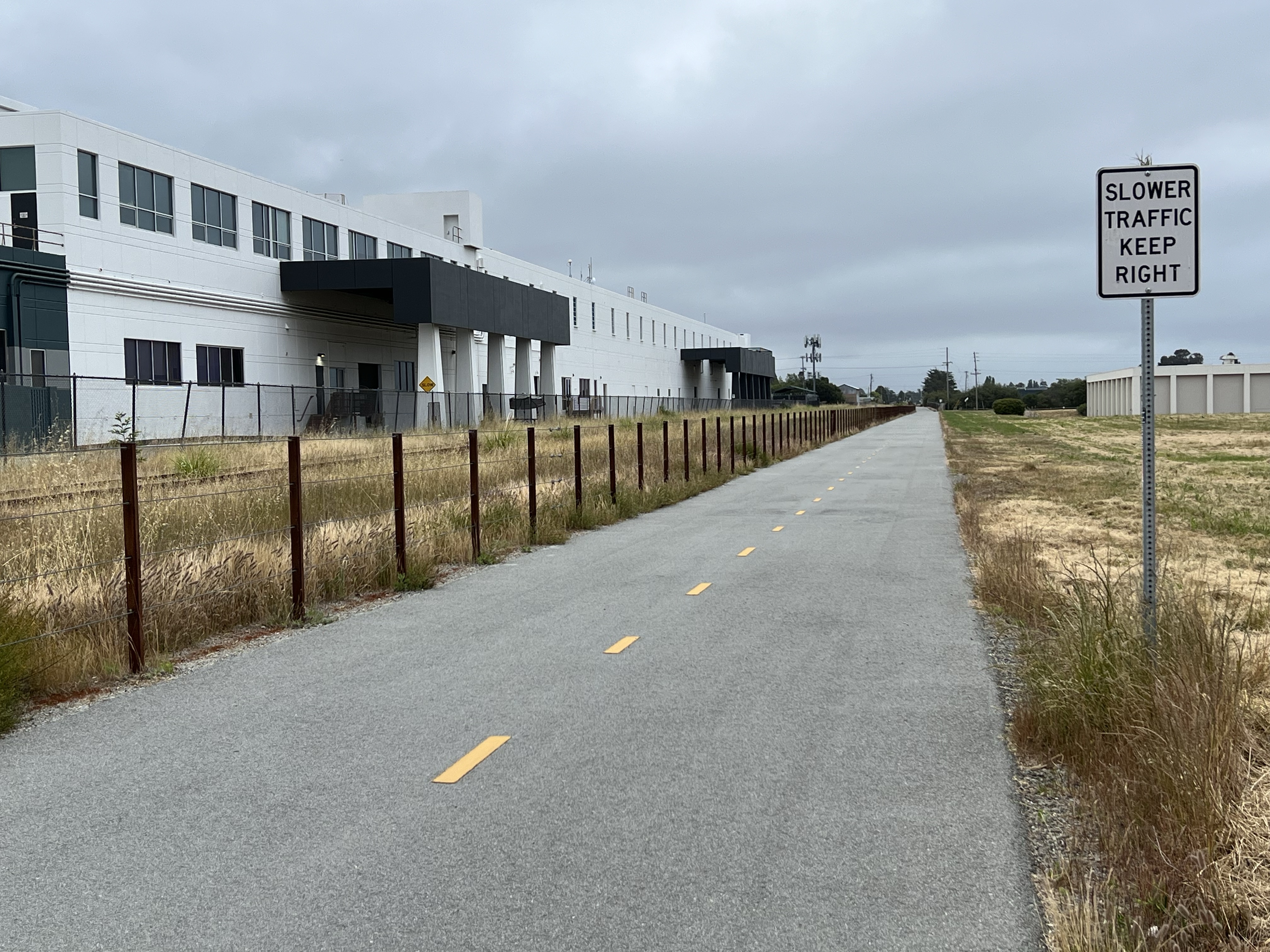
On a gray Saturday morning I decided to explore a recently opened section (opened in December 2020) of the Coastal Rail Trail in Santa Cruz.

The section I was exploring (Segment 7) is between Natural Bridges Drive and Bay Street. The walk takes about 30 minutes and the round trip covers about two miles.

As the name implies, the paved pedestrian trail parallels the former Southern Pacific Davenport branch line from Watsonville to Davenport.

As of the date of writing only two sections of the trail have been opened, one in Watsonville and the section I was walking on in Santa Cruz.

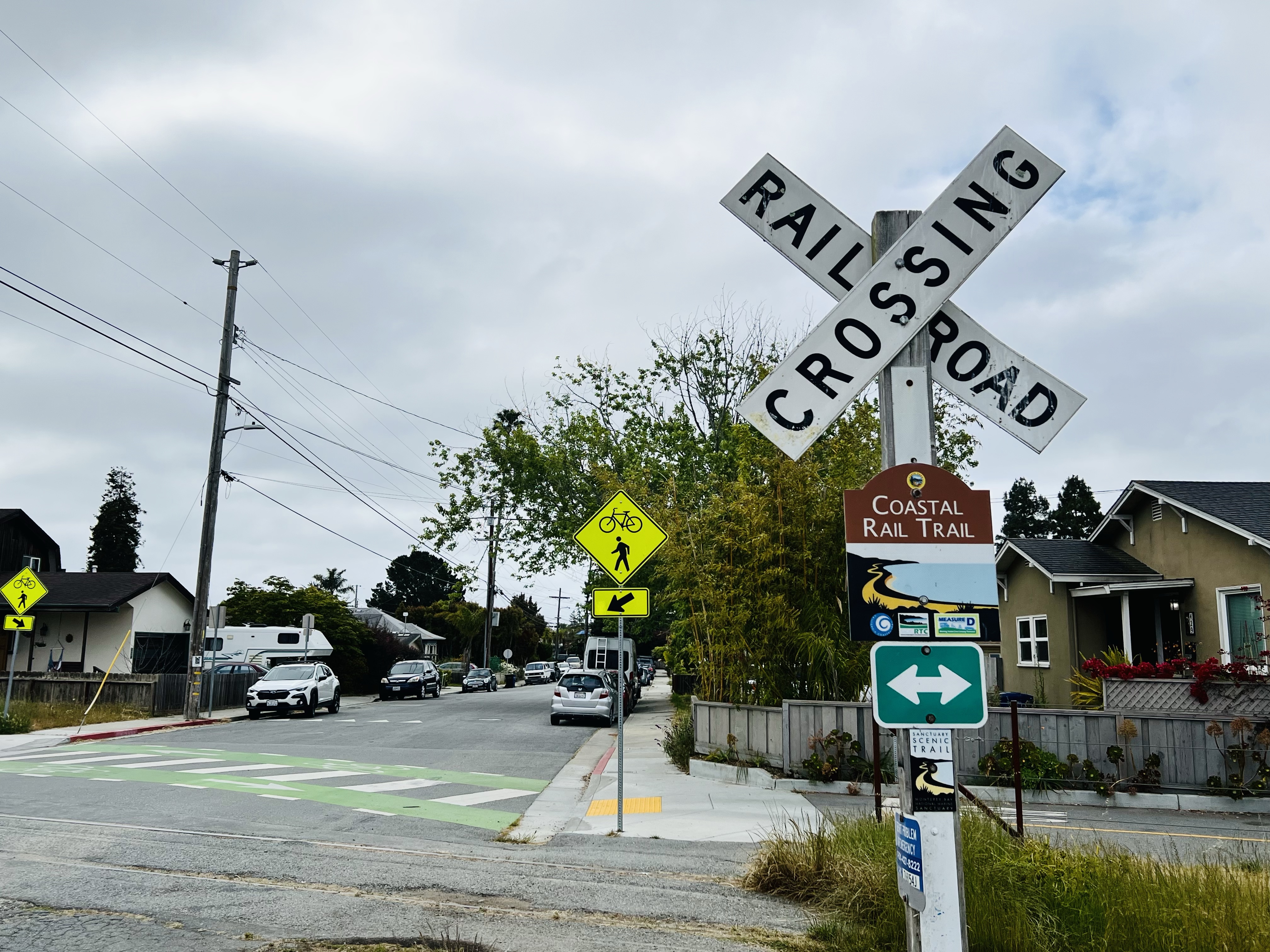
At grade crossings there are pedestrian signals that stops cars so you can cross the street safely. Well that’s the theory anyway. With the trail recently open, pedestrians should still use caution and not assume all vehicles will stop for you.

When the trail is completed, it will cover 32 miles from Davenport to Watsonville. There are also plans to introduce electric rail service using the former Southern Pacific right of way and trackage.

I started where the rail trail ends: Natural Bridges Way.

The Rail Trail passes by the former Wrigley Chewing Gum plant (left). The plant was in operation for more than 40 years and produced 20 million sticks of gum per day. The plant had a rail siding that is still visible today.

In my college days I remember visiting the gum factory with my roommate in an unsuccessful attempt to get a plant tour. The receptionist told us that they didn’t give tours but asked us if we would like some gum! We answered in the affirmative and then opened a drawer full of gum. I went for Big Red while my roommate picked Juicy Fruit.

The trail is level as it parallels the rail grade. Railroad grades normally don’t exceed 2%. The steepest mainline railroad grade is 3.3% on the Raton Pass grade in New Mexico. A railroad grade is expressed as a percentage the grade rises or falls over 100 feet of horizontal distance. So a 2% grade rises and falls two feet over a 100 feet distance. These gentle grades are ideal for walking and biking.

I passed by the New Leaf Market at Fair Ave, often my first stop when I head into town, as the trail and line turns slightly to the left skirting the Westside Circles neighborhood.

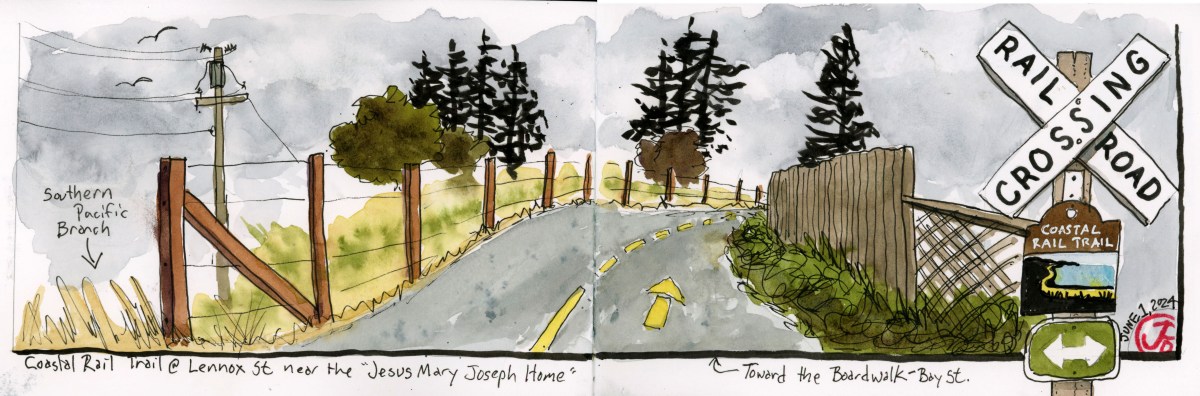
I came upon a scenic curve in the trail at Lennox Street as the rails and trail curve off to the right as it nears Bay Street. I pulled my sketchbook out of my bag and started sketching the view (featured sketch).

On the right of the spread I sketched the grade crossing sign at Dufour Street with Coastal Rail Trail sign below the crossbuck.

Image

Summit Fog Birding

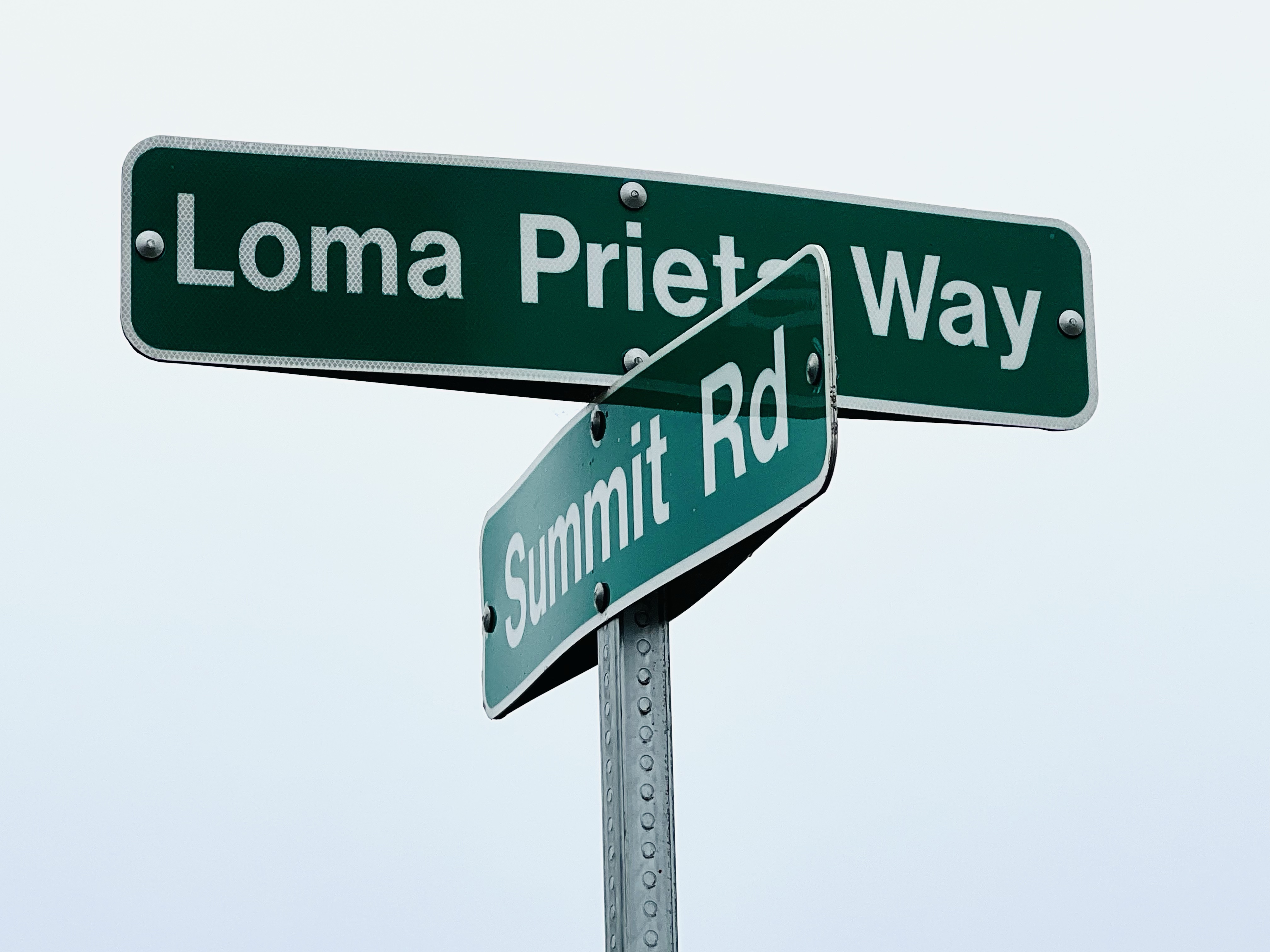
Early on a Saturday morning, Grasshopper and I headed up on winding Summit Road. Our birding destination the Bay Area birding hotspot: Loma Prieta and the “Saddles”.

About 10 miles in from Highway 17 the road devolves into a pock-marked rural ramble as it threads its way over the spine of the summit, defining the line between Santa Cruz and Santa Clara Counties. Near the junction with Loma Prieta Way the asphalt ends entirely and the graded dirt begins.

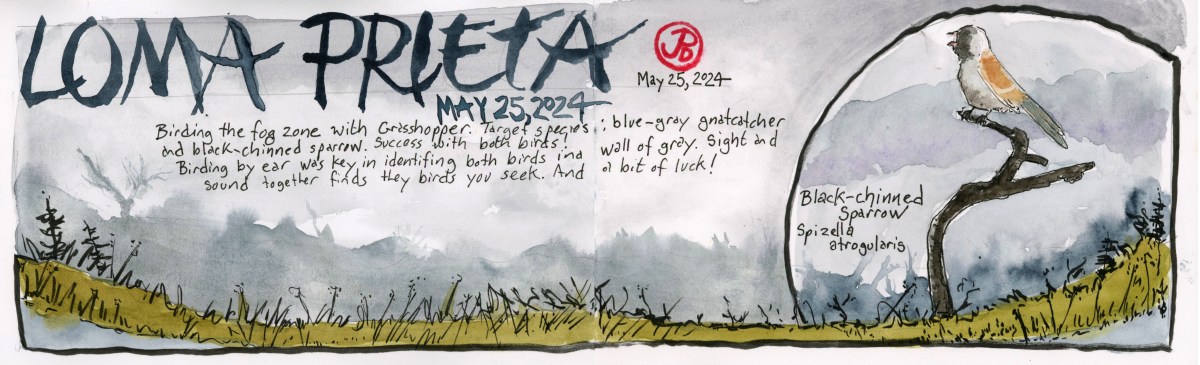
We parked in the dirt lot, light drizzle covering the windshield. This didn’t look like great birding weather. Wet, windy, with limited visibility. Would be able to pick out a blue-gray gnatcatcher or a black-chinned sparrow in these conditions? Both would be lifers for Grasshopper. And it was my goal to get him life birds number 321 and 322.

Grasshopper looking at water droplets.

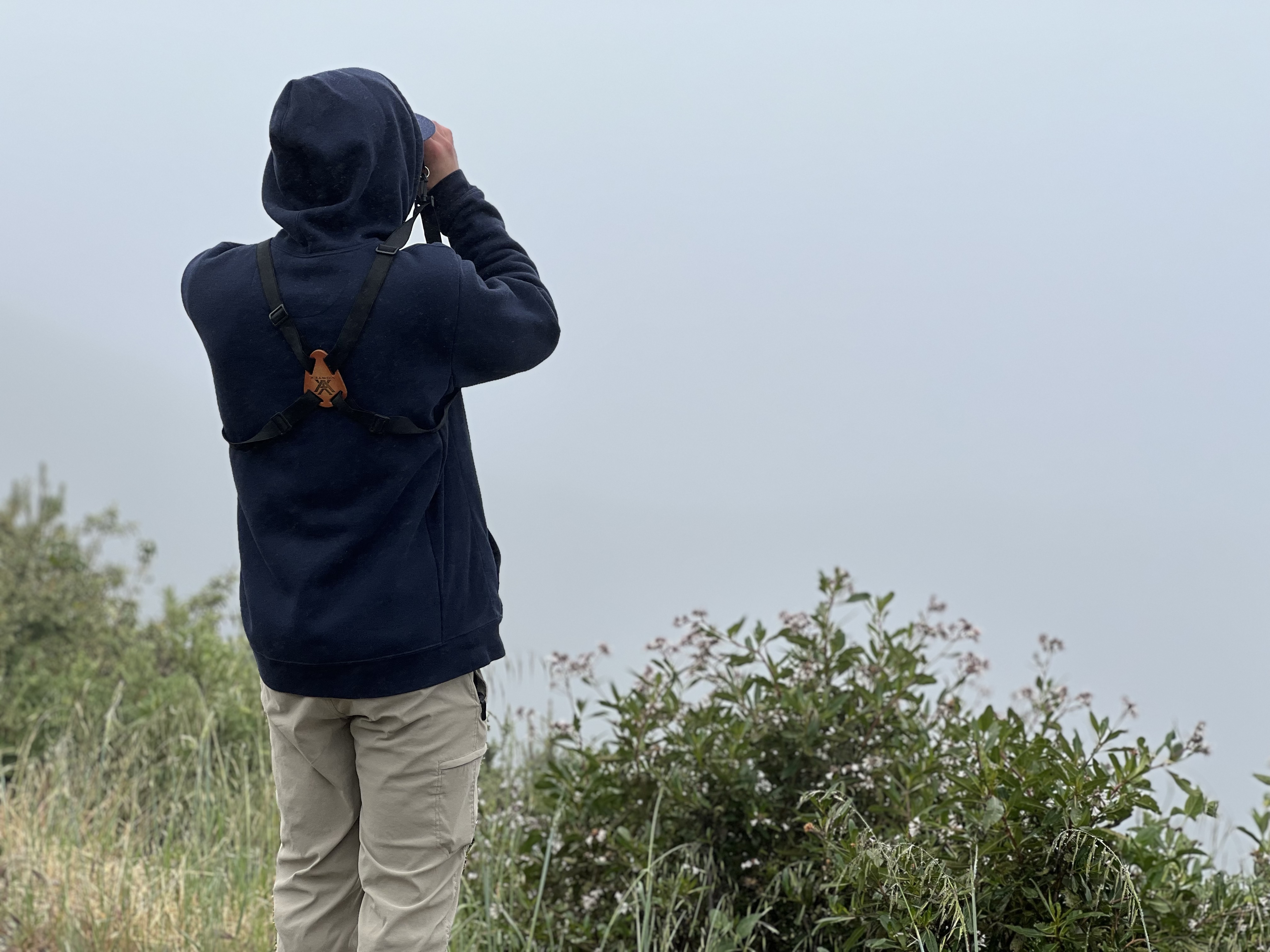
We got out of the car, geared up, and surveyed the wall of grey to the west. I had a feeling we would be birding by ear, something Grasshopper can always get better at.

We headed down Loma Prieta Way stopping and listening as we went. Wrentits, spotted towhees, a far off California quail but none of our target birds, so we walked on. Luckily the damp, windy weather did not stop the birds from their spring songs.

After we were about a quarter of a mile down from the parking lot I heard something different, a cat-like mewing on the upslope. This was not the fooler Bewick’s wren (who had almost fooled me a few yards back) but one of our target birds!

Now we needed to get eyes on it. The younger eyes of Grasshopper found it out on a tree branch: blue-gray gnatcatcher!

After getting so-so looks of the energetic gnatcatcher, we headed a little further down and I first heard our second target bird far up the hill. An accelerated bouncing ball of a song.

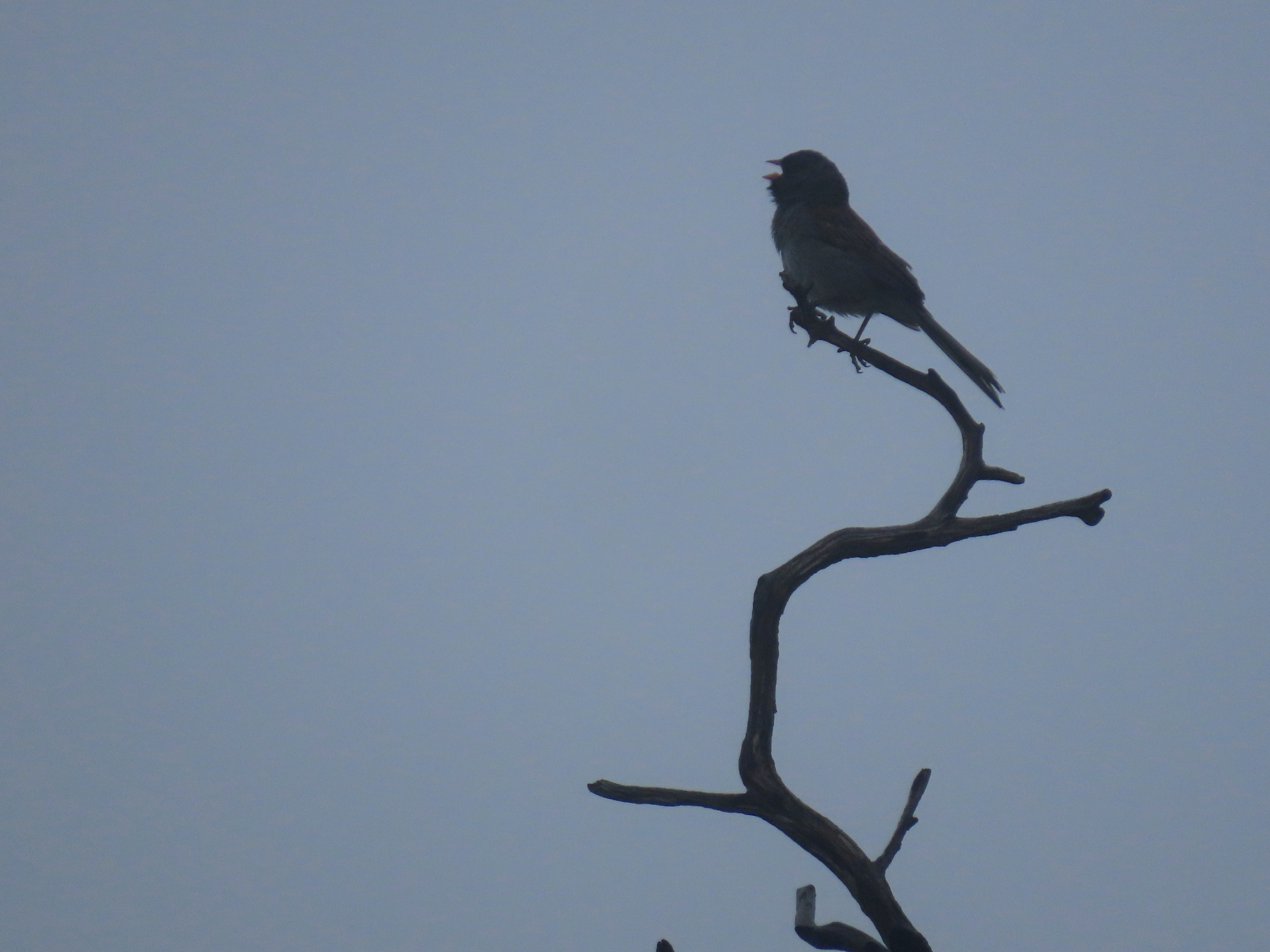
I willed the bird down by saying a little prayer to the Birding Gods and soon enough the sparrow flew over the road and landed downslope on a charred snag. Our binos swung up and we enjoyed prolonged views of a singing male black-chinned sparrow!

The foggy silhouette of one of our main targets: the black-chinned sparrow singing on a burnt snag. The black-chinned is an early adopter of burnt out areas.

Lifer number two for Grasshopper!

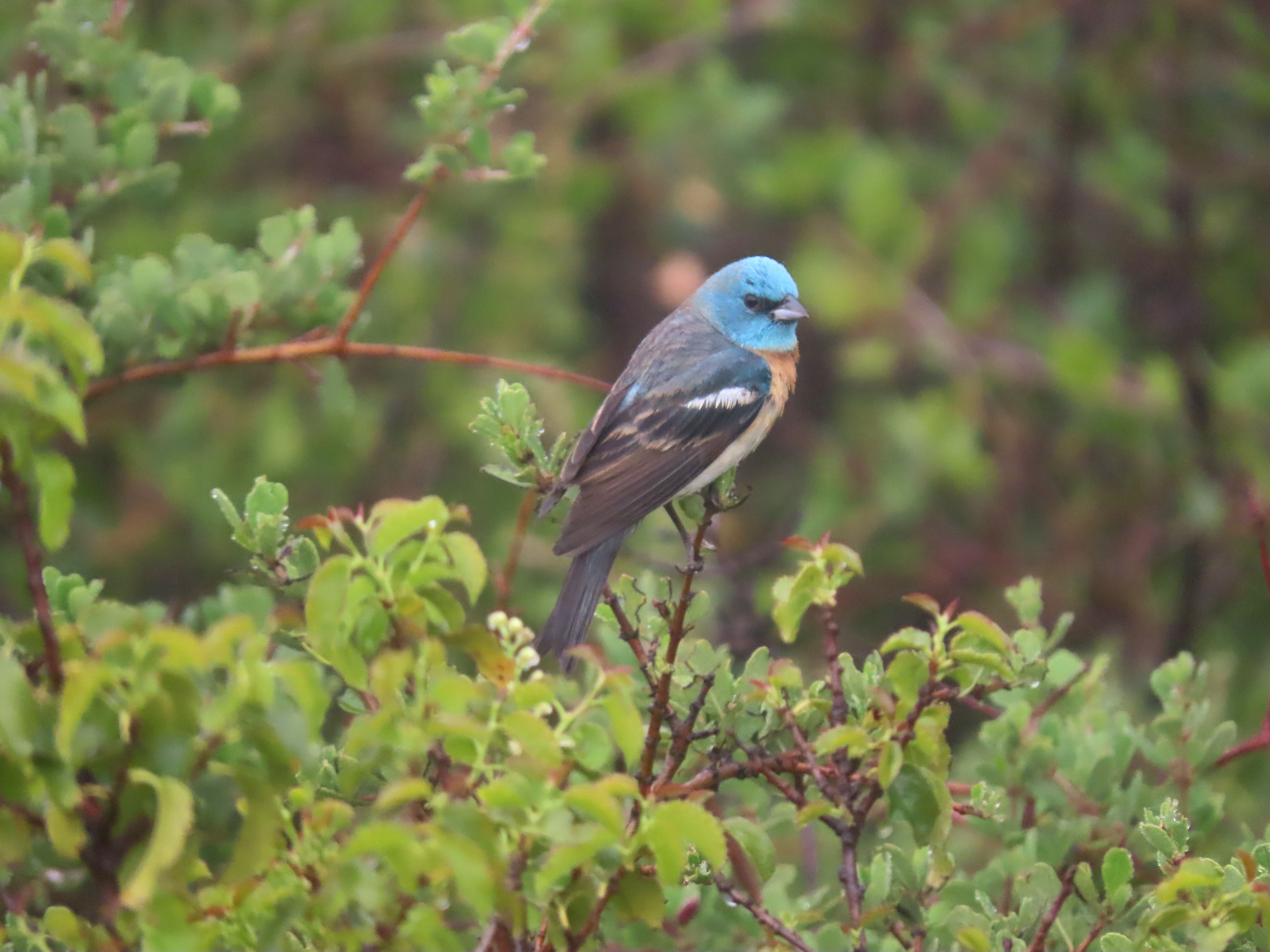
By this time we were coated with dizzily dampness and we headed back up to the parking lot. On the way up Grasshopper saw birds flying below the road. It was a pair of lazuli buntings! This is not a lifer for me or Grasshopper, but it has been a while since I have seen or heard this neotropic migrant.

A stunning male lazuli bunting. I never get tired of seeing and hearing this bird.

This is why birding remains a passion for me. I’m still excited to see and hear birds that I have seen many times before but the excitement remains.

And so it will always remain.

Image

Montgomery at the Hiller

After sketching in Evergreen, I headed north up the Peninsula to San Carlos. My destination: the Hiller Aviation Museum.

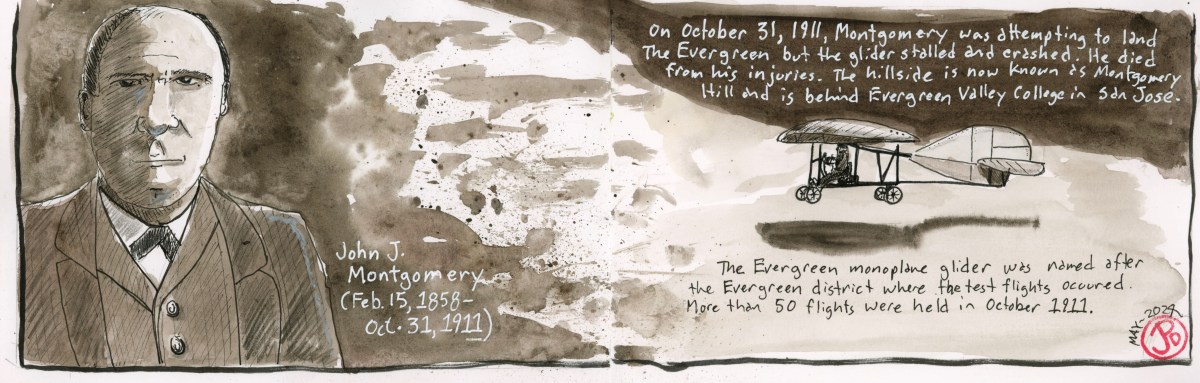
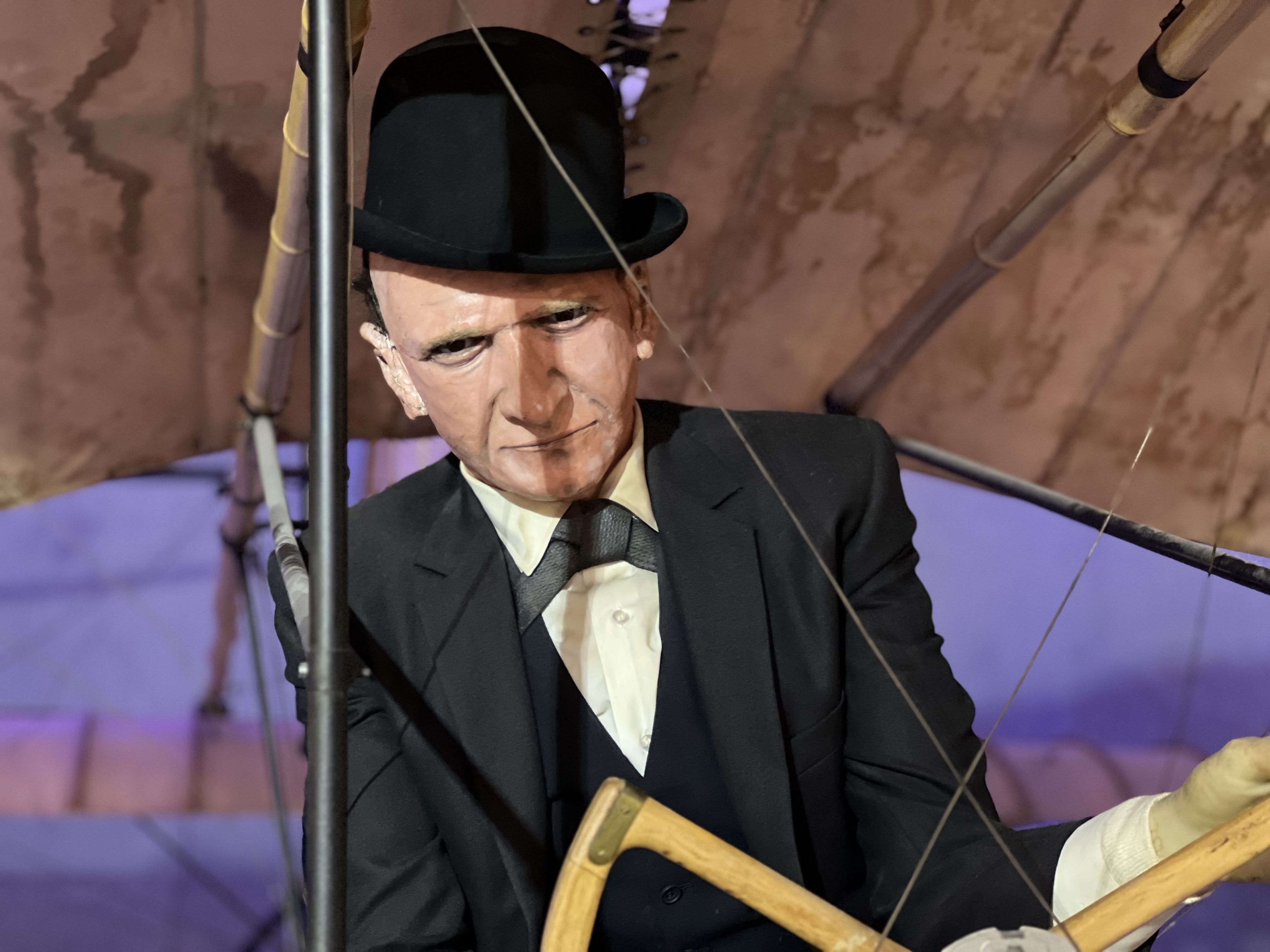
I was here to see and sketch three gliders and look at a plaque. The three gliders are replicas of the Gull, Santa Clara, and Evergreen, all designed by John J. Montgomery. Two are suspended from the ceiling and the Evergreen sits in a dark corner with a dubious mannequin, representing John Montgomery, sitting at the controls.

The odd mannequin of John Montgomery really looks like he’s three sheets to the wind!

The plaque sits off to the left of the replica of the Evergreen and mannequin. I have seen a plaque like this before, last fall in Roanoke, Virginia and also at the California State Railroad Museum in Sacramento.

The plaque in Roanoke honored the engineering achievements of Norfolk and Western’s J-Class No. 611. The plaque at the Hiller, by the American Society of Mechanical Engineers, designates the glider as an International Historic Mechanical Engineering Landmark. The plaque reads:

Montgomery Glider

1883

This replica represents the first heavier-than-air craft to achieve controlled, piloted flight. The glider’s design was based on the pioneering aerodynamic theories and experimental procedures of John Joseph Montgomery (1858-1911), who designed, built, and flew it. This glider was way ahead of its time, incorporating a single parabolic, cambered wing, with stabilizing and control surfaces at the rear of the fuselage, with his glider’s success, Montgomery demonstrated aerodynamic principles and designs fundamental to modern aircraft.

The plaques placement is a bit unfortunate because it actually refers to the Gull, which hangs above and not the Evergreen (the curator I talked to admitted that this part of the museum has been neglected).

John Montgomery was a true Californian, born in Yuba City. He was many things in the Golden State: inventor, pilot, engineer, physicist, and a professor at Santa Clara University.

He studied the soaring flight of hawks, eagles, pelicans, turkey vultures, and gulls around San Diego Bay and further inland and then tried to design his gliders influenced by nature’s own design. He referred to birds as, “tutors in the art of flying”. Montgomery put this understanding the flight of birds with creating a heavier than air glider this way, “It has always seemed to me that the secret of aerial navigation lay in the discovery of the principle of bird’s flight.”

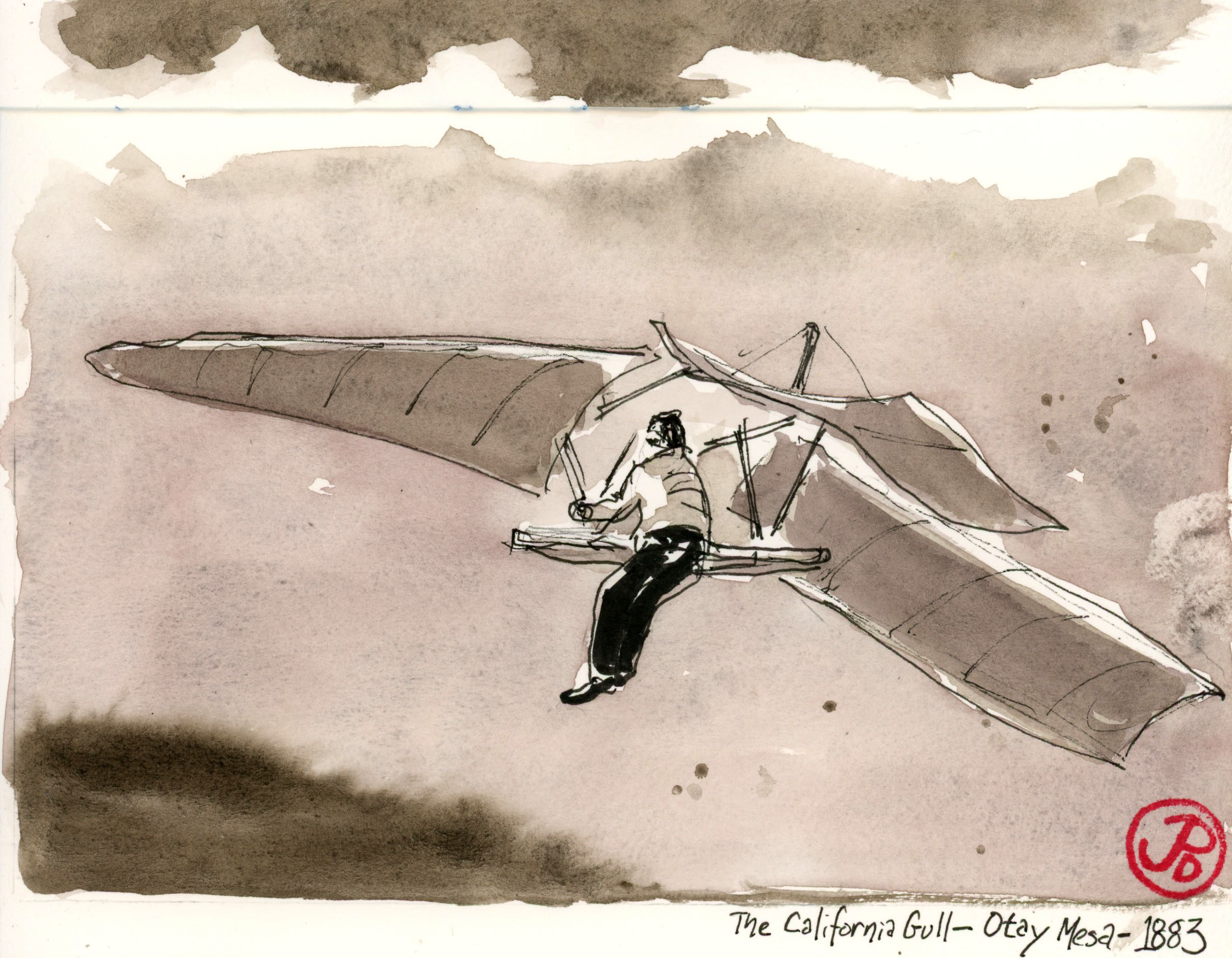
In 1883 the flying professor made pioneering flights near the Mexican border at Otay Mesa. His flights lasted up to 600 feet. He had not yet learned how to design a glider that could soar upwards like a turkey vulture.

Here he flew the Gull, the replica now hangs in the Hiller Aviation Museum.

So I did a loose sketch of the Gull.

I chose to sketched the Gull loosely with another mannequin of Montgomery (as a younger man) perched uncomfortably on the glider’s “saddle”. I left out all the other aircraft around it and used my artistic license to add the setting: Otay Mesa.