Image

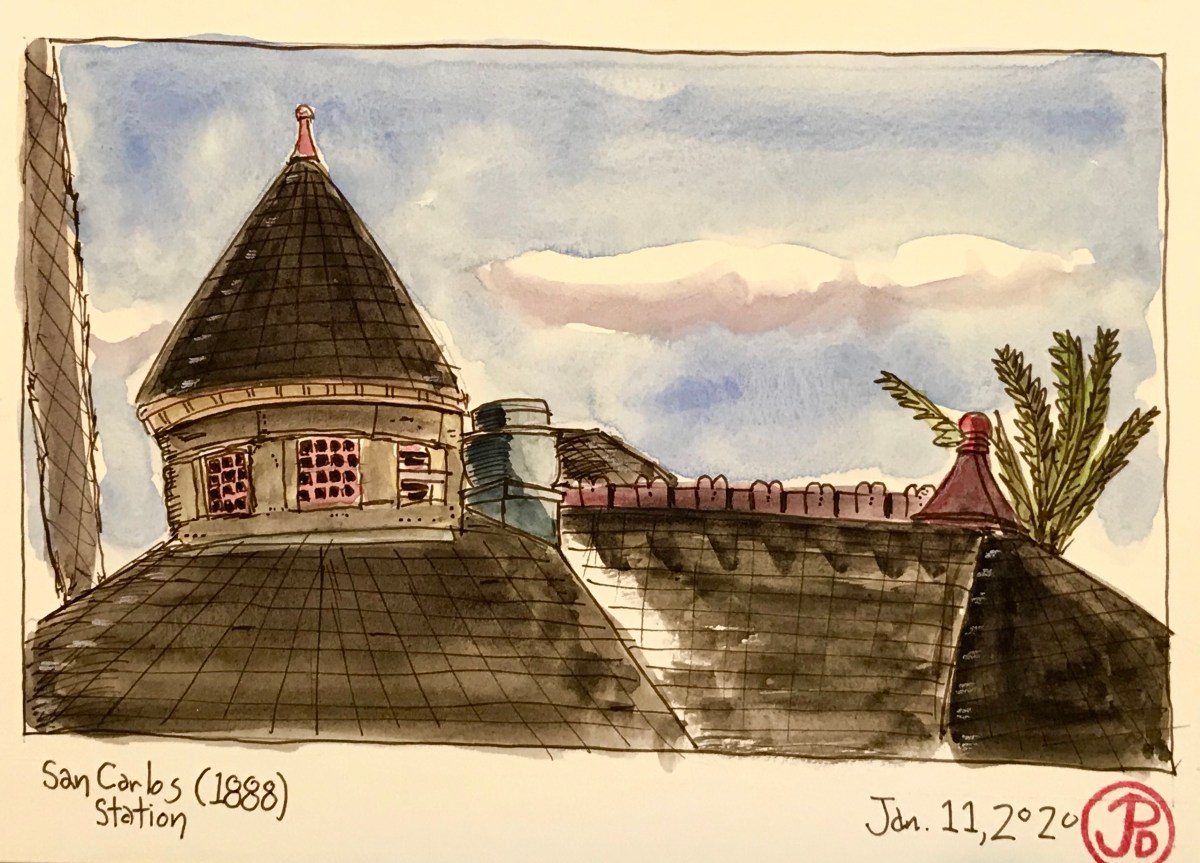
San Carlos Station

If there is any historic station on the line that has been truly marginalized by the march of modernity then it would have to be San Carlos Station.
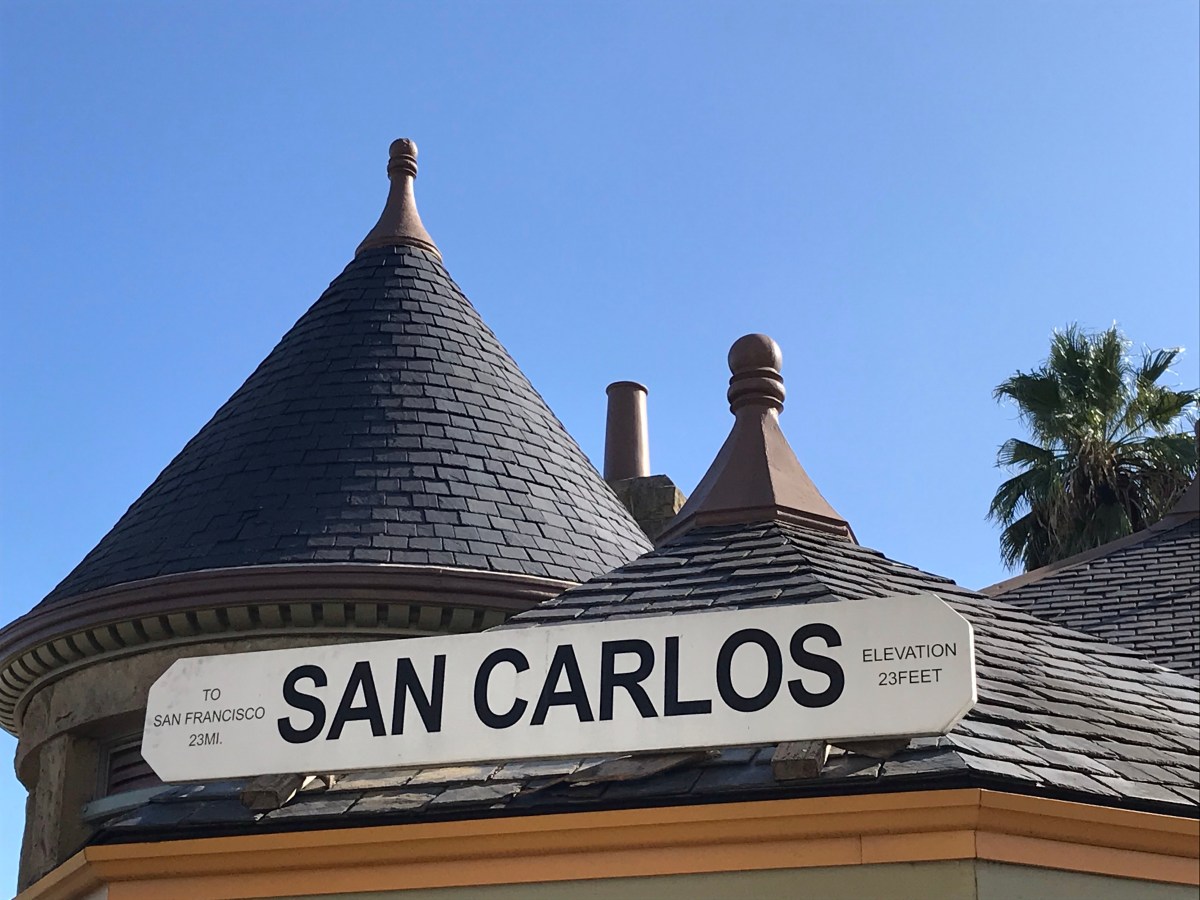
This beautiful and unique station looks like no other on the line. It was built in 1888 and is constructed with Almaden sandstone from Greystone Quarry in the Almaden Valley which echos the building material used at nearby Stanford University. The station is designed in an Richardsonian Romanesque style which is very unique for a railway depot in California. There are rumors that the architect that designed Stanford, Charles Coolidge, also designed San Carlos station.

The railway line has been elevated and the trains now tower above the station. There was a time when this distinctive station was the focus of the growing town of San Carlos but it has been hemmed in with the elevated railway to the east and the newly constructed residential buildings to the north and south.

Sadly this iconic station is in the shadow of all that surrounds it and speaks to the Bay Area in the 21 Century: over populated and addicted to cars.

It was hard to get a clear view of the entirety of the building because I couldn’t back up far enough without backing into the new residential buildings or having the conical tower disappear as I backed under the railway overpass. It felt a bit like the blind men and the elephant. I could only see bits of the station but never the whole thing.

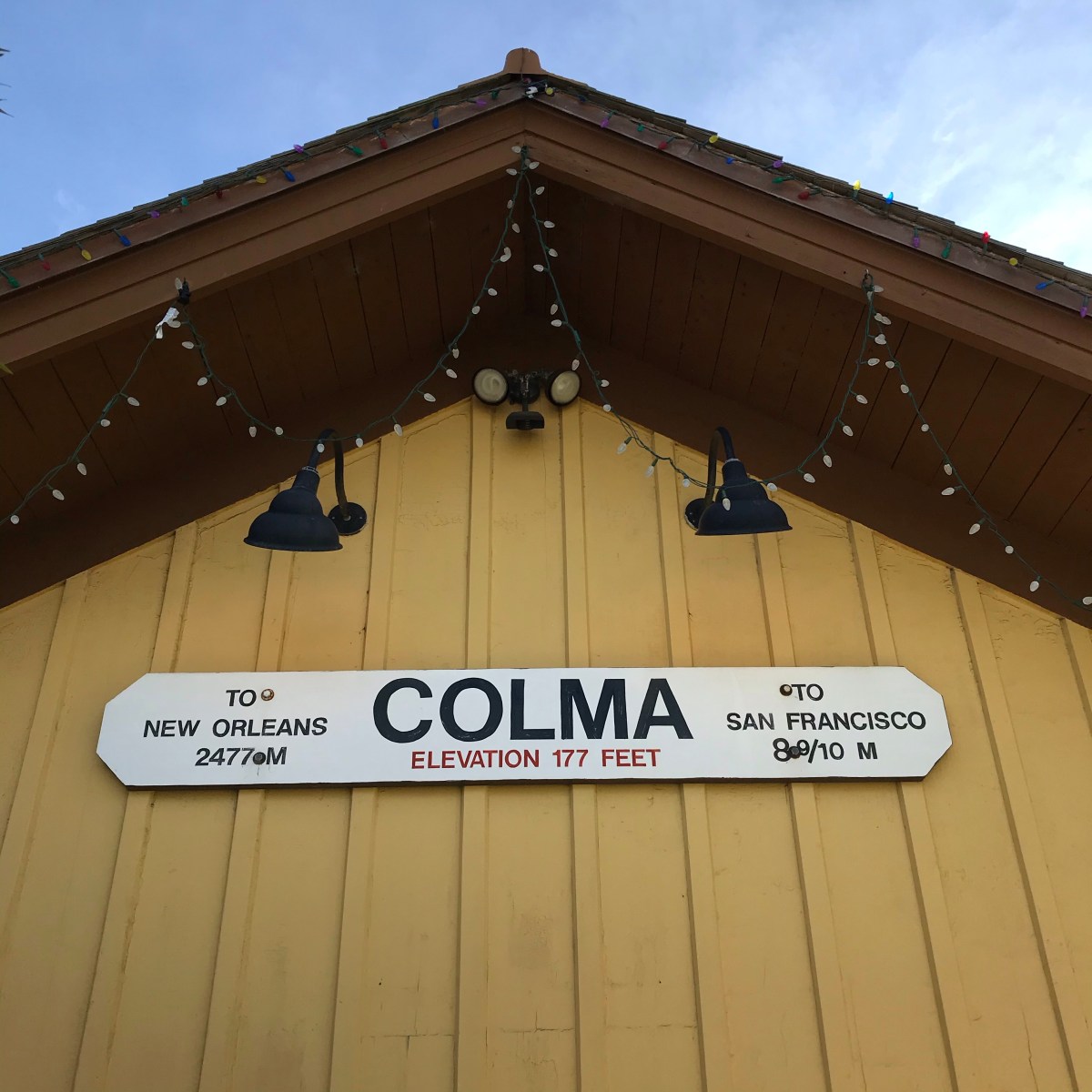
This station also represents what I have seen at Colma, Millbrae, and Hillsdale. They are all buildings that no longer function as a passenger railway depots. In other words they are just empty shells that no longer serve a purpose other than being a bookmark in historical time. They are there for those who read the passages of time and I am one of those.

The San Carlos Station has housed many things: a post office, a church, a library, and lastly, a restaurant. And this restaurant now is closed and the interior is stripped bare. Sad really, that this architectural gem should serve some purpose other than just looking nice.

The San Carlos Station is now surrounded on three sides. The towering new residential building to the left makes a weak attempt to echo the sandstone look of the station.
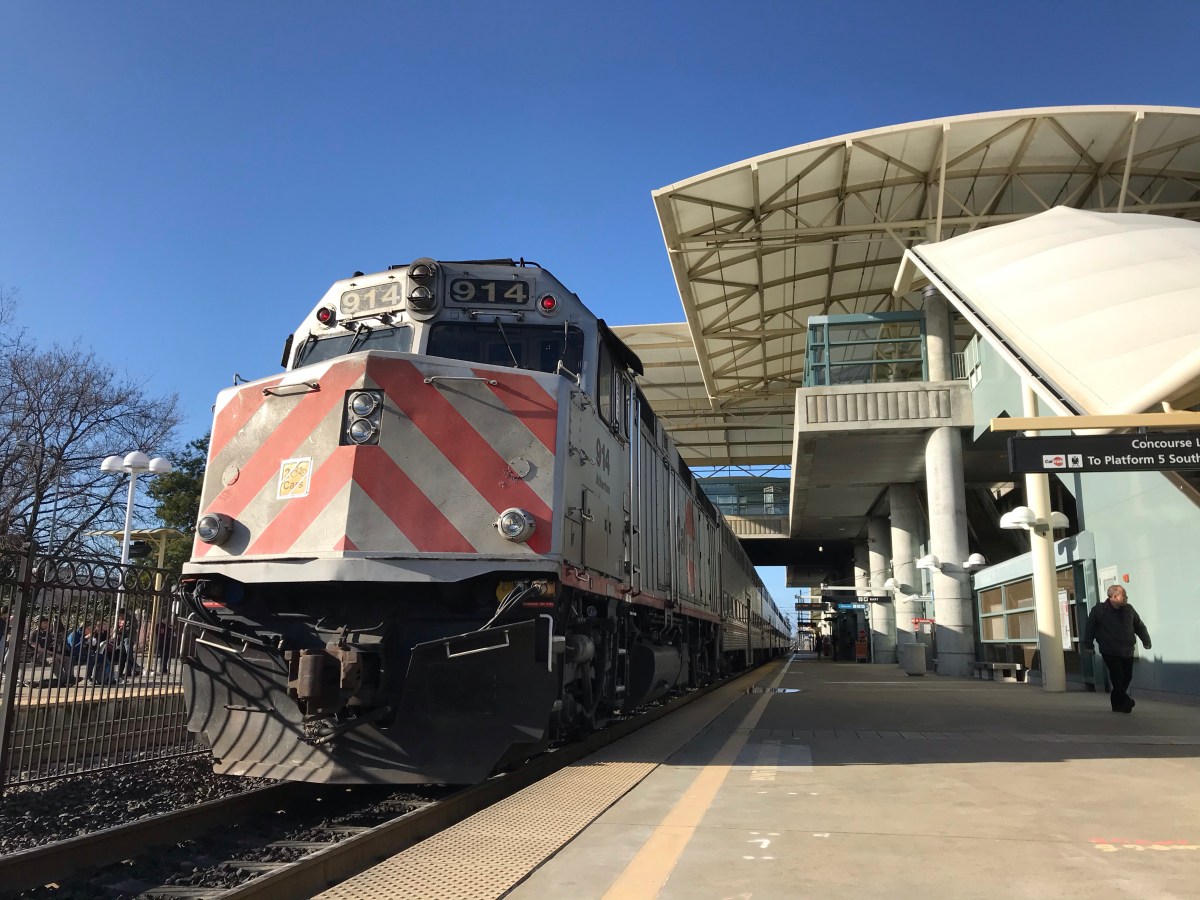
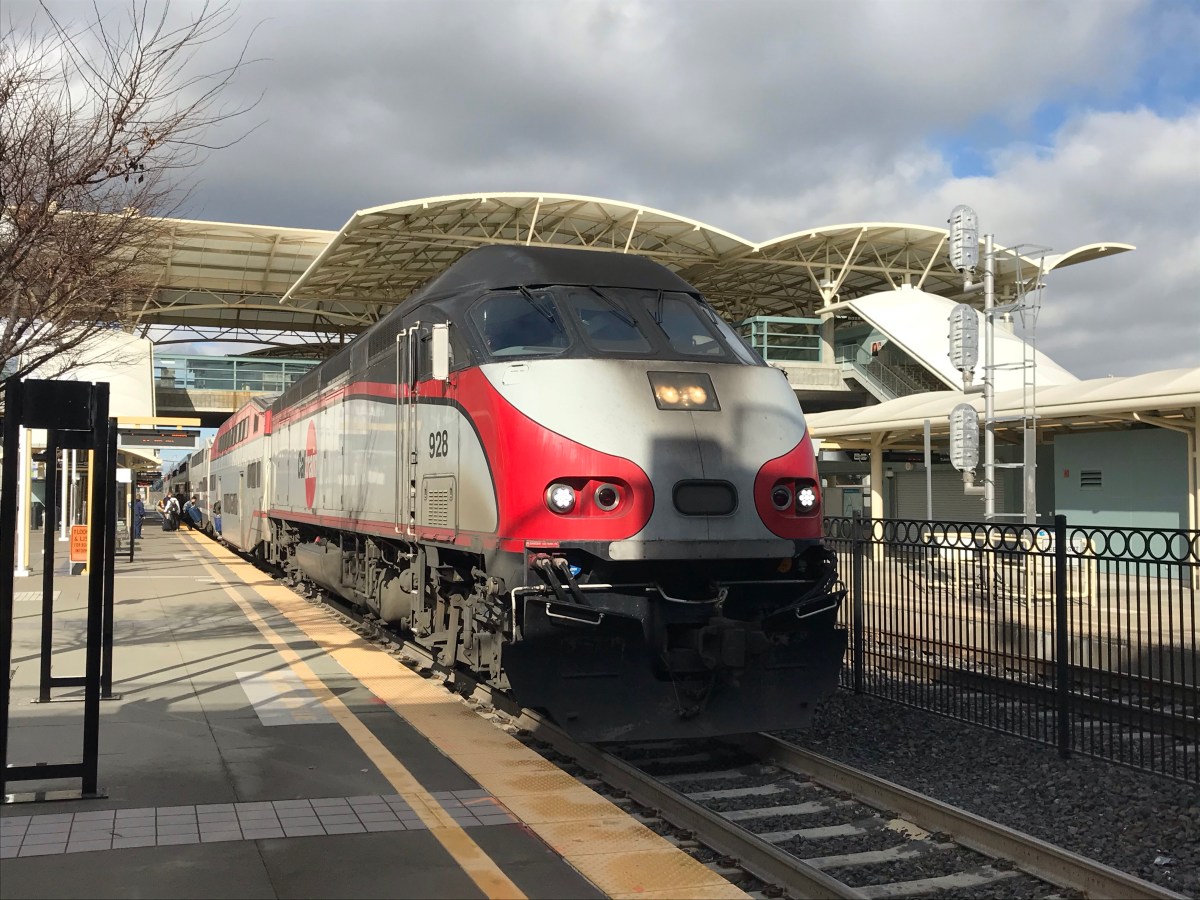
My northbound train heading to San Francisco from Millbrae Transit Center. Don’t let it fool you, this is the end of the train, the diesel engine is pushing the train north. I was going to take BART to Daly City with three sketches in my bag.
Image

Burlingame: “The Prettiest Station on the Line”

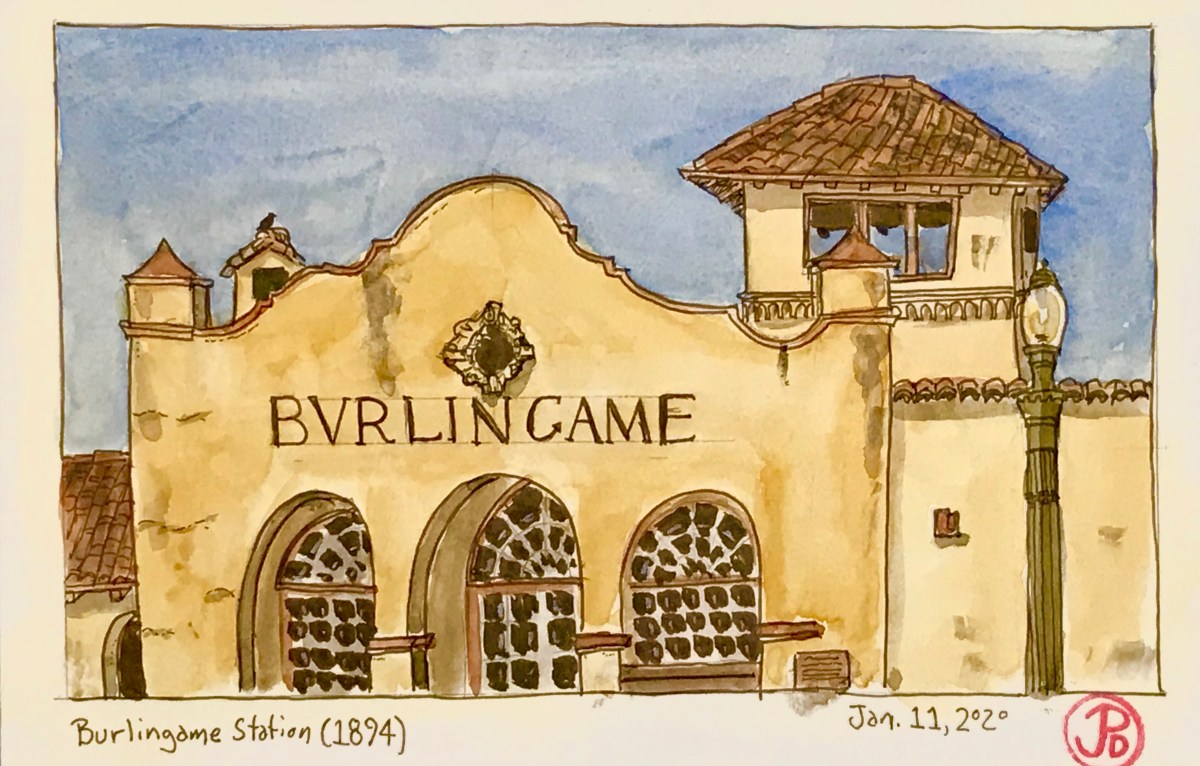
Burlingame Station was the station I looked forward to sketching the most out of all the depots on the line.

It is certainly one of the most architecturally interesting stations anywhere between San Francisco and San Jose. The station is the first permanent example in California of the Mission Revival Style; a look back to the 21 Spanish Missions that line the California Coast from San Diego to Sonoma. It’s style influenced other train stations in California including Santa Barbara, San Luis Obispo, and San Diego. The station building itself was designated a California Historic Landmark on March 29, 1971 (almost five months before I entered this world).

I had field sketched all 21 missions and was fluent in the architectural language of the missions, so the grade of my learning curve was flattened. In Burlingame I saw the tiled roofs, tower, arcades, and arches that defined the California Mission Revival Style. These elements are almost second nature to me because I had drawn many examples of them in the 21 missions. And who doesn’t love to draw an arch?

Burlingame Station was opened for service on October 10, 1894. And it was certainly a busy station in the heyday of rail service along the peninsula corridor. On a weekday in the late 1930s, 33 passages trains passed through Burlingame station each way. This included the Lark, Sunset Limited, Del Monte, Daylight, and Coaster which where all long-distance trains as opposed to the local commuter trains that took passengers from San Francisco to San Jose.

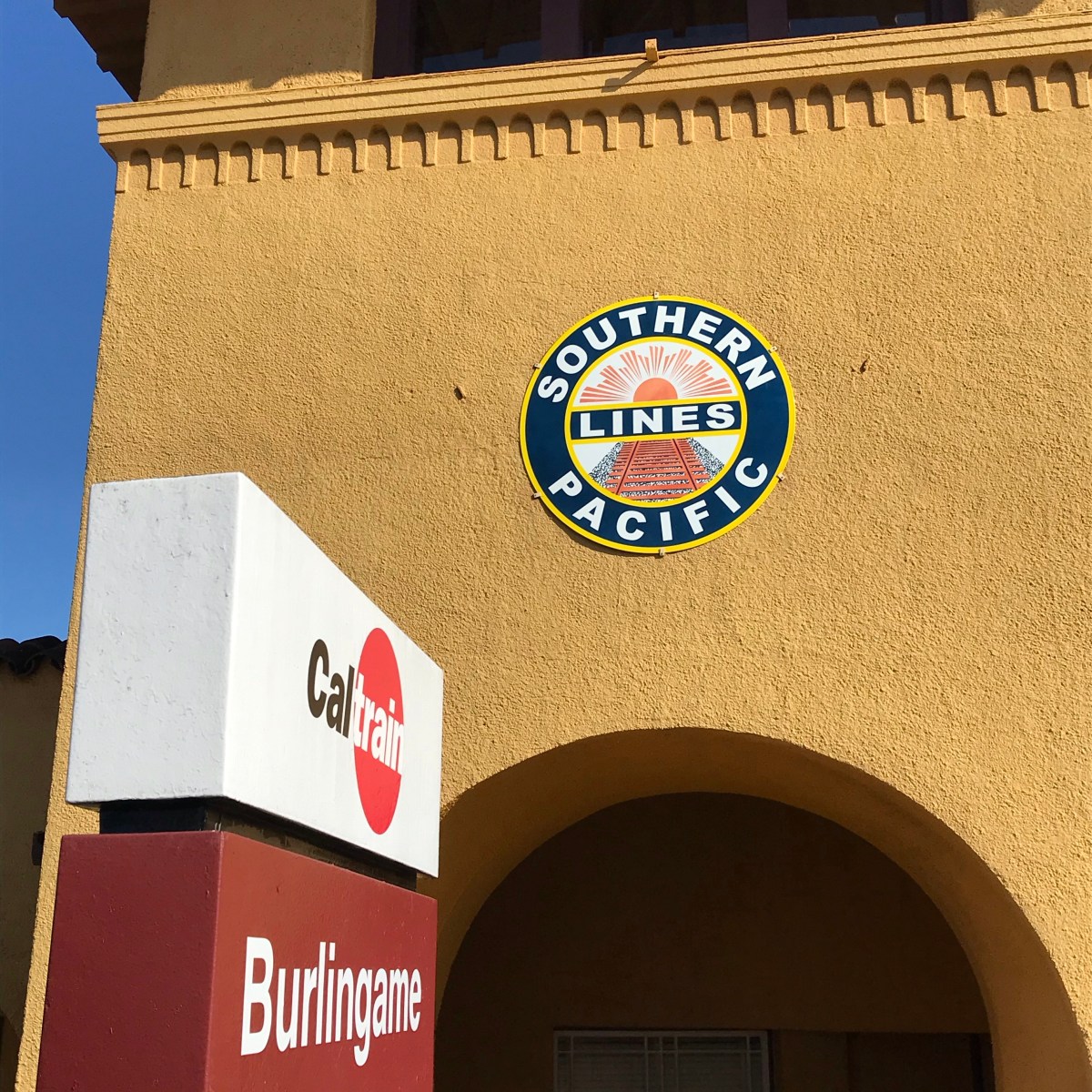
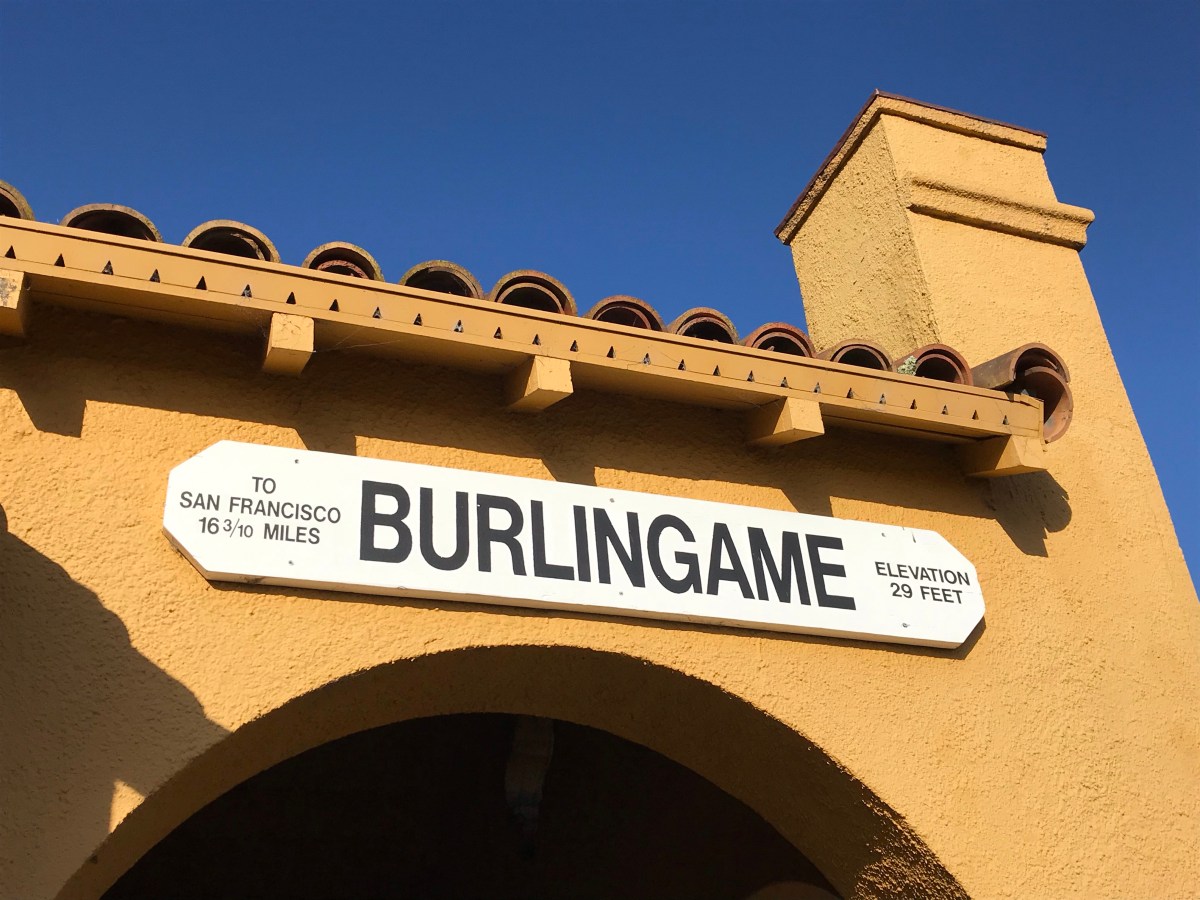
The old and the new. In the foreground is the Burlingame Caltrain sign and on the tower is the round shield of the mighty Southern Pacific Railroad. SP operated from 1865 to 1996.

As a comparison, the current passenger railway traffic through Burlingame is about 92 weekday trains with a weekday ridership of about 65,000 passengers. Burlingame Station is very much an active station with tracks running right in their original position and grade.

On a Saturday morning I took BART to the Millbrae Transit Center and then transferred to a southbound Caltrain. After a short ride, I got off at the train’s second stop, Burlingame. Once the train pulled out of the station, I crossed the tracks and set up my sketching stool on the opposite platform.

While I was sketching a young boy and his father had biked over to watch trains. They reminded me of my own father and told of a little touch of sanity in this insane world. The seven year old boy stood in front of me watching me work. “I draw trains!”, he announced with the candor and fearlessness of youth. I told him I also draw trains and train stations.

He then turned his attention to the train tracks and he looked both north and south along the line for the tell-tale headlights of an approaching train. There were none. Caltrain was operating on a weekend schedule which means less trains. The boy wanted to wait, until eternity if need be, for the next train to coast through Burlingame Station. This also reminded me of my own love of trains and it is always special to see a working train on the line. His father finally shepherded his son back home and he thanked me for sharing my sketch.

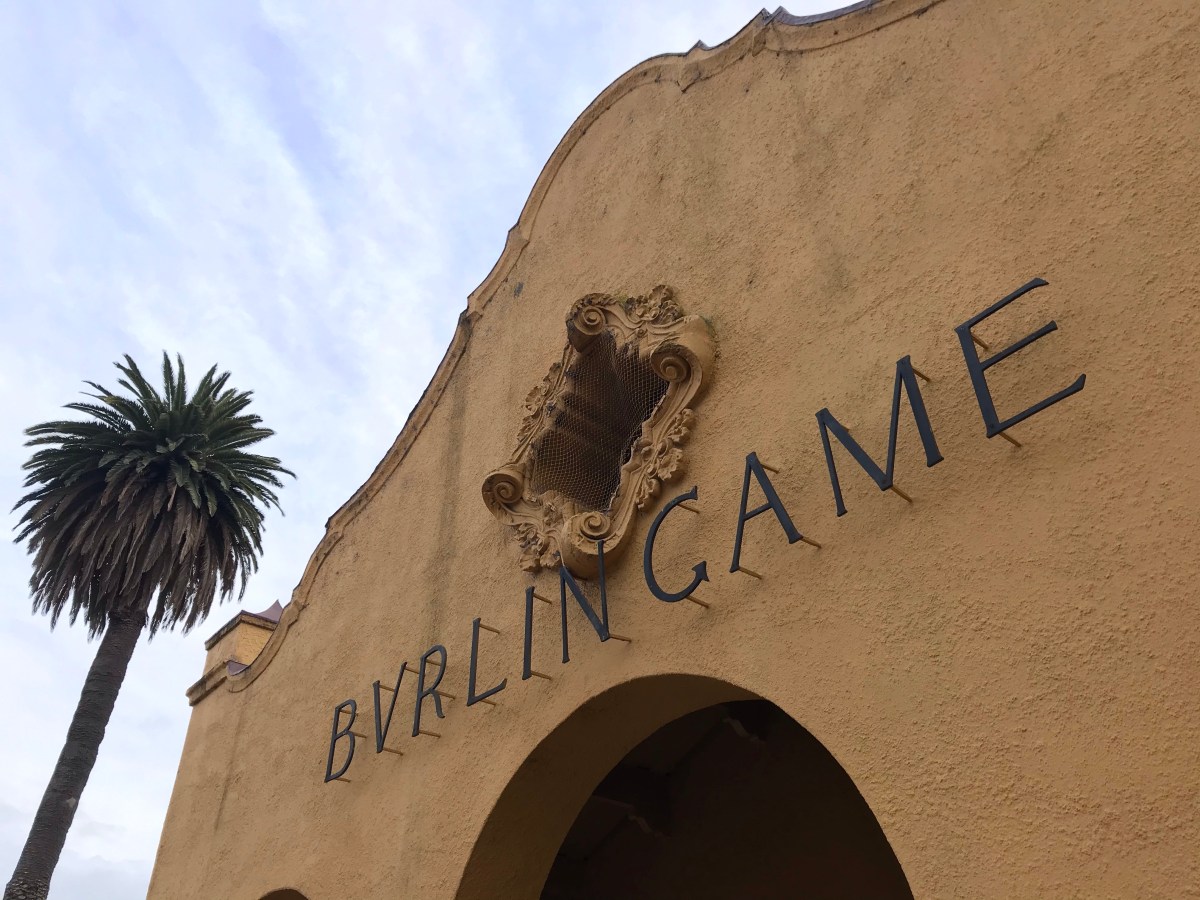
A little accent from Baja California, palm trees and Spanish arches.

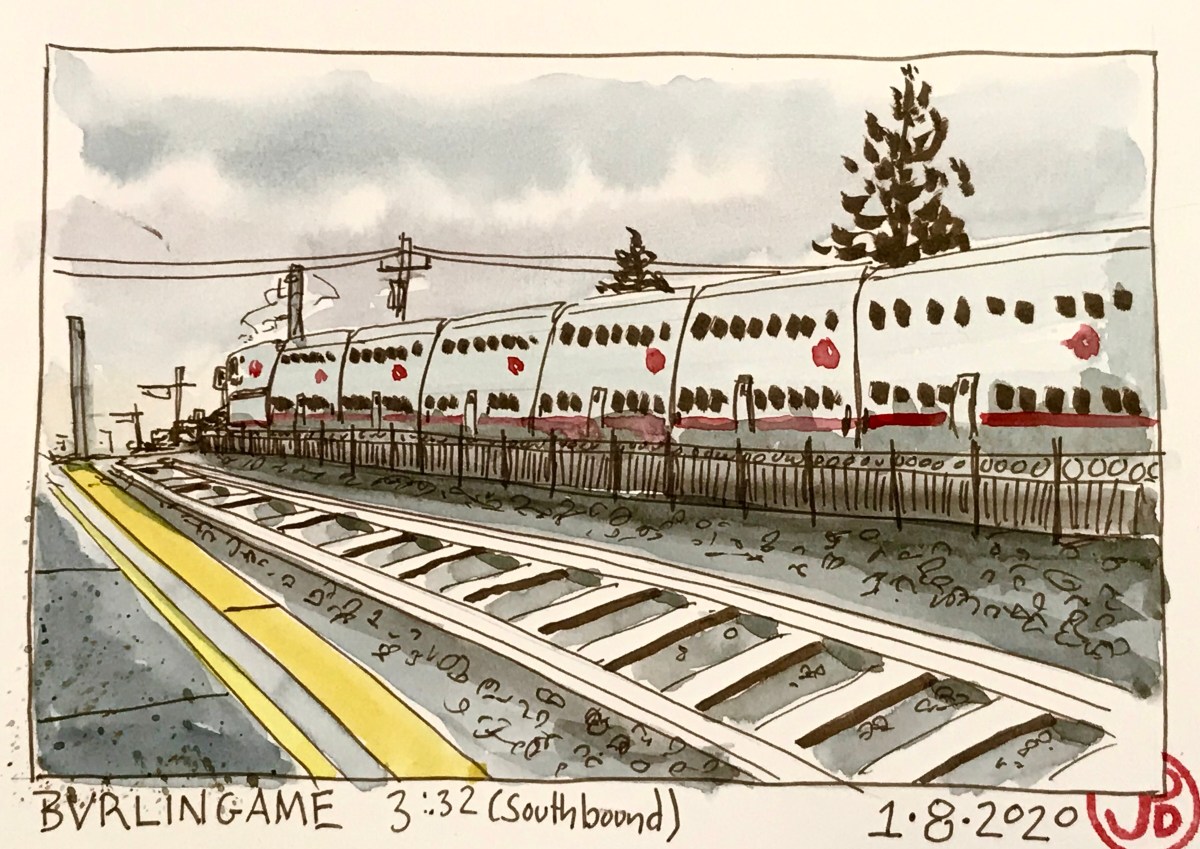
An after work sketch at Burlingame Station. I had less then two minutes to roughly sketch this southbound train before it departed toward San Jose. Once I got the perspective correct, I added other details long after the train had left the platform. I put in the things that where still there: the platform in the foreground, the northbound tracks, trees, and power lines and towers.

Image

17 Mile House, Millbrae Depot

The first historic San Mateo County railway depot on the mainline is 17 miles south of San Francisco in the town of Millbrae (hence the name 17 Mile House).

Millbrae has become a large transit center serving the San Francisco International Airport (SFO) where Caltrain, samTrans, and Bart Area Rapid Transit (BART) meet. The station at Millbrae has been redeveloped and the historic station has been moved, about 200 feet from it’s original site and is little further south down the main line.

Sadly, like the station at Colma, Millbrae’s station no longer serves the purpose for which it was originally designed and built. It last served as a passenger station in 2003 (the year the new transit center opened).

A southbound “Baby Bullet” train pulls into the 2003 transit center at Millbrae. The historic station is about 400 feet behind me.
Millbrae’s historic depot was not the first to be built. The first station was an adobe structure completed in 1864. The banker Darius O. Mills, donated the land so a station could be built on the railway line. He wanted his friends from San Francisco to be able to come and visit his Happy House estate.

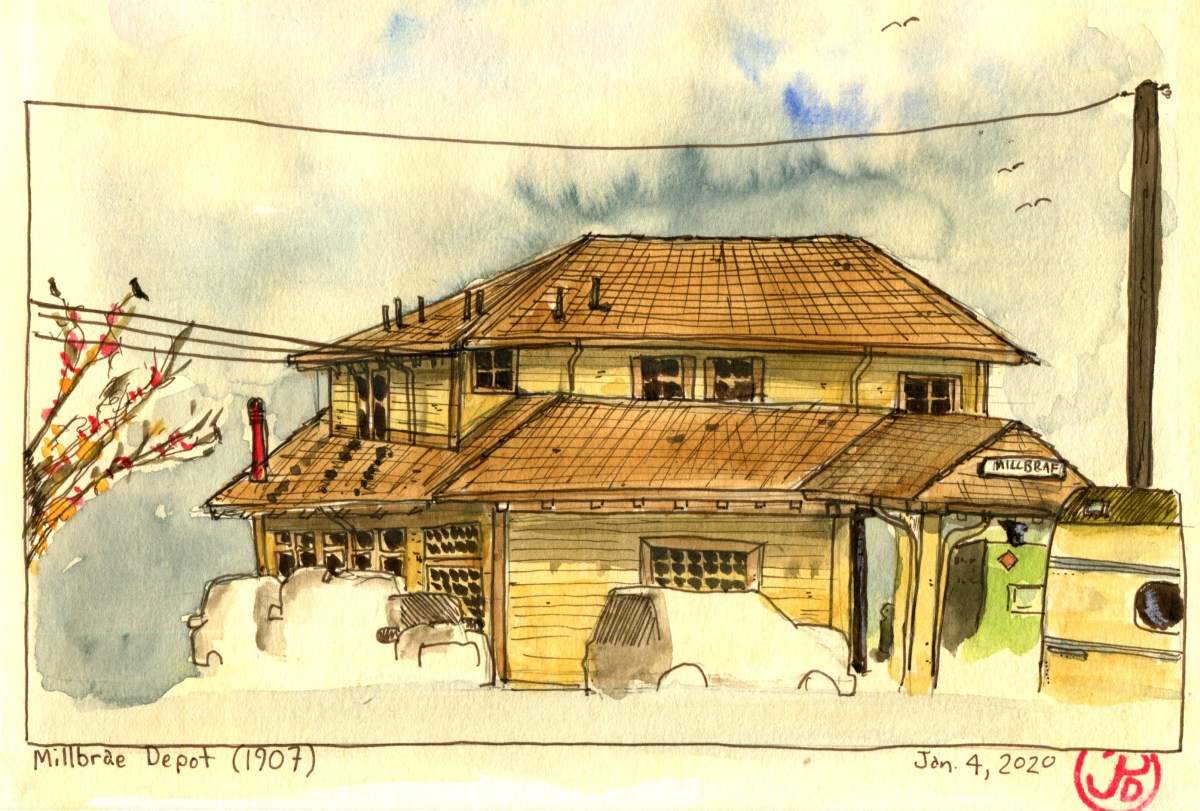
That first depot burned down. And a second depot was built, and in 1906, that too burned down. Now while this true story does bear a slight resemblance to the fable , “The Three Little Pigs”, the final structure, built in 1907, did not burn down but has survived now for over 110 years.  This station, unlike the Pig’s house that stood, was not built of bricks, but of wood.

The current depot has a two-story core with two wings, both north and south, that parallel the rail line. The wing to the north is the passenger waiting room and the wing to the south is the baggage room while in the middle is the telegraph and ticket office. The 700 square foot second story was the living quarters for the station master and family.

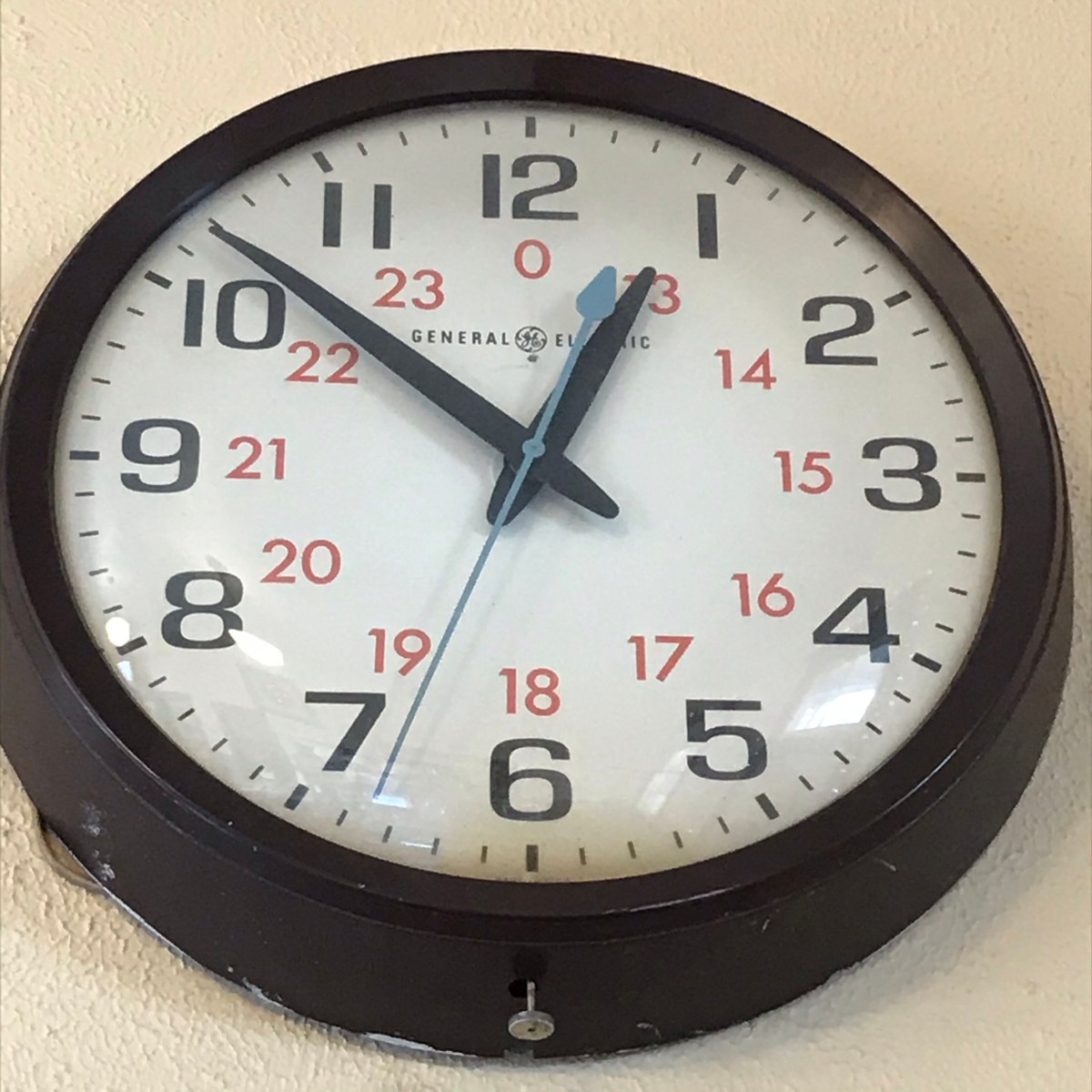
The original clock used in the passenger waiting room when the depot was closed. The inter ring of red numerals show 24 hour time, the time of all railroads.

The architectural style of this depot was very much influenced by the then president of the Southern Pacific, E. H. Harriman, who controlled the look of the railroads from the engines and passenger cars and the depots. The architectural style is said to be Colonial Revival.

What almost destroyed this station (the Big Bad Wolf if you like), was Southern Pacific Railroad who, in 1976, wanted to level this beautiful building and, you guessed it, put up a parking lot.

The Millbrae Historical Society stepped in (and stepped up) and saved this depot from oblivion. It was declared a National Historical Landmark in 1978. In 1980, the depot was moved 200 feet south to it’s present location, still on the mainline and still a witness to the passage of rail traffic.

A southbound train passing Millbrae’s historic railway depot, on its way to San Jose.
Image

The Ghosts of Hillsdale

As I was about to leave the Millbrae Depot, Peter, the docent, told me I should go and draw the Hillsdale Depot sometime before Monday. And it was now Saturday afternoon. “Why the rush?”, I wondered.

The reason he thought I should make haste to the depot was that it was going to be demolished, starting on Monday morning!

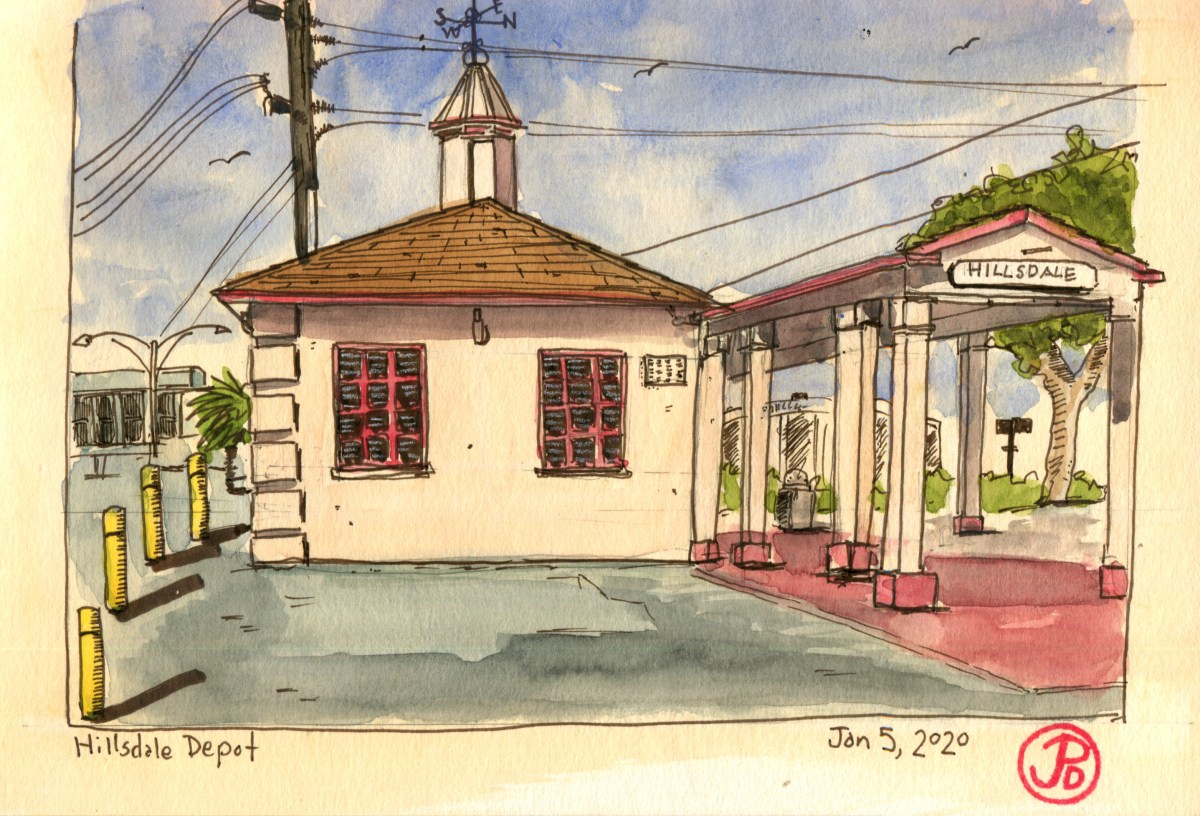
Hillsdale was not on my list of Historic Depots. It was true that it was squarely in San Mateo County, but the depot didn’t meet my criteria for age or architectural merit. The small depot, containing a ticket office and a tiny passenger waiting room, was built sometime in the 1950s. The building has a cupola topped by a weather vane, something I might imagine at Churchill Downs, an architectural reference to Hillsdale’s proximity (about half a mile south) to Bay Meadows Racetrack.

The racetrack was the longest running thoroughbred track in California. It opened in November of 1934 and was in continuous use until it’s last race on August 17, 2008. Many famed horses and jockeys raced here including Seabiscuit and Bill Shoemaker. It was demolished and housing was put in it’s place.

A southbound train on the main line, pulls into Hillsdale Station. The old station, on the left, is no longer near the railway which now has been raised above the station.

At Hillsdale, the mainline no longer passes in front of the platform. The tracks are now to the east and up a rise. The tracks were regraded and raised to cross over Hillsdale Boulevard. The grade separation project eliminates grade crossings (the intersection of automobile roadways and rail) and is part of a major transit development project which will move Hillsdale Station further north, near where the former race track lay. Hence the reason the older depot is now redundant and soon will be a few more spaces in the parking lot.

Engine Number 900 “San Francisco” pulls into Hillsdale Station.

I set up my folding camp chair on the south side of the abandoned station with a late morning winter sun at my back. I began to see the shapes and eventually, the beauty of the small railway station. As Zen sketcher Fredrick Franck noted, “I have learned that what I have not drawn I have never really seen, and that when I start drawing an ordinary thing, I realize how extraordinary it is.”

I also wonder about the memories and ghosts that have passed through or spent time in this station, the people who would have come to meet their loved ones on the platform as a commuter steam engine pulls into Hillsdale. The people who who worked here, perhaps the people met or fell in love here. The crowds returning from a race, either joyous or down on their luck. Or the young man who stopped to get a cup of coffee before boarding a northbound train to the City of Saint Francis.

All are silent now.

Corvidsketcher sketching in the parking lot of Hillsdale Station, the day before the building will be demolished. This may be the last drawing of the station while it is still standing.
Image

Railway Depots of San Mateo County

I’ve been wanting to do a sketch project of the passenger railway depots along the current Caltrain line; at least the stations that are architectural and historically interesting. Caltrain runs passenger service from San Francisco to San Jose (and further south to Gilroy). I wanted to narrow the project down to the existing depots in San Mateo County, the county where I am employed.

My own interest in railways and railway depots comes from my own childhood. I have very vivid memories of being on the back of my dad’s bicycle as we went down towards to the Southern Pacific tracks after work. My dad was a huge rail enthusiast having grown up riding the streetcars and trains of San Francisco. We would watch trains from the pedestrian walkway as they came in and out of the Sunnyvale Depot, dropping off commuters. We also took the train north to Palo Alto or San Francisco and I always loved the all too brief visits to each station. I also noted that not all stations were alike. Some depots have architectural merit while others were merely weather shelters where you can buy tickets.

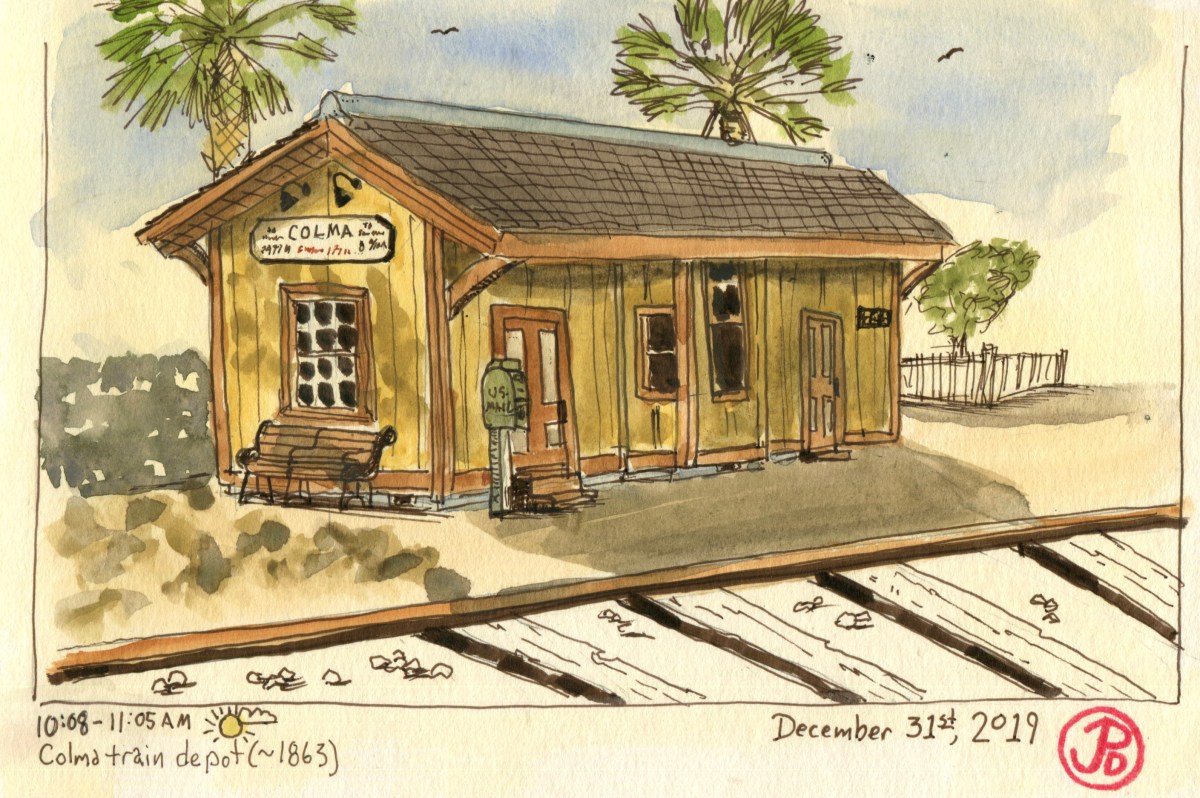
I wanted to start in the north and head south towards the Santa Clara County line. But I would not be starting on the current main line that runs along the eastern part of San Francisco and the Peninsula but the starting point for this project is a marooned station that is west of the main line. This station has been moved a short distance from its original location and now does not have any trains that stop at its platform. It is now part of a historical museum. This is the passenger depot in Colma.

The original mainline passed further west as it headed around San Bruno Mountain than it does today. The second stop, south of San Francisco County, which is in San Mateo County, was then called School House Station because of its proximity to the local one room schoolhouse. At the time this was one of 21 stations built between San Francisco and San Jose. The station was later renamed Colma.

In 1907 the Bayshore Cutoff came into service which straighten out the line to where the main line runs to this day. This new line left Colma off of the mainline like a rerouted highway, taking all the traffic away, leaving a ghost town in their wake. That may be appropriate because Colma is known for all it’s cemeteries. The number of dead in Colma, estimated at 1.5 million, outnumber the living. Hence the town’s motto, “It’s great to be alive in Colma!”

So I set up a sketching chair, readied my supplies, and started to frame in the railway depot. Here I really tried to get the perspective correct before I added pen or paint. This starting part of the sketch takes the most focus and concentration.

Another reason the Colma Depot was a good starting point for this project is that it was the oldest depot on the line, built around 1863, beating out the actual oldest station on the Peninsula mainline at Menlo Park, built in 1867.
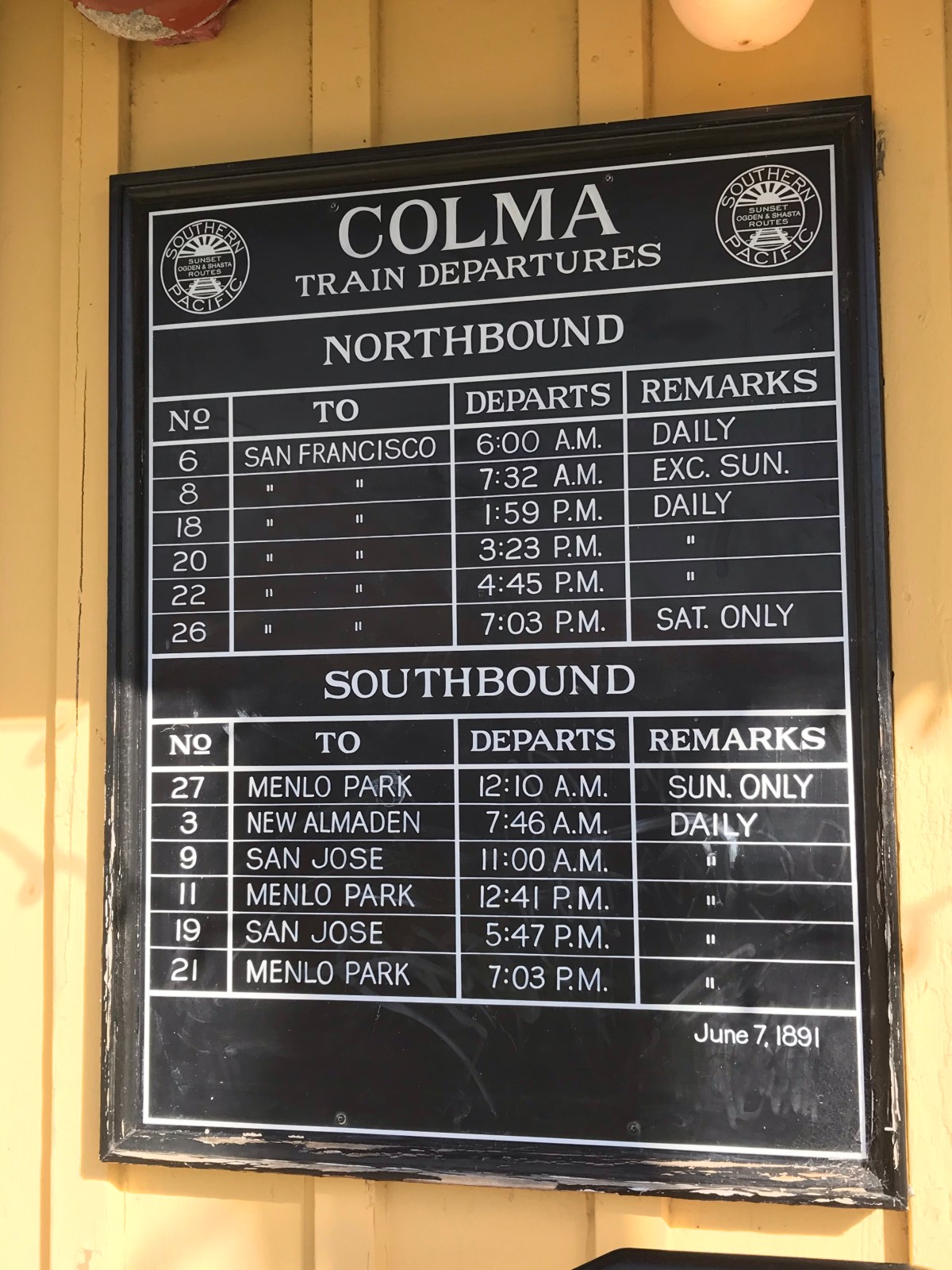
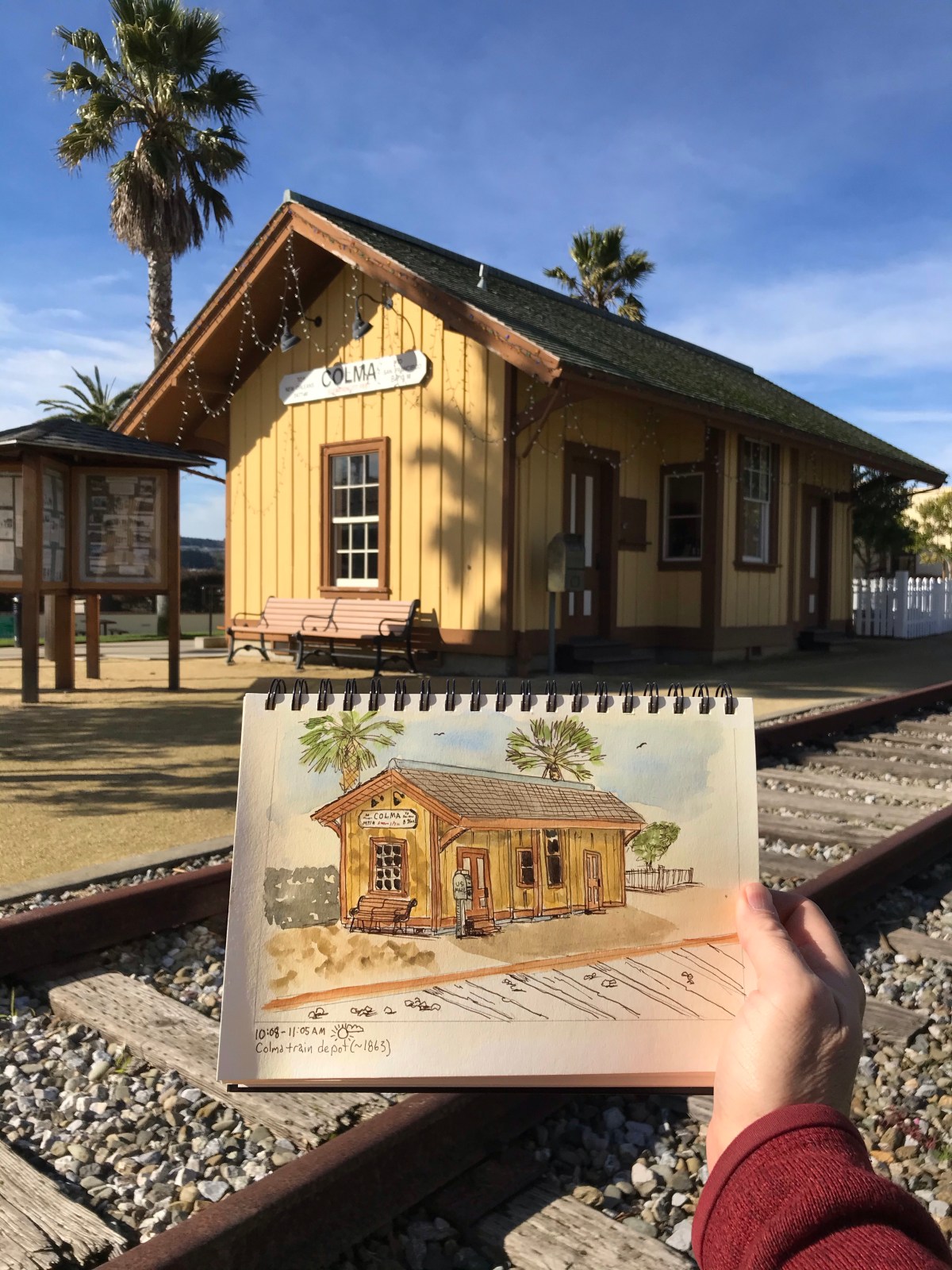
Starting with the Colma Depot was a bit of a cheat, because it is no longer an active depot nor is it on the main line. But because the river of rails have been diverted to the east leaving a pool that no longer flows to the sea, I felt it was important to start here, at least to get my feet wet. It was also helpful to start to learn the visual language of Californian train depots. It helps the eye see repeated patterns and forms when I move on to sketching other depots.

My next plan was to ride Caltrain from San Francisco down to all the historic stations in San Mateo County and sketch each one.

Sketch number one of this project is nearing completion. The rusted tracks in front of the station are just a short section. They go from nowhere to nowhere. Just like many of the visitors to Colma. Once they come here, they never leave.

Image

Harlequin and Rails

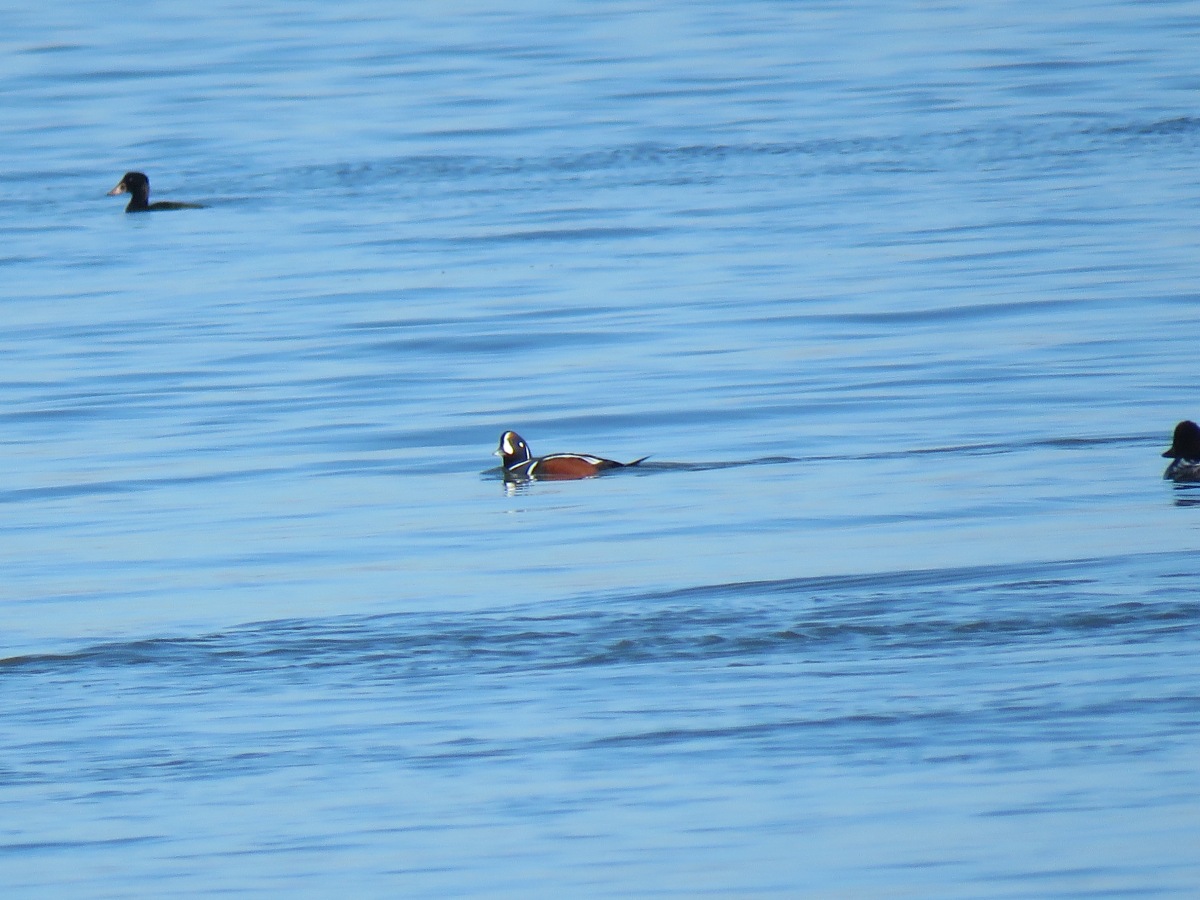
On a clear and calm Sunday morning, I picked up Grasshopper Sparrow to make our fourth and hopefully last attempt, to see the over wintering male harlequin duck at the Coyote Point Marina. We had perfect conditions with calms waters and the sun at our backs, now all we needed was a little luck and a lot of patience.

We walked out to the end of the path and started to scope the bay waters, picking through the hundreds of scoters and goldeneyes to find the one bird that really should stand out. A duck with bold white markings and a reddish side. I checked the waters to the south while I let Grasshopper’s young eyes scope the waters to the east, just beyond the breakwater.

“I got the harlequin!”, he announced shortly afterwards. Of course he did. I looked though the scope and the bird had disappeared under the waters, which is no surprise because it is a diving duck. I asked him what the duck looked like.

“A harlequin duck!”, I told him that description wouldn’t cut it in the birding world and pressed him to recount details. He described the white facial patterns and colored sides. And just the confirm himself, the harlequin returned to the surface and I was able to get great views in amazing light.

IMG_9509The Bay Area rarity was finally ours. Male harlequin duck just beyond the breakwater at Coyote Point Marina.
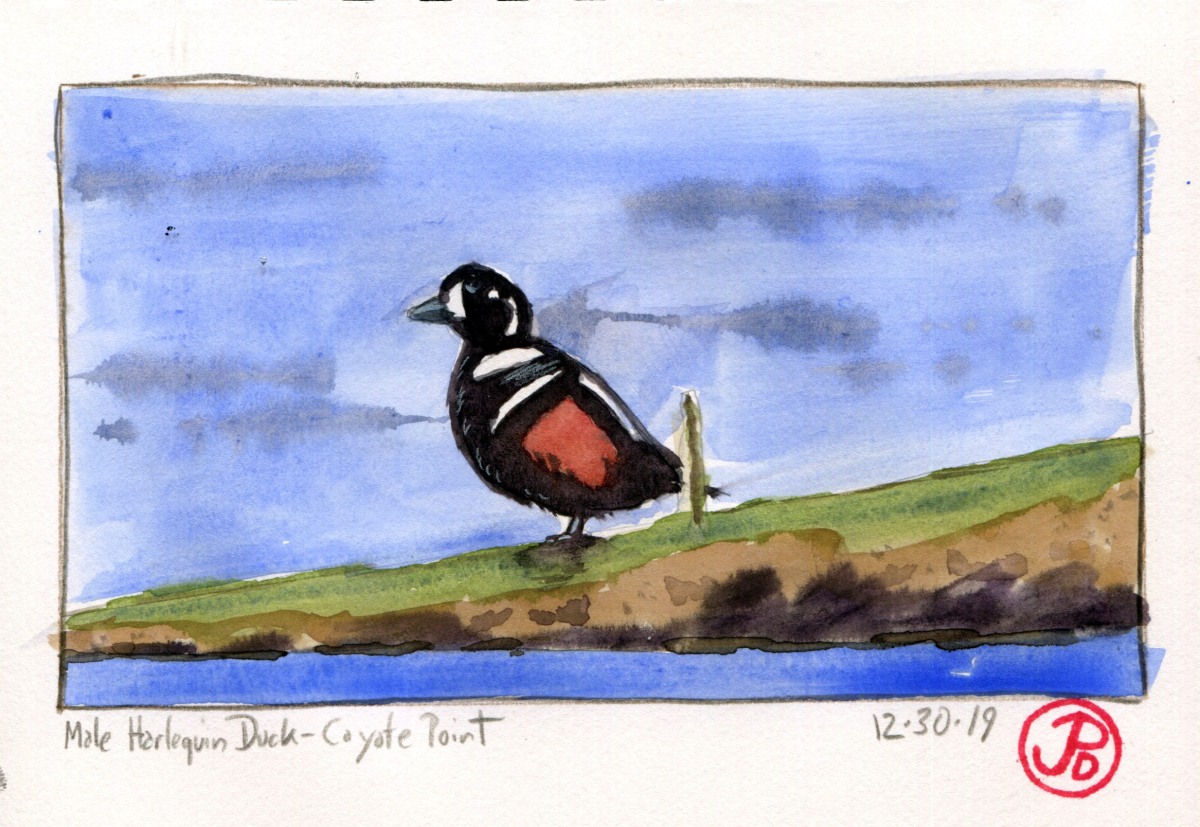
The duck briefly perched on the breakwater and preened and I was able to get a few photos off to use for a painting study.

Harlequin

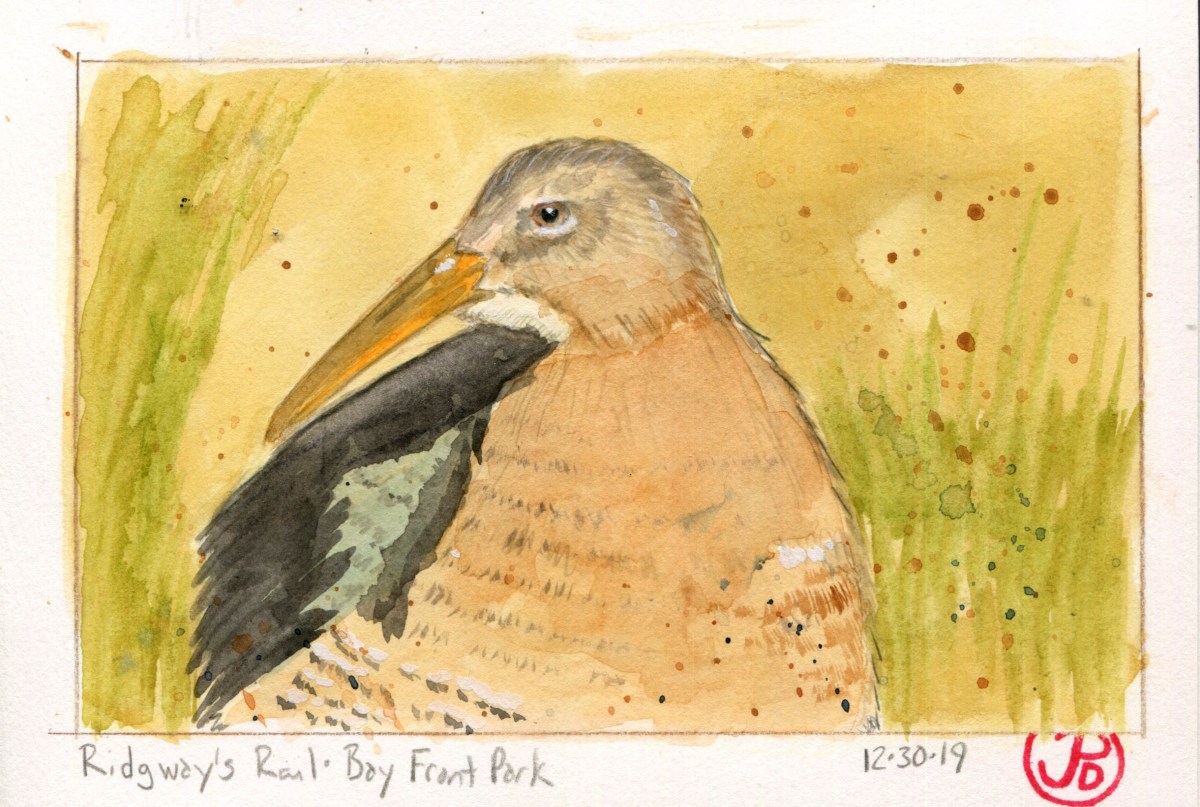
Our next stop was to Bayfront Park in eastern Millbrae. Our target bird here was an iconic species of the bay marshes, a bird that has been declining in the bay because of development of the bay’s shoreline (meaning the destruction of it’s favored habitat) and is now near-threatened. This is Ridgway’s rail (formally the clapper rail). It’s estimated population around the San Francisco Bay is about 1,100 individuals. So seeing a Ridgway’s is always special.

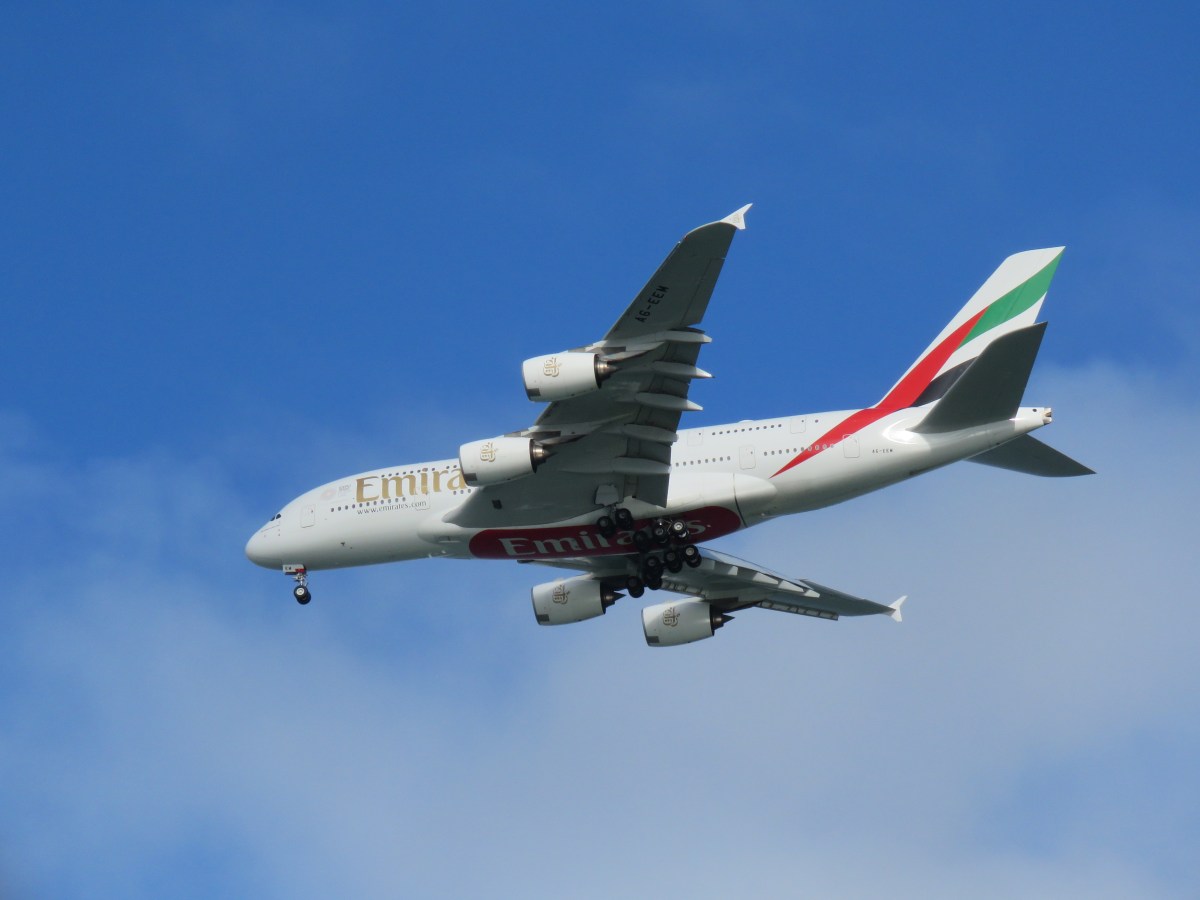
Bayfront Park is a small marsh, preserved near the Bay Trail. It sits just across the waters from the runways of SFO. So here I can really indulge two of my passions: birds and airplanes! I guess the two are really related. But perhaps not the Rigway’s rail, which seldom flies.

IMG_9558Touchdown for a massive A380 at SFO. A raft of ducks are in the foreground, apparently not disturbed by all the air traffic.
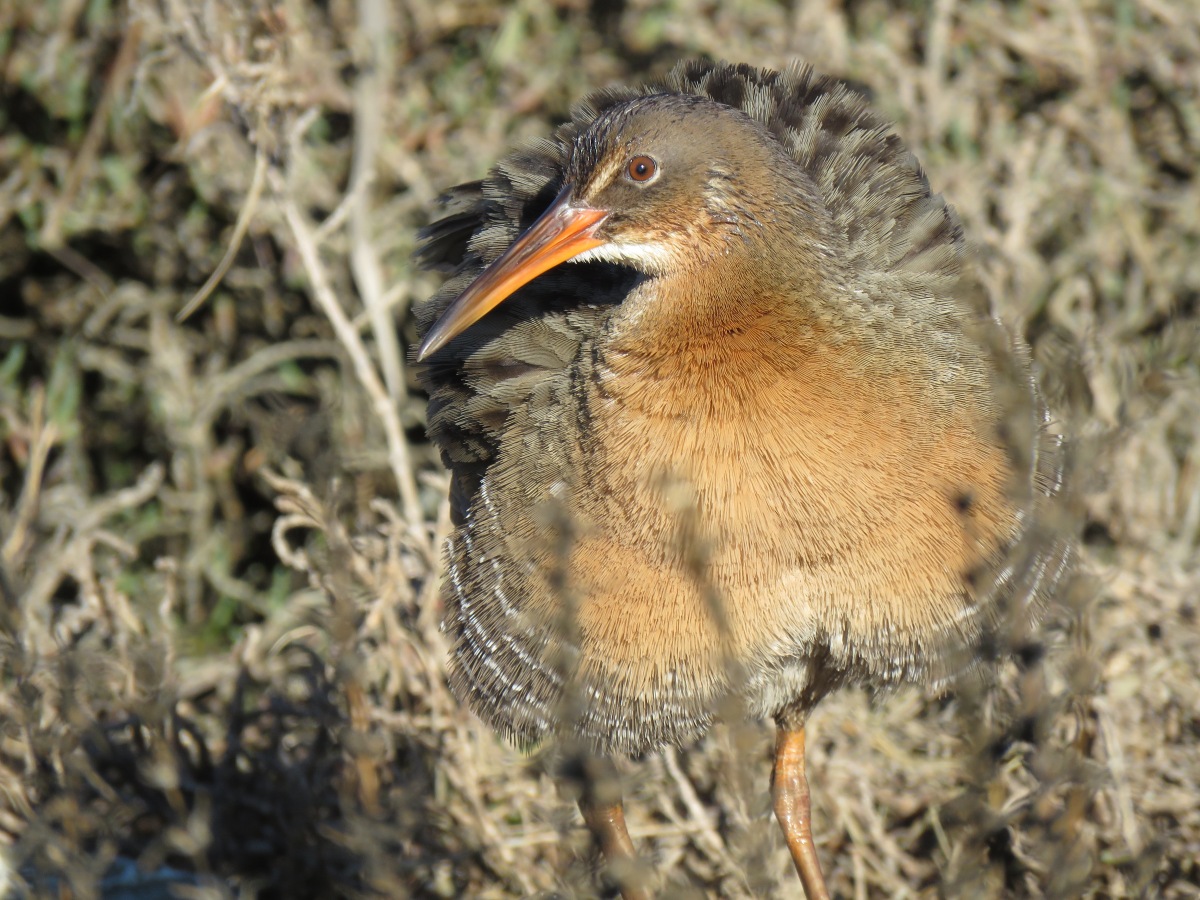
The tide was high, meaning that all the bird activity was very concentrated, which could be good for finding rails. Rails are very skulking birds that can be notoriously hard to see. Most of my rail sightings had been brief and unspectacular. But that was just about to change.

We scanned the shoreline and the pickleweed for rails but we found none. The somewhat reclusive birds could be right under our noses and we might never see them. We put in a good 45 minutes of searching and we did not hear or see any. We started to head back to the car when I decided to check one last time. That’s when the loud call of the Ridgway’s rail sounded from some tall reeds about ten yards from the Bay Trail.

We fanned out on either side of the reeds, willing a rail to appear. Again, Grasshopper found one, it’s head raised above the reeds. The rail stayed visible, in perfect light for a good five minutes, allowing me to take some photos and just as quickly as the rail had appeared, it disappeared. As if on cue, Grasshopper found a second rail, just to the north of the reeds, in pickleweed. The bird also gave us astounding looks!

Lifer for Grasshopper and a San Mateo County lifer for me.

IMG_9573

Image

Christmas Birding: The Gift of Eagles

It is my Christmas Day tradition to wander down to the Central Valley to do some wintering waterfowl birding in the amazing Gray Lodge Wildlife Area, just north of the Sutter Buttes.

The weather forecast told of rain but that wasn’t going to turn me away from seeing the thousands of wintering waterfowl. Besides, the birds don’t mind the rain, they are covered in feathers after all.

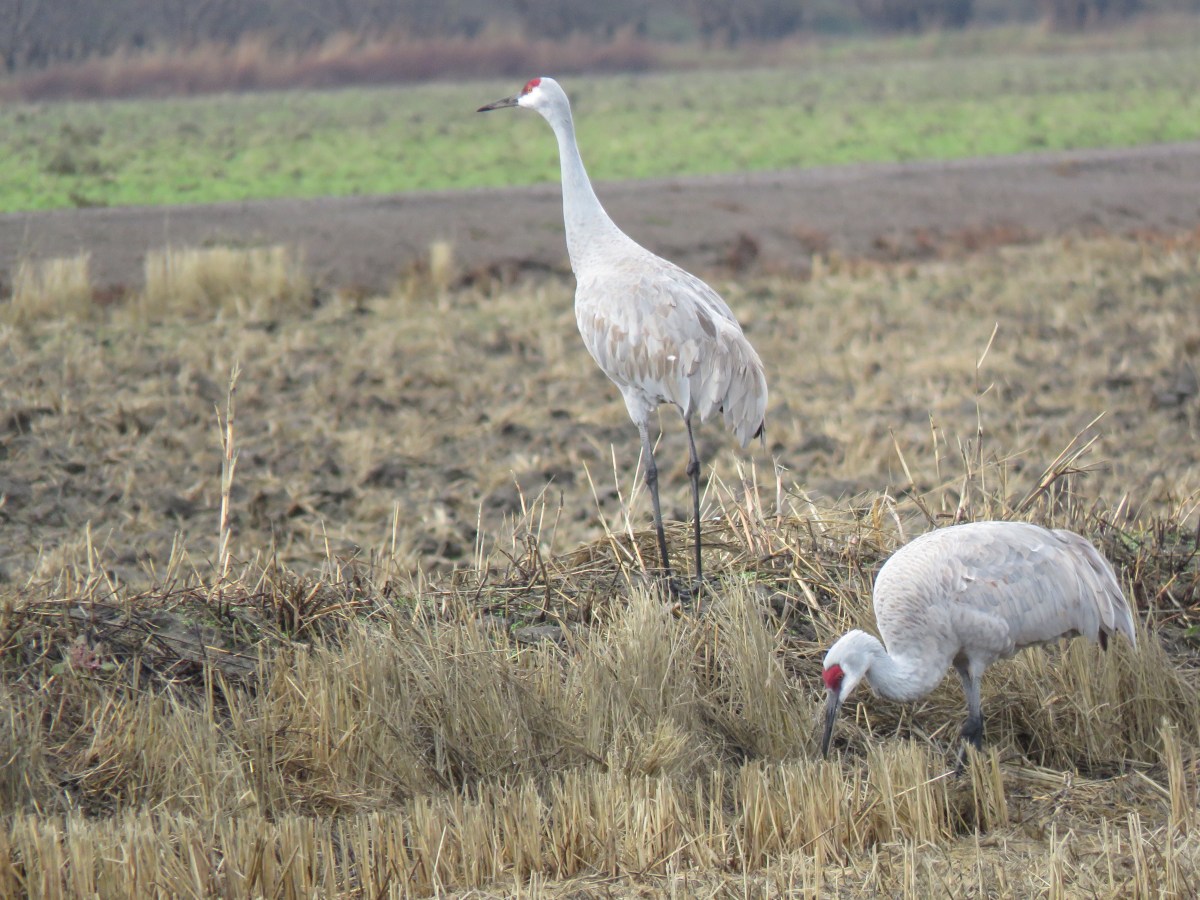
I turned off Highway 99, heading west, at Live Oak. The houses soon became fewer and fewer as I made my way from small town to the rural farmlands on my way to Gray Lodge. In the fields bordering Almond Orchard Road I saw one of my expected species: sandhill crane. This is always an amazing bird, a “Birds of Heaven” as Peter Matthiessen called them.

IMG_9114 (1)

I soon turned into Gray Lodge and I looked out towards the Sutter Buttes and the expanse of water that contained hundreds, if not thousands, of ducks: mallard, American widgeon, pintail, cinnamon, blue-winged, and green-winged teal, bufflehead, gadwell, and northern shoveller. Greater white-fronted and snow geese filled the grey skies.

I started on the auto route. The majority of birding is done by car at Gray Lodge. Your car really becomes a moving blind or hide and as such, doesn’t seem to bother the birds too much.

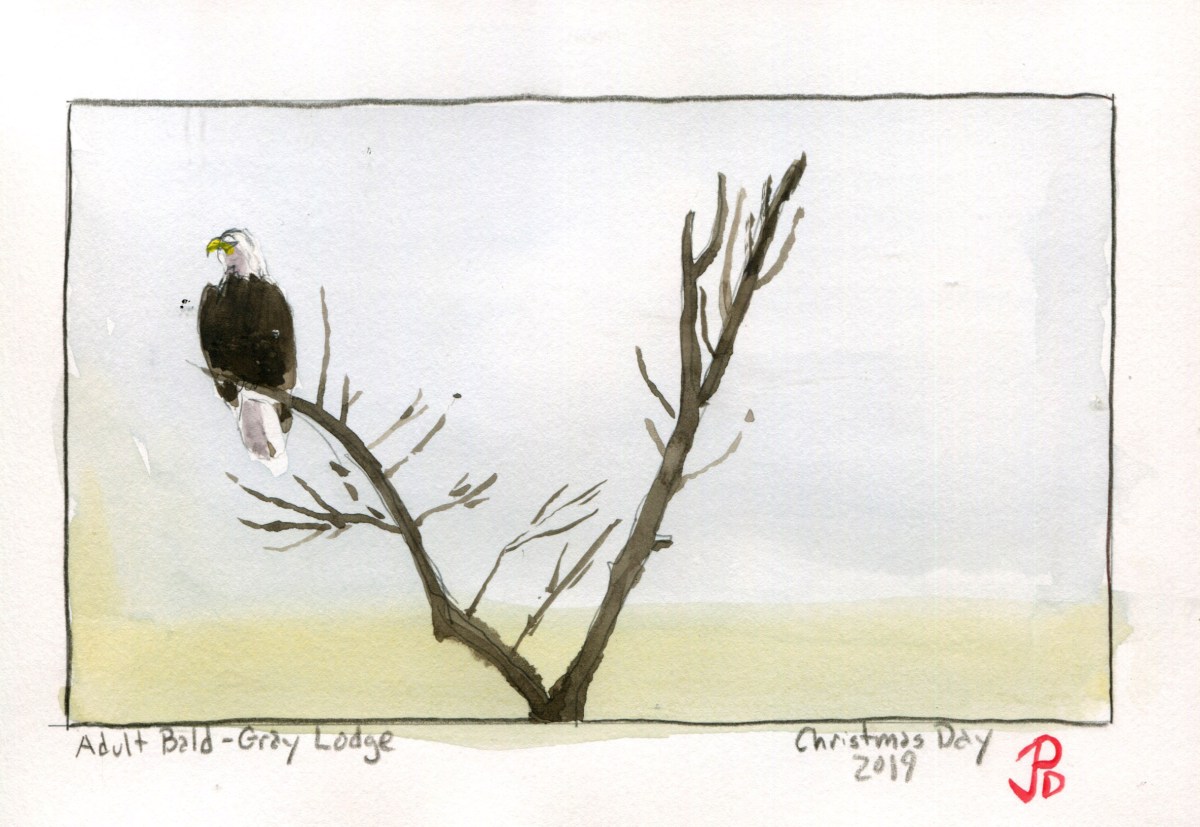
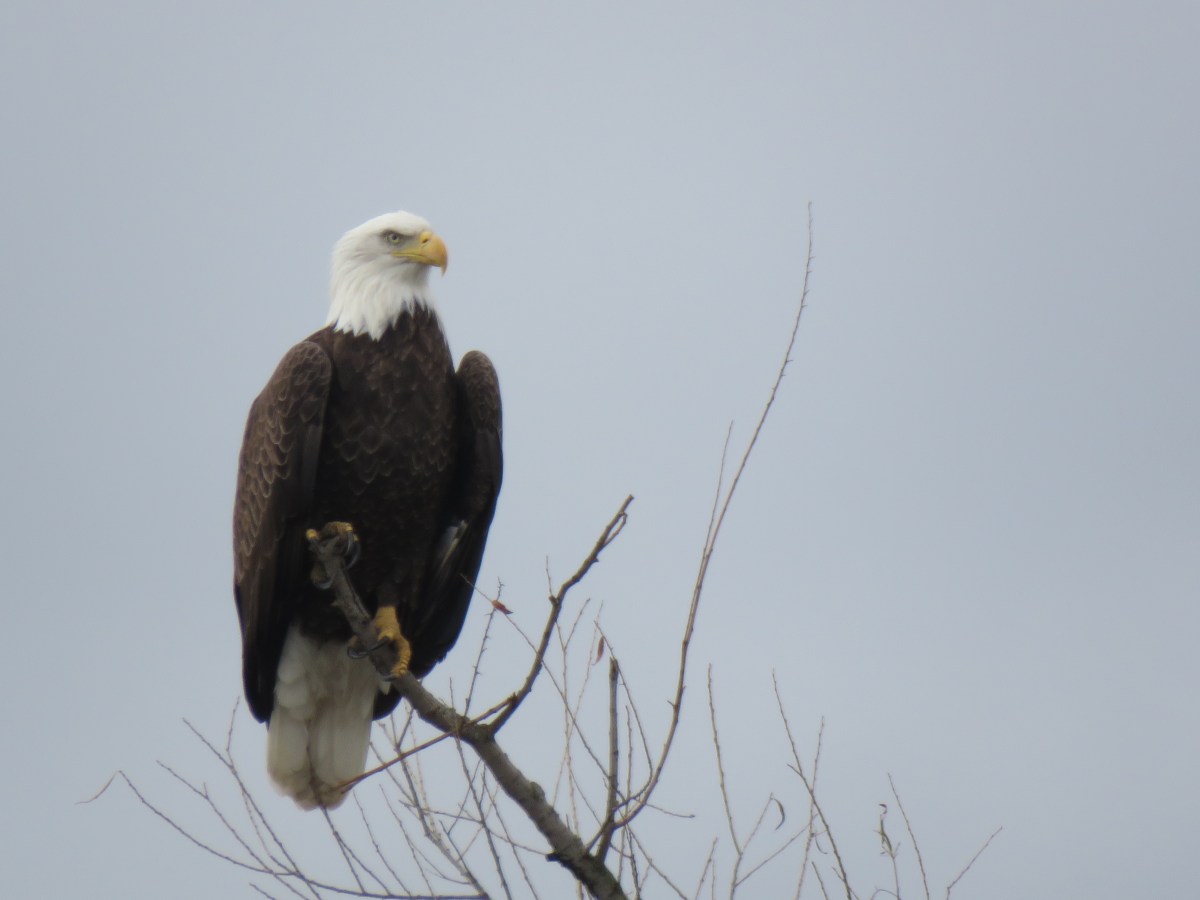
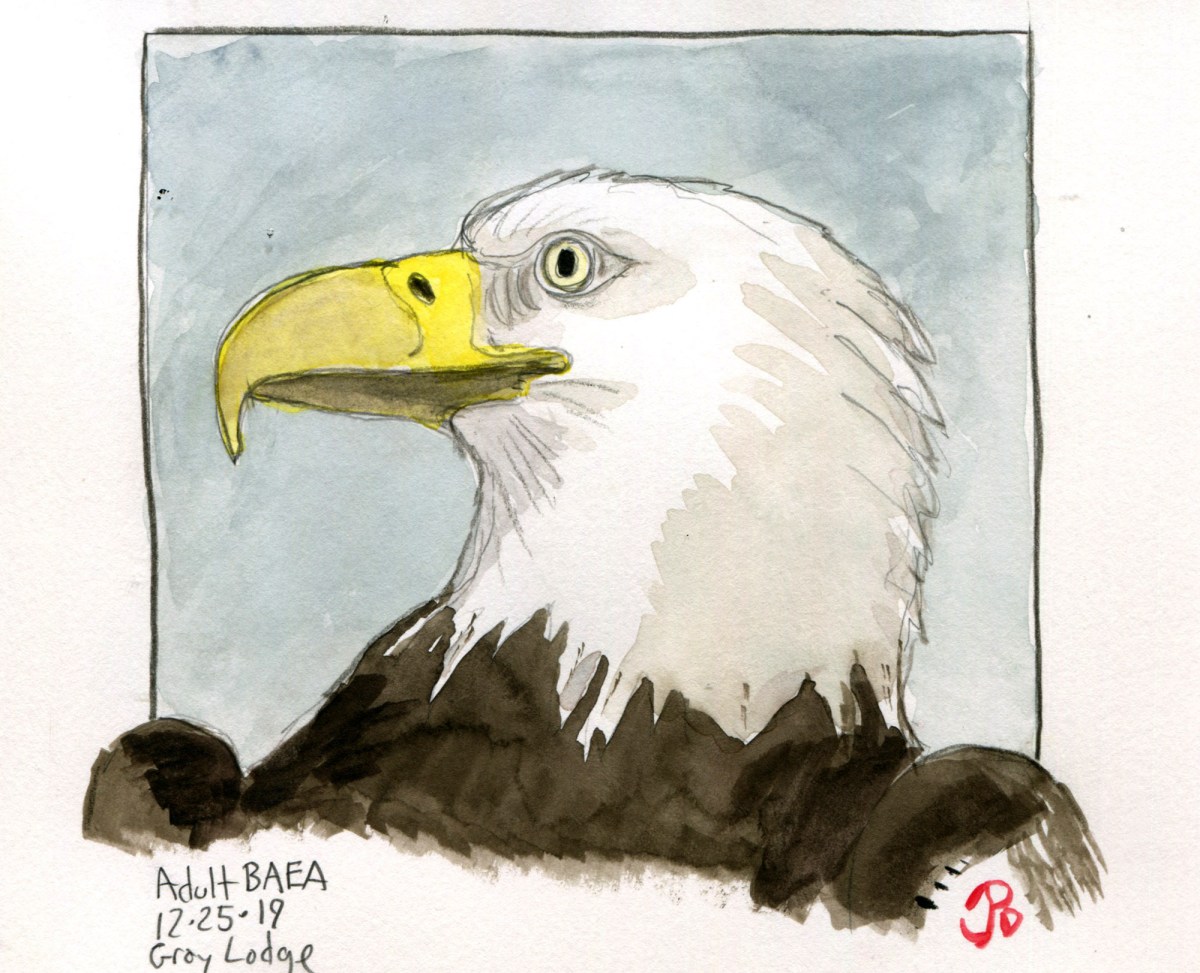
One species that I always look forward to seeing at Gray Lodge is out National Bird, the bald eagle. These large raptors follow the wintering waterfowl and every time they lift off into the air, a mass of ducks and geese rises in their bow wake. I had seen a few far off eagles, perched in trees off to my right. I spotted a few immatures but as I neared them on the auto route, the eagles were jumpy and flew further off over the waters to a tree on the opposite point from where I was.

IMG_9134The unmistakable heft and upright posture of a bald eagle, in this a case an immature. This bird did not allow a close approach. An eagle takes five years to gain it’s iconic “outfit” that most people would recognize: white head and tail, yellow beak, and dark chocolate-brown body.
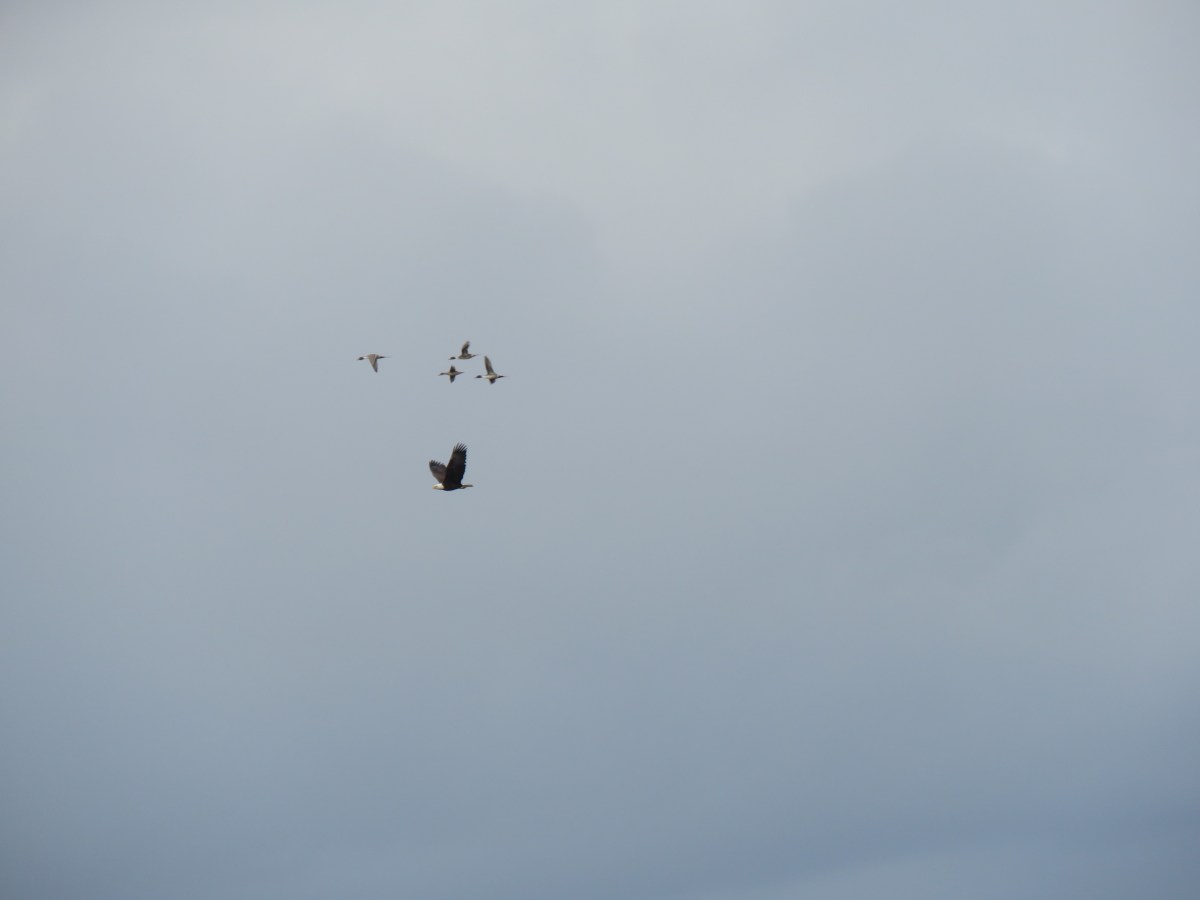
I came back to the start of the auto route and wanted to take another ride. As I neared one of the parking lots I saw an adult bald eagle flying to my left.

IMG_9165

An iconic adult bald eagle flying to my left. Four northern pintails fly above, and probibly away from the large raptor.

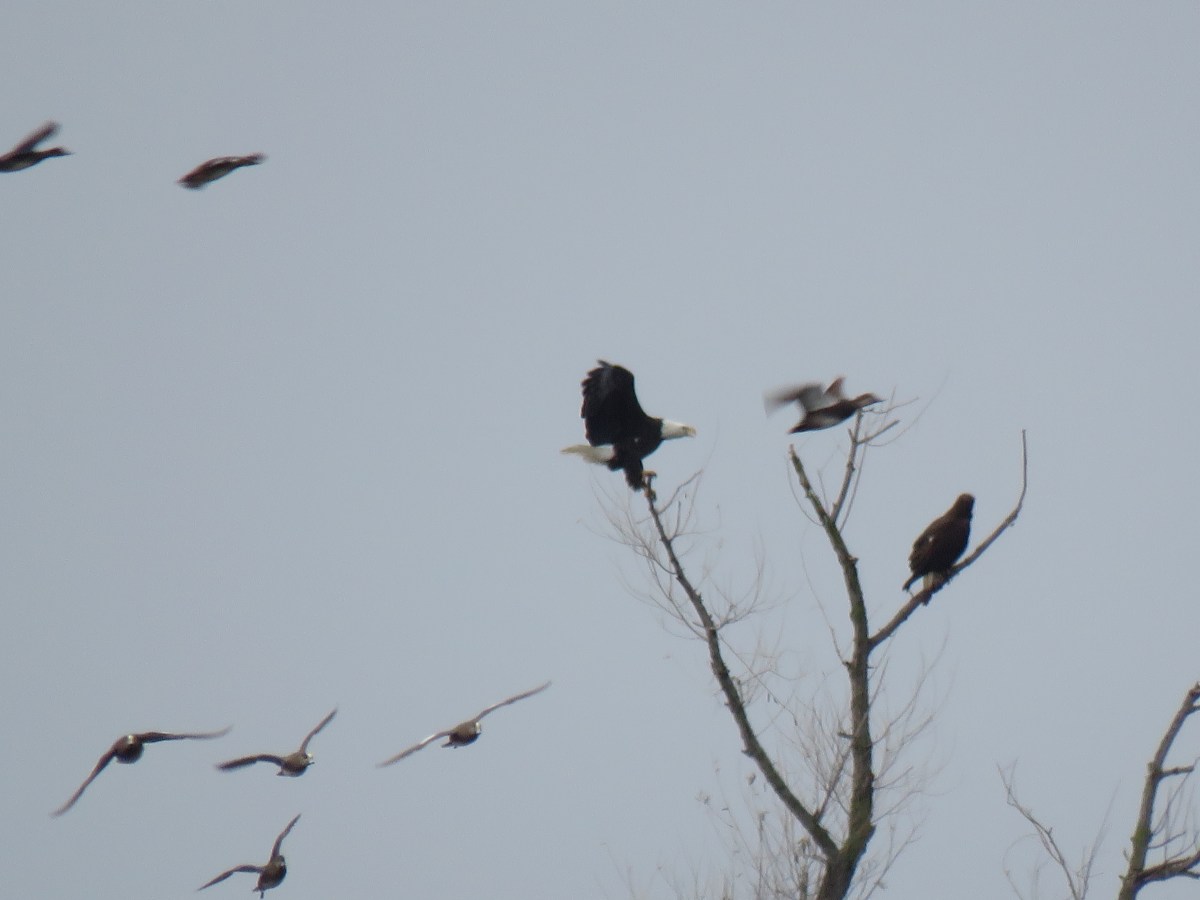
The eagle turned towards me and then headed away and landed in the top of a tree with an immature eagle. I raced forward along the route, hoping that the adult would stay.

IMG_9173

The adult landed and held it’s wings up as a group of American wigeons take to the air in all the excitement. The immature is to the lower right.

Eagle tree

As I moved toward the tree, which was just to the left of the road, the immature took off and headed off. Let’s hope the adult was not as jumpy. Every 20 yards of so, I would angle the car to the right to take a few photos through the driver’s side window.

IMG_9215 (1)

I finally stopped the car near the base of the tree. The adult was now about 40 yards away. The eagle surveyed the waters and presumably waterfowl, and I was able to enjoy the bird for about 5 minutes. Just as I reaching for my sketchbook and pen bag, the adult flew off across the waters, causing the ducks to lift up into the air and scatter. Now this was my kind of Christmas gift!

IMG_9282An adult bald eagle is distinctive, even as it’s flying away from you. It’s bright white tail is a beacon that tells you what you just missed!
Image

This Year’s Snowmen

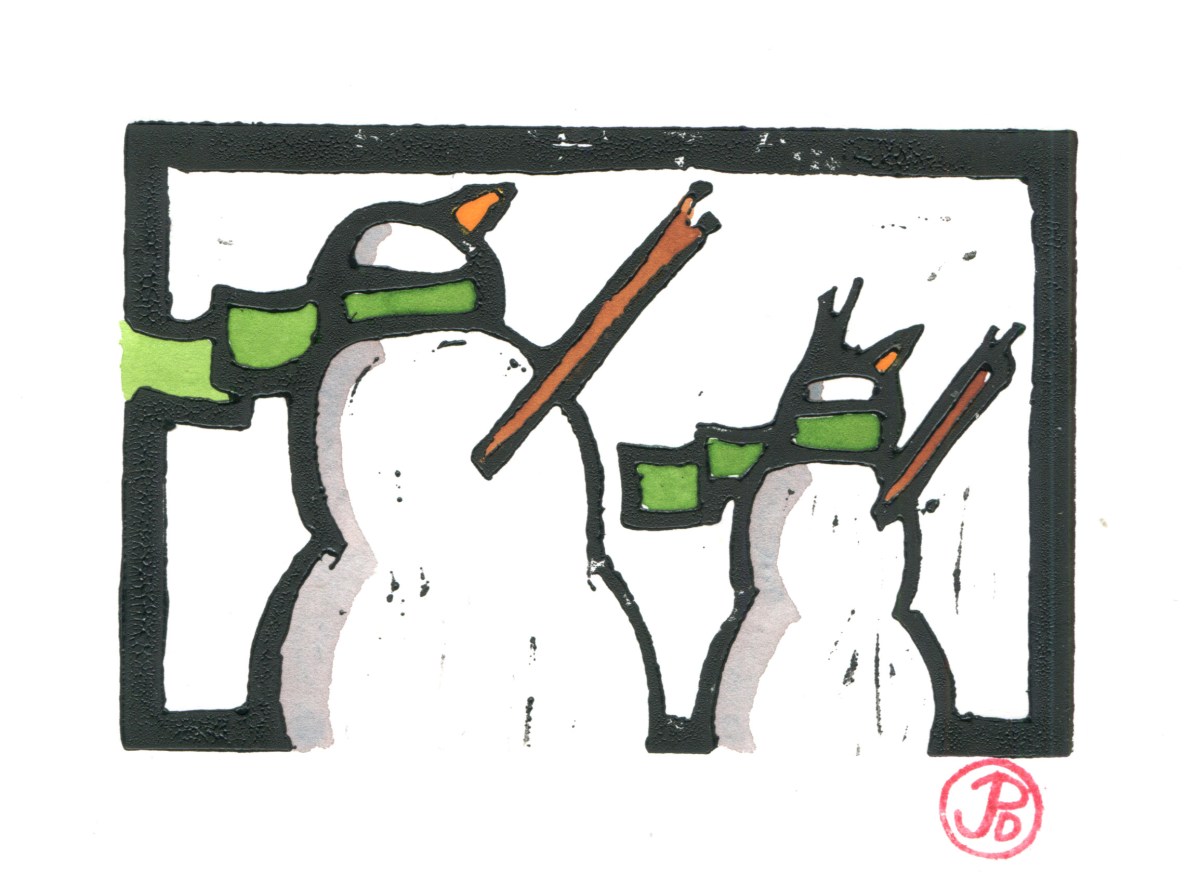
Every year, since 2007, I have created a winter themed linoleum cut print at this time of year. And for my twelfth print, it again was tough to start the process as inspiration does not always come when I want it to. I have done so many of the these snowman prints and I wondered what could I do that would be new and inspire me to take on the creative labor of making these prints?

I decided to think of the print as a self portrait. But not in the sense that would be very obvious. I guess it is really a manifestation of my philosophy on educating our youth put into a single image.

One of the most important parts of my job is to point out the wonder in the world. To be the curator of life, at least for 180 days. Of course it is not a California State Standard but when there is wonder around, you just have to point it out.

What has really inspired this print has been my autumn birding outings with my young acolyte, Grasshopper Sparrow and his recent finding of a rare brown booby over the bay waters at Coyote Point.

Spending time in the natural world with a young one that sees the wonder of the world is an experience that fills my soul and give me hope for a generation that spend too much time wrapped in technology and not enough time in nature.

An alternate version of the print would be the young snow-student pointing to a point of wonder and the larger, teacher raising his hands in awe at the wonder of youth and surprise. Both versions would be applicable to the humbling experience of teaching.

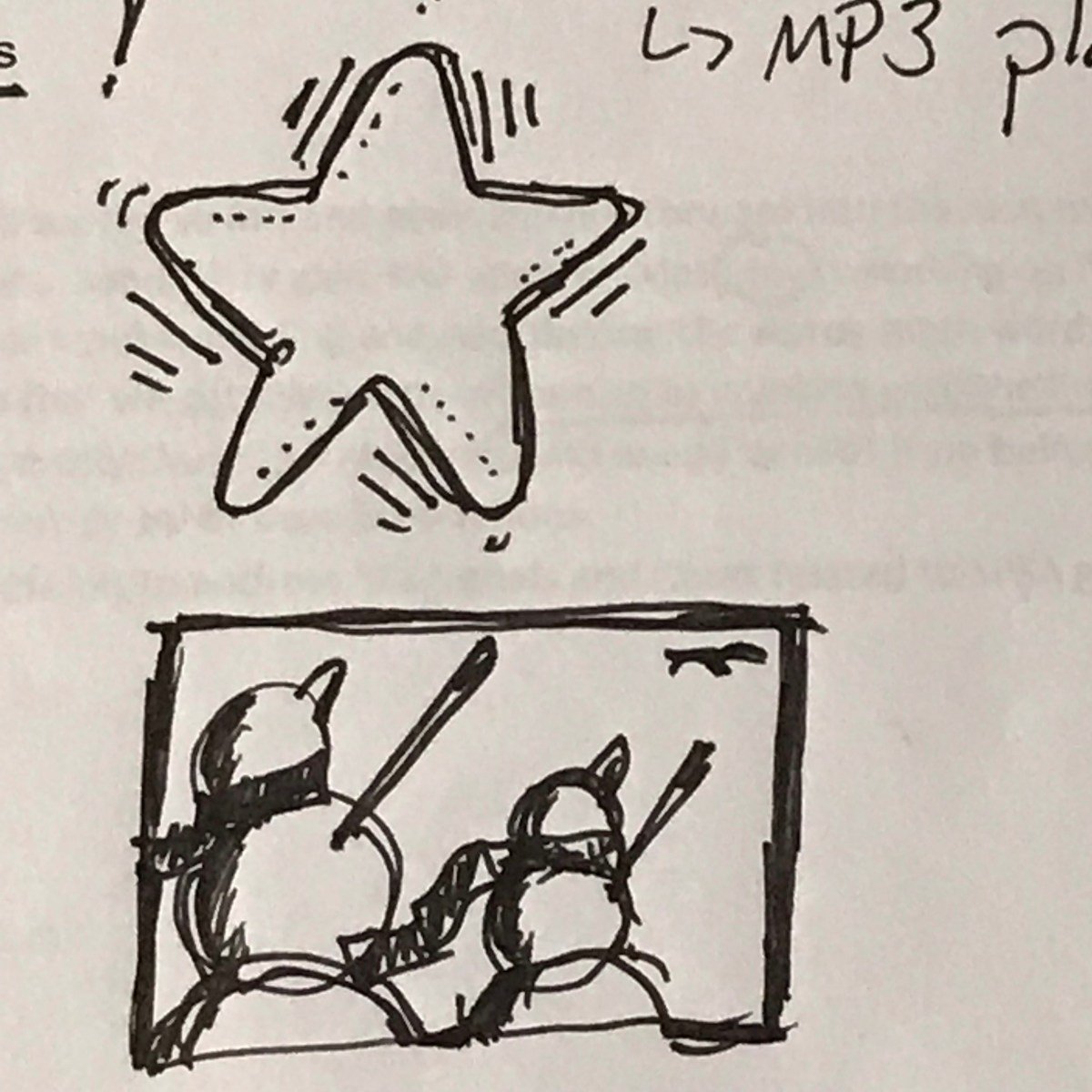
This is the first draft sketch of the print design. I did this during a lull at a staff meeting. It probably took me less than a minute to put my mind’s concept to paper because I already had the image fully formed in my mind’s eye.

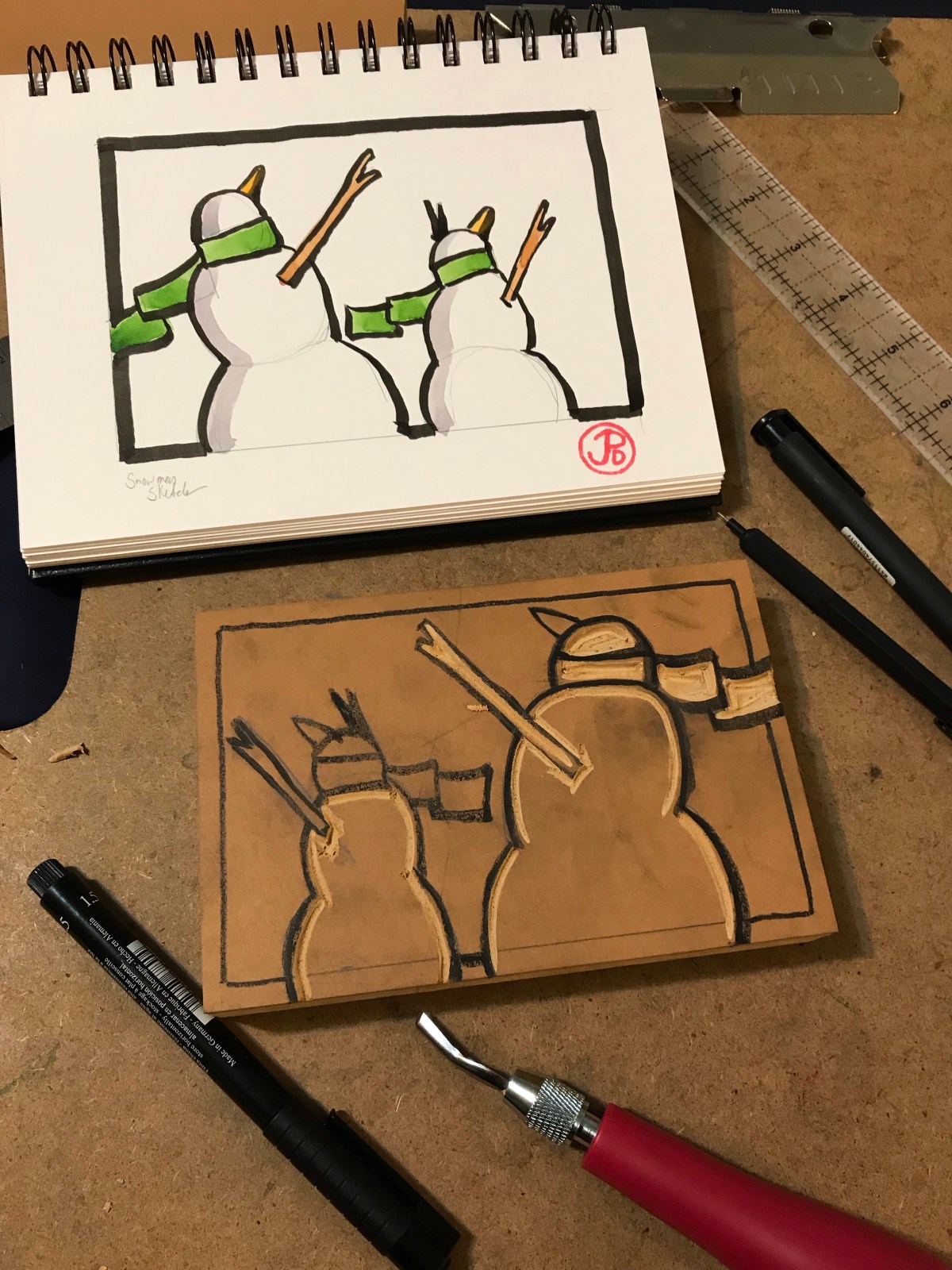
A refined draft sketch which I used to draw the design on the linoleum block, in reverse of course. Here I am just started to carve out the block.
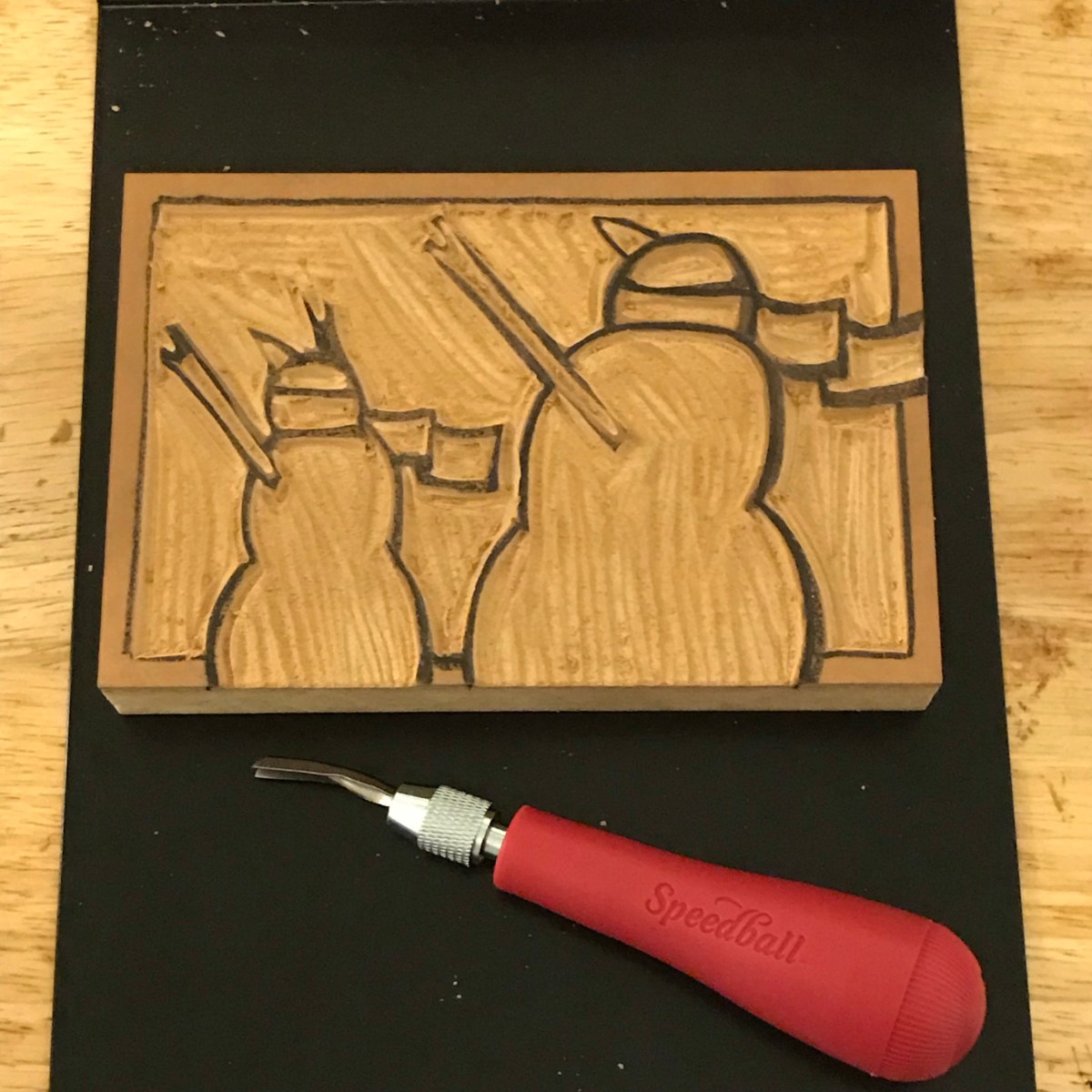
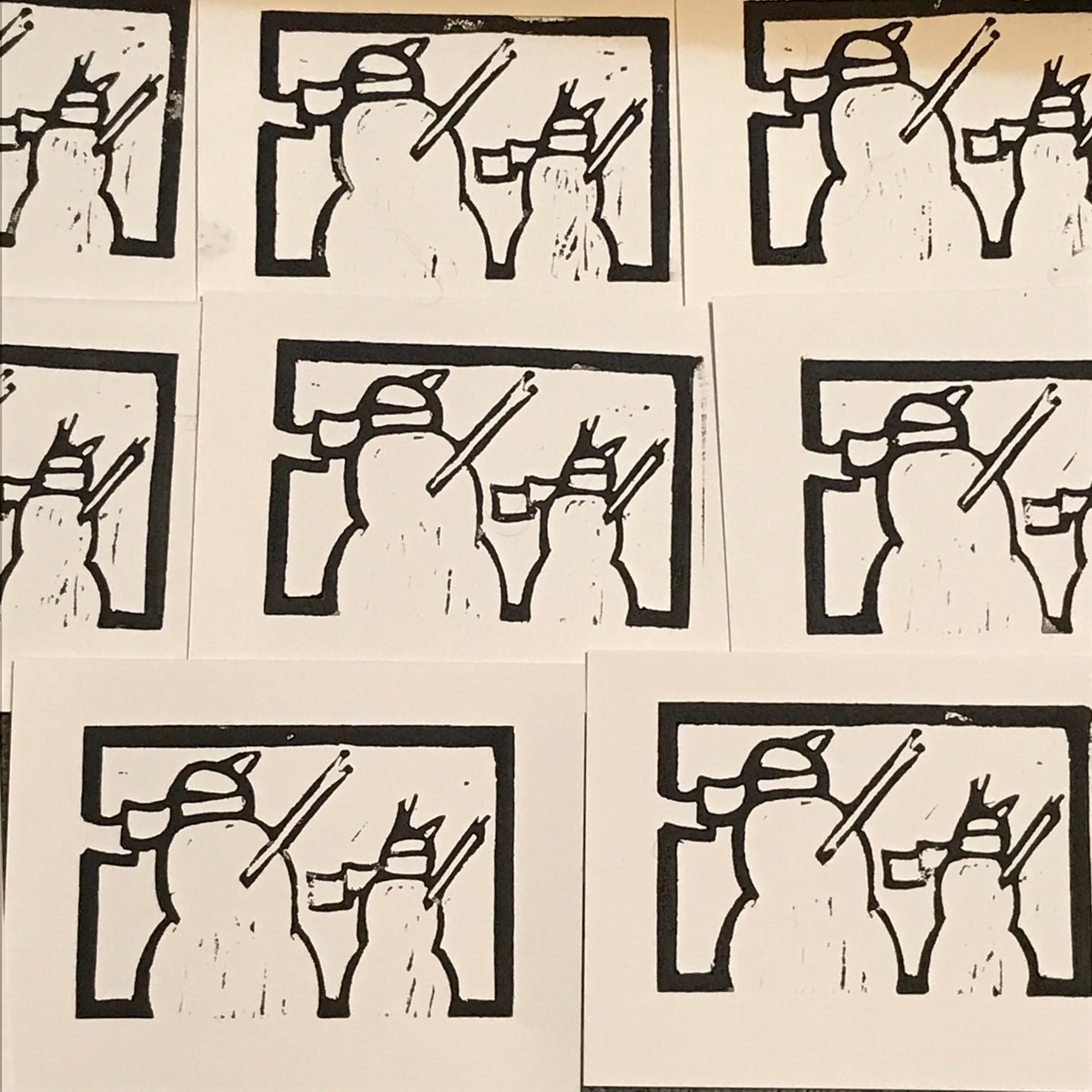
At this stage I have carved away all the material that I do not want to print black and the block is really starting to look like the image I had in mind. The next step is to charge the block with ink and make a proof print.

Fresh prints drying before I hand tint each one with watercolor. Each print is different and it takes time to learn to embrace the medium and recognize to let go of complete control of the printing process.

Image

Brown Booby Surprise

It is an ecstatic experience when your student becomes the master. This happened on a late Sunday morning birding adventure.

I took young Grasshopper Sparrow out to Coyote Point Recreational Area to bird the bay and marsh. He needed to work on his life list and birding skills and this area of open marsh and bay in San Mateo County is as good as any place to hone your observation and identification skills.

There were many birds out on the exposed mudflats: sandpipers, snowy egrets, American avocets, black-belled plovers, whimbrels, and long-billed curlews. Beyond the flats on the San Francisco Bay were rafts of buffleheads, cormorants, western grebes, common goldeneyes, ruddy ducks, and surf scoters. A birding class, returning from the point, even informed us that the rare ongoing male harlequin duck was on the bay but had headed further out and might be hard to see.

`IMG_8486

There were many Gashawks in the air, including this massive A380 on final approach to SFO.

IMG_8467There also were many black-bellied plovers out foraging on the mudflats.
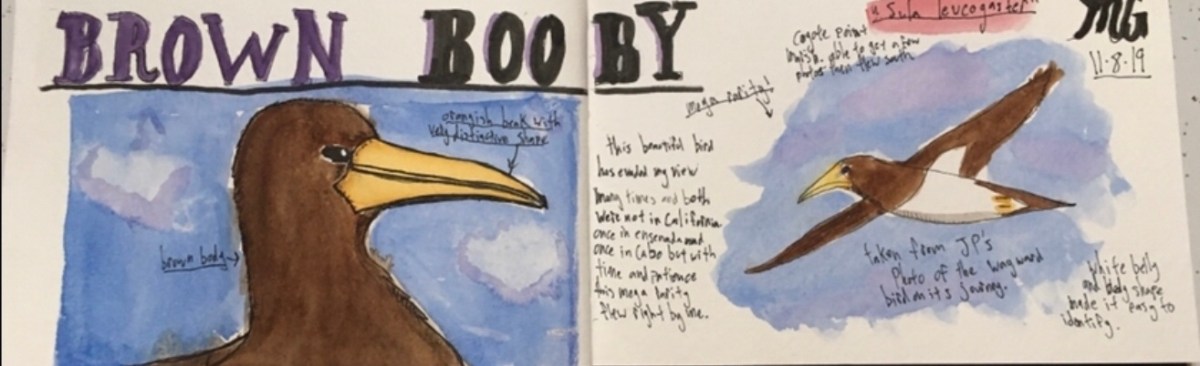
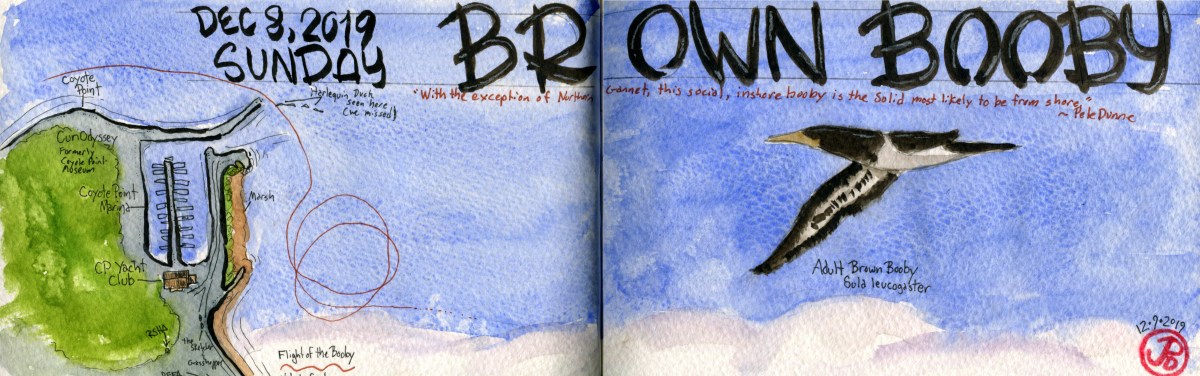
As we walked along the jetty to the east, Grasshopper was beginning to see some species for the first time. Out on the bay were surf scoter, common goldeneye, and American wigeon, all birds that were lifers. There where a few glaucous-winged gulls out on the sand spit which was a new gull for my acolyte. In the marina were horned grebe and least sandpiper.

Seeing these birds with Grasshopper, took me back to the time when many of these birds where new to me too. We all begin somewhere and at sometime and the avian world is as new as a summer, sunny morning.

We headed out to the point and scanned the bay waters for the local male harlequin duck. But the duck was out on sight but not out of mind. We then headed back to the marsh area where we watched green-winged teal, shoveller ducks, and a immature peregrine falcon perched on a power tower.

Grasshopper sat down and did a field sketch of the young peregrine on
the power tower while I watched an osprey circling above the bay. We
heard a sora’s “whinny” call from the reeds but the sulky rail didn’t
make an appearance.

We walked back to the parking lot and paused to look at an adult
red-shoulder hawk perched about 30 feet up a power tower. That is when
Grasshopper Sparrow looked south towards the bay and spotted an
unusual bird in the air. He called my attention to the long-winged
bird with a prominent dagger-like bill that was not a gull, pelican,
or cormorant.

“Brown booby!” Grasshopper exclaimed as he ran towards the shoreline
to get a better view.

I hurried over as fast as I could with my sketching bag, camera,
binoculars, and a scope and tripod slung over my shoulder, which turns
out not to be very fast at all. I joined Grasshopper on the shoreline
path and put my bins on the bird. Sure enough, there was a very rare
San Francisco Bay (and very rare for Northern California) bird
circling in front of us: an adult brown booby (Sula leucogaster)! I
took about ten photos to confirm its existence to the birding
community.

Seeing this amazing seabird in flight was incredible but even more
amazing was that my young fledging birder companion first spotted and
identified a rare bird that he had never seen before in his life!

He was hoping to see this booby species on a Disney Cruise on the
western Coast of Mexico. He had seen this cruise as a “five day
pelagic instead of a cruise” and had studied this bird guides to note the field marks and behaviors of the brown booby, but alas, he did not
see the bird on the cruise; And in a location where you would most
expect it.

Instead, he found the booby away from its expected range, far to the north and not over the ocean but over bay waters. These surprises are the reason we leave the house with binoculars. We see the wonders of
the avian wonder, both the common residents and reacquainting ourselves with wintering visitors. But, we always dream of that unexpected surprise. That bird that just shouldn’t be. We live for
these surprises of the natural world. A bird can really turn up
anywhere. They do have wings after all.

Image

200 Species

I am not a huge county birder, that is a birder who is obsessed with added as many species to certain counties within the state as possible. For me I set the modest goal of reaching 200 species in the counties that I bird the most: Marin, San Francisco, San Mateo, and Santa Cruz.

In San Mateo, the county in which I work, I was sitting at 199 species. And I planned to make number 200 a rarity in the county. So I headed out with Grasshopper Sparrow on our third attempt to get the wintering male harlequin duck at the Coyote Point Recreation Area.

Unfortunately planning anything involving birds means that you have to be prepared to whiff out on your expectations. And so we did, for a third time, fail to find the harlequin, amid the water and surf scoters of San Francisco Bay.

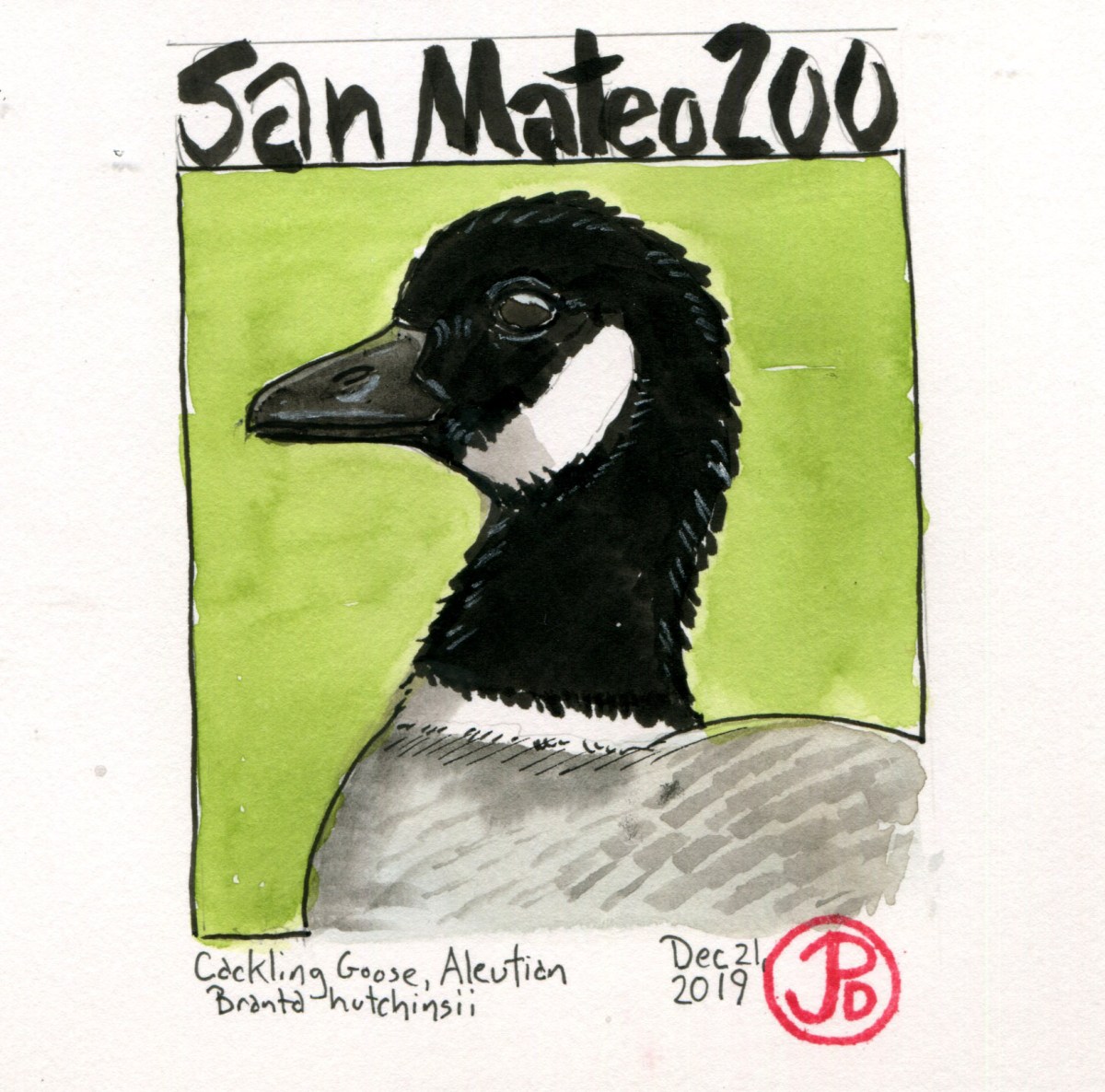
So as a consolation, we headed over to the other side of the park to look through the flocks of grazing Canada geese for a few smaller cackling geese. This species was recently split and recognized as a separate species rather than a subspecies of Canada goose. This is one way in which your life list can grow but I did not have cackling in San Mateo County.

Grasshopper was easily able to pick out the five smaller geese with tiny bills and a white collar making it an Aleutian subspecies. San Mateo County bird number 200! We watched the cacklers grazing among the larger Canada geese, which provided a great contrast between the two species.

IMG_8813

We birded the trees that border the field and in a pine, I was able to pick out a much sought after lifer for Grasshopper, the beautiful western warbler: Townsend’s warbler. This is a common winter warbler of the California coast but somehow this species had eluded us on our previous birding adventures.

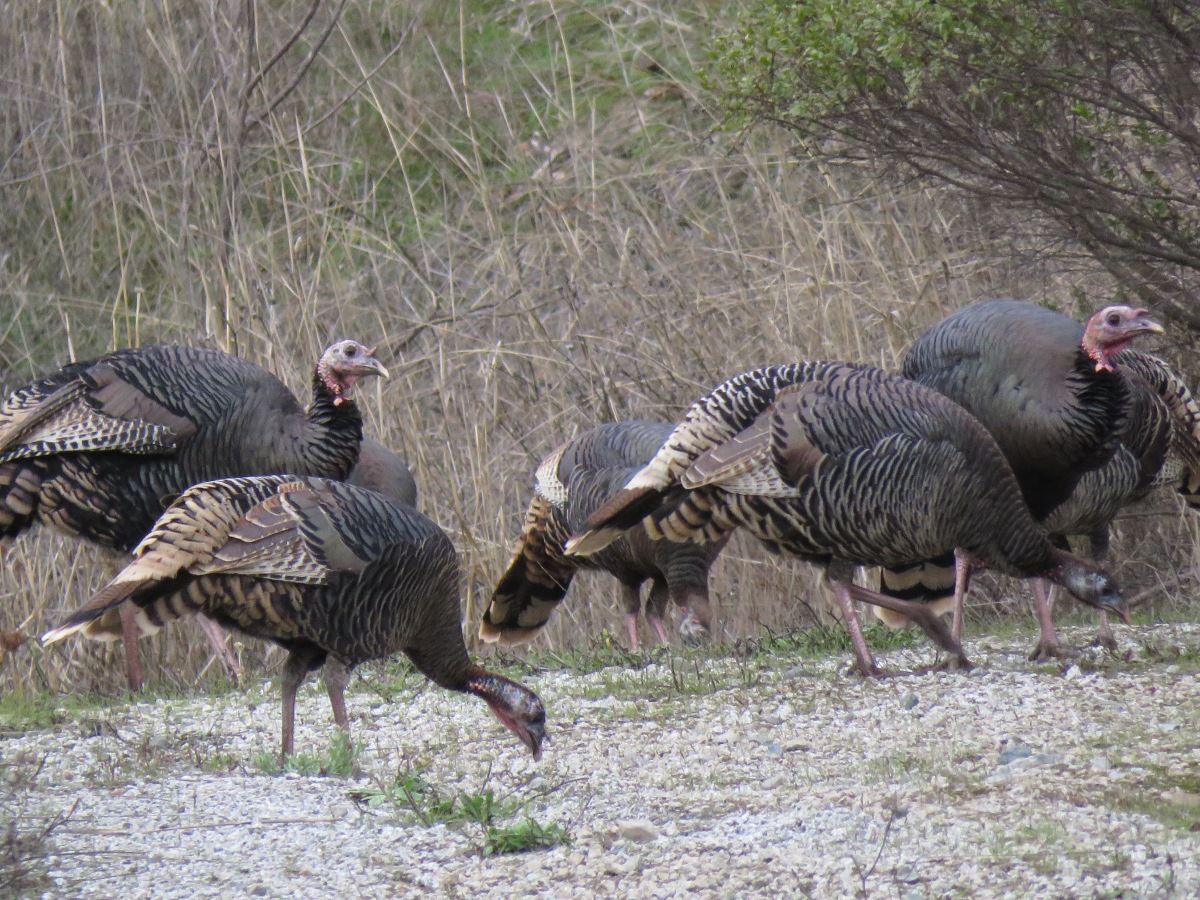
We next went to Sawyer Camp Trail to finds some more county birds for me and lifers for Grasshopper. I added wood duck, wild turkey, acorn woodpecker, hairy woodpecker, golden-crowned kinglet, and varied thrush. I ended the day with 206 San Mateo County species!

IMG_8884