Image

A Surprise at the Feeders of San Tadeo

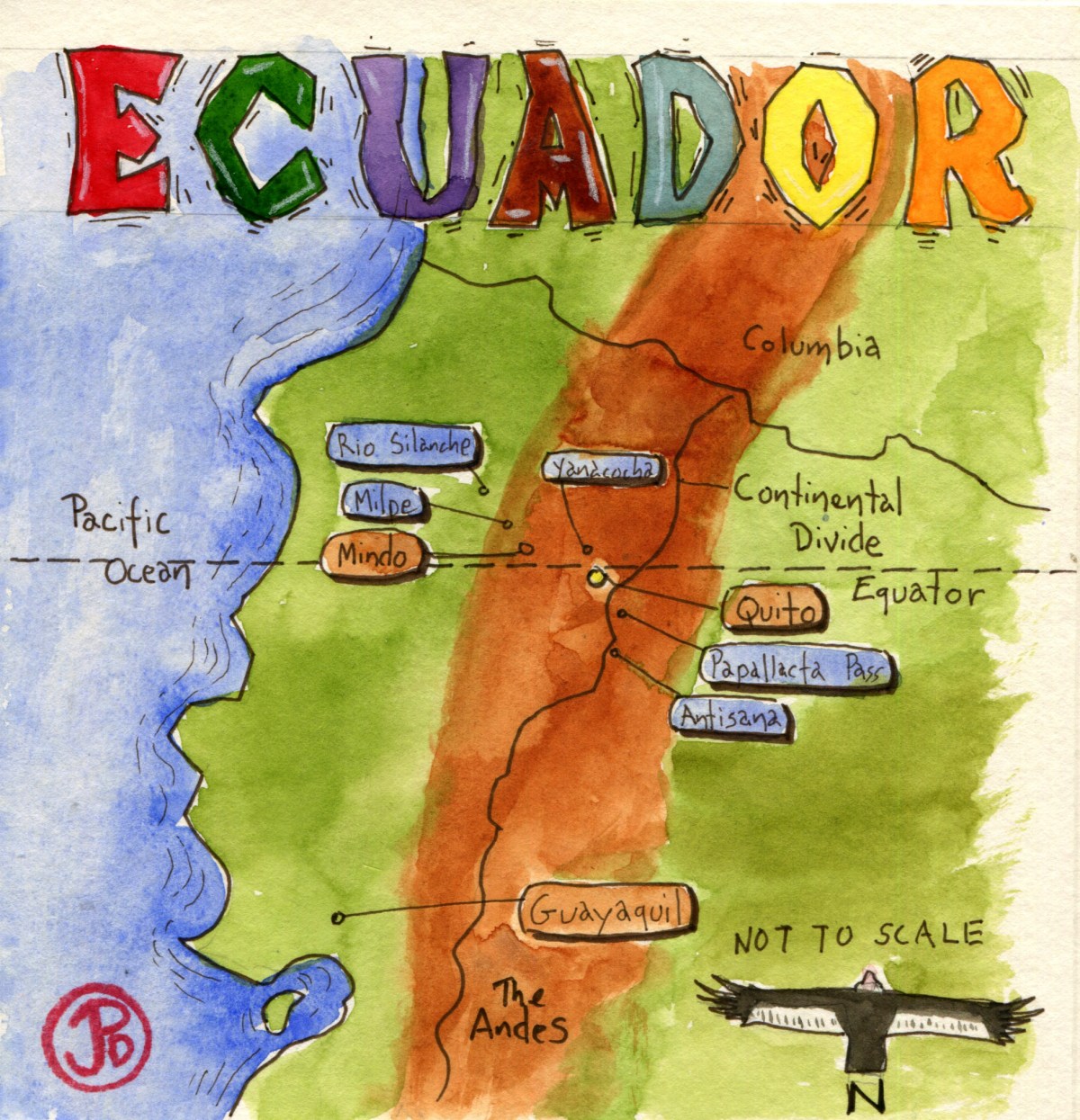
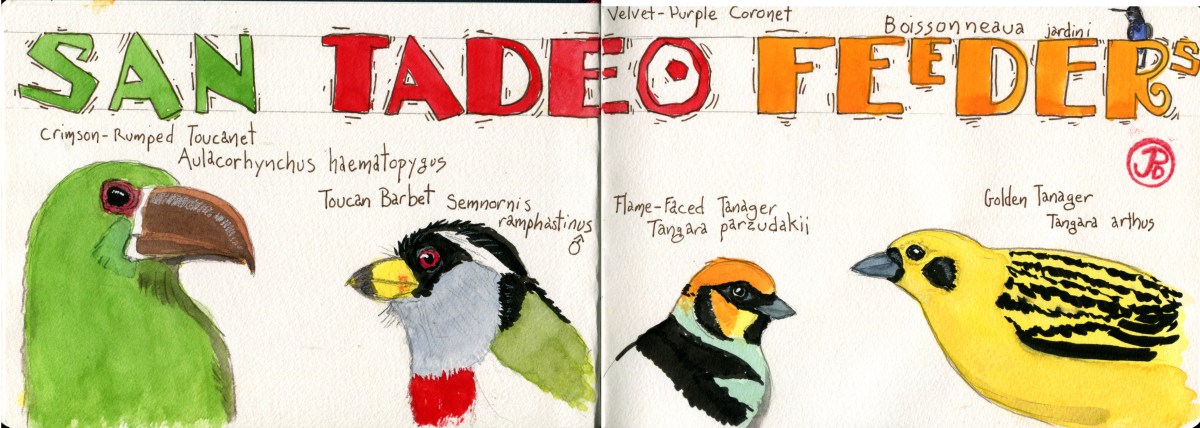
On the Fourth of July we where going to see some Ecuadorian fireworks at the fruit and hummingbird feeders of San Tadeo in the Mindo Valley.

These feathered fireworks mainly came in the form of tropical tanagers. Golden, flame-faced, blue-gray, golden-napped, back and blue-capped tanagers. Added to the show where crimson-rumped toucanets and red-headed barbets. But the most colorful explosion came in the form of a pair of toucan barbets.

This barbet is often described in field guides as “unmistakeable” and one tropical birding guide described the toucan barbet as, “a rainbow flavored snowcone.”

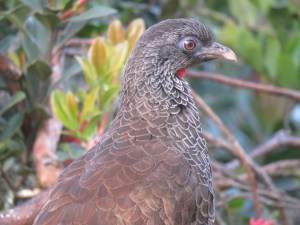
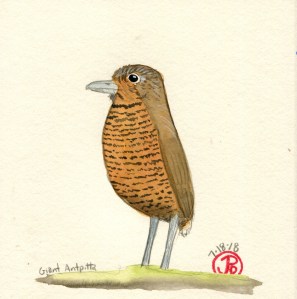
While our group was enjoying the firework display, some movement on the ground caught my attention. What I saw was what looks like a large dark rufous potato on sticks and I knew immediately what bird this was and I called out: “Antpitta!!

I later found out that, our guide Luke, at first, thought that I had misidentified the potato bird, that is, until he got his bins on the bird.

“Giant antpitta!” he announced to our group, proclaiming it’s existence.

All eyes were on the bird as it sulked and paused, sulked and paused, like a snowy plover on Ocean Beach.

The reason for the initial disbelief is that the giant antpitta, despite it’s name, is one of the hardest birds to see and see well in the Mindo region. If you don’t count the unusually tame giant antpitta at Refugio Paz de las Aves. In fact, no one had ever seen this bird at San Tadeo, including the owner and Paul Greenfield (the illustrator of The Birds of Ecuador).

We were all able to get views of this rare treat as it sulked behind the water feature, stopped and paused, then struck at something in the leaf litter. It then disappeared from view, heading into the leafy cover downslope.

We then headed downslope to the hummingbird feeders that offered an amazing view of Mindo Valley with the small town of Mindo nestled in the center of the valley.

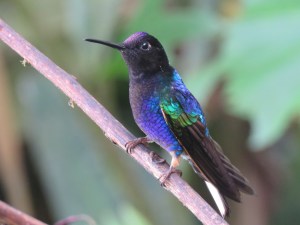
It was at the hummingbird feeders that we first saw what Luke described as his favorite hummingbird in Ecuador. And the velvet-purple cornet is an absolute stunner!

Image

Yanacocha Reserva

July 3, 2018

In the early hours of dawn we threaded through the sprawling outskirts of the capital city of Quito, climbing up from the Andean plateau to the highlands. Outside the bus, people where coming to life, taking advantage of the year round 12 hours of daylight. We were taking advantage of the early light to add some birds to our Ecuador list.

In the morning we had breakfasted at the Puembo Birding Garden (22 minutes from the airport), and were now on route to Yanacocha Reserva at 11,000 feet above sea level. This would be one of our highest birding locations on our nine day tour.

After an hour and a half drive, the last part of which was ascending a rutted dirt road that looked scarcely wide enough to accept the width of our bus, we pulled into the parking lot of the reserve. The bus doors opened and we stepped out into the chilly mountain, morning air.

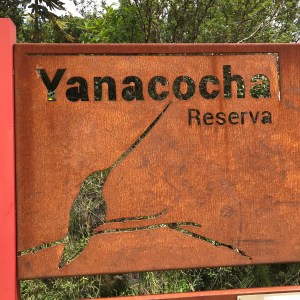
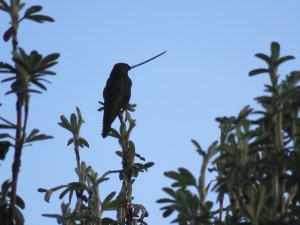
Yanacocha was established as a private reserve in 2001 by Fundación Jocotoco and now encompasses 1,200 hectacres. On the sign to the reserve was the silhouette of one of the key hummingbirds to see an Yanacocha and we were 10 yards down the trail to the hummingbird and banana feeders when our guide, Luke, spotted our target bird, silhouetted agains the high Andean air, perched up in a bush.

“Sword-billed!”

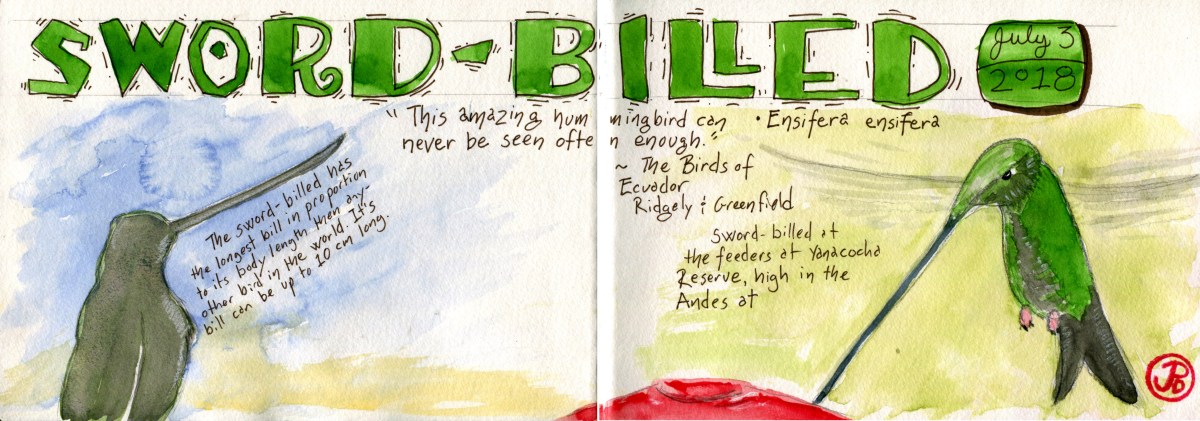
The sword-billed hummingbird (Ensifera ensifera) is a unique member of the hummingbird family, in fact it is the only member of it’s genus. The sword-billed has the longest bill length compared to body size than any other bird in the world. Their bills can be 10 cm long, making it impossible to preen itself but making pollen gathering possible from flowers with longer long corollas, in accessible to other hummingbirds.

The sword-billed is ours!

When we approached the feeders, three Andean guans were in attendance. This would be the first of 11 birds with “Andean” in it’s common English name that I added to my world birdlist.

After watching the feeders we proceeded down the level trail to the hummingbird feeders that were about a mile from the entrance. We observed more Andean gems, including more sword-bills.

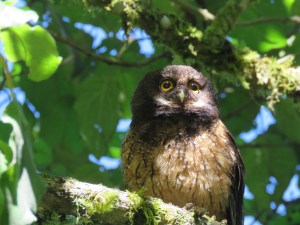
We then headed further down trail to see if we could find the owl that had been observed a few weeks before, hunting hummingbirds at the feeders. Luke played a call and within second there were three white-throated screech-owls above our heads. One landed on a branch eight feet directly above my head. A raise my camera to to eye and took the following photography. It lingered long enough to do a quick sketch but in the moment my pencil and sketckbook stayed in my pocket.


Image

Birding Andean Ecuador

Why bird Ecuador?

A few numbers and comparisons can help answer this simple question.

At 109,484 square miles, the country of Ecuador is roughly the size of the state of Nevada. In fact there are six states in the United States that have a greater area than Ecuador, including my home state of California.

While Ecuador is a small South American country (it ranks ninth out of the twelve countries by area), it has a astonishingly high 1, 600 bird species that have been recorded within it’s borders. Six species are endemic to the mainland and the Galapagos Islands has a massive 30 endemics.

Just to give some perspective,  Ecuador has twice as many bird species than the United States and Canada combined; Twice as many species as the Europe.

In this small country 132 species of hummingbird have been recorded in Ecuador.

And it is not just the sheer number of birds that makes Ecuador such an enticing destination for a world birder, there are the superlatives!

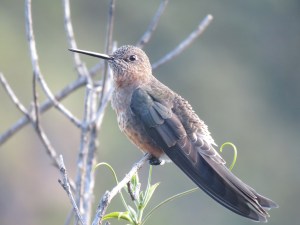
One can start with the National Bird of Ecuador, the largest flying bird in the world, rare the Andean Condor. You can also find the largest hummingbird in the world, the giant hummingbird at the feeders of the Andes and the hummingbird with the largest beak in the world.

The giant hummingbird, Patagonia gigas.

So as my Copa flight was on final approach to to Andean city of Quito, I was looking forward to the incredible mega diversity of this diminutive South American nation. Buenos dias Ecuador!

Image

A Teacher’s Note to a Student

When my childhood home was put on the market, my brother and I went through the house to see what we would save, what would be donated, and was was destined for the landfill. This was a bittersweet and laborious process, both physically and mentally.

Under my parent’s bed was an oblong cardboard box. I pulled the box from underneath the bed and opened the lid, expecting to find sweaters from the late ’70s, early ’80s and other winter clothes. But instead I found much, much more!

In the box was a collection of report cards, drawings, writing samples, a battery of assessments about me, and other paperwork from the academic careers of the Perry brothers that my mother had collected and saved over our time in school and kept in the oblong box under the bed that had been accumulating a thick patina of dust.

I was seeing much of this for the first time and I was seeing my report cards and work samples and independent assessments through the eyes of an educator. As if this was someone else entirely. How would this boy do in my class? I wondered. I really looked like quite a student! (Insert irony here!)

The discovery revealed much about myself at the time I was in elementary school, which at the time was kindergarten through 6th grade.

One discovery that made a deep impact on me and my teaching was a single piece of paper that was neither a report card, assessment, or sample but a neatly handwritten note from my 6th grade teacher, Mrs. Noether.

I had no memory of this note, which I received close to 30 years before. I was astonished by its openness and candor. It was a message to a student, from a teacher. One sentence had a deep resonance with me. Mrs. Noether writes, “It took me a while to get to know you this year but to know you is to appreciate you and your special talents.” I’m not sure what “special talents” she was alluding to, it certainly wasn’t math but I bet it was my artist talents.

Since I discovered that personal note, written by my sixth grade teacher, I decided to write a letter to each of my 30 students in my first year teaching fourth grade.

I bought note cards and began the daunting writing process. These notes were not report card comments or anything about their academic progress, they were notes from the heart; a message from a teacher to their student. On one card I did a quick sketch. I couldn’t help it. I paused. I just couldn’t leave it at that, I had to add some watercolor, even though the card stock was not the best paper for watercolor. Now here I found myself in a bit of a quandary. Do I stop and restart the card without an illustration or do I illustrate all 30 cards? The choice was clear, I illustrated all the cards with a unique illustration that was related to each individual student. That was five years ago and I have done it every year since.

I start the process in early May and I had trouble starting this year. It can be hard to start a large undertaking and this year I needed a kick start to put the process in motion.

That kickstart came in the form of a former student, now in 6th grade, who was volunteering in my room for her community service hours. Just when my motivation was down and I found it hard to take that first step forward, she mentioned that, not only had she saved the card that I have written and illustrated to her, the image was now framed and hanging in her room. This was all I needed to get me started!

Educators strive to make an impact, to reach all of our students, to connect. Most of the time you don’t know that you reached a student and made that impact. Sometimes teaching can be a thankless profession but there are those times when you are aware that you have make that connection and created that impression. This is what keeps you going, this is the fire that fuels an educator.

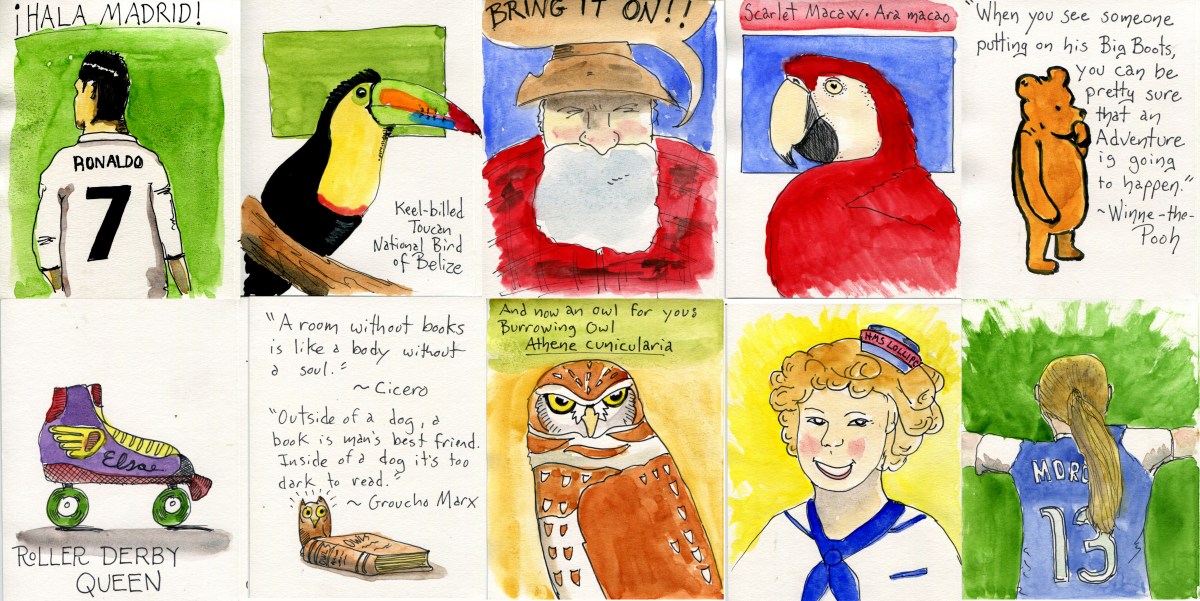
The feature image is a selection from the 28 cards I wrote and illustrated to my class this year. From roller derby to Winnie-The-Pooh, burrowing owl to keel-billed toucan, Shirley Temple to Cristiano Ronaldo. These images are as diverse as my students.

I can only hope that, 30 years from now, they too will find one of my cards and reflect and remember their time in my class as I did from finding a handwritten note, from a sixth grade teacher to her student.
Image

Toucans and Coffee

Dawn at the Canopy Tower started with coffee on the observation deck.

Early morning is the best time to see birds at the Canopy Tower. And the mammals can also be active. Both were actively foraging and close to the tower.

Coffee and TVs, on the observation deck of Canopy Tower.

The Canopy Tower rises above the treetops of Semaphore Hill, meaning that most birds where at eye level or below. No strained necks here, unless you were spotting a raptor directly above. But at this time of the morning there were few raptors on the wing.

As the sky lighten, the forest around the tower came alive. The sift between the nocturnal and the diurnal was underway.

In the front of the tower was a cecropia tree that reached to the heights of the tower. The tree was in flower and it attracted both howler monkeys and Geoffrey’s tamarins.

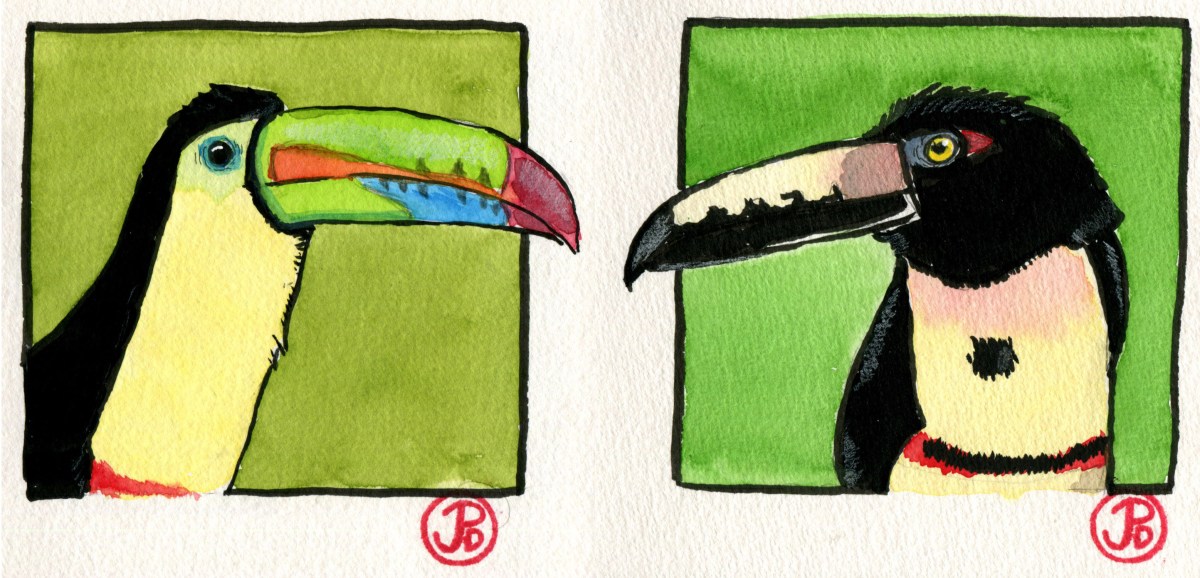
The real stars of the show where the two species of toucan that visited the cecropia in the mornings: the keel-billed toucan and the collared aracari. I had great eye level views of both species, which remains poster birds of the lowland rain forest perhaps none more so than the keel-billed (Ramphastos sulfuratus), the National bird of Belize. This large multicolored billed bird is the quintessential toucan of the tropics. A google images search for the word “toucan” yields many images of the keel-billed toucan over other species.

Poster bird of the Neotropical lowland rain forests.

There are over 40 species of toucans in five genera found only in the Neotropics. The African and Asia continents has many colorful and unique avifauna but the Americans have the family Ramphastidae, the toucans, all to itself.

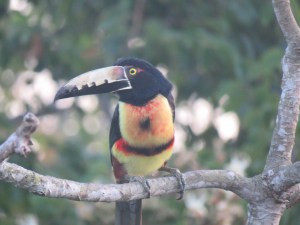
The keel-billed’s menacing looking cousin, the collared aracari.

Yet another reason to head to the Neotropics to see the birds, so often in Guinness ads and cereal boxes, in the feather!

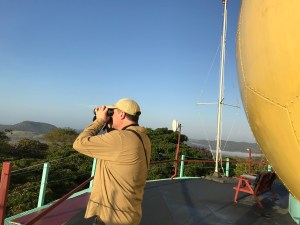
The sketcher in his happy place, dawn on the observation deck of the Canopy Tower, Panama.

Image

A Miner’s Gold Pouch

I wear my gold pouch with pride.

I’ve had it now for five years. That’s five trips to the Gold Fields of Coloma, five apple challenges, five dunkings into the South Fork of the American River, a few hundred students, and chaperones. It’s a bit faded now and turned up at the edges like a big leaf maple leaf in fall.

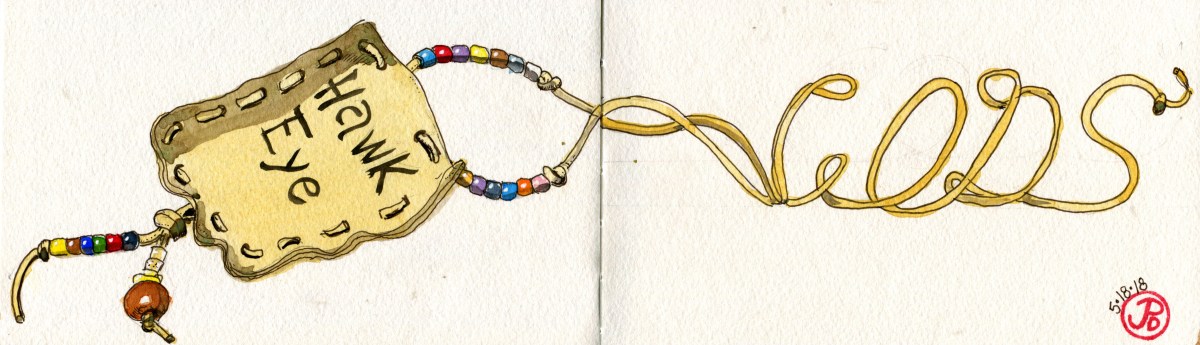
When I first was handed my pouch on my arrival at the Coloma Outdoor Discovery School (CODS), it was new, soft leather, the same pouch that all Greenhorns receive within their first few hours on the South Fork of the American River.

The gold pouch serves a few different purposes. Primarily it is a leather name tag, worn around the neck. Mine has the my miner’s name: Hawk Eye. Maybe a nod to MASH, a reference to birds or an allusion to my mother’s home state. It’s all of these but primarily it is a statement about seeing and perception. To be aware, to be present.

In our current time, our youth are inundated with artificial experience. Bright screens that can darken the mind. And our youth, I fear, will reap a whirlwind for not being “here now”.

But it the contents of the pouch that gives me hope. In my pouch is a vial filled with water. This is the container that Greenhorns use to keep their flakes of gold that they find while gold panning. Mine is empty because I seldom have time to pan for gold.

I am often asked by students to show them the gold in my vial and I tell them that the gold I find in Coloma is not contained in my vial but the gold is standing in front of me. That is my hope. That is our future.

While at CODS we learn what happened here in January 1848, setting off the largest migration of humans in history, indeed the world rushed in. But the Gold Rush that happens on the banks of the American River happens here everyday at CODS.

It is something undefinable, and unique to each individual student but it is certainly much more precious than the gold that was manically mined here after word spread of James Marshall’s discovery.

The real gold of Coloma is that fire that burns within, that we all, as educators, fan and tend to. As Yeats noted, “Education is not the filling of the pail, but the lighting of a fire.” Just as it’s not about filling the vial with gold but really about igniting the desire to do something for our one and only planet and to be our best selfs.

And while we head back on the bus, many students sleep but that fire, that little pilot light, that always burns, is planted in them, ready to ignite!

Image

Bookend Bird

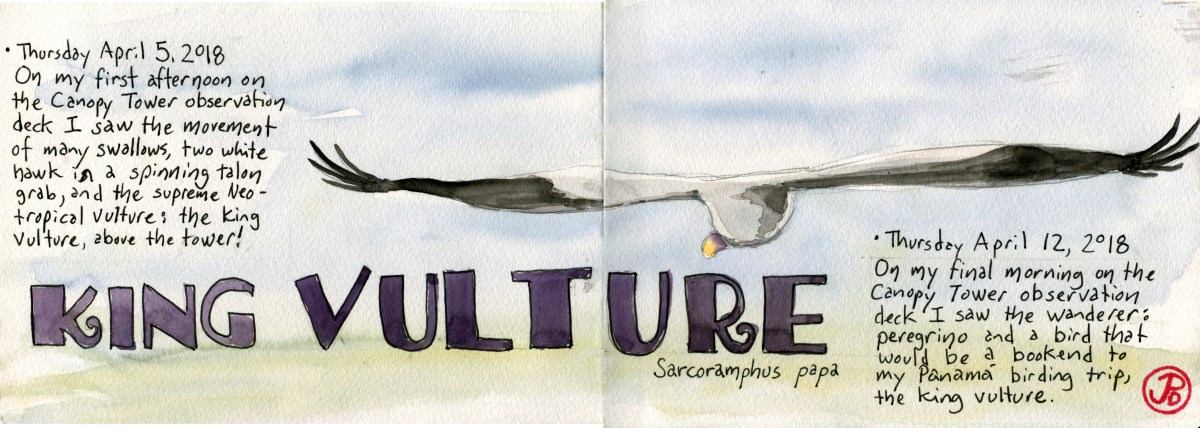
When I first arrived at the Canopy Tower, I headed directly up to the observation deck. Spring migration was in evidence as many swallows, mainly barn, headed north.

The gray sky was also filled with black and turkey vultures. To the north I saw two white hawks come together, interlock talons, and spiral towards the ground, wings held out at a tight angle. Spring was definitely in the air!

Directly above, vultures turned. A black, a turkey, pause, and then, the king! The two-toned adult with the head of many colors shouted our: king vulture!

The king vulture (Sarcoramphus papa)  was and is an amazing bird to see on my first stint on the Canopy Tower’s observation deck and I would not see another king anywhere else in Panama until . . .

April 12, 2018 6:20 AM.

My final day in Panama

When I assented the stairs to the observation deck, I had added 98 lifers to my list and my world lifelist stood at 1,037 species. I had finally reached a personal birding milestone.

This was no mean feat that took almost 20 years, six countries, 11 states, thousands of miles, many shoes, and four pair of binoculars.

This morning on the observation deck I was seeing the usual suspects keeled- billed toucan, palm rangers, scaled pigeon, red-lored parrots, and migrating swallows.

To the north I spotted the unmistakable profile of the wanderer. Peregrino as it’s known in Panama, the peregrine falcon. There was much rejoicing as the peregrine passed over our heads and out of sight.

Peregrine falcon.

Shortly afterward, as most of the observers headed down for breakfast, I saw a small kettle pf vultures was over head. Black and turkey and then a much larger vulture was among them, the king, my bookend bird: the king vulture.

This was a great bird to end my time on the observation deck of the Canopy Tower on my last birding on the isthmus of Panama.

King vulture.

Image

Creatures of the Night

El viento de la niche gira en el cuelo y canta.

Puedo escribir los versos mas tristes esta noche.

Yo la quise, y a veces ella tambien me quiso.

Puedo Escribir, Pablo Neruda

Nocturnal avifauna can be very tricky to see by day or night. Nocturnal birds remain the holy crucible for most birders. To see a creature of the night can be very fulfilling because the birds can be so mysterious and illusive. And to see them well can take time and a lot of patience.

During the day, their cryptic colors helps them blend into their daytime roosts, which can often be deep inside the rainforest foliage or hidden in a cavity in the trunk of a towering tree, high up in the canopy.

When we think of nocturnal birds, one group always comes to mind: owls. Panama has 13 species of owls, featured in The Birds of Panama by George R. Angehr and Robert Dean (my Holy Bible while I birded the Isthmus). But owls are not the only birds that earn their living in the dark. The members of the Caprimulgidae family (nighthawks, pauraques, and nightjars) are represented by nine species in Panama. The potoos (family: Nyctibiidae) are represented by the great and common potoo and are only found in the neotropics. The oilbird is the only member of it’s family (Steatornitthidae).

In my time in Panama I was lucky to see six members of these night phantoms. All where seen in the daytime as they roosted, awaiting their graveyard shifts and two of them were sitting on nests

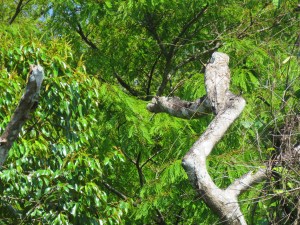
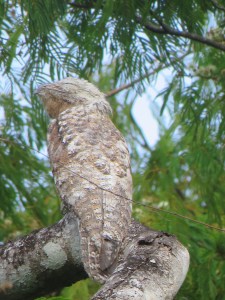
The first nocturnal bird we saw was sitting on an egg in a tree by the side of the busy Gamboa Road. Oddly enough the large bird was out in the open and it’s cryptic color and posture made the great potoo (Nyctibius grandis) look like a vertical branch with its back facing the road. Here was a bird I had not anticipated seeing. What are the changes of seeing a roosting bird that can be scarcely distinguished from a snag? Full credit must be given to my Canopy guides who pointed the great potoo.

One bird that topped my wishlist is one of the largest owl in Central America. How hard would it be to see a large owl in the Neotropics? Again I hadn’t anticipated seeing this owl so getting my bins on Pulsatrix perspicillata would be a pure bonus. I wanted to see this owl so badly that it took two attempts.

We walked down the Old Gamboa Road, attempting to find the bird in its daytime roost in a palm. The owl flushed and I got a fleeting glimpse of the spectacled owl in flight. It felt a bit dishonest, even to myself, to calm to have seen a spectacled in the wild.

So on my last day in Panama, we again attempted to get a good look at Pulsatrix perspicillata. This time we used stealth, planting each footfall with care not to rustle any leaves and restricting any conversation. We slowly moved on the right side of the road and I crouched down and looked up under a palm and there was the adult spectacled owl looking right back at me. So much for stealthy humans.

There is something special, if not slightly unsettling, at looking an alpha predator in the eyes. It certainly not the gaze you want to encounter if you are a small mammal.

Spectacled owl (Pulsatrix perspicillata)

The final nocturnal bird featured in the triptych is the black and white owl (Strix nigrolineata). Again my guides at Canopy Tower made owling easy as they knew of a pair that were roosting just off of Semaphore Road on the way down the hill from Canopy Tower.

A very cryptic rufous nightjar on it’s nest.

Image

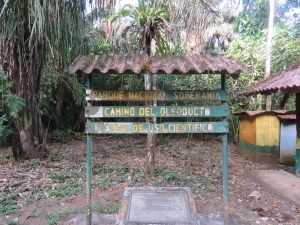
Camino del Oleoducto, Pipeline Road

April 10, 2018

Today was the day we where going to bird one of the most famous birding locations in Central America. Some say this is the best birding location in all of Central and South America. This is Pipeline Road.

Welcome to the Jungle. The entrance to Camino del Oleoducto.

Pipeline has a species list that exceeds 400. It is a point in Panama where bird species of the Caribbean and Pacific Coast come together in one location. The road allows access deep into the rainforest.

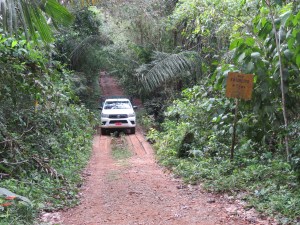
The road was built during World War II as a service road that paralleled an oil pipeline that was a Plan B if the Panama Canal was attacked. The Canal was never attacked and the pipeline was never used. The road is now a hotspot for tropical birding in the Canal Zone.

The Canopy Tower Mobile on Camino del Oleoducto.

At the end of the day we ended with 58 species including spotted antbird, black-breasted puffbird, and white-tailed trogon (birds featured in the Pipeline Road triptych).

A male white-tailed trogon.

Birds of the Neotropics have an eclectic collection of English common names. It’s as if the European and American ornithologist didn’t quite know how to name each odd and strange new species they discovered in the Neotropics and you get such Frankenstein names such as the red-throated ant-tanager. These scientists had been hording up their hyphens and they used them with abandonment when naming these species. A few highlights from a day’s birding on Camino del Oleoducto included: pheasant and squirrel cuckoo, purple-crowned fairy, black-crowned antshrike, checkered-throated and dot-winged antwren, the stunning ocellated antbird, a singing streak-chested antpitta, southern bentbill, brownish twistwing, black-capped pygmy-tryant, olivaceous flatbill, rufous piha, blue-crowned, golden-collared, and red-capped manakin, speckled mourner, green shrike-vireo, and chestnut-headed oropendola.

A very small bird with a very long name. The black-capped pygmy-tyrant is one of the smallest passerines in the world.

Image

1,000

April 7, 2018.

992 World Life Birds

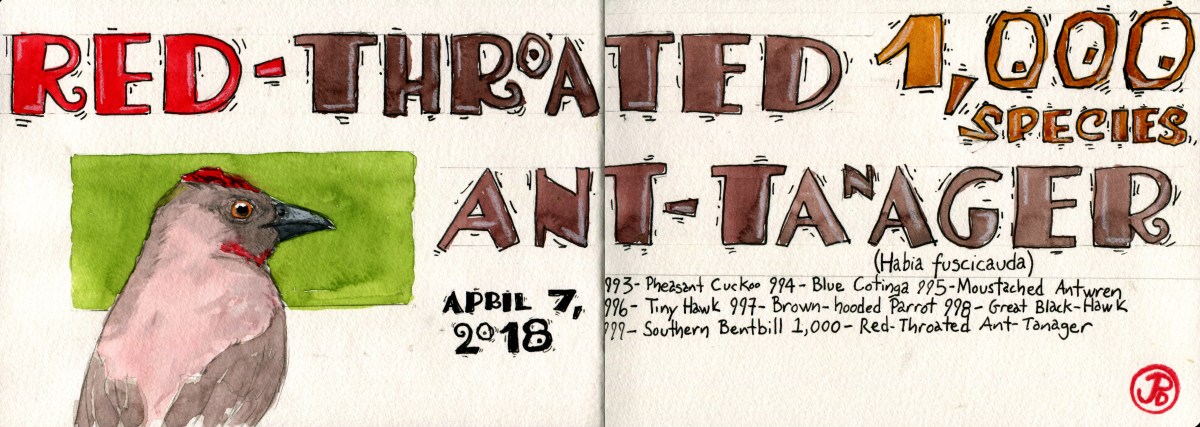
On the trail back from Lake Calamito, unbeknownst to me, I saw my 1,000th world bird species!

I knew when I started the day that I was close to 1,000 and in fact I would reach this milestone because I was only eight species away. As I was ticking off birds, it was hard to keeps track of whether I had seen the species before. I had seen about 350 species the previous summer in Costa Rica and there is some overlap between the two countries.

As we recrossed the footbridge, some movement to the right caught our attention. Some drab birds were working under the dark understory. They were long-tailed birds, about the size of a California towhee. Alex identified them as the doubled hyphenated red-throated ant-tanager. These birds lacked the red throat because they were females, three in fact.

Now my 1,00th bird could have been tiny hawk, great black-hawk, or brown-hooded parrot, but if I counted correctly (an almost 20 year effort) then my 1,000th world bird species was a rather drab, towhee-sized bird that, in reality, is not a tanager but is related to cardinals.

A male red-throated ant-tanager later seen on Pipeline Road.

Somehow this seems fitting because while we place the larger or more colorful “sexy” fauna such as the harpy eagles, king vultures, or blue continga on a higher plane, it is the smaller, drabber birds that force us to look more closely and notice the details. Details that whisper in your ear instead of smacking you with full force in the face!

And the rain forest does not always give up it’s secrets, sometimes it’s a fleeting glance of a small brown bird, but to look at the three females foraging in the understory is to see a piece of the ecosystem and they will be such, whether I had a good look or a poor look, whether it was bird 999 on my life list or 1,001.