Image

Continuous-Line Sketching Part 1

While on O’ahu I continued with continuous-line sketching.

I had originally wanted to keep a separate journal and only sketch with this freeing technique but I didn’t follow my own challenge and spread continuous-line sketches throughout my three watercolor journals that I brought with me to Hawaii and Australia.

I grew to love this method in proportion to by own leaning curve. I didn’t want to sketch this way on every sketch but sprinkle it about as the subject seems fit.

What I love about this technique is it is a puzzle; figuring out how to get to one part of the sketch to the other. You simply draw your way there, sometimes doubling or tripling back on already existing pen marks. And of course pencils are never allowed for Continuous-Lines Sketches (CLS).

My first CLS was of the famed statue of King Kamehameha in front of the ‘Iolani Palace in downtown Honolulu.
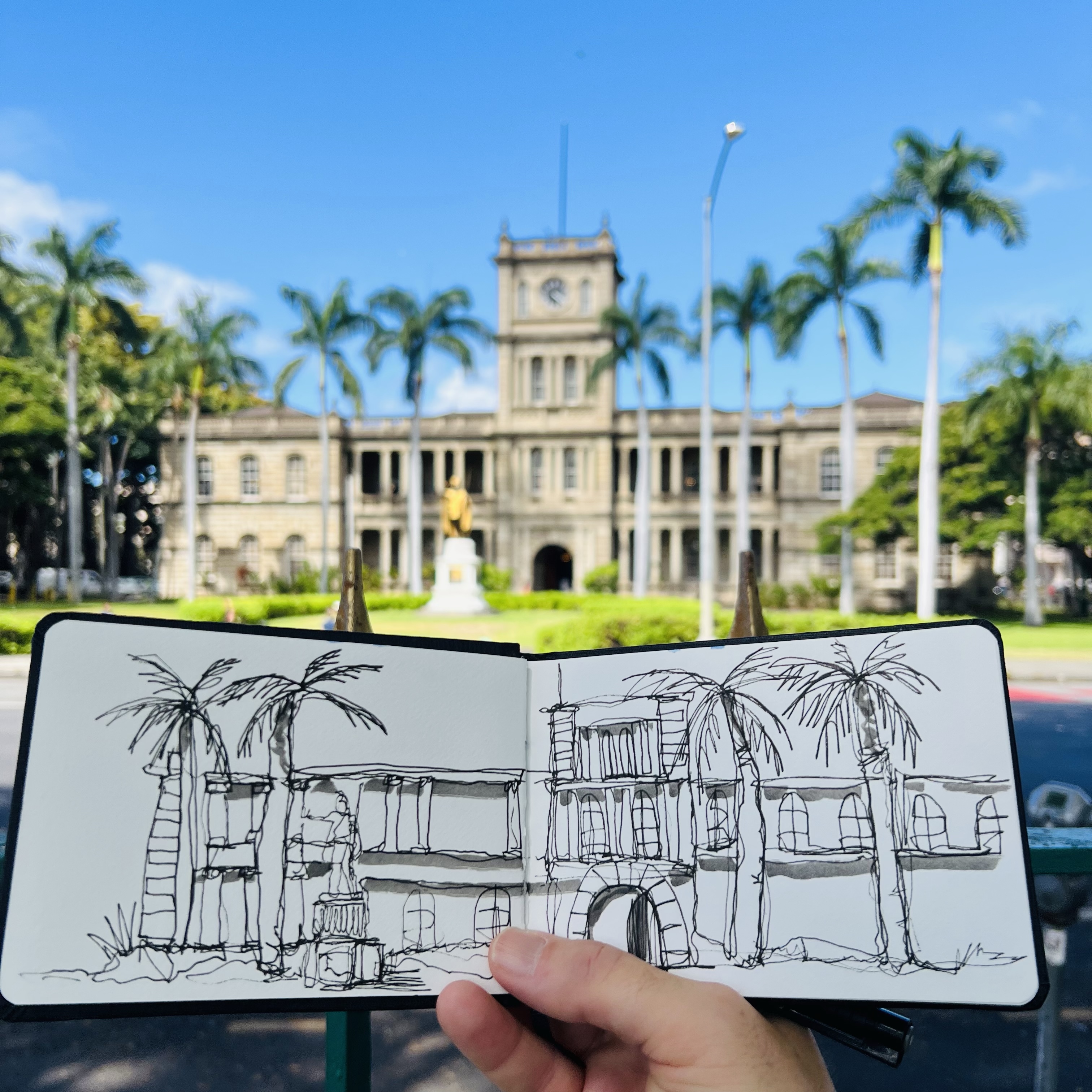
While I initially looked at the complex details of the building I let it rip with a single pen line and I liked the results.
The final continuous-line sketch with watercolor washes.

After sketching the palace I caught an Uber up to the Punchbowl Cemetery where the National Memorial Cemetery of the Pacific is located. The cemetery sits in a volcanic crater and many of the victims of the attack of Pearl Harbor are buried here.

I rendered the monument in a single, unbroken one line and I am pleased with the result.

Is this the most precise and accurate sketch of the monument? No, but is has something more, a feeling of spontaneity.

I had to continuously-line sketch the one view that says “Waikiki” more than all others: Diamond Head from Waikiki Beach.

I walked out to a stone jetty, in front of the lifeguard station and let my pen do the dancing. Instead of attempting to draw every palm leaf on every frond, I look for shapes not details (featured sketch).

A great way to end the day was to sit on my hotel room balcony with an adult beverage and my sketchbook while looking over the “Las Vegas” of Hawaii.

CLS view from my La Croix Hotel balcony.
Image

Caltraining

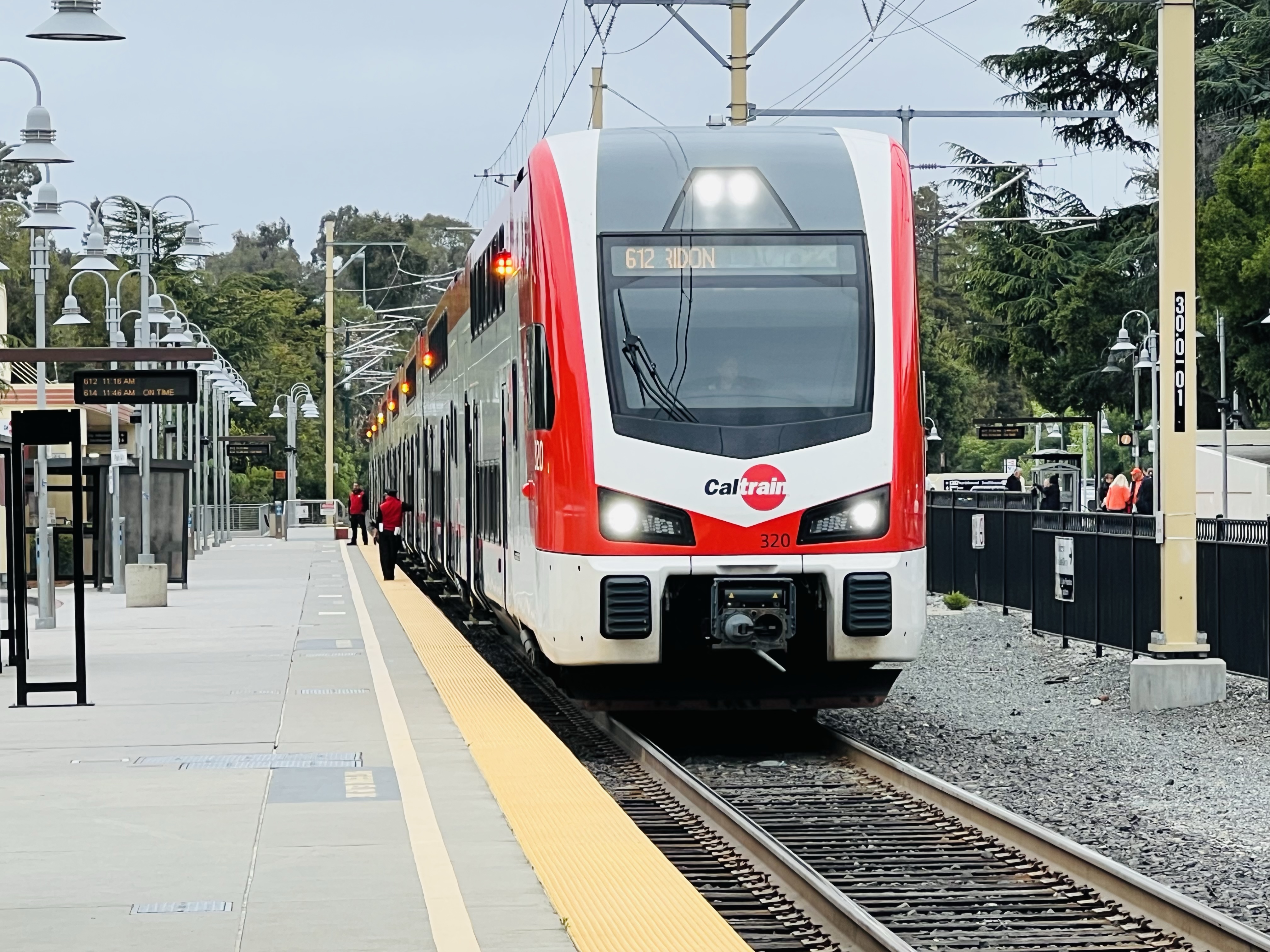
Last fall the new Sadler electric multiple unit sets (EMU) were put into service on the Caltrain route from San Francisco to San Jose and I had been meaning to ride aboard ever since.

So on a gloomy spring morning in late April, I boarded an inbound N Judah to the Caltrain Station at 4th and King.

I was picking a travel window that was not going to be too chaotic with first pitch scheduled at 1:05 at the Giant’s game. Lots of fans use the N Judah and Caltrain to get to the game.

I planned to catch southbound train 610 departing at 9:55 AM and detrain in Palo Alto for lunch on University Avenue.

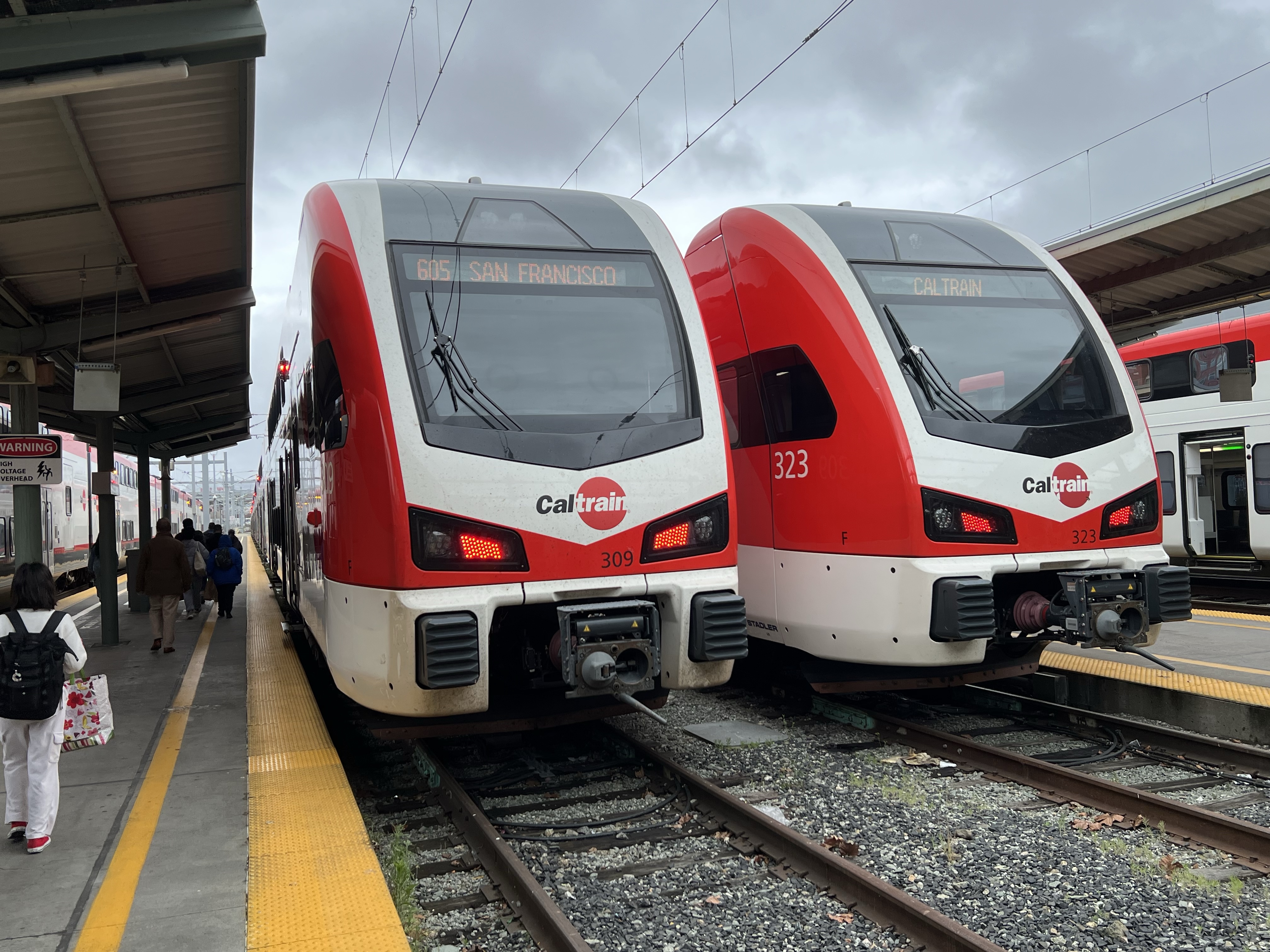
Two of the new EMUs at the San Francisco Caltrain Station.

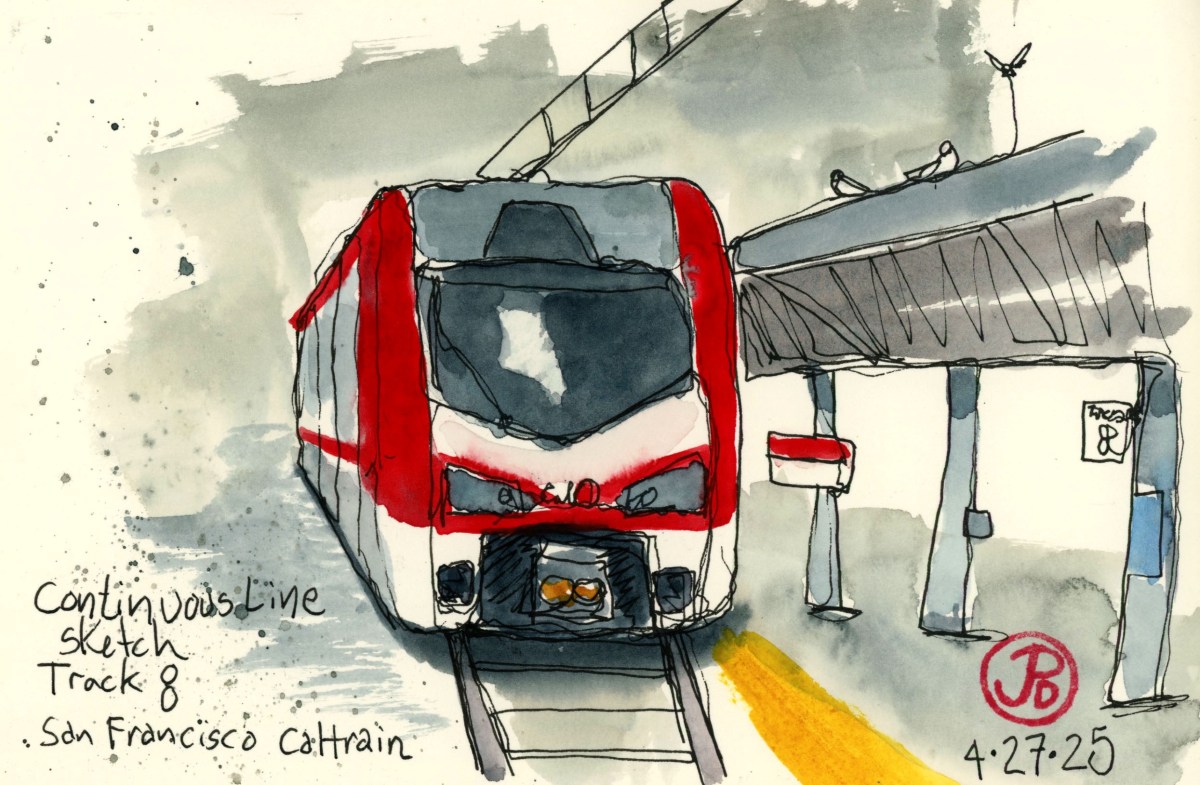
My goal was to bring one pen (TWSBI Eco) and one watercolor journal (Stillman & Birn Delta panoramic) and only use continuous line sketching.

Before catching my train I sketched one of the new units on Track No. 8. (Featured sketch).

The gates opened and I boarded the train and was impressed with the bi-level design. I chose a seat on the top level sitting on the west facing side of the train (where all the historic stations are located).

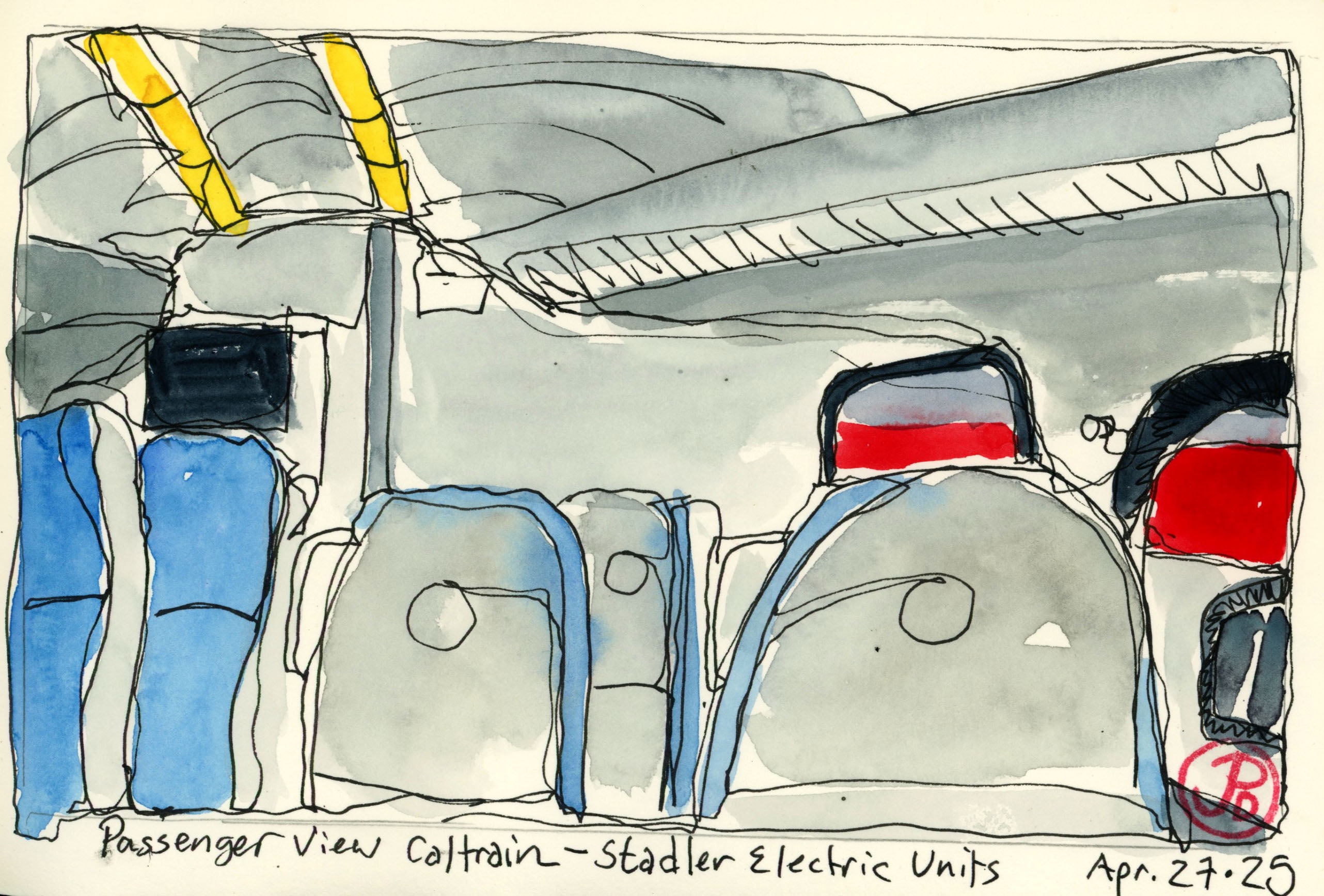
Before the train left I did a continuous line sketch of the interior from my upper deck seat-view. This sketching style loosens up your work including perspective. Normally I would pencil in the vanishing point and convergent lines but this sketching style is absolutely feral!

This takes a little getting used to because loosening up your sketching style causing you to loosen up your perspective of the style.

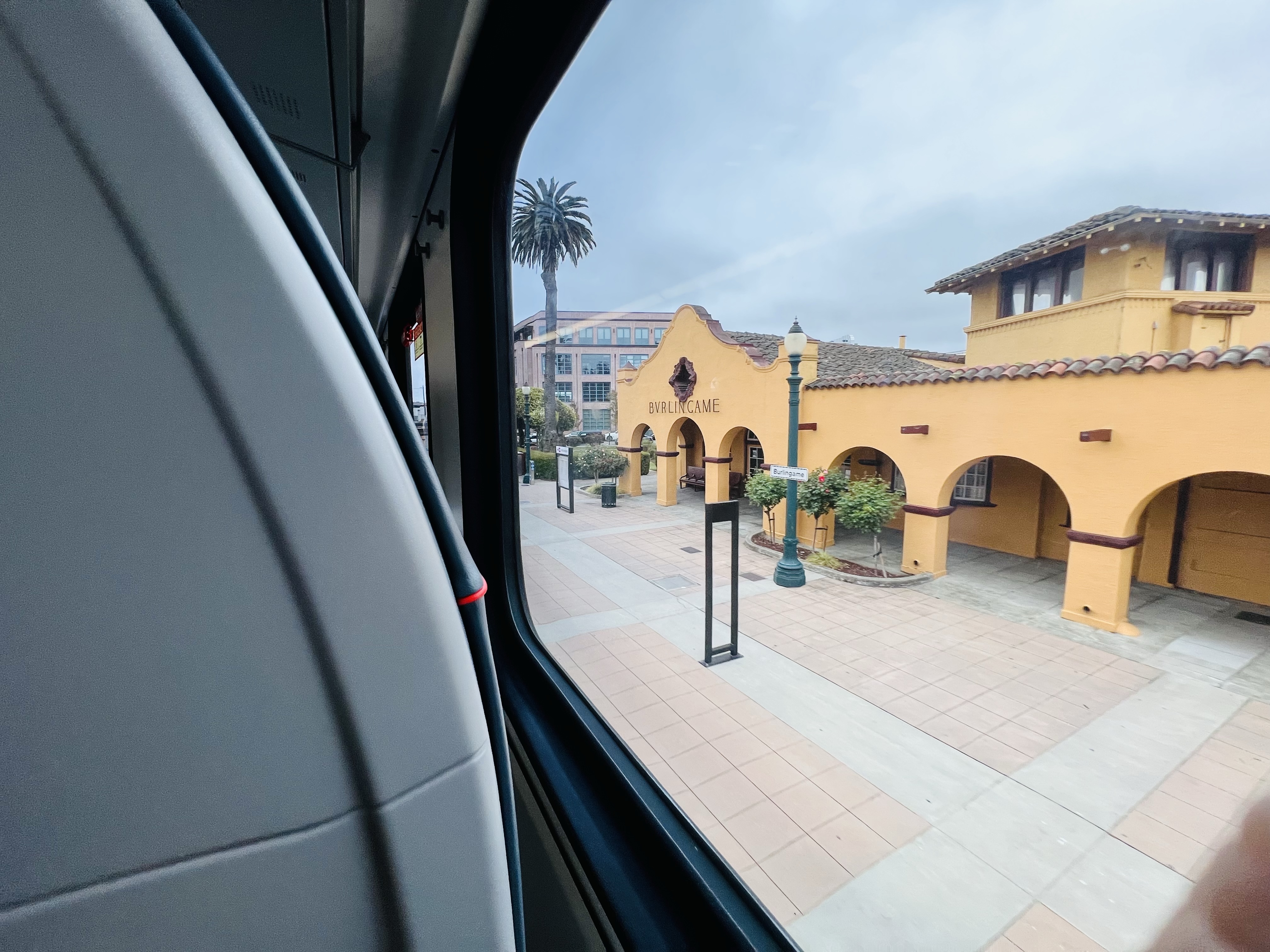
The view of one of my favorite stations on the line: Burlingame. This station is one of the earliest examples of the Mission Revival style and was highly influential in California when it was opened in 1894.
An EMU at Palo Alto, Caltrain’s second busiest station after San Francisco.
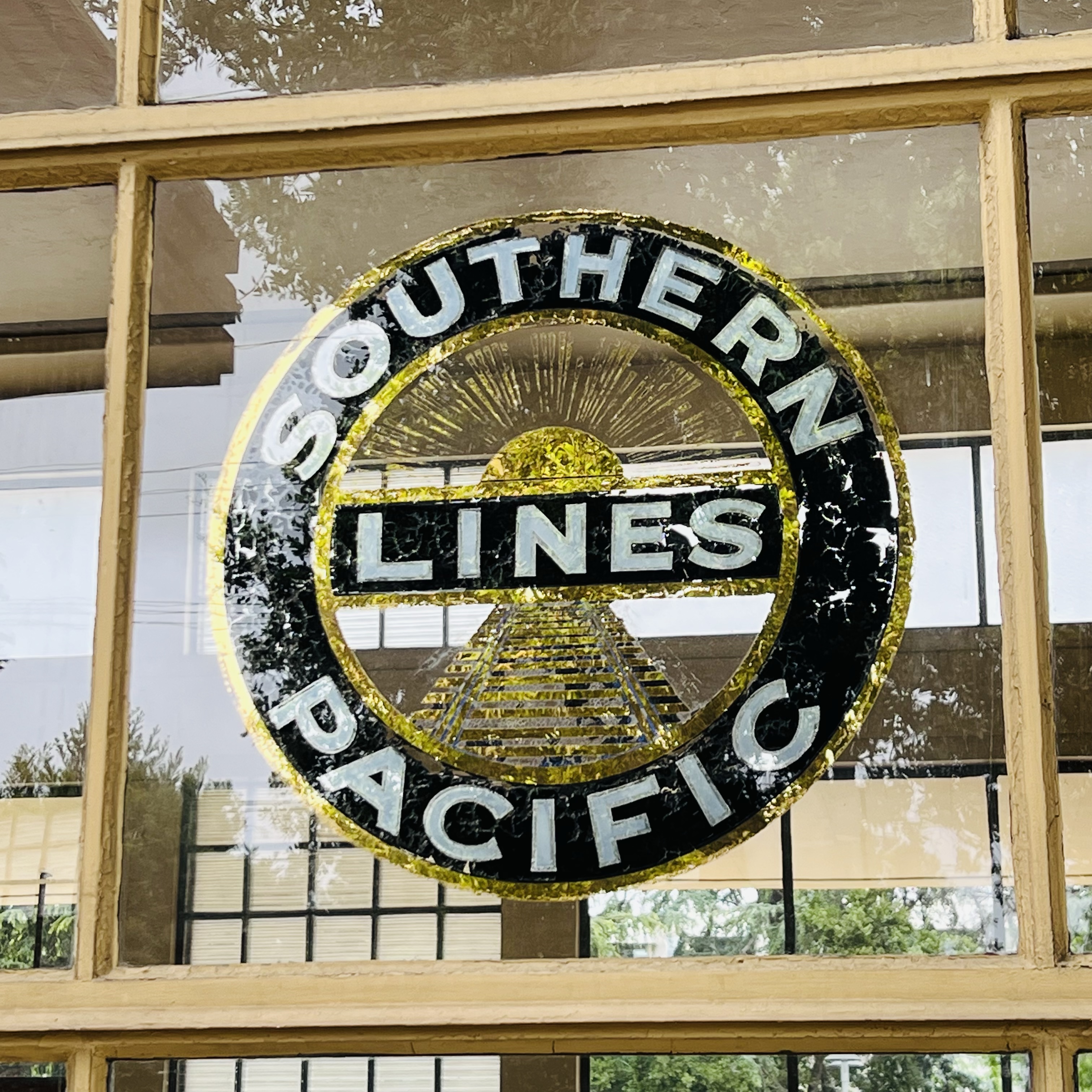
The emblem of the mighty SP when Palo Alto was a stop on the streamlined Daylight passenger service from San Francisco to Los Angeles. The most beautiful passenger train in the world (But I’m biased.)

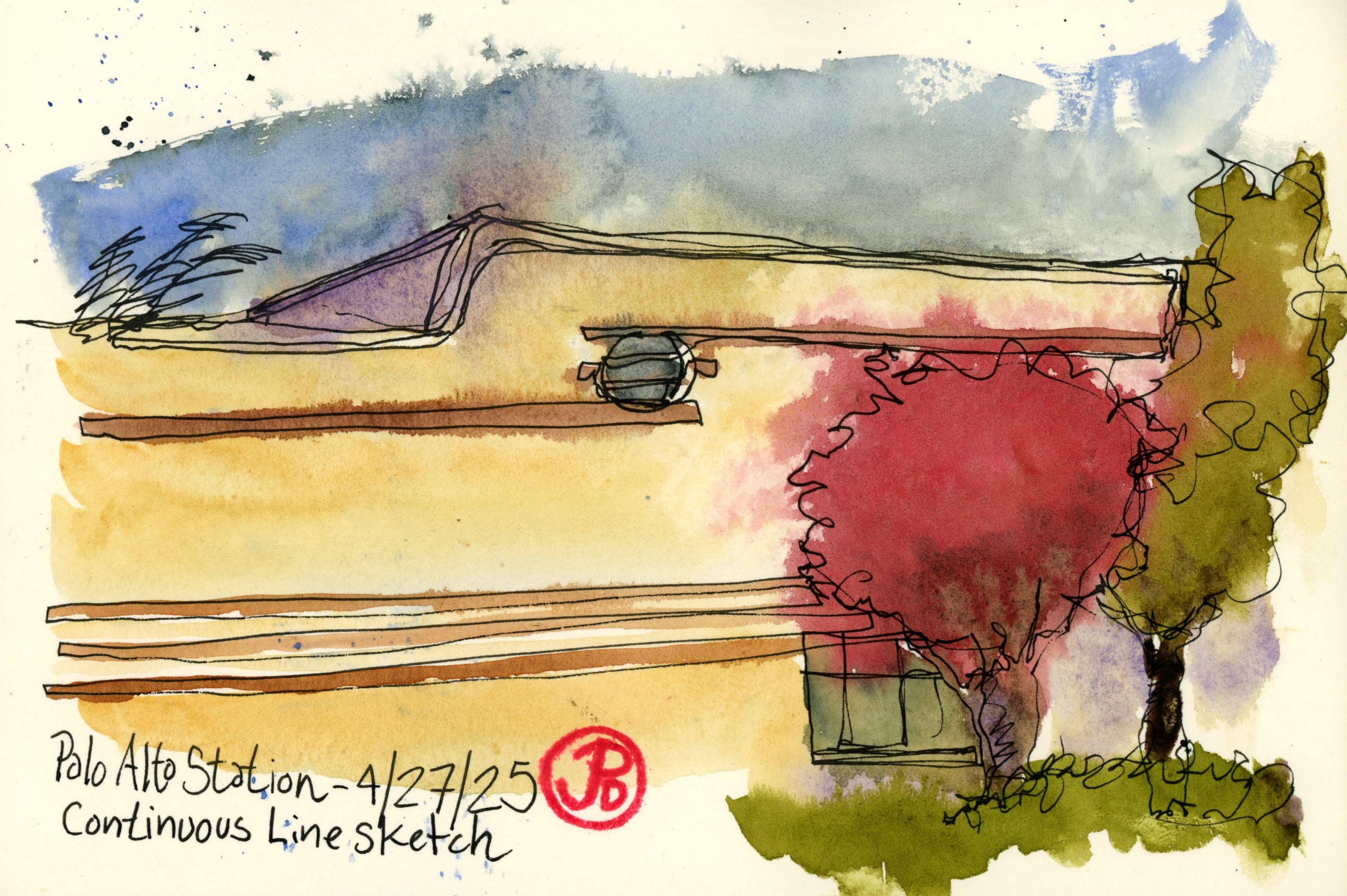
Before heading to lunch on University, I sketched another of my favorite stations on the line the Streamline Moderne Palo Alto station (1941) which looks like some kind of sea going vessel about to take to the air! The station was rebuilt to match the streamlined GS locomotives that were on point for the Coast Daylights.

Final Thoughts

Caltrain’s new EMUs provided a quiet, comfortable, and quick ride from San Francisco to Palo Alto. The interior is well designed and easy to navigate with screens at both ends of the car that shows the next stop as well as upcoming stops. The seven car units have a European feel that looks more like a fast tram or articulated streetcar rather than a high sped mainline train set.

One quibble with the design is that there is only one restroom aboard the train set. This is not a minor quibble as most stations on the line do not provide opened restrooms (including Palo Alto).

Image

Crockett Sketching

On a Saturday morning I headed up to Sugar Town on the Carquinez Strait.

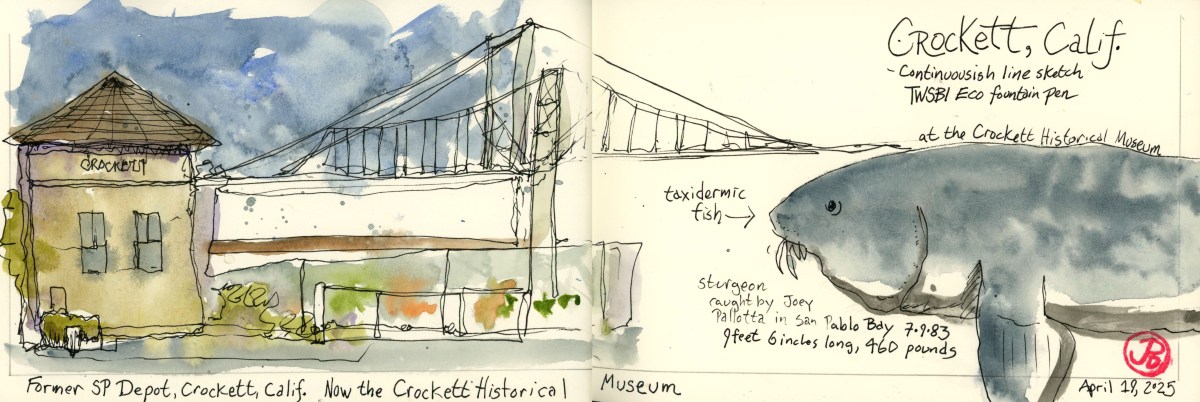
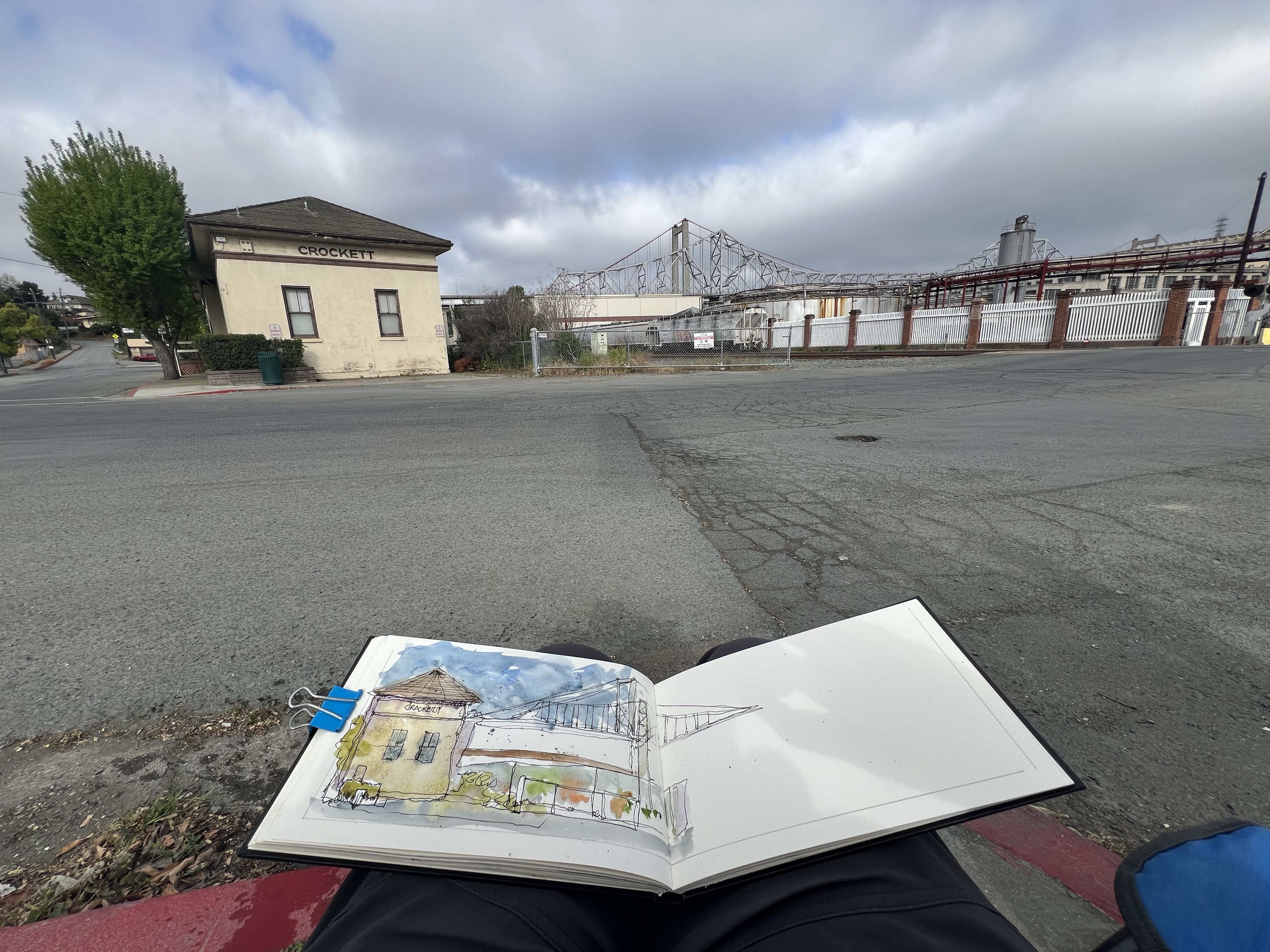
My sketching target: the former Crockett Southern Pacific Depot with the two parallel spans of the Carquinez Bridges in the background. The depot is now home to the Crockett Historical Museum. Open Wednesday and Saturday from 10am to 3pm. Ish!

This is a busy place for rail with seven trains passing by including a California Zephyr, a Coast Starlight, a San Joaquin, Capital Corridors, and a Union Pacific freight during my two hours visit.

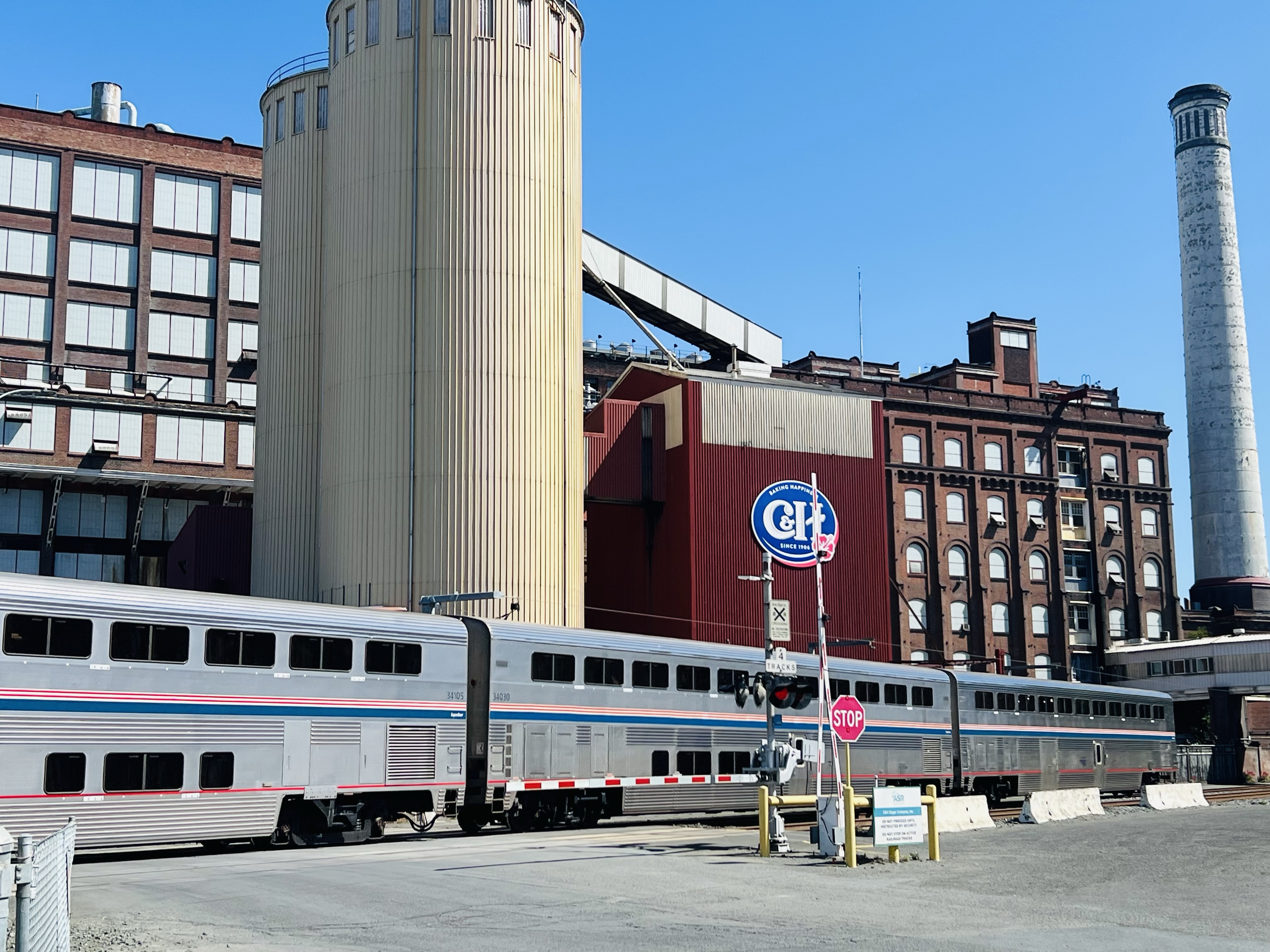
Coast Starlight No. 11 passes by the C & H Factory to its final destination of Los Angeles’ Union Station. The train was running a little late. Shocker!

My sketching goal was to render the scene in a continuous line sketch. This means you never lift your pen for the entire sketch. No pencil, no erasing, no going back, this is truly sketching without a net!

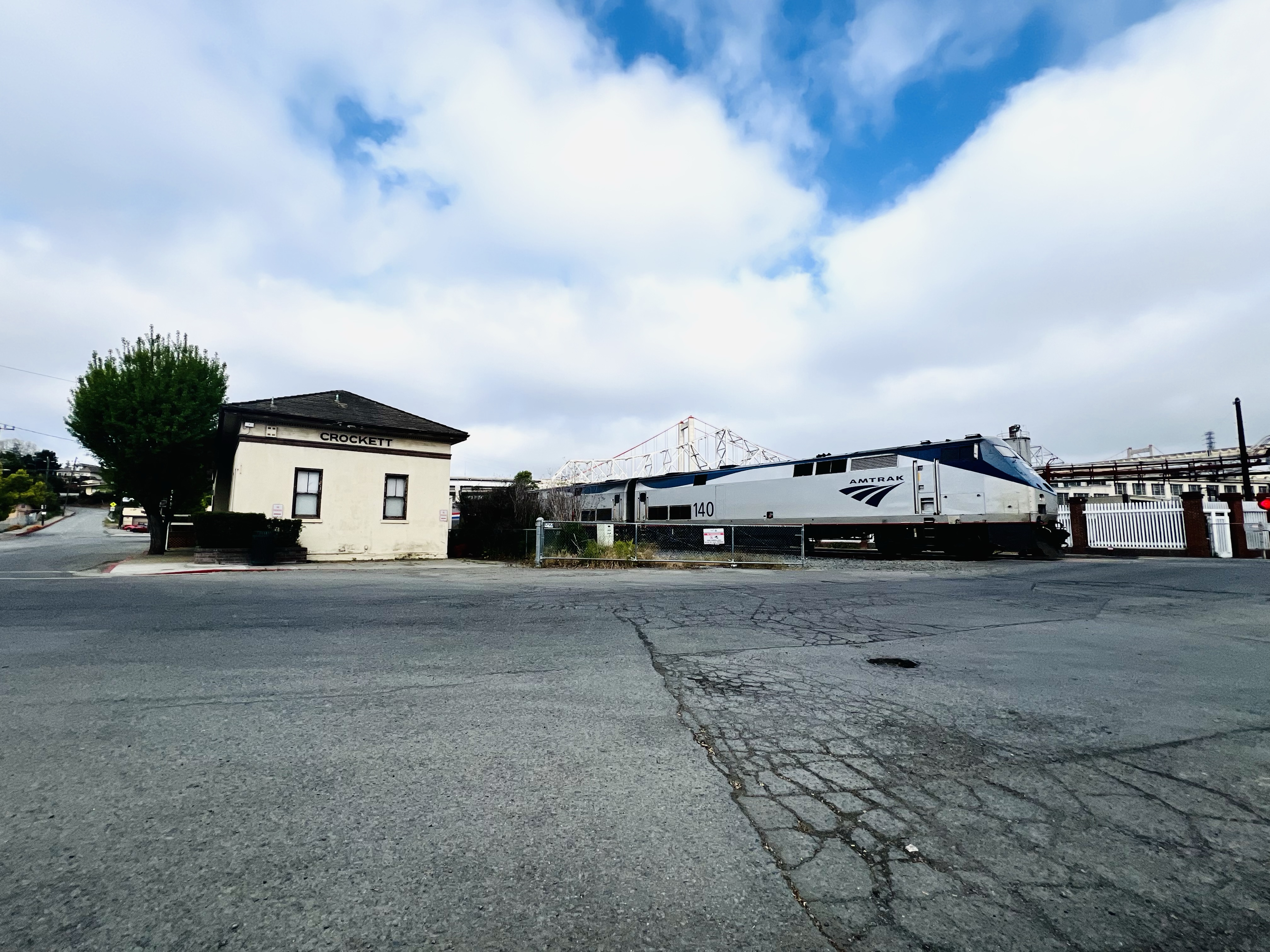
Eastbound California Zephyr Number 6 passing the former SP Depot at 8:56 AM without stopping. Final destination: Chicago.

I set up my sketching chair across the street from the depot just at the entrance to the company that made Crockett a company town, the C & H (California & Hawaii) sugar factory. For my sketch I used my TWSBI Eco fountain pen.

Nothing like starting the weekend with a field sketch!

Continuous line sketching can be challenging and I lifted my pen off the page once or twice (to photograph Zephyr Number 6) but I restarted where I left off. So my sketch is really a broken continuous line sketch.

In the end I like the imperfect lines of the sketch. This technique is a great way to loosen up your line work and in the end I am pleased with the result. It may not be the most accurate form of sketching but it sure has a lot of soul!

I added some wet on wet washes and paint splatter, which looseness, matches the line work.

When the museum finally opened at 10:25, I was drawn to the large 460 pound taxidermy sturgeon in a glass case. So I added it to the right side of the spread.

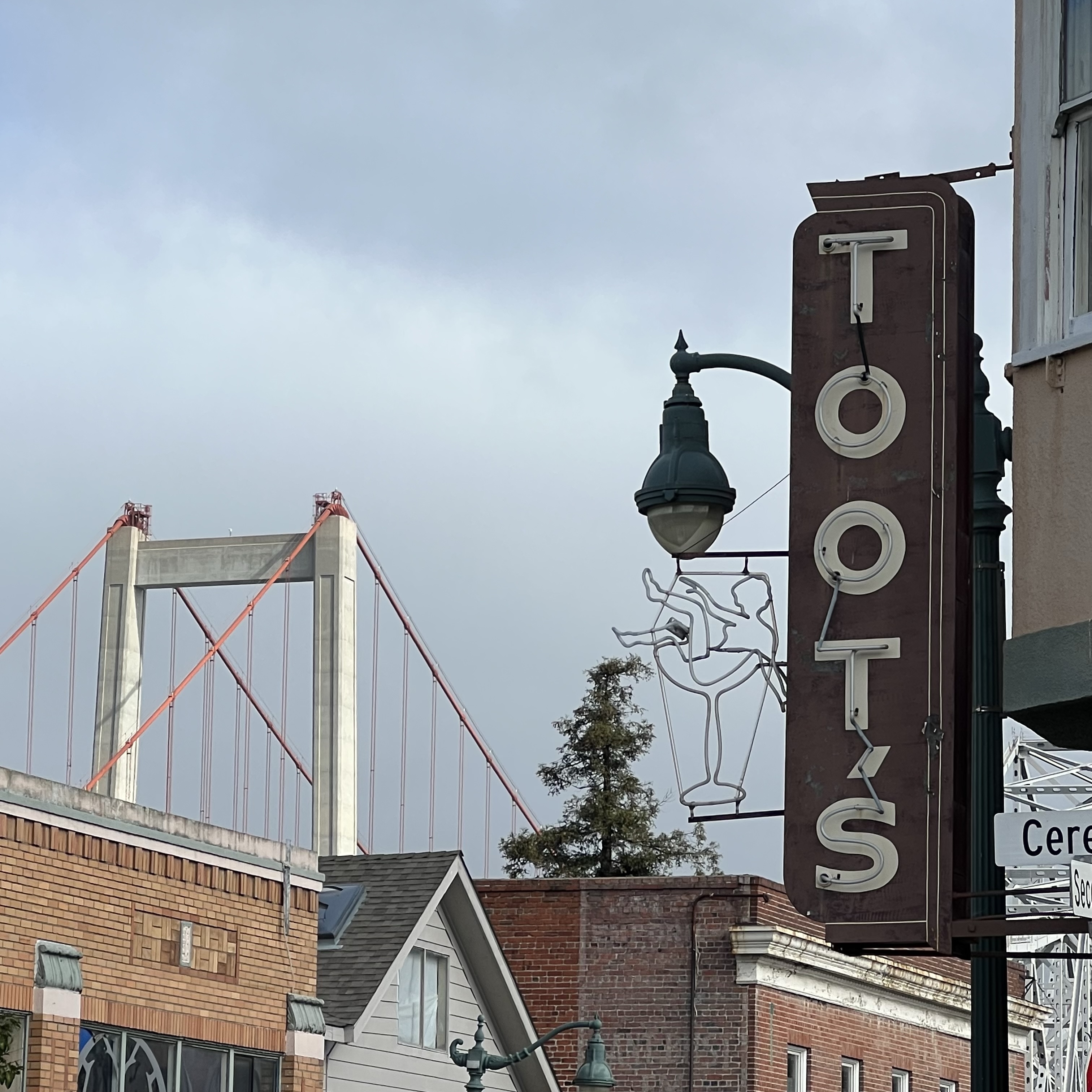
Main Street Crockett with Toot’s bar and the new span of the 2003 Carquinez Bridge towering over the town.

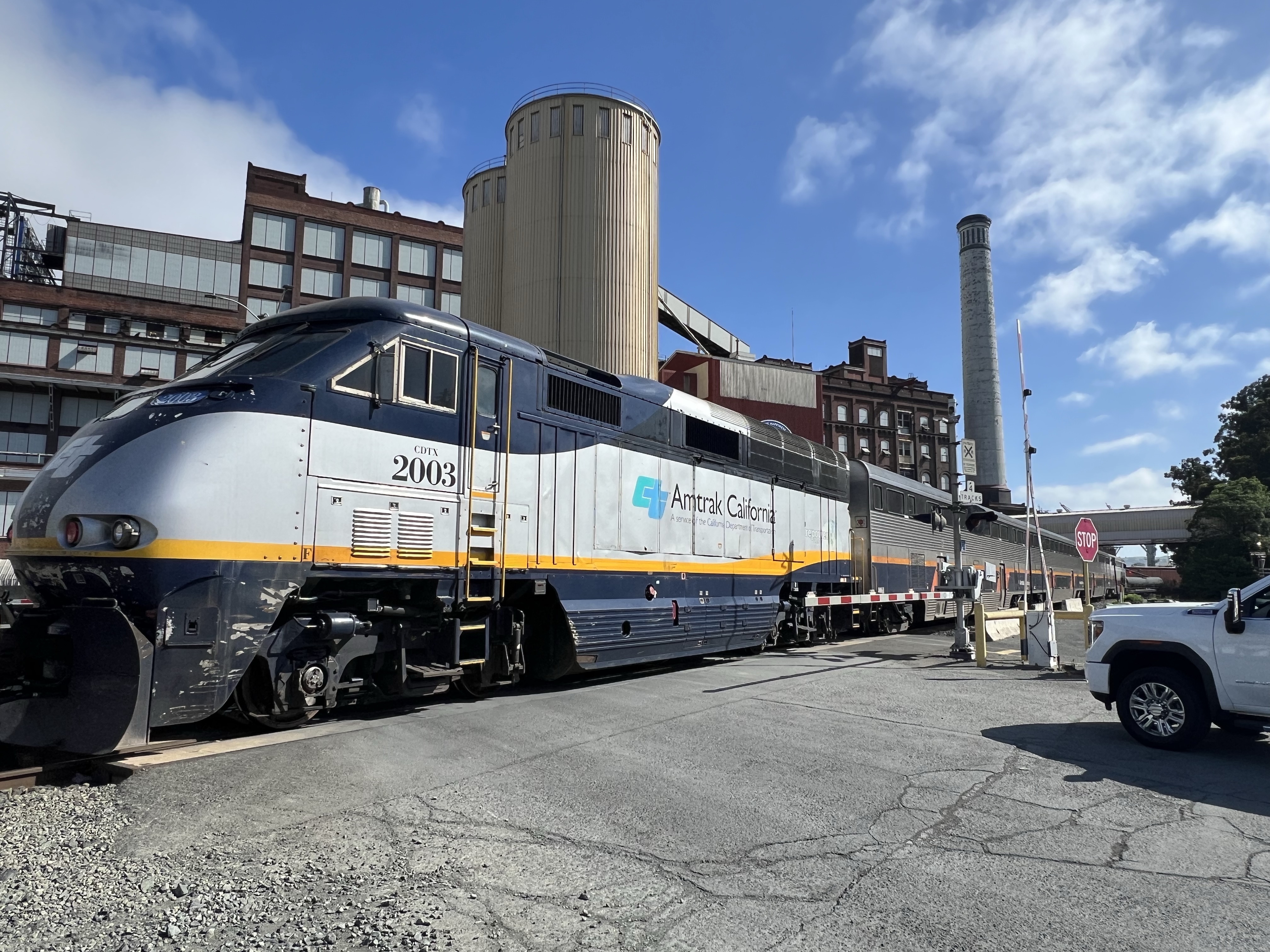
The trains never stop rolling through Crockett. This is a Sacramento-bound Capital Corridor train passing the sugar factory.