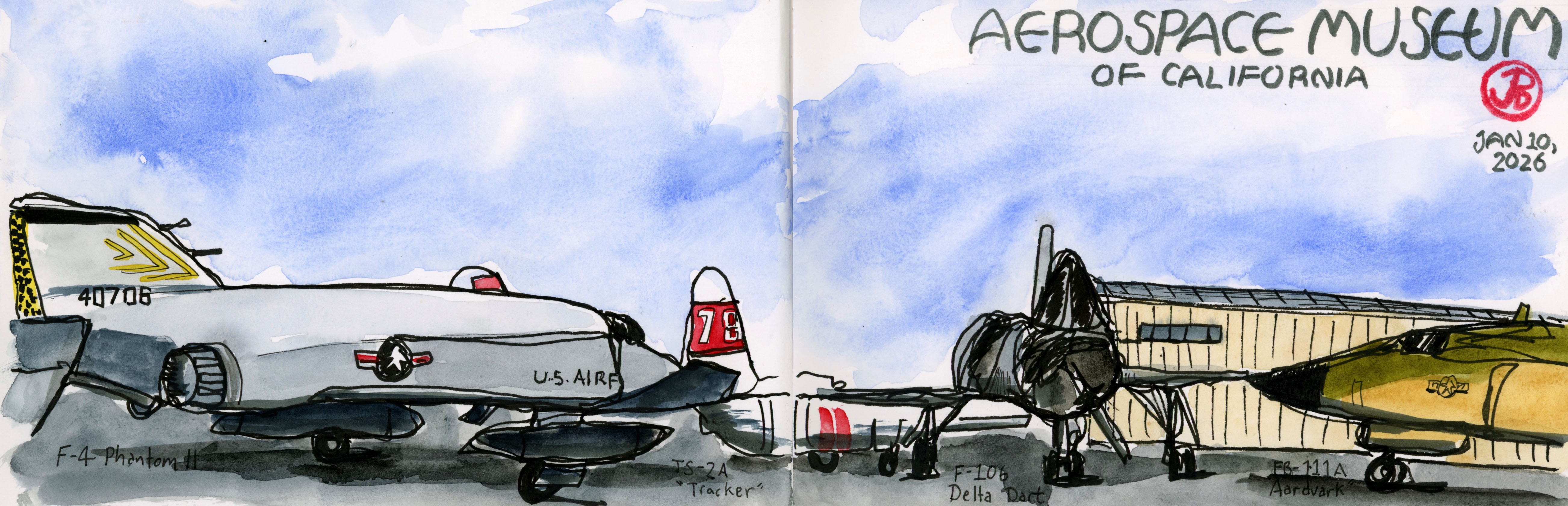
My Saturday morning sketching destination was a museum next to a former Air Force base: McClellan AFB in North Highlands Sacramento.
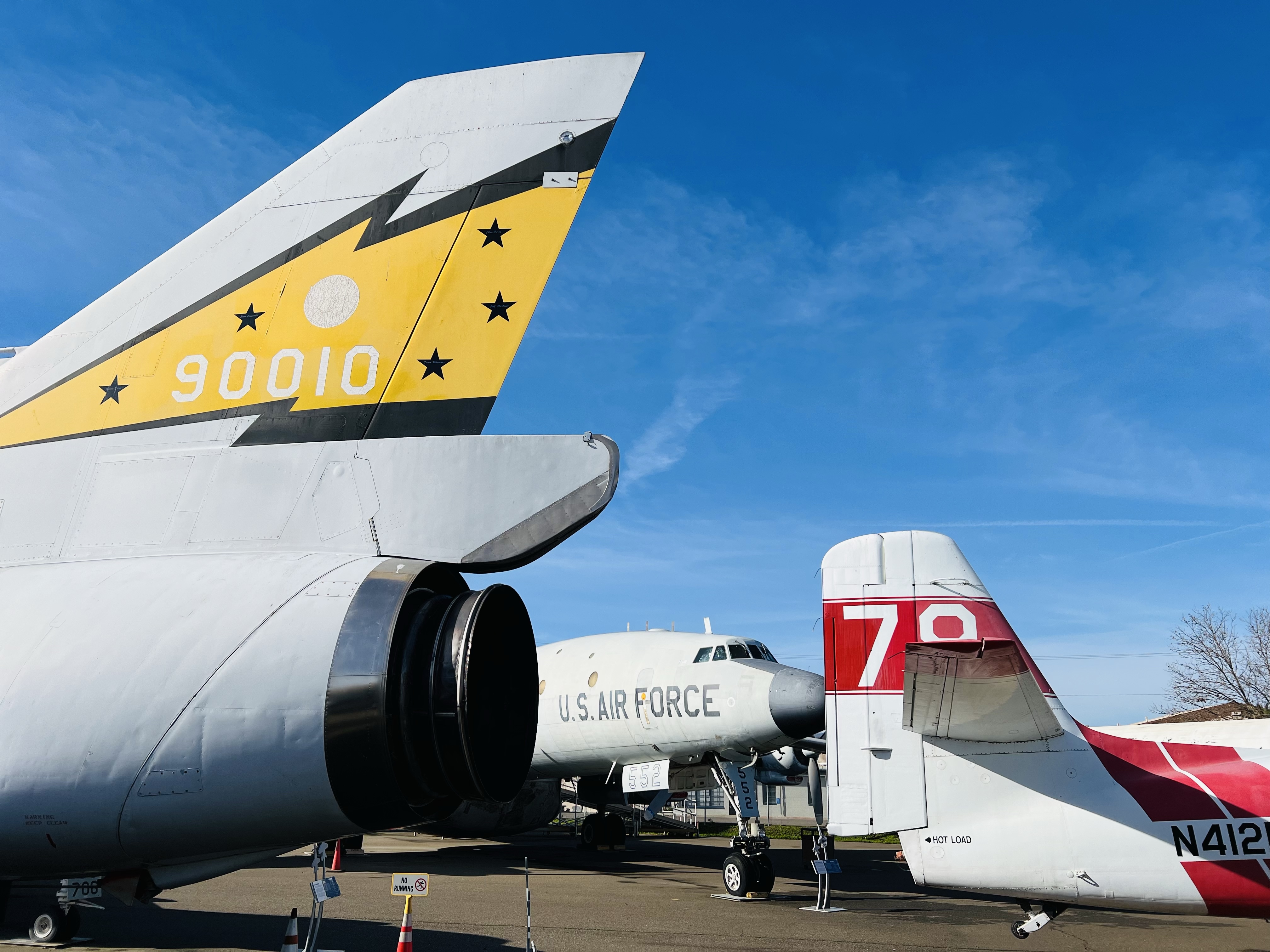
The museum is housed in a hangar with a solid collection of airplanes outside. To sketch the aircraft in the museum’s collection I’d have to head outside and brave the cool temps.
Planes, planes everywhere! The museum has a collection of both prop and jet planes spanning a wide range of aviation history.
I arrived just after the museum opened at 9. It was a cold morning under clear blue skies in the Central Valley.
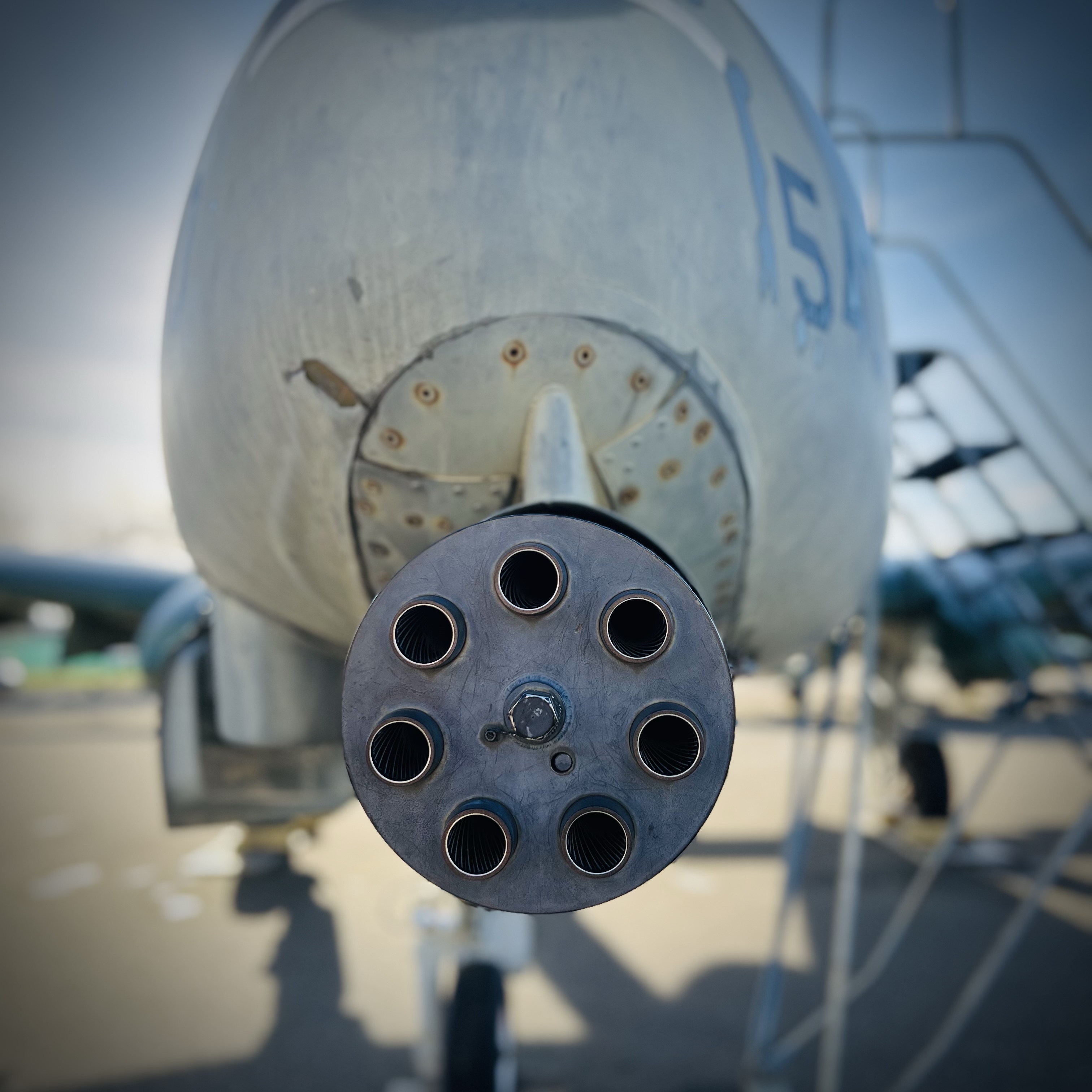
Looking at the business end of an A-10 Warthog: a 30 mm Gau-8 Avenger was designed to destroy tanks.
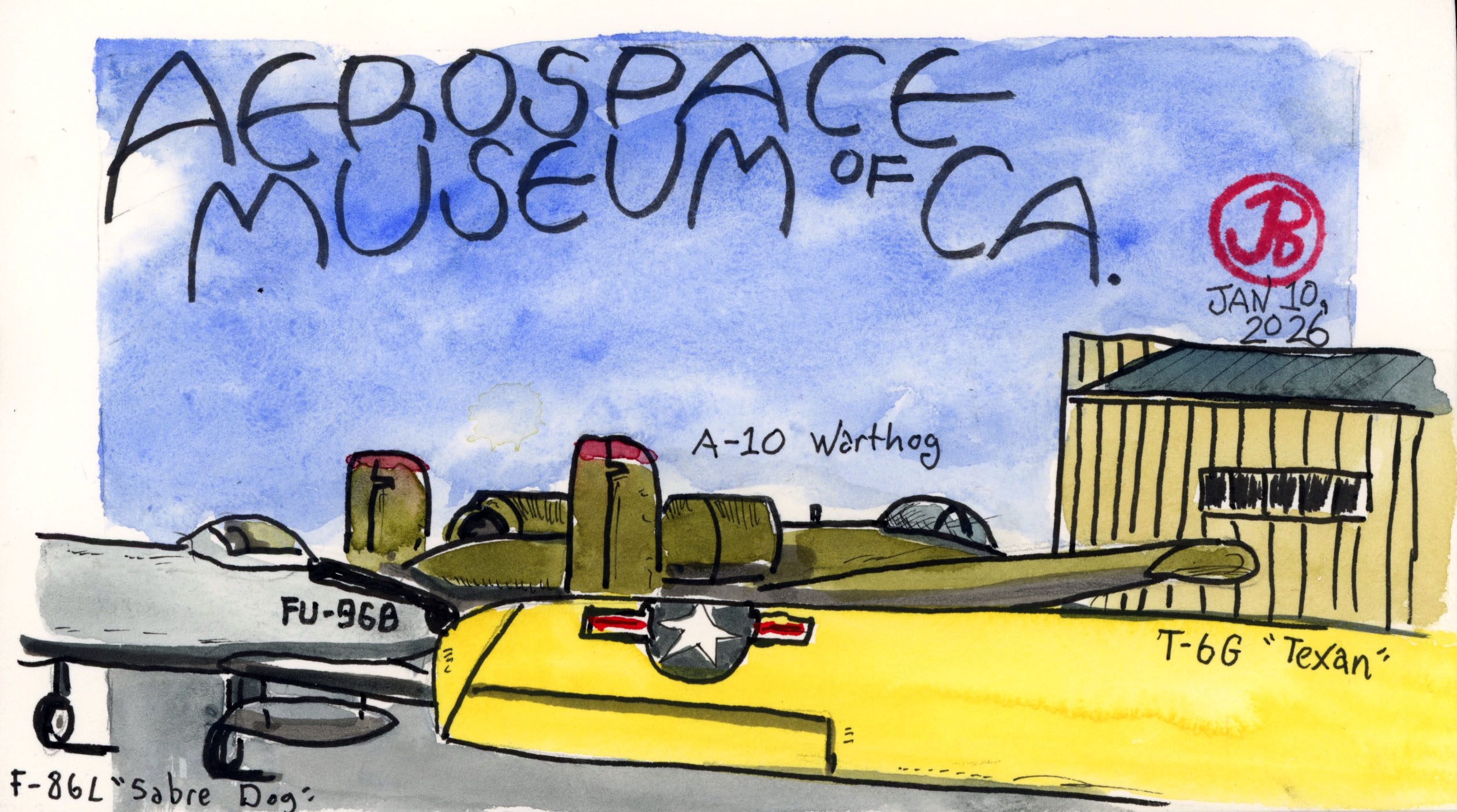
I did a total of three sketches including a broken continuous- line sketch (featured sketch).
For two of my sketches I sketched from an unconventional perspective from behind the featured aircraft: A-10 and the F-4.
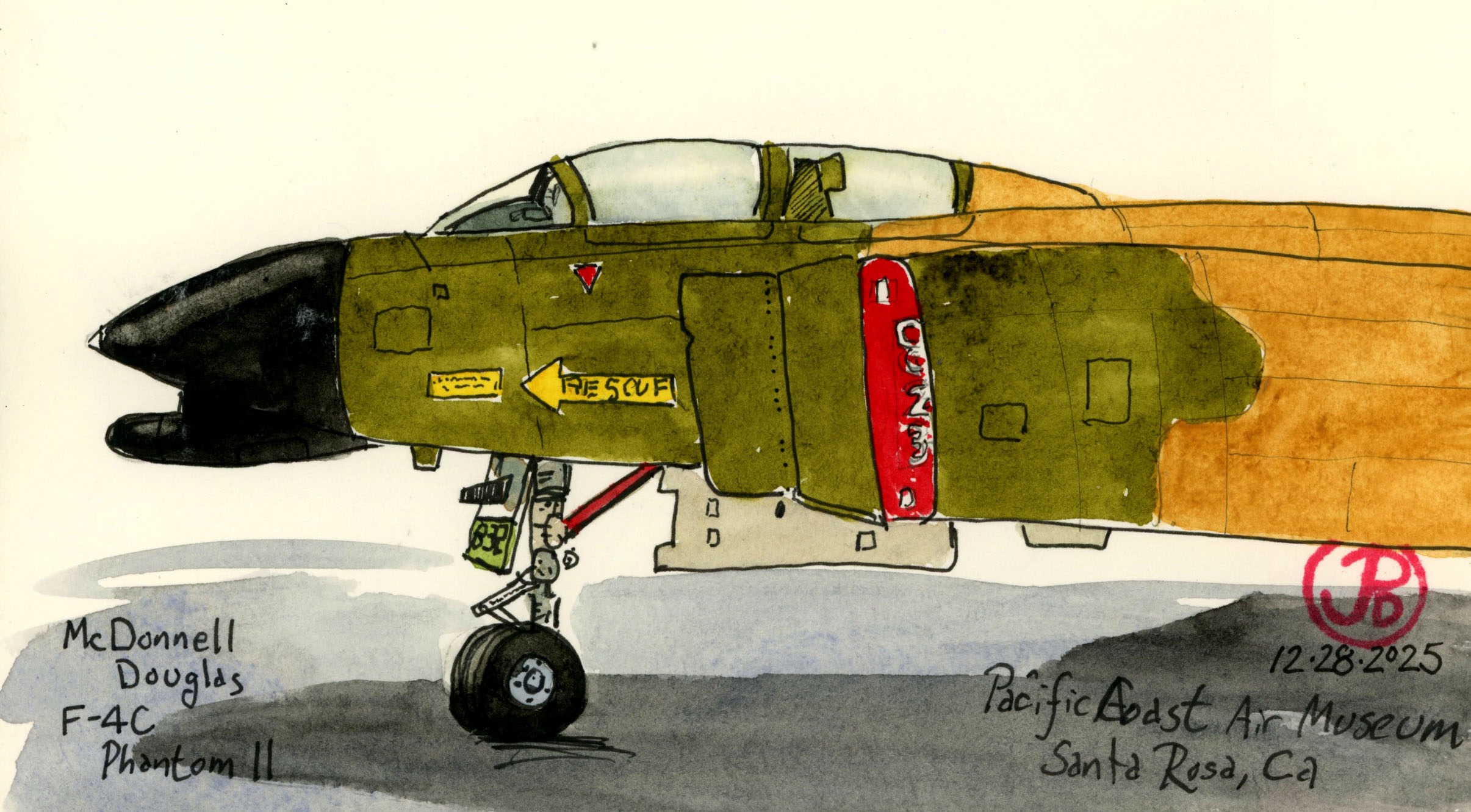
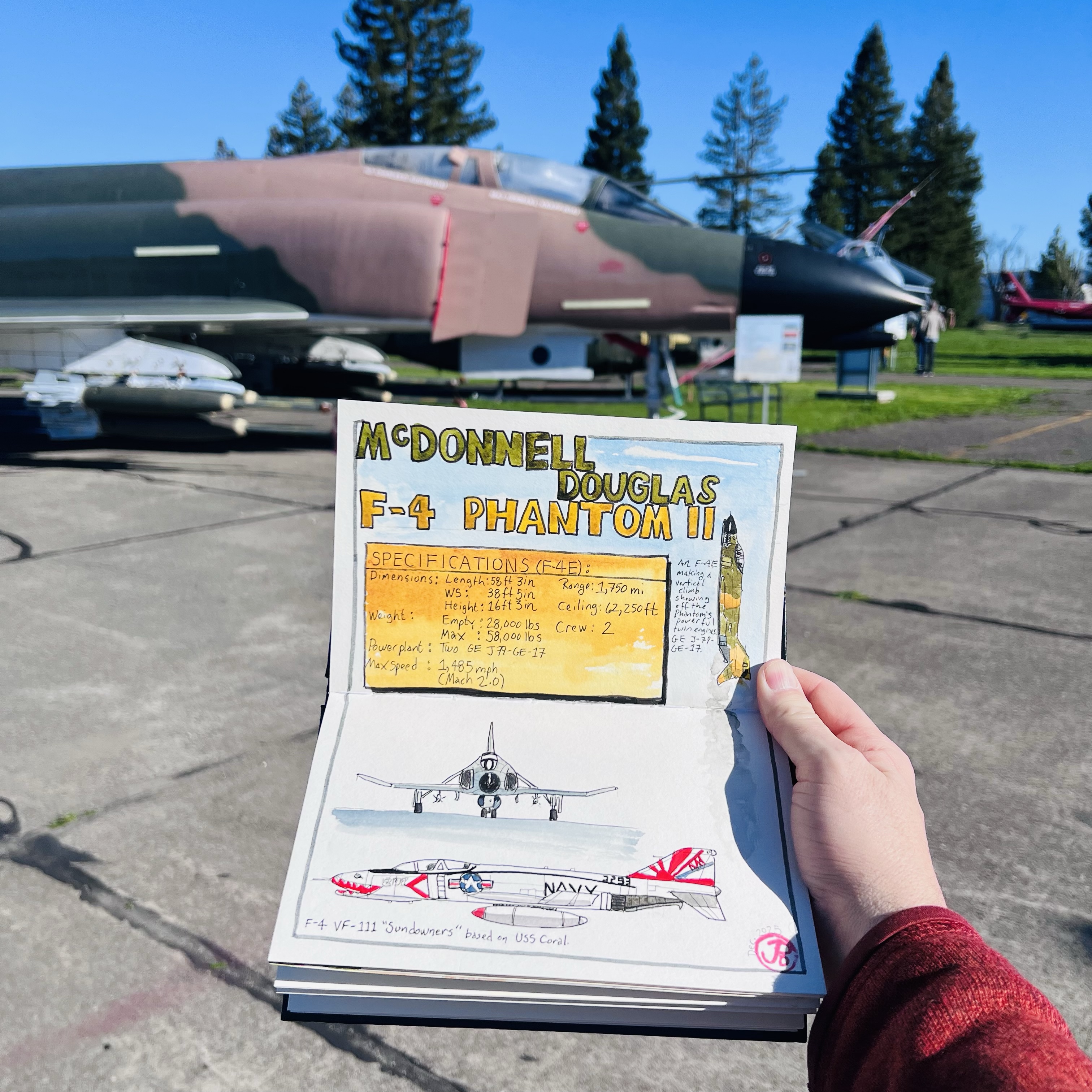
The McDonnell-Douglas F-4 Phantom II is my favorite aircraft. Each time I sketch one I think I get to know it a little better.
Another sketch was of an F-86 Sabre in the hangar. This was for a previously posted post about the Farrell’s disaster.
A sketch from my sketcher’s bench. The A-10 is an absolute beast.
I returned to the Pacific Coast Air Museum in northern Santa Rosa to sketch one of my favorite airplanes: the F-4 Phantom II.
Throughout my life I have been fascinated by things with wings: birds and airplanes. Growing up in Sunnyvale, California, my bedroom window looked out towards the flight path on final approach to Moffett Field, US Navy base.
During my childhood, the most common aircraft that flew by my window was the submarine hunter P-3 Orion. The patrol aircraft were stationed at Moffett.
Every summer, we headed up to the roof during the annual air show to watch the Blue Angels. At the time they flew A-4 Skyhawks but in the year of my birth they, and the Air Force performance team the Thunderbirds, flew the McDonnell Douglas F-4 Phantom II.
This airplane is a beast. At the time it was one of the most powerful fighters in the air reaching speed just over Mach 2. It had earned the nickname the “Flying Brick”.
A docent at the museum who was stationed on an aircraft carrier said you new when you were in the mess when an F-4 took off because you coffee cup shook with power of the fighter’s thrust.
A pre-museum sketch of an aerial beast.
A childhood hobby was building scale model airplanes and my favorite was an F-4 hand painted camo livery.
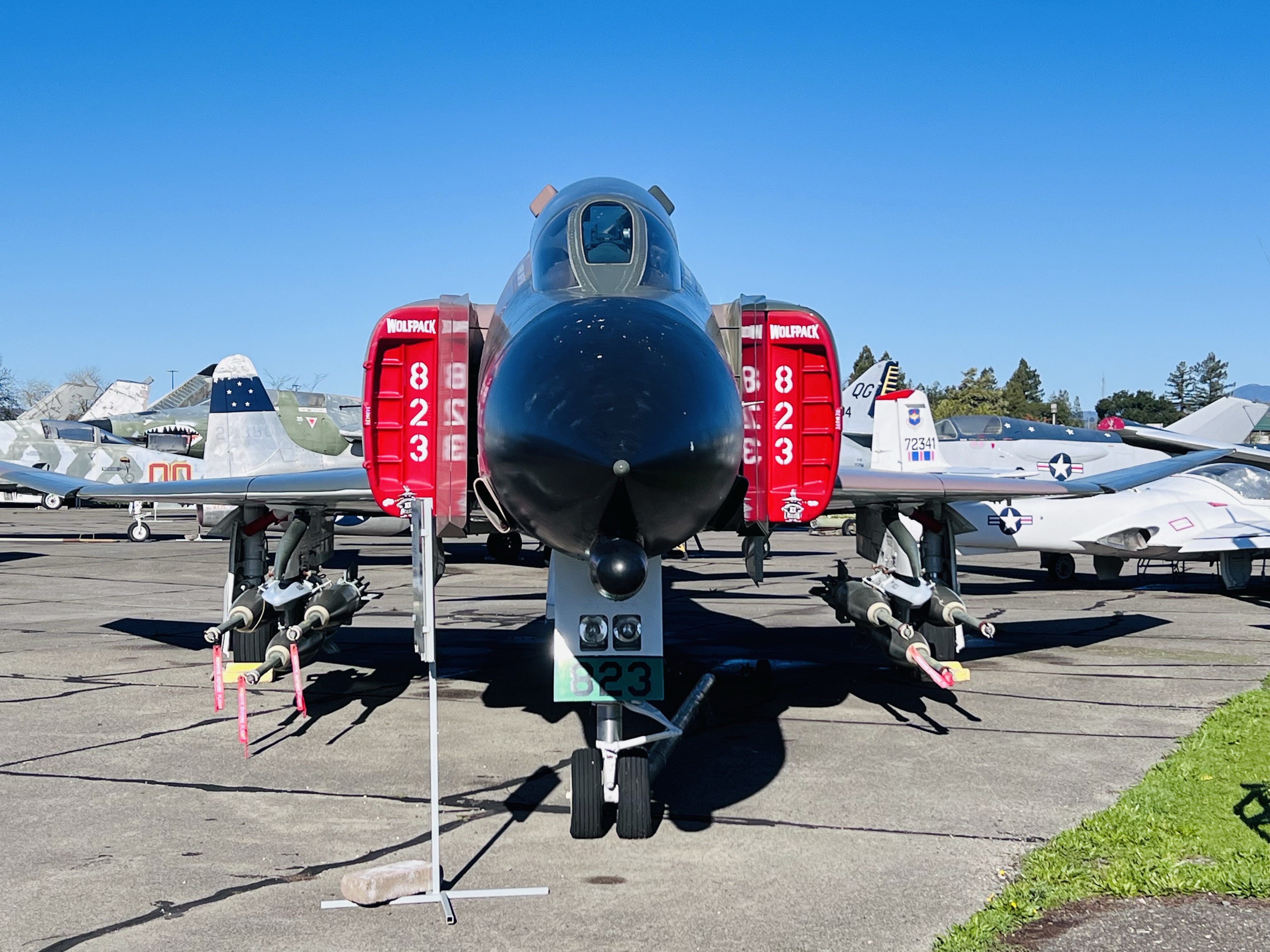
Looking head on at the F-4C.
I was now going to Santa Rosa to sketch a full scale fighter with a similar camo paint scheme.
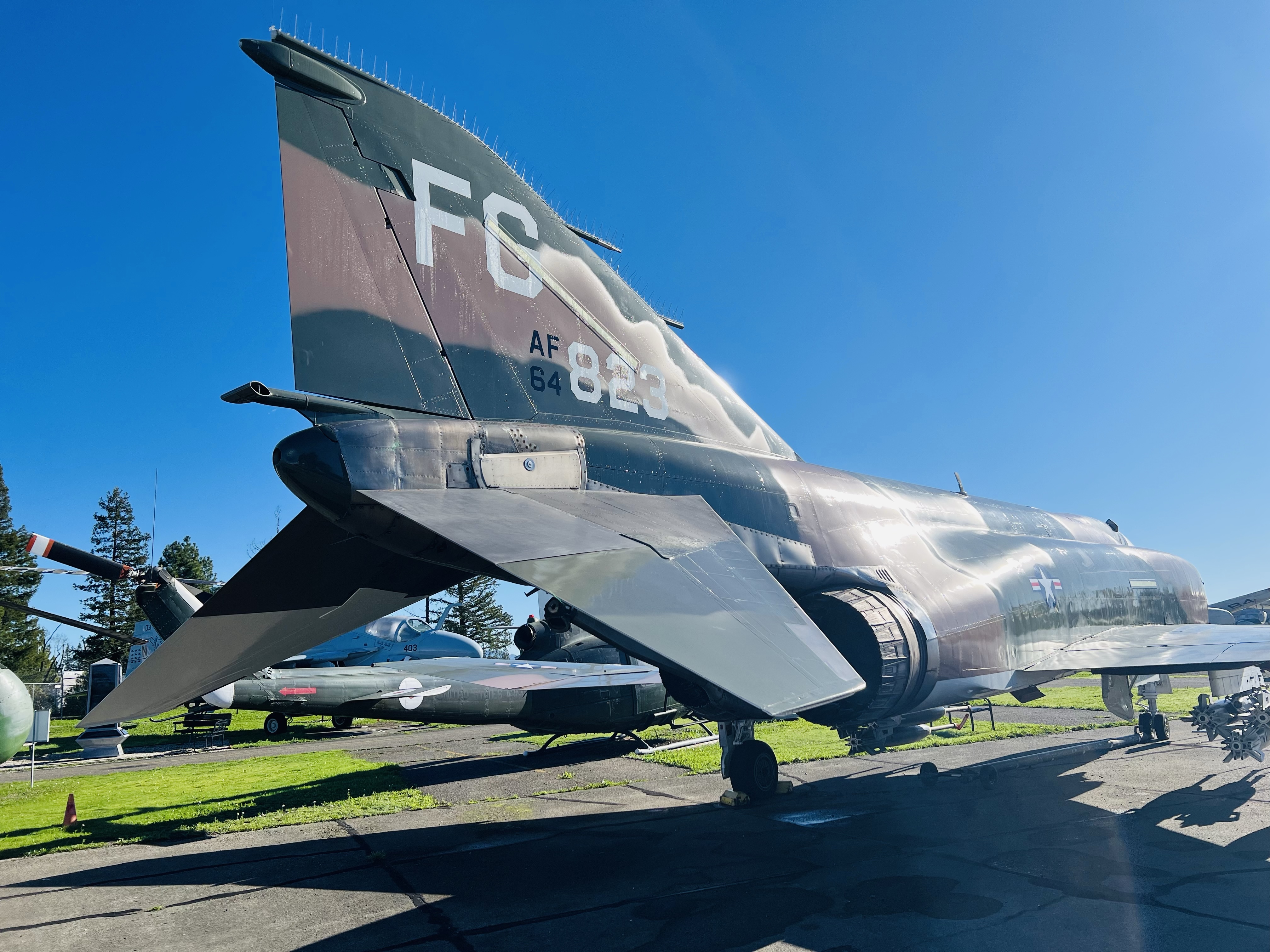
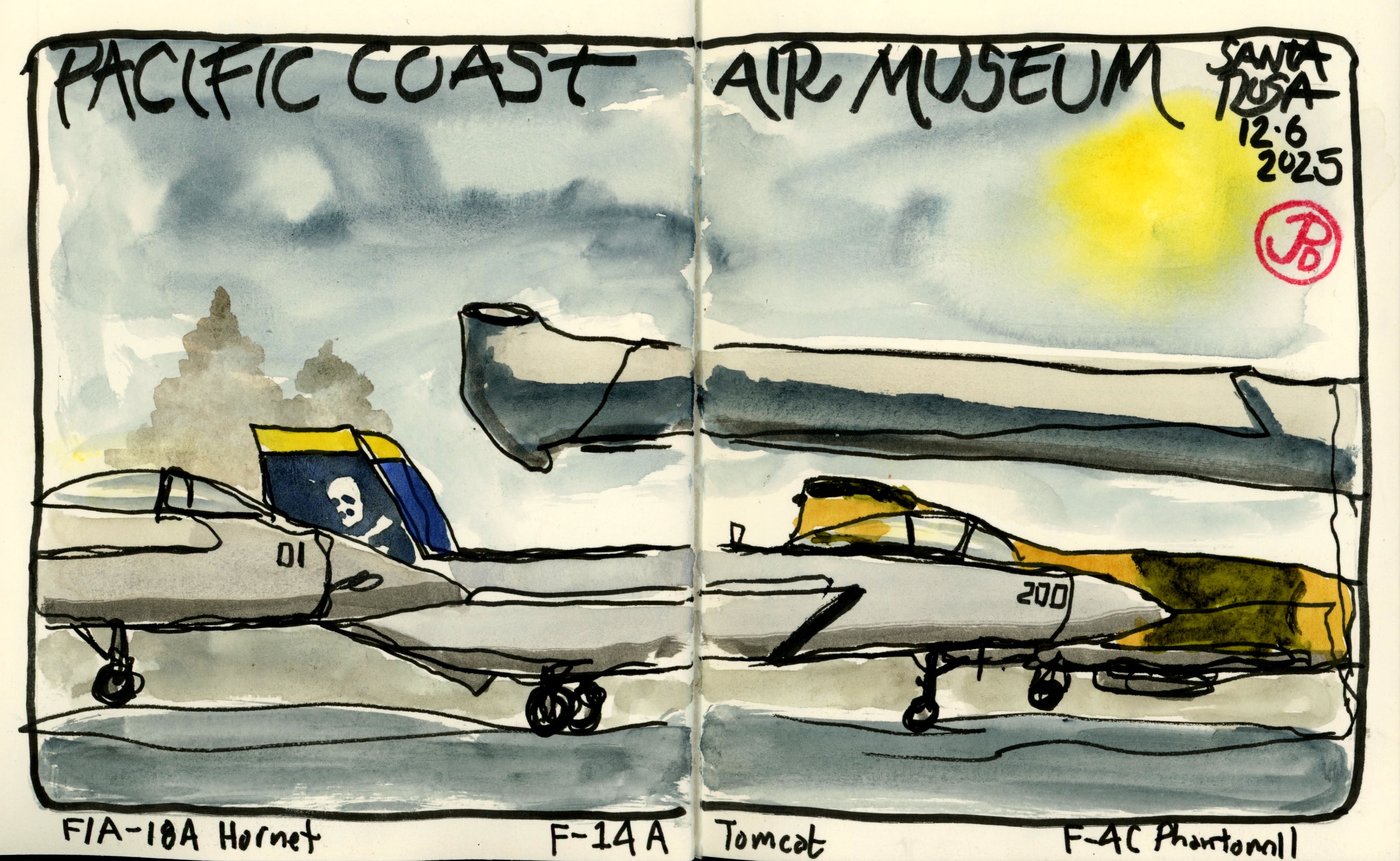
The iconic vertical and angled horizontal stabilizers of the F-4. This jet is an absolute beast. A continuous line sketch of four planes at the museum. The plane on the left, F/A 18 Hornet is what the Blue Angels currently fly. The camouflaged F-4 is on the right.
There is a little known piece of film history in Northern Santa Rosa at the airport, now called the Charles M. Shultz Sonoma County Airport.
While Hitchcock’s Shadow of a Doubt (1943) gets most of the movie history headlines in Santa Rosa, an aircraft hangar was the site of a hair-raising flying stunt in the film It’s a Mad, Mad, Mad, Mad World (1963).
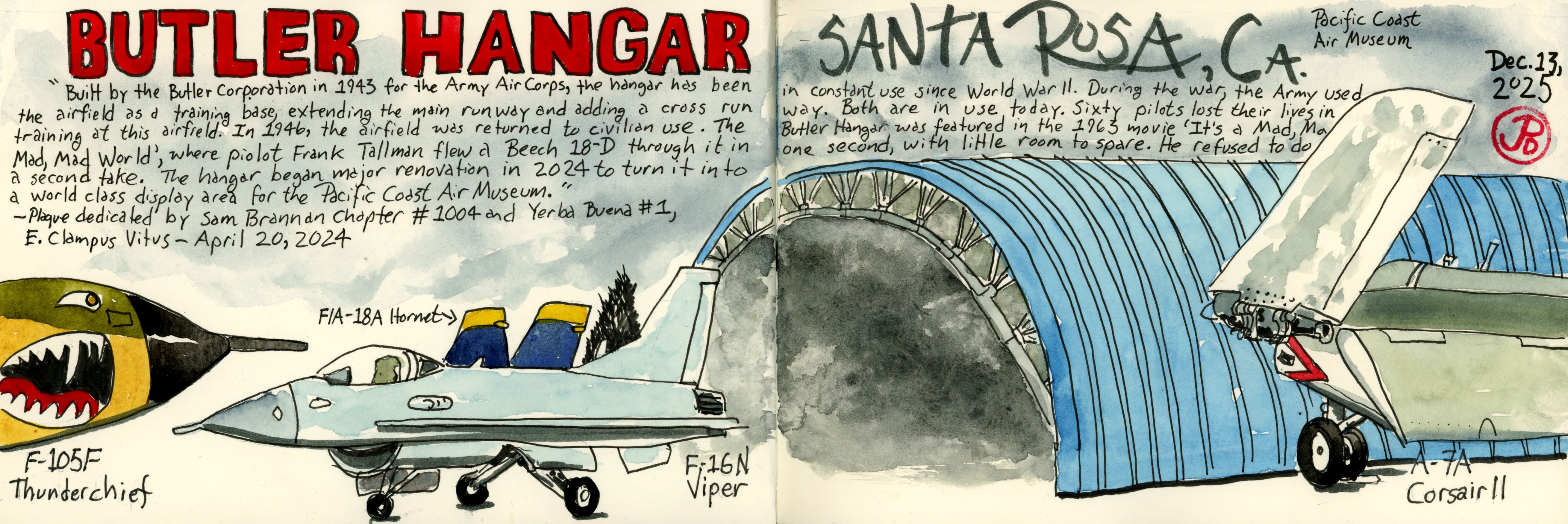
The Butler Hangar was built in 1943, the same year that Shadow was released. The airfield was used during World War Two as a training field. Sixty pilot lost their lives while training here.
One of my favorite fighters, the F-4 Phantom II with the Butler Hangar in the background. As a kid I built an F-4 model and painted it in a similar camo paint scheme.
After the war the airfield, including the hangar, was returned to civilian use and it has been in continuous use since World War Two.
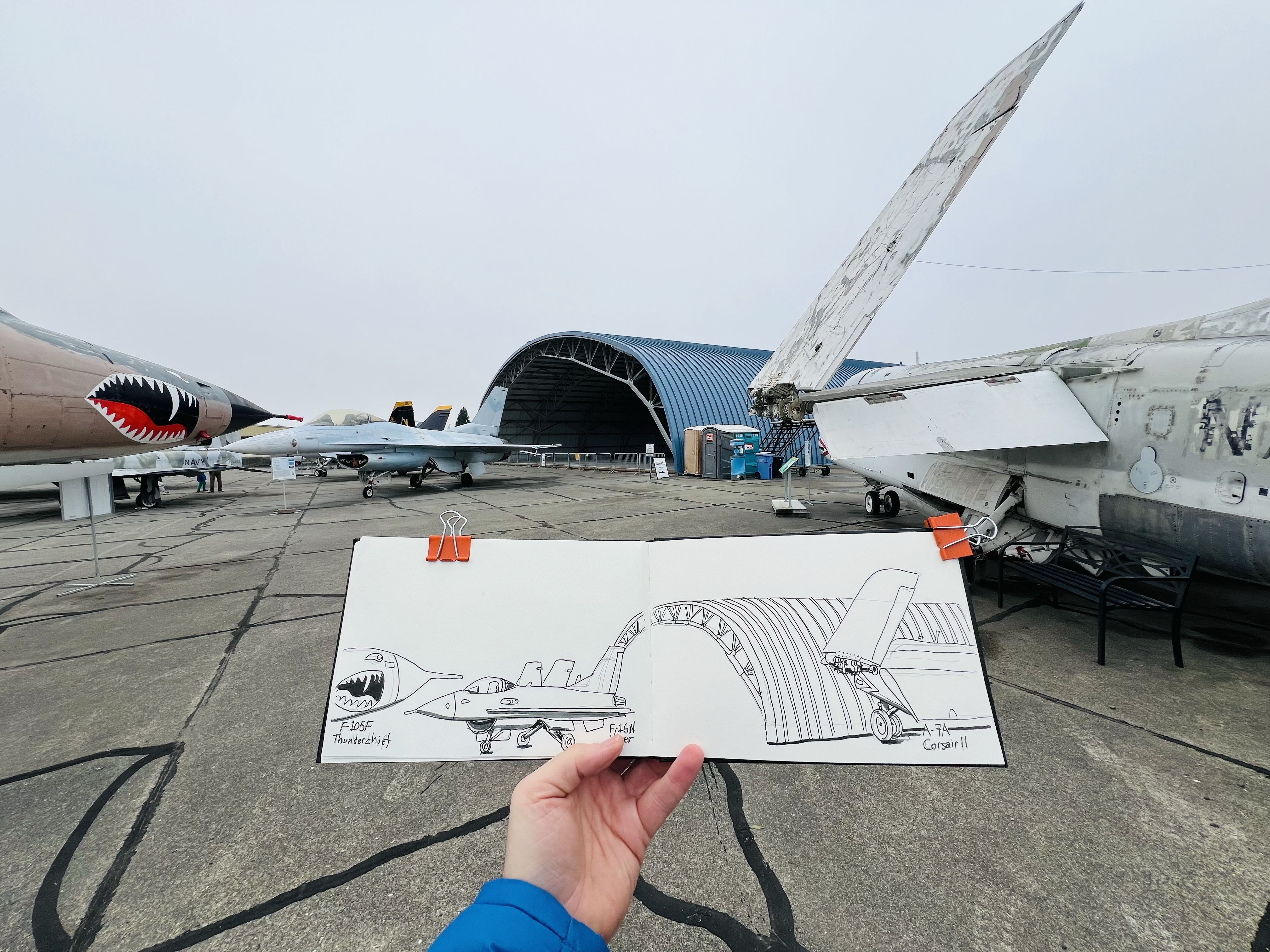
Field sketching at the airfield at the Pacific Coast Air Museum. My sketching backrest was an auxiliary fuel tank from a F-105F Thunderchief.
The hangar was featured in a very short clip of the epic comedy, It’s a Mad, Mad, Mad, Mad, World. It is a screwball road film where a cast of crazed characters, featuring a who’s who of comedy, races across the west coast to find some stolen money ($350,000). Most race in cars while a few travel by air.
Buddy Hackett and Mickey Rooney are forced to fly the twin engine Beech 18-D because the pilot/owner Jim Backus is passed out drunk or possibly dead in the back.
What ensues is some wild flying including buzzing a control tower and flying through a billboard sign (this stunt was the film’s most dangerous and caused damage to the plane).
The pilot who performed the stunts was the one-legged Frank Tallman, a veteran and legend Hollywood stunt flyer.
The stunt was performed on December 4, 1962. Tallman made two low test passes and then lined up to the west of the hangar and speed through, pulling up to avoid hitting trees to the east. He did the stunt in one take and refused to do another pass.
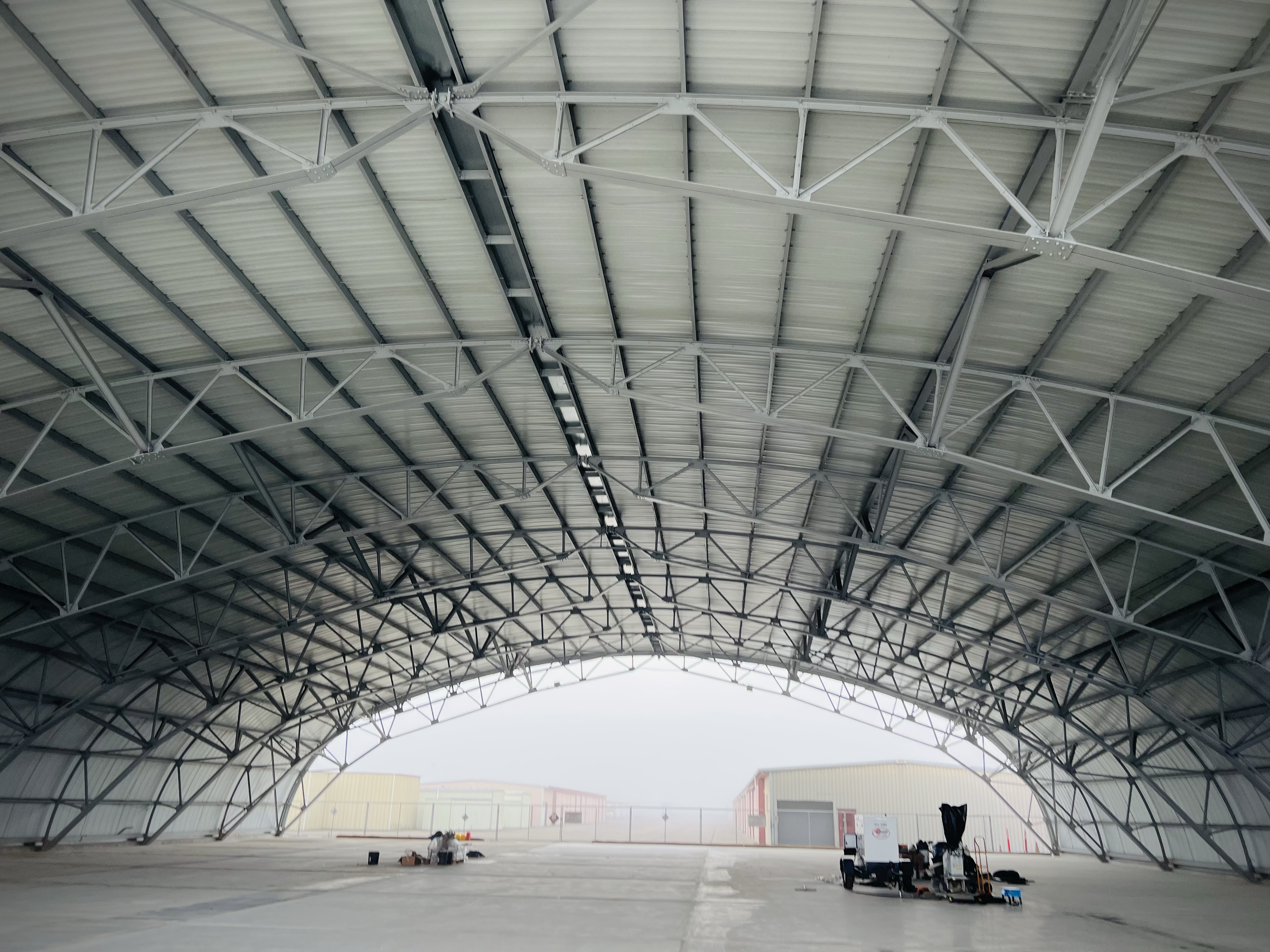
Looking west through the hangar. Tallman flew the Beech 18-D from this direction. The hangars in the background were not built in 1962.
The hangar is now part of the Pacific Coast Air Museum which has an impressive collection of aircraft including the F-4 Phantom, F-16 Viper, F-14 Tomcat, F-15 Eagle, F/A-18 Hornet, A-7A Corsair, A-4 Skyhawk, and many more.
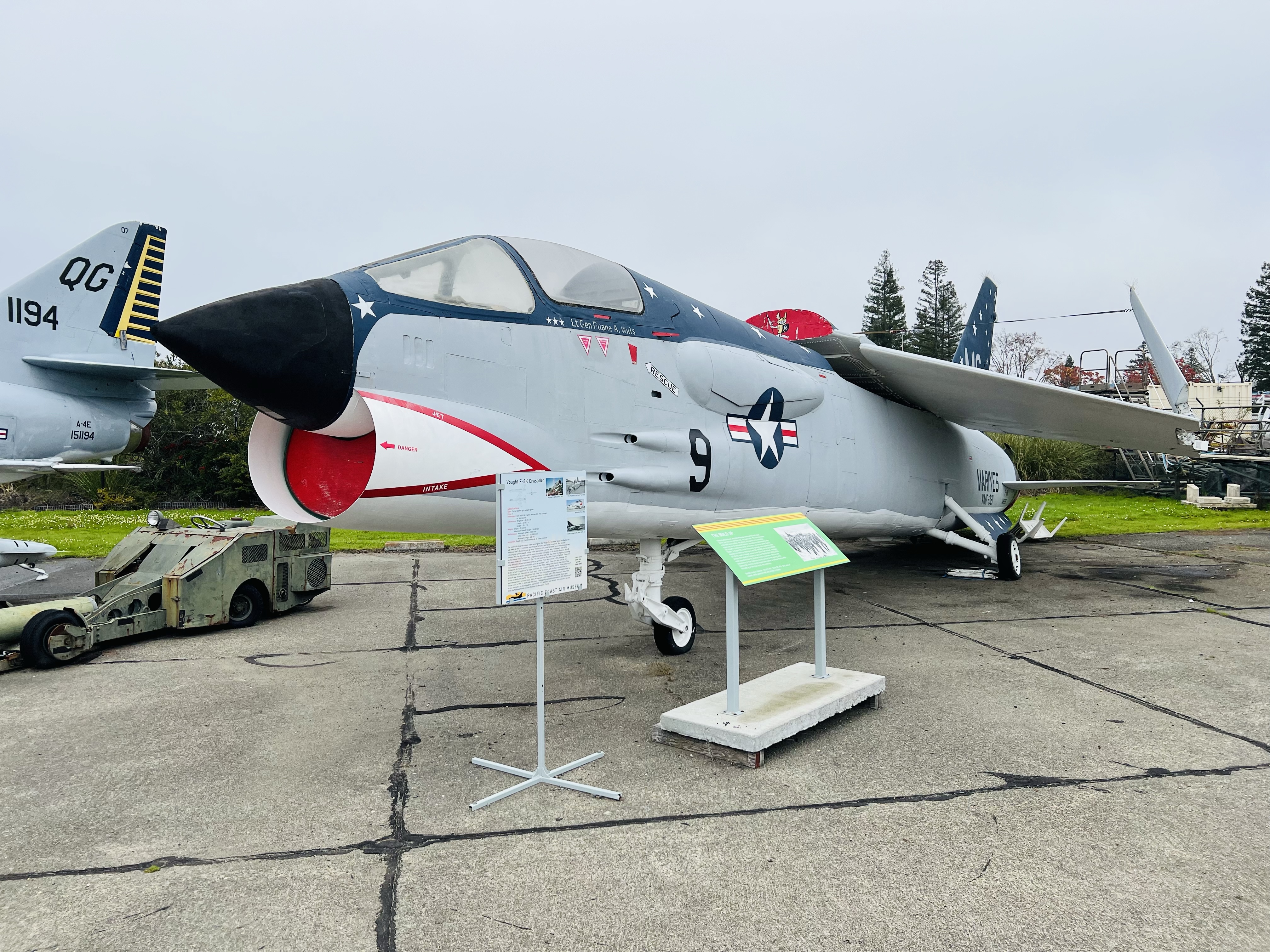
This F-8U Crusader was essentially a playground toy in a San Franciscan park, also known as “the plane in the park”. It was at Larsen Park for 20 years and I remember seeing it as my family drove north on 19th Avenue in the Sunset District. The plane was damaged from vandalism and the foggy maritime weather and was moved to Santa Rosa in 1993 and cosmetically restored.
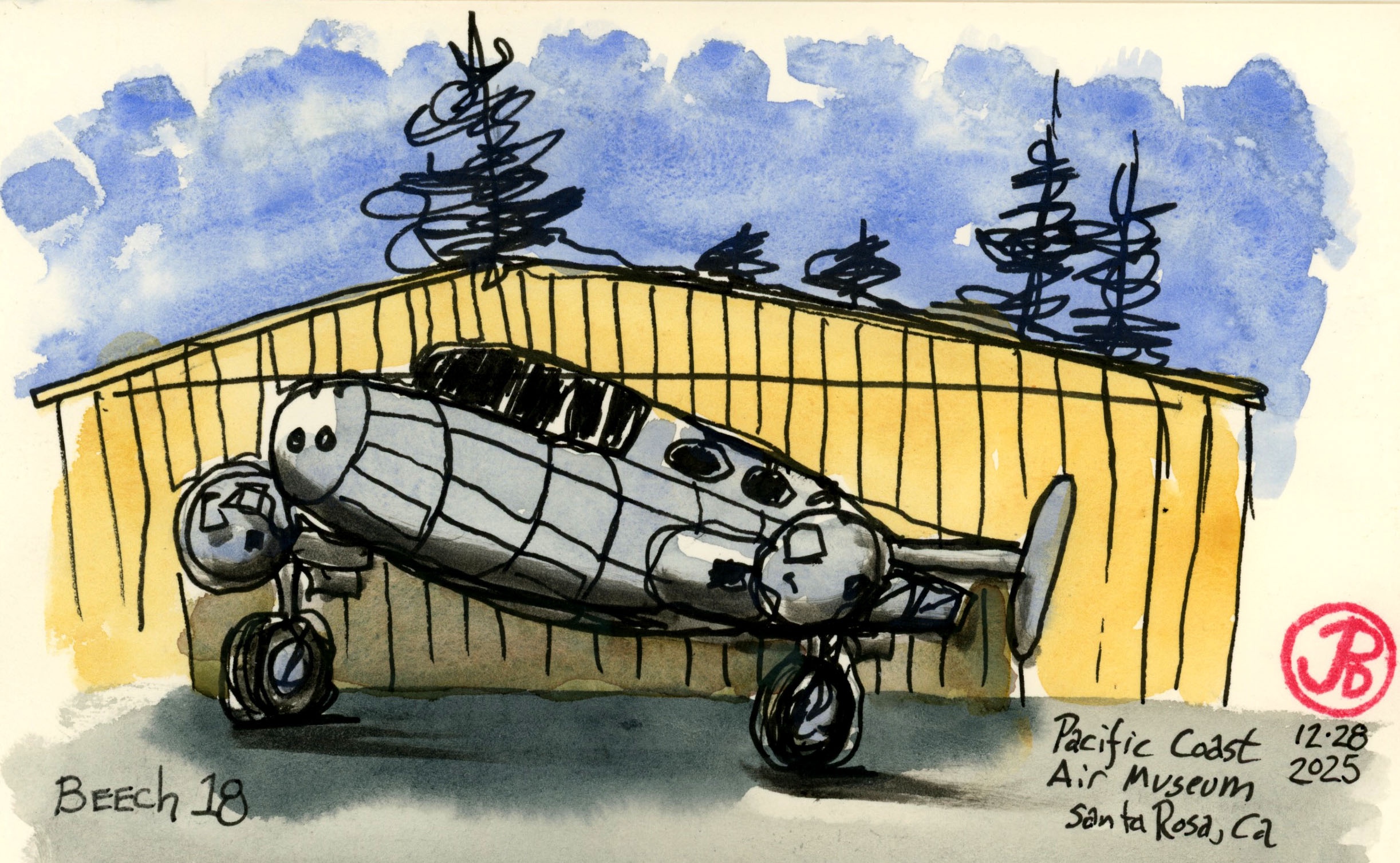
Beech 18
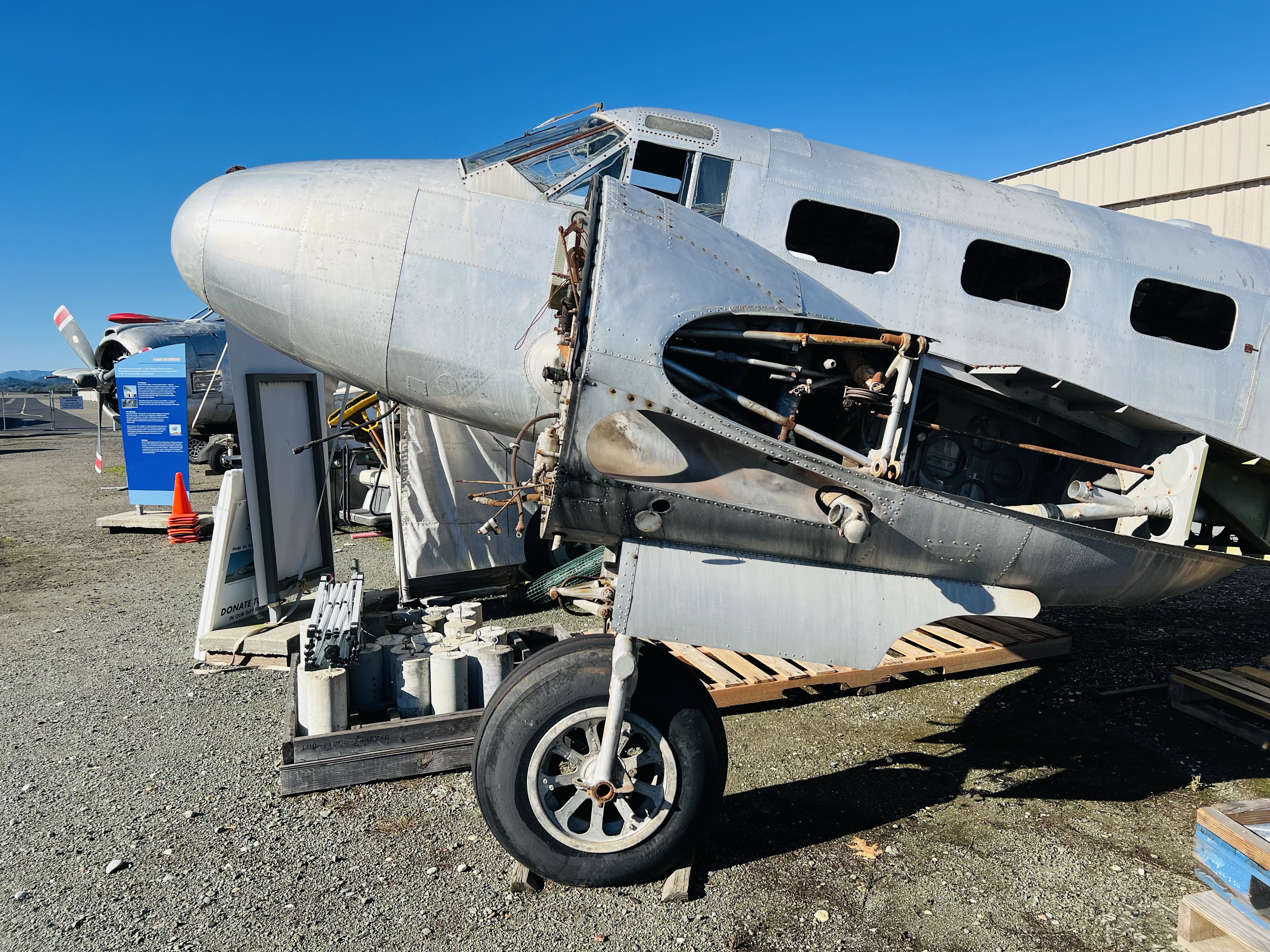
Near the perimeter fence and away from the limelight of the other planes in the museum’s collection sits a silver wingless, moterless twin engine plane that has clearly seen better days.
This is a Beech 18, the same plane that flew through the Butler Hangar.
In the future, plans are to restore the plane (they have the wings somewhere) and display the Beech next to the hangar made famous in an epic comedy.

 Corvid Sketcher