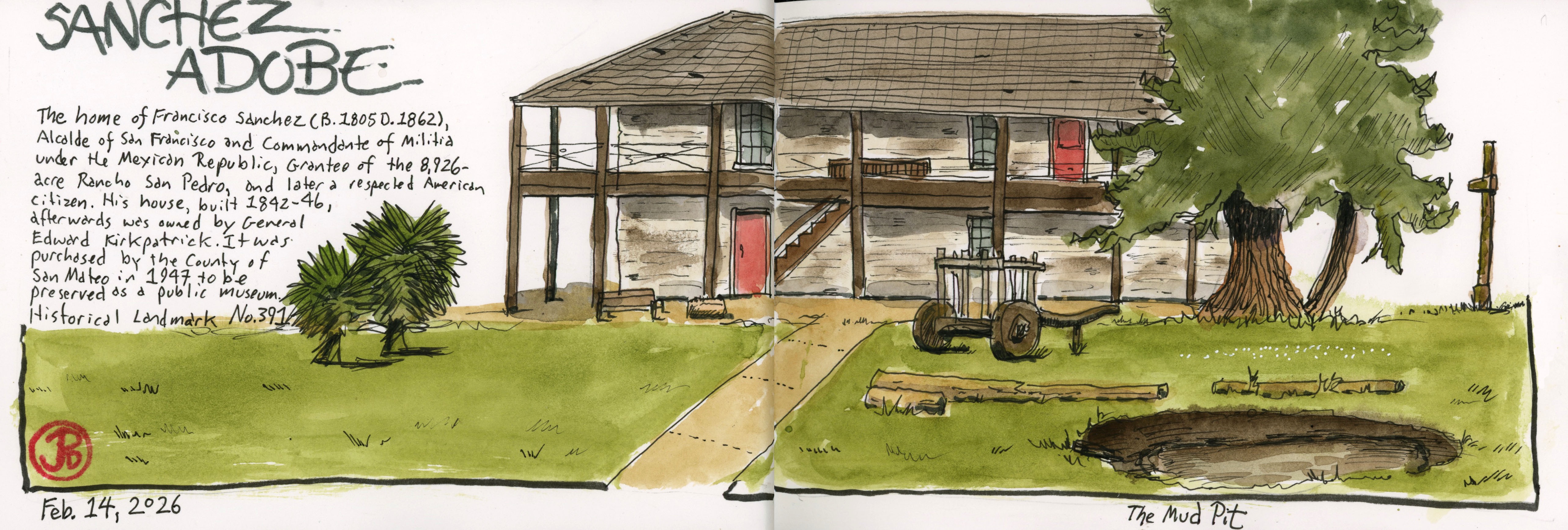
Image

Next Stop, Atherton

On my weekend Caltrain ride to Palo Alto, we sped past the former passenger shelter at Atherton.

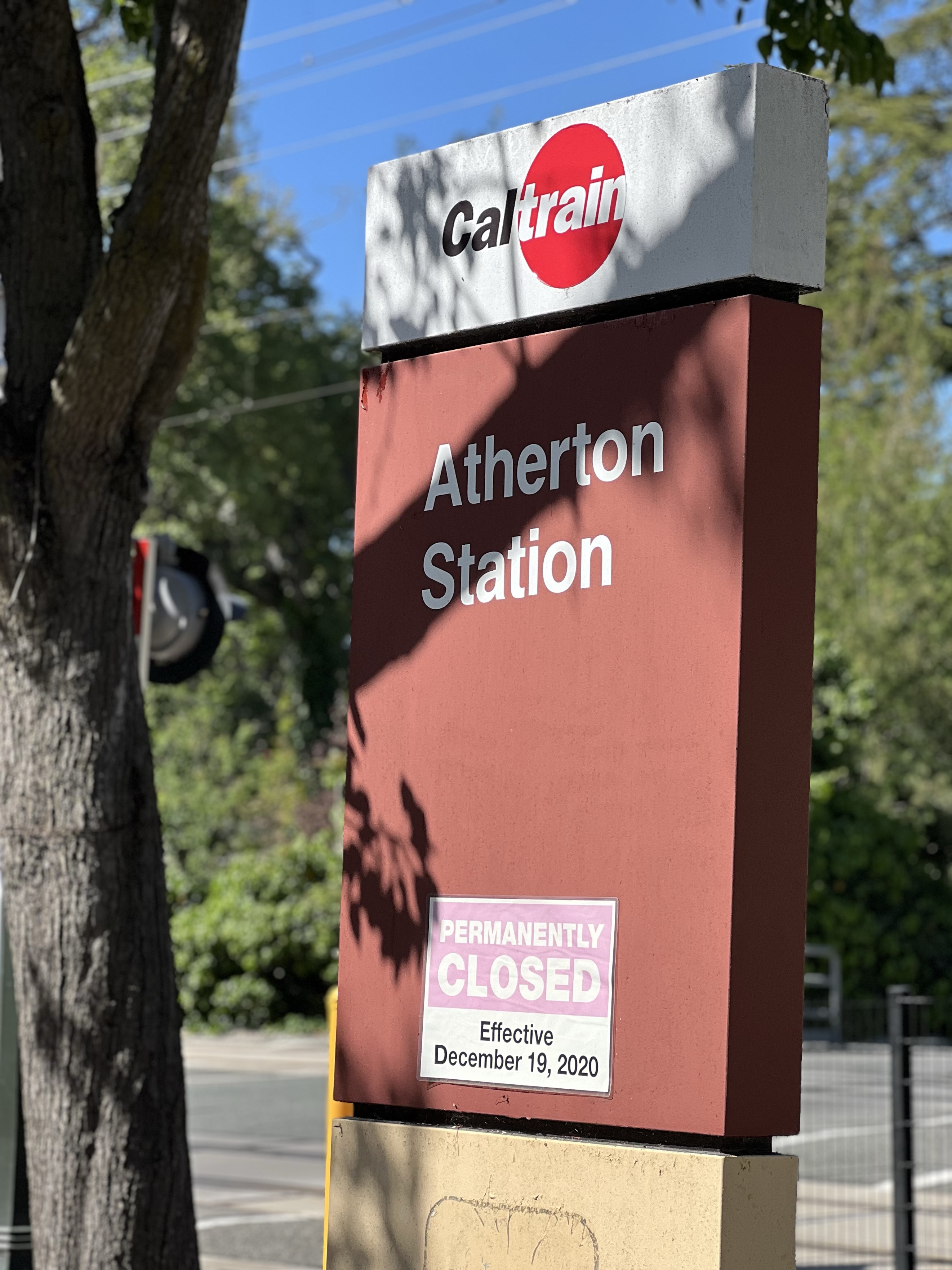
I remember that this used to be a stop on the commuter line but I later found out it had been permanently closed since December 19, 2020.

Where had I been?

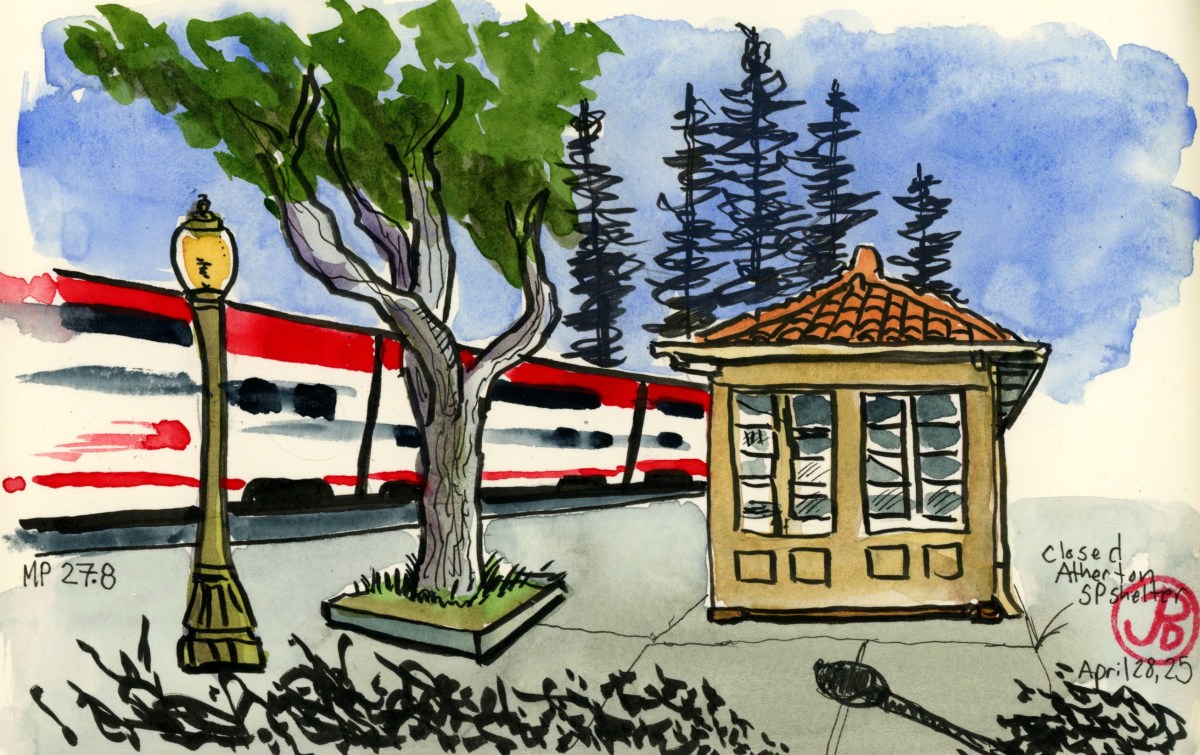
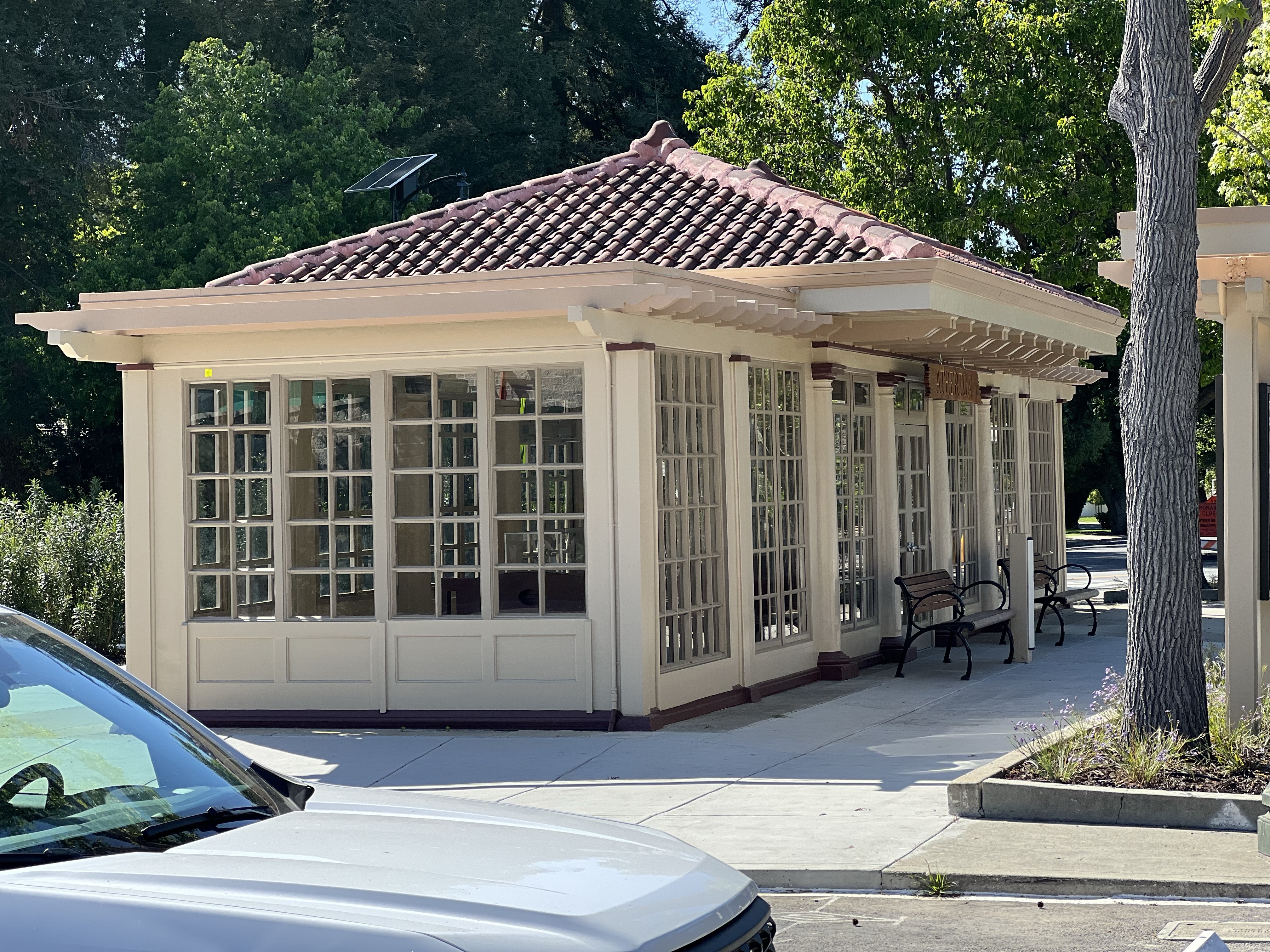
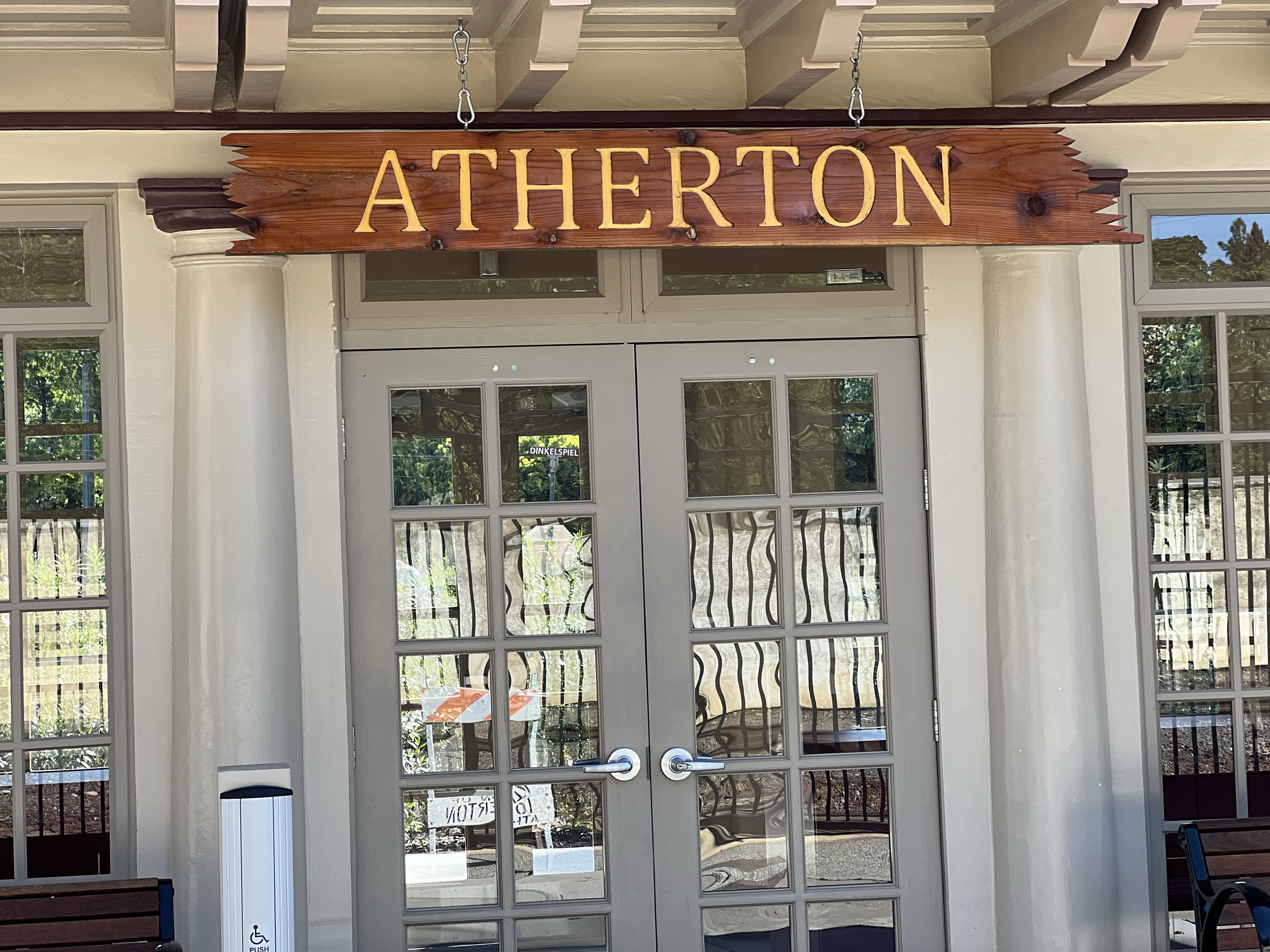
I returned to Atherton to sketch the lonely railroad shelter where passengers no longer detrain or board.

There are a few things to know about the San Mateo County town of Atherton (population 6,823). Atherton had been ranked as having the highest concentration of wealth per capita for a town of its size anywhere in the United States. The town also has the highest median house price in the country at an astonishing $7,950,000!
And then there is the infamous Atherton police blotter. Here are a few examples, and yes these are real: “A man was reported to be sitting down and talking to himself. Police made contact and confirmed he was using a cellphone”, “A resident worried that a noisy hawk in a tree was in distress. When authorities arrived, the hawk was quiet and enjoying dinner”, “Police assisted an Atherton man in a San Francisco bar who forgot where he was and called 9-1-1”, “A family reported being followed by a duck who resides on Tuscaloosa Avenue”, and this takes the cake: “A resident reported a large light in the sky. It was the moon”.
From these police blotter examples we can tell that Athertonians are a vigilant and concerned group of citizens.

When Caltrain announced that they would be electrifying the line, the town of Atherton sued Caltrain alleging the construction would damage some heritage trees. Atherton lost the lawsuit and electrification continued.

A train station without a train.

This is not a great way to treat a rail service that has stopped to pick up passengers in the town since 1866 when the first station opened under the then named Fair Oaks.

Southern Pacific replaced the first structure in 1913. This is the core design of the shelter that remains to this day. The shelter was enlarged in 1954 and later rebuilt in 1990.

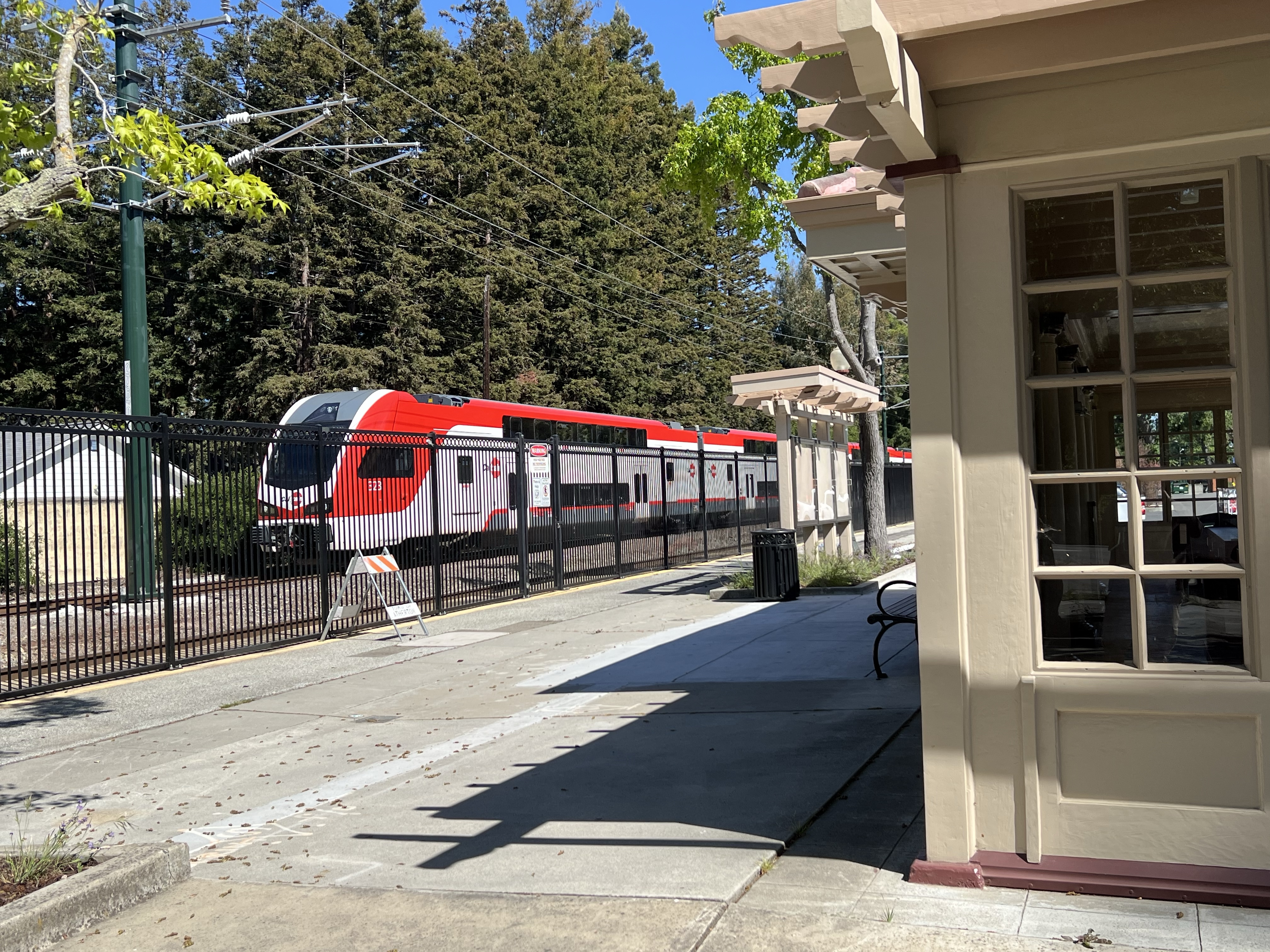
A northbound EMU speeds by the closed shelter. A barrier fence separates the platform from the busy rails. In the featured sketch I left the fence out.

In 2005 weekday service to Atherton was suspended because of low ridership. The station averaging only 122 boardings a day compared to nearby Redwood City at 4,212 boardings per day. The low ridership combined with improvements needed ($30 million in improvements) to the aging center loading platform island meant that this train stop was doomed.

Perhaps a fitting end for a town that sued to halt progress but in the end now watches the future pass them by.

A busy afternoon in Atherton. During my 45 minute visit, five trains sped past the station. This one is northbound to San Francisco.

I did an afterwork sketch and I can imagine a new police blotter posting: “A strange man was sitting down near Atherton Station. Turns out he was only sketching.”

Image

CalTrain Electric

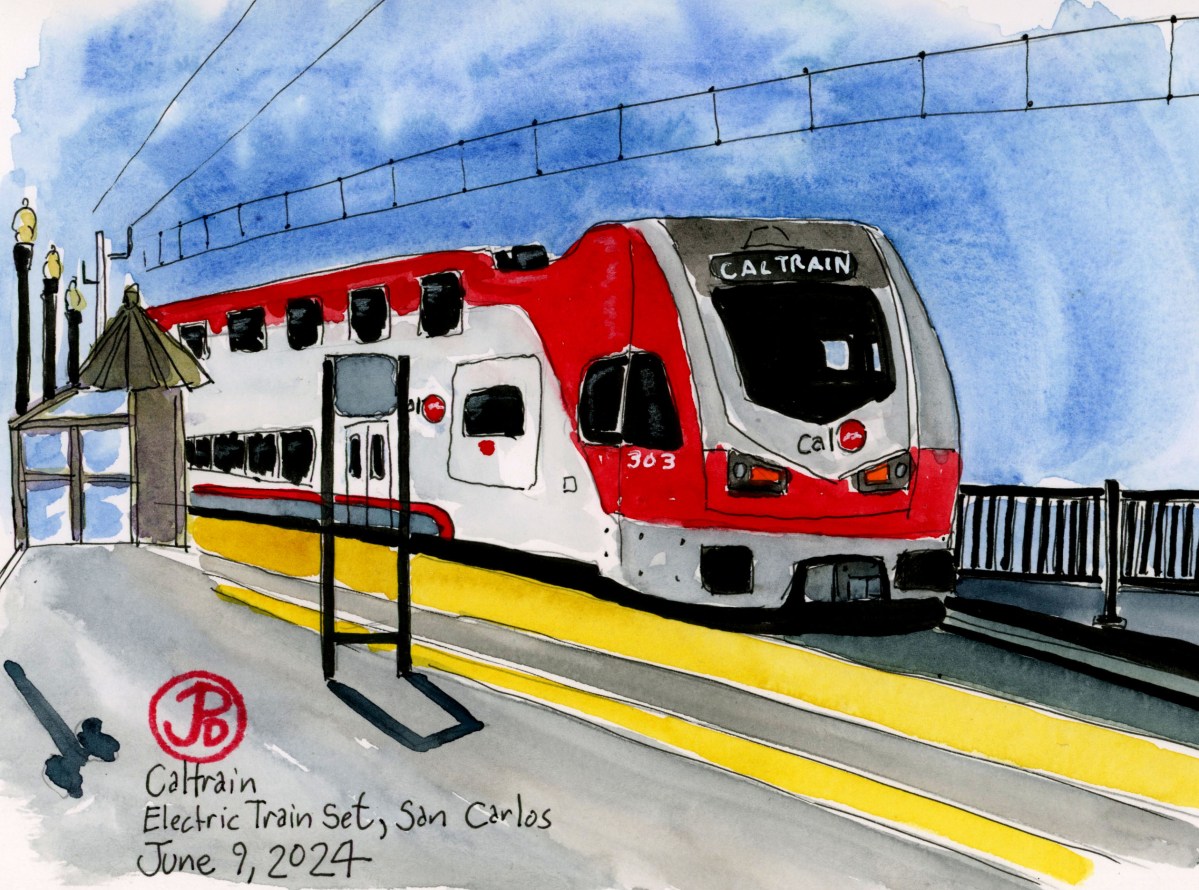
On a recent Saturday morning I had a pleasant surprise as I drove north on El Camino Real at San Carlos. At San Carlos Station was one of the new electric CalTrain sets.

The new trains are built by Stadler, a Swiss-based train manufacturer. The company was founded in 1942 and is headquartered in Bussnang, Switzerland. The company has a factory in Salt Lake City, where Stadler will build 24 train sets for Caltrain.

The train sets are known as BEMUs which stands for battery-equipped electric multiple unit.

I parked, thinking that the train would surely have left the platform by the time I walked to the station but as I walked down San Carlos Avenue, the train was still stationary at the station.

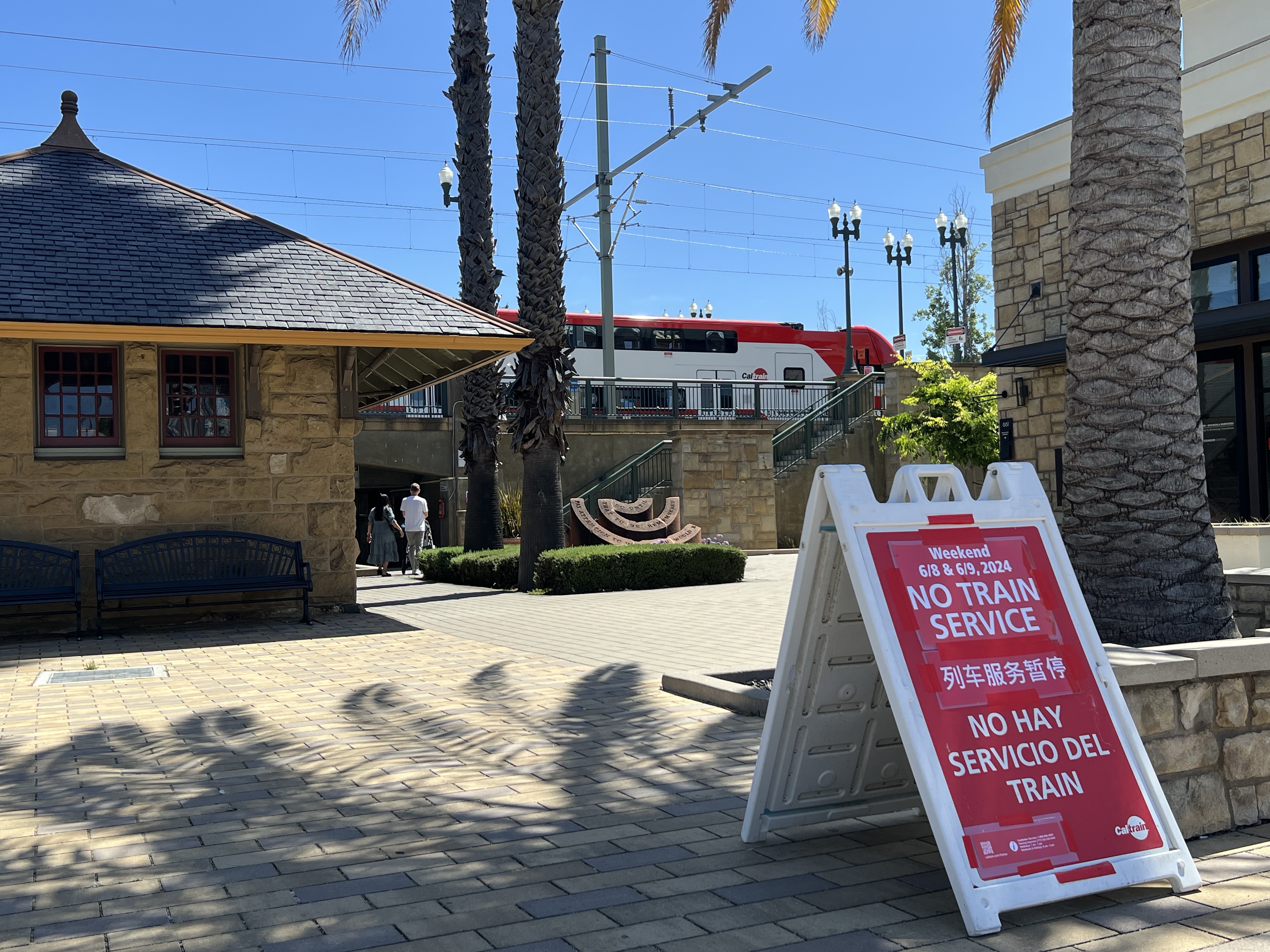
As I crossed El Camino, a placard stated “No Train Service”. The line was closed all weekend.

The line was closed from San Francisco to San Jose so Caltrain could test eight of the new electric train sets. The electrification of the line started in 2017 and electric trains are scheduled to start running on September 21, 2024.

If you think of some of the most iconic passenger trains in modern rail: Japan’s Shinkansen (“Bullet Train”), France’s TGV, Eurostar, Amtrak’s Acela, Chinese Railways CRH, the Bay Area rail corridor was finally being electrified to catch up with the rest of the world, although it would not come close the top speeds of modern Shinkansen (186 mph).

Three quarters of the world’s passenger service are powered by electricity. About time!

This is what powers the new train sets: the pantograph that delivers power from the wires above to the train set below.
Not sure if these new trains sets earn any style points. They look like a large streetcar or tram.
Image

The Sand Wraith

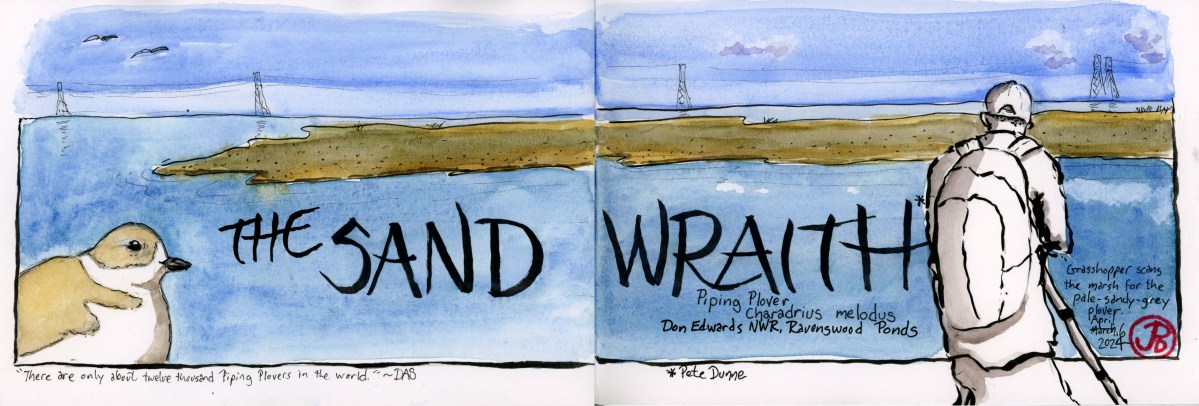
An endangered plover that is rarely seen on the west coast was being seen at the Don Edwards National Wildlife Refuge in southeastern San Mateo County.

Grasshopper Sparrow had seen the piping plover a week before and this Saturday morning was my first opportunity to add a rare Bay Area lifer to my list so I picked up Grasshopper a 7:30 and headed to the ponds east of the vast Meta headquarters.

After a circuitous route around the entrance to the Dumbarton Bridge, we found the muddy parking lot and the trailhead that led to the Ravenswood Ponds.

There were already two cars in the parking lot, the more eyes the better! Within about a five minute ramble we came upon the pond where Charadrius melodus had been seen. Two birders already had scopes focused on the sandbars in the middle of the pond. They had not seen the piping, yet.

We scanned the ponds for about three hours (finding a pale plover amongst hundreds takes time and patience). In that time more eyes with scopes began to arrive.

At times the flock, consisting of western and least sandpipers, dunlin, and semipalmated plovers, would land near the watchers on the mudflats. We would quickly scan the birds for a sandy pale plover with orangish legs that was loosely associating with the semipalms, before the flock would erupt in flight.

Watching the shorebirds fly as one, with flashes of white as the birds twisted and turned as one was an absolute joy!

But the pale stubby-nosed, orange-legged plover was proving to be elusive. It seemed that I had tried to turn every semipalmated plover in my scope-view into a piping, with no luck.

Yup, a rare plover brings the birders out on a clear Saturday morning.

As we were nearing our third hour of Plover Watch 2024, a birder to our left called out, “I got the bird!”

What followed was a play by play of the piping’s location and movement; “Do you see the five wigeon in the far channel? Just to the right below the two pylons? The plover is moving to the right. Passing near the green shrubbery. Now it’s facing us, right near the two ruddy ducks now. It’s now going left just past the two semipalms.”

I was following the plover commentary with my scope, looking for the five wigeon and the shrubbery and the ruddy ducks when I finally came upon a pale plover with a pale broken breast-band.

Lifer!!

Image

Seabiscuit in the Bay Area

I’m not really into horse racing and a few of the racing tracks in the Bay Area are now closed. Golden Gate Fields will become a caption to a photo like Tanforan and Bay Meadows before. The recent reports of horse deaths have put a pall over the sport in days of waning interest in horse racing.

What I am into is California history and there is no denying the story of a thoroughbred horse named Seabiscuit with a deep California connections is a great story.

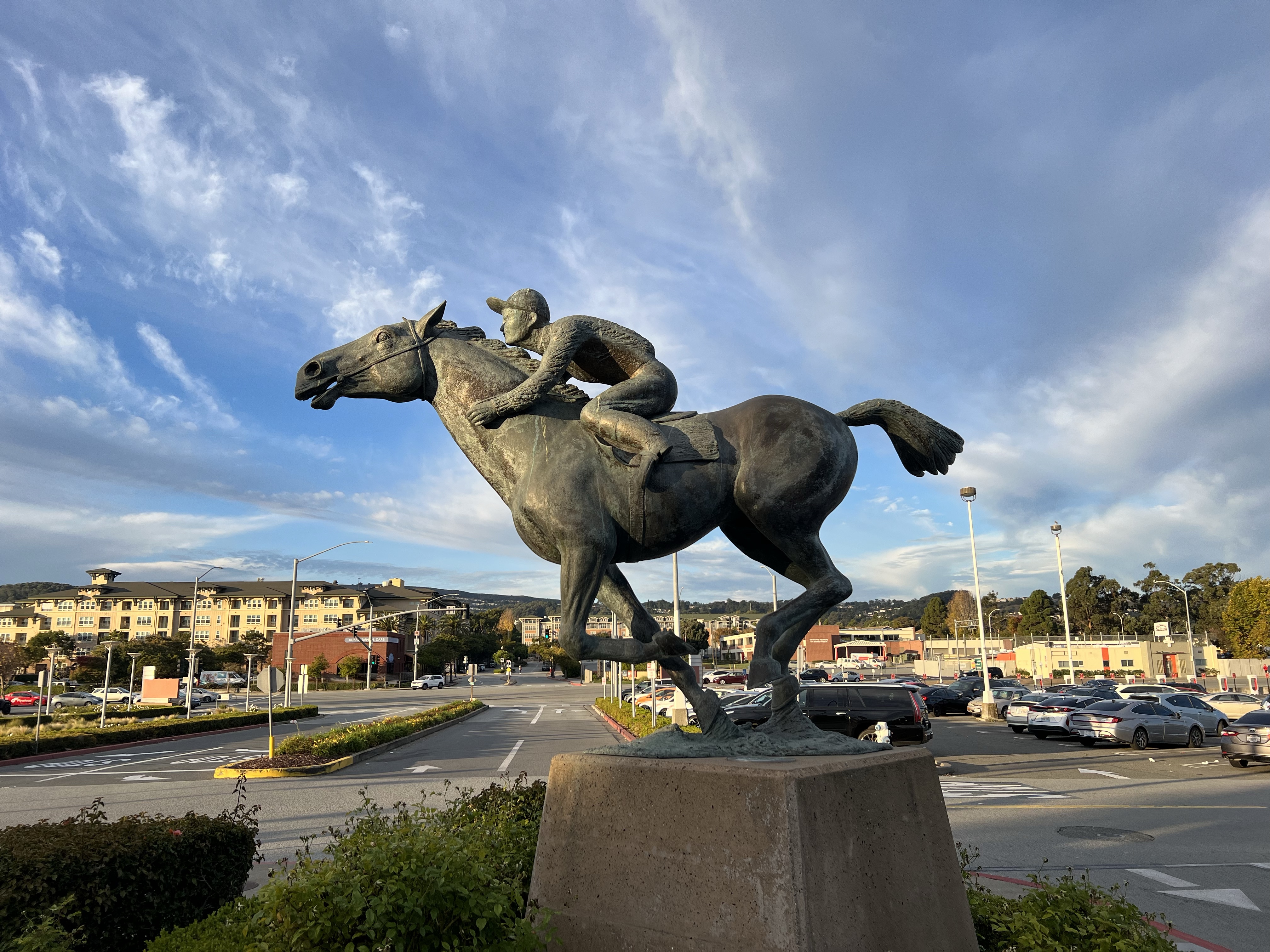
I know Seabiscuit from a statue at the entrance to Tanforan Mall. Seems such an odd place for a horse and rider sculpture but when you know that from 1899 to 1964 the location used to be a racetrack. Tanforan Racetrack featured many of the best thoroughbreds in racing history. The grandstands burned down by suspected arson and then leveled to make way for a mall which opened in 1971.

Tanforan also has a more dubious history as a processing center for Japanese Americans during 1942, then known as the Tanforan Assembly Center. Around 7,800 Japanese Americans were rounded up here and lived in horse stalls for about eight months. They were then sent on to other interment centers across the west.

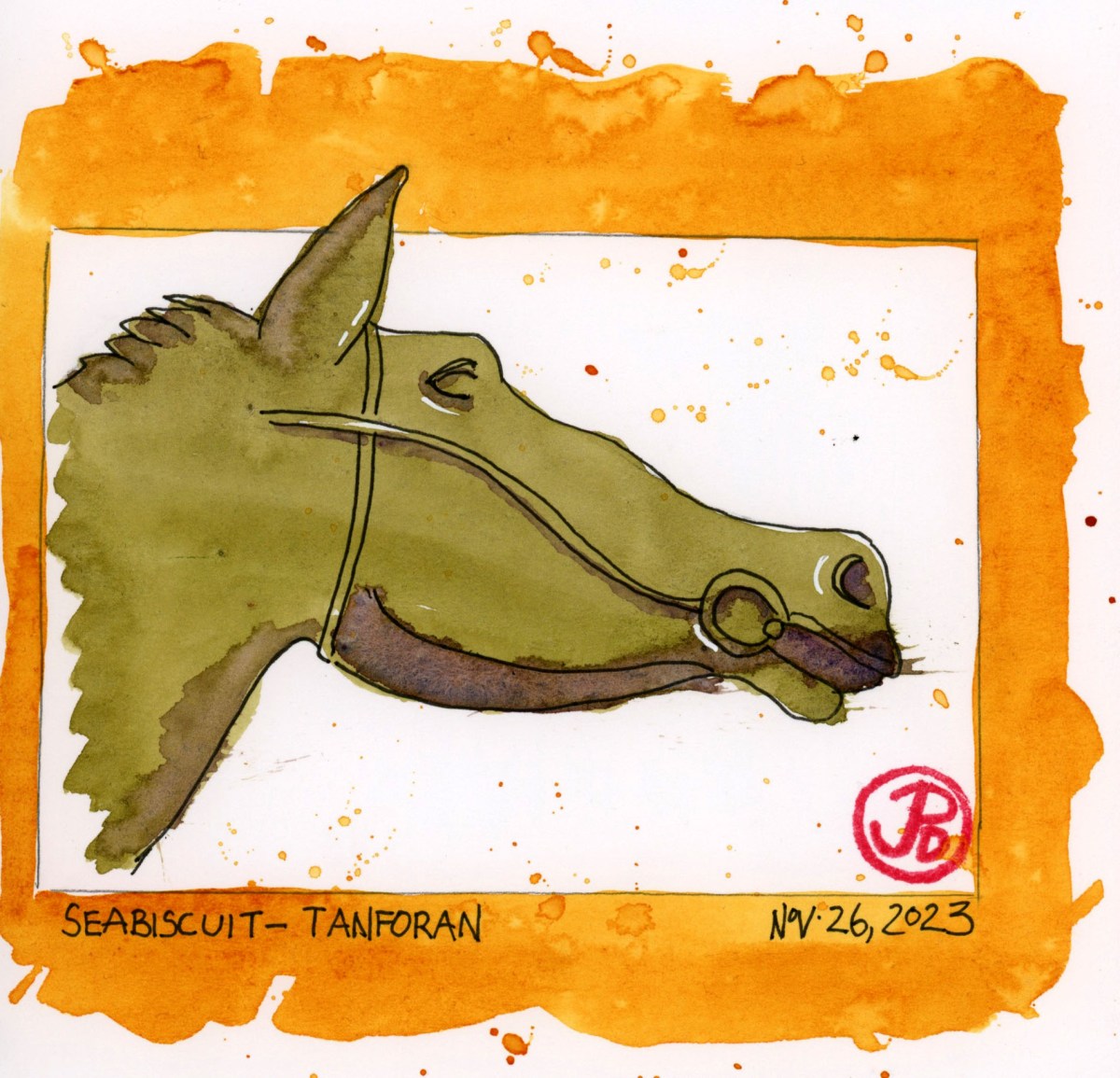
The plaque under the statue reads: “Seabiscuit Born 1933, Sired by Hark Tack- out of Swing On, Owner- Charles S Howard, jockeys Red Pollard-George Woolf, World Champion Money Winner to 1938.”

Seabiscuit was stabled at Tanforan for a time and ran races here. In 1939 the horse left Tanforan by train when Seabiscuit journeyed east to race War Admiral.

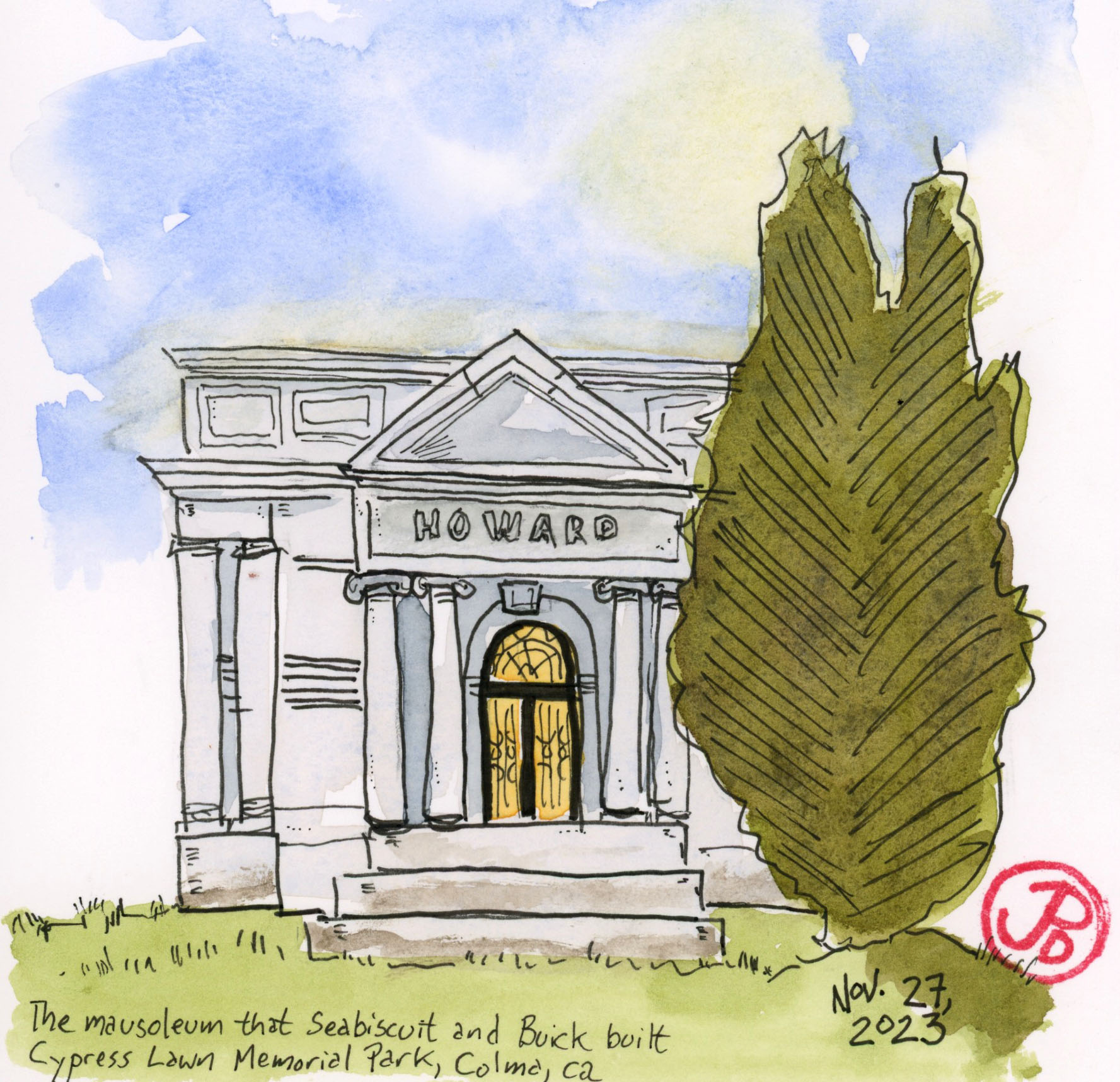
Another bit of Seabiscuit history can be found just north of Tanforan in the sleepy town of Colma. At the Cypress Lawn Memorial Park rests Charles S. Howard.

Howard was Seabiscuit’s owner. The multimillionaire was responsible for Seabiscuit’s success by finding the perfect combination of horse, trainer (Tom Smith), and jockey (Red Pollard).

Image

The Coastal Hoosegow

The big house, the bucket, the calaboose, the cooler, the gray bar hotel, the hoosegow, the joint, the jug, the pen, the pokey, the slammer, and stoney lonesome.

These are all slang for jail.

On my way down the coast, I did a Friday afterwork jail sketch in the town of Half Moon Bay.

On a side street that parallels Main is a small building that sits alone. In case anyone wondered what this building was, it reads “JAIL BUILT-1909” in big black letters across the top. (The jail was actually built in 1919.)

This was Half Moon Bay’s small two-cell jail. This isn’t, even with the wildest imagination, the Big House.

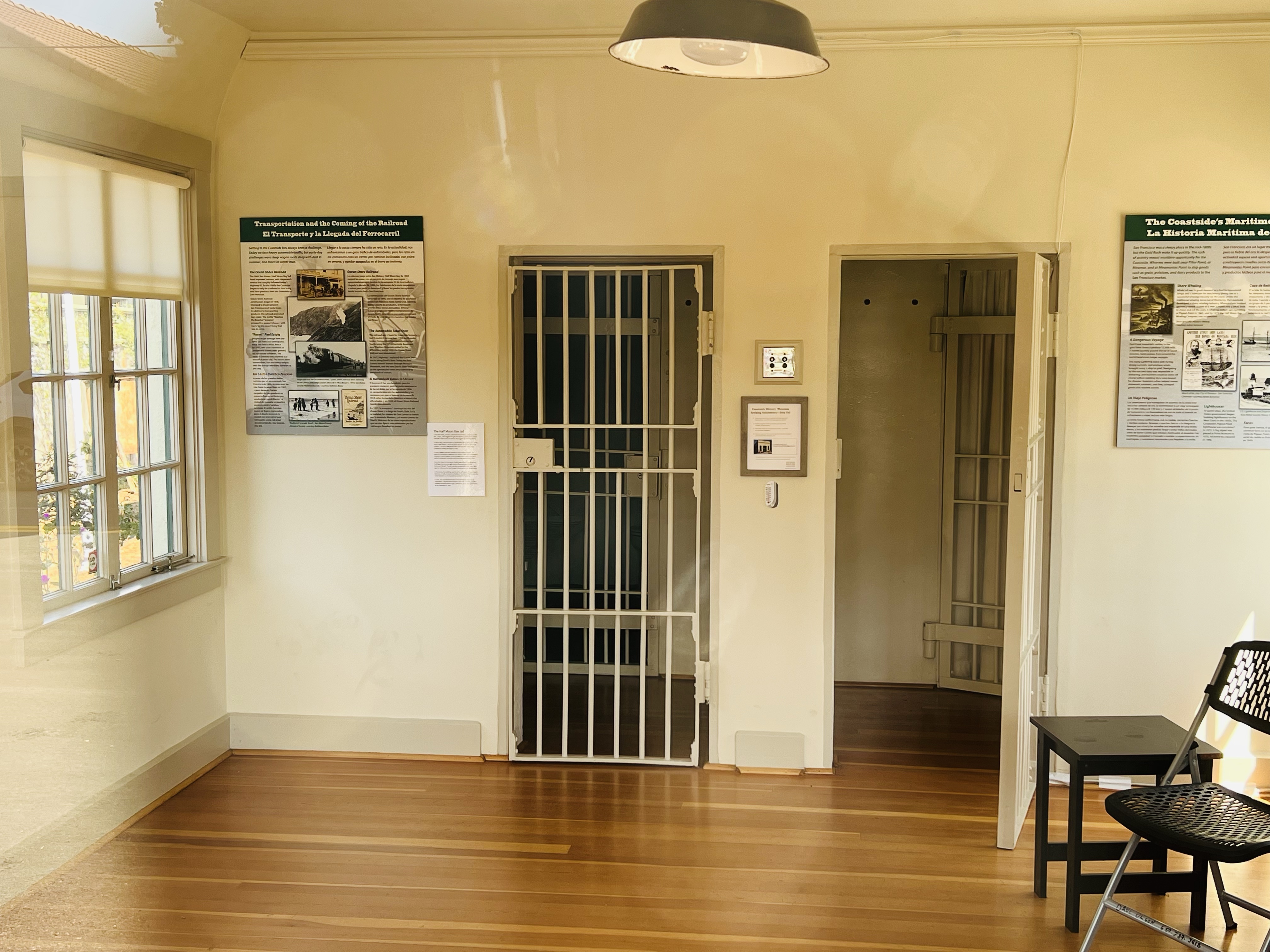
The jail is built of reinforced concrete on a concrete foundation, built to keep people in. Not like it’s formerly interned were serious criminals. The cost of the jail was $3,000.

The Half Moon Bay Jail reopened in 2018 as a historical museum.
The two cells and constable’s office.

The jail held prisoners until they could be transferred to the county jail in Redwood City. Locals also spent the night here having had too much fun in Half Moon Bay’s saloons.

The jail was used as a jail and sheriff’s office until 1967 where it was little used until it was reopened as a historical museum in 2018. It is the oldest public building in Half Moon Bay.

I then headed 45 minutes south on Highway One to the small town of Davenport to sketch their small jail.

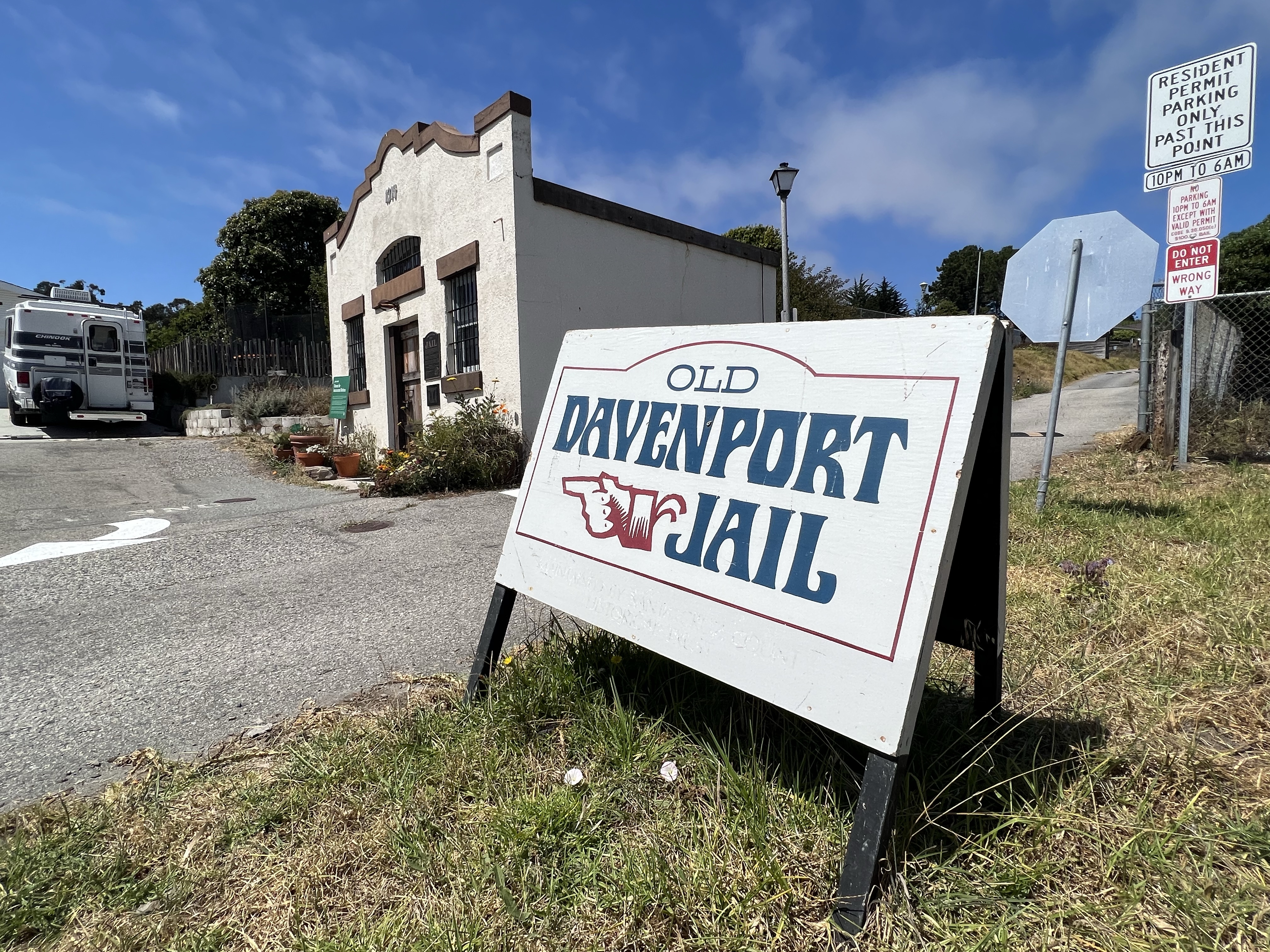
This two-cell jail was built in 1914 of Santa Cruz Portland Cement, made at the Davenport Cement Plant. This small jail was built to last and looks solid for a building that is over 100 years old.

The jail housed two horse thieves from San Mateo and like Half Moon Bay, locals that had imbibed a bit too much in Davenports’s saloon.

In 1936, when the new jail on Front Street in Santa Cruz was built, the Davenport clink became redundant.

It is now a historical and art museum.

Image

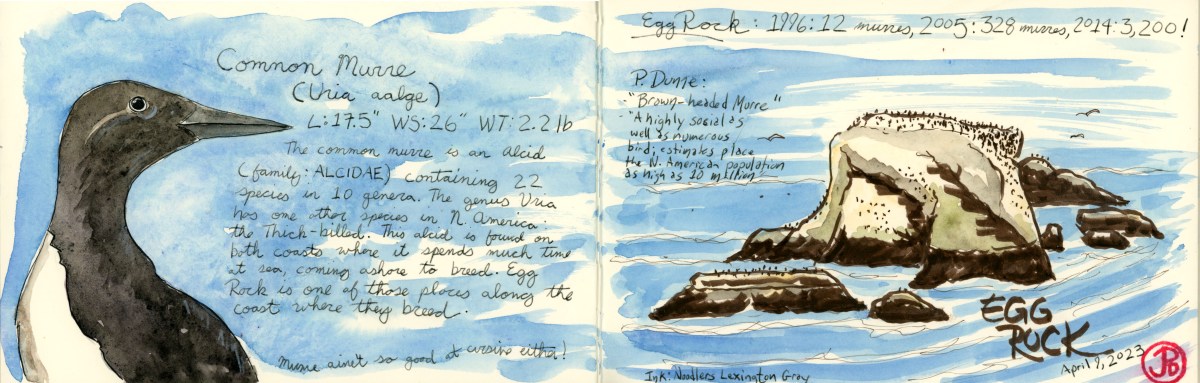
The Murres of Egg Rock

On Easter Sunday I walked west on the former Highway One at Devil’s Slide on the San Mateo County Coast. My destination was the common murre success story that is Egg Rock. This somehow seems appropriate, given the day.

I remember driving this white-knuckle stretch of Highway One. The current roadway is routed through a tunnel to the east. Peregrine Rock is on the left.

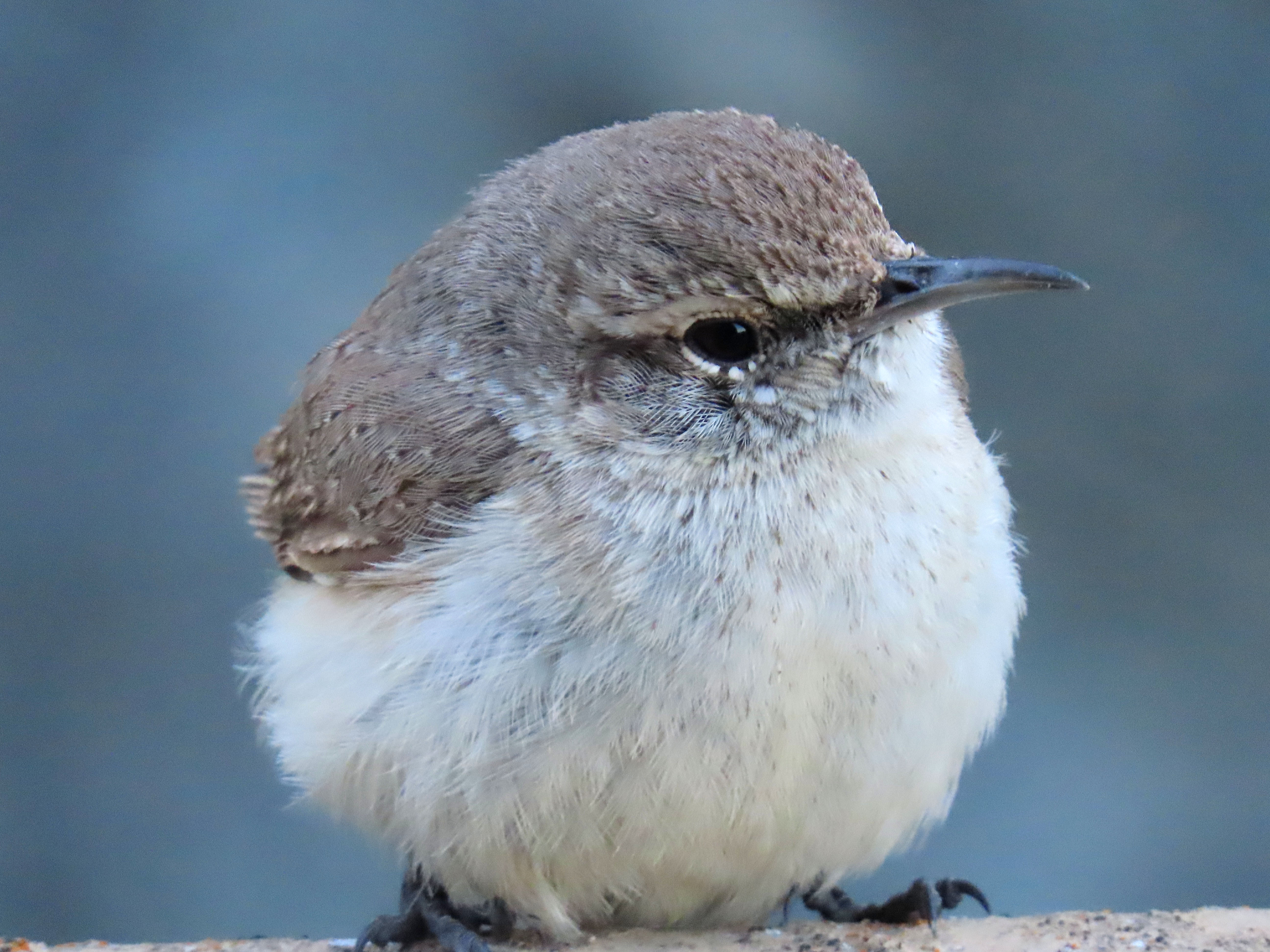
As I passed “Peregrine Rock“, so named because of the nesting peregrine falcons on the cliff face, two juvenile rock wrens were perched out on the retaining wall. I took a few photos of the obliging wrens and then headed down the road to the Egg Rock lookout.

This juvenile rock wren was very accommodating.

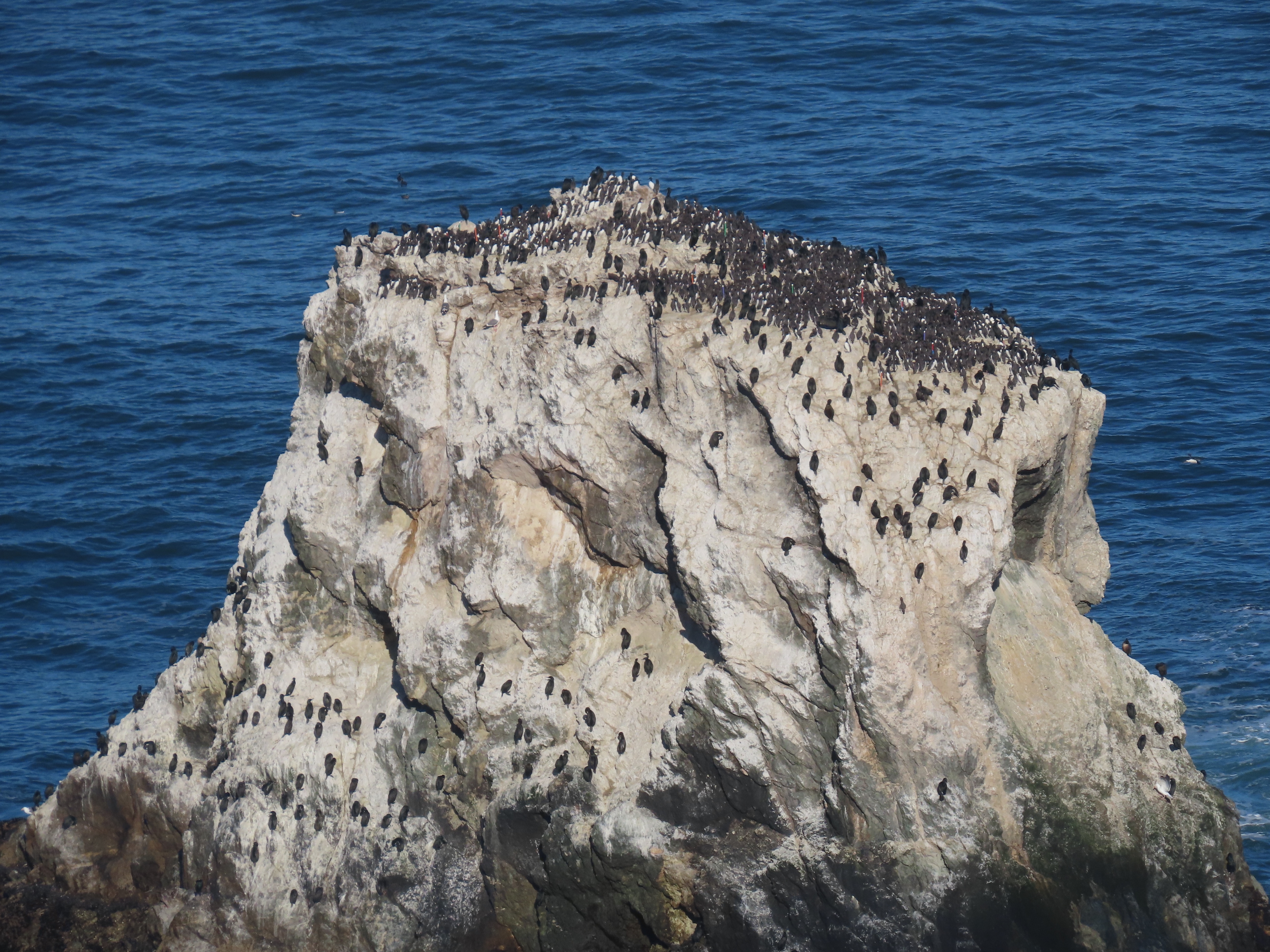
Egg Rock is a collection of rocks just off the coast of Devil’s Slide. It is the scene of an alcid success story. Egg Rock supported a breeding colony of about 3,000 common murres. A murre is a seabird that superficially looks like a penguin. They spend much of their life at sea but come ashore to breed.

In the early 1980s the colony saw a rapid decline due to gill netting, a change in weather patterns, and pollution. The colony collapsed altogether and no murres nested on the once populous rock. In the middle 1990s a murre restoration project was started. By 1996 just 12 murres where observed on Egg Rock. The restoration project employed murre decoys, mirrors, and broadcasting murre calling in order to bring murres back to Egg Rock. And it slowly began to work.

By 2005 there were 328 murres and by 2014 the murre population reached 3,200 birds. The murres of Egg Rock had finally recovered to their pre-1980s numbers.

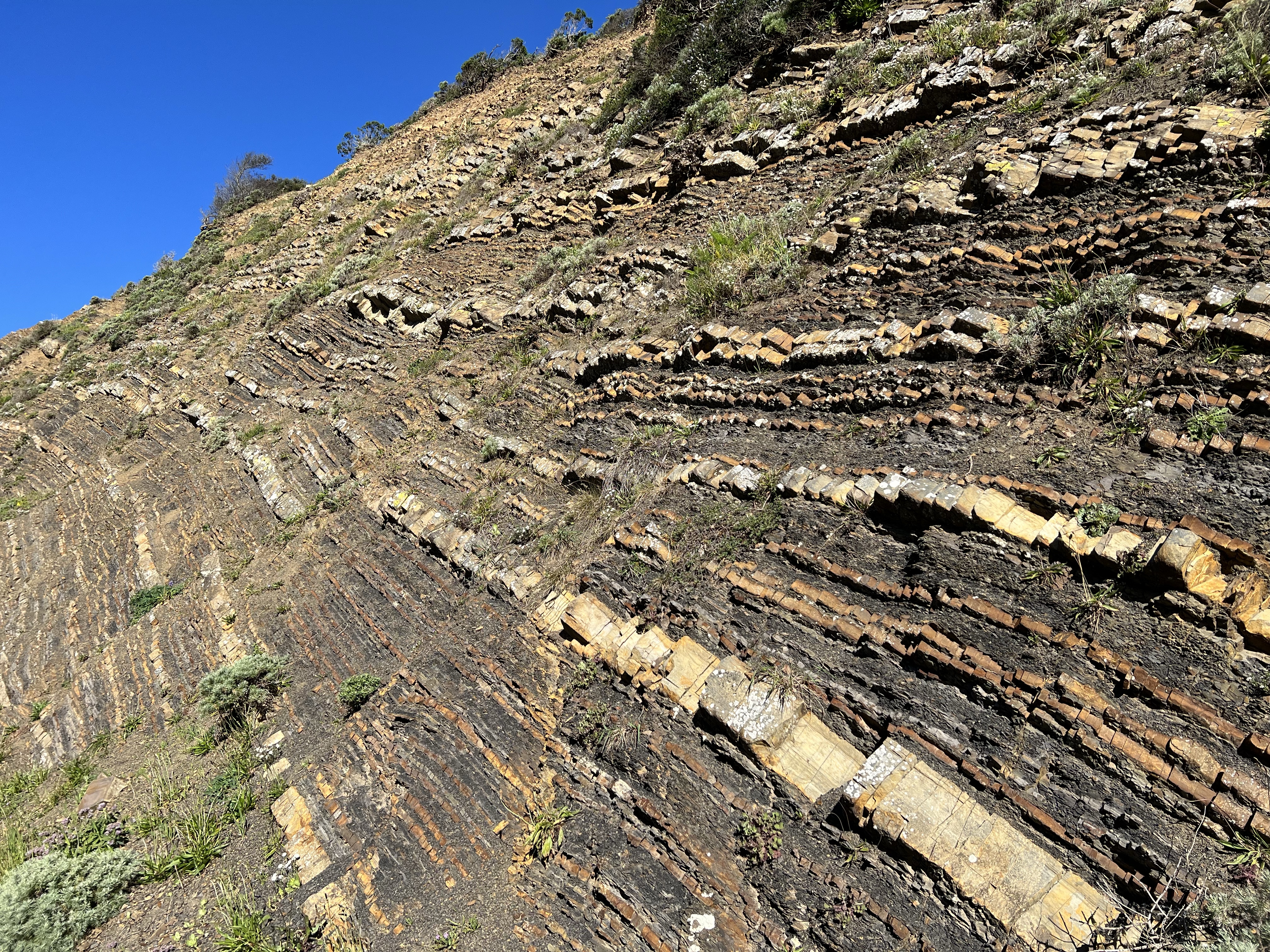
Road cuts are a geologist’s gift. Here is the sedimentary uplifted rock of Devil’s Slide.
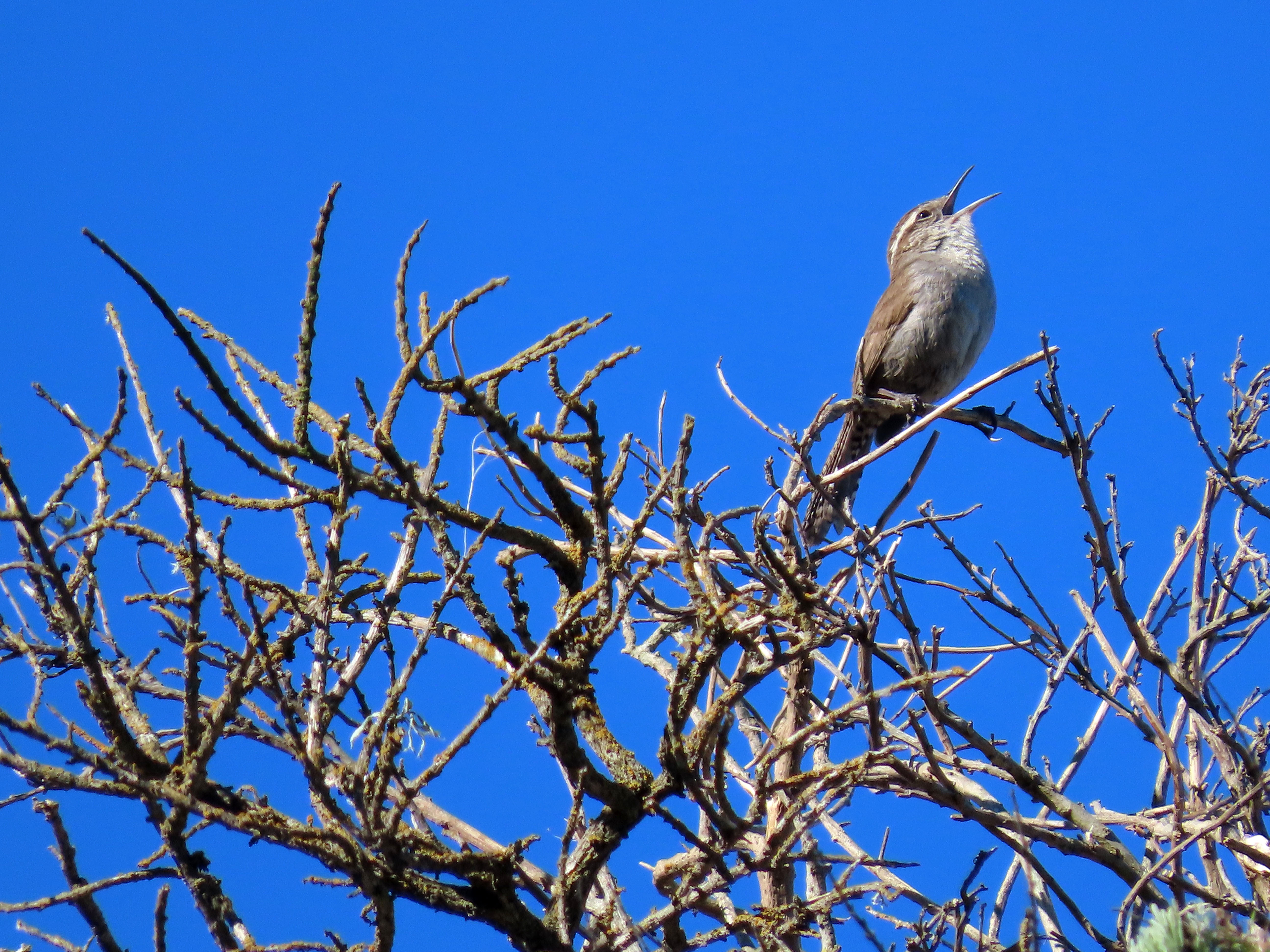
A sign of spring: a Bewick’s wren in song.
Image

San Mateo and Santa Cruz Whalewatch

Before setting out on my adventure to Mendocino, I wanted to do a little coastal whale watching in the Bay Area. So I met Grasshopper Sparrow (he has wheels now!) in Half Moon Bay and we headed south to Pigeon Point and turned our lenses west.

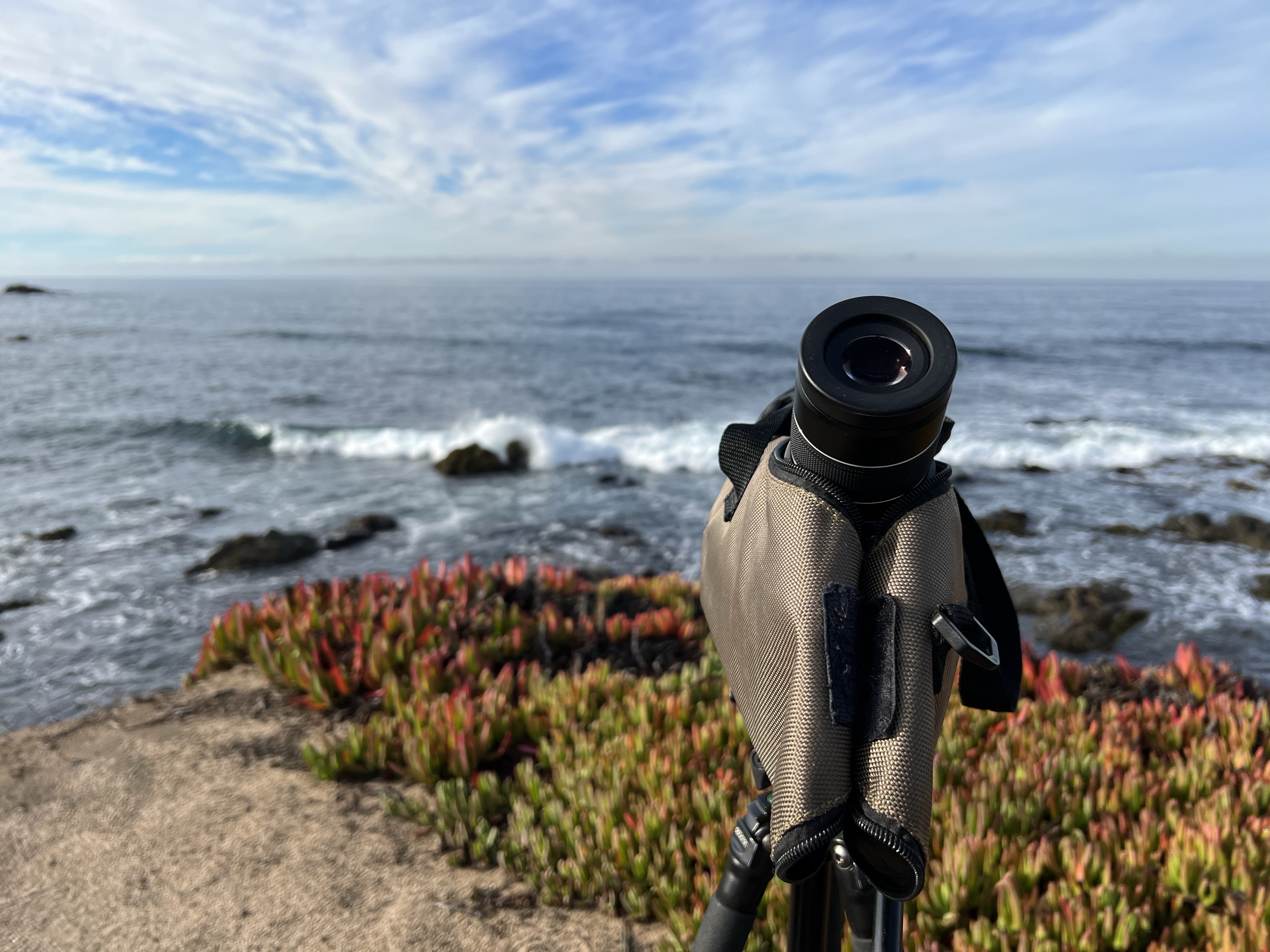
My scope pointed west at Pigeon Point.

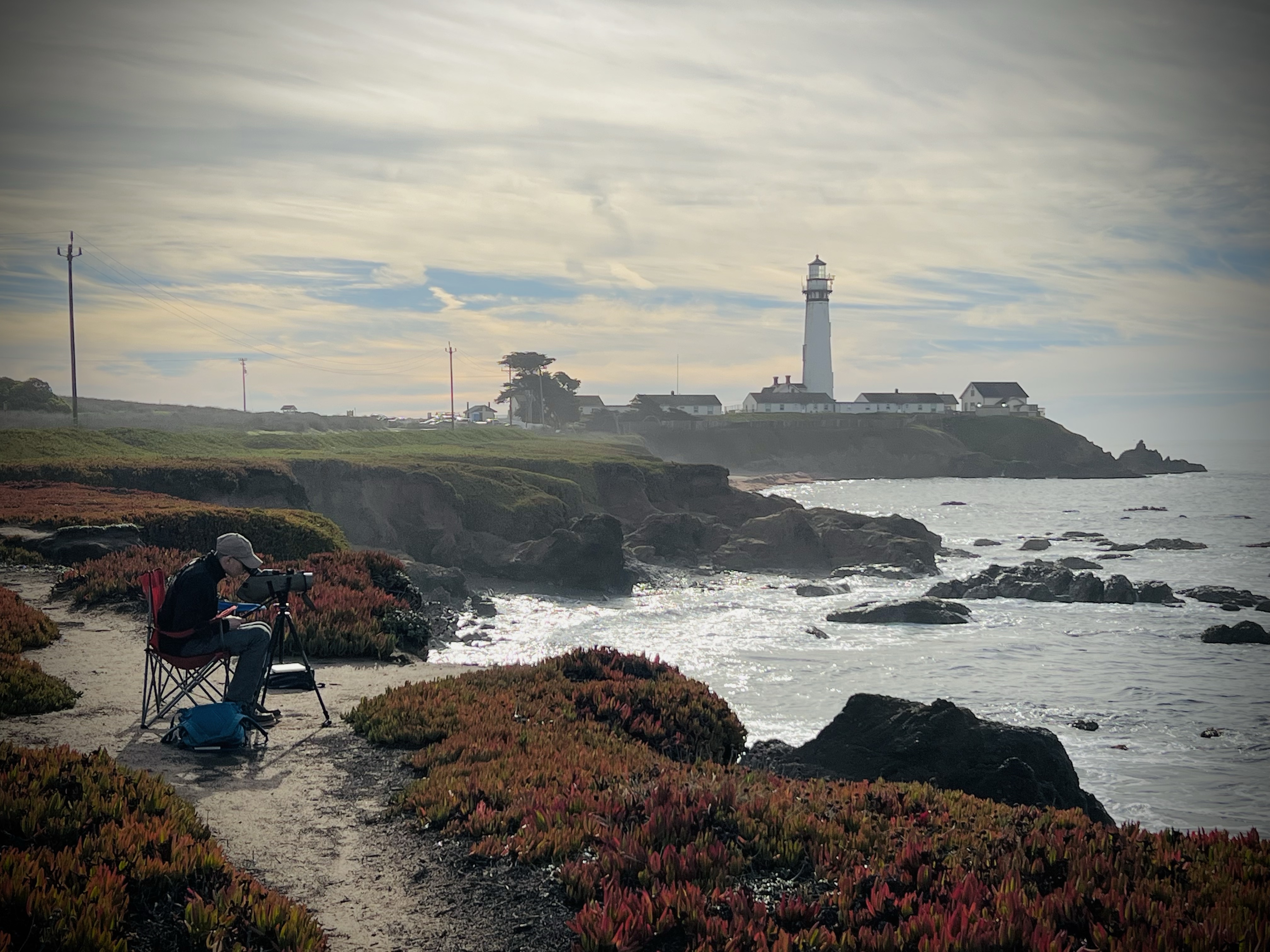
We found a point overlooking the ocean just to the north of Pigeon Point Lighthouse. It was a beautiful, clear day and the seas were calm with a lot of bird life flying both north and south. Perfect conditions for land-based whale watching.

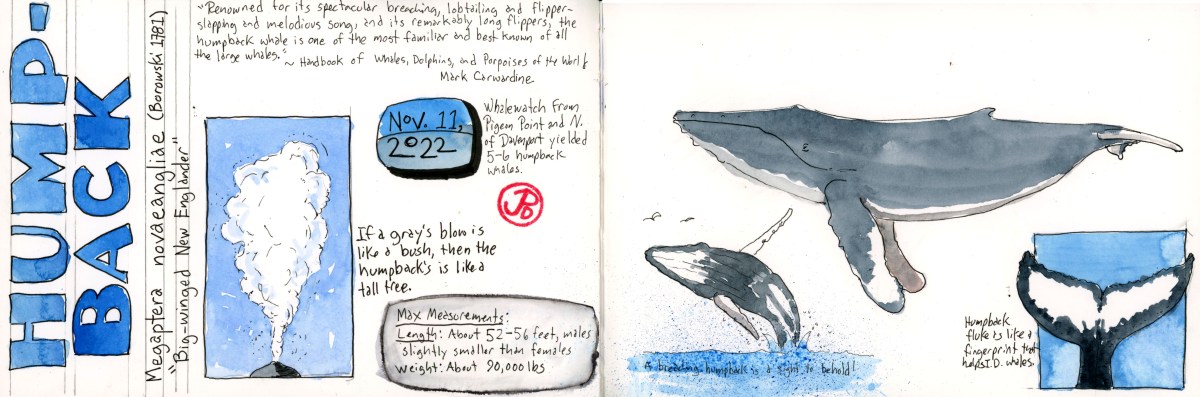
We scanned the horizon looking about an inch below, to see if any blows were visible. This is the telltale sign of a whale. Blows happen when their warm breath makes contact with the cold air and the white exhaust can be seen from a long ways away. We were looking for a short bushy blow which is a sign of a migrating gray whale.

I wandered off a few yards to the north to get a look at some roosting surfbirds when Grasshopper exclaimed, “Whale!” I turned my bins to the horizon, scanning about and inch below. Near the horizon I picked out a white blow in the middle of a flock of birds on the water and circling above. These attendant birds are also a great sign of cetacean activity.

Grasshopper spotting blows just below the horizon with the lighthouse to the south. It always helps to have a set of young eyes along for whale watching.

Now we just needed to identify the whale by its unique blow. Grasshopper noted that the whale he saw through the scope had a dorsal fin. Now this would exclude grays because they do not have a fin but a dorsal ridge. Also the blow looked taller than the heart-shaped gray whale blow.

After a few more observations, with a few of the whales showing their pied flukes, I knew we where looking at a group of three humpback whales!

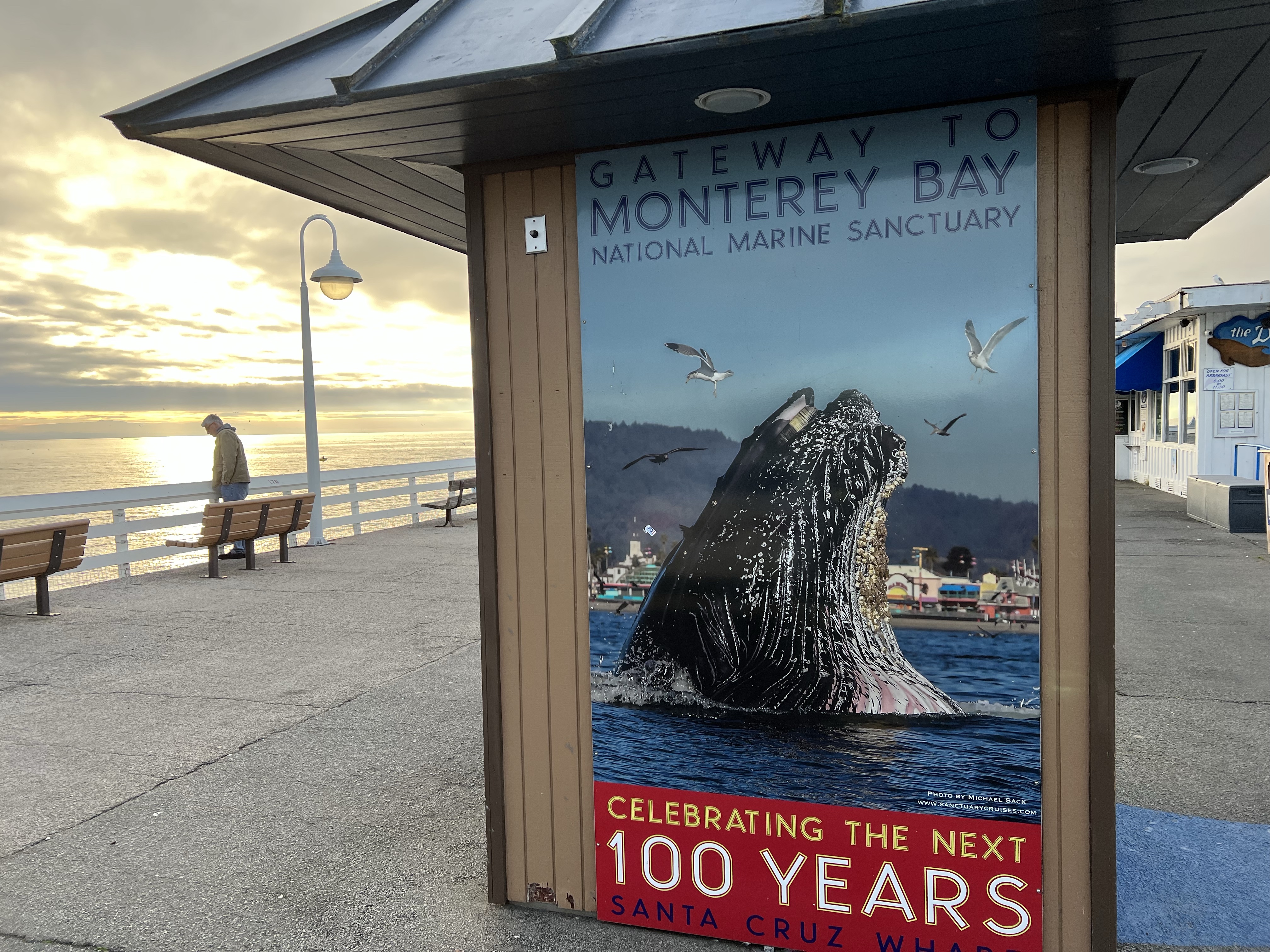
While looking at the rare red-footed booby I spotted this billboard on the Santa Cruz Wharf.

I later headed south down Highway 1 towards Santa Cruz. I pulled off just north of Davenport to have a little lunch and scan the Pacific for whales. I didn’t have to wait long before I saw my first blow with the naked eye. I put a scope on the whales and identified a few more humpbacks but I did not see any grays.

I would have to drive north to meet them “halfway”. Well, that was the plan all along.

Mendocino, here I come!

Image

Grasshopper Sparrow Sees a Grasshopper Sparrow!

Birding in the spring is a treasure. Many species are perched out and singing making them easy to see and hear.

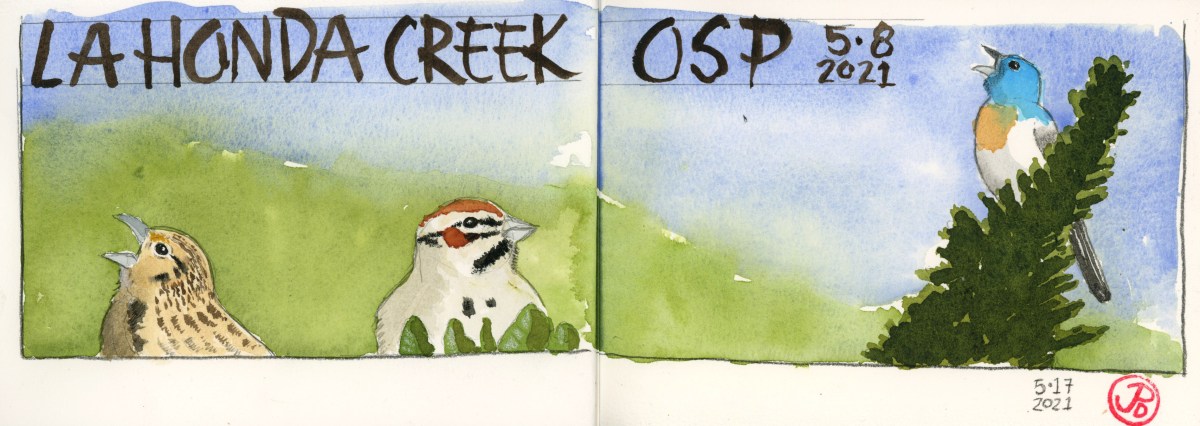
Grasshopper Sparrow had a few lifers he was hoping to check off his list. Western kingbird, lazuli bunting, and of course his namesake: grasshopper sparrow.

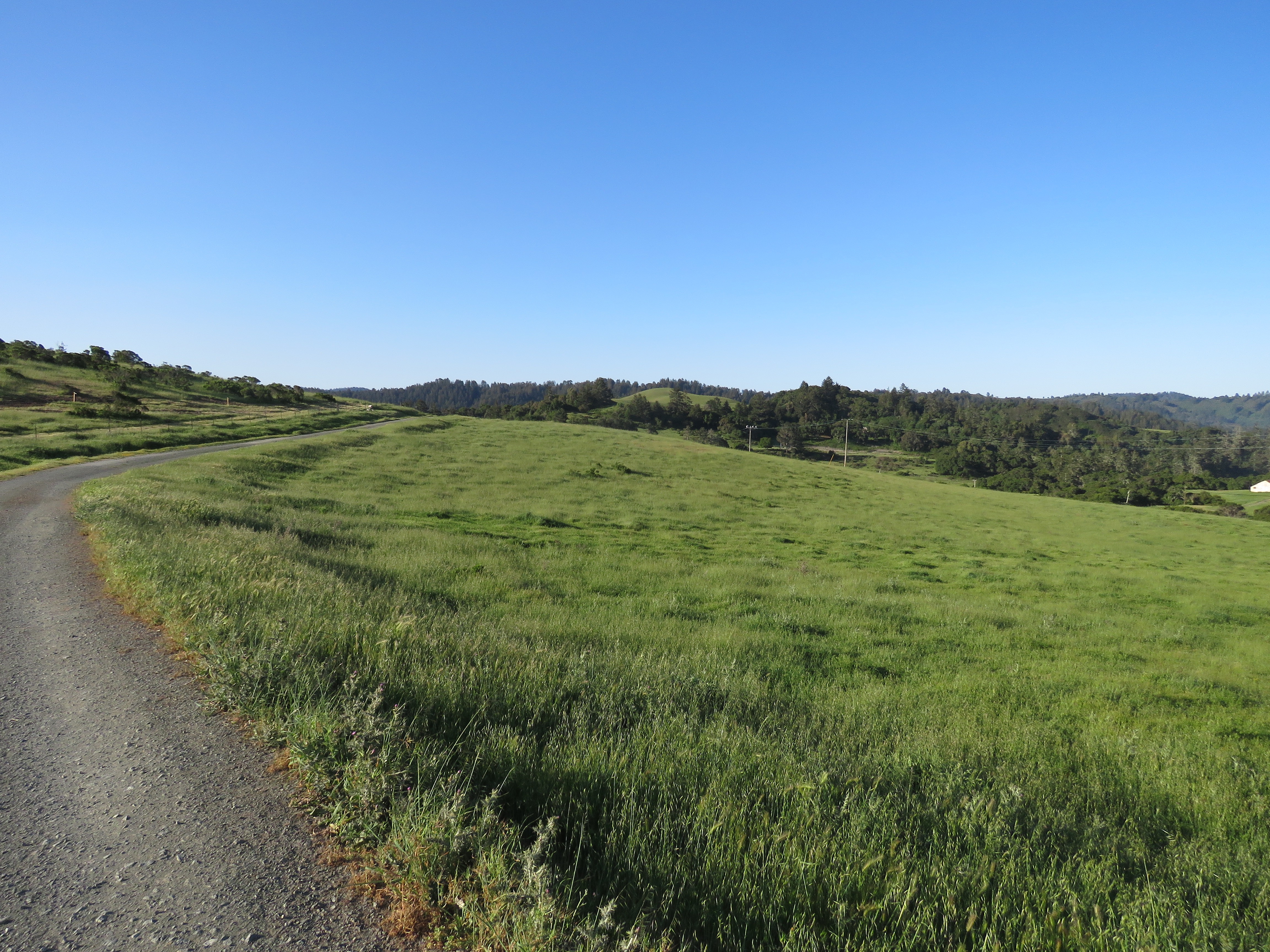
Our destination was in San Mateo County near the small mountain town of La Honda. This is La Honda Creek Open Space Preserve. This OSP contains open meadows surrounded by the curvaceous green hills of California’s Coast Range.

Within 100 yards of the parking lot, as we walked along the wide fire road, we heard our first grasshopper sparrow!

Birding is made easy at La Honda Creek OSP with a graded fire roads with open views of the meadows, perfect habitat for the grasshopper sparrow.

As we walking down the fire road that bisects the meadow, we heard and saw five grasshopper sparrows. They where either perched up on coyote brush or singing from a barbed wire fence.

At this time of year, the grasshopper sparrow are singing their insect-like song, incessantly.
Corvid Sketcher and Grasshopper Sparrow as Grasshopper gets his namesake lifer: grasshopper sparrow.

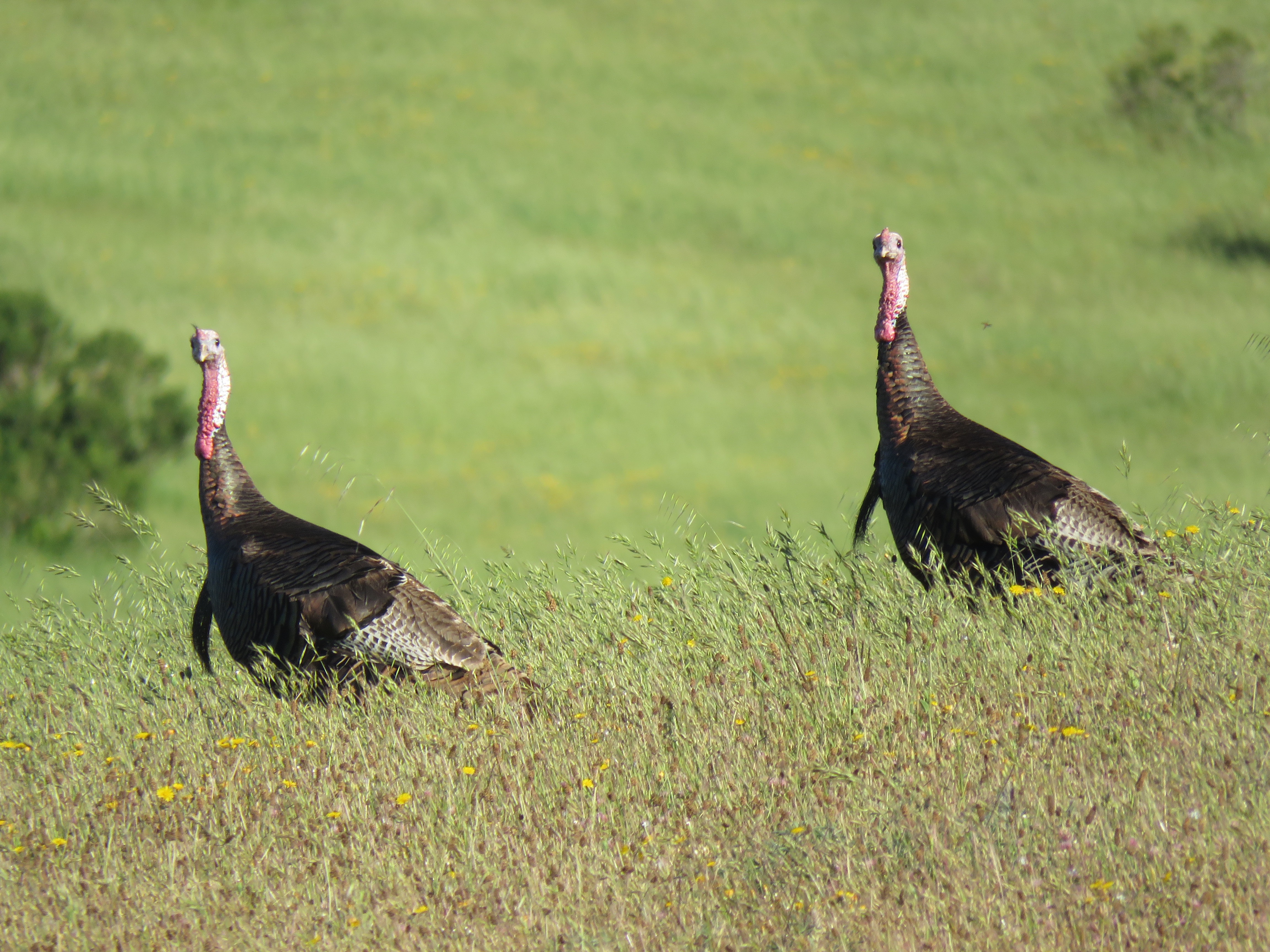
After getting our fill of singing grasshopper sparrows, we continued on down the road where we were greeted by two wild turkeys. Then we headed into a habitat with a bit more tree cover and we saw our first flycatcher, the ash-throated flycatcher.

Are pair of wild turkeys in the tall, green grass.
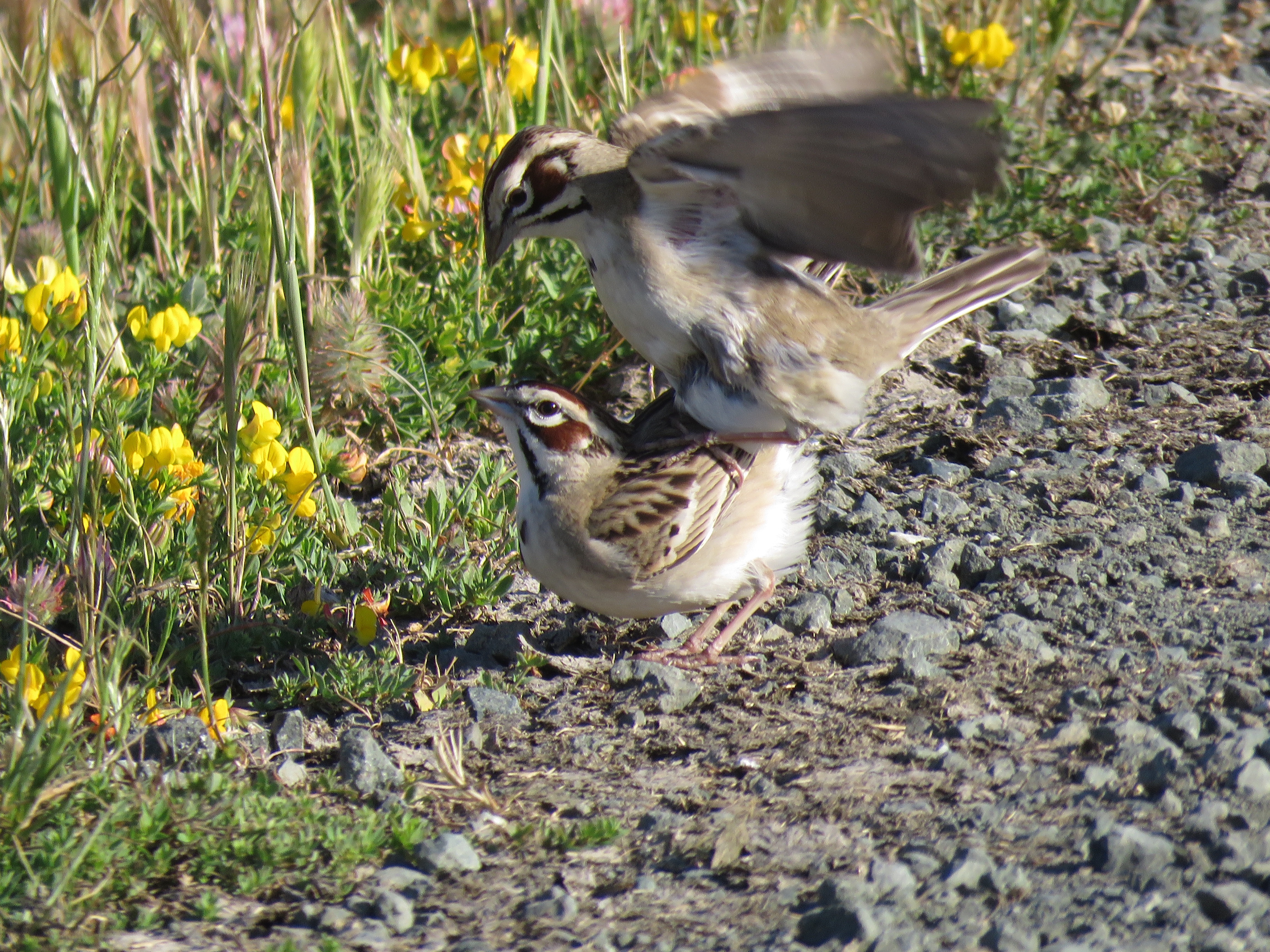
Love is in the air, a sure sign of spring: copulating lark sparrows. These beautiful sparrows are considered rare in this location.
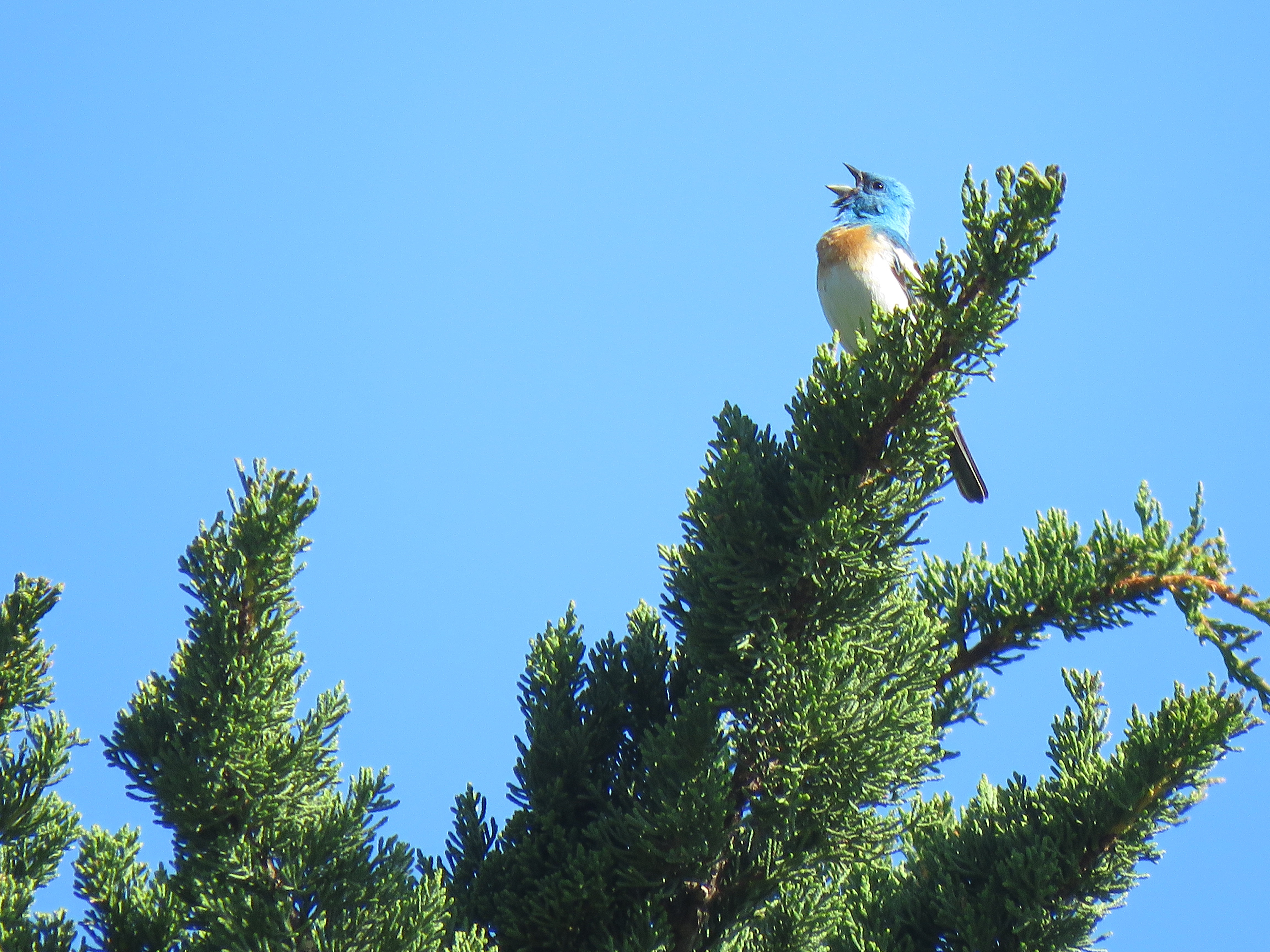
A singing male lazuli bunting.
Image

County Birding: San Mateo and San Francisco Counties Part 1

On Saturday morning, Grasshopper Sparrow and I headed east on Highway 92, our destination was Parkside Aquatic Park in San Mateo. Our plan was to do some San Mateo County birding. I hoped to add some new birds to my San Mateo County list and Grasshopper was hoping to add some lifers to his list!

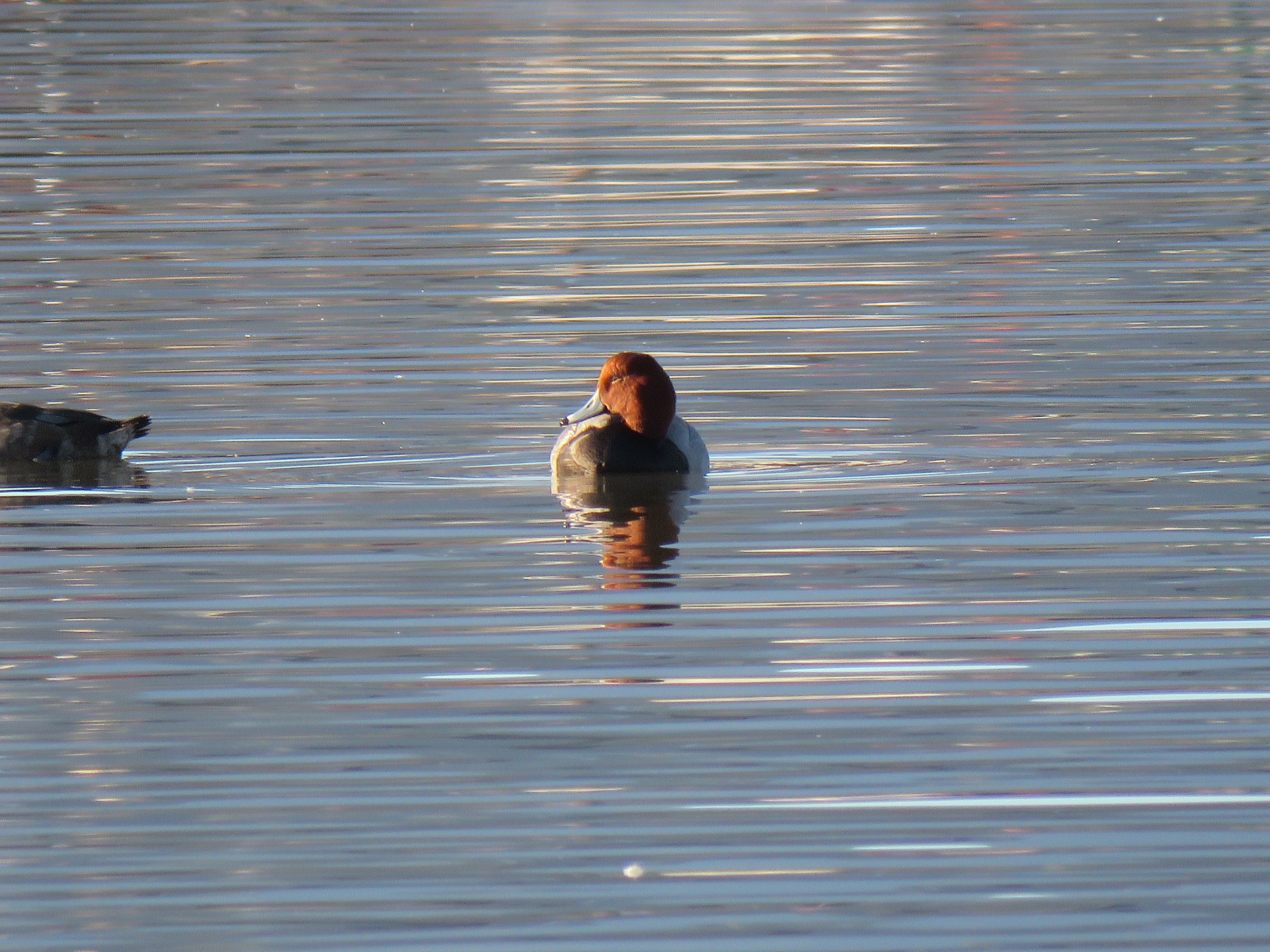
This park lines Marina Lagoon and it is a great place for ducks, geese, herons, and waders. But we where here for the rare county duck, the redhead. After a short search, we spotted the distinctive duck with two females.

The appropriately named redhead. This is a male at Parkside Aquatic Park.
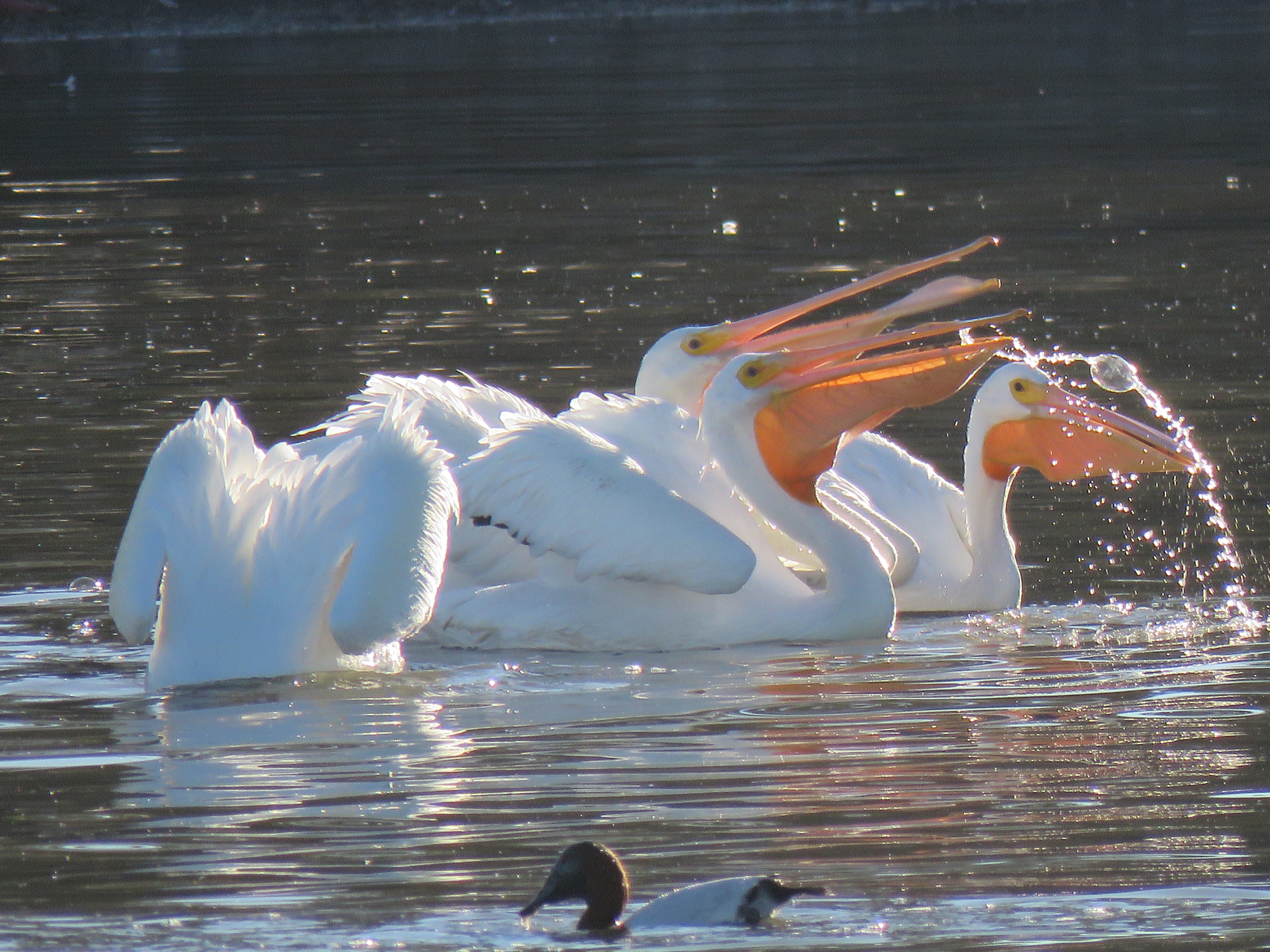
A pouch of American white pelicans foraging in the lagoon.

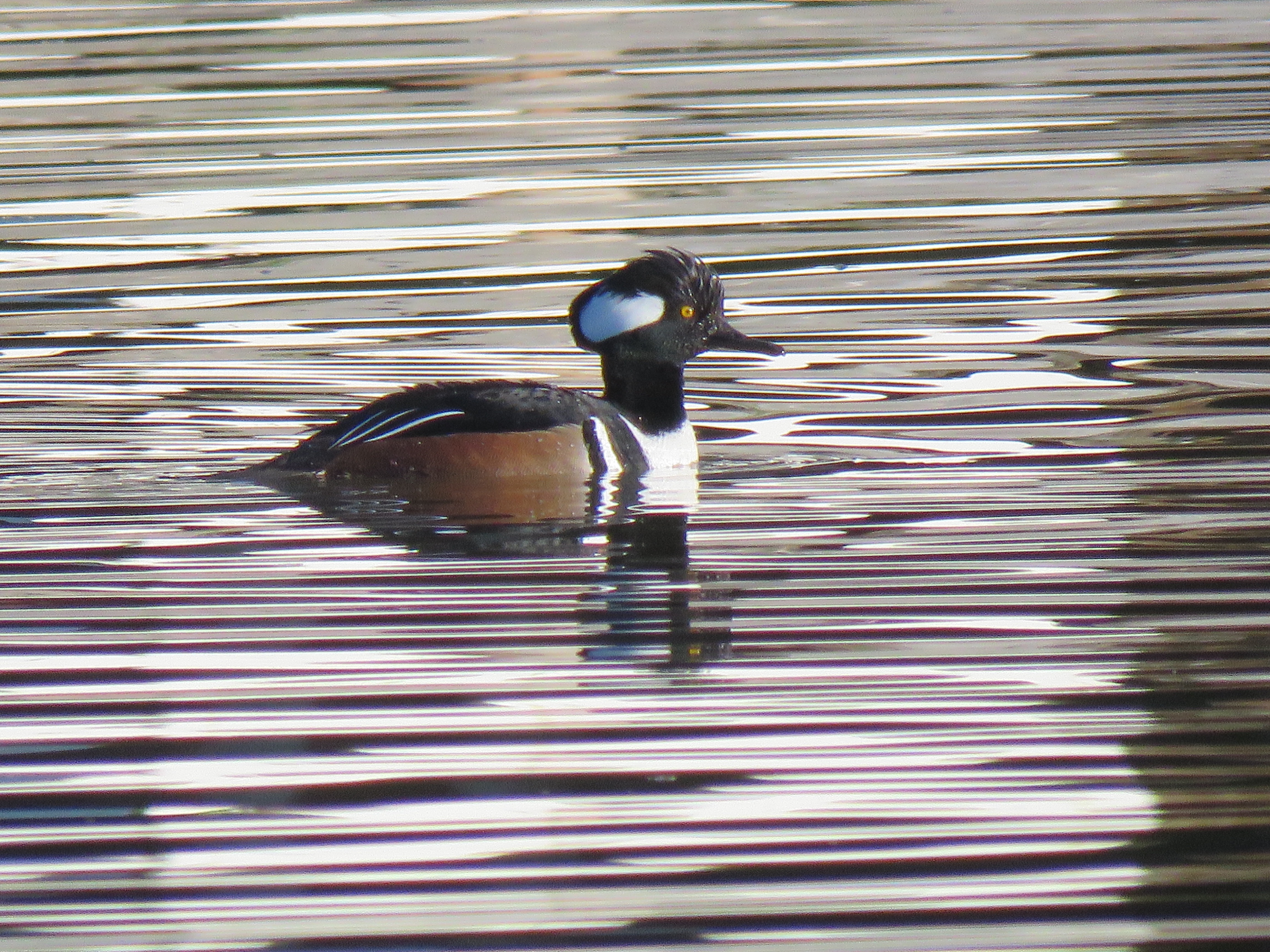
There were plenty of other birds to looked at such as a green heron, a group of American white pelicans, and the stunning hooded merganser.

I love the contrast between this beautiful male hooded merganser and a white house’s reflection on the lagoon.

Our next stop was to Bair Island Wildlife Refuge. Our target bird was a Pacific golden-plover that had been seen a few days early by the legendary San Mateo county birder Peter Metropolis. When we arrived, it was low tide which meant that we were looking for the proverbial needle in a haystack or a plover is a vast mash that was full of other birds. We joined Chris Hayward, a local birder who is also a spotter on many pelagic trips leaving from Pillar Point Harbor. Chris had not yet seen the plover. We were joined by another birder, the more eyes the better.

In the marsh were many ducks and peeps. Grasshopper spotted a male Eurasian wigeon. That was the only rare bird we recorded at the refuge. So we left Chris to continue the search and we headed back north on Highway 101 to the next exit to look for some more county ducks at Nob Hill Pond, so named because the pond is located behind a Nob Hill supermarket.

When we first arrived , when checked the channel near the San Carlos Airport for the continuing female long-tailed duck. We had tried for this bird for about five times, without success. We failed again but we would try again after trying to get a very rare duck on Nob Hill Pond.

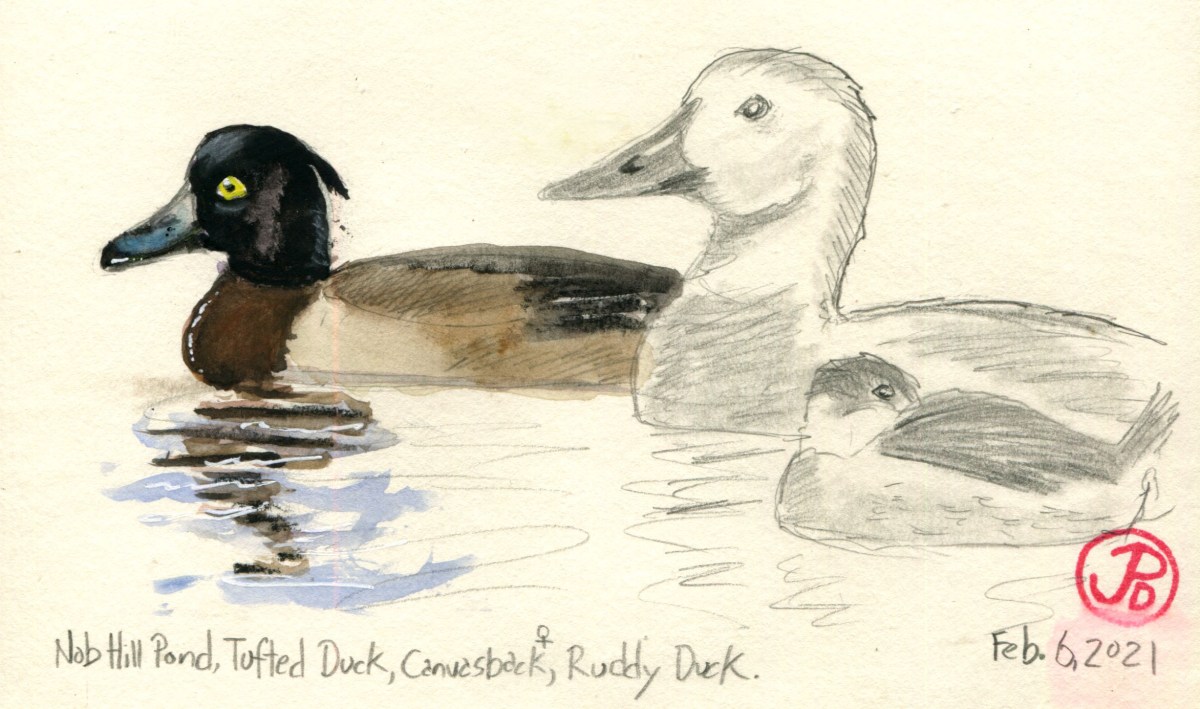
This duck is common in northern Eurasia but rare in Coastal California. This is the smallish diving duck called the tufted duck because of the prominent tuft of feathers emitting from the back of it’s head, most noticeable in the male of the species.

Grasshopper spotted the tufted duck through the scope. It’s tuft was growing in length like my Covid hair! There is nothing like young eyes! Well spotted Grasshopper Sparrow!

Finally, the tufted duck is ours!! On the right is a stunning male canvasback.

We headed back toward the airport to continue on search for the continuing female long-tailed duck. We had whiffed on this species on about five attempts but we adopted a now-or-never approach to this sought after species.

As the the time neared noon, the reflections where intense and from our position, the birds where backlit. Panning with the scope, all we where seeing where buffleheads. Being diving ducks they appeared and disappeared giving us renewed hope followed by disappointment when an bufflehead surfaced. No long-tailed.

After about a 20 minute search the female long-tailed duck appeared near some pylons on the east side of the airport. County bird and a lifer for Grasshopper!

After a three county duck day we headed back to the hacienda in San Mateo. Grasshopper had spotted a rare west coast sapsucker a few weeks before. Because it was rare, he was unsure of the ID, he submitted his photos to some San Mateo County birder and his sighting was confirmed. (This is the correct approach for a young birder, well learner Grasshopper!)

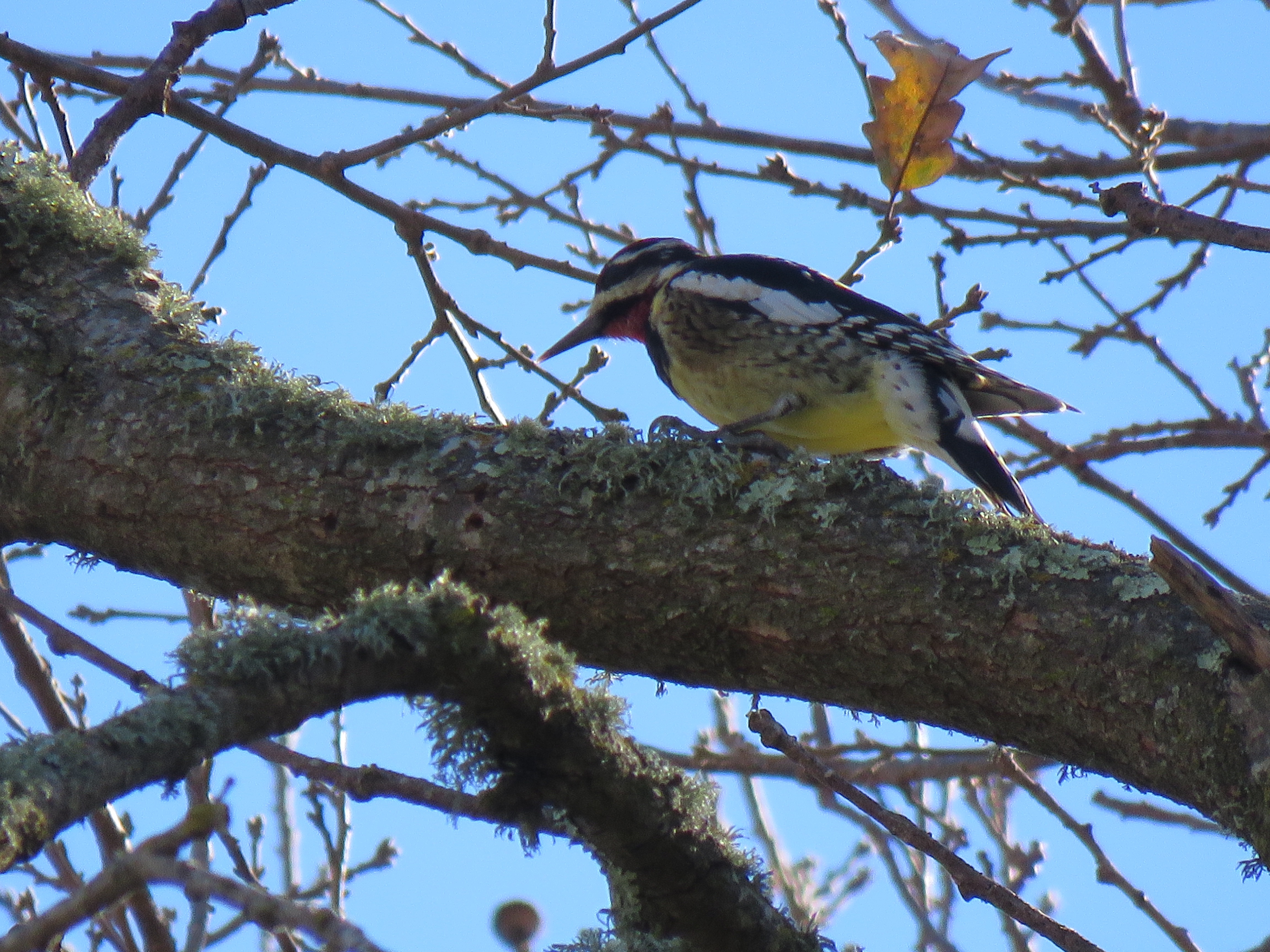
Over some afternoon suds, Grasshopper said excitedly, “woodpecker!” I was able to get some photos of the sapsucker in the oak in the backyard. A yellow-bellied sapsucker, a fourth San Mateo County bird! Not bad for a day’s worth of county birding.

On Sunday I found a bird in San Francisco on Lake Merced that had not been recorded in this location since 1977. Those were the days when birders were few and the optics were poor. But with a open buttoned shirt and bellbottoms, the 1977 birder must have looked sharp!

To be continued. . .

A great bonus was a backyard yellow-bellied sapsucker in Grasshopper Sparrow’s backyard. Four San Mateo County county birds!

Image

California Wildfires: CZU Lighting Complex

In the early morning hours of Sunday August 16, 2020, I was awoken by the low thud of thunder. A few minutes later, white light temporarily illuminated my bedroom. A summer thunder and lighting storm! This was a rare occurrence on the California coast.

I lept out of bed and headed to the deck in the same spirit that John Muir climbed up a Doug-fir to experience a windstorm! In this case my survival instinct prevented me from climbing to the top of the tallest tree in an electrical storm. Instead I stood in the open doorway.

I looked upriver and another flash of lighting silhouetted the sloping tree-line and then a clap of thunder filled the darkness. I heard the first drop of rain hit the deck and I reached my hand out from the doorway to feel the life-giving rain. It rained for a very short time, this was a dry thunderstorm.

I stood in the threshold of the back door until that survival instinct willed me to close the door and return to bed. Of course I couldn’t sleep in all the climatic excitement. The center of the storm cell was now moving over my cabin. One clap of thunder was so close that it rattled my bedside lamp.

The whole storm lasted for about 30 to 45 minutes. At that time, little did I know, that this storm sparked wildfires that would create more damage in Santa Cruz County than the 1989 Loma Prieta Earthquake.

I finally drifted off to sleep and when I awoke and looked out across the deck to clear blue skies, I knew the day was going to be warm, extremely warm.

That day I chose to drive over Highway 9 through the San Lorenzo Valley. I rarely drove this route but I had many memories of the area including the town of Boulder Creek, where I worked at a coffee shop just after college. This highway would be a fire line in upcoming weeks. Over 900 structures would be destroyed to the west of Highway 9.

Monday August 17, was the first day of school and it proved to be one of the oddest first days in my teaching career because I was not greeting my students at the classroom doorway but online in my digital “classroom”. Well that was the plan until I got to school and found out that the power was out and PG&E later looked at a power pole on campus that had been struck by lighting (part of the same storm system that started the fire in the Santa Cruz Mountains) and destroyed a transformer. Power would not be restored until two days.

As the news came that a series of forest fires (a complex) was growing into one big wildfire, I kept an eye on Cal Fire’s updates on the contagion. At the same time trying to be present for my students who were no doubt anxious and nervous with the first week’s jitters, especially so because we where all in isolation and we where only seeing a facsimile of ourselves on a screen.

I was also planning for a digital Back to School Night on Thursday and I knew there would be many questions about Distance Learning and I surly did not have all the answers. I ended the presentation by sharing the poem I had written last April about how we were all like pioneers on the Oregon Trail. There would be many hardships but with perseverance and hard work, we would get there.

Back to School Night went better than I had expected and it was very odd not to see my parents and greet then in person. Half and hour later, at 7 PM I received work that a mandatory evacuation order was in place for Paradise Park and my family cabin was in danger of being consumed by the CZU Lighting Complex fire!

At the time of writing the fire that was named the CZU Lighting Complex had burned for 19 days and have consumed over 86,000 acres across San Mateo and Santa Cruz Counties. As of the morning of September 5, the fire is 61% contained.

Cal Fire were able to create fire lines to protect the UC Santa Cruz campus, Santa Cruz, Scott’s Valley, and Paradise Park. The evacuation order was lifted after seven days and residents were able to return to their homes. I headed back to my cabin, a week later, almost 20 days since I had left.

The first thing I noticed was the smoky air and when I looked down the ground was covered in fine white ash, like a light dusting of snow that hadn’t melted away yet. Then I headed to my deck and I heard the rumble of a Cal Fire Huey helicopter with an empty water bucket trading behind.

I looked down and that’s when I noticed the leaves. They were bay laurel leave but they were drained of color and were a charred sepia. How far from the fire storm had these leaves travelled to land on my deck? This evidence of fire was somehow more “real” than the smoky air or the Cal Fire helicopters passing back and forth.

A burnt bay laurel leaf on my front steps.

The suet feeding on the deck was empty and the trees around the cabin were eerily empty of birds. I wondered some animals, like the humans of the community, had fled to less smokey quarters.

I replenished the water in the bird bath and I added some suet to the feeder. Slowly, life was returning. The first bird to visit the feeder was a chestnut-backed chickadee. Life was beginning to return to “normal”.