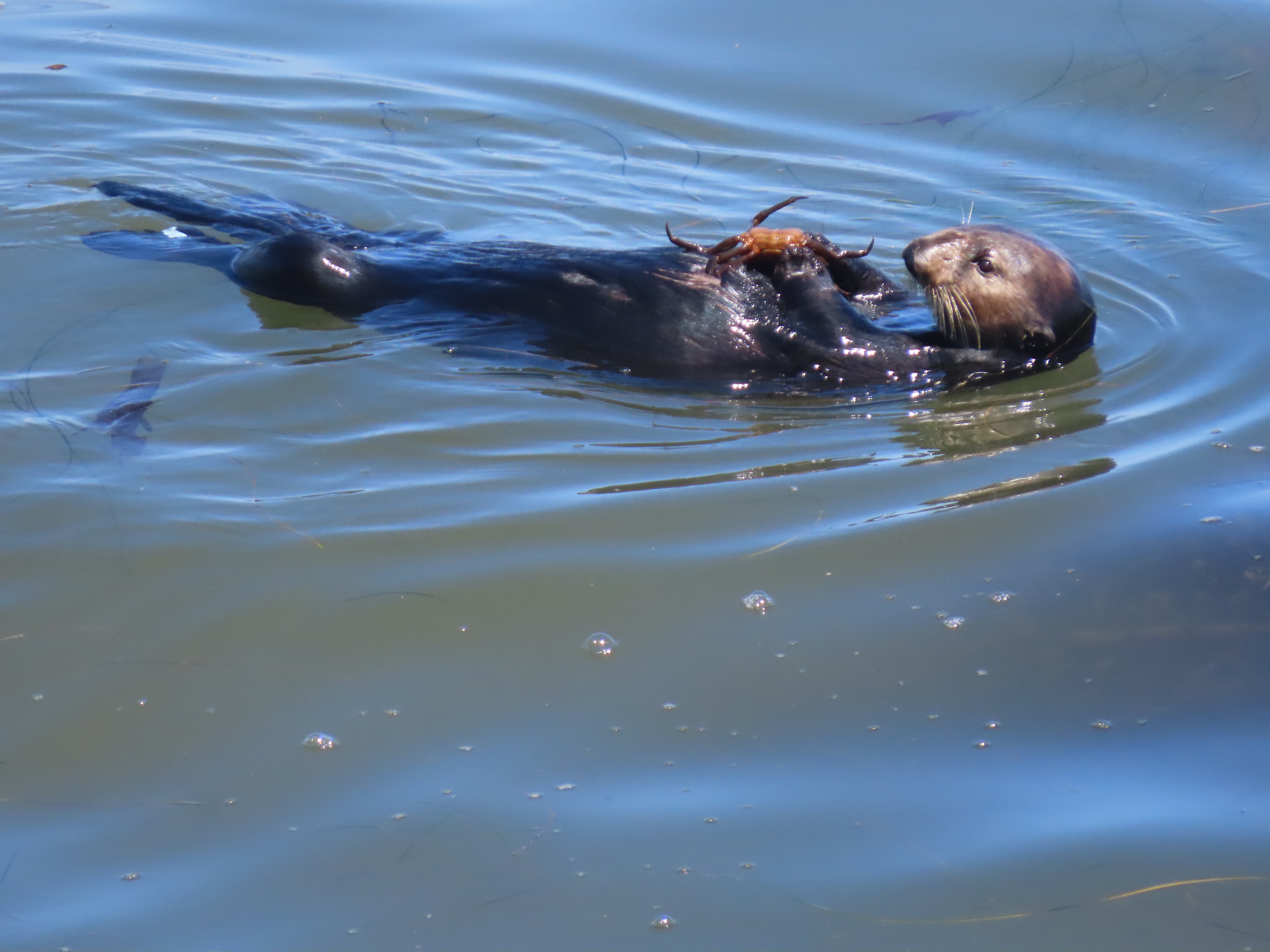
It is nice to see sea otters along the Santa Cruz coast. Laying on their backs, bashing a mollusk to death or eating a crab, recently caught, and still alive, one foot at a time, or rolling in the kelp, belly full, and settling in for a nap.
Fresh caught crab is on the menu off of West Cliff Drive.
This marine mammal was hunted to near extinction because of their pelts. Now they are protected and have prospered on the California coast.
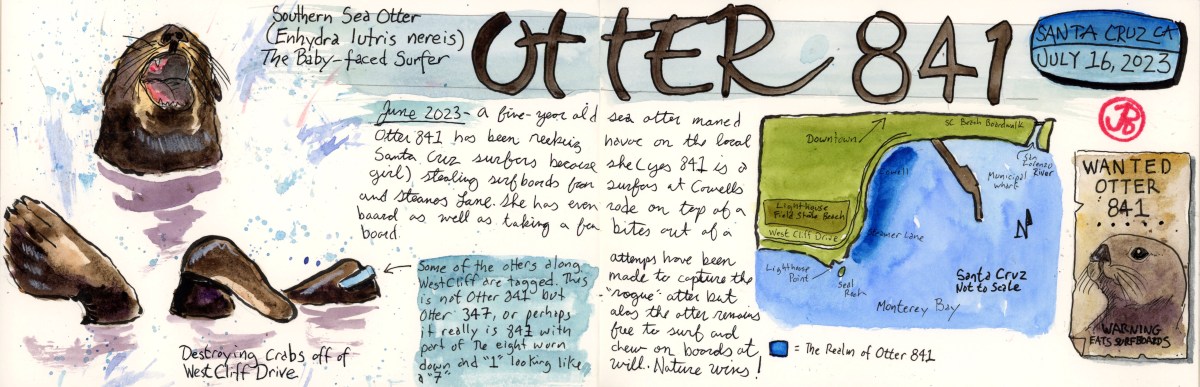
A five year old female, branded a “terrorist” by some in the media, has grabbed the world’s attention.
This is Otter 841.
Otter 841 was born in captivity and then released to the wild. Her mother, Otter 723 was taken out of the wild because she was habituated to people and was approaching kayakers begging for food. It was apparent that Otter 723 was being fed by humans.
While in captivity they realized that Otter 723 was pregnant and she soon gave birth to our troublemaker Otter 841.
841 was released to Monterey Bay where for four years she swam under the radar.
Starting in June of 2023, 841 has become a surfboard pirate. The otter has been observed and photographed jumping up onto surfboards, dislodging it’s surprised rider, in the popular surf spots of Steamers Lane and Cowells. On one occasion, 841 took some bites out of a surfboard.
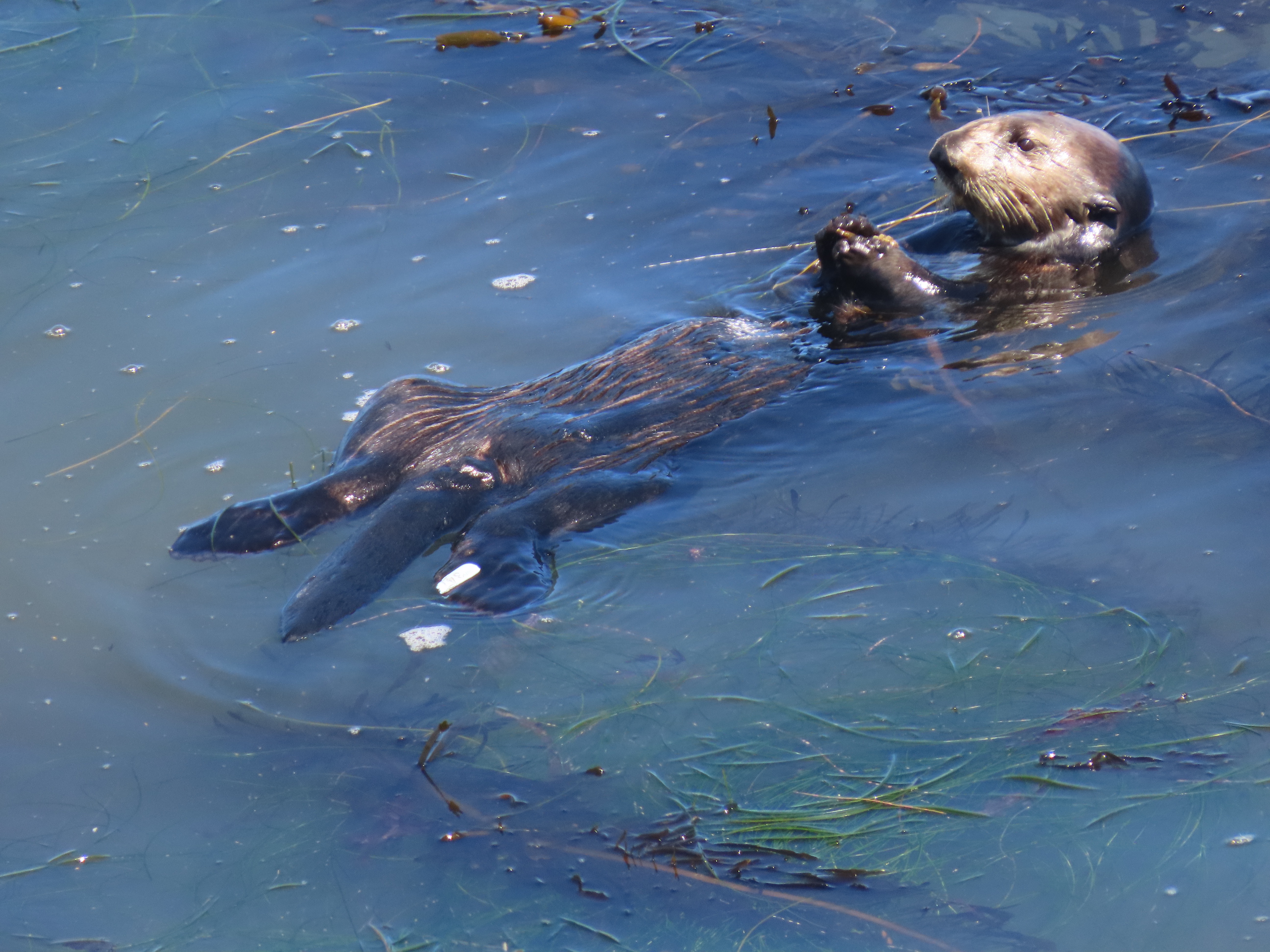
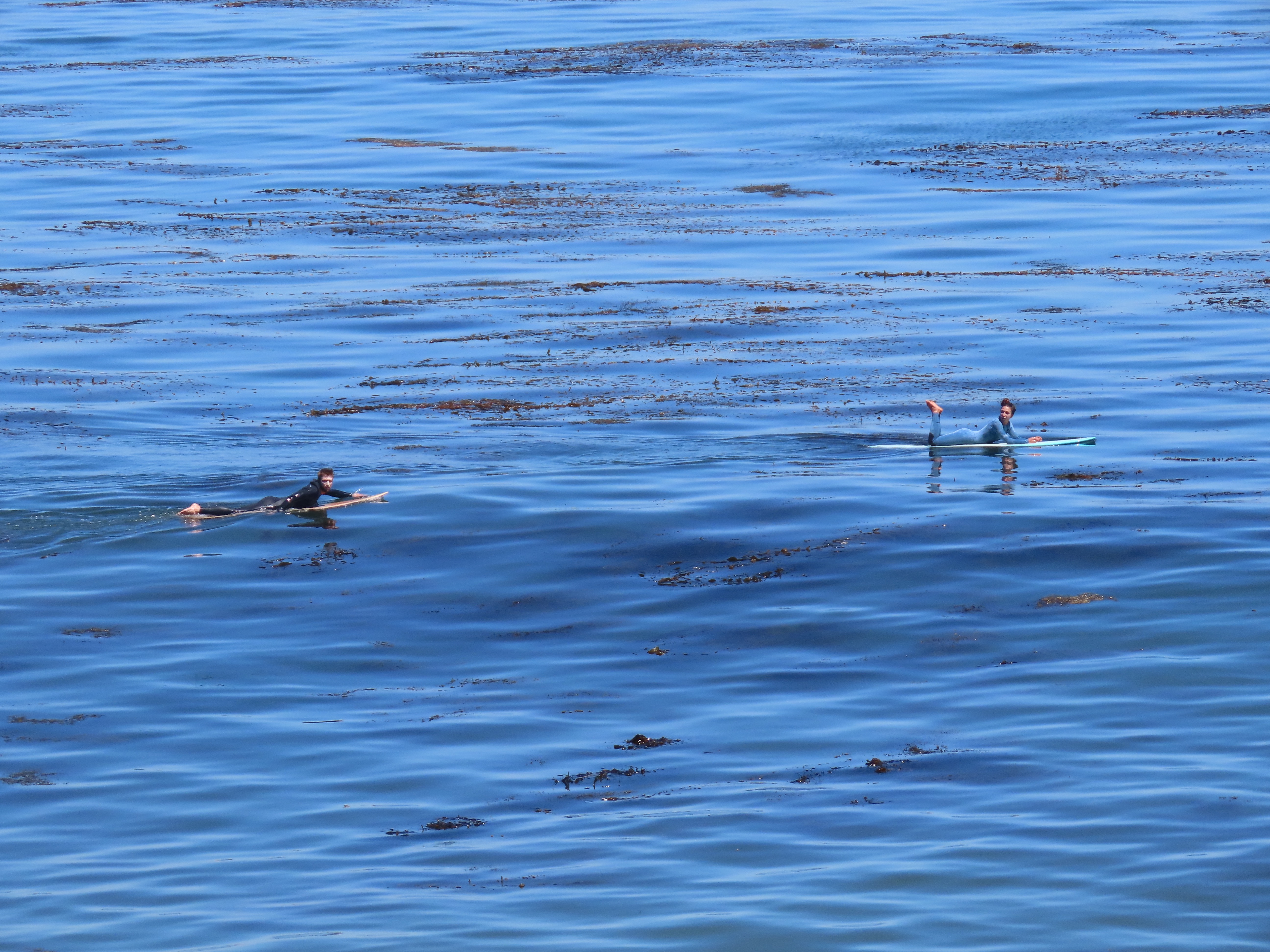
Is this Otter 841? On the otter’s left flipper is a light blue tag with a three digit identification number. Surf at your own risk! Surfers keeping an eye on the infamous otter.
The powers that be decided that 841 should no longer be in the wild and attempts were made to capture 841 employing the cunning use of a surfboard. They tried and tried again but they could not capture the piratical otter.
And as of publishing, Otter 841 still swims free off the coast in Santa Cruz.
Don’t mess with nature because nature usually wins.
One joy of sketching is to return to a previous subject but sketch it from a different perspective. Such is the case with the whales of Long Marine Lab in Santa Cruz. (Former cetaceans, that is.)
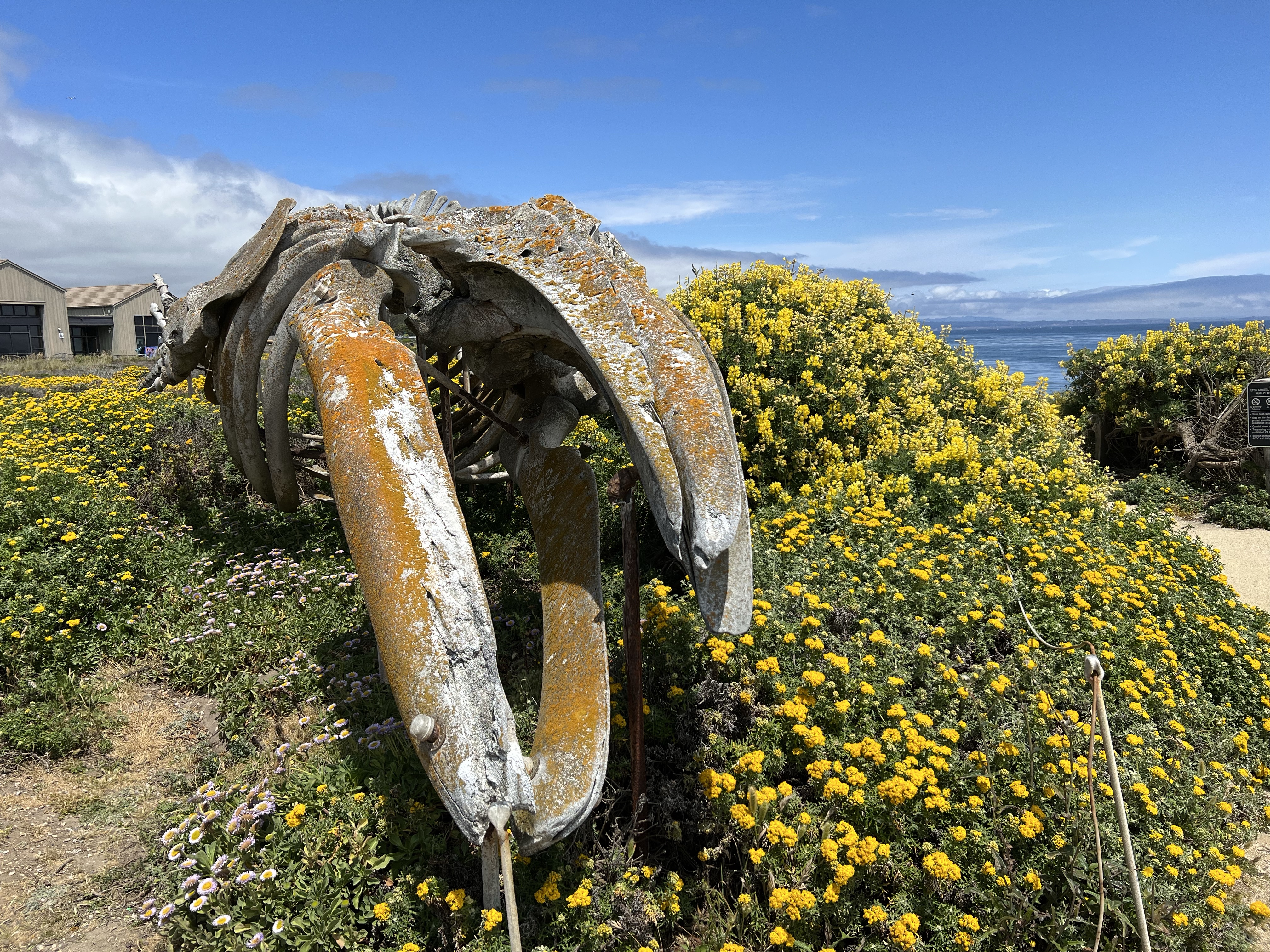
Long Marine Lab is part of the University of California at Santa Cruz (UCSC) and is a research and educational facility for marine biology. The campus also features a small aquarium (the Seymour Marine Discovery Center) that is open to the public. The biggest draw for me is the biggest creature that ever lived on Planet Earth: the blue whale. The Discovery Center has an incredible blue whale skeleton on display flanking one side of the museum.
I had sketched the massive blue whale skeleton and the smaller gray whale skeleton before but I wanted to sketched them in a different way. For the blue, I stood directly in front and sketched it head on, as if the largest creature on Planet Earth was swimming towards me.
I have been lucky enough to see blue whales in the wild from pelagic boating trips. Most of these trips have been in Monterey Bay. I remember the first time I saw this massive cetacean on a trip out of Monterey Harbor with my father in the late 1980s. My high school biology teacher at the the time didn’t believe blue whales could be seen in Monterey Bay, until I showed him the photos.
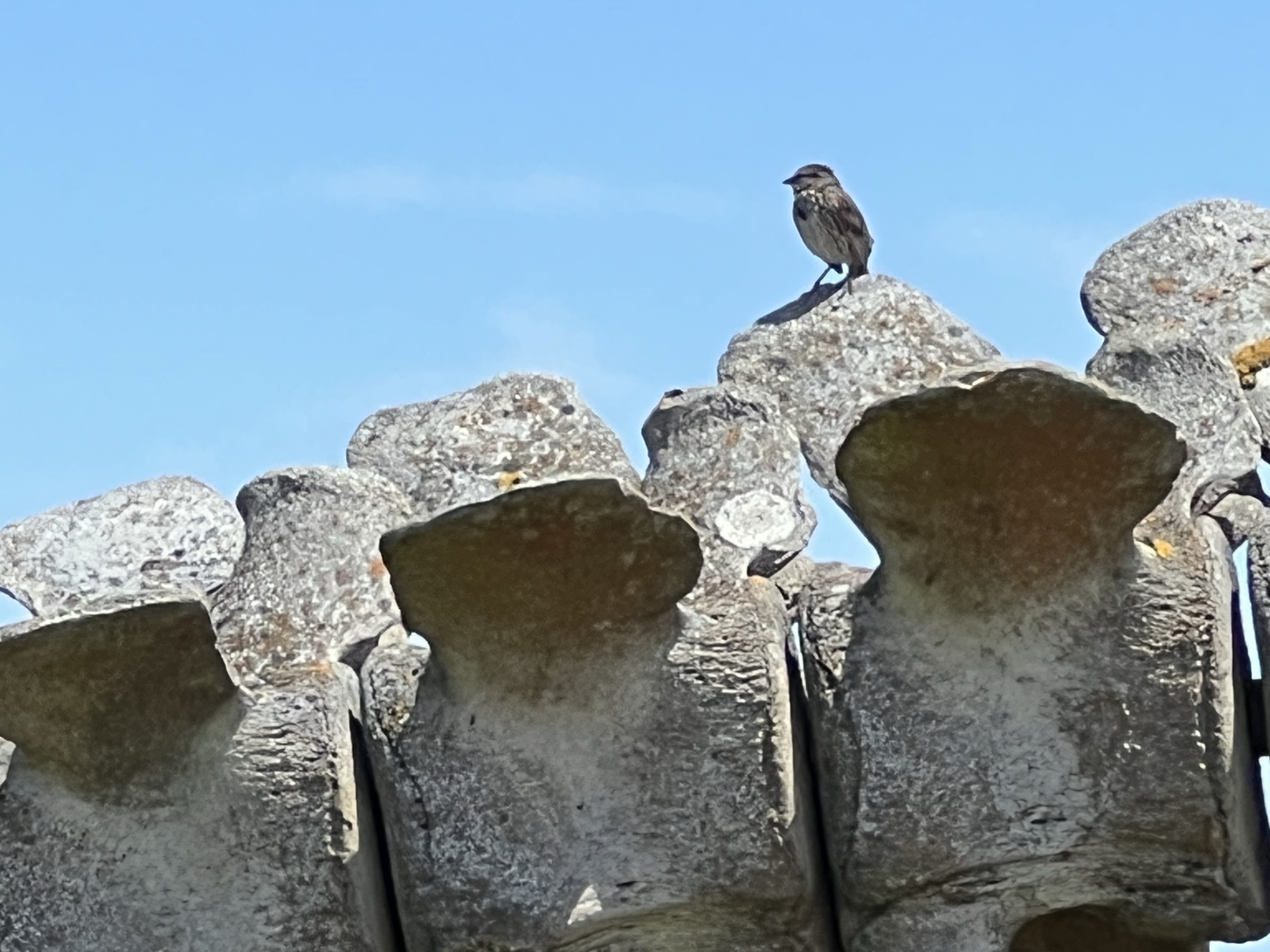
Song sparrow using the vertebrae of the gray whale for a singing perch. Gray whale skeleton with the Seymour Marine Discovery Center on the left and Big Blue on the right.
In late May, something interesting washed up on Rio Del Mar Beach in Aptos on the shore of Monterey Bay. It was not your standard bit of driftwood, a dead marine mammal, or a piece of flotsam from Japan.
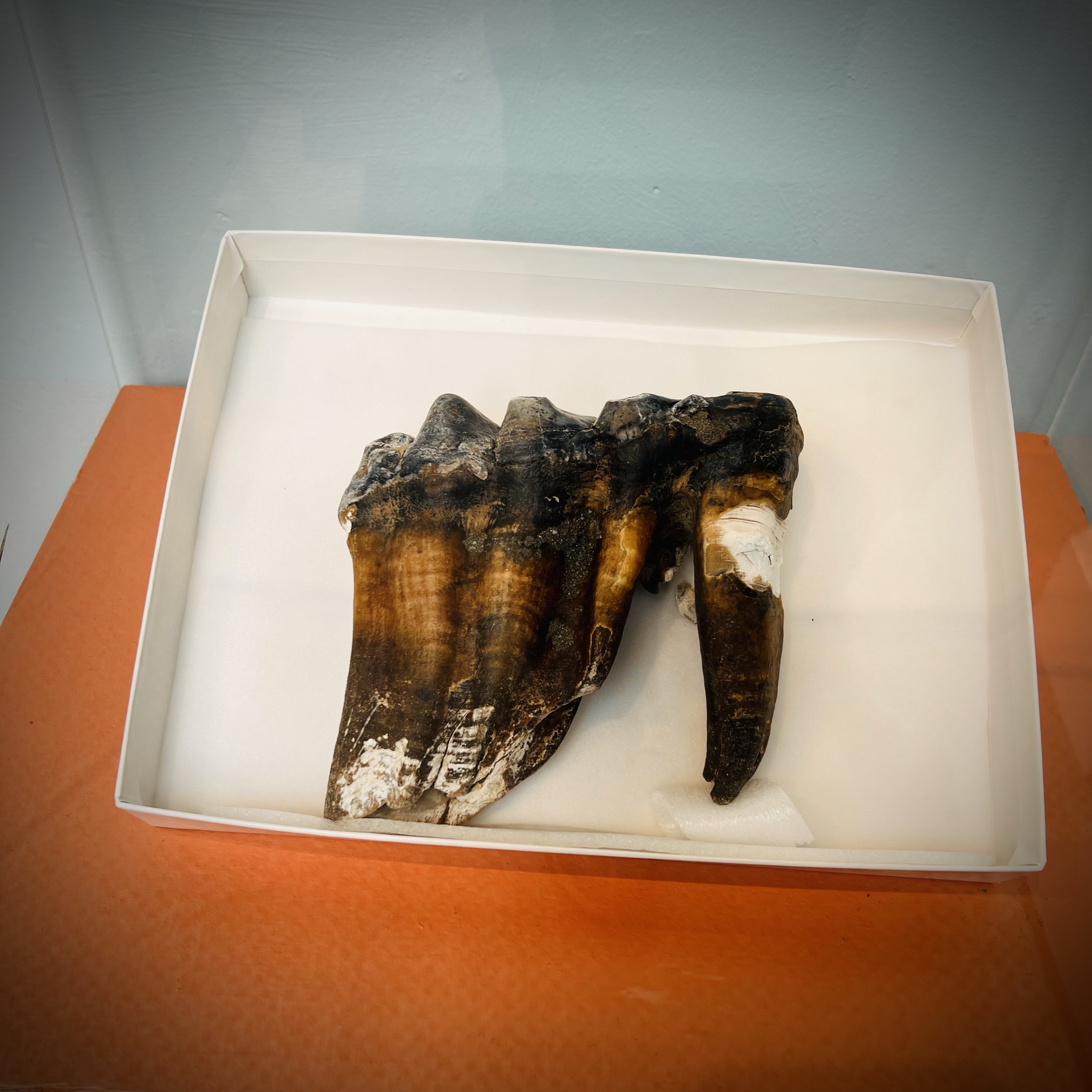
In fact the jogger who found it did not know what she found, so she took a picture of it and did what most of us seem to do nowadays: she posted the picture on social media. Someone who did know what it was saw the post and that person was Wayne Thompson, the Paleontology Advisor for the Santa Cruz Museum of Natural History. He identified the object as a tooth from an extinct mastodon!
When they returned to the beach the tooth was gone. So a search was begun to find where the molar tooth has gone through national and even international media. The efforts soon turned up the tooth. A local man saw the tooth on the beach and took it home. He saw that this was being sought after and he called the Santa Cruz Museum of Natural History.
The tooth was put on display at the museum for three days on the first weekend in June. And that is where I saw the tooth and sketched it.
The recently found mastodon molar in a box, on display for three days at the Santa Cruz Museum of Natural History. I sketched it on the second day.
When I first stepped into the museum, it was much busier than usual. In front of the mastodon display stood the man himself, Wayne Thompson, being interviewed by a local news station. He told the reporter that the tooth was probably washed down Aptos Creek during the record rains of 2023 and then washed up onto the beach. This was a big story. I was told that NPR would be visiting the museum on Monday.
Mastodons are related to the wooly mammoth and the modern elephant. The Pacific mastodon (Mammut pacificus) once roamed the land that became California between five million to 10,000 years ago. So the tooth was an incredible and rare find. In fact the name mastodon comes from ancient Greek meaning “breast tooth”, referring to the nipple-like appearance on the crown of the molars.
Mastodons disappeared from North and Central America about 10,500 years ago. It believed that the mastodon was driven to extinction by early human hunters.
In 1990, right after high school graduation, I headed over to Europe with my best friend Erik and his older brother Pete on a backpacking, hitchhiking, Eurorail adventure.
I was kitted out with a Eurorail Pass, a youth hostel card, and an REI black and red external framed backpack. This was the type of old school backpack you never see anymore. The pack where you would attach your sleeping bag to the bottom with bungee cords. The type of backpack that makes you look like the Hunchback of Notre Dame, especially when you are wear a poncho to fend off the English rain.
I remember at SFO watching my checked pack get stuck on the roller belt and seeing the buckle of my hip belt rip off. This is the worst part of the pack to lose because you carry the weight of a pack not on your shoulders but your waist. (My dad had to send a replacement buckle to me in England).
Times have changed and materials have improved becoming lighter yet stronger. While I have used a backpack for, well, backpacking, I have favored a carry-on roller bag for airplane travel.
As the European travel guru Rick Steves notes, no one ever returns from a European trip and wishes they brought more. The same applies to my past travel experiences. I always wonder why I brought that shirt or sweater I never ended up using. I’m always fine tuning my travel kit to find the right balance.
Iceland was a time to return to backpacking. Could I do it after 30 years? I was not 18 anymore. But the packs, clothing, and packing accessories are so much better than when I first backpacked Europe three decades ago.
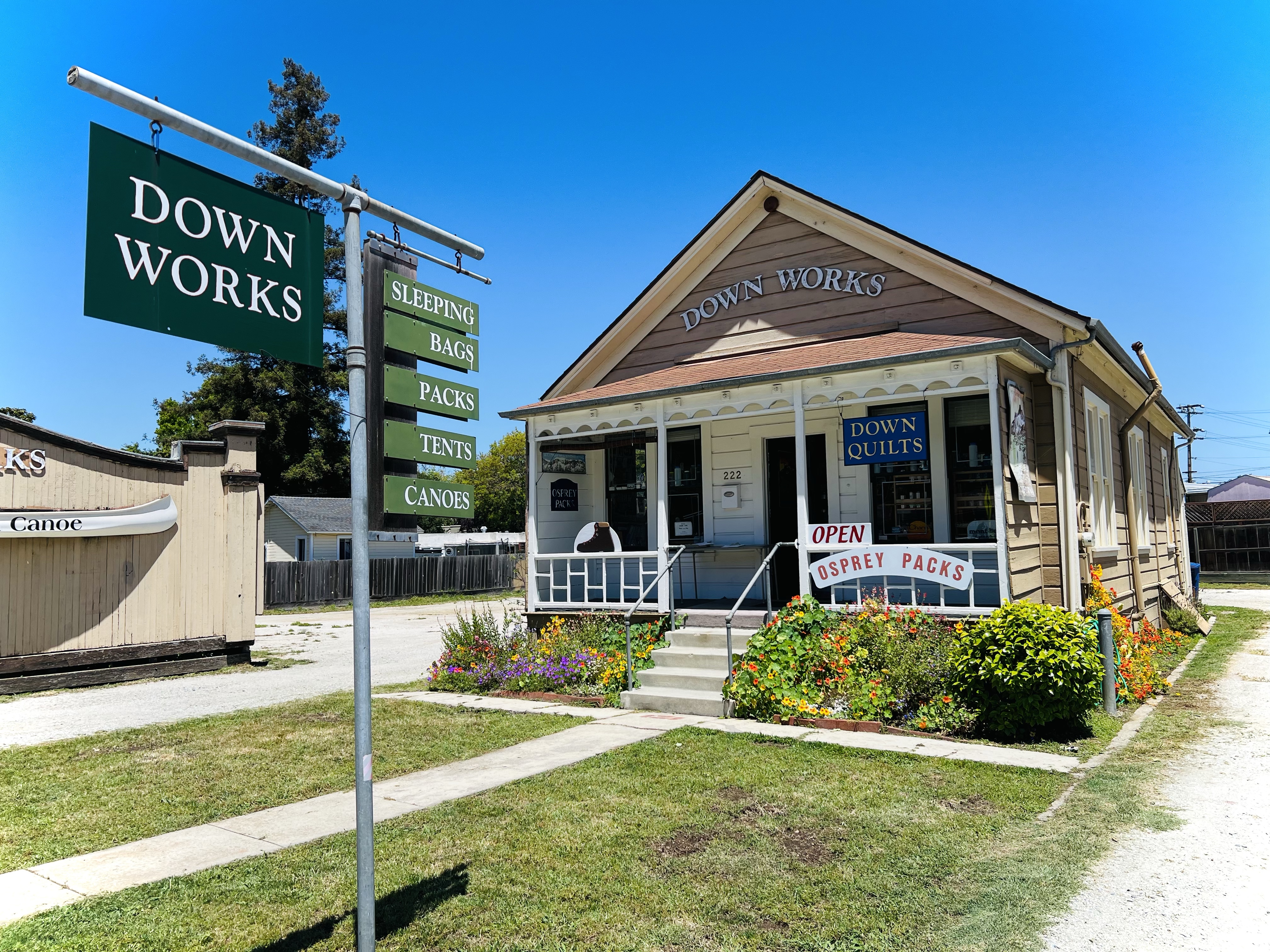
After some research, I decided on an Osprey pack. I have an Osprey daypack and it is one of the most comfortable packs I own. Osprey was founded in 1974 in Santa Cruz (nice local connection) and well, the osprey is a cool bird! The original business was called Santa Cruz Recreational Packs on River Street. The building now is Down Works.
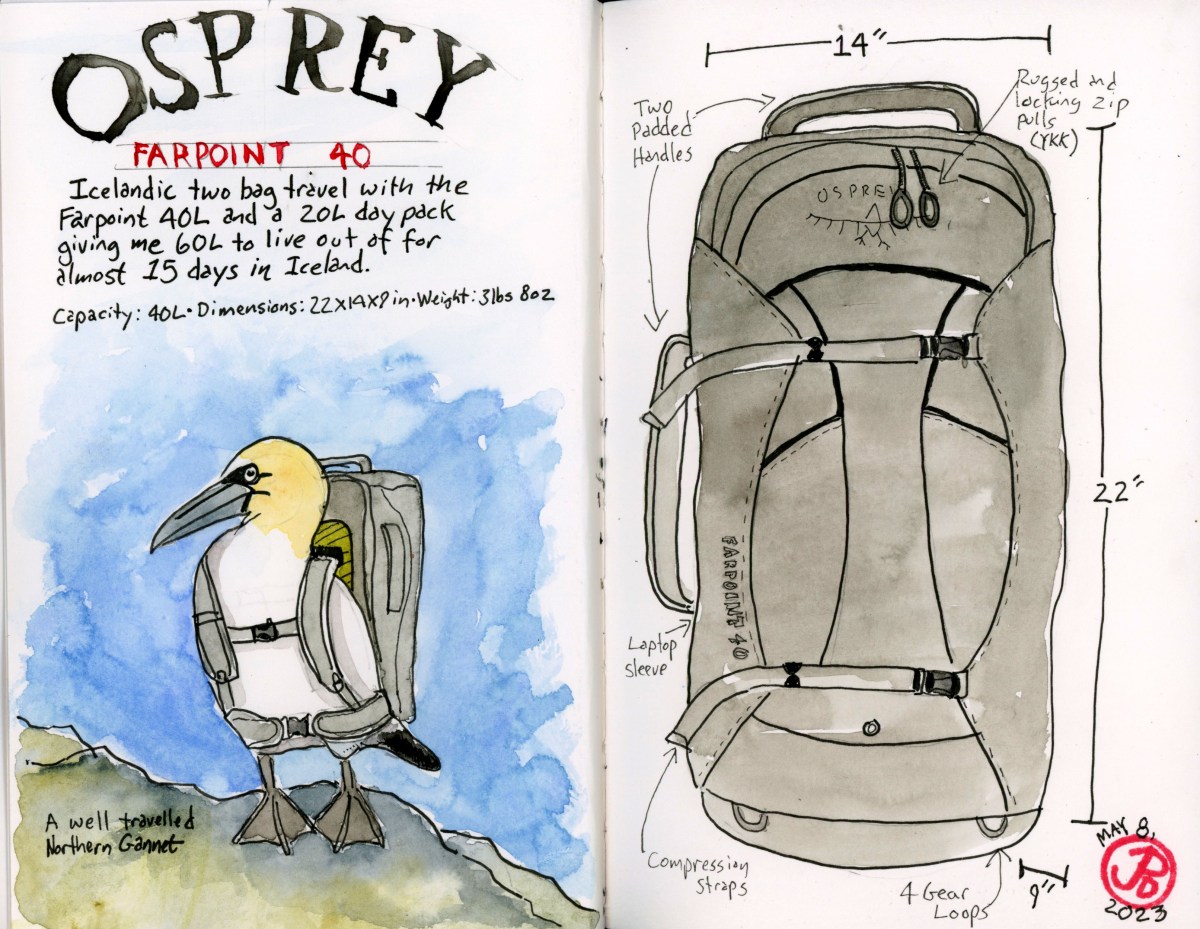
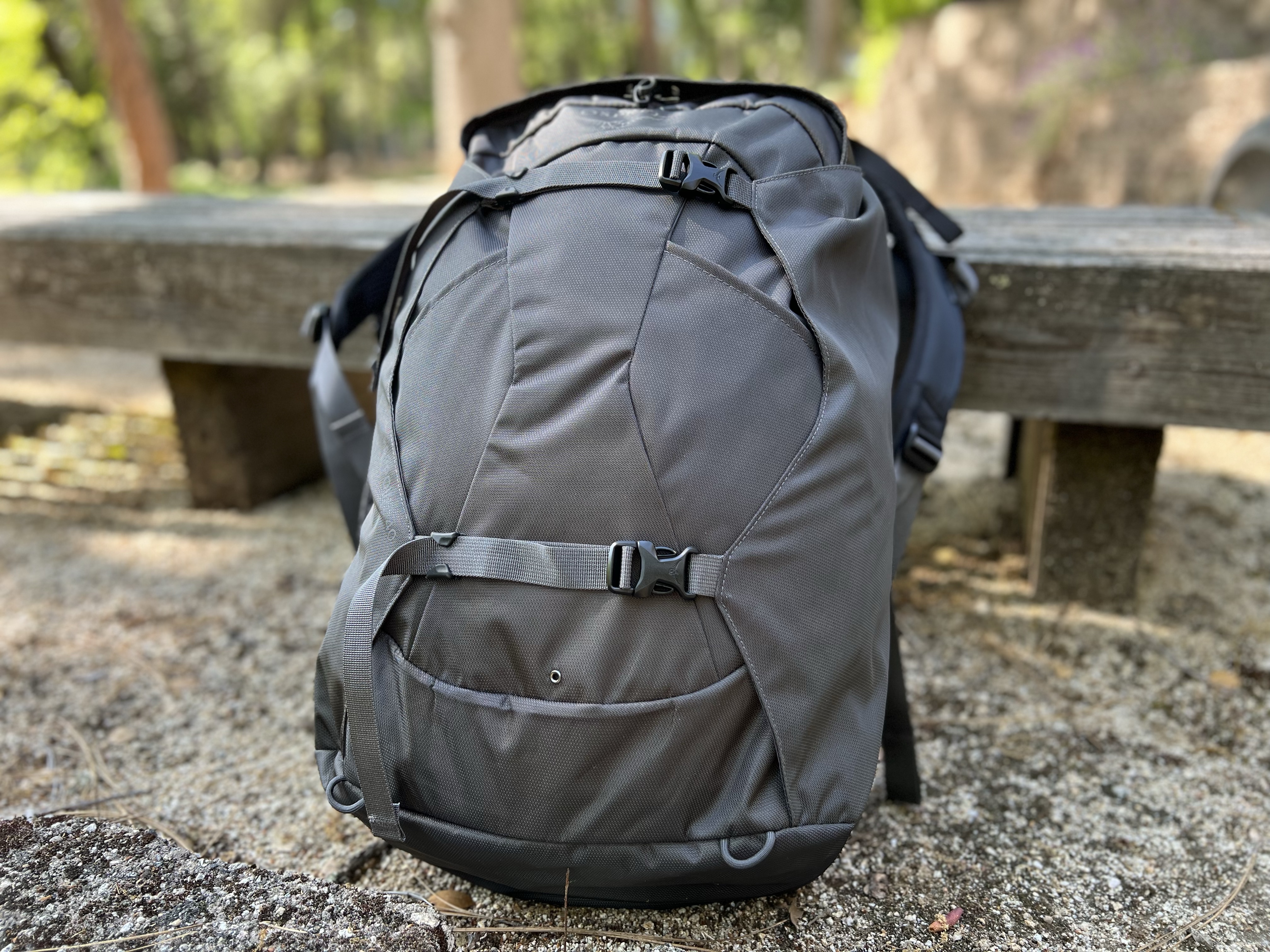
The Osprey pack that I chose was the Farpoint 40 which is the company’s most popular travel backpack. This tics all the specs to fit in an overhead compartment while providing a large main compartment to hold together your life on the road. How is this done?
The Osprey Farpoint 40.
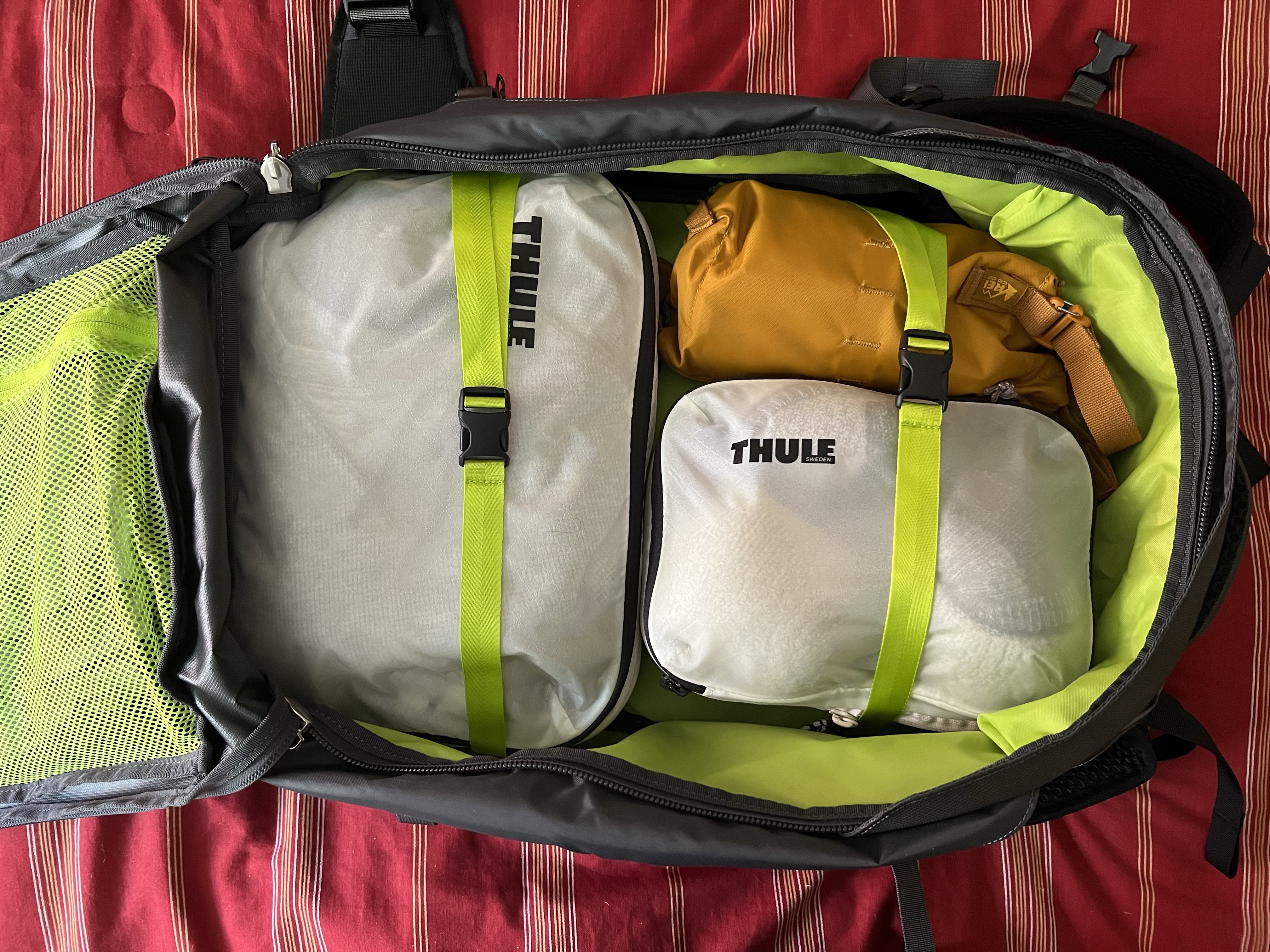
Because the main compartment has no dividers, compression packing cube are essential for organizing items and compressing them to fit. In one medium cube I can fit one pair of pants and six shirts. In a small cube I could fit one pair of thermal underwear, five pairs of socks, and five pairs of underwear.
The main compartment of the Farpoint 40 with two Thule compression packing cubes and an REI dopp kit. The large mesh pocket to the left holds a rain jacket and pants (average rainfall in Iceland ranges from 50 to 100 inches per year).
Now how does this work on a 15 day trip? Most of my clothing is made of synthetic material which means they are quick drying. So every few days I wash clothes in the sink or bathtub and then dry them on my Sea to Summit travel clothesline and they’re dry in the morning. This saves a lot of space in my bag.
And it sure feels great to travel lightly and not be encumbered by a heavy, unwieldy roller bag.
It’s always nice to the start the new year of with a life bird. So much better if the bird is a mega rarity!
This was the Eurasian chat the red-flanked bluetail (Tarsiger cyanurus).
The bird was the sixth California record and only the second chasible bird (that is if you have an ocean going vessel), the other four records are from the Farallon Islands. It was found on December 28, 2022 in a park near the Santa Cruz Lighthouse on West Cliff Drive.
I had planned to head down on New Year’s Day to Lighthouse Field State Beach in Santa Cruz with Grasshopper but on December 31, after record heavy rains, a large cypress tree at the park fell and killed a 72 year old man. The park was closed for safety concerns.
So our Plan B was to bird the San Mateo County coast and have a go at the continuing northern gannet at Pillar Point Harbor.
Highway 92 was closed because of the intense rainfall so it was Highway One down the line to Pillar Point.
We checked the breakwater for a large white bird. No gannet. Heading south, the beaches seemed devoid of gulls. The historic rains had washed away large parts of the beaches, the creeks were flowing at a high capacity turning near shore waters a muddy brown. Not a great day for birding, well not yet anyway.
We reached as far south as Pescadero State Beach, looked out at few roosting gulls (it was still too early for kittiwakes) and returned north to try again for the consolation gannet
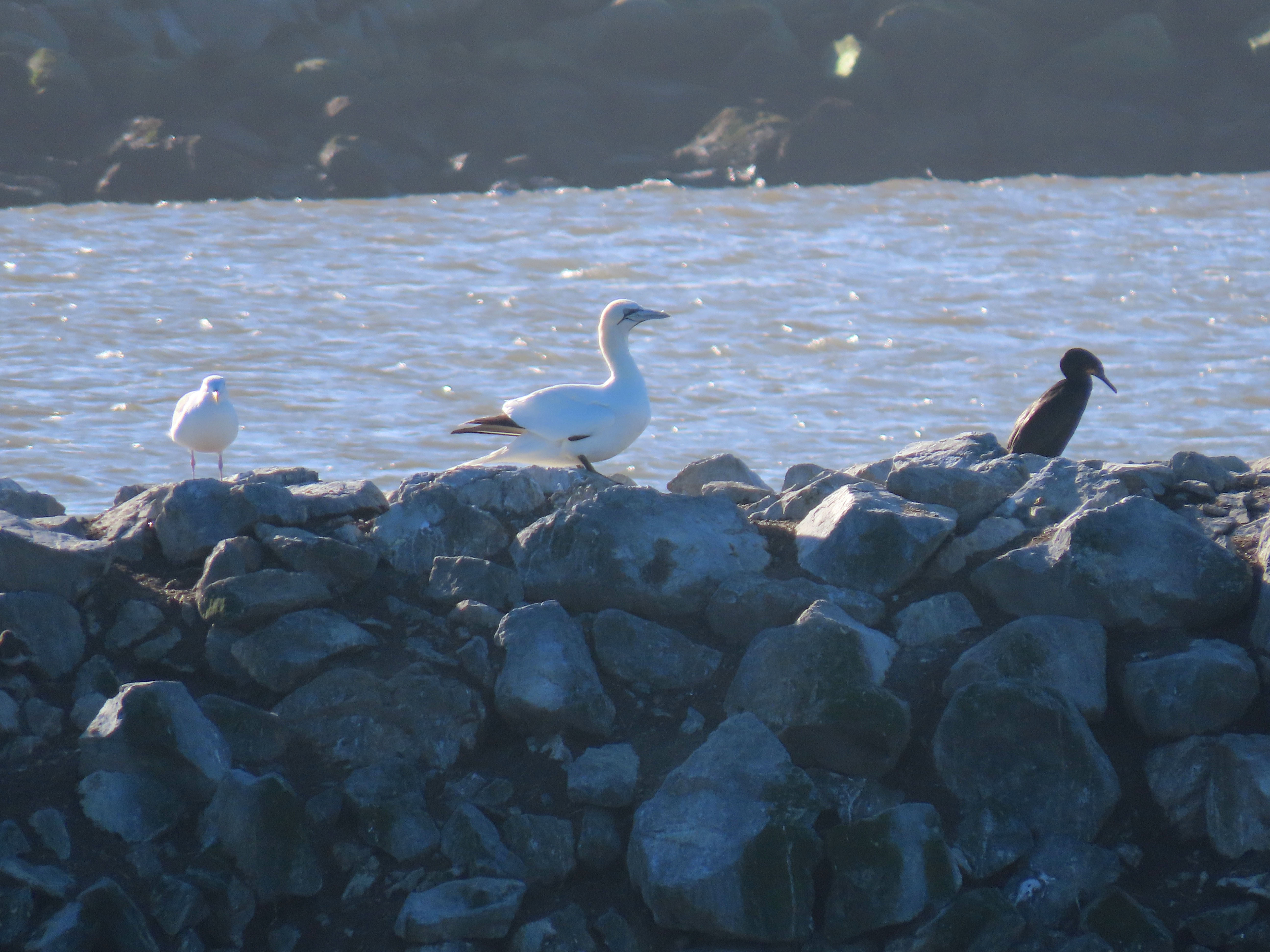
Johnson Pier was now crowed with people buying fresh crab and cod from fishing boats in the harbor. We weaved our way out to the end of the pier to look for an out-of-place big white seabird. Grasshopper spotted the gannet, named “Morris” by locals, immediately. The gannet, the only one on the west coast, was preening and the local gulls and cormorants were giving Morris a wide berth.
The much larger northern gannet sticks out like a sore thumb.
After getting good looks and a few photos, we saw a report that the bluetail had been seen and heard earlier in the morning. So some birders where getting access to the park. After a quick ponder we knew what we had to do: head south and retrace our journey and not stop until we where parked next to Lighthouse Field State Beach.
About an hour later, we parked on a side street, geared up, and entered the park. Still unsure of the location, we knew we had to find the semicircle of birders, intently gazing into the bramble. We began to head east on the trail, dodging puddles that were not far from being ponds, when we spotted the large cypress tree that had fallen across the path in front of us.
The cypress was over 100 feet tall, the papers put the tree at 120 feet, and just beyond the tree and to the left we saw a some birders looking off to the left. The only way to get over the tree was to climb over. Other had already trampled down a path through branches that were now facing upward. Once we got to the location of the bluetail, there were already about 35 to 40 birders in attendance, with more arriving as we searched.
This bird was going to be tough because it was sulky and shy, so patience and perseverance would be needed. Good thing I’m an elementary school teacher!
The bird was being seen among the grasses and branches and the bluetail was moving quickly, not pausing for long. I saw movement a few times which I thought was the bluetail but I wanted better diagnostic looks before I added the bluetail to my list. After about 30 minutes, I finally got a good look at the tail of the bluetail, which was blue and I noted how the bird frequently jerked it’s tail downward like a flycatcher. World life bird number 1,707!
Once I got my views, I stepped aside to let others from the back start their search. I started my anchor sketch of the downed cypress tree and reflected on the tragedy of a man’s death, while not far away, birders chortled in ecstasy.
The first red-footed booby (Sula sula) I had ever seen in Santa Cruz County was perched on the pier out to the Concrete Ship at Seacliff Beach. But the booby that has recently been hanging around Santa Cruz Wharf was a much more incredible and close bird.
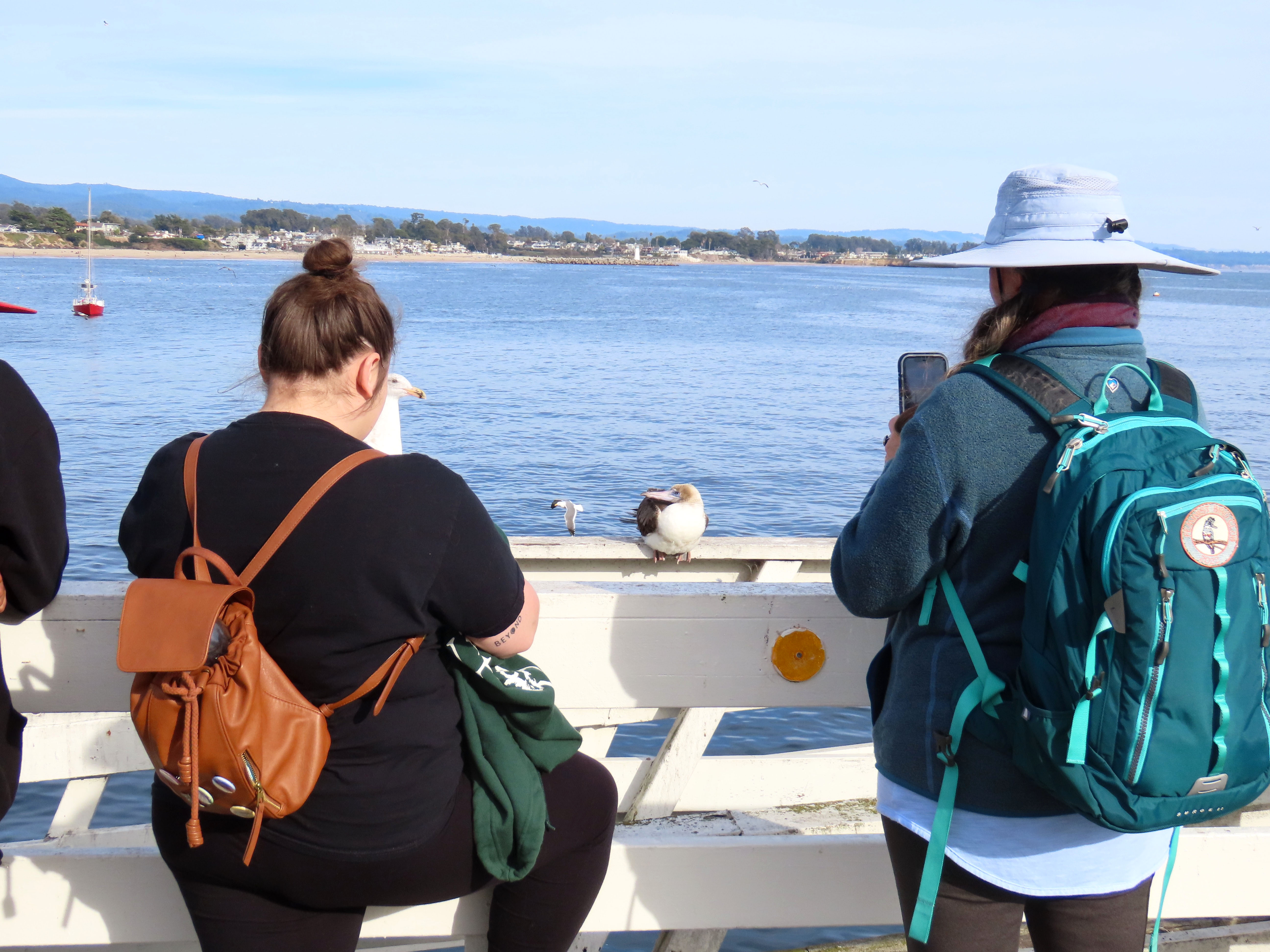
The booby was first seen towards the end of the wharf on November 3. At the time, local birders assumed the booby was sick because it appeared very lethargic and allowed a very close approach from viewers, including some selfies seeking tourists. A local birder had to put up yellow caution tape to keep the booby admirers at bay.
The red-footed booby is a bird of the tropics and not the foggy coast of Northern California. The common name comes from the Spanish “bobo”, meaning buffoon. This refers to the ease in catching the bird and it’s awkward gait on land. Many of these seabirds experience “island syndrome” and because of their isolation from humans, they show little to no fear of them. (Think of the now extinct dodo). This tropical visitor showed no fear to the humans walking up to it when even a gull would fly away.
On Friday afternoon, I drove out to the end of the wharf. The booby had been reported across from the Dolphin Restaurant, which is one of the last eating establishments at the end of the wharf.
I parked across the street from Stagnaros and looked up and 20 feet away was the red-footed booby perched on the wharf railing! There was also a small audience taking pictures of the wayward rarity.
The red-booby with a few of it’s admirers. They are about six feet away from the booby.
I got out of my car and snapped a few photos and then I took out my sketchbook to get a sketch in. It was easy to sketch the booby because the bird was about six feet away and seemed completely unfazed by the birder paparazzi.
The red-footed booby of Santa Cruz.
It was great to observe the booby up close with the naked eye. It was a little challenging to sketch as it was in constant motion, preening or tucking it bill into it’s feathers for a quick nap or keeping a western gull at bay.
Sula sula and a western gull.
From my observations, the booby was well and thriving. It had been seen fishing with gulls, cormorants, and pelicans in the bay so I assume it was finding plenty of fish. It landed on the wharf rail to preen and rest.
Let’s hope the world’s smallest booby stays with us throughout the winter!
A quick field sketch of the wayward booby. I used my Lamy Safari for this sketch and because the black ink was not waterproof, it bleed into the paint. For the featured sketch, I replaced the ink with Noodlers Black ink which is very waterproof.
I first heard these famous lines, in 1982, in a seat of the Rio Theatre in the Eastside of Santa Cruz.
The 938 seat Rio was opened on June 12, 1949, with the double feature of “Song of India” and “Law of the Barbary Coast”. Clearly not masterpieces of world cinema.
The screen was built as a cycloramic or curved screen which created a 3-D like effect for the movie goer.
While the Rio was not built during the Golden Age of Art Deco movie palaces (1920s-30s), the neon sign that illuminates the T junction of Soquel Avenue and Seabright is a classic.
While the Rio Theatre is not the mecca for cinema that it once was, today the Rio is alive as a music and performance space.
In recent times, like many historic, single screen cinemas, the Rio no longer serves as a mere movie theater. It now functions as a live music venue. Graham Nash and Judy Collins are slated to play at the Rio in the near future.
The stylized sign became my anchor for the sketch. I got to the theatre by 7 AM but the downside was the marine layer drizzle that covered my windshield. This was going to make field sketching a challenge. I found a parking spot on Seabright, facing the theatre and I used my car as a sketching blind.
I just had periodically use my windshield wipers to unblur my subject.
I returned later and sketched the ticket booth of the Rio.
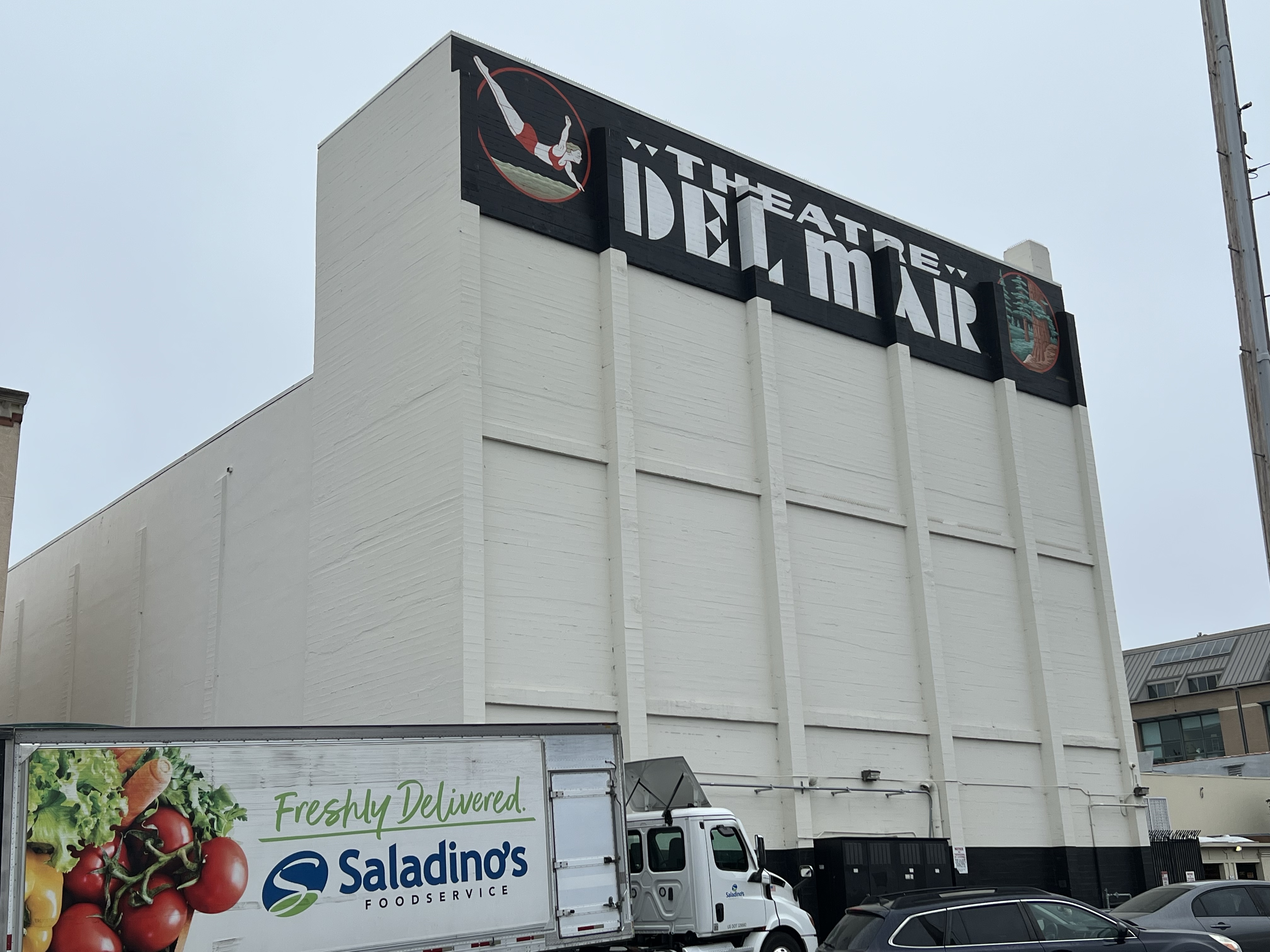
I was looking for a new Bay Area sketching challenge and a weekend sketch of the backside of the Del Mar Theatre in Santa Cruz provided the genesis.
As a child I remember seeing the large white building with the large words “DEL MAR” framed by one painting of a bikini clad beauty diving into water and a scene from a redwood forest on the other side. It wasn’t until I was in college that I attended a movie at the Del Mar, a cinema that my father visited many times in his youth. The Del Mar and my father share the same birth year. This provided another reason to sketch this historic building.
The backside of the Del Mar Theatre is one of the most prominent buildings in downtown Santa Cruz and a building that looms large in my childhood.
I would be sketching back in time to the 1920s, 30s, and 40s to the time when Art Deco movie palaces where prominent features in many towns and cities. These cinemas’s large neon signs illuminated the communities they served. This was the Golden Age of cinema, time before television and an eon before the rabbit hole that is the internet.
I decided to focus on the most visible part of these classic theaters: the sign and marquee. This proclaimed the name of the theater and was a neon advertisement for what was inside and what was currently playing.
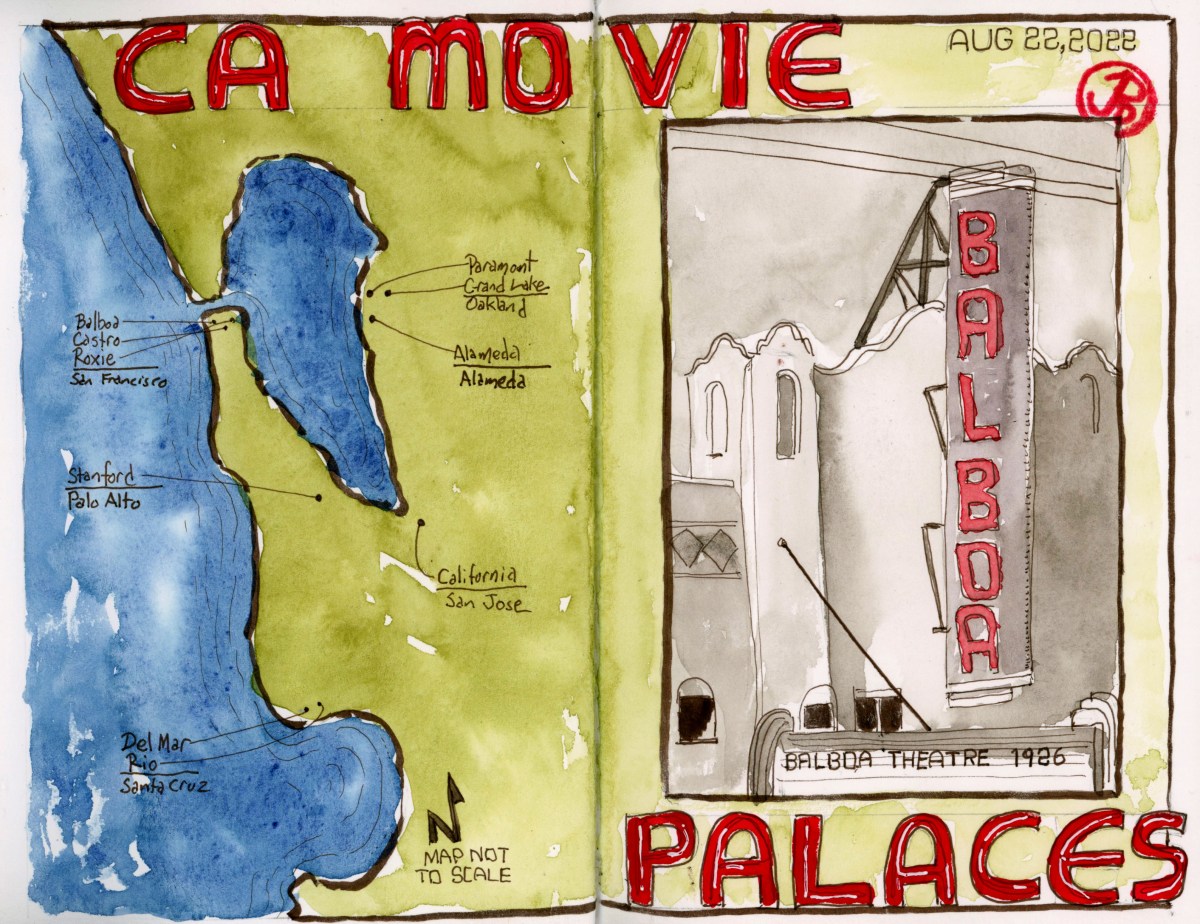
I began my sketching adventure by doing research of existing cinemas that meet my timeline criteria and then putting that information into a Bay Area map (featured sketch).
I complemented the map with an inset sketch of the movie palace that is a mere 38 minute walk north through Golden Gate Park, from my city digs. This is one of the only remaining neighborhood theaters in San Francisco: the Balboa Theatre.
While the inset sketch was based on my photograph, I knew that I would be returning to the Balboa to sketch the theater in earnest.
Next I pack my sketching bag and head down to Santa Cruz to Sketch the Rio Theatre.
The world’s smallest gull had recently been spotted in a flock of Bonaparte’s gulls at the San Lorenzo River mouth.
It was a rare west coast gull and the one spotted on May 13, 2022 was only the 5th Santa Cruz County record.
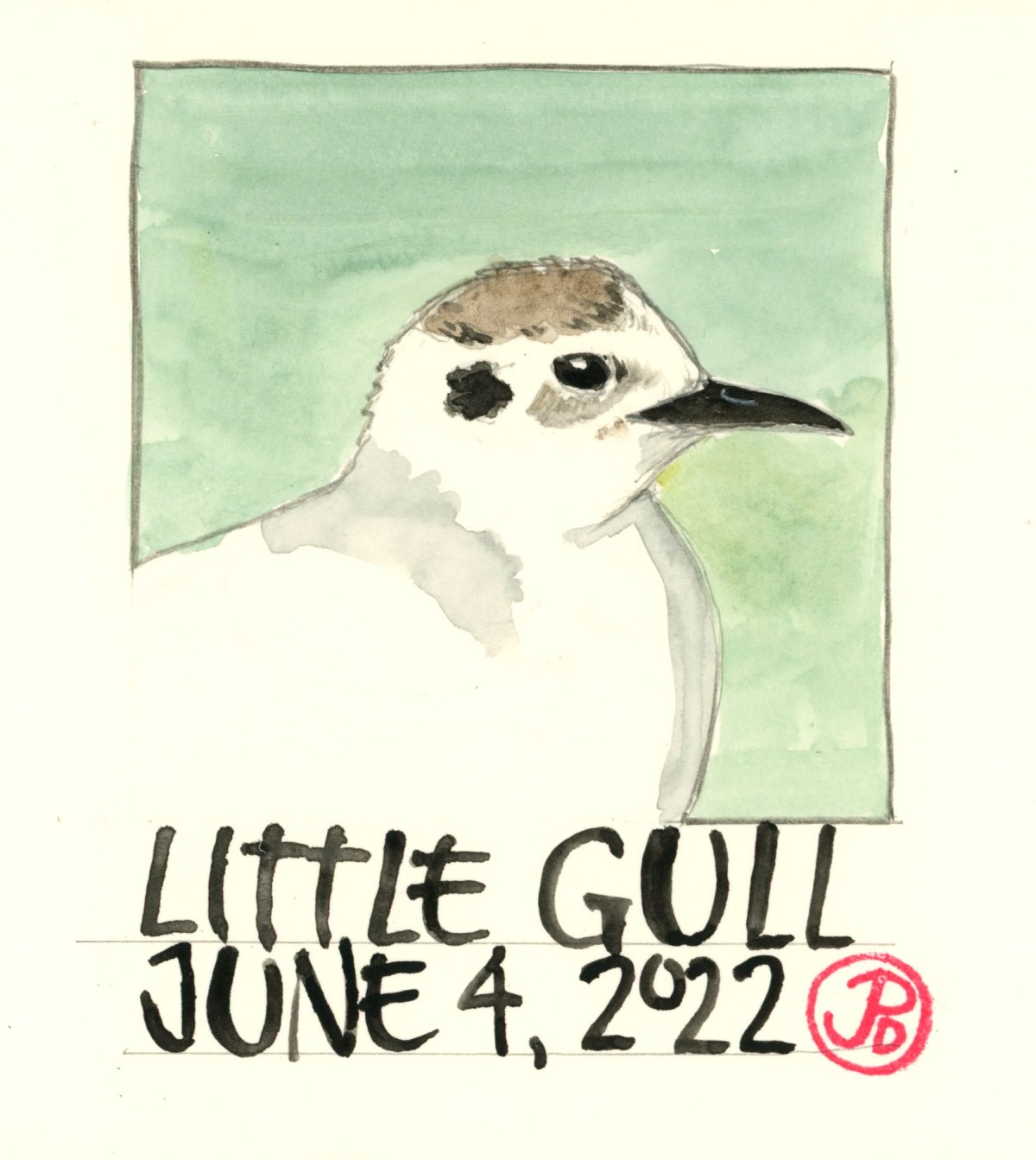
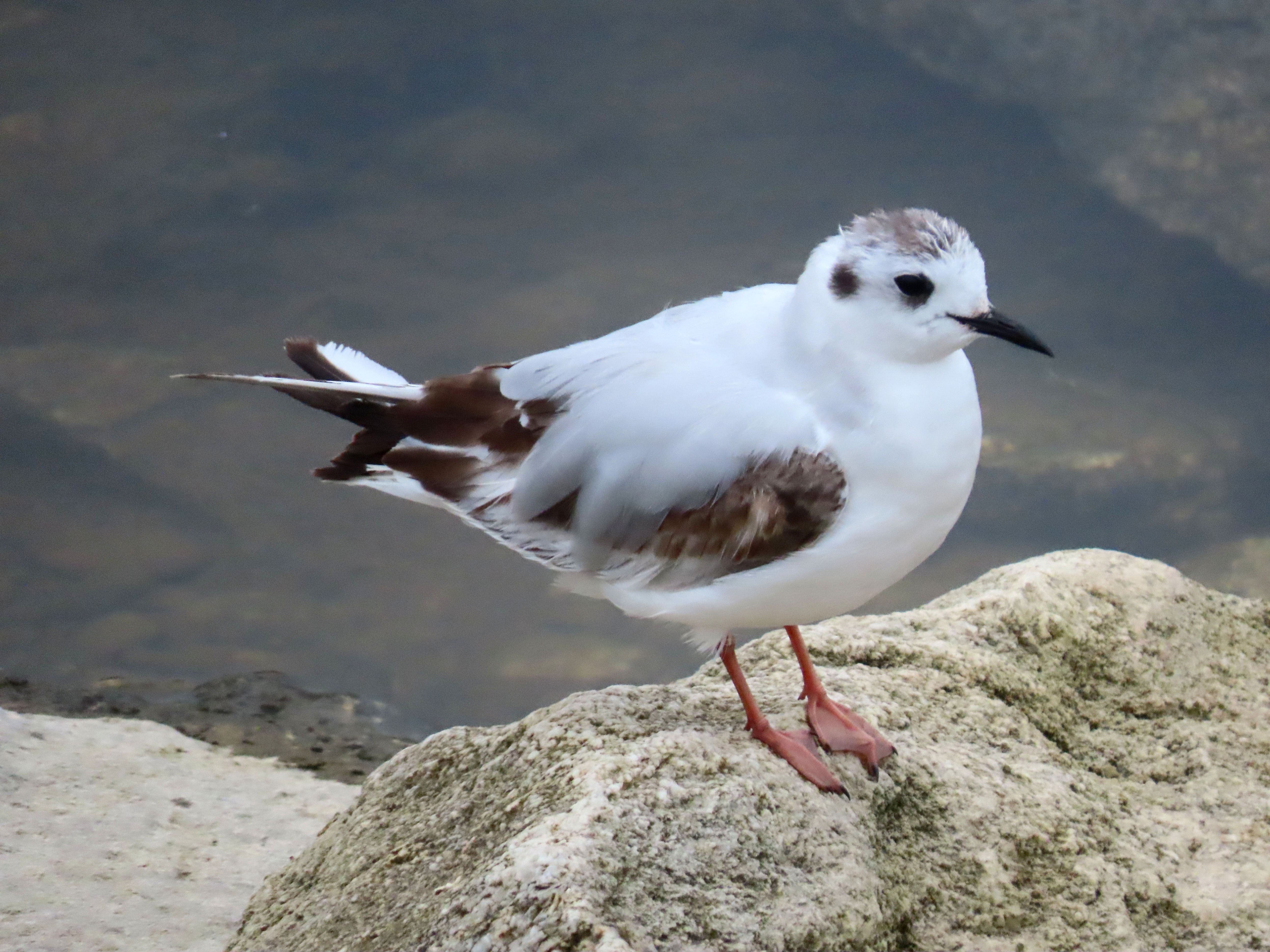
This is the appropriately named little gull (Hydrocoloeus minutus). I had seen this rarity on June 9, 2004 at Pescadero March in San Mateo County but I had not seen the diminutive gull since.
My first attempt to add the little gull to my Santa Cruz County list was foiled by a foot race that closed access to the San Lorenzo River mouth. I would have to try again later. Luckily the gull hung around with the flock of Bonaparte’s gull.
I tried again the following weekend. The flock had moved from the river mouth, up river, just north of the railroad trestle. There were about 75 Bonaparte’s gull, so searching through the flock for a slightly smaller gull showing a brown “M” on it’s wings, proved to be a challenge.
I got fleeting and very unsatisfying looks of the gull as the gull flock burst into the air climbing ever higher into the sky, which made me want to come back another time to try to see the bird again. And to get good reference photos for a sketch. Which is exactly what I did the following Saturday morning.
I returned to the Riverway Trail, which is just north of the train trestle that crosses the San Lorenzo River. The Bonaparte’s gull flock had moved from the river mouth (south of the trestle) further up the river. I imagine the large amount of human traffic and off leash dogs on the main beach may have something to do with the relocation.
There where now just 21 Bonaparte’s gulls left in the flock and they were roosting on the western shore of the river, the same river that flows past my cabin, further up the San Lorenzo Valley. Because there where less gulls, picking out the world’s smallest gull would be much easier. It also helped that there was another birder on the trail, already looking at the little gull!
This time the little gull was roosting on a riverside rock 15 feet from the trail! The morning was foggy which was perfect flat, low-contrast light for getting great photographs.
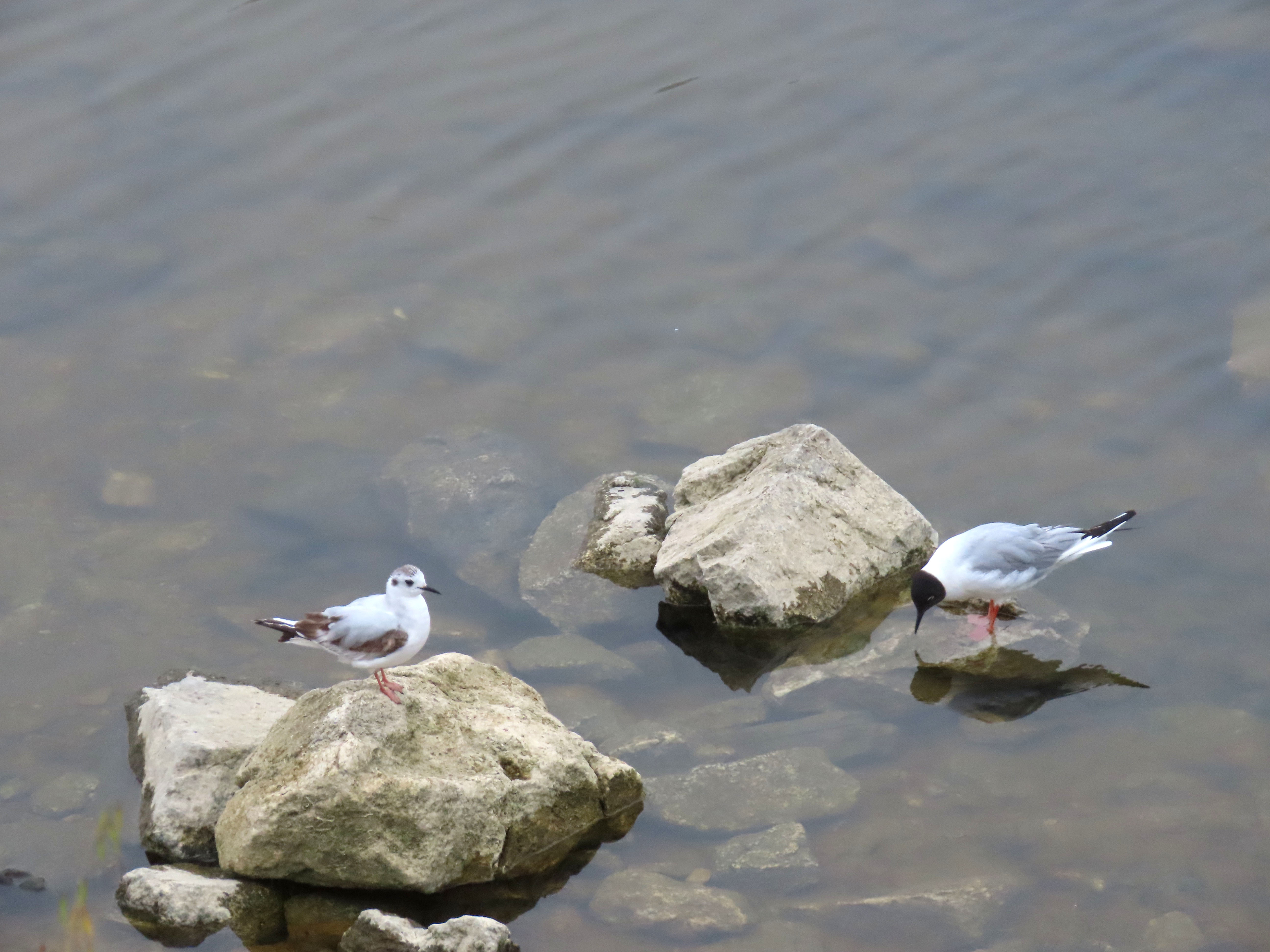
The little gull was also roosting close to the Bonaparte’s, giving me a nice size comparison of the two similar species.
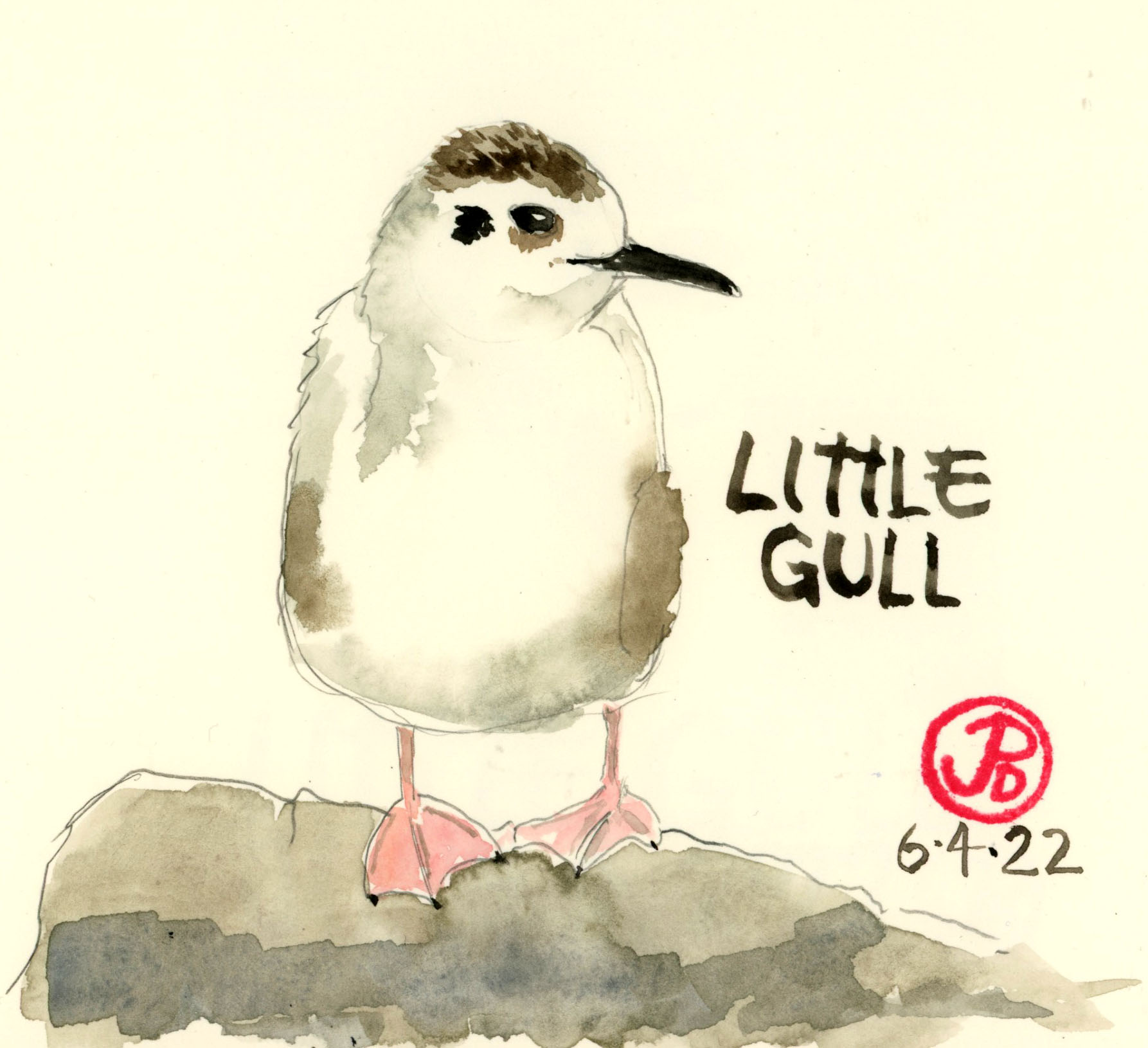
The little gull and the larger adult Bonaparte’s gull on the right.Loose sketch of the little gull based on one of my photographs.
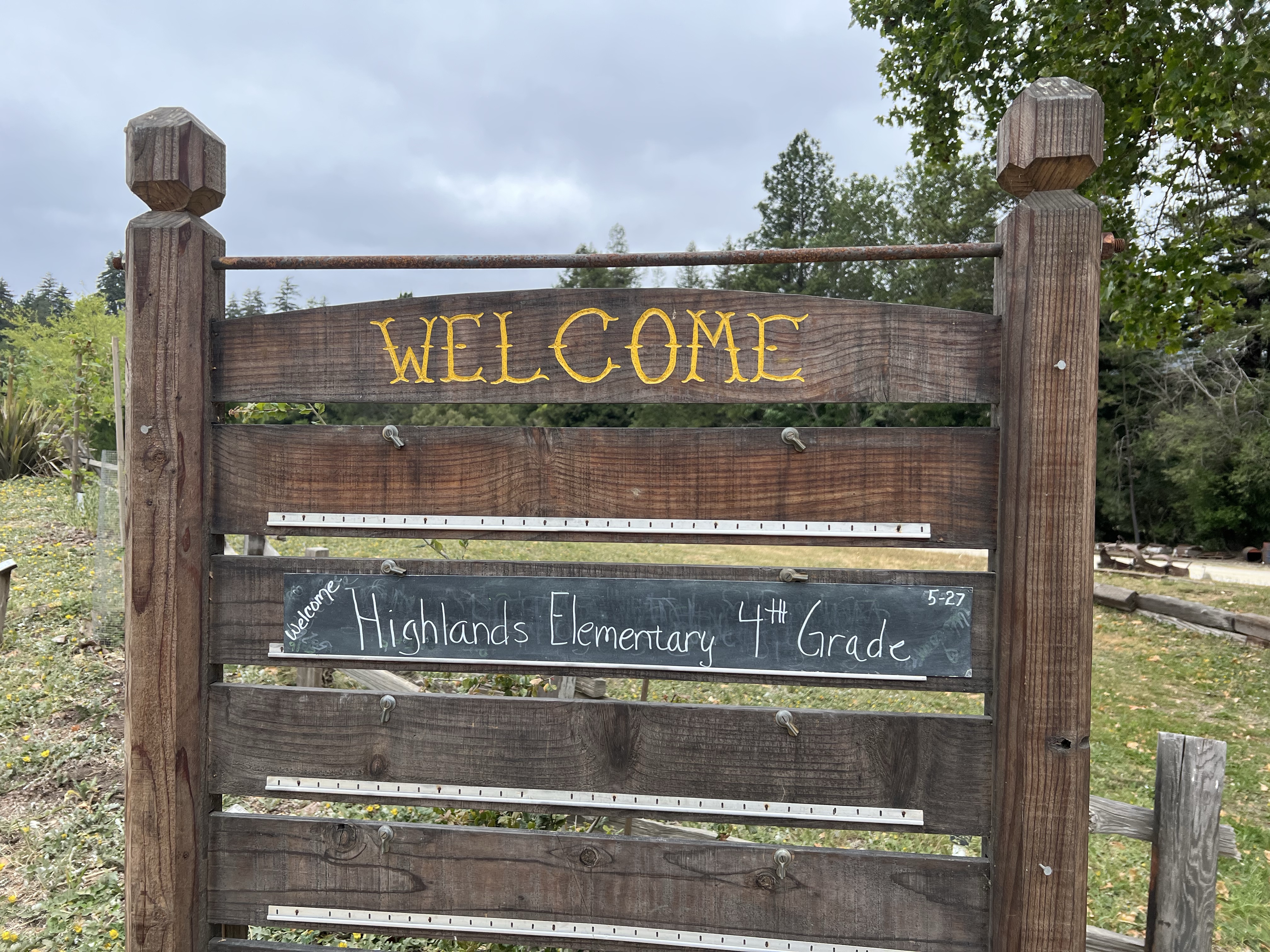
For the two past years, because of Covid, we had to cancel our annual adventure to the gold discovery site in Colma, spending three days and two nights as part of the Gold Rush Program at the Coloma Outdoor Discovery School (CODS). Our school has been going to CODS for the past 25 years and it was tough to see two groups of 4th graders missing out on what is one of the most memorable experiences in elementary school.
As a substitute for Colma, my teaching mate suggested a day trip to Roaring Camp & Big Trees in Felton. In the Santa Cruz Mountains we would walk among giants, pan for gold, and take a steam railroad trip through the redwoods. I thought it was a great idea because, in a sense, it was almost in my backyard.
As I like to say, I rent in the city but I own in the country. My family cabin is in the San Lorenzo Valley between Santa Cruz and Felton. From up the valley I can hear the lonesome whistle of the shay locomotive from my deck. While the steam railway is narrow gauge, the standard gauge branch runs just uphill from my cabin, taking passengers from Felton to the Santa Cruz Boardwalk.
On the Friday morning of our trip our school buses were ten minutes late. Most mapping apps time the trip from San Mateo to Felton to take one hour. In a yellow school bus you have to add 10 to 20 minutes. So when we arrived at Roaring Camp were already behind schedule. Two words in teaching trade that are the most important in this situation are flexibility and patience.
We unloaded our bus (no one lost their breakfast on the journey over the curvaceous Highway 17) and we had a pleasant surprise, just before we crossed the covered bridge on our way to the station.
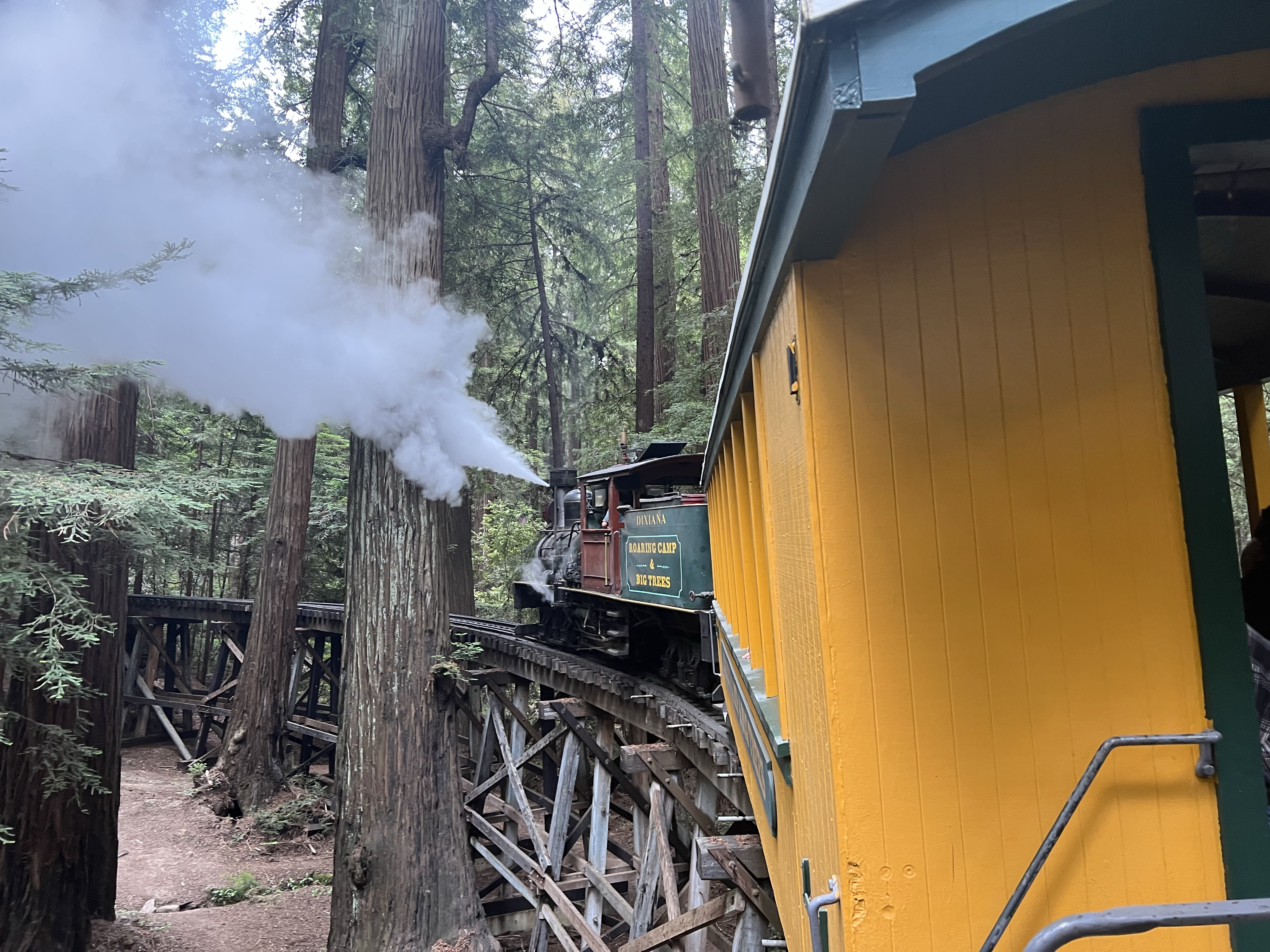
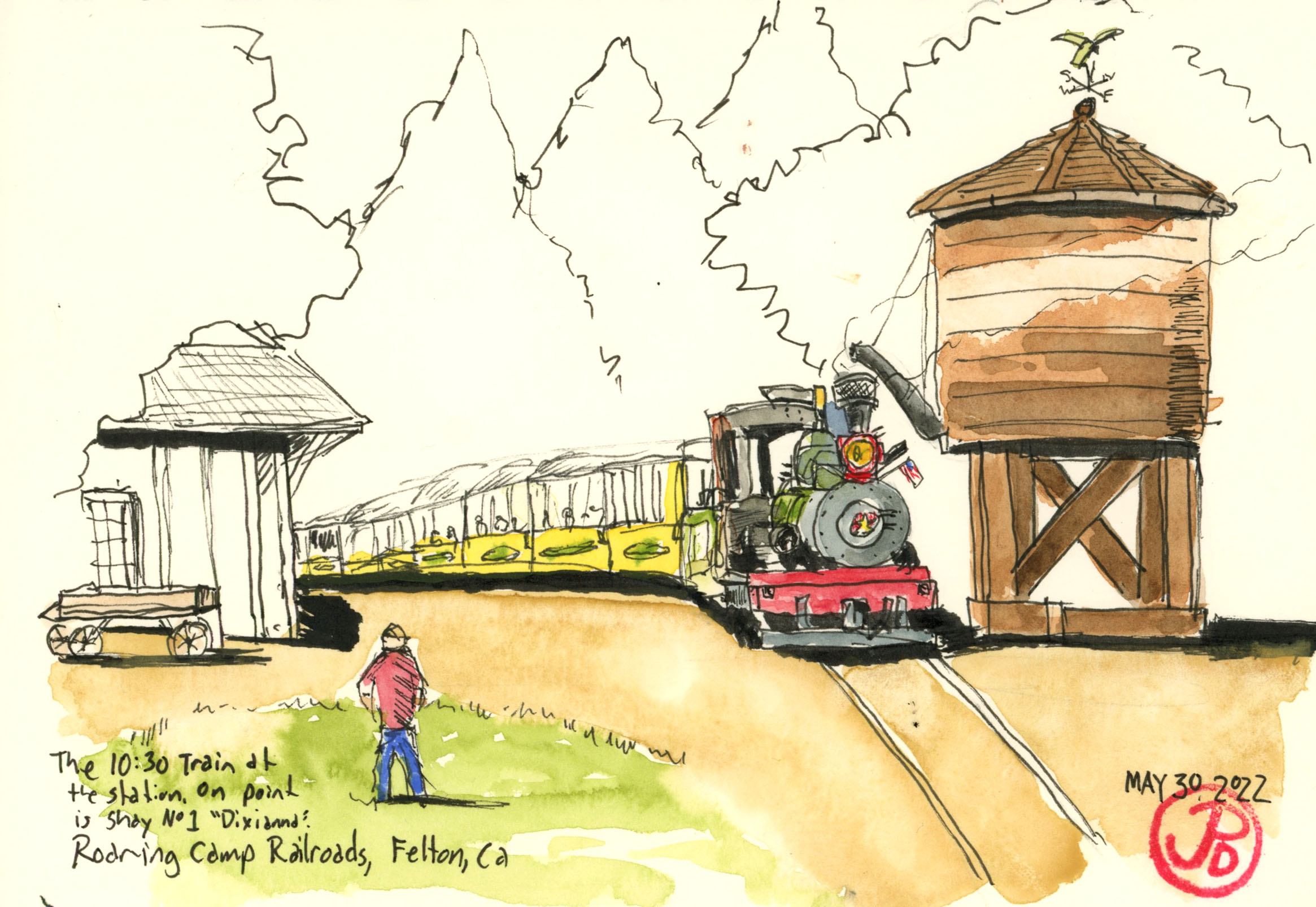
We arrived late, so our planned schedule was already out the window. We had time for a bathroom break before we queued up at the station as the No 1 Shay “Dixiana” backed into the station with her consist of brightly painted yellow and green passengers cars. We had the two cars behind “Dixiana”. We really would have front row seats to the sites, sounds, and smells of a live steam locomotive!
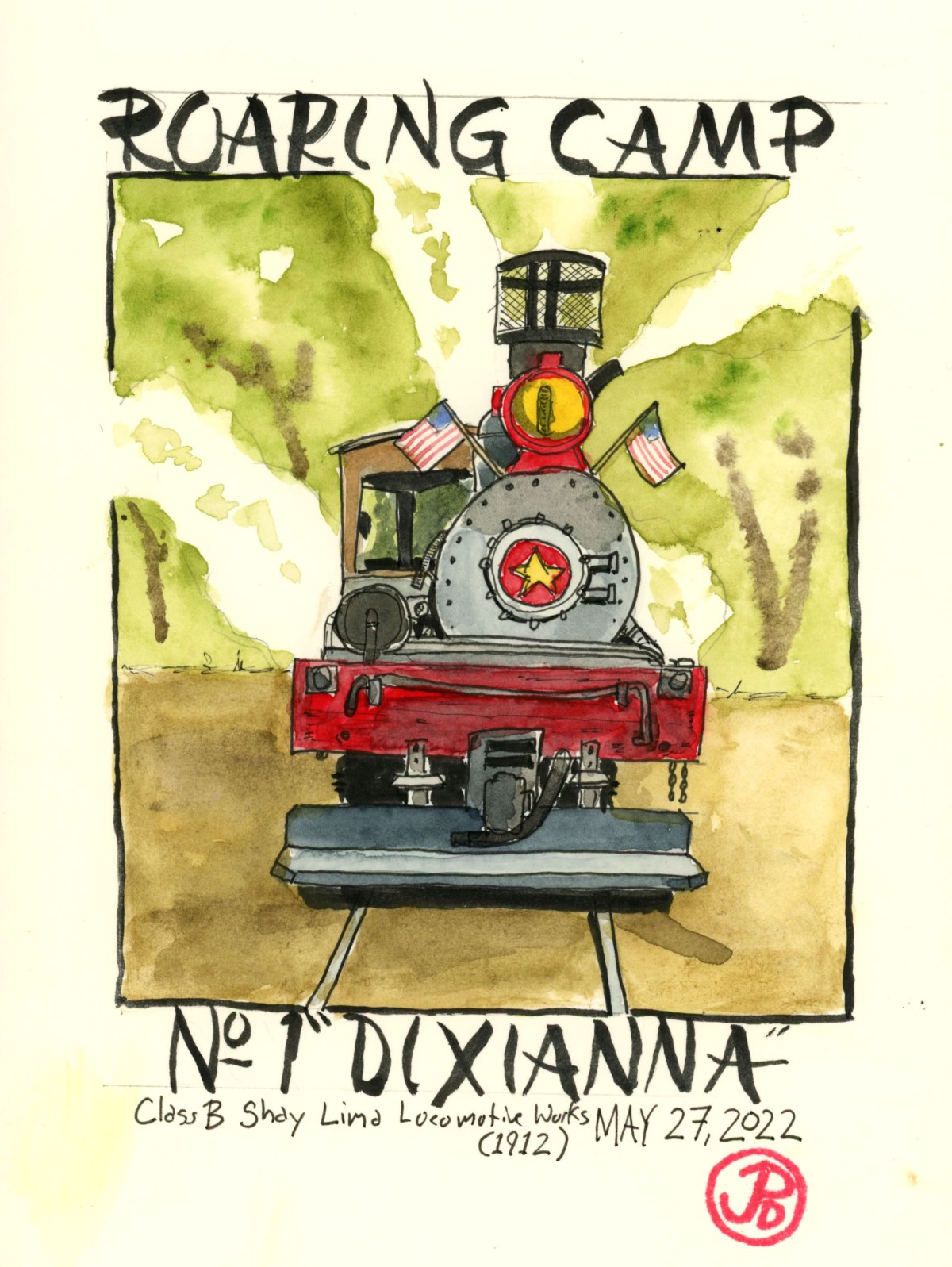
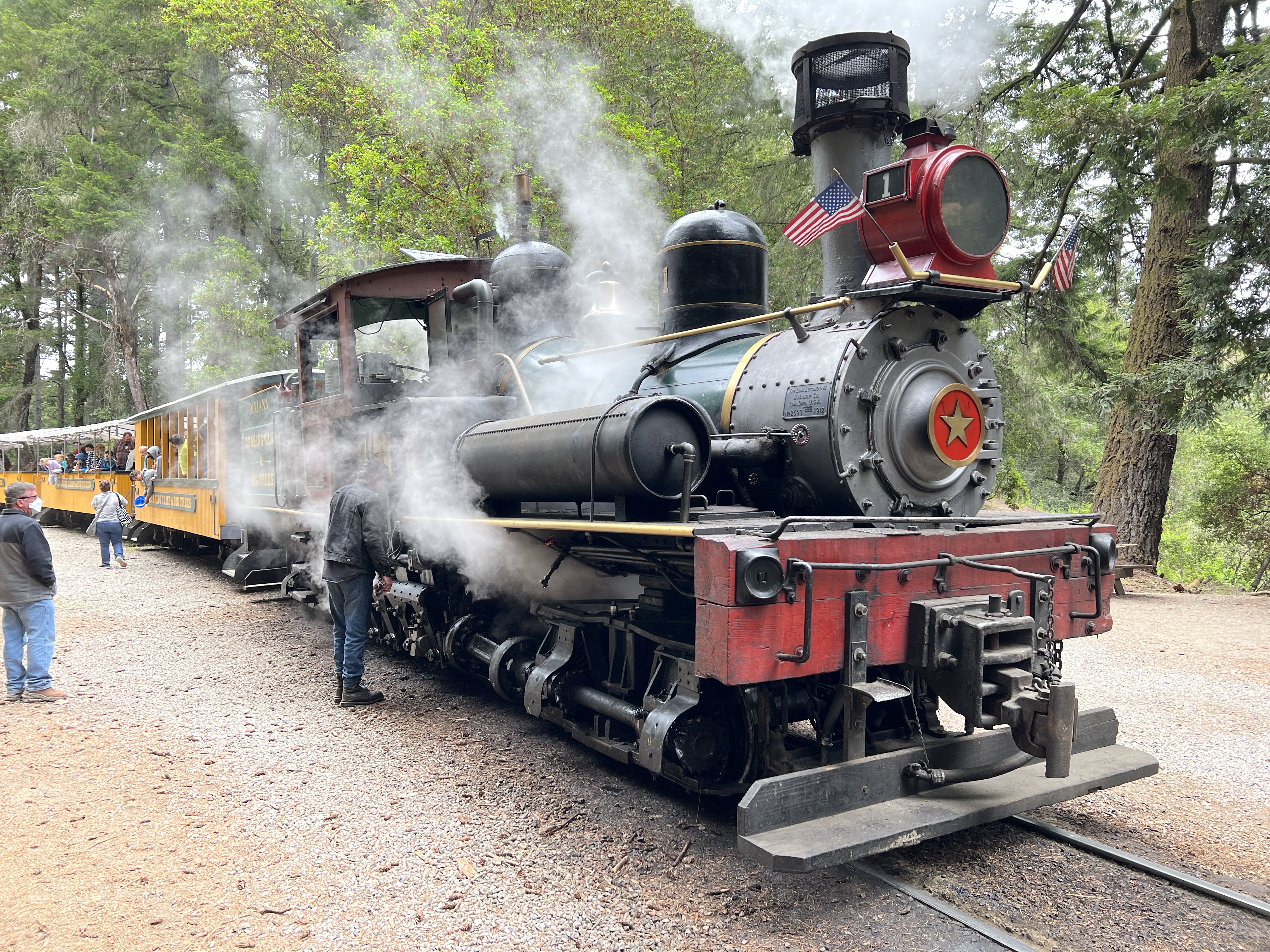
The two truck Class B Shay on point, was built in 1912 at the Lima Locomotive Works. It was originally built for the Alaculsy Lumber Company as a geared narrow gauge logging locomotive capable of climbing grades of 8% (most standard locomotives can handle a 1.5% grade). It served six other railroads before ending up in Dixianna, Virginia (hence the locomotive’s name). It was designated No. 1 because it was the first locomotive acquired by the railroad and she is now the workhorse of Roaring Camp.
The founder of Roaring Camp, Norman Clark, purchased the Shay in 1962 for his vision of a replica logging town with a narrow gauge railway. The Shay was loaded onto a flatcar and then shipped, via mainline rail, to her new home in Felton.
I could feel the excitement of our fourth graders as they found their seats. These tech-savvy ten year olds were about to experience cutting edge technology of the early 20th Century! And we would be pulled up the mountain by a 110 year old steam locomotive.
With two toots of the whistle, our train rumbled into life headed out from the station and past the water tower. Our train turned right into Schoolhouse Curve on it’s way up to Bear Mountain. Our top speed was about five miles an hour. Shays were built for their motive power on steep logging grades not for swift passenger service.
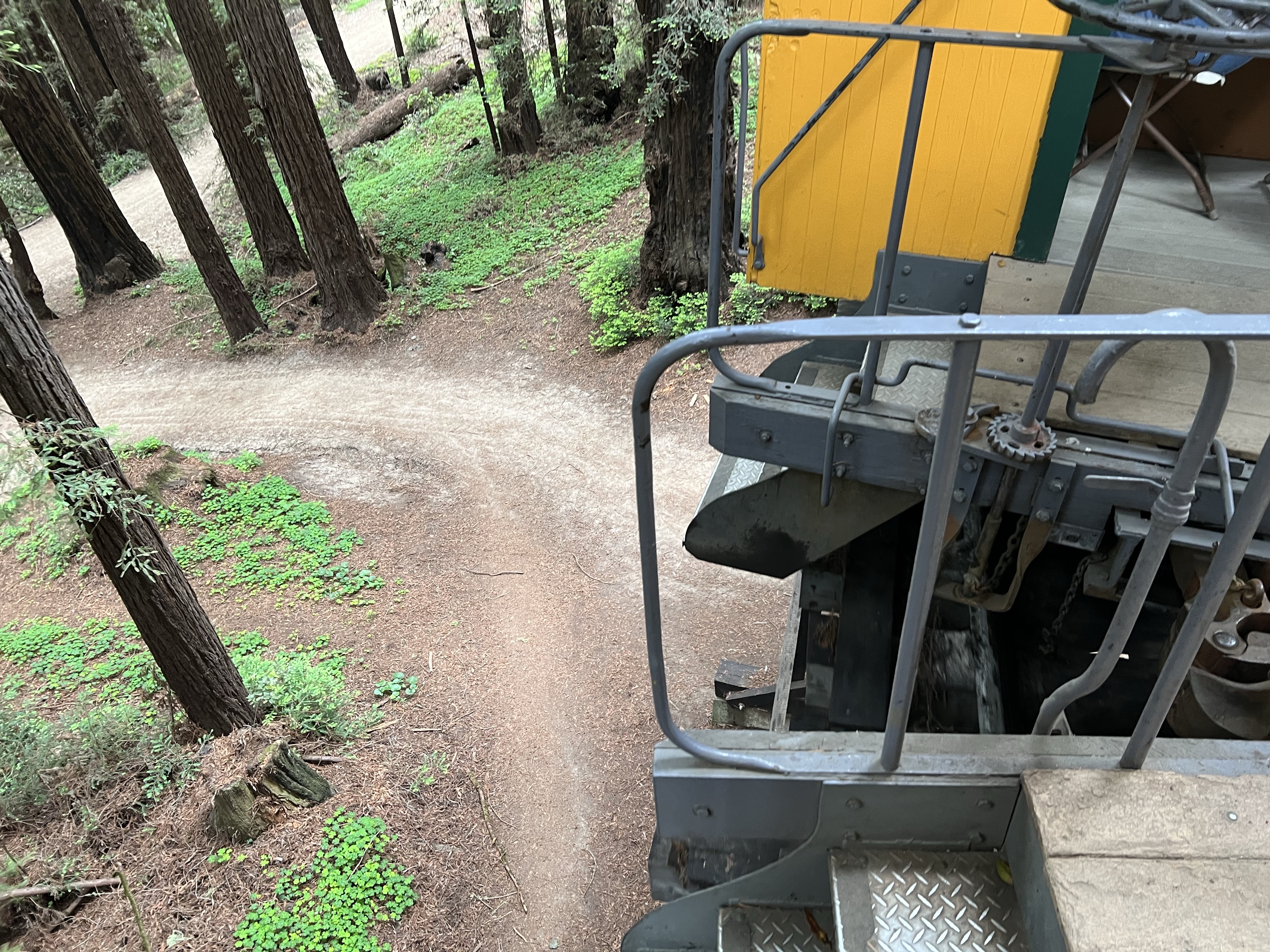
Crossing the horseshoe curve wooden trestle at Indian Creek. This trestle is one of the tightest turning railroad trestles in the United States. At it’s highest point, the train is 35 feet above the ground.
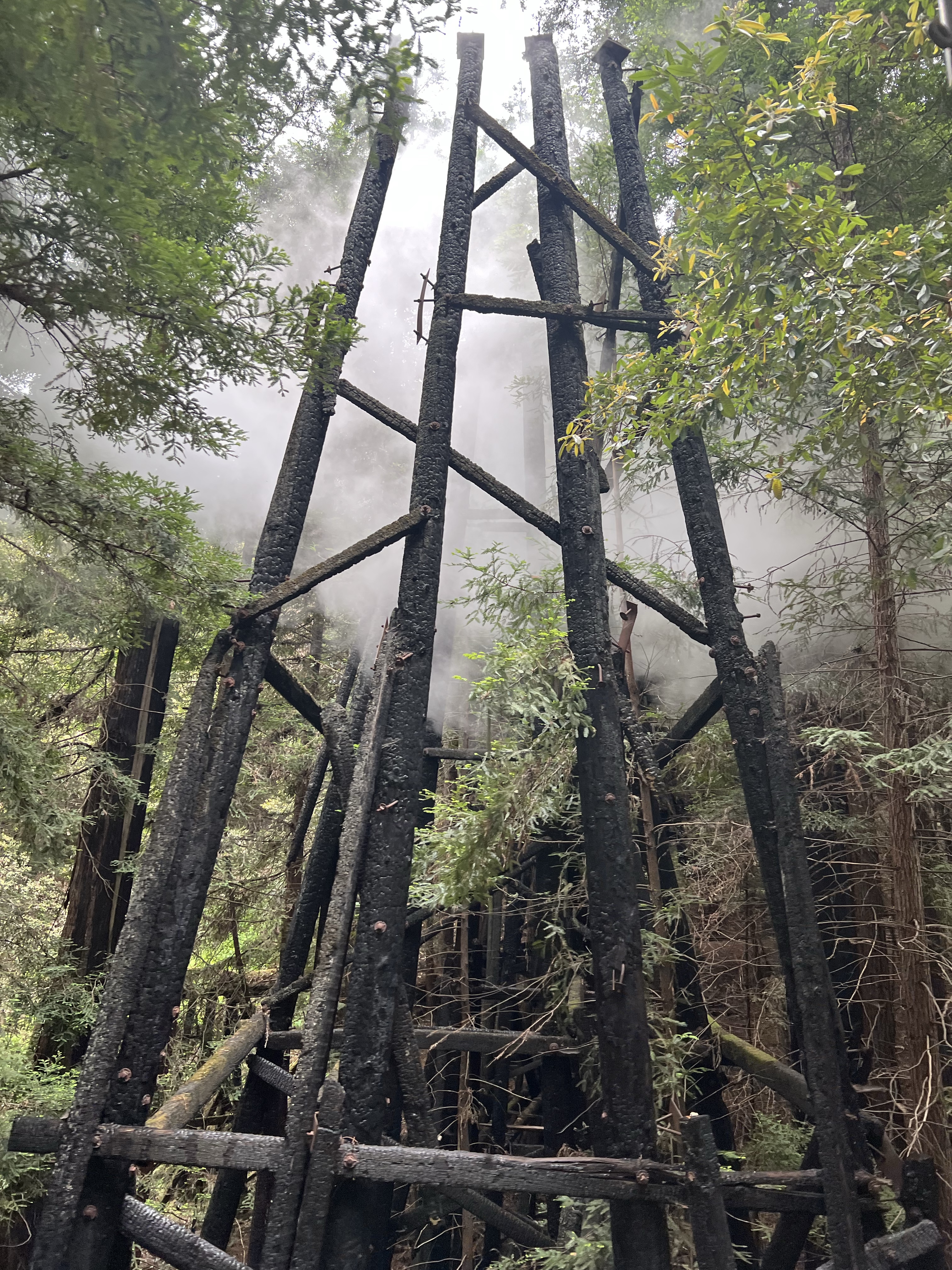
Once we crossed over the Indian Creek Trestle, the No. 1 labored up an 8.5% grade to the burned out trestles at Spring Canyon. The trestles were burnt in a fire on June 27, 1976.
The charred remains of the Spring Canyon Trestle. I love these ghosts of the past. I have no memory of crossing over this trestle, but knowing my father, I must have been on this train as an infant in the early 1970s.
After the trestle burned on July 27, four months later, a switchback was constructed to make up the elevation needed to summit Bear Mountain. On first section of the switchback, the train has to back up meaning that Shay No. 1 is pushing, instead of pulling, her consist up the hill. This section of track is the steepest portion of narrow gauge railroad in the United States. This grade reaches 9.25%!
Dixianna pushed our train up the grade with no problem, after all this is what she was designed to do. On the way up my some of my students caught their first sighting of a banana slug!
We headed up the last leg of the switchback and labored towards the summit of Bear Mountain, which is really more of a hill. Once our train reached the summit and we stopped for about 15 minutes. We kept our students on the train because we didn’t want to leave anyone behind. I detrained and took a few photos on Dixianna, one of which was the reference for the key sketch.
Dixianna at Bear Mountain. The engineer is greasing the moving parts. Stream locomotives are high maintenance.
A toot from the whistle announced that it was time to board the train because we where heading back down the hill to the station.
Looking down from 35 feet atop the Indian Creek Trestle on our way back to the station.A Memorial Day field sketch of “Dixianna” waiting to depart of her 10:30 trip to Bear Mountain. She was in the station for about 20 minutes, which gave me enough time to sketch.







 Corvid Sketcher