Image

Keddie Wye

One of the Seven Marvels of the Feather River Route is to be found a few miles north of Quincey.

The Feather River Route, also known as the Canyon Subdivision, stretches between Oroville and Portola, Ca and competed with Southern Pacific’s route over the Sierras at Donner Pass.

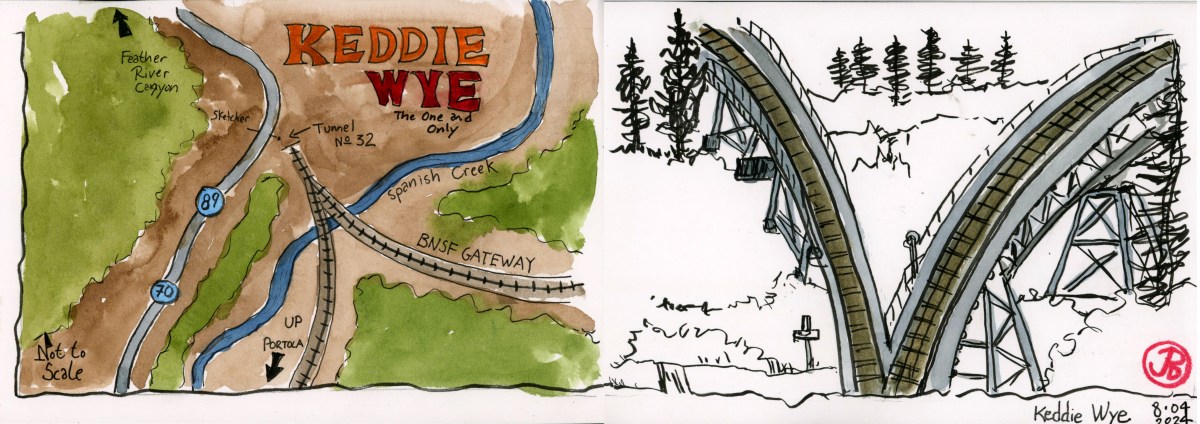
The Marvel is known as the Keddie Wye. This is where two tracks comes together to form one track, looking like the letter “Y”. Now this in itself isn’t much to write home about but when both sides of the “Y” are on trestles above a creek that joins together before entering a tunnel and then you know this is a special piece of railroad engineering.

The two forks of the “Y” are also where two different railroads meet. On the right is the former Western Pacific Railroad, now Union Pacific, and one the left is the BNSF (Burlington Northern and Santa Fe).
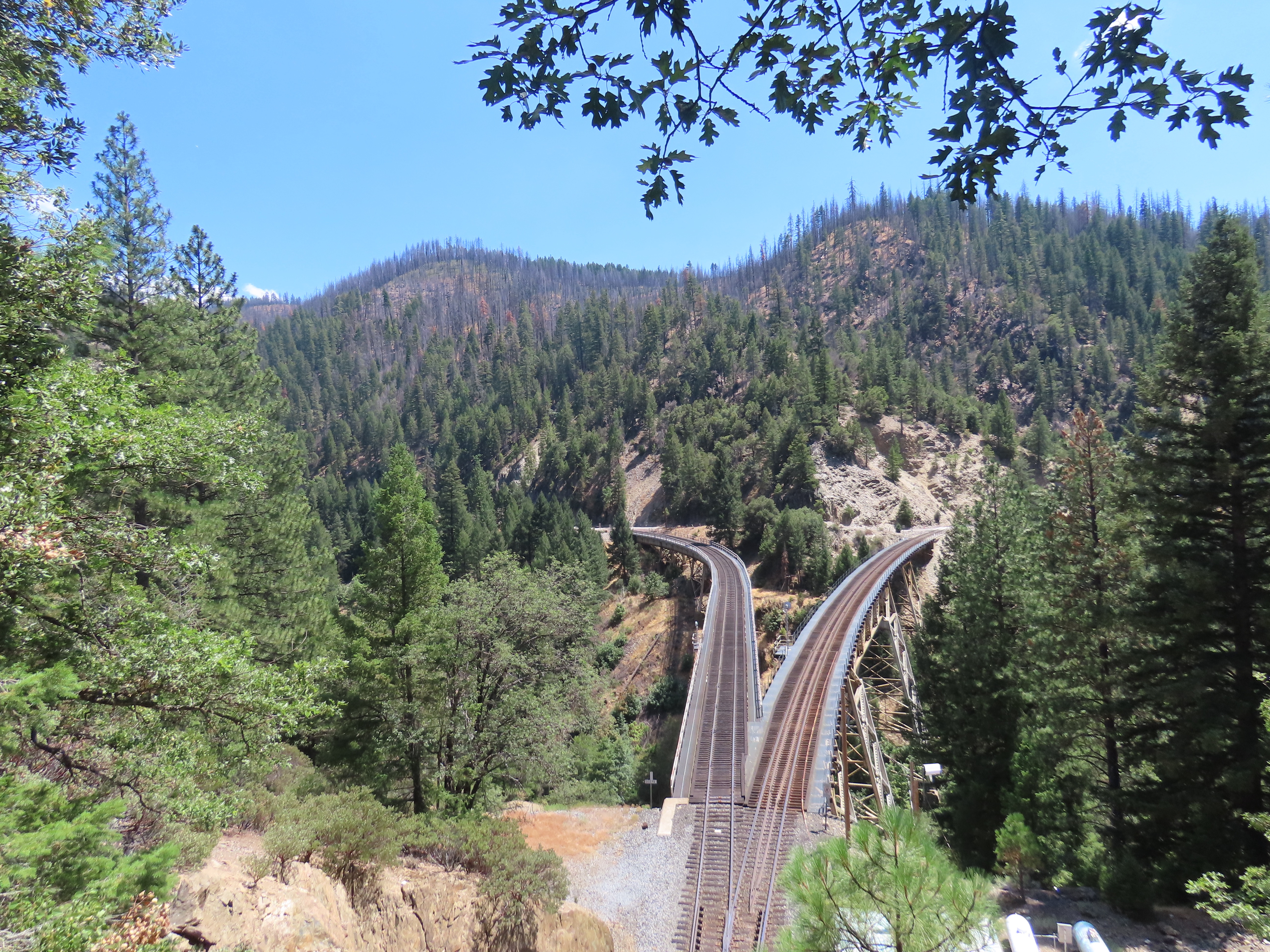
After about a 45 minute drive from Portola on Highway 70, the famous Keddie Wye appeared to my right. I pulled over and found a vantage point to sketch. I perched on a narrow trail above Tunnel No. 32 looking out to the two forks of the wye.

Now the only thing missing was a freight train. It would have been nice to see a train traverse one side of the “Y”. As I was told at the Western Pacific Railroad Museum, Sunday is a quiet day on the high iron.

After my sketch (right side of the spread), I headed down Highway 70 into the Feather River Canyon proper. The Highway parallels the railroad and the Feather River. This is a beautiful drive and I periodically looked off to left at the rails across the river. No trains.

I was about 20 minutes from the wye when I heard the screech of steel wheels on rail. I looked to the left and a Burlington Northern and Santa Fe (BNSF) was climbing up the canyon with a mixed freight consist.

I found the nearest pullout and then reversed direction as I chased the BNSF up canyon. I wasn’t going to miss the freight on Keddie Wye!

As I climbed up Feather River Canyon I kept an eye to my right for glimpses of the train. I should have no problem overtaking the train as the line speed limit was 25-30 mph.

I soon came to the end of the train and before long I was approaching the five bright orange diesels on point. I passed them with time to spare.

Once I reached the wye I reversed direction again and parked at the pull out. I figured I was about ten to fifteen minutes ahead of the freight and I took my position on the narrow path above Tunnel 32. Now I had to just wait, wondering if I would be able to hear the approaching freight from my position.
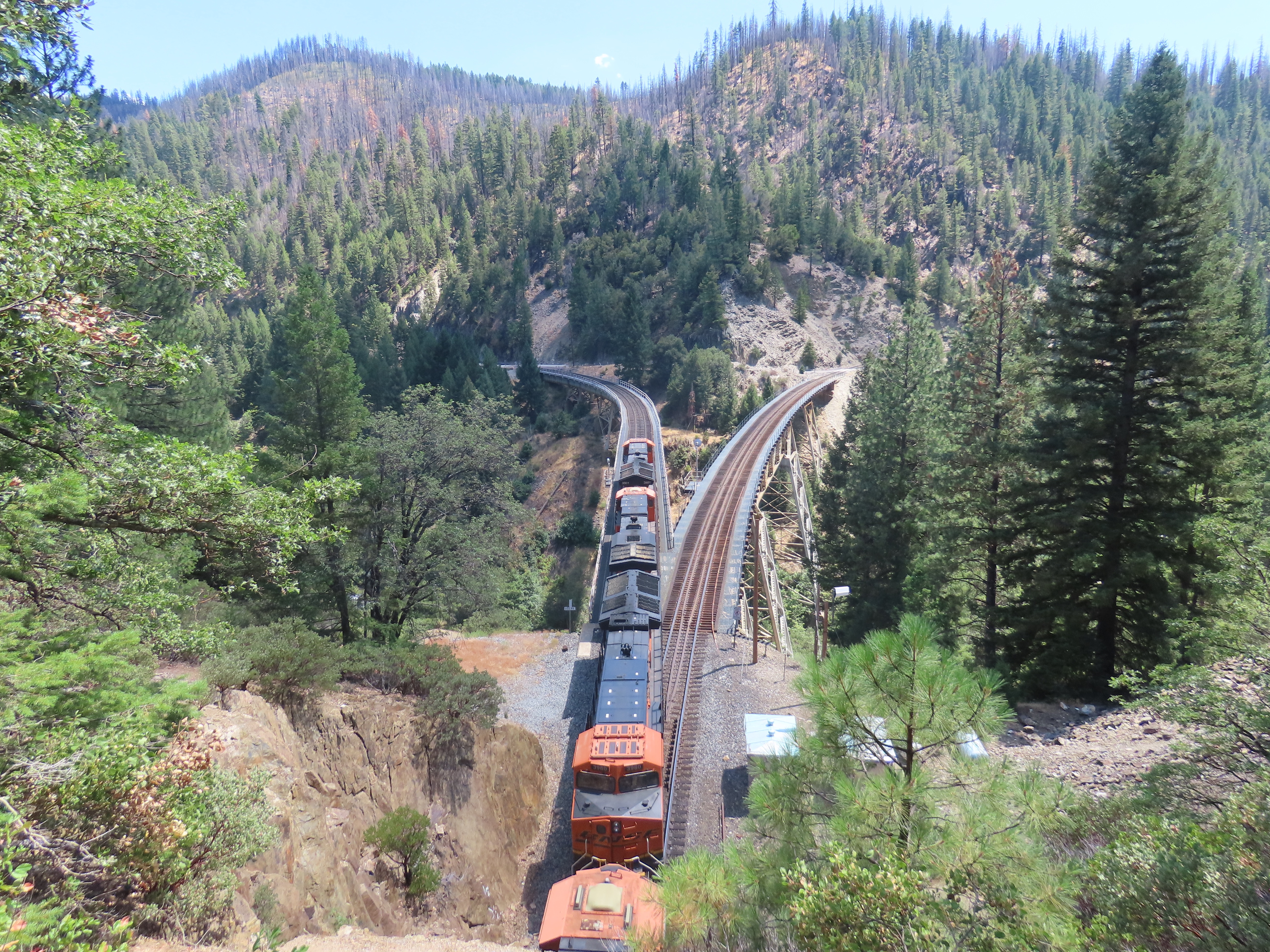
Within ten minutes I could hear the diesels working up grade and the first locomotive appeared below me. The train headed onto the left side of Keddie Wye onto the BNSF Gateway heading north towards Lookout and Klamath Falls.
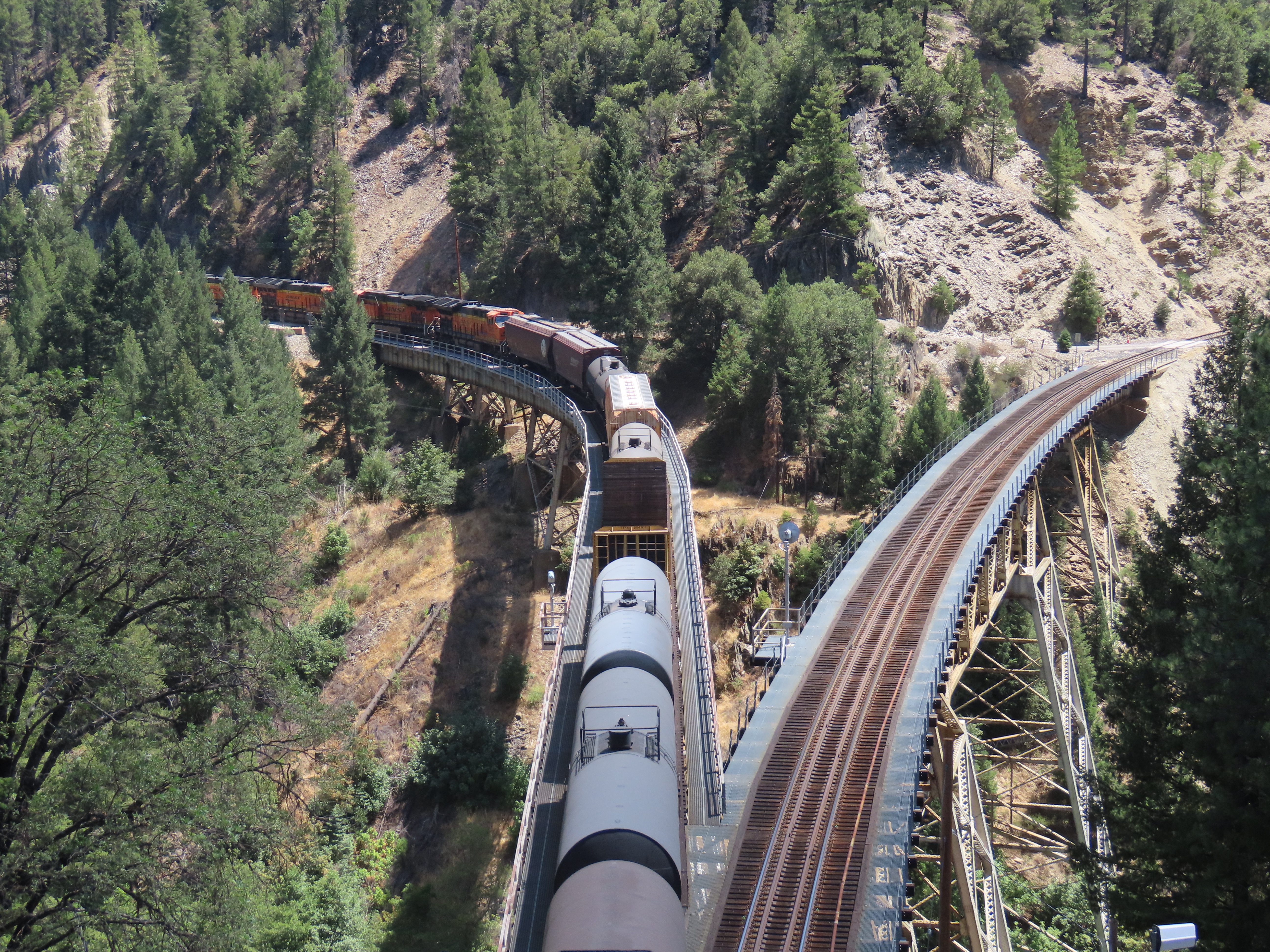
What a memorable experience to see a piece of railroad history that is not a static museum piece isolated in time but in use today.

Image

Ghost of the GS

At the Western Pacific Railroad Museum, there are many pieces of railroad equipment: locomotives, cabooses, rolling stock, and maintenance equipment.

It has been said that this railroad museum has the greatest amount of equipment from a single railroad family: Western Pacific (WP).

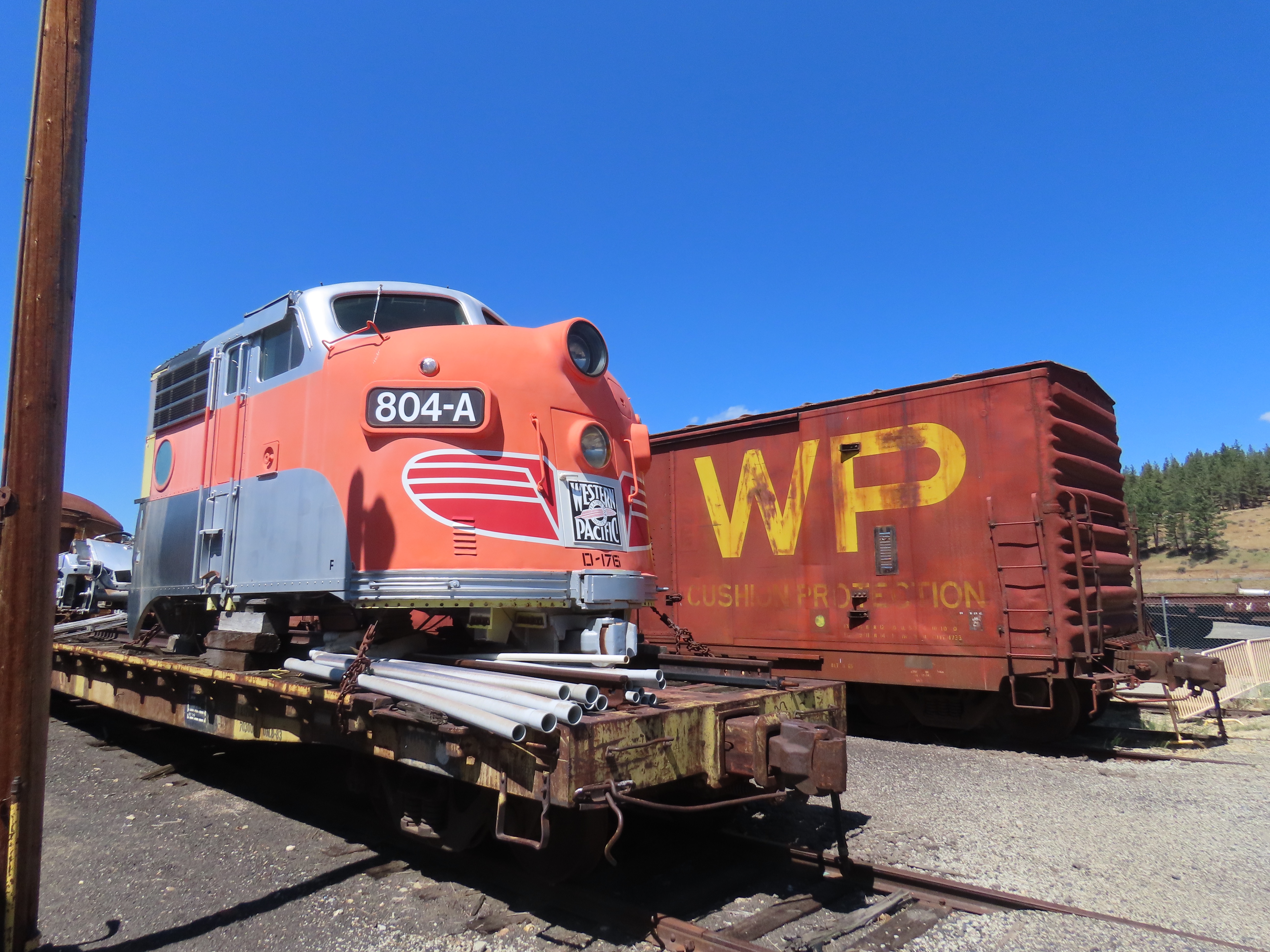
There is lots to explore at the WPRM and you are free to wander around the yard and look at the diesels and rolling stock. I was in search of an FP7 mock up of WP No. 804-A that was used to pull the California Zephyr. The mockup was just of the cab section and it was on display at Disney’s California Adventure park.

While looking for the cab I came upon an old tender that had the faded WP logo on its side. It was a six axle tender so it must have been attached to a substantially sized steam locomotive.

The mysterious tender.

I thought perhaps that this tender once belonged to the largest locomotive that WP owned and operated the 2-8-8-2 mallet or perhaps a 4-6-6-4 Challenger. The railroad owned 27 mallets, some of which operated up and down the Feather River Route. Sadly all 27 mallets were scrapped as the age of diesels took hold. Was this tender a last relic of the mighty mallets of the WP?

Turns out the answer was much more exciting!

I found out from one of the volunteers that the tender belonged to a GS-6, No. 484. These Northern type 4-8-4s were some of the best passenger locomotives ever made for the Southern Pacific.

The GS originally stood for Golden State and the streamlined locomotives were on point of one of the most beautiful passenger trains, the Coast Daylight. The train took passengers from San Francisco to Los Angeles in under 10 hours. During the war when the GS-6s were produced in 1943, the GS meant “General Service” because the locomotives were designed for freight as well as passenger service.

During the war railroads needed approval from the War Production Board to order new locomotives. SP and WP both petitioned for a new order of passenger locomotives. They were turned down because they didn’t think streamlined passenger locomotives were necessary for the war effort.

The zenith of the GS class (Golden State or General Service) was the GS-4.

28 GS-4s were built by the Lima Locomotive Works in 1941-42. 10 GS-6s were built in 1943 under war time restrictions, meaning the locomotives had to also be used for freight service and lack the streamlining of the GS-4s. What I was unaware of is that Western Pacific had six GS-6s on its roster (No. 481-486).

During the end of the age of steam (the 1950-60s) many railroads scrapped their steam locomotive fleet. The idea of steam preservation did not take hold until the 1960s and 70s.

One GS locomotive that was preserved and put on static display in Oakes Park in Portland, Oregon was Southern Pacific GS-4 No. 4449. The locomotive was restored to working order and pulled the Freedom Train across the United States in the late 1970s.

A 2016 field sketch of the GS-4 No. 4449 at the Oregon Rail Heritage Center in Portland, Oregon.

There is only one other GS class locomotive that is still is in existence. This is the GS-6 No. 4460.

4460 was the first GS-6 manufactured (built in July of 1943) and it is the last steam locomotive to operate on the Southern Pacific when it made an excursion run from Sacramento to Spark, Nevada in October 1958.

4460 was donated to the National Transportation Museum in St. Louis, Missouri in 1959.

Until my visit to Portola, I assumed there were only two relics of the Southern Pacific’s mighty GS class and finding the tender in the yard was like finding a piece of railroad history gold!

Image

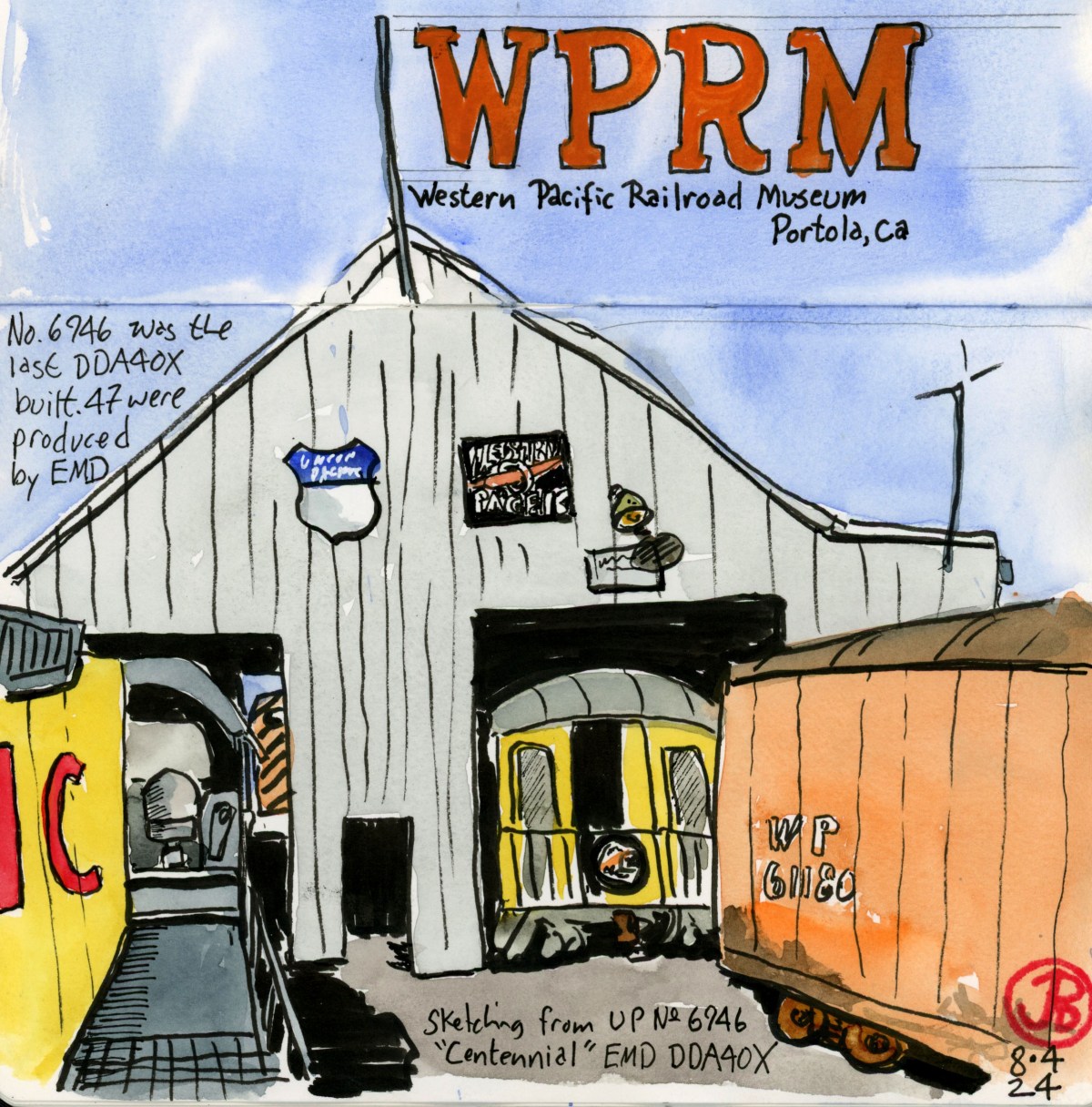
Western Pacific Railroad Museum

You really have to like trains to make it out to Portola, Ca. From my mom’s house it was a two hour drive over windy roads to reach the small town where the former diesel shops of the Western Pacific were.

These shops and the rails around it, are now the Western Pacific Railroad Museum. The museum is adjacent to the tracks of the Union Pacific which acquired the WP in 1982. Heading west from Portola you enter the Canyon Subdivision which is the WP’s Feather River Route. This is one of the most scenic sections of the the former WP. It was the route the original California Zephyr took from the Bay Area to Chicago.

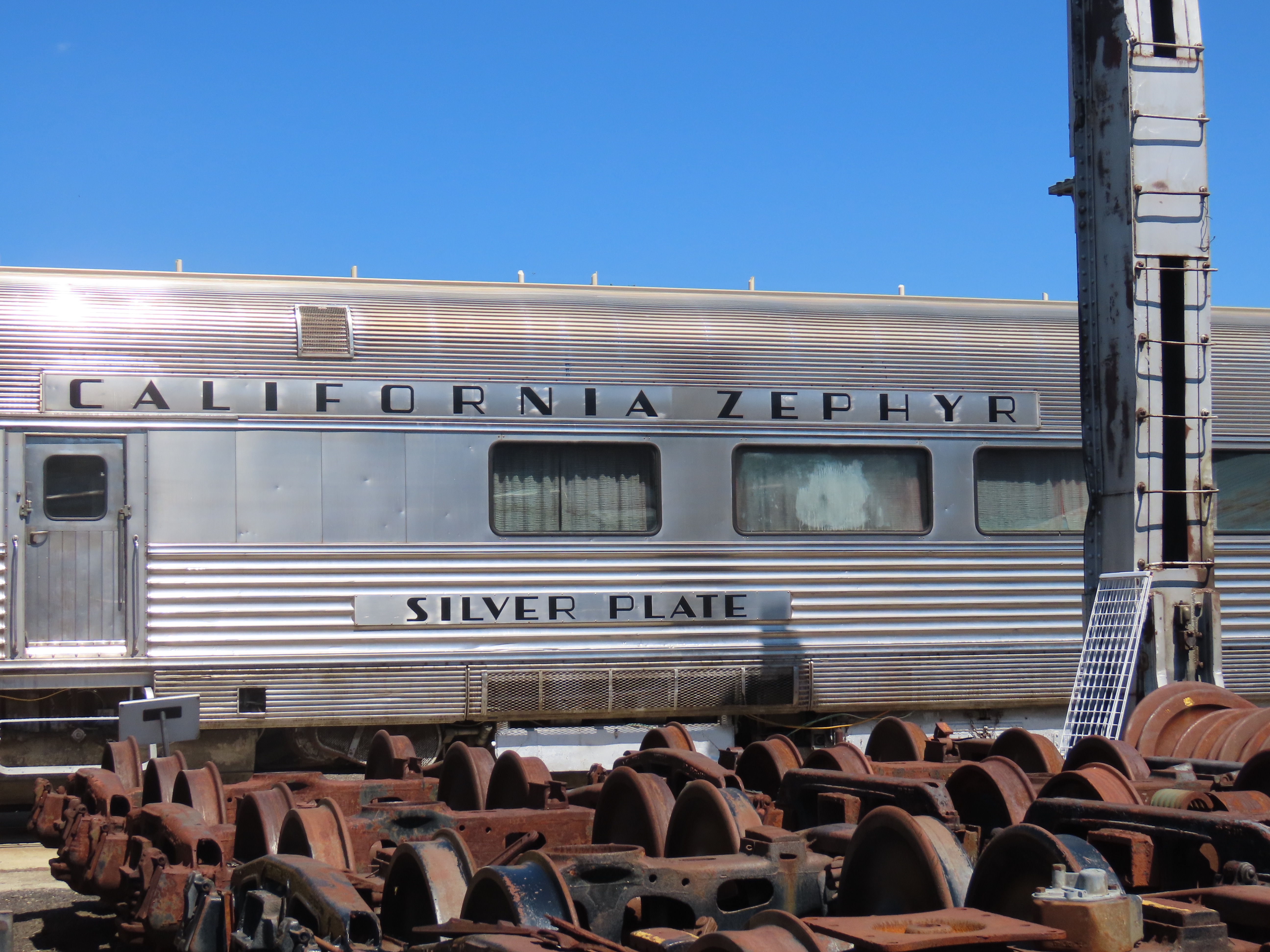
The museum has four cars from the streamliner, the California Zephyr.

While many railroad museums focus on the age of steam, the WP was one of the first major railroads in the west to dieselize. The museum has 29 diesels in its collection.

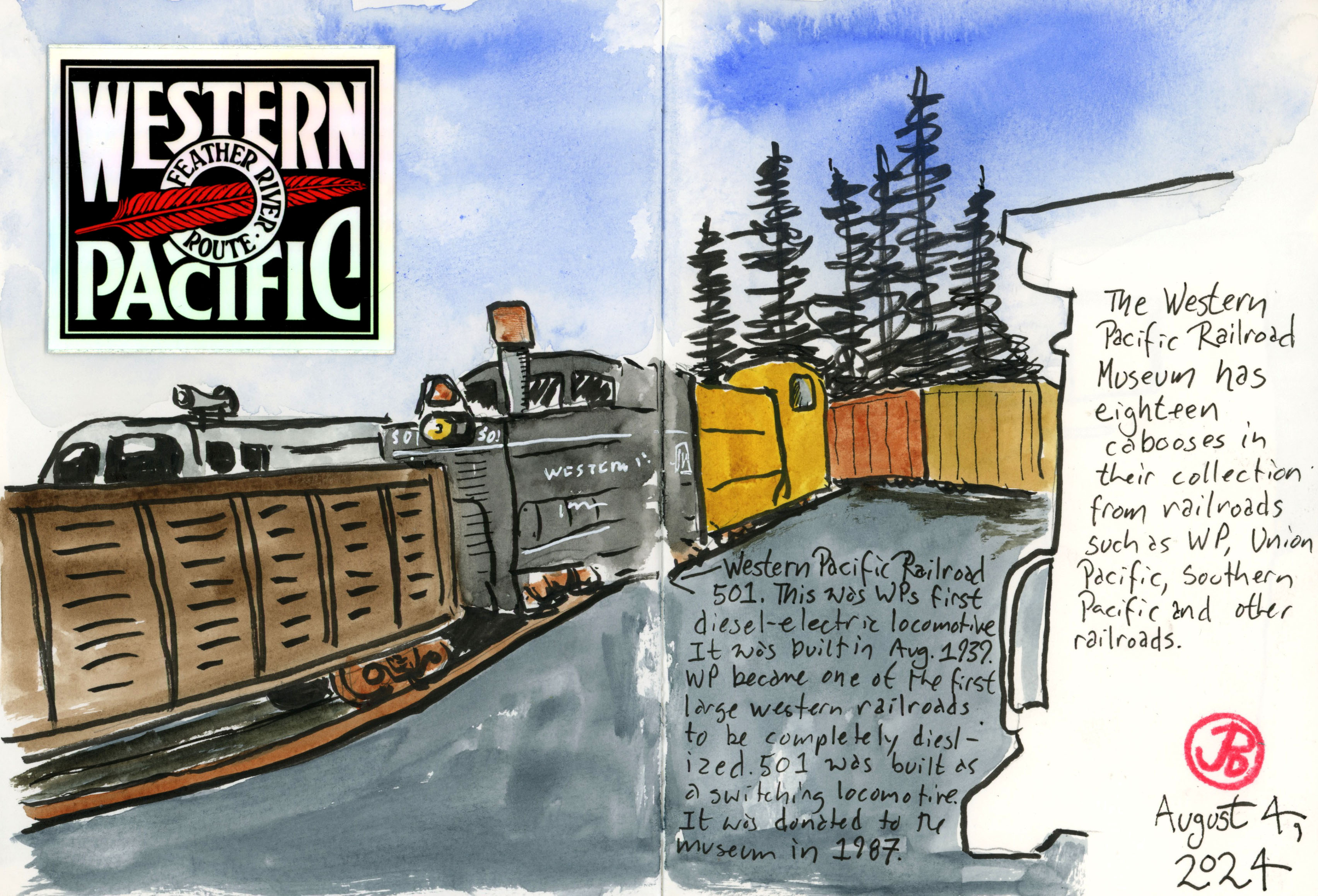
The WP acquired its first diesel in 1939. The SW1 switcher was built by the Electro Motive Corporation for an original cost of $64,525. It was built to work in the yard and with a top speed of 45 MPH, it was not designed to be out on the mainline.

The WP tested out the diesel (No. 501) and liked what it could do. It later ordered two more sister locomotives and 14 years later the Western Pacific was completely dieselized. The genesis of WP’s diesel age is now part of the museum’s collection.

A sketch of some of the WPRM’s collection including WP’s first diesel: No. 501.

The museum has many classic, epic, and iconic diesel-electric locomotives in its collection and I added a few to my sketchbook.

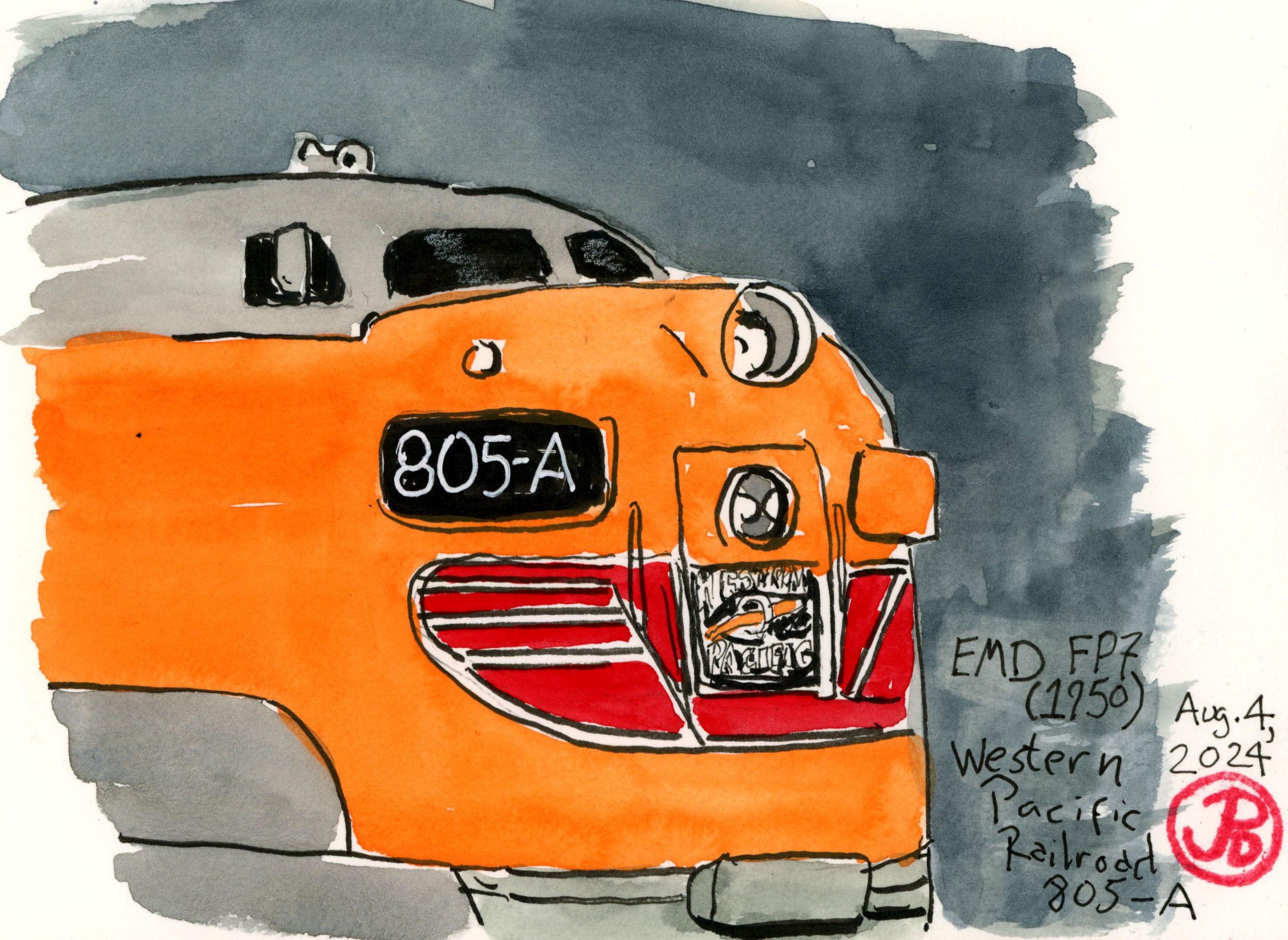
An iconic locomotive is the WP 805-A. This is an EMD FP7. This hood unit was on point of the California Zephyr from Oakland to Salt Lake City. The diesel was in service on the Zephyr from 1950 to the route’s end in 1970.

805-A is the last WP California Zephyr locomotive in existence, so I had to sketch it.

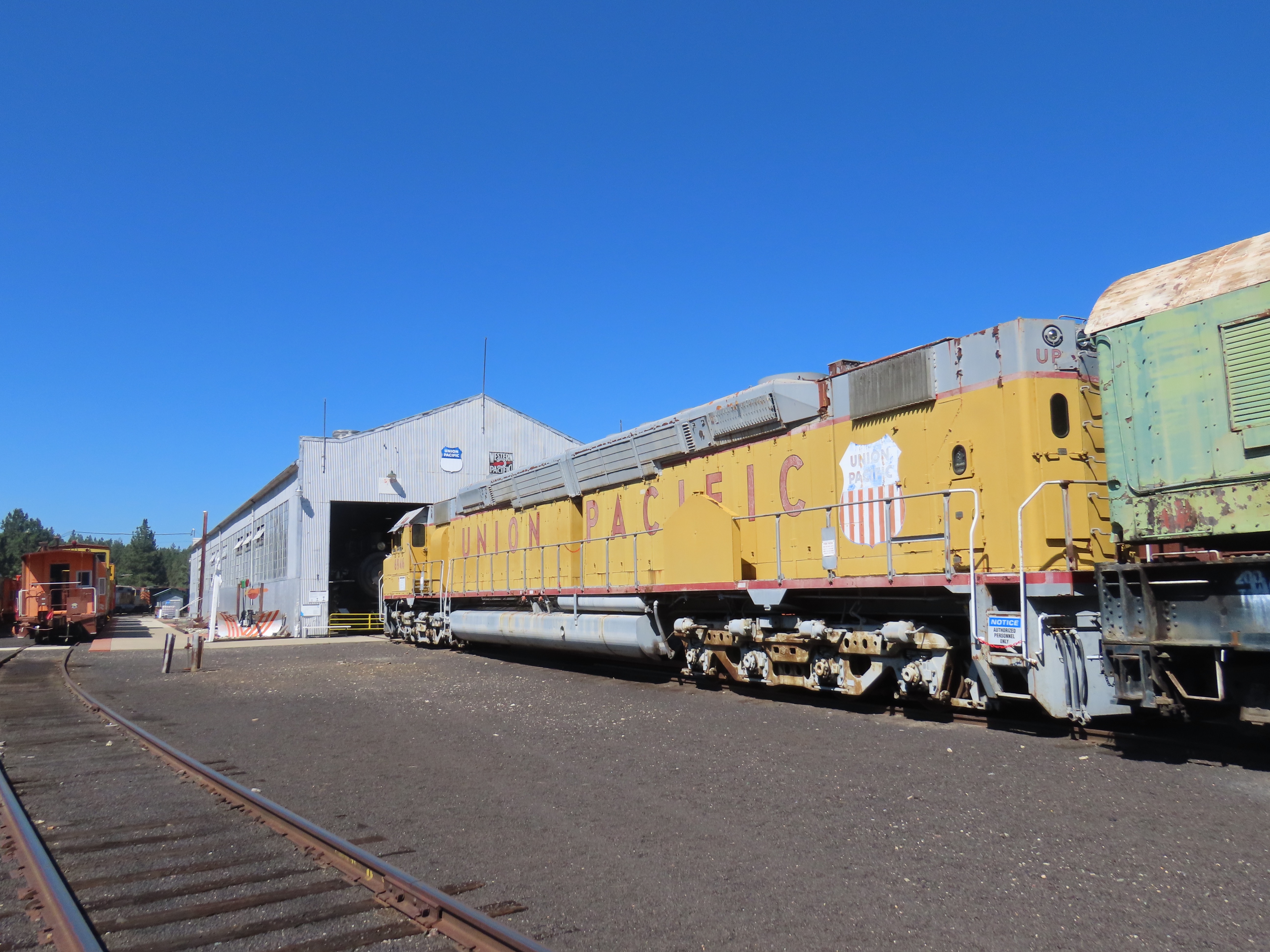
One of the epic diesels in the museum’s collection is perhaps the most epic diesels ever built, this is Union Pacific No. 6946. This 6,600 horsepower behemoth is EMD Class DD40AX “Centennial”, the largest and most powerful diesel-electric locomotive ever built and is the successor of UP’s Big Boy. 6946 is the last (out of 47) Centennial ever built. Only 13 Centennials still exist, the large locomotives having been retired from the UP fleet in 1986.

The beast that is the last Centennial ever built. Like the Big Boy, it’s two locomotives smashed into one mighty powerful machine.

A docent told me I could climb aboard the duel engine workhorse and I walked along the gangway to the cab.

I liked the view so I sketched the 1953 diesel shop from the gangway of 6946 (featured sketch).