Image

Where the Rails End

Today the only way to get from Los Gatos to Santa Cruz is to drive over Highway 17. You can no longer take a passenger train. The last train ran in 1940.

On the other side of the Santa Cruz Mountains, you can board a train at the Santa Cruz Beach and Boardwalk and it will take you 6.8 miles north into the mountains to the town of Felton.

Detraining here you follow the line past the train shed and machine shop of the Roaring Camp and Big Trees Railroad and the old passenger and freight depot and then you cross Graham Hill Road and walk north on the rails toward Zayante, using the rusty rails as a guide.

The line begins to parallel Zayante Creek. The road builders used the watersheds of the Santa Cruz Mountains as a route to work up and down the summit. A good part of the Santa Cruz to Felton route parallels Santa Cruz County’s largest river, the San Lorenzo.

After a few miles you eventually come to a siding, this is the former stop of Eccles near Olympia Station Road. This was a flag stop as far back as 1901. There was once a passenger shelter (1913) and a freight platform.

The main line and siding at Eccles. The 310 foot siding was probably used to store lumber cars.

The station sign remained in place until 1942, when the station was decommissioned following the abandonment of the the railroad.

After World War II, passenger service was not resumed and the station shelter was torn down. The Eccles sign was saved and was on display at the Santa Cruz Museum of Art and History in downtown Santa Cruz.
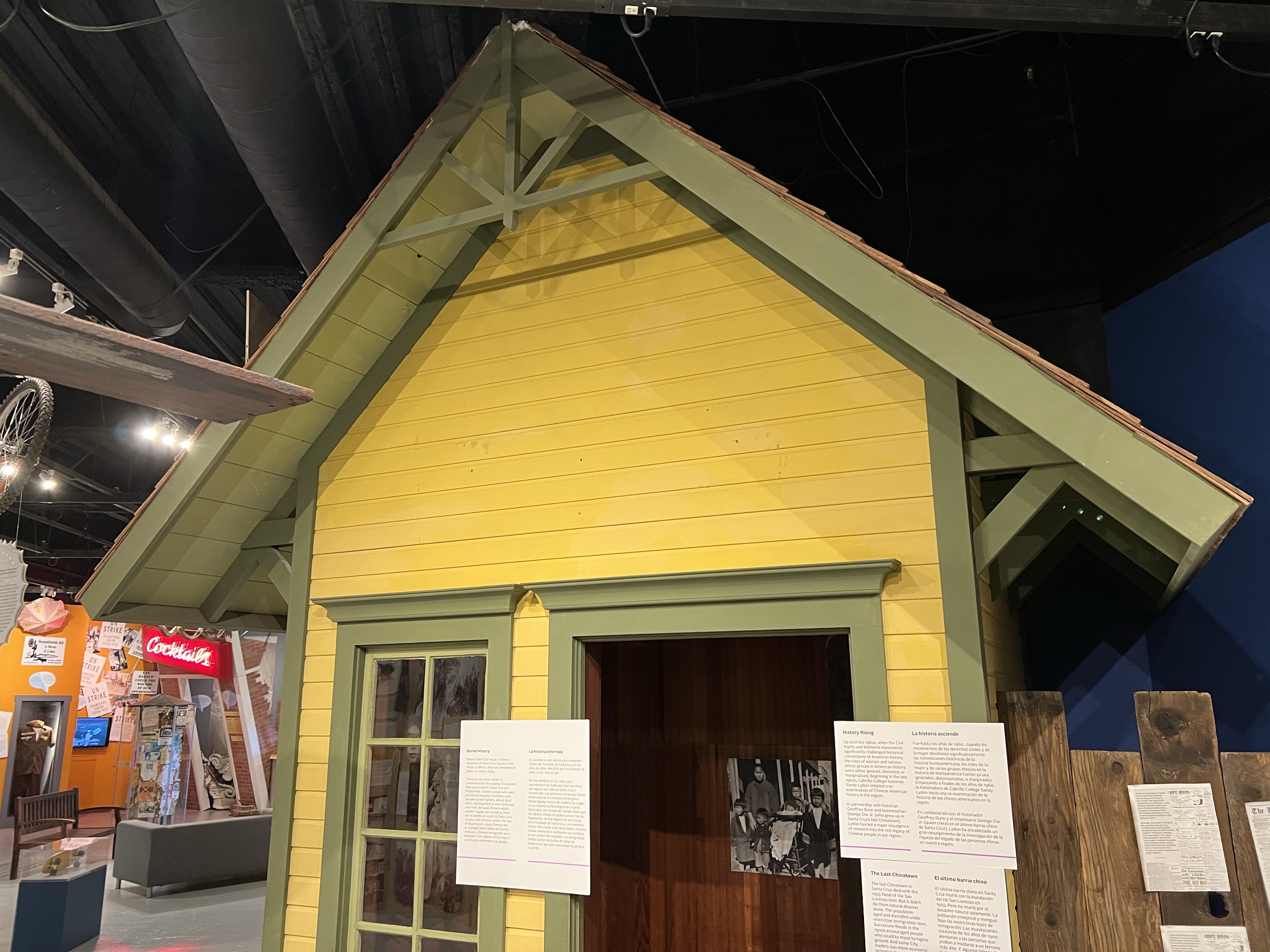
Here’s where the Eccles station sign used to be at the Santa Cruz Museum of Art and History. It’s gone, like the rails that once reached over the Santa Cruz Mountains.

One a recent visit to the museum the sign was no longer on display.

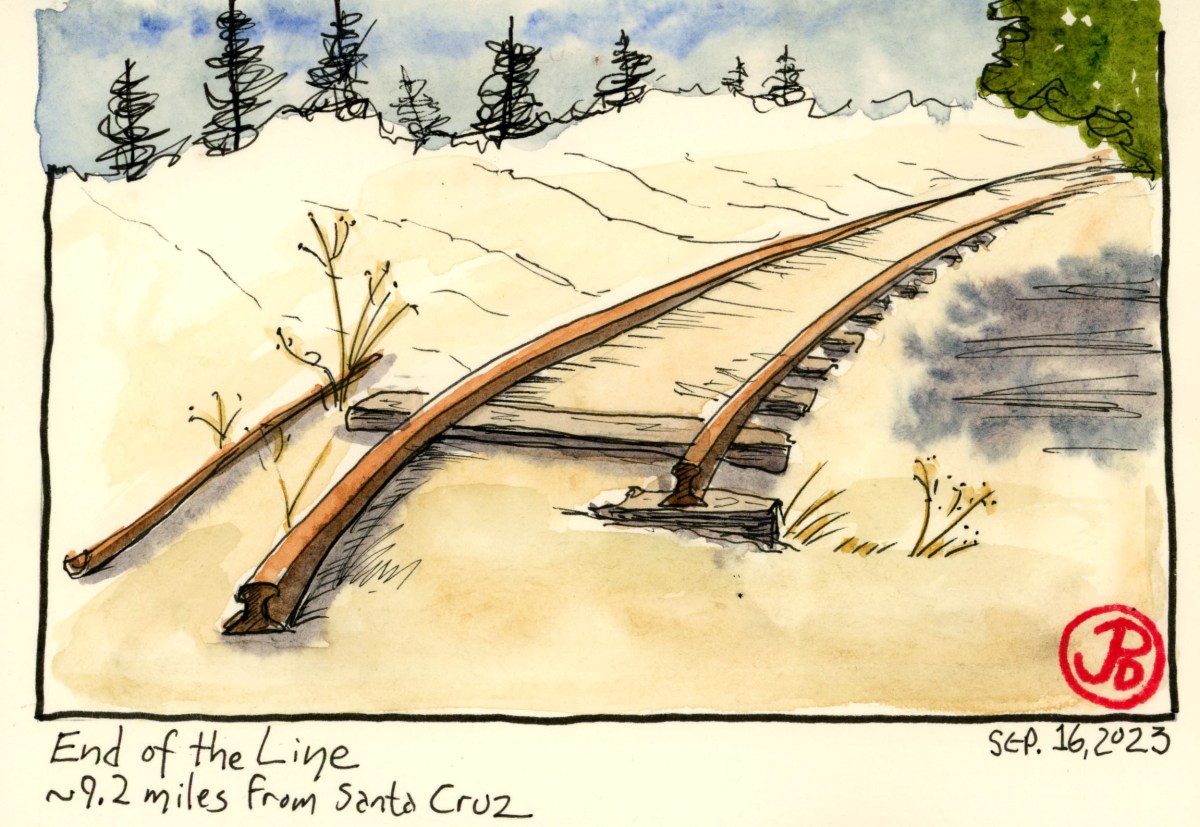
I continued north as the siding rejoined the mainline. And after about a five minute walk, the tracks end without much ceremony. There is no bumper stop to mark the end. And one tail is longer than it’s mate, 4 feet and 8 1/2 inches away.
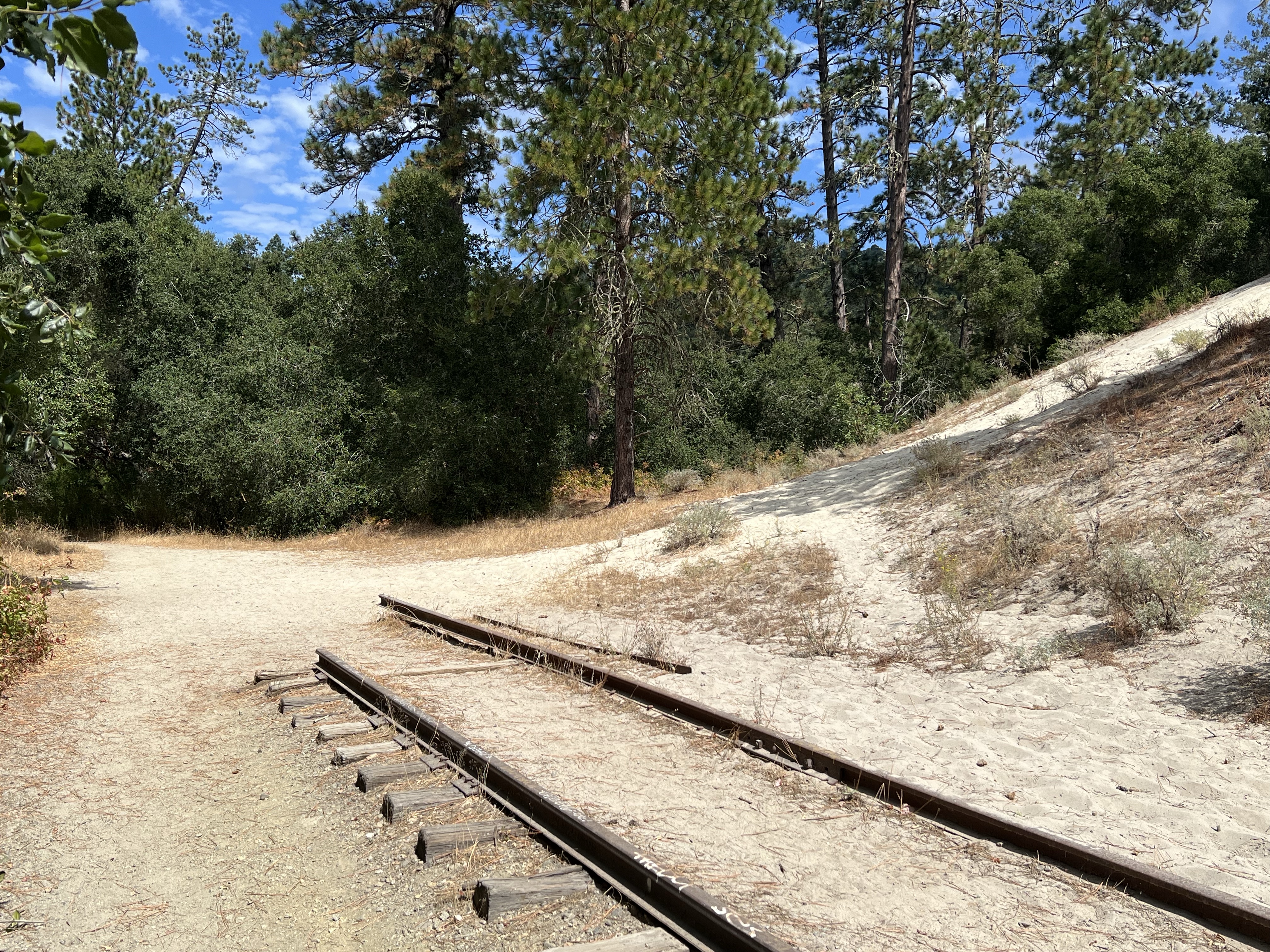
This is the end of the line and as far north as the tracks go.

The end of the tracks and the end of an era.

Image

Zayante: Tunnel No. 5

One of the more interesting tunnels on the South Pacific Coast Railroad is Tunnel No. 5 in Zayante.

This is one only two tunnels on the former South Pacific Coast line that is still in use, although not by a railroad.

As the railroad climbed its way up Zayante Creek it came to a granite outcrop that the builders could not go around or over so they had to tunnel through it.

Granite is stable and solid and because of that they did not have to add any interior wooden supports. When completed Tunnel No. 5, at 250 feet, was the second shortest on the line.

The tunnel was active until the Southern Pacific’s abandonment in November of 1940.

The tunnel began it’s current use in 1952 when the Western States Atomic Vault Company bought the tunnel, sealed both ends and used Tunnel No. 5 as a fire-flood-nuclear-proof storage silo, housing records (mainly microfilm and microfiche) for many companies including Disney. The silo officially opened on May 2, 1954.

The eastern portal was made the entrance to the facility and a guard shack was built (featured sketch) where a guard was stationed 24/7. We did not see any signs of a guard so we could not ask for a tour. (The facility is currently owned by Iron Mountain).

In times past, the company would allow tours inside the facility and one visitor deemed it the “most interesting dull place in the world”.

One can only guess the nearly 70 year old “secret” files that now reside in the former railroad tunnel known as Tunnel No. 5.

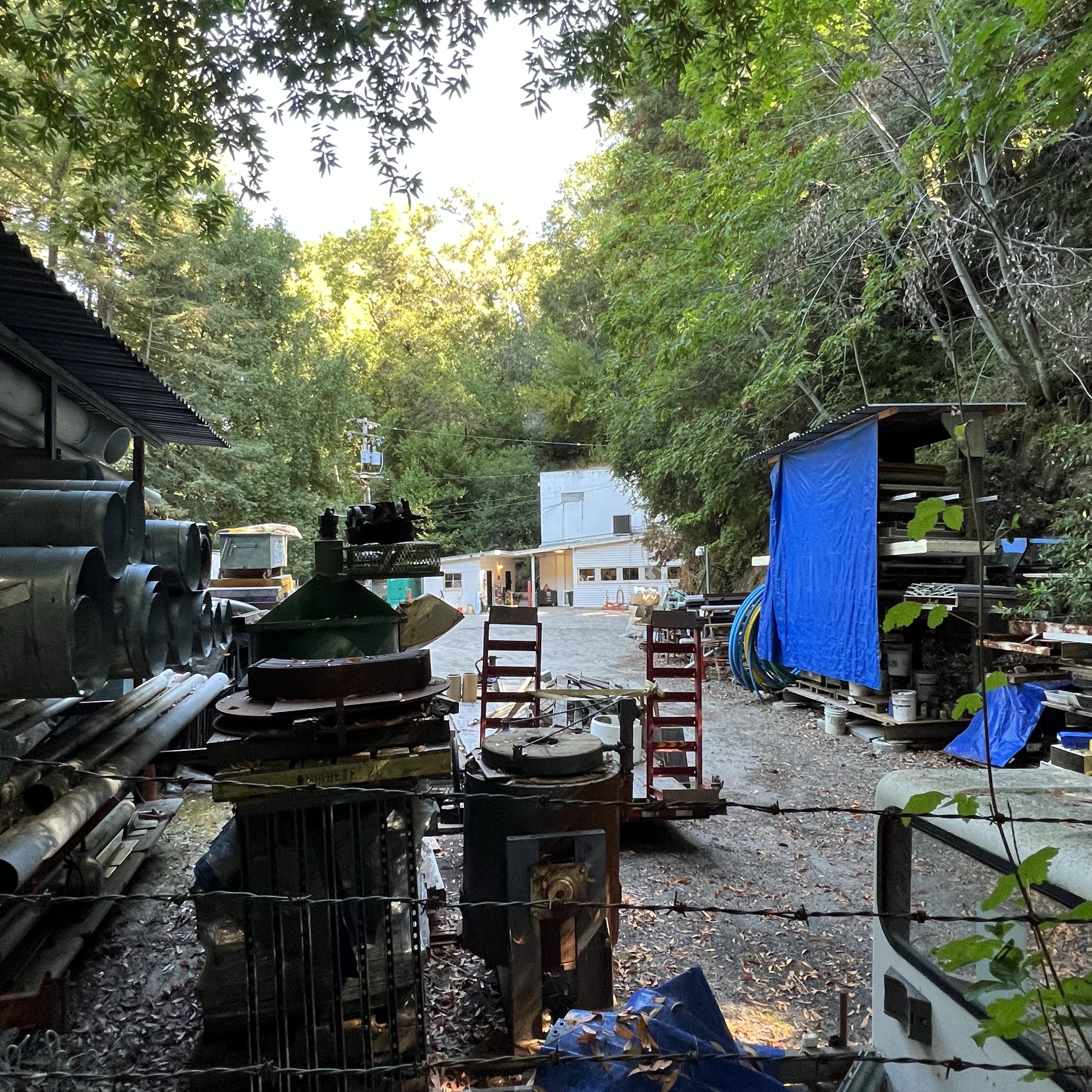
Peeping through the fencing toward the eastern portal of Tunnel No. 5. One of the two windowed buildings appears to be the guard shack. The parking lot now looks like an odd junk sale with junk that no one wants to buy!
The former rail bed (sans rails) looking towards Eccles and Felton and Santa Cruz.