Image

Big Trees & Pacific

I remember the excitement of the up and coming passenger service returning to the former Southern Pacific branch line from Santa Cruz to Felton.

The time was the mid-80s but my dad remembered the days when stream locomotives labored up the grade above our cabin. The drivers would slip on the wet morning rails (every foamer loves a bit of wheel slip) and they would back down the grade, sanding the rails as they went to have another go.

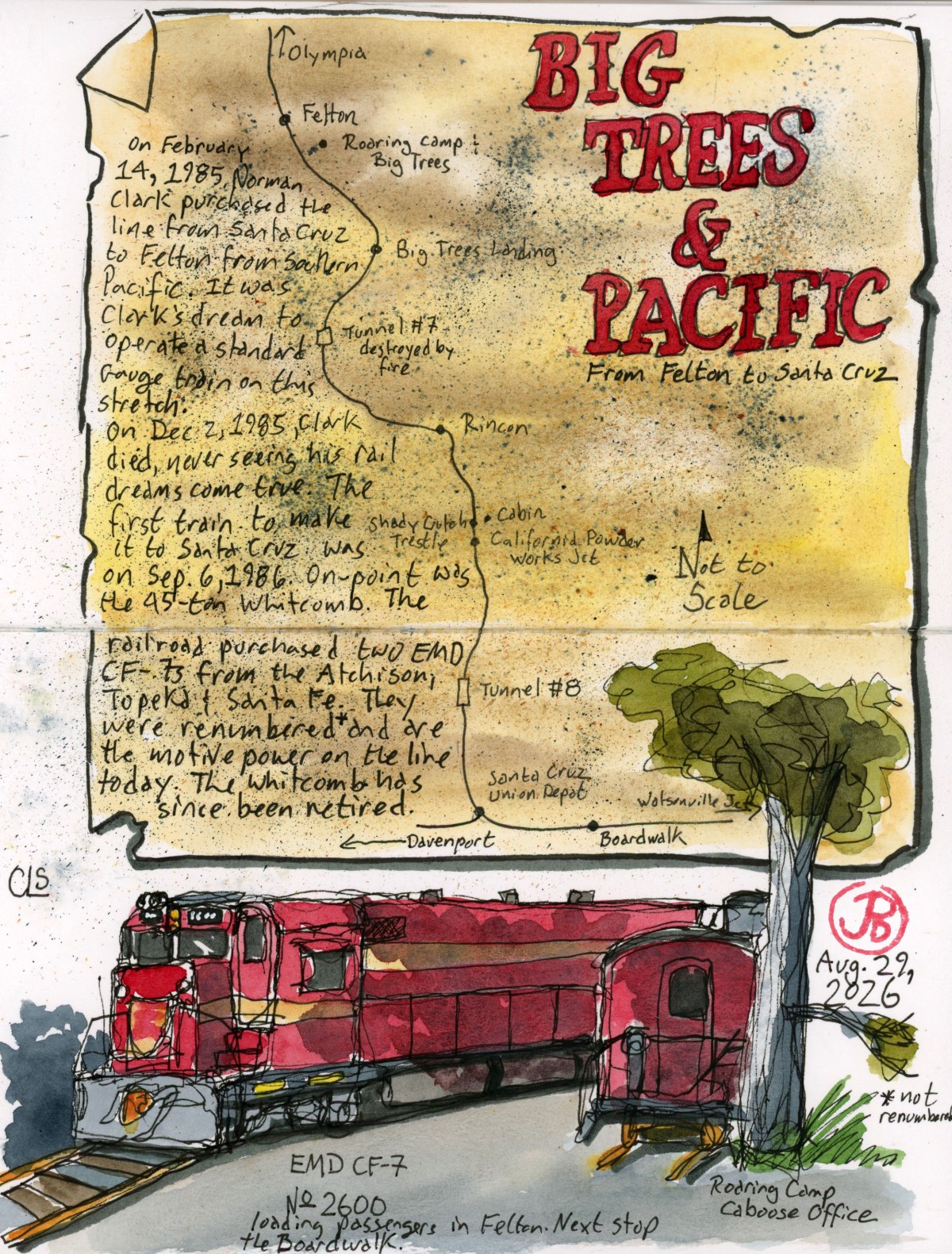
It was Norman Clark’s dream to one day purchase the line and operate a passenger train on the standard gauge rails to Santa Cruz. Clark was the founder of the narrow gauge railroad at Roaring Camp.

Unfortunately Clark died before seeing his dream come to fruition.

My dad was certainly excited to see this rail dream come true. It would be exciting to again hear the sounds of trains crossing the trestle at Shady Gulch, just up hill from my cabin and hearing the engineer blow the grade crossing on Highway 9.

I remember visiting the yard in Felton with my dad and looking at the Big Trees & Pacific’s first locomotive, a 45 ton Whitcomb diesel. My dad was always taking pictures.

We rode the train during the first few years of its existence. It only went as far as the old Santa Cruz Depot. The train now stops outside the Boardwalk.
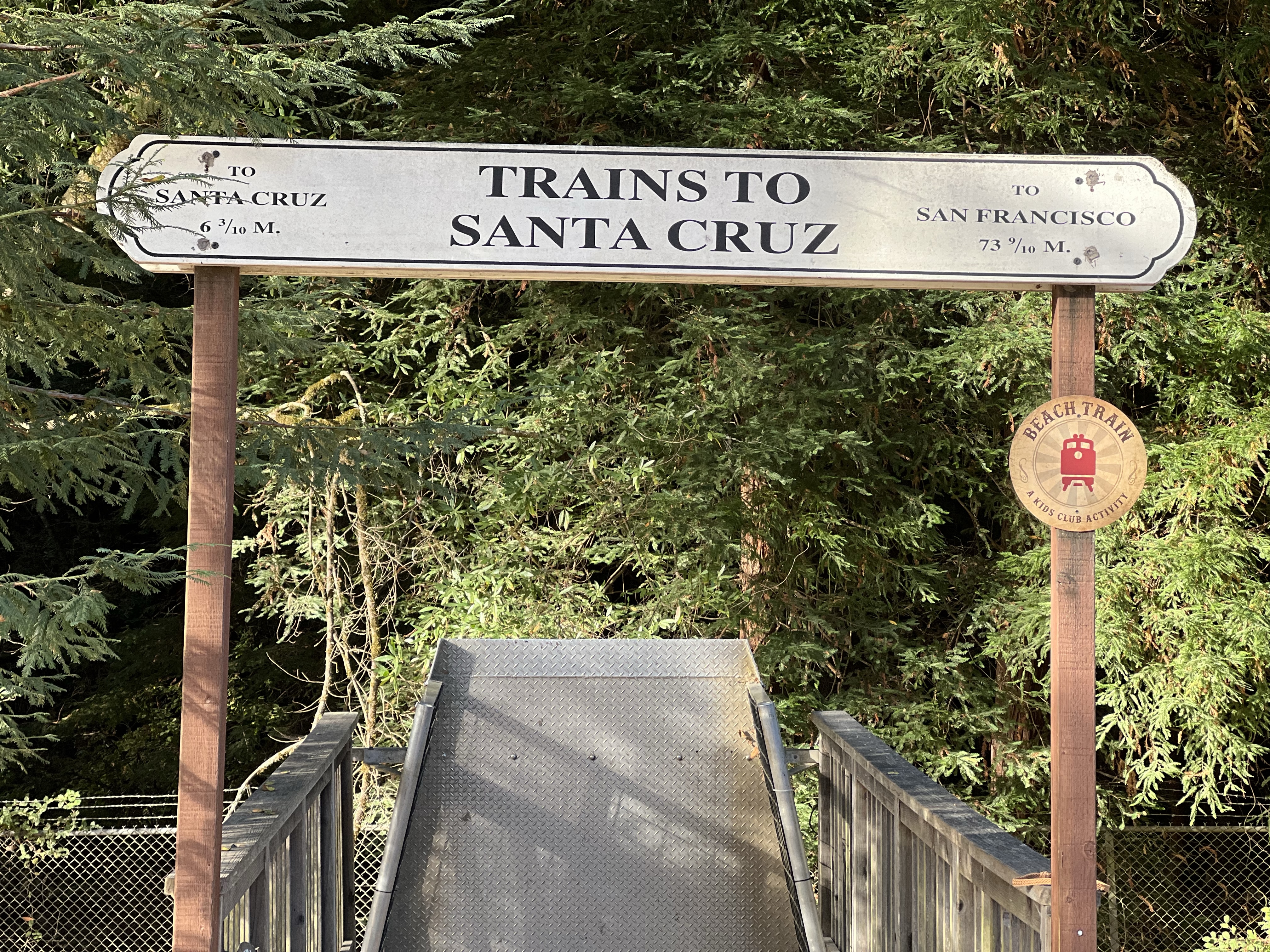
It was a long time ago when you could travel from Santa Cruz over the mountains to San Francisco by train.

Since the first run, the railroad has purchased two former Atchison, Topeka, & Santa Fe EMD CF-7s and rolling stock from back east. For the first part of the loco’s service they bore the livery of the blue and gold of Santa Fe. They are now painted redwood red.
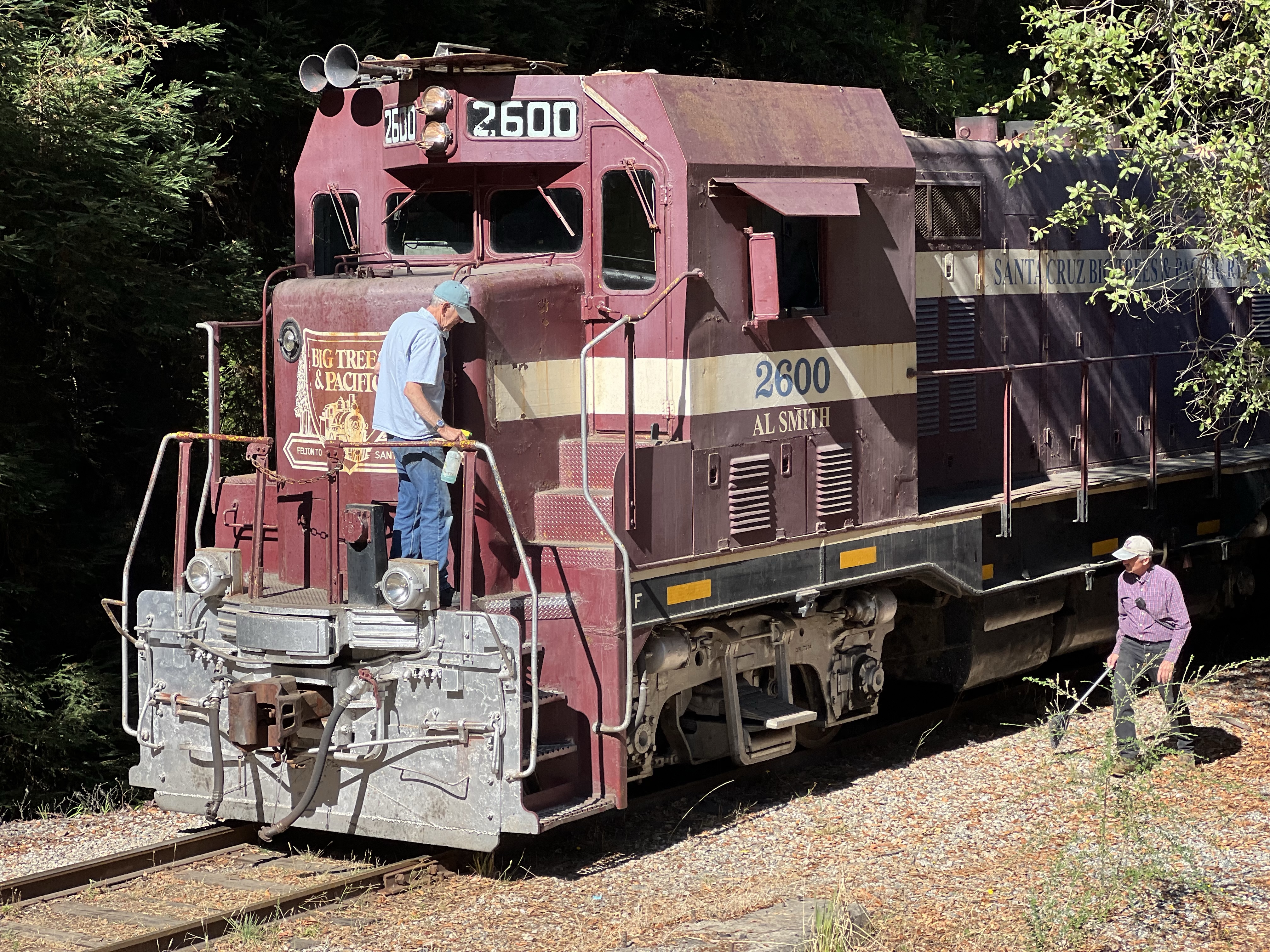
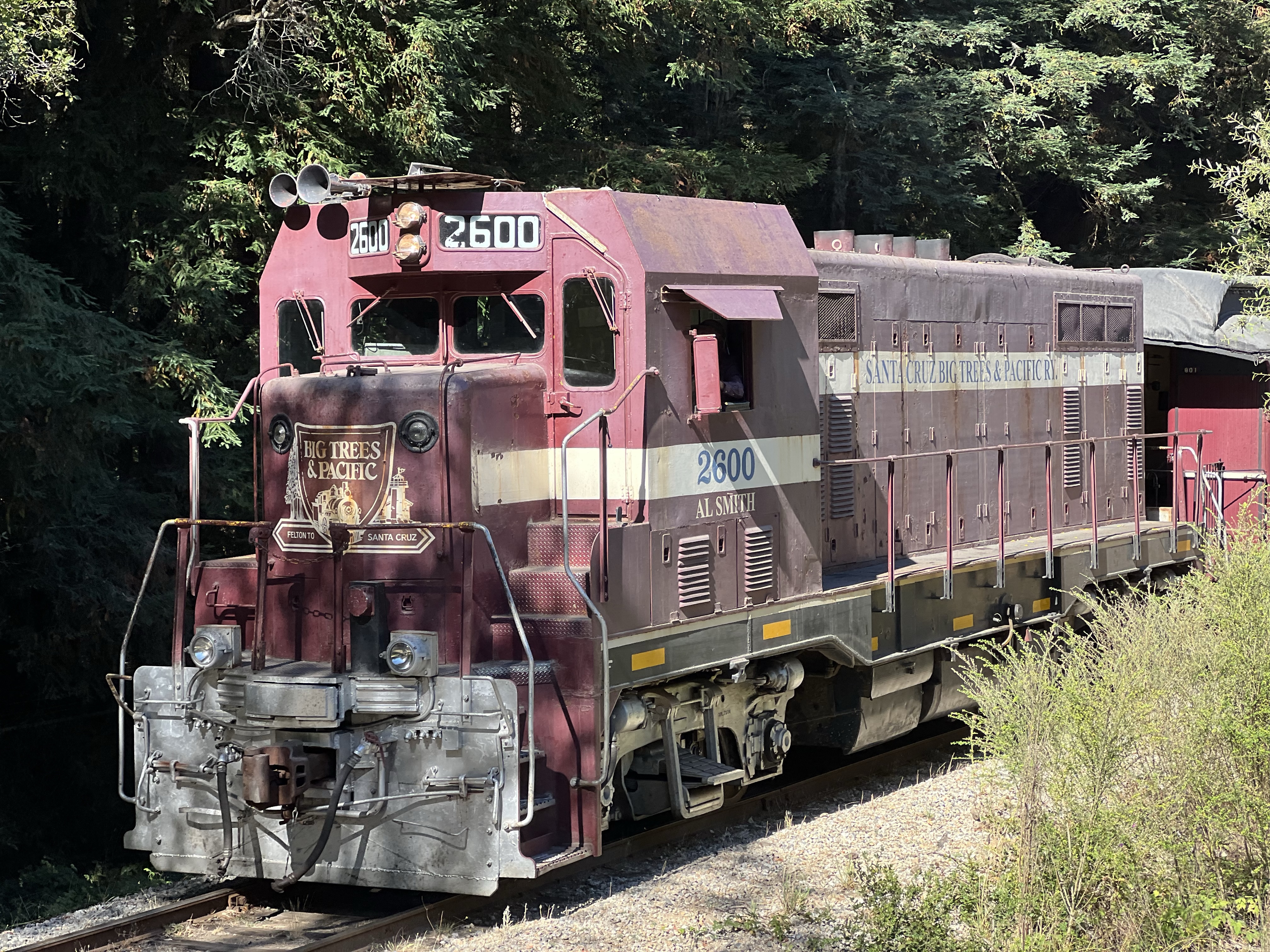
The crew prepares the EMD CF7 2600 for her eight mile run to Santa Cruz. Gotta keep the windows clean.
Locomotive 2600 starting out from Felton on its way to Santa Cruz. The train runs along the boundary of Henry Cowell State Park.

What is unusual on a tourist railroad is the amount of street running the railroad covers in Santa Cruz. Street running is where the trains runs on the same right of way as cars. The trains runs along Chestnut Street and Beach Street.
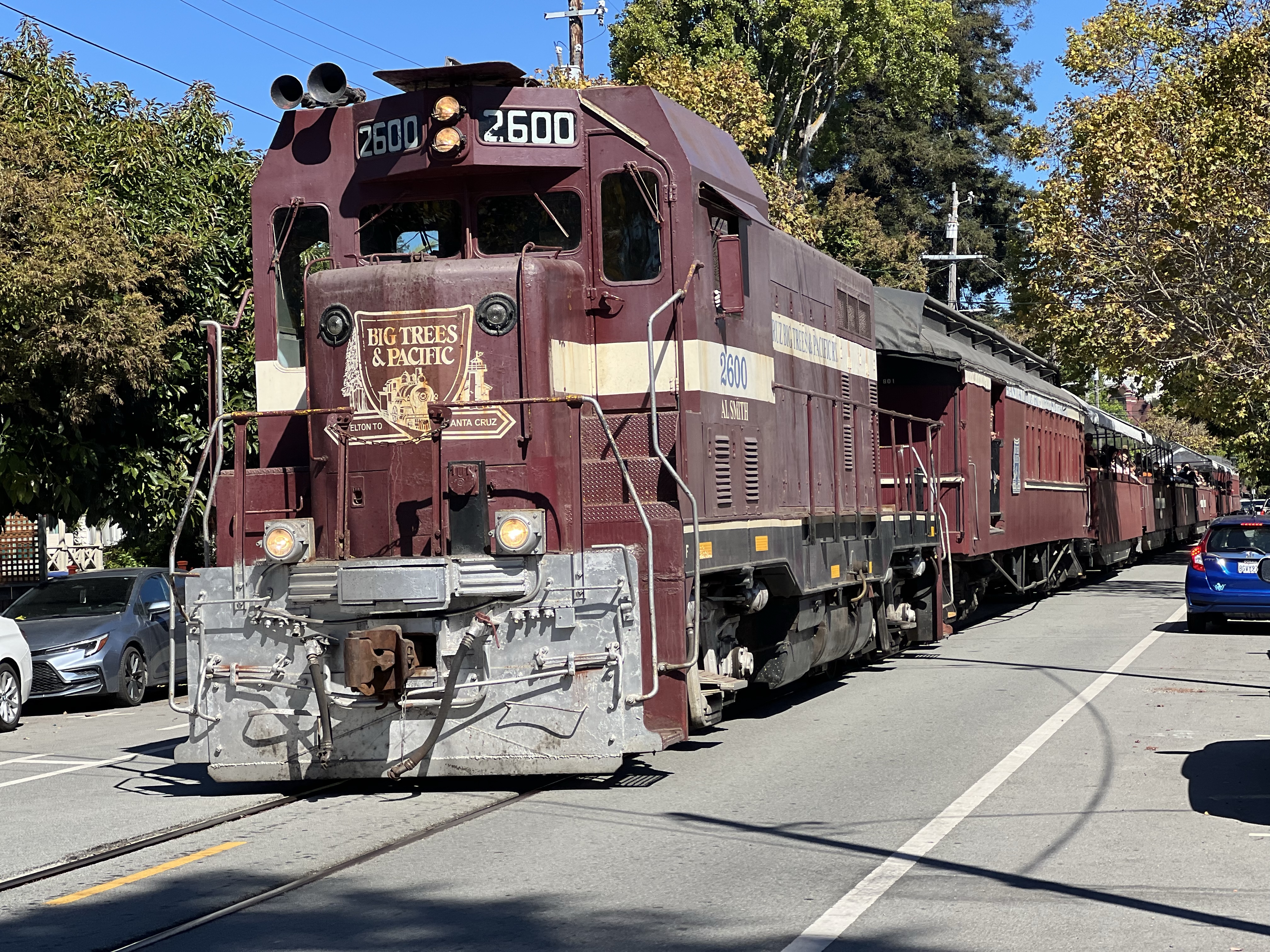
2600 with a nine car consist running along Chestnut Street. Note the blue car on the far right yielding to the train, good idea!
Image

Where the Rails End

Today the only way to get from Los Gatos to Santa Cruz is to drive over Highway 17. You can no longer take a passenger train. The last train ran in 1940.

On the other side of the Santa Cruz Mountains, you can board a train at the Santa Cruz Beach and Boardwalk and it will take you 6.8 miles north into the mountains to the town of Felton.

Detraining here you follow the line past the train shed and machine shop of the Roaring Camp and Big Trees Railroad and the old passenger and freight depot and then you cross Graham Hill Road and walk north on the rails toward Zayante, using the rusty rails as a guide.

The line begins to parallel Zayante Creek. The road builders used the watersheds of the Santa Cruz Mountains as a route to work up and down the summit. A good part of the Santa Cruz to Felton route parallels Santa Cruz County’s largest river, the San Lorenzo.

After a few miles you eventually come to a siding, this is the former stop of Eccles near Olympia Station Road. This was a flag stop as far back as 1901. There was once a passenger shelter (1913) and a freight platform.

The main line and siding at Eccles. The 310 foot siding was probably used to store lumber cars.

The station sign remained in place until 1942, when the station was decommissioned following the abandonment of the the railroad.

After World War II, passenger service was not resumed and the station shelter was torn down. The Eccles sign was saved and was on display at the Santa Cruz Museum of Art and History in downtown Santa Cruz.

Here’s where the Eccles station sign used to be at the Santa Cruz Museum of Art and History. It’s gone, like the rails that once reached over the Santa Cruz Mountains.

One a recent visit to the museum the sign was no longer on display.

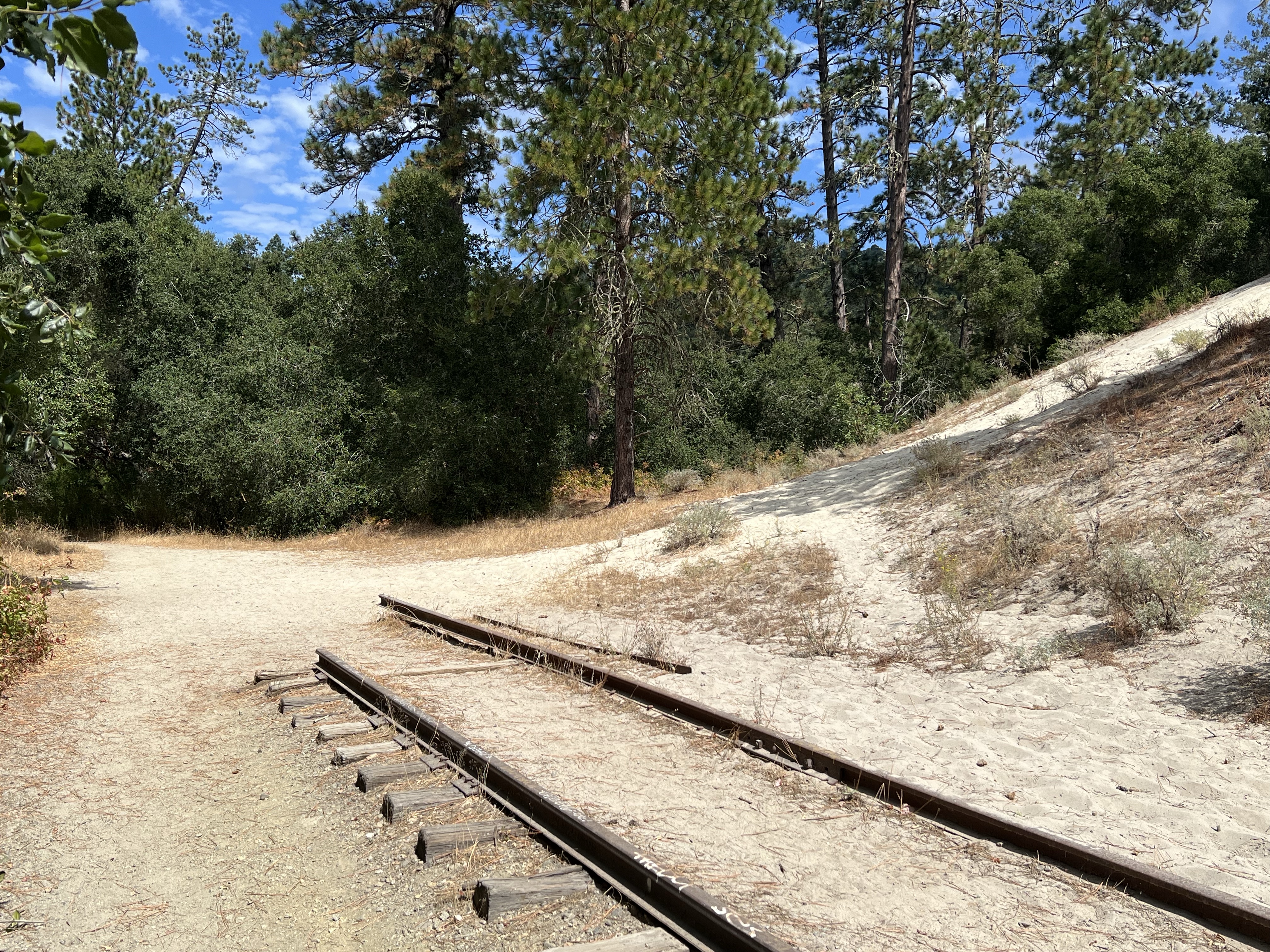
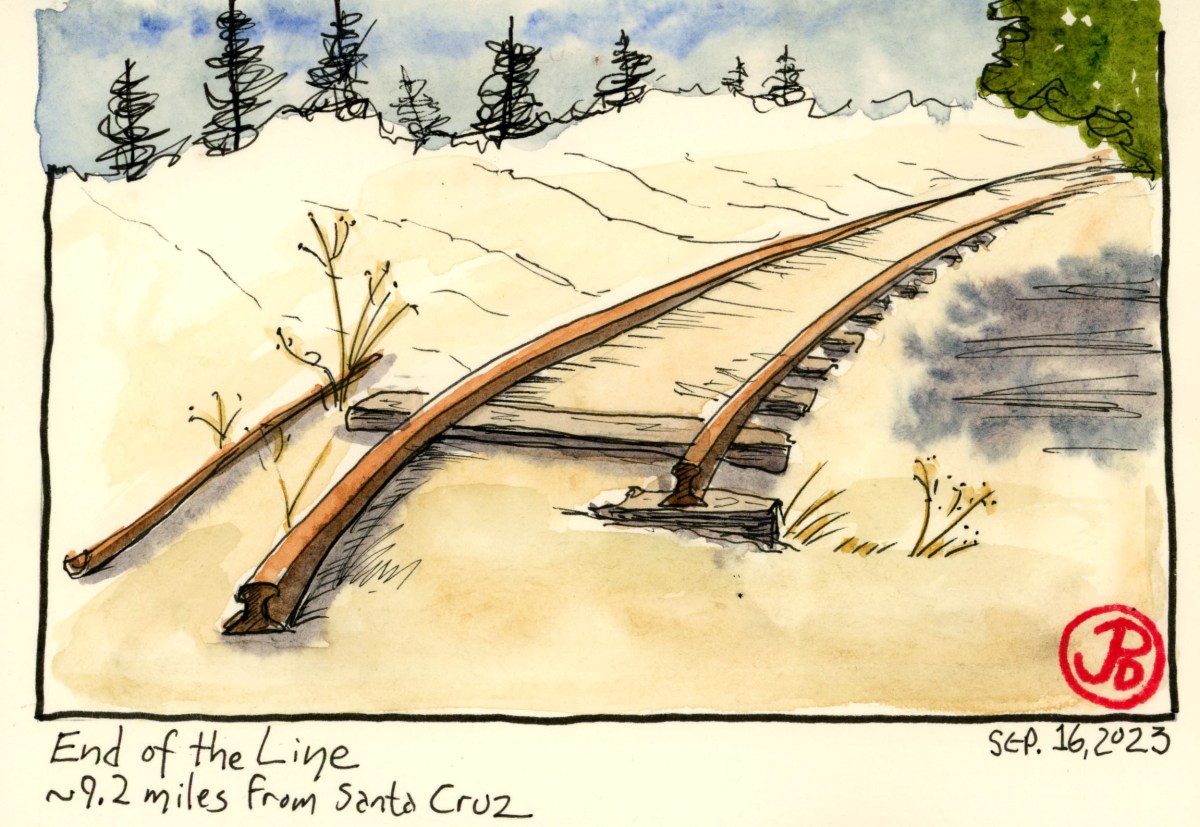
I continued north as the siding rejoined the mainline. And after about a five minute walk, the tracks end without much ceremony. There is no bumper stop to mark the end. And one tail is longer than it’s mate, 4 feet and 8 1/2 inches away.

This is the end of the line and as far north as the tracks go.

The end of the tracks and the end of an era.

Image

Shady Gulch Trestle

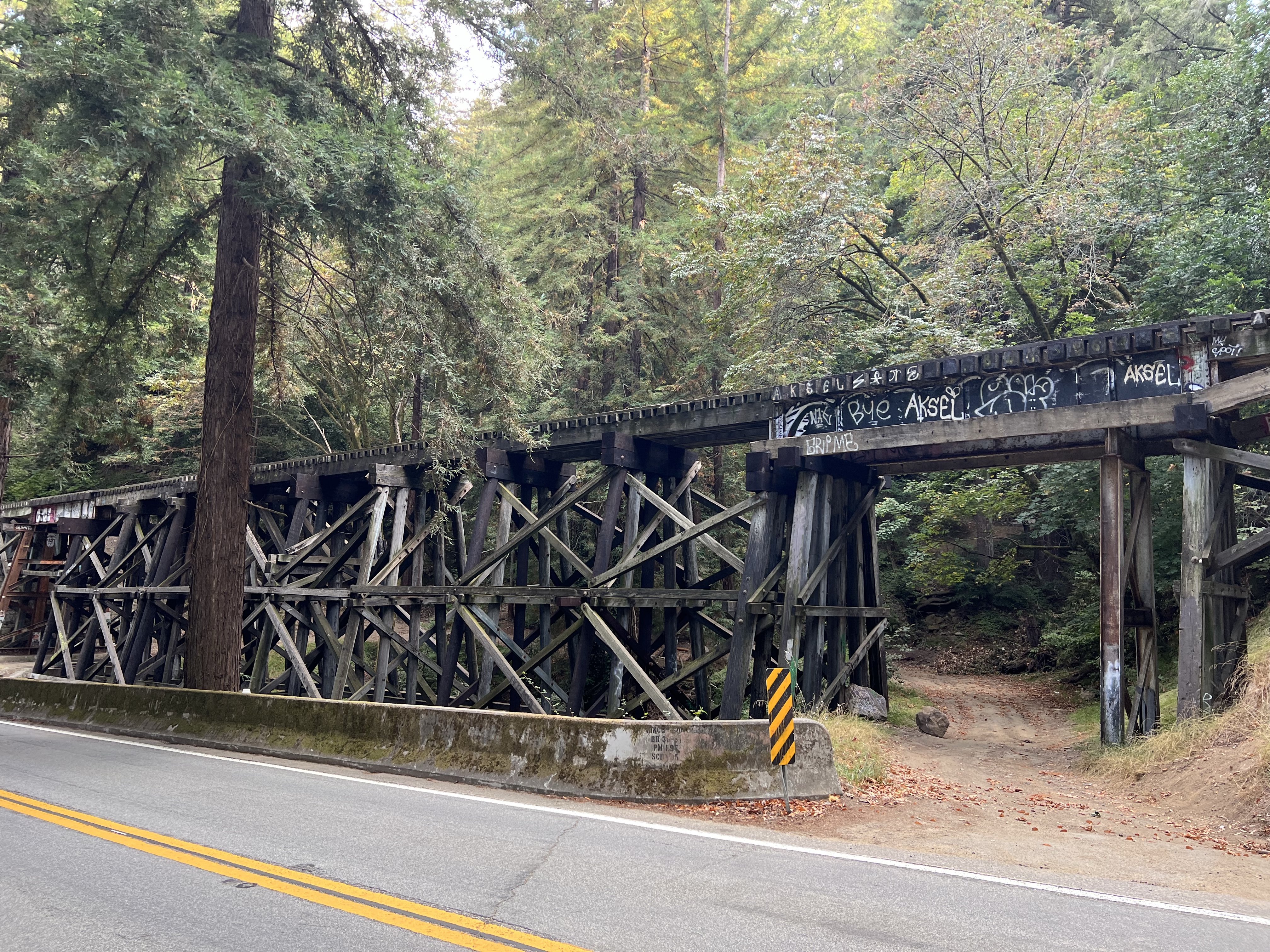
Just up the creek from my cabin is one of the remaining wooden trestles on the former South Pacific Coast Railroad (in 1887 the railroad became Southern Pacific). This is the Shady Gulch Trestle.

Not only does this trestle still exist but is still used for rail service on the Big Trees and Pacific Railway.

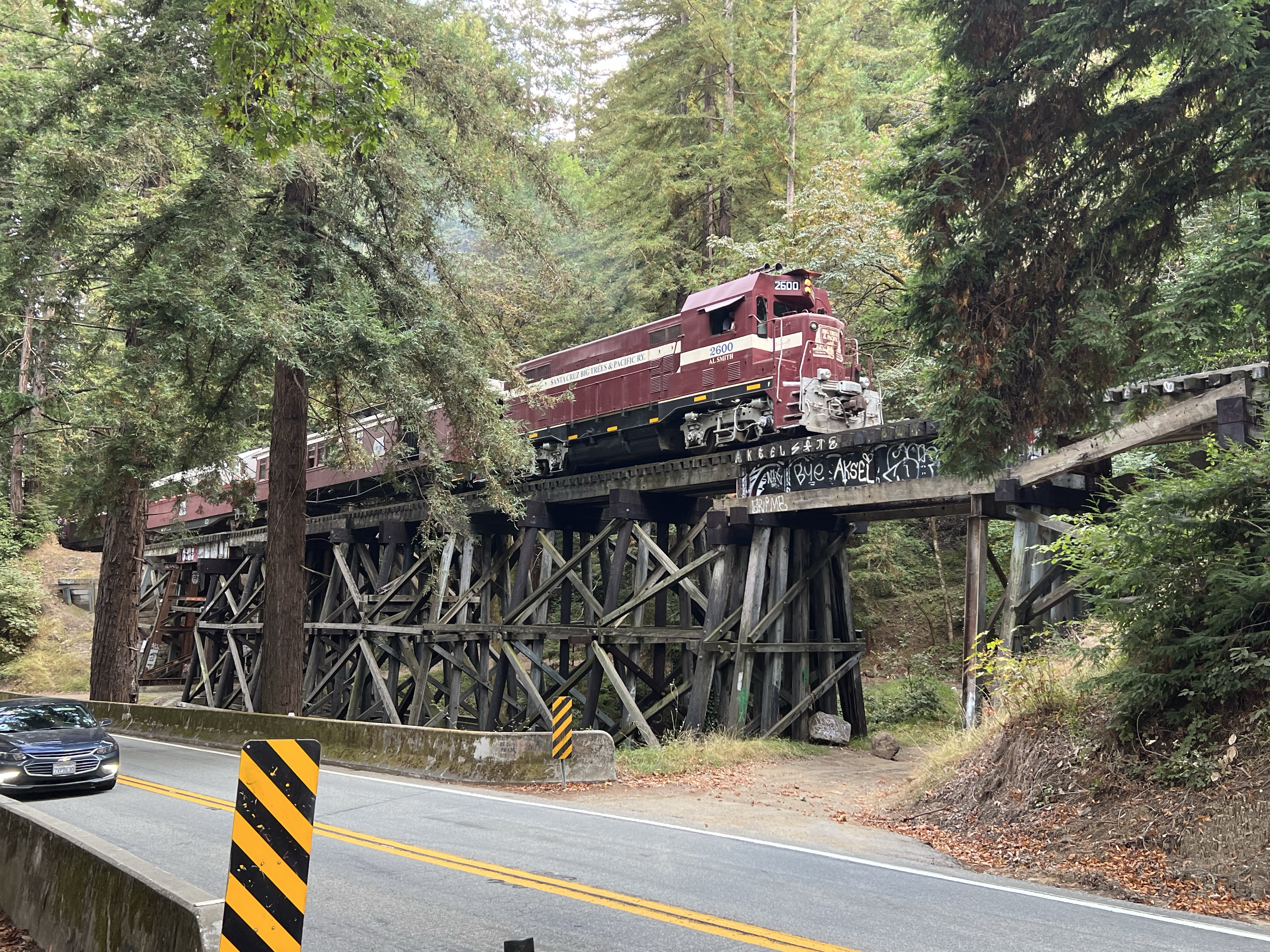
Shady Gulch Trestle with the Highway 9 concrete bridge (1930) in the foreground. The dirt road to the right is the former Eben Bennett toll road. The concrete highway bridge replaced the toll road.

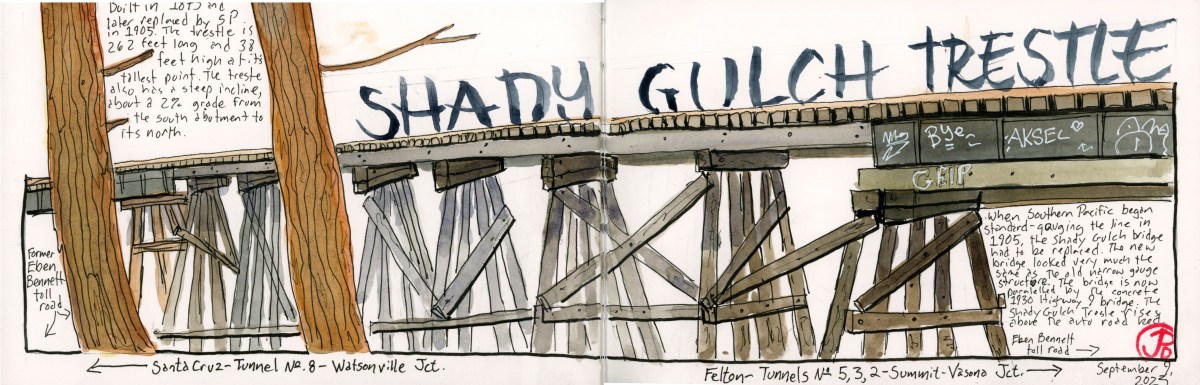
The original trestle was built in 1875 to span Shady Gulch. At the time, the line was built for the narrow gauge South Pacific Coast Railroad. When Southern Pacific acquired the line they rebuilt the trestle in 1905 to accommodate standard gauge.

The trestle of today very much looks like the original narrow gauge trestle of the late 19th century, sans graffiti of course.

The afternoon Felton-bound Big Trees and Pacific crossing the Shady Gulch Trestle. This tourist train tends to stop traffic on Highway 9.

My father spend his childhood summers in the cabin in the 1930, 40s, and 50s. He would tell me of the time a freight would be climbing the grade on the trestle on their way to Felton on a foggy summer’s morning. The wet track would cause the locomotive’s driving wheels to slip. And after many slips and the hyperbolic “chuff-chuff-chuff” of the stream exhaust, the train would back down the grade, sanding the track as they reversed. The freight would make another attempt, this time slowly with the sanded rails helping the drivers grip the steel. And off they went to Felton.

There is a single one car pull off on the north side of the highway bridge. I made three attempts to sketch the trestle but was foiled by a camper van that was camped out in the spot.

Was this guy going to spend the night here? On my third attempt of the day, in late afternoon, the van was finally gone and I was able to park, set up my sketching chair, and start my sketch of the trestle.

I timed my sketching time with the Felton bound afternoon Big Trees and Pacific train.