Image

Only Bear in Town

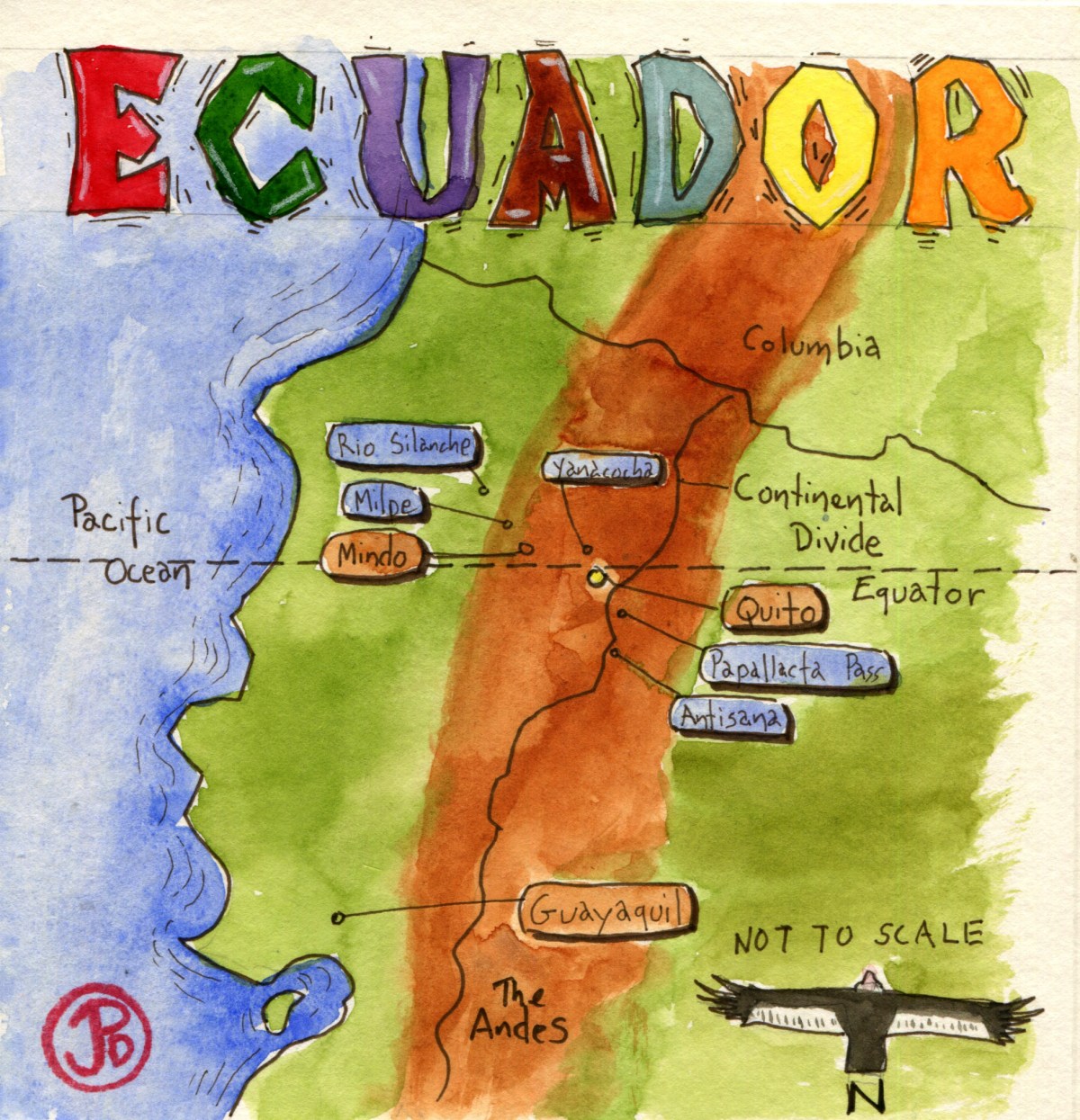
After heading back down the valley from Antisana with giant hummingbird, Ecuadorian hillstar, black-faced ibis, Andean condor, coot, gull, lapwing, teal, and ruddy duck on my World Lifelist, we headed north, skirting the edge of Quito.

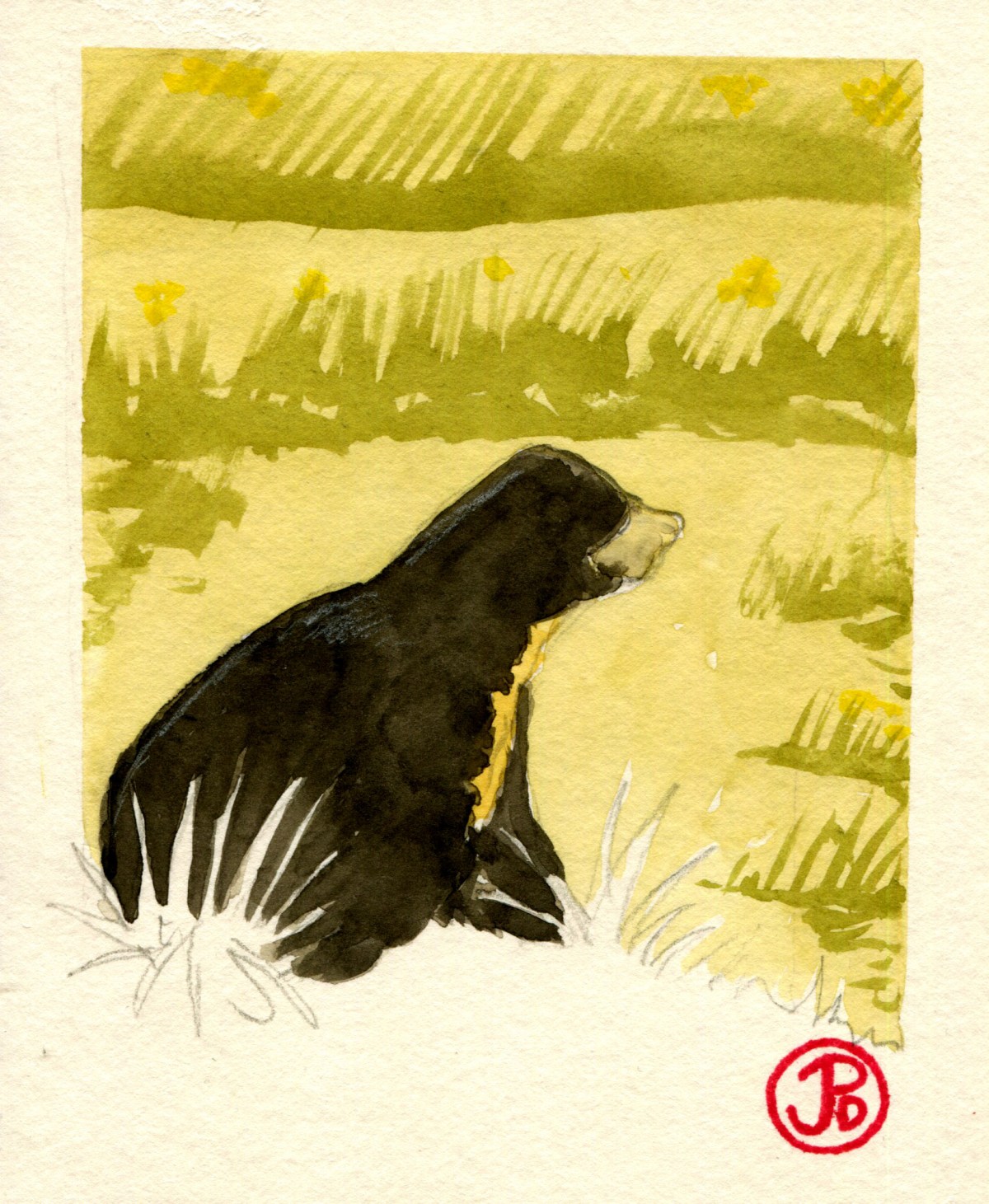
We turned northeast on the road that eventually leads to Amazonian Ecuador. Our destination was Papallacta Pass. Our quarry was one of the eight species of bear in the world and the one species that exists in South America: the Andean or spectacled bear (Tremarctos ornatus). This is the last of the short-faced bears. They are very tough to see in the wild and are classified as vulnerable due to habitat loss.

We scanned the mountainside to the right as we headed up to the pass. Gustavo instructed me to look for a “large, dark moving bush”. So I did and found nothing among the mountain side. We pulled over and scanned the landscape and the high grasses of the paramo were constantly washing in the Andean winds.

As we climbed towards the pass, we were at 14,000 feet elevation and the fog hemmed in the views and the winds cuts through every layer of clothing I had put on. The cutting winds and the difficulty I had breathing at 14,000 feet above sea level made me happy when we headed into the truck and headed back down the pass towards the capital.

As we drove down the pass, in a westerly direction, Gustavo kept an eye on the mountainside we had just passed on the way up, which was now to our left.

The pass was full of cars and trucks and our side of the road lacked shoulders or pullouts.

We were nearing the end of the valley where the mountainside fell away, when Gustavo said, “There’s something up there!”

He stopped the truck in the middle of the slow lane (must be perfectly acceptable in Ecuador) and we got out and peered at the mountainside.

“See if you can find it?”

I love a good challenge.

It didn’t take long to see the large, moving bush of a bear, foraging on the far mountainside. This bear closed out South American bears for me! It’s hard to see the continent’s one and only bear species and I enjoyed my amazing views in the late afternoon light.

I was a little more concerned with being flatten by a semi speeding down the grade. And I kept one eye on the bear and the other on downhill traffic.

Most trucks and cars swerved around our illegally parked truck (well in the States anyway) but one car slowed and pulled over in front of us. They were ecotourist vultures, coming to feed on our eco find. A couple from the Midwest and their guides exited and the guide inquired, “Bear?”

Gustavo pointed out the dark moving bush to the eco vultures and we now had two scopes on the bear.
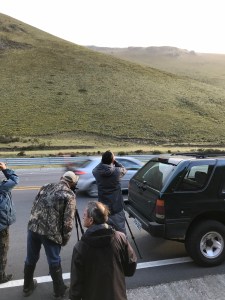
Eco Vultures looking at the dark moving-bush.

This was a great sighting to end an incredible time in Ecuador. I end the trip with 331 bird species and one very amazing bear species.

Image

A Tale of Two Condors

On July 10, 2018 I saw my last Andean condor wheel above the cliffs as I watched from the patio of the Tambo Condor Restaurant. I now had closed out the world’s condor species. It was not too hard to do because their are only two condor species in the world. But it require making a journey to Quito, Ecuador and then a drive up to Antisana Biological Reserve. They are both large, dark birds that soar in the air so they are not difficult to spot. But their rarity  and their majestic awesomeness make them a much sought after bird.
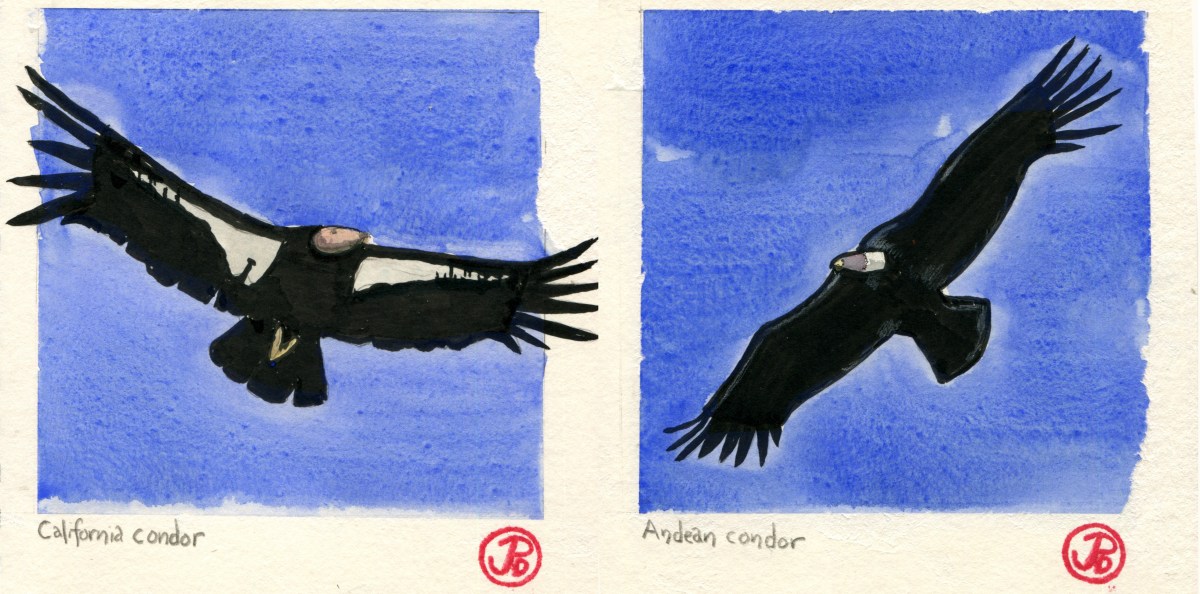
The two species of condor are only found in the western hemisphere on the continents of North and South America. The western United States is home to the California condor (Gymnogyps californianus) and the western part of South America, along the spine of the Andes mountain range, is the domain of the Andean condor (Vultur gryphus).

When I returned to the States I still needed a condor fix and I knew that they were only an hour and a half drive away from my cabin in the Santa Cruz Mountains.

So on August 2, 2018 I left my cabin just before 7:00 AM, my destination was Big Sur.

The Big Sur coast is the best place to see the California condor in California. While most tourists stand by the roadside, facing the ocean, I am usual faced the other way, scanning the ridges for North America’s largest bird.

The best place to look for the condor in the Big Sur area is Grimes Point. It was here in June of 2009 that I saw the most condors I have ever seen.

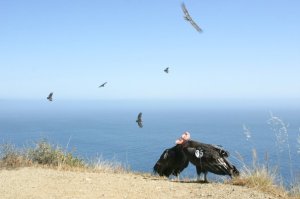
California condor on the Big Sur coast from Grimes Point in 2009.

June 22, 2009. In this photo from Grimes Point shows an incredible seven California condors!

After birding at Andrew Molara State Park I headed further south. riding the ribbon of road that has been called the most scenic drive in the world. After cutting into a canyon, Highway 1 pulled up out of the canyon and headed south again. At the top was the pullout for Grimes Point.

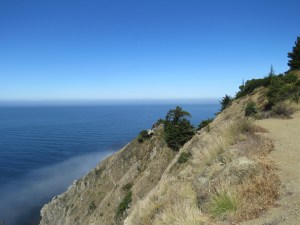
Grimes Point looking north.

I pulled off at the pullout at 10 AM and began my condor watch. The sky was clear and a low haze was skirting the coast below. There was a southernly movement of swallows and a few turkey vultures soaring up on the ridges. But no condor, not yet.

I looked north at the A-frame house that clung to the point and at 10:05, an adult condor appeared from around the point and flew south below me! It is always amazing to see these large birds in flight and to see these condors in close proximity and from above, is an unforgettable experience!

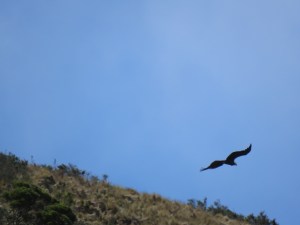
My second condor species in less than 30 days, California Condor below Grimes Point.

In the less than 30 days I had both species of condors in my binoculars in two very different locations, one at sea level and the other, high in the Andes at 13,000 feet. Almost 4,000 miles separated these to signings but they seemed to bring the world closer together,

Image

Andean Condor

There is one bird that is held in such high esteem that it is the national symbol of Argentina, Bolivia, Chile, Columbia, Ecuador, Peru, and Venezuela. It is also the national bird of Bolivia, Chile, Columbia, and Ecuador.

It is also one of the largest flying birds in the world with a wingspan of ten feet and a bird that was on the top of my Ecuadorian wish list, so much so that I took an extra day and hired a guide to take me high up in the Andes, and hour and a half from Quito. It is the Andean condor!

My guide Gustavo picked me up at my lodging at the Puembo Birding Garden and we headed southeast, our destination: the Antisana Ecological Reserve. The Reserve is centered around the 18, 714 foot volcano Antisana. The high Andes are perfect place to see the true giant of the Andes, the Andean condor.

The cloud hidden peak of Antisana. At 18,714 feet is is the fourth highest volcano in Ecuador.

After winding our way up from Quito on streets that got progressively narrower and more rustic through small villages we stopped for a mid morning snack and caffeine break at the appropriately named Tambo Condor Restaurant.

Condors, this way!

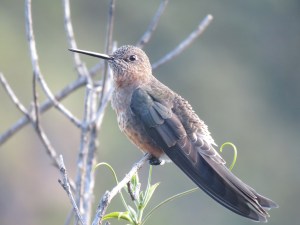
We stepped out on the patio and watched a giant hummingbird at the feeder. We were here to see another giant. Gustavo focused his scope on a distant smudge that was just to the left of the thin cascade of white that was falling from the cliff.

“There’s your condor,” he announced as he stepped back.

Centered in the scope was an adult condor, preening on a cliff ledge. Lifer! This was just the opening act. Looking down the valley, with the sprawling capital in the distant haze, three condors appeared on the wing. They rose up from the valley and flew above the cliffs, one condor coming in for a cliff landing.

Over the course of out time in Artisan we saw about eight condors. A true treat to see this slowly declining species and a symbol of the Andes Mountains.


Image

Two Toucans

Toucans are some of the most iconic birds of the Nootropics, if not in the whole world of birds. Their likeness has been used to promote ecotourism in the tropics as well as selling Irish stout in adverts. But nothing beats seeing a wild toucan in the “feather”.

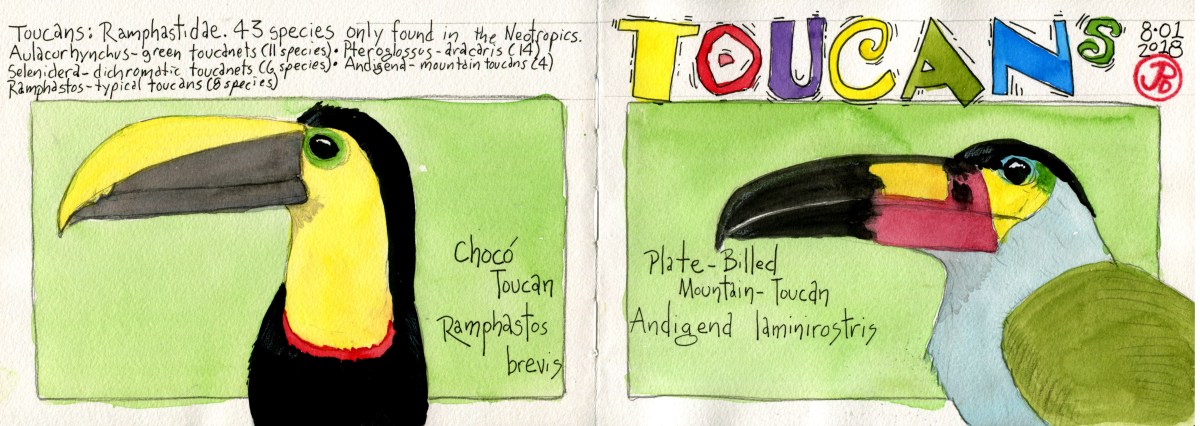
There are 43 species of toucan in 5 genera that only occur in Central and South America. The five genera are: Aulacorhyachus, green toucanets (11 species), Pteroglossus, aracaris (14 species), Selenidera, dichromatic toucanets (6 species), Andigena, mountain toucans (4 species), and Ramphastos, typical toucans (8 species).

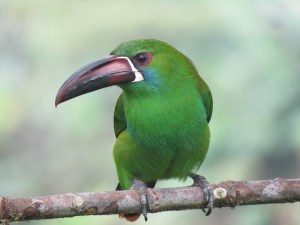
The Americas have cornered the market of these colorful, big-billed birds and on this trip to Northwest Ecuador, I have three species on my wishlist: crimson-rumped toucanet, Choco toucan, and plate-billed mountain-toucan. Out of all 1,600 birds that occur in Ecuador only one graces the cover of the seminal field guide, Birds of Ecuador. This was the bird that looks like it should be advertising sugar coated cereal to the youth of North America; this is the plate-billed mountain-toucan.

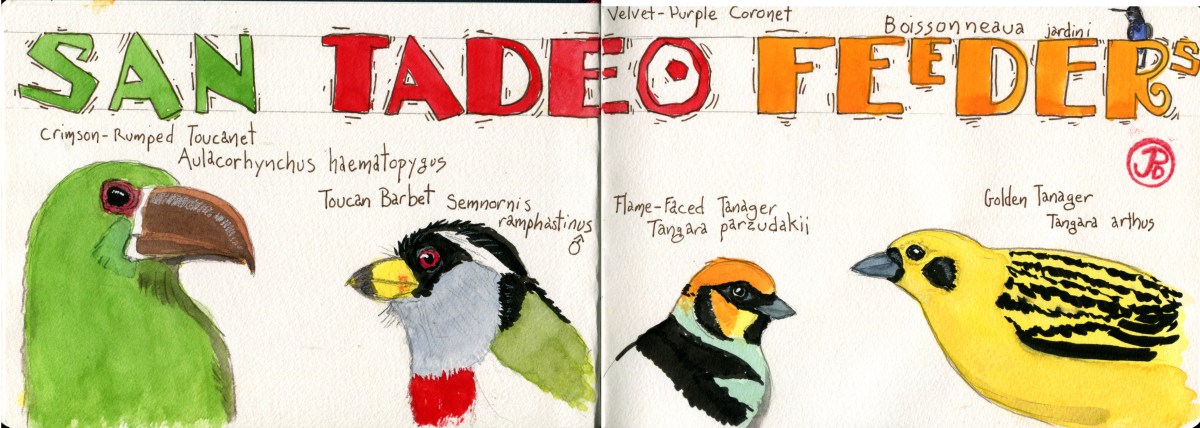
The crimson-rumped toucanet proved to be an easy bird to add to the list because it is a regular visitor to fruit feeders and we saw our first pair at the feeders of San Tadeo.

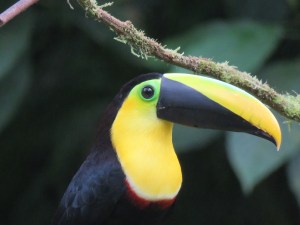
Out first sighting of the endemic, Choco toucan was in the lowlands at Rio Selache. Our views were far off and the toucan was backlit leaving me wanting better views.

A few days later at the fruit feeders of two Choco toucans flew in to have some banana. This time the toucan was 15 feet away!

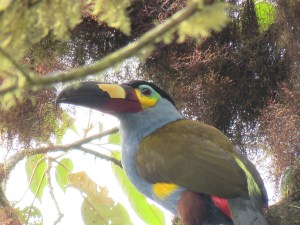
A few days later, while heading up the dirt road to Bellavista, we heard the distant call of the plate-billed mountain-toucan. This was not a very satisfying view of this colorful toucan and we hoped to have better views as we headed up the road but we didn’t.

It wasn’t until we were heading back in the afternoon that two mountain-toucans crossed our path! We stopped the bus and got the birds in our bins as they foraged in the top canopy. This, the poster bird of The Birds of Ecuador was finally ours!


Image

The Cock-of-the-Rock and the Angel of Peace

There was one experience that I was really looking forward to in the Mindo Valley.

It was a visit to the legendary Angel Paz and his property called Refugio Paz de las Aves. Over the past ten years Angel has developed a relationship with a few species of hard to see antpittas. He is afterall known as the “antpitta whisperer”.

The Angel of Peace, feeding three dark-backed wood-quail.

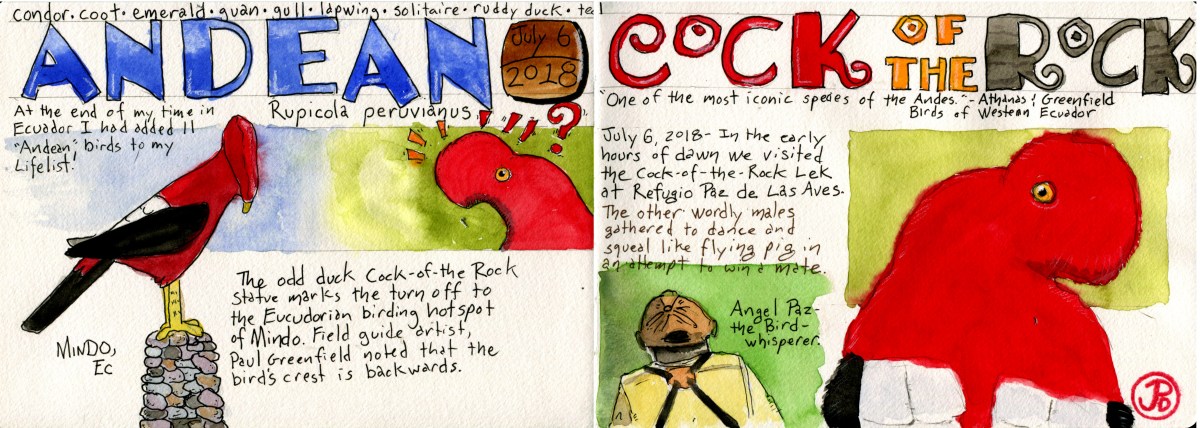
Before we could see Angel coax antpittas out of the forest, we first visited the Andean Cock-of-the-Rock lek on his property. At just after 6 AM, we headed down the narrow path that ended in a blind. As we walked down the hill we could hear the otherworldly calls of the displaying males. The trees just down hill were filled with the iconic Andean specialty as they called and danced in there riotous plumage for the drabber but unseen female. The show lasted for almost an hour before the males dispersed to head off to start their day.

Male Cock-of-the-Rocks displaying at the Refugio Paz de las Ave lek.

The first bird that Angel conjured up was a cloud-forest pygmy-owl. We then headed to another part of his property and three dark-backed wood-quail where waiting by the side of the road for us. We then moved on and with the help of his brother Rodrigo, our search for the antipittas was to begin in earnest.

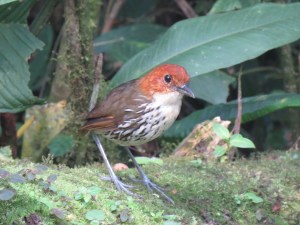
We walked a short way down a path and Rodrigo headed off trail and downslope. He whistled into the forest and called, “Andreita. Andrea. Venga, venga, venga!” Rodrigo repeated this and within five minutes “Andeita”, a chestnut-crowned antpitta appeared at the base of a log. Lured by worms, the antipitta made it’s way up the log and was now ten feet downslope from our position.

After getting great views we headed a little further down the trail and Rodrigo summoned “Williamina” a yellow-breasted antpitta from the forest. This shy, retiring bird stayed in view for a short time, taking the worms and then disappearing into the forest.

At the end of our unforgettable visit to Refugio Paz de las Aves, we had ticked almost 70 species of birds including two species of antpittas, the iconic Andean cock-of-the-rock, a common potoo with a chick, and the cloud-forest pygmy-owl.


Image

A Surprise at the Feeders of San Tadeo

On the Fourth of July we where going to see some Ecuadorian fireworks at the fruit and hummingbird feeders of San Tadeo in the Mindo Valley.

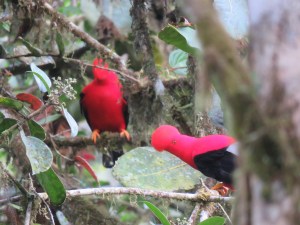
These feathered fireworks mainly came in the form of tropical tanagers. Golden, flame-faced, blue-gray, golden-napped, back and blue-capped tanagers. Added to the show where crimson-rumped toucanets and red-headed barbets. But the most colorful explosion came in the form of a pair of toucan barbets.

This barbet is often described in field guides as “unmistakeable” and one tropical birding guide described the toucan barbet as, “a rainbow flavored snowcone.”

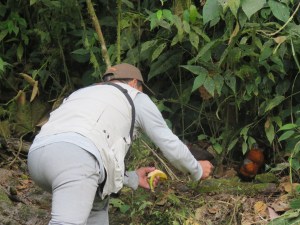
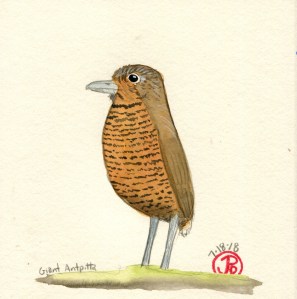
While our group was enjoying the firework display, some movement on the ground caught my attention. What I saw was what looks like a large dark rufous potato on sticks and I knew immediately what bird this was and I called out: “Antpitta!!

I later found out that, our guide Luke, at first, thought that I had misidentified the potato bird, that is, until he got his bins on the bird.

“Giant antpitta!” he announced to our group, proclaiming it’s existence.

All eyes were on the bird as it sulked and paused, sulked and paused, like a snowy plover on Ocean Beach.

The reason for the initial disbelief is that the giant antpitta, despite it’s name, is one of the hardest birds to see and see well in the Mindo region. If you don’t count the unusually tame giant antpitta at Refugio Paz de las Aves. In fact, no one had ever seen this bird at San Tadeo, including the owner and Paul Greenfield (the illustrator of The Birds of Ecuador).

We were all able to get views of this rare treat as it sulked behind the water feature, stopped and paused, then struck at something in the leaf litter. It then disappeared from view, heading into the leafy cover downslope.

We then headed downslope to the hummingbird feeders that offered an amazing view of Mindo Valley with the small town of Mindo nestled in the center of the valley.

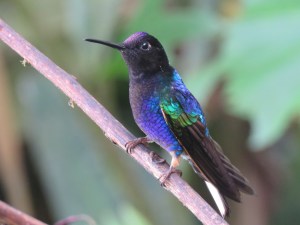
It was at the hummingbird feeders that we first saw what Luke described as his favorite hummingbird in Ecuador. And the velvet-purple cornet is an absolute stunner!

Image

Yanacocha Reserva

July 3, 2018

In the early hours of dawn we threaded through the sprawling outskirts of the capital city of Quito, climbing up from the Andean plateau to the highlands. Outside the bus, people where coming to life, taking advantage of the year round 12 hours of daylight. We were taking advantage of the early light to add some birds to our Ecuador list.

In the morning we had breakfasted at the Puembo Birding Garden (22 minutes from the airport), and were now on route to Yanacocha Reserva at 11,000 feet above sea level. This would be one of our highest birding locations on our nine day tour.

After an hour and a half drive, the last part of which was ascending a rutted dirt road that looked scarcely wide enough to accept the width of our bus, we pulled into the parking lot of the reserve. The bus doors opened and we stepped out into the chilly mountain, morning air.

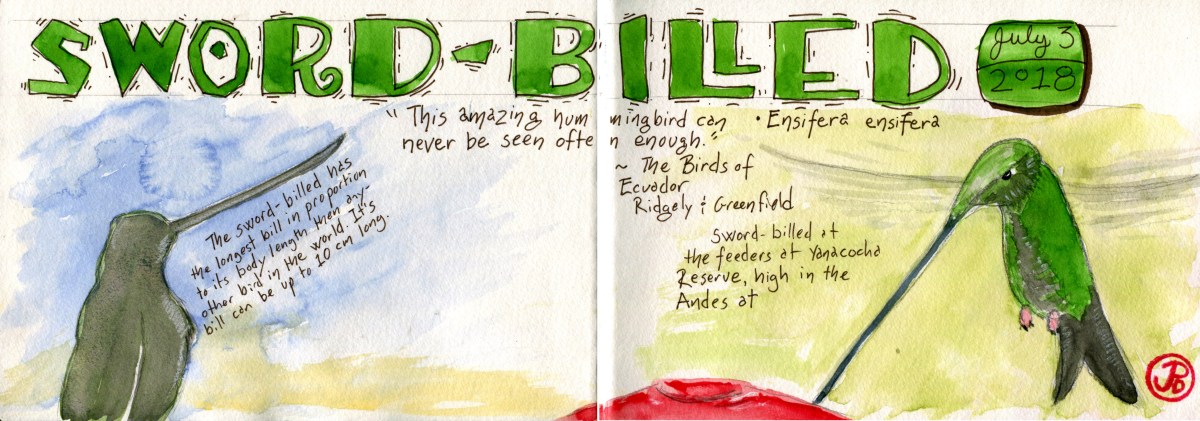
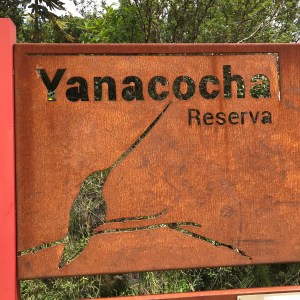
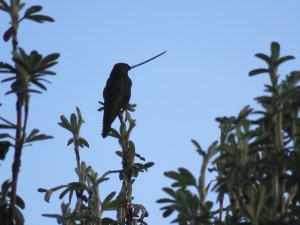
Yanacocha was established as a private reserve in 2001 by Fundación Jocotoco and now encompasses 1,200 hectacres. On the sign to the reserve was the silhouette of one of the key hummingbirds to see an Yanacocha and we were 10 yards down the trail to the hummingbird and banana feeders when our guide, Luke, spotted our target bird, silhouetted agains the high Andean air, perched up in a bush.

“Sword-billed!”

The sword-billed hummingbird (Ensifera ensifera) is a unique member of the hummingbird family, in fact it is the only member of it’s genus. The sword-billed has the longest bill length compared to body size than any other bird in the world. Their bills can be 10 cm long, making it impossible to preen itself but making pollen gathering possible from flowers with longer long corollas, in accessible to other hummingbirds.

The sword-billed is ours!

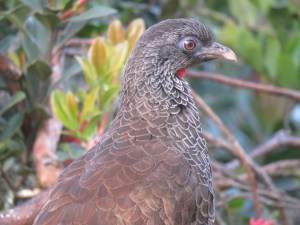
When we approached the feeders, three Andean guans were in attendance. This would be the first of 11 birds with “Andean” in it’s common English name that I added to my world birdlist.

After watching the feeders we proceeded down the level trail to the hummingbird feeders that were about a mile from the entrance. We observed more Andean gems, including more sword-bills.

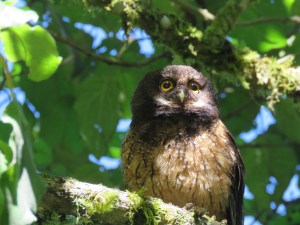
We then headed further down trail to see if we could find the owl that had been observed a few weeks before, hunting hummingbirds at the feeders. Luke played a call and within second there were three white-throated screech-owls above our heads. One landed on a branch eight feet directly above my head. A raise my camera to to eye and took the following photography. It lingered long enough to do a quick sketch but in the moment my pencil and sketckbook stayed in my pocket.


Image

Birding Andean Ecuador

Why bird Ecuador?

A few numbers and comparisons can help answer this simple question.

At 109,484 square miles, the country of Ecuador is roughly the size of the state of Nevada. In fact there are six states in the United States that have a greater area than Ecuador, including my home state of California.

While Ecuador is a small South American country (it ranks ninth out of the twelve countries by area), it has a astonishingly high 1, 600 bird species that have been recorded within it’s borders. Six species are endemic to the mainland and the Galapagos Islands has a massive 30 endemics.

Just to give some perspective,  Ecuador has twice as many bird species than the United States and Canada combined; Twice as many species as the Europe.

In this small country 132 species of hummingbird have been recorded in Ecuador.

And it is not just the sheer number of birds that makes Ecuador such an enticing destination for a world birder, there are the superlatives!

One can start with the National Bird of Ecuador, the largest flying bird in the world, rare the Andean Condor. You can also find the largest hummingbird in the world, the giant hummingbird at the feeders of the Andes and the hummingbird with the largest beak in the world.

The giant hummingbird, Patagonia gigas.

So as my Copa flight was on final approach to to Andean city of Quito, I was looking forward to the incredible mega diversity of this diminutive South American nation. Buenos dias Ecuador!

Image

A Teacher’s Note to a Student

When my childhood home was put on the market, my brother and I went through the house to see what we would save, what would be donated, and was was destined for the landfill. This was a bittersweet and laborious process, both physically and mentally.

Under my parent’s bed was an oblong cardboard box. I pulled the box from underneath the bed and opened the lid, expecting to find sweaters from the late ’70s, early ’80s and other winter clothes. But instead I found much, much more!

In the box was a collection of report cards, drawings, writing samples, a battery of assessments about me, and other paperwork from the academic careers of the Perry brothers that my mother had collected and saved over our time in school and kept in the oblong box under the bed that had been accumulating a thick patina of dust.

I was seeing much of this for the first time and I was seeing my report cards and work samples and independent assessments through the eyes of an educator. As if this was someone else entirely. How would this boy do in my class? I wondered. I really looked like quite a student! (Insert irony here!)

The discovery revealed much about myself at the time I was in elementary school, which at the time was kindergarten through 6th grade.

One discovery that made a deep impact on me and my teaching was a single piece of paper that was neither a report card, assessment, or sample but a neatly handwritten note from my 6th grade teacher, Mrs. Noether.

I had no memory of this note, which I received close to 30 years before. I was astonished by its openness and candor. It was a message to a student, from a teacher. One sentence had a deep resonance with me. Mrs. Noether writes, “It took me a while to get to know you this year but to know you is to appreciate you and your special talents.” I’m not sure what “special talents” she was alluding to, it certainly wasn’t math but I bet it was my artist talents.

Since I discovered that personal note, written by my sixth grade teacher, I decided to write a letter to each of my 30 students in my first year teaching fourth grade.

I bought note cards and began the daunting writing process. These notes were not report card comments or anything about their academic progress, they were notes from the heart; a message from a teacher to their student. On one card I did a quick sketch. I couldn’t help it. I paused. I just couldn’t leave it at that, I had to add some watercolor, even though the card stock was not the best paper for watercolor. Now here I found myself in a bit of a quandary. Do I stop and restart the card without an illustration or do I illustrate all 30 cards? The choice was clear, I illustrated all the cards with a unique illustration that was related to each individual student. That was five years ago and I have done it every year since.

I start the process in early May and I had trouble starting this year. It can be hard to start a large undertaking and this year I needed a kick start to put the process in motion.

That kickstart came in the form of a former student, now in 6th grade, who was volunteering in my room for her community service hours. Just when my motivation was down and I found it hard to take that first step forward, she mentioned that, not only had she saved the card that I have written and illustrated to her, the image was now framed and hanging in her room. This was all I needed to get me started!

Educators strive to make an impact, to reach all of our students, to connect. Most of the time you don’t know that you reached a student and made that impact. Sometimes teaching can be a thankless profession but there are those times when you are aware that you have make that connection and created that impression. This is what keeps you going, this is the fire that fuels an educator.

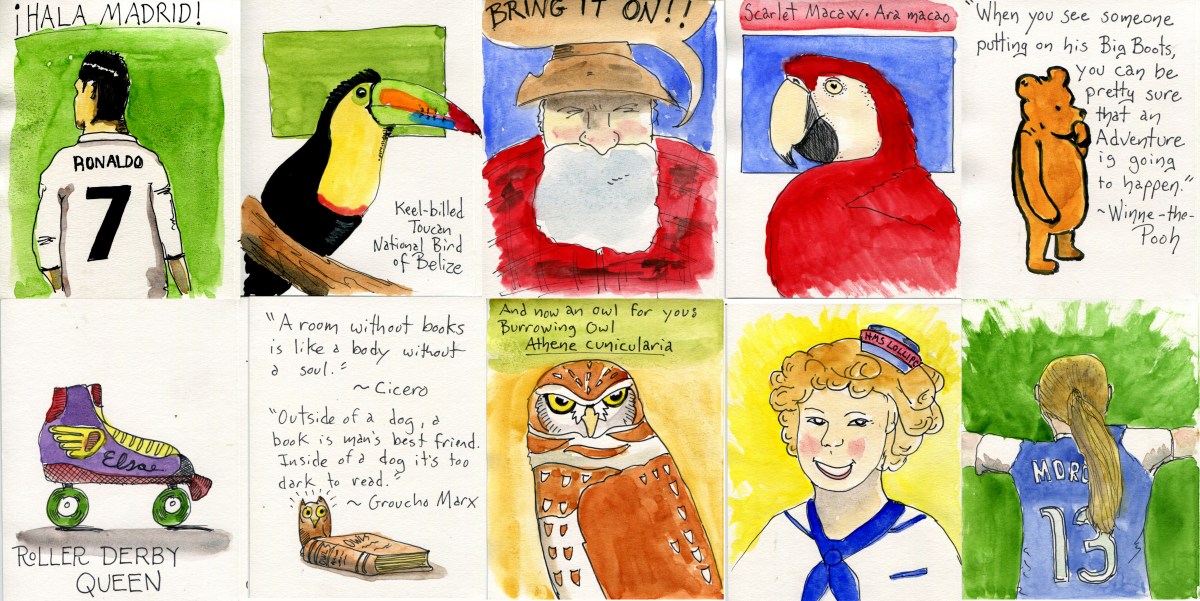
The feature image is a selection from the 28 cards I wrote and illustrated to my class this year. From roller derby to Winnie-The-Pooh, burrowing owl to keel-billed toucan, Shirley Temple to Cristiano Ronaldo. These images are as diverse as my students.

I can only hope that, 30 years from now, they too will find one of my cards and reflect and remember their time in my class as I did from finding a handwritten note, from a sixth grade teacher to her student.

Image

Toucans and Coffee

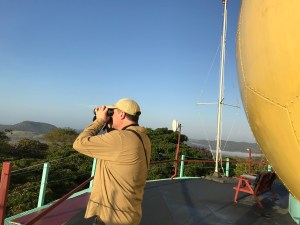
Dawn at the Canopy Tower started with coffee on the observation deck.

Early morning is the best time to see birds at the Canopy Tower. And the mammals can also be active. Both were actively foraging and close to the tower.

Coffee and TVs, on the observation deck of Canopy Tower.

The Canopy Tower rises above the treetops of Semaphore Hill, meaning that most birds where at eye level or below. No strained necks here, unless you were spotting a raptor directly above. But at this time of the morning there were few raptors on the wing.

As the sky lighten, the forest around the tower came alive. The sift between the nocturnal and the diurnal was underway.

In the front of the tower was a cecropia tree that reached to the heights of the tower. The tree was in flower and it attracted both howler monkeys and Geoffrey’s tamarins.

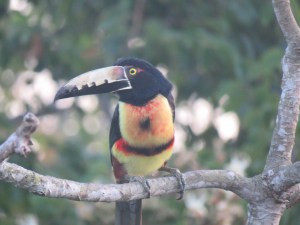
The real stars of the show where the two species of toucan that visited the cecropia in the mornings: the keel-billed toucan and the collared aracari. I had great eye level views of both species, which remains poster birds of the lowland rain forest perhaps none more so than the keel-billed (Ramphastos sulfuratus), the National bird of Belize. This large multicolored billed bird is the quintessential toucan of the tropics. A google images search for the word “toucan” yields many images of the keel-billed toucan over other species.
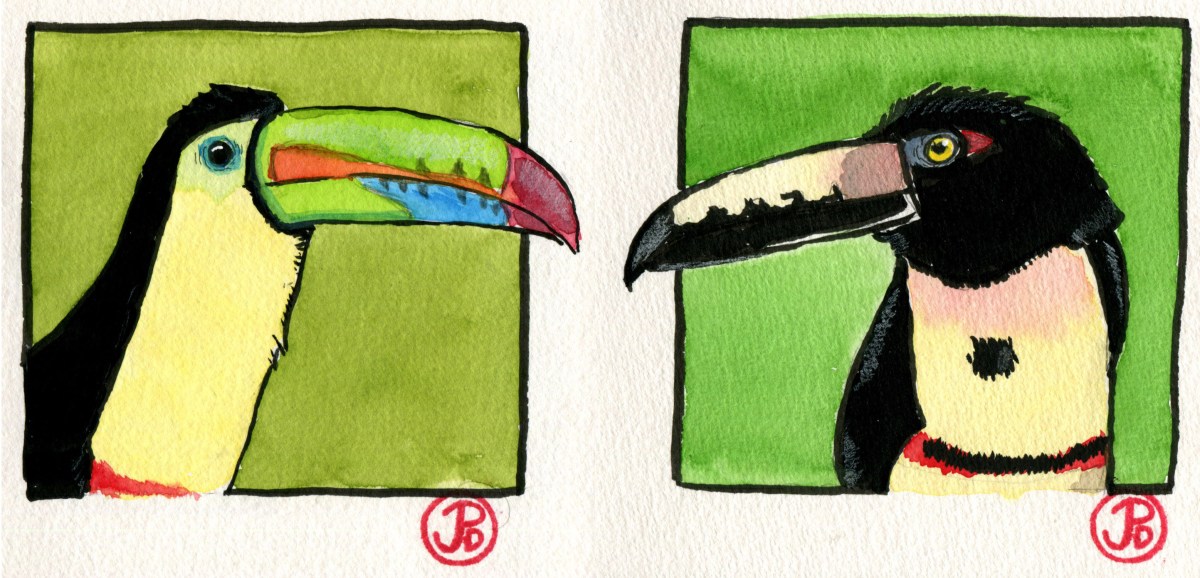
Poster bird of the Neotropical lowland rain forests.

There are over 40 species of toucans in five genera found only in the Neotropics. The African and Asia continents has many colorful and unique avifauna but the Americans have the family Ramphastidae, the toucans, all to itself.

The keel-billed’s menacing looking cousin, the collared aracari.

Yet another reason to head to the Neotropics to see the birds, so often in Guinness ads and cereal boxes, in the feather!

The sketcher in his happy place, dawn on the observation deck of the Canopy Tower, Panama.