Image

Planet of the Apes, Malibu Creek State Park, Part 1

What is now Malibu Creek State Park was once Fox Ranch, a backlot used by 20th Century Fox for location work on may television shows and films. The back lot became a Malibu Creek State Park in 1976.

Probably the most well known film shot here was the sci-fi classic Planet of the Apes (1968). The film was shot between May 21,1967 and filming wrapped up on August 10, 1967. I intended to find and sketch some of the locations used at Malibu Creek State Park.

It turns out that it is not too hard to find these locations because there are many “Visiting Planet of the Apes Locations” videos posted on youtube and other blog posts created by fans of the film. Also the State Park has placed some interpretive signs noting the park’s cinematic history.

On my hike out on Crags Road, I passed the Ape City location on my way to the M*A*S*H site. I would come by this site on my way back and do a sketch of the landscape around the set.
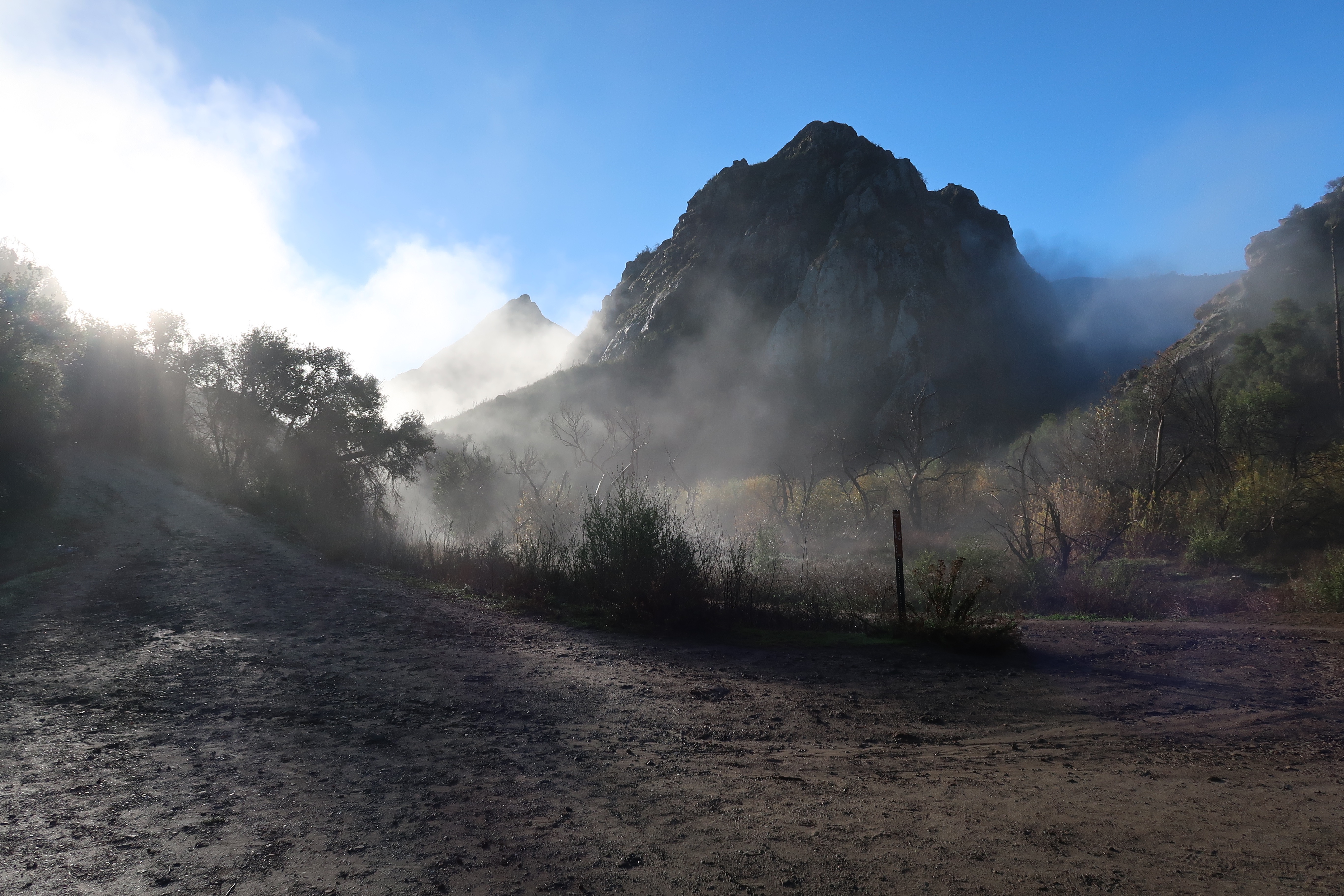
But sequentially the first location using Malibu Creek State Park proved to be one the park’s most visited locations: Rock Pool. In the pool, the three astronauts, including the film’s star Charlton Heston, come upon some water for the first time after landing on a bleak desertlike planet (the previous sequence was filmed at Lake Powell in Arizona). They quickly strip off their space suits and have a jubilant and frolicking skinny dip. Meanwhile some mysterious creatures steal their clothes.
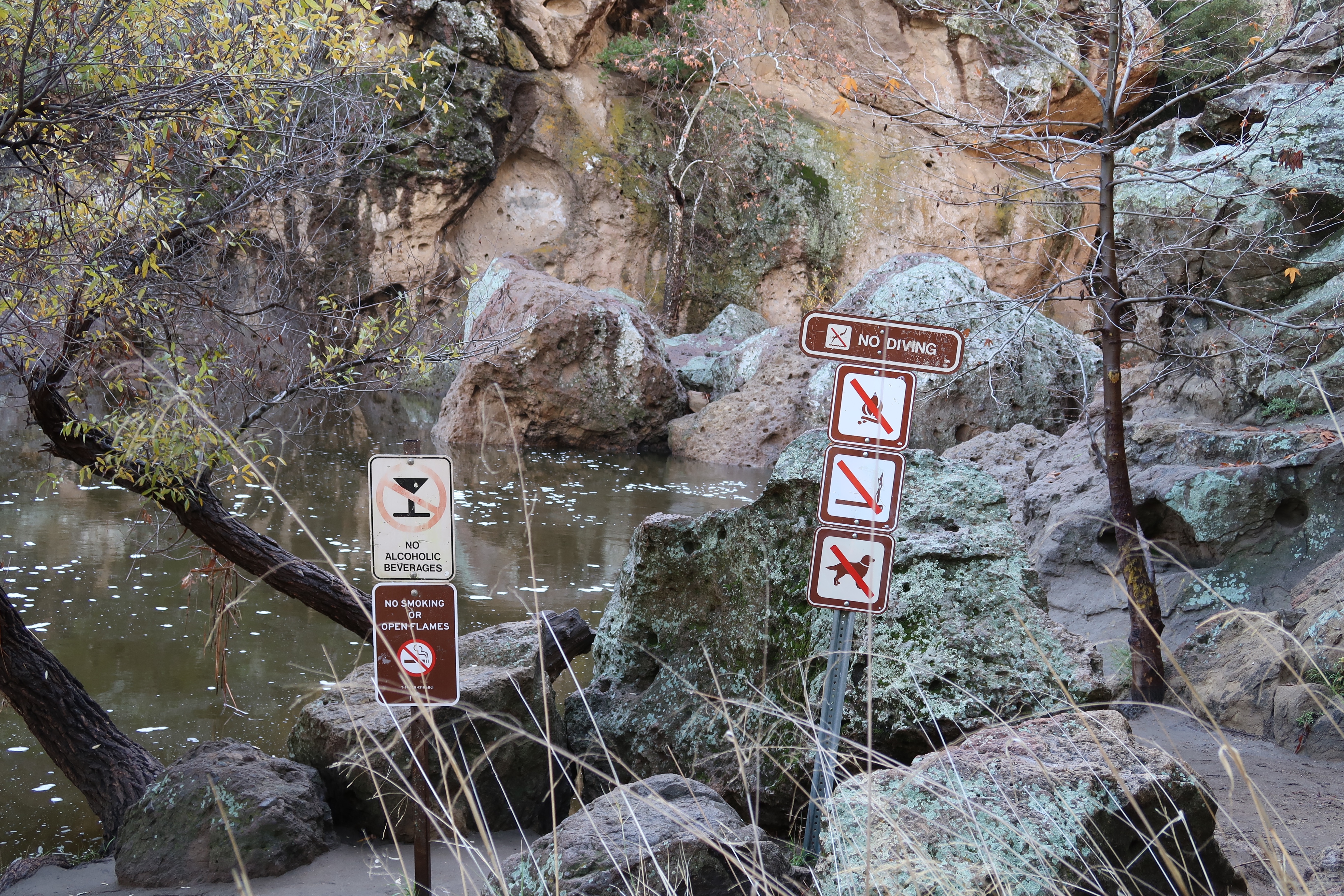
Rock Pool, the filming location of the skinny dipping scene. Now why does not one of these signs say “NO SKINNY DIPPING”?

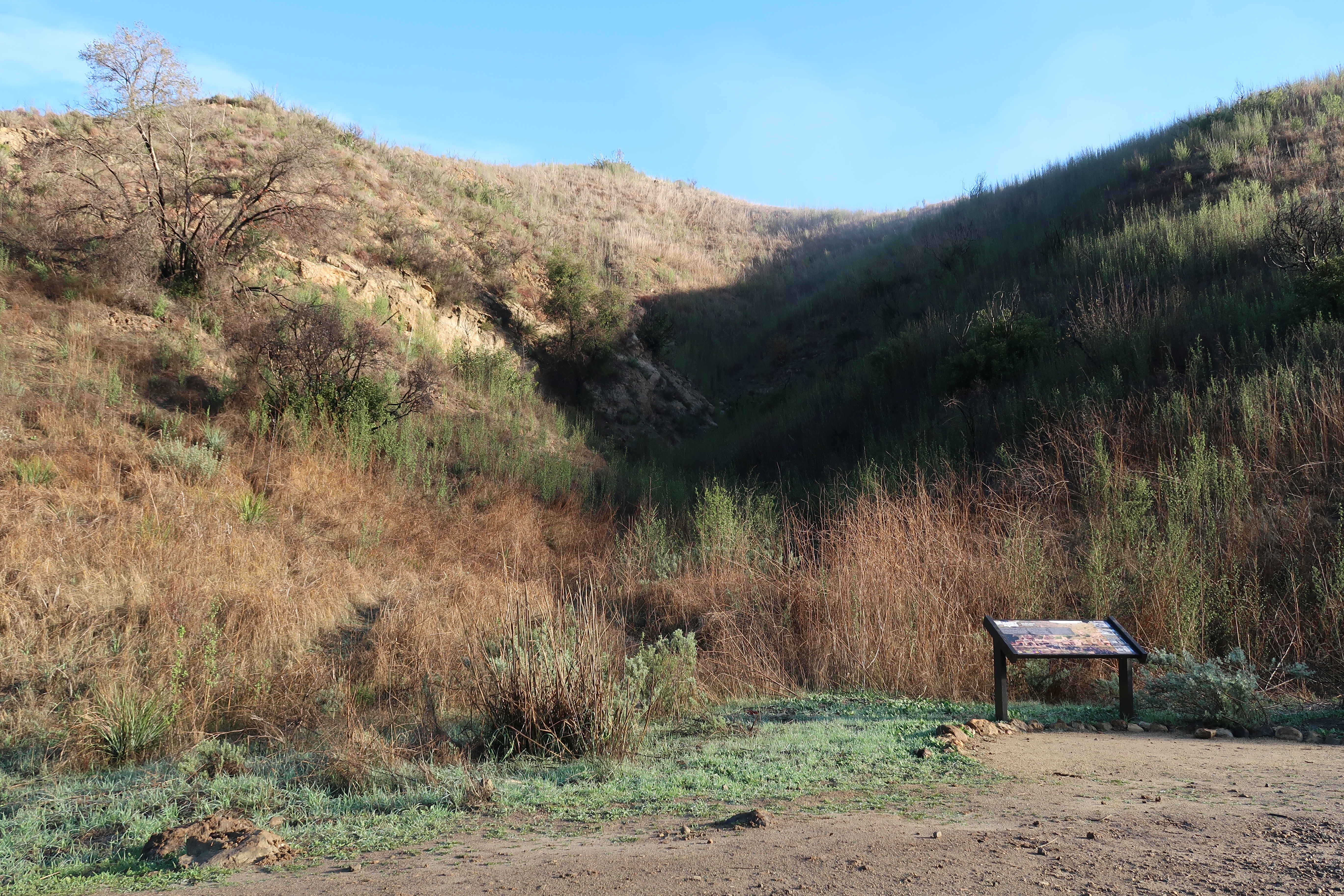
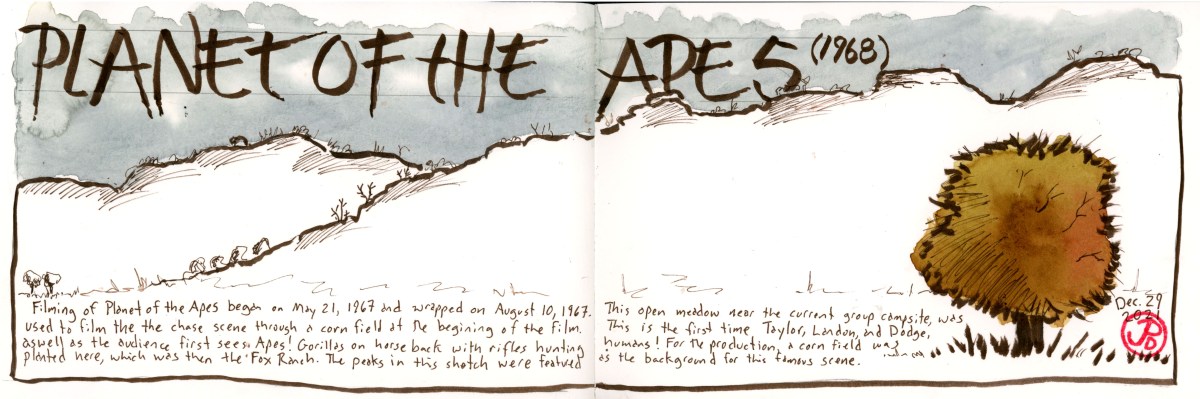
This leads to the next scene which was filmed at Fox Ranch: the hunt in the cornfield. In reality this was an open oak meadow where now, at one end, is the group campsite. For the film, corn (which grew to eight feet high) was planted in the meadow. In the film, the astronauts come upon a mute race of humanoids harvesting fruit from two (oak) trees. Here Taylor notes: “Look on the bright side, if this is the best they got around here, in six months we’ll be running this planet”. Then the humanoids pause and look on in horror as an odd ape horn sounds and they run for their lives. The human hunt has begun. In this field, Taylor and the audience, first sees the apes of the film’s title: a gorilla soldier, mounted on horseback with a rifle. One of the film’s stars Roddy McDowall said of this scene, “The cornfield hunt offered one of the film’s most powerful and disturbing sequences”. That means a lot, considering that Planet of the Apes features quite a few “powerful and disturbing” scenes. The featured sketch is of the ridge lines surrounding the meadow that once was covered in a cornfield.
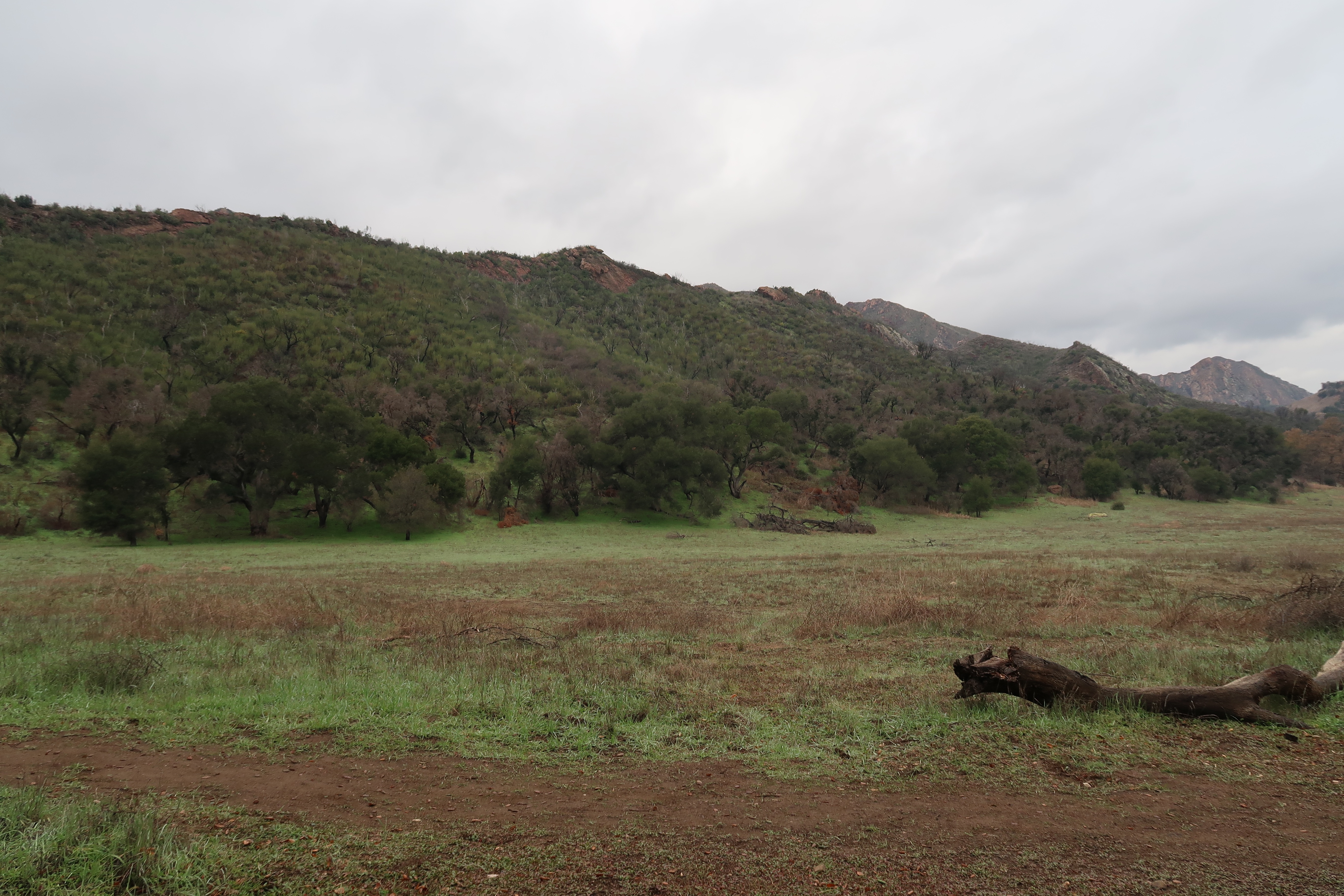
The former cornfield used for the human hunt scene. The hills seen in the background have changed very little from when the filming too place here in 1967.

The biggest set built for the film was Ape City which was constructed along Crags Road near Century Lake. The set itself stretched for 300 feet and was constructed of a sprayed foam over an iron mesh form. A large part of the location work of the middle of the film was filmed here, at this location, including Taylor’s attempted escape and the utterance of the film’s most famous line: “Take your sticking paws off me, you damned dirty ape!”
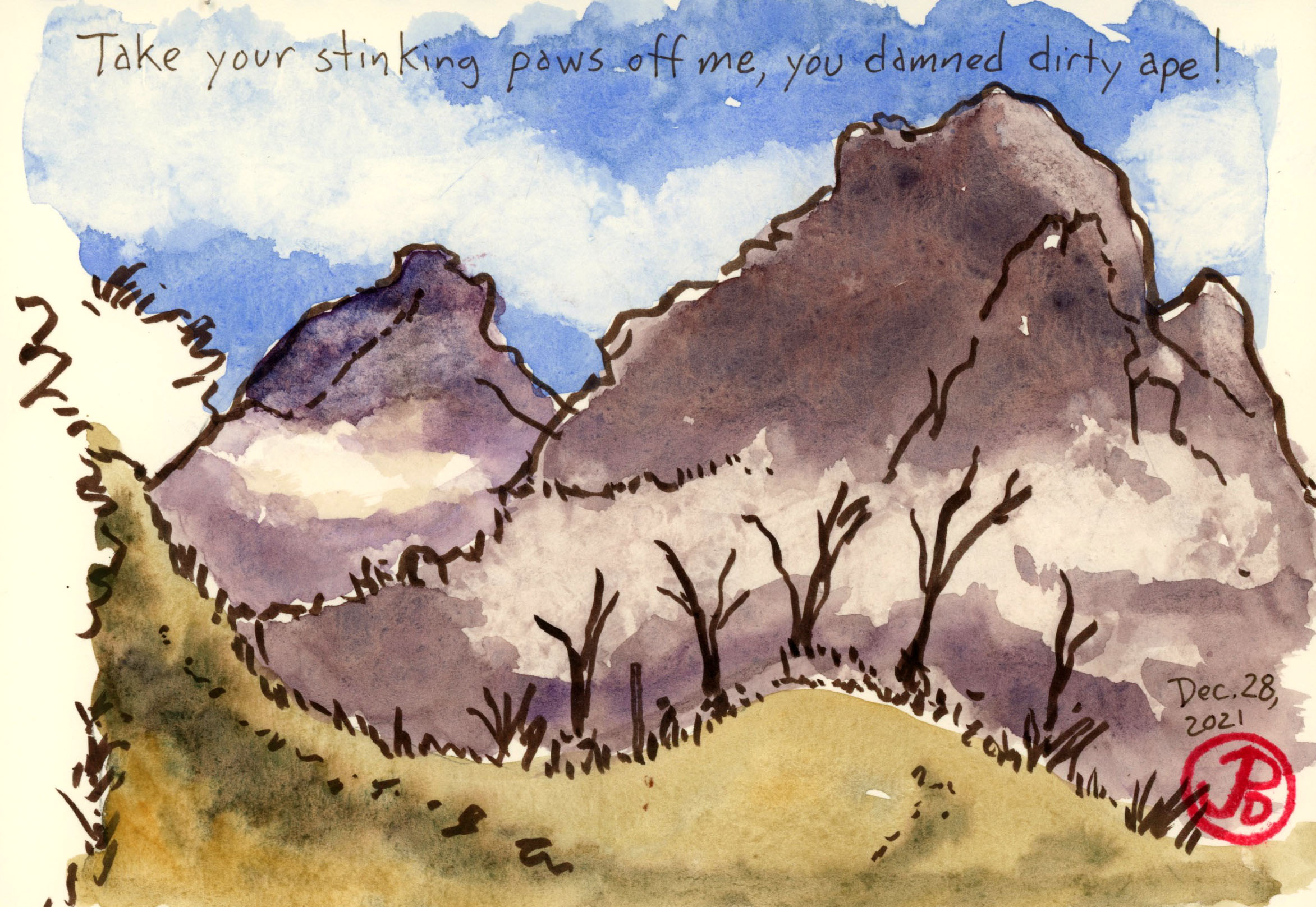
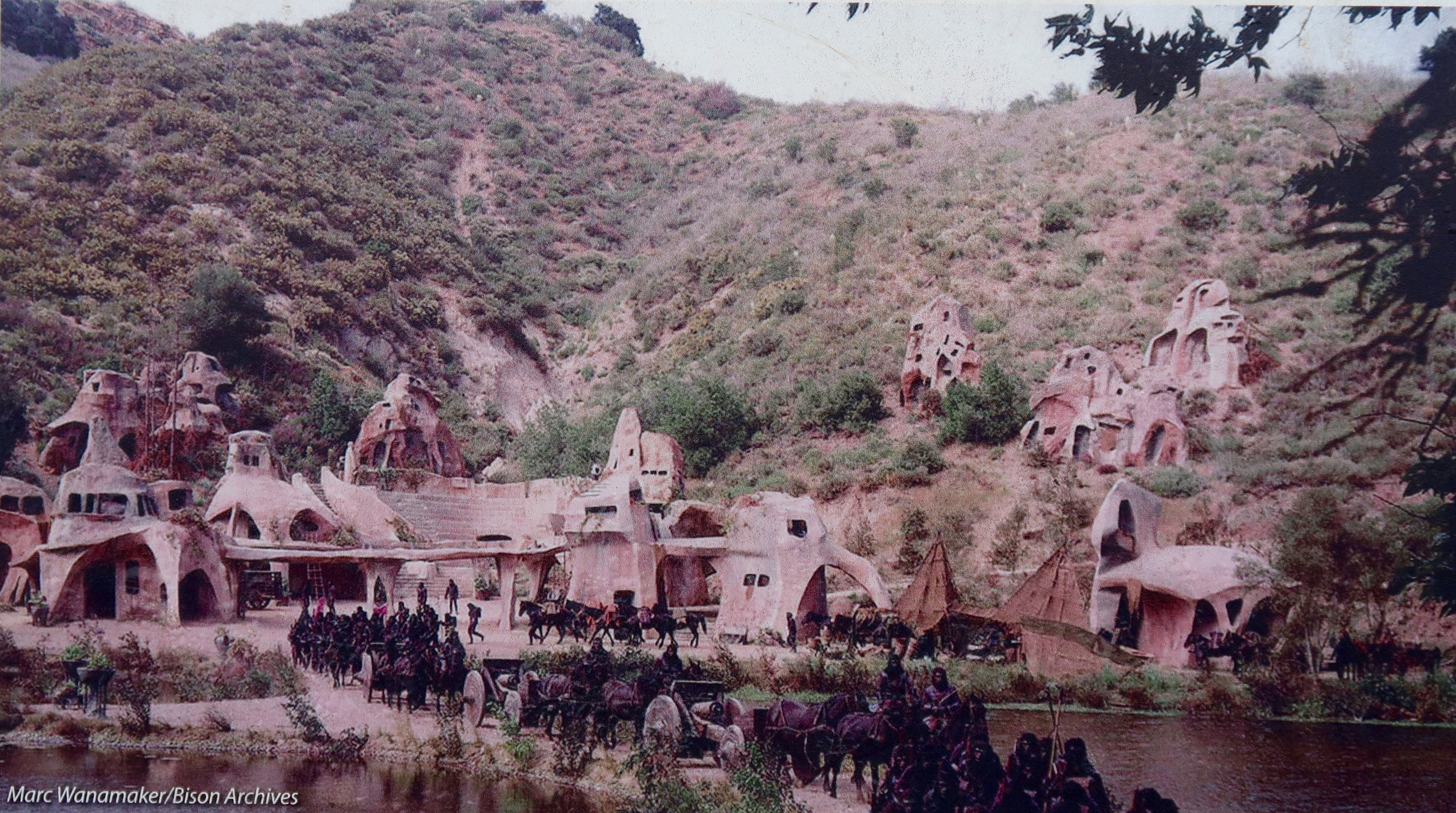
This is a production still of what Ape City looked like during the sequel to Planet of the Apes: Beneath the Planet of the Apes.
This is the former site of the Ape City set in 2021. An interpretive sign in the foreground.
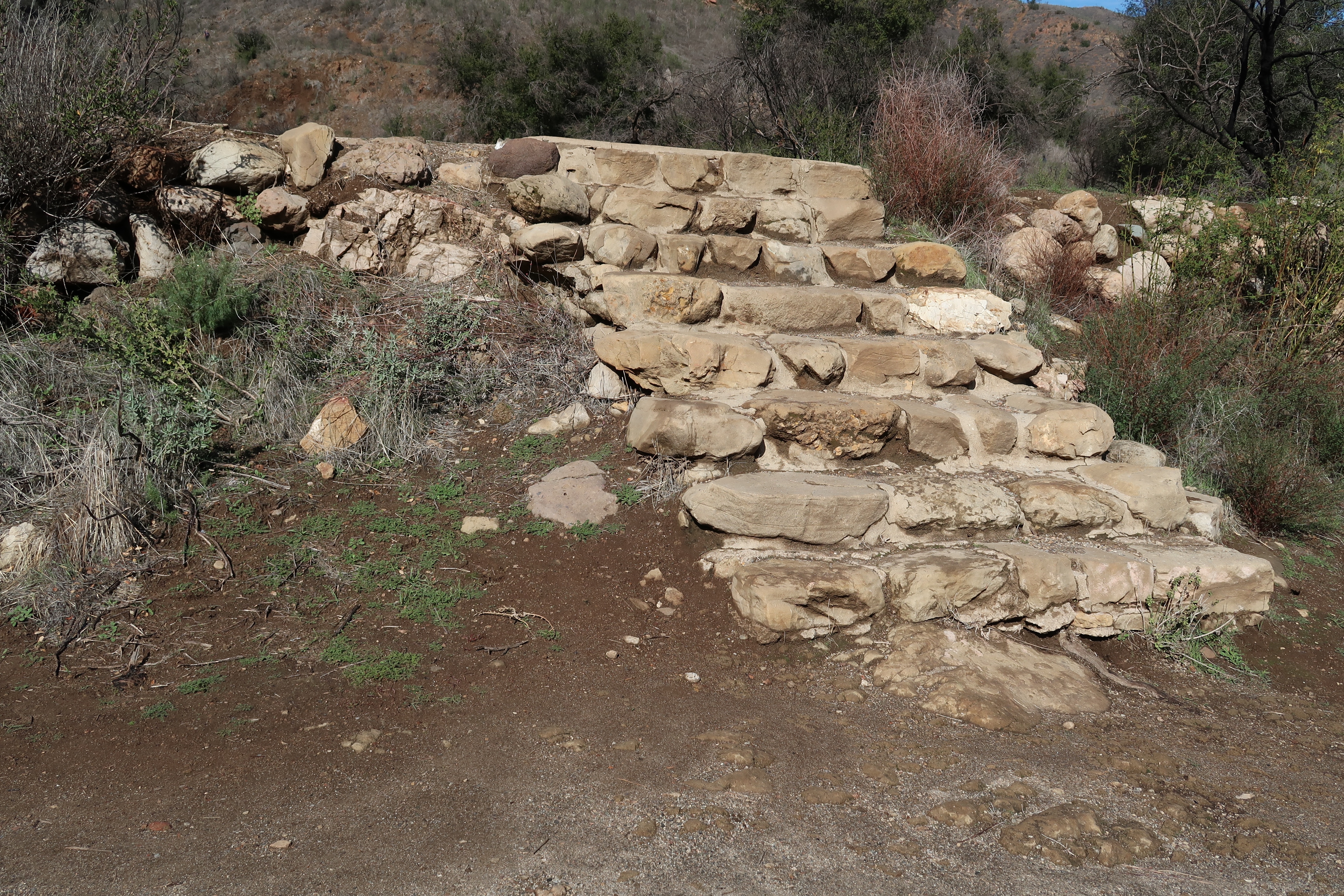
These are the “famous” steps that lead up to the human cage. When Taylor attempts to escape, he runs up these steps, barefoot.

Planet of the Apes proved to be so successful that the movies spanned four sequels, a television series, an animated television show, and books and comics. Some of the sequels where partly filmed at Malibu Creek State Park. The meadow near the group campsite was featured in Beneath the Planet of the Apes (1970) and in the epic battle in Battle for the Planet of the Apes (1973).

The next Planet of the Apes location I was heading to and sketching was south of Malibu Creek State Park, along the coast near Zuma Beach. At this location would be filmed one of the most shocking endings ever put to film in any movie made in the 1960’s, or of any movie made, in any decade, for that matter!
Image

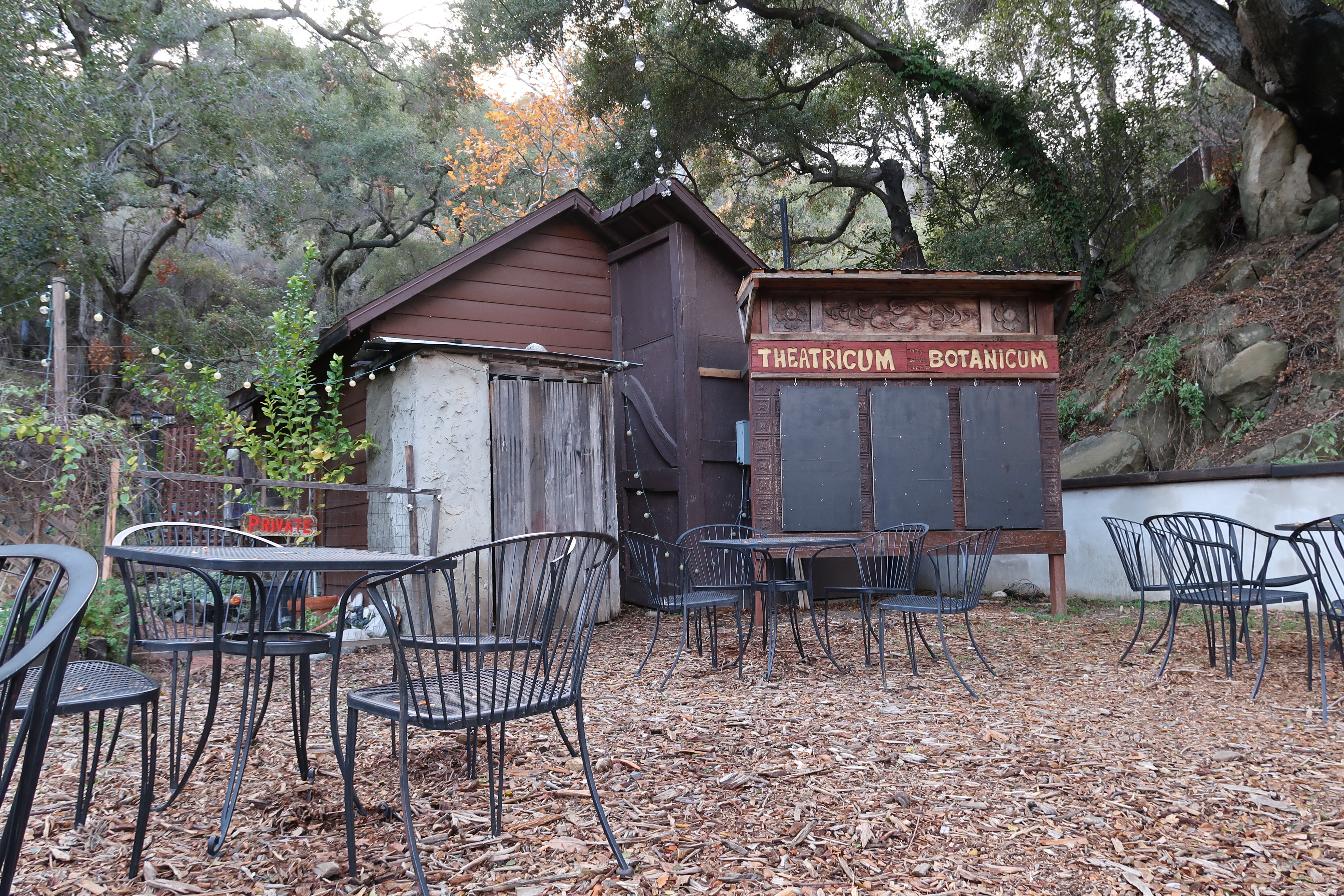
Will Geer’s Theatricum Botanicum

For my southlands adventures, I stayed in the artist’s enclave: Topanga Canyon.

The town of Topanga, situated northwest of downtown Los Angles, has been a magnet for artists, musicians, free-thinkers, bohemians, “lefties”, and filmakers for many years. The area still maintains a funky, laid-back vibe. When you are in the canyon, you feel a million miles away from the largest city in California and second largest city in the United States: L.A.

The area has had a long history with musicians. In 1952, folk singer Woody Guthrie moved here. A partial list of musicians that at one time made the canyon their home are: Neil Young, Stephan Stills, Jim Morrison, Randy California, Taj Mahal, Billy Preston, Gram Parsons, Mick Fleetwood, Marin Gaye, Van Morrison, and Joni Mitchell. It was in at his Topanga Canyon house that Neil Young wrote and recorded his masterpiece, After the Gold Rush in 1969-70.

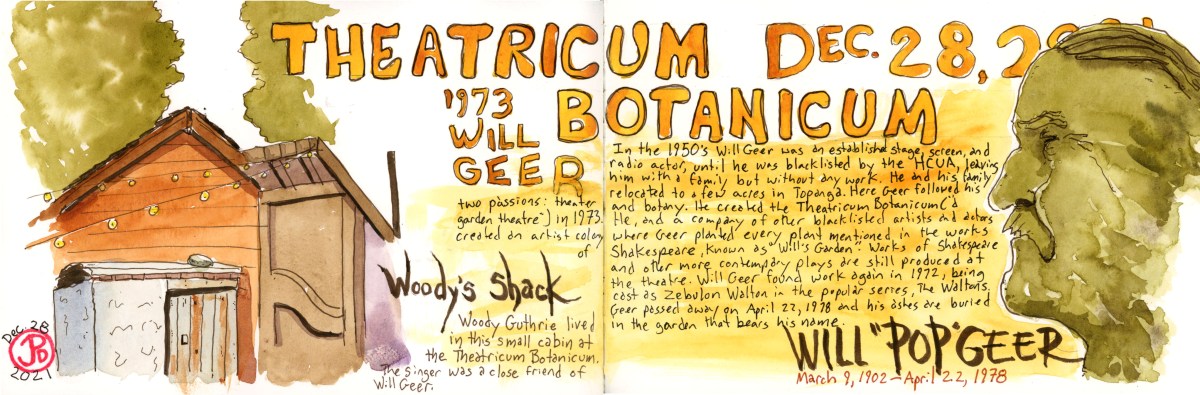
A reminder of the Topanga’s artistic past is alive at Will Geer’s Theatricum Botanicum on Topanga Canyon Boulevard. Will Geer is perhaps best known for his role as Grandpa Zebulon Walton in the successful television series The Waltons (1972-1981).

Before his success in the 1970s, Geer was a successful actor of the stage, screen and radio. Then came the McCarthy Era and Geer refused to testify before the House of Un-American Actives Committee (HUAC). As a result he was blacklisted by the committee and he could no longer find work in Hollywood. Geer was forced to sell his house in Los Angles and bought land in Topanga Canyon where his family relocated.

At this time Geer had a chance to seize upon two of his passions: theatre and botany. He created a band of artists and actors and he was able to employ other of his blacklisted friends and he created the Theatricum Botanicum in 1973. On this property in Topanga, folksinger Woody Guthrie had a small cabin where he lived for many years, it became known as “Woody’s Shack”.

In my sketch of the area, I added Woody’s Shack as an anchor to the left (of course Guthrie was always to the left) of my panoramic spread.

Woody’s Shack. I incorporated the font of the sign into the sketch.

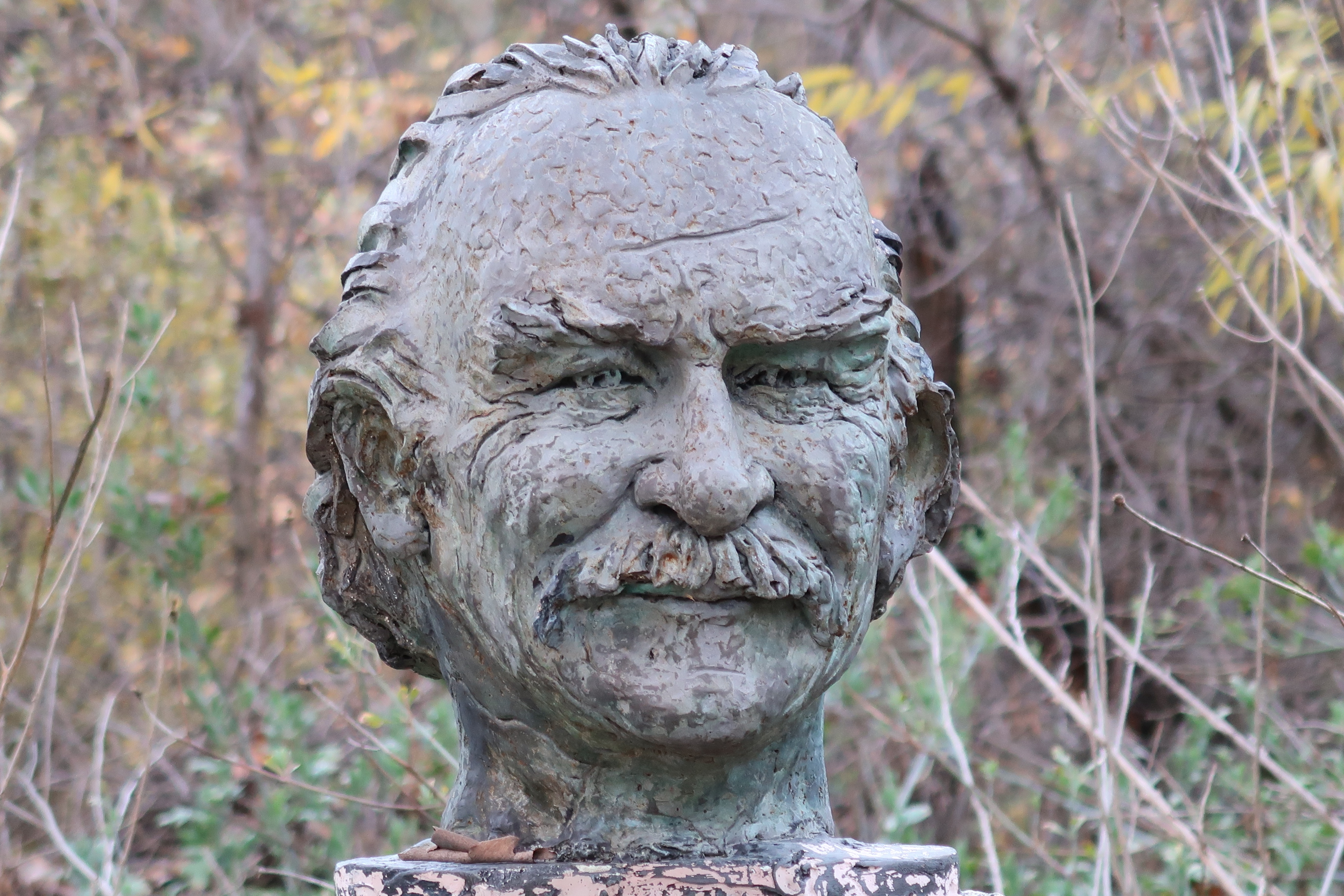
One thing I really wanted to sketch at the Theatricim Botanicaum was the bust of Will Geer, sculpted by local artist Megan Rice. The bust was in the garden created by Geer himself. In the the garden, now called “Will’s Garden”, he planted every plant mentioned in the works of Shakespeare. He clearly loved this place and the flora and fauna in it, that he is buried in the garden itself.

The bust of Will Geer created by local sculptor Megan Rice. This really seems to capture the essence of the man.

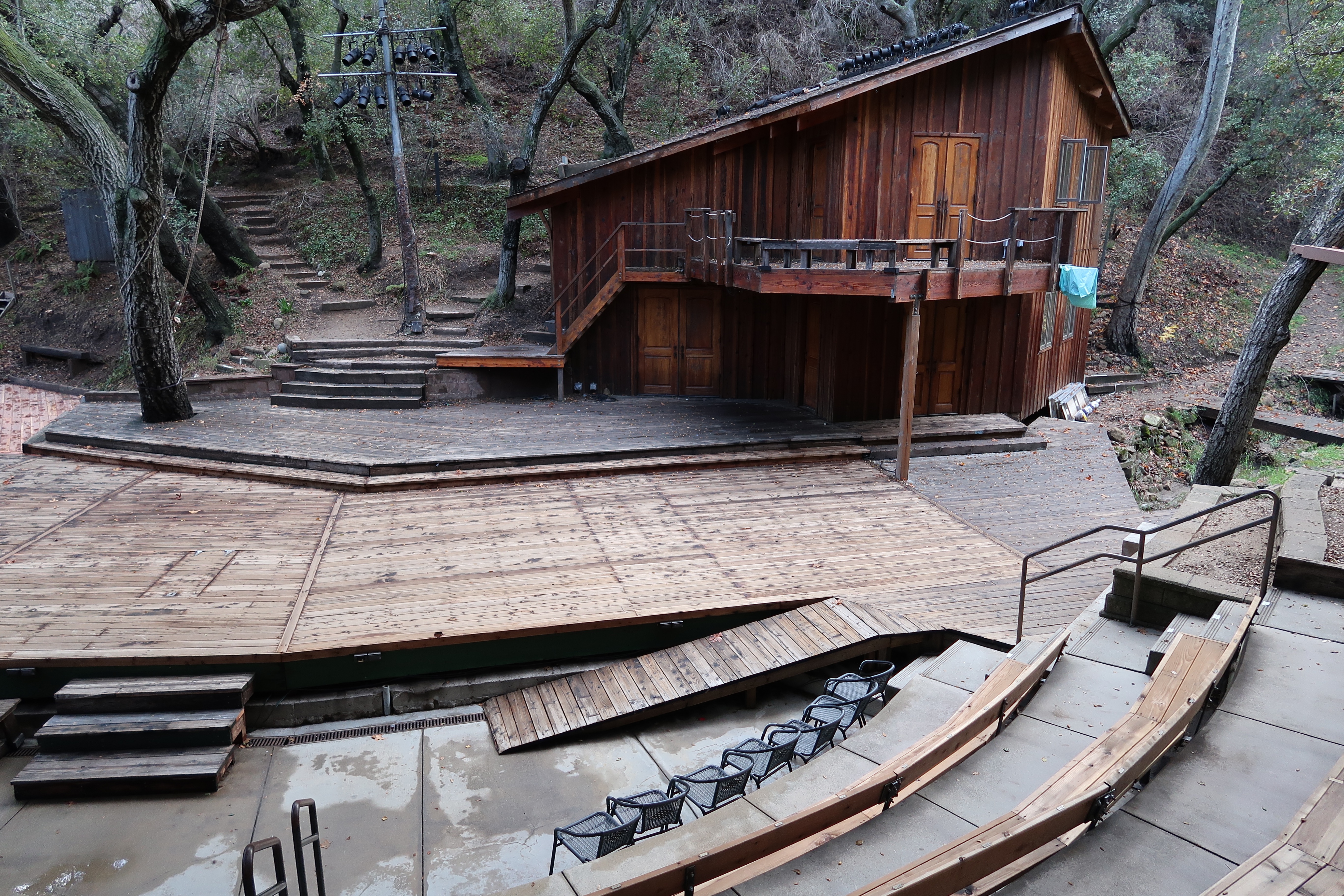
The Theatricum Botanicum is still a thriving theater company. Today the company’s artistic director is Will’s daughter, Ellen Geer. The company performs the works of Shakespeare as well as contemporary plays and musical performances ( some have included Pete Seeger, Arlo Guthrie, and Burl Ives). They also have an educational program promoting youth theater and also supports learning through field trips.

The main stage at the Theatricum Botanicum.
Art seems to infuse ever inch of the Theatricum Botanicum. Exhibit D: the culvert of the creek. This place is alive!
Image

Sketching on the Helipad, M*A*S*H Part 2

I climbed up the dirt road to the helipad that is featured in the opening credits of the show.

The very last shot in the opening is two jeeps headed slowly down the road, carried the wounded to the hospital tent and doctors madly attempting to help the wounded. The names of three actors appear: Loretta Swit, Larry Linville, and Gary Burghoff. The opening credits was one of the main reasons I headed to the helipad to sketch.

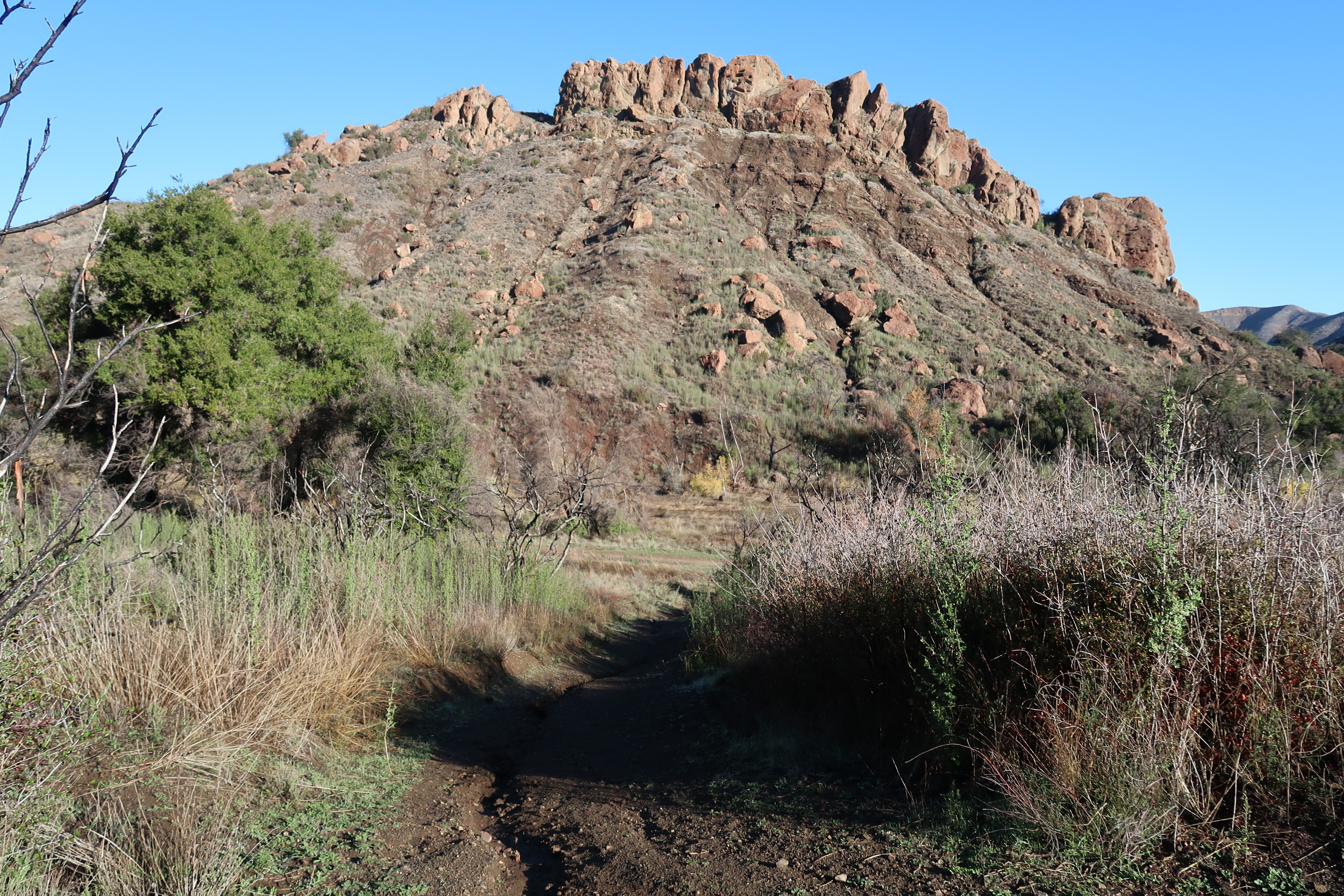
The road leading down from the helipad in the foreground and the Goat Buttes in the background.

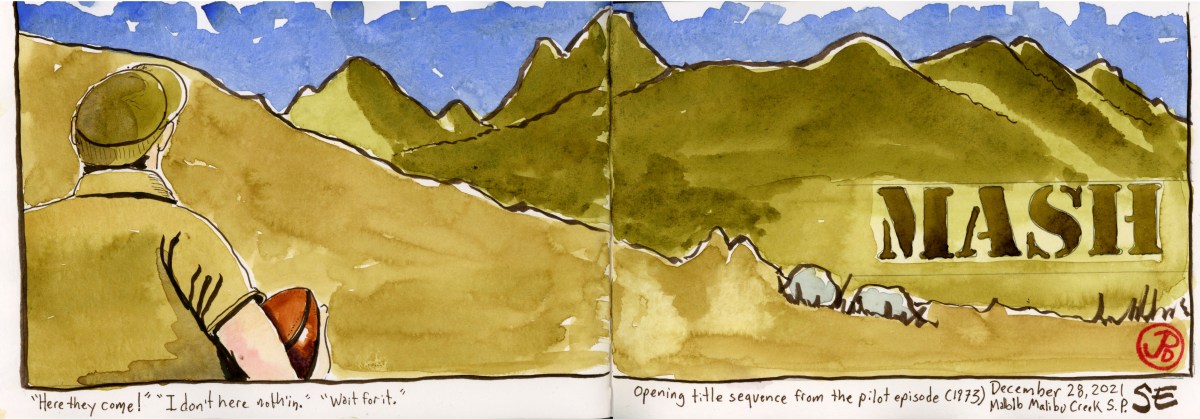
The iconic opening, as seen in the pilot episode, shows some downtime at the M*A*S*H unit: doctors golfing, doctors and nurses drinking champagne, reading, resting, and men playing catch. One solider catches the football, turning away in the process. He is about to turn back to the game of catch when he pauses and listens. He seems to know when something is about to happen before others do. “Here they come!” he announces. An off camera voice says, “I don’t hear noth’in.” And the solider, Radar O’ Reilly, quickly responses, “Wait for it.” We don’t have to wait long. The next shot is of Radar, from behind his right shoulder, as we look on with him, the camera zooms in to two helicopters flying over the mountains when the guitar refrain of “Suicide is Painless” starts off (in B minor).

M*A*S*H’s introduction is a part of my life’s television soundtrack like the opening of the Dukes of Hazzard, Dallas and Dynasty, The Facts of Life, The Electric Company (“HEY YOU GUYS !!!), Villa Alegre, and the Waltons. But somehow the M*A*S*H intro still holds up for it’s audio and visual impact, and I couldn’t wait to sketch the landscape of this groundbreaking series. In the 1970’s and early 80’s when you heard the first three notes of Suicide is Painless, it was time to rush into the living room to watch a new episode (or a repeat) of M*A*S*H.

I wanted to sketch this iconic opening, the choppers flying over the Santa Monica Mountains in the background and Radar in the foreground. To do this, I first sketched Radar (Gary Burghoff) to the left of my panoramic view. I did this a few weeks before heading out on the trail and it was based on a screen shot of the pilot episode opening. This preliminary sketch would be my anchor for the rest of the image. I just had to match the mountains in the background with the right angle. I knew that this scene had to be filmed from the helipad.

I searched all points on the compass and looking to the southeast, I saw the mountains that matched the opening exactly. I traded my pack and poles for my pens and journal and began sketching. The result is the featured sketch.

My aim was not to capture every detail in the landscape and I really just focused on the contours of the hills which have not changed much since they were first filmed for the opening almost 50 years ago. To outline their form I used my expressive brush pen which give vibrancy and economy to the line. This is where sketching holds it’s own over other visual media like photography. When I was tracing the curvaceous lines of the Santa Monica Mountains, I was really getting to know my subject in a deeper way. I was really seeing the landscape.

When I finished sketching this perspective, I then sketched two other perspectives from the opening credits. I then did a quick sketch of the road leading down to the main set featured at the very end of the opening credits. Let’s call it the “Loretta Swit, Larry Linville, and Gary Burghoff Road”.

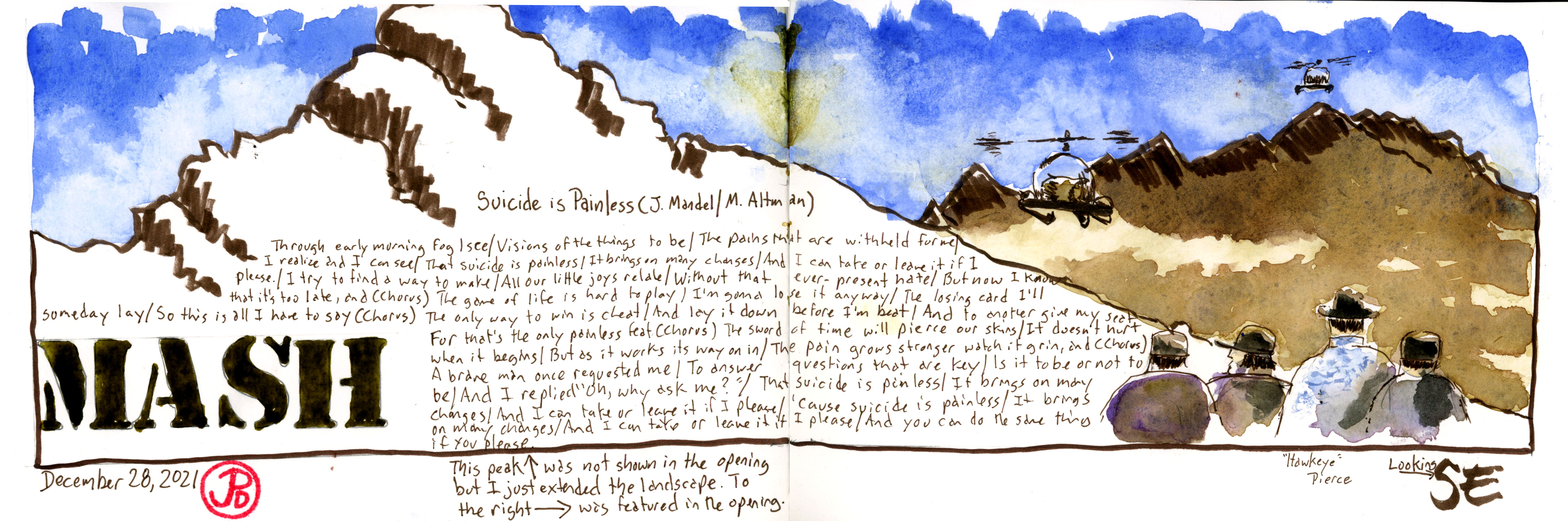
This is another sketch from intro of M*A*S*H. The sketch to the right is what is seen briefly in the intro and what is on the left extends the landscape of the real location. I wrote in the lyrics of “Suicide is Painless” in the foreground hillside (This song was used in M*A*S*H the movie). Originally, director Robert Altman wanted the lyrics to sound like “the stupidest song ever written”. When the songwriter, Johnny Mandel could not come up with the right lyric, the director asked his 15 tear old son, Michael to write them, and this became one of the most memorable songs in cinematic and television history.
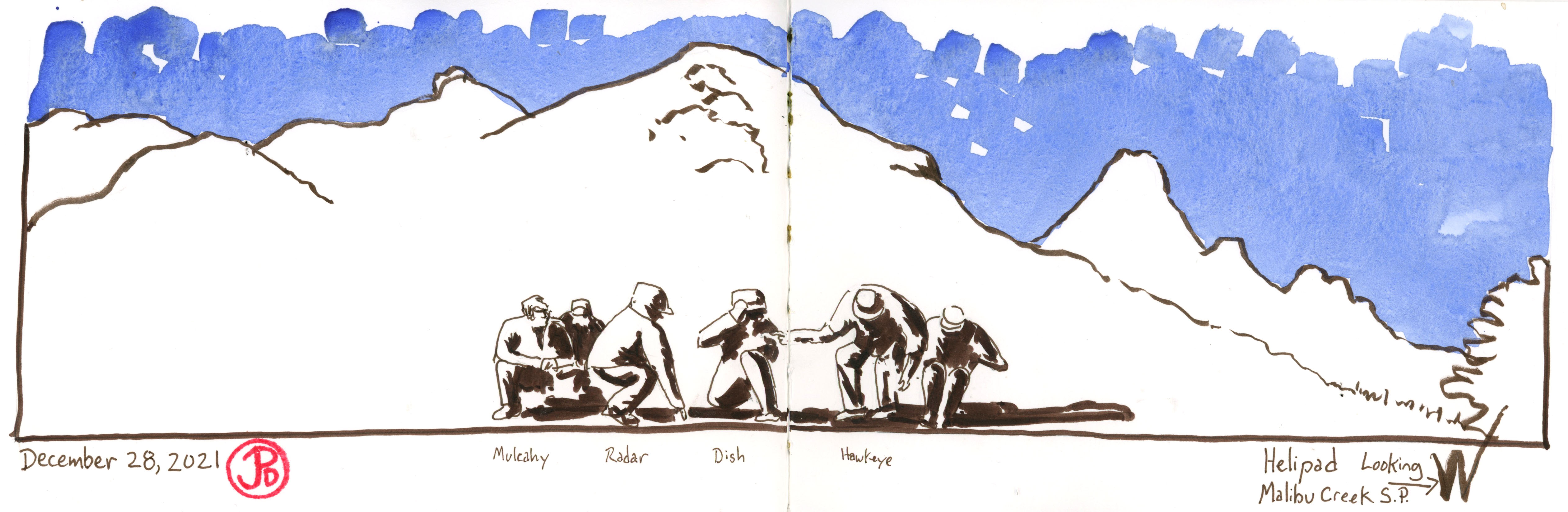
This is the last panoramic sketch I did from the helipad, this time looking west. In this scene from the opening in the foreground, Hawkeye Pierce gestures to others to head in as they move to the right, just after the chopper has landed with casualties. l lined up the background from a screen shot of the opening.

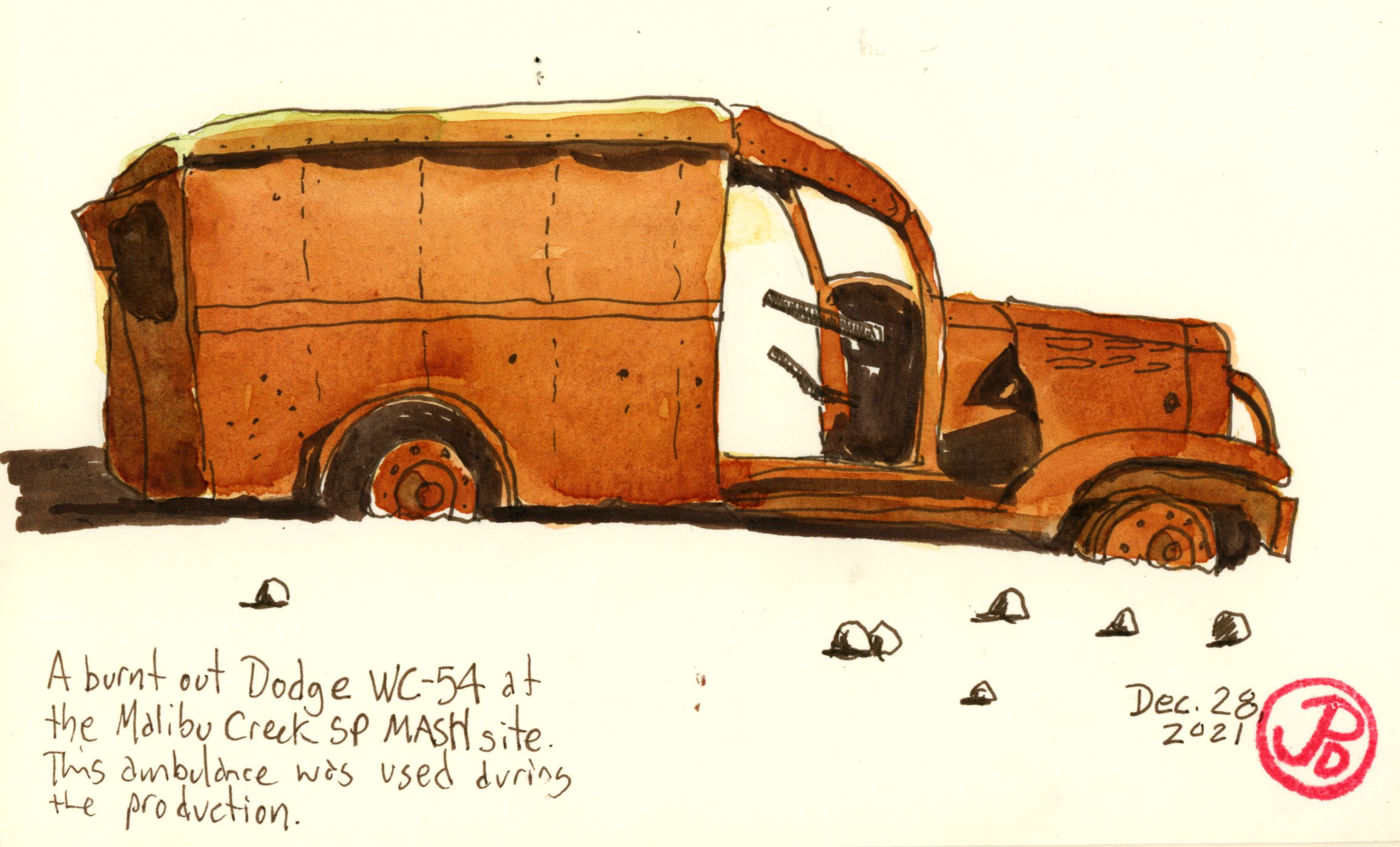
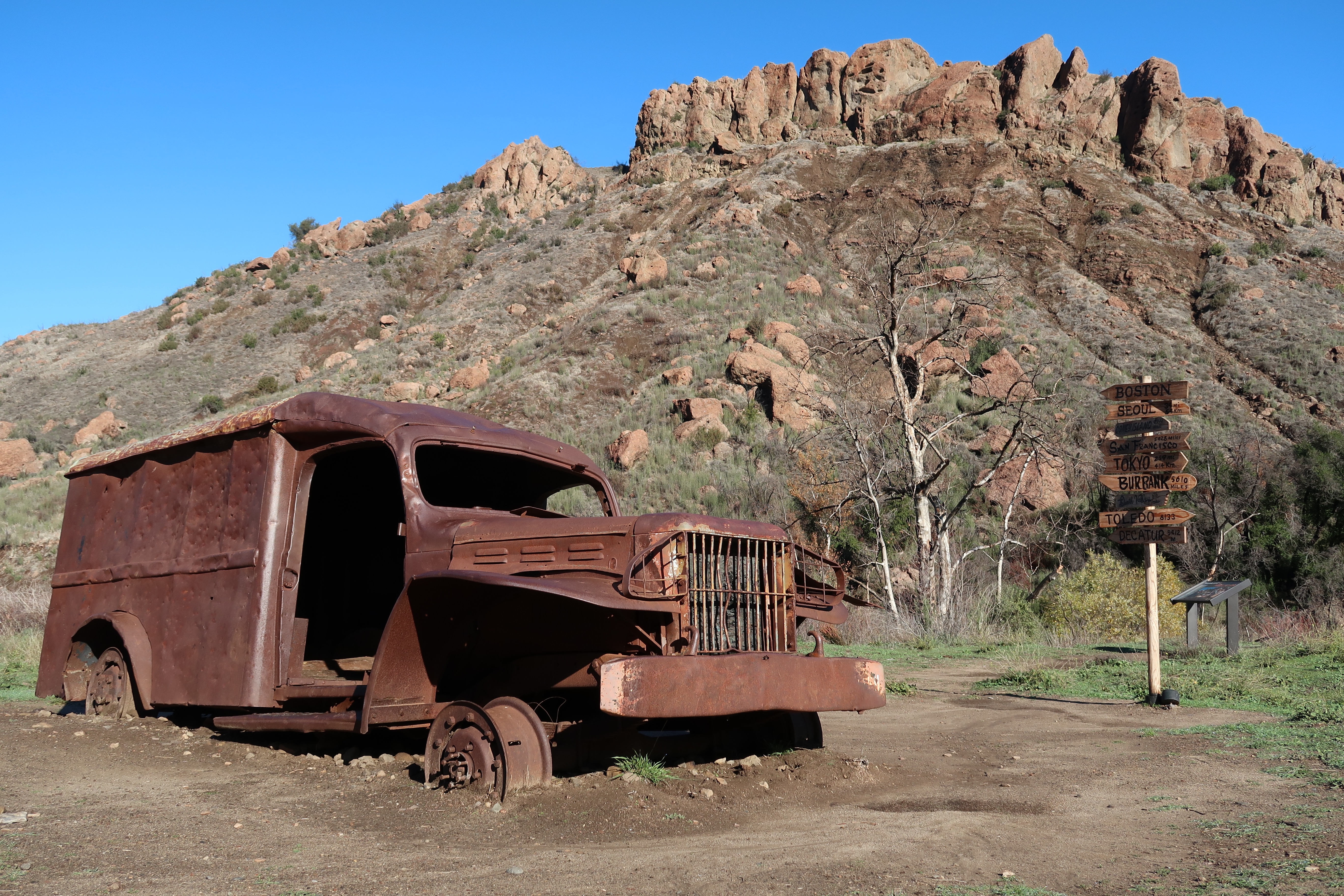
I then headed to the core of the set and I wanted to sketch the burnt out ambulance. This ambulance had been used in the original series but had been damaged during a brush fire during the final season of the show’s production in 1983. I took a seat at a picnic bench and started sketching away.

The contrast between the ambulance that had seen better days with the unchanged landscape of the Goat Butte was an essay in the unchangeable change in the world around us.

What a great morning of sketching at the M*A*S*H site. The skies where clear, having shaken off the showers of the pervious day and I had the entire site to myself!

Image

M*A*S*H, Malibu Creek State Park, Part 1

I headed out early from my Topanga Canyon digs on a 23 minutes drive to Malibu Creek State Park.

I would be hiking just over two miles (2.37 miles to be exact), on a fireroad called Crags Road, to the location set for the popular television series M*A*S*H (1972-1983). This state park was once the filming backlot for 20th Century Fox and many other tv shows and films where also filmed here, including the original Planet of the Apes. More on that film in a later post.

The level trail, which paralleled the rain-swollen Malibu Creek, was muddy from the rain over the past few days. Mist hung below the beautiful mountainous peaks of the Goat Buttes. The buttes are part of the Santa Monica Mountains, the only mountain range in California that runs west to east. I felt I was already in the “Korean” landscape of M*A*S*H. This landscape looked very familiar.

After I passed the side trail to Rock Pool, Crags Road began to climb upward in a muddy assent. The trail briefly leveled out and I headed down towards the former location of Ape City, built in the late 1960s for the sci-fi classic Planet of the Apes. But more about that in another post.

The fireroad now narrowed as it continued to parallel Malibu Creek. At this point I had not encountered a single person on my hike. I hoped that I would have the M*A*S*H site all to myself! The early bird, indeed gets the worm!

The beautiful long shadows of winter sun. On Crags Road less than 0.8 mile from the M*A*S*H site. But first I had to cross the creek.

I followed the sign to the creek crossing only to find a wooden staircase the led into the waters of Malibu Creek! The creek was impassable here, unless I was willing to swim. I looked upstream and I could just make out a makeshift “bridge” constructed of logs and tree limbs. Perhaps “constructed” is too much of word to describe the crossing but I had to chance it to get to the M*A*S*H site, which was on the opposite side of the creek.

I started across the “bridge”, carefully choosing each footfall on wobbly and far too thin sticks and logs. Here having trekking poles helped afford two more points of balance during the crossing. One pole slipped off a log and I attempted to put the pole down on the bottom of the creek, only to find that it was so deep that my pole was suspended in midwater. I made it to the opposite bank without becoming fully or partial immersion. I made sure my journals were safely stowed in a dry bag.

I now bushwacked to find the trail, which at this point did not resemble a fireroad but a single track trail. I was now very close, perhaps 0.5 of a mile and I was waiting, with childlike anticipation, for my first glimpse of the filming site. As I rounded a corner, I saw a Korean War era ambulance by the side of the trail. This marked the edge of the filming set.

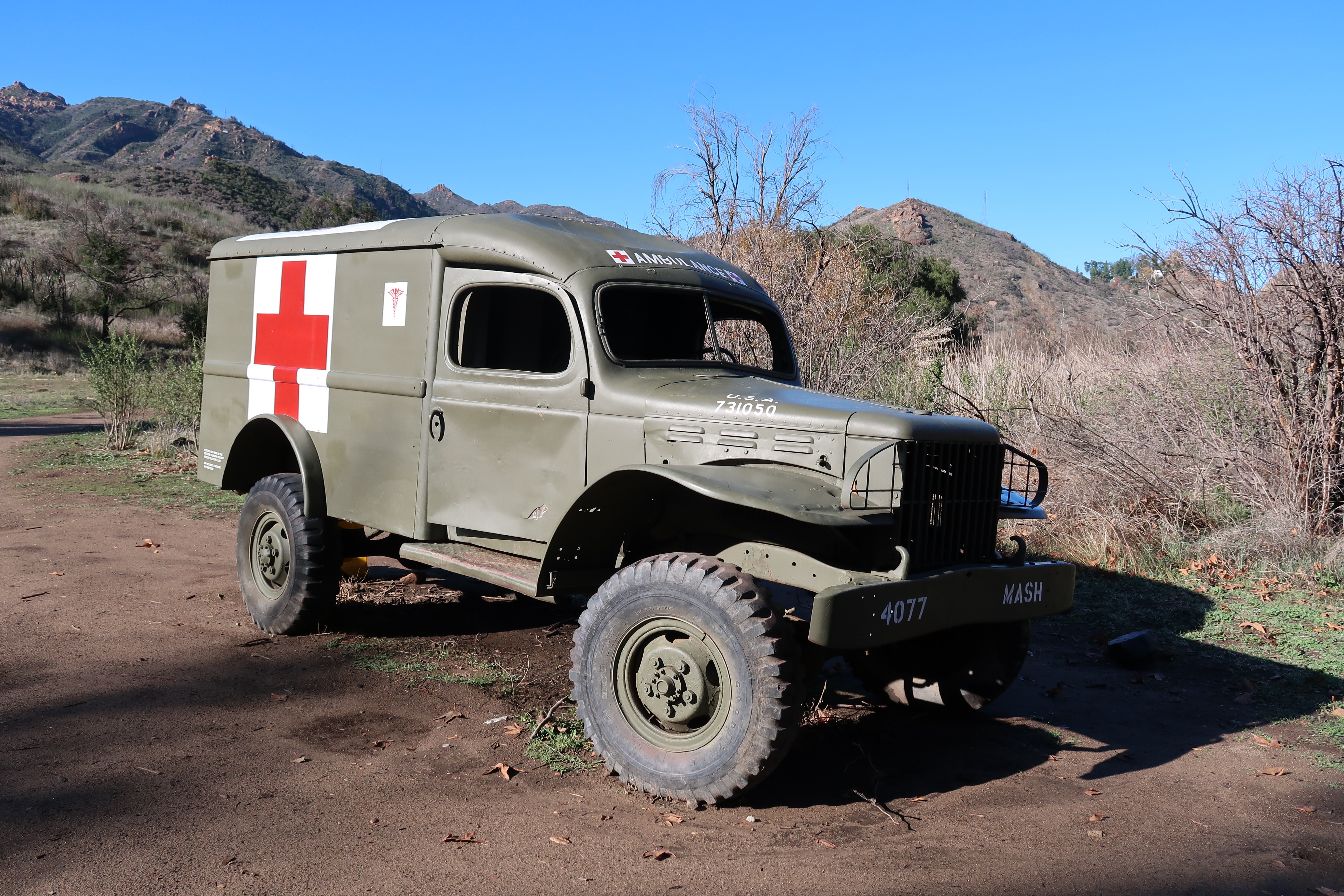
This is a restored Dodge WC54 ambulance, which, despite what other have stated online, was not actually used during the filming of M*A*S*H. When you come up this vehicle, you know you about to enter the set.

I briefly scanned the site, which included three interruptive signs, two burnt out vehicles (a jeep and an ambulance) from the series, picnic benches, and a replica of the iconic signpost that was placed just outside of The Swamp. But before I explored the site properly, I headed up to the helipad to do some sketching. And yes, I had the site to myself, in beautiful clear winter weather!
This burnt out ambulance was used in the series. An ambulance similar to this is featured in the opening credits. A brush fire burnt the set during the final episode in 1983 and the fire was written into the script.
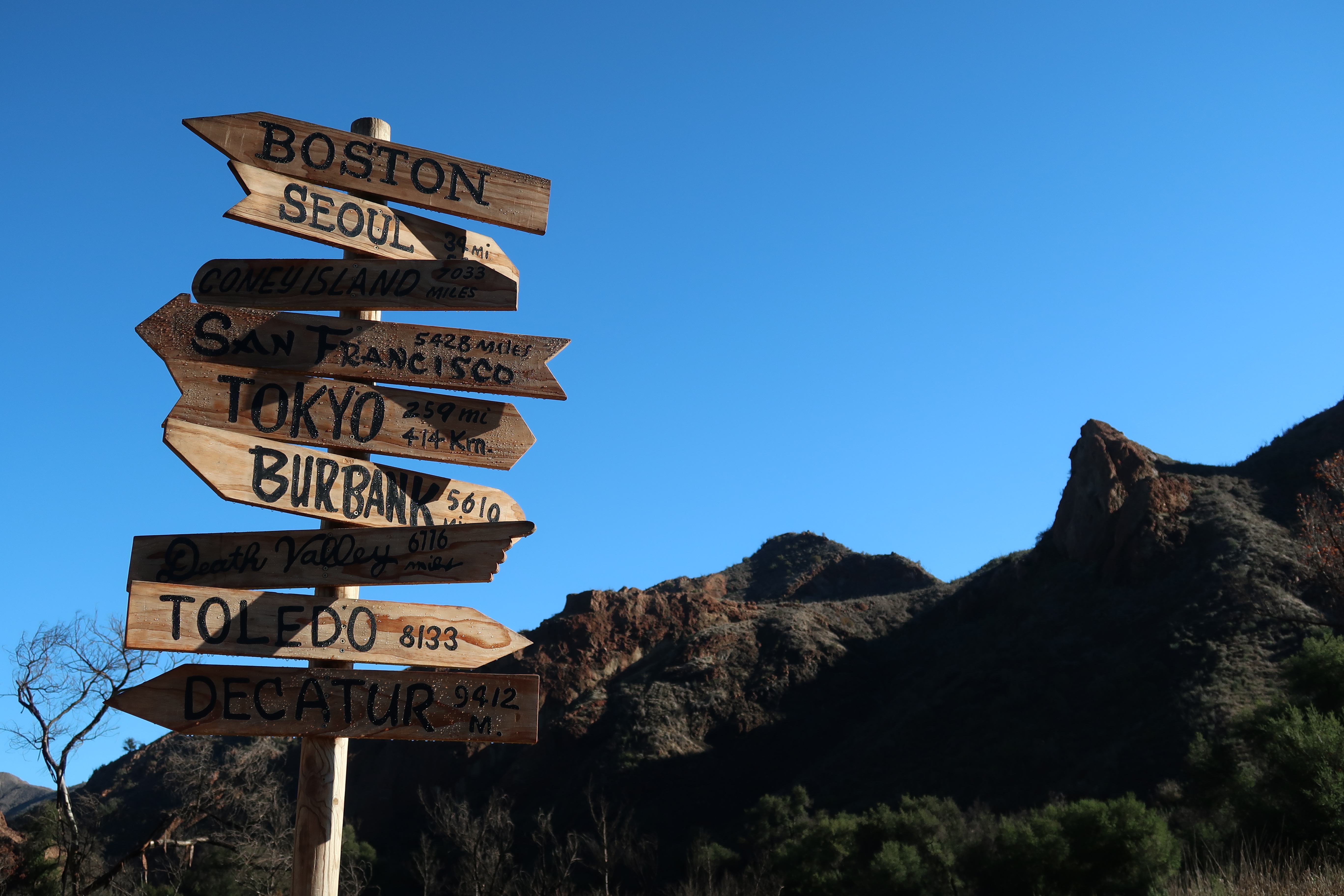
The replica signpost with the distinctive outline of the Goat Buttes.

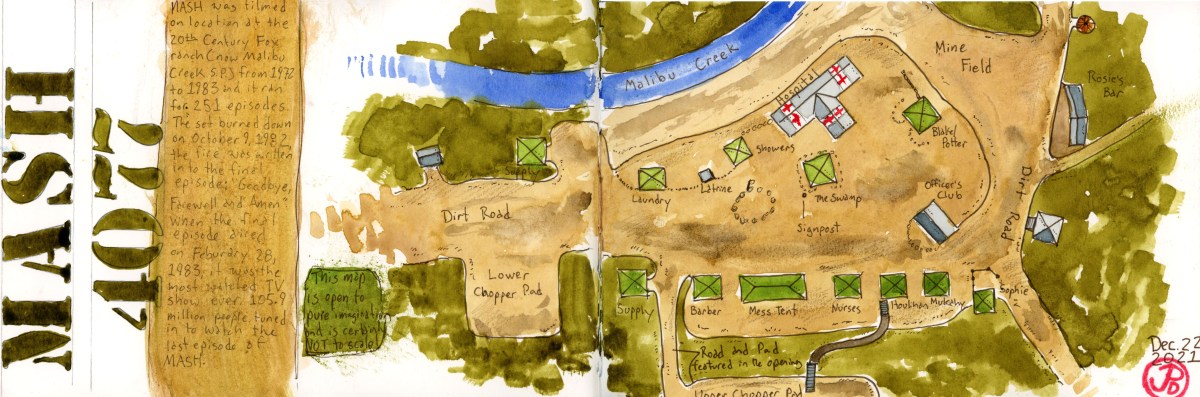
The featured sketch is a map of the M*A*S*H site. I drew this before I head down to Malibu and it helped orient me when I was visiting the location for the first time.

Image

Planet of the Apes, Pt. Dume, Part 2

After my visit to Malibu Creek State Park, I headed south on Malibu Canyon Road and then turned west on the Pacific Coast Highway to the filming location of one of the best and perhaps most shocking endings of any film.

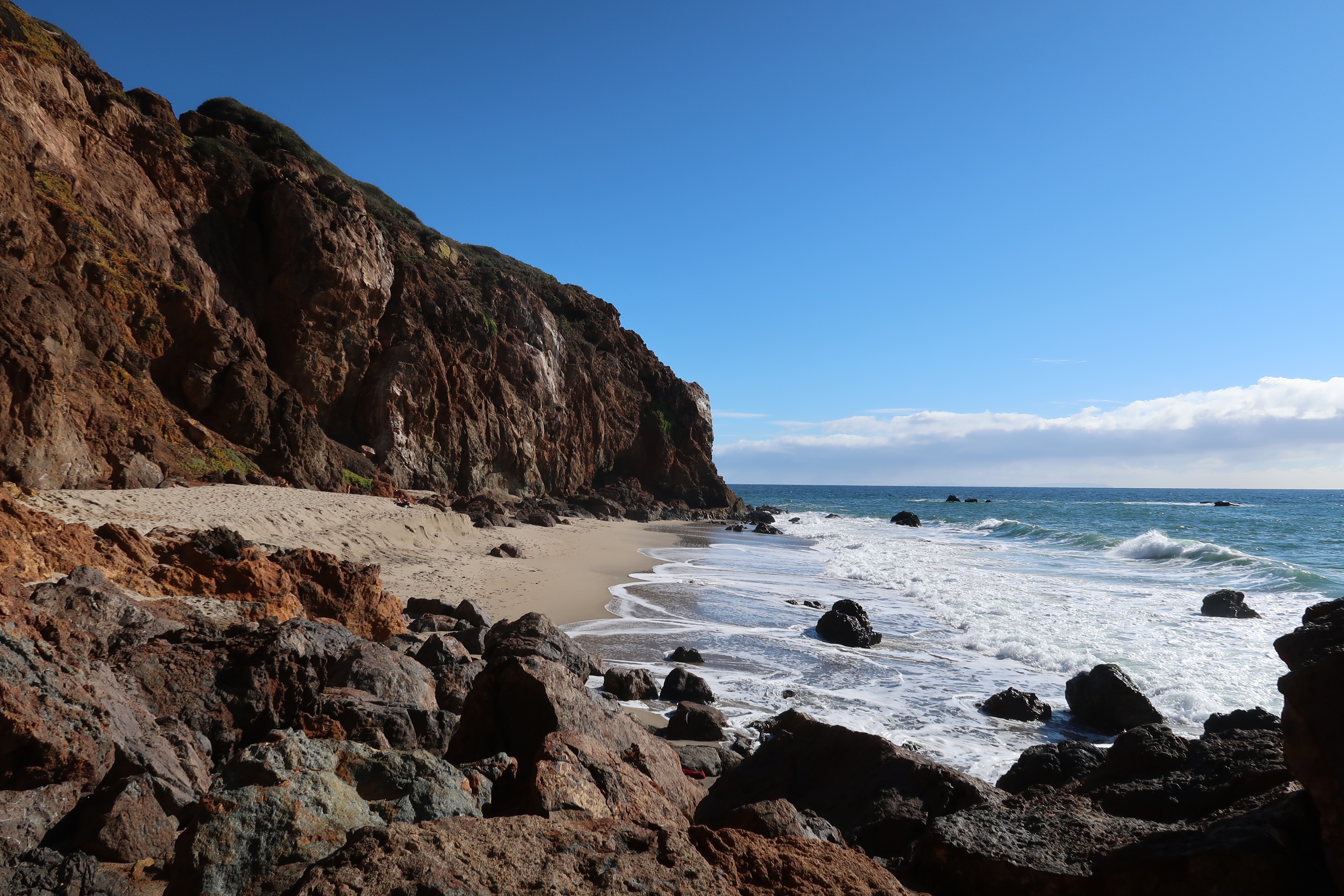
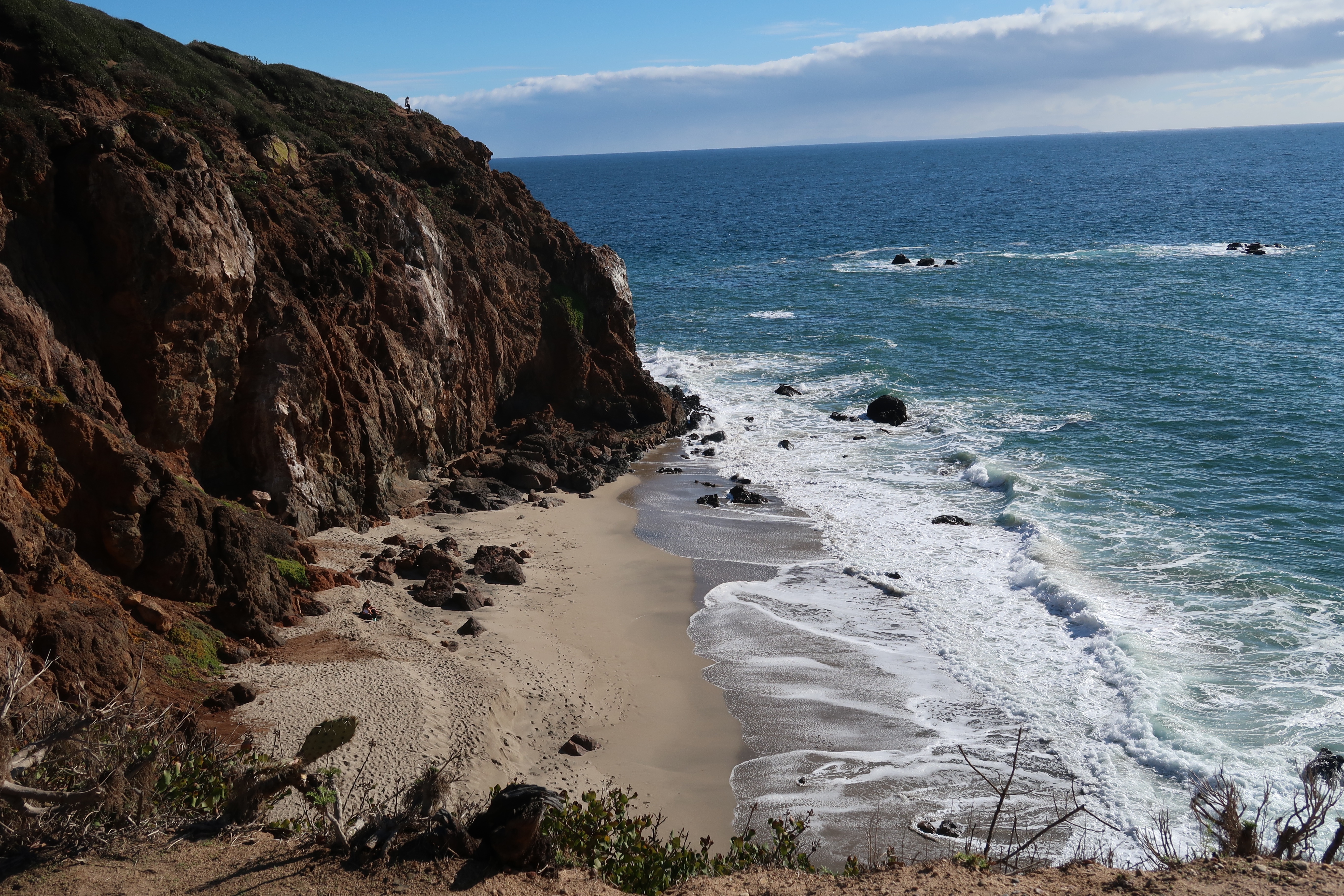
This is Point Dume State Beach and a little cove, named Pirate’s Cove, hidden away from the main beach by rocks that reached out into the Pacific. To get there, you had to time the tides (low tide is best) and then scrabble up and over some rocks to get to the secluded beach.

When I got down to Pirate’s Cove, I almost had the beach to myself, except for an amorous couple at the other end of the beach. I picked a location that was close to the camera position in the final scene of Planet of the Apes and I began to sketch in the forms with my dark sepia brush pen. It was a glorious day after a heavy downpour the day before and is relished the sun and the view before me.

Warning: what follows is a description of the ending of Planet of the Apes (1968) and it will spoil the surprise ending of the film so if you have not seen this film, please stop reading and watch Planet of the Apes (1968) ASAP!

The last scene of Planet of the Apes was filmed at this little cove and the true reveal is shocking, even to this day. Taylor looks up and sees the ruined, half buried Statue of Liberty and realizes that he has been on planet Earth the whole time. Earth has become dominated by apes. The final shot was accomplished by shooting in the real location and adding a matte painting of the ruined Statue of Liberty.

A view of Pirate’s Cove from the cliffs above.

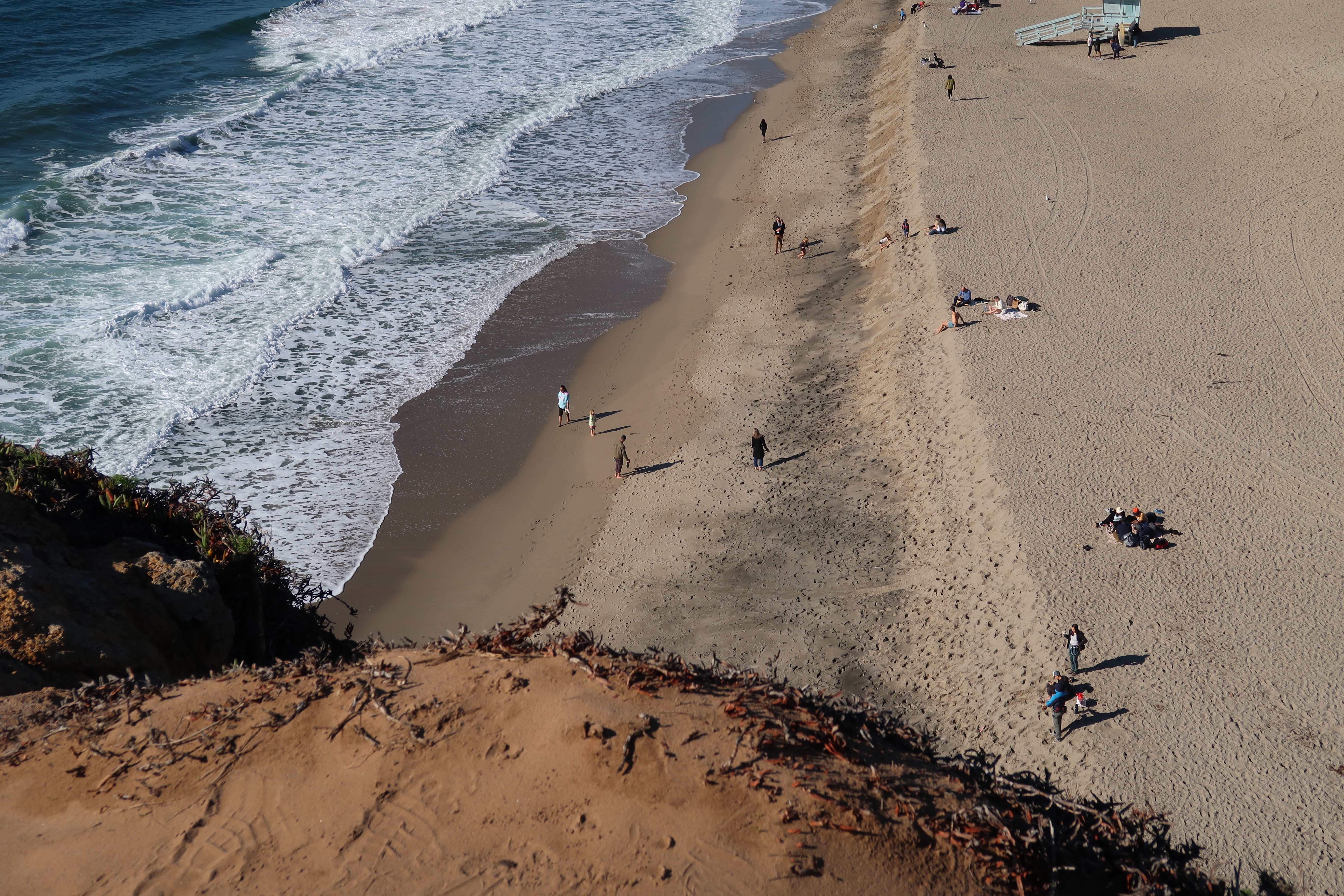
On the other side of the cove, at the southeastern end of Pt. Dume State Beach, the epic scene, just before the final shot, where the camera pans to the left, from a high angle. In the foreground view comes the torch and then the pointed crown of the Statue of Liberty. These where scale mock ups and where filmed from a 70 foot scaffolding built for the film. It was on this stretch of beach where Charlton Heston utters the famous final lines of Planet of the Apes, “They blew it up! God, damn you! Dawn you all to hell!”

This is approximately the angle seen in the film as the camera pans across the mock up of the Statue of Liberty. And this is where Heston spoke the final lines in the film. Maybe right where the lady in a light blue shirt is walking.

This final scene can be viewed on so many levels and this is one reason that this film is seen as a classic of the science fiction genre to this day. What does this ending say about the state of the United States or the world in 1968? What does it say about the plight of freedom, liberty, and democracy today? Like all great films, Planet of the Apes does not simply serve up easy answers but like any great work of art, it is thought provoking and lets the viewer decide for themselves, what the film, and it’s ending, ultimately means.

The final shot of Planet of the Apes.

Point Dume Beach was also used in one other Apes Film: Escape From the Planet of the Apes (1971). The wonderful beginning of the film was filmed here. A spacecraft is just offshore and the military stages at the beach to attempt a rescue of the astronauts. The general order the spacecraft open and he salutes and then falls into silence. The three astronauts have every appearance of being human, until they take off their helmets!

Image

Sketching, Trackside

Colfax, California is on the original Transcontinental Railroad. At Colfax, the climb of the western flank of the Sierra Nevada Mountains begins in earnest. The town started as a railroad construction camp and then was renamed by Governor Stanford to honor Vice President Schuyler Colfax who visited to check the progress on the western side of the Transcontinental Railroad.

What is special about Colfax is that it is one of the few places on the California Zephyr’s 51 hour and 20 minute route where trains 5 (westbound) and 6 (eastbound), pass within minutes of each other. That is, if the Zephyr is running on time, which is not too often. In California, the AMTRAK passenger service runs on Union Pacific rail and freight always has right of way. It pays the bills after all.

Both Zephyrs where scheduled to be at Colfax within a few minutes of each other at about 12:30 PM. At about 12:15, people with their suitcases began to arrive at the platform. I love the romance of train travel. The farewells at the station as one prepares for a rail journey, often to see far off friends and family over the Christmas Holiday.

12:30 came and went and no Zephyr.

Both Trains 5 and 6 were late. This is AMTRAK after all, a passenger service not known for it’s punctuality. The Chicago-bound, Train #6 was running about 30 minutes late. It had left Emeryville in the morning at 7:21 AM.

The California Zephyr eastbound Train #6 arriving at Colfax, about 30 minutes late. This train’s final destination is Chicago.

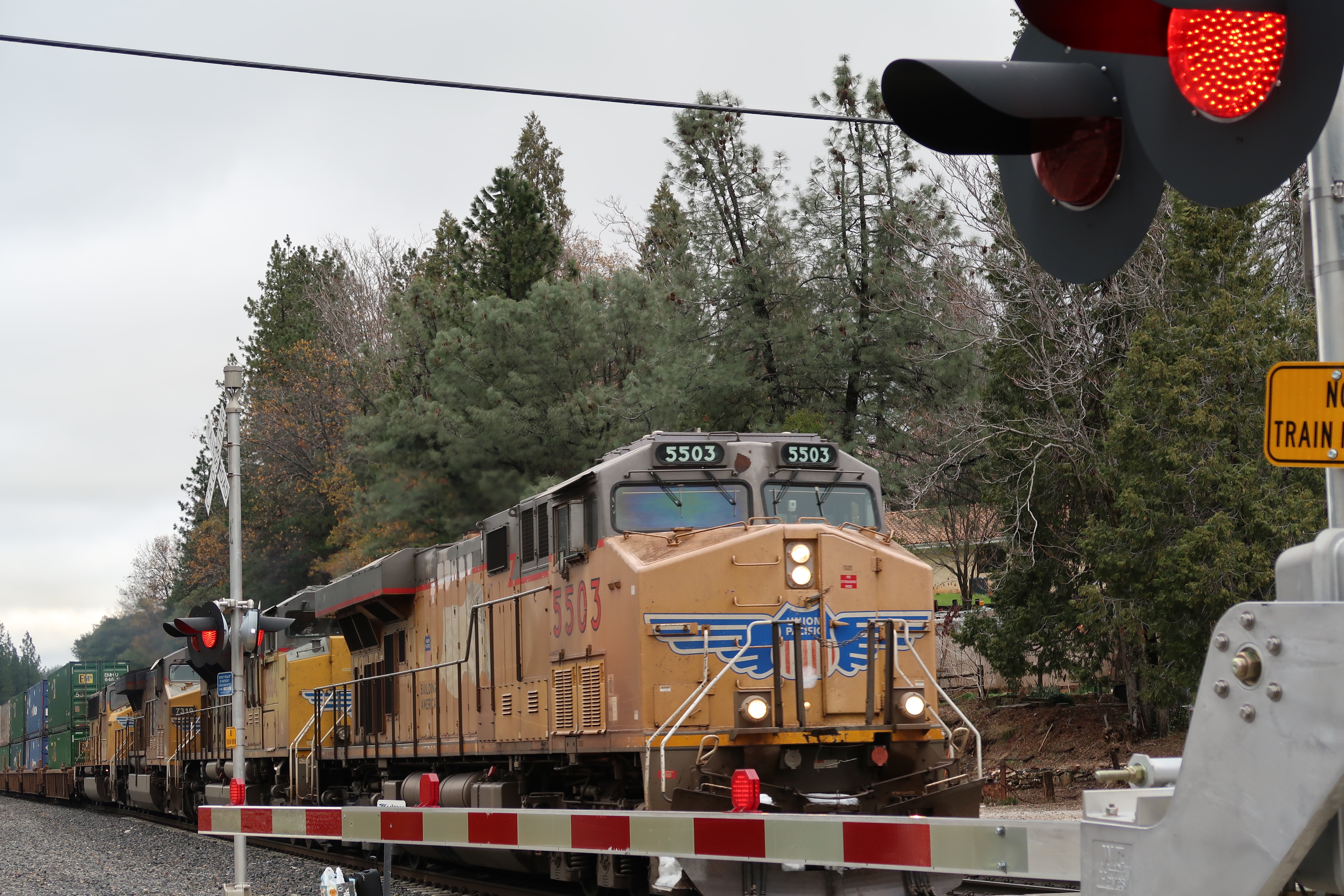
Train #6 pulled into Colfax station at 12:59 PM. I had positioned myself on the east side of the grade crossing at Grass Valley Street. The Zephyr had an eight car consist with a baggage car and seven passenger cars and was pulled by two locomotives. The train was too long for the station platform so when the Zephyr stops at the station, it stops traffic on Grass Valley Street. I had no way of knowing which car would be stopped at the grade crossing. It lent a bit of improvisation and serendipity to the sketch. And I would only have a short time to sketch the scene because the Zephyr would be in the station for about three minutes as passenger boarded or disembarked.

The train slowed to a stop and the baggage car came into sketch-view. I would be sketching this car. Great, there are less windows on the baggage car! I quickly sketched in the form of the car and then worked inward to add details. I had all the information I needed in about two minutes of sketch-time (you do lose sense of time when sketching). I would later add a few more details and paint.
Train number 6 headed out of Colfax toward Cape Hope and the summit of the Sierra Nevada Mountains at Donner Pass and then on to Reno, Salt Lake City, Denver, and eventually Chicago. I checked the status of the westbound train train number 5. It was running an hour and a half late. In about 10 minutes I found out the reason why.

Coming down from the summit was a UP freight wearing a dusting of snow on it’s pilot as it headed down towards the Bay Area. The five locomotives (four on point and another at the end) where hauling a long container consist that keeps a lot of trucks off our highways. The Zephyr was running behind this train which explains why it was running an hour and a half late.

I didn’t wait for the westbound Zephyr, I had already gotten my sketch in the book!
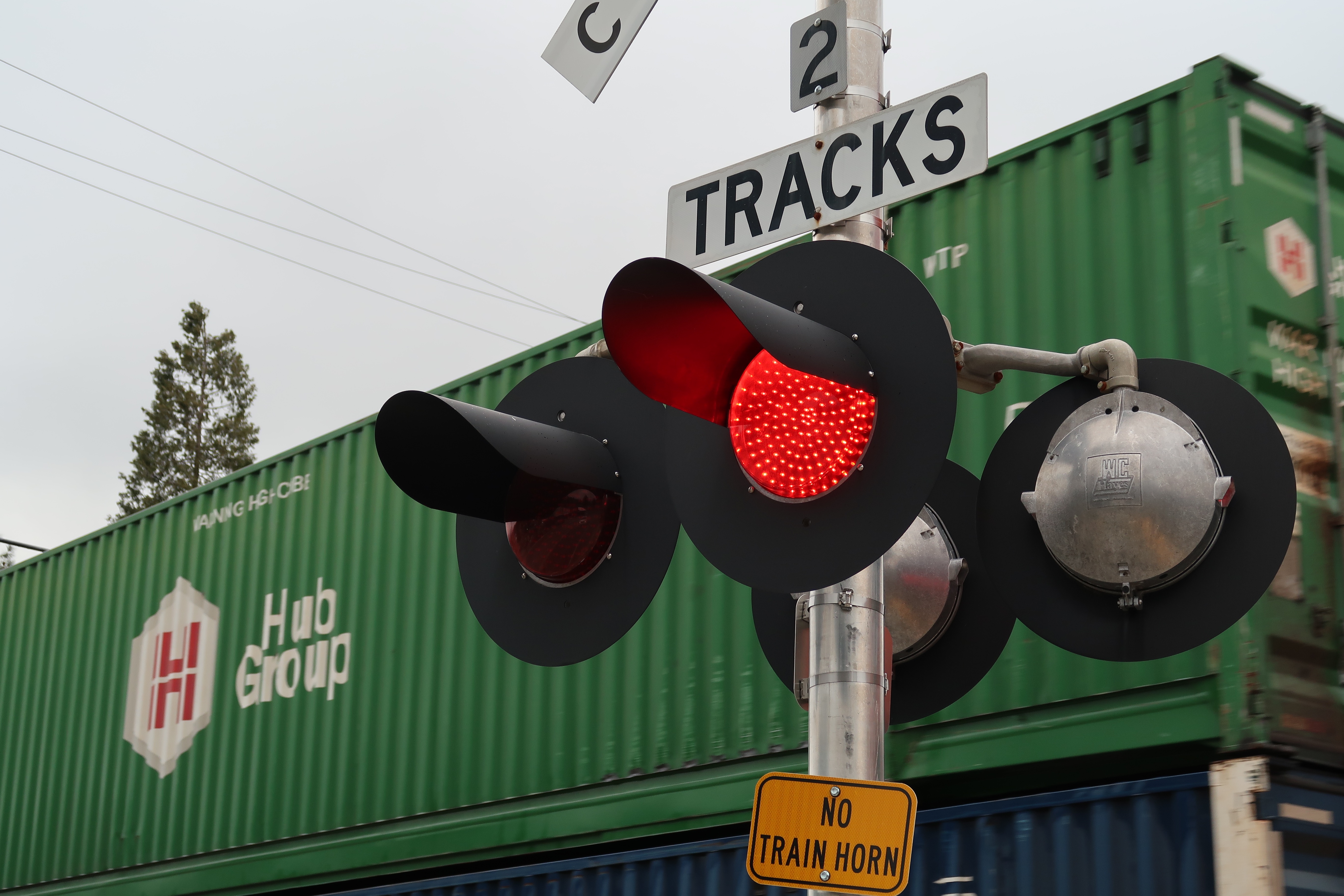
The train town of Colfax is a “No Train Horn” town.
Image

Suicide is Painless, It Brings on Many Changes

The hugely popular television series MASH, had it’s initial run from 1972 to 1983, spanning the first eleven years or so of my life.

The series became a backdrop or soundtrack to my life. While my family did not watch the show religiously, I knew the theme song (“Suicide is Painless”), the iconography, and characters of the show. Today, it seems like somewhere, around the world, one of the 256 episodes of MASH is being aired somewhere as a rerun.

The dramatic/comic series follows the doctors, nurses, soldiers, and patients of the MASH (Mobile Army Service Hospital) Unit number 4077 during the Korean War. Often in conflict are the civilian doctors (Hawkeye Pierce, Trapper John, and later B. J. Hunicutt) with the enlisted officers of the unit. The popular series ran for 11 years while the Korean War lasted for just three.

On my winter break, I planned to head to the southland to do some field sketching of one of the most iconic locations using during the MASH movie and the television series. This was the former 20th Century Fox backlot used from many films (Planet of the Apes) and television series (MASH) which is now Malibu Creek State Park.

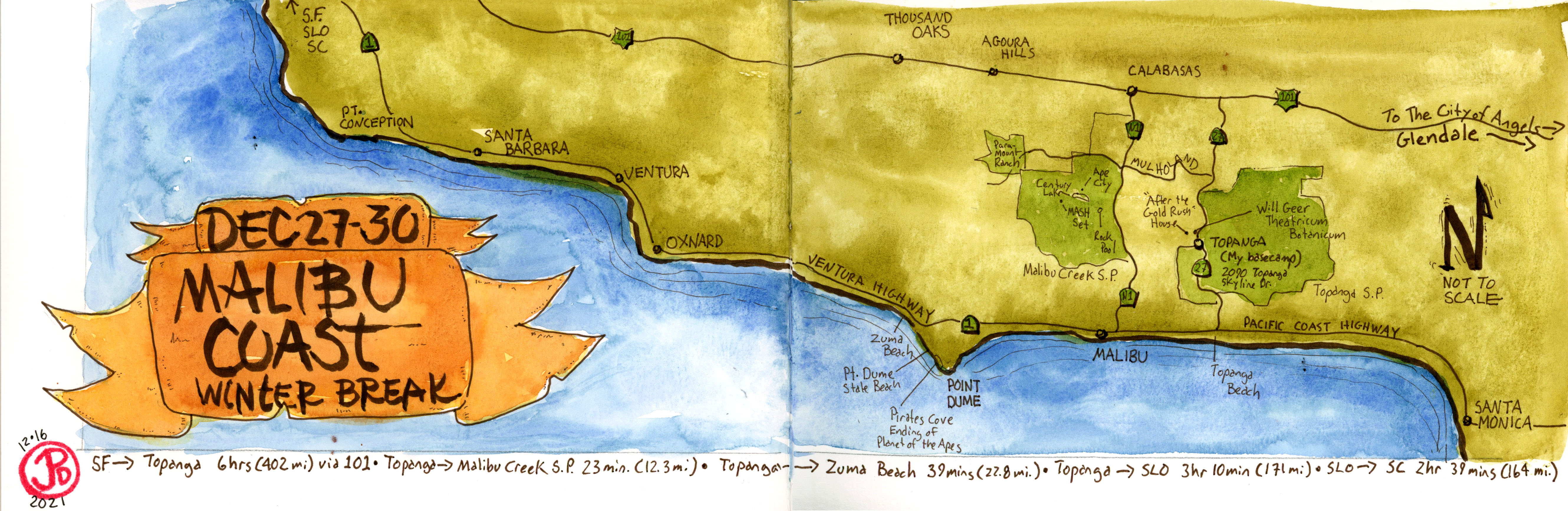
Of course I started my planning with a map. In this case, a map of the Malibu Coast covering Topanga, Malibu, Zuma Beach. and Malibu Creek State Park.

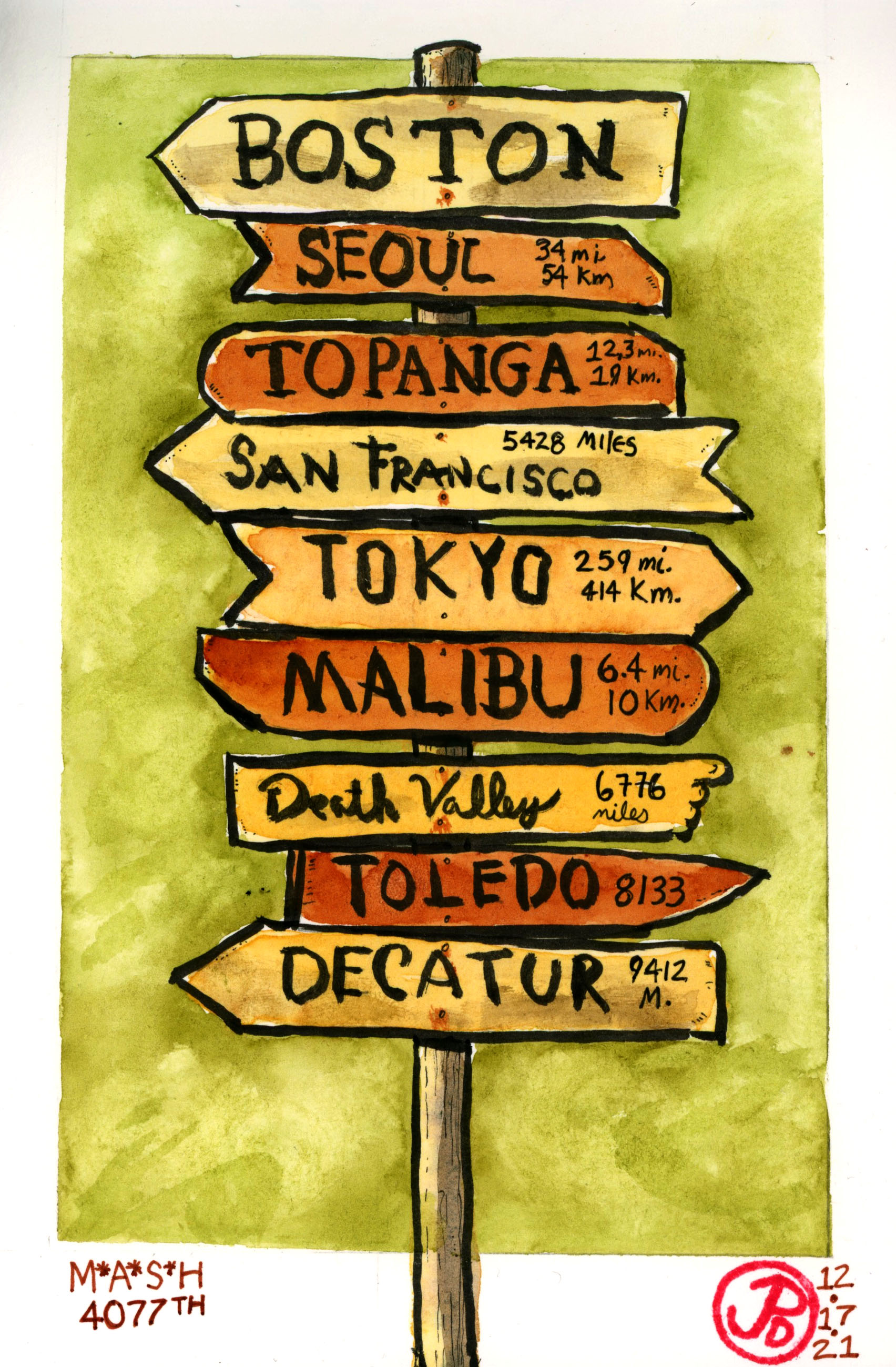
I often like to do some sketches before I leave on a trip to put my mind’s eye into the location. The featured sketch is based on a screen shot of the pilot episode of MASH, the television series showing the iconic opening as Radar looks on as two helicopter fly towards the helipad with wounded soldiers. The second sketch is of the famous MASH signpost. This was based on a photo of a replica of the sign. The original signpost is in the Smithsonian in Washington DC. I used a little artist license as I changed two of the locations to reflect the real location of the set: Malibu and Topanga (where I would be staying).

Image

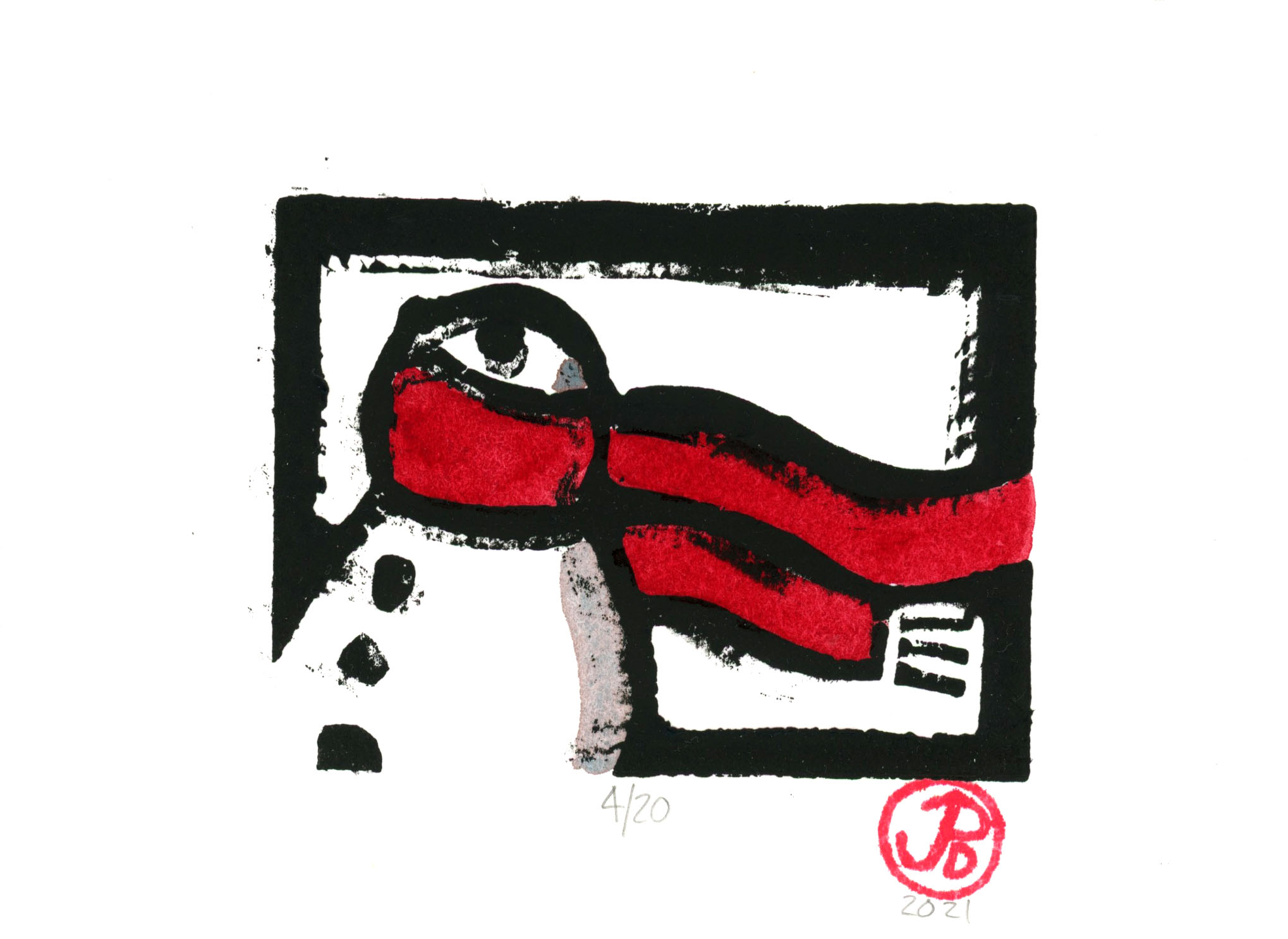
Snowman Print 2021

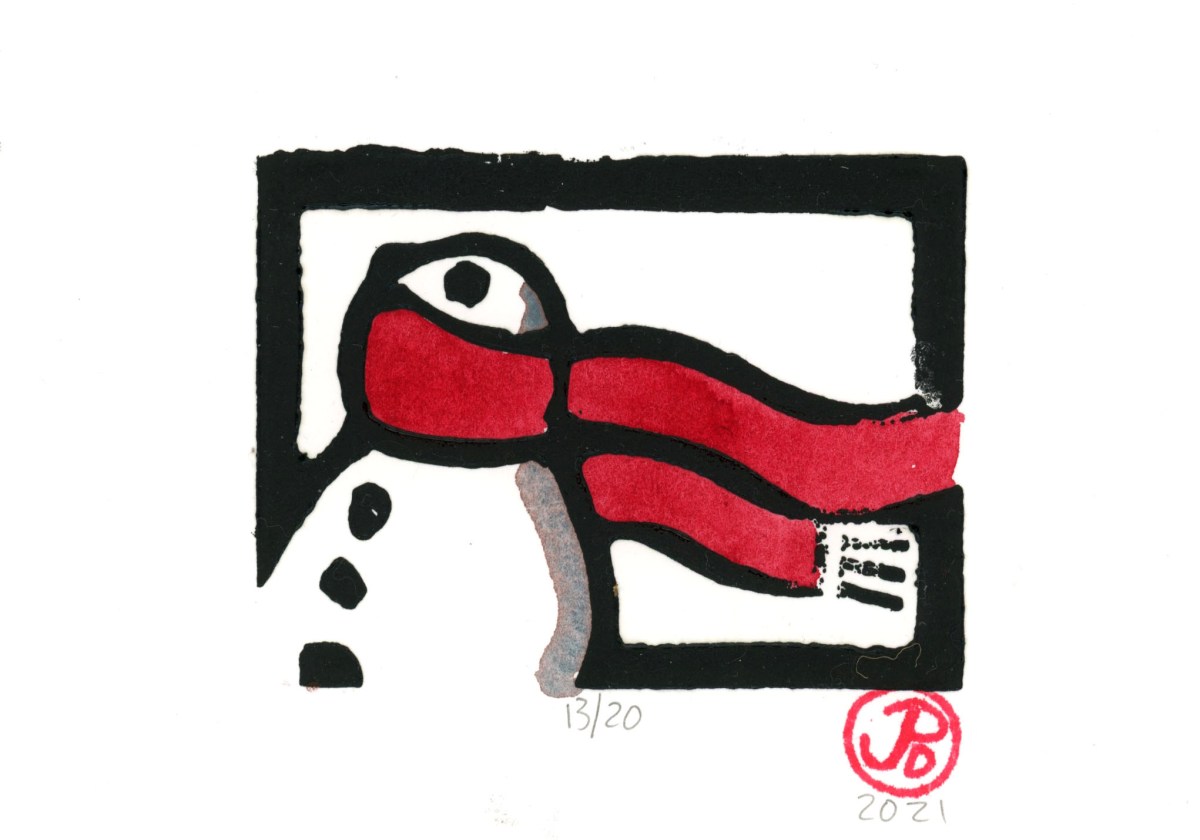
This year’s linocut print is very topical and reflects the strange times we’re living in.

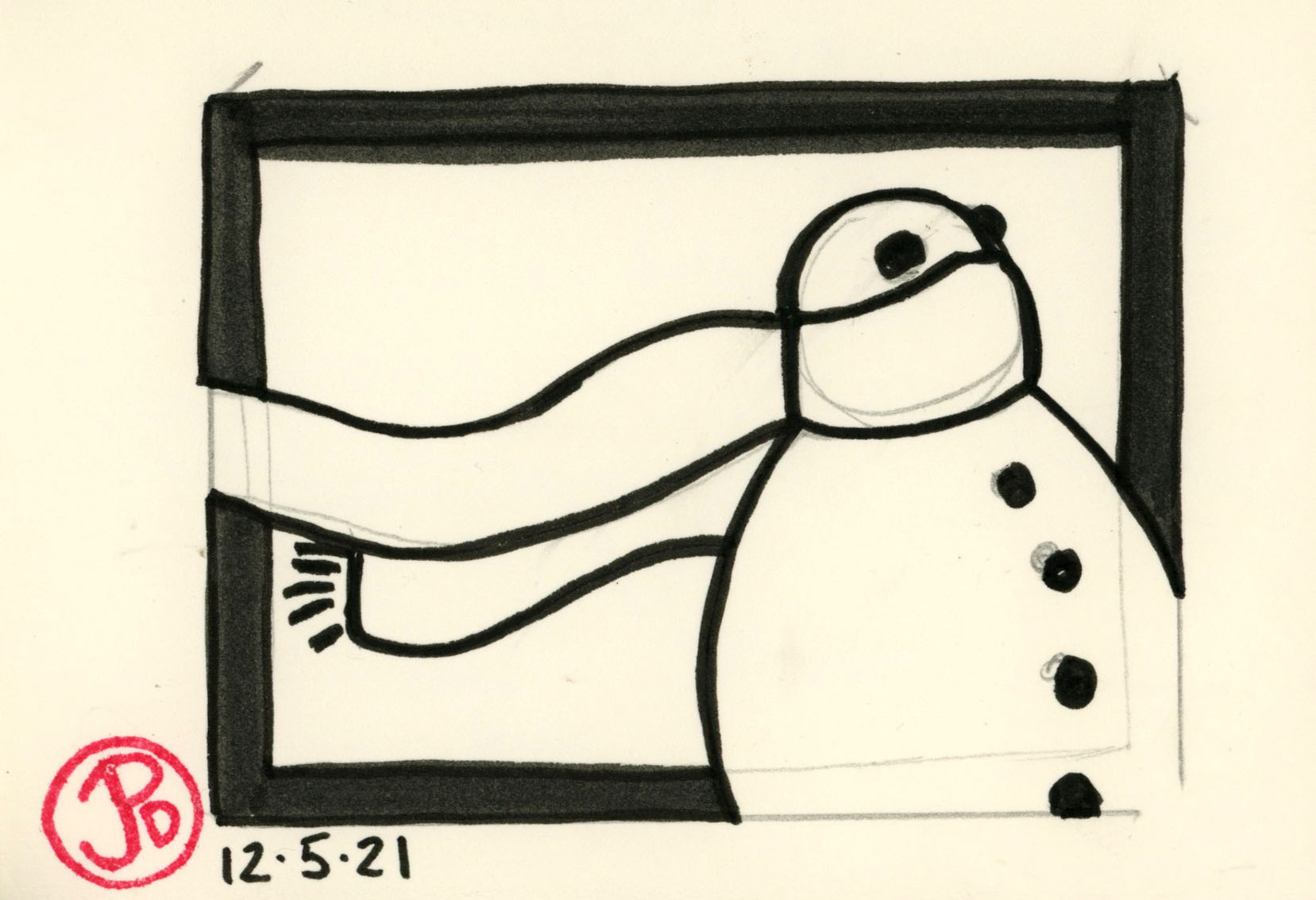
It took me a couple sketches to get the right image that I was willing to carve and then print. There is a bit of improvisation in the carving process but you really need to preplan the finished image only you have to think backwards.

My final sketch where I zeroed in on the design, which didn’t change much from this sketch.Okay there is one less button in the carved block. You will notice that the final print, the image is reversed.

In the end I’m satisfied with the final prints and they speak to the post Covid times. While Christmas is an escape from reality, we should never fully forget what has happened in the past few years and this image is a reminder.

Carving the block. I went over the lines in a back marker so it makes carving out the image a little bit easier. I made a few mistakes in the carving but now, like Japanese pottery, they become part of the final product.
Here is the finished block with my makeshift registration jig. The jig lines up the paper so the print appears in the same place on every printing. Now it only needed to be charged with black ink and pressed into paper.
This print was one of those “happy accidents”. The paper shifted slightly during printing and created a unique image that is almost impossible to duplicate. I love it’s expressiveness. I gave this print to my best friend.
Image

The Prairie and the Neotropic

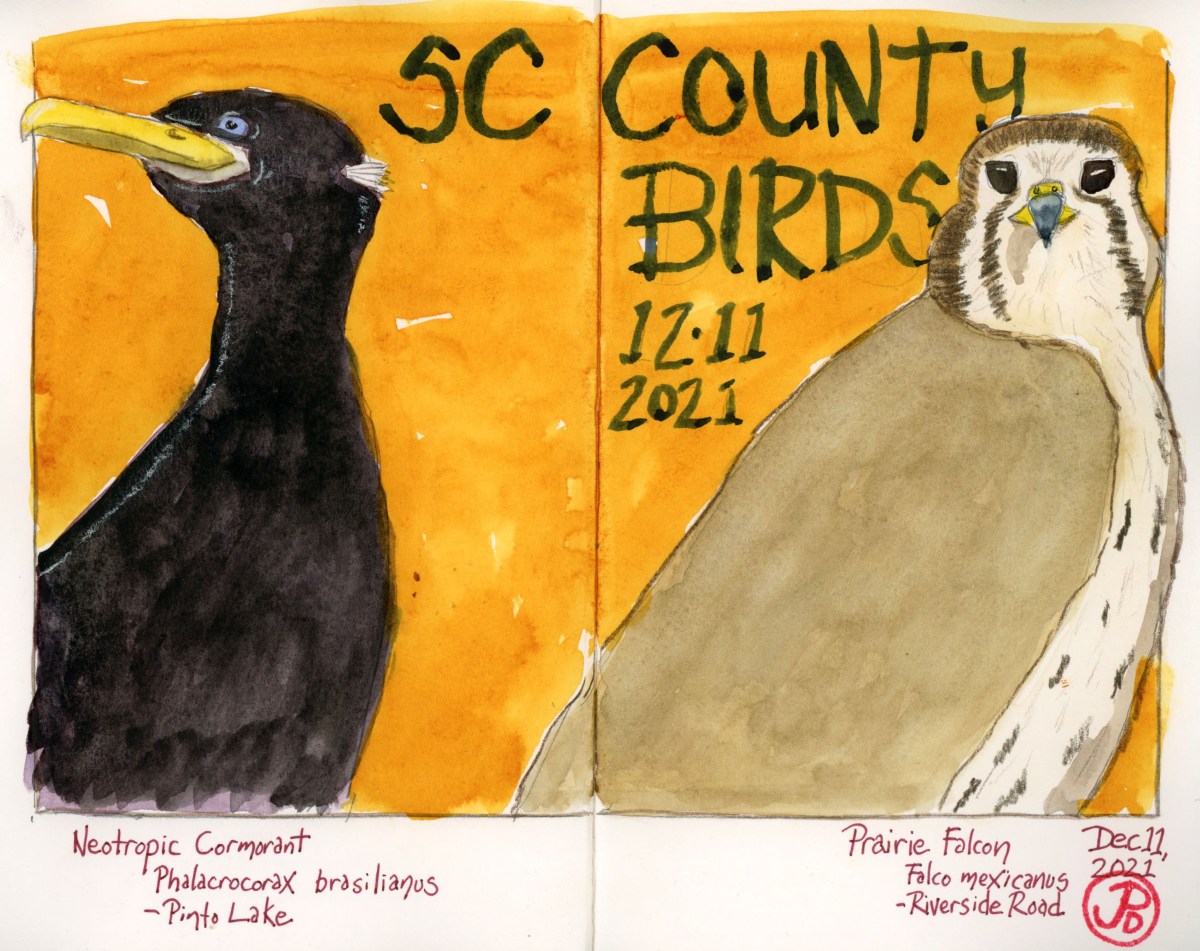
I have often said that birding is a type of madness. Even more so if it’s a county bird you’re after because this is a species that I have seen many times before but not in Santa Cruz County!

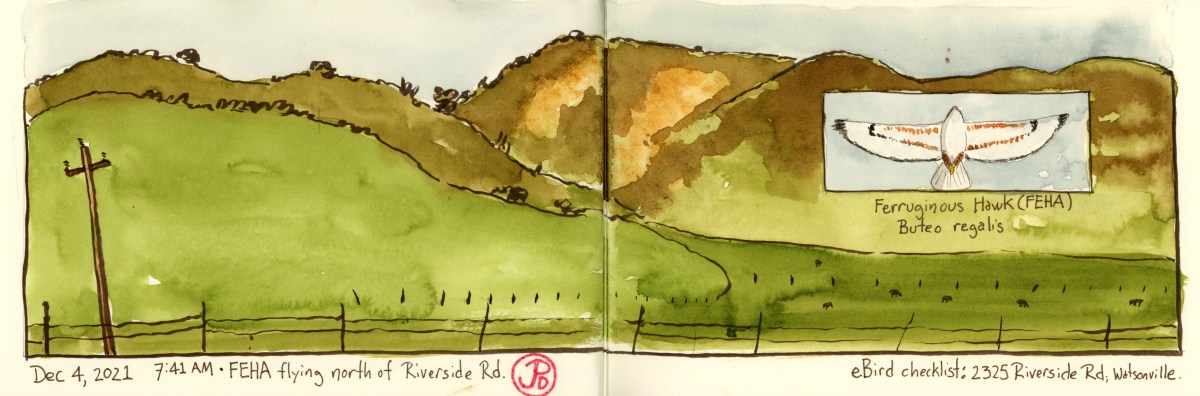
I had missed out on the wintering prairie falcon on the southern edge of Santa Cruz County near Riverside Road. I returned, for the third time, to see a sandy falcon with dark wingpits. I pulled off Riverside Road to scan the pastures, like I’d done three times before. The morning was sunny and clear with blue skies. It was very chilly with the temps hovering in the mid 30s. My hands where numb and for the life of me I couldn’t find my second glove. But what warmed me, was the large hawk circling above the pasture in beautiful morning light. It was the overwintering ferruginous hawk.

But there was no prairie falcon in the air or on any fenceposts so I moved east down the road towards the county line.

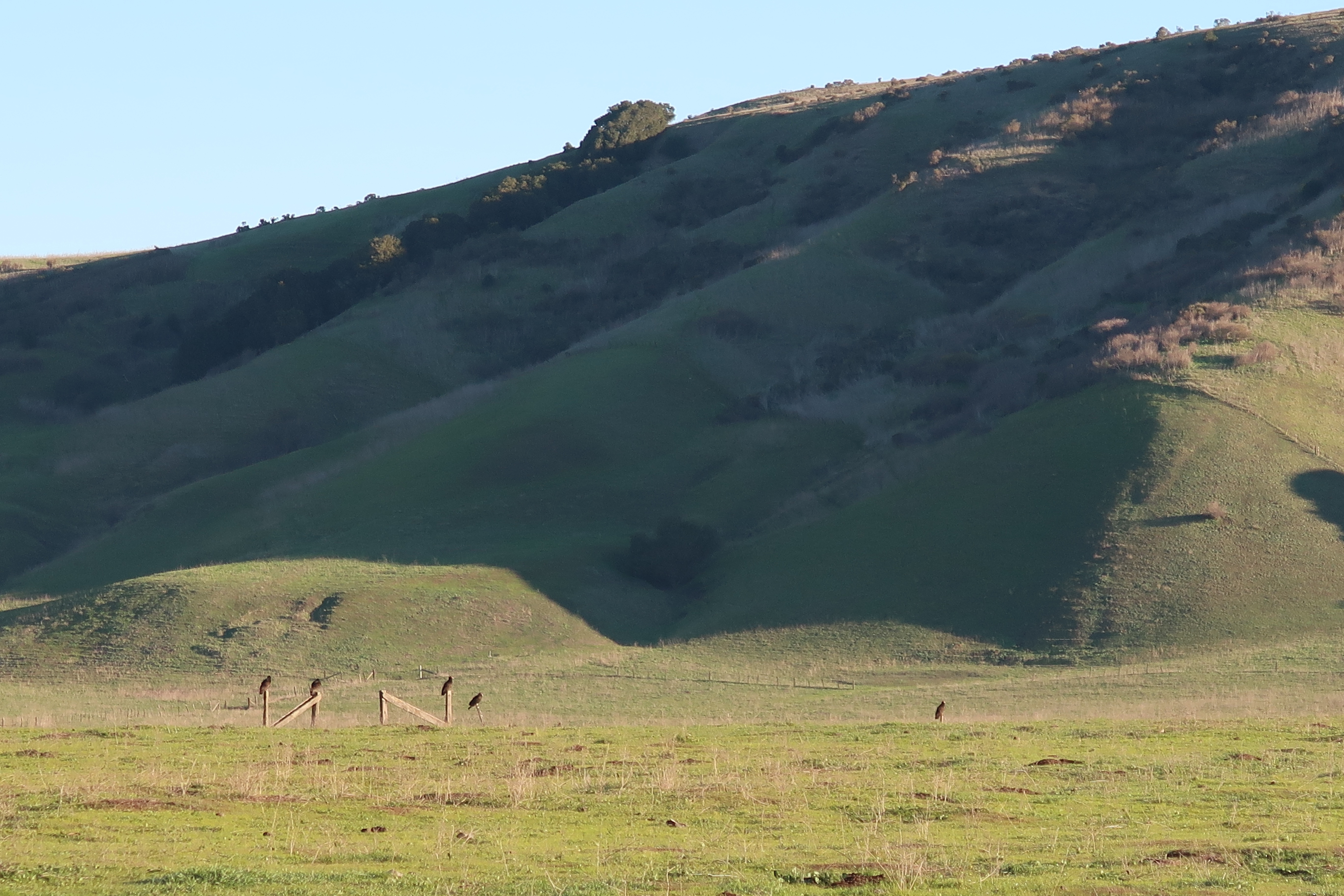
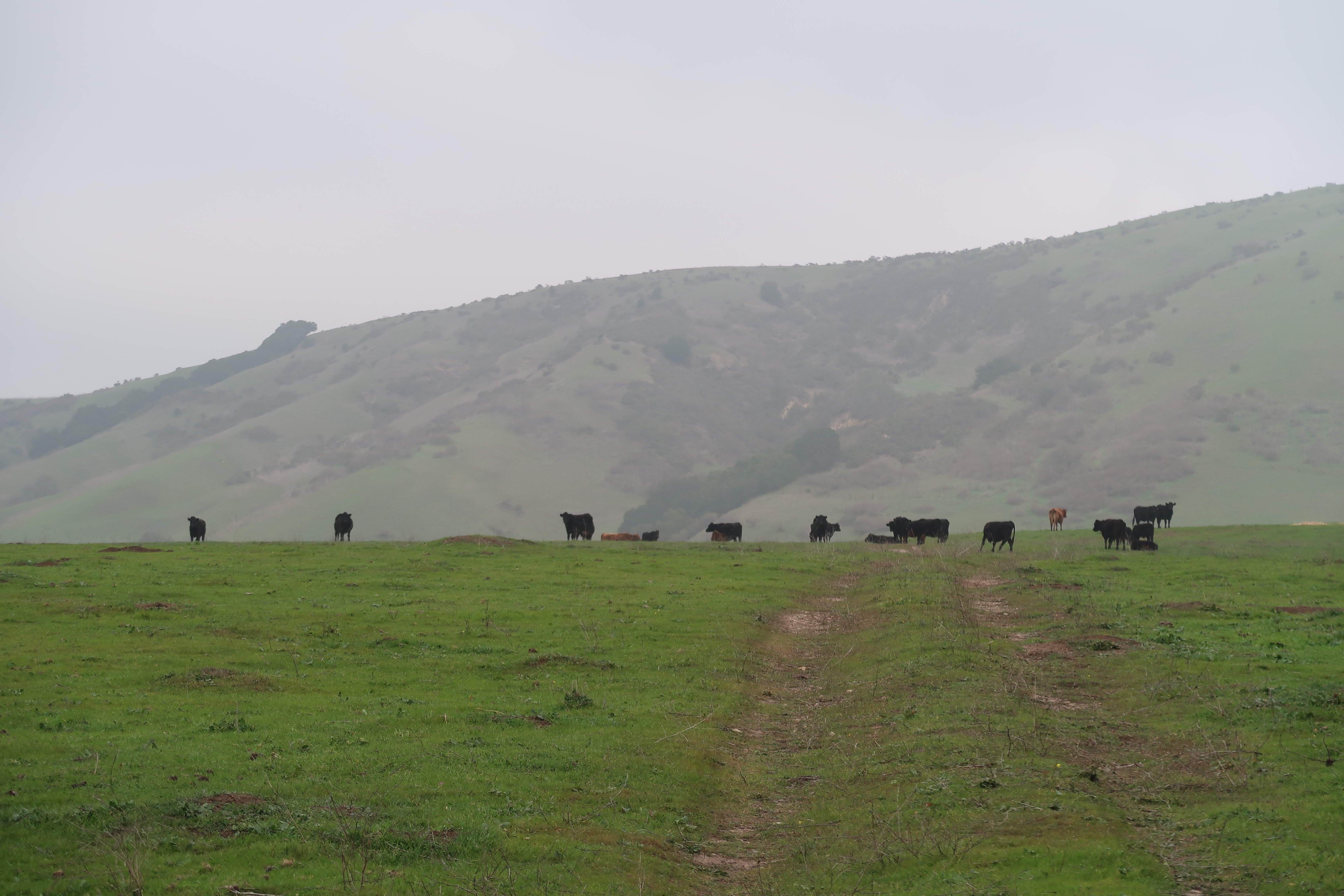
In the field, on almost every fence post, where turkey vultures, warming themselves in the morning sun. A lone red-tailed hawk was on a post. Further north, near the base of the hills, was a growing kettle of turkey vultures, rising in the air.

With the naked eye, I could see a bird circling with the vultures. It was much, much lighter compared to the vulture’s black livery. I raised my binoculars and here was my county bird: prairie falcon (Falco mexicanus)! The falcon stooped on a vulture below it, practice hunting I suppose. The falcon continued to circle with the vultures and then peeling off in powered flight as it headed towards the hills to the northwest.

Fence sitting turkey vultures in beautiful morning light.

With the prairie falcon in the bag it was now time to look for the extremely rare visitor that was first seen at Pinto Lake two days before. It was spotted again yesterday after some local birders rented a boat to head out into the lake (hopefully I wouldn’t have to rent a boat to add this bird to my county list). There was a report that the bird had been seen in the middle finger of Pinto Lake in the mid morning. At Pinto Lake, there where a hundred double-crested cormorants at any given time. This could be an exhausting search.

I arrived at the middle finger of Pinto Lake at about noon. I spotted one double-crested cormorant and not the southern visitor so I walked out to the point to scan the main body of the lake. There were a lot of gulls on the water but very few cormorants.

I headed back along the western edge of the finger. There were a few ducks, three hooded mergansers, and more coots but no cormorants. Just when I was about to end my search and head back to my car, three cormorants flew past me heading north up the finger. One of the cormorants stood out. It was much smaller and darker than the the double-crested cormorants it flew besides. The birds moved out of view but I had no doubt that they landed on the water.

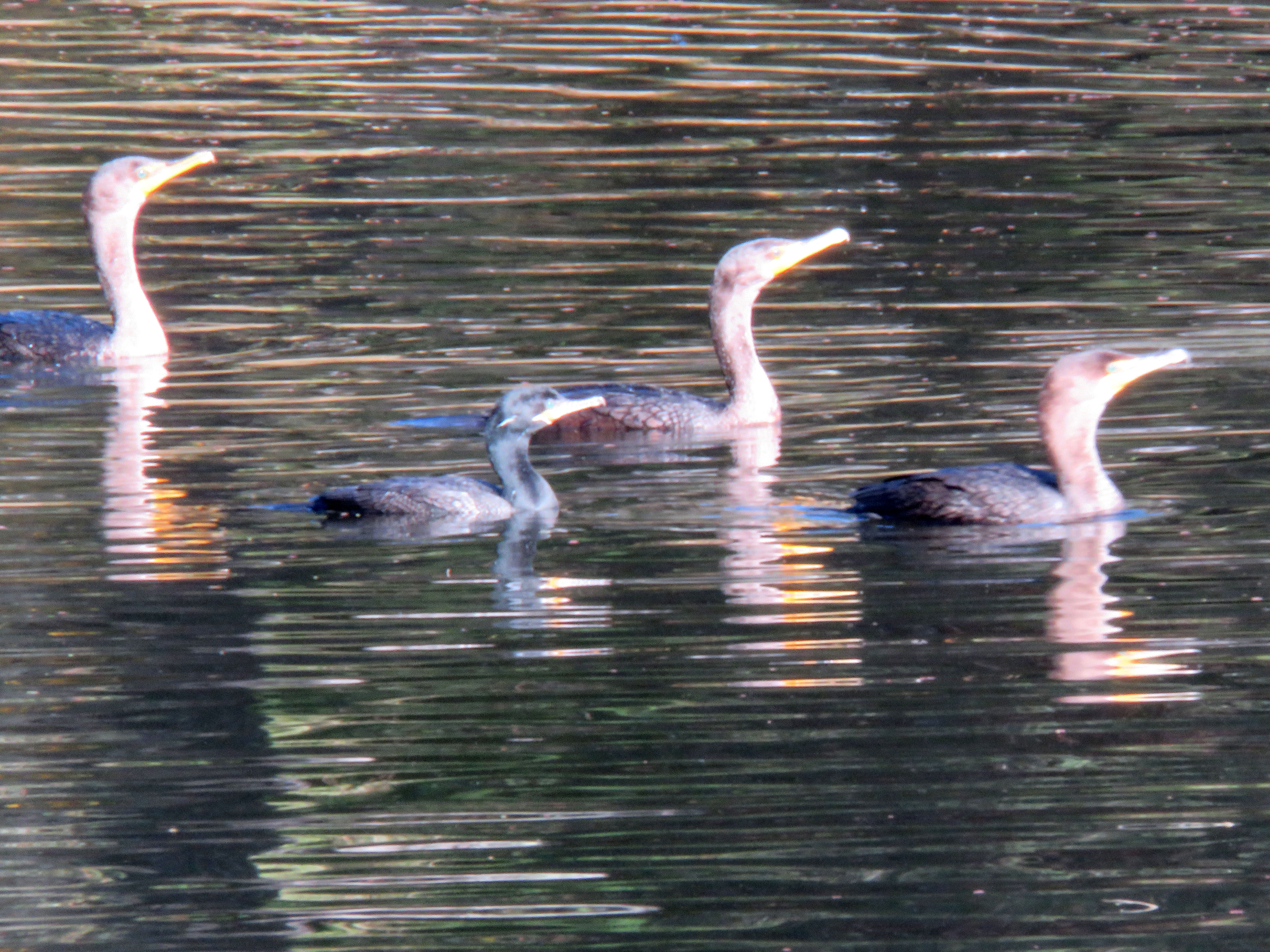
I ran down the trail to an opening in the vegetation (birding is a kind of madness after all). There were the three cormorants on the water. One was much smaller and I noticed other details such as the white “V” that framed the base of the beak and the white “sideburns” of it’s breeding plumes. This was the neotropic cormorant (Phalacrocorax brasilianus)! A very rare county bird! In fact this was the first time that a neotropic cormorant had been seen in Santa Cruz County!

The cormorants stayed in view for about five minutes before taking to the air and flying back toward the open lake. I had been lucky with my brief encounter with a Santa Cruz County rarity.

One of these cormorants is not like the others.
Image

Wintering Raptors

The winter in California, is the time of raptors.

Prairie falcon, merlin, rough-legged, and ferruginous hawk, bald eagle. These are exciting times to get out in the field, when raptors have replaced the neotropical migrants, who have headed south.

On a Saturday morning I headed east of Watsonville on the eastern edge of Santa Cruz County on Riverside Drive (Highway 129). Here was habitat like no other in Santa Cruz County, open rolling hills and pastureland. This was habitat like San Benito County, which was really just a mile down the highway. This was the perfect habitat for wintering raptors.

Recently a prairie falcon and a ferruginous hawk had been seen in the area. These are both birds that I look forward to seeing at this time of year. And a prairie falcon would be a county bird for me.

I pulled off Riverside Road at a dirt pullout. Across the road was perfect winter raptor territory. In the foreground was green pastureland with plenty of hunting perches and in the background where the green rolling hills, the realm of golden eagles. It is this view that is the featured field sketch.

To my left I saw some motion against the hillside. I put bins on the raptor and it was one of the prizes I had been looking for, our largest hawk: Buteo regalus! The hawk circled above the ground and then stooped down, landing of the ground. It returned to the air, a minute later, empty taloned. The ferruginous hawk crossed the road and flew above me, paralleling a line of eucalyptus trees. The hawk moved east and out of view.

I moved on down the road and a falcon being pursued by crows crossed the road in front of me. It could be the prairie falcon but I didn’t get a great look at the raptor. I tried to relocate the possible prairie but like most falcons they can be just seem to be passing through, very quickly. This was not enough to tick this bird off on my Santa Cruz County list.

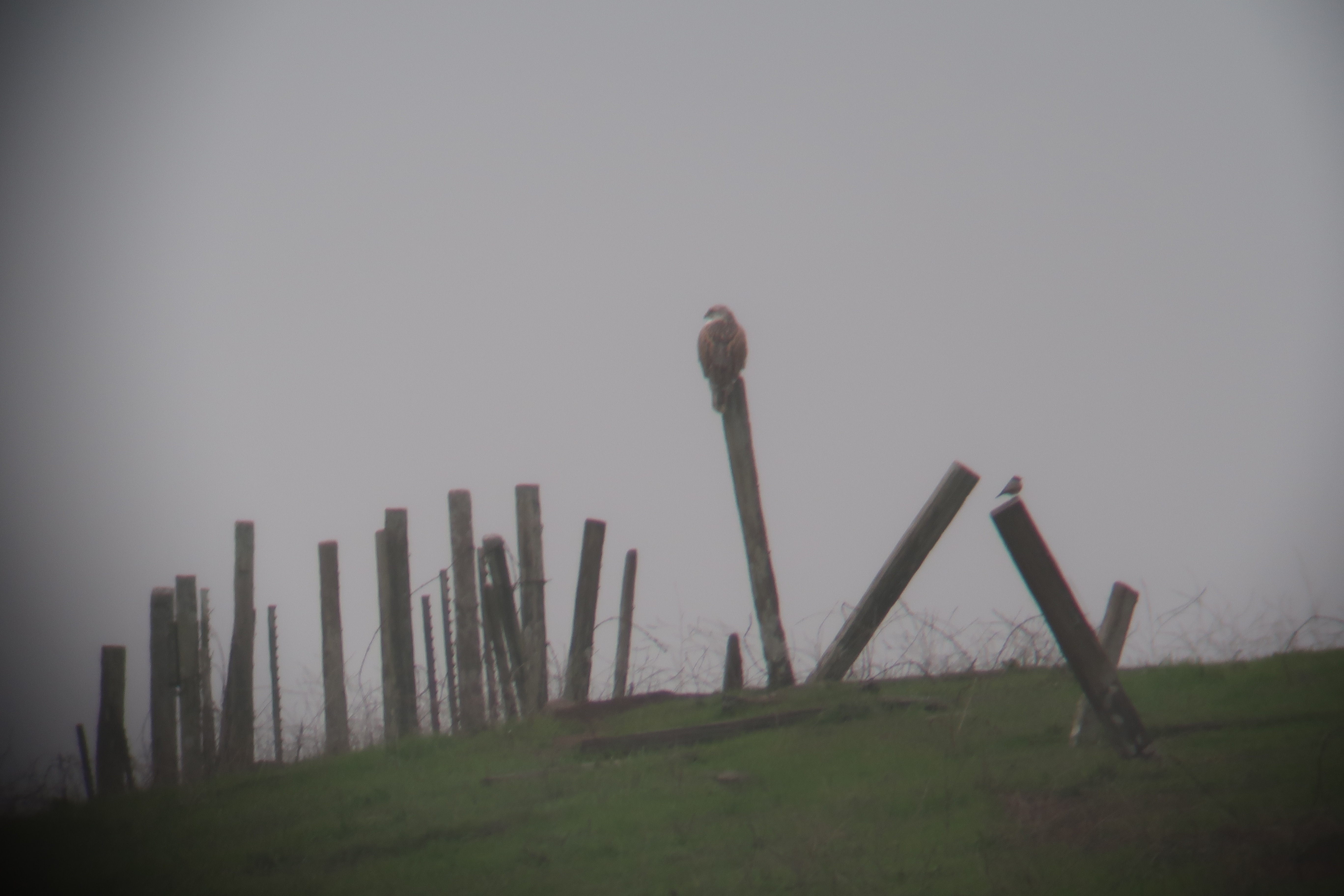
A digitscope of the wintering ferruginous hawk and a Say’ phoebe. This is from a return visit to Riverside Road on Sunday morning.
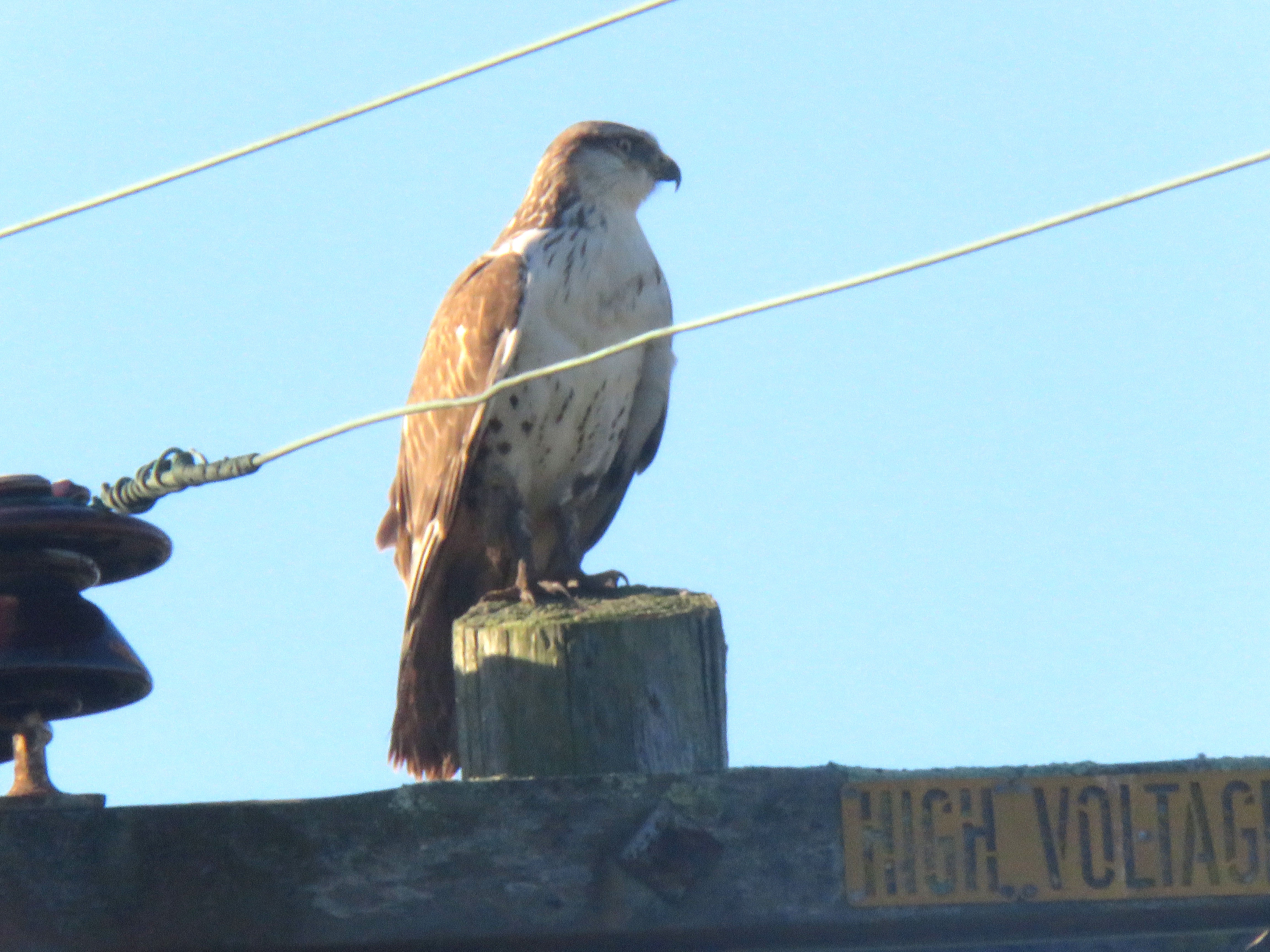
It must be winter in the Bay Area. Here is a perched ferruginous hawk, our largest hawk, in Princeton near the Half Moon Bay Airport.