Image

Birding the Esplande

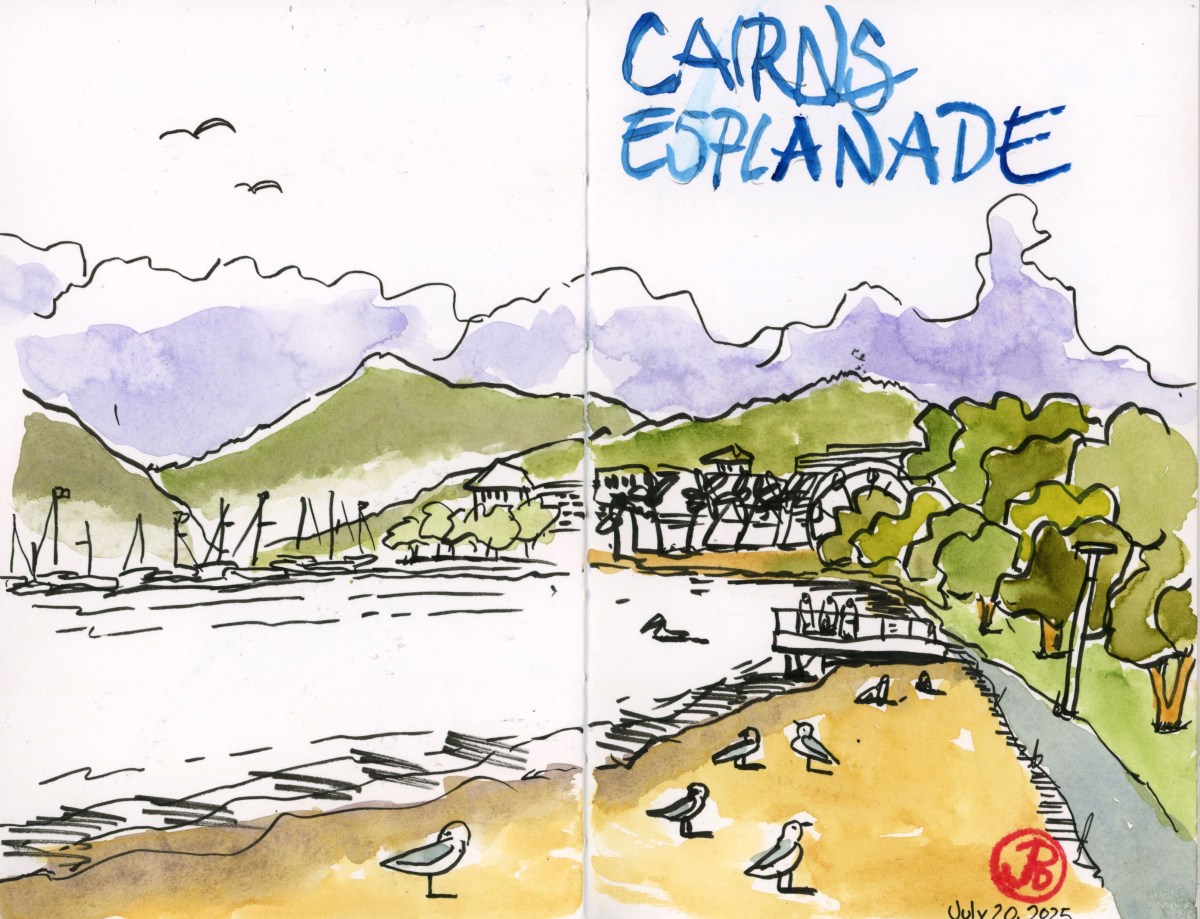
The top birding site in the Australian State of Queensland is the Cairns Esplanade.

The esplanade is a path that runs north to south along the water with parks and trees bordering to the west. This path is popular with joggers, bikers, and dog walkers, as well as birders from around the world.

When the tide is right, many waders feed close in on the exposed tidal flats but there are always birds to be found foraging in the trees.

With the following sketches I highlight a few of the species I encountered on the Esplanade. While none of these species are rare or Esplanade specialties, they are birds that grabbed my attention.
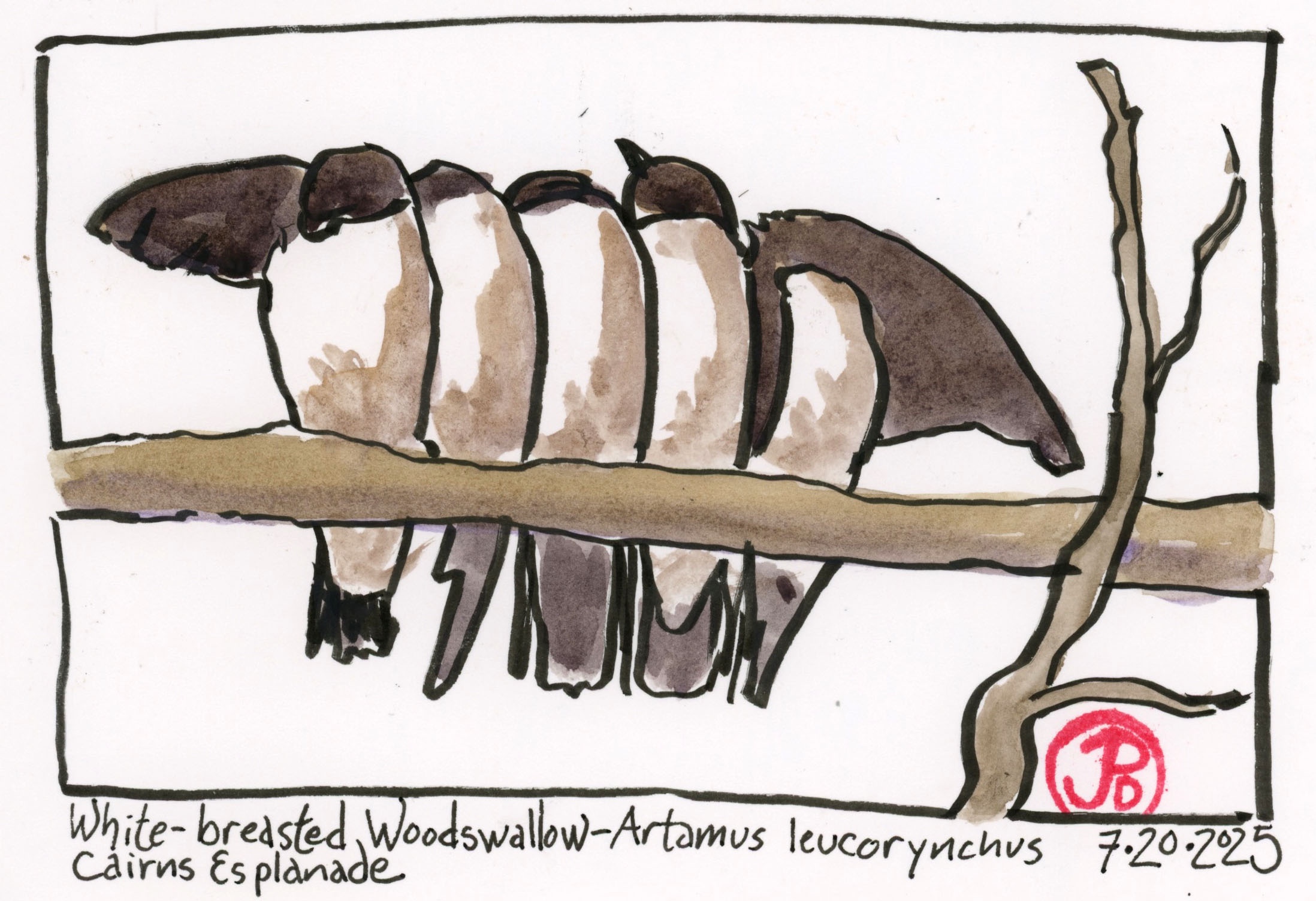
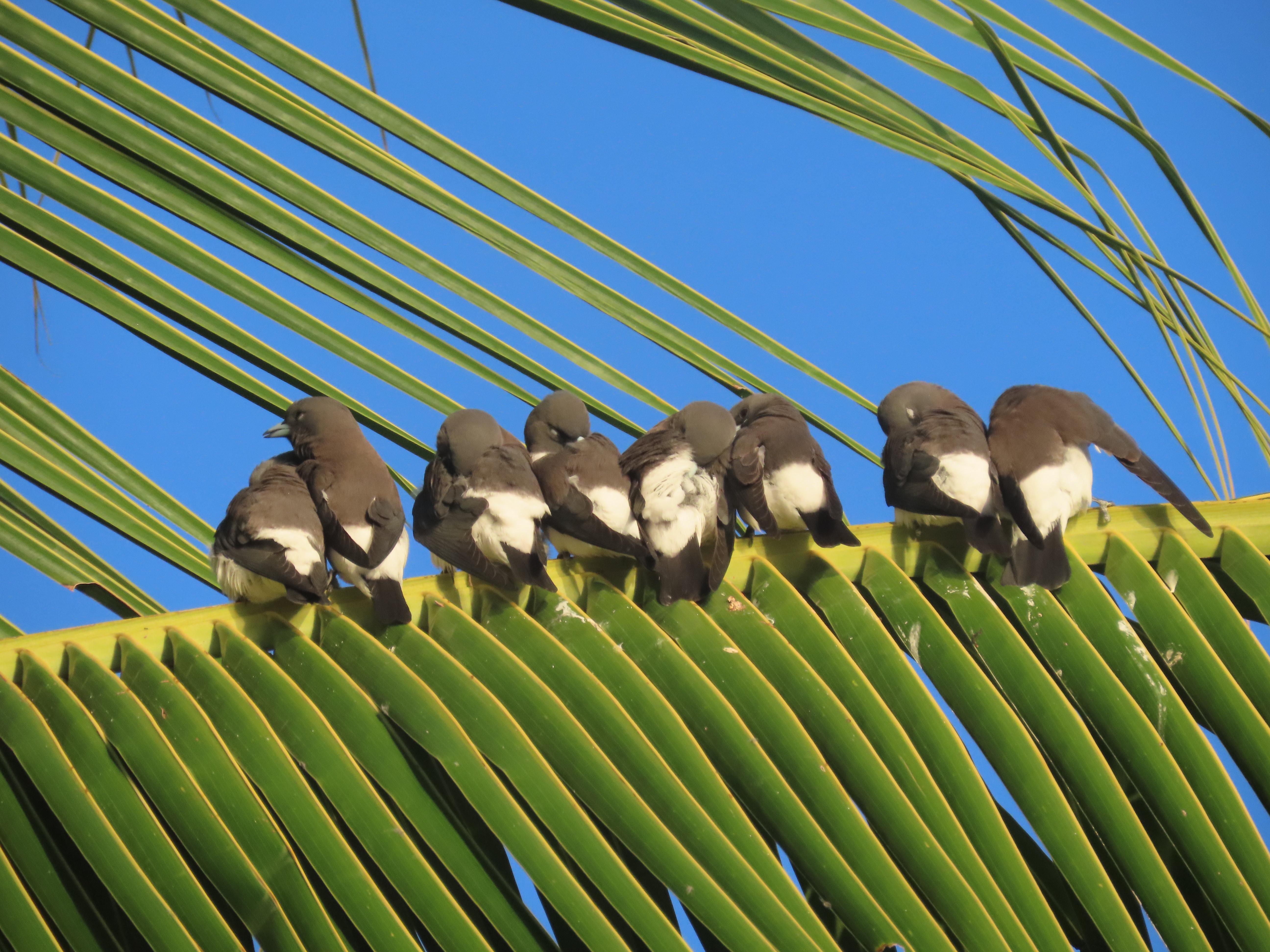
Ever since seeing woodswallows in my Australian bird guide I knew I wanted to see them, primarily because of an interesting behavior. My guide reads, “compulsively social when loafing or roosting, often settling in tight rows on branches to sleep or to preen themselves or each other”. There are six species of woodswallow in Oz, these were white-breasted.
While in Australia I added seven species of kingfisher to my world list including the world’s largest kingfisher, the laughing kookaburra. I added my last species of kingfisher on my final day in Cairns birding the northern Esplanade.

In my bird guide it is known as the collared kingfisher but is now known as the Torrisian kingfisher. Named for the Torres Strait which is the body of water separating Queensland and New Guinea.
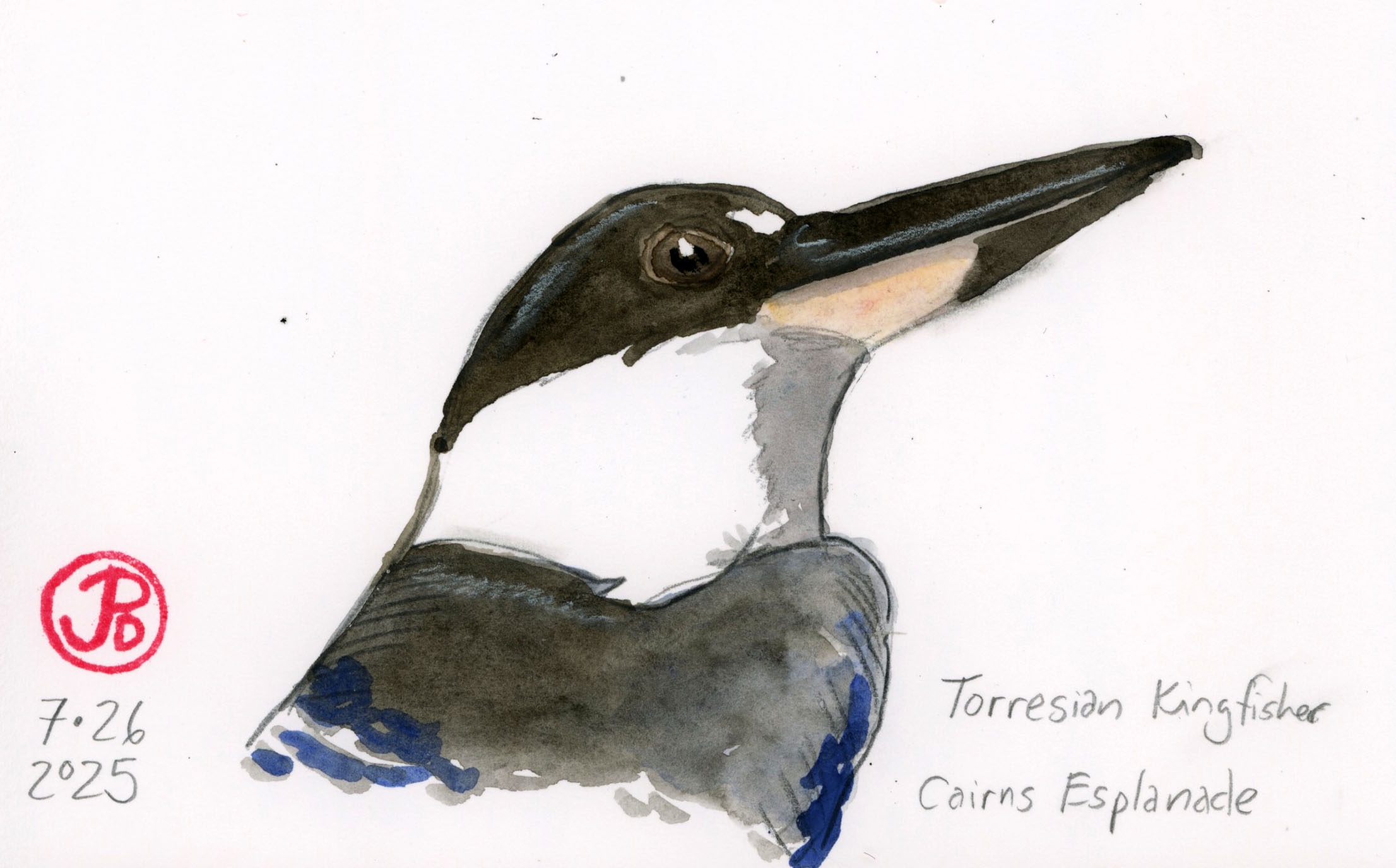
I had missed this larger kingfisher on two other visits. The most common kingfisher on the tidal flats and in the trees was the wonderfully named scared kingfisher.

On my last pass I found two Torrisans perched in trees near the water. They were both calling and having me stunning looks in the morning light!
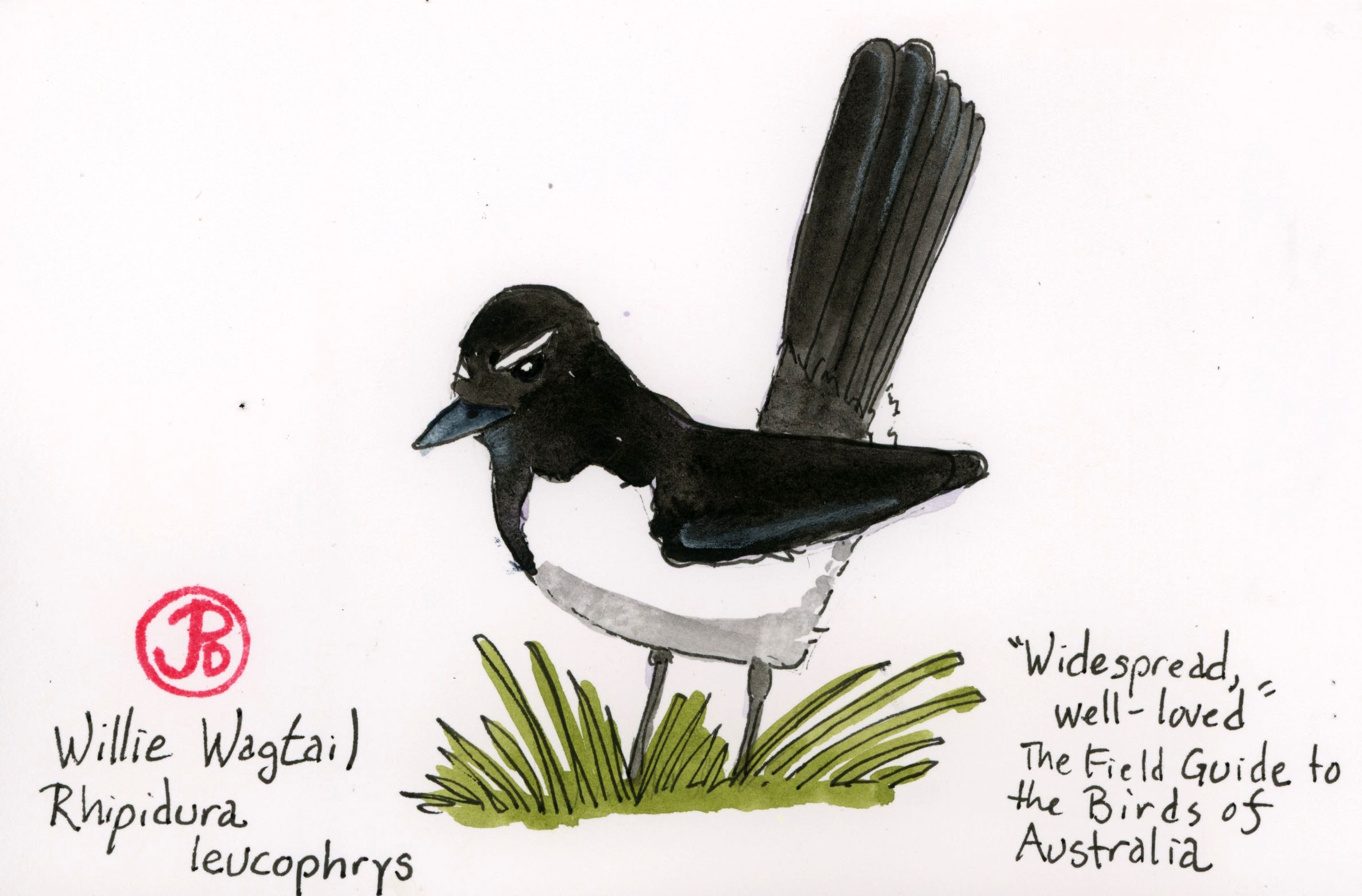
The final bird that I am highlighting is perhaps the most common and as one bird guide notes, “widespread and well-loved”. And I certainly loved my encounters with the Willie wagtail.

The wagtail seems to relish being in the presence of humans. While I was walking across a lawn at the northern end of the esplanade, a Willie wagtail flew up to me and landed close. The bird followed me as I traversed the grass and I realized the wagtail was using me like the cattle egret uses cattle, as a way to scare up bugs from underfoot.

I had experienced this behavior once before, as I was being followed Wunce by a barn, swallow, while I was crossing a soccer pitch.
Image

Searching for the Dinosaur Bird

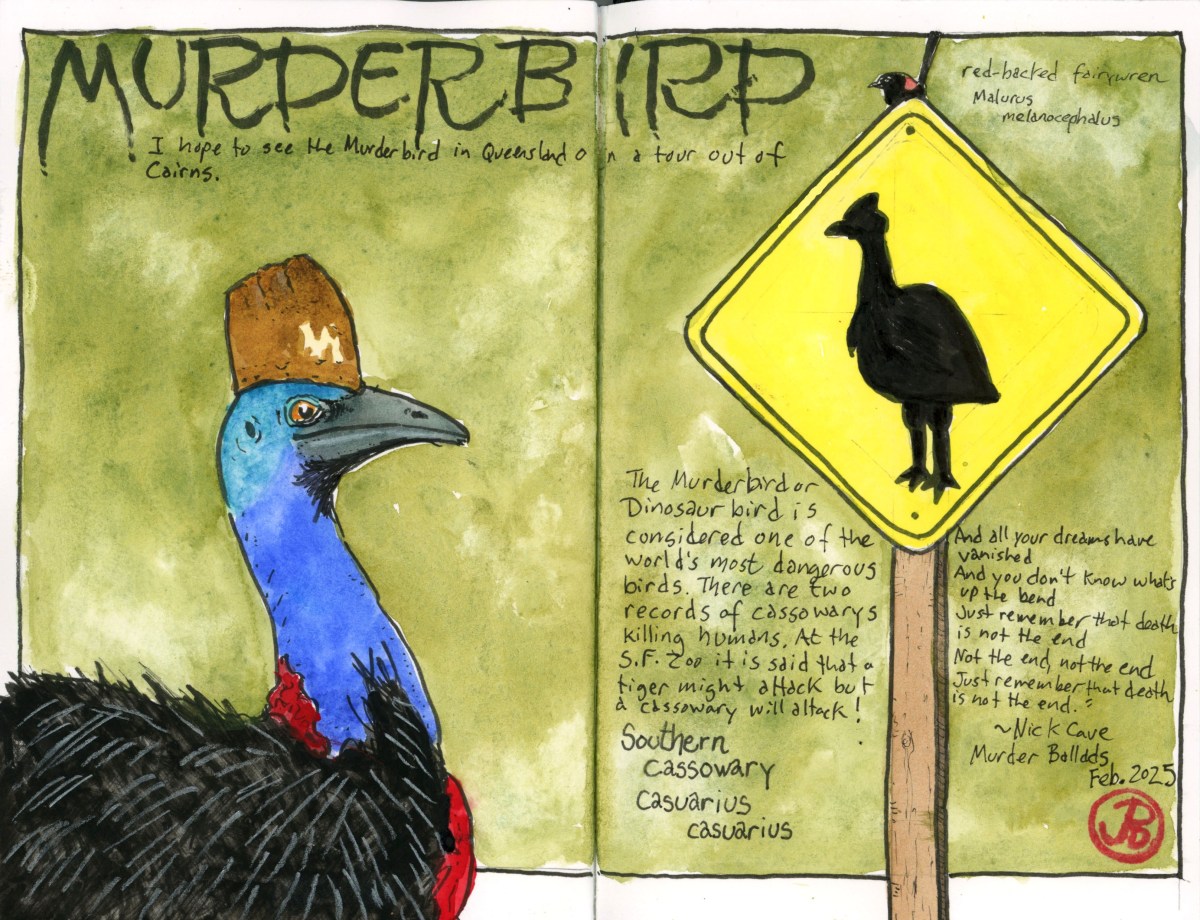
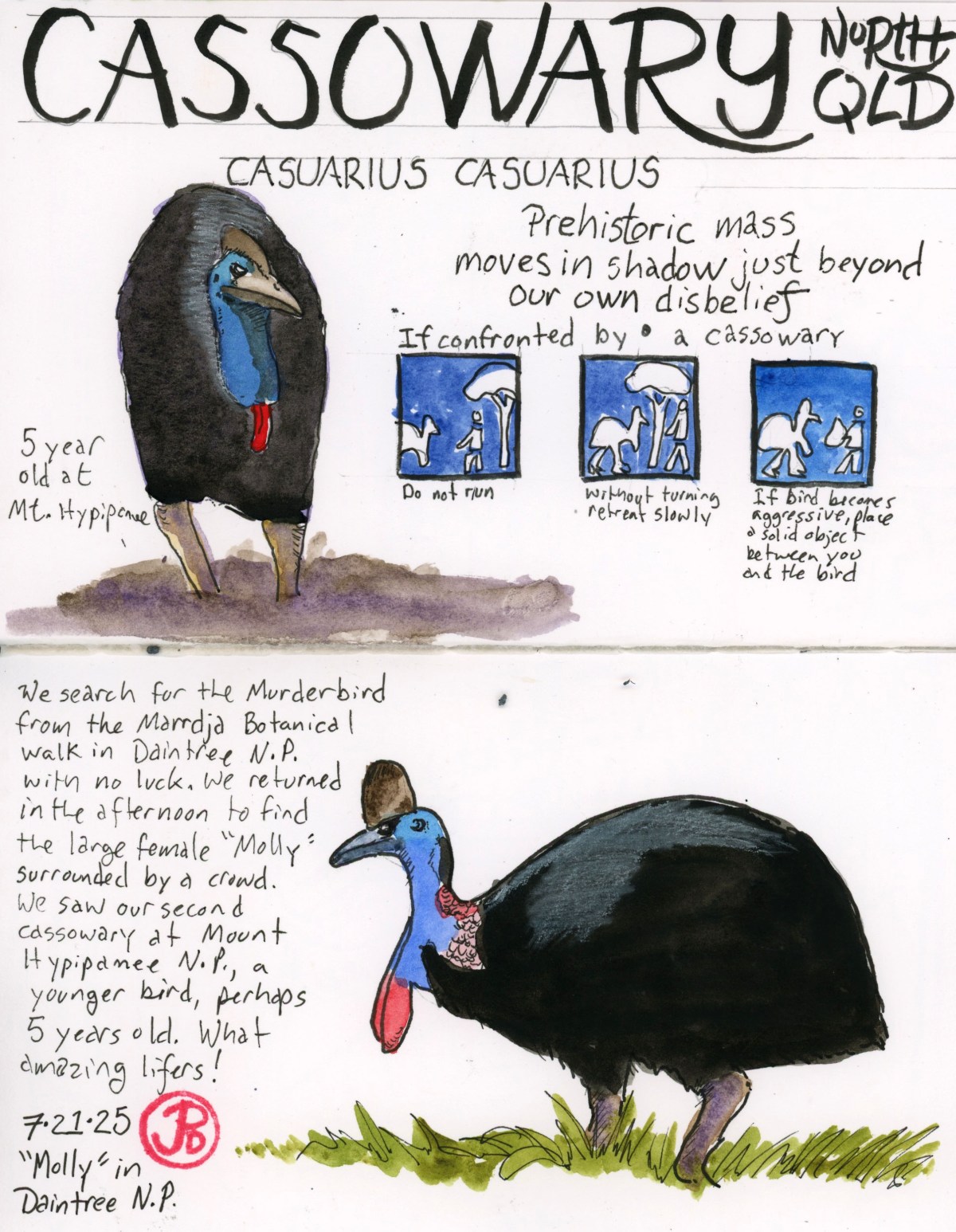
The bird that topped my wishlist for North Queensland (and Australia) is the southern cassowary (Casuarius casuarius).

The southern cassowary is a large flightless bird and the second largest bird Down Under only beaten by the emu. It forages on fallen fruit on the rainforest floor. It is a rather docile unless you try to hunt one. The lit lives up to its moniker: Murder Bird!

There are two known instances in which a cassowary has attacked and killed a person. One was a young boy in Australia, who was attempting to hunt a cassowary , the other was a 75-year-old man in Florida (proof that cassowaries don’t make good pets).

How hard can it be to find a large flightless bird in the rainforest? Turns out, pretty hard.

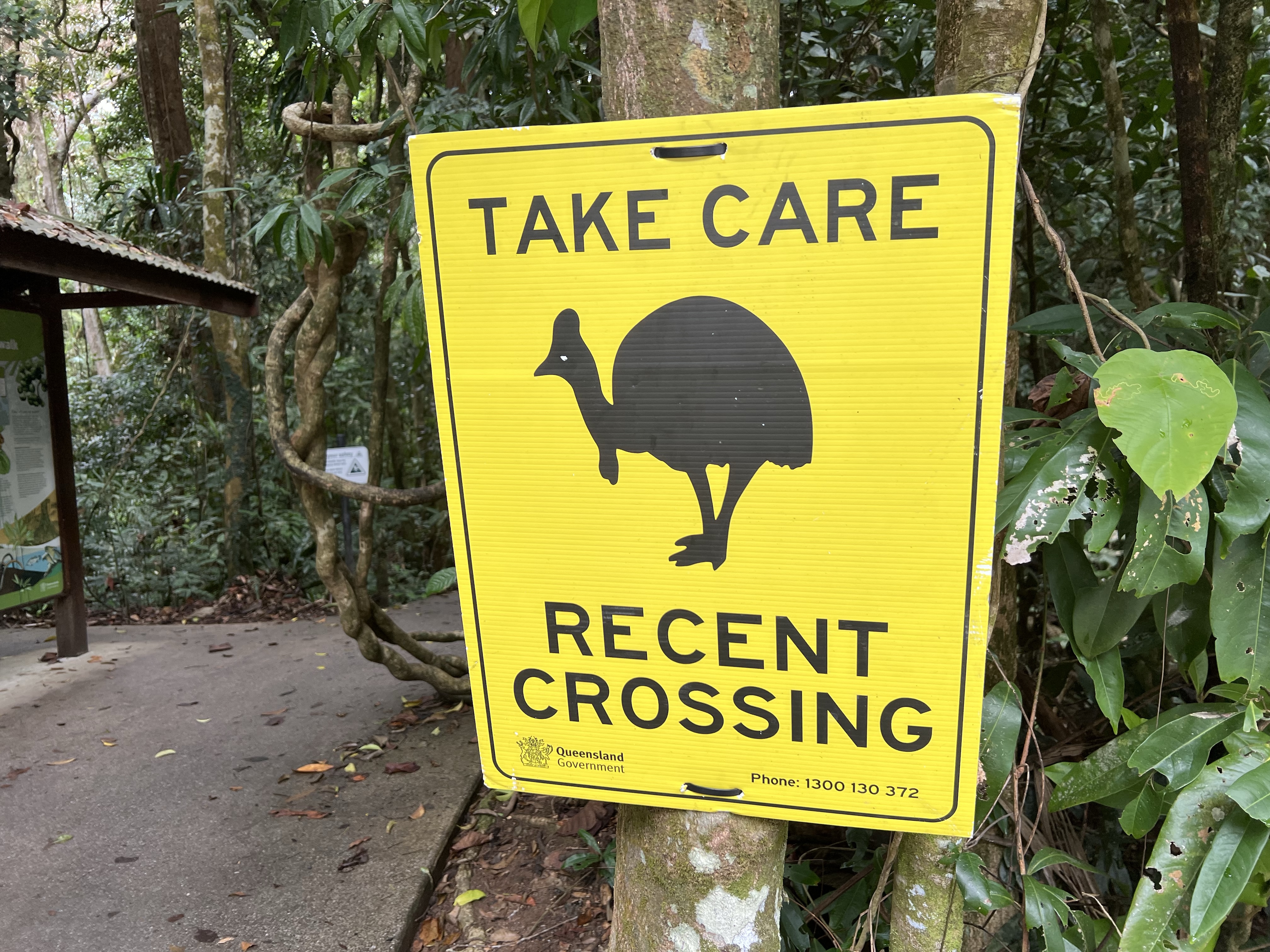
Signs for cassowarys are everywhere in North Queensland. Their images appear on murals, billboards, tour vans, and postcards. But finding one takes sweat (easy in a humid rainforest), perseverance, and patience.

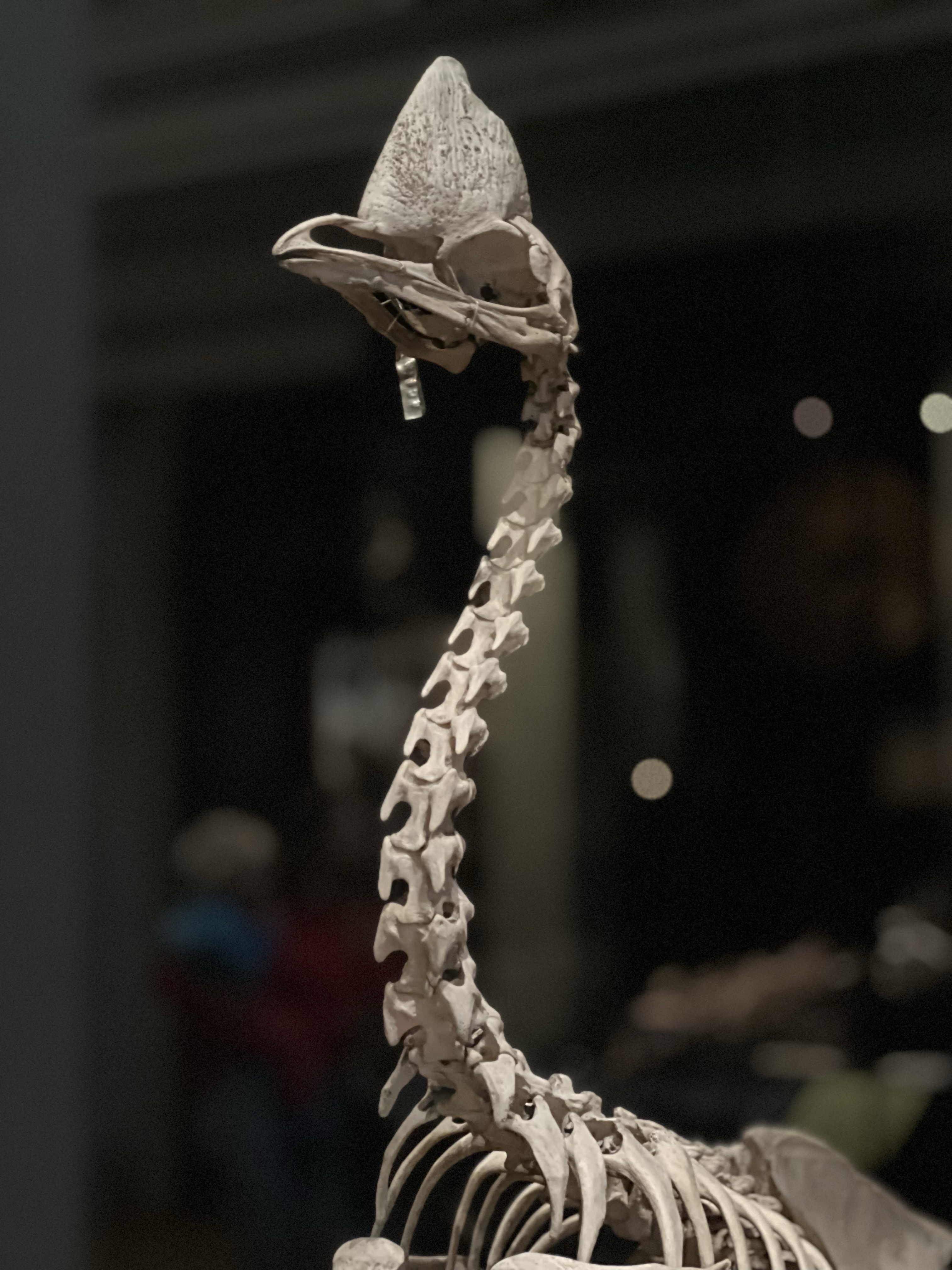
Cassowary skeleton at the Australian Museum.

We first tried for this much sought after bird by walking the boardwalk through Daintree National Park at the Marrjda Botanic Walk. We walked the boardwalk looking and listening for the Dinosaur Bird parting the vegetation with its massive casque or battle helm!

Unfortunately, Bigbird’s angry uncle didn’t show. So we headed out to bird in other parts of the National Park, vowing to return for another try in the afternoon.

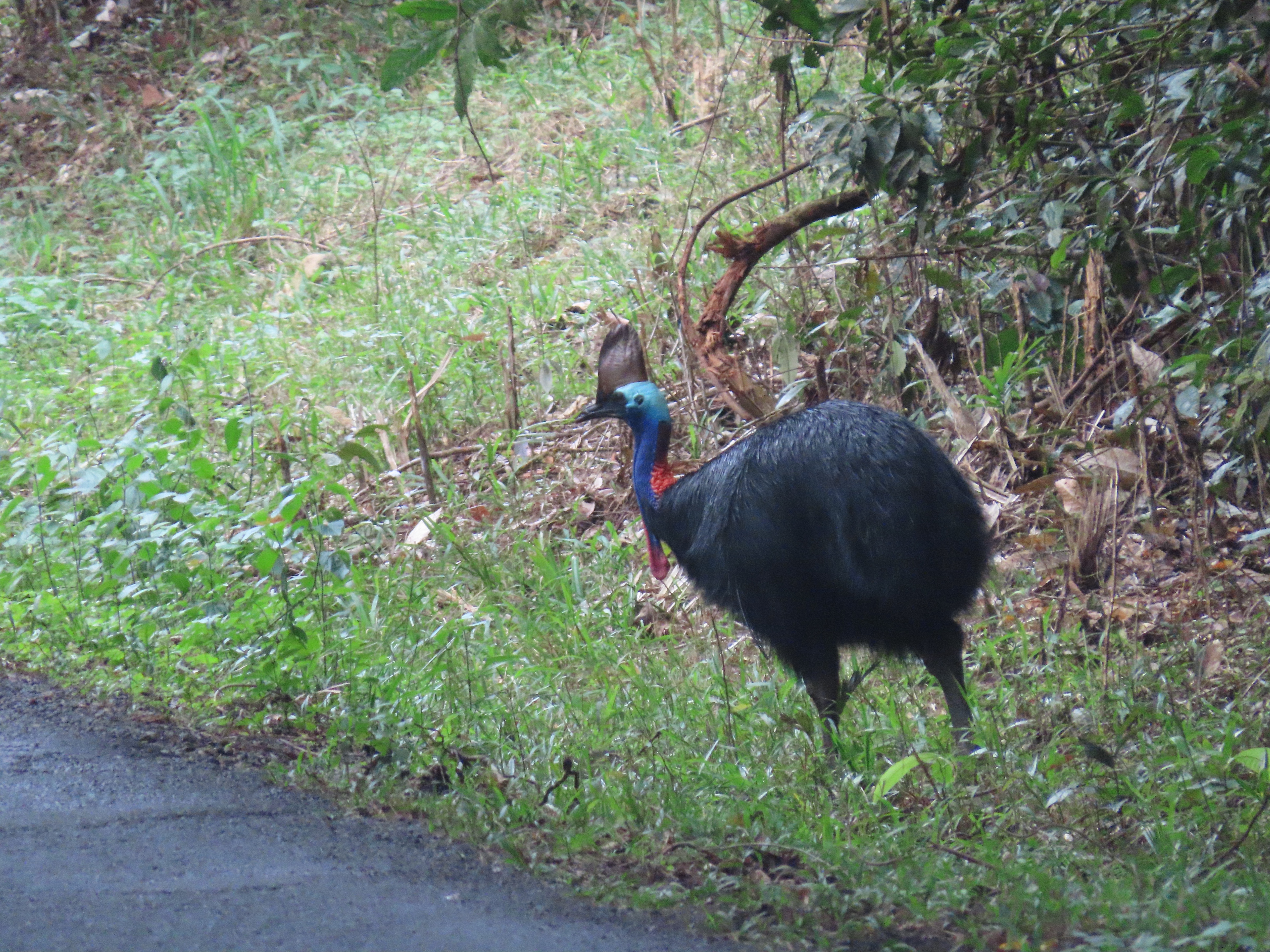
A few hours later we returned to the parking lot and as we pulled up, we were told that a Cassowary was on the roadside!

We quickly geared up and sped-walked down the road to where there was a line of people looking down the road. But we could not see the cassowary. We were told the bird had wandered into the forest.

A few seconds later she returned to the grassy roadside. It was a she, in cassowarys, the females are larger and our guide recognized the bird by her casque size and shape. It was cassowary known as “Molly”.

Why couldn’t the cassowary cross the road?

She was trying to cross the road but the mass of people was preventing her from doing so. We all got good looks but “Molly” eventually retreating into the forest to wait it out until the crowds dispersed.

We were lucky enough to not have one cassowary encounter but two.

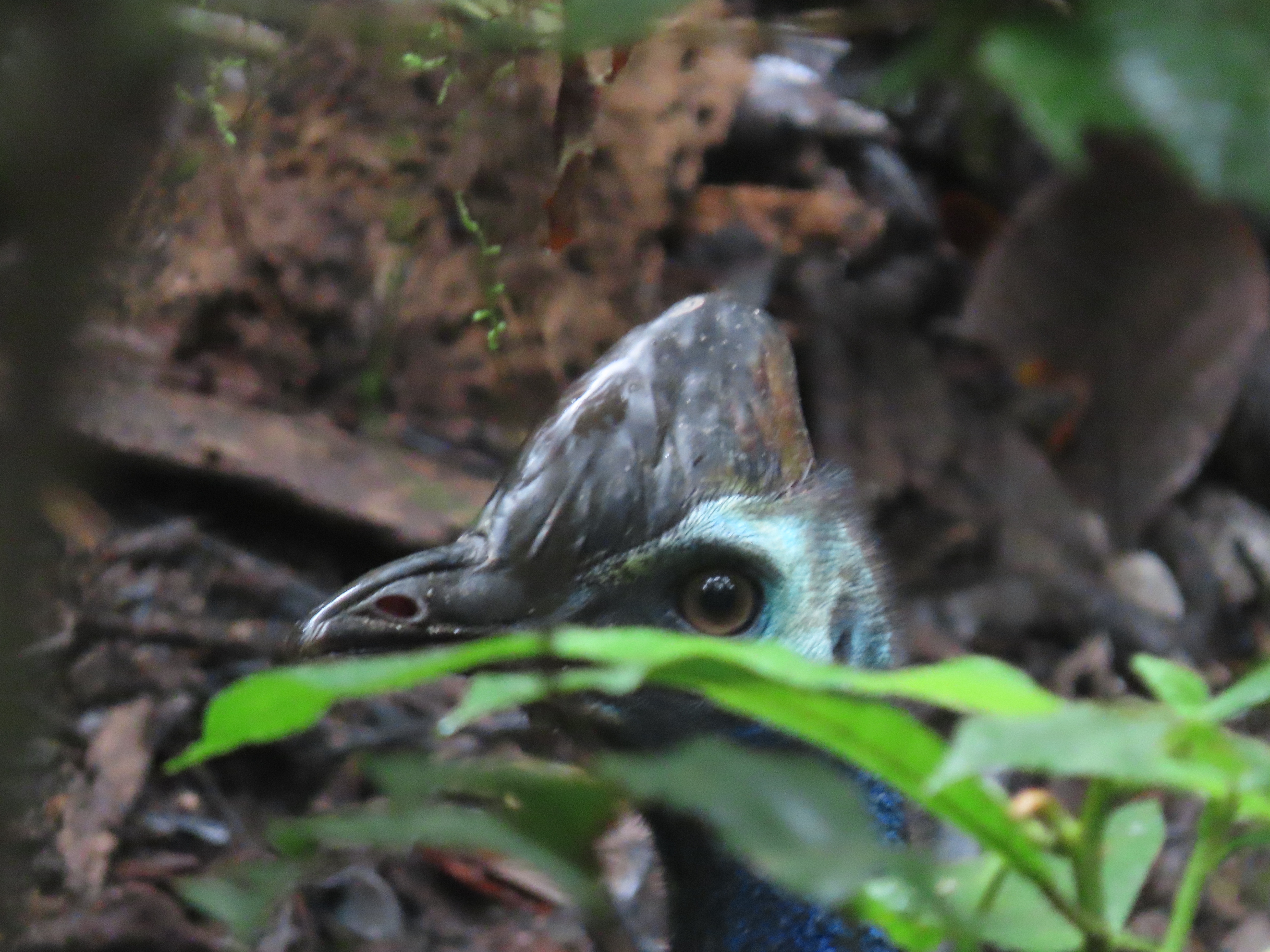
Our second Cassowary was seen in Mt. Hypipamee National Park, resting just off the trail. This bird was much younger than “Molly”, our guide estimated that this bird was about five years old.

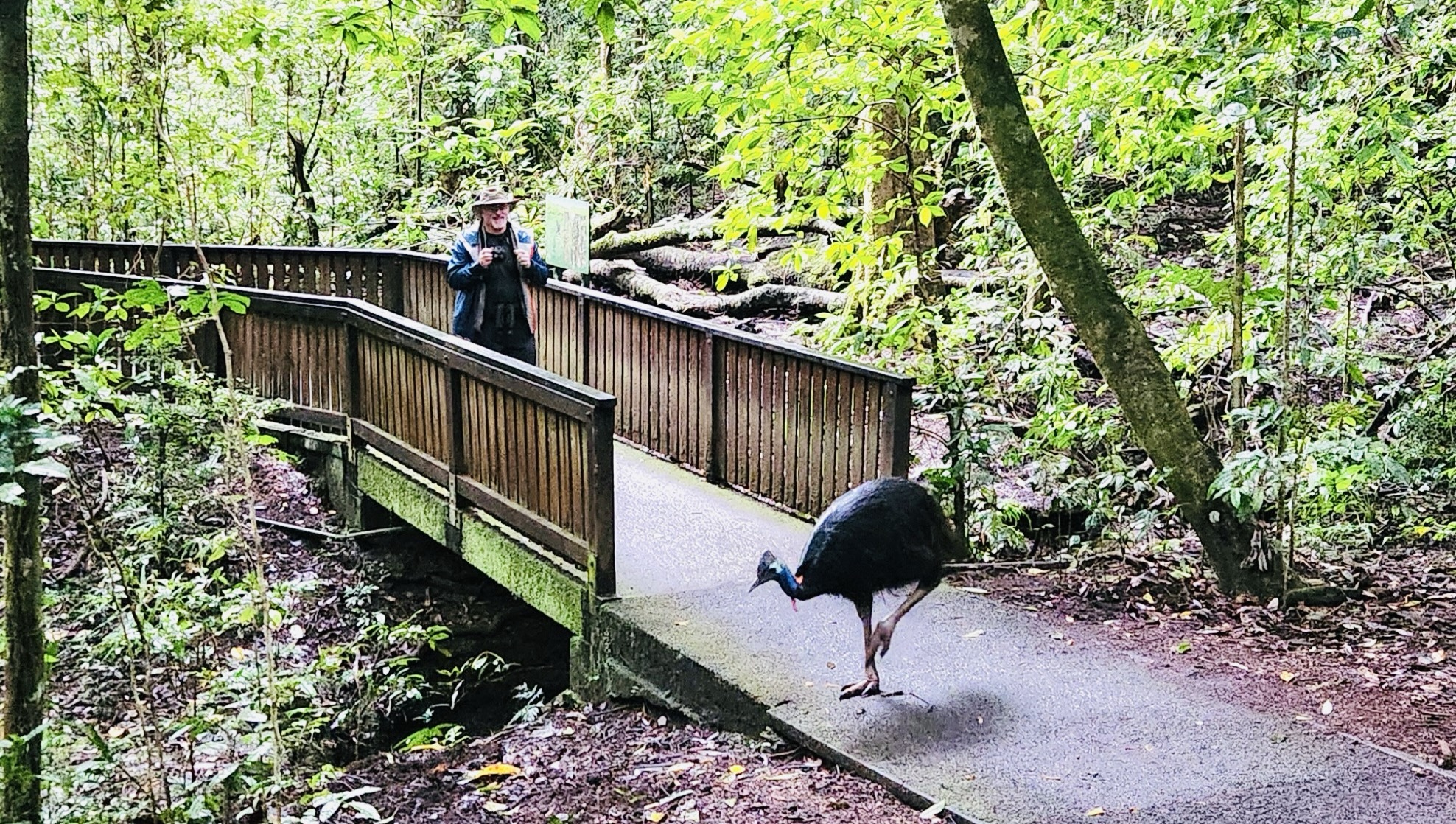
In the young bird’s wandering it headed straight towards me. I stepped aside like a slow motion matador of peace and the bird crossed the path and heard down the bank to the creek.

Corvidsketcher watching a cassowary cross the road.

I watched the cassowary wanted down the hill to the creek where it stood in the cool water and drank. This was a great experience spending some time with the young Murderbird.

Image

Bondi to Coogee

A former parent from Sydney highly recommend the four mile coastside walk from Bondi Beach to Coogee and even with overcast skies, the walk was absolutely stunning. And also very birdy.

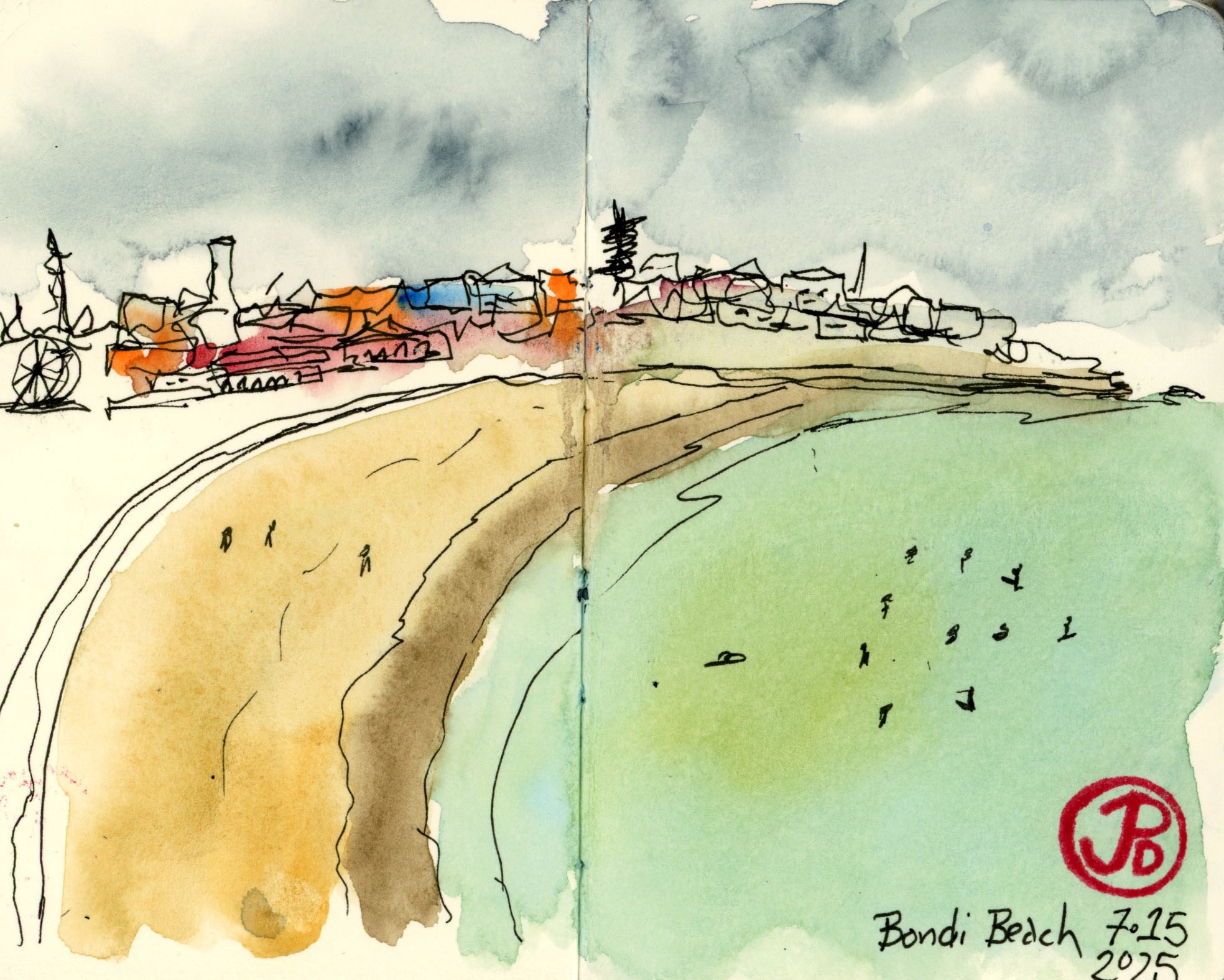
A quick sketch of Bondi Beach with its many winter surfers.

I took two buses from my digs in Surry Hills, via Bondi Junction to Bondi Beach. The beach was all Australian but the buildings around it seems more Blackpool or Brighton, showing Australia’s English influence. The windy cold-gray weather even suited the English seaside.

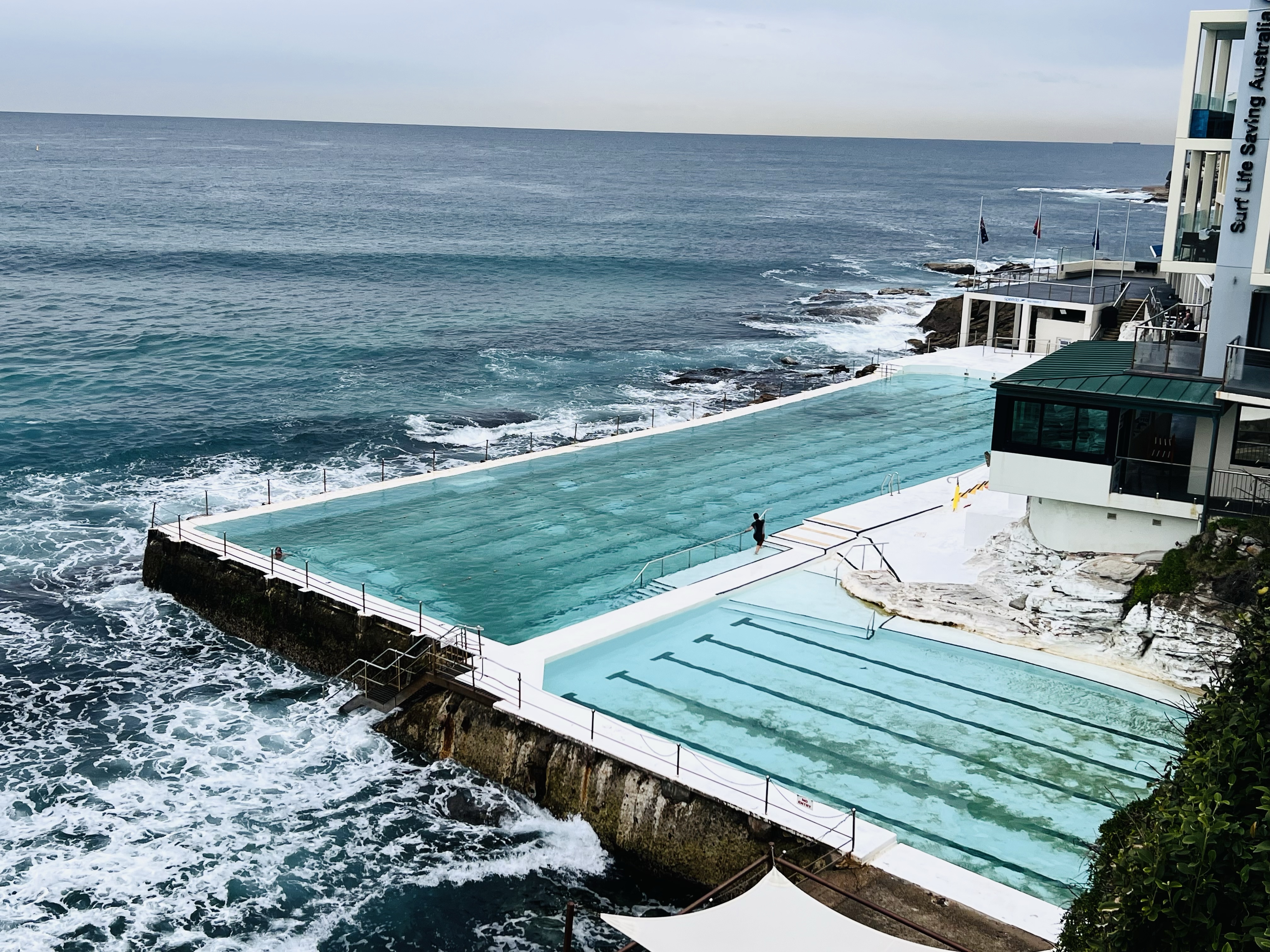
Oceanside swimming at Bondi.

I was starting my coastal walk here and heading south toward Coogee. I had a few birds on my wishlist: Australasian gannet and superb fairywren topped the list.

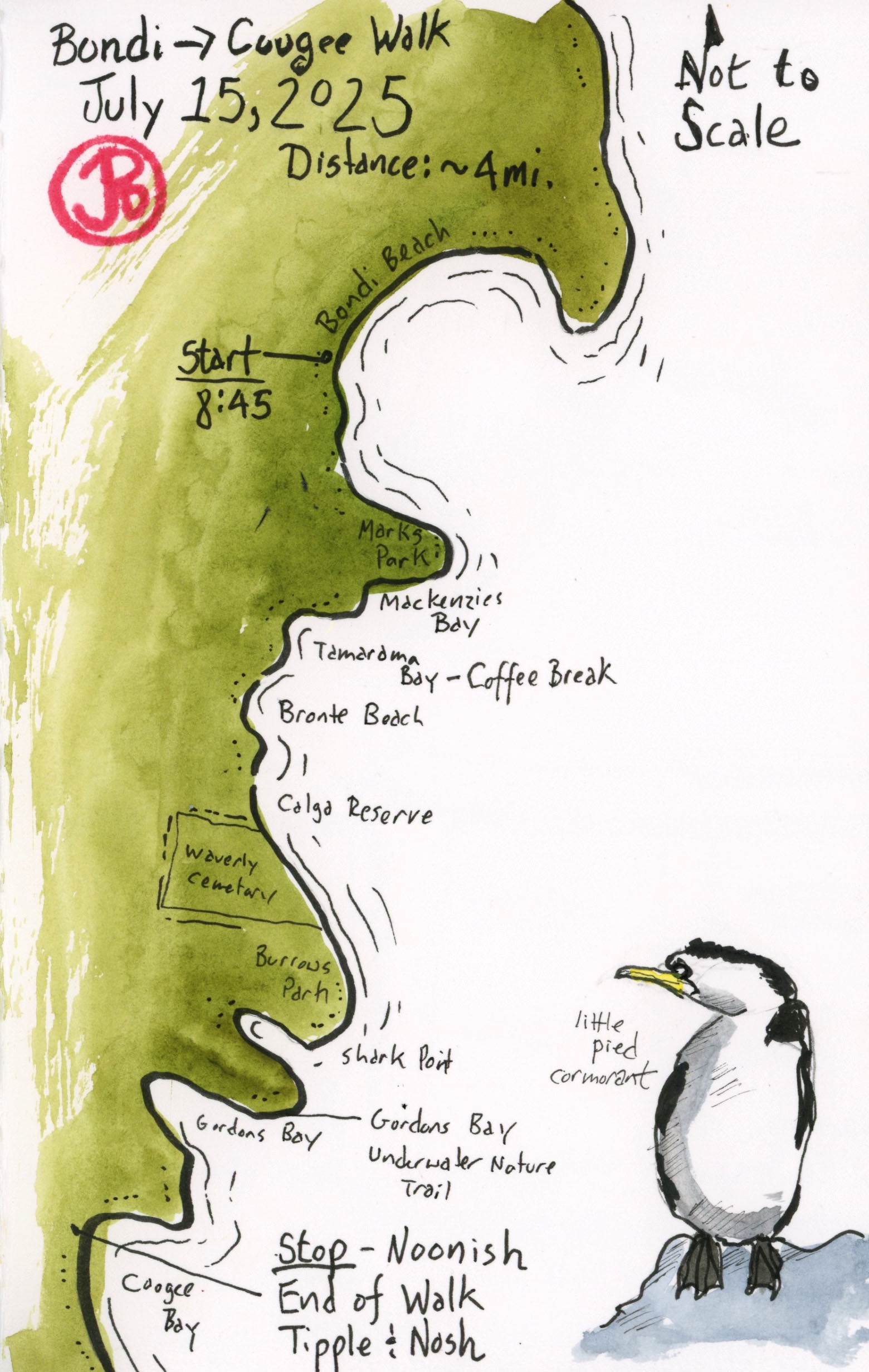
A post trek map of my journey.

I had the Pacific Ocean on my left as I headed south toward the town on Coogee and I kept one eye out to my left for gannet and looked and listened as I passed vegetation for the fairywren.

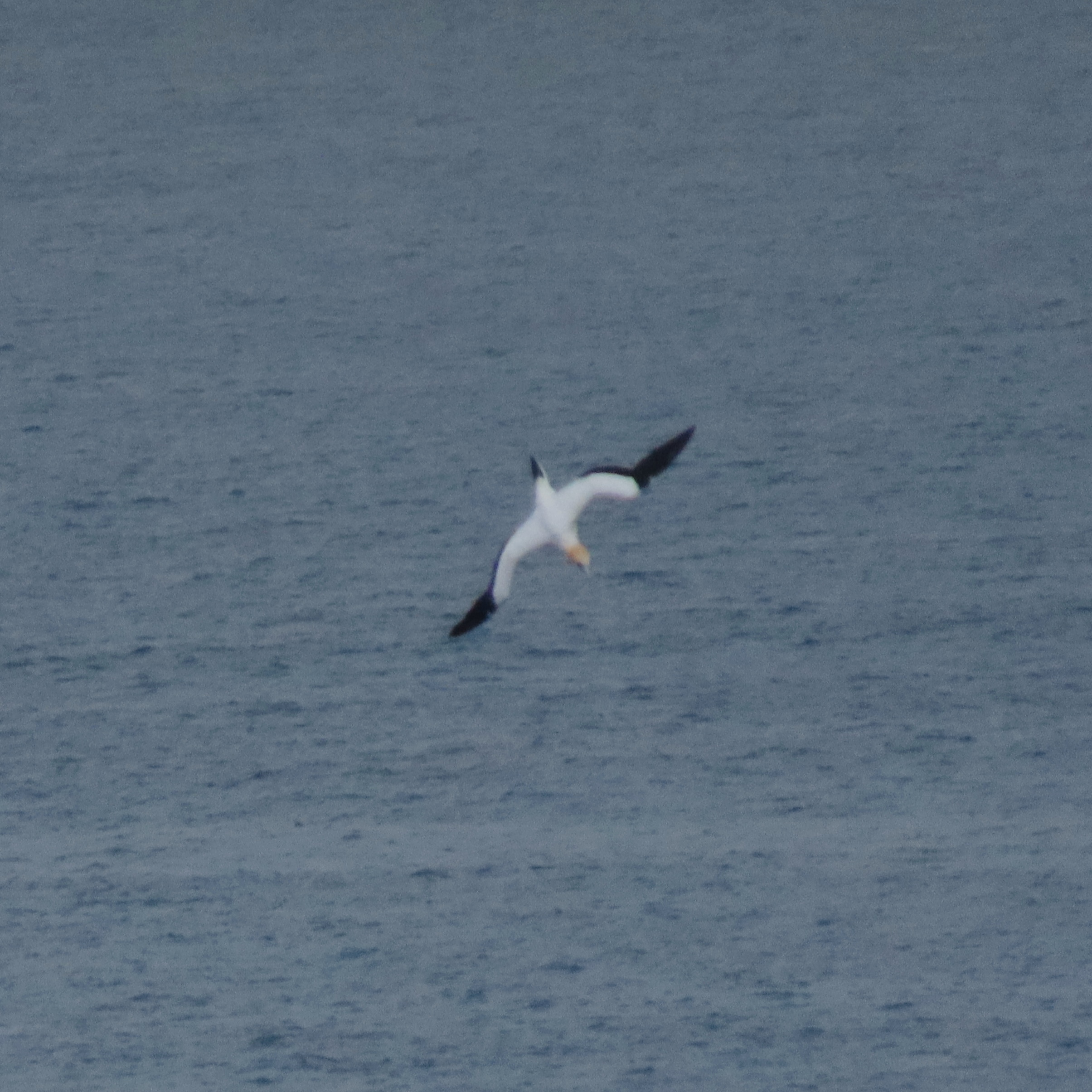
I came to a point close to Bondi Beach when I saw the telltale sign of a gannet just off the beach. Lifer!

Now it was time to find the 2021 Australian Bird of the Year, the superb fairywren.

As I walked by every trail side bush, I listened for the tell-tale trill of a fairywren, even though I had never heard one before.

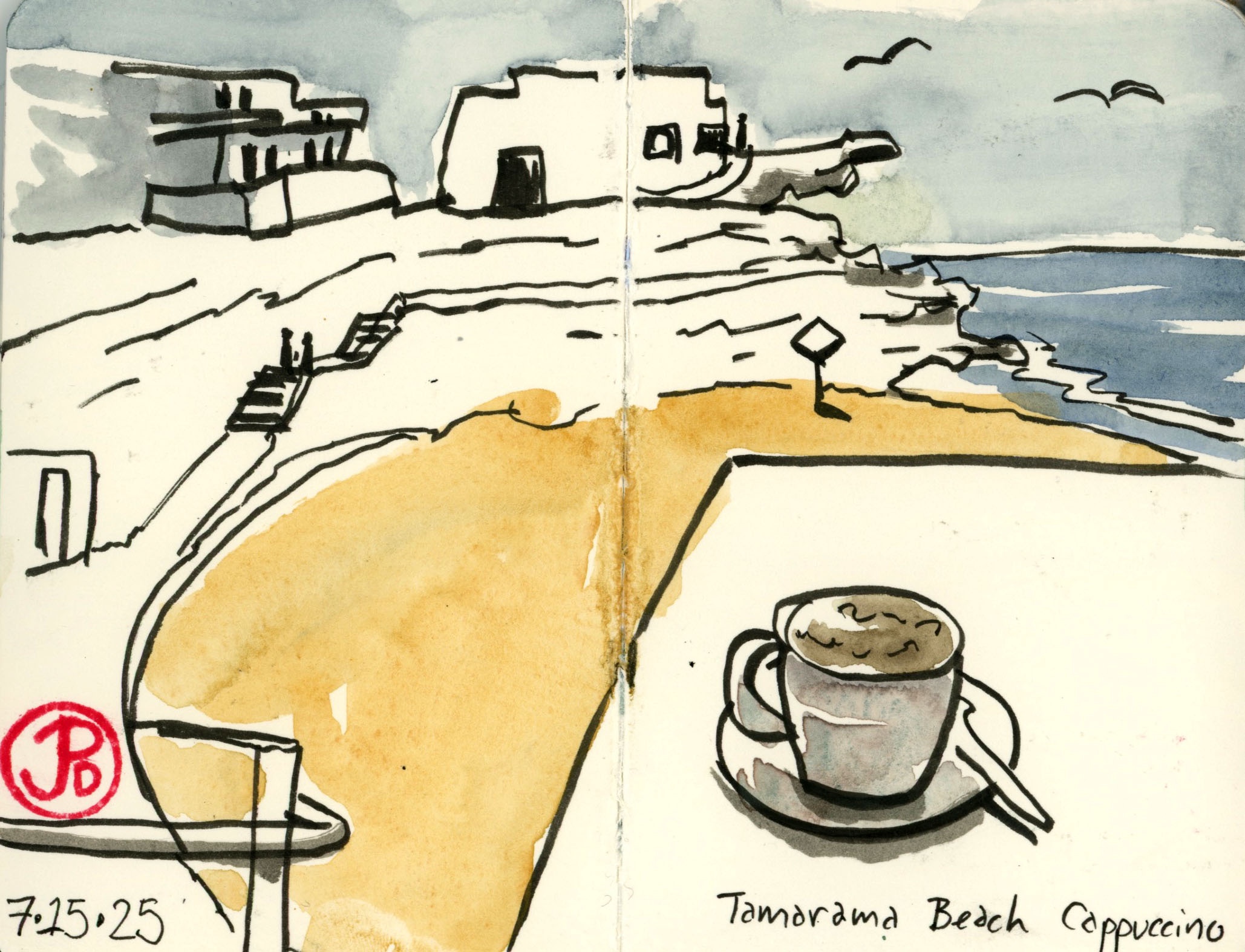
The nice thing about the walk is there are plenty of places to stop and have a cup of joe. I stopped at the cafe at Tamarama Beach and had a cappuccino and sketched the scene over my seaside table.

After finishing my cappuccino, I continued my southward journey towards Coogee. As I neared Waverly Cemetery, the bushes grew denser and more birdy. I heard a high trill nearby and knew there must be fairywrens.

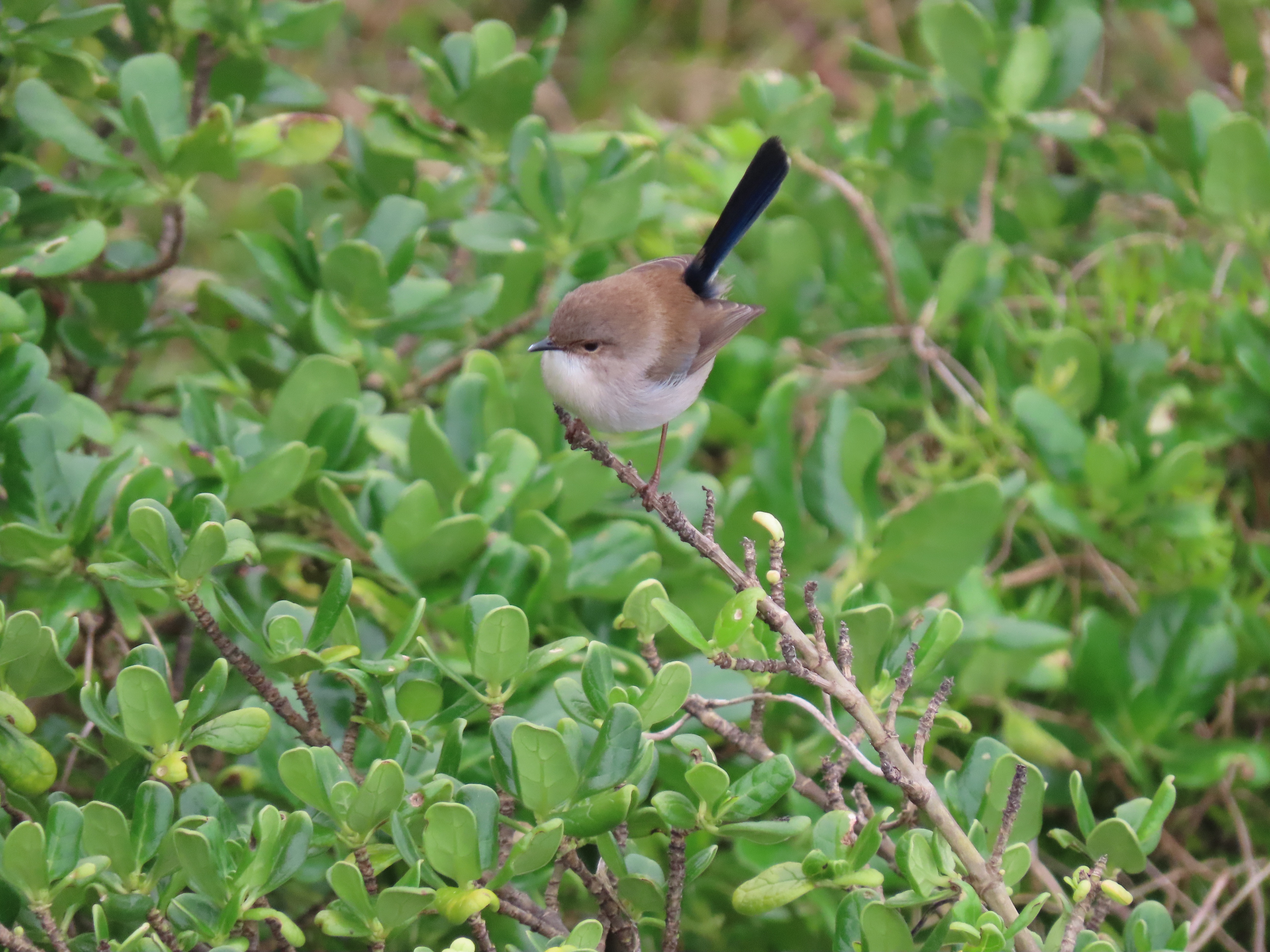
I saw movement in a seaside bush below. With a little patience, a non breeding male with a deep blue tail appeared! I knew that fairywrens forage in family groups. Now with a little more luck a stunning male would appear. So I continued waiting.

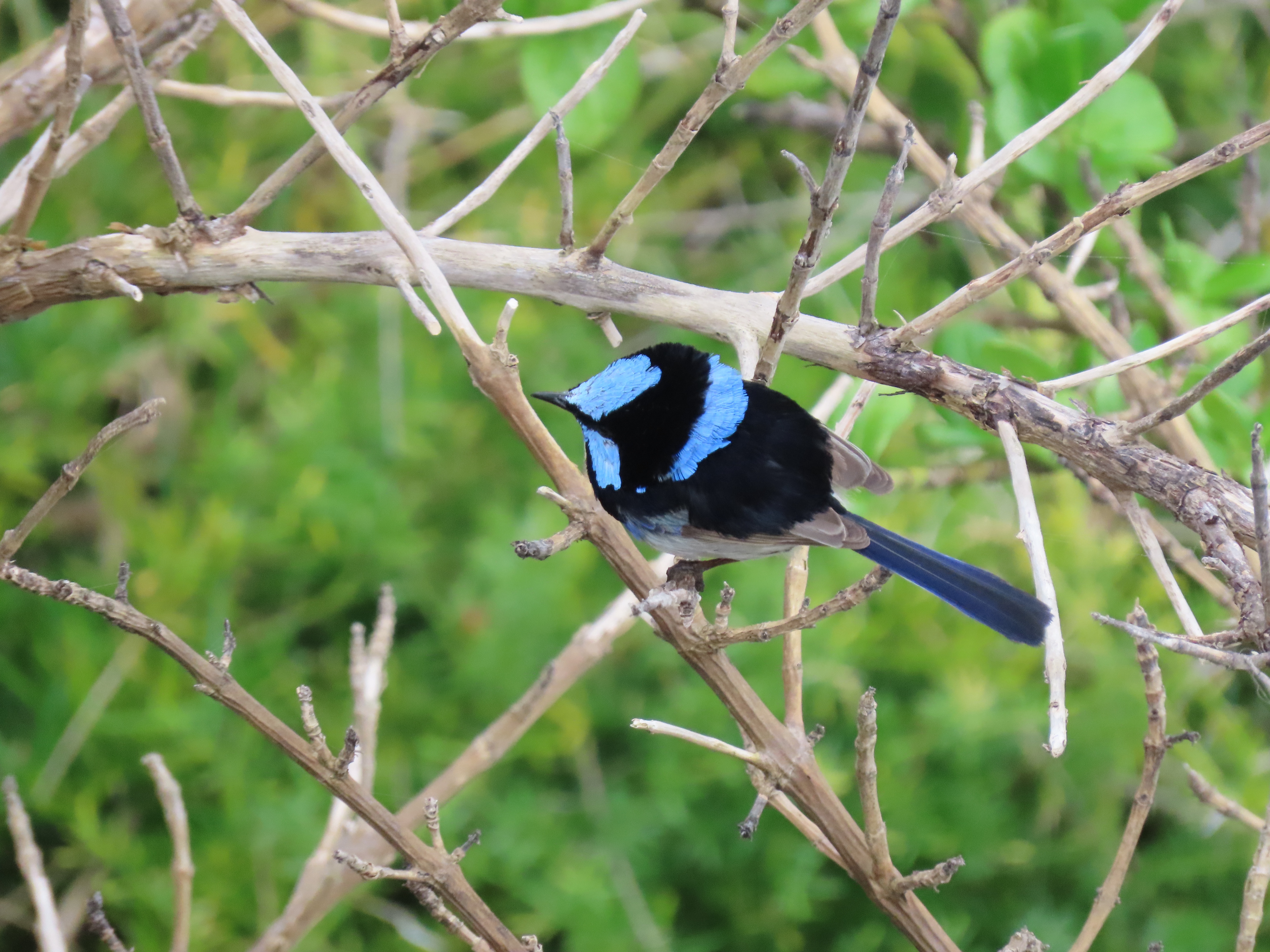
A stunning male!

My wait paid off and I had prolonged looks at the vibrant male fairywren. He even perched out on the rock giving me many reason to understand why this was such a beloved Aussie bird!

As I continued south, bordering the cemetery I added grey butcherbird and the amazing yellow-tailed black-cockatoo.

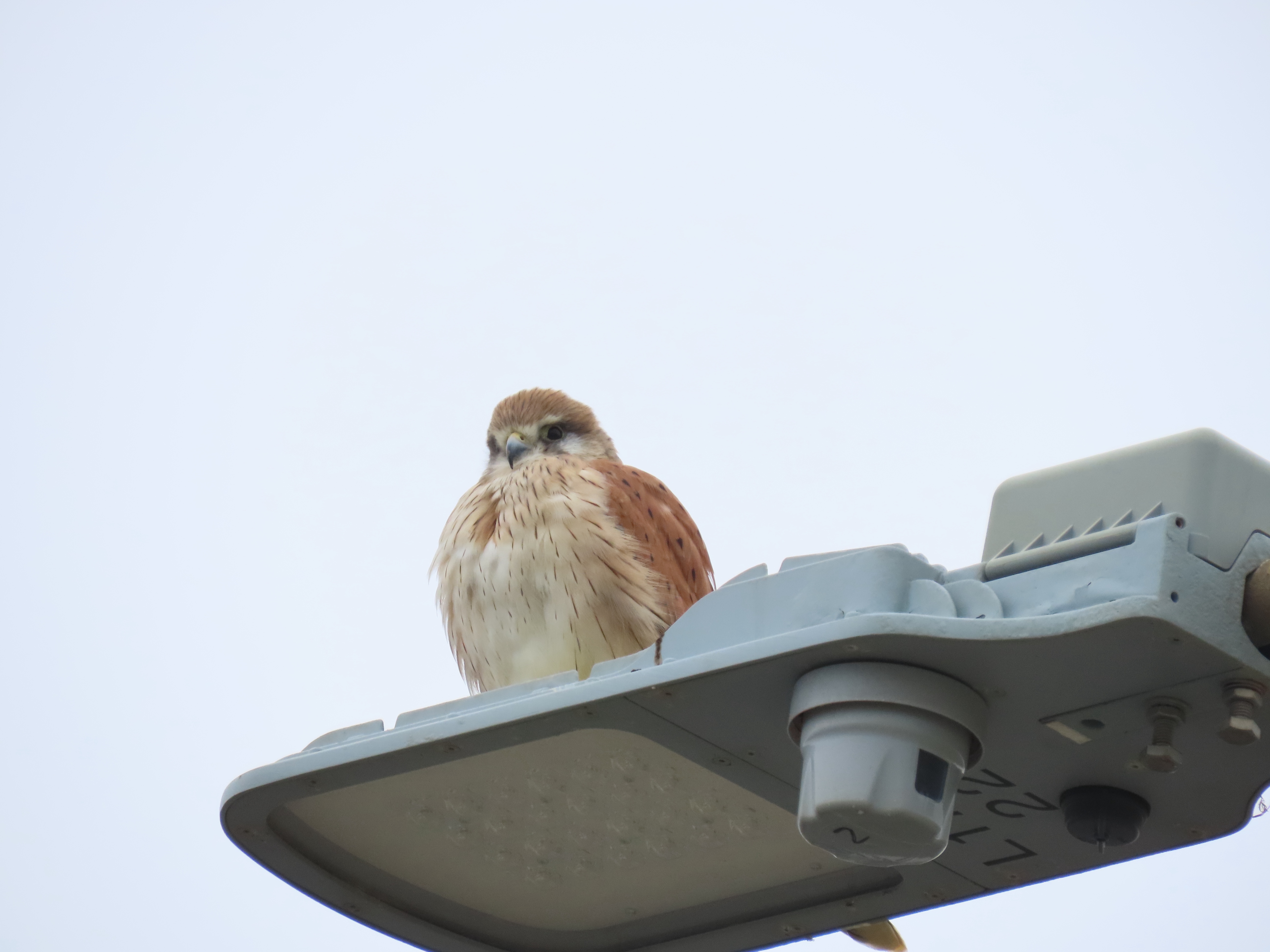
As I neared Coogee, I spotted my first raptor of the trip: a Nankeen kestrel.

On the final third of my journey I added more birds (some lifers) to my list: my fist raptor of the trip, Nankeen kestrel, white-faced heron, another family of fairywrens, a pair of crested pigeons, New Holland honeyeaters, and a foraging gannet in Coogee Bay.

A treat was seeing an Australasian gannet plunge diving into Coogee Bay at the end of my walk!
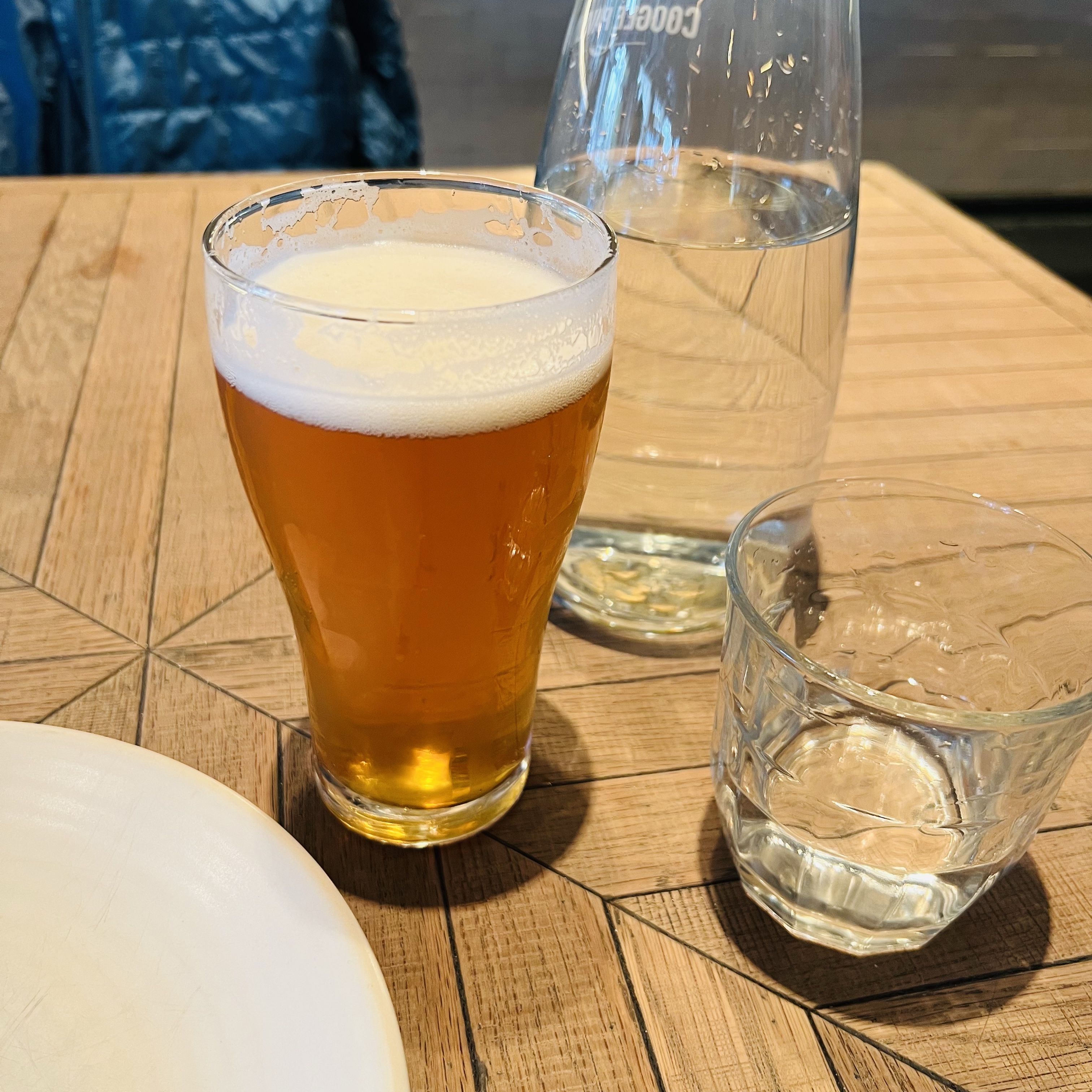
To celebrate the completion of my walk and the many lifers along the way, I had a schooner of fermented liquid bread at a Coogee pub.
Image

Sydney Birds: the Fairy-Wren & the Black Swan

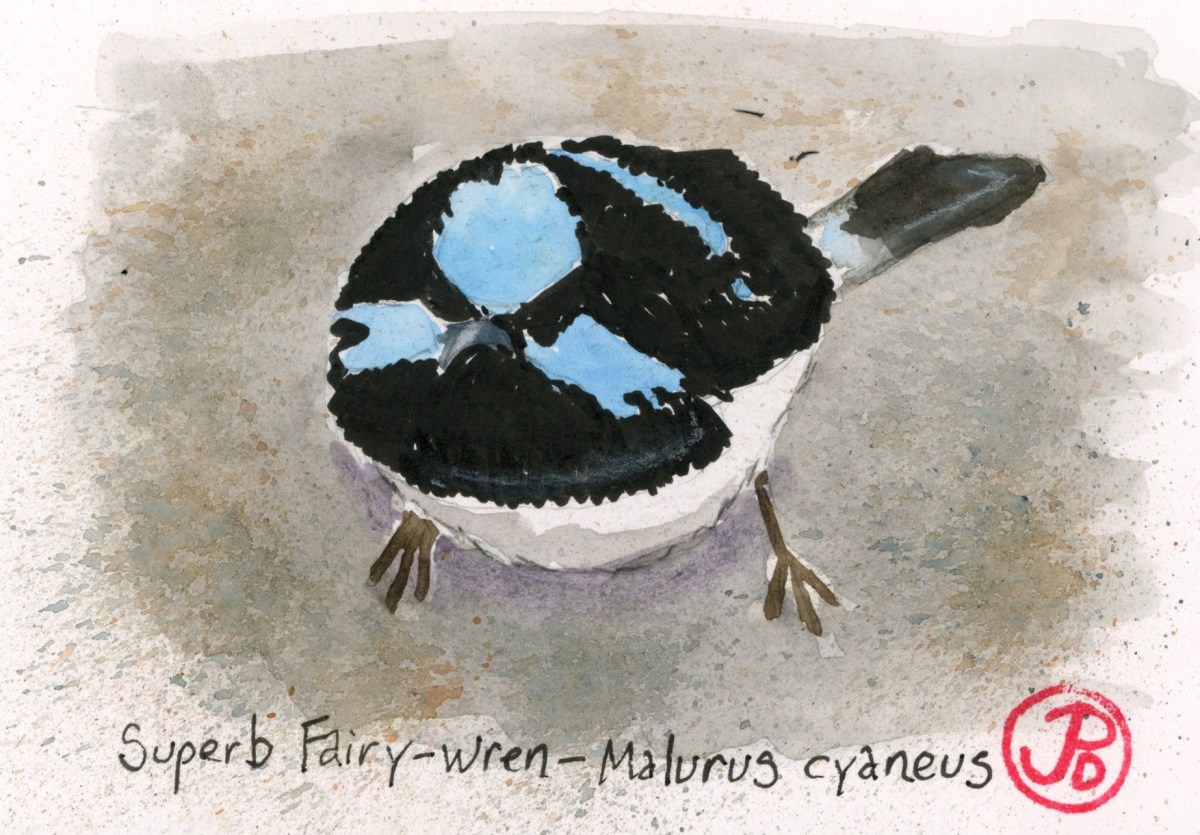
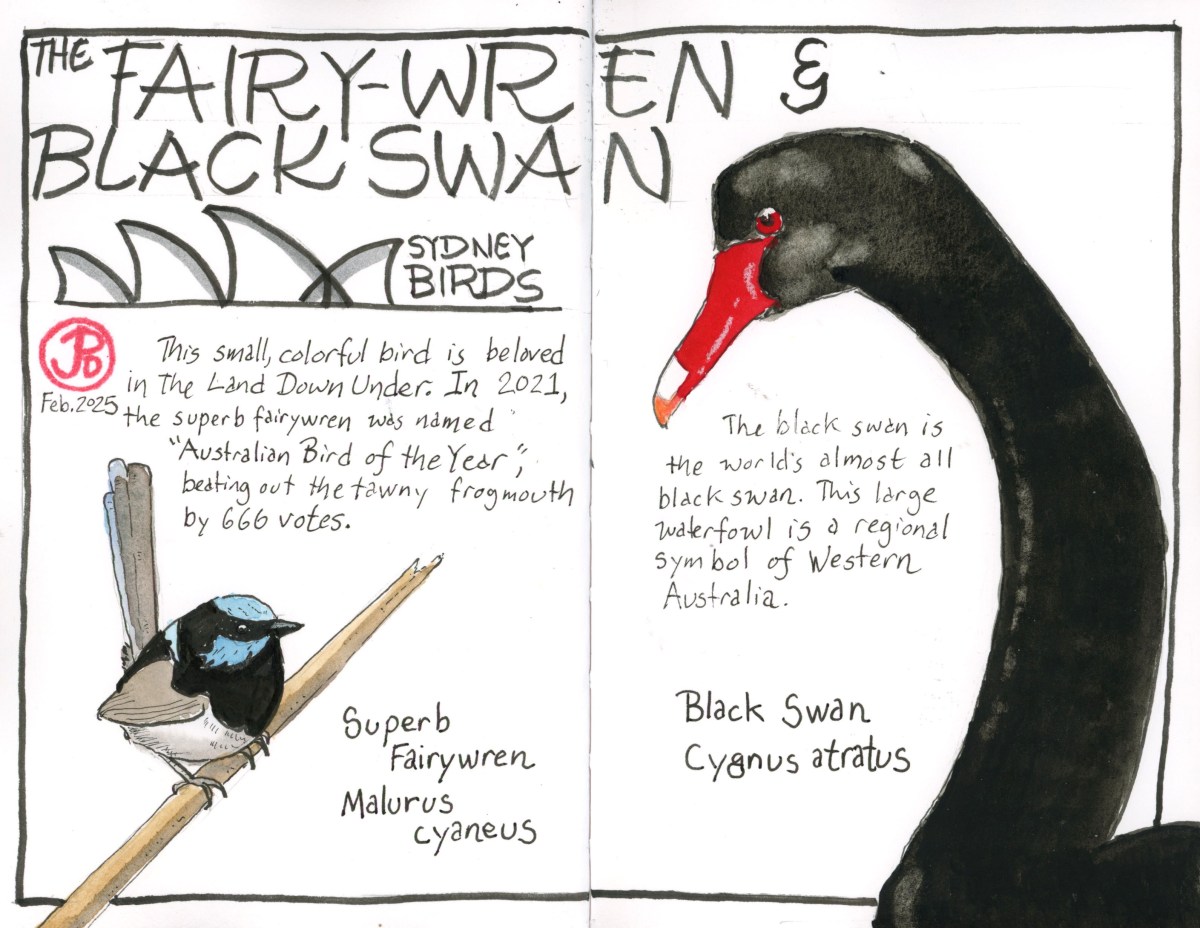
Some of the birds on my Australian trip would be fairly easy to find in Sydney’s parks. Especially a big black swan. The other is a diminutive little bird with a wonderful name of superb fairywren. (This bird is a species featured in The 100 Birds to See Before you Die). Challenge accepted!

The swan can be found in the ponds of Centennial Park. Having seen these all back swans at the San Francisco’s Zoo’s Australian exhibit, I wanted to see this bird in the wild. Or the quasi-wild of an urban park.

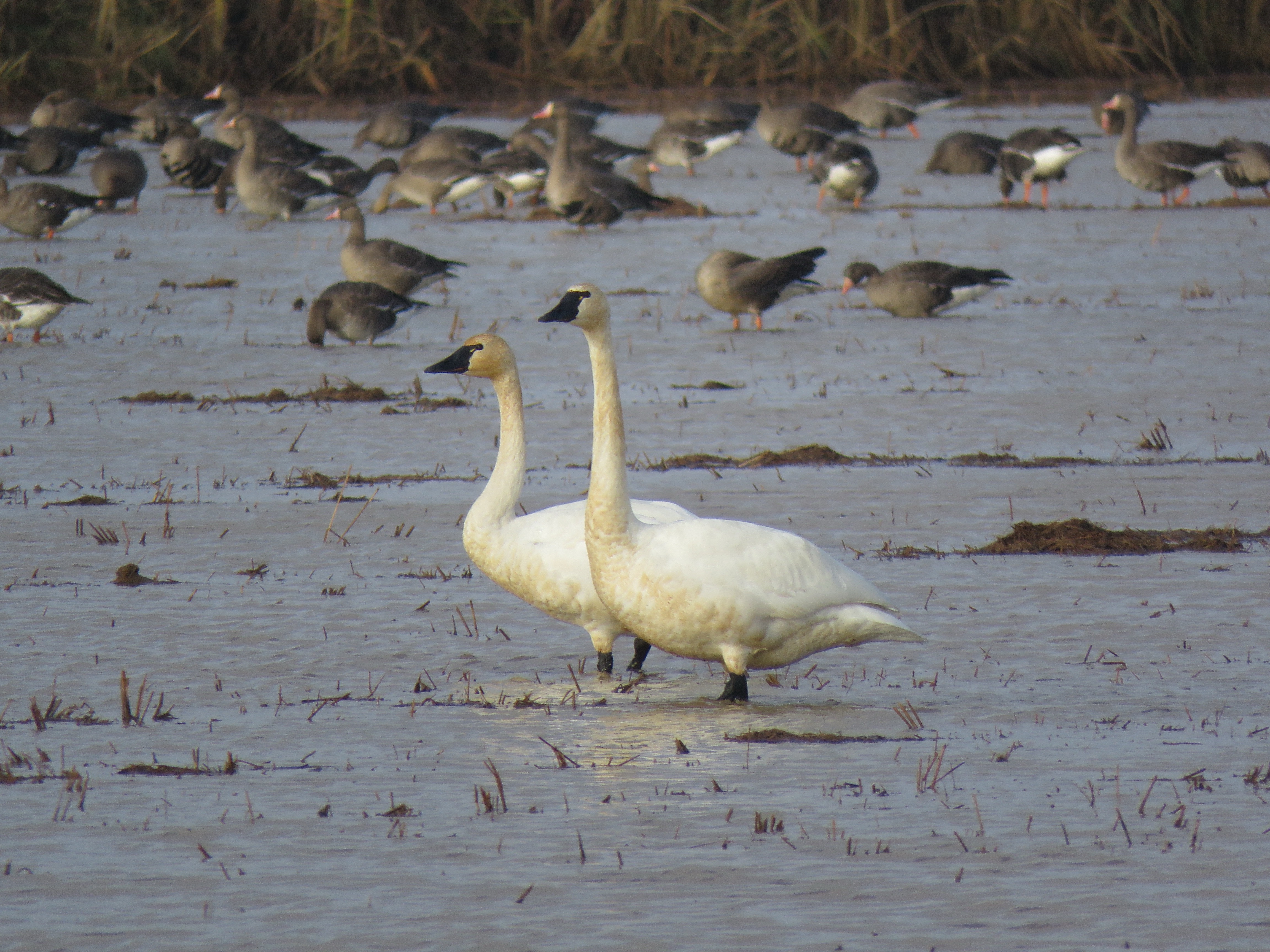
All of the swans found in North America are all white, such as this pair of wintering tundra swans in Yuba County.

The superb fairywren is a member of the Australian wren family. The male and female, like most ducks, are sexually dimorphic. The male is a stunning mixture of black, brown, and an electric blue. The female is a drab brown with a blue tail held erect.

In 2021, the superb fairywren was voted Australian Bird of the Year, beating out the tawny frogmouth.

Image

The Murderbird

There was one creature in Australia, out of all the deadly and dangerous creatures, that my Australian mate was concerned with me encountering: the murderbird (southern cassowary).

When asking zookeepers at the San Francisco Zoo to list the most dangerous animal in the zoo they often replied: a tiger might attack you but a cassowary will attack you. This flightless beast topped the list.

And I intended to see a cassowary in North Queensland. The Murderbird topped my Australian birding wishlist.

I will be on a five day guided birding trip out of Cairns and we would be looking for the flightless Danger Bird on three different days.

If the tawny frogmouth looks like a Muppet, then the cassowary looks like a denizen of Sesame Street, but from the other side of the tracks. A satanic Big Bird.

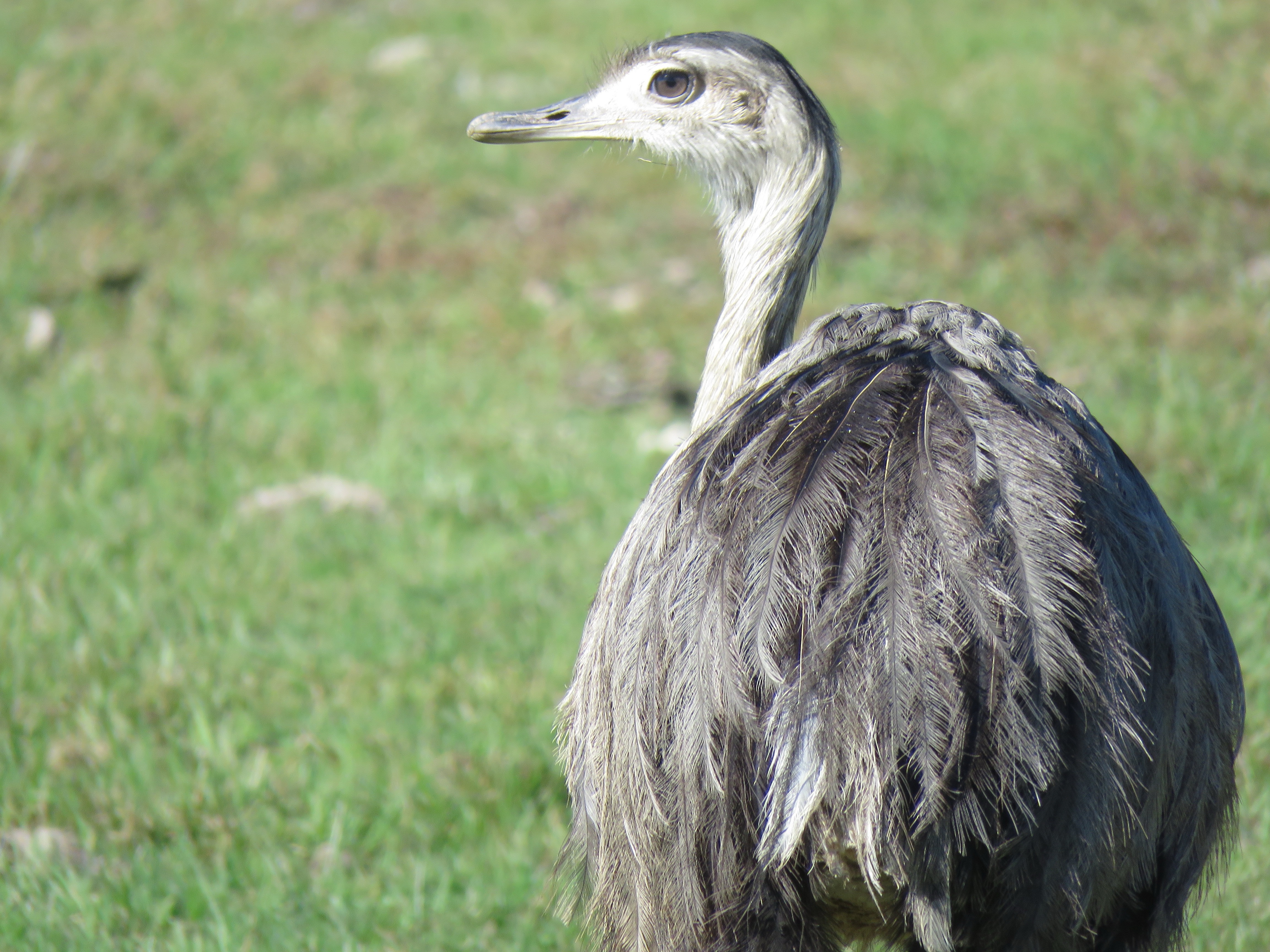
I have seen large flightless birds before, like this greater rhea in Brazil’s Pantanal. The rhea looks friendly and inviting, unlike the cassowary!!
Image

Birds of Sydney: Laughing Kookaburra

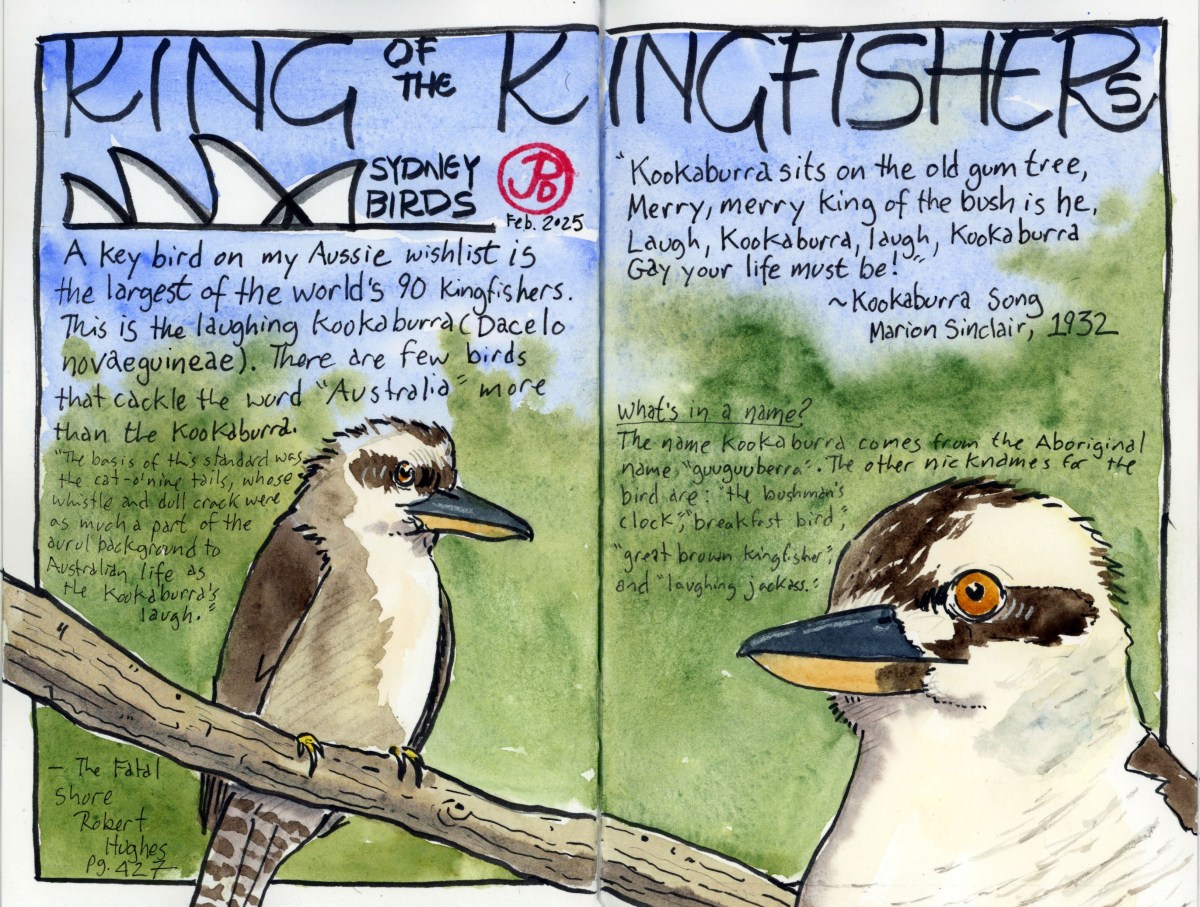
“Kookaburra sits in the old gum tree, / Merry, merry king of the bush is he, / Laugh, Kookaburra, laugh. . .”

When it comes to a list of Australian birds that anyone from around the world can list, I bet the laughing kookaburra is in the top two.

This is a species that is commonly held in zoo’s collections. And then there is the song we sing in music class, quoted above.

Of course I have seen a real kookaburra at the San Francisco Zoo but I have never seen one free flying in the wild.

Oddly enough the kookaburra is a kingfisher. Out of the world’s 118 kingfishers, the kookaburra is the world’s largest and heaviest kingfisher, yet fish are a very small part of their diet. The “Bushman’s Clock” mainly eats rodents, insects, worms, snakes, and lizards.

The kookaburra’s laughing calls have been made famous as it is often used as jungle foley in films such as Tarzan, Wizard of Oz, The Treasure of Sierra Madre, and The Lost World: Jurassic Park.

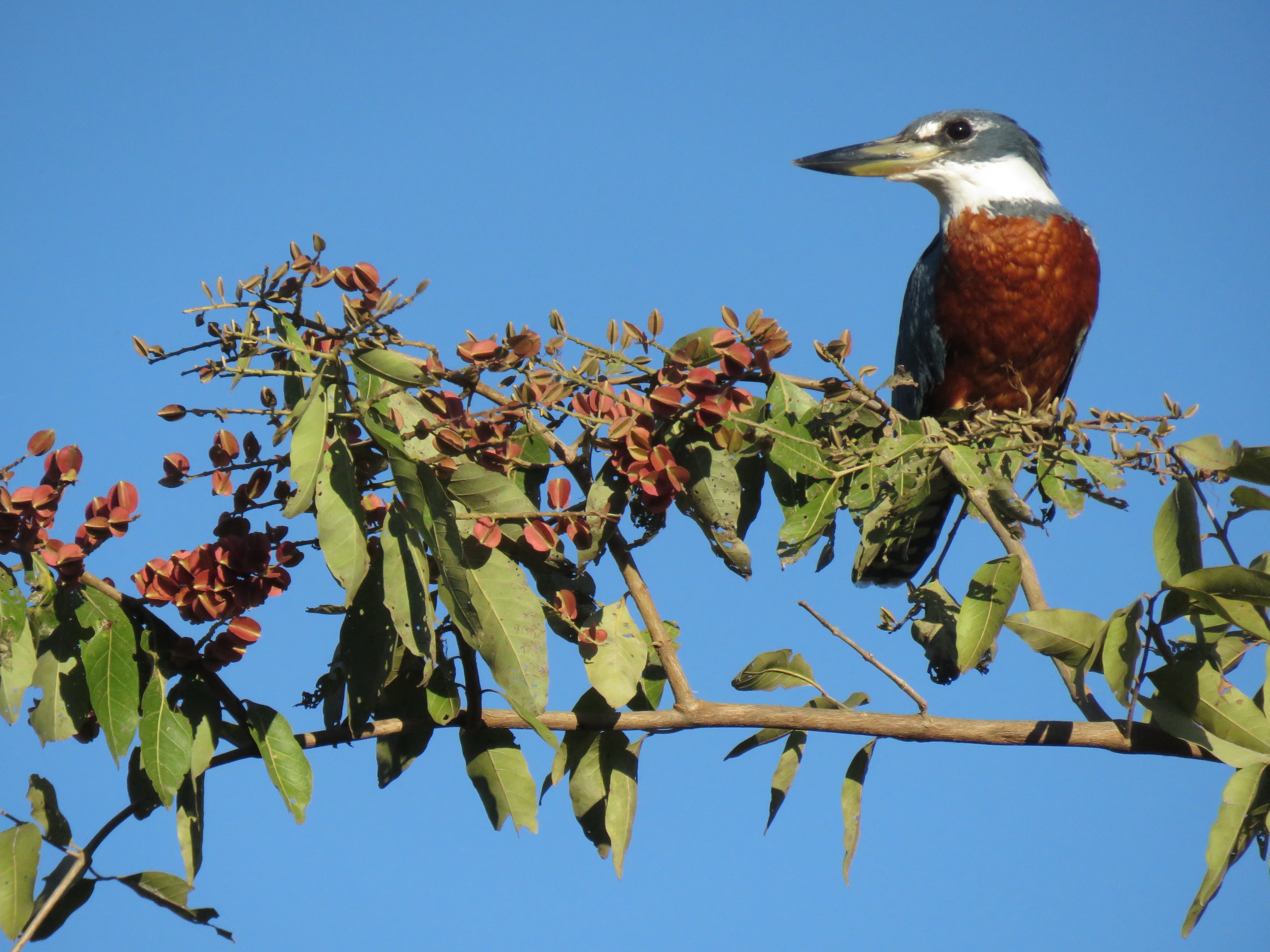
The ringed kingfisher is the largest kingfisher in the Americas. This female was photographed in Brazil’s Pantanal.

For my kookaburra spread I included the first verse of the Kookaburra Song by Marion Sinclair. The song was composed in 1932 and is sung by children all around the world.

There was some controversy involving the song when the flute riff from Men At Work’s hit “Down Under” was deemed to plagiarize the melody of Sinclair’s ditty.

Now all I need is a Vegemite sandwich!

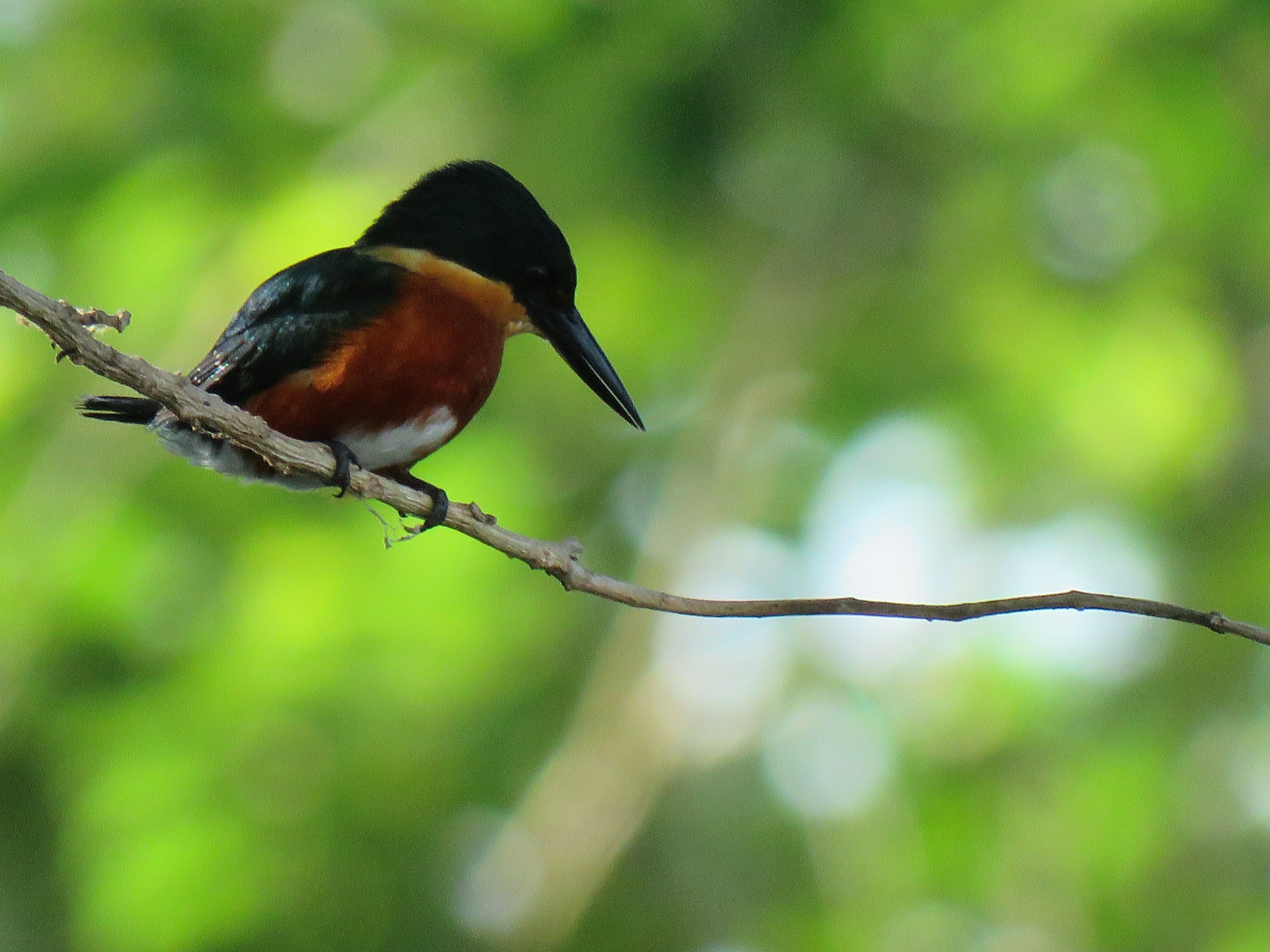
One of the smallest kingfishers in the Americas: a Pygmy kingfisher in Panama.

On my Aussie adventures I hope to add a few other kingfishers to my lifelist: azure, little, forest, red-backed, sacred, and collared kingfisher. And I aimed to add the other kookaburra of Australia to my wishlist: the blue-winged kookaburra. This would more than double my current number of kingfishers (7).

Image

Loma Prieta Bell’s Sparrow

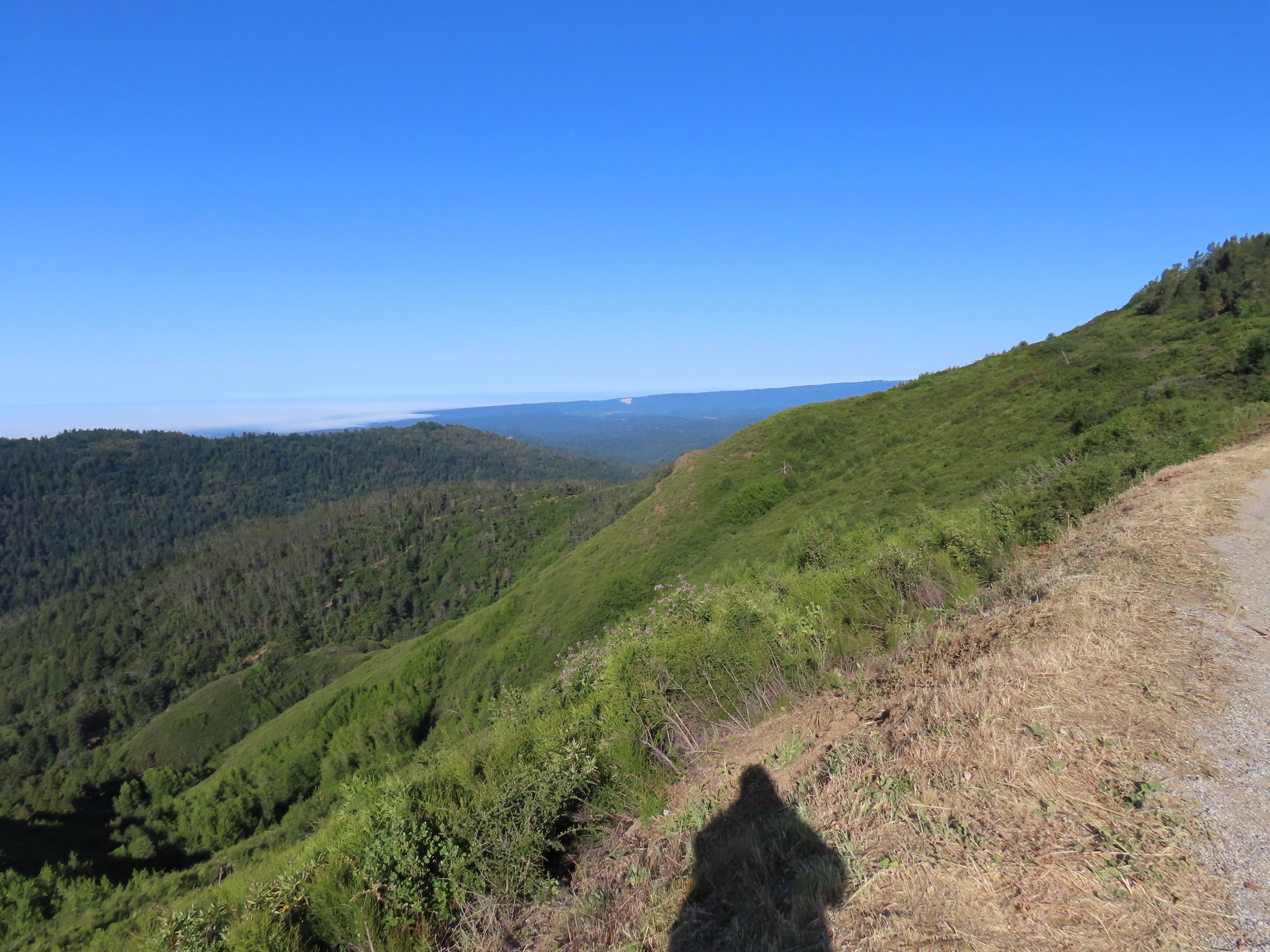
In late May I made my annual pilgrimage to the birding hotspot Loma Prieta (Upper Saddle).

I left my cabin at 6:40 AM and 35 minutes later I pulled into the dirt parking lot on the ridge that straddles Santa Cruz and Santa Clara Counties.

It can be very windy and hemmed in by dense fog up here but not today. I could look down and see fog covering Monterey Bay. Today it was clear and warm without much of a breeze. In fact it was already getting warm.

My target was the pair of Bell’s sparrows that had recently been seen here since mid May. This would be a Santa Clara County bird for me.

I walked down Mt. Madonna Road and aside from singing spotted towhees and wrentits, and a far off babbling California thrasher, it was pretty quiet. I did not hear or see any black-chinned or Bell’s sparrows.

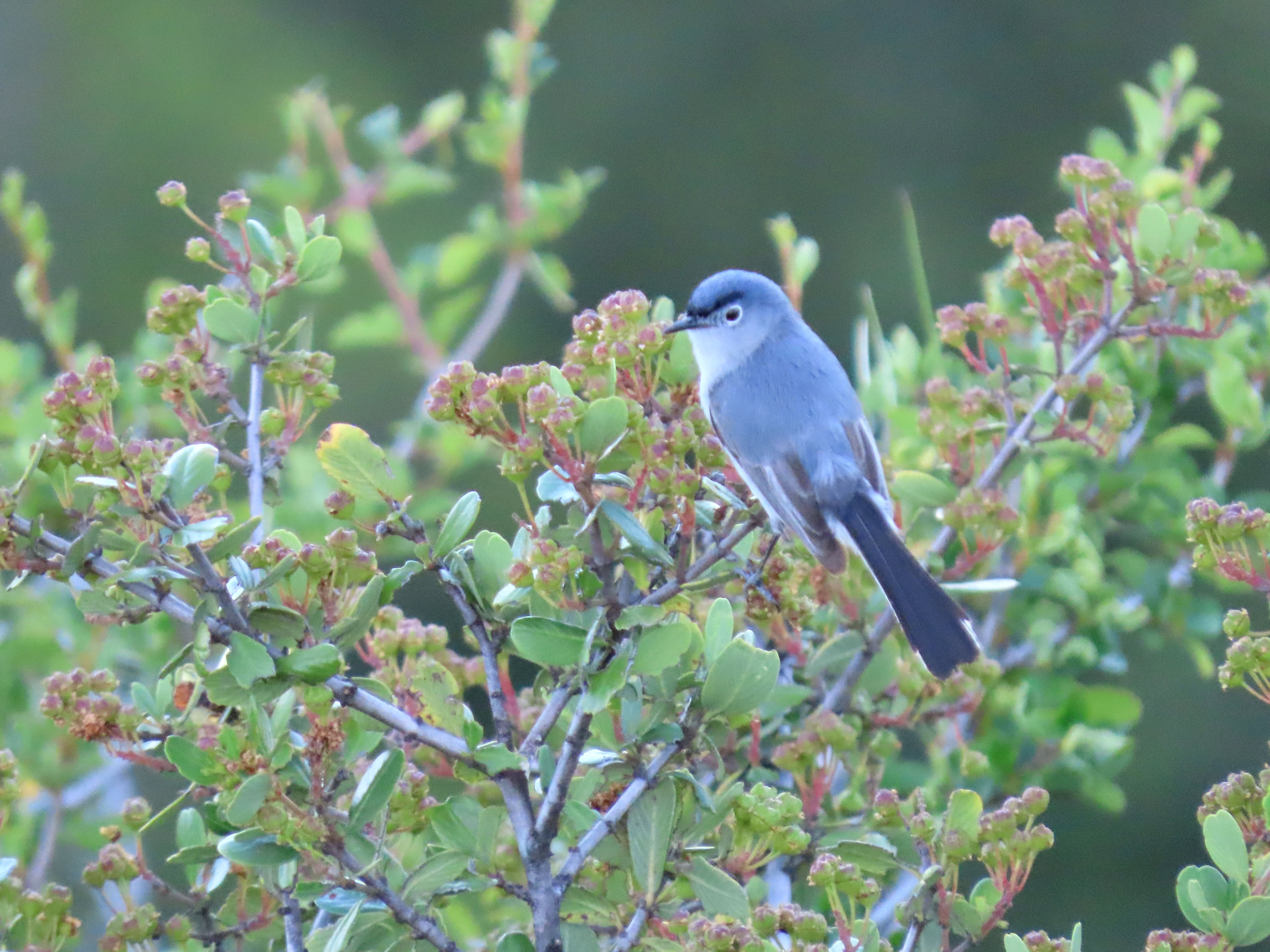
On my way back to the parking lot I first heard and then saw a blue-grey gnatcatcher.

Blue-gray gnatcatcher.

As I headed to the parking lot there were now six other birders in the area, looking for the Bell’s.

As I reached my car a pair of birders had just spotted a pair of Bell’s sparrows right from the parking lot. So I figured I’d stay a bit longer.

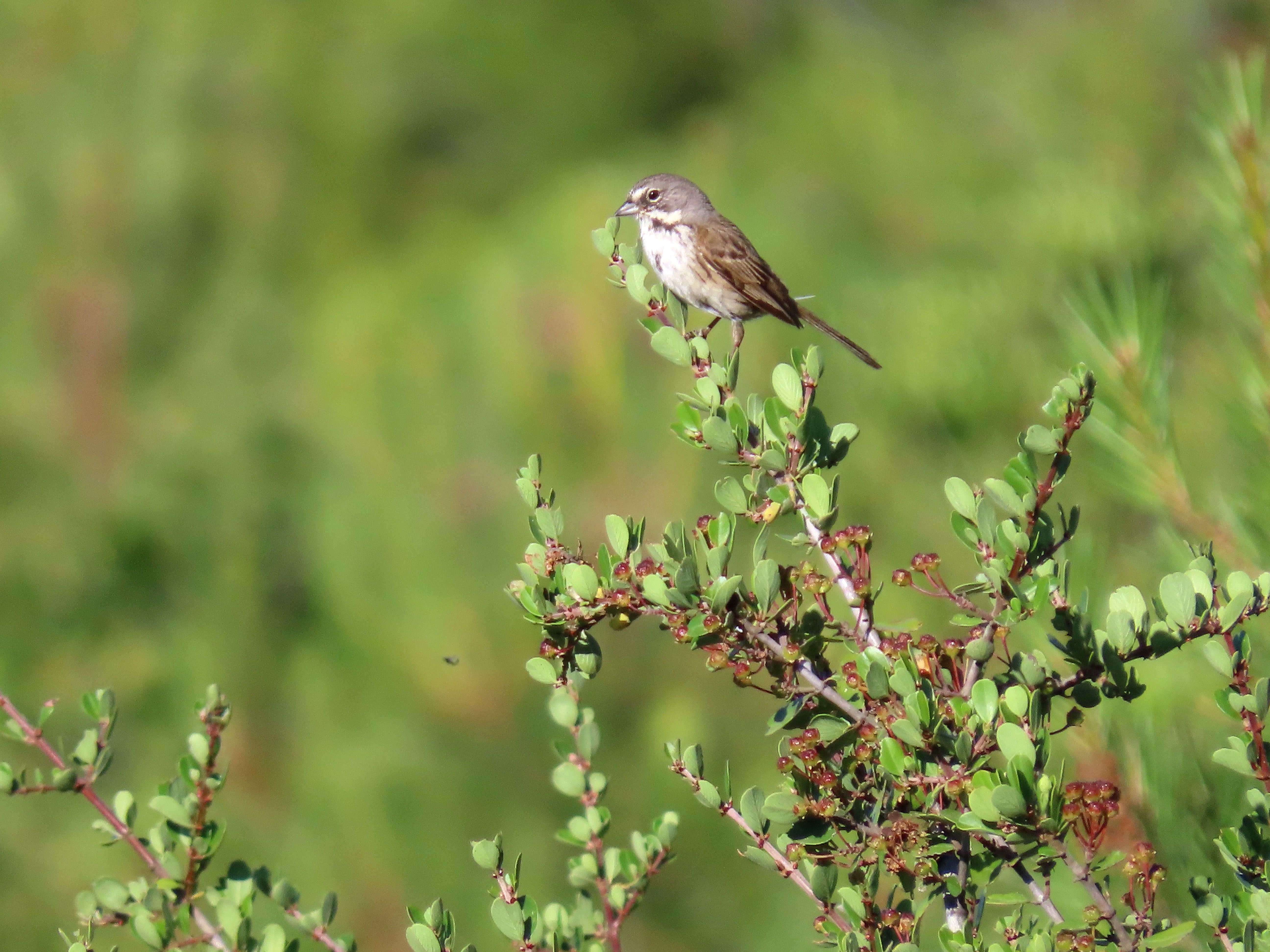
I was rewarded about five minutes later when a bird flew towards me and perched on a nearby bush in front of me. Bell’s sparrow! A new county bird!

Bell’s sparrow.

Sketching Notes

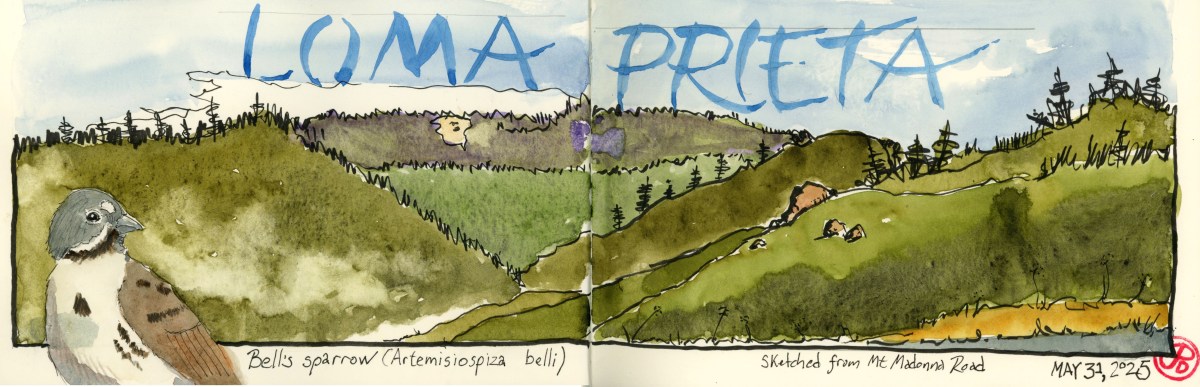
Loma Prieta Ridge is one of the best panoramic views in Santa Cruz County. So I took a pause in Bell’s sparrow spotting and opened my panoramic watercolor journal to capture the scene.

What a view, best in the county!

I left the lower left side blank. I initially was going to add a Bell’s sparrow but I hadn’t seen one yet. So I thought I would add a blue-grey gnatcatcher to that corner, based on my field photo.

After seeing the Bell’s from the parking lot, I returned to my original plan and the result is my featured sketch.
Image

Birds of Sydney: Parrots

In my neighborhood you occasionally see posters tacked up on a power poles about missing animals, mostly dogs or cats but sometimes parrots that have flown away from their gilded cages.

The only parrots seen flying in my neighborhood are escapees. Exotics in a strange land.

Parrots, especially macaws, Amazons, cockatoos, and budgerigars, are some of the most recognizable birds species in the world because they are often pets. They frequently appear in media such as books, art, and movies. Show just about anybody an image of psittacines and they will say “parrot”.

My sixth grade class pet was a budgie (native to Australia). My grandma also had a budgie before I was born. Macaws and cockatoos are mainstays at zoos and animal parks where they frequently perform at shows showing off their intelligence, dexterity, and vocal abilities.

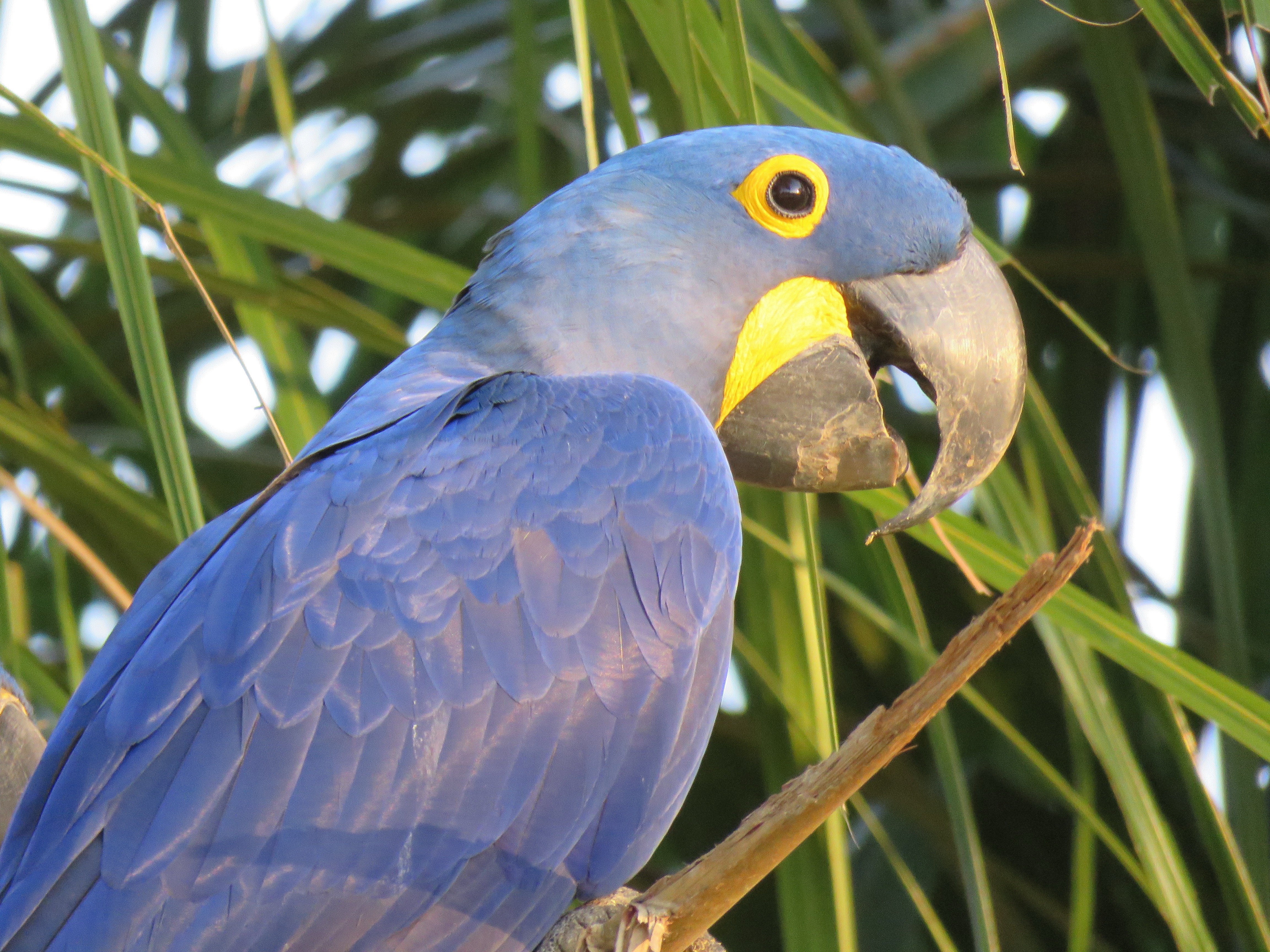
Just last year, an organization, Happy Birds, had an assembly at my school that was a parrot show featuring a very vocal Amazon and some macaws, including the largest parrot in the world: the hyacinth macaw.

A few summers before the parrot assembly I saw the beautiful big blue macaw in the Pantanal in Brazil. This is a wild and free hyacinth macaw.

The first time I saw a free flying wild macaw (scarlet macaw) was in Costa Rica. I saw many more on birding trips to Ecuador and Brazil.

It was so unreal to see a pair of scarlet macaws flying in Costa Rica without thinking they had just escaped from a nearby zoo.

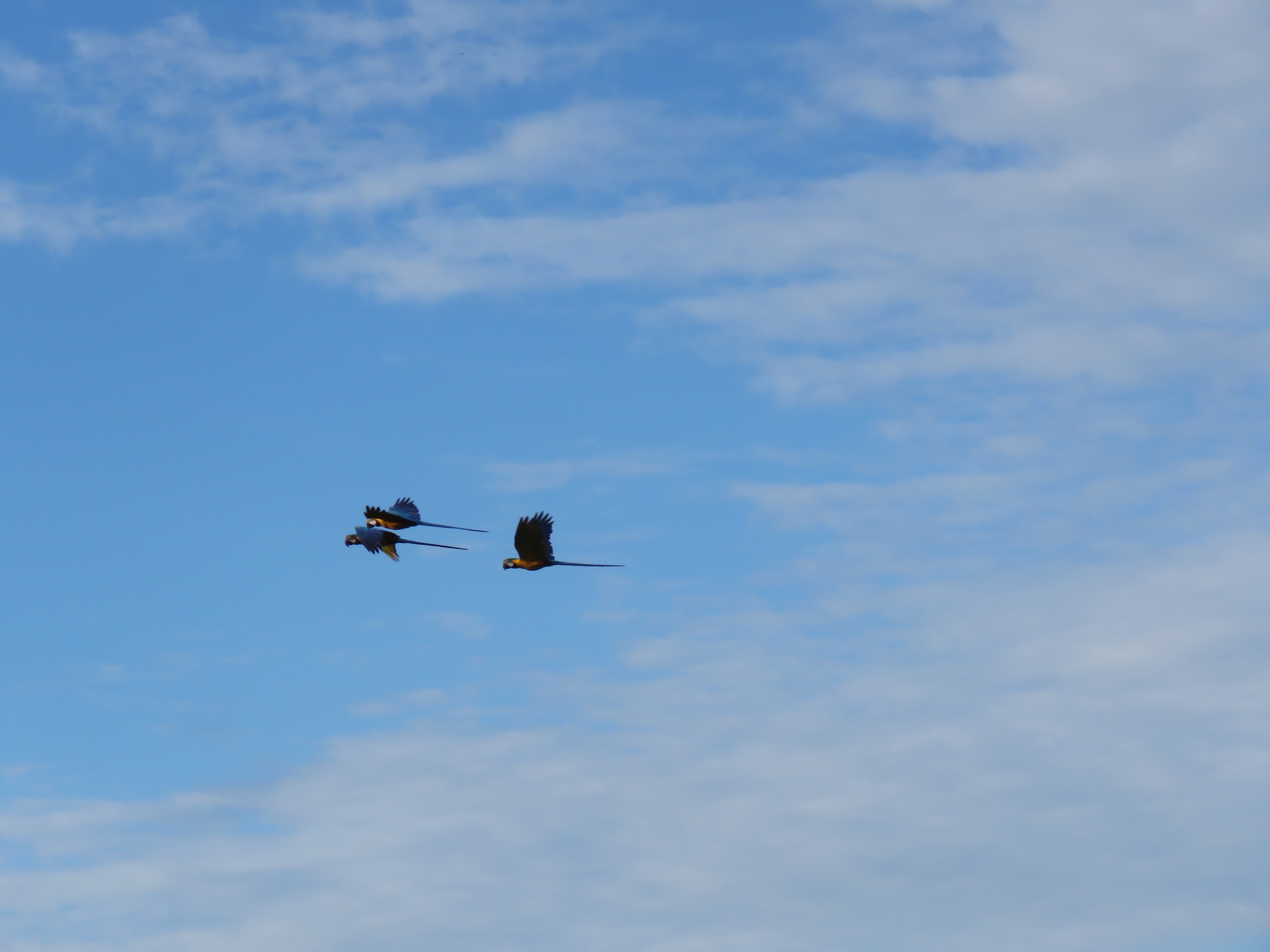
Macaws on the wing in Brazil.

Seeing these iconic parrots flying free over a rainforest, proclaiming themselves with their raucous hymns is an unforgettable natural experience.

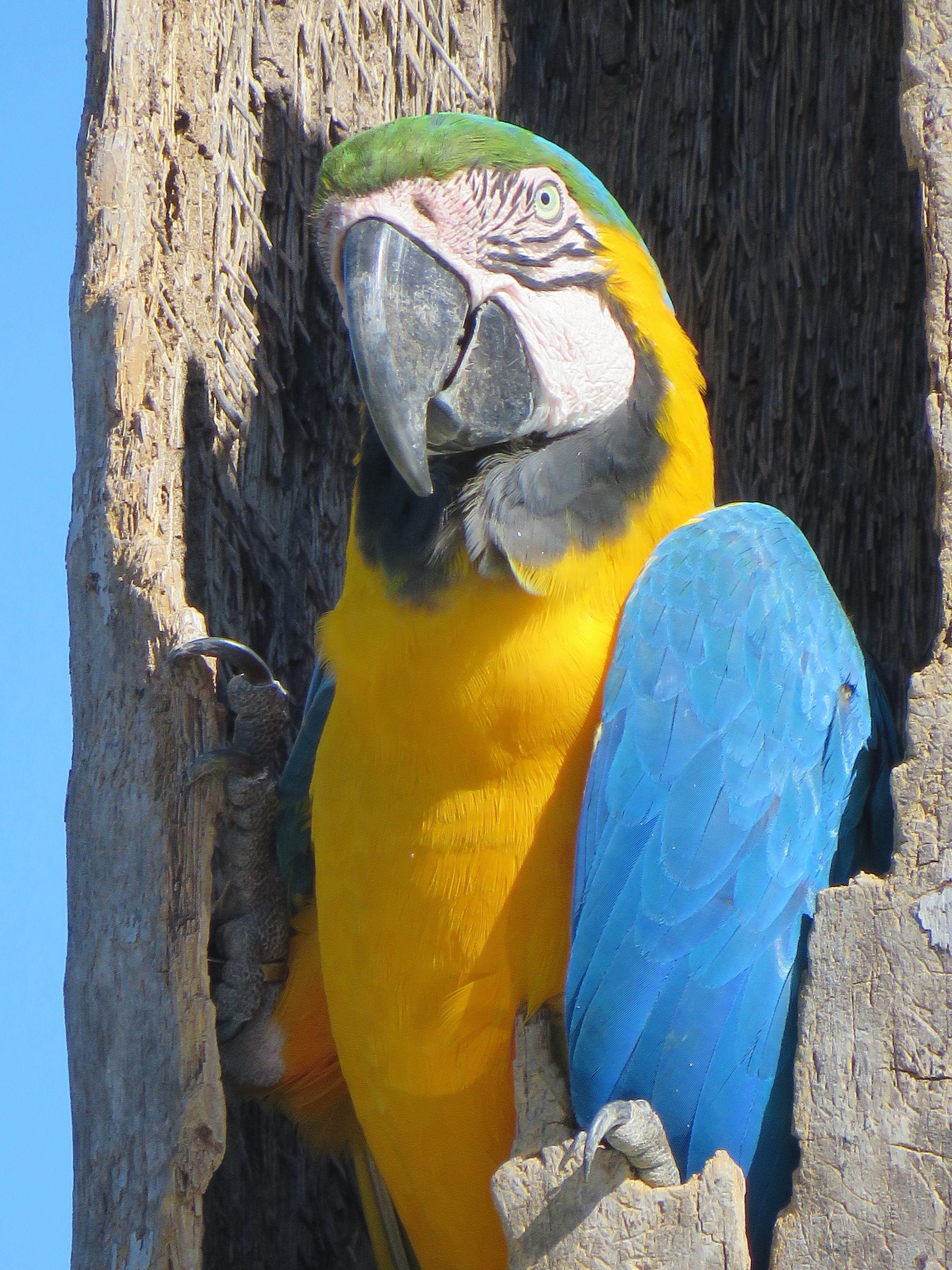
If looking at this a photo one thinks it is taken at a zoo but no, this is a wild blue and yellow macaw in the Pantanal in Brazil.

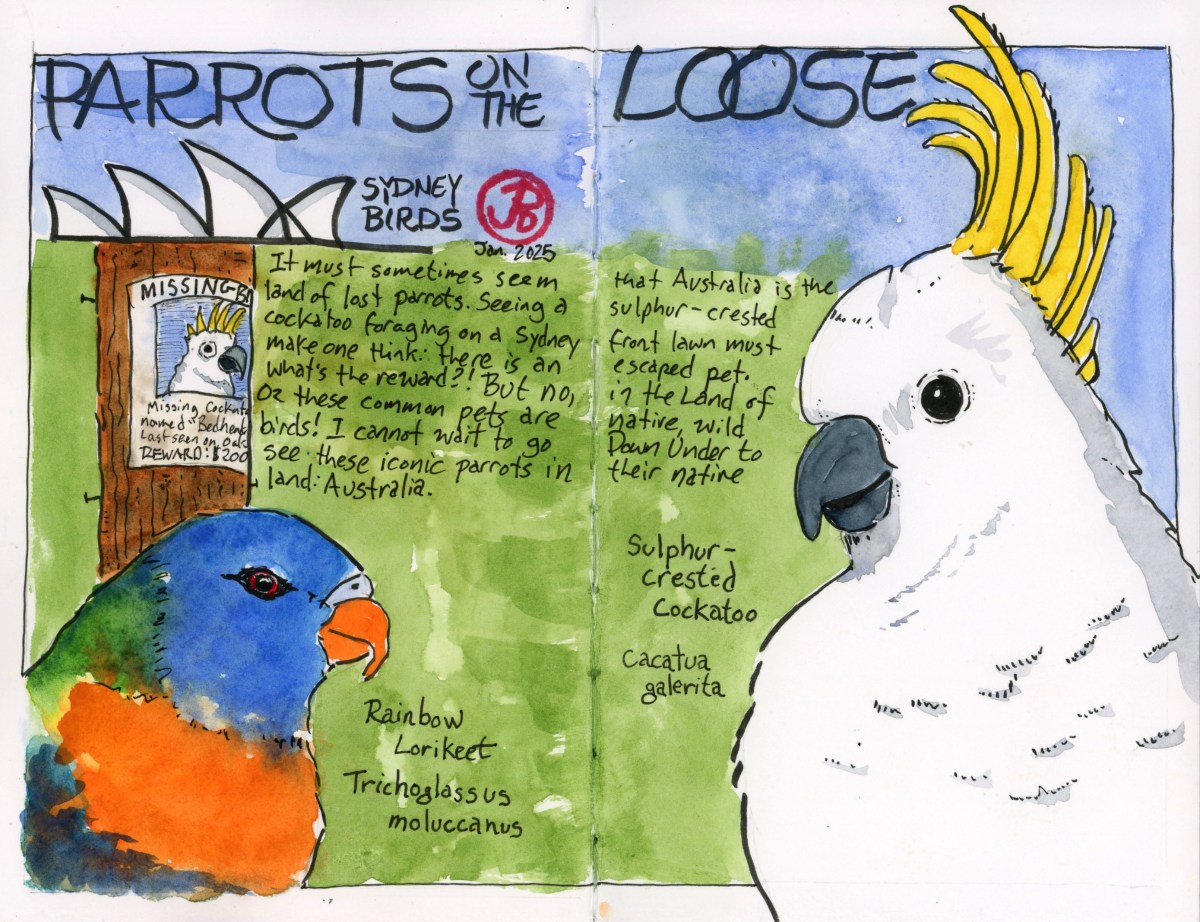
Now I turn to the county of Australia and it’s “escaped” parrots of Sydney. The most iconic for me are the sulphur-crested cockatoo and the rainbow lorikeet (featured sketch). Both are common in the Emerald City.

My Australian mate (a former student’s parent) and a former Sydney resident told me about seeing the iconic sulphur-crested cockatoo almost everyday simply blew my birding brain making me want to go Down Under to see them for myself.

Image

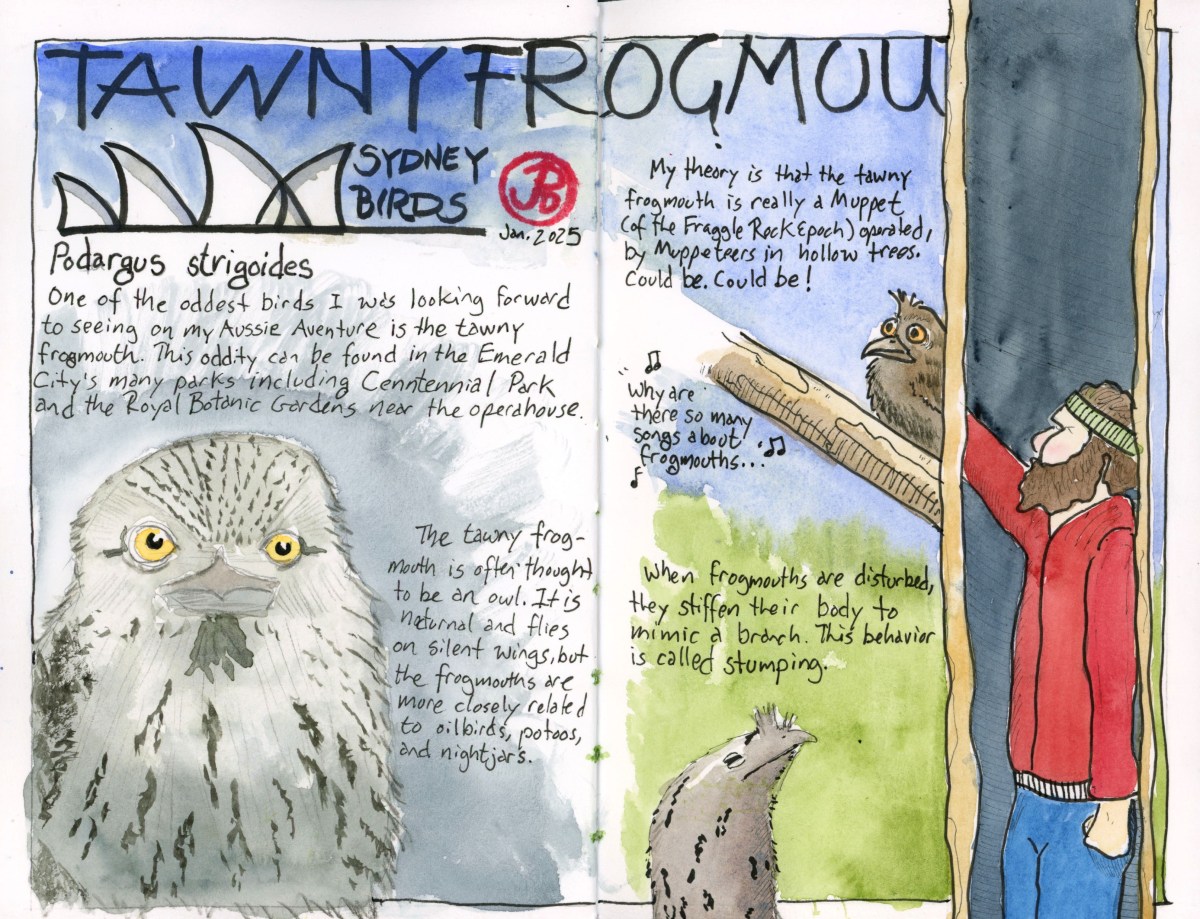
Birds of Sydney: Tawny Frogmouth

In anticipation of my Aussie Adventure I wanted to do an individual species spread about some of the iconic Australian birds that can be found in the urban environs in the Emerald City: Sydney, Australia.

One reason that Sydney’s moniker is the Emerald City is because of its many green parks, over 400, in fact. It’s in these many parks such as the Royal Botanic Gardens and Centennial Park, that these birds can be found.

Some of the birds of Australia seem to come out of the realm of fantasy and fiction like some creature that was designed on an artist’s drafting board, that can only be found in the pages of a book not perched in that tree in Centennial Park.

The bird that tops this list has to be the tawny frogmouth (Podargus strigoides). The scientific name roughly translates to gouty (swollen) owl-like bird.

The frogmouth however, is not closely related to owls but related to oilbirds, potoos, and nightjars nor are they suffering from gout.

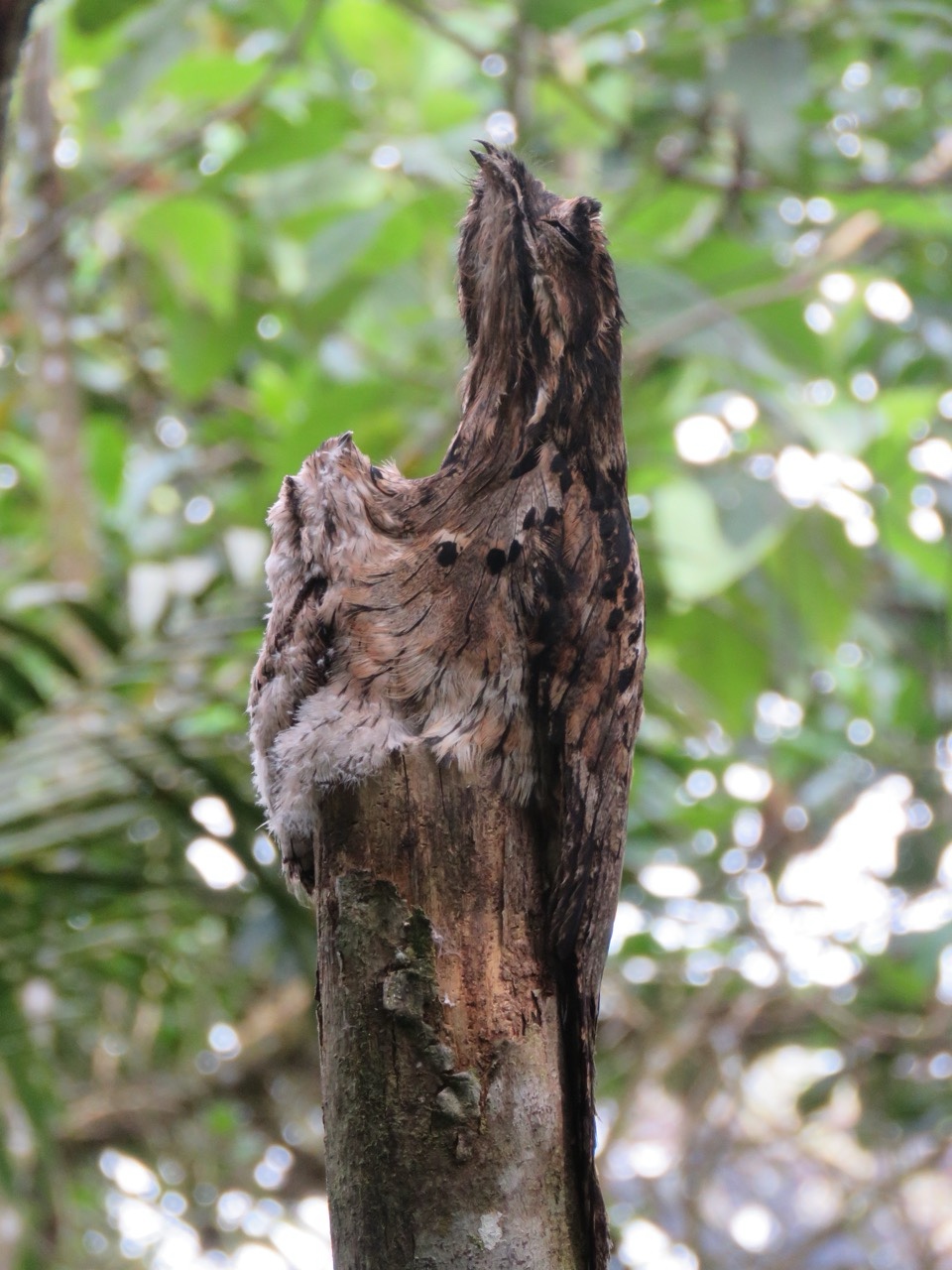
I have previous seen potoos in Central and South America. And they certainly seemed out of this world.

Look closely, this is a common potoo (Nyctibius griseus) and a chick from a trip to Ecuador in 2018. Where does stump end and birds begin? This cryptic behavior is called stumping.

Looking at images of the tawny frogmouth reminds me of a Muppet, perhaps of the Fraggle Rock epoch.
I added this observation to the left side of my spread with a cross section of a gum tree with a puppeteer inside, who bears an uncanny resemblance to Jim Henson.

I’ll admit, I let my mind run free and my artistic license has yet to expire!

Image

The Kingbird and the Cemetery

Surprisingly a cemetery is full of life.

The wide open spaces with trees and plenty of perches is an ideal habitat for flycatchers and other avian insectivores.

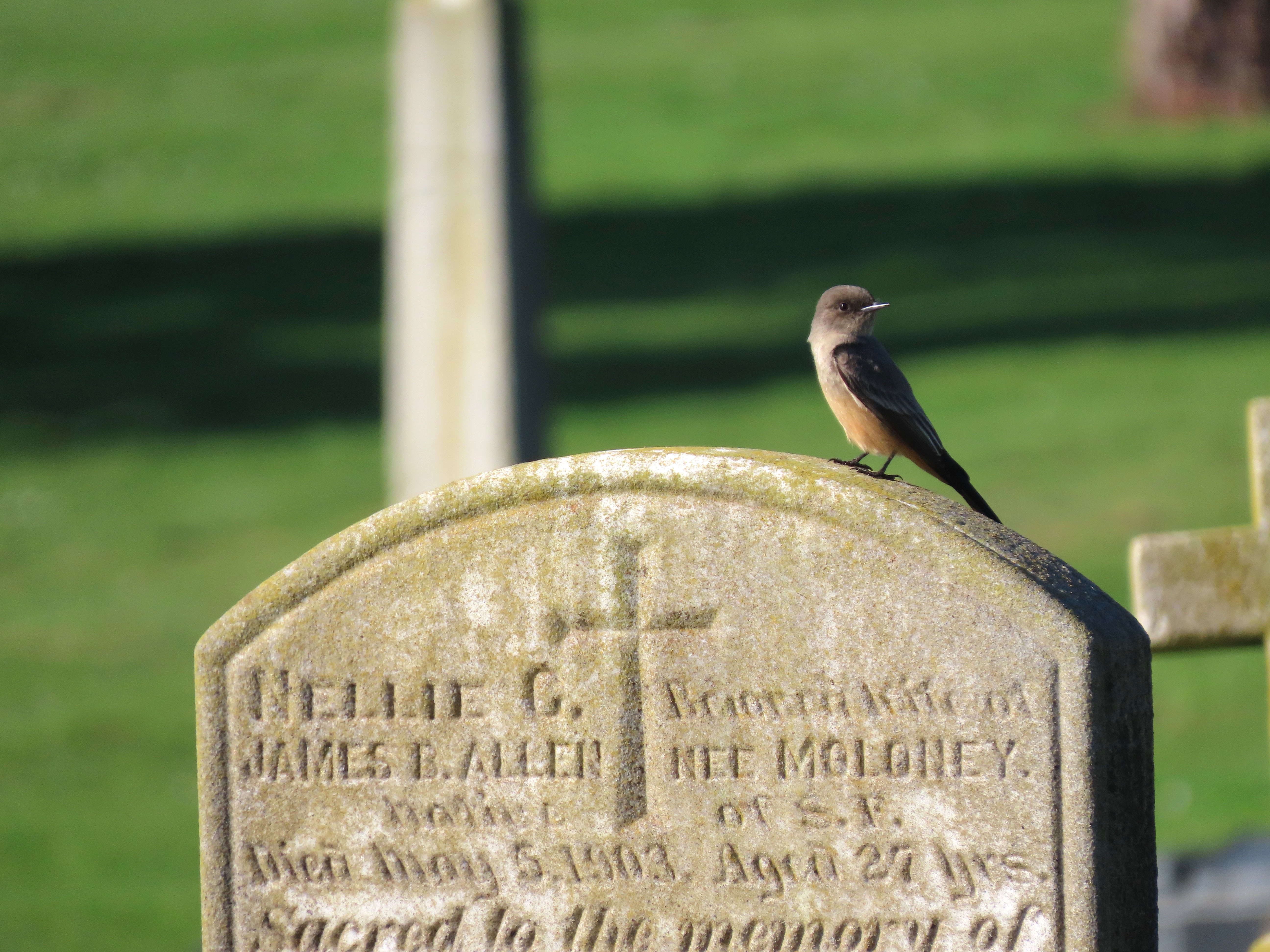
Exhibit A: Say’s Phoebe.
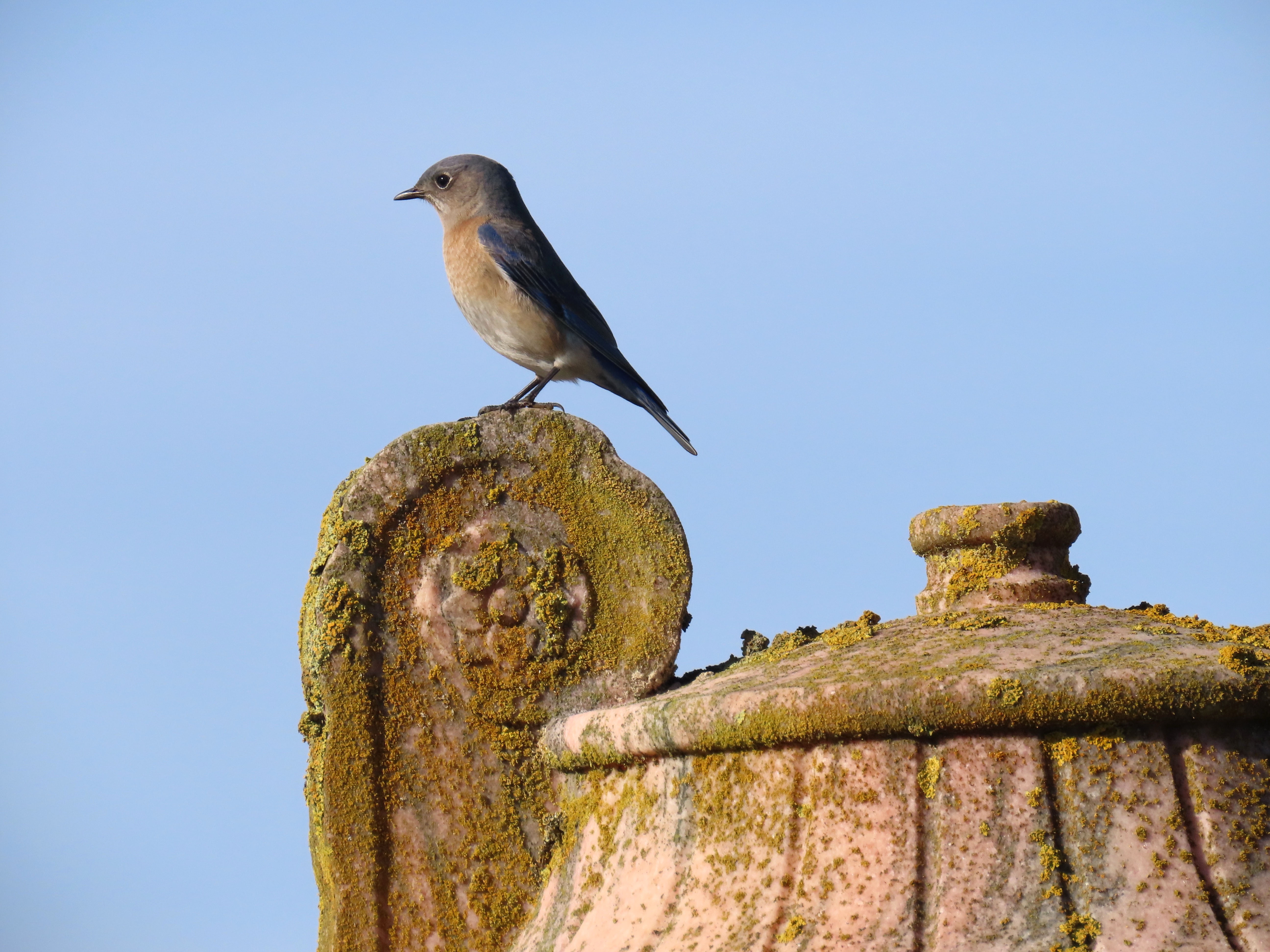
Exhibit B: Western bluebird.

I was heading to Holy Cross Cemetery in Colma (there are more residents below ground than above) to find a vagrant flycatcher.

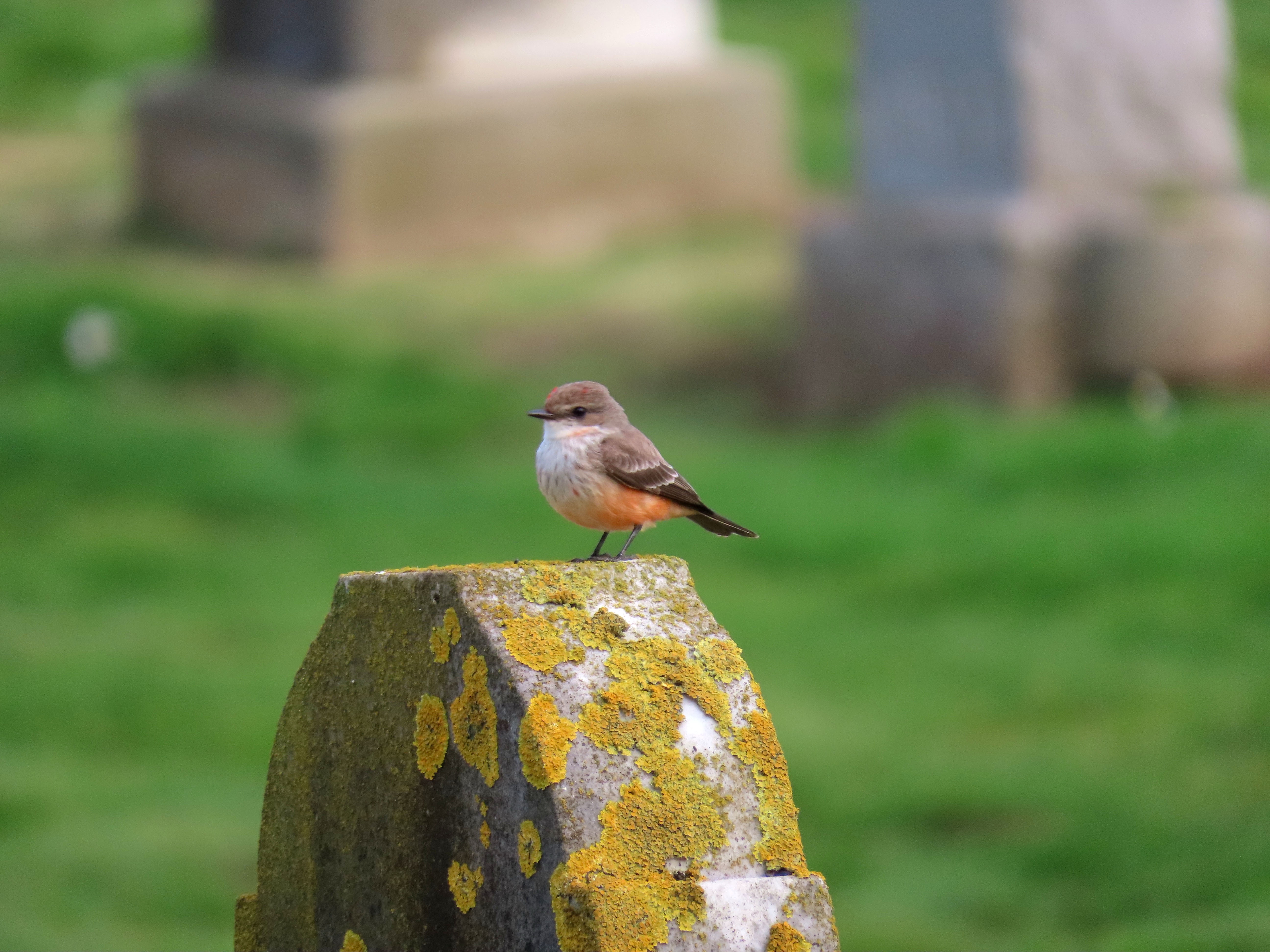
The flycatcher in question is the stunning vermillion flycatcher (Pyrocephalus obscurus). The normal range of the vermillion in the United States is Arizona, New Mexico, Texas, and Southern California. In the winter, some make their way up the California Coast. And it is one of these wayward birds that I was looking for.

When I drove up to Section G at Holy Cross (featured in the cult classic Harold and Maude) there was a couple standing amongst the tombstones looking in one direction. I bet I knew what they were looking at!

The wayward vermillion flycatcher.

The vermillion was perched on a tombstone and sallied forth to catch a snack on the wing and then land on another hunting perch. It eventually flew up to the top of a pine and disappeared.
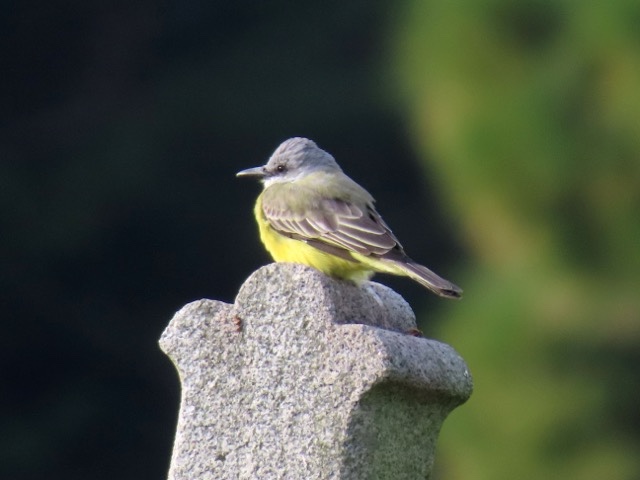
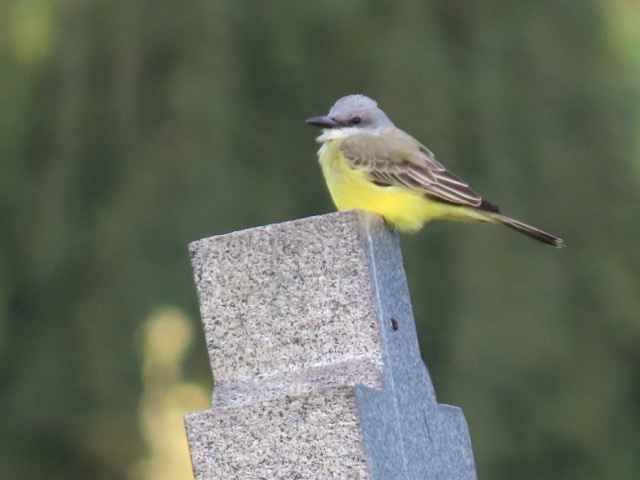
I waited for the flycatcher to reappear for about 15 minutes. No luck, so I headed east in Section G. There were plenty of common black phoebes flycatching from the mossy tombstones but no vermillion.

I decided to walk to the eastern edge of Section G which was bordered by 25th Street and then make my way back to where I had first seen the vermillion, I hoped of getting some photo documentation. And that’s when I spotted the flash of yellow!

The flash of yellow flew across the street into Section G2 and landed in a tree. I immediately knew what flycatcher it was and I lifted my binoculars to my eyes for confirmation: yes a kingbird.

Tyrannus melancholicus.

And at this time of year at this location I knew it was a tropical kingbird, also known as a TK because it is so common in Central America.

I enjoyed following the kingbird around Section G, getting some documentation with my camera because a TK is considered a rare bird for this location.

Yup, it’s a TK!