
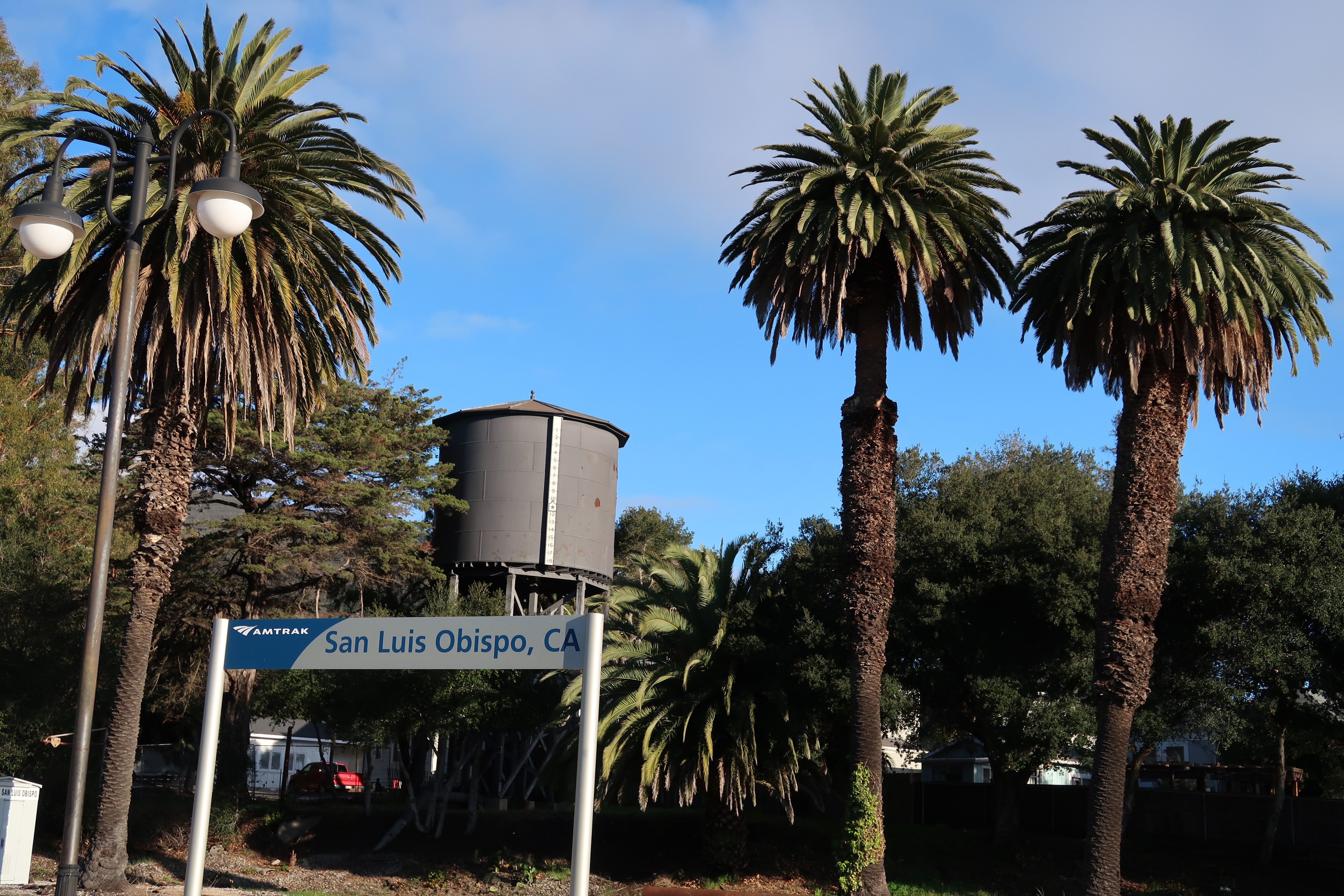
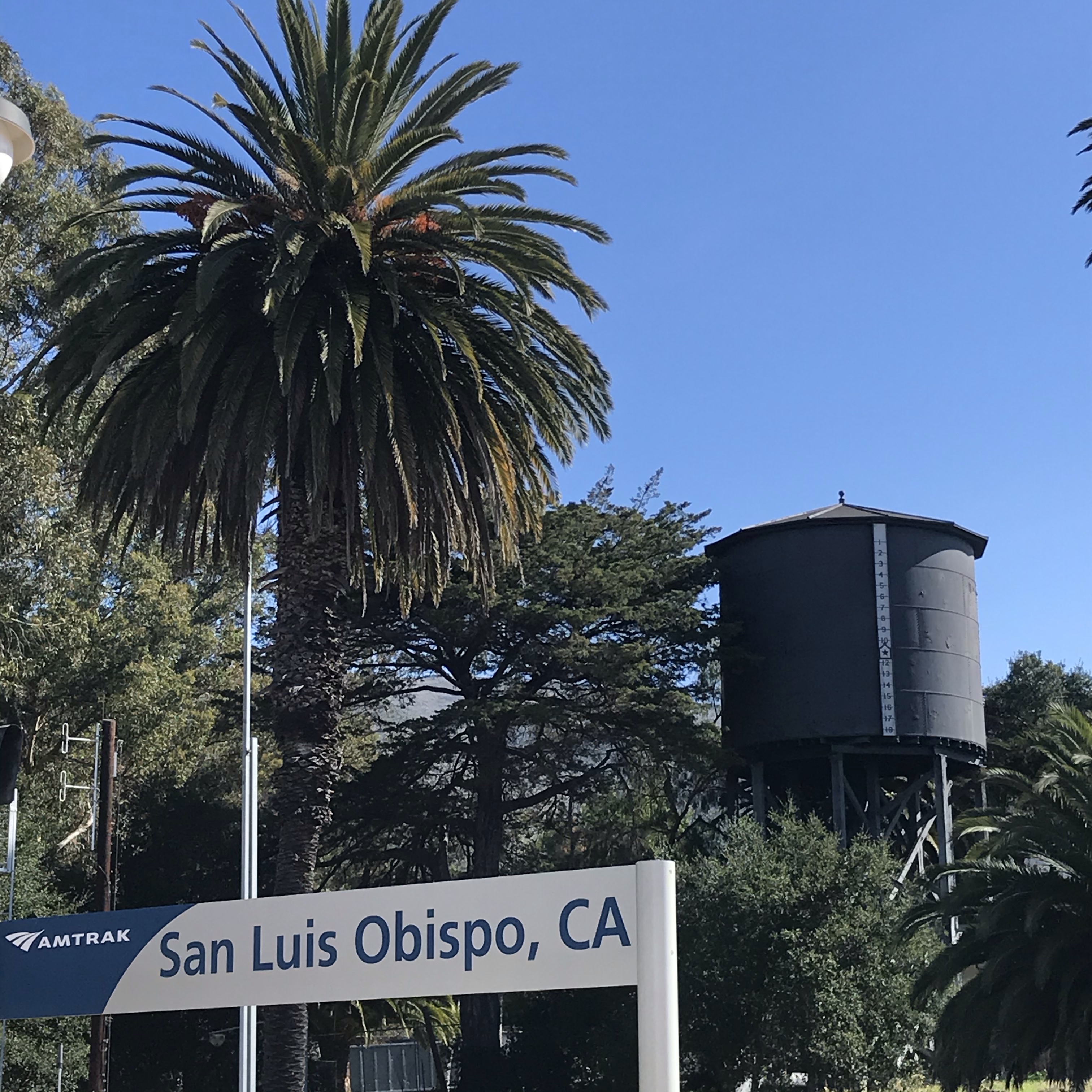
On my way back to the Bay Area from my Malibu adventure, I overnighted in San Luis Obispo. There was a water tower, across the line from the passenger depot that I wanted to add to my sketchbook. One of the few Southern Pacific water towers still standing in California.
I timed my visit with the arrival of Train # 14, the northbound Coast Starlight. This is an AMTRAK route that starts in Los Angles and terminates in Seattle, Washington.
I had about 20 minutes to sketch the water tower before the 14 pulled into San Luis Obispo. The train was already running 30 minutes late. I picked my position and started to sketch. A voice over my shoulder ask if was riding coach or had a roomette.
The voice belonged to an AMTRAK conductor who was about to board the train, SLO is a crew changeover point. I told him I wasn’t boarding the train, just sketching the tower. We had a conversation about other Southern Pacific existing water towers. He recommend a very large tower in the desert of Arizona that I should visit.
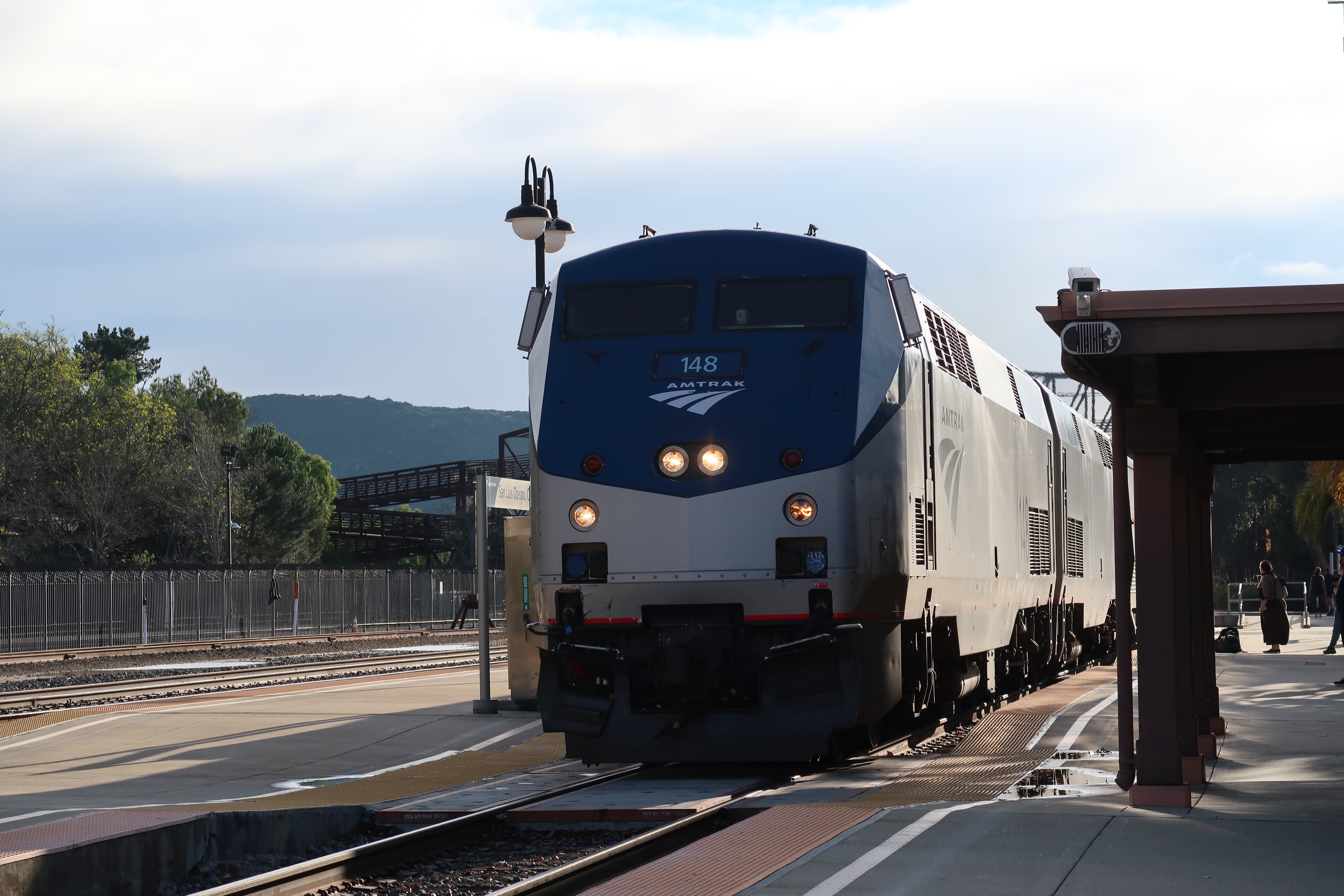
With the recent heavy precipitation over Donner Pass, I wondered aloud if the rotary plows at Roseville had been put to work to clear the pass. The conductor didn’t know. Before long the Coast Starlight pulled into the station and I looked down at my sketchbook and I hadn’t gotten very far but I had a nice conversation with a railroad working man. Two rail nerds chewing the fat!
SLO is was is called a stretch stop, also known in another time as a smoke stop, where the Starlight pauses for about 20 minutes so passengers can get out and stretch their legs, or poison their lungs with nicotine. This is also where crews, engineers and conductors, change over.
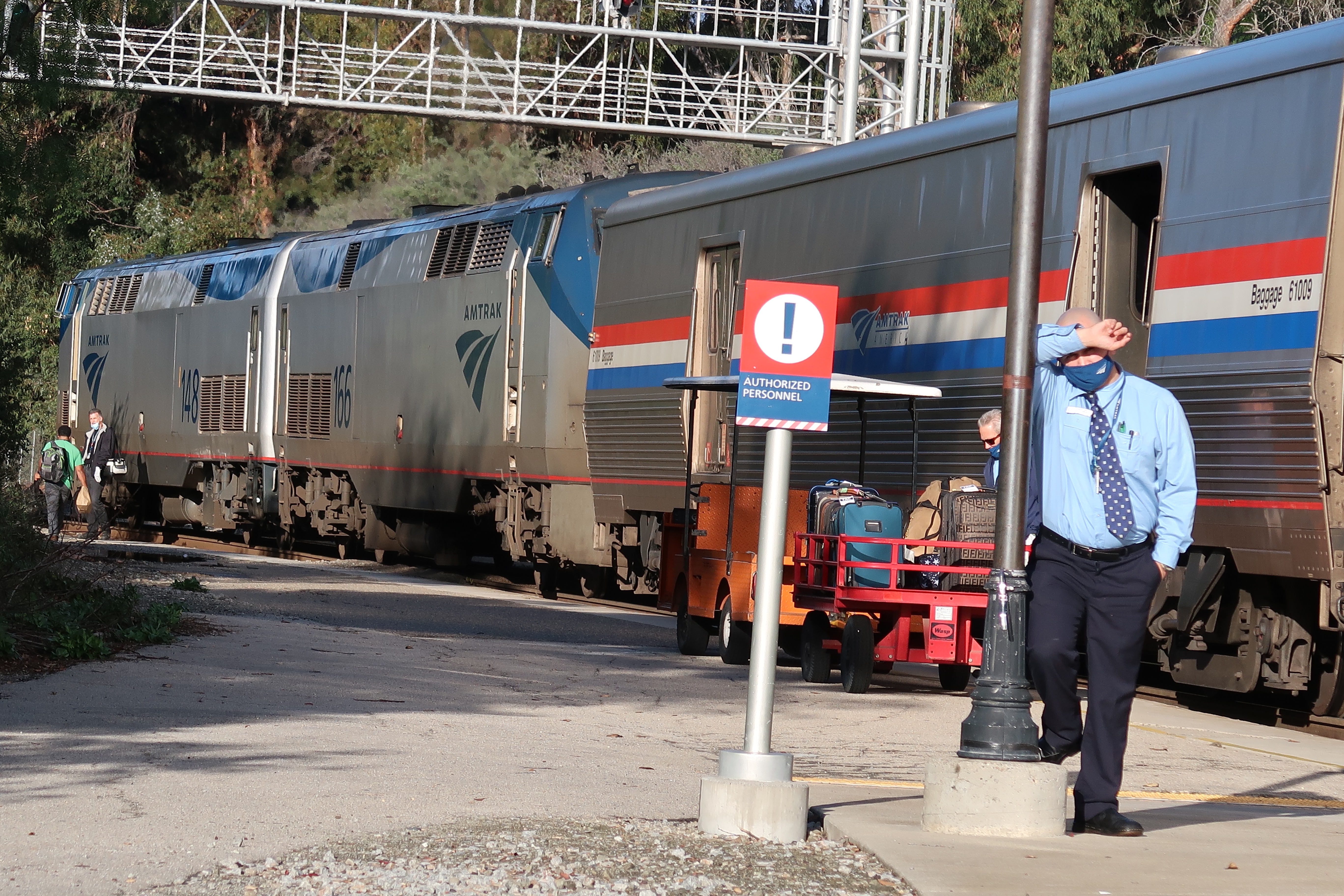
I couldn’t continue sketching because a double decker Superliner passenger car was now between myself and the historic water tower. So I watched the interactions on the platform instead. Passengers where doing laps, other where boarding, some hanging back from the train were vapping, and the train crew was in the process of changing over.
“All aboard!” And passengers filtered back into the cars. The locomotive sounded it’s horn. It was time for the Starlight to start its climb up the Horseshoe Curve on the Cuesta Grade and I watched the train slowly disappear around the curve.
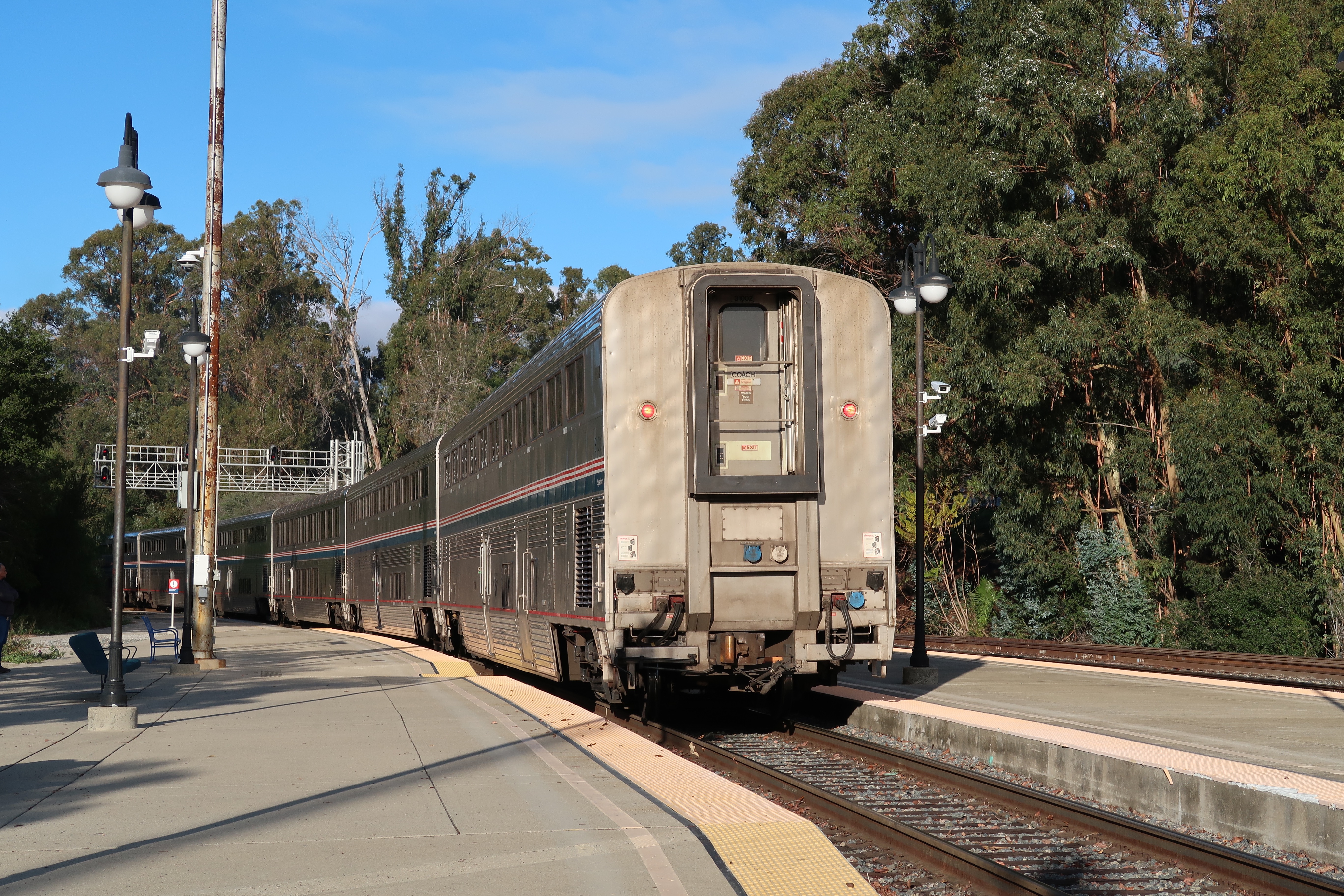
I now turned back to the water tower and restarted my sketch.
The SLO 65,000 gallon water tower was built in 1940, at a cost of $2,130. The watertower was built across from the passenger station so steam locomotives could take on water without having to back into the yard further south down the track. At that time, ten passenger trains passed through SLO. The tank was in service until 1956, when steam was replaced with diesel on the coast line. The tower was preserved and restored by 1998.

 Corvid Sketcher