Image

The Night Visit

Clearly the “squirrel-proof”, pepper-infused suet is not working. When I restocked four suet cakes into the suet feeder for the first time this season, it didn’t take long for the local gray squirrels to visit the feeder.

The squirrels do have a habit of eating some suet, pausing, as if thinking, “Damn this is hot!” before going back for a second helping. The chickadees, juncos, Steller’s jays, and song sparrows enjoy the spicy suet but it is definitely not squirrel proof!

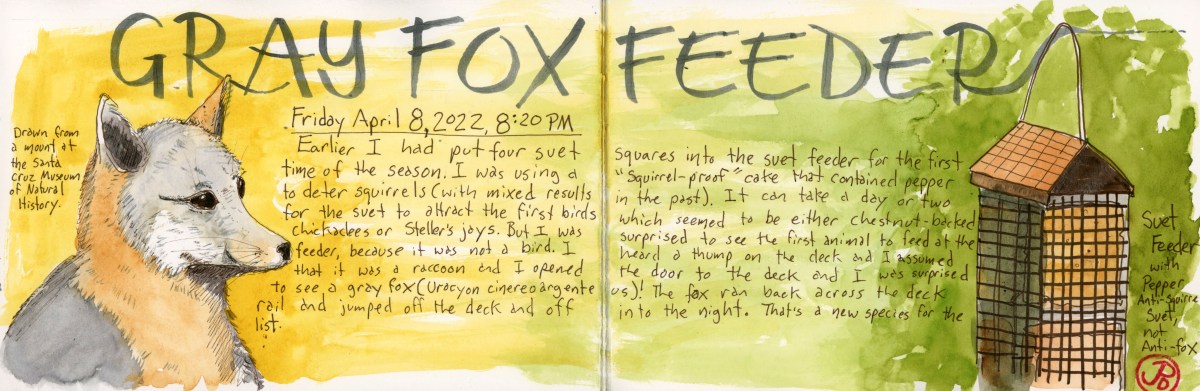
On the first night that I set out the suet, at about 8:20, I heard an audible thump on the deck.

When I went to have a look, I fully expected to see a raccoon, which are infrequent nocturnal visitor to the feeder. But instead I was surprised to see a gray fox, having a nibble at the feeder.

The fox instantly turned around and sprinted across the deck railing and then jumped off the deck and into the night leaving me gobsmacked. What an amazing encounter! This was the first gray fox I had ever seen in the park! And it had come to visit my suet.

The only other gray foxes I had seen in the county were ex-gray foxes lying by the roadside.

This sighting increased my yard mammalian list to five: grey and red squirrel, raccoon, striped skunk, and now gray fox. (I could add mountain lion but a neighbor reported this apex predator passing between my cabin and my neighbors, but I didn’t see it myself.)

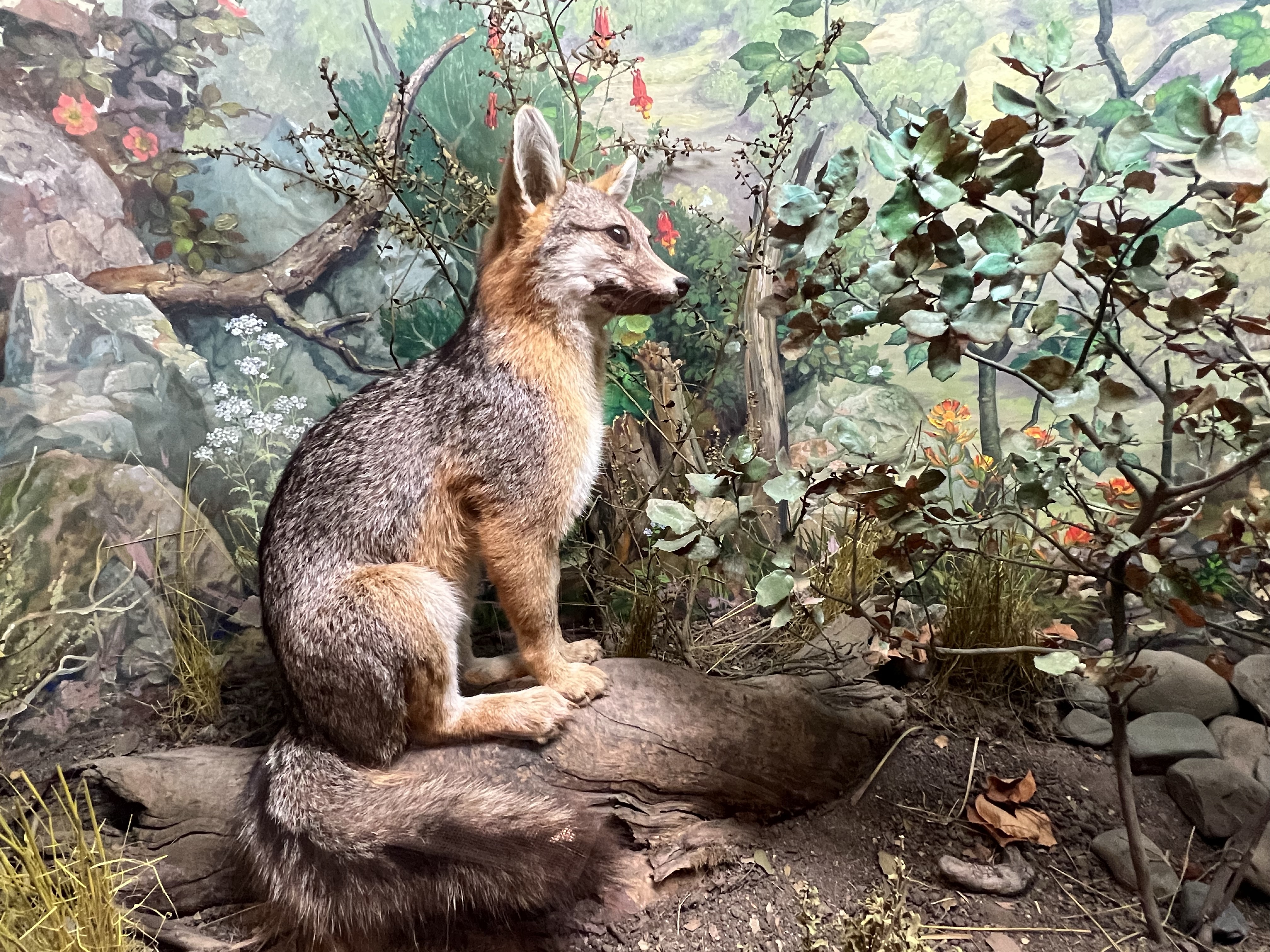
I knew I wanted to do a sketch about the encounter but I wondered how I could do a sketch of a gray fox. I wanted to shy away from copyrighted photographs online , so I chose to sketch an ex-fox, at the Santa Cruz Natural History Museum.

I went to the museum and found the display that included the taxidermy gray fox (Urocyon cinereoargenteus). These mount museums are a sketcher’s delight because you can sketch many reptiles, butterflies, fish, birds and mammals that are not moving. I felt like I was channeling the sprit of John James Audubon.

The gray fox at the Santa Cruz Museum of Natural History.

Image

The Sea Elephant, the Laughing Gull, and a Tsunami

After work, on my way down to Santa Cruz, I spotted a male elephant seal resting on Waddell State Beach. On the previous Friday I had seen a juvenile bald eagle perched above the beach. Waddell Beach had been good to me.

This weekend, on Saturday morning, I returned to Waddell Beach to see if the elephant seal was still there and if so, I intended to sketch it. But I found so much more!

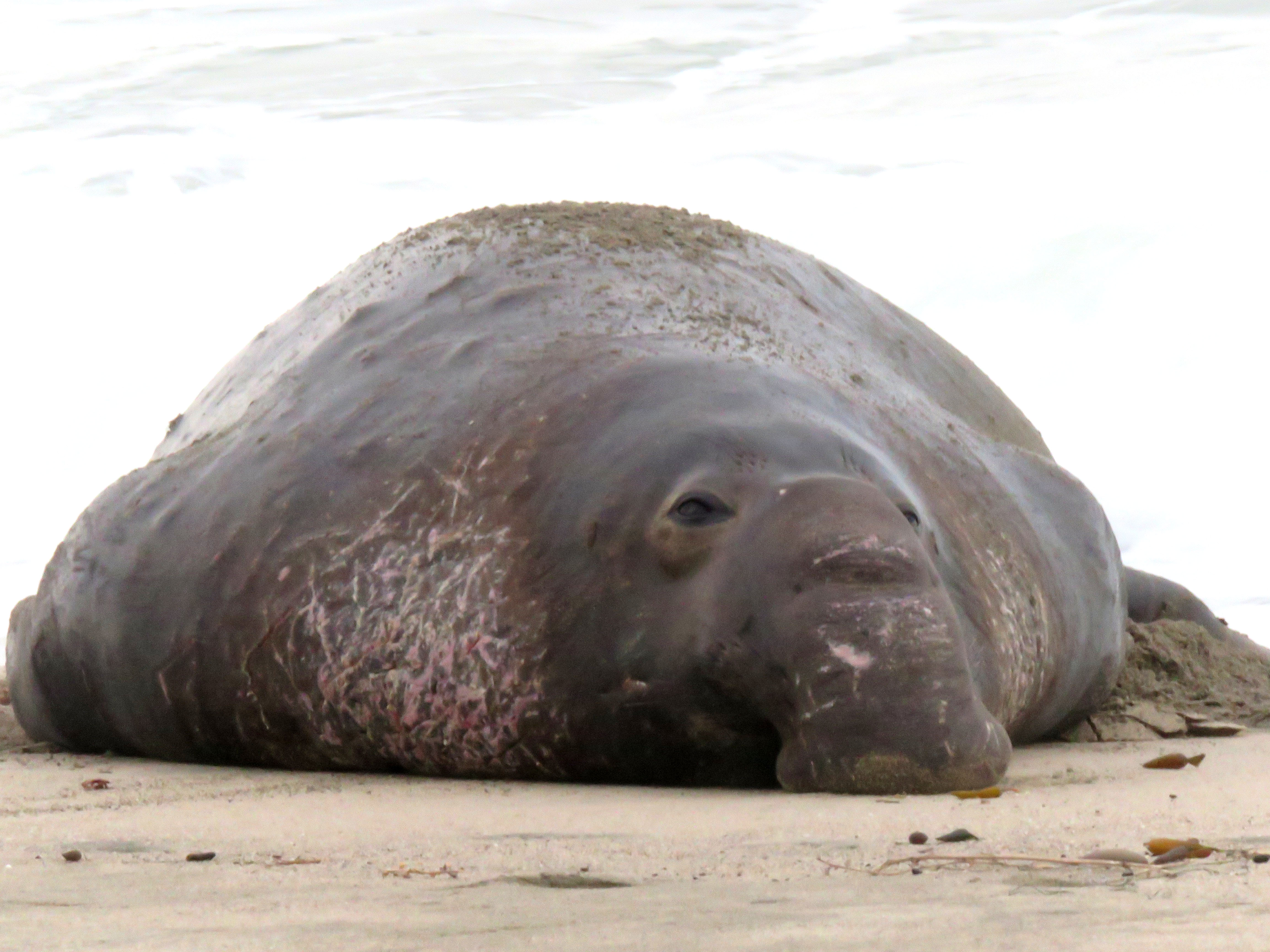
I pulled into the dirt parking lot at about 7:30 AM. And there was the male elephant seal on the beach looking like a massive piece of driftwood. The seal’s stern was pointing toward the tide and it bulbous snout, facing east. This is only the second elephant seal I have seen on Waddell State Beach.

I planned to search the gull flock that usually rests and bathes in Waddell Creek on the beach near the creek mouth. At the end of the beach I could see the flock of about 100 gulls. I was hoping to find a black-legged kittiwake, a gull that I have been wanted to add to my county list for a while. But before I got to the flock, there were a few gulls foraging around the elephant seal. Indeed, they seemed to be in orbit around the massive mammal.

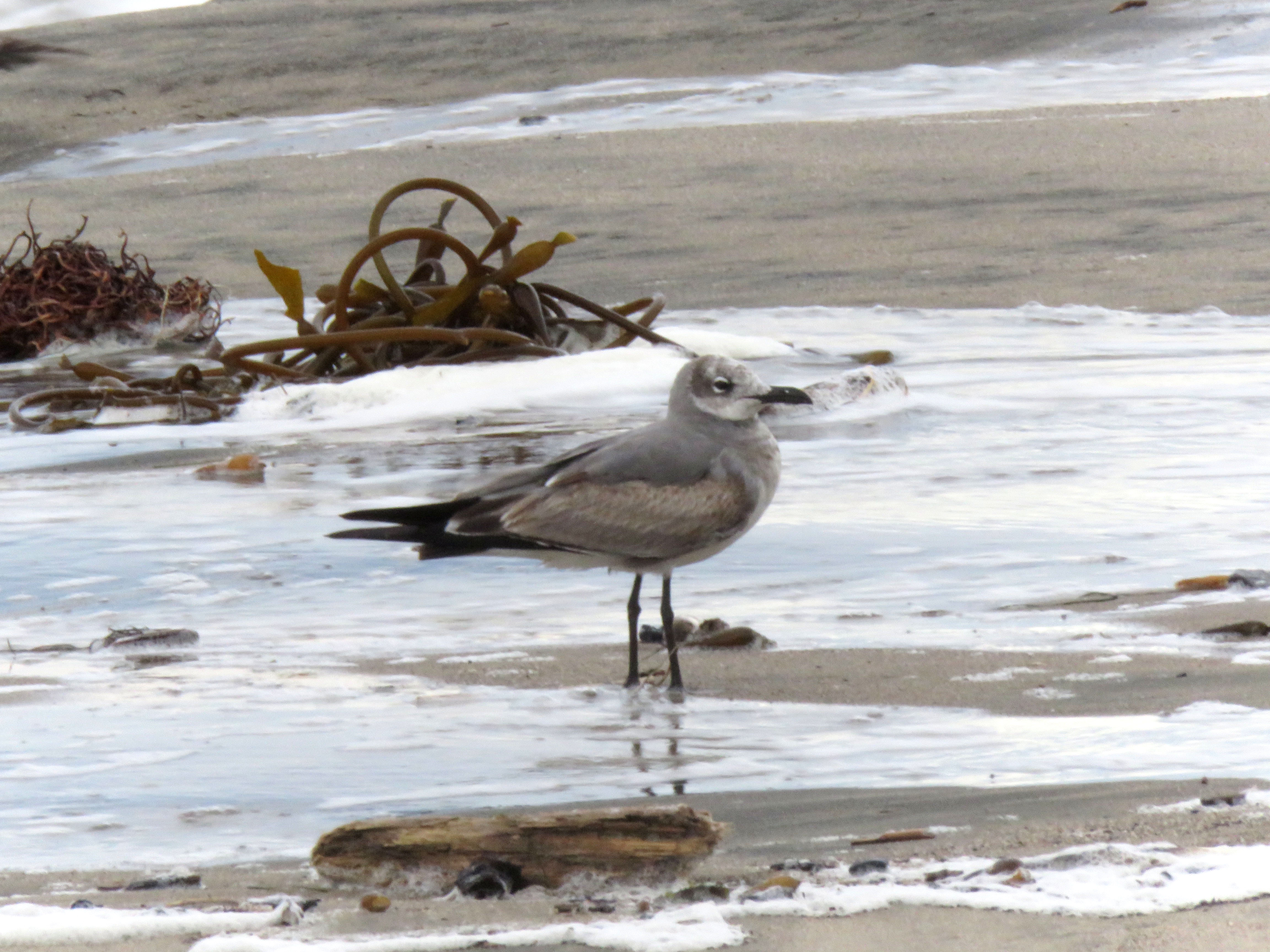
The dark gulls where juvenile Heermann’s gulls but there was one daintier gull that was actively foraging in the surfline. This gull really stood out. And that’s always a good thing when you’re gulling. The first thing that called out to me was the shape, size, and color of the beak. Now where had I seen that beak before?

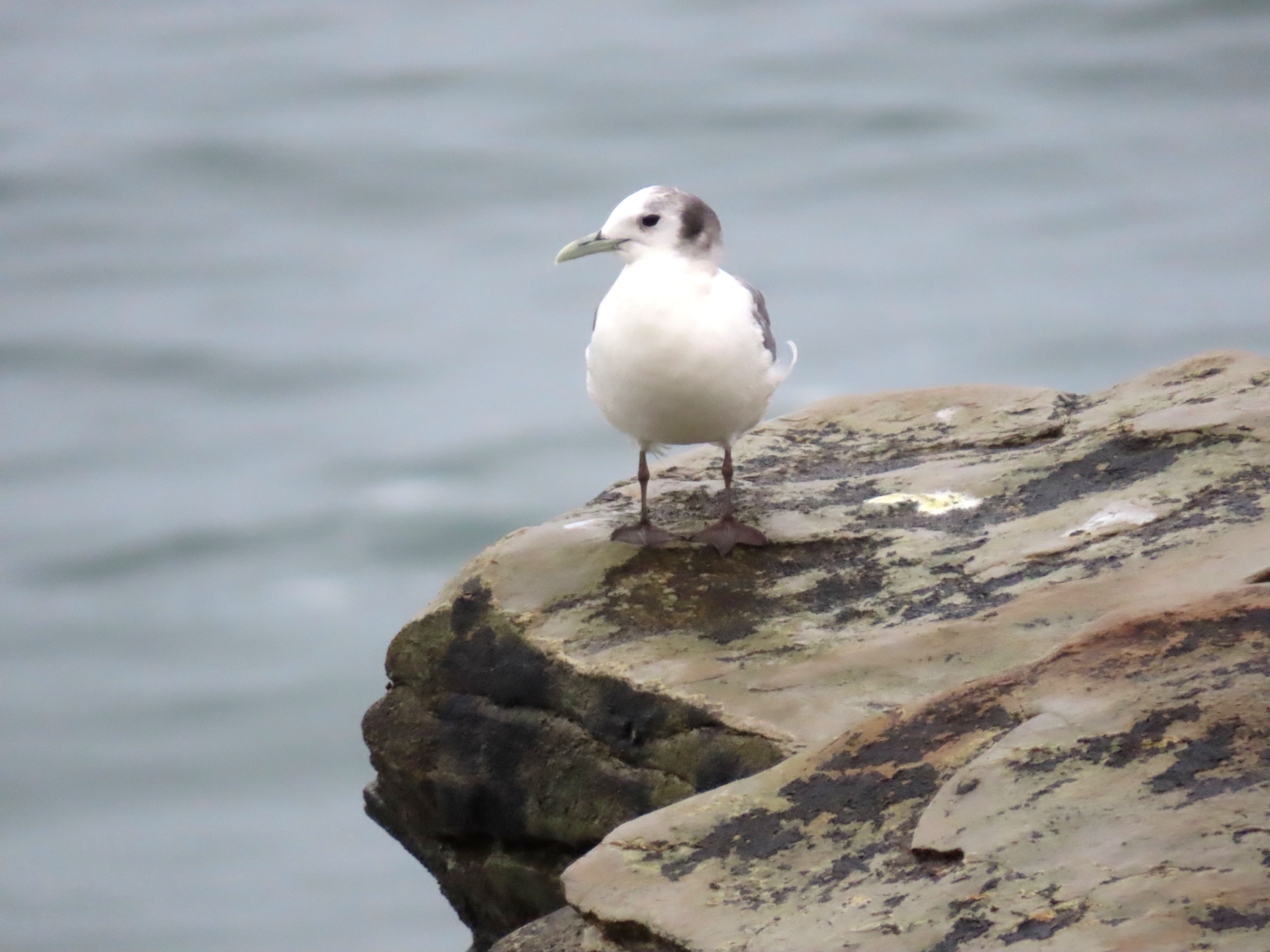
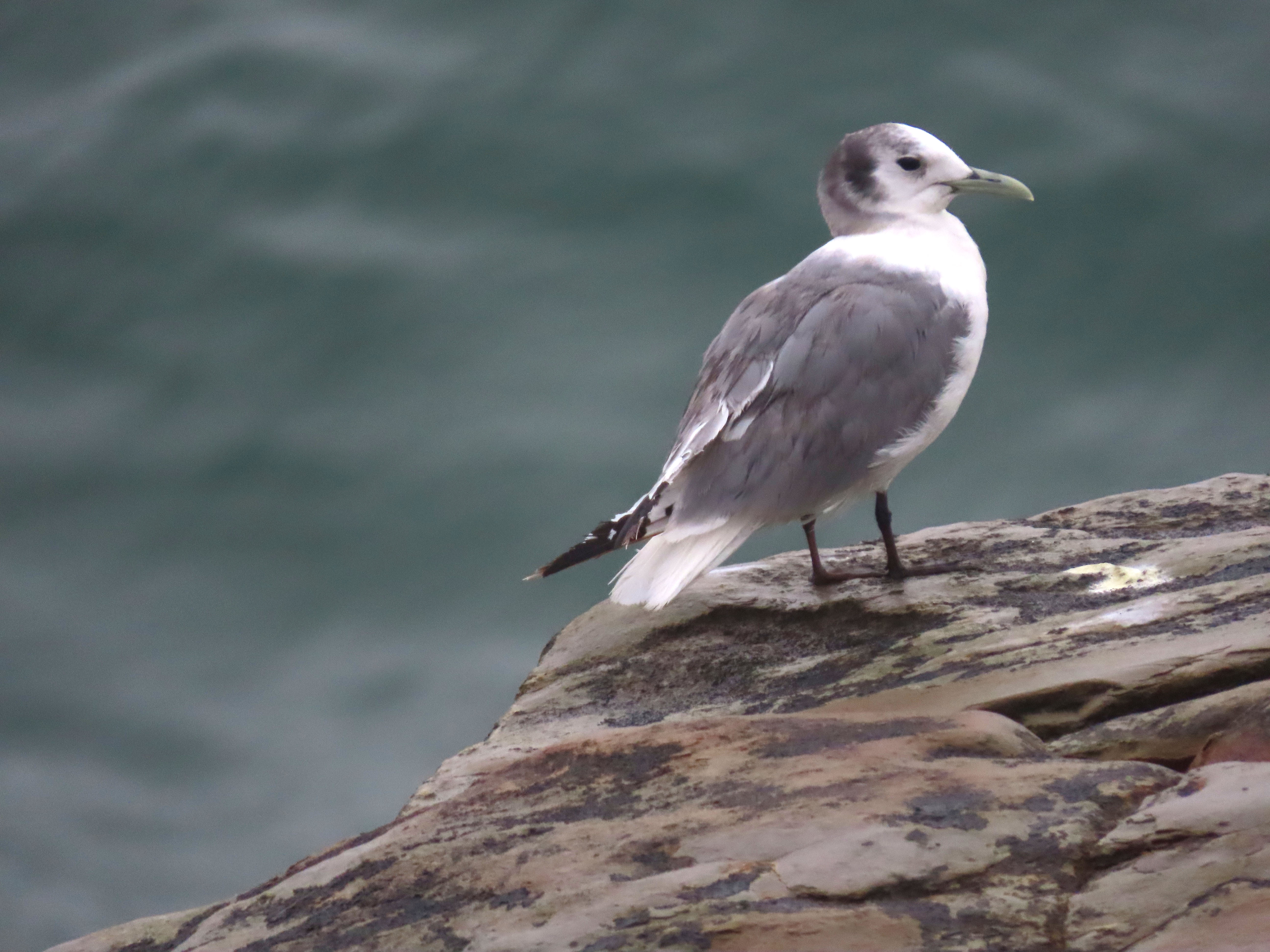
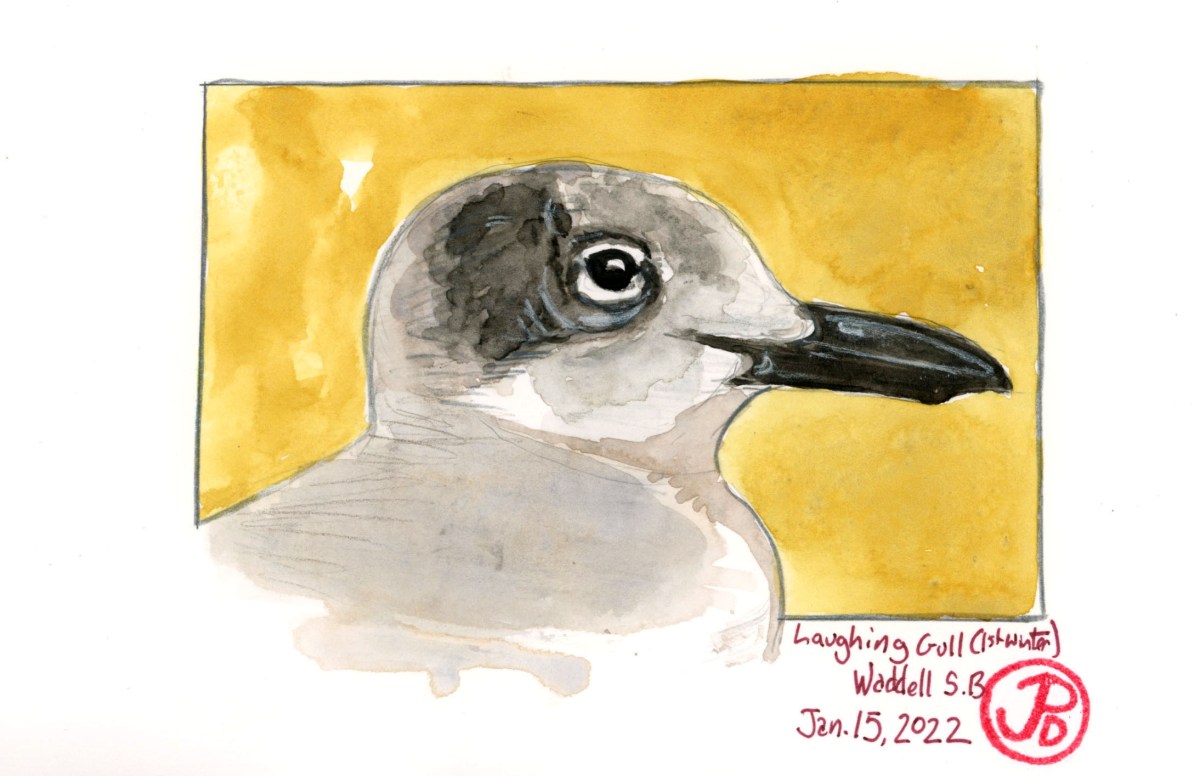
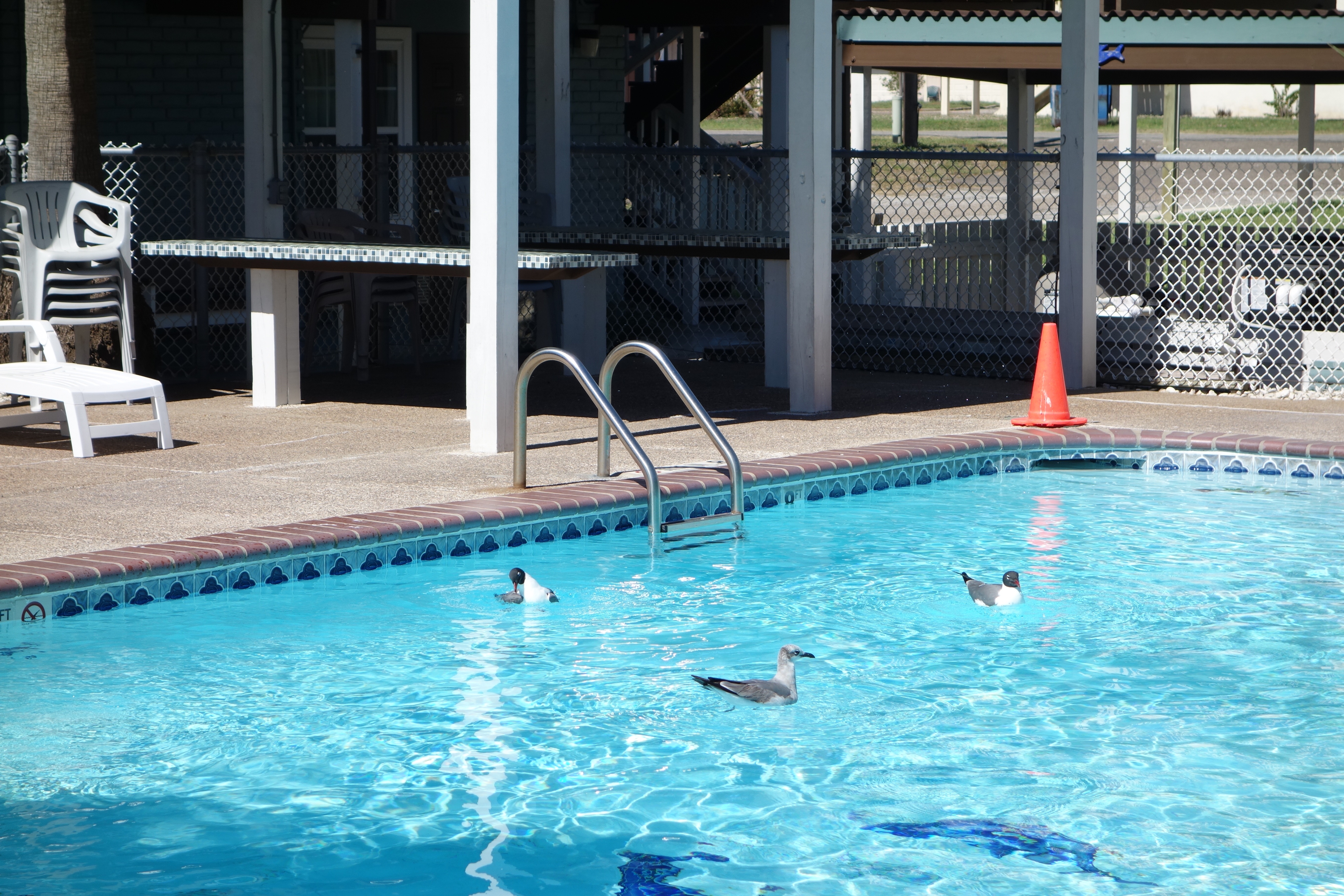
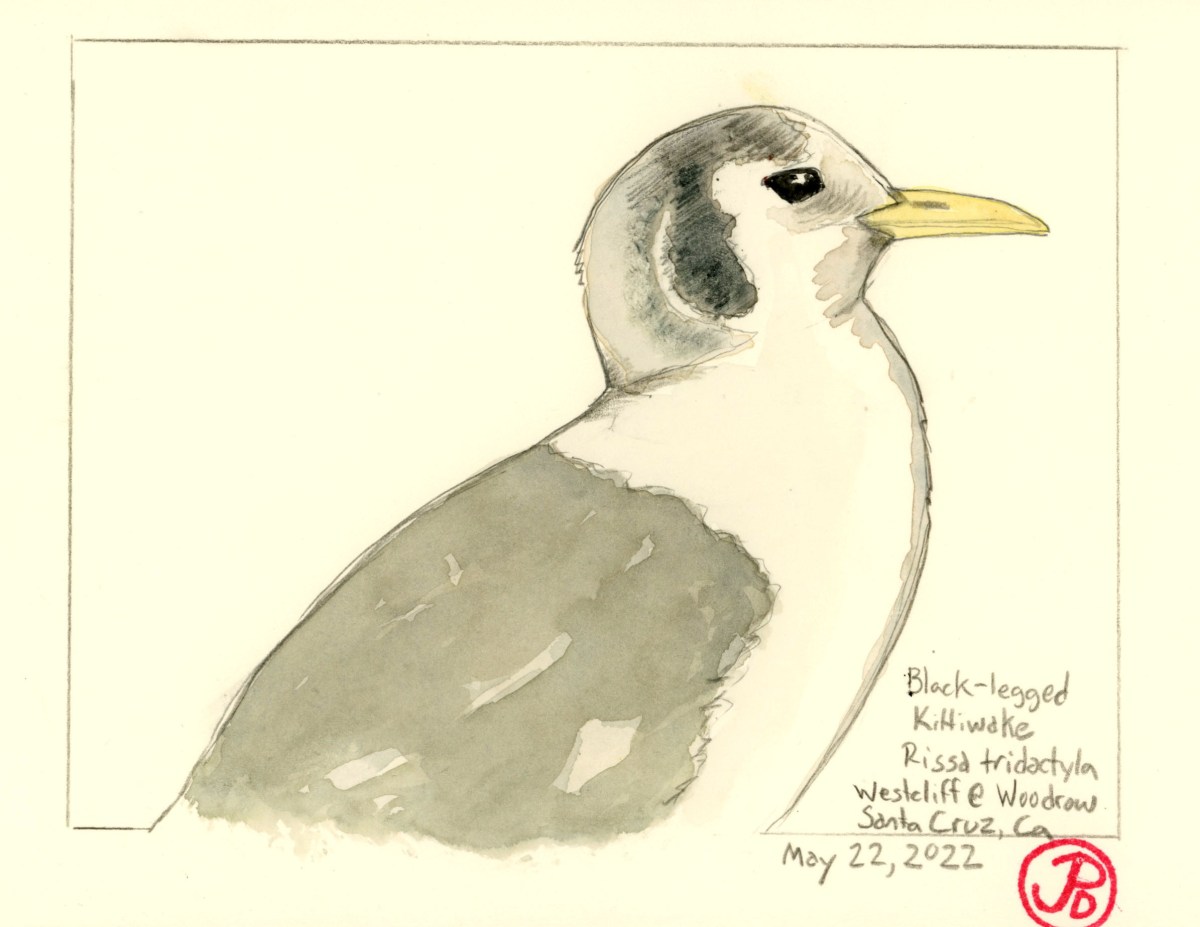
This gull was smaller than the nearby Heermann’s gulls. I checked off the fieldmarks: dark bill, darkish smudge behind the eye (clearly one of the hooded gulls), dark eye with a white broken ring, grey back, brownish wing coverts, white undertail coverts (seen when in flight), dark wing tips, and dark legs. This could be only one gull, a gull I had seen on the Texas coast; even taking a dip in a hotel’s swimming pool. This was a first winter laughing gull (Leucophaeus atricilla)! A rare gull on the west coast of California.

Three laughing gulls in the hotel swimming pool in Rockport, Texas. The gull in the center most resembles the gull I found at Waddell Beach. The two other hooded gulls are in adult breeding plumage.
A pinniped piece of driftwood. A battle-scarred male elephant seal, master of Waddell Beach.

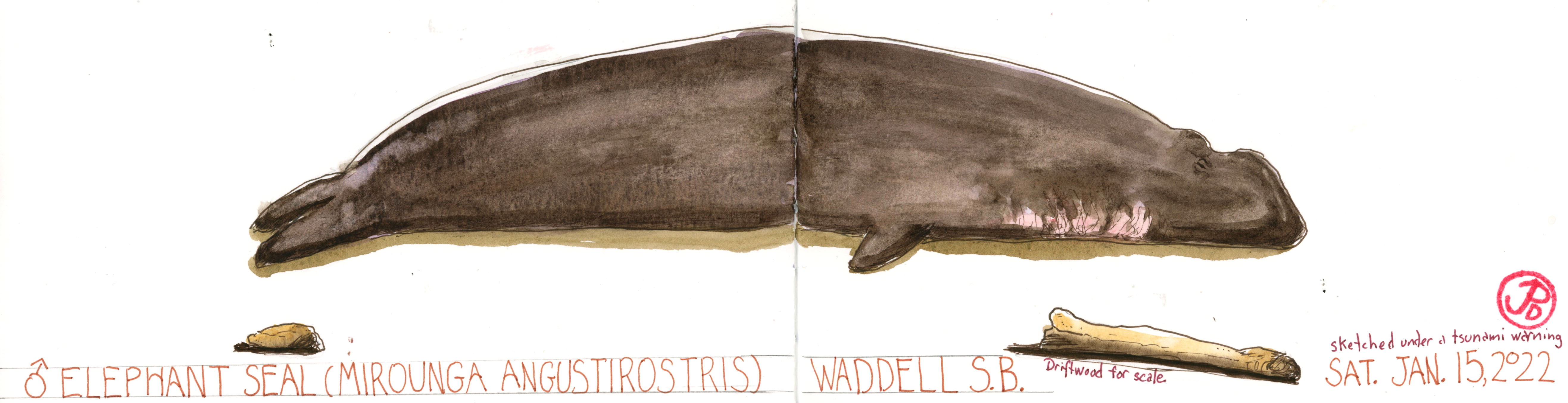
After taking some photos of the very active laughing gull, I pulled out my Stillman and Birn Beta hardcover panoramic journal, picked a position, and started sketching the elephant seal. He was very accommodating by just doing his driftwood impression. I looked north towards the parking lot and I noticed that a park ranger’s truck had just pulled in.

My field sketch of the male elephant seal at Waddell Beach.
The first winter laughing gull of Waddell Beach. What a great find! A Santa Cruz County lifer!

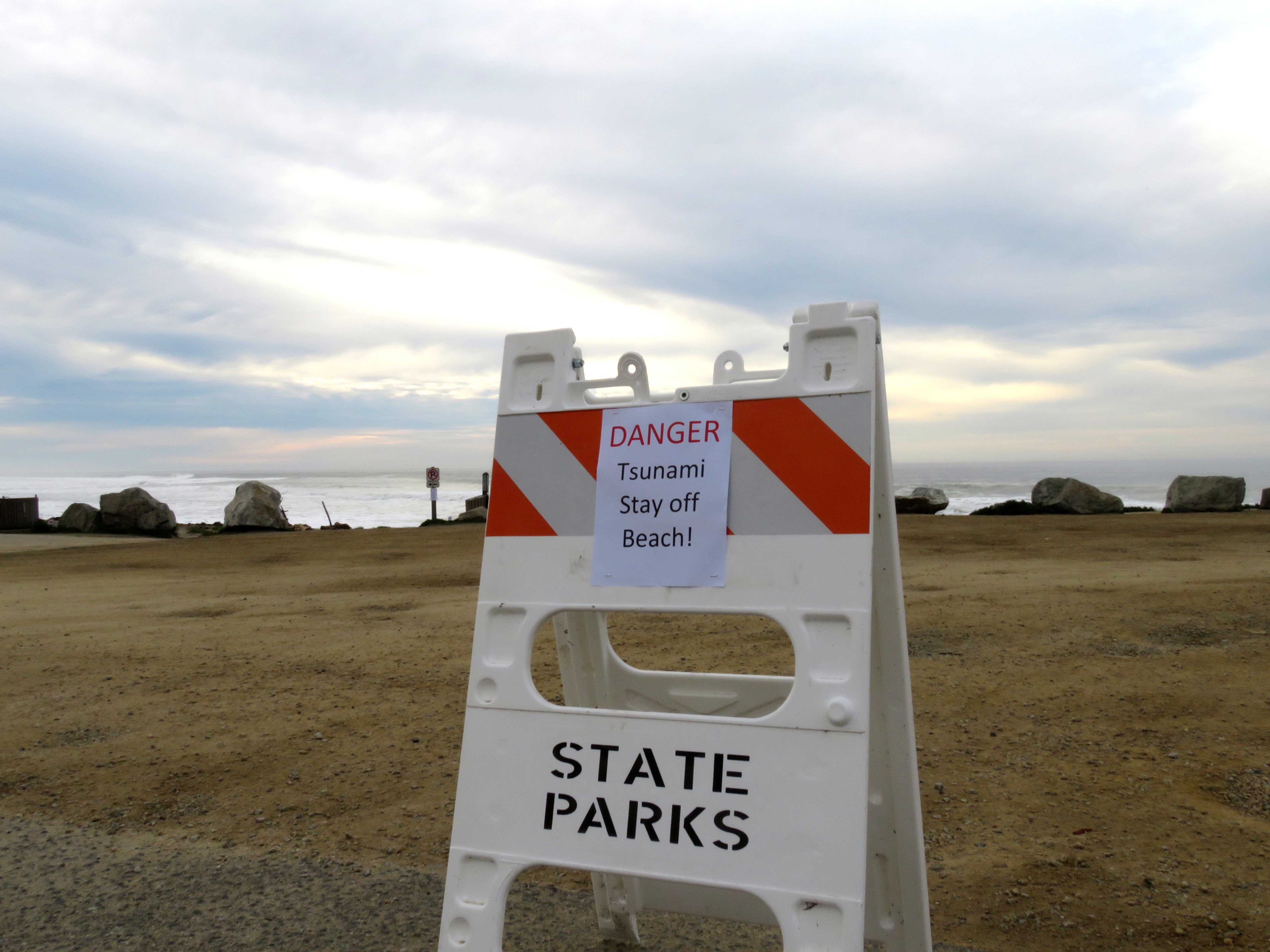
The ranger got out of his truck and he began walking towards me. Here I was, about to get a lecture about being too close to the elephant seal, when I was keeping a 25 foot buffer from the pinniped. Or so I though. When the ranger came within hailing distance, (when masked this seems to be about eight feet), he told me there was a tsunami warning and the surge was predicted to hit the coast right about now. I looked at my watch and it was just after 8 AM. He recommended that I leave the beach, which I did. I asked him if there had been and earthquake and he told me that and underwater volcano had erupted!

The undersea volcano Hunga Tonga-Hunga Ha’apai, 40 miles from the island of Tonga in the South Pacific, had erupted. A tsunami warning had been issued along the entire west coast of the United States as well as across the Pacific in Japan. The only evidence of the tsunami I witnessed was a swell running up Waddell Creek which causing the mallards to take to the air. At the time I really thought nothing of it. Winter waves I though. (I later found out that the surge damaged boats in Santa Cruz Harbor).

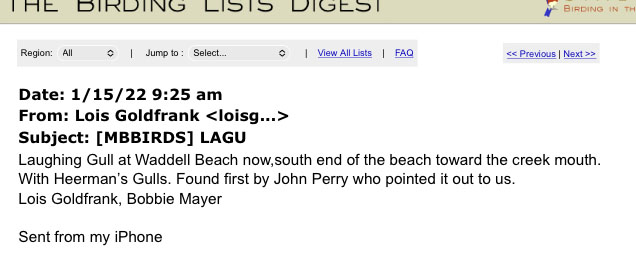
When I made it back to the parking lot I encountered two local birders who where looking for the recently reported black scoters. It is always great to have fellow witnesses when you find a rare bird. I showed them where the gull was, just to the right of the elephant seal and further down the beach. They got on it and then put word out on Monterey Birds of it’s presence. The more witnesses the better! Birders in Santa Cruz County love to share.

Thank you Lois, for getting the word out. And thank you for the very uncommon cuckoo in Watsonville!

One of the birders was Lois, the finder of the common cuckoo in Watsonville in the fall of 2012. That was an extremely rare bird that brought birders from across the United States to see it. I was glad to partially repay the favor with this humble, wayward, hooded gull. We seemed to be almost even.

Well, almost.

Image

County Birding in the New Year

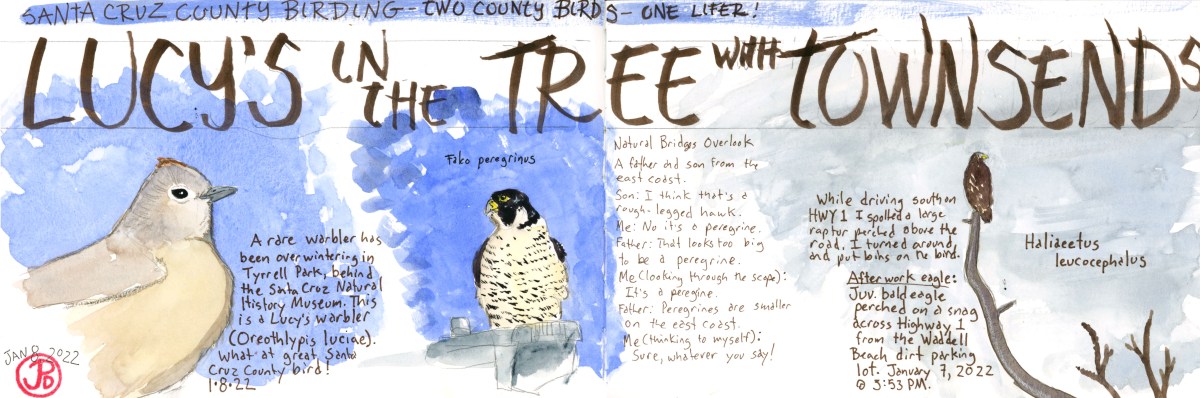
It was a good omen to see a large raptor perched on a snag just after I crossed into Santa Cruz County on Highway 1.

I was not sure what the raptor was (hard to identify at 70 miles per hour) but it certainly was not a red-tailed hawk, it was much bigger. I was thinking more eagle-like.

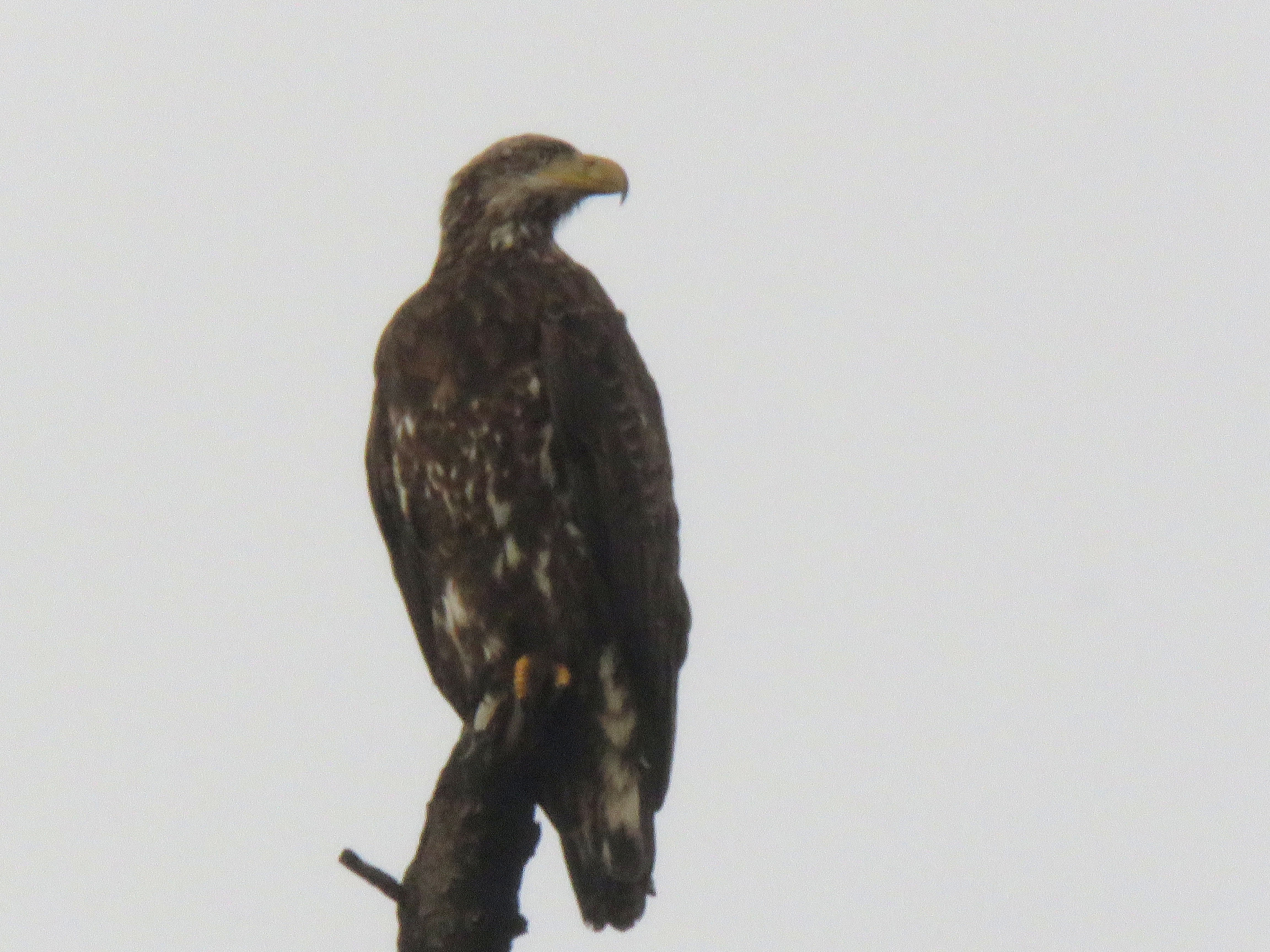
I passed Waddell Beach and turned around at the soonest point. I headed back and pulled into the dirt parking lot at Waddell State Beach. Once I got bins on the bird, I had no doubt that I was looking at an eagle. Not a golden but a juvenile bald eagle. Perhaps a second or third year bird. Welcome to Santa Cruz County! What a great afterwork bird!

That large yellow bill screams: bald eagle!! This is a juvenile bird and the first I have seen at Waddell Beach.

The next morning, Saturday, I headed to Tryrrell Park, just behind the Santa Cruz Museum of Natural History to look for a wayward warbler that had recently been spending the winter among the oaks and willows. Within about ten minutes I had the small, grey warbler, foraging in the willows with a Townsend’s warbler. A Lucy’s warbler. What a rarity and what a great county bird!

I then headed across town to the Natural Brides Overlook just off Westcliff Drive, to looked for a reported ruddy turnstone. It was not there but a local fellow Santa Cruz Bird Club member was there looking for the same bird with a scope. Together we found some nice birds: whimbrel, black turnstone, black oystercatcher, back-bellied plover, Heerman’s gull, and a close female white-winged scoter on the water.

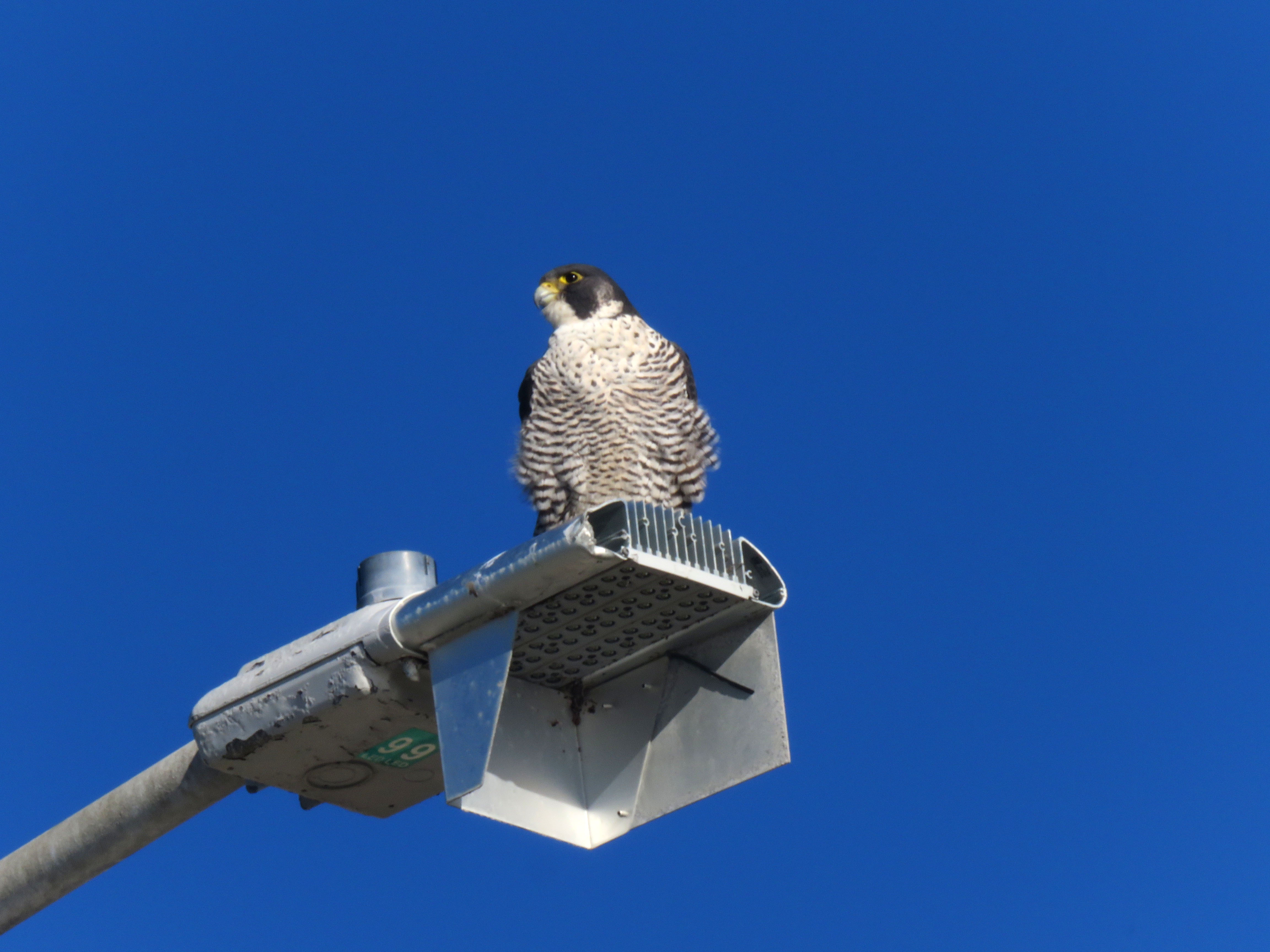
We met a man with a large lens from Sacramento, our state capital, and he was photographing some birds on the rock. He was excited at adding Brandt’s cormorant and Heerman’s gull to his life list (these birds are not seen in the Central Valley). A father and son from the east coast walked up, telling use there was a hawk perched on a light post on Westcliff. What follows is the conversation:

Son: I think it’s a rough-legged hawk.

Me: Now that would be a great bird to see here. (I put the raptor in my bins) Peregrine.

Father: It’s too big to be a peregrine.

In the meantime my club member compatriot has put his scope on the bird in question. And he asks me to take a look. I looked.

Me: Peregrine.

Dad: They are smaller on the east coast.

Size is not a great measure for field identification because birds can often seem larger when they fluff up their feathers and in raptors occurs reverse sexual dimorphism, which simply means that females are larger than males.

A rough-legged hawk, no err, a peregrine, no, too big to be a peregrine. . . okay a peregrine! A nickname for this bird on Hawk Hill is “Elvis” because of it’s dark head and “sideburns”.

I got some beta from the club member about a bird in the county that I needed to add to my lifelist. I had lackadaisically searched for the Santa Cruz County resident with no luck. Why? First I was searching in the wrong place and secondly, the bird was an exotic species which had been introduced to California.

Exotic species are an odd one when it comes to listing. They could be escapees and normally you cannot count them but if they have a established and sustained breeding population, such as the European starling or the Himalayan snowcock, then they can be counted. With the ABA’s approval of course.

So I headed down Highway One towards Watsonville. My destination: Pinto Lake City Park. The bird in question, according to my beta, was to be found in the reeds near the picnic area, just to the right of the dock.

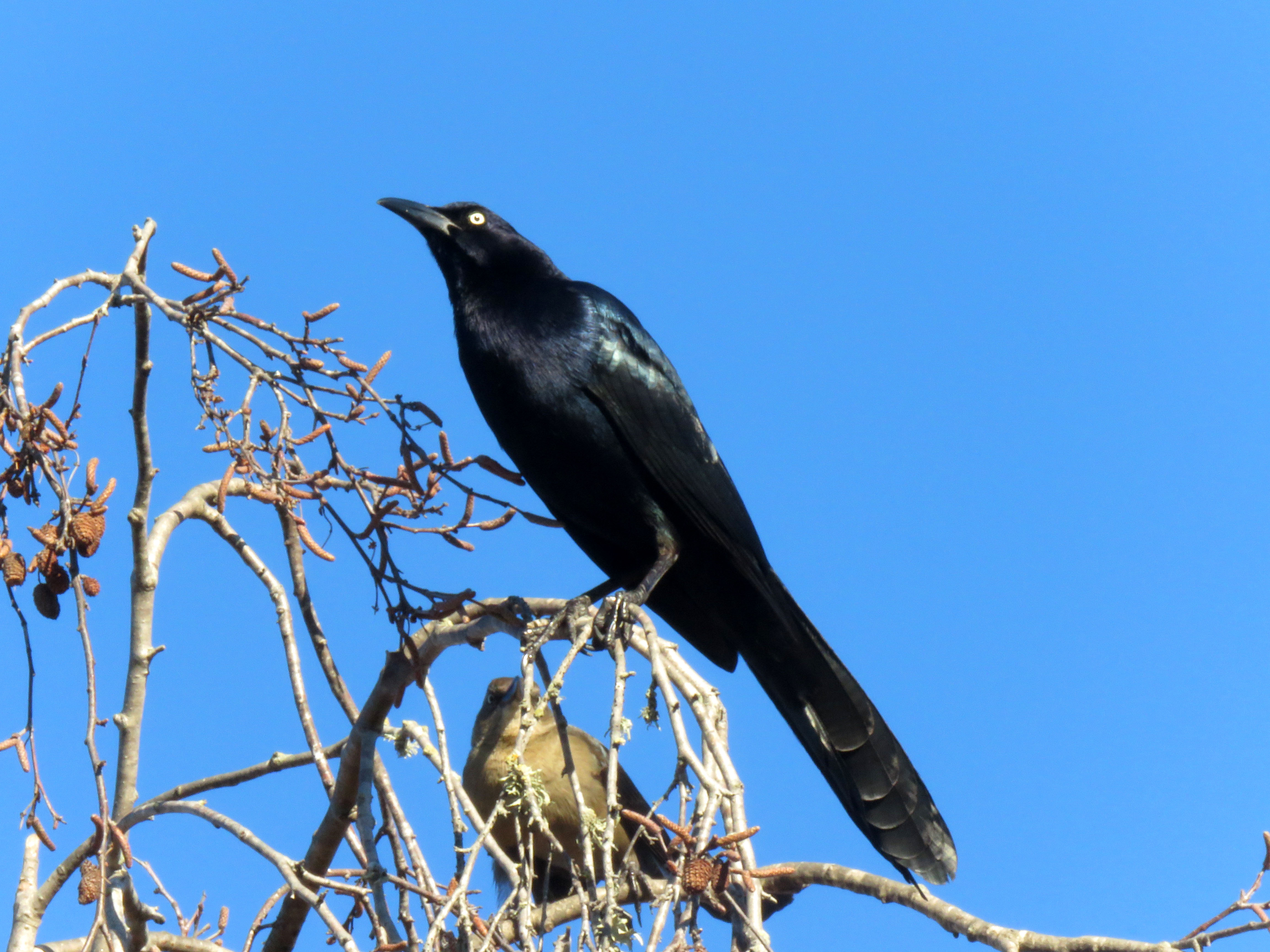
At the moment the dock was inundated with the Devil’s Bird: great-tailed grackle. There must have been about 30. I searched the reeds and got a brief view of my quarry before a flock flew to the other side of the dock.

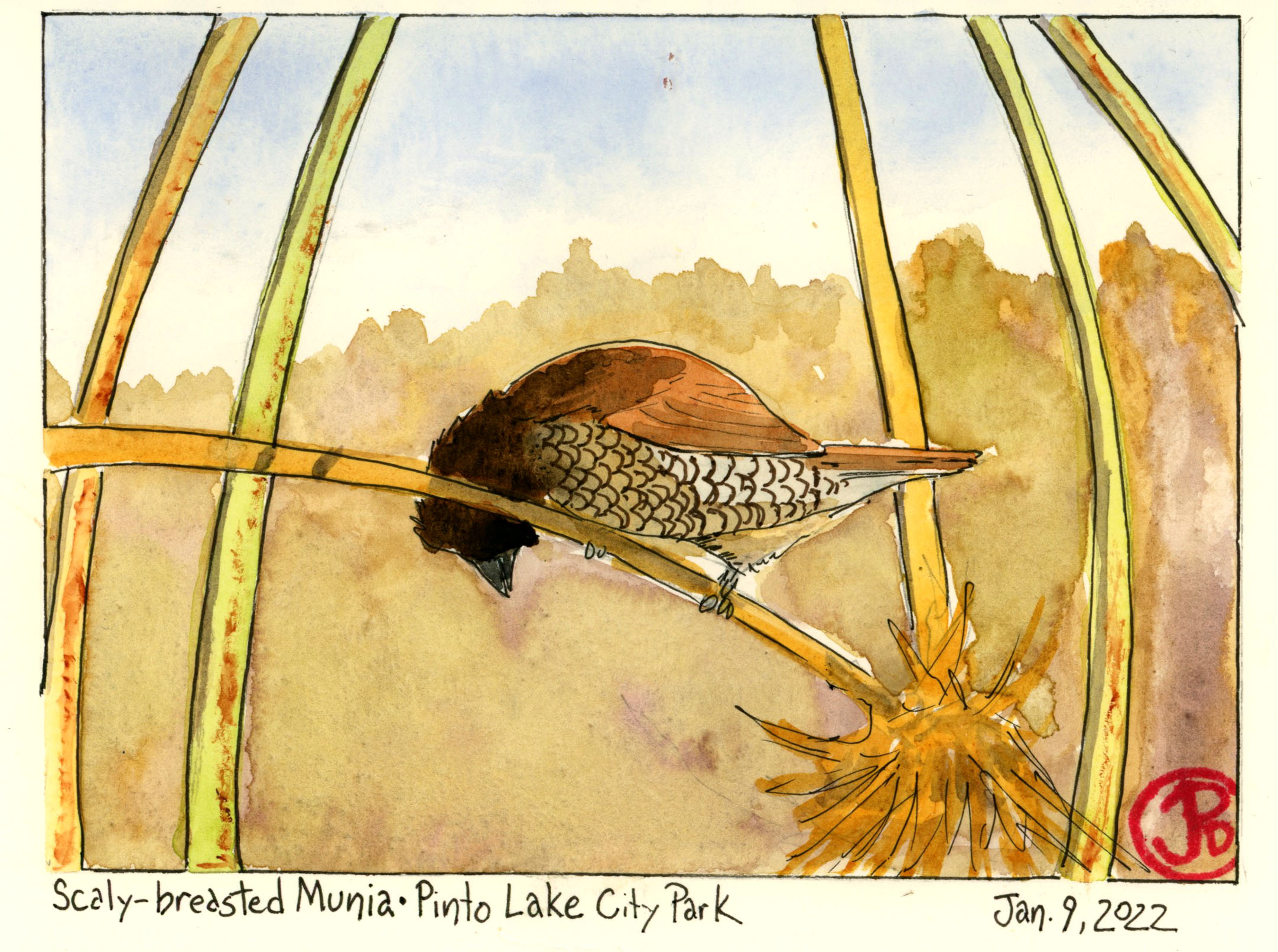
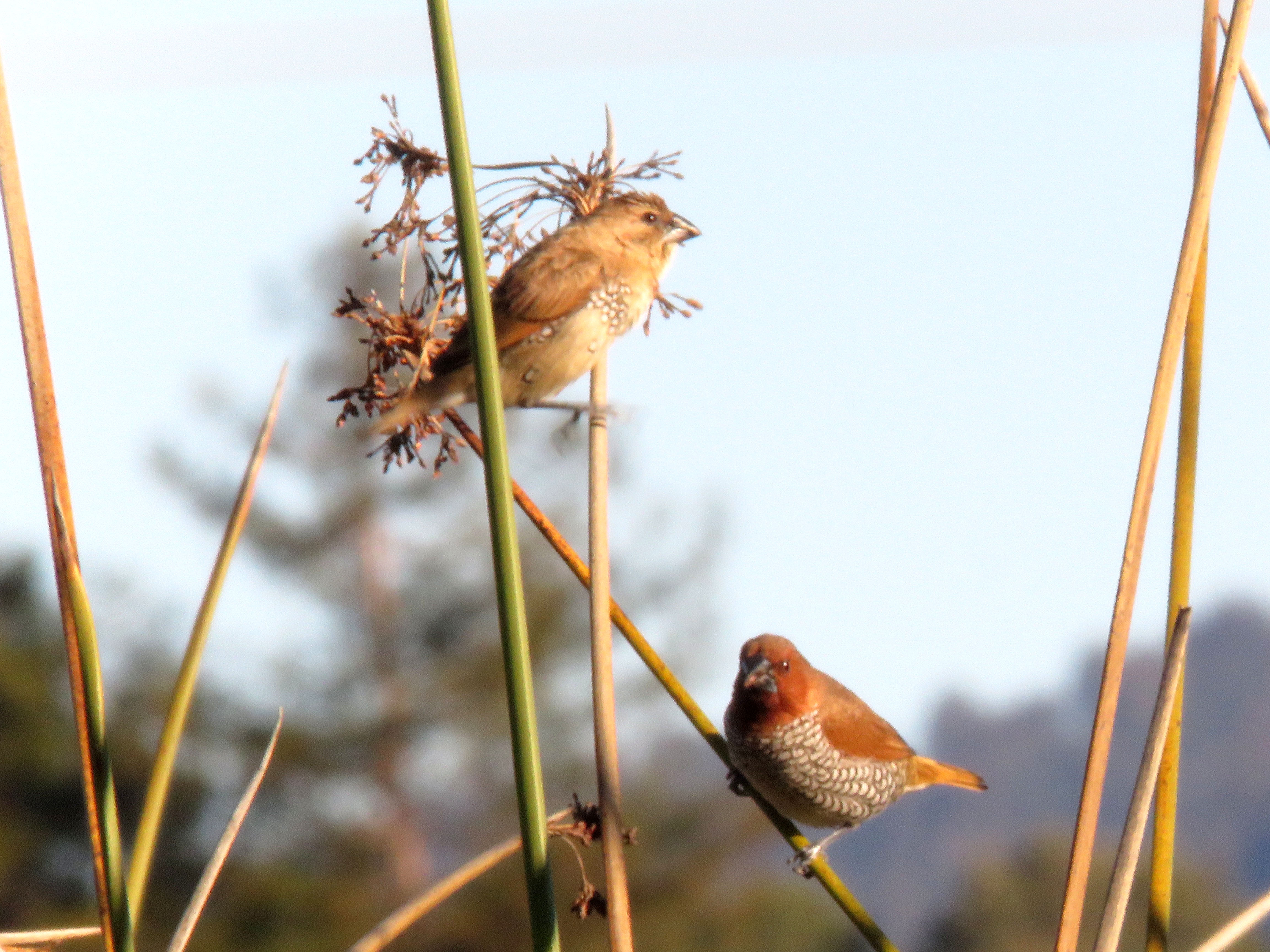
I walked over and followed the sounds of the flock moving through the reeds. I final got great views of lifebird # 1,666 (a global pandemic really spoils a world life list). Here was a flock of 12 scale-breasted munias. This small sparrow-like birds are native to Asia and India. How they got here, no one really knows.

Image

A Sunday Morning Twofer

The Westside of Santa Cruz has been recently active with fall migrants, including a few species that are considered rare in California.

I set out early on Sunday morning and the most challenging part of my migrant search was getting to the Westside of Santa Cruz. Streets where blocked off because of a bicycle race which made getting to the Homeless Garden and Antonelli Pond a chore. Highway One was blocked off at Western Drive and I was hoping the two rarities seen the day before would still be in the area. Now I waited, a bit impatiently, as a CHP officer let in a trickle of traffic at Western Drive, in between clumps of cyclists.

I finally made my way across the intersection and turned left on Shafner, which was also blocked off by a CHP officer. Here was where two passions collided: birding and triathletes. And the triathletes were winning.

I found parking at the end of Shafner and crossed the rusted railroad tracks and headed into the Homeless Garden. The garden was already occupied by five birders, with their large lens, looking for the first of the rare migrants on my list: bobolink.

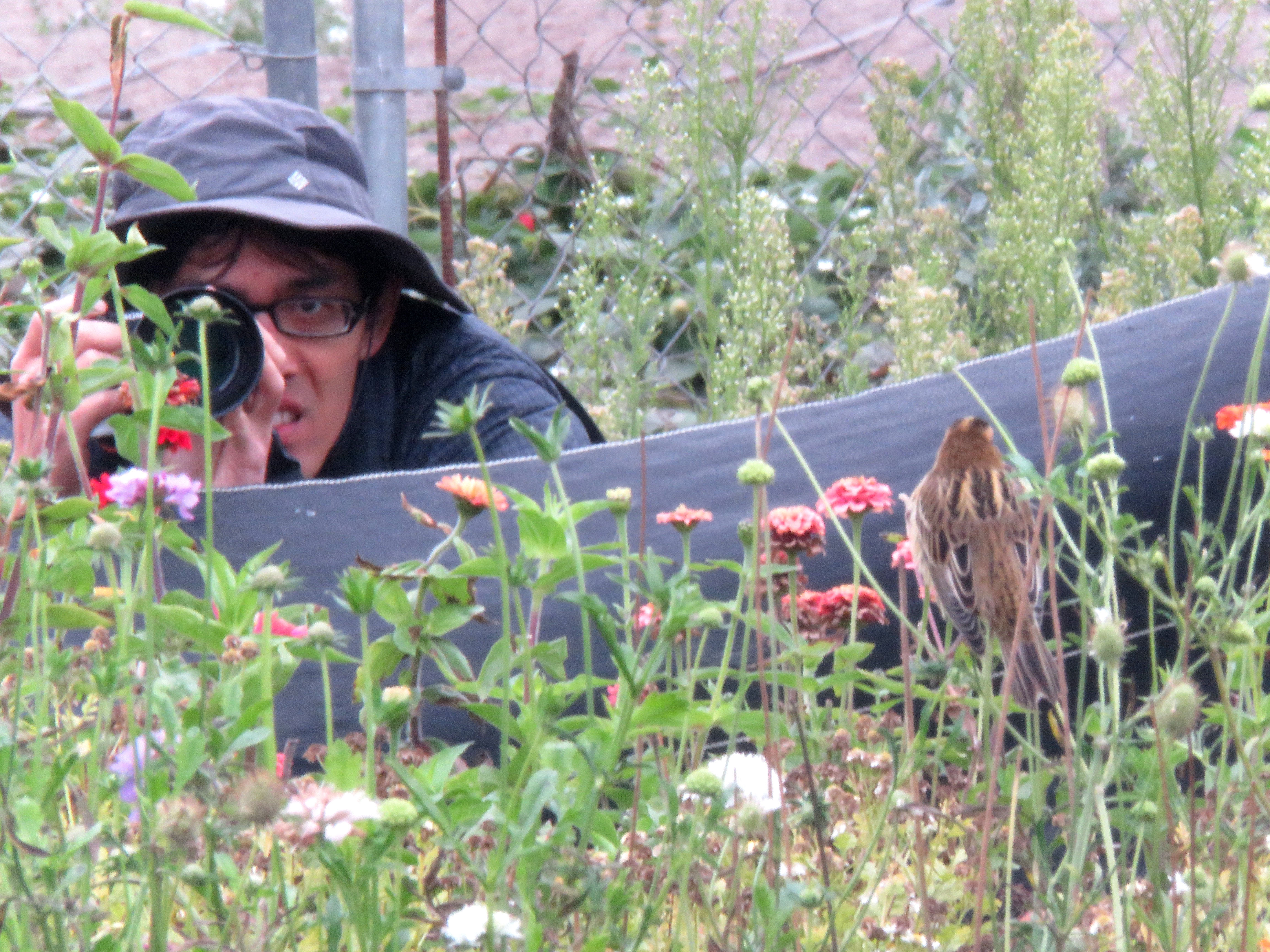
After wandering around for ten minutes, I noticed a triad of birder-photographers with their lens pointed at a row of tall purple flowers. This is always a good sign because I reckoned they where not photographing a white-crowned sparrow or a lesser goldfinch but a rarer visitor called a bobolink.

What’s in a name? Well bobolink is onomatopoeic of it’s call. Other birds whose common name is derived from the sound of it’s call are: chickadee, whip-poor-will, dickcissel, bobwhite, chachalaca, hoopoe, killdeer, poorwill, willet, kookaburra, and of course the cuckoo.

The bobolink with it’s attending birding paparazzi at the Homeless Garden.

And now back to the Homeless Garden in western Santa Cruz: it turns out that the bird all the birders where looking at was the bobolink. The bird was very accommodating as it perched up on the vegetation and held relatively still.

Bobolink (Dolichonyx oryzivorus) at the Homeless Garden in Santa Cruz.

Now I was going to try for the second county bird (and third for the weekend) and this bird was much rarer. This bird had only been recorded in Santa Cruz County once before. I had first seen a white-eyed vireo in Southern Texas in 2013. Now one was out on the West Coast.

I headed east down the railroad tracks and I could see about ten birders peering into the bushes on either side of the track. I had passed two birders who had already given up on the bird and where heading to the garden to look at the bobolink.

Now sometime magic happens in birding. Where you happen to be at just the right place at just the right time. Such was the case as I approached the group of birders and was just about to ask if they had had any luck with the vireo when one of the birders exclaimed, “There’s the bird!” And pointed into the top of a rail side tree. Some of the birders and been searching for the vireo for over two hours and here I come, Johnny- Come-Lately, and the bird seems to appear out of nowhere.

I got bins on the foraging vireo, two white wing bars, yellowish wash, white throat, and a distinctive white eye with a dark pupil. This was the bird all the birders were here to see. White-eyed vireo!

The vireo moved from tree to tree and at one point was foraging with a mixed feeding flock in a pine. Beside the white-eyed, the flock included warbling vireo, pygmy nuthatch, Townsend’s warbler, chestnut-backed chickadee, dark-eyed junco, Bewick’s wren, oak titmouse, both downy and hairy woodpeckers, and bushtits.

As we searched the feeding flock in the pine, we where joined by more birders. I could only gesture to the place where the white-eyed vireo used to be but had not been seen in the last few minutes. We where joined by more and more birders and a tallish, bespectacled man stood to my left peering into the pine. And here is where I used my odd and often under-appreciated superpower: identify obscure “celebrates”.

Low and behold, the birder standing next to me was none other than the acclaimed novelist, Jonathan Franzen. He is the the author of the National Book Award winner, The Corrections (which I have not read). He is also a birder and has written essays about birds and birding (one essay is titled “My Bird Problem”). Franzen now lives in Santa Cruz, which explains why he was here on a Sunday morning, attempting to get a glimpse of the wayward vireo. I’m not sure he got that glimpse because I returned to my car shortly afterwards with a county twofer.

Image

A Plover From Another Continental Coast

When I read the report of an extremely rare plover on a Santa Cruz County beach, I knew that I had to head down with GrassHopper Sparrow, to add this find to my county list! (This was a mega lifer for Grasshopper.)

This plover had only been seen in California on twenty occasions. And when it was first seen on the morning of September 17 by Simon Thornhill, he posted on a birding list serve: “Strange Plover at Laguna Beach”. He noted that the plover was slightly larger than the snowy plovers it was loosely associating with. He included a photo and it was identified by the birding community as a lesser sand plover (Charadrius mongolus).

I had first seen a Lesser Sand Plover in California on October 22, 2016 on Pt. Reyes Beach on the Outer Point of Marin County’s Pt. Reyes. This small plover is usually found in Asia (it was formally know as the Mongolian plover), the east coast of Africa, India, and Australia. So when one wanders into California is would have most likely crossed over from Siberia and headed south through Alaska, Canada, and the states of Washington and Oregon.

A rare plover in Santa Cruz County was a bird too good to pass up so Grasshopper and I headed to the coast on a Sunday afternoon. The weekend pumpkin patch traffic was surprisingly light and we make good time down Highway One into Santa Cruz County.

We parked in the dirt lot, crossed the highway, and started down the trail towards Laguna Beach. As we headed down the trail, we met three other birders coming up the trail. They where smiling and this is always a good sign! The rare plover was still present.

The birders gave us directions to where the sand plover was being seen and they predicted that we would find it in less than five minutes! Let’s hope this prediction comes true.

The wind off the ocean was whipping up the sand and I assumed the plovers would be hunkered down in the dunes about 40 yards from the waterline.

We first observed three snowy plovers in the dunes and we knew the sand plover must be close by. To distinguish a snowy from a sand is not a very tough identification. The sand is larger and uniformly a darker grey with a distinct white supercillium (eyebrow). And also most of the snowies on Laguna Beach were sporting jewelry, colored leg bands to help researchers identify individuals.

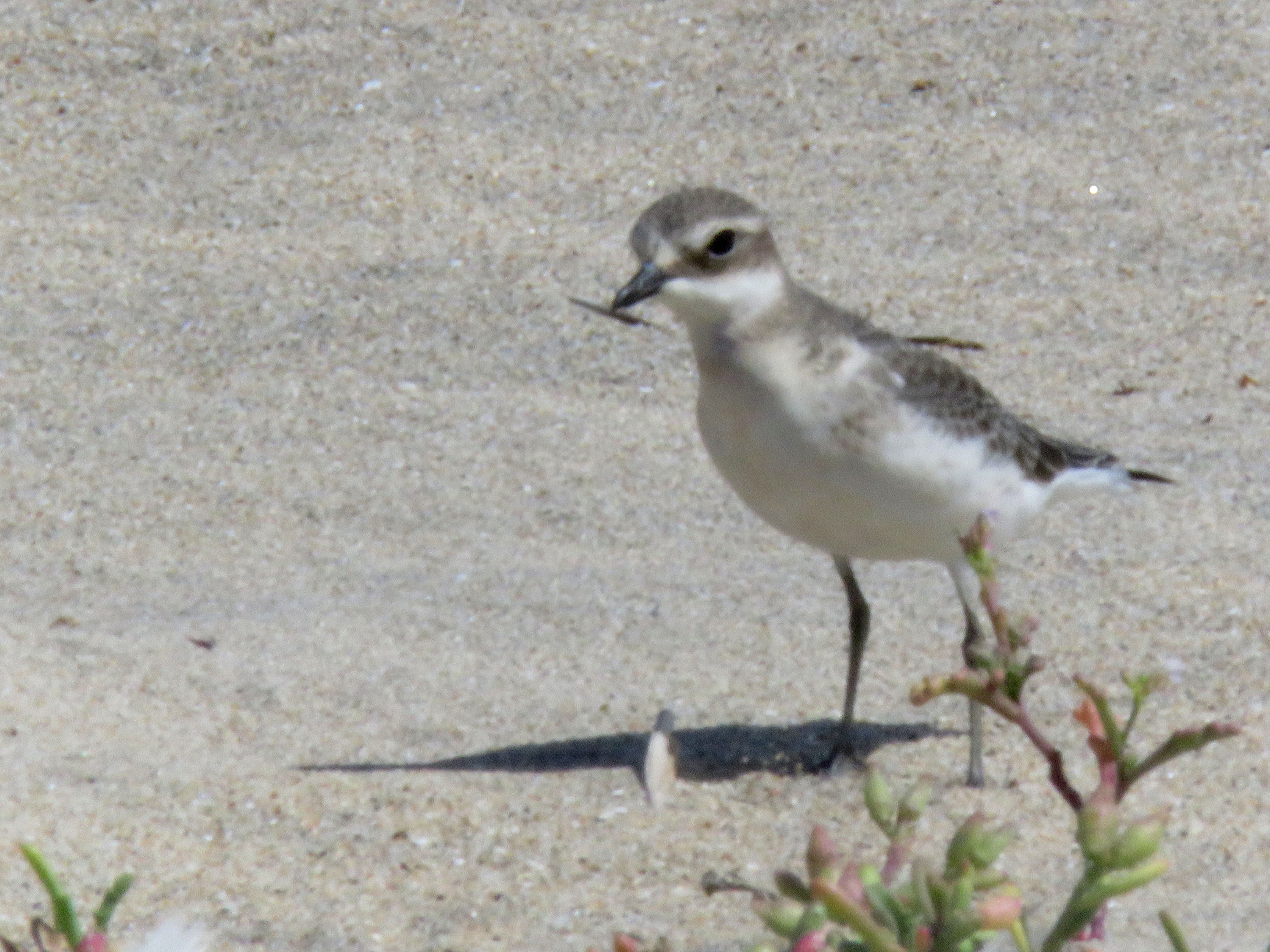
While I did not keep track of time, we did find a darker, slightly larger plover that was loosely associating with the snowies, within about five minutes! County lifer 262!!

A not-so-sharply-focused photo of the lesser sand plover on the sands of Laguna Beach.

We had the sand plover all to ourselves for about 15 minutes. Over the last couple of days the plover had attracted many birders to this almost forgotten beach on this Santa Cruz County beach.

Image

Santa Cruz County Pelagic

County lines are a bit strange when it comes to off shore waters. They can seem arbitrary in the same way that county, state, or country lines can be. Only these county lines are drawn over deep water.

One of Alvaro’s pelagic boat trips was scheduled to head north from Monterey Harbor into Santa Cruz County waters. So I had to take this trip on my quest fro 300 Santa Cruz County birds.

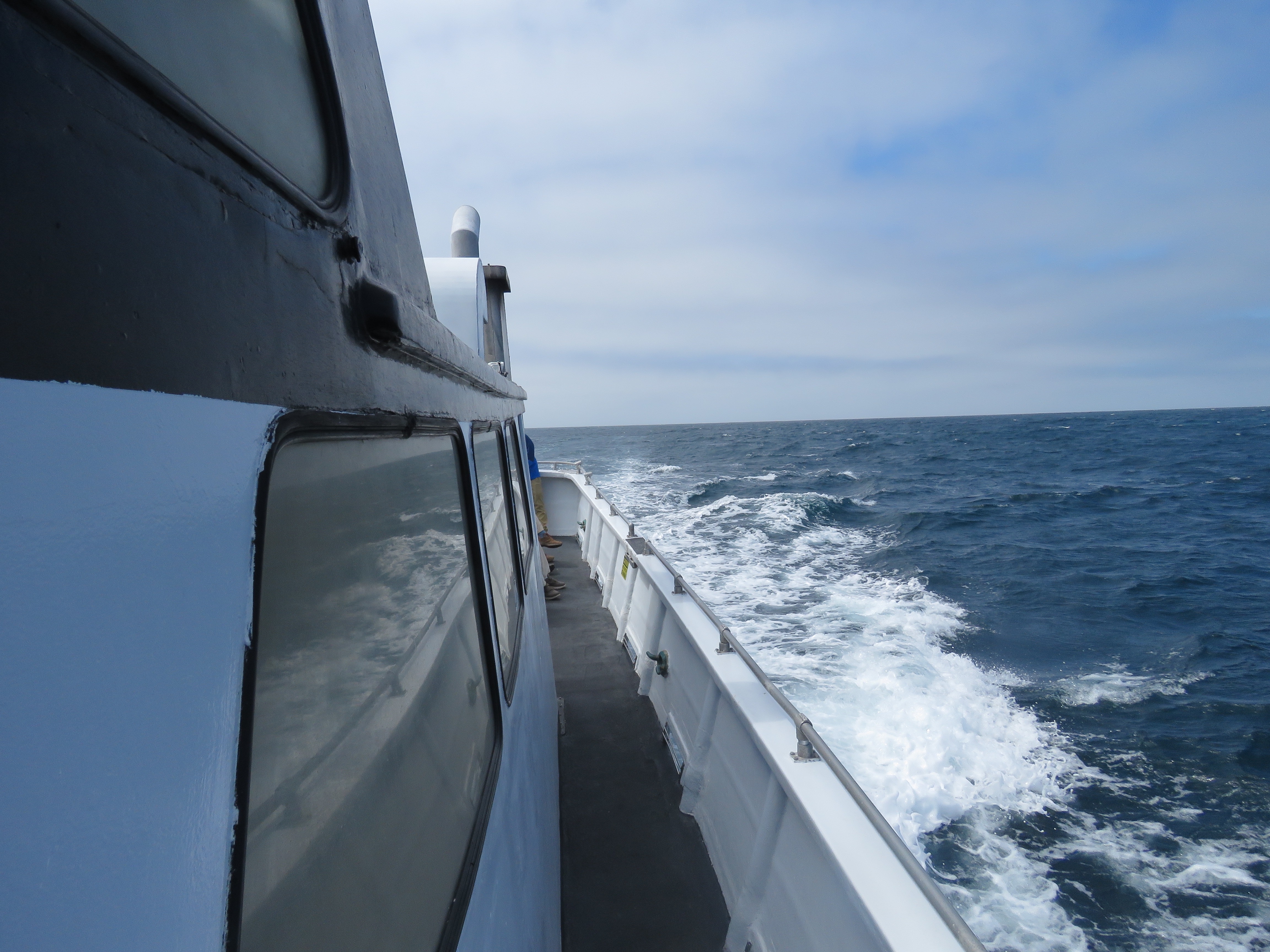
Pelagic birding can be sublime and maddening in equal measures. For one, you are birding from a platform that is pitching in constant motion and the birds are often on a surface that is undulating where birds appear and disappear at a blink of an eye. Some birds fly to and over the boat while other birds, that had been resting on the water, take off at the first sight of a boat and you get a view of a retreating bird. Also because the bird boats are really designed for fishing and not pelagic birding, it is impossible to be two places at once. So if you are on the starboard rail and a rarity is seen on the opposite side of the boat, you have to make a mad scrabble on a surface that make one look like a drunk sailor, and only to find that the bird is gone with a spotter pointing to the spot where the Manx shearwater used to be!

I suppose this is the draw of pelagic birding. It is challenging and it can often give you incredible memorable experiences. Such as the time when our boat was surrounded my a pod of Pacific white-sided dolphins that numbered in the high hundreds or the time when we kept pace with two blue whales or another time when a black-footed albatross flew in and rest in the water a few yards from the boat.

We where scheduled to depart at 7:30 AM and at 7 a group of Santa Cruz Bird Club members where milling about, cleaning their optics and looking at gulls in the harbor. Our leader, Alvaro walked down the wharf. I was surprised to see him upright because he had flow in the night before from Spain, having just finished a birding trip. He said he felt fine but joked that if we found him asleep later in the afternoon we where to kick him awake.

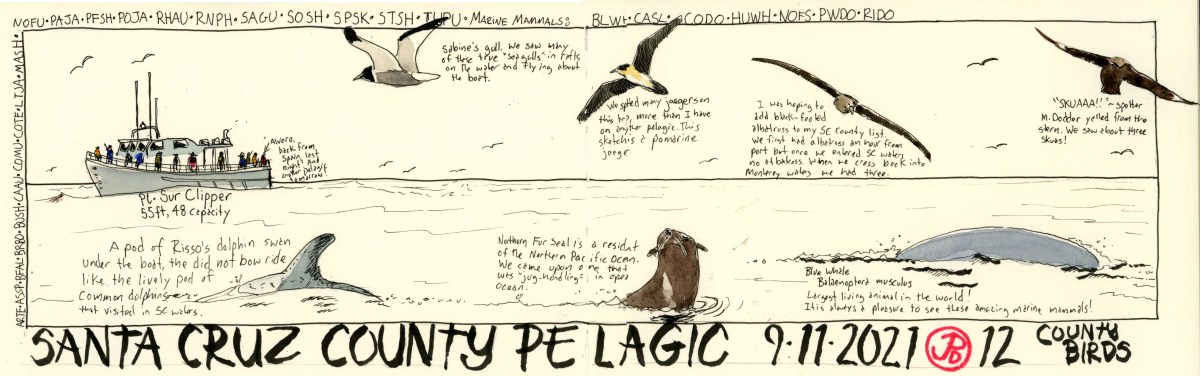
We left on time and we where only about an hour from port when we saw our first pelagic gem: the black-footed albatross. We soon crossed into Santa Cruz water and I wanted to add this albatross to my county list but unfortunately the four that we saw where all in Monterey waters. There where large numbers of shearwaters throughout our trip, the most common being sooty and pink-footed but with sightings of Buller’s and just one short-tailed and Manx shearwaters.

Looking down the port side of the Pt. Sur Clipper, or in pelagic birding parlance, 6 o’ clock to 9 o’clock. Here we are cruising above the Monterey Bay submarine canyon.

In all it was a very pleasurable cruise, even though I did not get an albatross over Santa Cruz waters, I did add 12 new county lifers, including: south polar skua, Arctic and common tern, Sabine’s gull, two jaegers, northern fulmar, Manx, Buller’s, and pink-footer shearwater.

As we headed back towards Monterey Harbor and the pelagic species where being replaced with inshore species like brown pelican, Brant’s cormorant, and western gull, there was one last surprise for use. One of the spotters picked out a far off brown booby flying along the coast. Not a bad way to ended a productive pelagic.

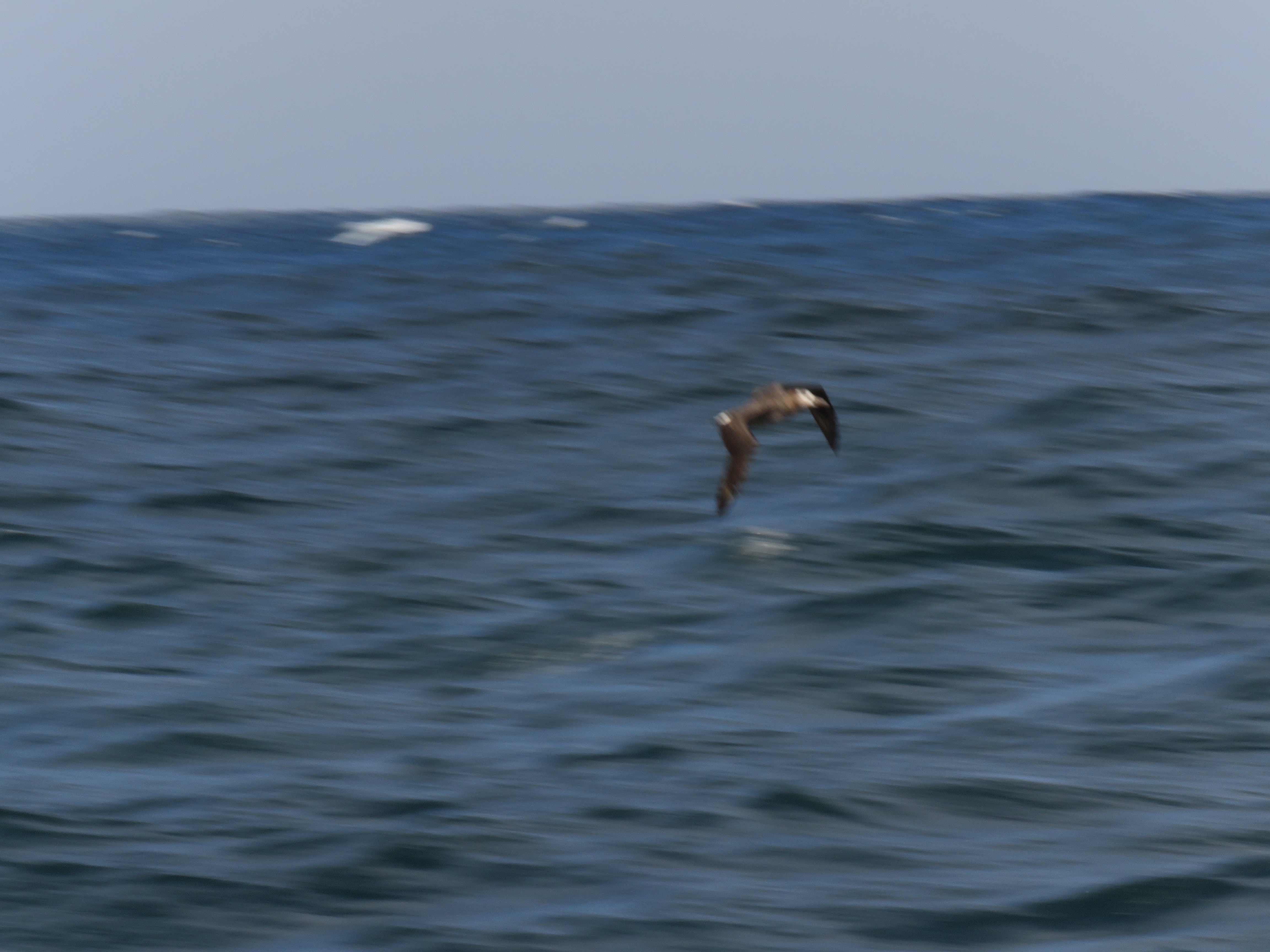
While we whiffed on black-footed albatross in Santa Cruz County, this photo of an albatross, blurred in motion over Monterey waters, sums up the motion and excitement of a classic Monterey Bay Pelagic.
Image

King of Tyrants: Tyrannus tyrannus

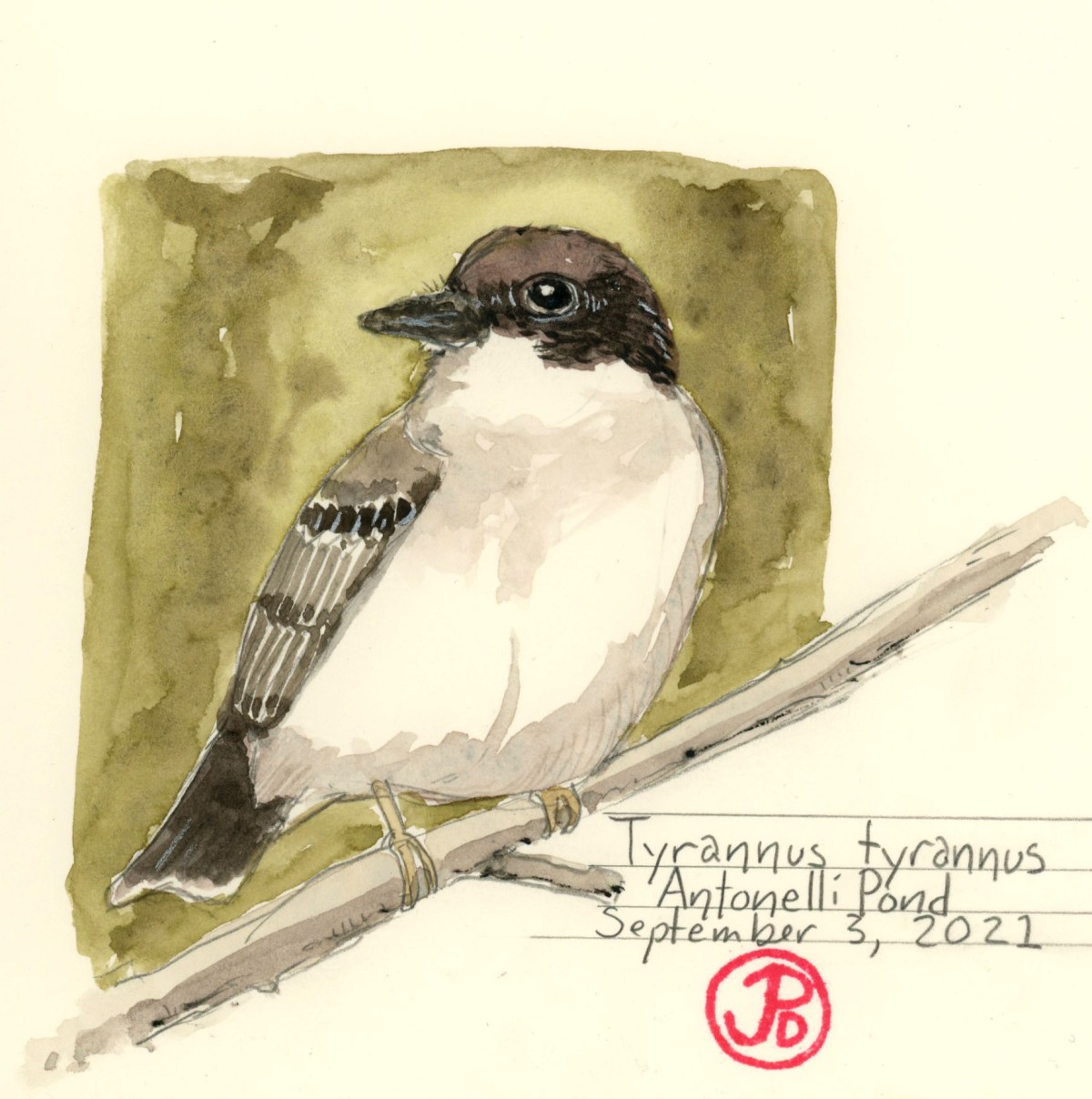
On a Monday, Trrannus tyrannus was first seen in a coffeeberry bush (Rhamnus californica) in the northwest corner of Antonelli Pond in Santa Cruz’s westside. I just hoped this county rarity would stick around until Friday when I could get down the coast to look for it.

The Eastern kingbird, like it’s name implies, breeds on the eastern side of the United States. This kingbird is a neotropical migrant where it spends winters entirely in South America. On their winters grounds, the kingbird travels in flocks and eats berries. (In the north it feeds mainly on insects taken on the wing).

Tyrannus tyrannus, means “tyrant, despot, or king” (take your pick) is named for the kingbird’s aggressive behavior during breeding season. While defending their nesting territory, they will attack birds that are much larger than itself, including hawks, great blue herons, ravens, crows, and even squirrels. There have been reports of kingbirds landing on the back of hawks and vultures, pecking and pulling out feathers. This is the King of Tyrants with a major Napoleon Complex.

So at about five PM I found myself in the northwest corner of Antonnelli Pond reflecting on the long journey this 40 gram bird had made, from the Amazon, eating fruit in flocks to it’s long journey up the Pacific Coast to forage for a few days near a pond in Santa Cruz. So far the coffeeberry bush was sans kingbird.

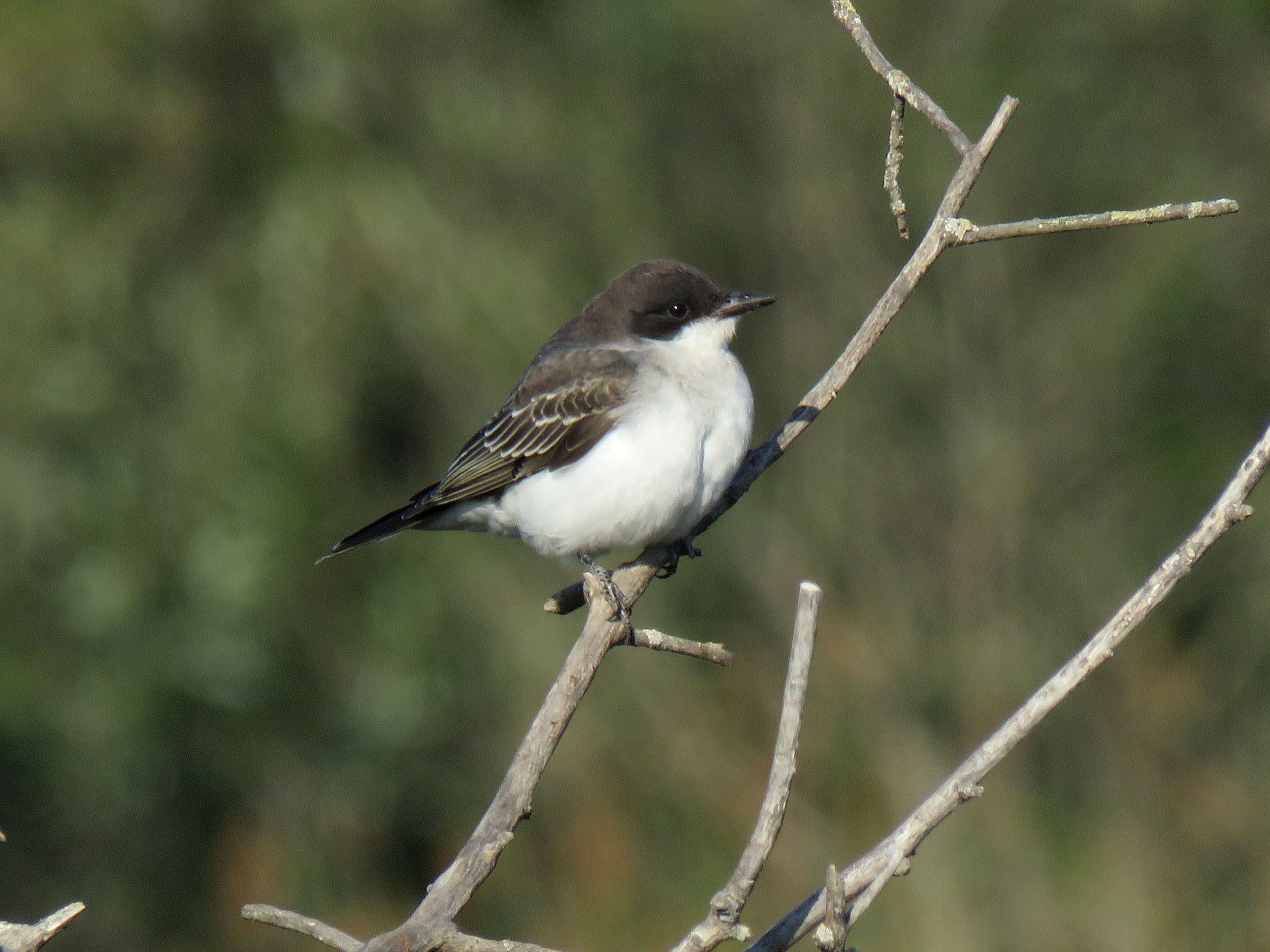
After about a 15 minute wait, a pied bird flew from the north into the bottom of the bush. I attempted to flank the bird to identify it as the wayward tyrant. A bird shot up from the bush, dark above and light below was a fine white border on it’s tail, Bingo! Eastern kingbird! The bird flew to a chain linked fence that bordered the Homeless Garden, where I was able to get a few distant photos.

A common perch for a kingbird: a fence.

The kingbird foraged for a bit in the garden and then flew back and landed on top of the coffeeberry bush in perfect late afternoon light, so I had to take a few photographs to confirm it’s misplaced existence. It stayed on it’s perch for a few minutes and it then flew across the pond and my encounter with the wayward (is their such a thing in nature?) eastern kingbird was over.
The eastern kingbird in great light, showing off it’s kingbird profile.

Often when we are looking for one thing in nature we see so much more. This was the case on Saturday morning, when I returned to Antonelli Pond to look for the eastern kingbird again (and the willow flycatcher that had also been report). While the coffeeberry bush was lacking a kingbird, some movement in the brush in front of me caught my attention.

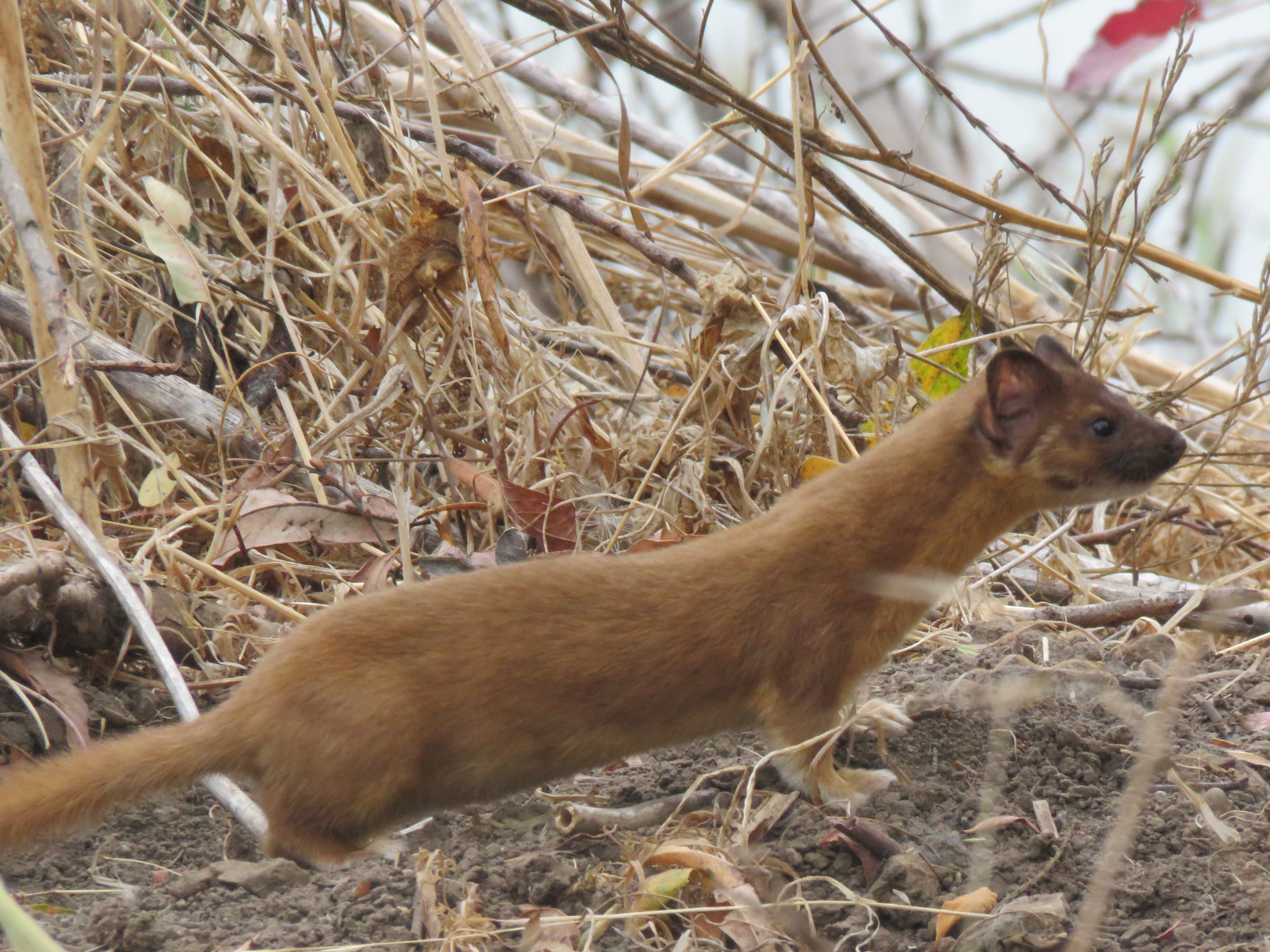
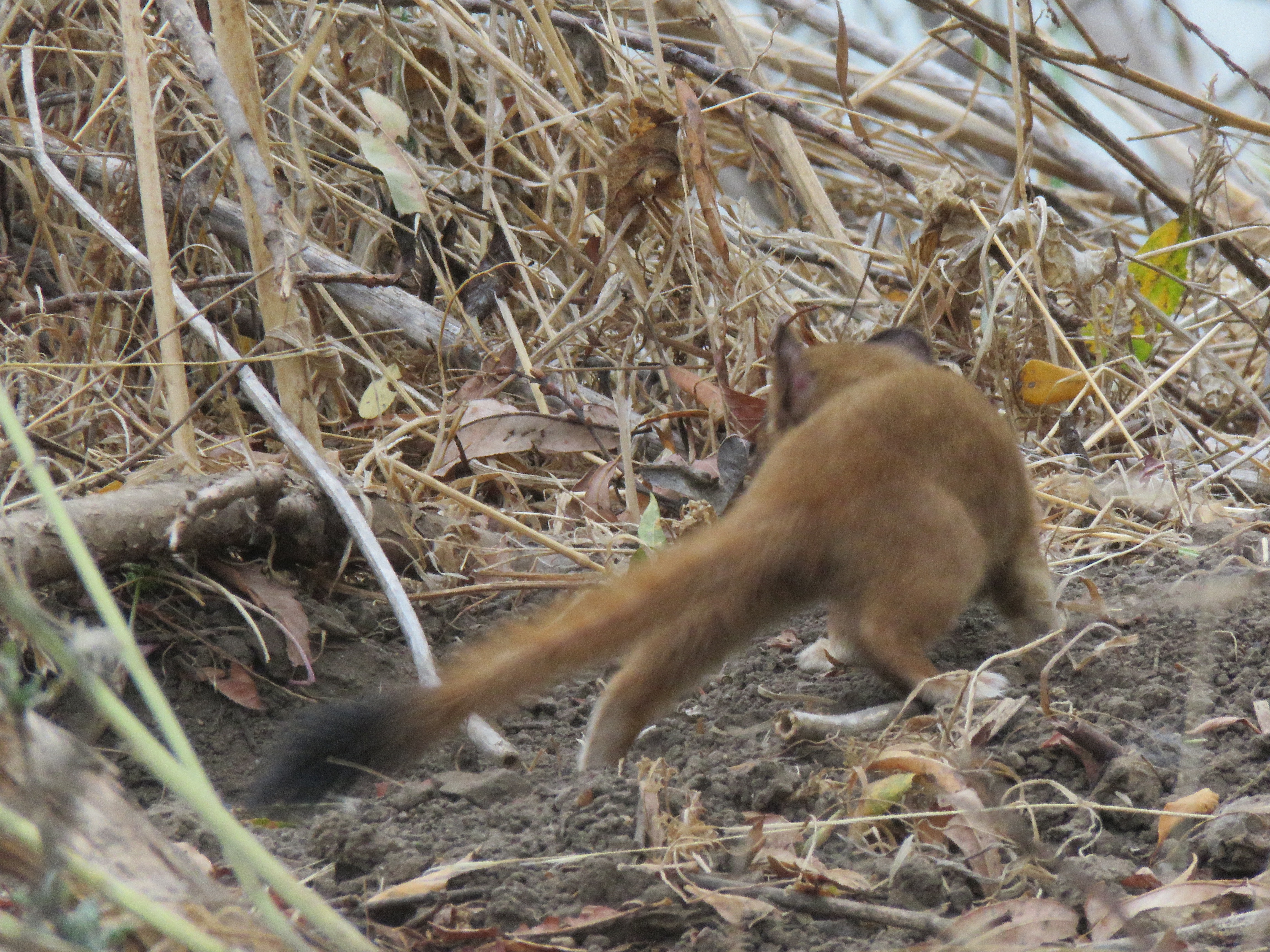
A caught a glimpse of a long mammalian predator. I wanted to entice it out to get a better look so I did my best impersonation of a wounded rodent (I was thinking mouse) and within seconds, it’s snake-like head, ears alert, appeared out of the brush. It was almost licking it’s deadly teeth with delight (I call anthropomorphism on myself!)

It was a long-tailed weasel (Neogale frenata)! I had seen this predator on two other occasions but both sightings (at Wilder Ranch) were fleeting and I just got a flash of it’s dark-tipped tail as it disappeared into coyote brush.

The long-tailed weasel is an aggressive predator which can take prey twice it’s size such as rabbits and squirrels. On one occasion at Wilder Ranch on the Old Cove Landing Trail, a weasel was hunting bush rabbits and I heard a lagomorphic scream that was hard to forgot. I was not sure if the weasel’s hunt was successful.

The long-tailed weasel, coaxed out of the brush with my wounded rodent impression.
The long-tailed weasel showing off it’s black-tipped tail.
Image

Flexing my Sketching Muscles

Before I headed out on my Trails, Roads & Rails Roadtrip I wanted to get into sketching shape. To do this I made it my daily practice to do a sketch in and around Santa Cruz.

Each sketch took no longer than 15 minutes and I chose subjects that would force me to take a complicated subject and simplify it into a quick sketch. Some of my subjects were architecture, trees and foliage, marine mammal anatomy, and old brickwork. I figured that this range of subjects would give we practice for some of the subjects I would be encountering on my trip along Highway 80.

I combined these short sketches with hikes in order to get into birding shape to search for the Himalayan snowcock, which required an early morning two mile hike to get to it’s alpine territory in the Ruby Mountains.

Architecture: Holy Cross Church, Santa Cruz.

For this sketch I wanted to make sure I was getting my angles and perspective right so I held out my pencil at arms length to take measurements and transferred these “measurements” to my journal. Because it was architecture, I worked in pencil to make sure the sketch held together. I was then was freed up to work in pen to capture the backside of Santa Cruz’s namesake church. Then I added watercolor washes and within 20 minutes, I had a sketch.

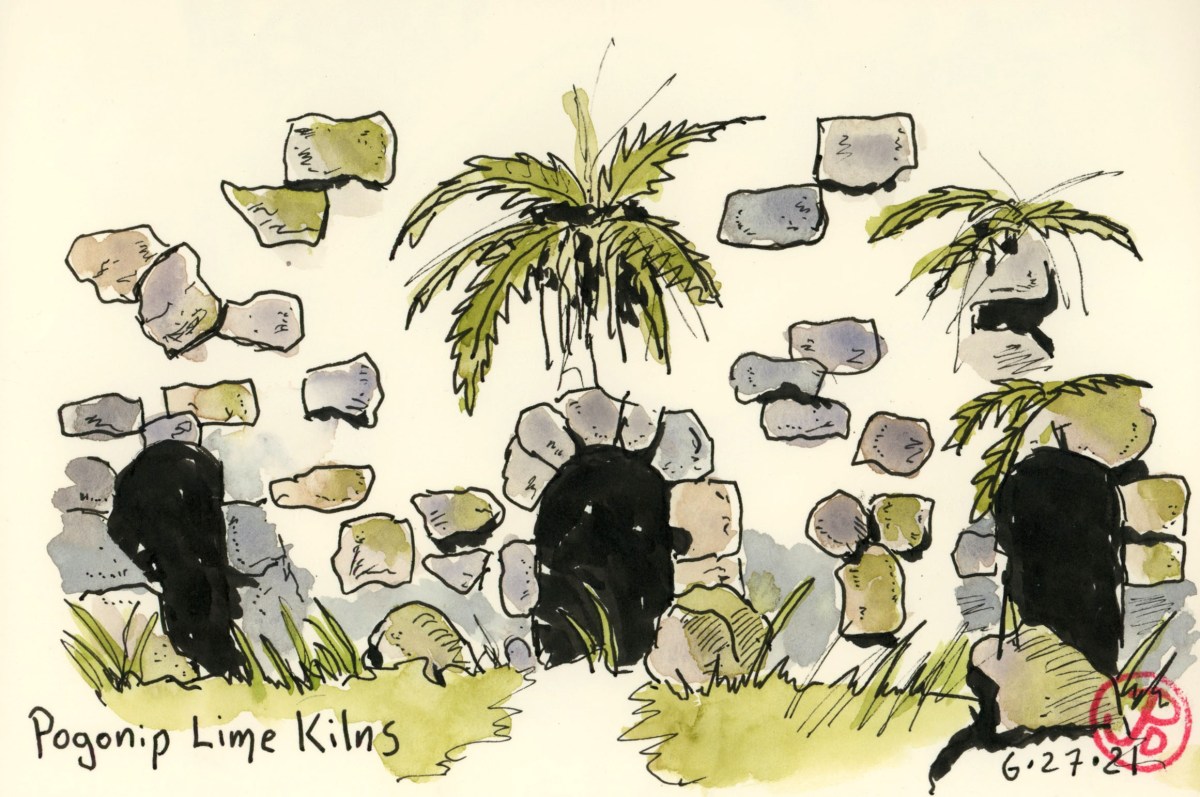
Lime Kilns, Pogonip. (Featured sketch)

After a hike up the Spring Trail at Pogonip Open Space Preserve, I turned off the trail to head up to the abandoned lime kilns. After timber, producing lime for building was Santa Cruz County’s biggest industry in the 20th Century. There were a few signs of this history at Pogonip but there was none better than these kilns.

For this sketch, I worked in pen and I used a bit of sketcher’s license on this one. In reality the ferns in the center were higher up but I though of this quick sketch as capturing little vignettes or details of the kiln, ferns, and brick work. All these details, when put together, tell the story in representing the lime kilns.

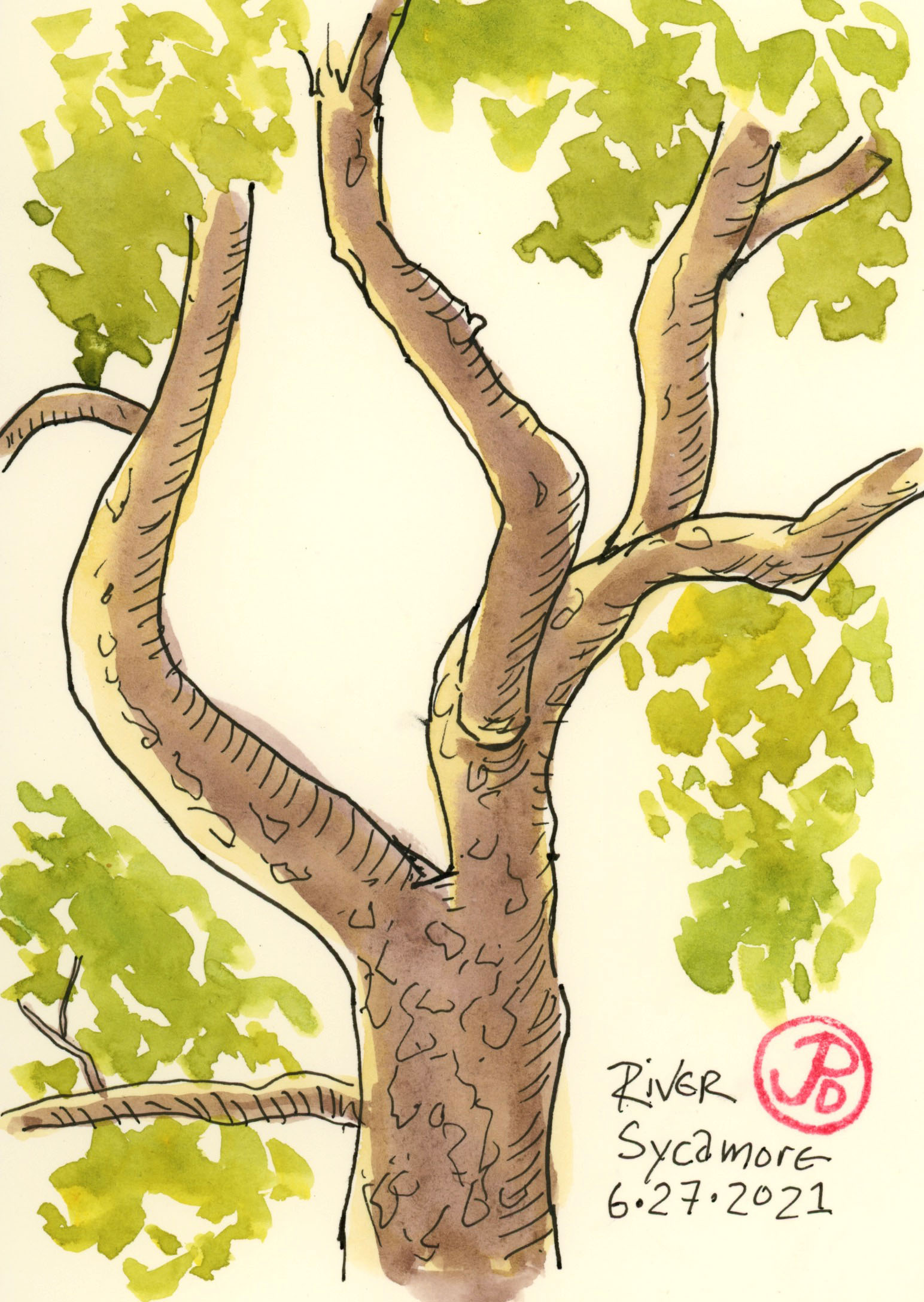
River Sycamore, Paradise Park.

I walked by the sycamore many times on my walks on Washington Way. I thought this grand, old tree would make a good subject for a quick sketch. Working on this sketch had a very organic feel, no pun intended, as I captured the shape of the limbs and let them lead off the page. I only worked in pen on this one.

I have sketched redwood, the most dominate tree in Paradise Park, many times so working on a sycamore just helped me understand the tree just a little bit more.

Image

Underpainting

I wanted to experiment with underpainting for some recent field sketches. First I put down a loose, cool, blue wash and on another page a warm orange-red wash. I kept it loose with some paint splatter and some ghosting.

Now I had to find a subject to lay over the wash.

My first subject was to be found at Harvey West Park in Santa Cruz. It was a Southern Pacific 0-6-0 switcher that is on static display in the picnic area. Southern Pacific Number 1298 is an S-10 class yard switcher that was build by Baldwin in 1917. The locomotive was retired in 1956 and was put on static display in Santa Cruz in 1961. In an earlier era, when things was less litigious, children where able to climb on the locomotive and tender. Now the tender was sold and the rusting Number 1298 sits fenced in, in need of a lick of paint.

The word static, implies “not moving”, which is a perfect sketching subject because, well, 1298 is not moving. It was a great subject to capture the form of the locomotive and the trees in the background. For this sketch I chose the page with the cool blue underpainting. I figured it would also work with the sky.

I loosely sketched in the form of the locomotive, tiring to keep details to a minimum. I failed to some degree because I think I added too many details, a problems I have with sketching a highly detailed subject like a locomotive or architecture. The running gear (the driving wheels that propel the locomotive) I simplified and left out a lot of information.

When you put wet watercolor paint over dried paint, it is called glazing. When you glaze in watercolor you can build up layers and depth. Because watercolor is transparent, the underpainting shows through in unexpected ways. And with using a fairly random underpainting the result can be a bit jarring but somehow seems to work. It’s just a sketch, after all.

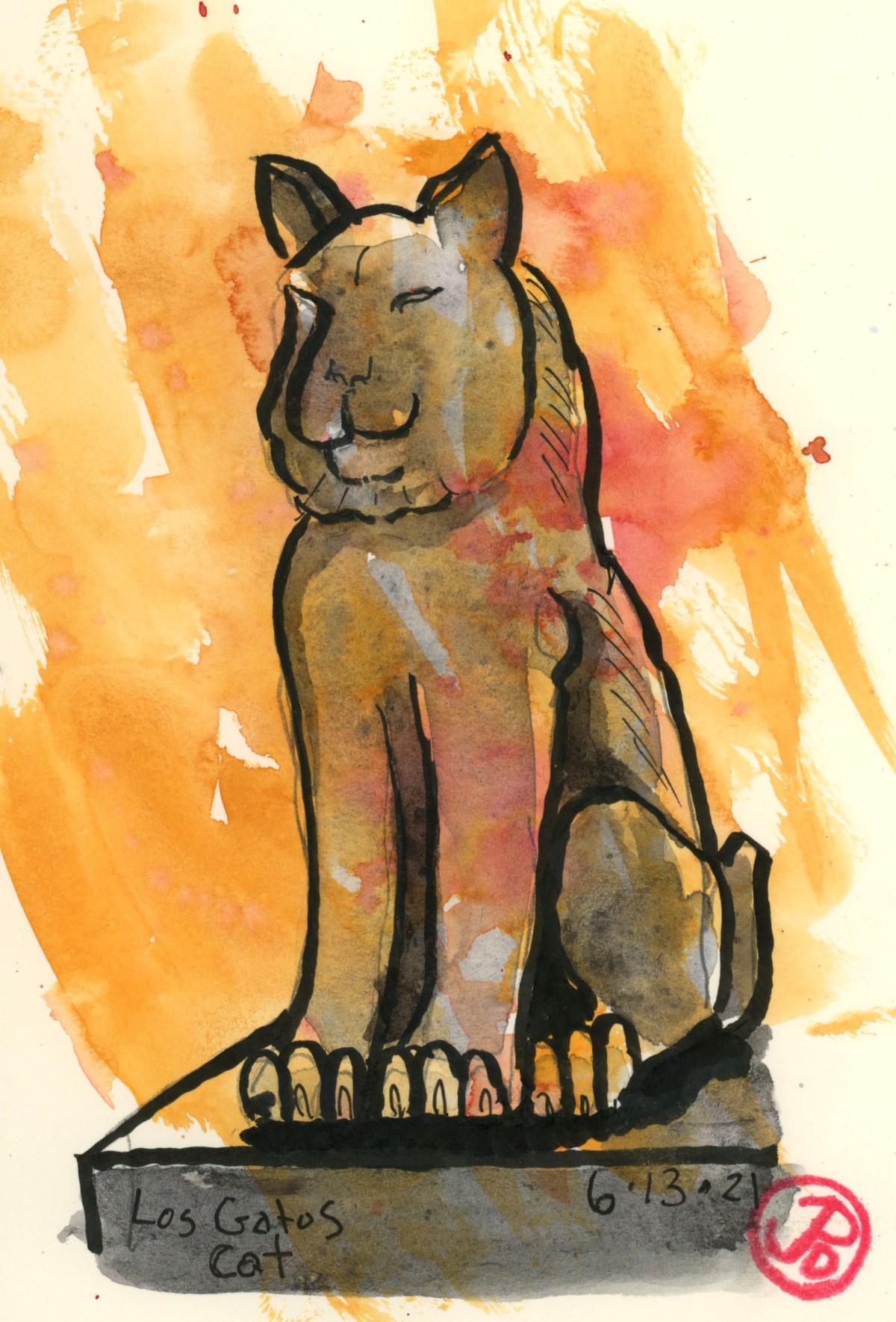
For my sketch I laid over the warm orange-red wash I choose a jarring subject.

Just outside of Los Gatos, off of Highway 17, are two stone lynx-like statues that guard the driveway to Poets Canyon. The sculptures where created by Robert Paine and are named “Leo” and “Leona”. The sculptures have been in place since 1922. To get to this location is challenging because you can only turn west on Highway 17 (the direction whence I came).

Lucky for me, two 8 foot replicas are to be found at the Los Gatos Shopping Center on Santa Cruz Ave. The new cats are carved out of white marble and weigh in at 6,500 pounds each!

The underpainting is warm and I made no concessions to the true color on the statues. I like the way the sketch turned out (featured sketch).

Image

Meder Canyon

With my inward focus on county lifers I begin to realize that I had many common and uncommon species on my life list that now became new targets for the county.

In Santa Cruz County I had five species of owls: great horned, barn, burrowing, short-eared, and saw-whet. I had two more that I had not yet heard in the county, when owling, hearing is believing. These are the western screech-owl and northern pygmy-owl.

As day turned to dark, I headed to the slopes of the Santa Cruz Mountains near Corralitos. Owling is a new kind of birding madness that makes one wake up at an ungodly hour or head up into the hills on one lane, windy roads in the darkening night. My destination was Hazel Dell Road, a productive owling road in the county.

I stopped at the intersection of Hazel Dell and Mt. Madonna Road and got out to listen of my target owling. I heard nothing except for the din of frogs just down the road. I struck out on both species.

Seeing a recent online birding post, I was reminded that I did not have white-throated sparrow in county. So on a Sunday morning, I headed out early to looking for this beautiful but uncommon Santa Cruz County sparrow.

I headed up Meder Canyon and turned right into the side canyon. This spot reliably produces California thrashers, except for today. I did hear the cat-like “mew” of a blue-gray gnatcatcher. I climbed up the slope to get a better vantage point to see the gnatcatcher and that’s when I first heard the northern-pygmy-owl!

If the toot-toot call of a saw-whet sounds like a owl on too much coffee, then the northern pygmy-owl has had too much NyQuil. I could clearly hear the slow toot-toot call coming from across the canyon. It was just 8AM.

It may sound odd that a nocturnal predator like an owl would be active in the day but northern pygmy-owl is noted for it’s daytime dalliances. According to David Sibley in his Sibley Guide to Birds, pygmy-owls are “active in daylight” and it’s song is “often heard during the day”.

I headed back down slope and to try to locate the owl. It sounded like the owl was calling from brush or trees further up slope. After about two minutes, the pygmy-owl stopped calling and I was unable to locate it. It was a great encounter anyway.

Now it was time for my next target bird, white-crowned sparrow. I returned to the main canyon and headed up to a location were the sparrow had been recently seen.

It was a warm morning and it had a feeling of a spring morning and I was surrounded by the calls of birds: Steller’s and scrub jays, wrentits, yellow-rumped warblers, a Bewick’s wren, a pair of oak titmice, and a northern flicker.

As I neared the end of the trail at Meder Street and University Terrace Park I stopped at the “bird feeder” house. The back of this house faces the trail and the owners put out seed and suet on the upper balcony. There were some juncos and an acorn woodpecker feeding at the feeder when walked up.

On the right side of the trail was a golden-crowned sparrow perched on a sign. This was a good sign. I was hoping the white-throated was loosely associating with other sparrows.

Golden-crowned sparrow.

I saw a sparrow fly into the eucalyptus about ten feet high. I tried to get a better vantage point. I got bins on the bird: white suplercilium, yellow lores, and the the distinctive white throat! A new county lifer: white-throated sparrow.

White-crowned sparrow singing in the eucs.