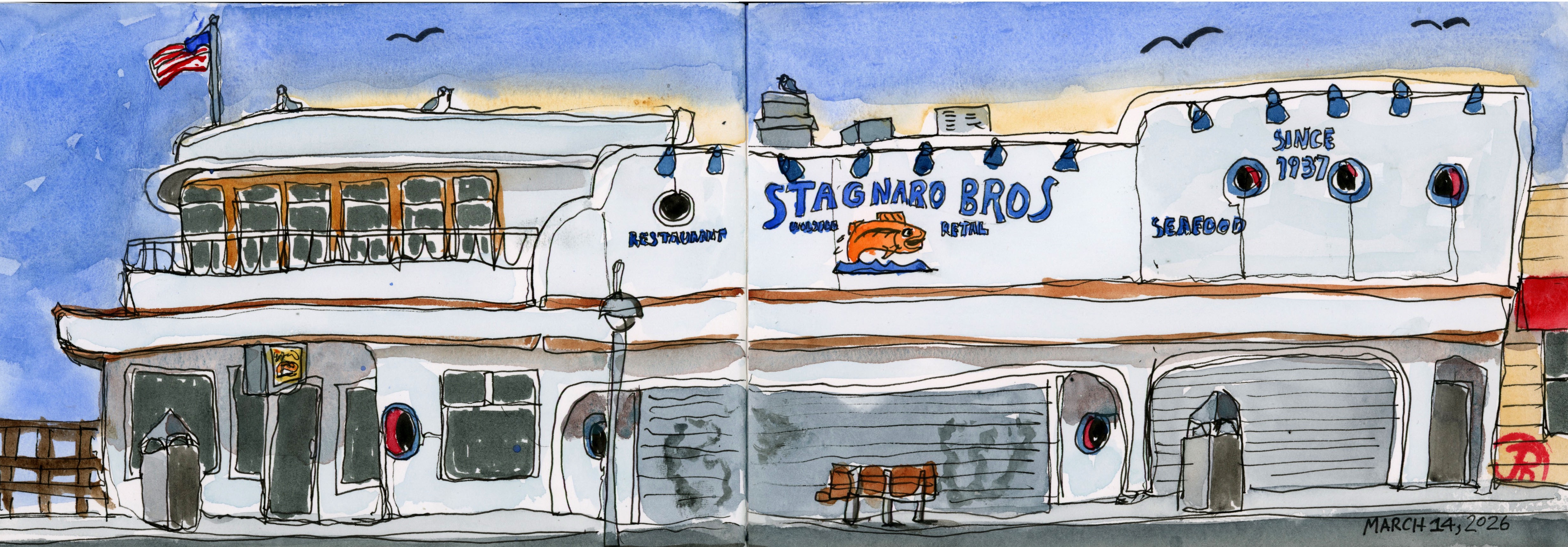
Image

Sketching from the Gates

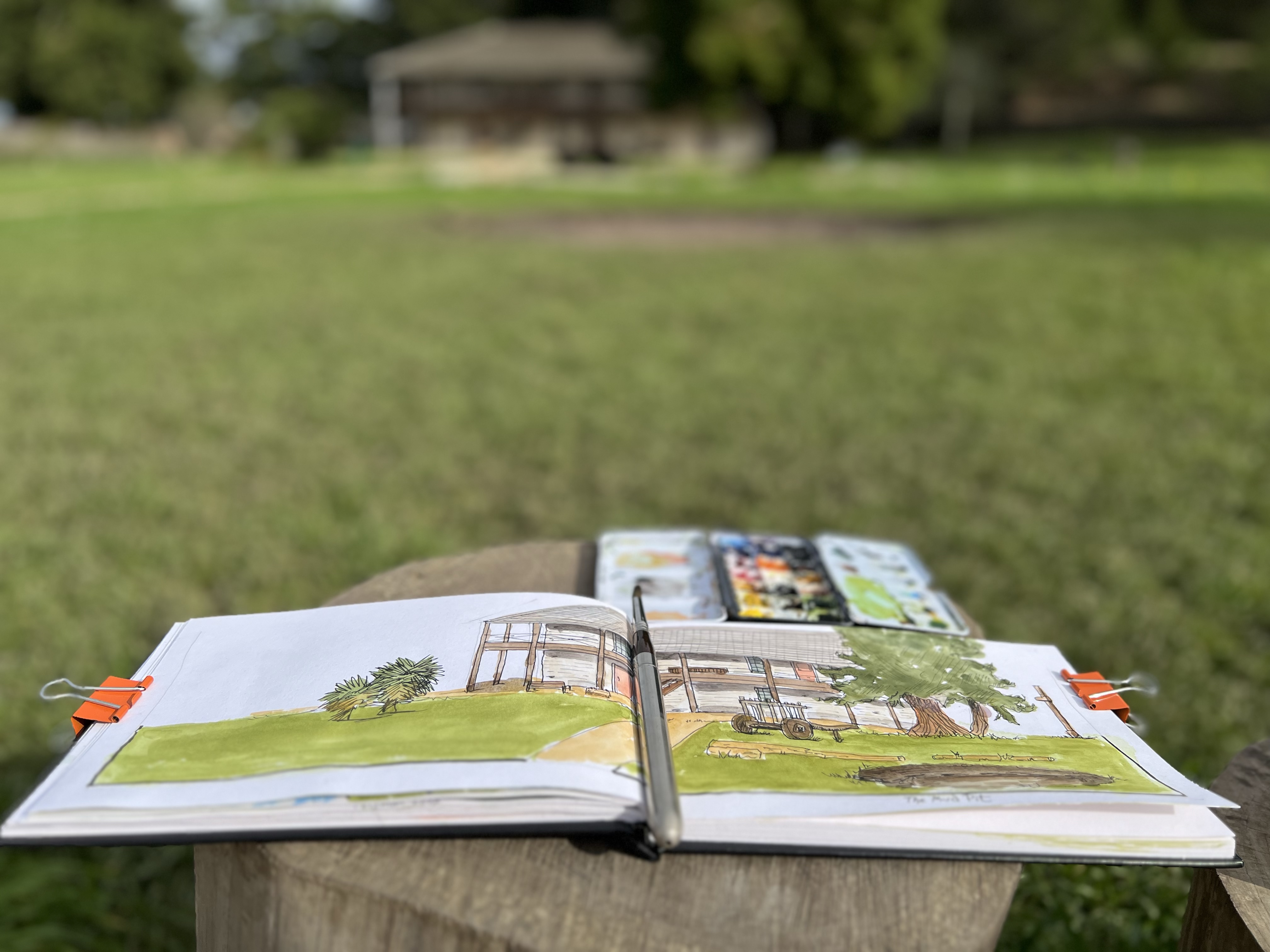
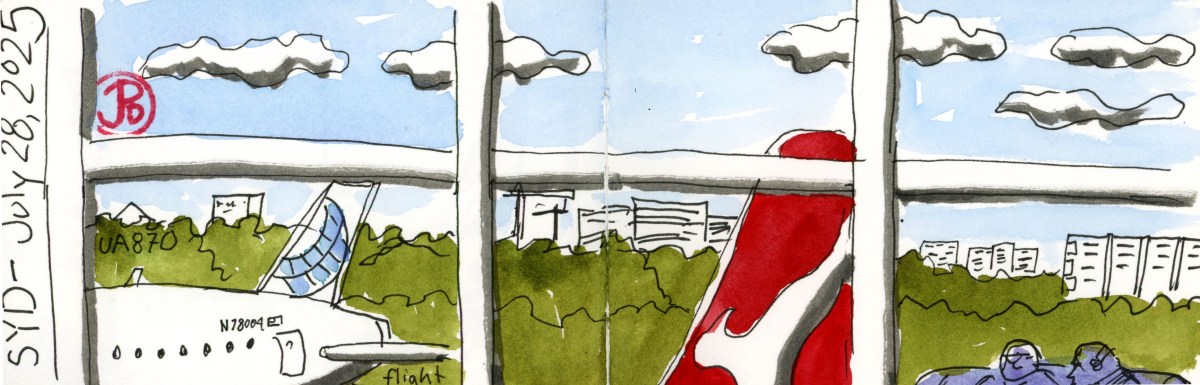
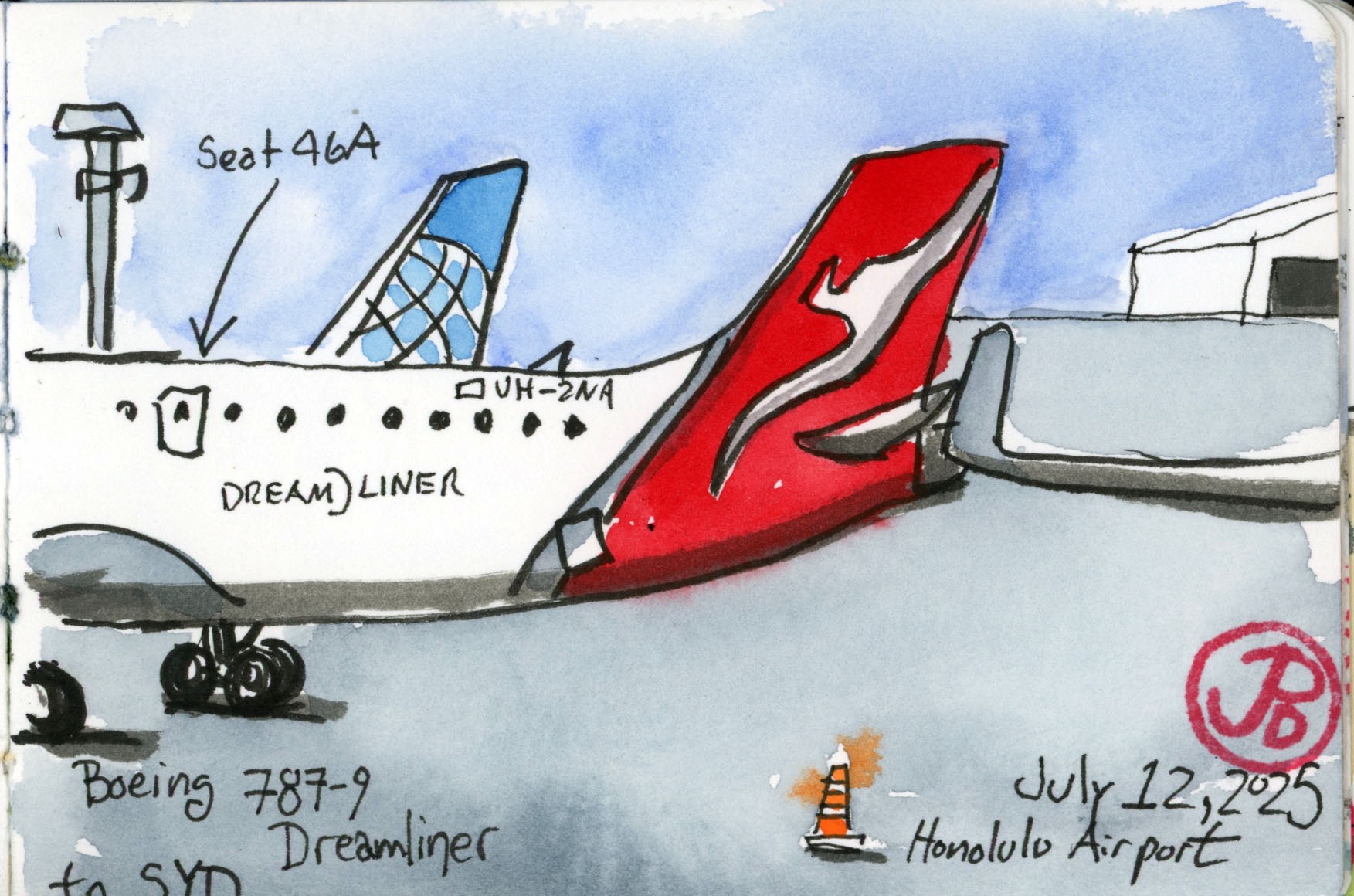
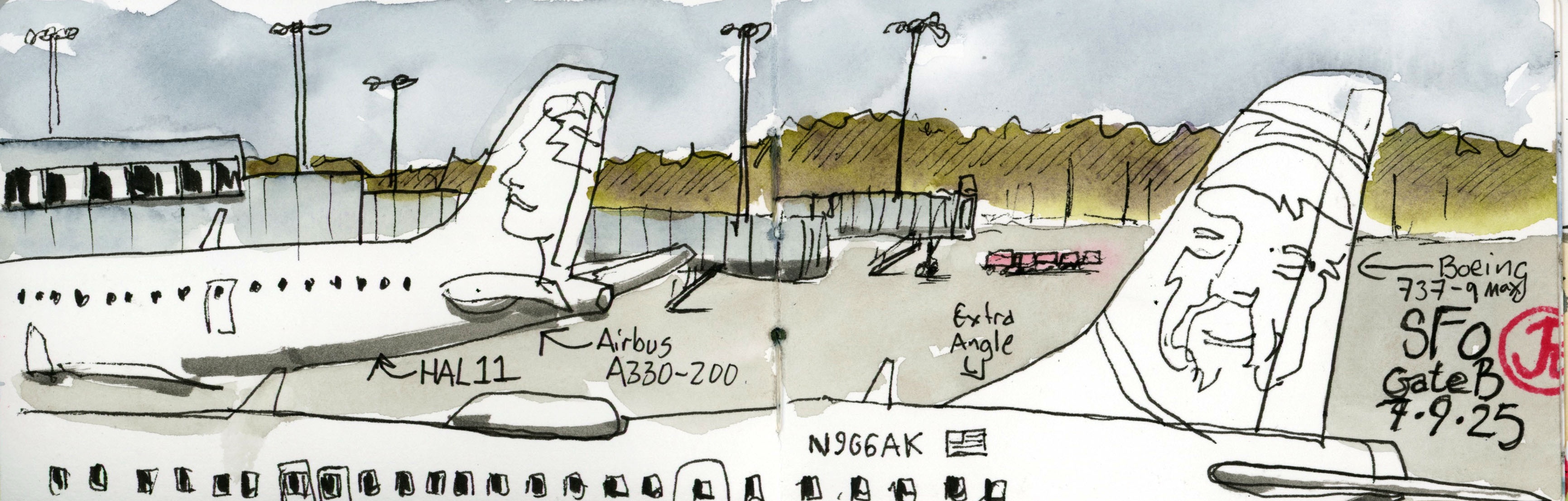
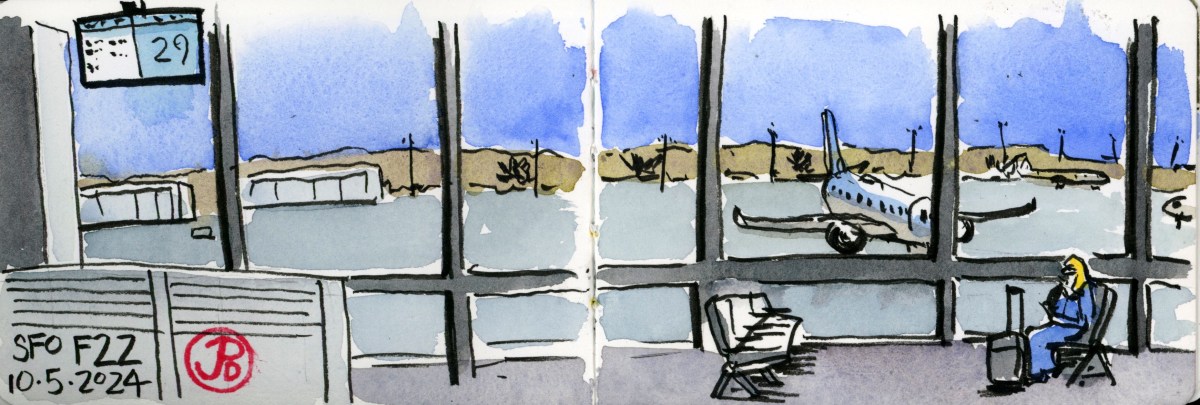
On my Hawaii/Australia adventure I took a total of six flights so it left me with plenty of time to do some airport sketching. A perfect way to spend time while waiting to board. Or a perfect way to spend time if you’re really bored!

I did a total of nine sketches, some of which I have included here.

I always enjoy the art in airports. My home airport, SFO, frequently changes what’s on show.

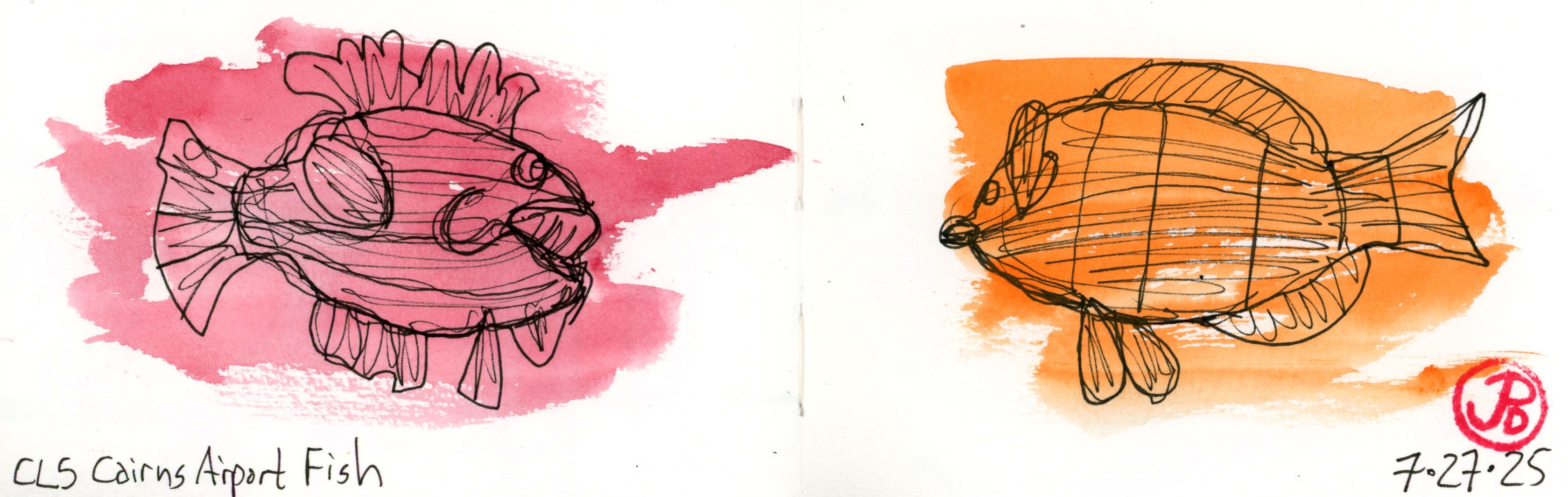
Most of the time I focus on the scene outside the window of planes parked at the gates. But at the airport in Cairns (Gateway to the Great Barrier Reef) I sketched some of the fish sculptures hanging from the ceiling (all rendered in a continuous-line sketch).

Image

Sketching Historic Monterey

Most think of the Monterey Aquarium when the namesake of Monterey Bay is mentioned.

As a fourth grade teacher I think of the depth of California History when I think of Monterey: Colton Hall, the Customs House, and the Larkin House.

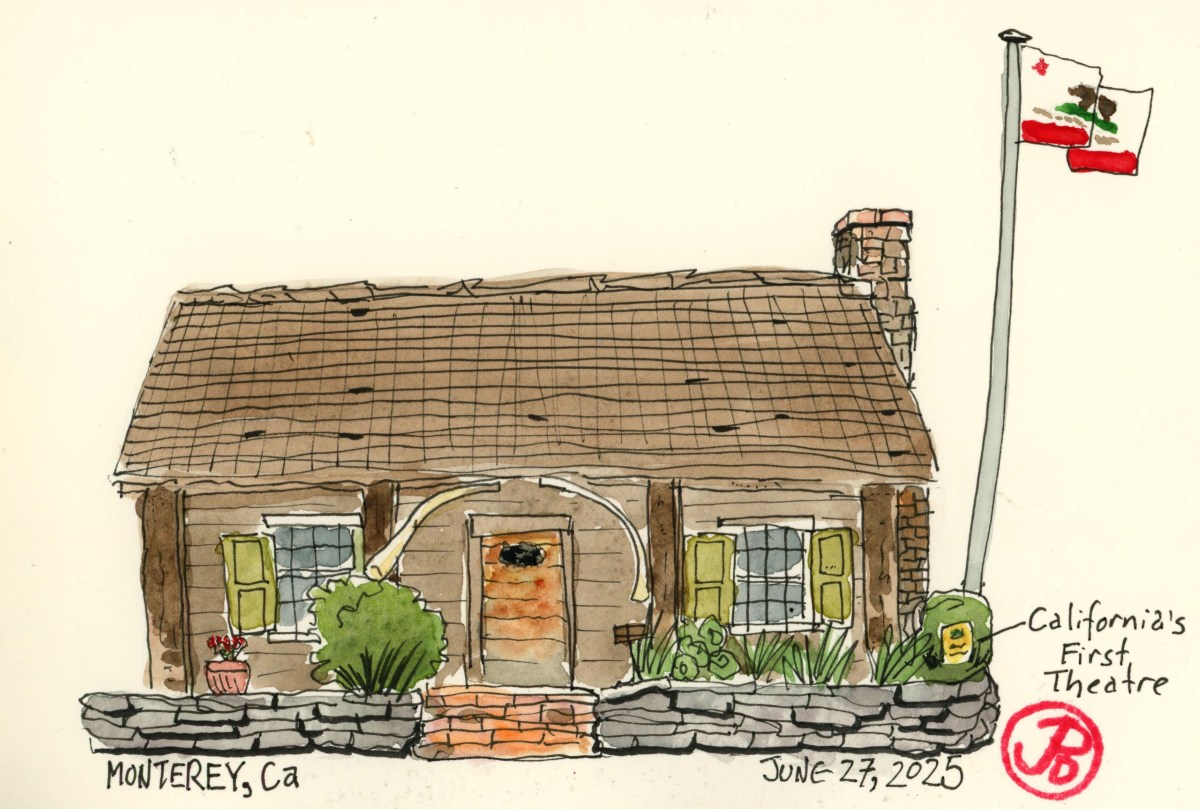
This morning I would not be sketching any of these buildings (although I have already sketched two) I turned my journal to the many firsts in California to be found in Monterey: California’s First Theatre and brick building.

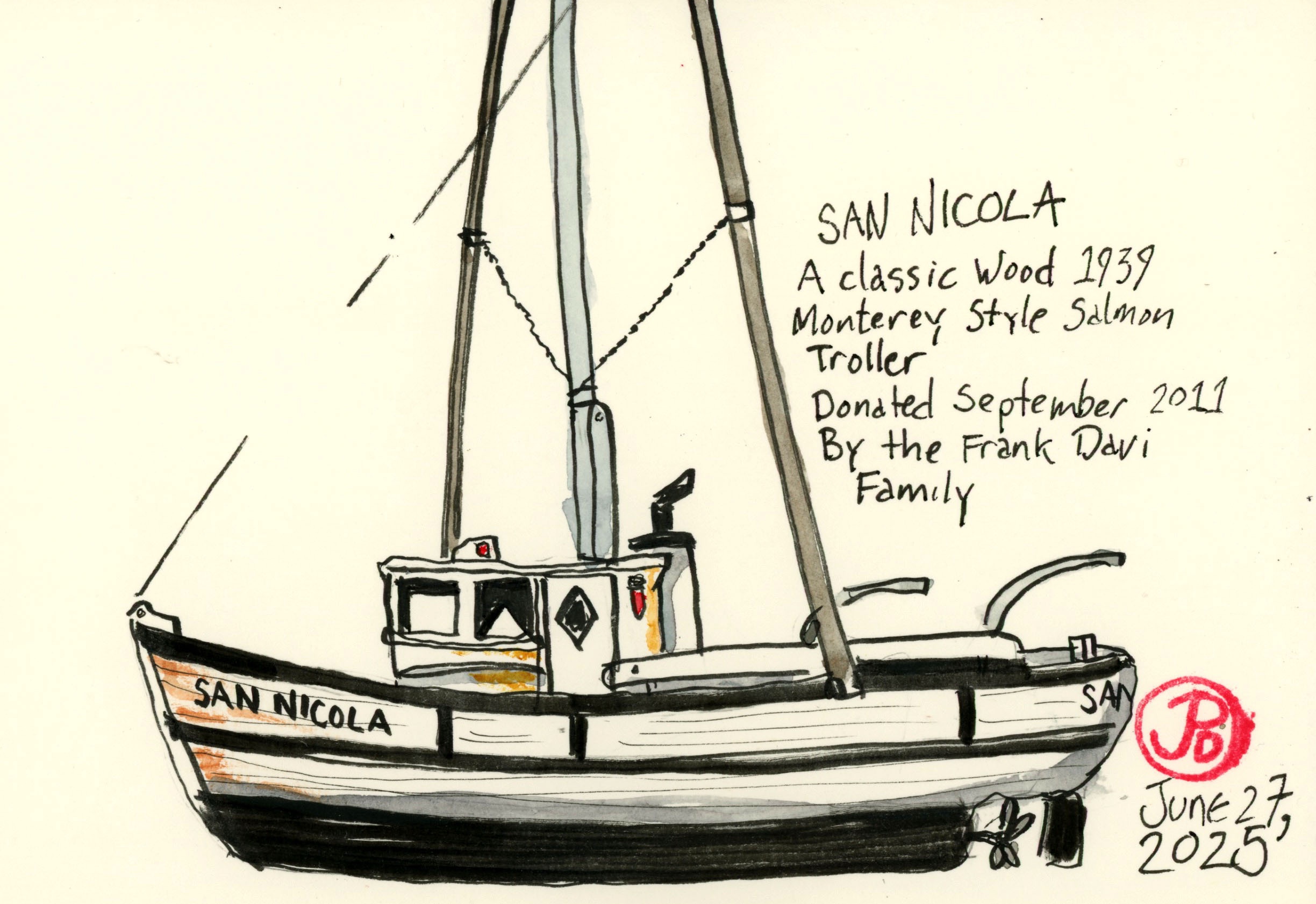
I started off with a warm up sketch of the San Nicola. The San Nicola is a 1939 wooden salmon trawler on display near the entrance to the Monterey Historical District. It is a reminder of Monterey’s fishing heritage.

After my warm-up sketch, it was now time to head to one of the first firsts in Monterey, California’s First Theatre.

Two whale ribs frame the entrance to the theatre.

The theatre was built in 1846 by Jack Swan. It was first used as a theatre in 1850 when the US Army officers of the 1st New York Volunteers put on plays to raise money.

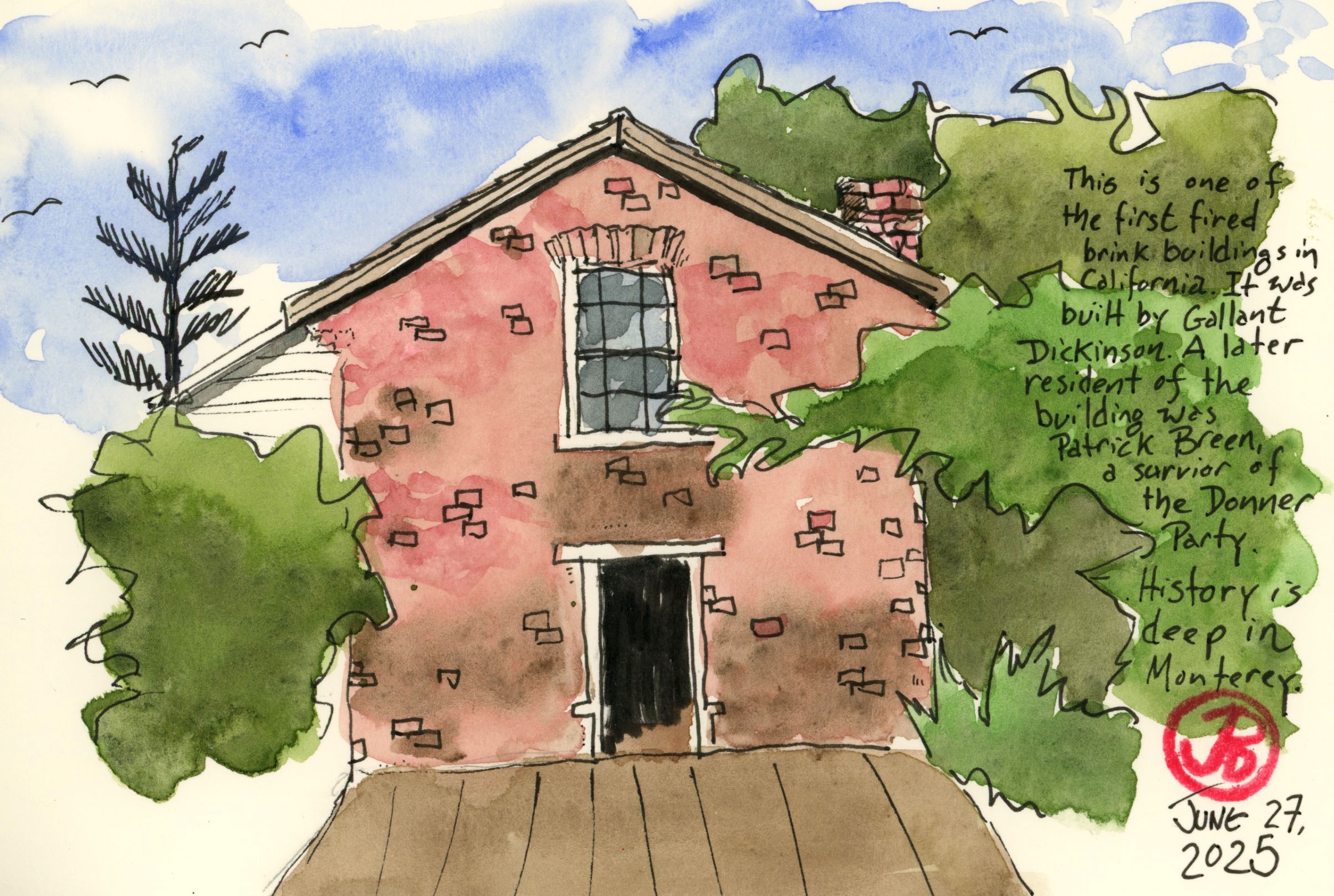
My second first of the day was just around the corner, it is the first brick building in California.

A sketch in progress.

Now this bears a little bit of explanation. The early Spanish and Californios had built buildings with adobe bricks, the first “brick” building was built with European style fired bricks.

The structure was built by Gallant Dickinson in 1947. A well known resident of this building was Patrick Breen, a chronicler and survivor of the Donner Party. The building served as a restaurant in the early part of the 20th century.

Image

Mare Island and the Muddy Puppy

The former Naval base on Mare Island is a sketcher’s paradise. It’s full of cranes, condemned buildings, dry docks, bridges and rusted rails. Plenty of shapes and perspectives to add to my sketchbook.

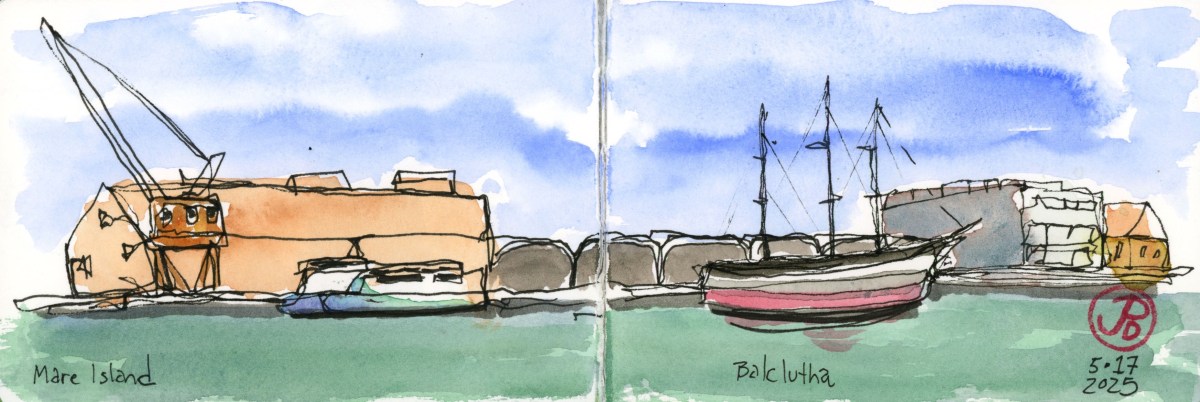
On a recent journey to Vallejo to visit a friend, I headed to the ferry terminal across the Napa River from Mare Island to do a park bench continuous line sketch of the river front with the Balclutha moored to the dock (featured sketch).

The 1886 three master (aka Star of Alaska) is temporarily on display here while the pier at the San Francisco Maritime National Historic Park is rebuilt.

Also moored nearby is a modern bay ferry which I included in the sketch as a bookend to Bay Area maritime history.

Mare Island Mud Puppy

From my sketching position near the Vallejo Ferry Terminal I was looking across the Napa River towards the location of one of the most infamous sinkings in Mare Island history.

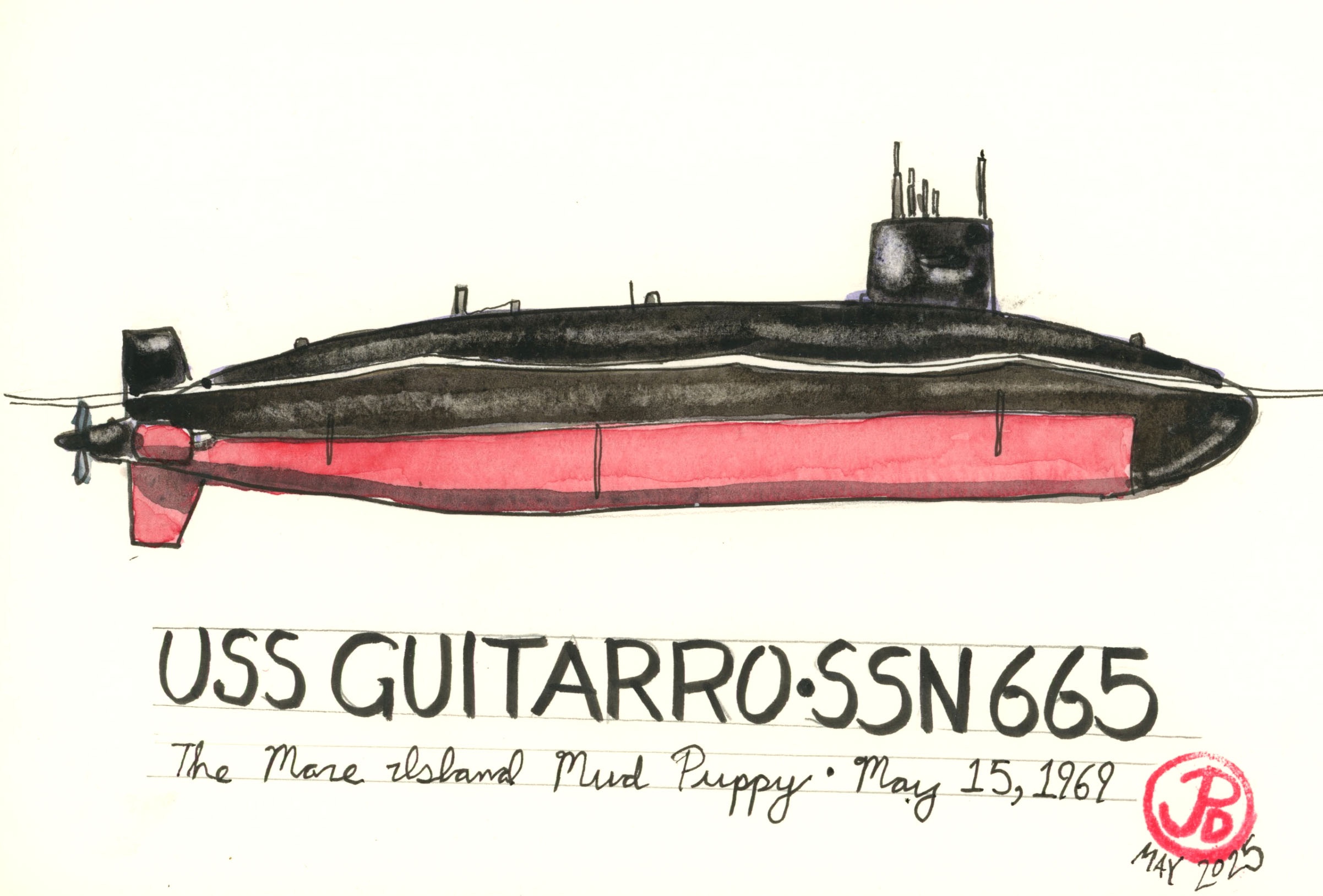
On May 15, 1969 the Sturgeon-class nuclear submarine the USS Guitarro was moored to the pier in the Napa River. The sub had been built and launched (July 27, 1968) on Mare Island and now was still under construction.

Two construction groups were working on different parts of the sub at the same time. They began adding water to the ballast tanks, unbeknownst to each other. The construction groups were warned that the Guitarro was riding low in the water but did not heed the warnings.

At 20:30 (8:30 PM) the groups, after returning from lunch, noticed the sub taking a downward angle and the Guitarro was taking on water from her forward hatches. At 20:55 the Guitarro sank to the bottom of the river leaving her sail above the waterline thus earning the dubious nickname: “Mare Island Mud Puppy”.

The sub was refloated a few days later and damages were estimated to be between $15 and $22 million. The sinking of the Guitarro put an end to submarine construction and repair at Mare Island. Mare Island Naval Shipyard was once the premier West Coast submarine port. The last sub built at Mare Island was the USS Drum in 1970.

The USS Guitarro was commissioned (32 months late) on September 9, 1972. She was in service until 1992 when she was decommissioned and scrapped at Puget Sound, Washington in 1994.

Image

Sketch Crockett

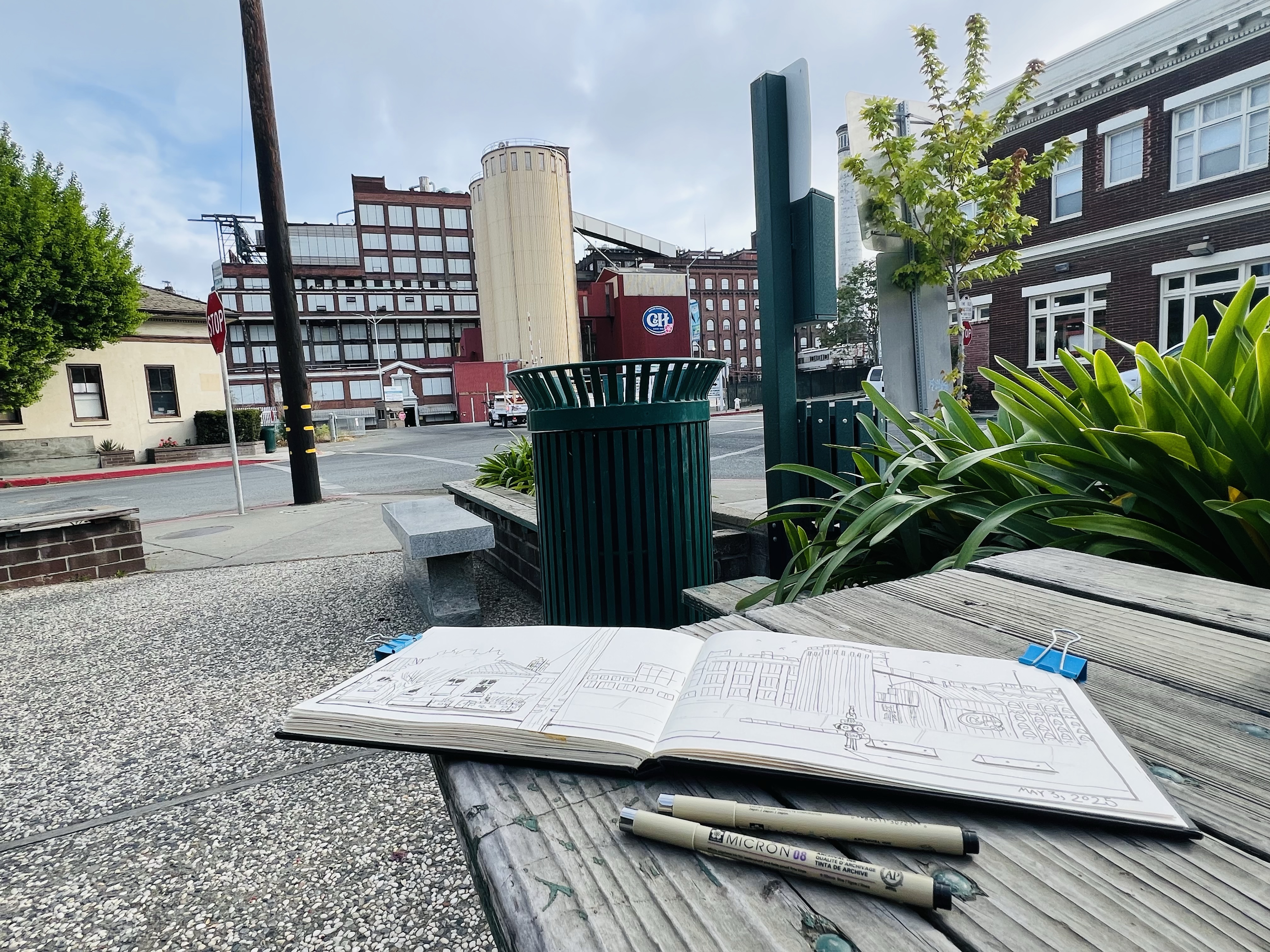
My Saturday morning sketch found me at the corner of Loring and Rolph Ave in the little corner park in Crockett.

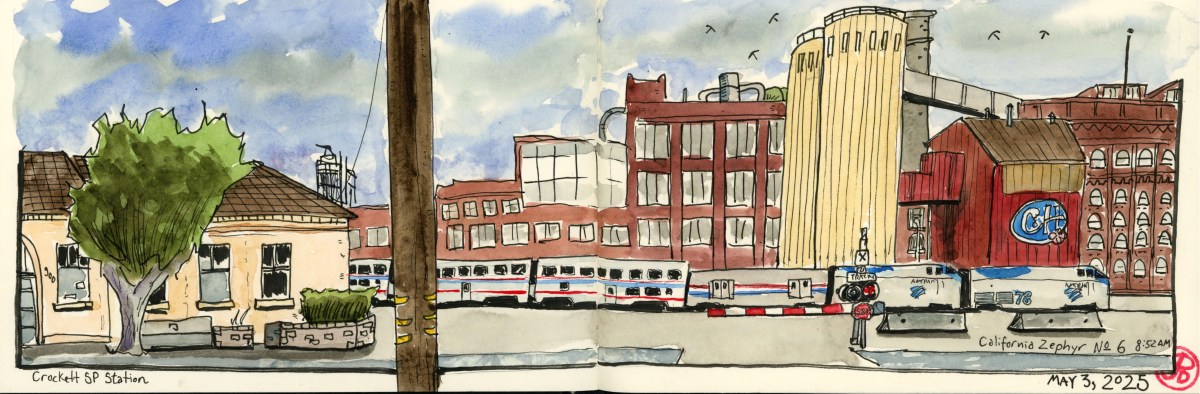
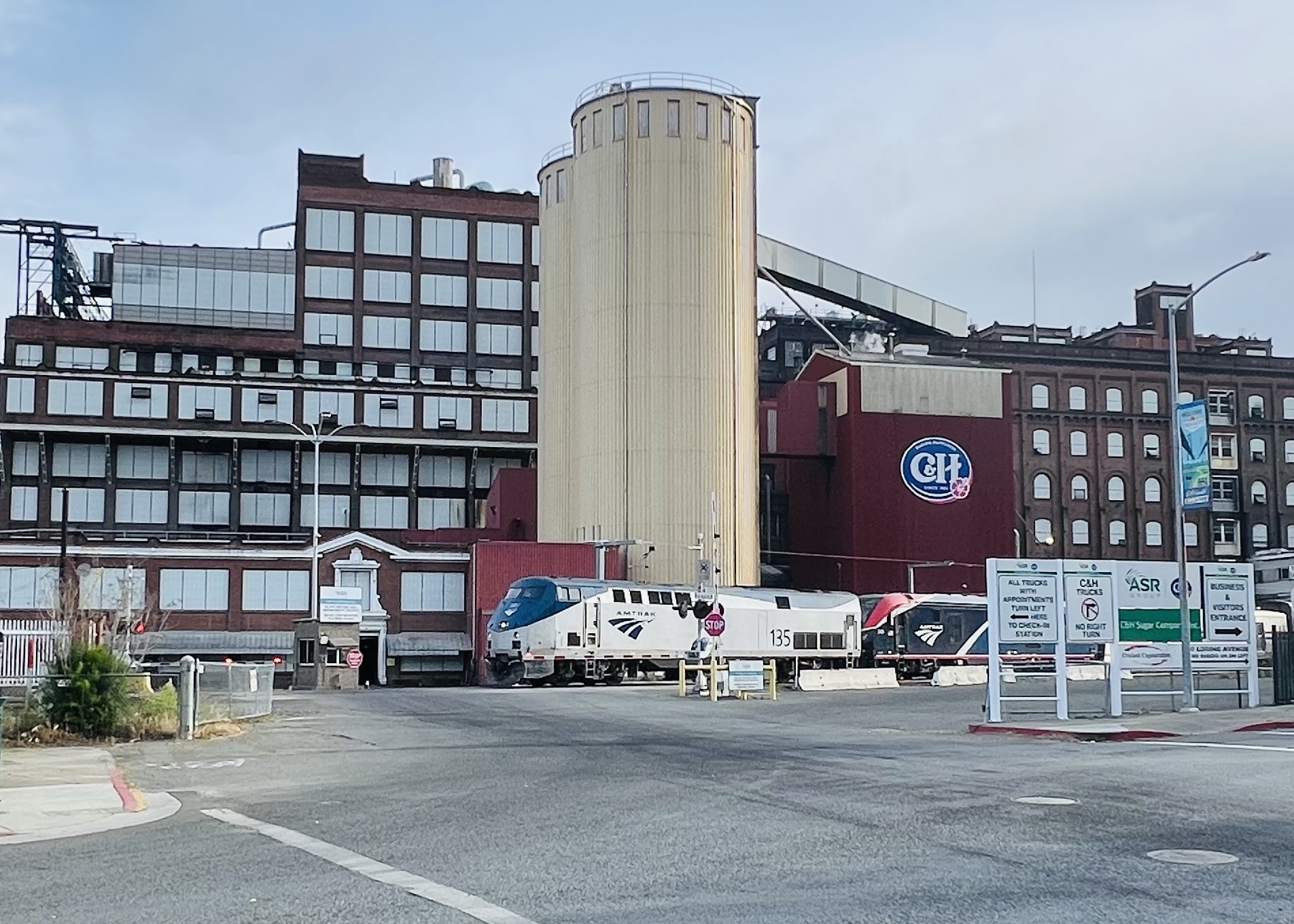
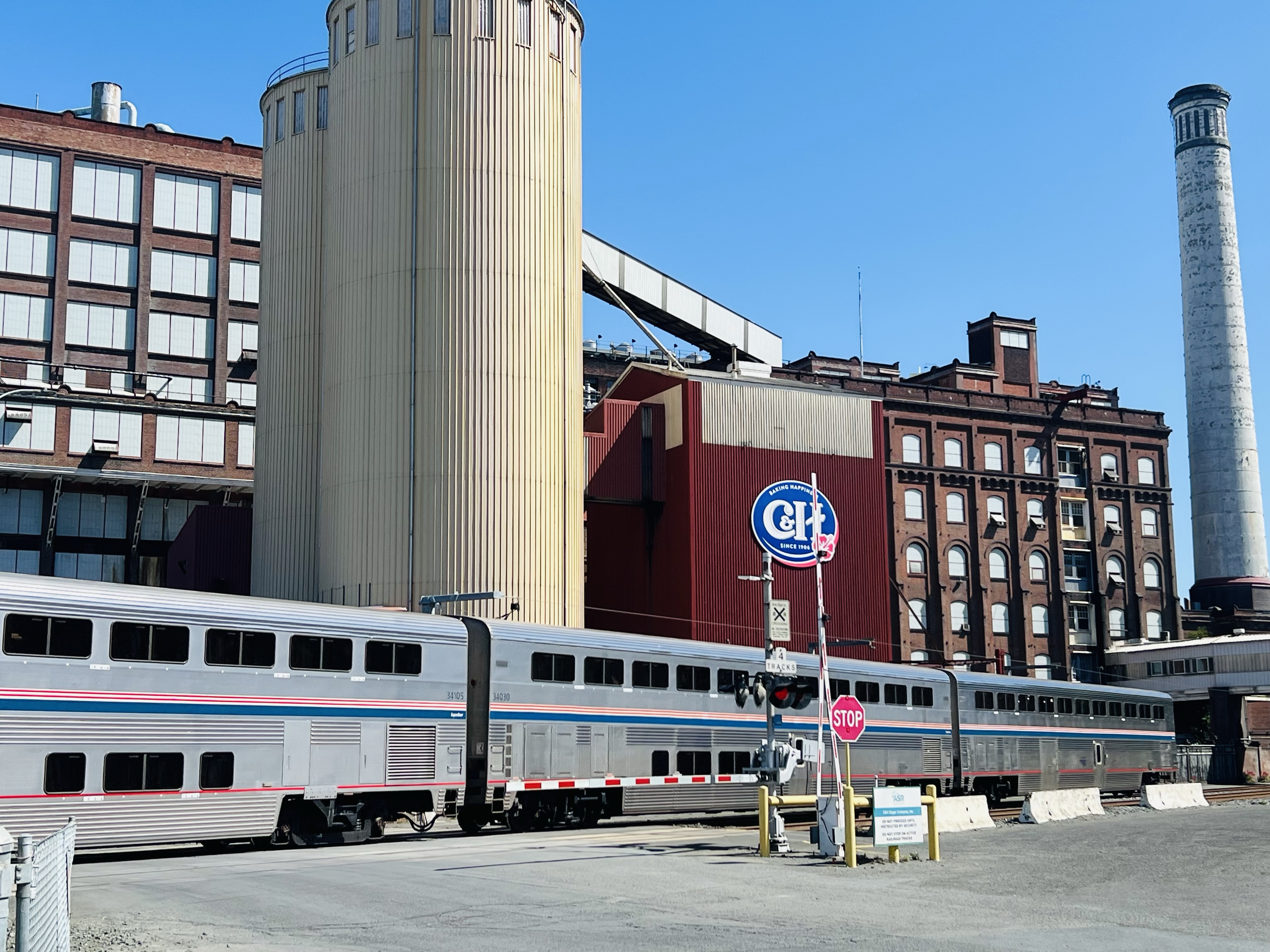
Before me was the C & H factory with the Union Pacific mainline passing in front. To my left was the former Southern Pacific station (sketched on a previous Saturday) and is now a historical museum.

I planned to add my park perspective to my Stillman & Birn Delta panoramic journal. The factory is full of complicated angles and shapes as if the factory was built in stages and at different times (which it probably was). I employed a little sketcher’s shorthand to simplify the details.

In 1906 Crockett became “Sugar Town” when a cooperative of Hawaiian sugarcane growers bought a sugar beet factory and turned it into the California and Hawaiian Sugar Company (C & H). At the company’s peak, 95% of the town’s residents were C & H employees.

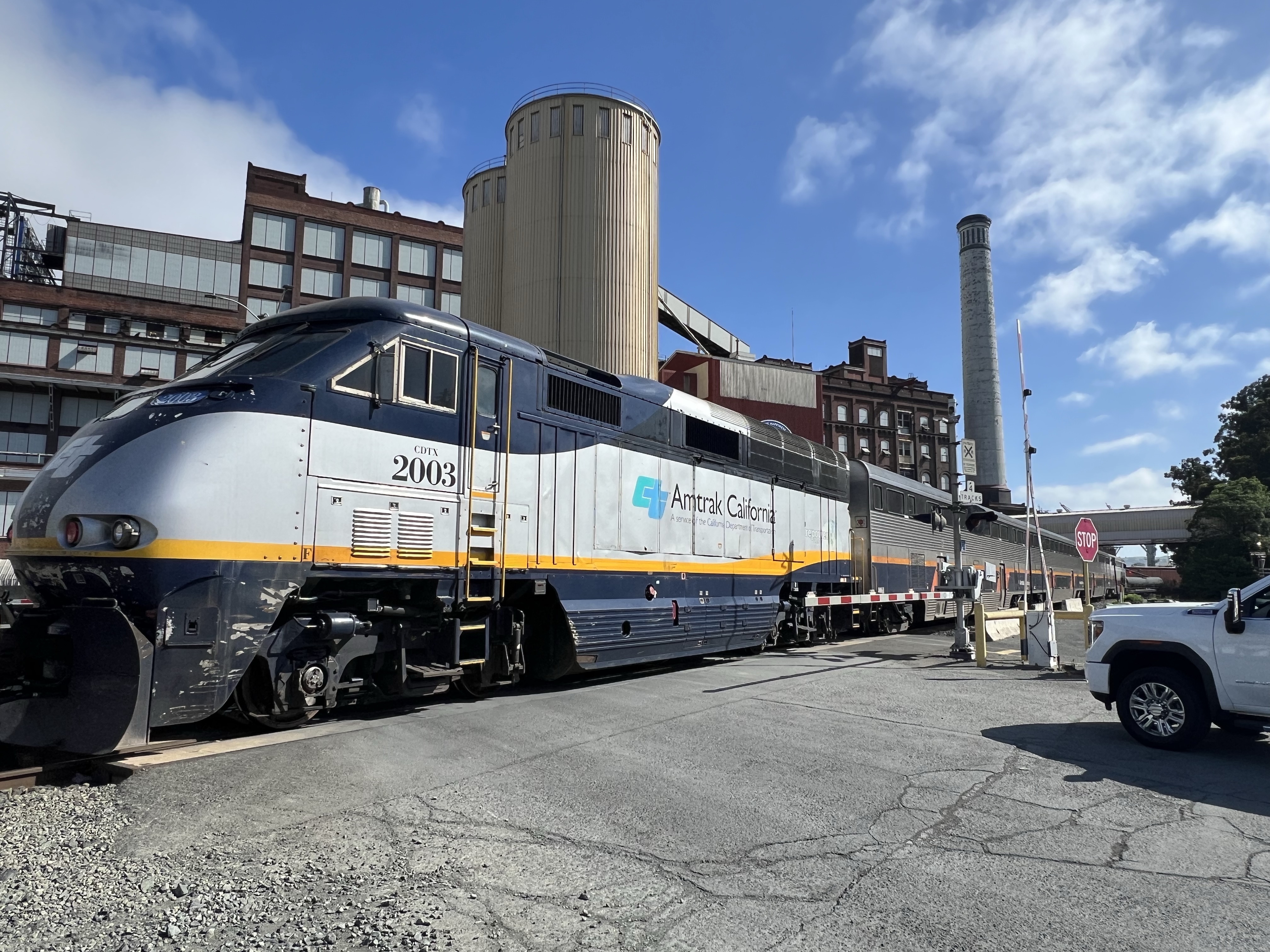
The southbound Coast Starlight No. 11 passes by the complex jumble of the C & H sugar factory at 8:01 AM.

Sketching the factory was a wonderful meditation, as it often is, turning chaos into order. I can think of few other pursuits that offers such satisfaction and peace of mind. I can almost feel my blood pressure drop when I put pen to paper.

Parkside sketching.

I employed a similar sketching techniques to past posts with putting a moving train in my sketch. I draw in the foreground and background and then add the train after it passes (usually from a photo reference).

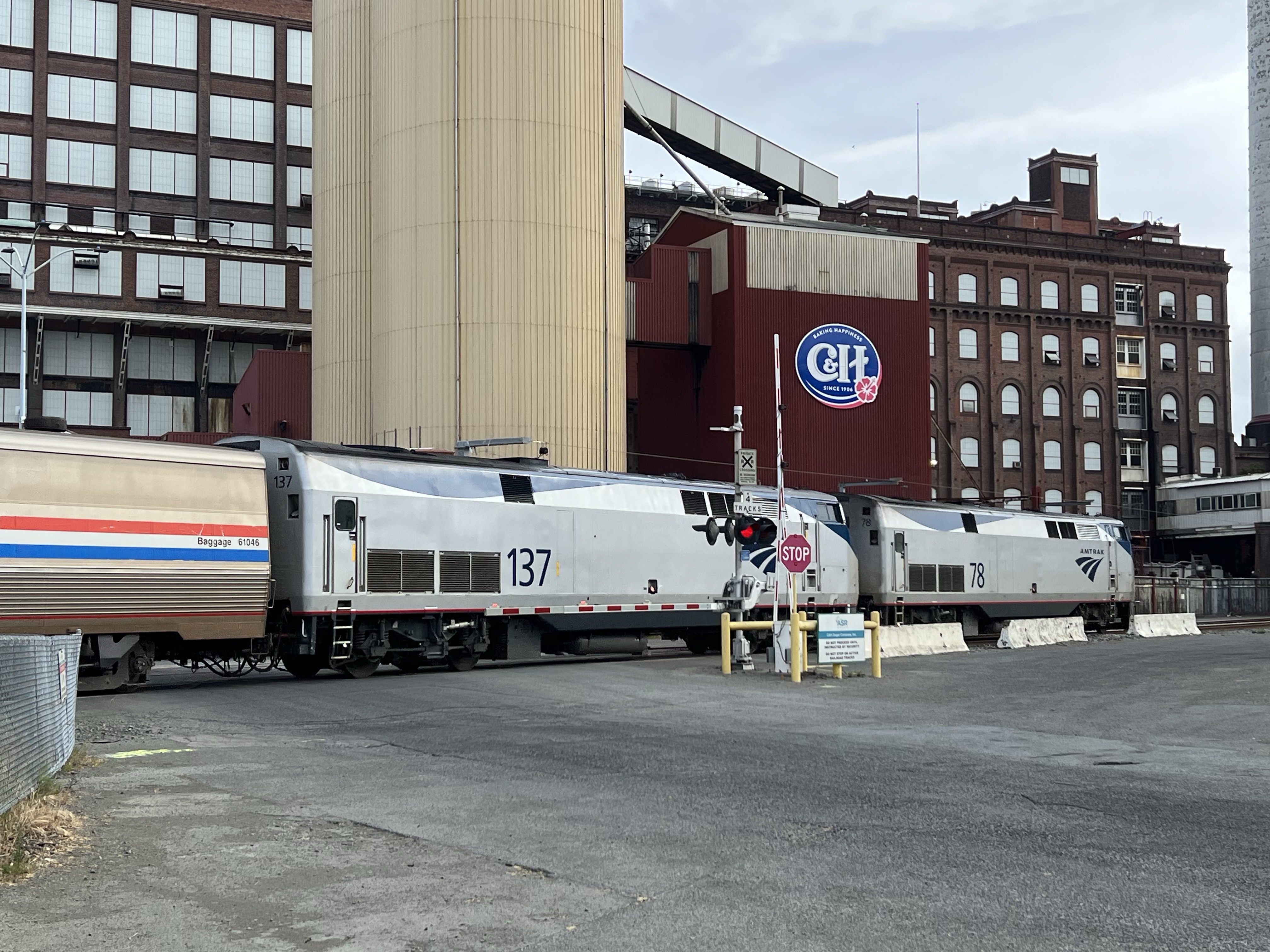
Two GE P42DCs (No. 78 and 137) on point of the California Zephyr. Next stop: Martinez, final destination: Chicago, Illinois.

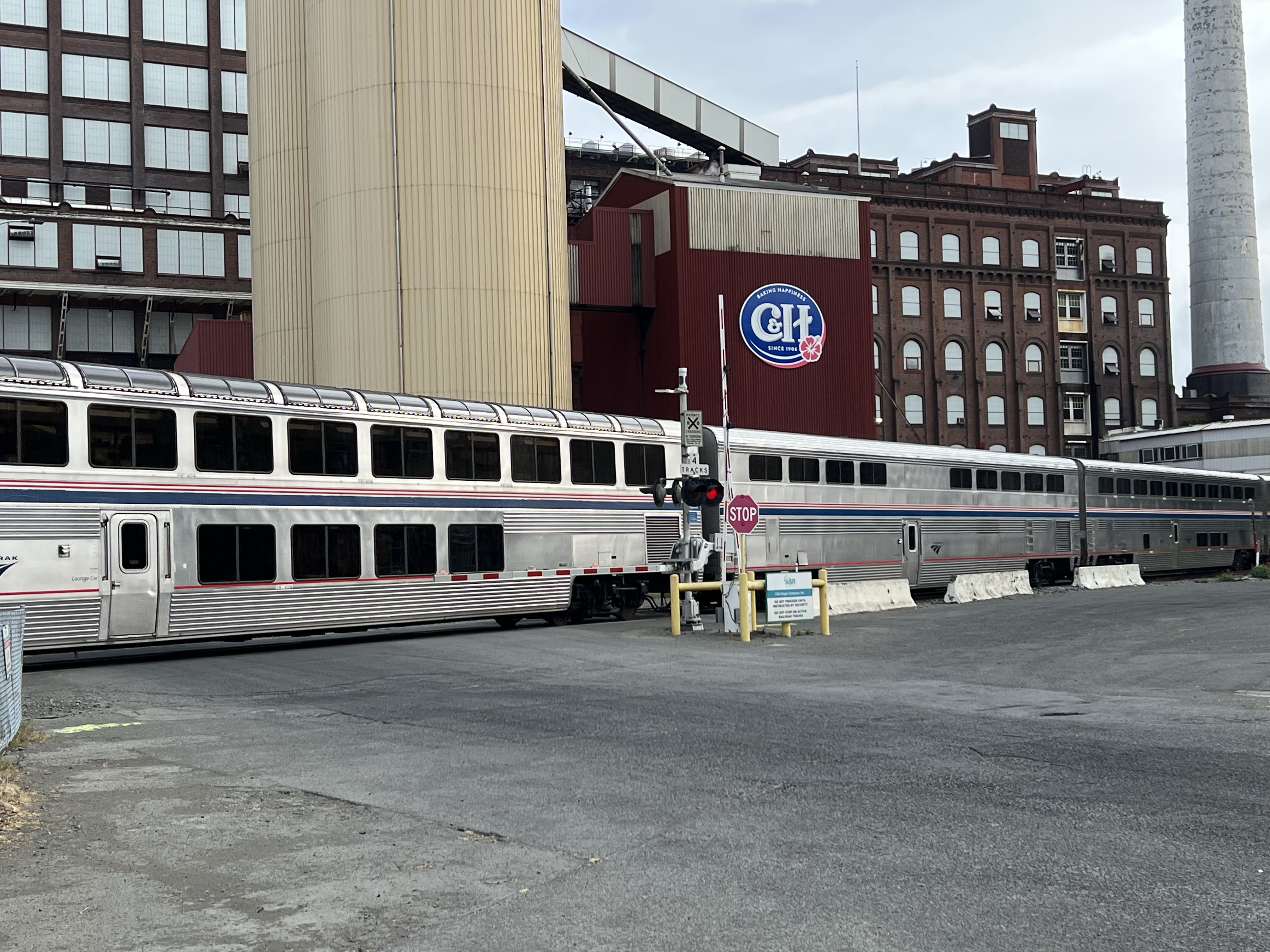
The passenger train I sketched into the scene was California Zephyr No. 6. I guess I should explain my fascination with AMTRAK’s longest daily route.

The Zephyr observation car crossing the entrance access to the C & H factory.

I have taken the Zephyr round trip twice, from Colfax, Ca to Denver, Co. The first time was for some Colorado birding and we where up in the Rocky Mountains at Loveland Pass looking for the elusive white-tailed ptarmigan.

It was here that I got a call from my mom and learned that my younger brother had died. I was leaving the next day from Union Station and it was a beautiful if not bittersweet rail journey.

The last trip I took with my stepdad was on the Zephyr and it was a great trip through one of the most scenic stretches of tracks in the United States. So whenever I see the Zephyr pass by, it puts a smile on my face.
Image

Caltraining

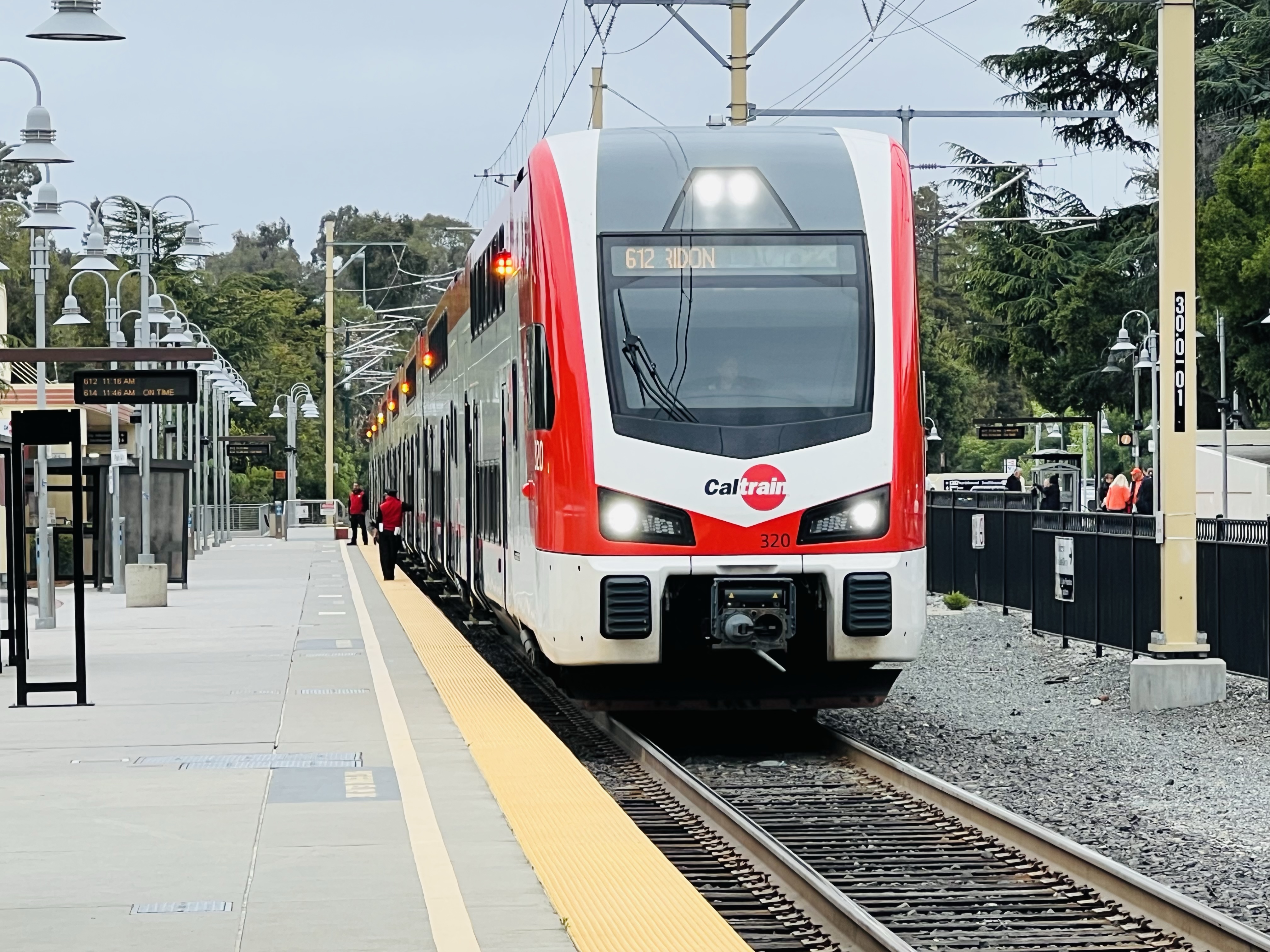
Last fall the new Sadler electric multiple unit sets (EMU) were put into service on the Caltrain route from San Francisco to San Jose and I had been meaning to ride aboard ever since.
So on a gloomy spring morning in late April, I boarded an inbound N Judah to the Caltrain Station at 4th and King.

I was picking a travel window that was not going to be too chaotic with first pitch scheduled at 1:05 at the Giant’s game. Lots of fans use the N Judah and Caltrain to get to the game.
I planned to catch southbound train 610 departing at 9:55 AM and detrain in Palo Alto for lunch on University Avenue.

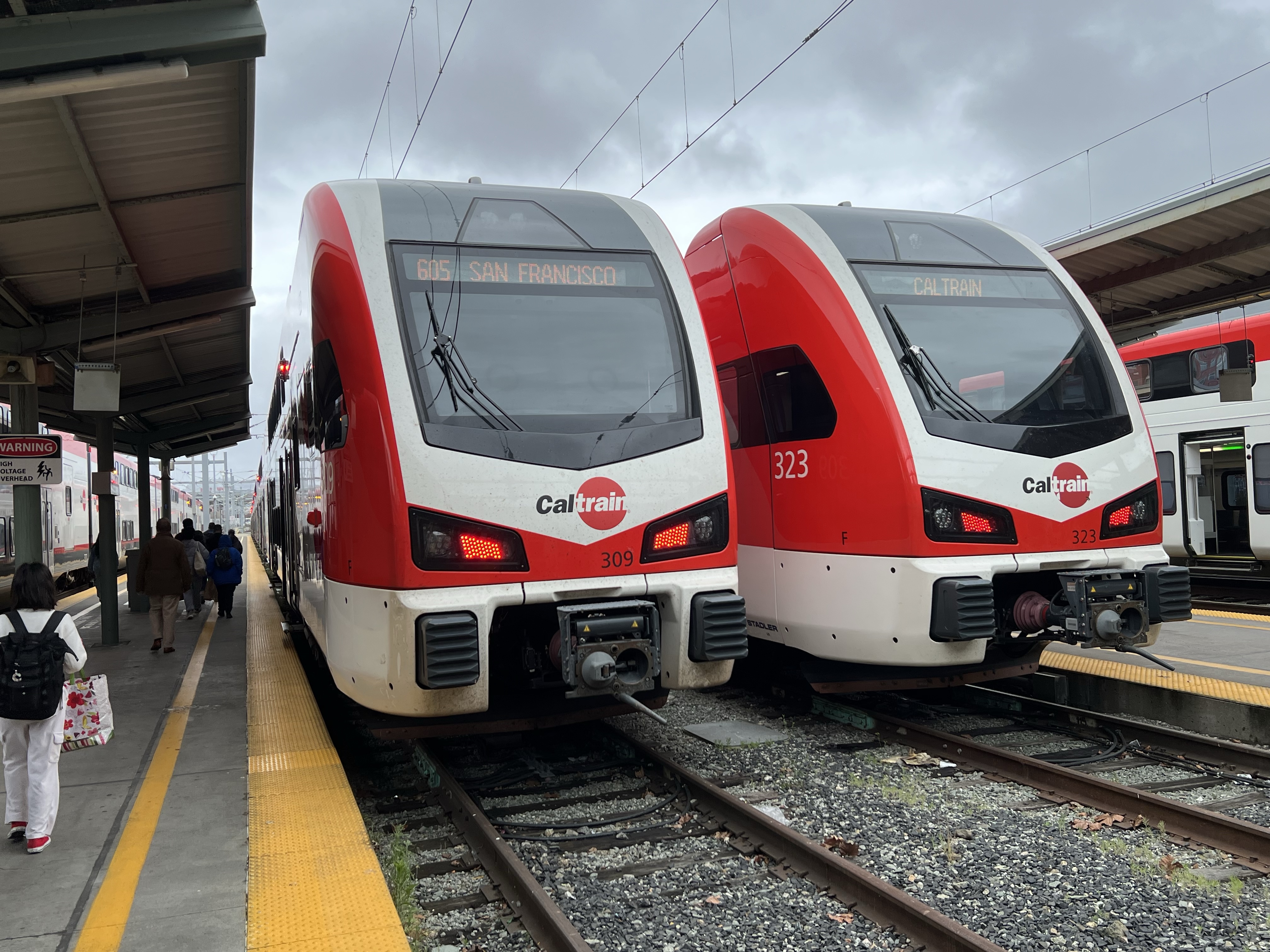
Two of the new EMUs at the San Francisco Caltrain Station.

My goal was to bring one pen (TWSBI Eco) and one watercolor journal (Stillman & Birn Delta panoramic) and only use continuous line sketching.

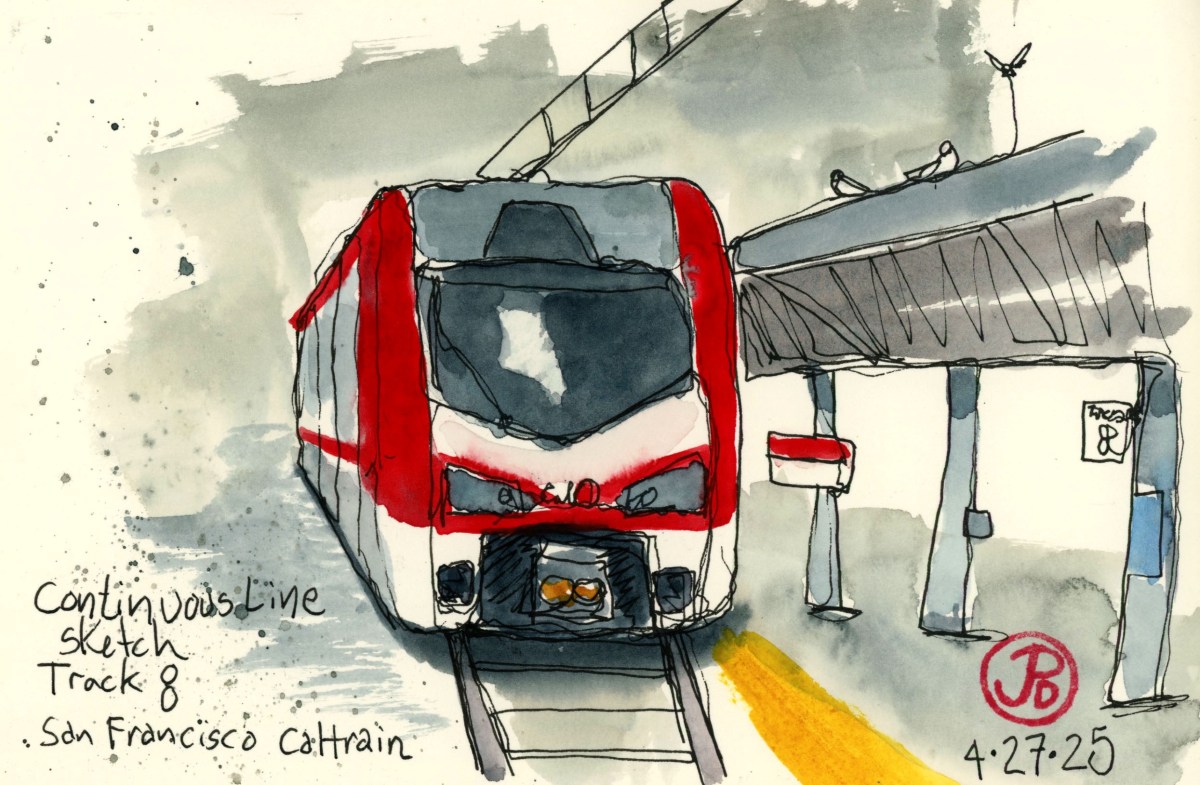
Before catching my train I sketched one of the new units on Track No. 8. (Featured sketch).

The gates opened and I boarded the train and was impressed with the bi-level design. I chose a seat on the top level sitting on the west facing side of the train (where all the historic stations are located).

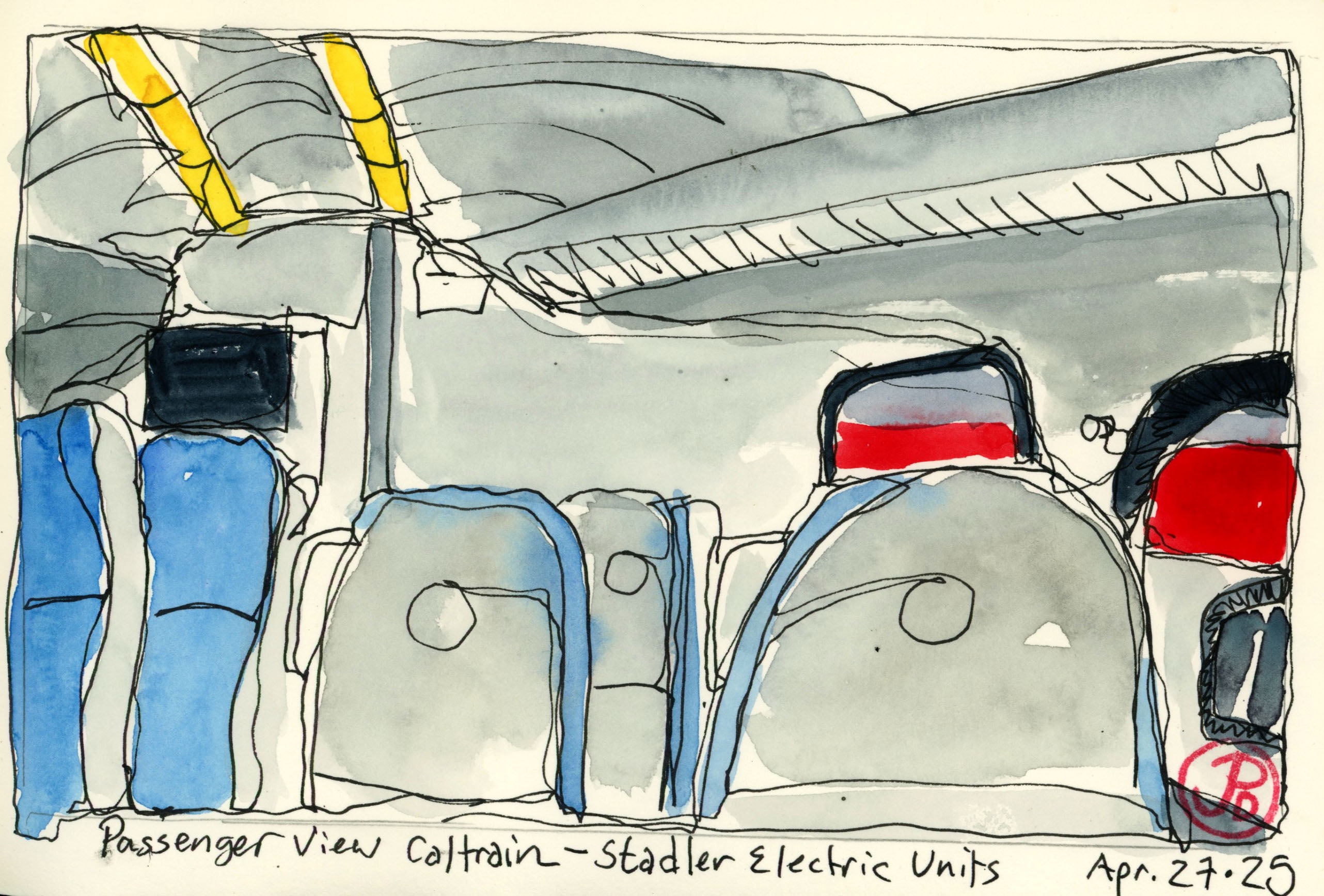
Before the train left I did a continuous line sketch of the interior from my upper deck seat-view. This sketching style loosens up your work including perspective. Normally I would pencil in the vanishing point and convergent lines but this sketching style is absolutely feral!

This takes a little getting used to because loosening up your sketching style causing you to loosen up your perspective of the style.

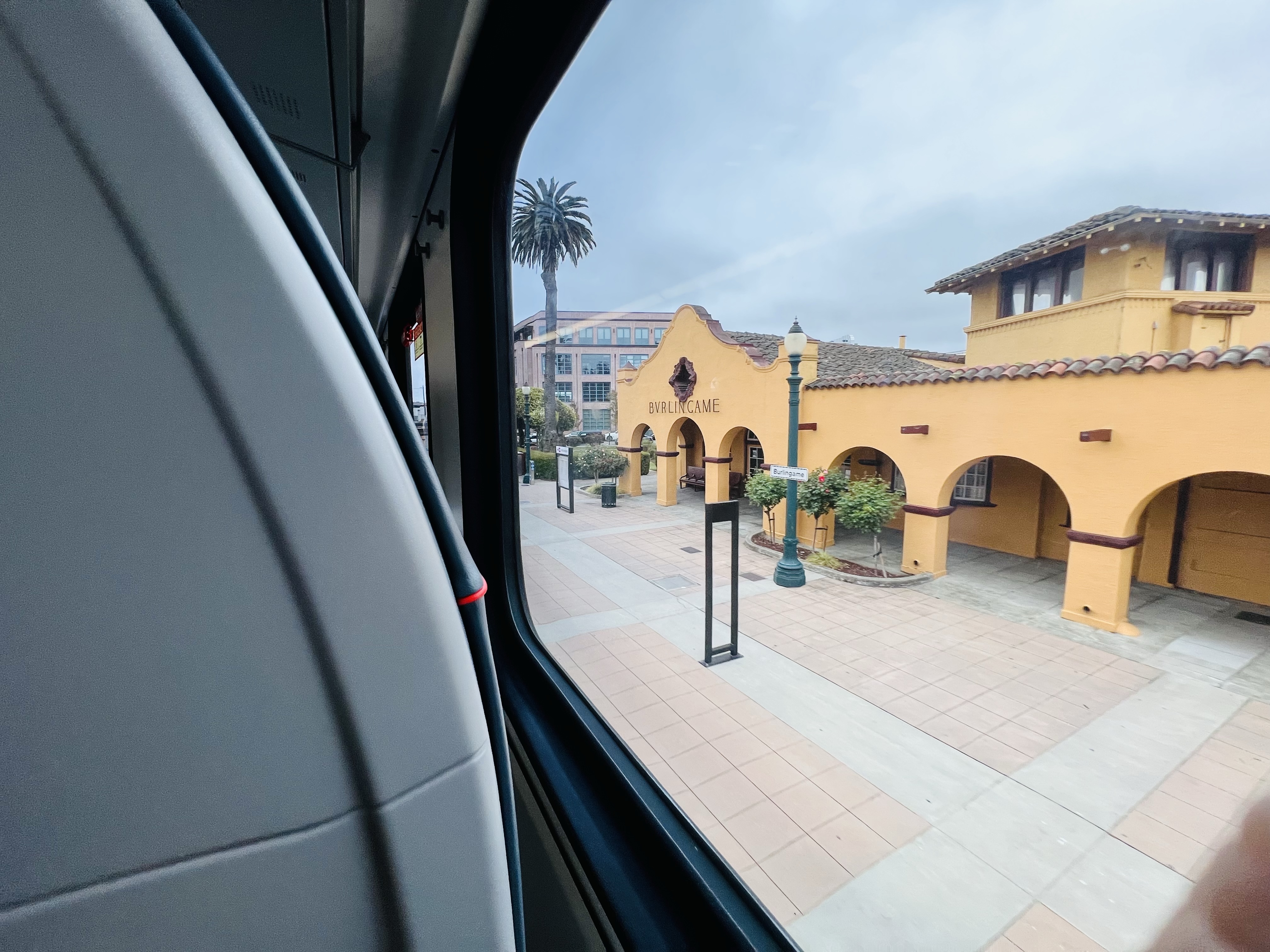
The view of one of my favorite stations on the line: Burlingame. This station is one of the earliest examples of the Mission Revival style and was highly influential in California when it was opened in 1894.
An EMU at Palo Alto, Caltrain’s second busiest station after San Francisco.
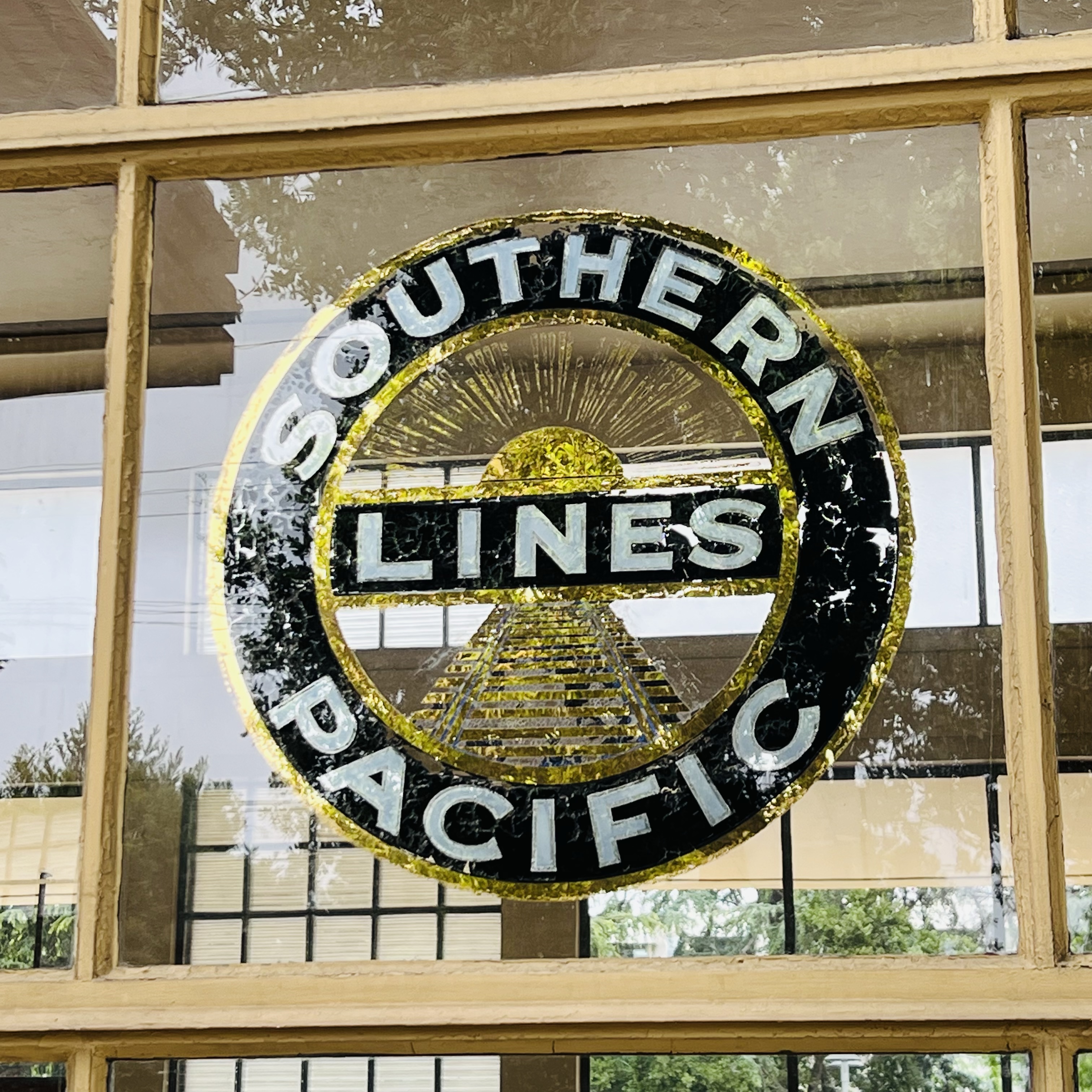
The emblem of the mighty SP when Palo Alto was a stop on the streamlined Daylight passenger service from San Francisco to Los Angeles. The most beautiful passenger train in the world (But I’m biased.)

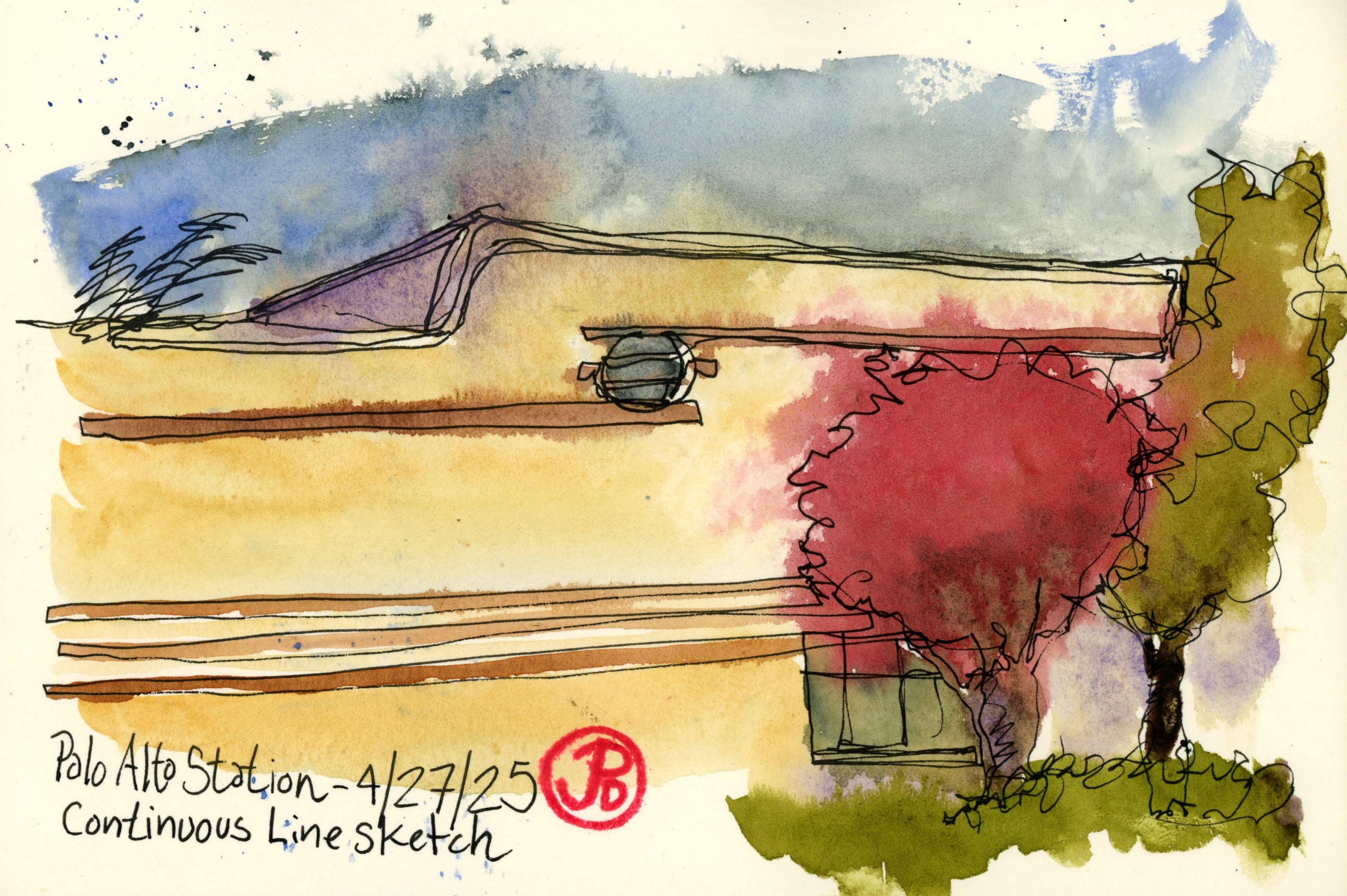
Before heading to lunch on University, I sketched another of my favorite stations on the line the Streamline Moderne Palo Alto station (1941) which looks like some kind of sea going vessel about to take to the air! The station was rebuilt to match the streamlined GS locomotives that were on point for the Coast Daylights.

Final Thoughts

Caltrain’s new EMUs provided a quiet, comfortable, and quick ride from San Francisco to Palo Alto. The interior is well designed and easy to navigate with screens at both ends of the car that shows the next stop as well as upcoming stops. The seven car units have a European feel that looks more like a fast tram or articulated streetcar rather than a high sped mainline train set.

One quibble with the design is that there is only one restroom aboard the train set. This is not a minor quibble as most stations on the line do not provide opened restrooms (including Palo Alto).

Image

Crockett Sketching

On a Saturday morning I headed up to Sugar Town on the Carquinez Strait.

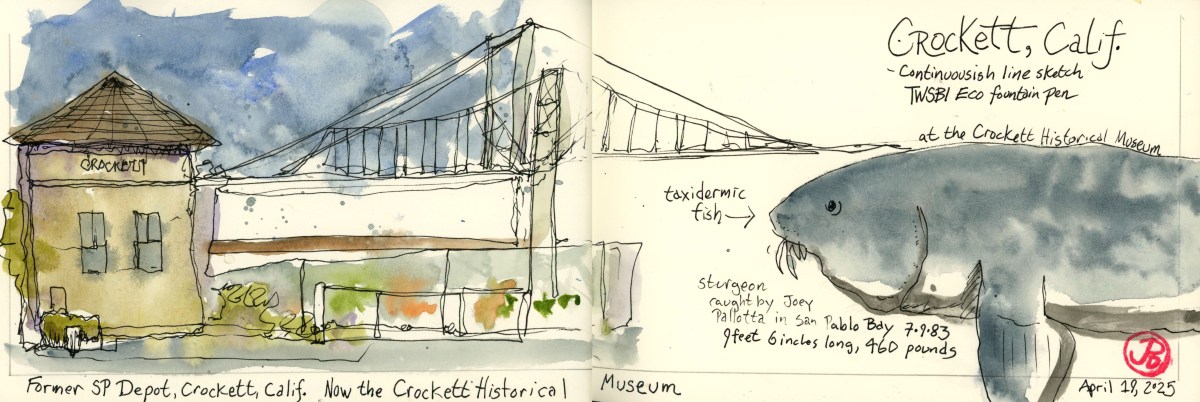
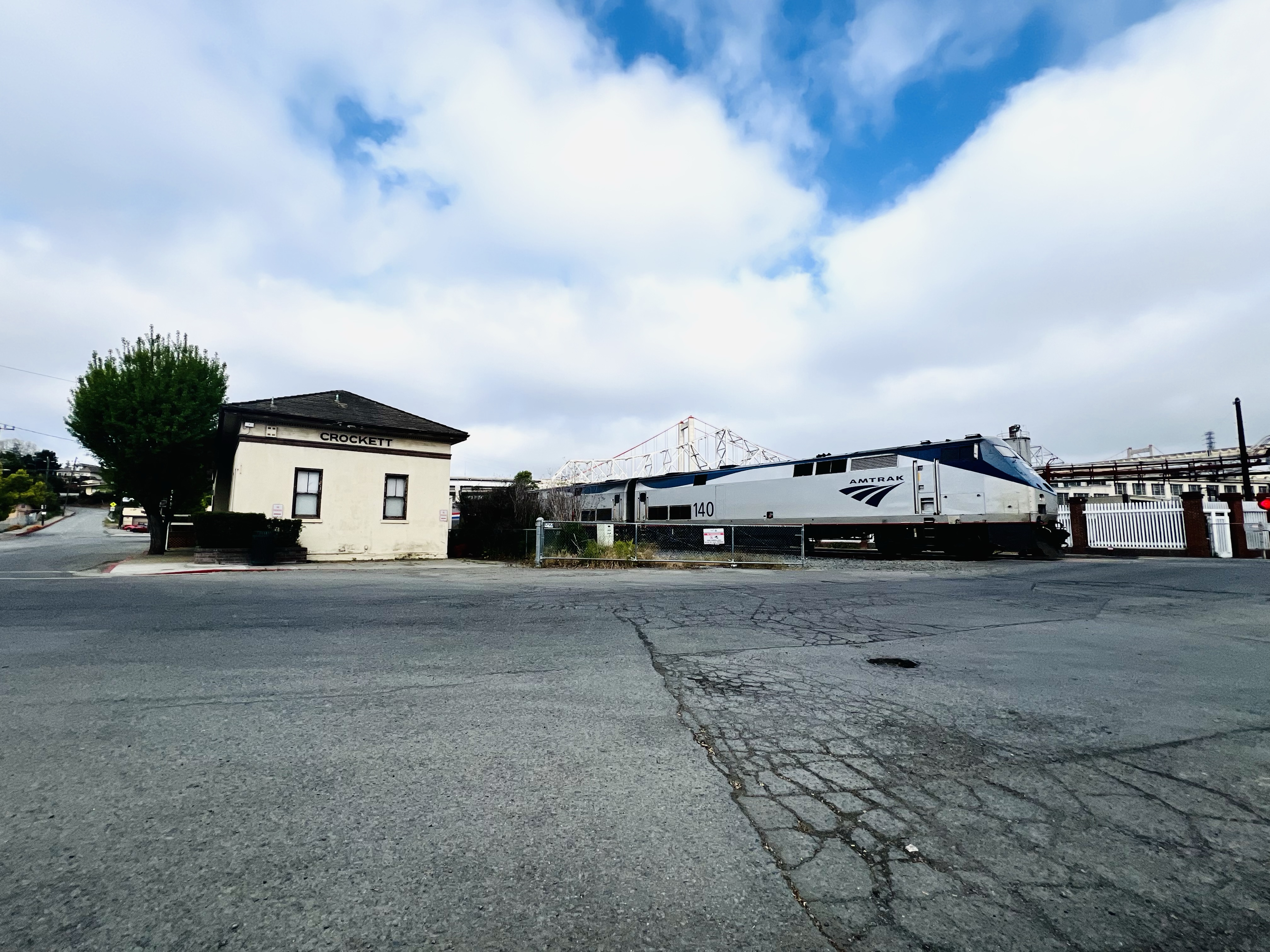
My sketching target: the former Crockett Southern Pacific Depot with the two parallel spans of the Carquinez Bridges in the background. The depot is now home to the Crockett Historical Museum. Open Wednesday and Saturday from 10am to 3pm. Ish!

This is a busy place for rail with seven trains passing by including a California Zephyr, a Coast Starlight, a San Joaquin, Capital Corridors, and a Union Pacific freight during my two hours visit.

Coast Starlight No. 11 passes by the C & H Factory to its final destination of Los Angeles’ Union Station. The train was running a little late. Shocker!

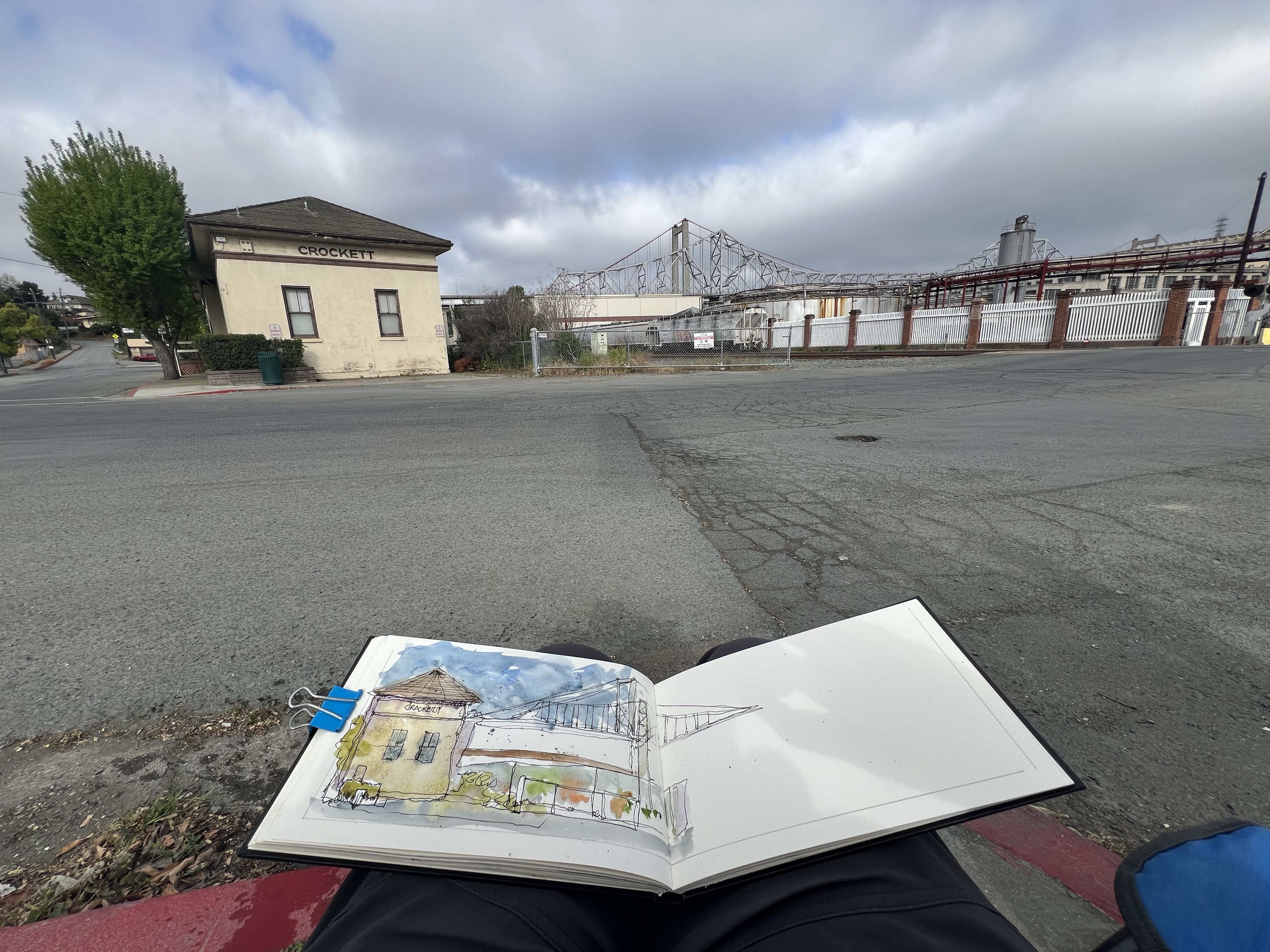
My sketching goal was to render the scene in a continuous line sketch. This means you never lift your pen for the entire sketch. No pencil, no erasing, no going back, this is truly sketching without a net!

Eastbound California Zephyr Number 6 passing the former SP Depot at 8:56 AM without stopping. Final destination: Chicago.

I set up my sketching chair across the street from the depot just at the entrance to the company that made Crockett a company town, the C & H (California & Hawaii) sugar factory. For my sketch I used my TWSBI Eco fountain pen.

Nothing like starting the weekend with a field sketch!

Continuous line sketching can be challenging and I lifted my pen off the page once or twice (to photograph Zephyr Number 6) but I restarted where I left off. So my sketch is really a broken continuous line sketch.

In the end I like the imperfect lines of the sketch. This technique is a great way to loosen up your line work and in the end I am pleased with the result. It may not be the most accurate form of sketching but it sure has a lot of soul!

I added some wet on wet washes and paint splatter, which looseness, matches the line work.

When the museum finally opened at 10:25, I was drawn to the large 460 pound taxidermy sturgeon in a glass case. So I added it to the right side of the spread.

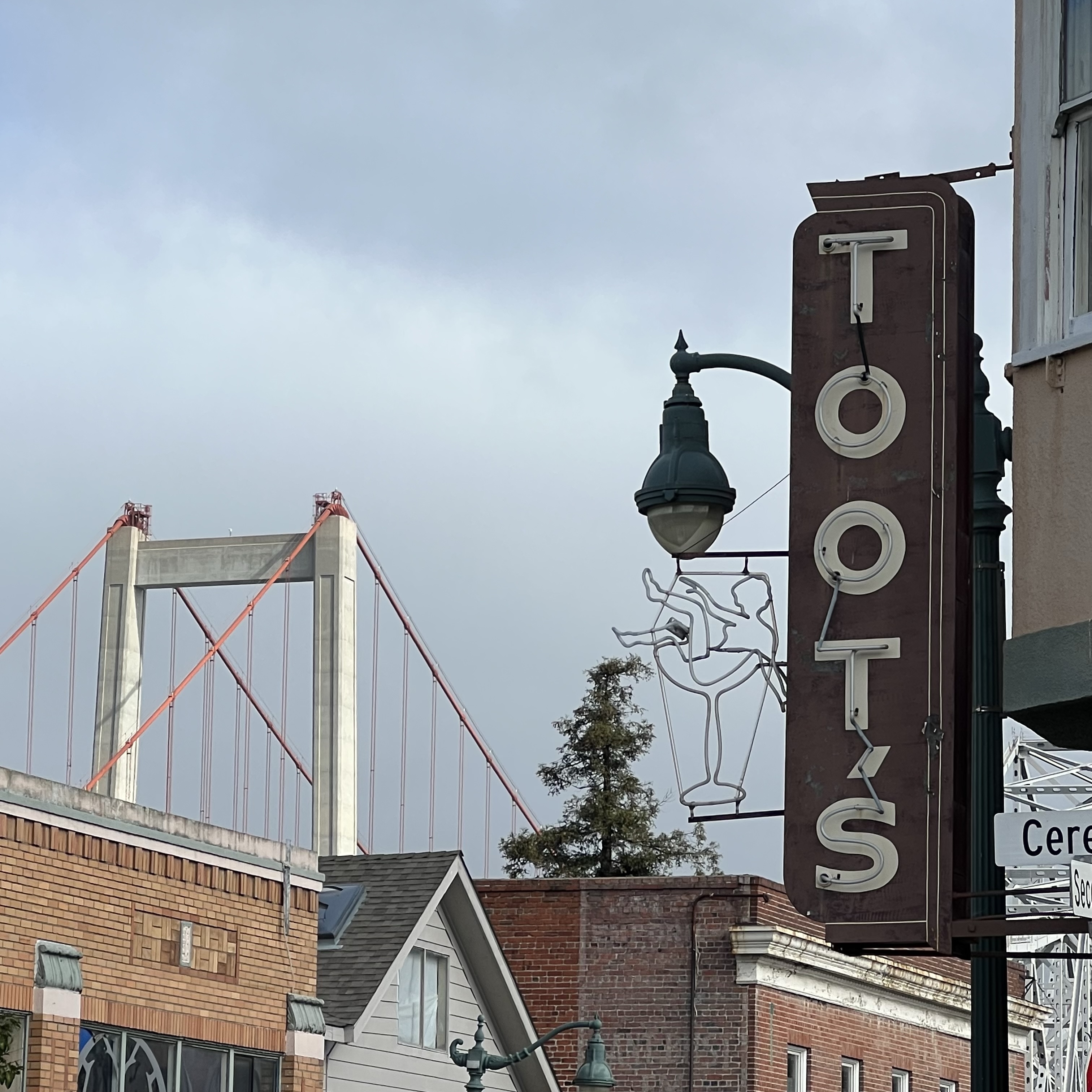
Main Street Crockett with Toot’s bar and the new span of the 2003 Carquinez Bridge towering over the town.

The trains never stop rolling through Crockett. This is a Sacramento-bound Capital Corridor train passing the sugar factory.
Image

The Conversation

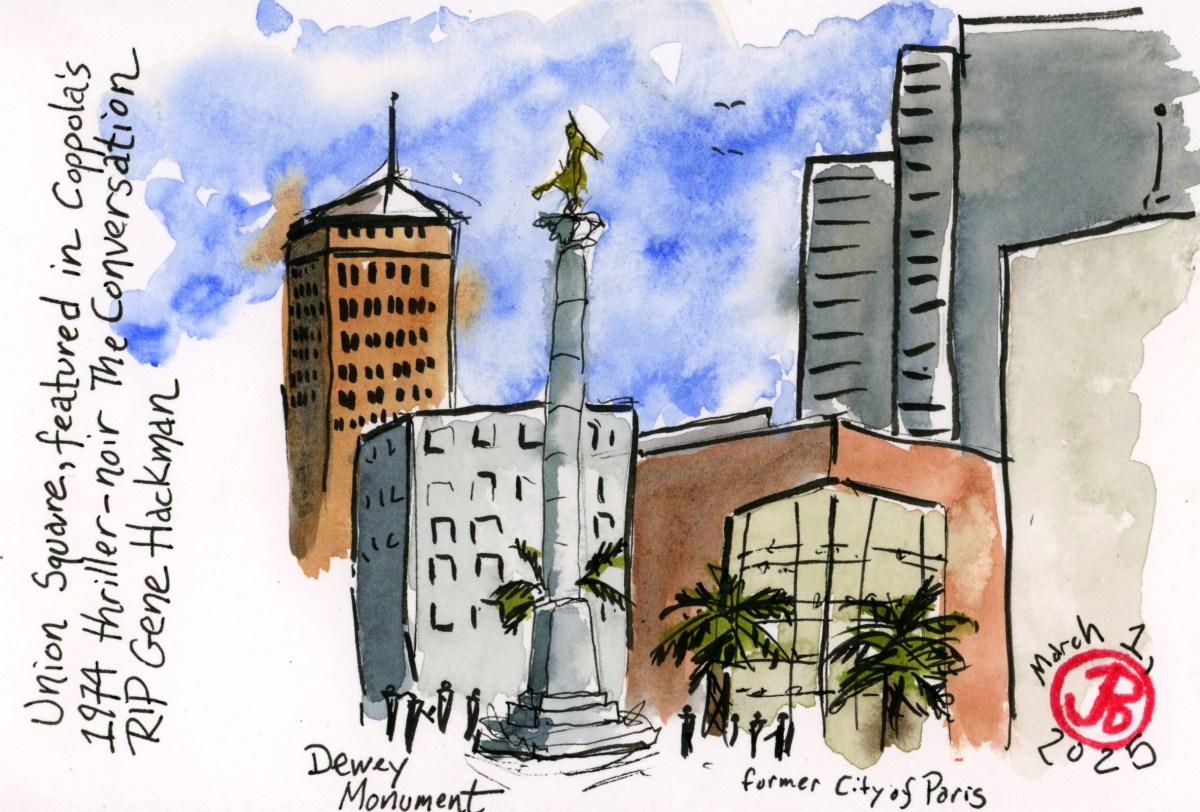
With the news of the passing of actor Gene Hackman, I thought I would sketch some locations from the film where he played one of his favorite roles: Harry Caul in Francis Ford Coppola’s The Conversation (1974).

The majority of the film was filmed on location in San Francisco. The conversation of the title takes place in Union Square.

The plot revolves around a surveillance expert (Hackman), who is hired to record a conversation between a man and a woman in busy Union Square. We later learn his eyes and ears have been deceiving him. No spoiler alert here, see the film for yourself!

I took the N Judah downtown and got off at the Powell Street Station. I walked past the lengthy cable car queue on Powell and headed towards Union Square.

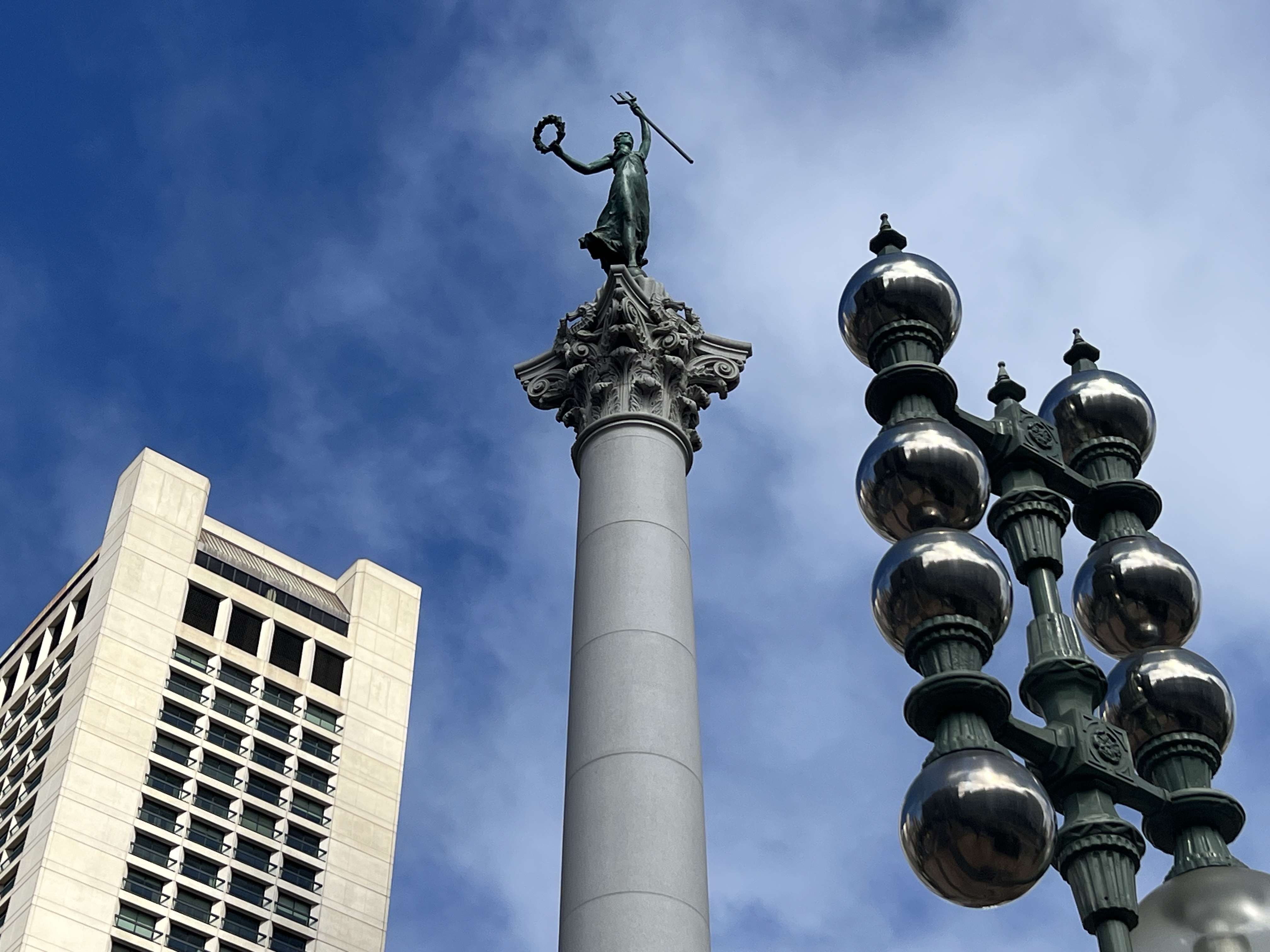
The statue of Nike is the center point of Union Square.

I found a corner of the square to sketch the focal point: the Dewey Monument, which is topped by the Greek goddess Nike, the Goddess of Victory, commemorating Admiral Dewey’s victory at the Battle of Manila Bay in the Philippines.

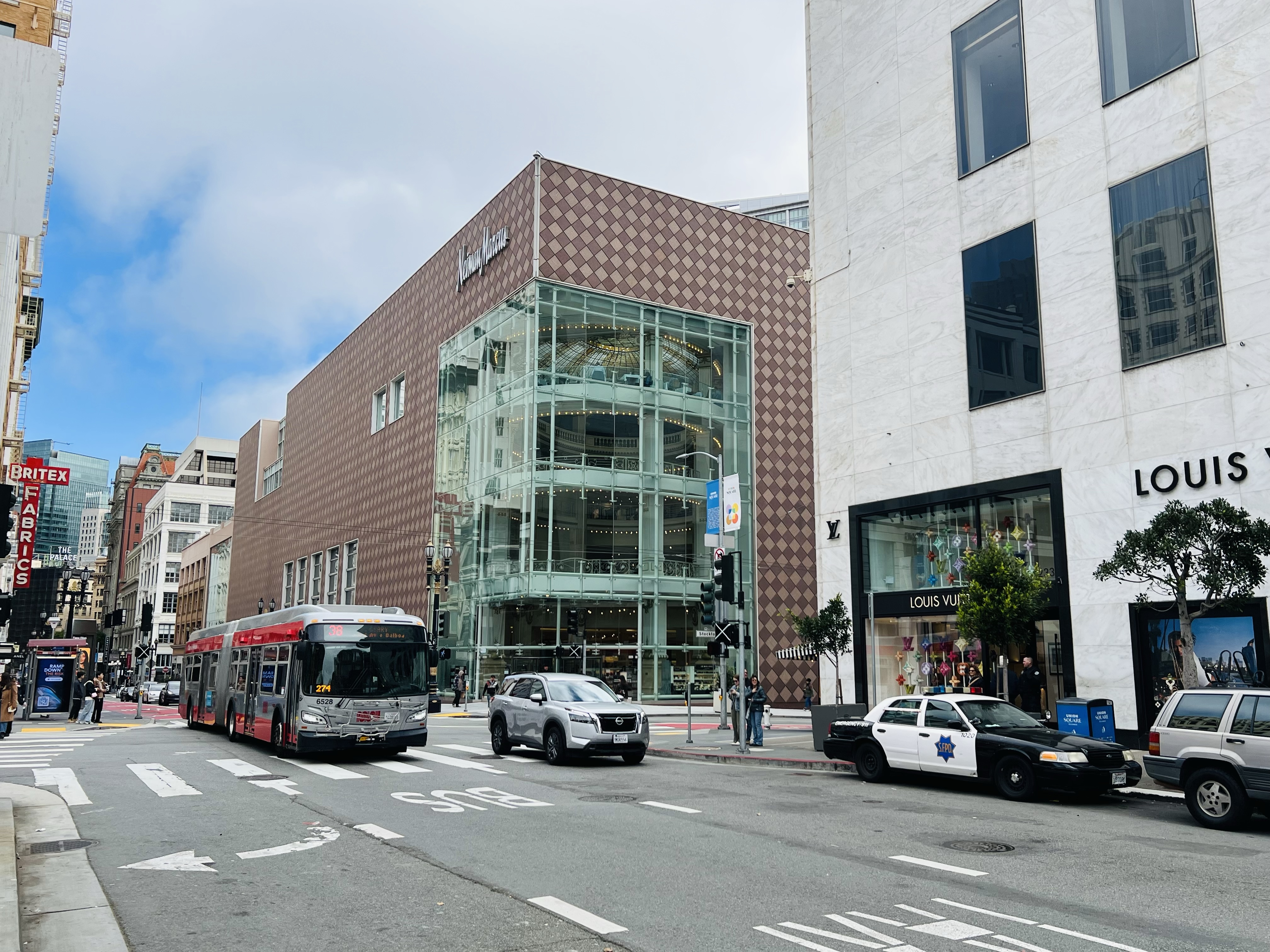
In the background of the sketch (featured sketch) is the former City of Paris department store (now Neiman Marcus), which features at the beginning of the film.

At the time of filming in 1972-73, Neiman Marcus was the City of Paris department store. Harry Caul’s surveillance van was parked where the police car is.

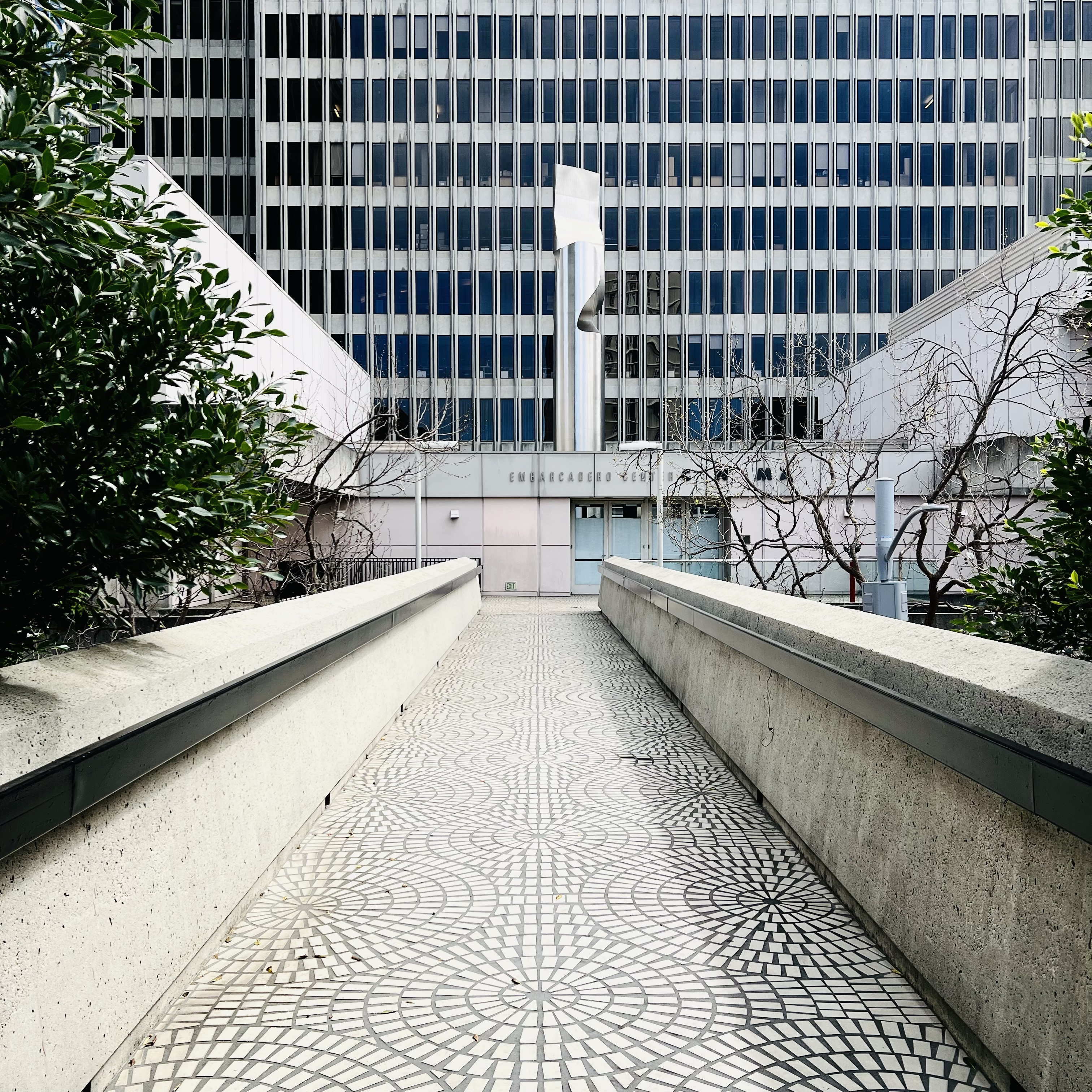
Another San Francisco location that is featured in The Conversation is the Embarcadero One complex. The site was developed in 1971 and was brand new when filming began. The complex is the location of Hackman’s client, the President, portrayed by Robert Duval. His assistant is played by a young Harrison Ford.

The walkway leading to Embarcadero One was featured twice as Hackman’s character goes to see the Director. The sculpture, Two Columns With Wedge (1971) was only a few years old when filming took place here. The now closed cinema in front of the sculpture was not there at the time of filming.
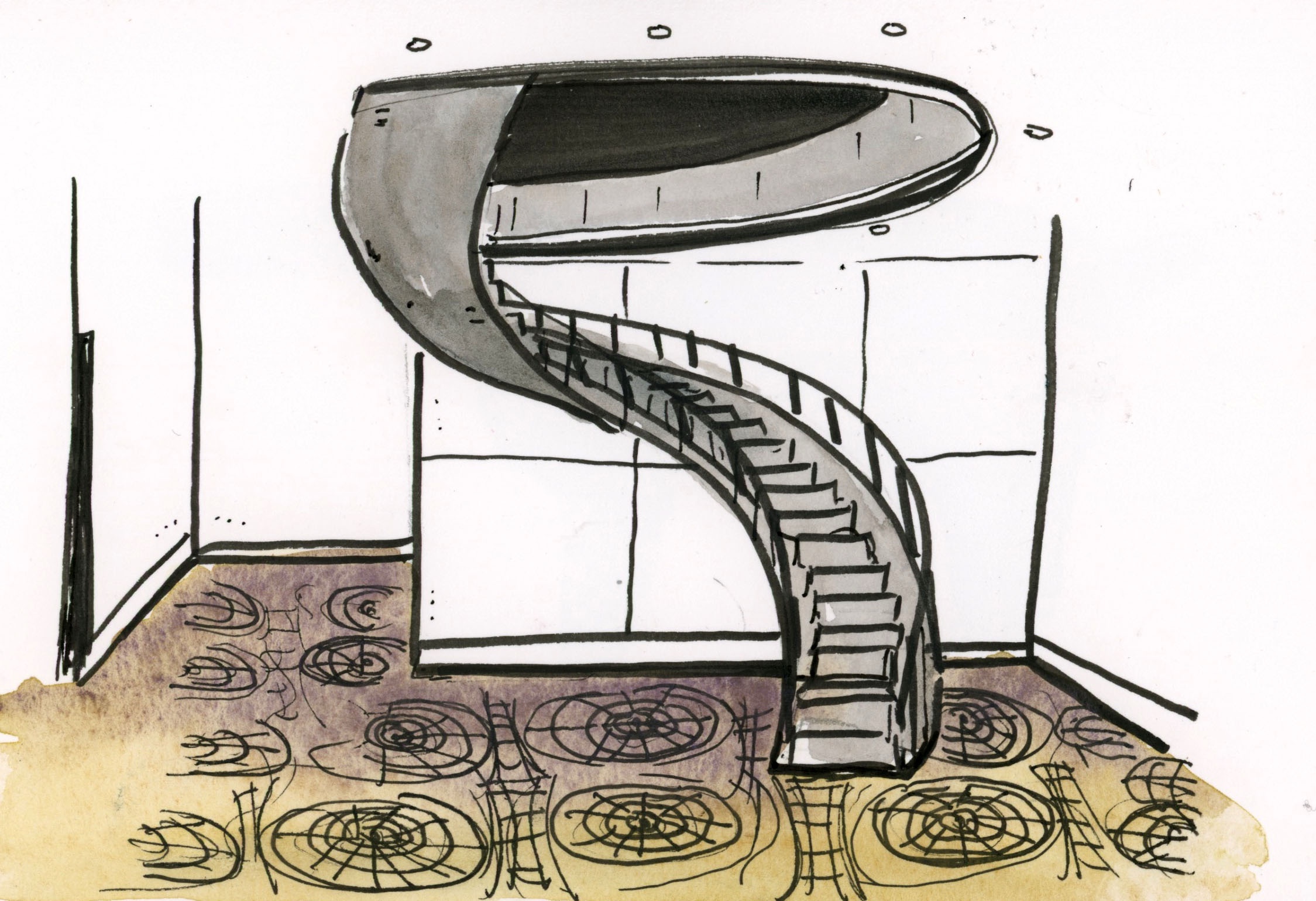
A field sketch of one of the iconic spiral staircases of Embarcadero Center. One of these staircases was featured prominently in The Conversation.
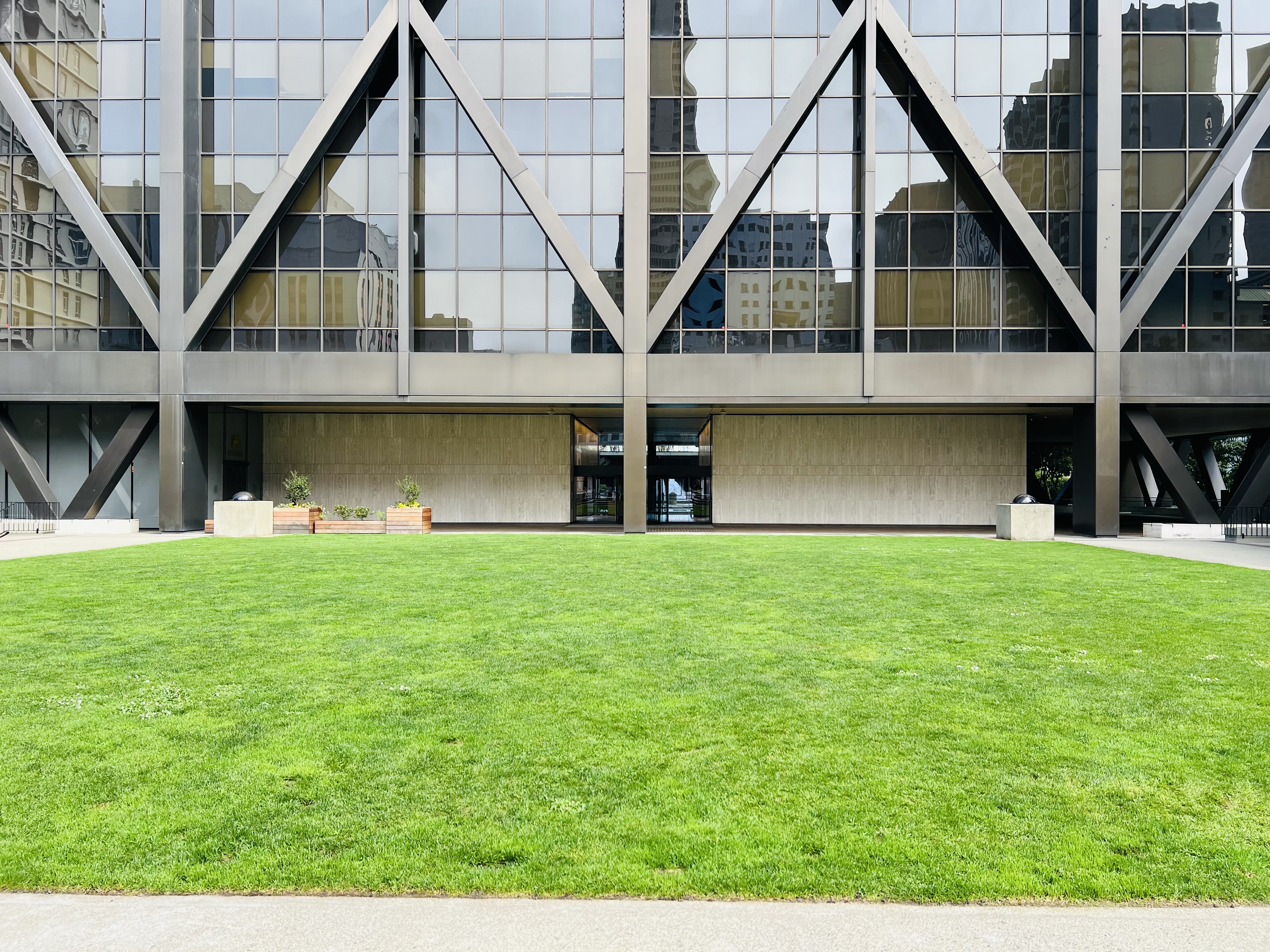
After being paid by the President, Hackman walks right to left in front of One Maritime Plaza, which is across the street from One Embarcadero Center. The location looks much the same as it did in the early 1970s.

Walking in the footsteps that the actor Gene Hackman took in one of his seminal lead roles, is my way of honoring a talented performer that had recently left us as well as creating a fitting sketcher’s eulogy.

Image

Capitola Trestle and Soquel Creek Bridge

Early Saturday morning found me in Capitola Village.

Capitola was founded in 1874 as a beachside resort and in the age before the personal automobile it owed its early popularity to the railroad.

The Santa Cruz Railroad, opened in 1876 and brought sun worshippers to Camp Capitola.

Southern Pacific took over the railroad in 1882. The SP brought beach goers to the small seaside town, passengers detraining at the new depot near the east end of the trestle, this location is known as Depot Hill.

I chose my sketching position above Soquel Creek on the historic Stockton Avenue Bridge (1934) which parallels the trestle. The seaside air was wet with fog, I hoped it wouldn’t smear my ink drawing.

The wooden trestle over Capitola Avenue looking towards Soquel Creek. The Capitola Depot is about 100 yards behind me and up the hill. I have always loved the parking spots under the trestle (parking is a premium in Capitola Village).
Colorized postcard (early 20th Century) of a double header passenger train with three baggage cars, crossing the trestle over Soquel Creek taking beach goers to Santa Cruz. This perspective is close to where I chose to sketch.
Looking down the trestle in direction of the Capitola Depot and beyond, the connection to the mainline at Watsonville Junction (15.7 miles down the line). The green growth around the tracks shows this track has not been active in over ten years.
Image

The Five Ships of Roskilde

One of my Viking sketching targets was 20 minutes, as the train flies, from Copenhagen. This is the fjord-side city of Roskilde.

Roskilde boasts a cathedral where all the royals are buried, but I was here to see the famous Viking Ships of Roskilde.

It was easy to make my way west on Denmark’s very frequent and efficient metro and rail system. Everyone, if you are not already on a bike, rides the trains in Denmark.

After a 20 minute train ride, I alighted at Roskilde Station and proceeded to walk north from the station to the Vikingeskibene. After about 20 minutes I came to the edge of the fjord and the Viking Ship Museum. The museum would open in 30 minutes so I sketched the Sea Stallion of Glendalough, a reconstruction of the long ship Skuldelev 2.

What’s amazing about the long ship before me is that is not just a show piece but a real sailing ship. In 2007, the Sea Stallion sailed from Roskilde to Ireland (where the original was built).

The harbor area around the museum is full of Viking ships, built with the ancient building techniques of the Viking age.

A replica Viking ship “Roskilde”, pulls into the harbor.

At ten, the museum opened and I was the first one in. The exhibit hall is impressive because it features parts of five Viking ships.

Why parts? Well these ships were deliberately sunk about 1,000 years ago to block a navigable channel that led to Roskilde. The ships were discovered in 1962. The most intact ship is about 75% complete.

The pieces are supported by a metal frame to give you the size and shape of the boats.

I sketched the ships from the top of the staircase, the perspective was challenging but you don’t always get to select your angles to sketch from.

I then walked around all the ships noting the various sizes, including the impressive size of the King’s longship. I gave up trying to sketch the ships and returned outdoors to the bench where I sat before the museum opened. Now this was a perspective I could handle (featured sketch).

I think I produced my favorite sketch of my Scandinavian adventures. This was a fun perspective the draw and a sketch within a sketch self portrait to boot!