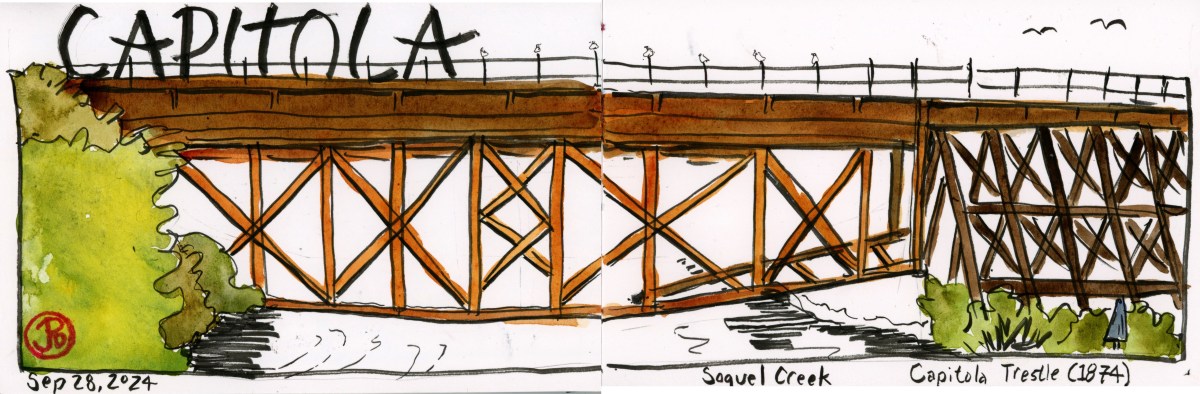
Early Saturday morning found me in Capitola Village.
Capitola was founded in 1874 as a beachside resort and in the age before the personal automobile it owed its early popularity to the railroad.
The Santa Cruz Railroad, opened in 1876 and brought sun worshippers to Camp Capitola.
Southern Pacific took over the railroad in 1882. The SP brought beach goers to the small seaside town, passengers detraining at the new depot near the east end of the trestle, this location is known as Depot Hill.
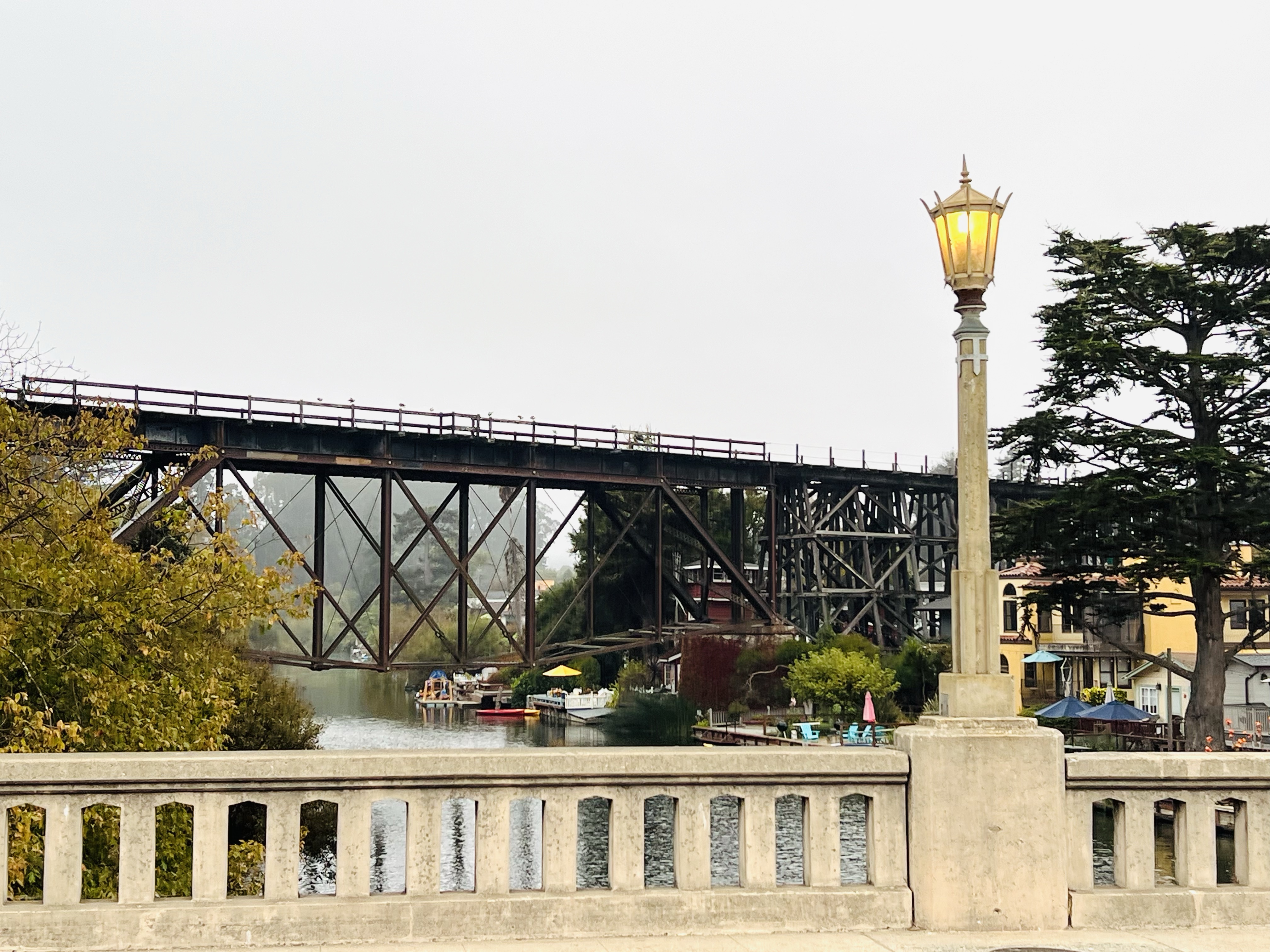
I chose my sketching position above Soquel Creek on the historic Stockton Avenue Bridge (1934) which parallels the trestle. The seaside air was wet with fog, I hoped it wouldn’t smear my ink drawing.
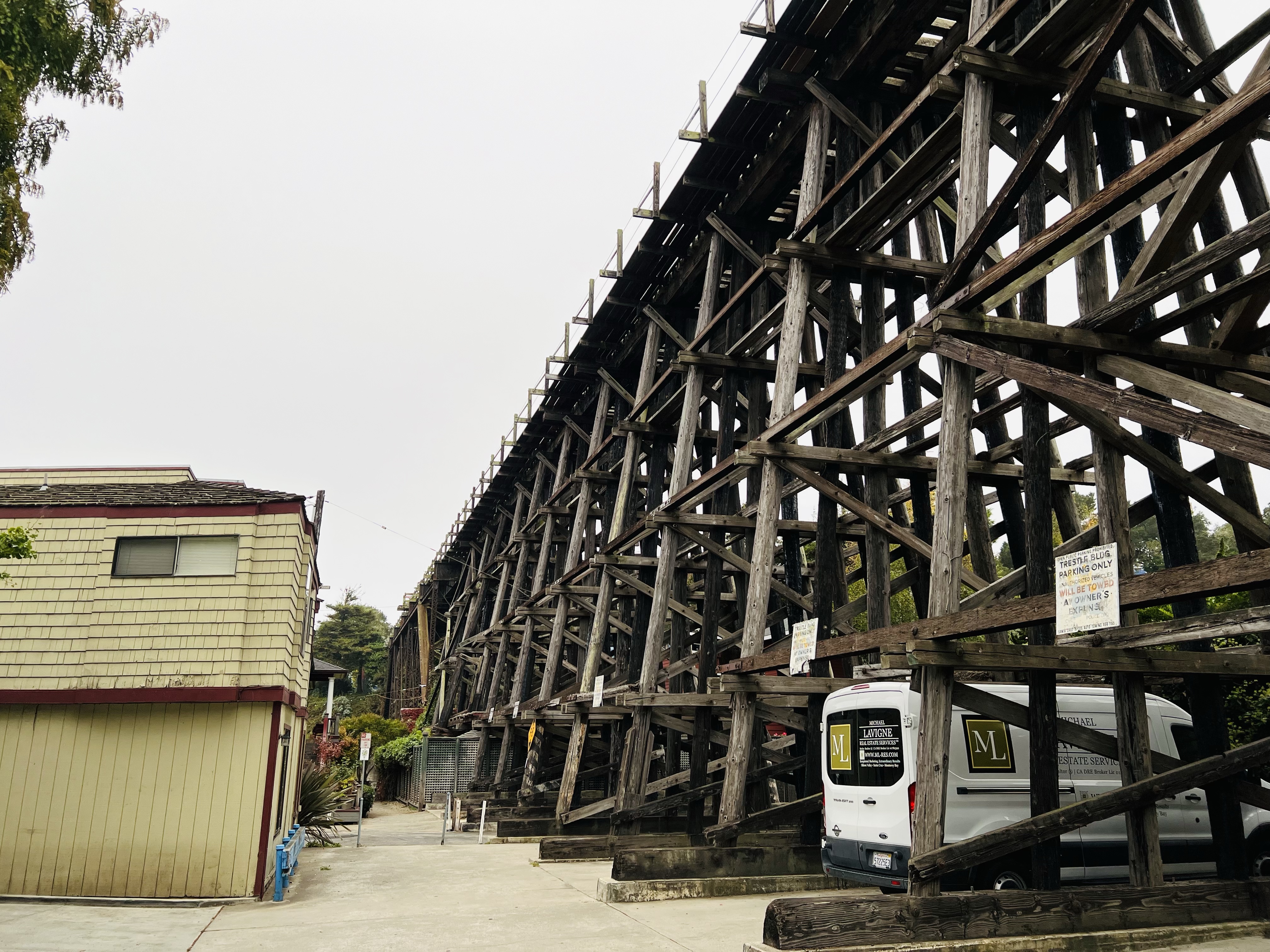
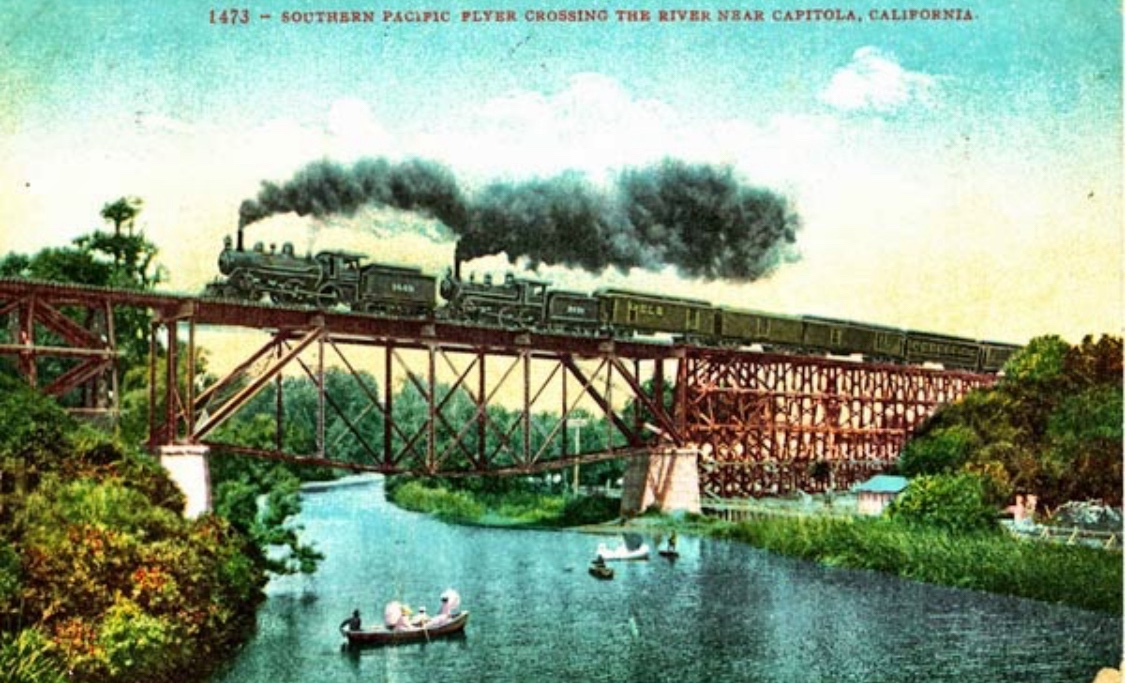
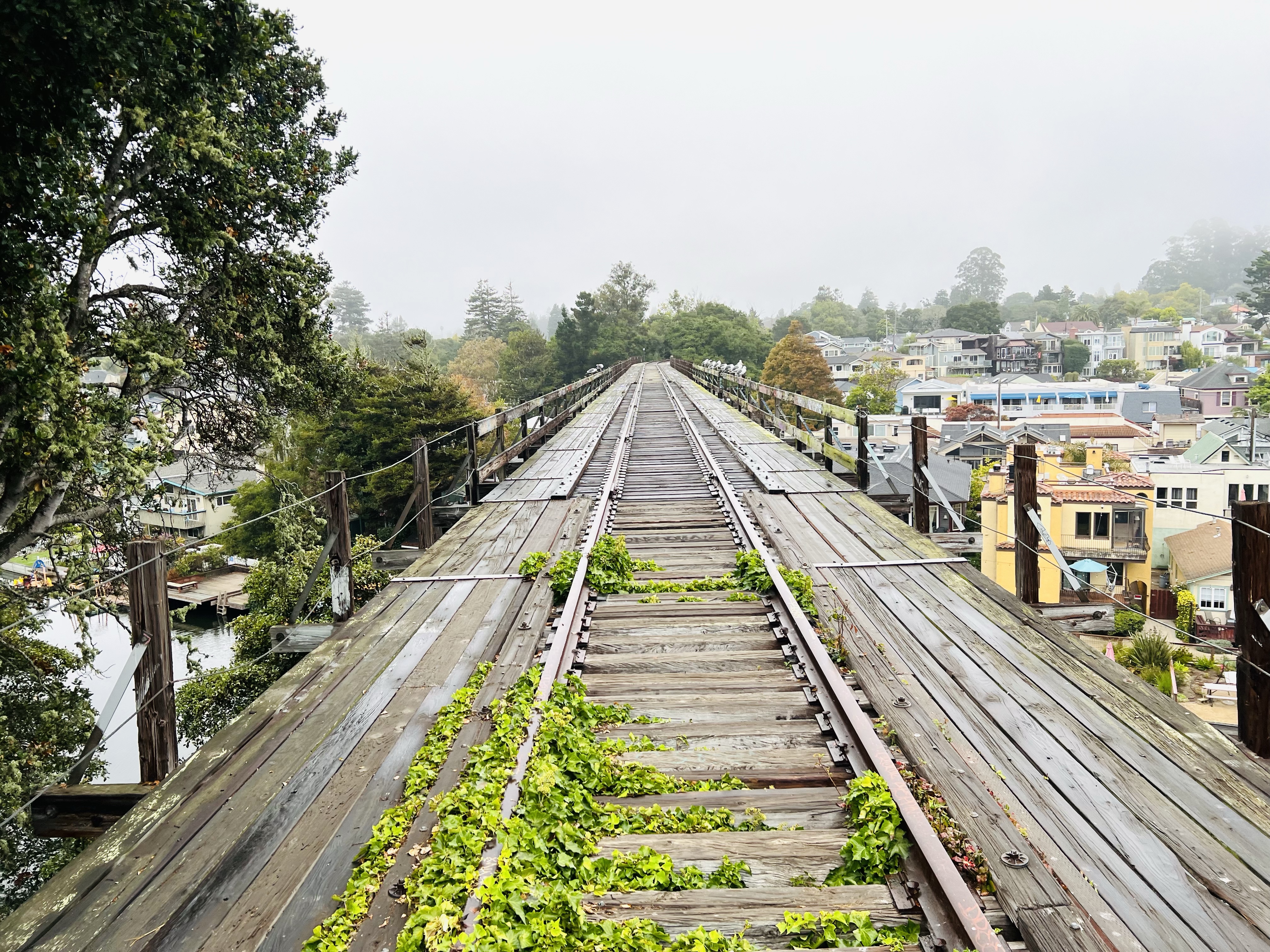
The wooden trestle over Capitola Avenue looking towards Soquel Creek. The Capitola Depot is about 100 yards behind me and up the hill. I have always loved the parking spots under the trestle (parking is a premium in Capitola Village).Colorized postcard (early 20th Century) of a double header passenger train with three baggage cars, crossing the trestle over Soquel Creek taking beach goers to Santa Cruz. This perspective is close to where I chose to sketch. Looking down the trestle in direction of the Capitola Depot and beyond, the connection to the mainline at Watsonville Junction (15.7 miles down the line). The green growth around the tracks shows this track has not been active in over ten years.
I was meeting a friend in the East Bay city of Martinez and I had a little time to sketch before lunch.
Martinez is a hotbed of railroading with both the Union Pacific and BNSF passing through as well as some marquee passenger trains such as the Coast Starlight and the California Zephyr making stops at the Martinez AMTRAK station. And the Capitol Corridor commuter takes on passengers traveling north and south on shorter journeys.
The California Zephyr Train No. 6, at the old Southern Pacific Depot in Martinez. This train is heading east to Chicago. To the right in the background is SP switcher 1258 on static display.
There would certainly be something to sketch here and I was going to start with a historic train trestle.
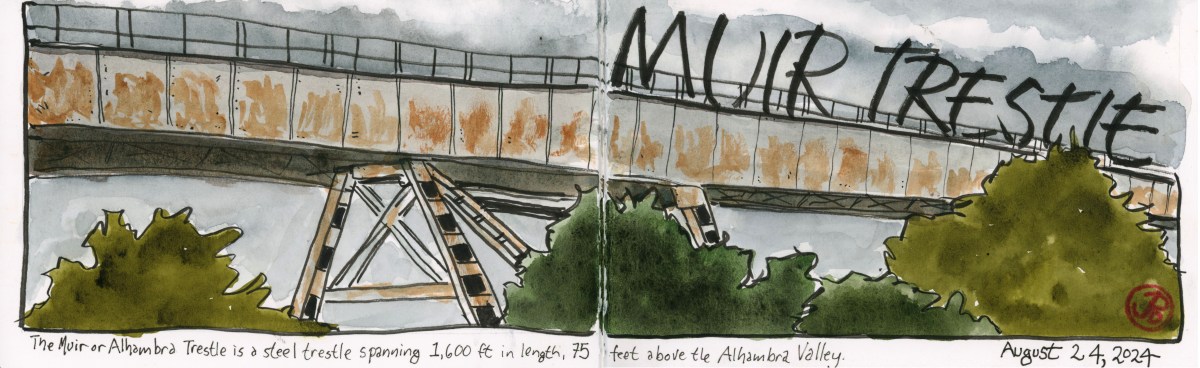
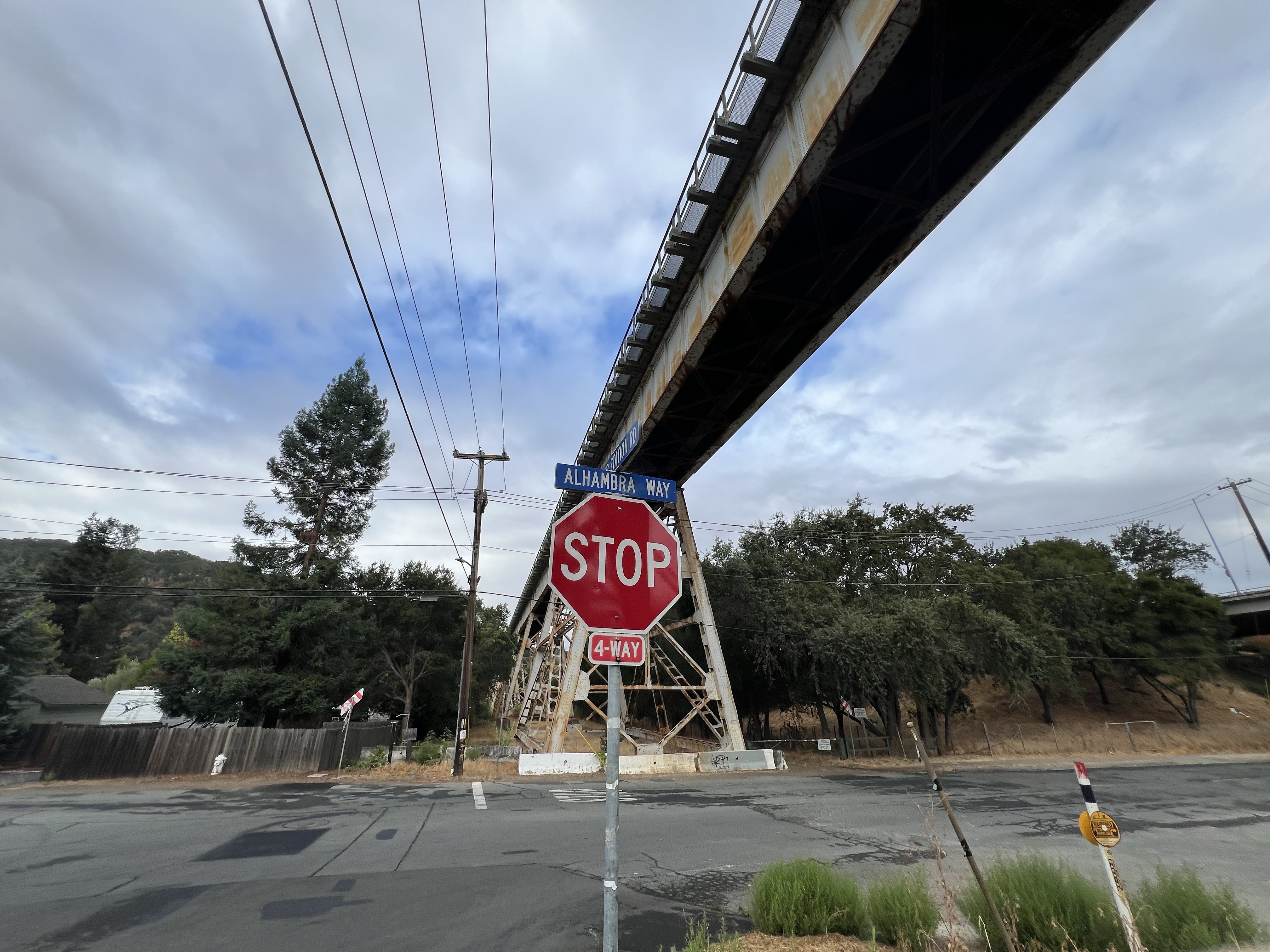
I parked at the Mount Walda Trailhead. Soaring above me was the 1,600 foot long steel Muir Trestle (aka the Alhambra Trestle). The single track trestle was so long that I could only see and sketch one section of it before it disappeared into the trees to the east. The trestle rises 75 feet above the roads, trees, and houses it crosses over.
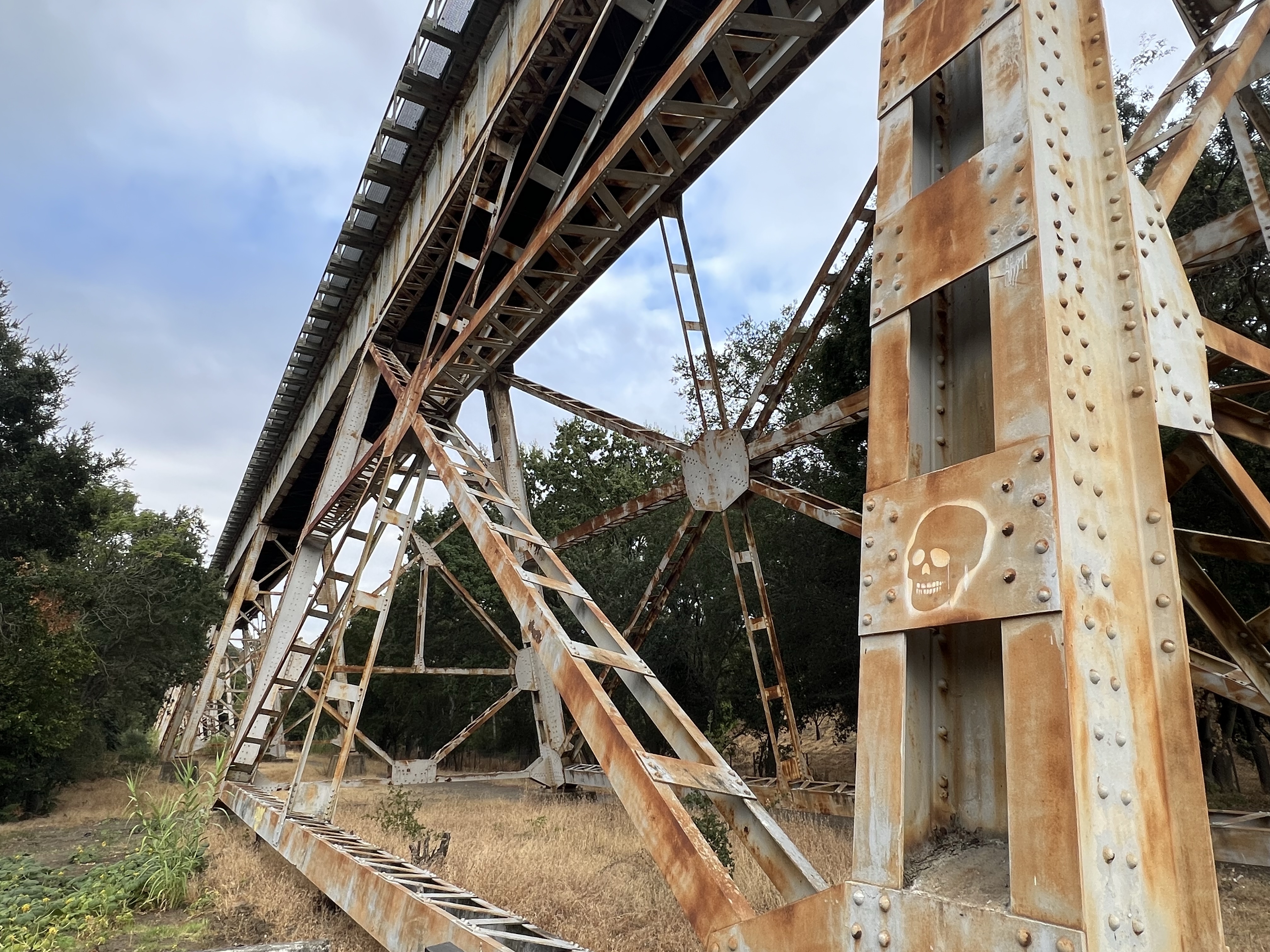
A detailed view of the steel supports of the Muir Trestle.
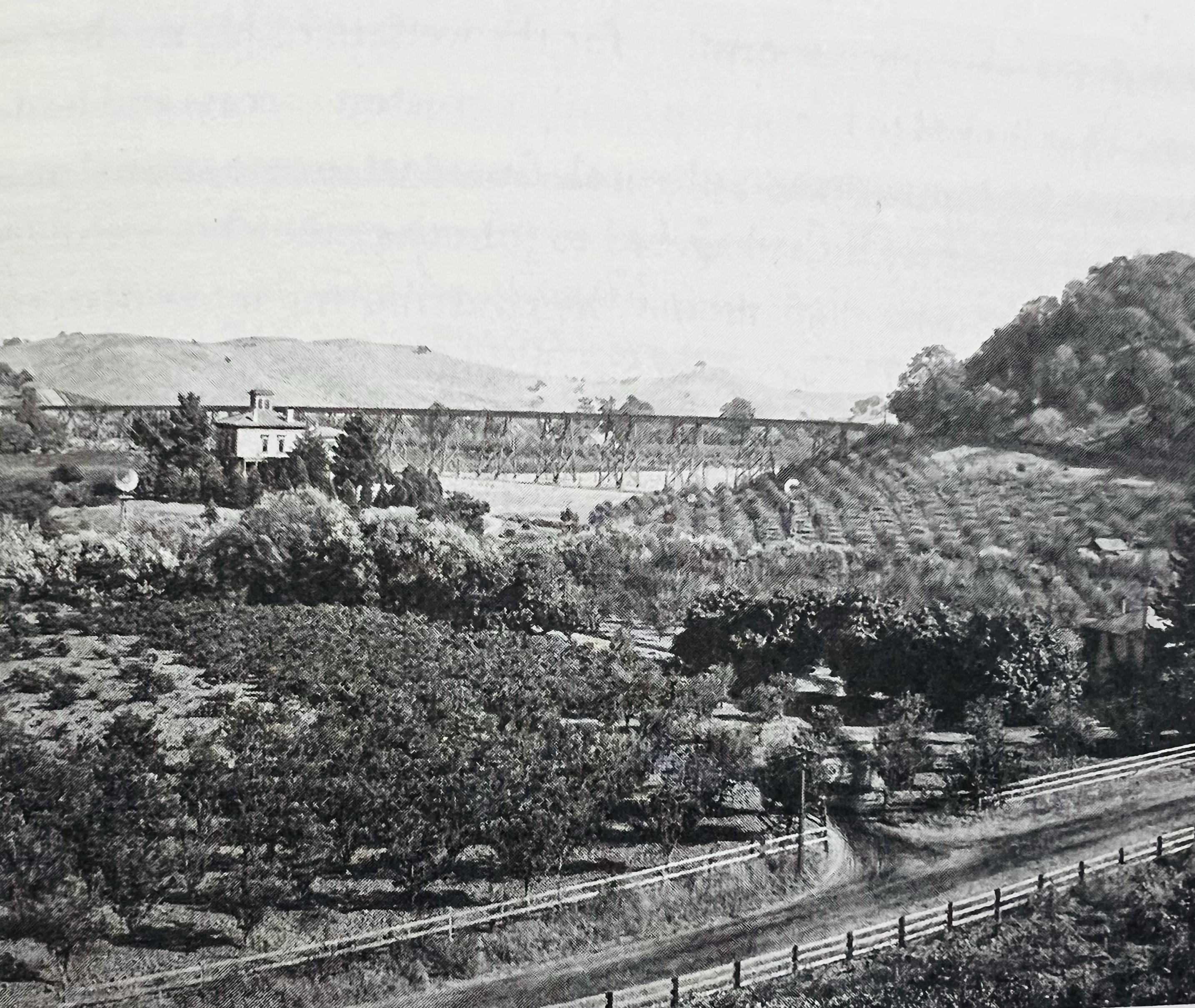
The trestle is within the John Muir National Historic Site. To the north is Muir’s Martinez home. Muir and his wife Wanda sold the land for the trestle for $10 and a lifetime rail pass to the San Francisco and San Joaquin Valley Railway. The original wooden trestle was built through a pear orchard and completed in 1897.
This is a historic photograph of the Stengel-Muir ranch in 1897. The Muir house is on the top left and the trestle is viable behind the house. At the time of the photograph, the trestle was constructed of wood.
At the eastern end of the trestle there was a passenger and freight station named Muir Station. The station is now long gone but is immortalized in a street that parallels the rails named Muir Station Road.
From this station Muir could ship his produce to Oakland or to the port in Martinez.
One of Muir’s neighbors in the Alhambra Valley was John Swett, Muir close friend. Swett was the State Superintendent of Public Education and is known as the “Father of California Public School”.
In 1898, Santa Fe purchased the line and it became their Valley Division. This division still exists as BNSF’s route from Richmond to Fresno.
The Muir Trestle from the intersection of Alhambra Way and Muir Station Road.
I took up a sketching position near the trailhead and started my drawing. The trestle above me is on the Stockton subdivision and is used by BNSF intermodal freight. There was no train crossing during my sketch.
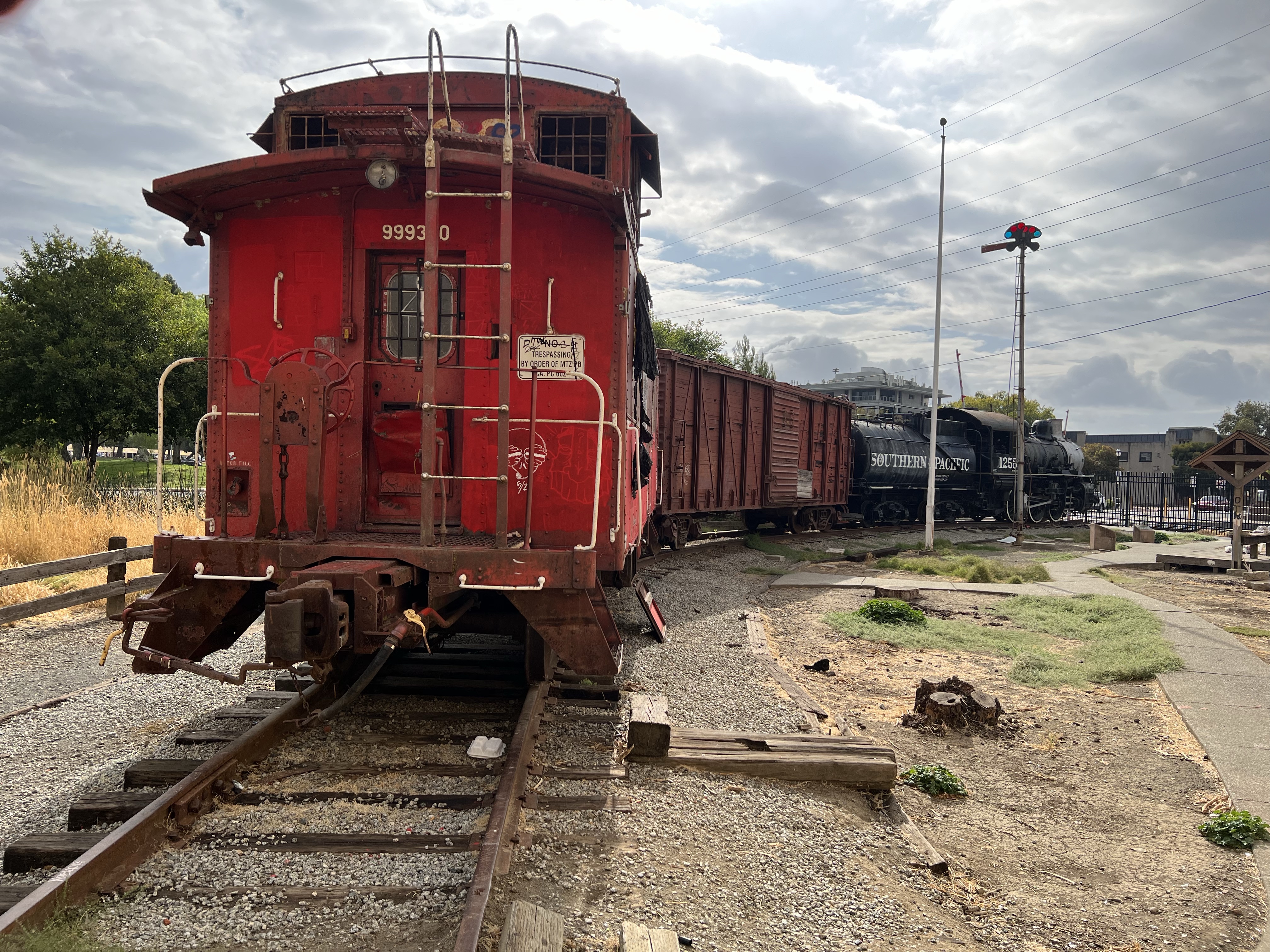
SP 0-6-0 switcher No. 1258 and its consist of a wooden box card and Santa Fe caboose 390 on display across the tracks from the AMTRAK station. The locomotive is in sad shape, missing some hardware like her bell and whistle.
One of the Seven Marvels of the Feather River Route is to be found a few miles north of Quincey.
The Feather River Route, also known as the Canyon Subdivision, stretches between Oroville and Portola, Ca and competed with Southern Pacific’s route over the Sierras at Donner Pass.
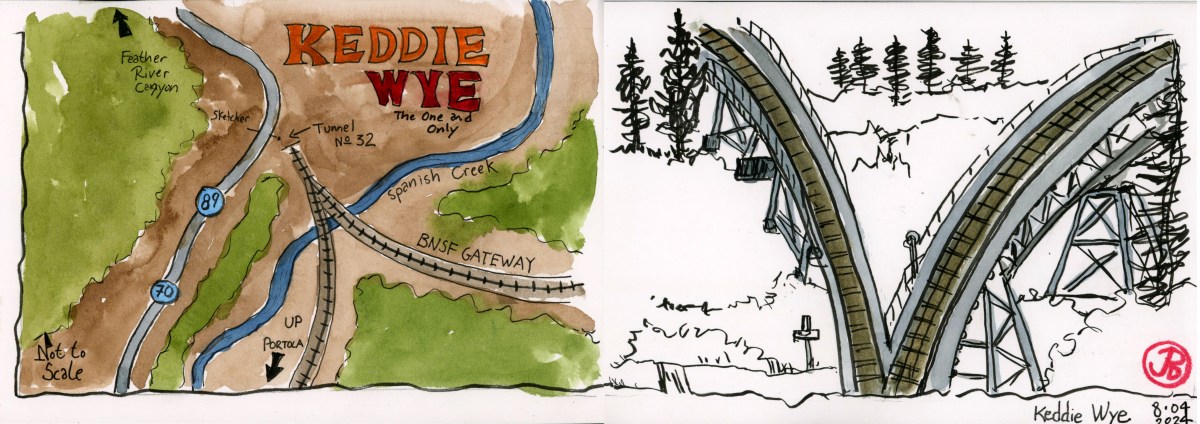
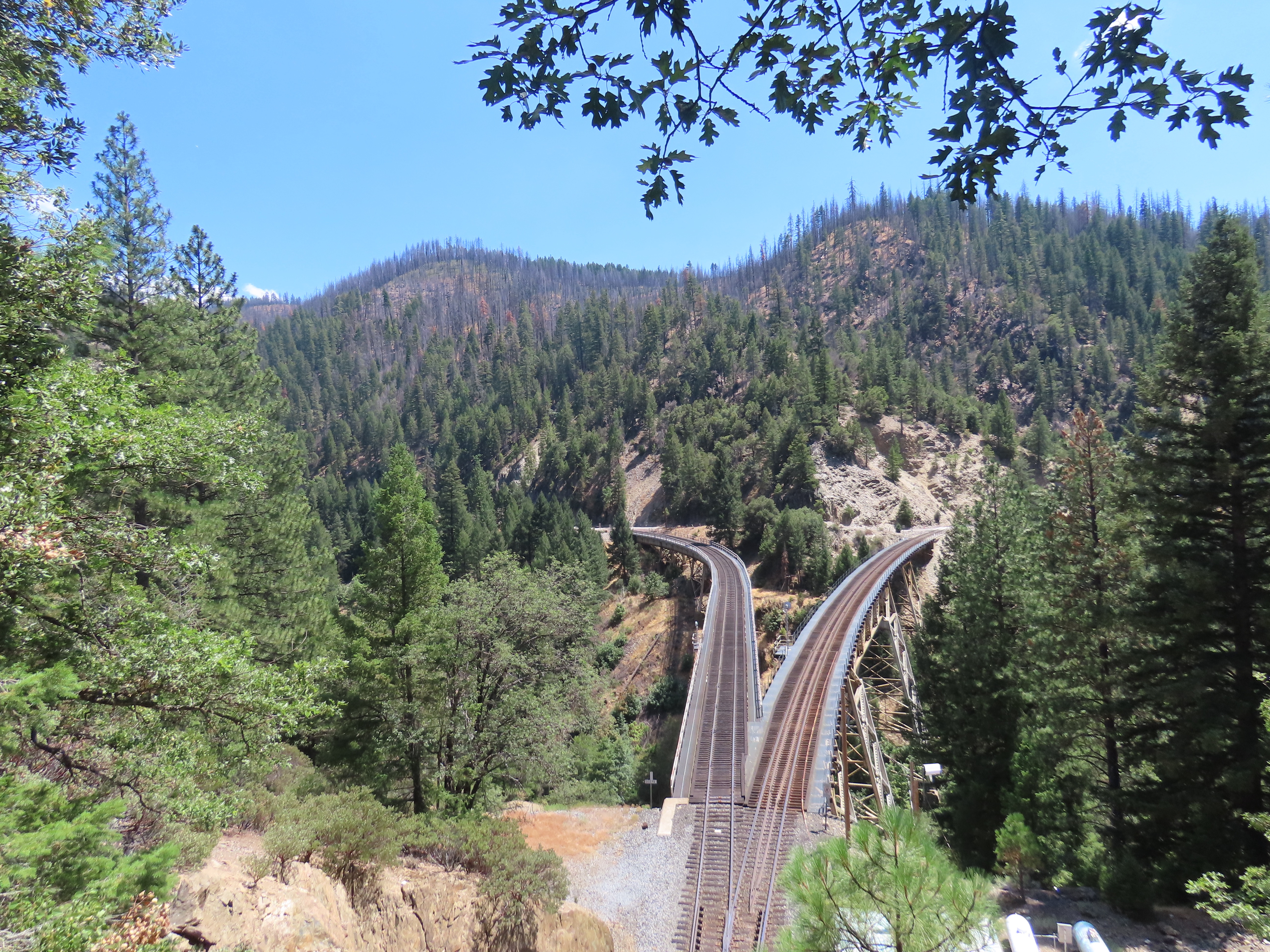
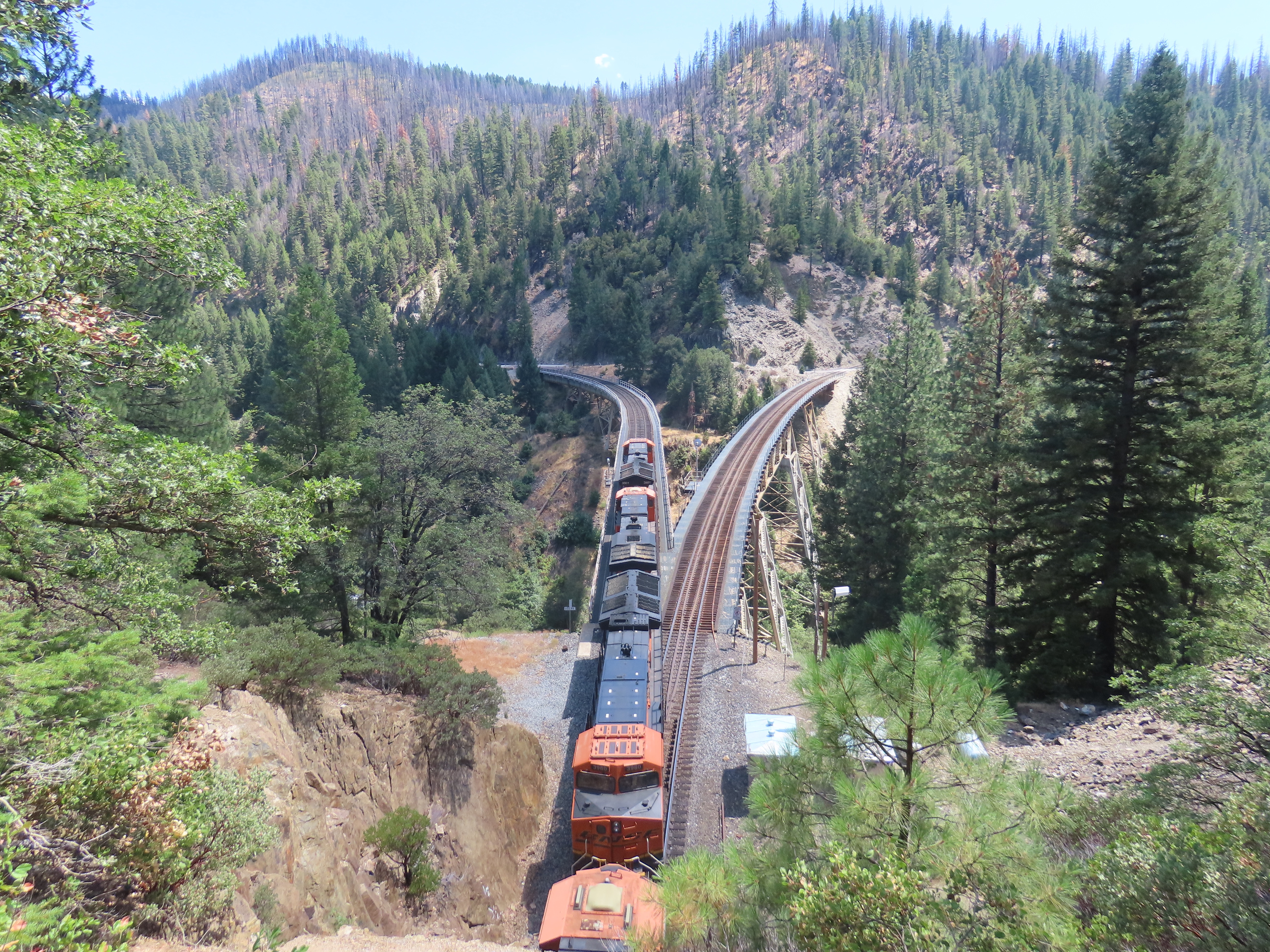
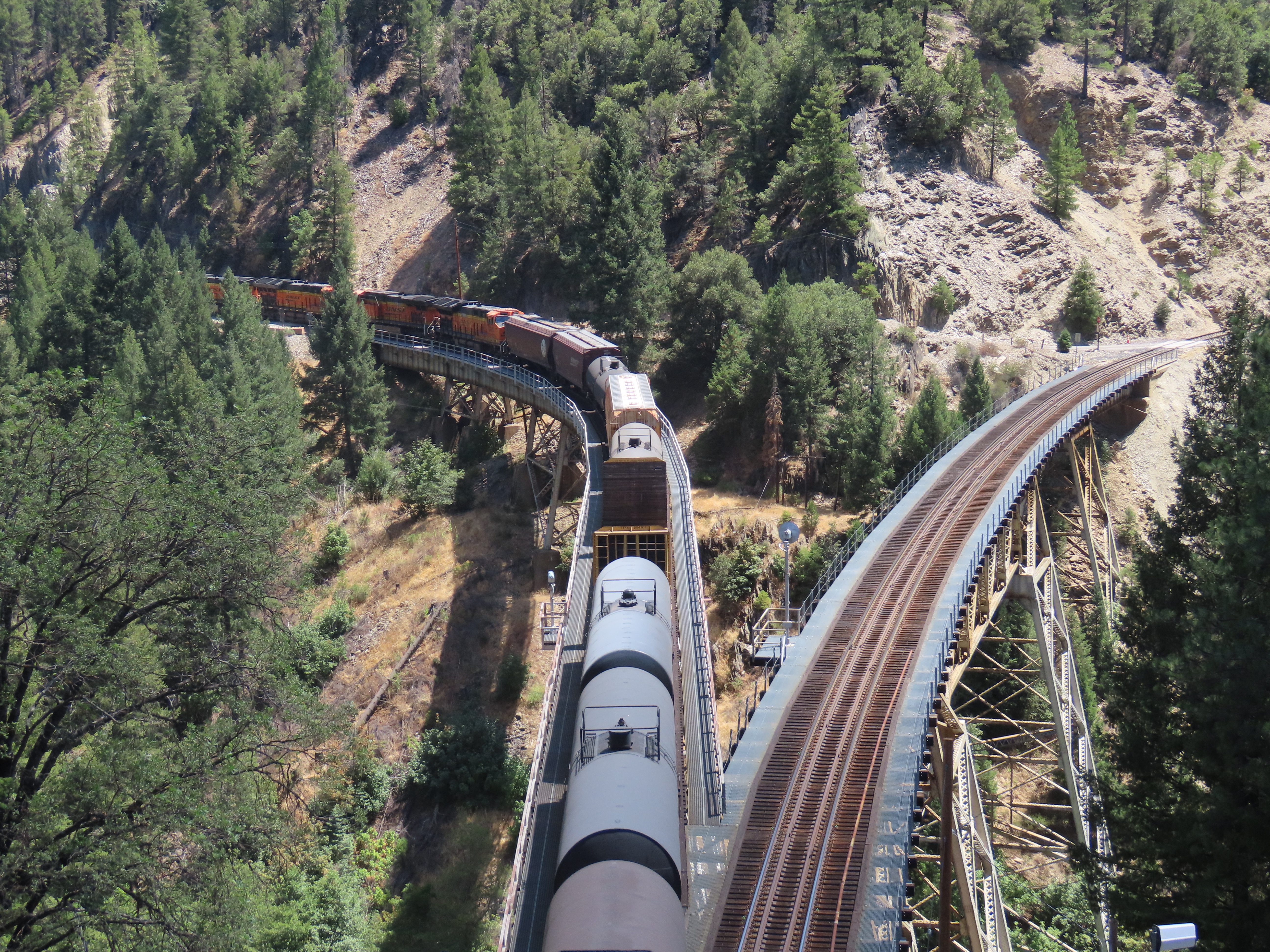
The Marvel is known as the Keddie Wye. This is where two tracks comes together to form one track, looking like the letter “Y”. Now this in itself isn’t much to write home about but when both sides of the “Y” are on trestles above a creek that joins together before entering a tunnel and then you know this is a special piece of railroad engineering.
The two forks of the “Y” are also where two different railroads meet. On the right is the former Western Pacific Railroad, now Union Pacific, and one the left is the BNSF (Burlington Northern and Santa Fe).
After about a 45 minute drive from Portola on Highway 70, the famous Keddie Wye appeared to my right. I pulled over and found a vantage point to sketch. I perched on a narrow trail above Tunnel No. 32 looking out to the two forks of the wye.
Now the only thing missing was a freight train. It would have been nice to see a train traverse one side of the “Y”. As I was told at the Western Pacific Railroad Museum, Sunday is a quiet day on the high iron.
After my sketch (right side of the spread), I headed down Highway 70 into the Feather River Canyon proper. The Highway parallels the railroad and the Feather River. This is a beautiful drive and I periodically looked off to left at the rails across the river. No trains.
I was about 20 minutes from the wye when I heard the screech of steel wheels on rail. I looked to the left and a Burlington Northern and Santa Fe (BNSF) was climbing up the canyon with a mixed freight consist.
I found the nearest pullout and then reversed direction as I chased the BNSF up canyon. I wasn’t going to miss the freight on Keddie Wye!
As I climbed up Feather River Canyon I kept an eye to my right for glimpses of the train. I should have no problem overtaking the train as the line speed limit was 25-30 mph.
I soon came to the end of the train and before long I was approaching the five bright orange diesels on point. I passed them with time to spare.
Once I reached the wye I reversed direction again and parked at the pull out. I figured I was about ten to fifteen minutes ahead of the freight and I took my position on the narrow path above Tunnel 32. Now I had to just wait, wondering if I would be able to hear the approaching freight from my position.
Within ten minutes I could hear the diesels working up grade and the first locomotive appeared below me. The train headed onto the left side of Keddie Wye onto the BNSF Gateway heading north towards Lookout and Klamath Falls.
What a memorable experience to see a piece of railroad history that is not a static museum piece isolated in time but in use today.
4014 would be spending two nights in the important rail hub of Roseville.
Roseville is at the base of the climb up the Sierra Nevada Mountains to Donner Pass. It is here where the tools to conquer the Donner extreme winters are kept. Across the tracks, near the depot, the spreaders and flangers could be seen. A little further down the siding, the ultimate snow fighting machine could be seen: the rotary plows.
But on this July Friday and Saturday an army of foamers, rail fans, history buffs, and the curious would be invading the city of Roseville.
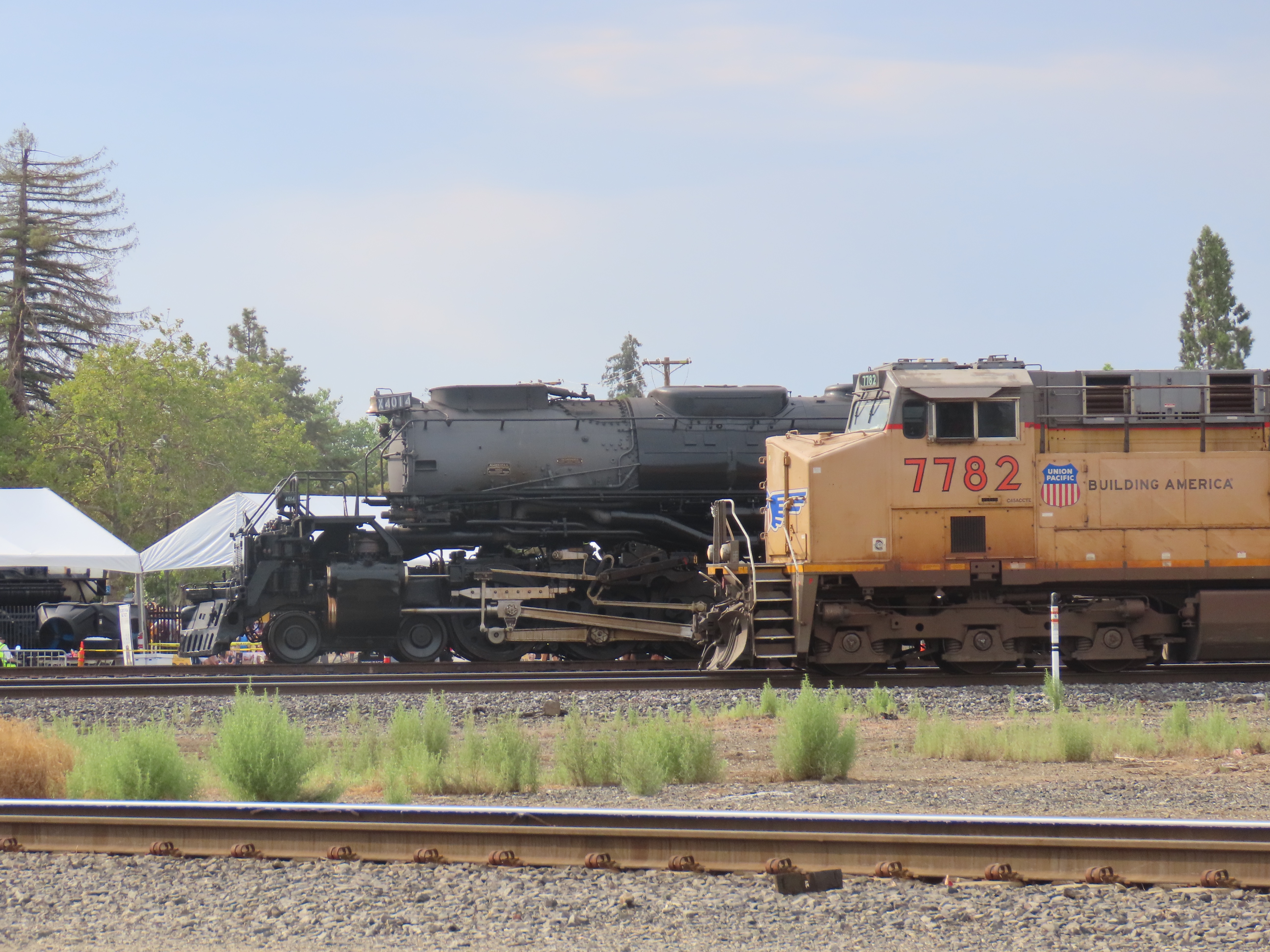
They were all here to see the largest steam locomotive in the world, Union Pacific’s Big Boy No. 4014. For the two display days the largest operable locomotive would be static and not moving. The Goliath would be brought up to steam and boiler pressure to conquer the Sierra Nevadas on Sunday.
I arrived early on Saturday to find a parking spot and to spend some quality time with the 4-8-8-4 before she, or he, was besieged.
Roseville is a busy point on the railroad with many freight trains starting the climb or descending the Sierra Nevadas. The passenger service is alive and well in Roseville with the California Zephyr and the Capital Corridor stopping at the passenger depot.
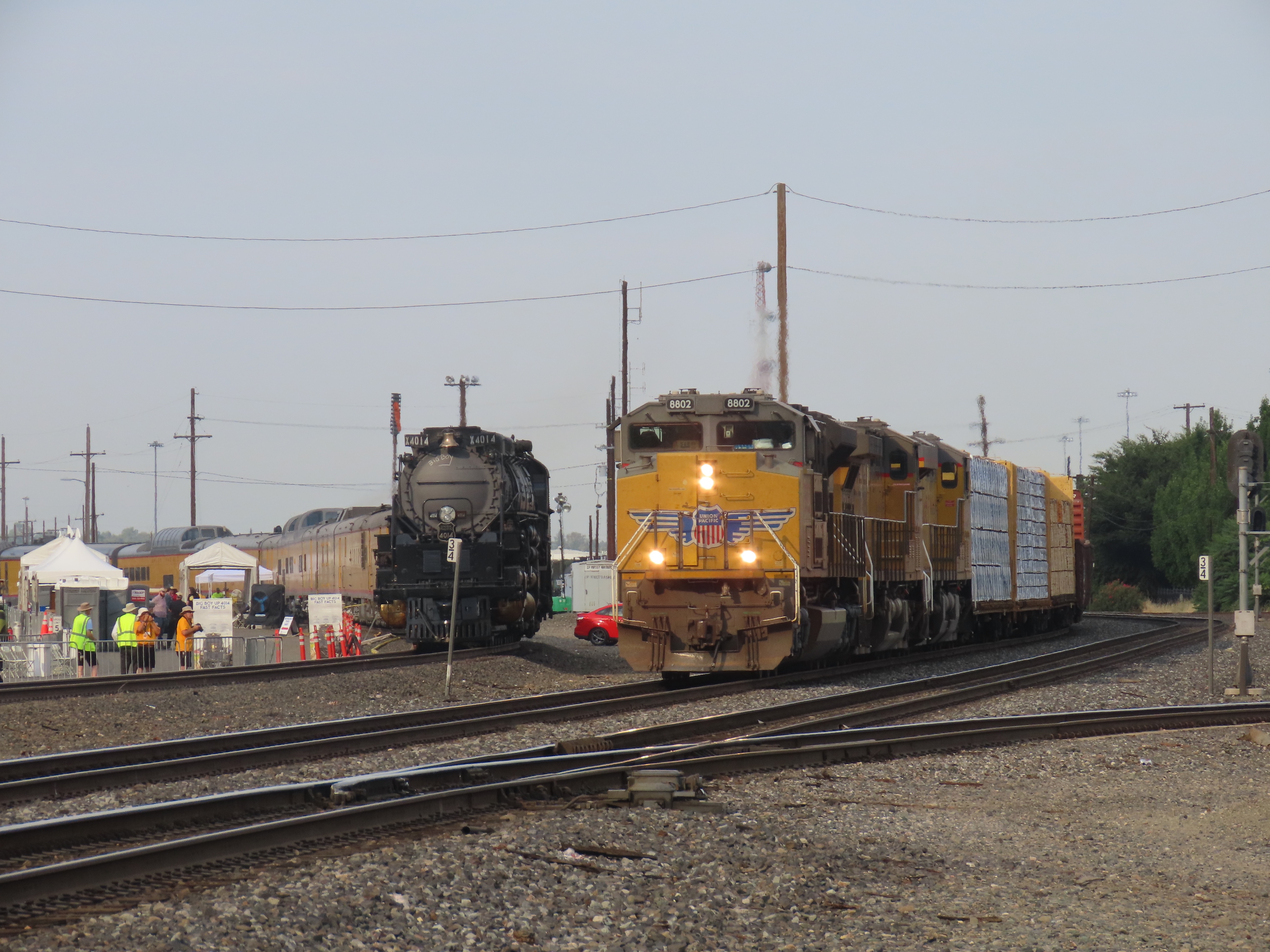
The present and the past of Union Pacific freight. A eastbound freight passes 4014 at Roseville.
4014 now had a consist of Union Pacific passenger cars. I heard a ticket for the trip from Roseville to Reno, Nevada would set you back $700. The train was parked near the intersection of Atlantic and Vernon Streets near Southern Pacific’s 2252 and a rotary snowplow on display.
Roseville is a very busy point on the line and it was about to get much busier with the influx of people coming into town to see a Big Boy’s first visit.
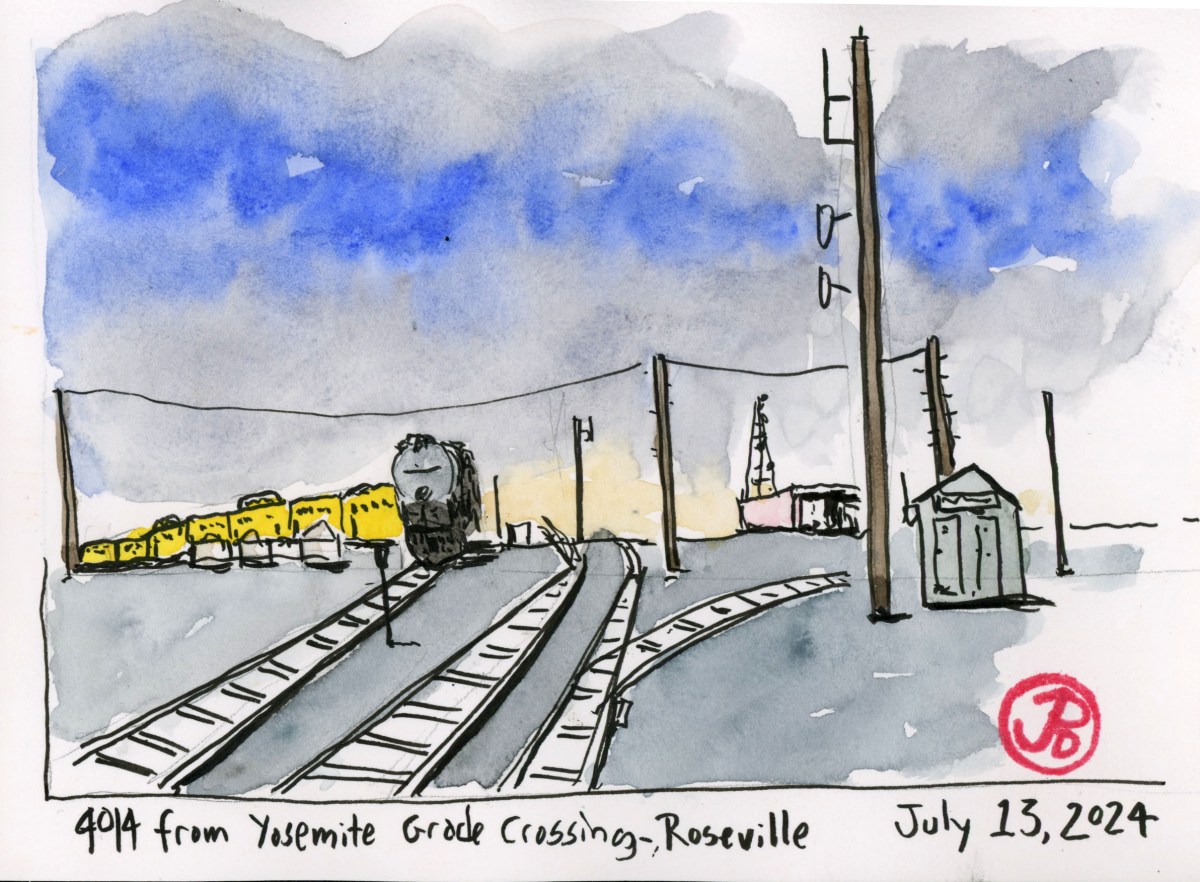
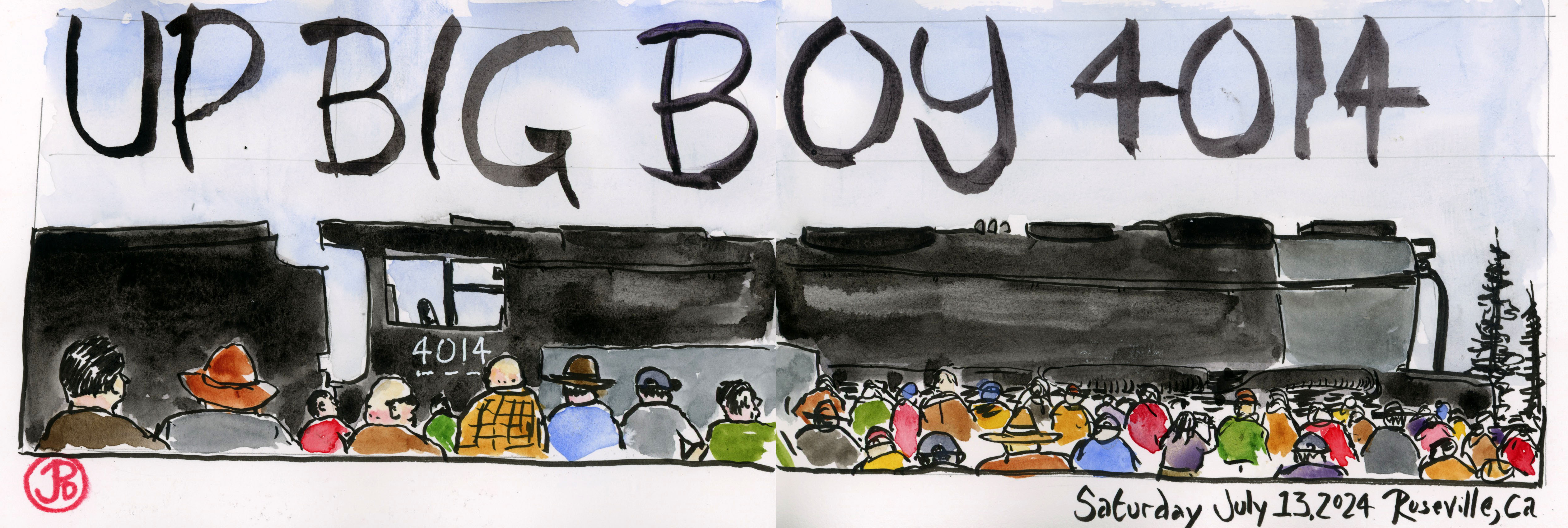
I walked to the grade crossing at Yosemite Street and looked west (towards Sacramento) and sketched 4014 and the Roseville yard (featured sketch).
The viewing of 4014 officially opened at 9:00 AM and there was already a group lined up to get a closer look at the Big Boy.
As the clock ticked closer to 9:00 AM, more and more people were showing up to see the first visit of a Big Boy to Roseville.
This important railroad town was the home of Southern Pacific’s articulated, the cab forward. These massive locomotives were designed to haul freight over the pass and the locomotive was reversed with the cab in front (hence the name) so the crew would not suffer from smoke asphyxiation while traveling through the many tunnels and snow sheds on the route. In the age of steam Roseville had two roundhouses, one was specifically designed for servicing the labor intensive cab forwards. At one point Roseville was home to 60 cab forwards.
Only one Southern Pacific cab forward still exists, the AC-12 No. 4294. She is on static display at the California State Railroad Museum in Sacramento. But unlike Union Pacific’s 4014, 4294 is not operable.
Soon it was hard to see the Big Boy through the forest of people surrounding it. So I did a sketch to capture the experience.
One part of journaling that I can improve on is field sketching. When your subject is a landscape or a piece of architecture then field sketching is a little easier. But when sketching a live, wild animal, then you’re dealing with a beast of another nature!
On a recent Saturday I headed out to the Foster City Shell Bar to do some field sketching. No I was not sketching techies drinking mamosas during brunch, the Shell Bar is a piece of exposed tidal flats along the San Francisco Bay. The Shell Bar is also a hotspot for shorebirds, terns, and gulls.
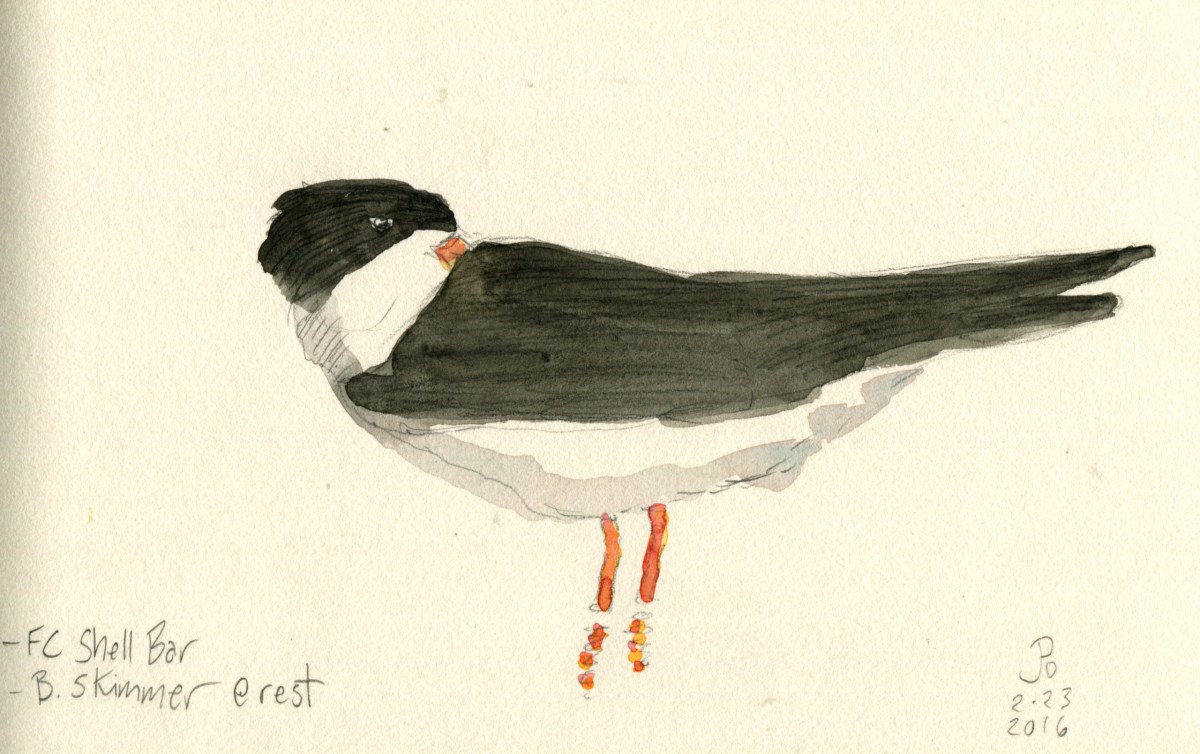
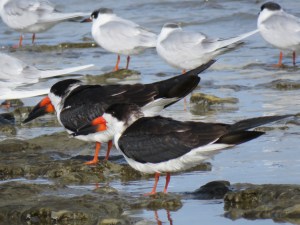
The benefit of sketching at the Shell Bar is that this is where the shorebirds come to rest, making them easier to sketch as they pose in repose. One of my target birds to draw were resting black skimmers, these terns with huge elongated lower mandibles are a specialty for this location. When we arrived there were 50 individuals to sketch from.
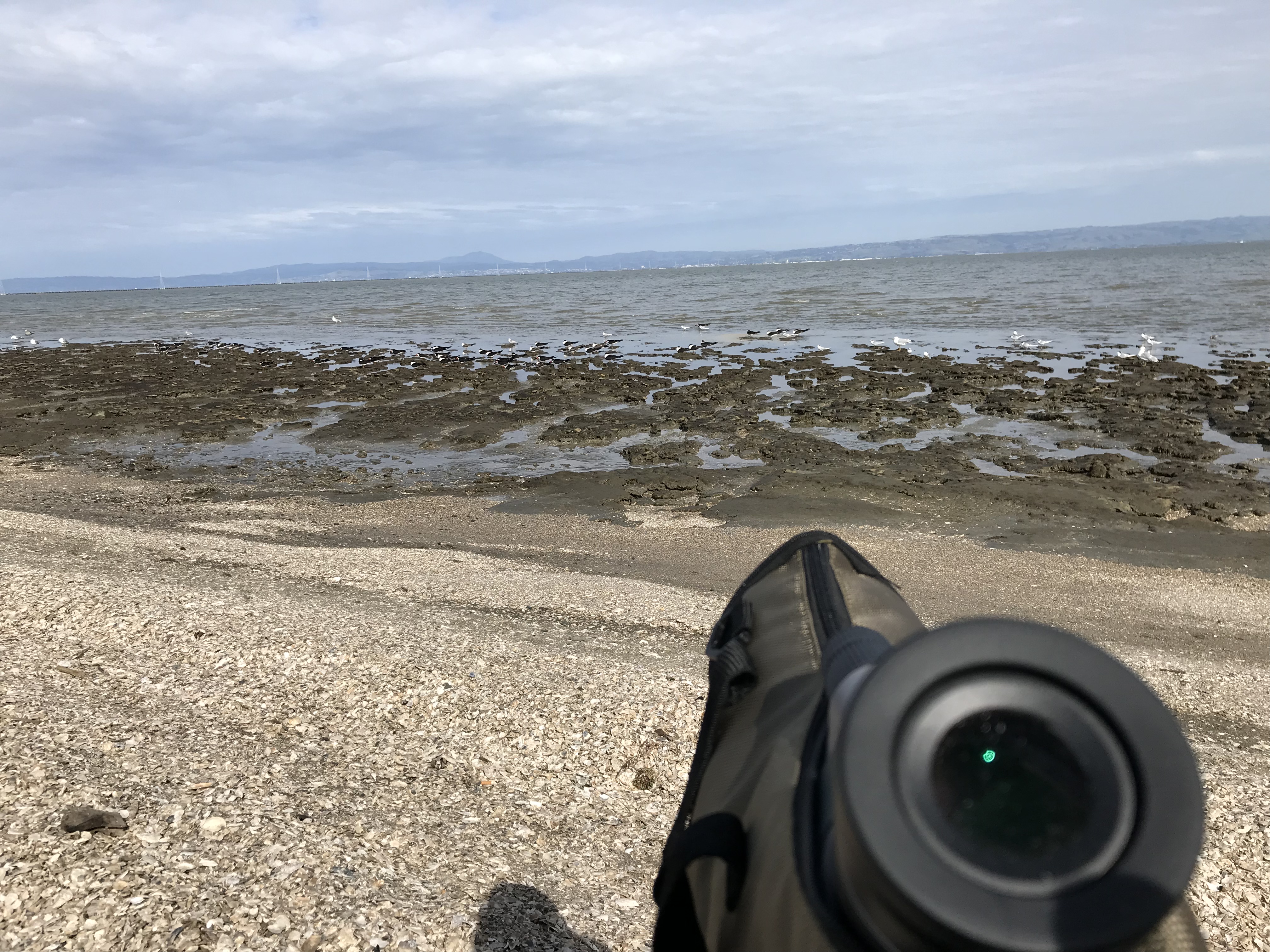
Scope view of the Shell Bar with resting black skimmers in the background.
There are many benefits when sketching a resting bird. One of the first benefits is that the bird is still and is not flying around making them much easier to capture in the pages of a sketchbook. Also most shorebirds at rest, tuck their bills in to their back feathers for warmth, making it easier to sketch because you don’t have to worry about bill length and shape (the black skimmers have one of the more complex and odd bills on the Shell Bar). And another benefit is that most birds when at rest on the shell bar are standing on one leg, simplifying your avian subject even further. It’s easier to draw one leg instead of two! This is especially true of the hundreds of willets resting on the flats.
With me at the Shell Bar, with sketchbook and binoculars, was my birding-skeching acolyte, whom I shall call young Grasshopper Sparrow.
He once referred to an upcoming Disney Cruise to Mexico as, “a five day pelagic instead of a cruise. ” This young birder has his priorities in the right place! He plans to spend his time on the foredeck looking for boobies and tropicbirds. Young Grasshopper is a quick learner!
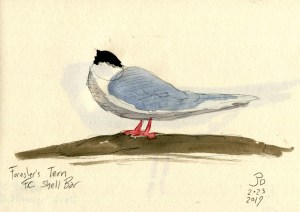
Forster’s tern at rest.
We both sat on the shell bar and sketched the resting terns until the tide slowly covered the flats and the birds dispersed, heading out either north or south from our position.
Every good tern deserves another. Two adult black skimmers and Forster’s tern in the back ground.
One-legged red knots, willets, and a marbled godwit in the background with a ruddy turnstone turning stones in the foreground.