Image

The Jensen Carhouse

On Saturday I headed out to the Western Railway Museum, and I was hoping that they had enough volunteers to open the Jensen Carhouse.

The impressively large carhouse was built between 2004 and 2008 at an expense of $2.5 million. The indoor storage facility is the most ambitious project the museum has ever undertaken. It allows some of the museum’s vintage cars, locomotives, and streetcars to be stored and protected from the sun, rain, and wind of Solano County.

The only problem: if they do not have enough volunteers, the carhouse does not open to the public.

On my past two visits, the doors remained locked and closed.
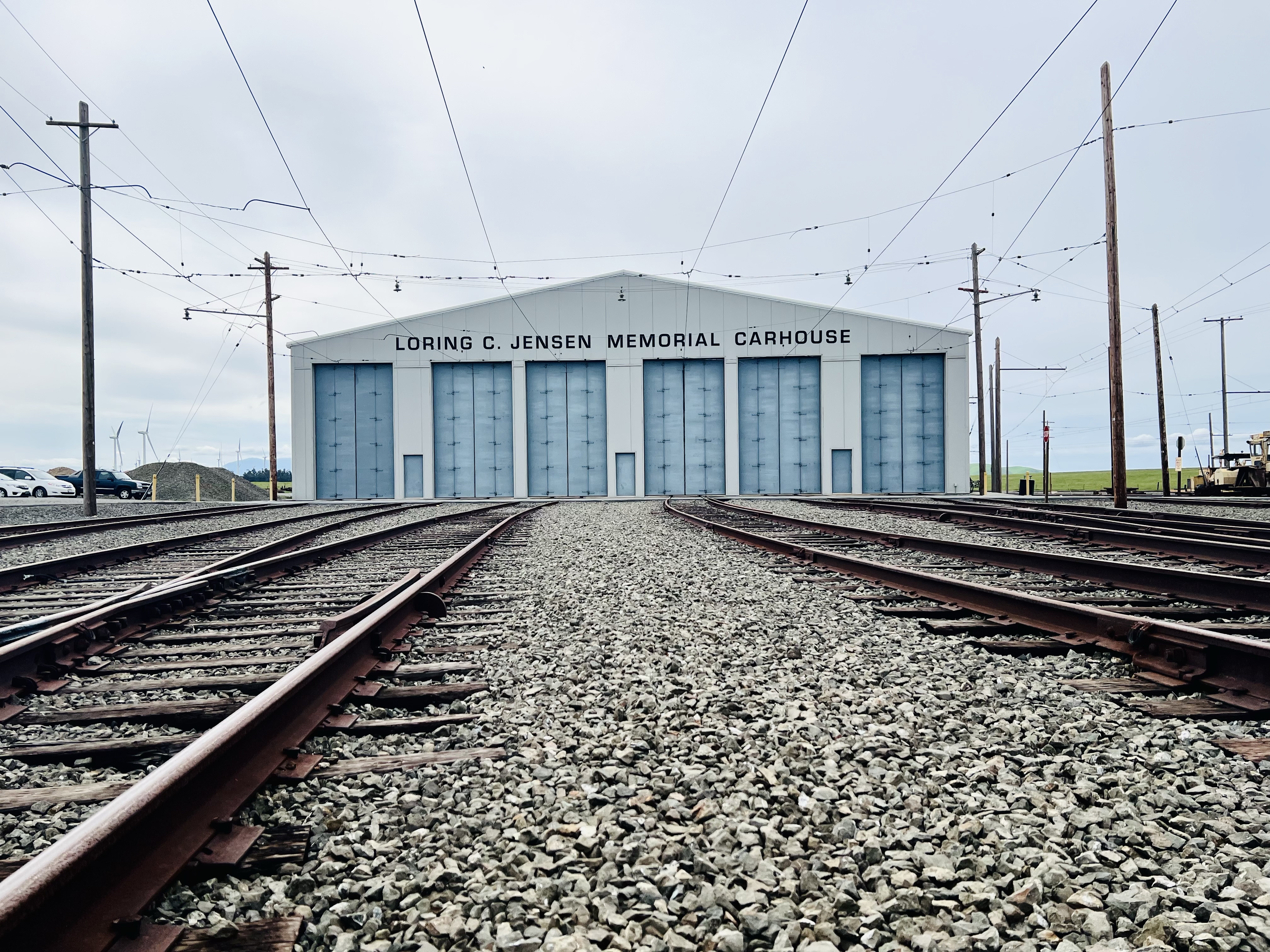
The six bays of the Jenson Carhouse.

This Saturday, the carhouse would be open! And I had a few residents that I wanted to sketch!

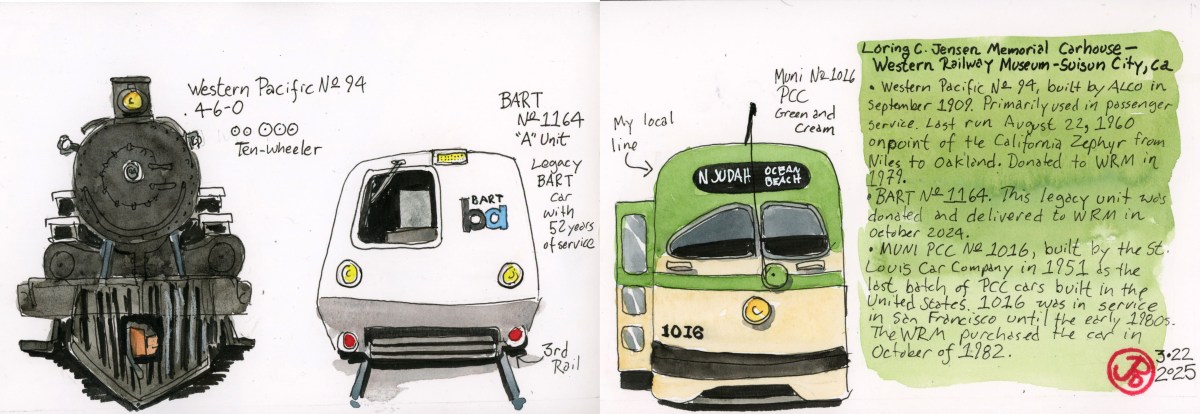
The number one resident I wanted to sketch was the Western Pacific 4-6-0 steam locomotive No. 94.
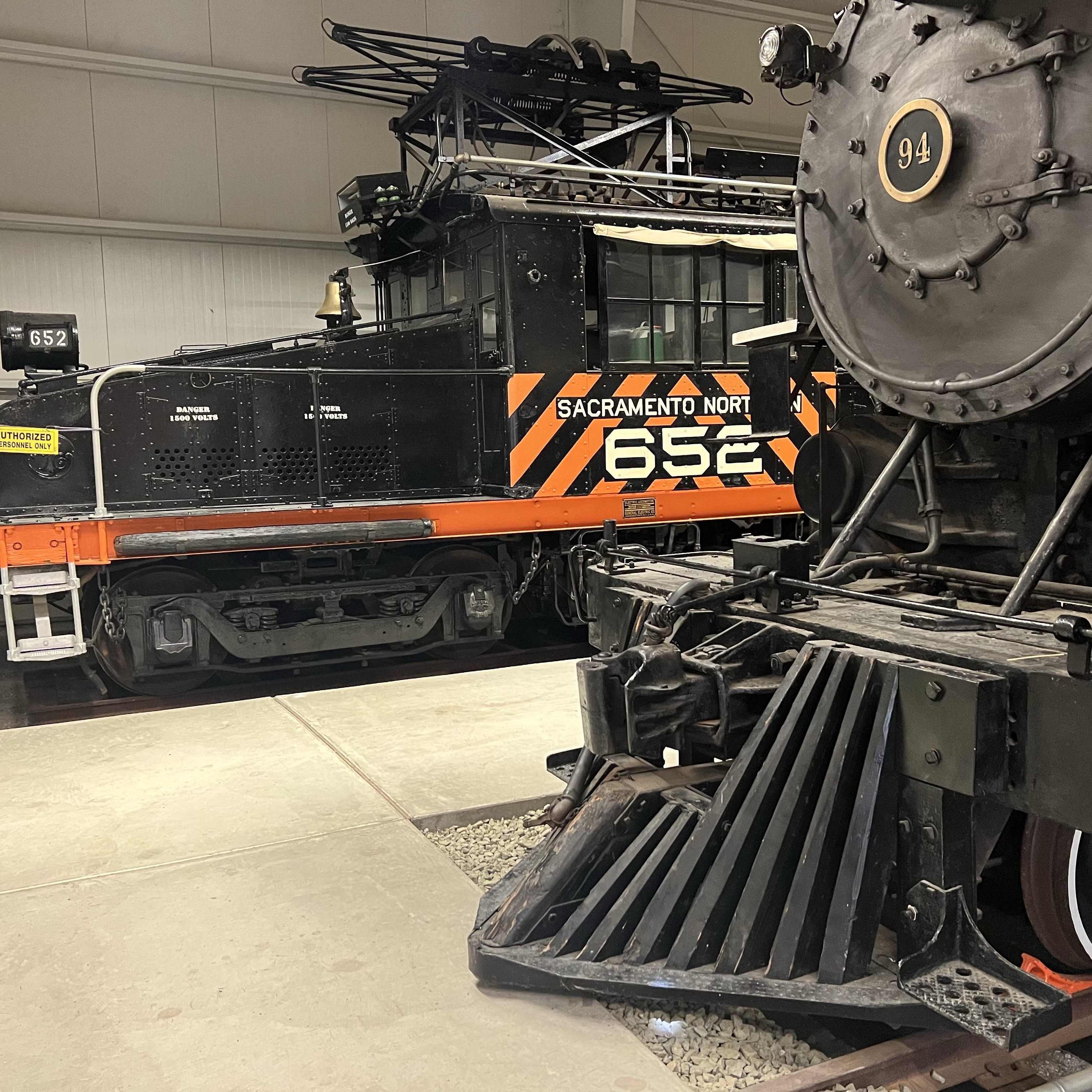
Two ends of the transit spectrum: steam and electric. Western Pacific’s No. 94 and Sacramento Northern’s No. 652.

Western Pacific 94 was built by American Locomotive Company in 1909. The twenty locomotives in this class were used for passenger service. WP was an early adopter of diesel power and steam ended on the WP in April of 1953. 94 was kept for excursion service. The locomotive was last operated on August 22, 1960 when it was on point of the California Zephyr between Niles and Oakland as part of the 50th anniversary of the passenger service. 94 was donated to the museum in 1979.

The next piece of transit history I sketched was the newly arrived BART legacy A Unit No. 1164. Three units were delivered to the museum in October of 2024 and are now stored in the Jensen Carhouse. BART went into service September 11, 1972 and the original legacy fleet was retired after 52 years of service. The three units donated to WRM have logged more than 15 million miles while in service.
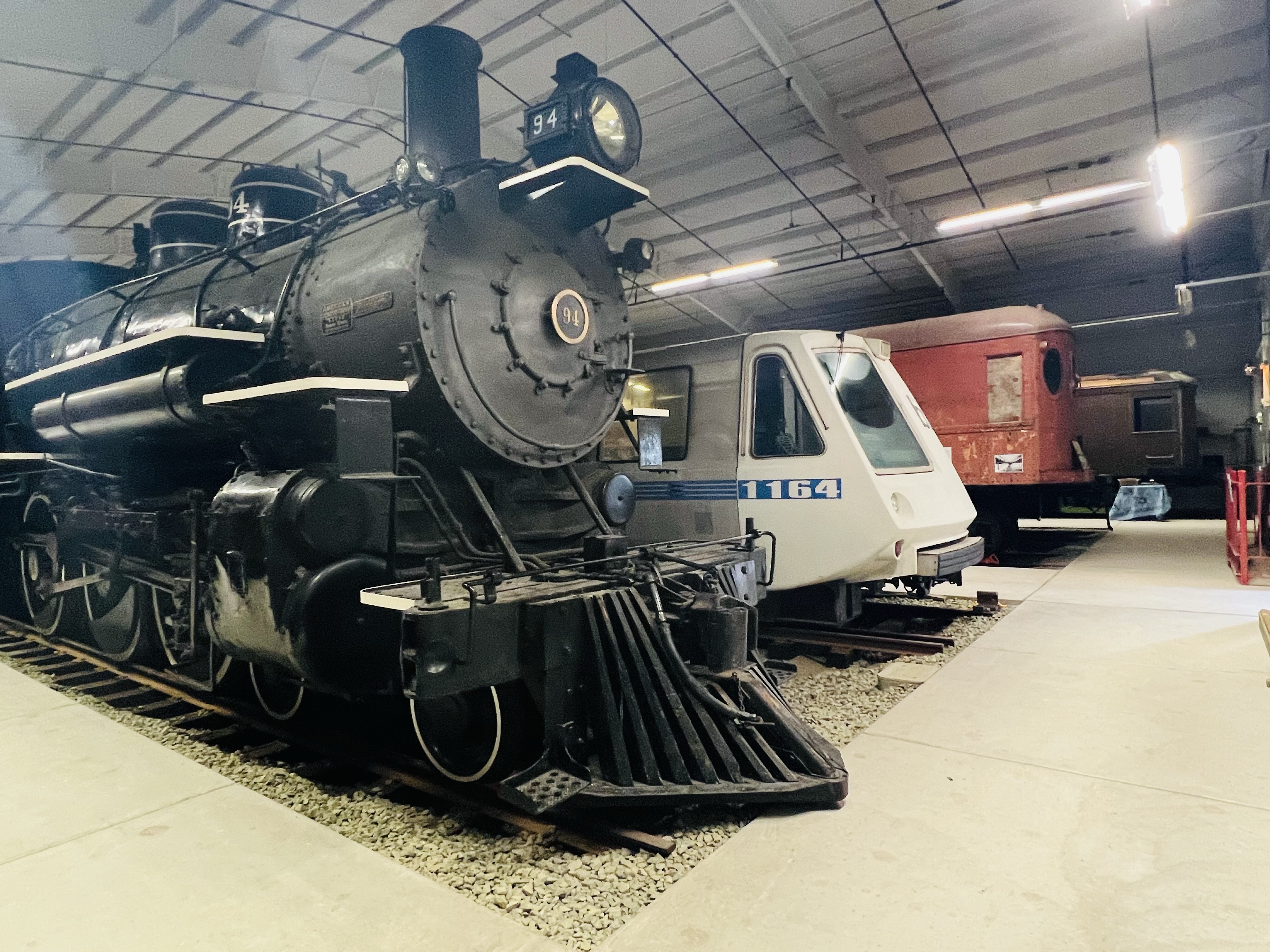
No. 94 seems to dwarf the BART A Unit.

The last denizen I sketched in the carhouse is perhaps my favorite. It is San Francisco’s MUNI PCC car No. 1016. This PCC was built in 1951 by the St. Louis Car Company as part of the last batch of PCCs built in the United States.
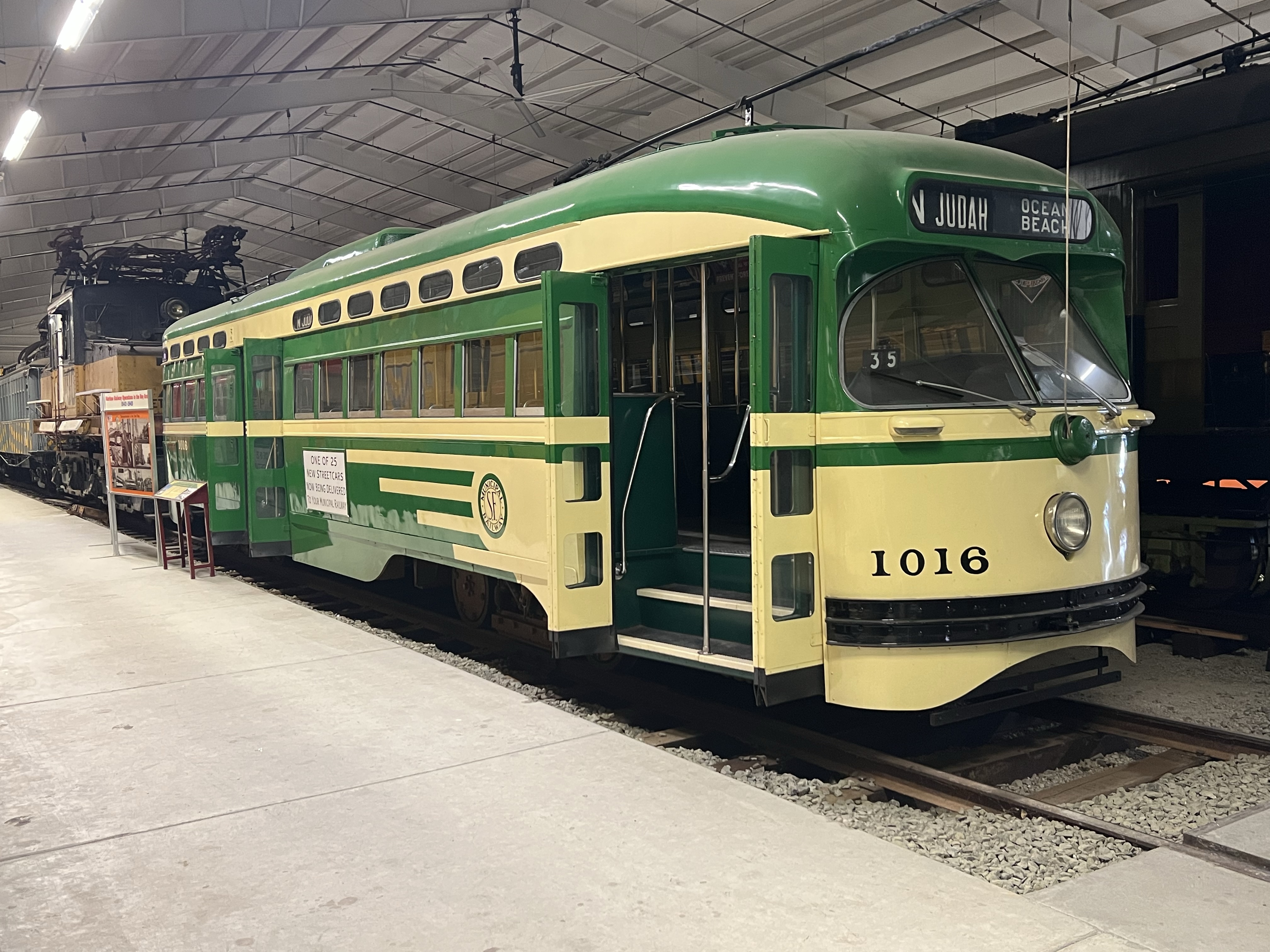
I have always loved the rounded streamlined design of PCC cars and the green and cream livery is my favorite paint scheme. This livery was developed in 1946 and features the MUNI wings.
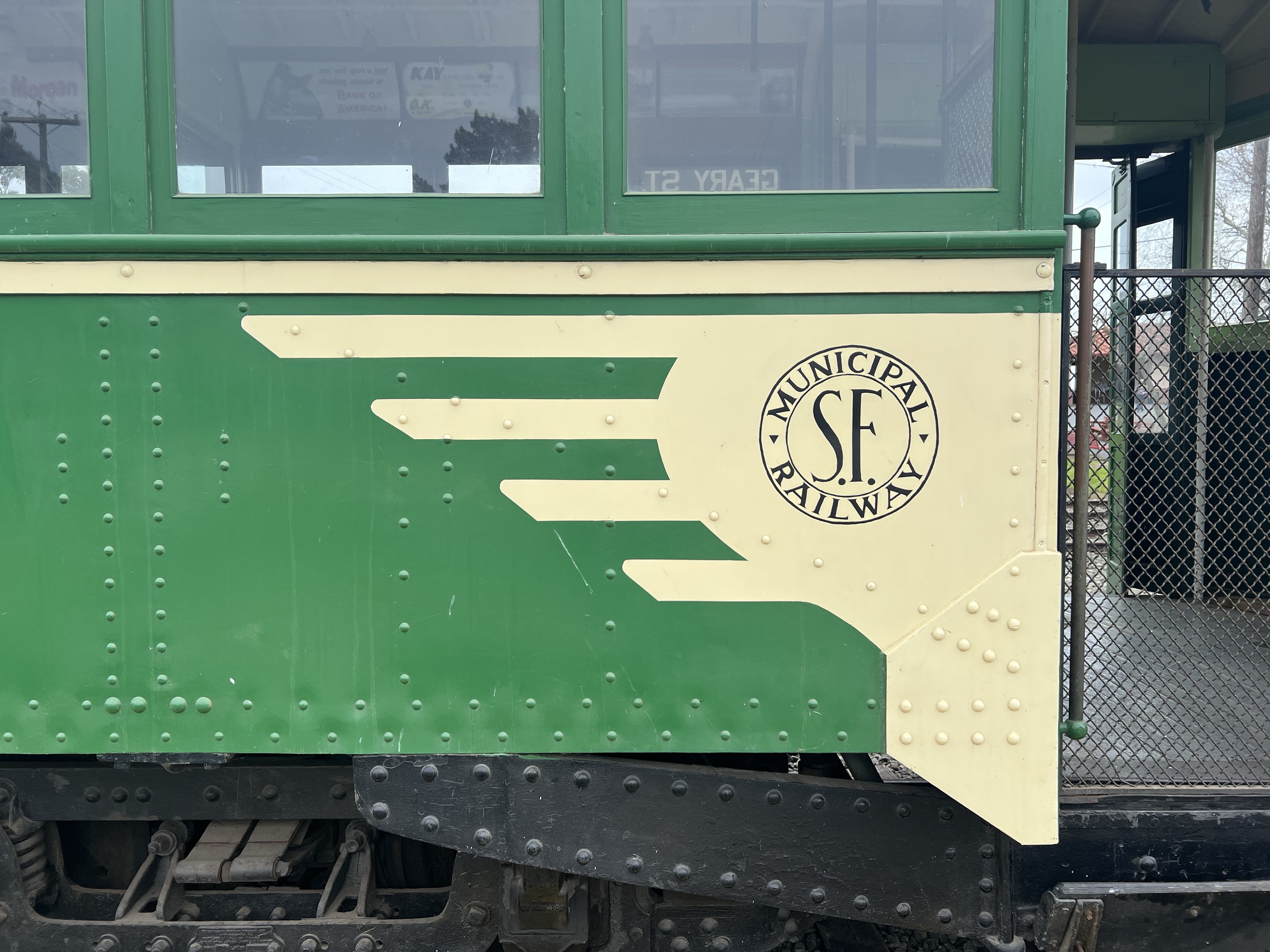
MUNI’s famous wings on K-type car No. 178. This car type is affectionately known as an “iron monster”.
Image

The Conversation

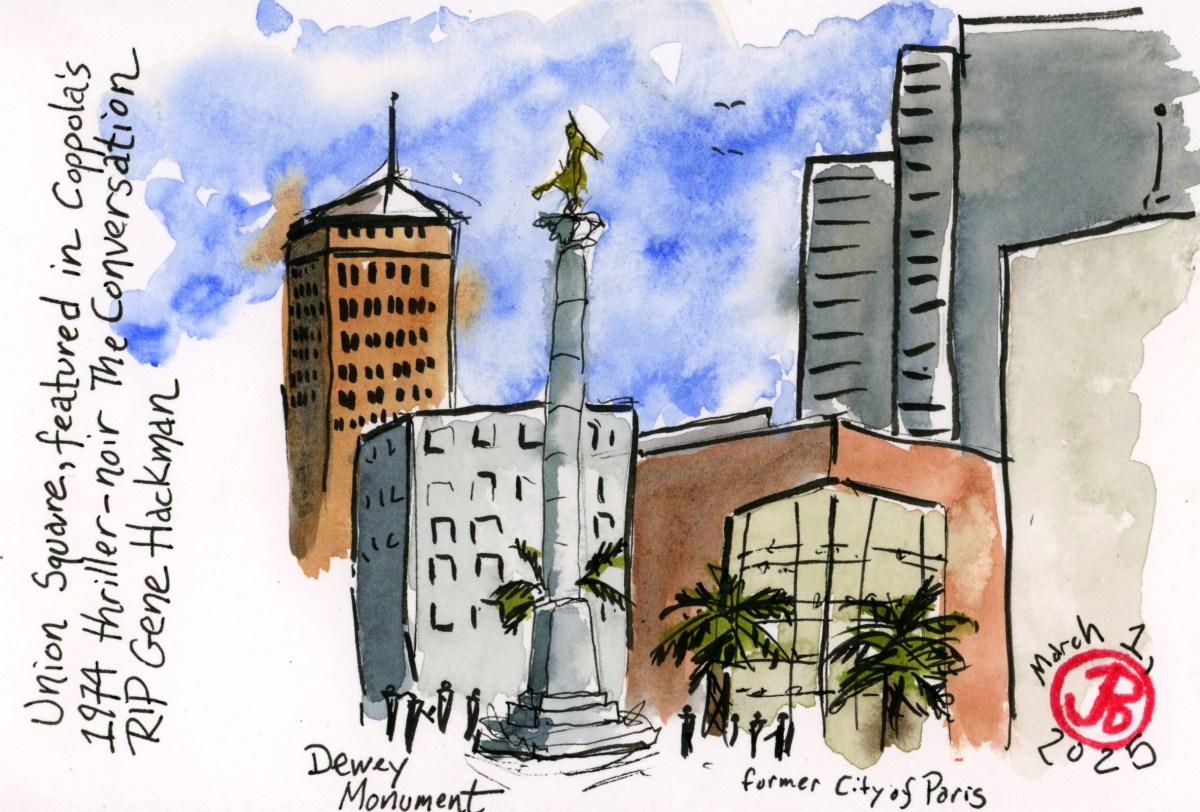
With the news of the passing of actor Gene Hackman, I thought I would sketch some locations from the film where he played one of his favorite roles: Harry Caul in Francis Ford Coppola’s The Conversation (1974).

The majority of the film was filmed on location in San Francisco. The conversation of the title takes place in Union Square.

The plot revolves around a surveillance expert (Hackman), who is hired to record a conversation between a man and a woman in busy Union Square. We later learn his eyes and ears have been deceiving him. No spoiler alert here, see the film for yourself!

I took the N Judah downtown and got off at the Powell Street Station. I walked past the lengthy cable car queue on Powell and headed towards Union Square.

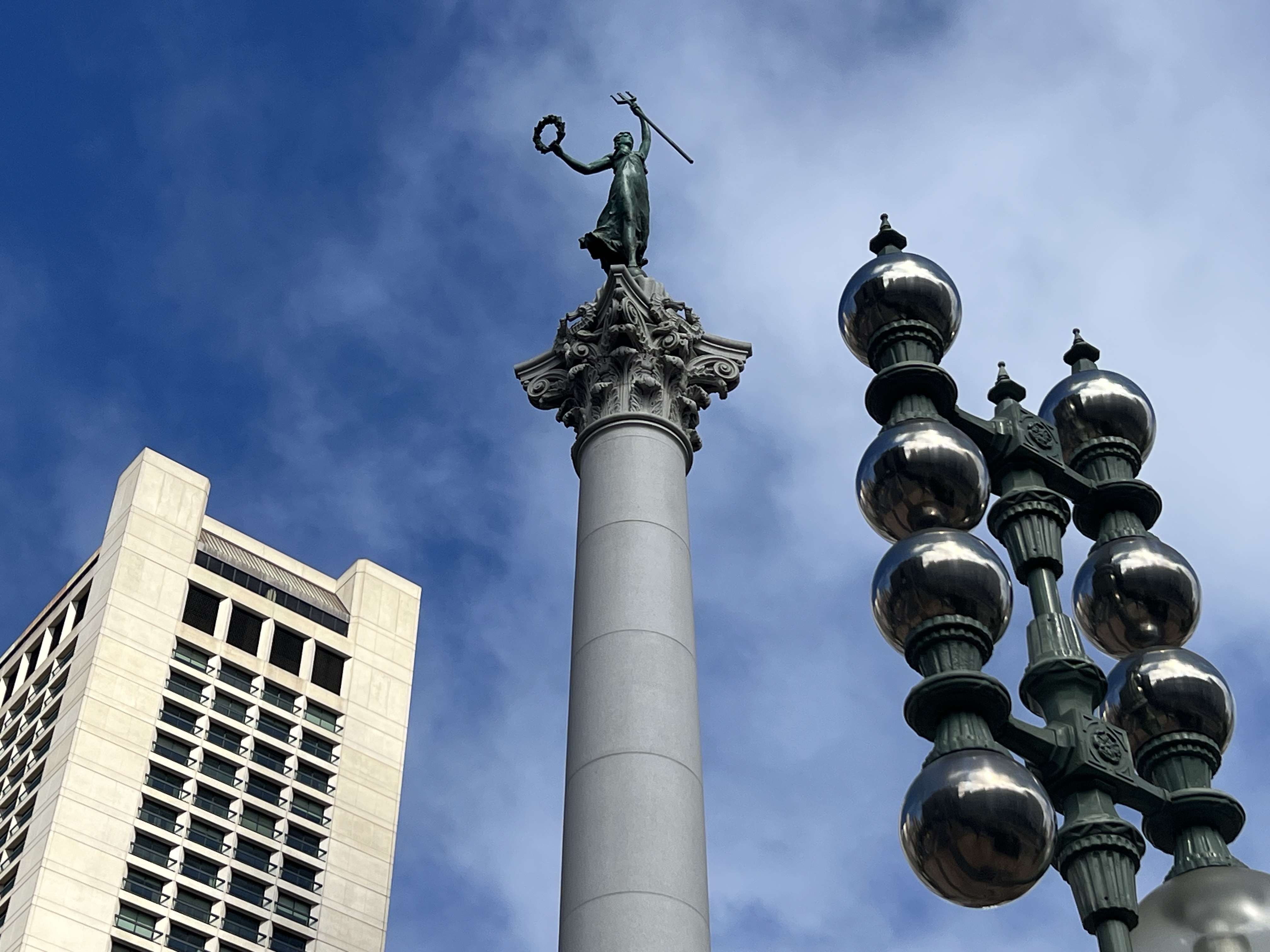
The statue of Nike is the center point of Union Square.

I found a corner of the square to sketch the focal point: the Dewey Monument, which is topped by the Greek goddess Nike, the Goddess of Victory, commemorating Admiral Dewey’s victory at the Battle of Manila Bay in the Philippines.

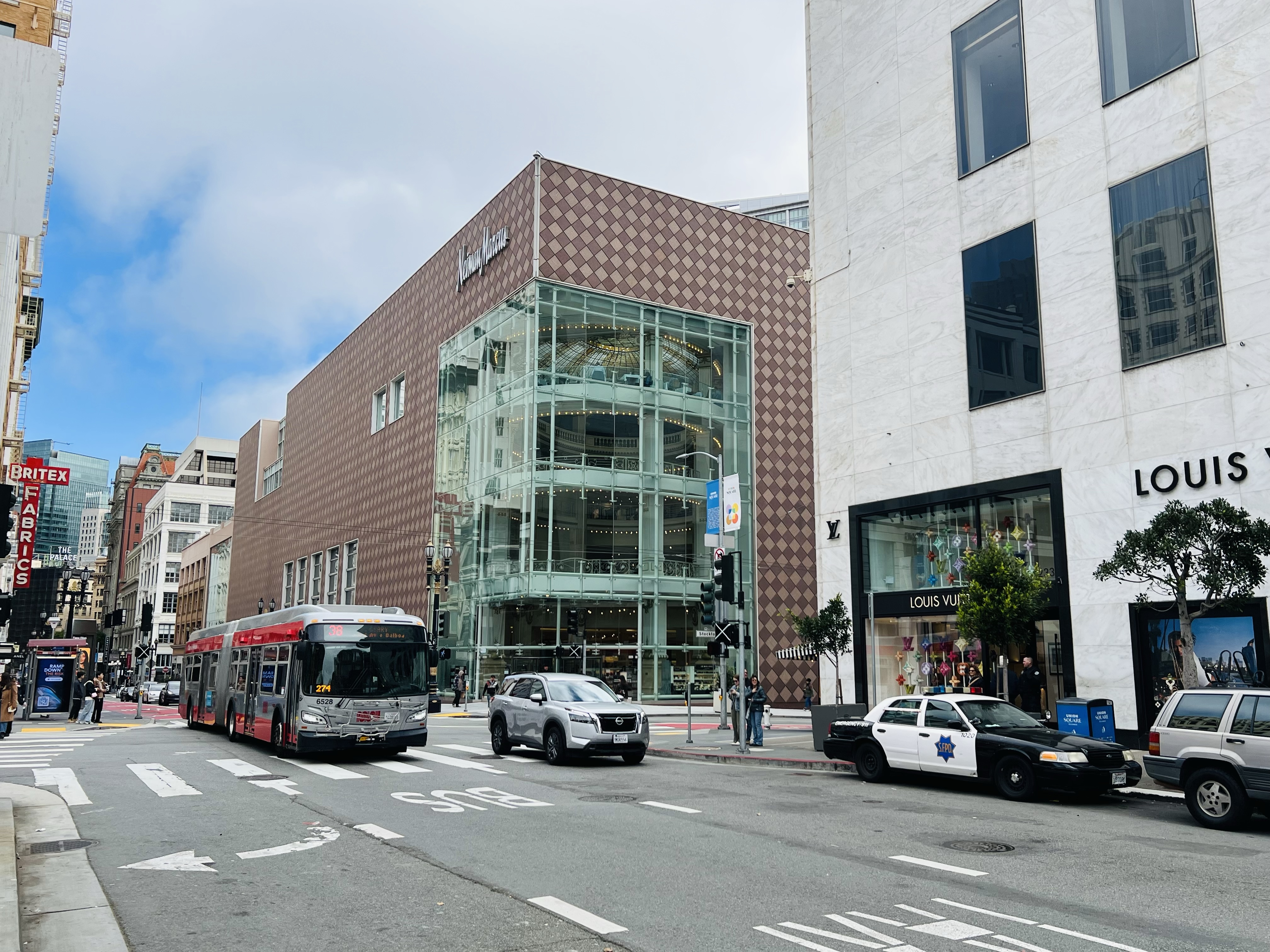
In the background of the sketch (featured sketch) is the former City of Paris department store (now Neiman Marcus), which features at the beginning of the film.

At the time of filming in 1972-73, Neiman Marcus was the City of Paris department store. Harry Caul’s surveillance van was parked where the police car is.

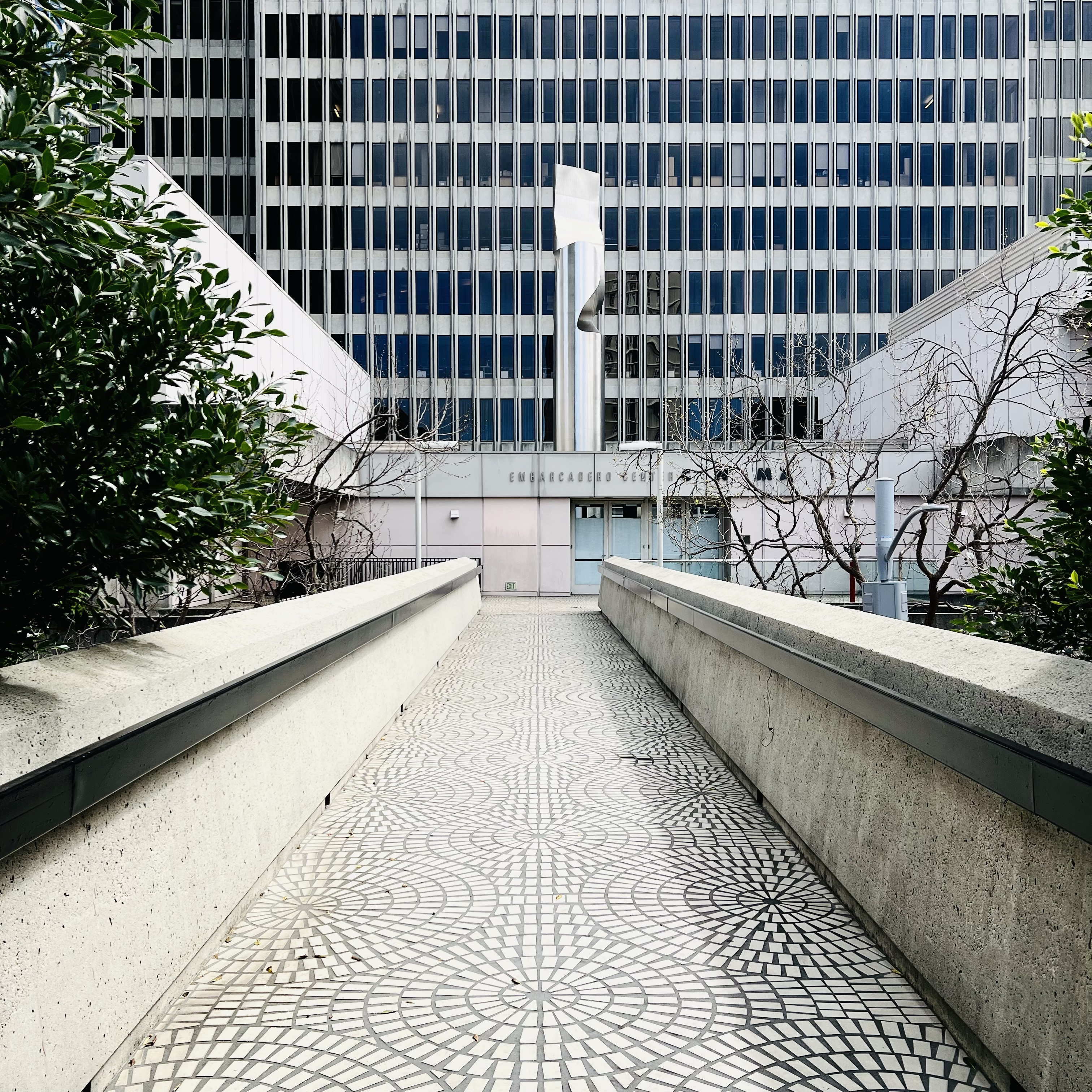
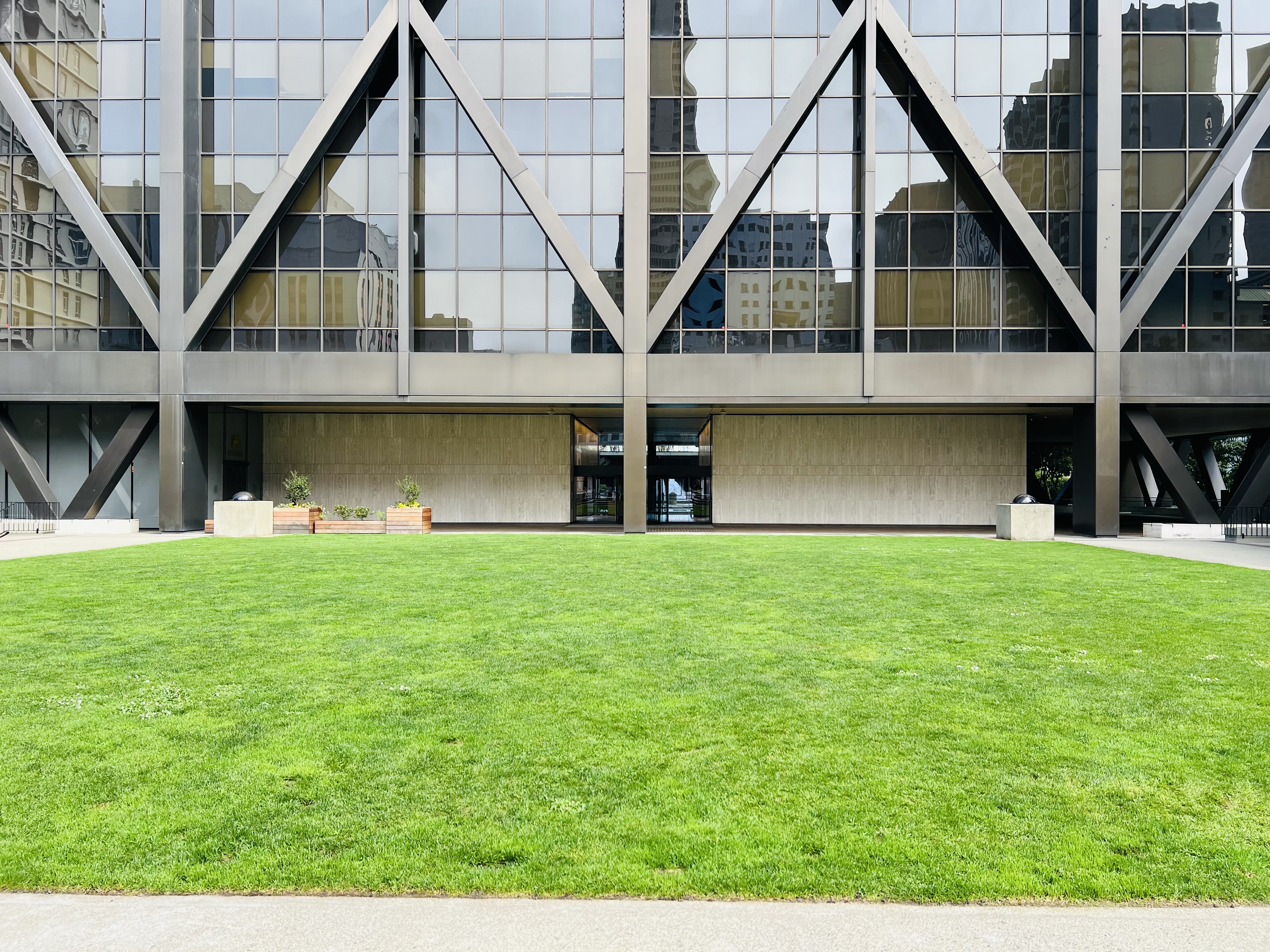
Another San Francisco location that is featured in The Conversation is the Embarcadero One complex. The site was developed in 1971 and was brand new when filming began. The complex is the location of Hackman’s client, the President, portrayed by Robert Duval. His assistant is played by a young Harrison Ford.

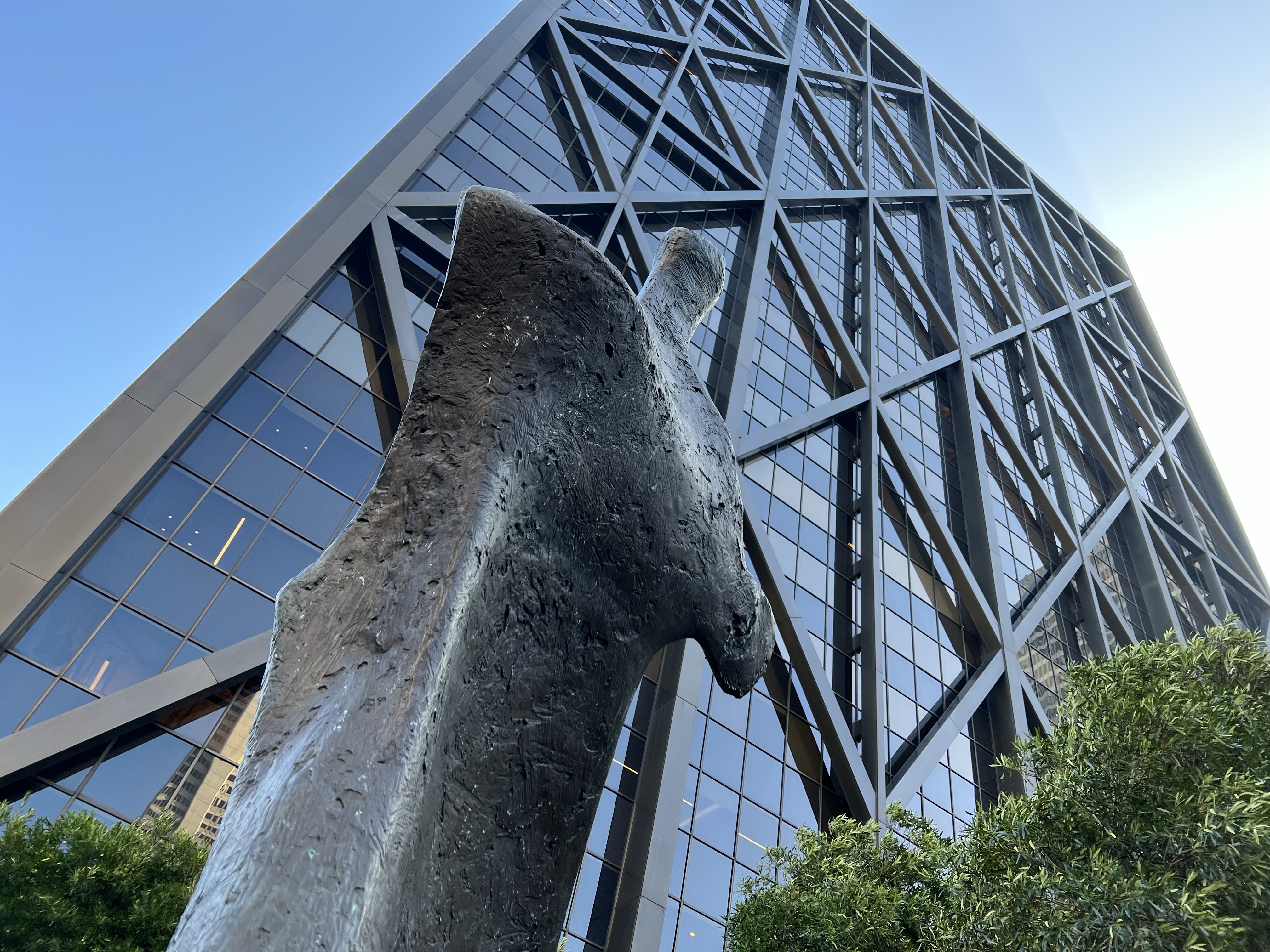
The walkway leading to Embarcadero One was featured twice as Hackman’s character goes to see the Director. The sculpture, Two Columns With Wedge (1971) was only a few years old when filming took place here. The now closed cinema in front of the sculpture was not there at the time of filming.
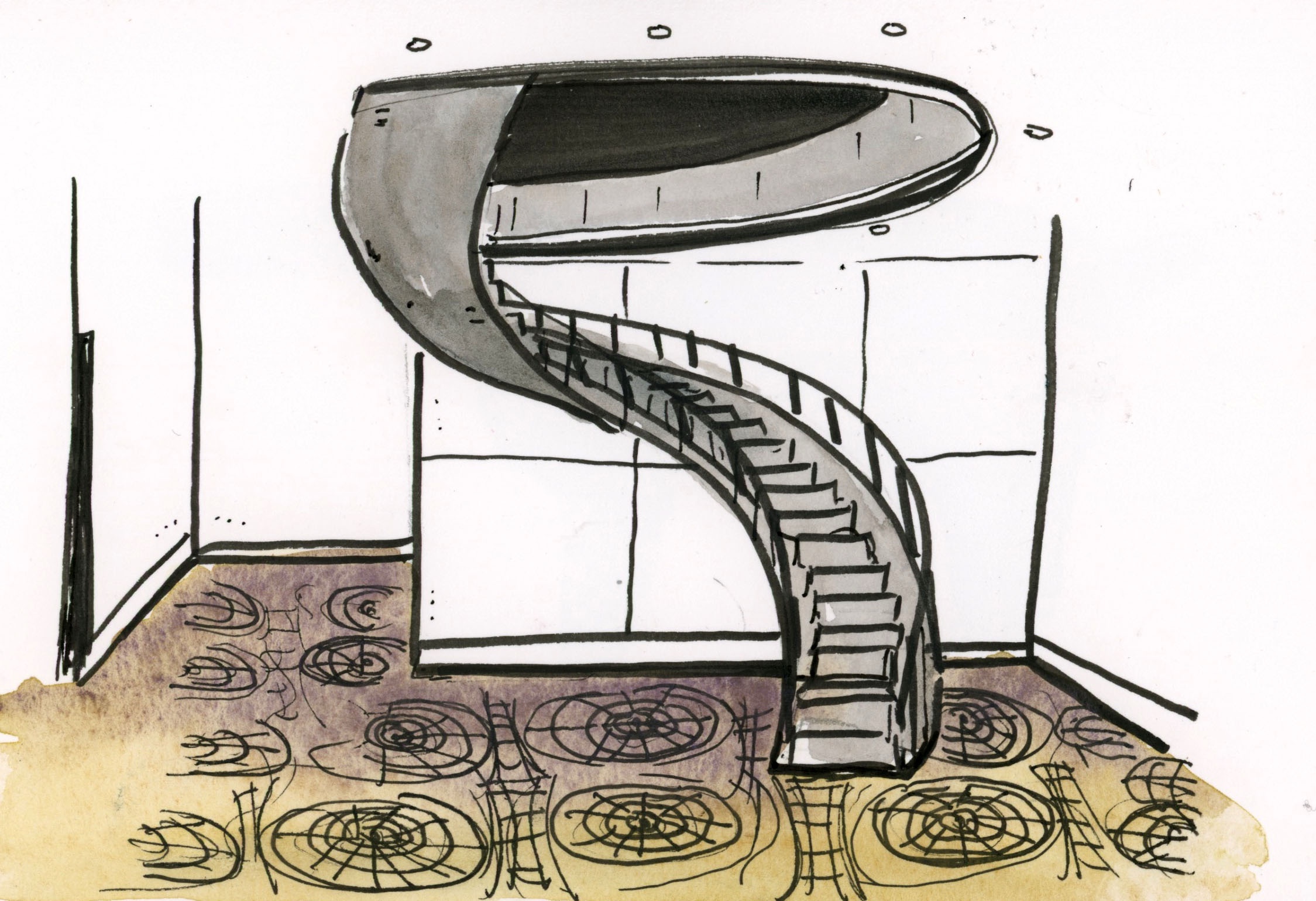
A field sketch of one of the iconic spiral staircases of Embarcadero Center. One of these staircases was featured prominently in The Conversation.
After being paid by the President, Hackman walks right to left in front of One Maritime Plaza, which is across the street from One Embarcadero Center. The location looks much the same as it did in the early 1970s.

Walking in the footsteps that the actor Gene Hackman took in one of his seminal lead roles, is my way of honoring a talented performer that had recently left us as well as creating a fitting sketcher’s eulogy.

Image

Embarcadero Sketching

On a Thursday morning I was on the hunt for two sculptures near the Ferry Building at the base of Market Street.

It wasn’t going to be a tough hunt because sculptures don’t move.

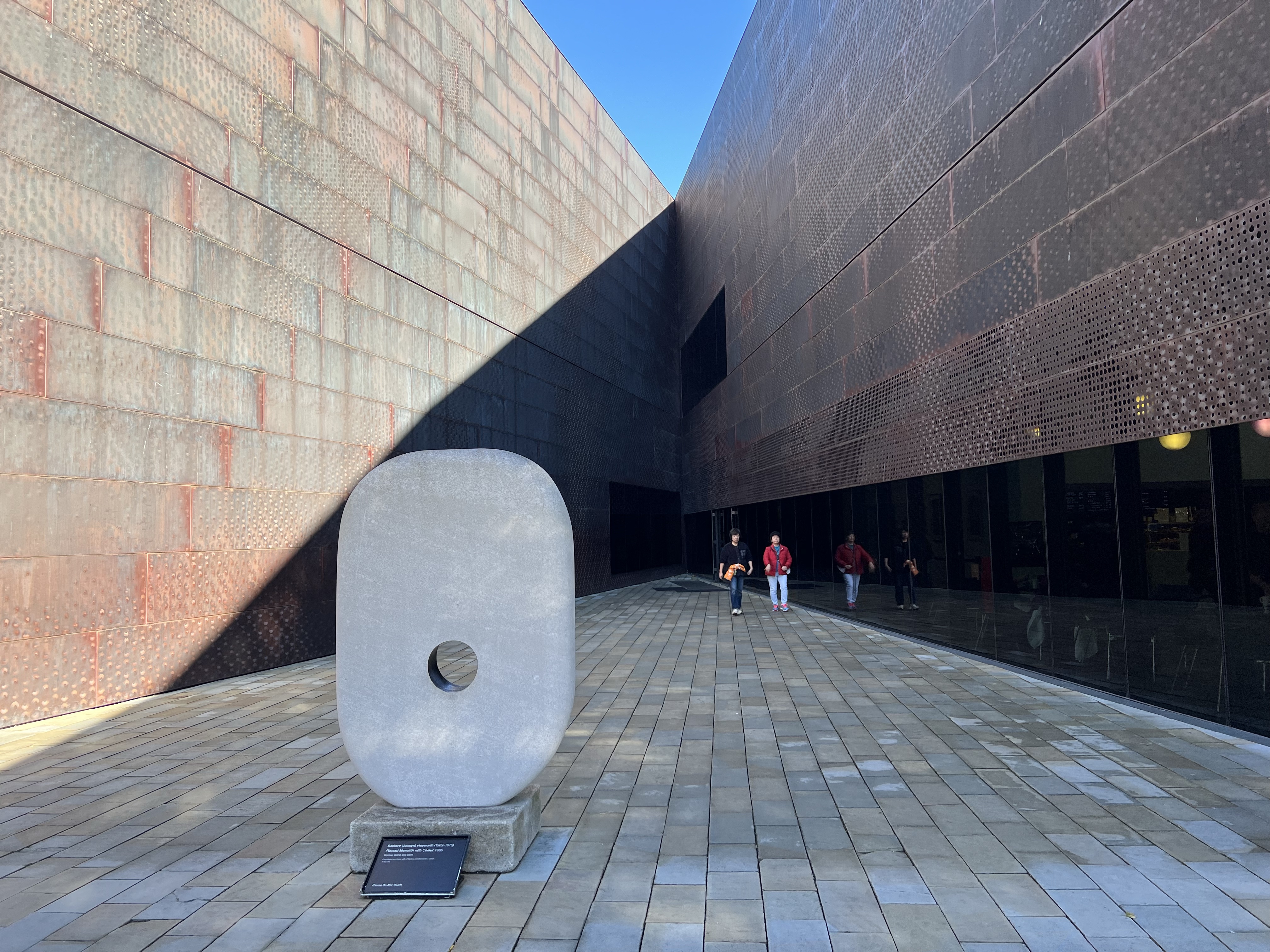
About a week earlier I had done some sketching at the de Young Museum. I had sketched two pieces in the Sculpture Garden by Henry Moore and Clars Oldenburg.

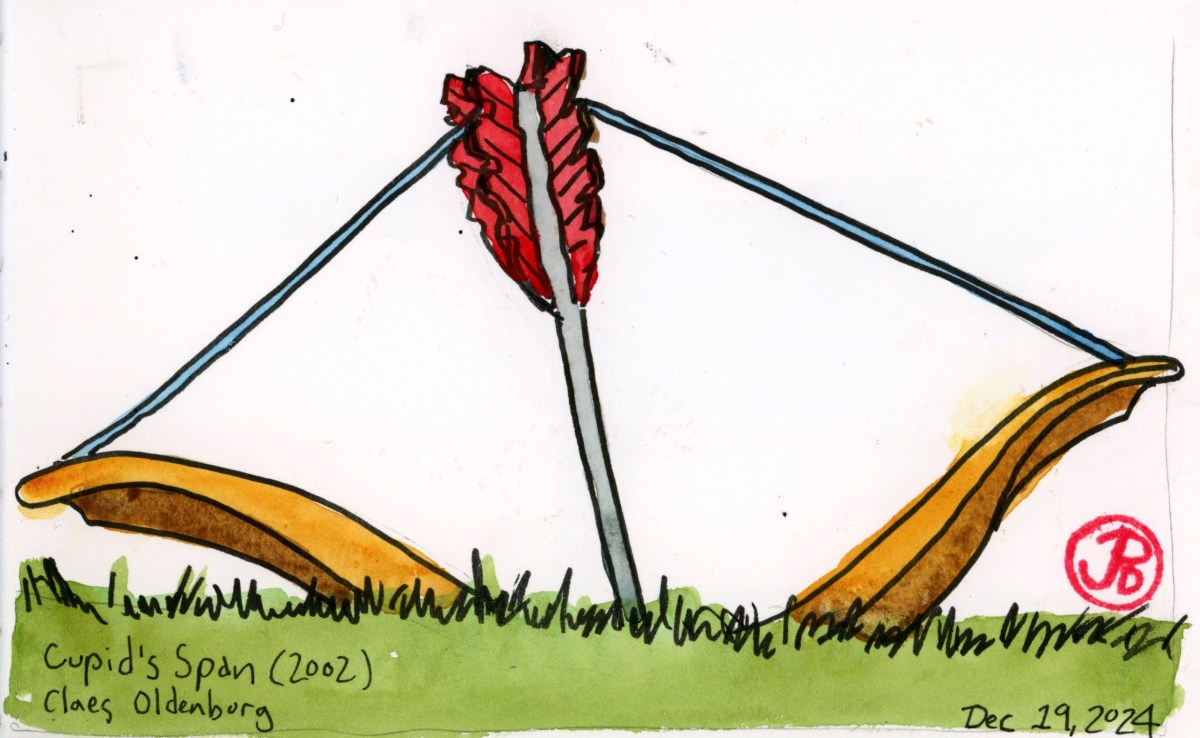
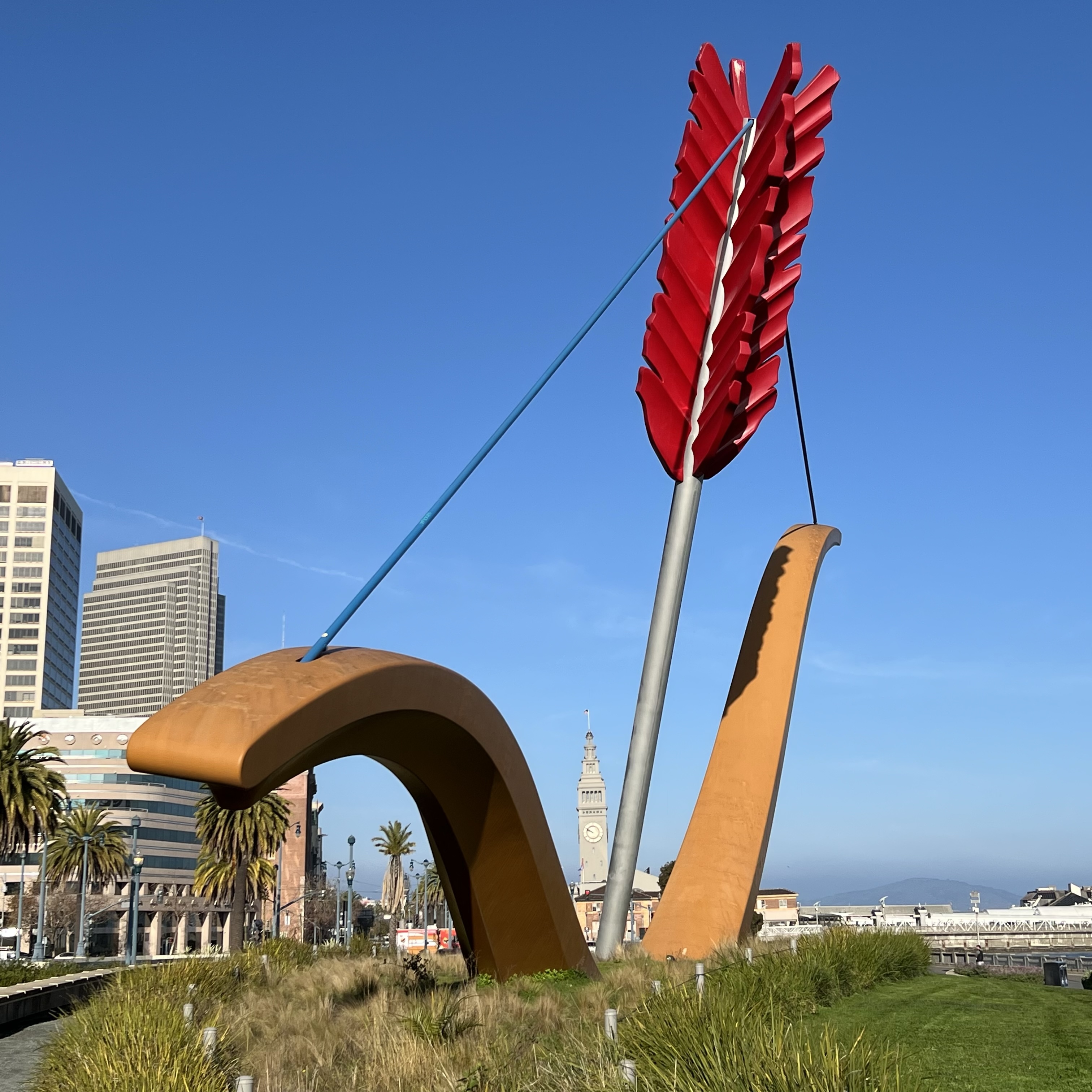
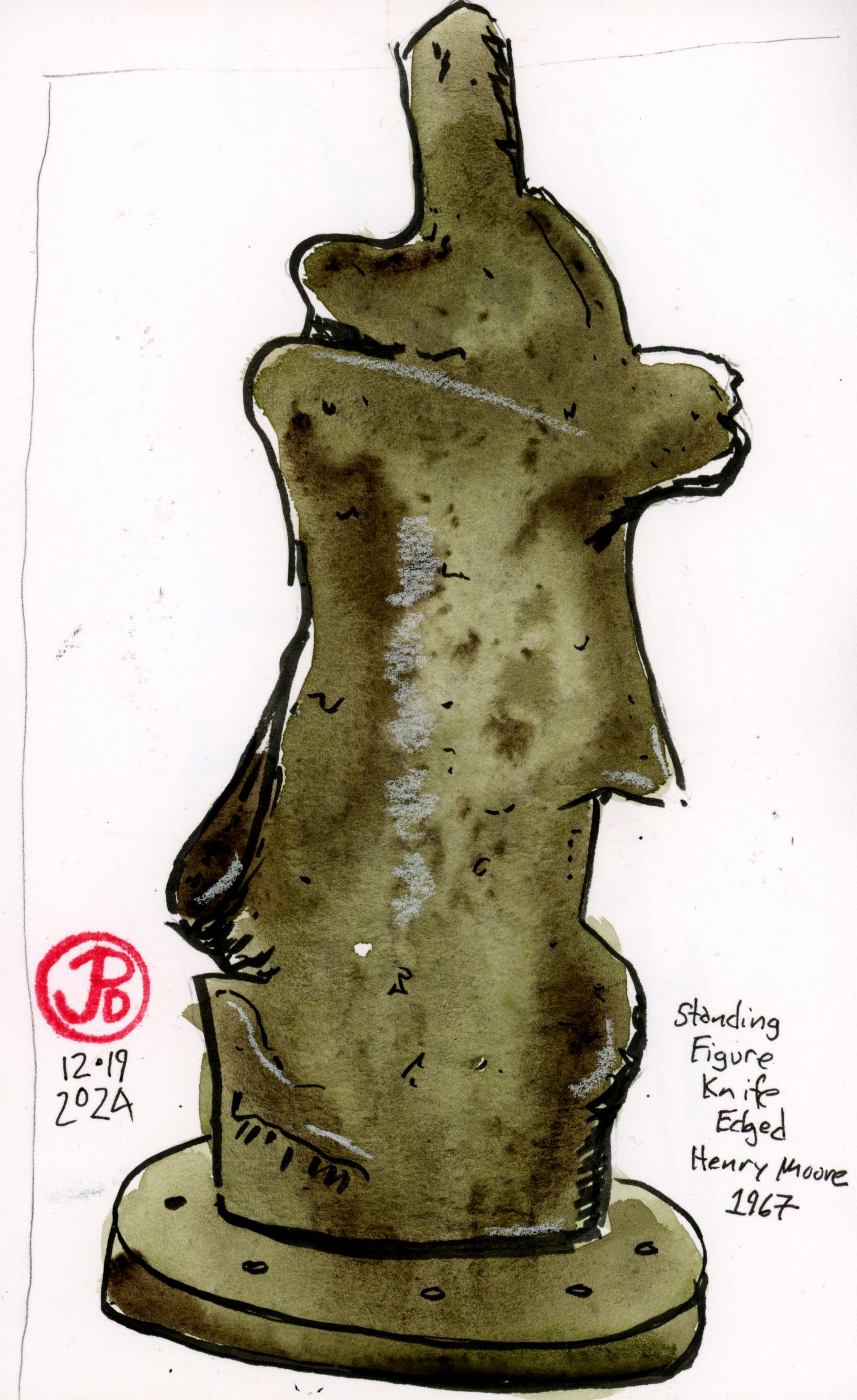
There were other pieces by these artists in San Francisco. One, Cupid’s Span (Oldenburg), near the Bay Bridge and the other Standing Figure Knife Edged (Moore) at Maritime Plaza. Both were within easy walking distance.

Oldenburg’s bow with the Ferry Building in the background.

I took the N Judah towards the Caltrain station and 50 minutes later Cupid’s Span appeared to the left. This was really Muni front door service to this large piece of outdoor public art.

Riding Muni after experiencing the spectacular trams of Oslo over the summer made the City by the Bay’s transit system seem amateurish and unreliable. We could certainly learn something from Europe’s exemplary transit. If you want to be late for work, take Muni!

I sat in the little park before Cupid’s Span. I liked sketching the curves of the bow and the feathers of the arrow. I have always wondered at the meaning of an arrow pulled taunt against a bowstring aimed into the earth. Still wondering what, if anything, it means.

After sketching I headed along the Embarcadero past the Ferry Building. My destination was Maritime Center near the Embarcadero Center (featured in Coppola’s The Conversation).

I was searching for the Yorkshire sculptor Henry Moore’s piece Standing Figure Knife Edged. This was a bit of public art that took a bit more searching than Oldenburg’s oversized bow and arrow.

Adding another Henry Moore sculpture to my sketchbook.

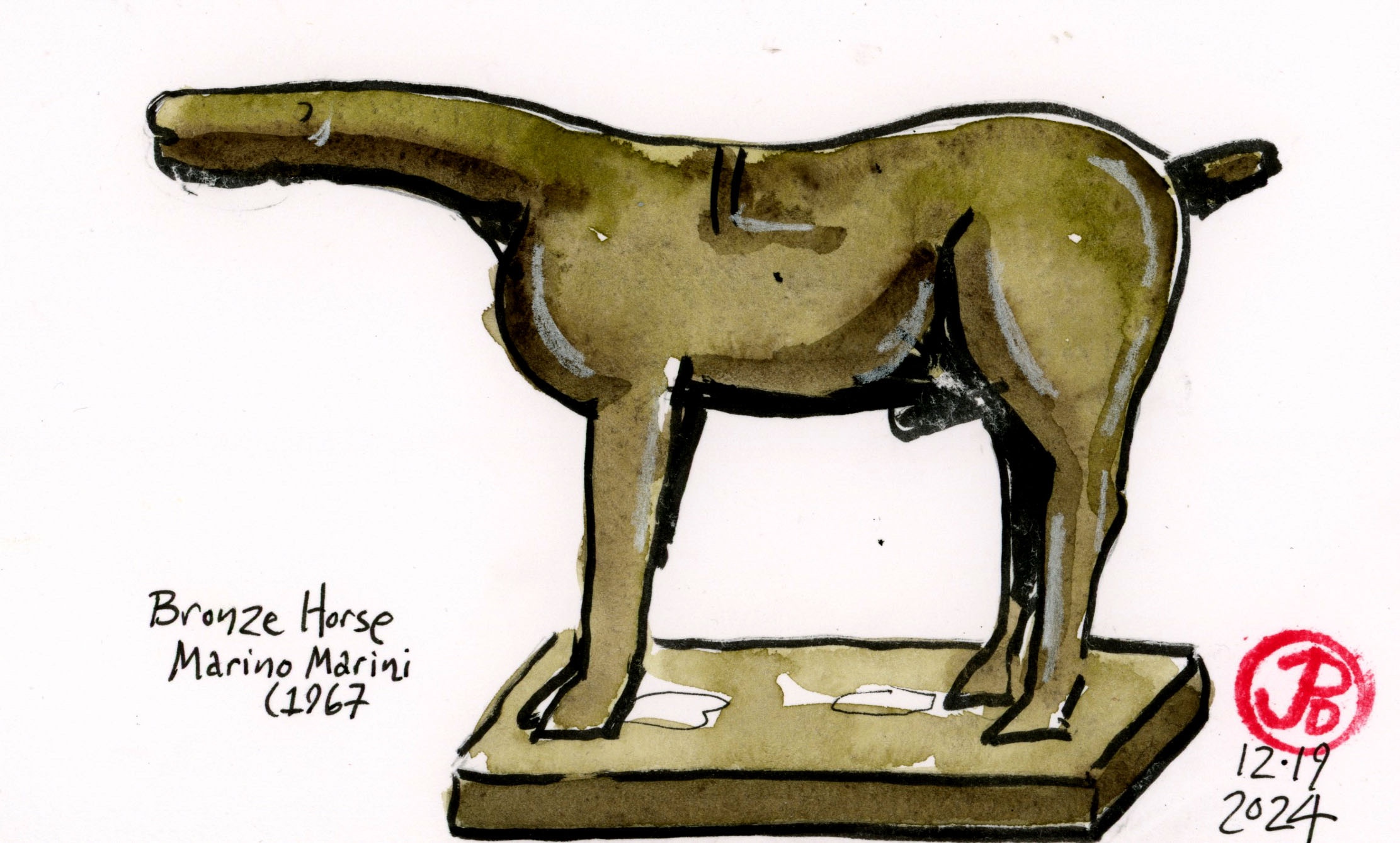
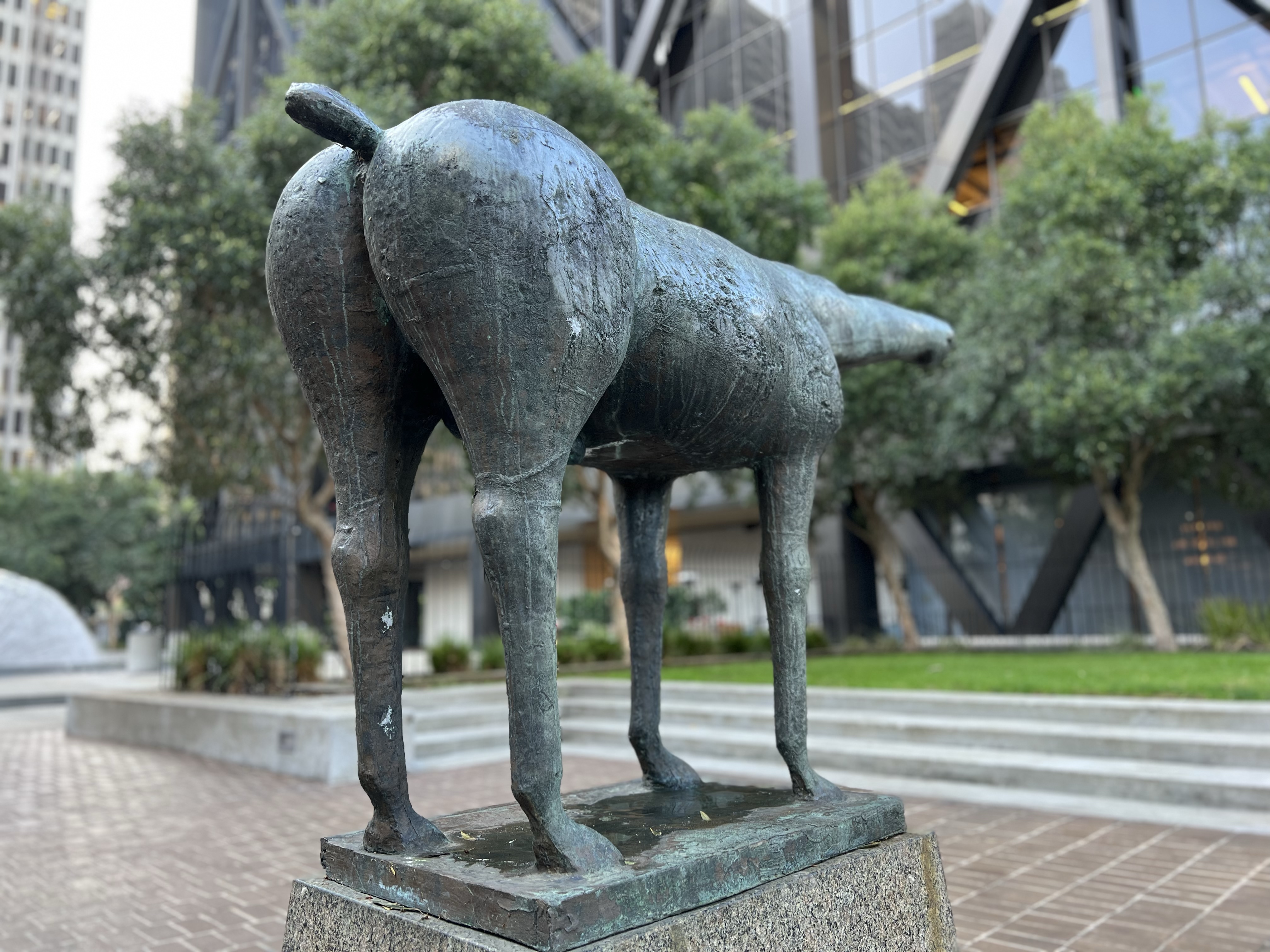
After sketching Moore’s piece I wandered to the other side of the plaza and found another whimsical sculpture, Bronze Horse by Italian sculptor Marino Marini. The sculpture looks like a giant anteater crossed with a horse.

The sketch of an anteater-horse.
Image

Bay Area Public Art Part 2

I headed to San Francisco’s Golden Gate Park to sketch’s some sculptures on a Sunday afternoon.

My first destination was the sculpture garden at the de Young Museum. I was going to do a twofer sketch from my sketching bench perspective.

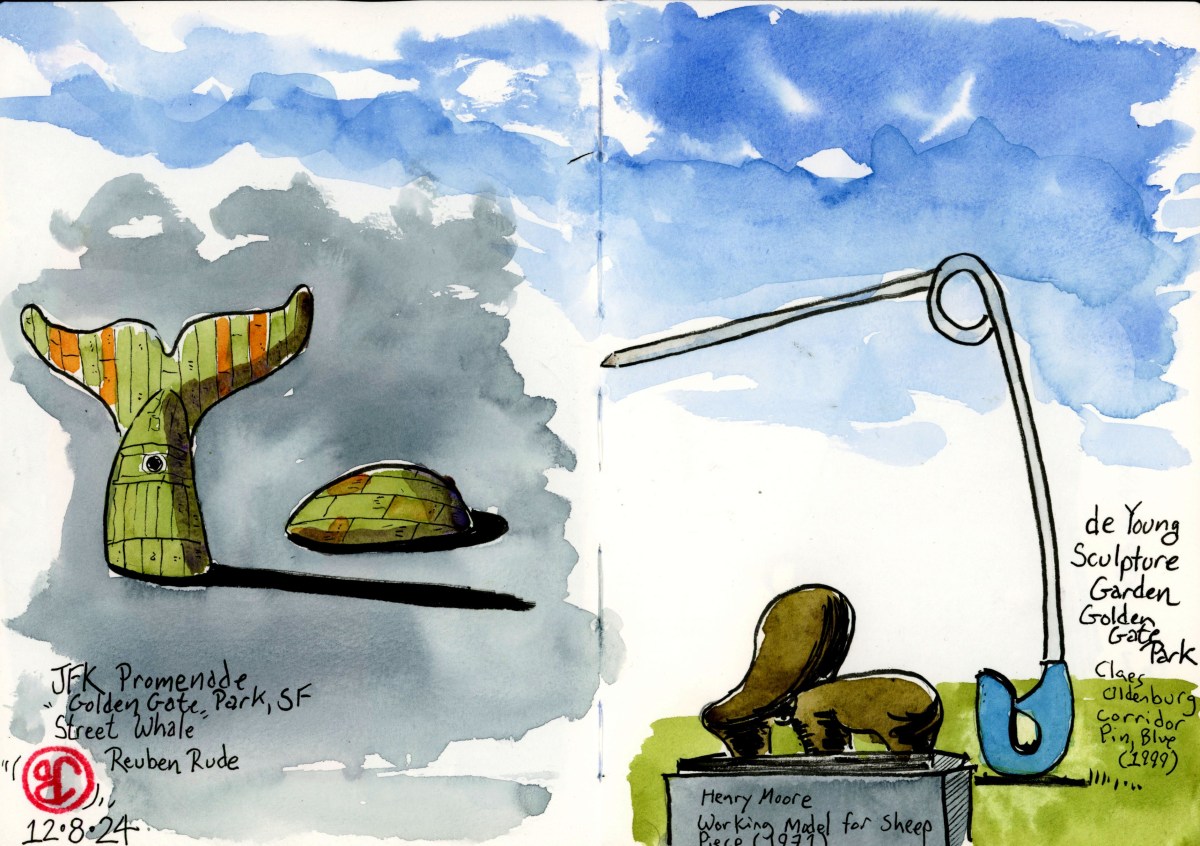
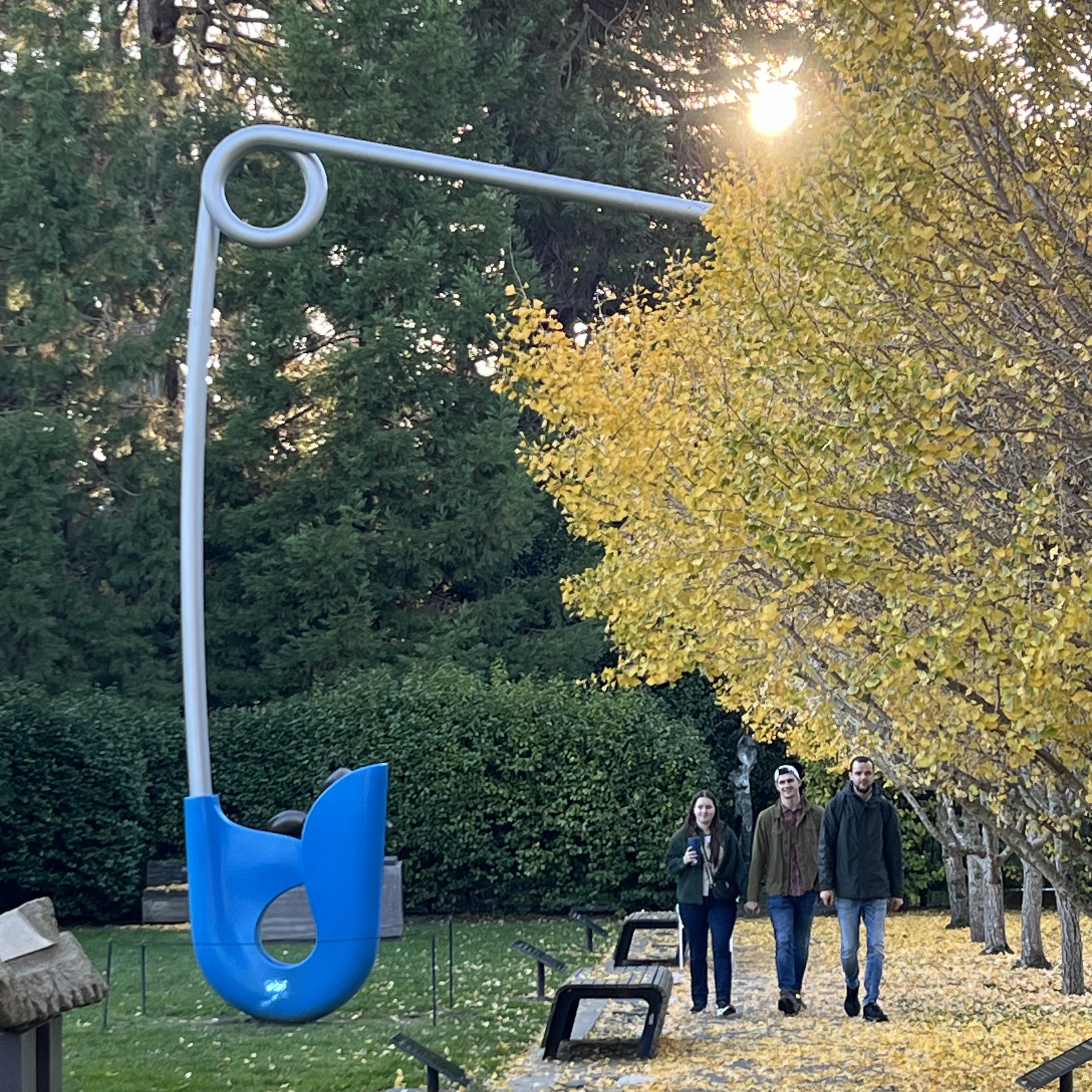
The two pieces that I added to my sketchbook were the 21 foot tall Corridor Pin, Blue (1999) by Claes Oldenburg and in the foreground, Henry Moore’s Working Model for Sheep Piece (1971).

My next piece of public art was to found along The Golden Mile Project along the JFK Promenade just to the north of the de Young Museum.

This roadway in the park has been closed to auto traffic and the road surface is painted with 12 murals produce by a group called Paint the Void.

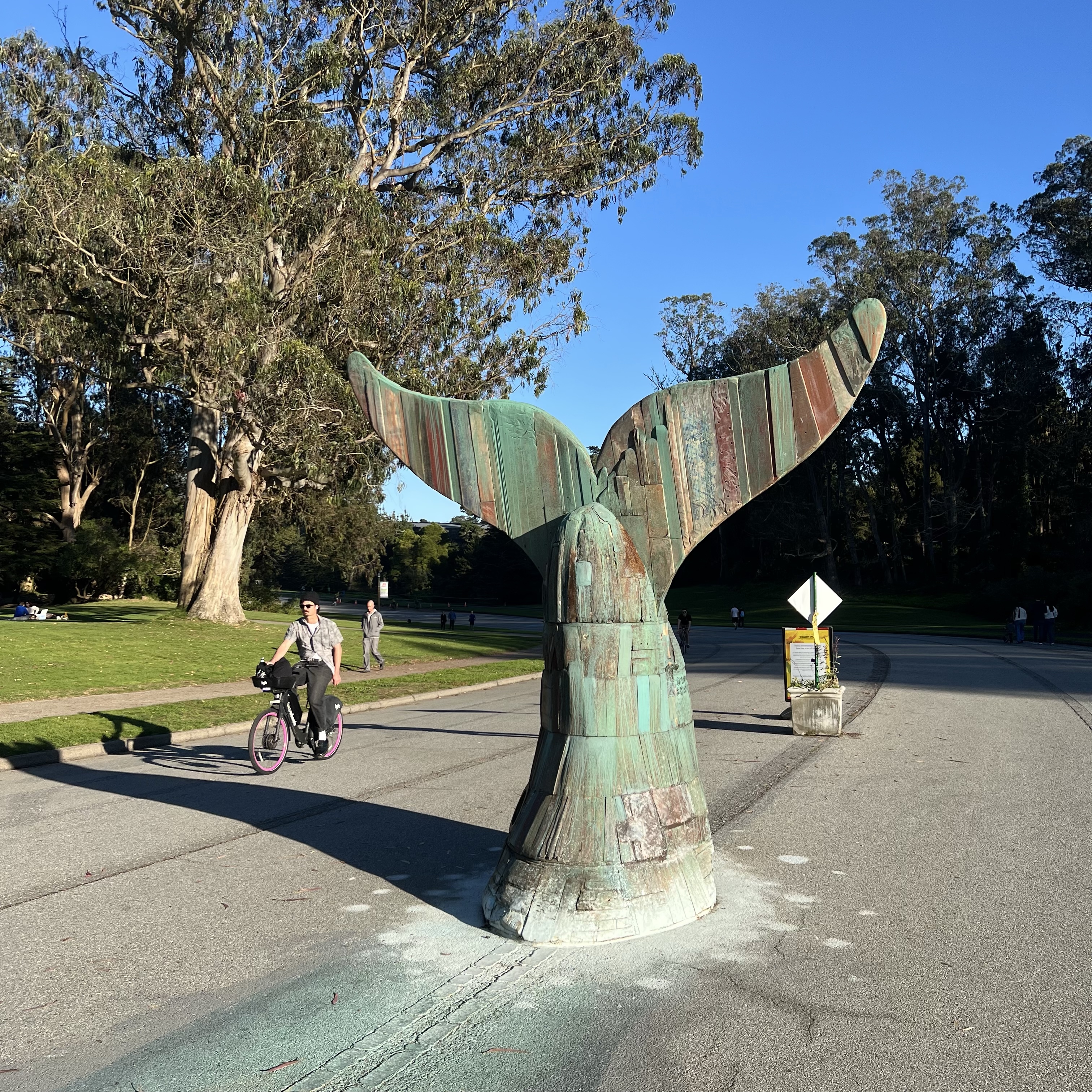
Near the Rose Garden a life sized wooden humpback whale tail breached the roadway. This piece is called Street Whale. I perched on a bike rack and sketched the piece on the left side of my spread.

Image

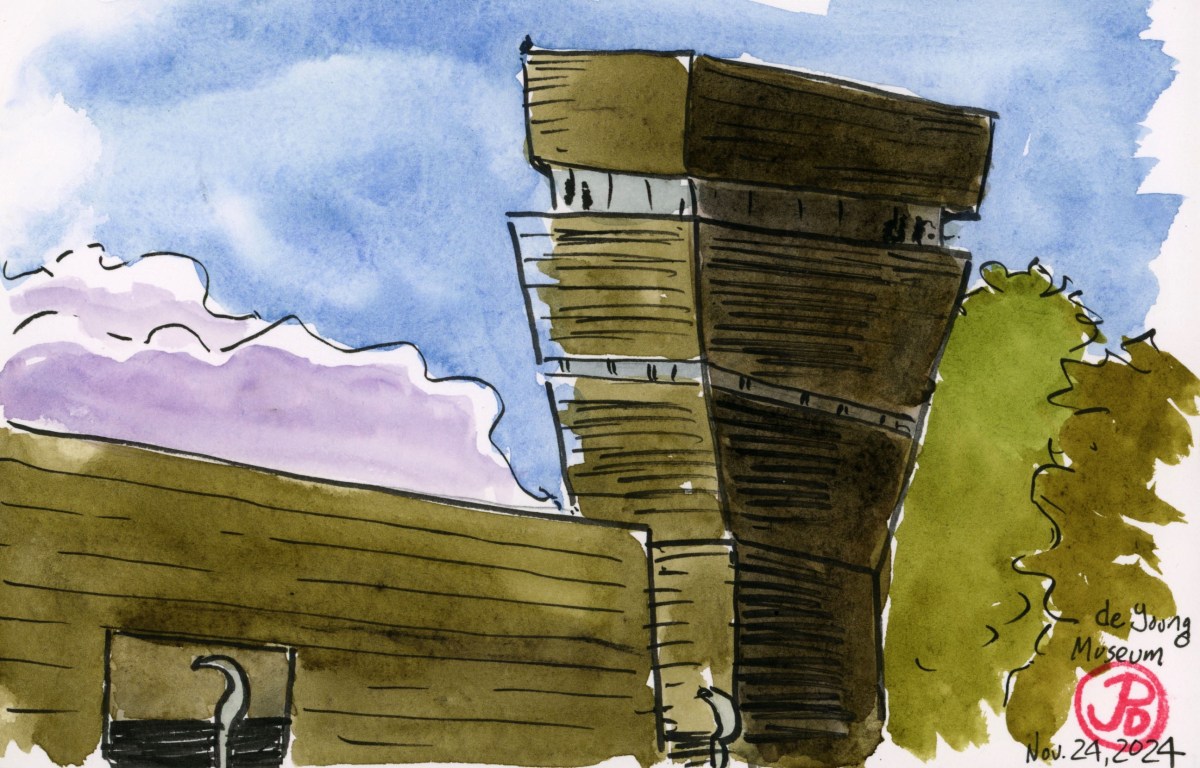
The de Young Museum

There is one art museum and one art exhibition from my youth that is at the fore of my memory.

I was in third grade when I visited San Francisco’s de Young Museum and the King Tutankhamen exhibit.

In 1979, the King Tut exhibit was a huge deal in the Bay Area. It seemed everyone had King Tut fever and wanted to see the treasures of his exhumed tomb.

The exhibit featured 55 objects including Tut’s golden death mask and sarcophagus. I have memories of marveling at the superb death mask.

The museum was founded in 1895. It moved to its present site in Golden Gate Park in 1919.

The building was damaged in the 1989 Loma Prieta Earthquake and was demolished. The museum was rebuilt in its current form in 2005.

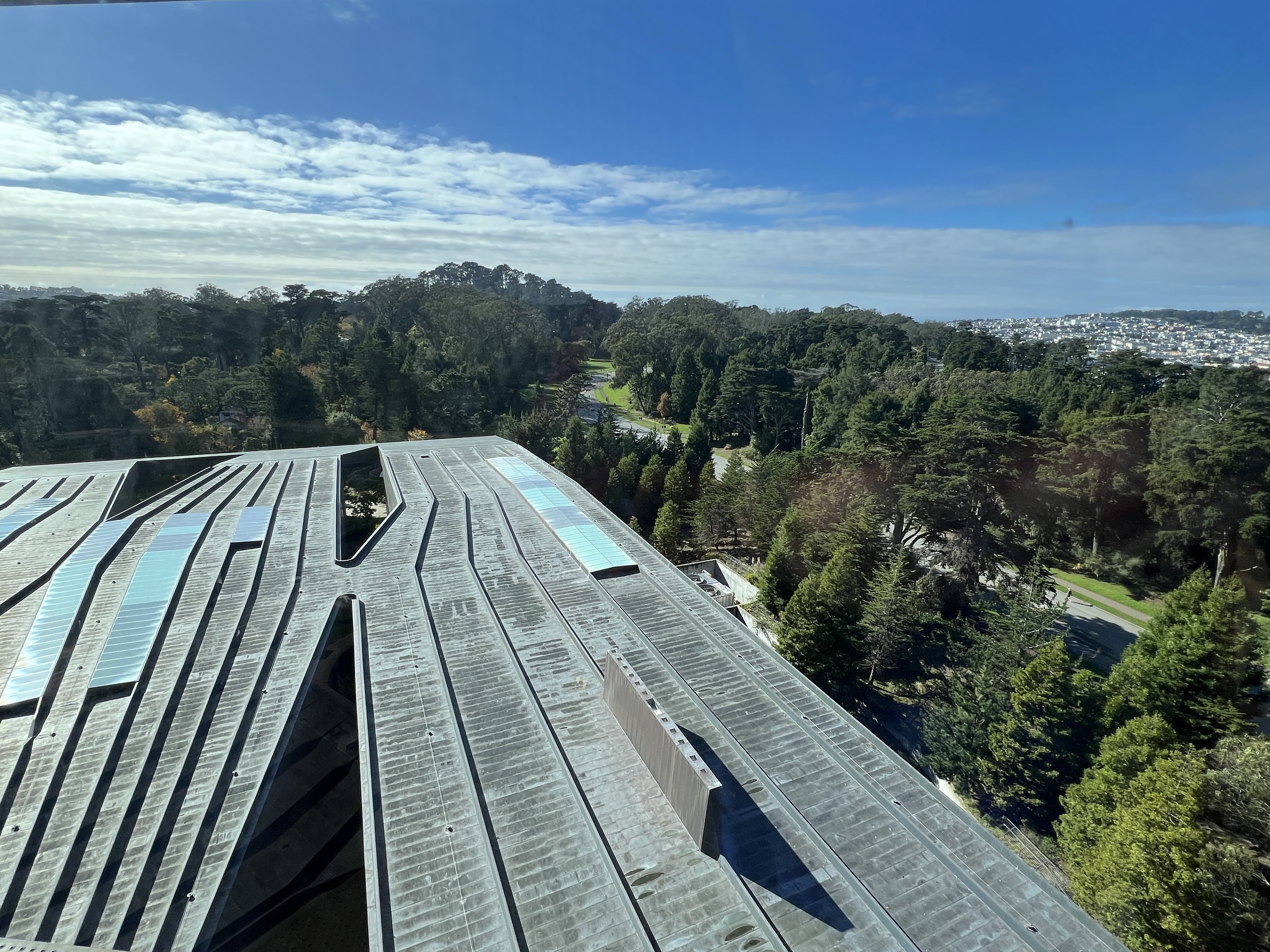
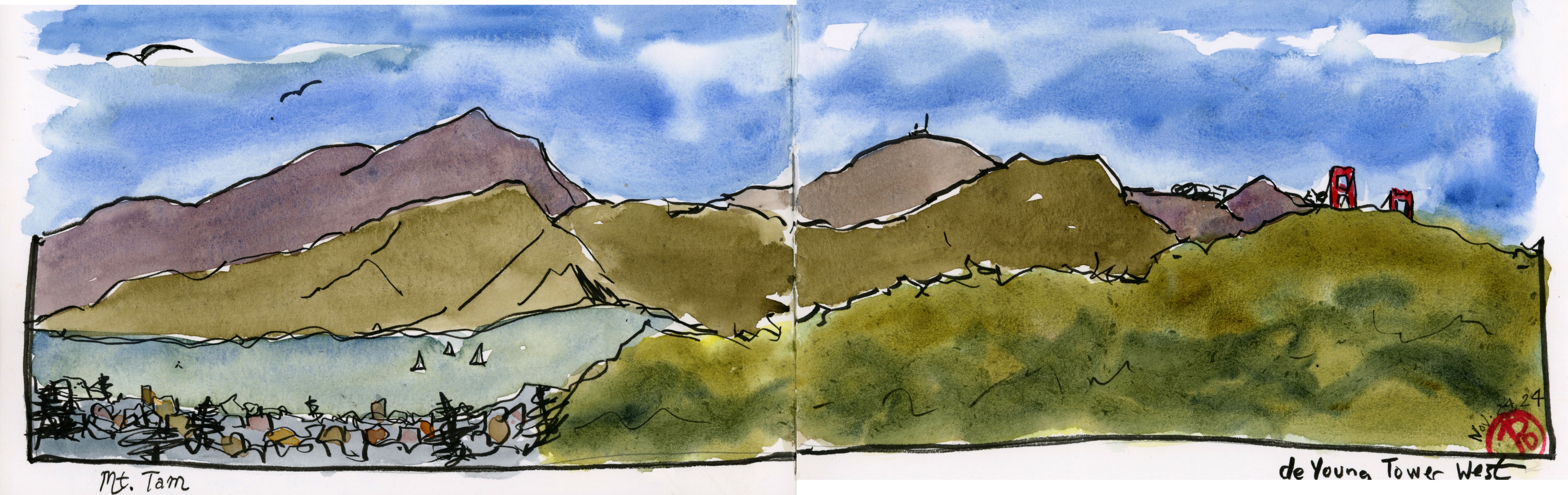
Looking west from the tower with the galleries of the de Young.

I admit that I wasn’t a fan of the new building. But the view from the top is amazing. The building is slowly growing on me.

On a recent visit I did a western facing sketch from the top of the de Young tower of the Golden Gate and the Marin Headlands (below).

Image

Kirby Cove

On a November Saturday morning I decided to pop over the Golden Gate to one of my favorite places in the Bay Area: the Marin Headlands.

I spent 14 seasons as a hawk bander for the Golden Gate Raptor Observatory (GGRO) and I have spent many days in beautiful and sometimes foggy fall weather.

One call from other blinds would be, “RT heading towards Kirby Cove!” The RT is question stood for red-tailed hawk and Kirby Cove was my Saturday hiking/ sketching destination.

The distance from the parking lot on Conzelman Road to Kirby Cove Beach, as the hawk flies, is about a mile but the road from the trailhead takes a winding path downslope, to the beach.

The trail to the beach is a graded fire road that winds down to the Kirby Cove Campground. This proved to be easy hiking.

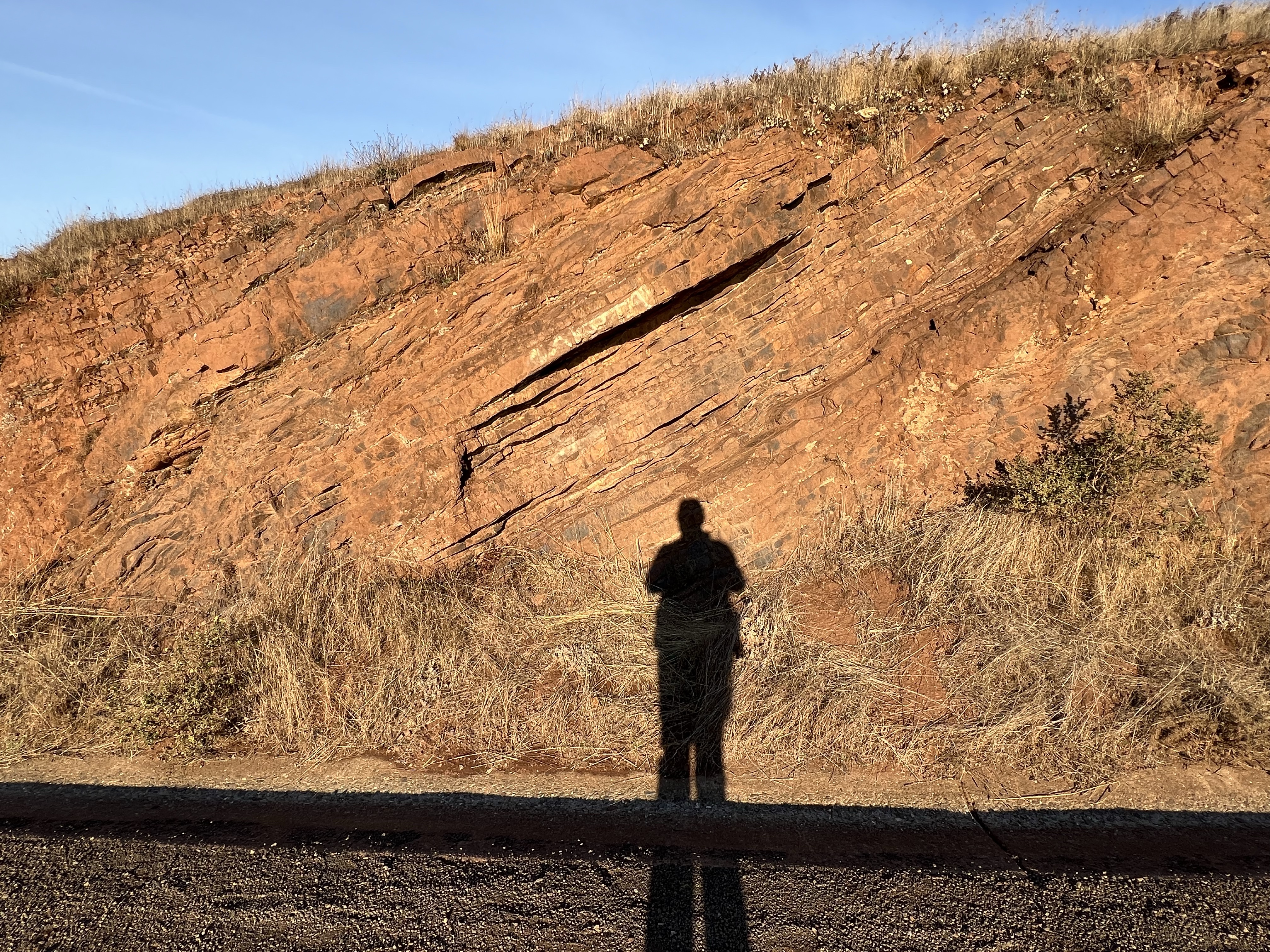
Who doesn’t love a bit of Radiolarian Chert in the morning?

From the trailhead to the beach took about 20 minutes. Before heading to the beach I looked for the Kirby Cove swing which had been taken down. I originally planned to sketch the view with the swing in the foreground. Well it was time for sketching Plan B.

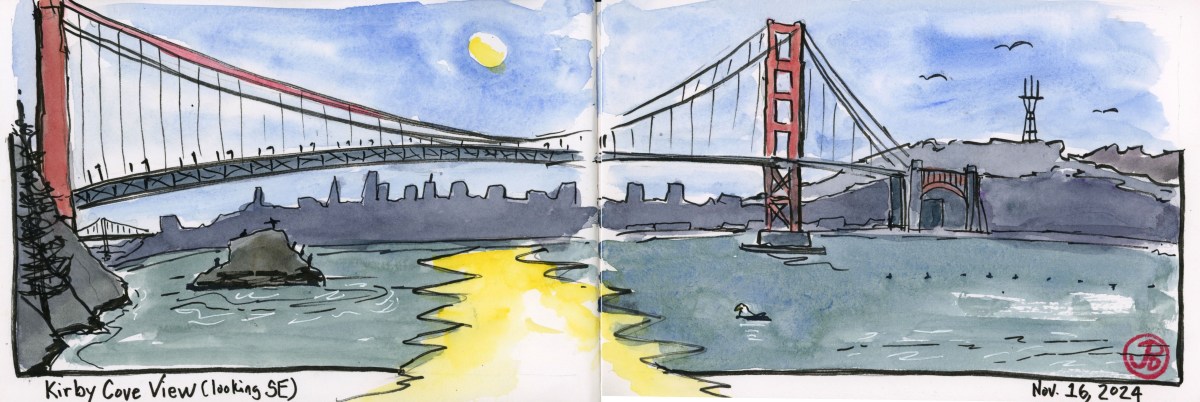
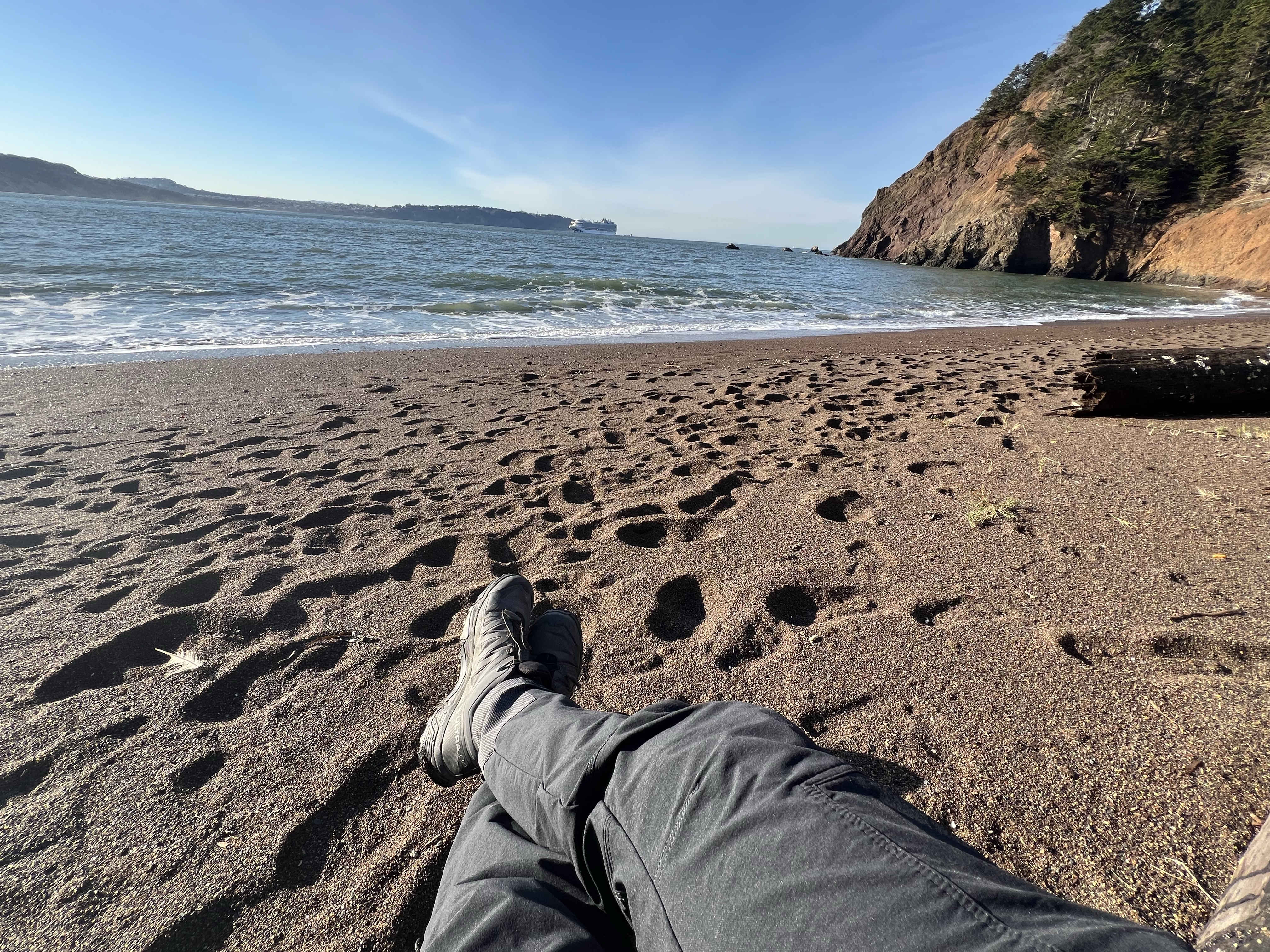
I then headed to the beach and found a sketching seat on a piece of driftwood (a former power pole) and began sketching the view of the Golden Gate, the famous bridge, and the San Francisco skyline in the background.

Beachmaster!

Even thought the nearby campground was full, I had the beach entirely to myself during the duration of my visit.

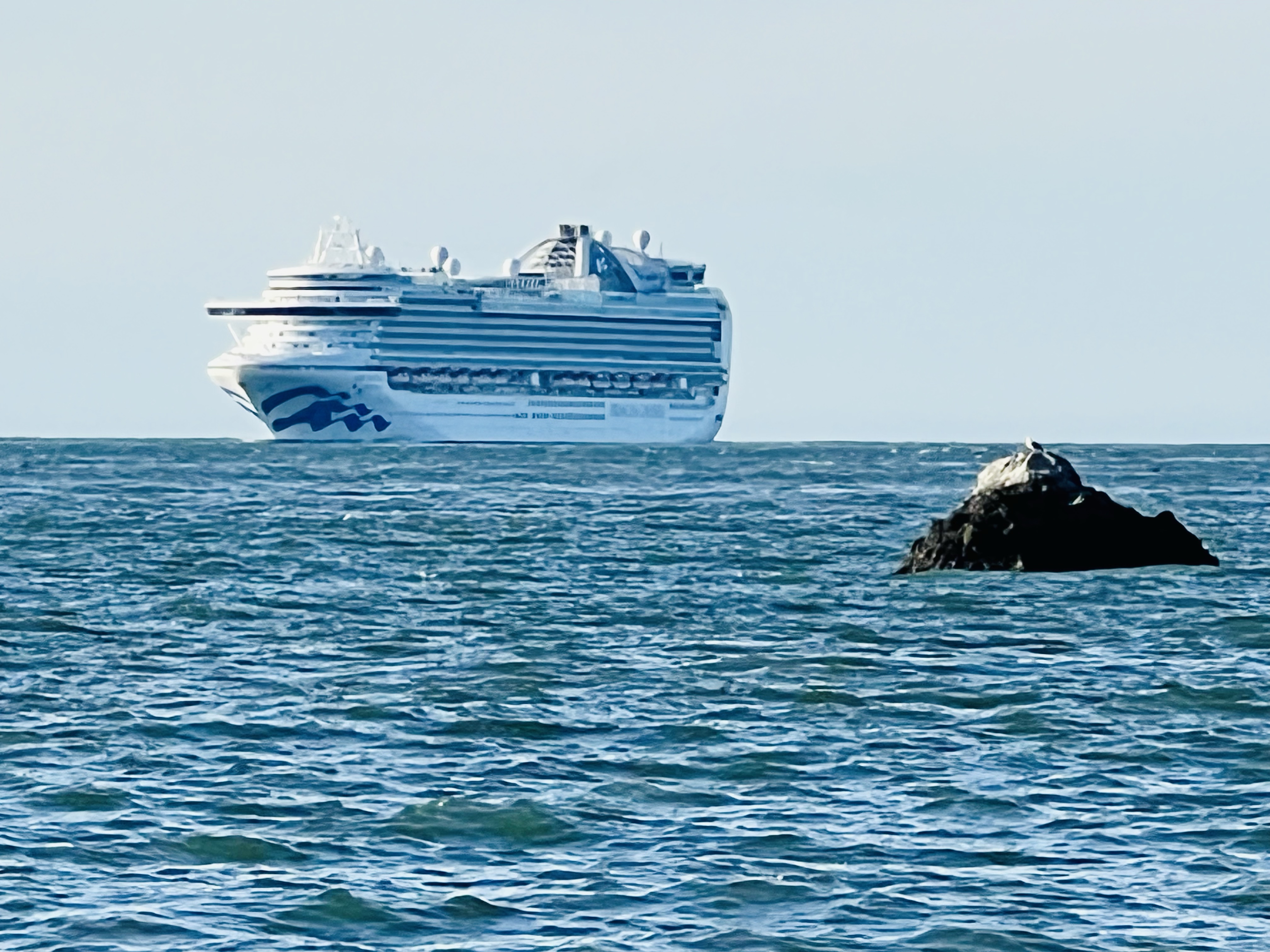
A Princess cruise ship coming into the Golden Gate like so many gold seekers in 1849.
Image

CalTrain Electric

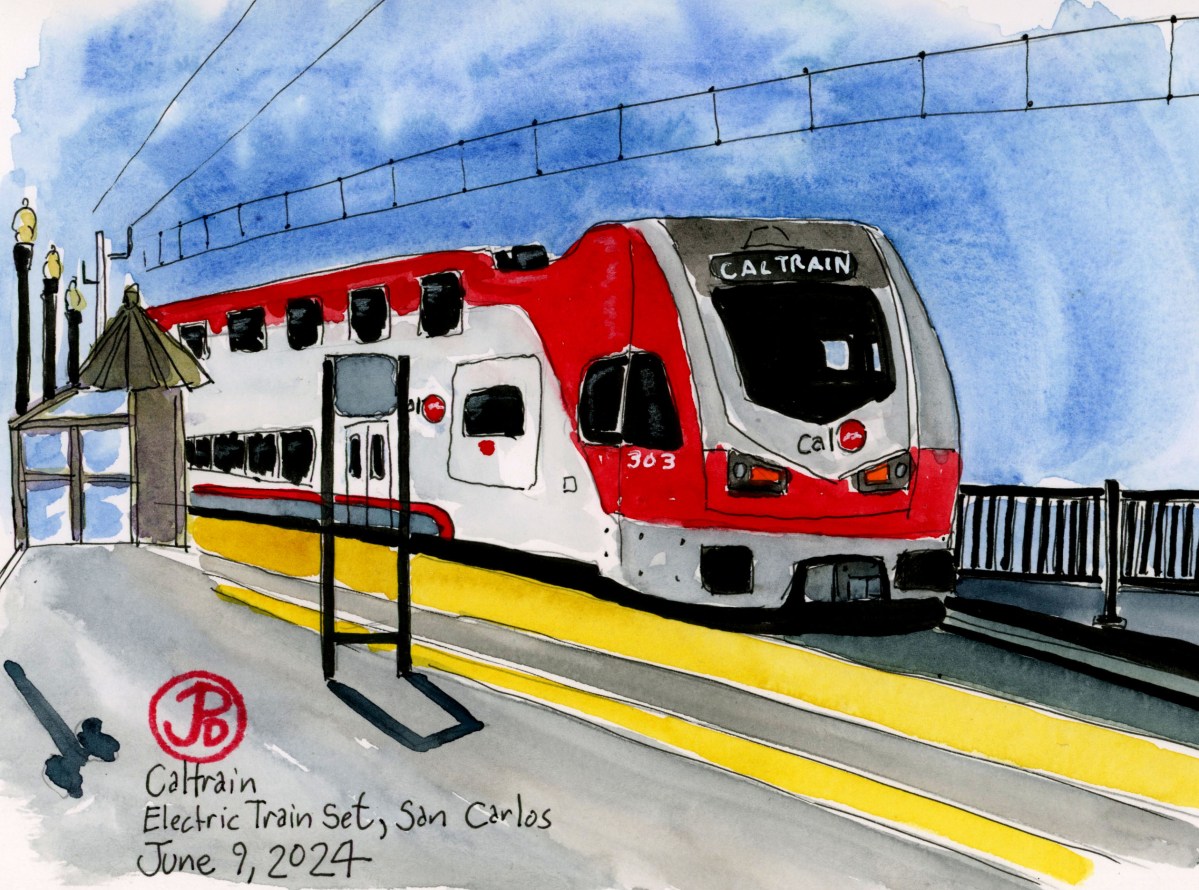
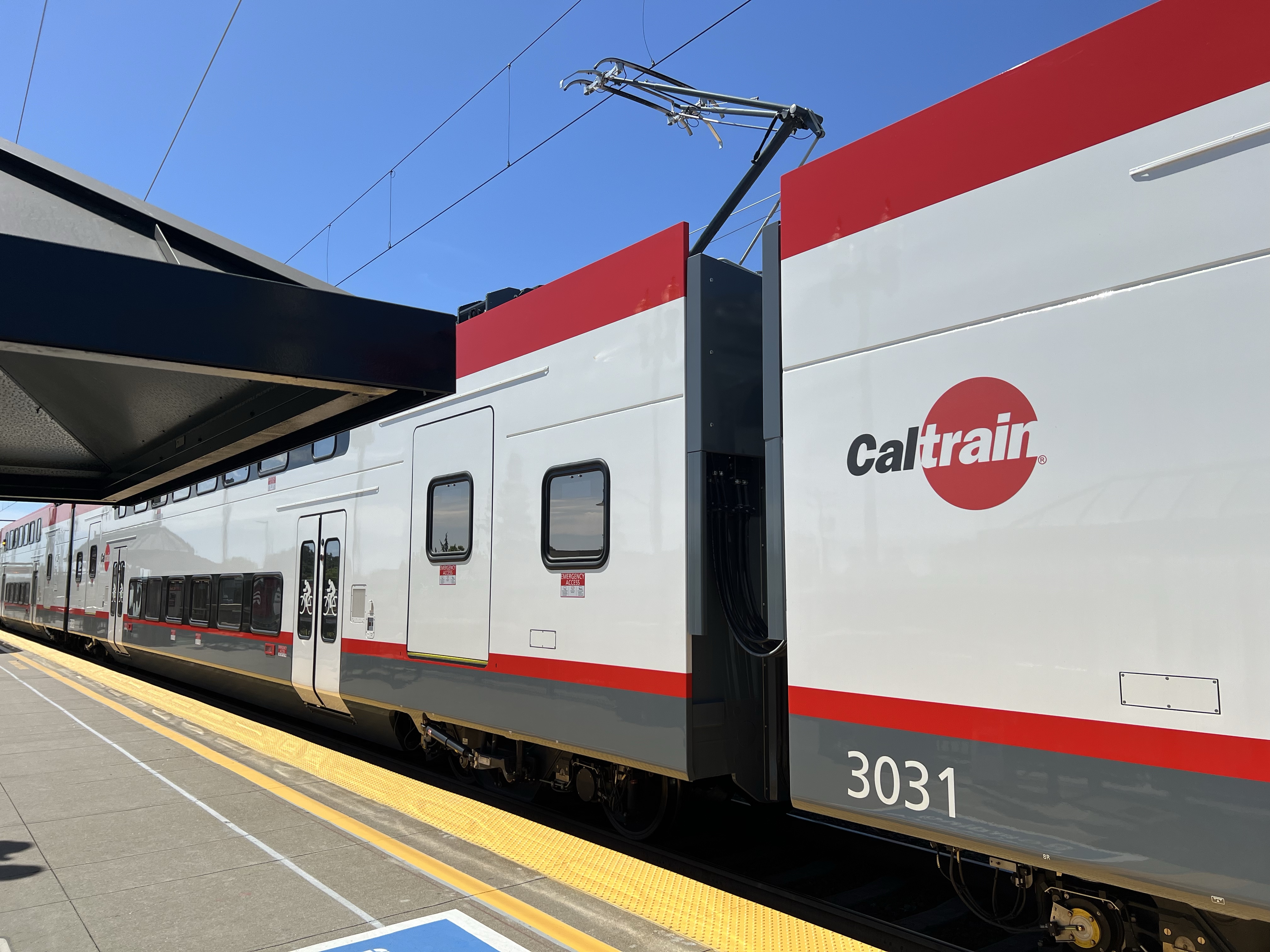
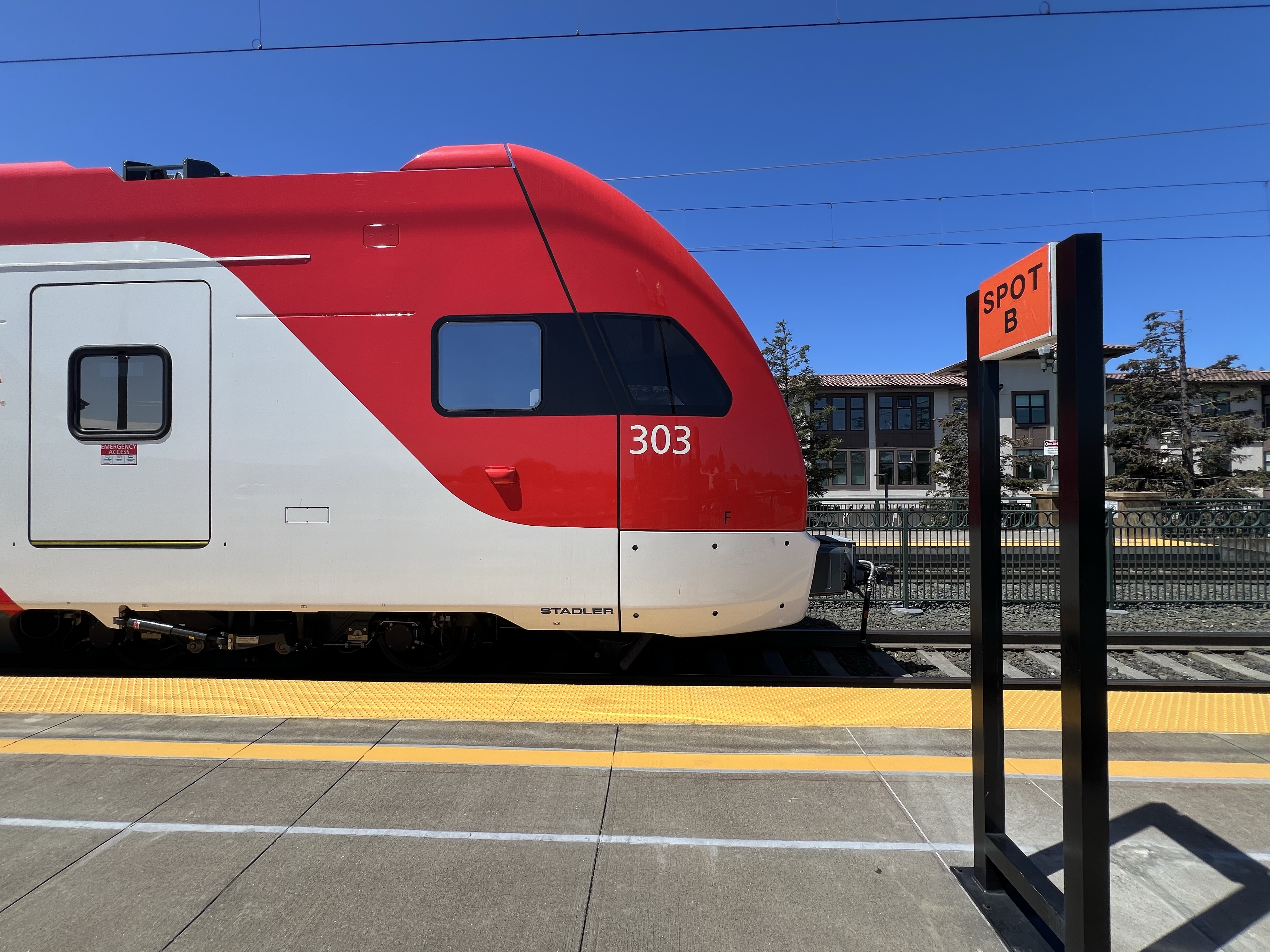
On a recent Saturday morning I had a pleasant surprise as I drove north on El Camino Real at San Carlos. At San Carlos Station was one of the new electric CalTrain sets.

The new trains are built by Stadler, a Swiss-based train manufacturer. The company was founded in 1942 and is headquartered in Bussnang, Switzerland. The company has a factory in Salt Lake City, where Stadler will build 24 train sets for Caltrain.

The train sets are known as BEMUs which stands for battery-equipped electric multiple unit.

I parked, thinking that the train would surely have left the platform by the time I walked to the station but as I walked down San Carlos Avenue, the train was still stationary at the station.

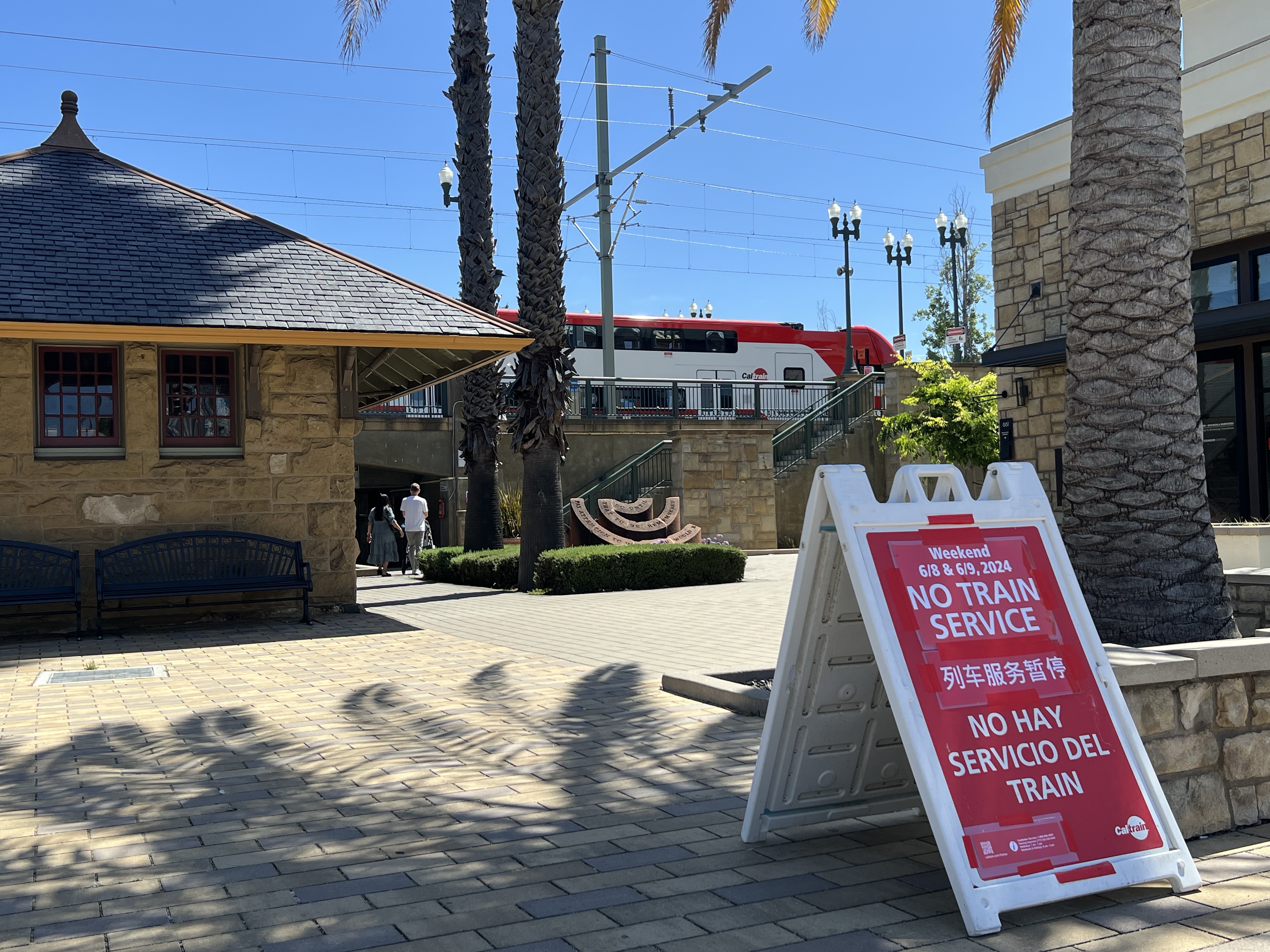
As I crossed El Camino, a placard stated “No Train Service”. The line was closed all weekend.

The line was closed from San Francisco to San Jose so Caltrain could test eight of the new electric train sets. The electrification of the line started in 2017 and electric trains are scheduled to start running on September 21, 2024.

If you think of some of the most iconic passenger trains in modern rail: Japan’s Shinkansen (“Bullet Train”), France’s TGV, Eurostar, Amtrak’s Acela, Chinese Railways CRH, the Bay Area rail corridor was finally being electrified to catch up with the rest of the world, although it would not come close the top speeds of modern Shinkansen (186 mph).

Three quarters of the world’s passenger service are powered by electricity. About time!

This is what powers the new train sets: the pantograph that delivers power from the wires above to the train set below.
Not sure if these new trains sets earn any style points. They look like a large streetcar or tram.
Image

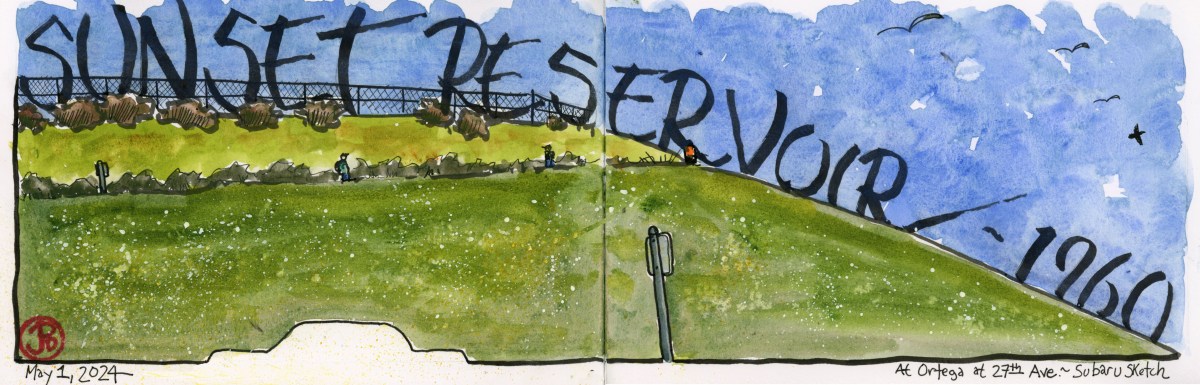
Sunset Reservoir

I live a hop, slip but not even a jump from San Francisco’s largest reservoir: Sunset Reservoir.

This terminal reservoir was completed in 1960 and has an impressive capacity of 270 acres. To put this into context the sides of the reservoir are four blocks north and south and two blocks east and west. The surface area is 11 acres.

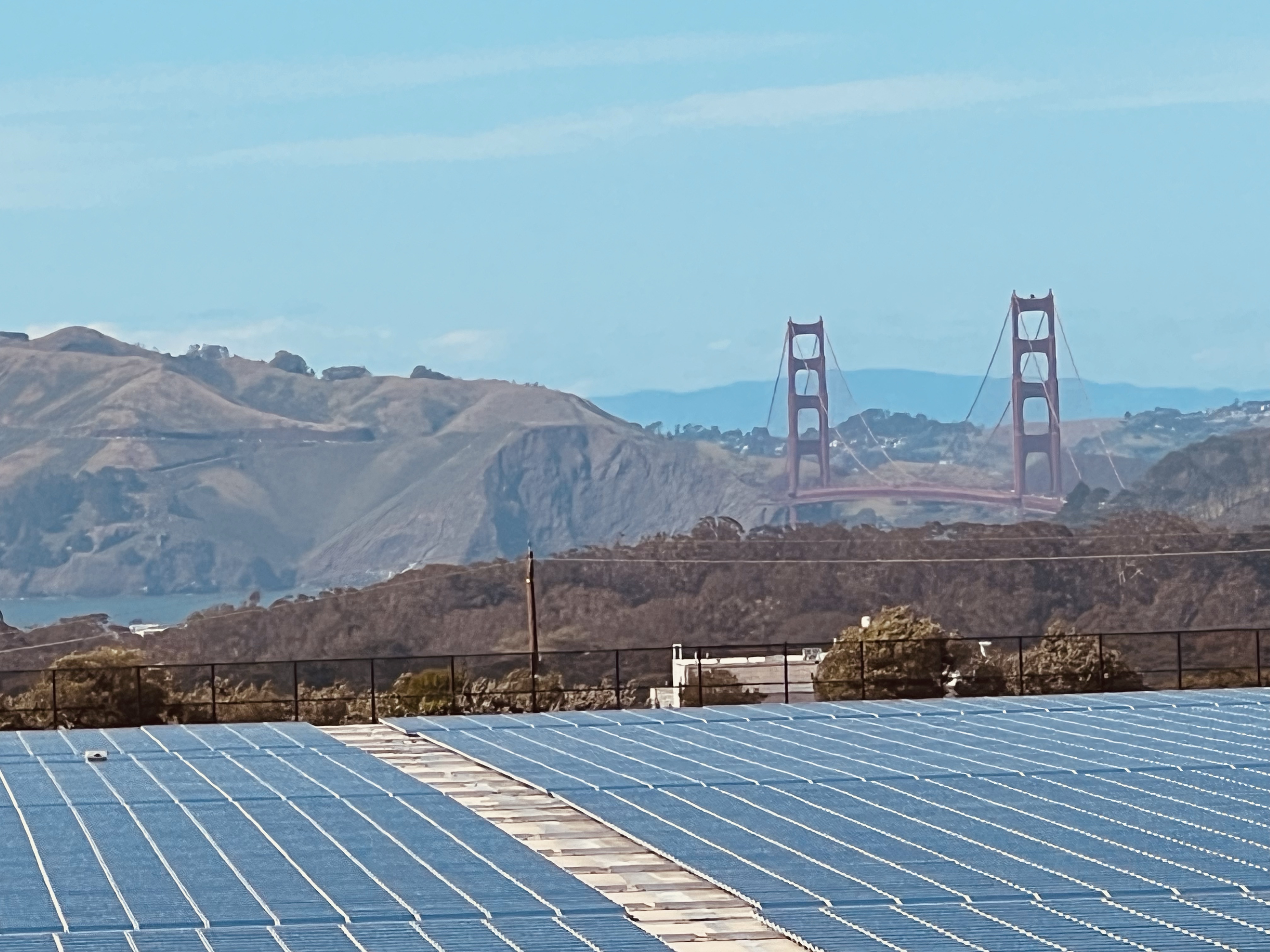
The reservoir is covered and fenced off. Over half of the reservoir is blanketed in 25,000 solar panels. The Sunset Reservoir Solar Project started in December 2010 and has tripled San Francisco’s solar generation capacity.

The irony is that the Sunset is the foggiest part of the city.

Some of the 25,000 solar panels of Sunset Reservoir.

While the reservoir itself is not a sight to behold, the northwest corner (featured sketch) affords some of the best views in the Sunset. Along the embankment are walking paths and at the northwest corner are a line of benches.

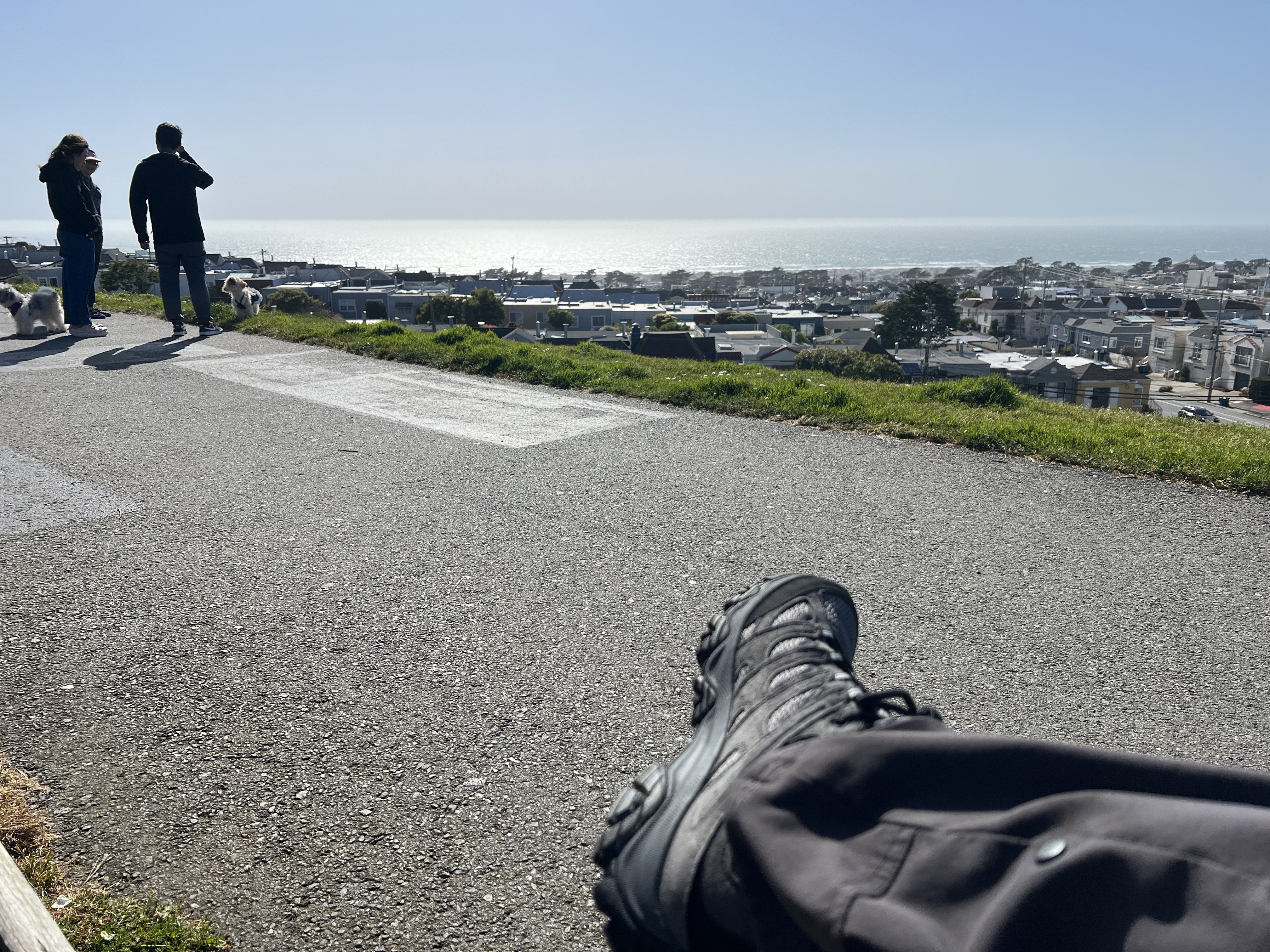
The bench-view to the north. I can almost see the Farallons. These paths are popular with dog walkers.

Here you can look out to the west towards the Pacific Ocean and on a clear day, you can see the Farallon Islands perched on the horizon like a large, gray battleship.

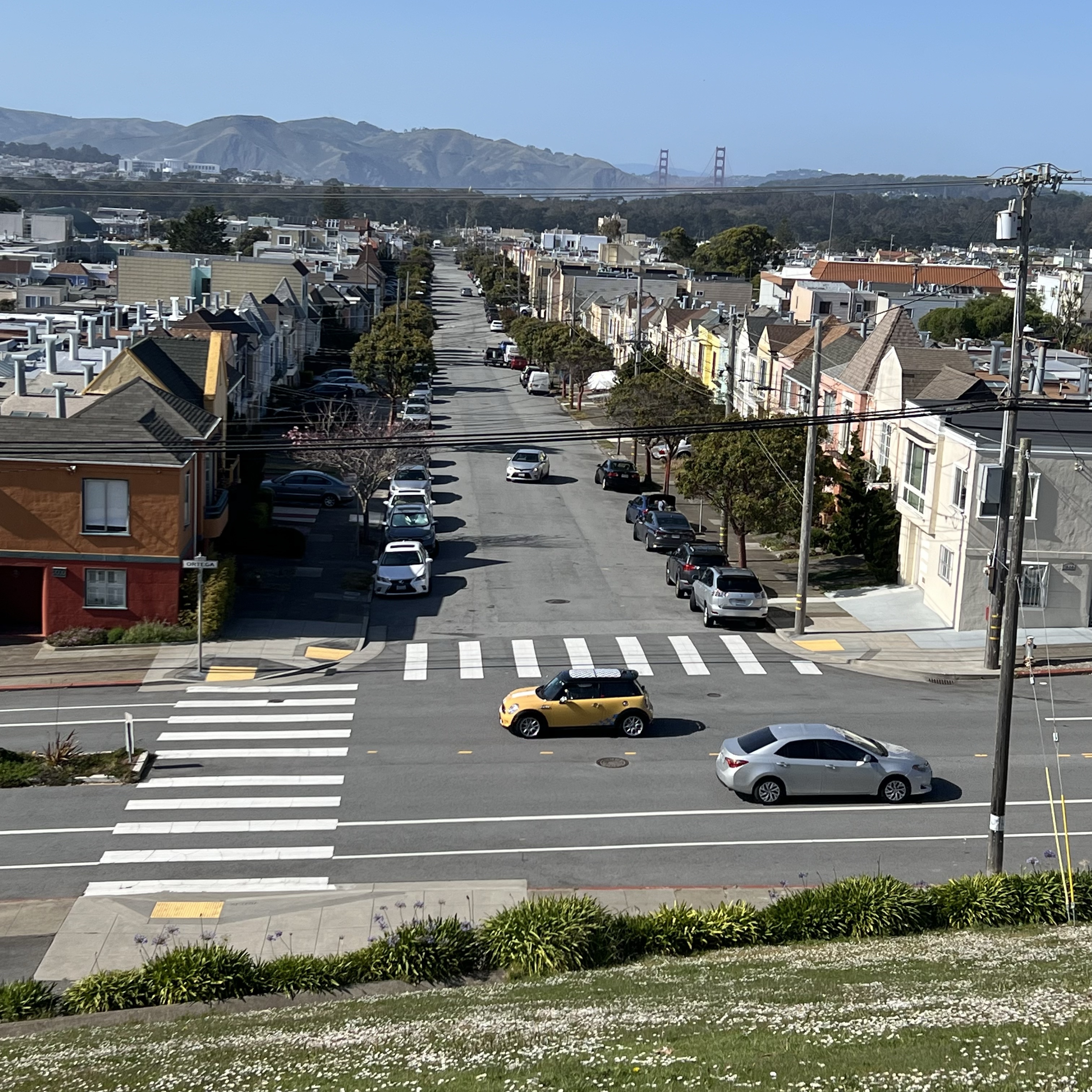
The views to the north as just as stunning taking in Golden Gate Park, the Richmond District, the Golden Gate Bridge, Marin Headlands, and Mt. Tam. On really clear days you can see outer Pt. Reyes.

Looking north down 27th Avenue towards the Golden Gate from one of the walking paths.