Image

Ben’s Bird in the City of St. Francis

A rainy afternoon is alway a great time to visit one of San Francisco’s museums. In this case I used my recently purchased membership to return to the California Academy of Sciences in Golden Gate Park.

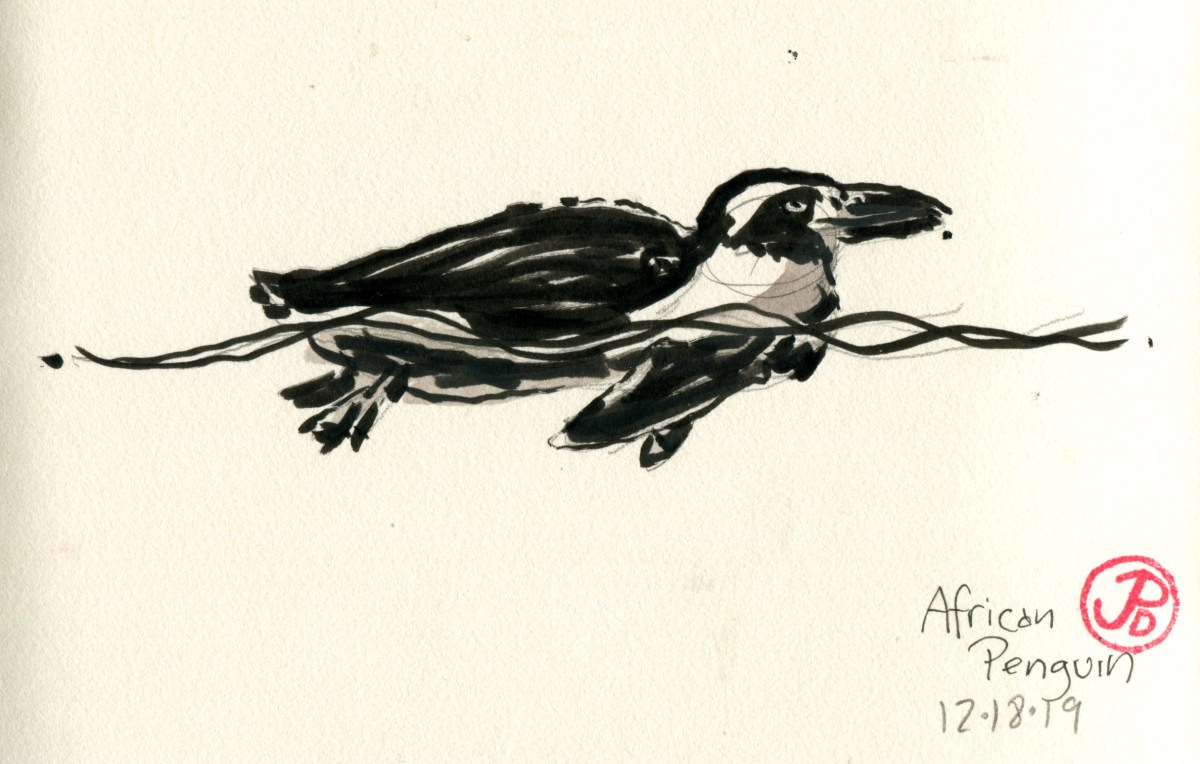
I brought my sketching kit and started to sketch an African penguin as it swam around before feeding time. This was a challenge because I did the sketch in small bits because the penguin did not hold still so I took mental snapshot while the bird was facing the right way and eventually pieced together a few penguins for a sketch.
Swimmiing Ass

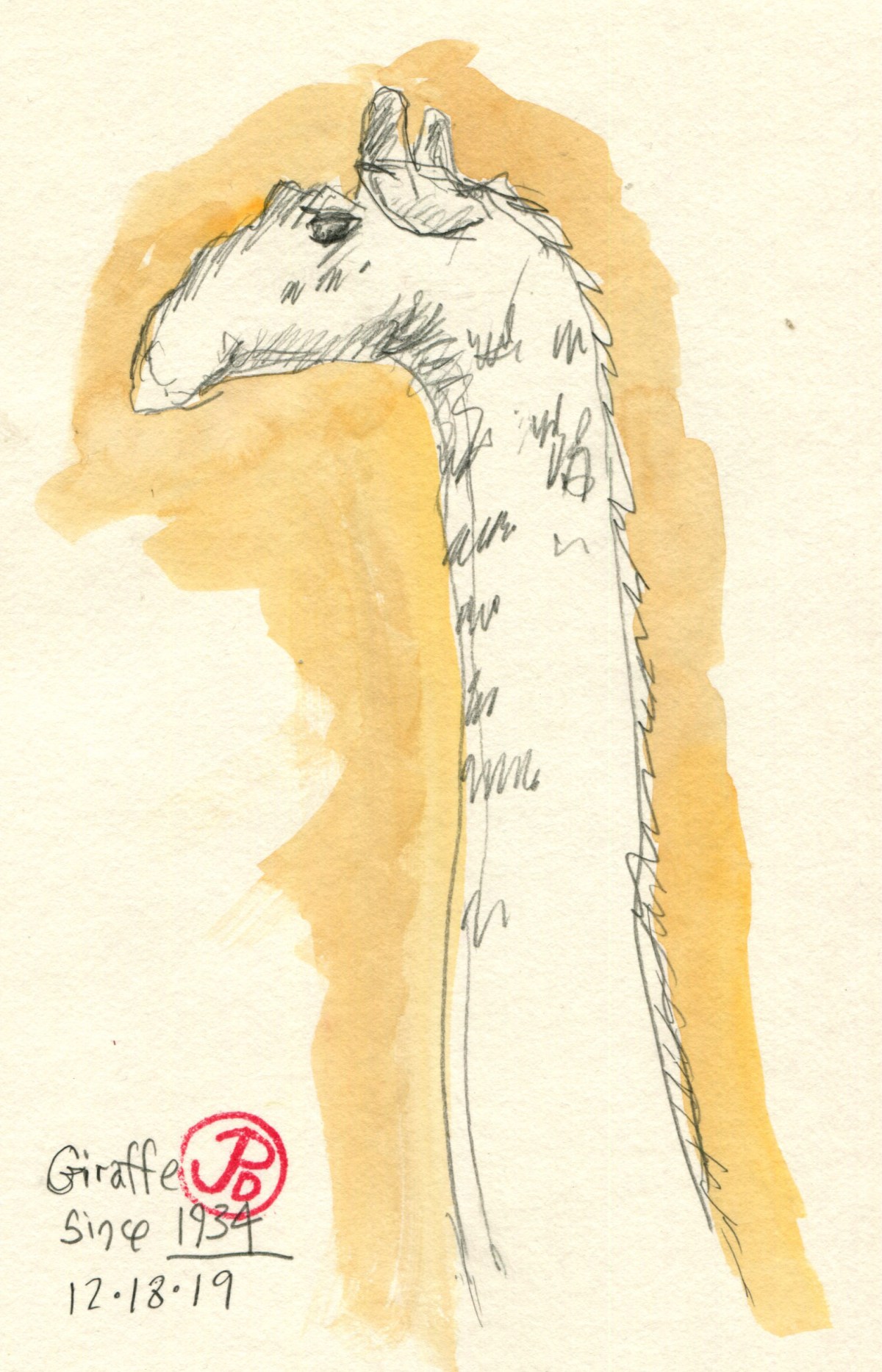
I then went out of the African Hall to sketch something more stationary. A giraffe mount will do. It was amazing to read that the taxidermy giraffes were first put on display in 1934 at the old Steinhart Aquarium. Here was another connection with the past.
Giraffe

I next went into the Amazon exhibit and sketched one of the blue-and-yellow macaws. It was nice to have them perched for me to sketch but is was even better to see them free flying over the Amazonian rainforest in Brazil last summer! That beats a zoo or aquarium any day!
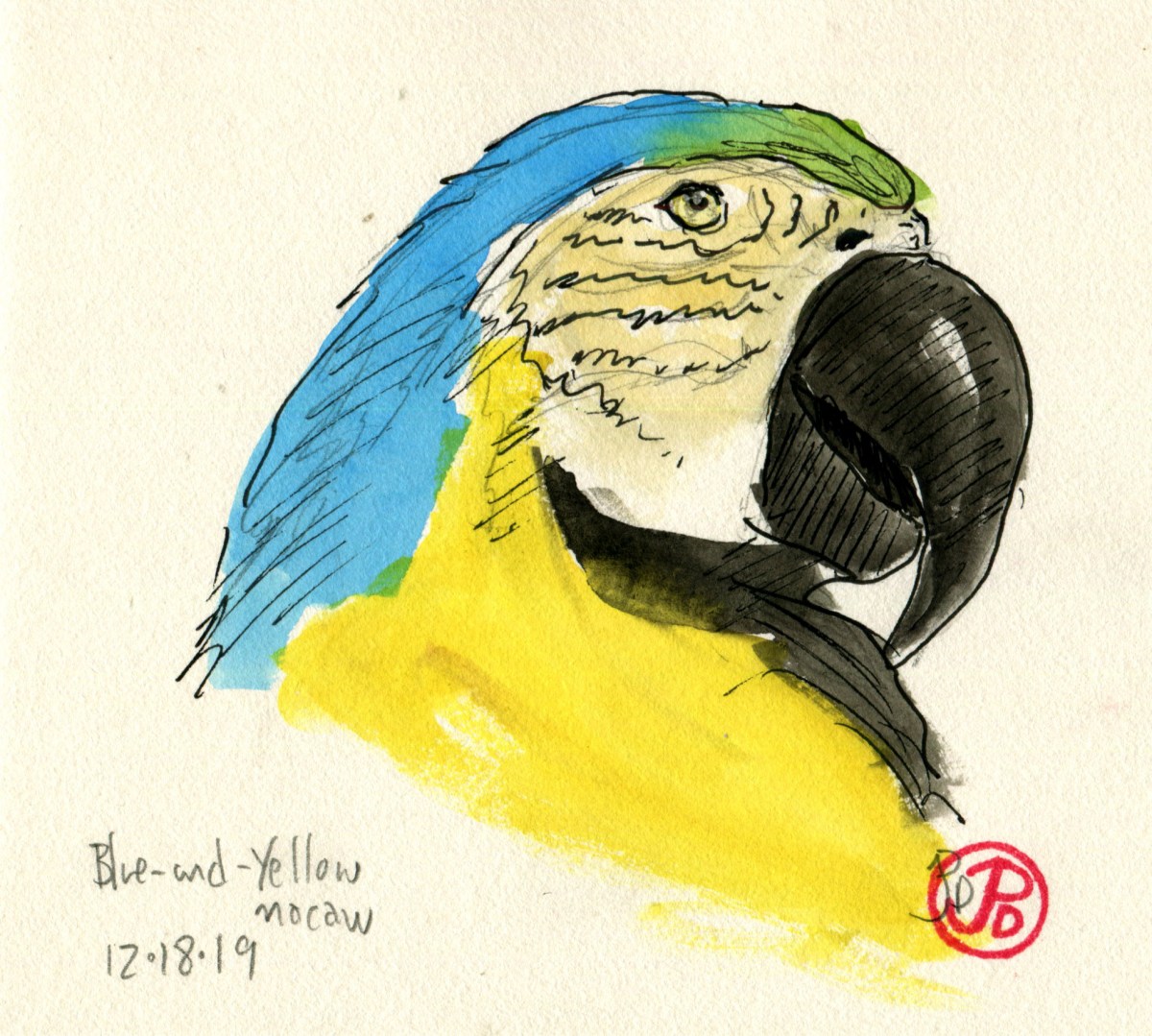
B and Y Macaw

I overheard one visitor ask the other if she had ever seen a macaw in Hawaii. If she did then that macaw would be very lost but she was referring to a pet that some street performer had as a means of loosening coins from tourists.

I went down to the aquarium and tried a sketch of California’s official marine fish, the garibaldi. This fish was in constant motion and it was hard to capture it’s essence. And the low light in the aquarium didn’t help. At the end I repeated my mantra to perfectionism, “It’s just a sketch.”

I headed over to the alligator exhibit, a direct link with the old aquarium, to look at the seahorse railings and the albino gator. That’s when I saw something very odd, just outside the window.

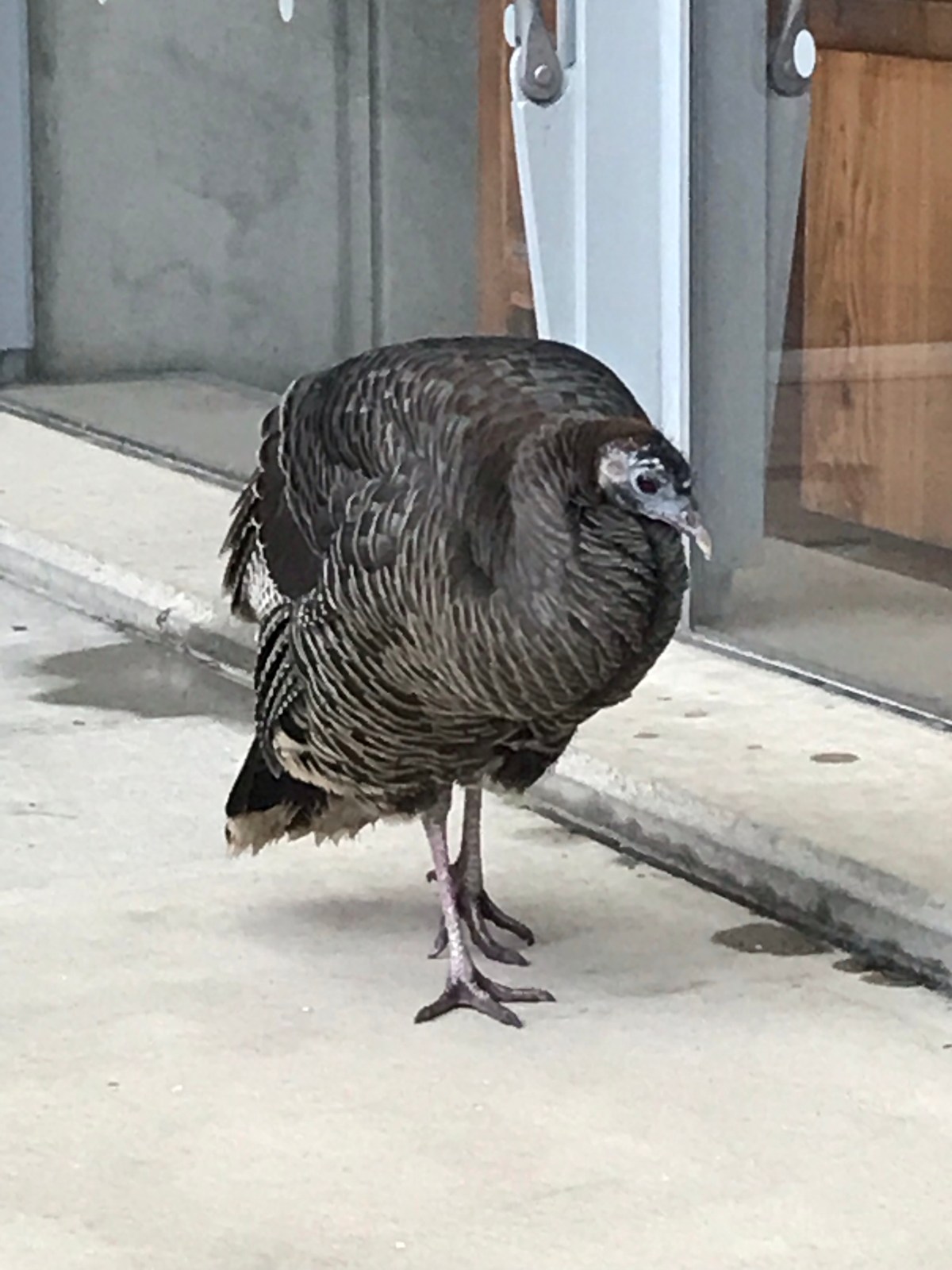
It was a large bird perched on a railing, almost condor sized and I though to myself, “Is this a new exhibit?” As I walked closer I realized that it was not a condor but a wild turkey.

Which reminds me of the time when I was birding on the Big Sur coast at Grimes Point. At that time, in one view, I had seven California condors in front of me, including a group that was sitting at the edge of the road. A German tourist came up and asked me if they were turkeys! Now how the table had turned! And how condor-like Ben Franklin’s favorite bird can appear.

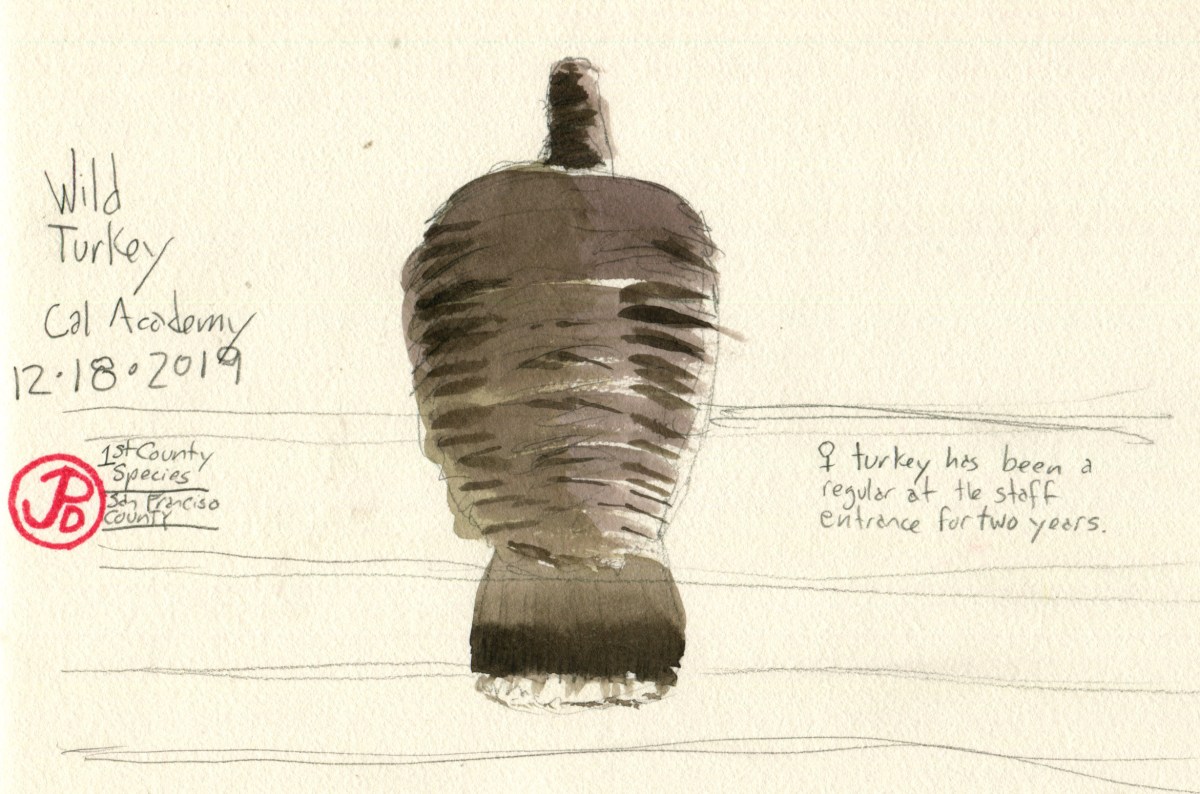
Perched on the railing was probably one of the only wild turkeys in the county and city of San Francisco. This is listed as a rare bird in San Francisco and one had been seen in this area of Golden Gate Park. According to the staff this female had appeared just after Thanksgiving, nearly two years ago.

So the turkey perched calmly on the railing which gave me an opportunity to do a quick sketch of the bird from behind. (Featured Sketch)
Image

Sandpiper of the Rocks

There was an over-wintering avian visitor from the far north spending its time on the rocks near the path way of Heron’s Head Park in the south eastern portion of San Francisco. I figured I better make way across the 6.2 miles of the city to see this sandpiper before it headed back up north.

Heron’s Head Park, named because it looks like a great blue heron’s head from the air, juts out into the San Francisco Bay just north of Hunter’s Point (the formal naval shipyard). The parks is a human made landscape that was once going to be an anchor point to a southern bay bridge that was never built. This area has been cleaned up by the Port of San Francisco and is now a 22 acre park that represents on of the few wetlands that still exists in the city and county of San Francisco.

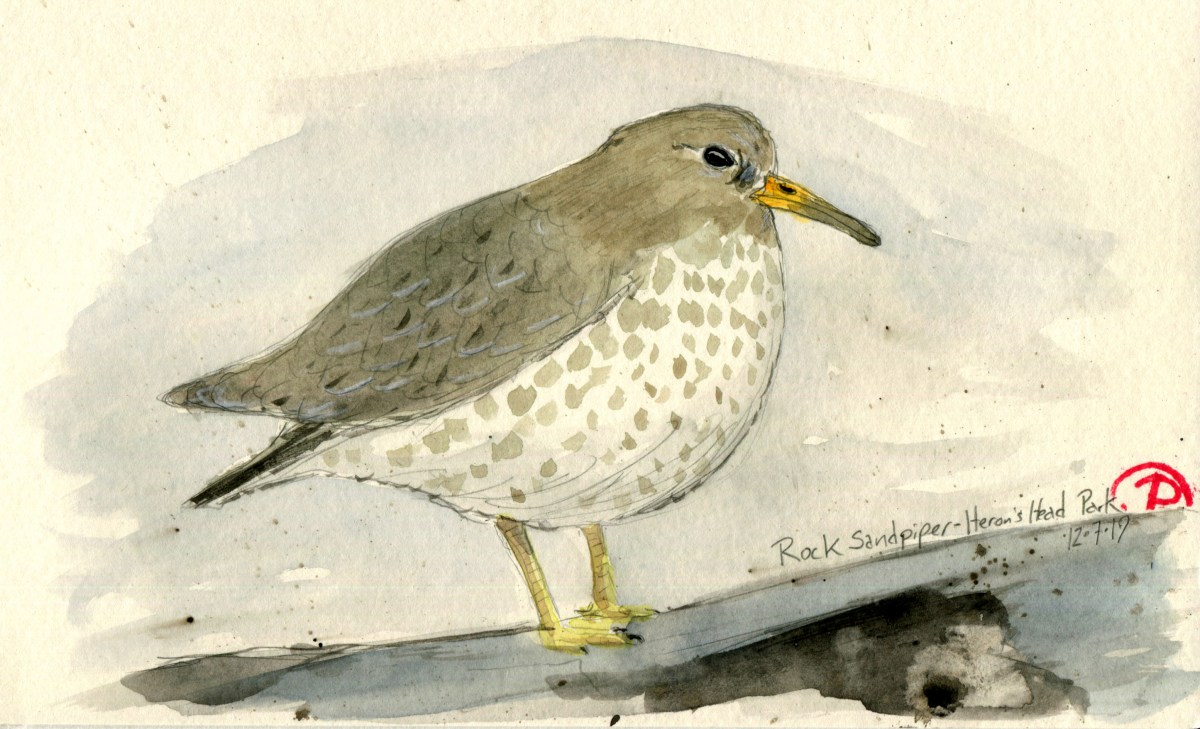
So I figured I’d head east, across town, to see a rock sandpiper (Calidris ptilocnemis) before it really started to rain and before the bird relocated ahead of a December winter storm.

Like it’s name implies, a rock sandpiper, is found on rocks. And Heron’s Head Park provides many rocks for this sandpiper to forage and roost. Now I had to find the piper amongst the rock before the wind and rain made observation a struggle.

I head out on the path to the point noting the large numbers of double-crested cormorants flying from the north, joining a large raft of birds that was growing to the waters of the southwest.

As I headed out to the point, the surge was making whitewater on the southern side of the rock-levy. The first sandpipers I spotted was four least sandpipers on the southern side. This was a good sign because the the northern visitor was associating with least sandpipers. But the rock was nowhere to be seen.

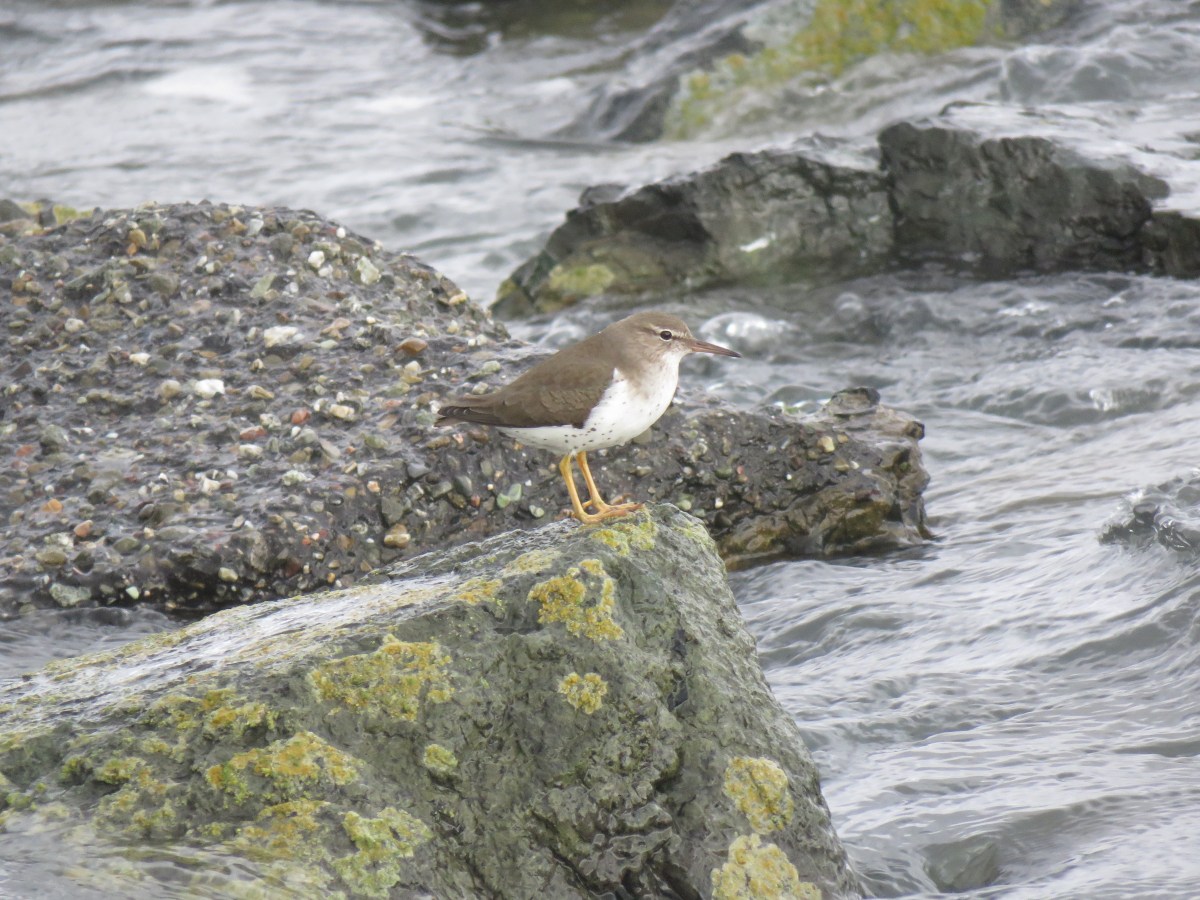
I retraced my steps to the west and I spotted a spotted sandpiper bobbing on a rock to my right. This was a nice consolation.

IMG_8394

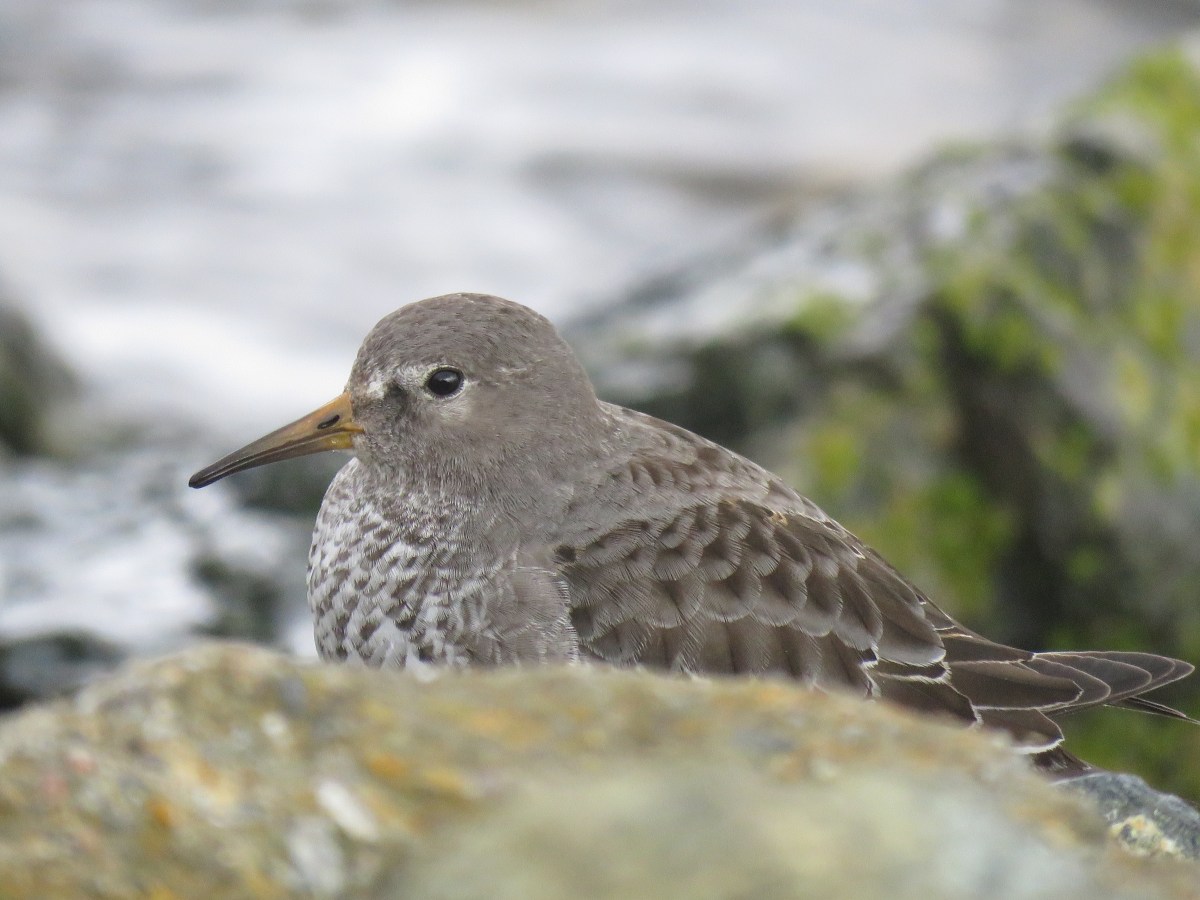
I turned back to the east and out to the point for one last look for the rock sandpiper. That’s when I saw a larger peep slowly making its way over the rocks to the north. I didn’t need binoculars to identify this bird as I was able to stand right next to it. As Pete Dunne notes, “A tame bird that allows close approach. ”

IMG_8408

The rock sandpiper in it’s desired habitat, rocks!

Image

The Narwhal’s Tusk

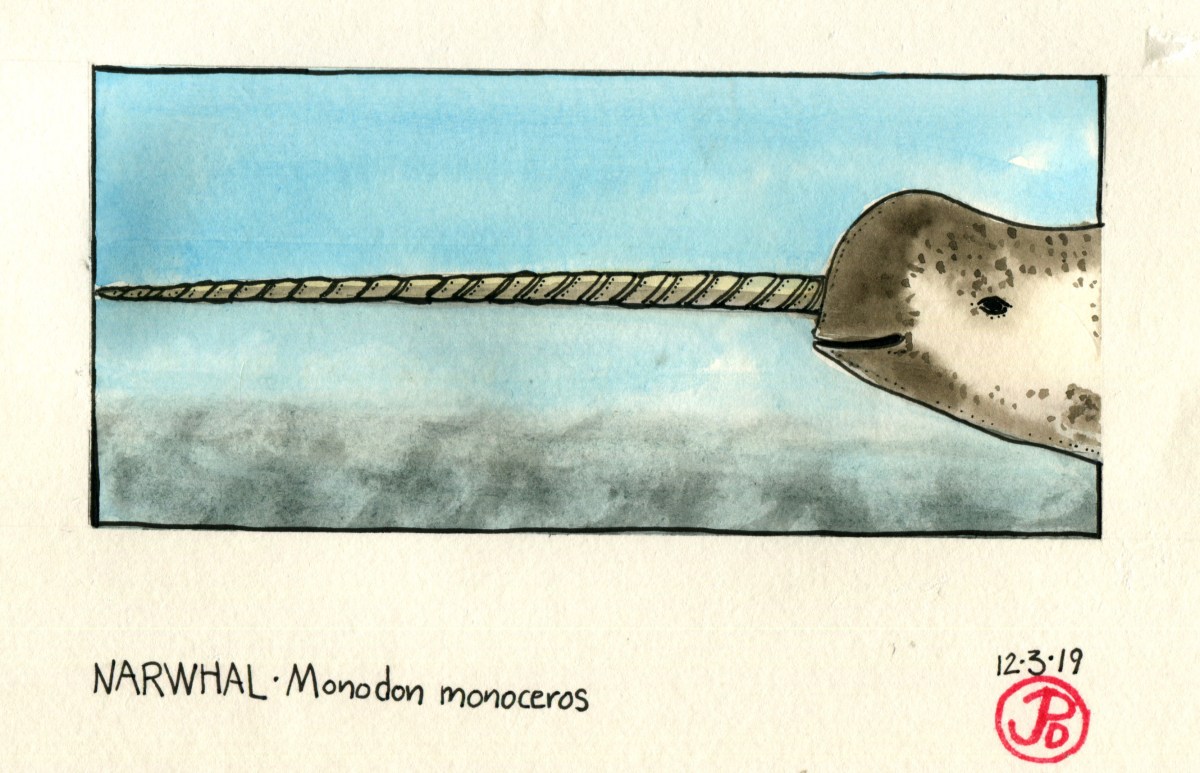
It’s not every day that a narwhal tusk is mentioned in a news story. Perhaps a quirky piece of historical science writing about the tusk being sold for exorbitant prices as a rare unicorn horn in Victorian Times but rarely does this marine mammal get a mention in a major International News story. Let alone helping to fright crime.

That was until an incident in London, England on Friday November 29th (2019). There was terrorist attack near London Bridge, where an individual started stabbing people with a knife in the Fishmonger’s Hall. In the end, two people were killed and three others were injured. More might have been killed or injured if it hadn’t been for a 1.5 meter (~4 feet) narwhal tusk.

A quick thinking Polish employee of the Fishmonger’s Hall, took the tusk off a wall and confronted the attacker. Together with another bystander, armed with a fire extinguisher, they were able to subdue the attacker until police arrived and shot and killed the suspect.

This was such an odd mishmash of current events and Victorian Nature history and it left me feeling both dark and delighted. It is yet another example that truth really is stranger than fiction because if this was written in a piece of prose, the writer would be deemed hyperbolic or just insane. Who would believe such a story, it verges on magic realism!

It’s touching that this narwhal, in death, played a hand (well a tusk really) in helping to save lives. There is still magic in this old world.

Image

Bald Eagles of Yuba County

One of my favorite winter birding destinations is in Yuba County, just off Highway 20, northeast of Marysville. The country roads of Woodruff, Mathews, and Kimball are great backwater roads to see the abundance of wintering waterfowl consisting of snow and greater white-fronted geese, tundra swans, white-faced ibis, and wintering raptors.

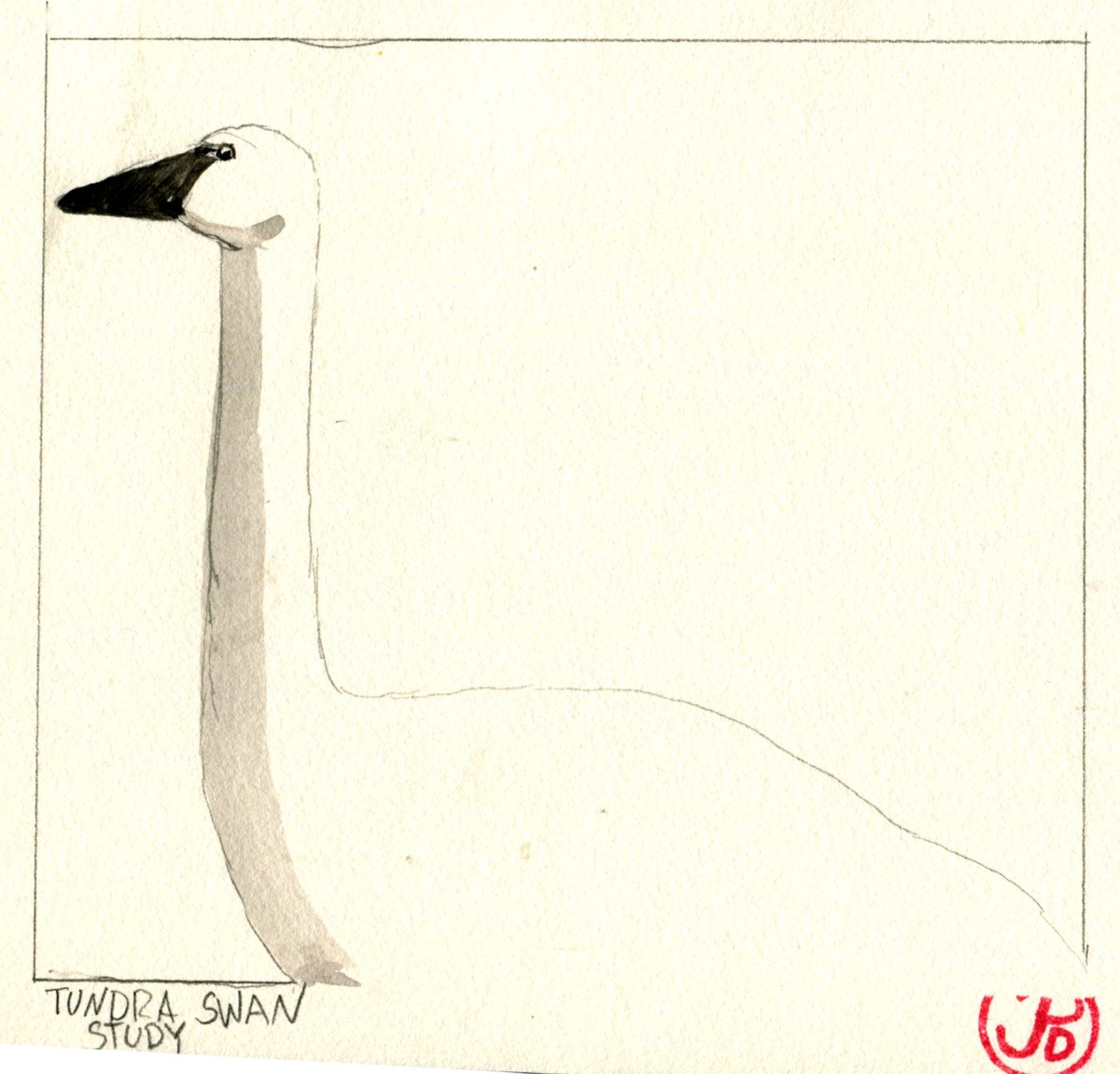
Tundra study

Study sketch of a tundra swan. The area around Highway 20 is one of the best places to see large numbers of this beautiful swan.

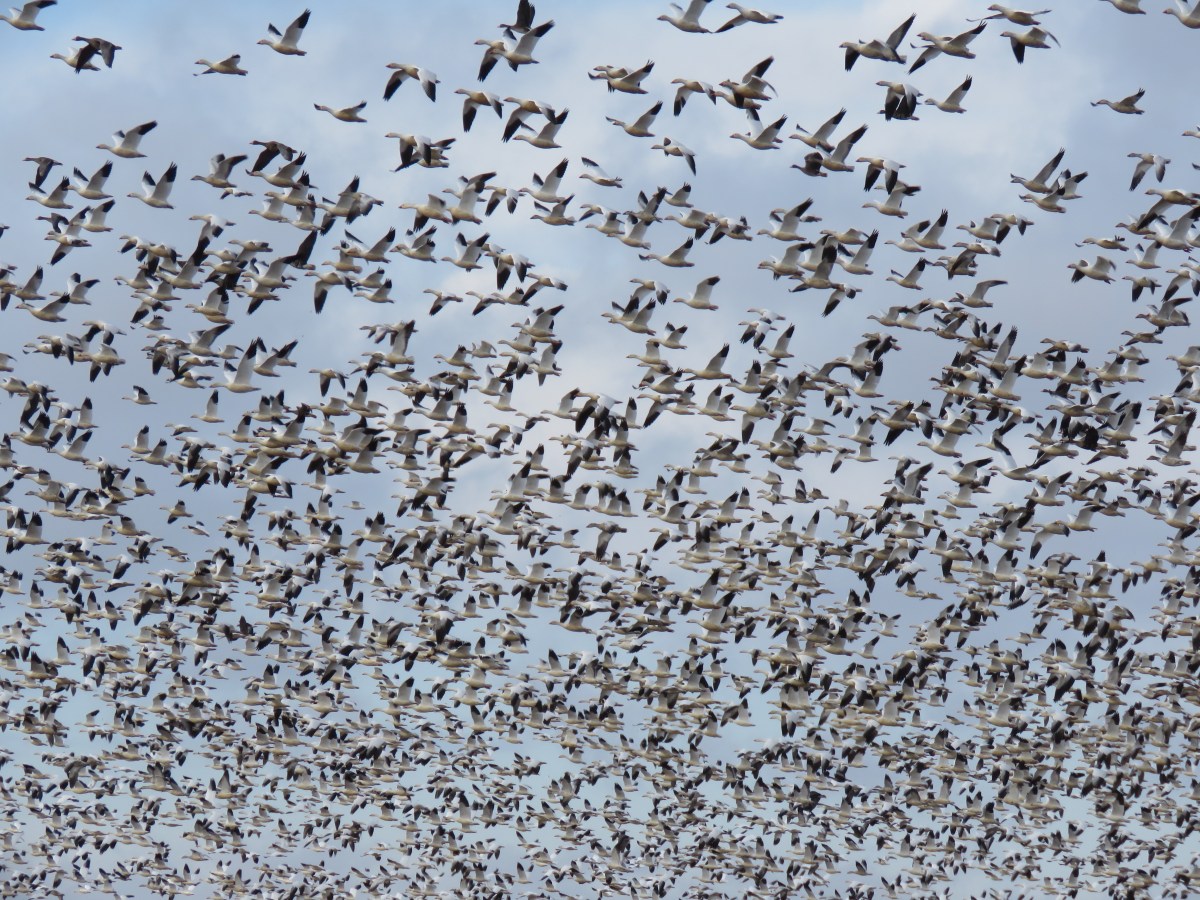
There is nothing in the natural world quite like seeing a sky full of snow geese. The sight and sounds fill the senses like few others experiences.IMG_7972

Thousands of snow geese erupt into the air near Kimball Lane.

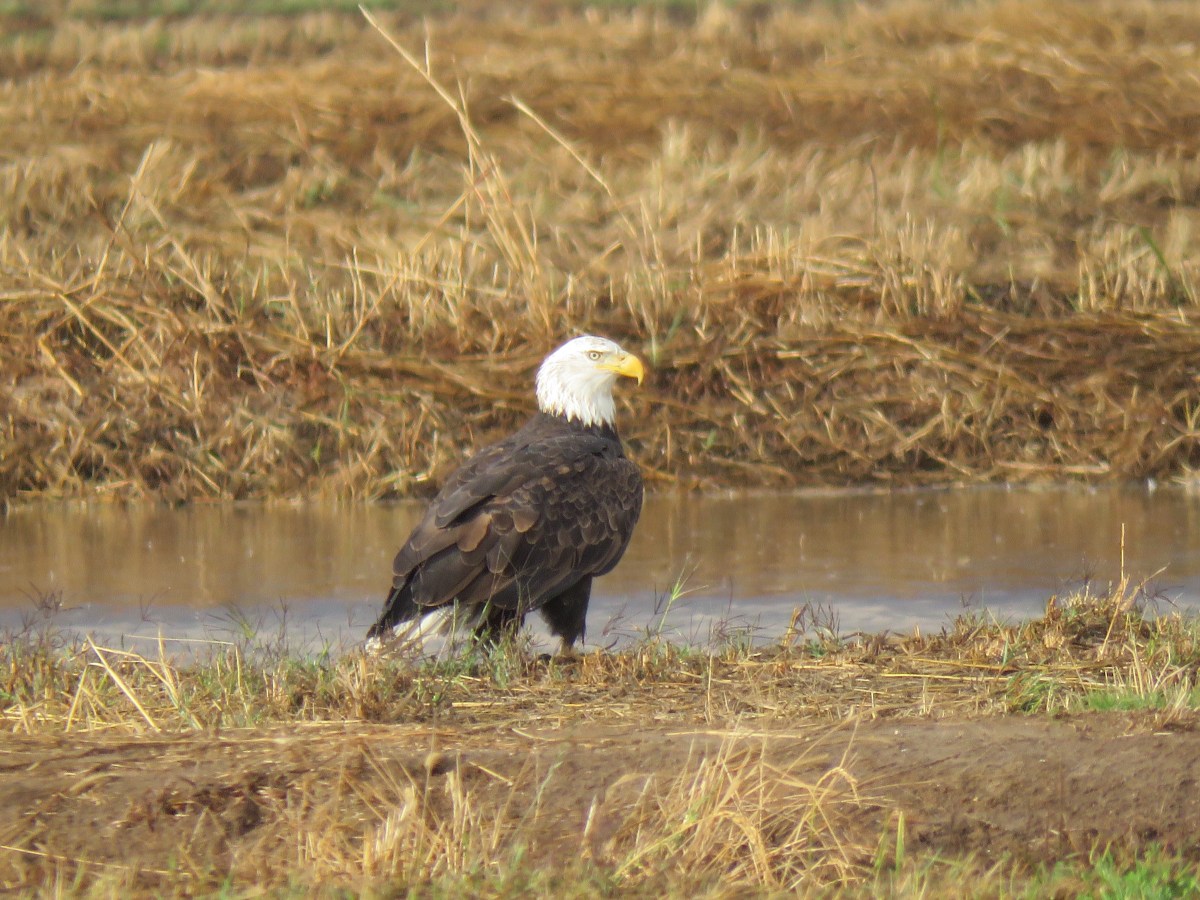
The thousands of waterfowl that winter in the Central Valley also attracts a predator: the bald eagle. On Thanksgiving morning, in partly sunny and partly rainy weather I spotted an adult bald eagle perched in a field just to my left on Kimball Road. So I got out an took a few pictures, the eagle was jumpy and soon flew off across the road. This was a clean adult bird with pure white on it’s head and tail and chocolate-brown body feathers. This was a beautiful specimen of Haliaeetus leucocephalus.

IMG_8116

Even a non-birder would be able to identify this large raptor.

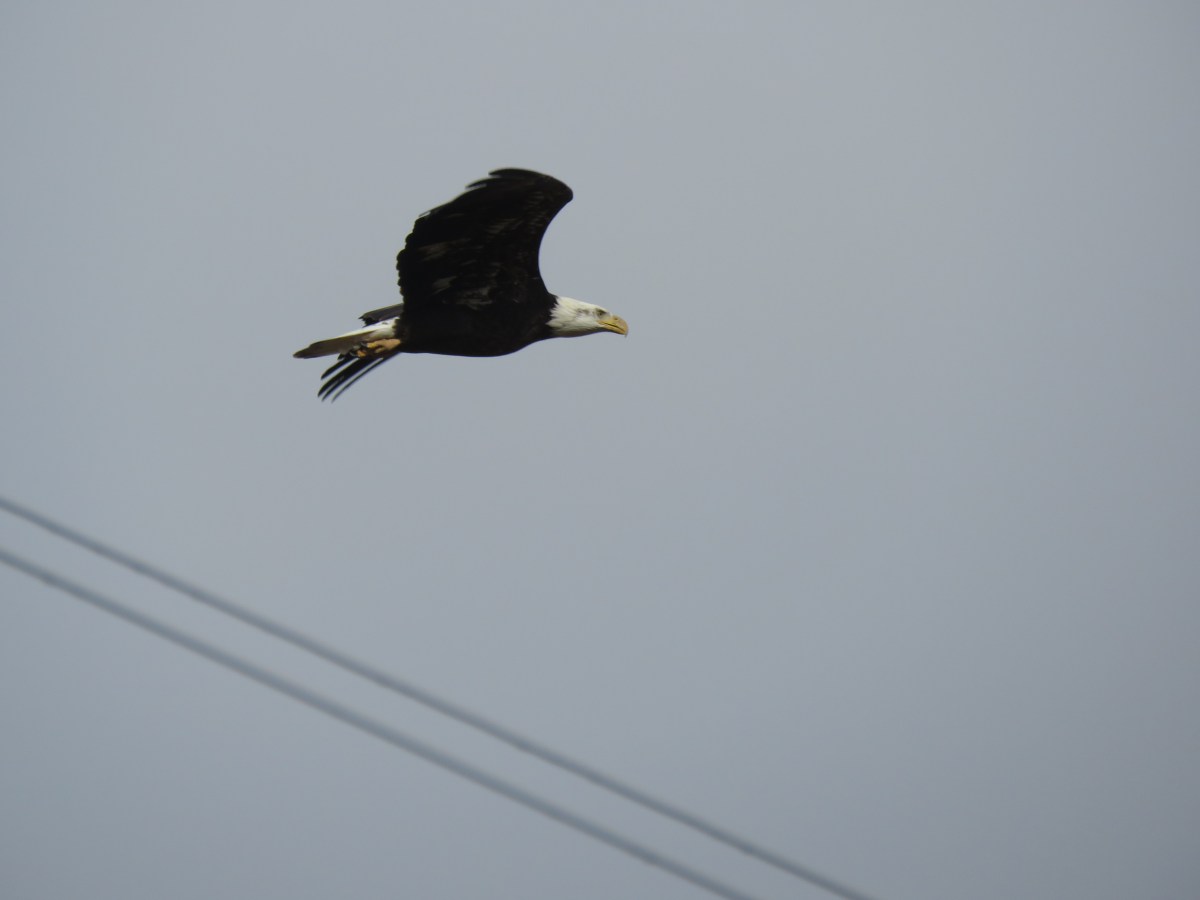
IMG_8120I headed down Kimball Lane with a wintering wonderland of waterfowl on all sides and thousand of stretched out “V”s in the air. I came to the junction of Jack Slough Road and I turned right. As I headed down the road on this Thanksgiving morning I saw three wild turkeys off in a field to my left. I pulled over to get some photos, but the birds had disappeared into the brush. This was a good day to be skittish if you are a turkey! That’s when I saw my an immature bald eagle fly over. Then an adult appeared, soaring over the powerlines and then coming to rest in a field to the right.
IMG_8142

This was another adult from the one I saw earlier. The white head feathers appeared more “dirty” round the eye.

The bald moved around some more before finally landing in the center of a field. The eagle walked around and appeared to be eating some sort of waterfowl that was hidden in the undulating rifts of the plowed but fallow field.

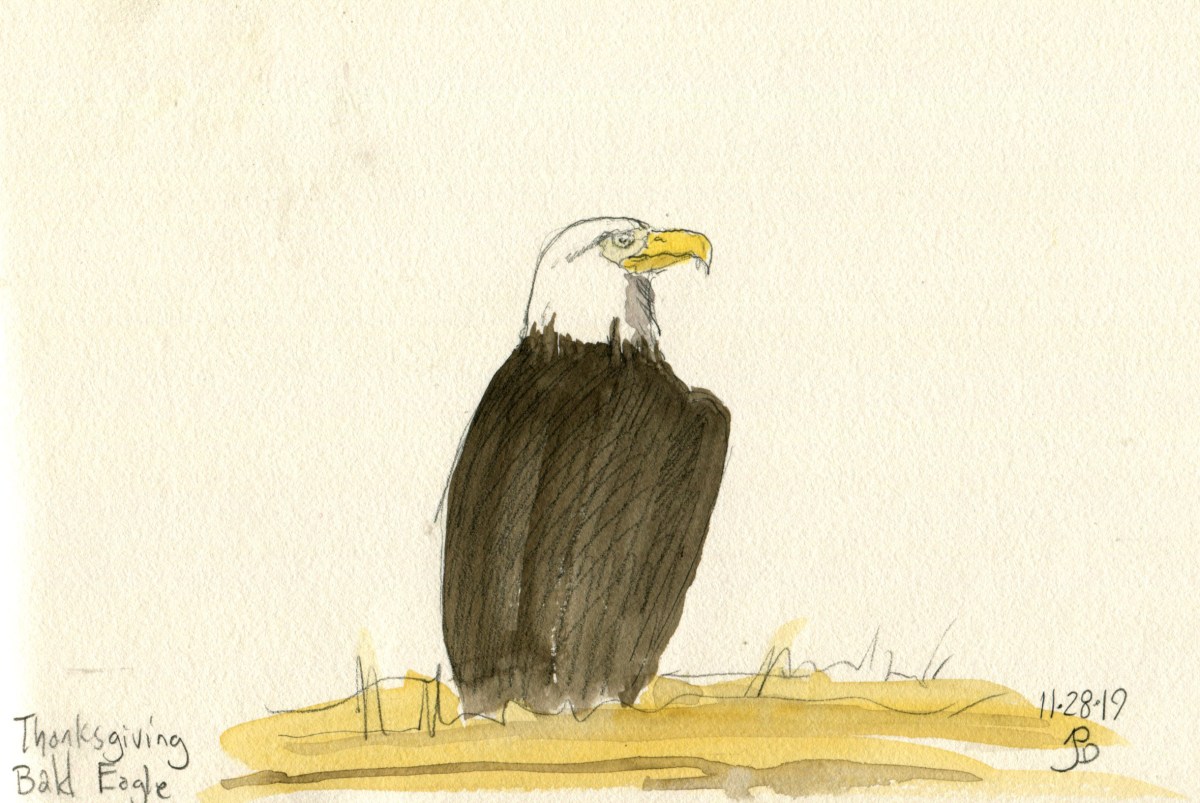
I figured the eagle was going to be here for a little while so I pulled out my sketching bag and did a field sketch (featured sketch). One issue I have had with sketching bald eagles from life is that I either make their head too big or their bright yellow beak too large. In this sketch, I made the beak a tad too long. Oh well, I learn something with every field sketch that will guide me when I make future field sketches.

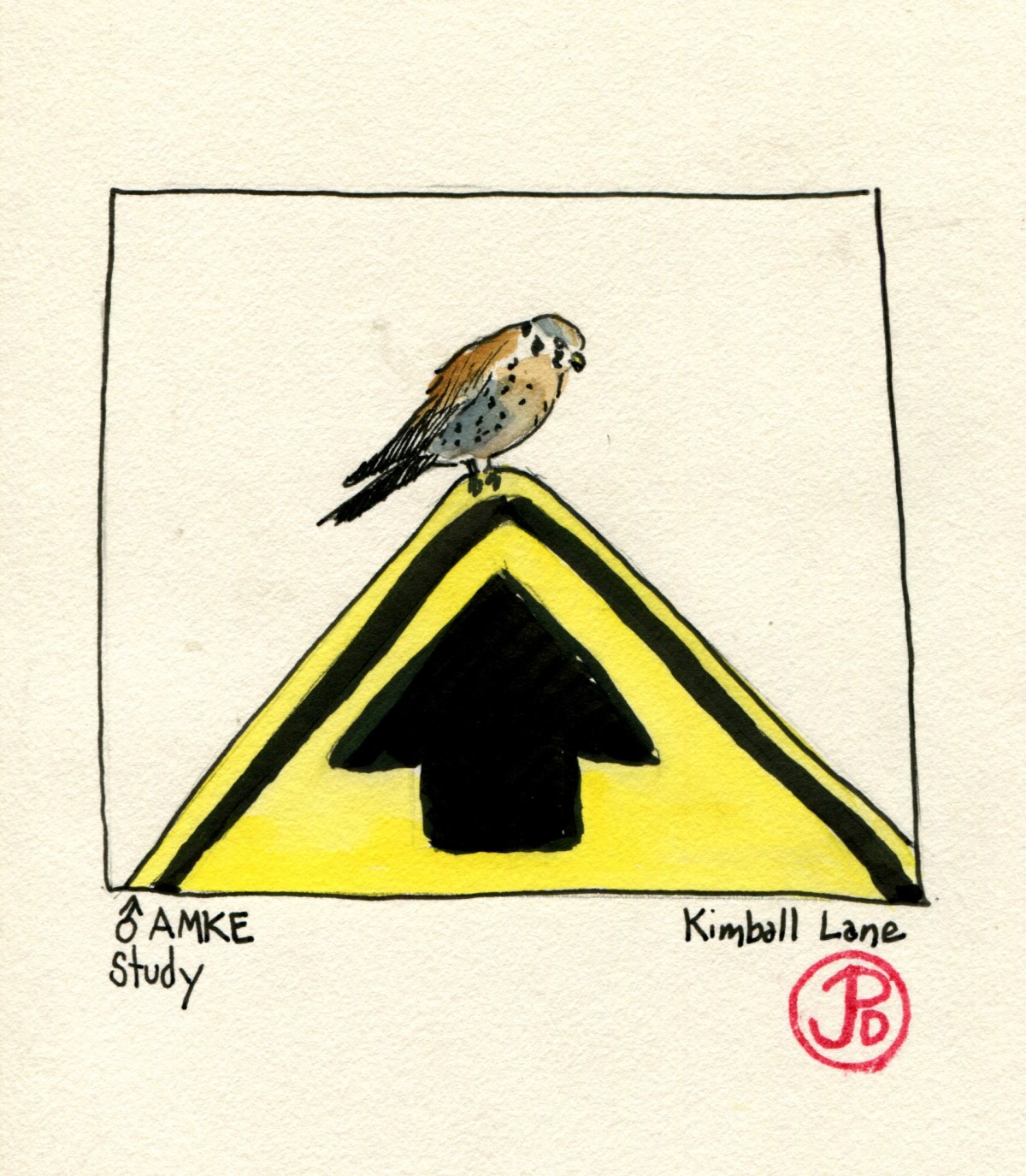
AMKE study

Here is one of our smallest raptors, a male American kestrel, perched on a sign on Kimball Lane. It  has been said that if this falcon was the size of a bald eagle it would surely be our National Symbol.

Image

Sketching at the California Academy of Sciences

On a recent field trip we took 90 fourth graders to the California Academy of Sciences in San Francisco’s Golden Gate Park. I had come here myself when I was in elementary school, back then it was known as the Steinhart Aquarium. The museum was completely rebuilt in 2008 and bears little resemblance to the museum of my youth.

When the museum reopened, which is about a 45 minute walk from my dwellings, I bought a membership and visited some of the 46 million specimens on display many times. I had since let my membership lapse, but on our recent field trip I thought I would take advantage of the teacher’s discount and reconstitute my membership.

So the week after our field trip, after work, I headed to Cal Academy and bought a teacher’s membership. This museum is a wonderful resource for the natural world and I came prepared with my sketchers kit.

At mid-afternoon, after all the school groups had departed, it seemed that I had the museum to myself. I took advantage of this time and did five quick sketches.

I started by sketching an African penguin. This bird is also referred to as the Jackass penguin, a name that makes fourth graders blush and laugh at the same time, but refers to their braying call. These penguins were easy to sketch as they were roosting on their rocks and posing for me. (Well that statement was very anthropomorphic of me!)

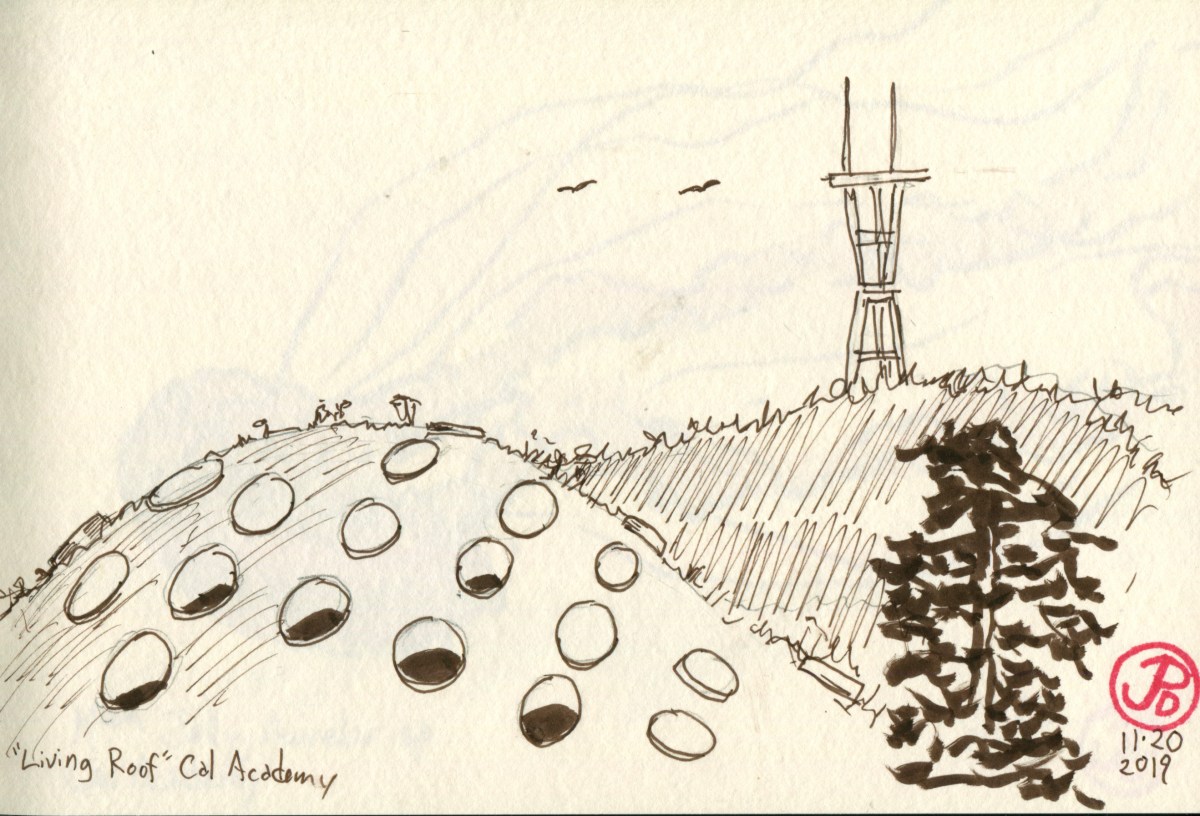
I then headed up to one of the best features of the new building ( well it’s just over ten years old), the living roof. I did a quick sketch with Sutro Tower in the background.

living roof

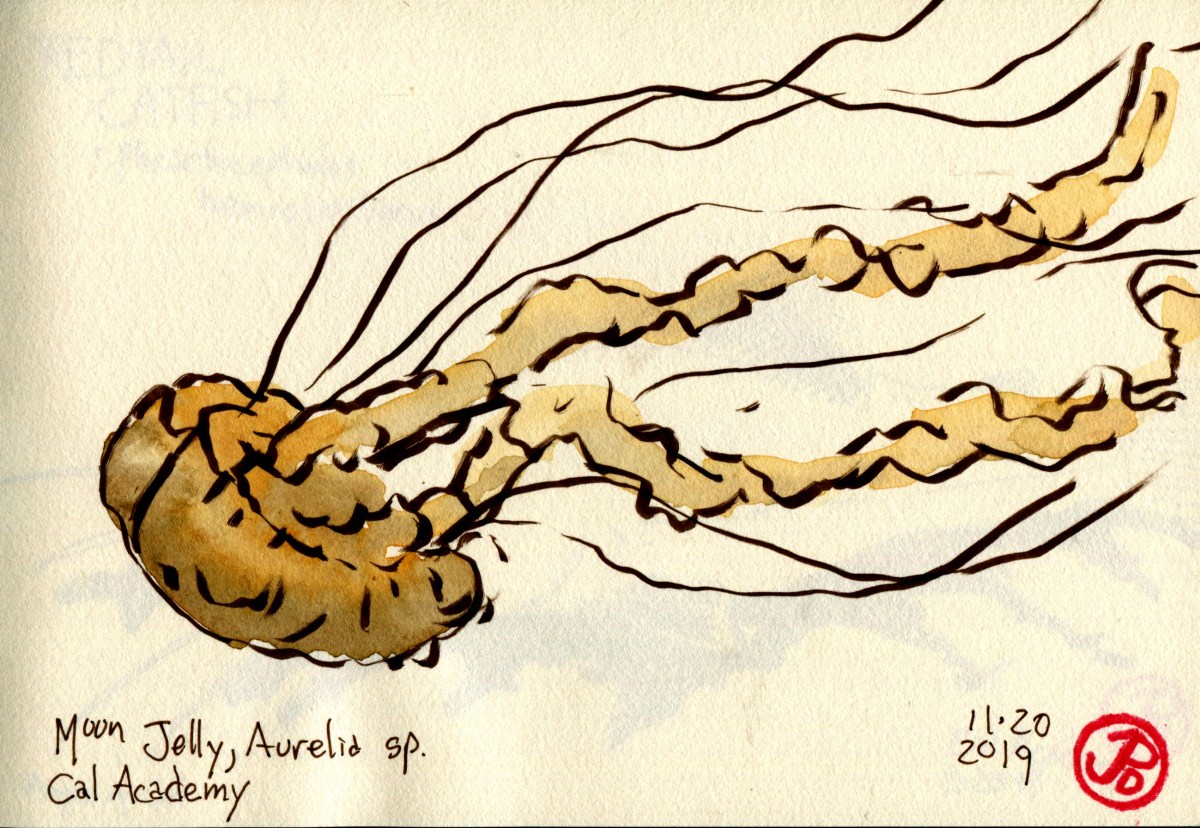
I then headed into the basement where the aquarium is located. Here I sketched a massive but stationary red-tailed catfish(all sketched in pen) in the drowned Amazonian flooded forest tank. I had a grand time sketching a moon jelly with my sepia brush pen, all without a underlying pencil drawing (featured sketch).

redcat

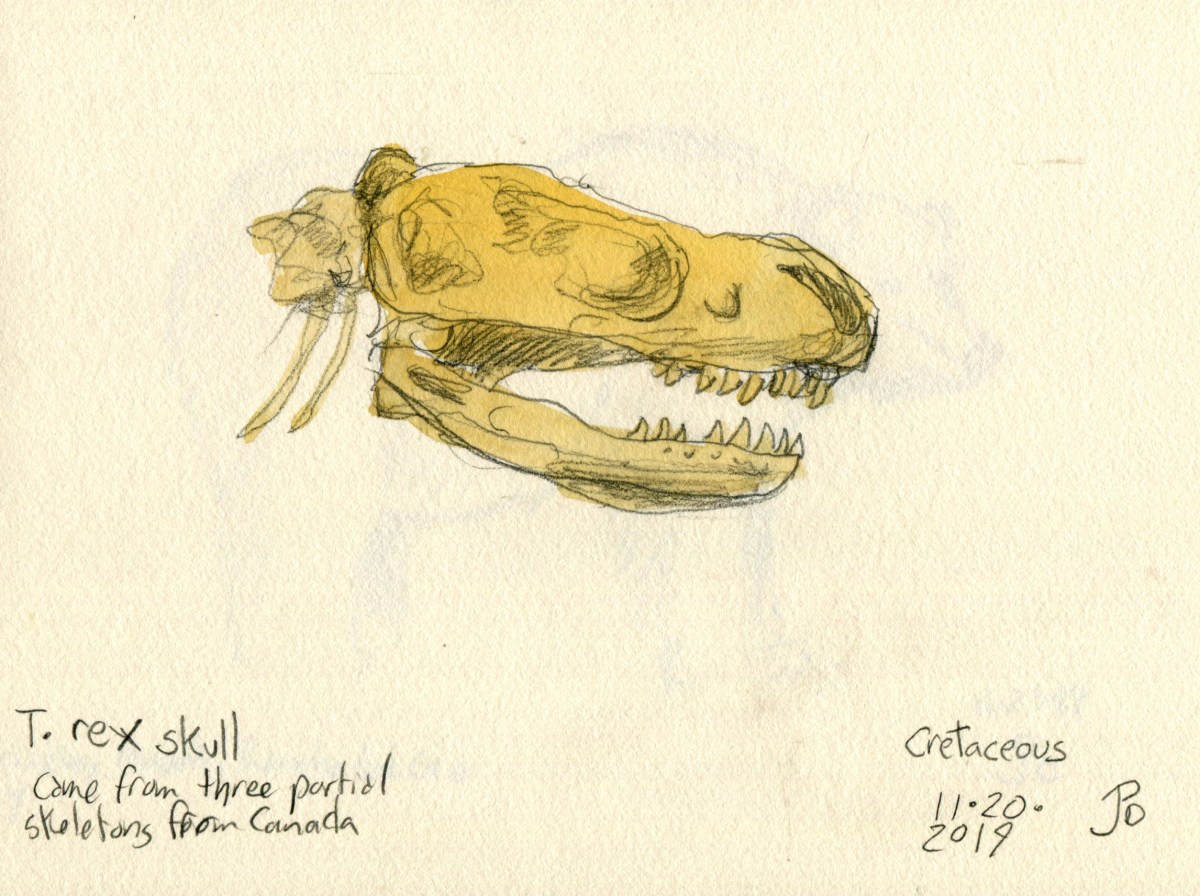
On the way out I passed under the Tyrannosaurus rex skeleton at the entrance. When I was a kid I remember an allosaurus skeleton in a similar place. I liked this little reach back to the past and I sat on a bench for a final sketch. Sketching the entire skeleton with the museum soon to close for the day seemed a daunting task so I just sketched the skull.

T.rex

I look forward to many more visits and more sketchbook pages filled with knowledge and life!

Image

Cranes and Raptors

I headed out early, with Great Gray and Grasshopper Sparrow.  Our destination was Woodbridge Road just north of the town of Lodi. This road is well known amongst birders as a great place to see wintering sandhill cranes (Antigone canadensis).

We made good time, traffic was light on a Saturday morning and after two hours of travel, we pulled off Highway 5 and headed along a frontage road until we came to Woodbridge Road. Our destination was the Woodbridge Ecological Reserve (Isenberg Crane Reserve), two units, north and south of Woodbridge Road, preserving 353 acres of sandhill crane habitat.

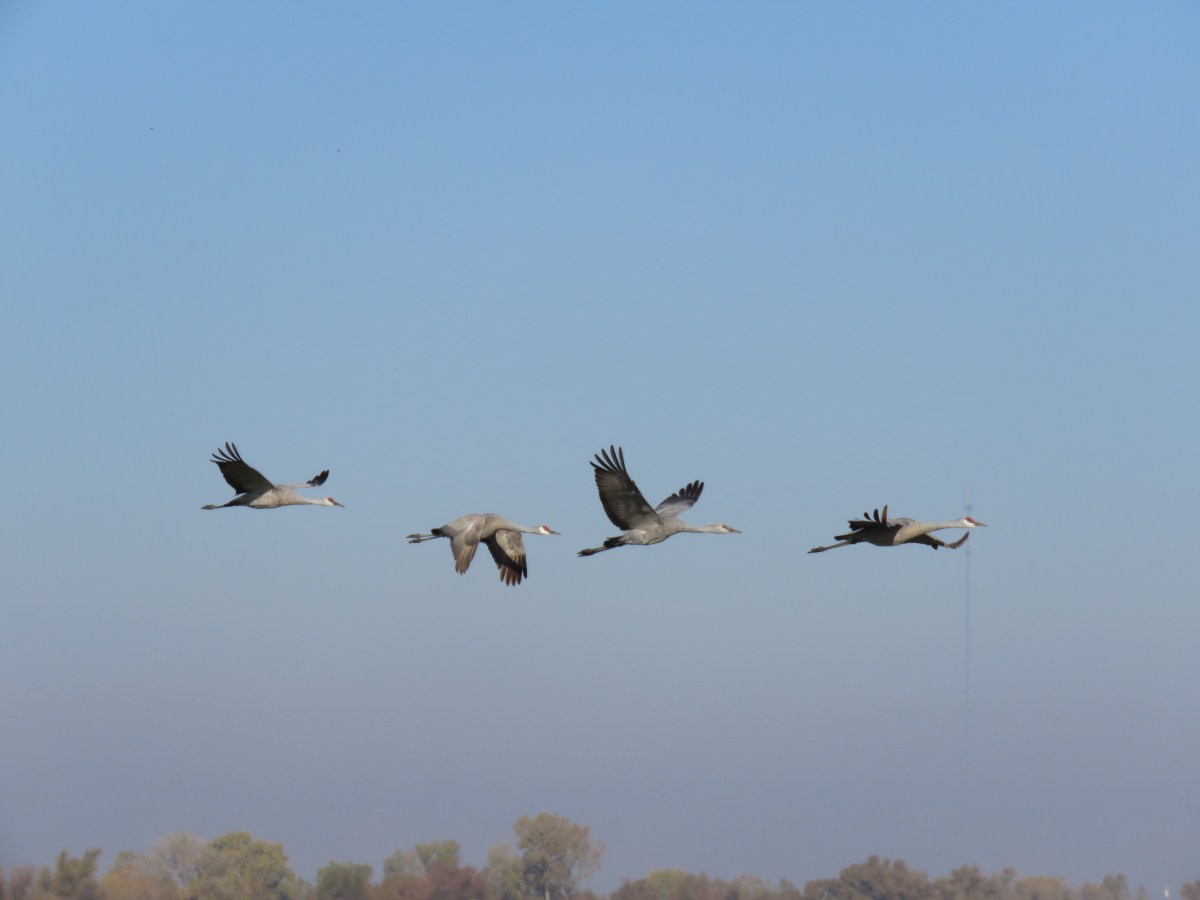
To the right was the North Unit and we pulled into the dirt parking lot and there were cranes in the fields as far as the eye could see and cranes in the air coming and going, their loud bugling calls filling our ears. This was a life bird for young Grasshopper (as many of the birds on this trip were).

IMG_7748I had been to Woodbridge Road a handful of times and there seemed to be more cranes around on this visit than in any other previous visit. The last time I was here, I was looking for the sulky, vagrant the brown thrasher, which I successfully added to my ABA lifelist on December 8, 2018.
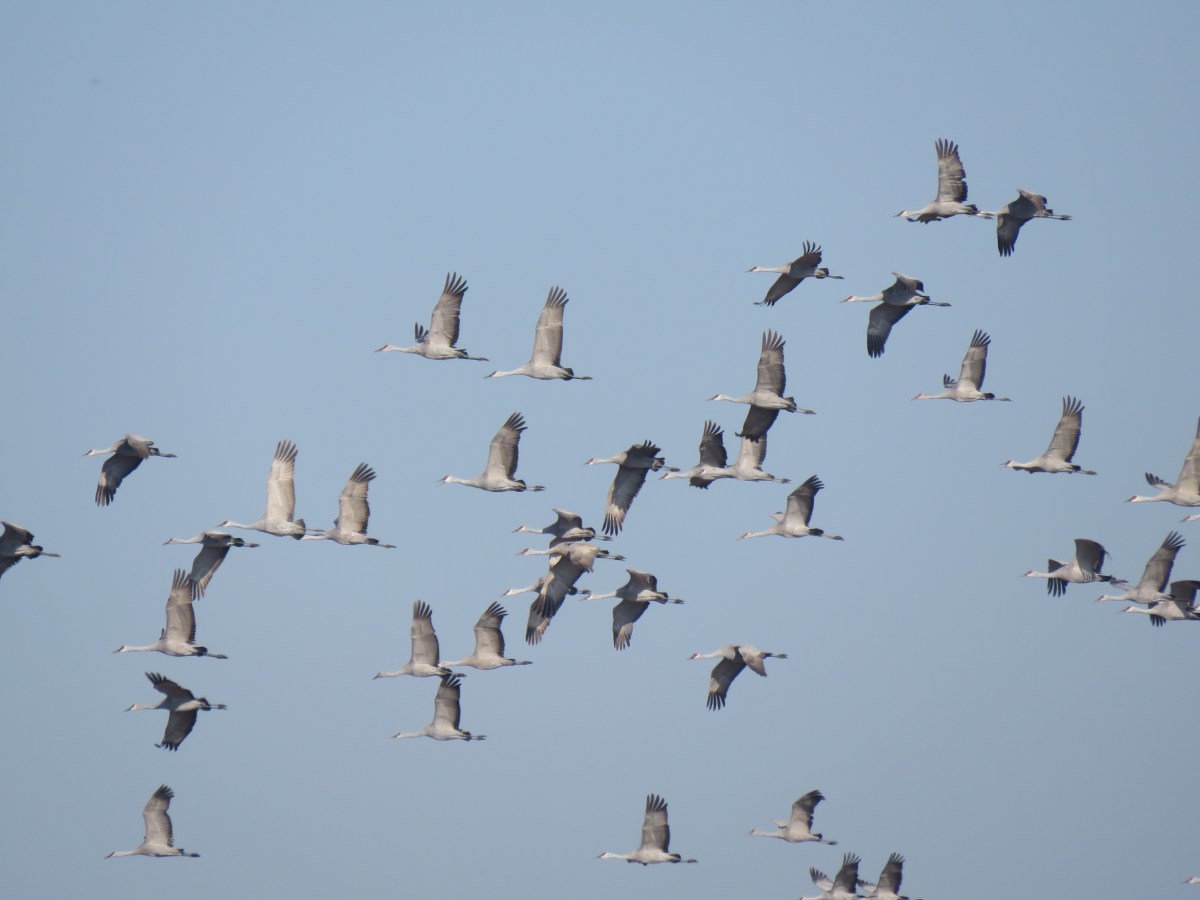
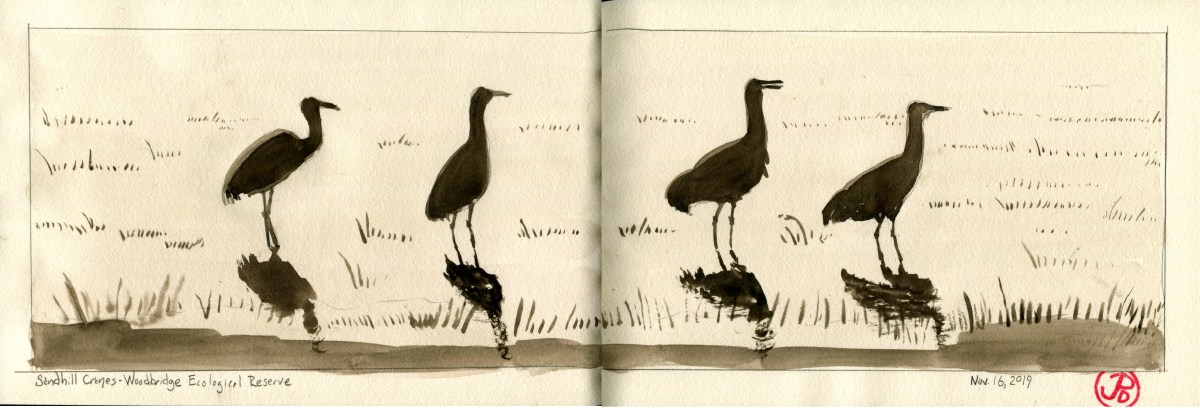
After getting our fill of cranes (can you ever get your fill of cranes?) and doing a few field sketches,  we had an ever more amazing crane experience at the south unit. Across the road from the parking lot, in a green field, were perhaps a thousand sandhill cranes. A farm truck drove along the border of the field causing a mass of cranes to lift into the air. What an incredible sight! Hundreds of cranes in the air, their bugling calls, reaching us across the road.

IMG_7814

We were surrounded by birds in all directions, thousands of ducks and coots to our south (and two tundra swans, another lifer for Grasshopper), cracking geese flying overhead in stretched out “V”s, and sandhill cranes everywhere!

We left the Reserve and headed back to Highway 5 South and then headed west on Highway 12 toward Rio Vista. Our destination was the dirt roads and open fields known to birders, collectively, as “Robinson Road”. This area is also known as “Raptor Heaven”.

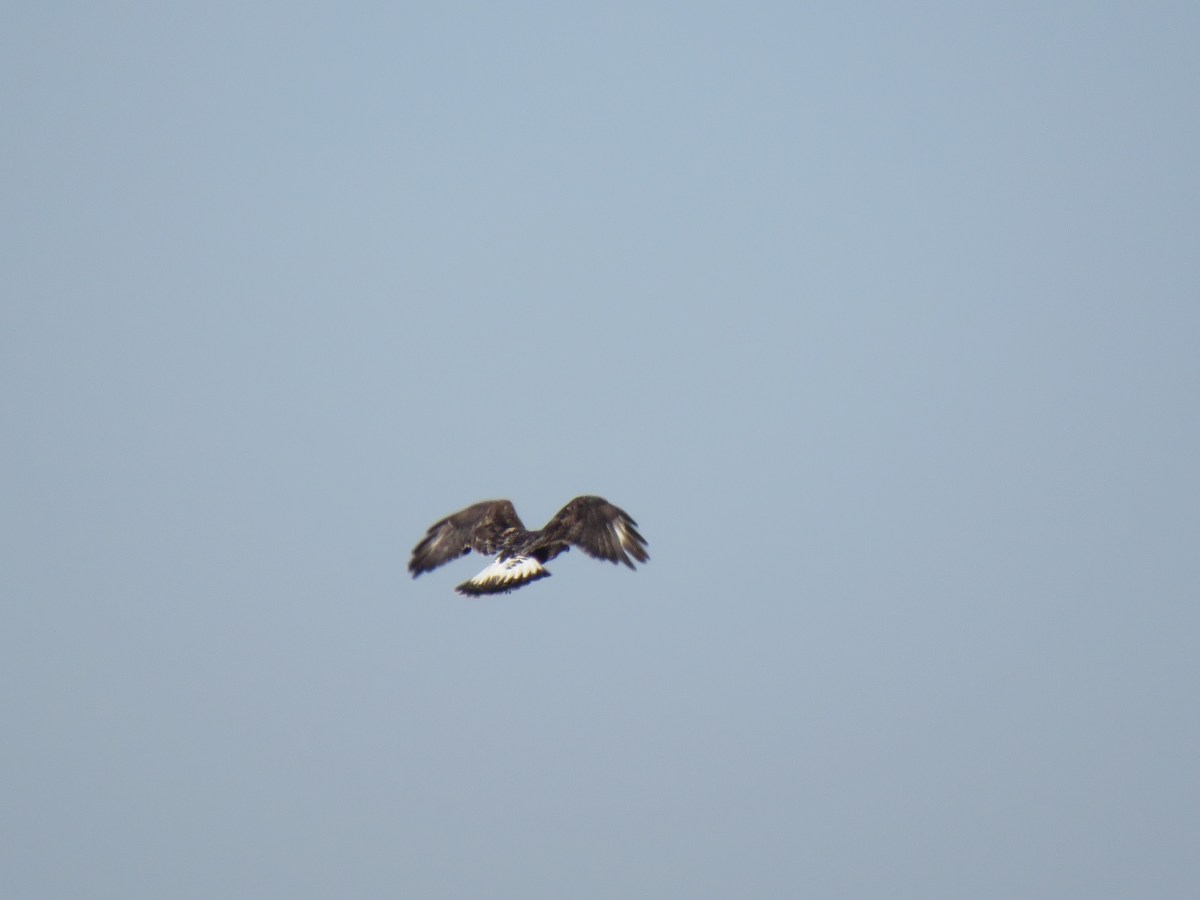
We headed north on McCloskey Road onward to where the pavement turns to dirt. As we approached the T junction with McCormack Road, I saw a raptor hovering above the field, north of the road. It’s white tailbase blazed bright, identifying itself!

IMG_7831

We rushed out of the truck and headed to the field edge. I told Grasshopper that I would help him find the birds but I wanted him to identify them. We were now looking at a raptor that is never guaranteed at Robinson. I have whiffed on this species many times but McCormick Road had always produced for me. When the hawk wheeled around showing it’s dark belly and carpal patches, Grasshopper said, “Rough-legged hawk!” And he was correct!

At the intersection of Robinson and Flannery Roads, Grasshopper spotted a large raptor on the ground. The bird flew up and we watched our largest hawk, the ferruginous hawk, ride the thermals with an adult red-tail.

Our best sighting of the trip was further down Robinson Road. I saw a large raptor perched near the top of the power tower to our right. We drove a little further down the road so we could get a better view of the raptor. I got the scope on the bird and asked if Grasshopper could identify it. He looked through the scope and after a short time proclaimed, “Golden eagle!”

We got great scope looks of the eagle before it to flew west across the road and caught  a thermal above the fields. It was soon joined by two other raptors that harassed the large eagle by dive bombing the golden from above. The eagle’s assailants where a ferruginous hawk and a prairie falcon! This was certainly a first and an amazing thing to witness. A golden eagle, ferruginous hawk, and prairie falcon, all in one scope view!

Grasshopper Sparrow’s spread of our fantastic day with sandhill cranes!
Image

Van Damme Gray Ghost

Dickcissel and I stayed at Van Damme State Park at campsite #9. Van Damme is just south of the town of Mendocino, right off a lovely sandy cove.

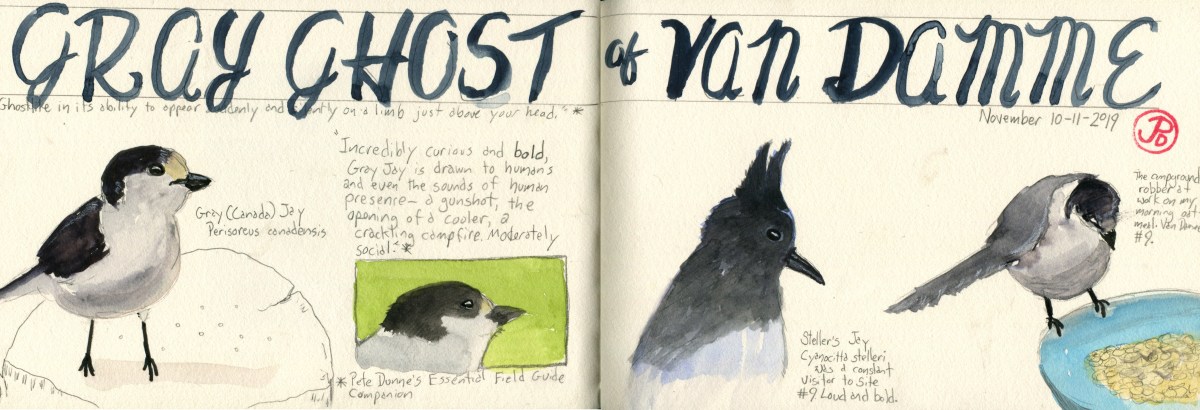
This campground is legendary amongst birders because of one of its feathered residence. This is a bird that is sometimes known as the camp robber or the Gray Ghost. This is a bird that suddenly seems to appear out of nowhere, that is usually quiet, which is unusual for a member of the jay family. This is the southern edge of it’s range in California and as it’s name implies, the Canada jay is a creature of the far north.

Seeing a Canada jay, formerly called the gray jay, is not always guaranteed at Van Damme. While you may never see this sometimes-elusive bird, it certainty sees you. This jay is extremely curious and often bold.

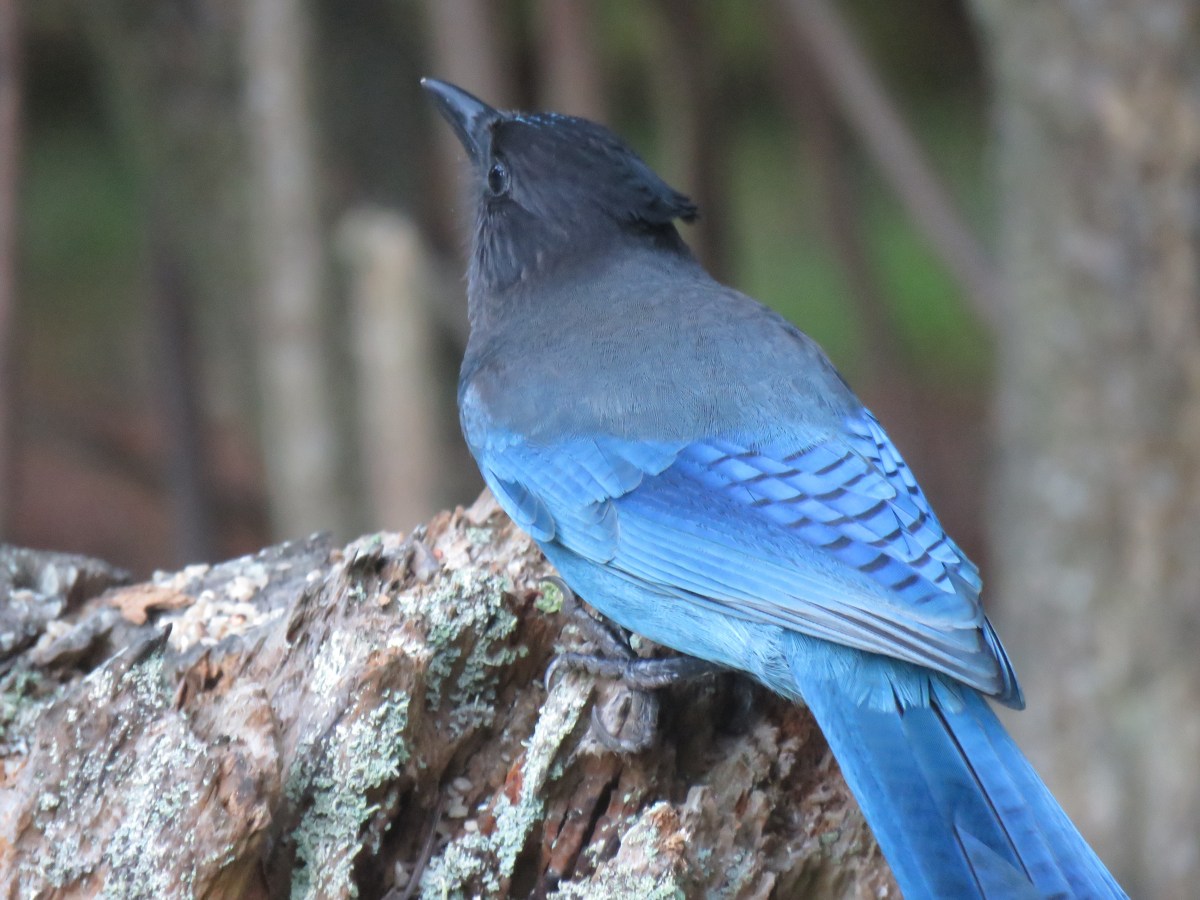
The bird that is usually first encountered at the campground is the bold and raucous Steller’s jay. This is the west’s only crested jay and it is a bird that I have loved since my childhood. The Steller’s jay is often the first visitor when you pull into camp. Like the Canada, this jay is also very curious.

IMG_7183

Since childhood, I have always loved this much maligned jay, with a raucous call and it’s bold jayness. The lesson (and some times struggle) is to see the beauty in everything.

As we set up camp we saw and heard Steller’s but there was no sign of the grey ghost. As dusk approached, a young great horned owl called from the forested hillside and an adult responded from across the way. The owls called for most of the night, which along with the ringing of a buey bell just outside of the cove, were the soundtrack of our Van Damme slumbers.

In the morning, as the owl calls slowed to a stop, the first diurnal call that I heard was the acorn woodpecker. This was soon joined by Pacific wren, Dark-eyed junco, American robin, northern flicker, ruby-crowned kinglet, common raven, red-breasted nuthatch, and the ever-present Steller’s jay. I ticked all these bird calls off as I stayed in the warmth of my sleeping bag.

But then I heard a soft call. I call that I had trouble recognizing. As I sorted through the calls in my memory bank, I knew it could only be one bird! The ghost had arrived!

I zipped open my tent and peered out into the morning half-light. There in the tree over the picnic table was a Canada jay! I loudly whispered over to Dickcissel’s tent, “They’re here!”

I threw on my clothes, putting on one sock upside down in the process and stumbled out of my tent. In the tree were a family of four Canada jays, coming in to investigate our camp. Dickcissel and I watched these beautiful corvids as we ate our breakfast.

IMG_7201

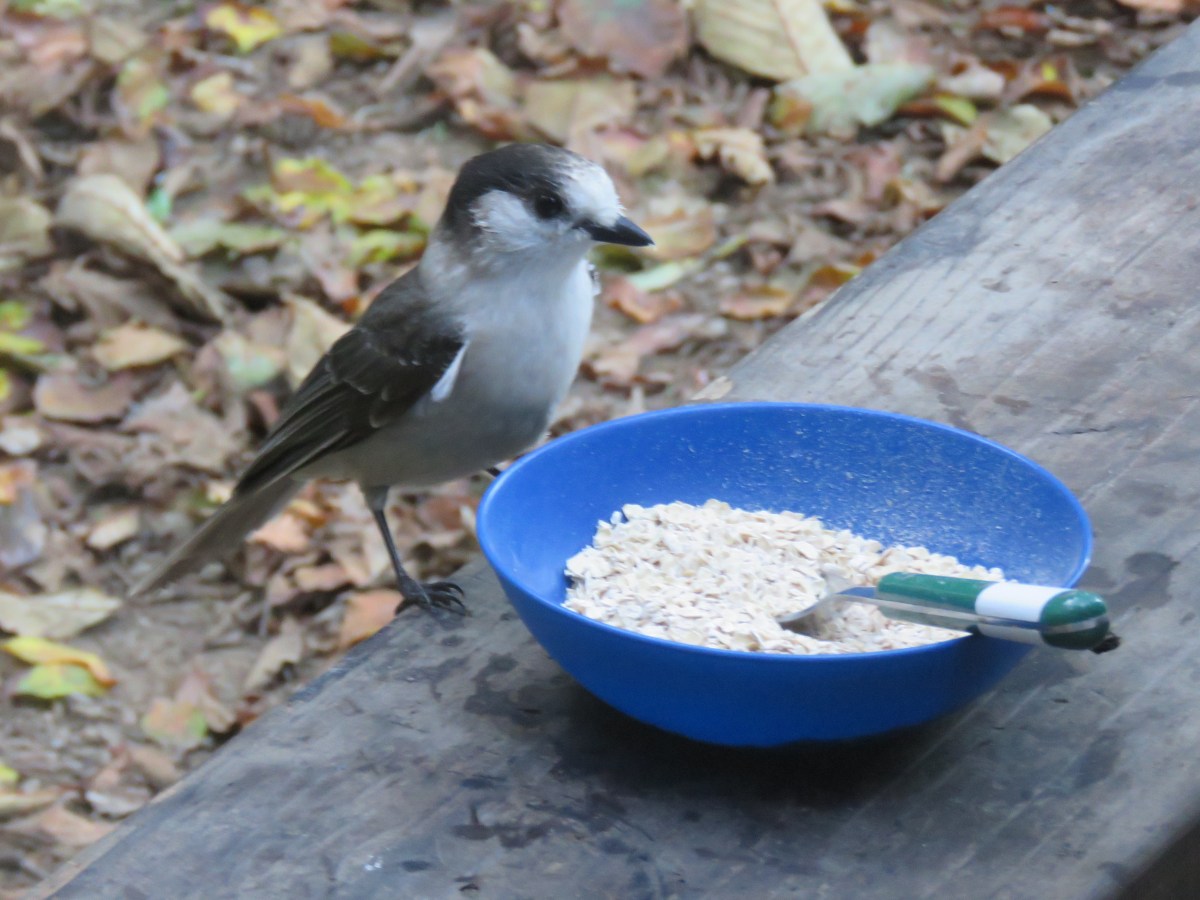
This gray ghost is getting a little too close to my morning oatmeal! This very inquisitive,  and fearless jay is not called the “camp robber” for nothing!

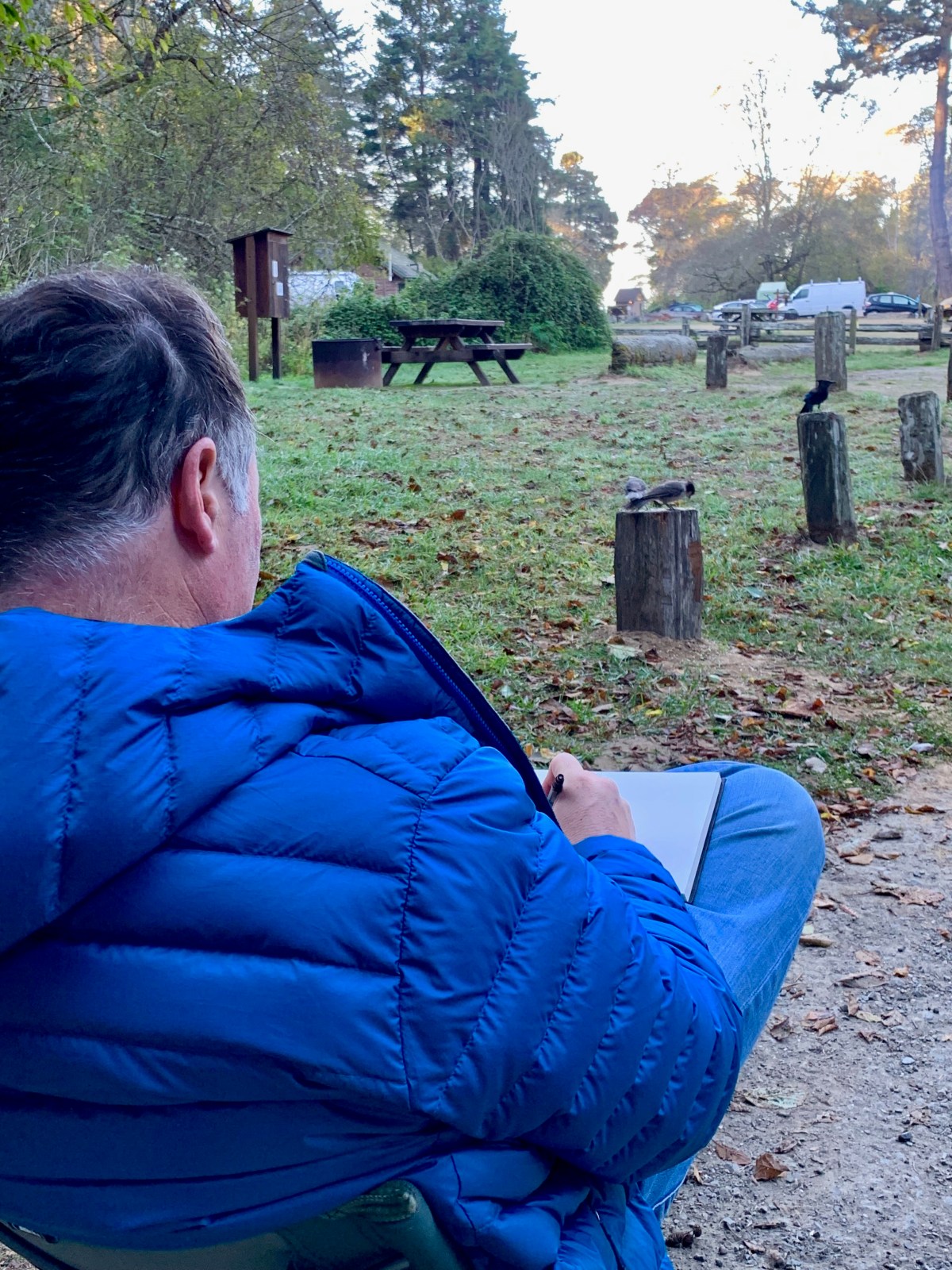
Doing a little field sketching of the Canada jays of Van Damme State Park. The sketcher is looking a little “gray” himself.

IMG_7314The Canada jay is very much attracted to the presence of humans and are a very intelligent and curious critter! This jay is perched on our food larder at campsite #9.
Image

The Rime of the Ancient Murrelet

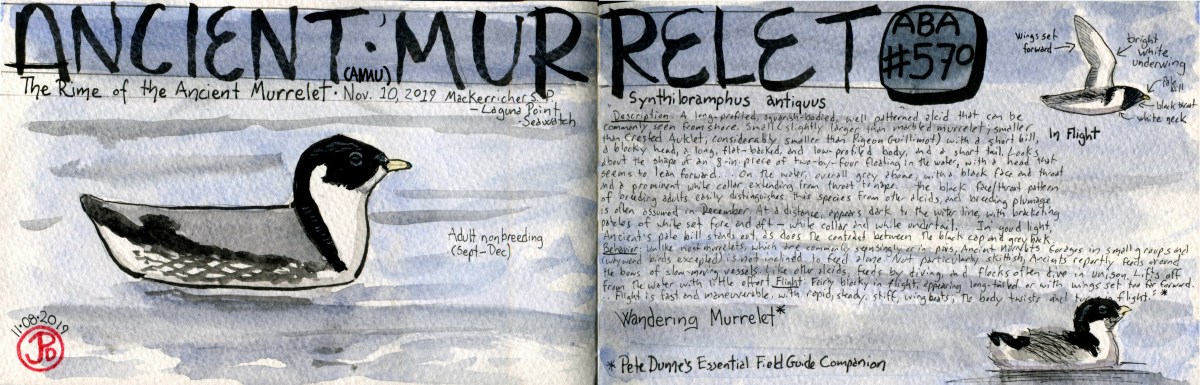
On Veteran’s Day Weekend, consisting of a birding and camping adventure with Dickcissel, I had one bird on my wishlist: the ancient murrelet (Synthiloramphus antiquus).

I have been to the Mendocino Coast many times but had not put the effort into a dedicated seawatch to see this small alcid. (I also did not bring the scope required for finding this bird.)

Before heading up to the Mendocino Coast, I did a study sketch of this small alcid (the featured sketch). When I did this sketch, using the Sibley Guide, photos, and Pete Dunne’s Essential Field Guide Companion, it was a way of creating a mental image of this bird; It’s field marks, behavior, and flight. This helped me single out the other birds and find the two toned “flying penguin “. A bird named “ancient” because of the gray feather of it’s head, giving the impression of being really old.

We started our Seawatch on the observation decks at Laguna Point in MacKerricher State Park just north of Fort Bragg. It was a beautiful day, clear and calm which makes for great seawatching with the sun at our backs providing great light to see the passing birds on the water. There was a lots of birds moving south, mainly loons and surf scoters that flew close to shore, low across the water.

Now it was just a matter of finding a small gray-backed alcid with white underwings, a light, short bill and a twisting and turning flight pattern. Really there where not too many birds that we could confuse it for.

About 30 minutes into our watch, I got on a two small alcids, heading south. I panned the scope with them and they checked all the boxes! Ancient Murrelet, ABA lifebird #570!

Scoping the Pacific. There was lots of southerly movement at Laguna Point. Mostly loons and surf scoters and the alcid I wanted to see: the ancient murrelet. Does this hat make me look ancient?
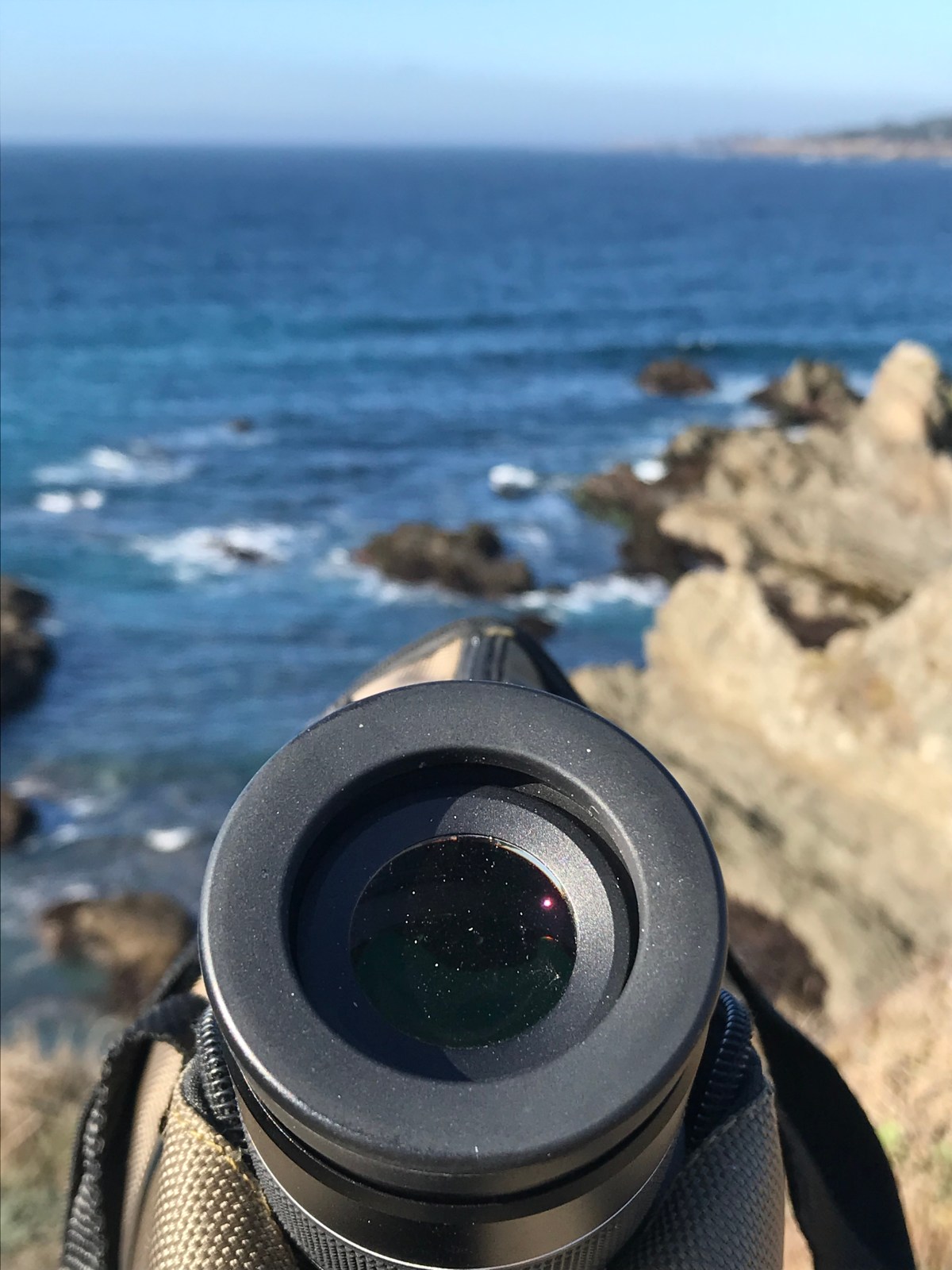
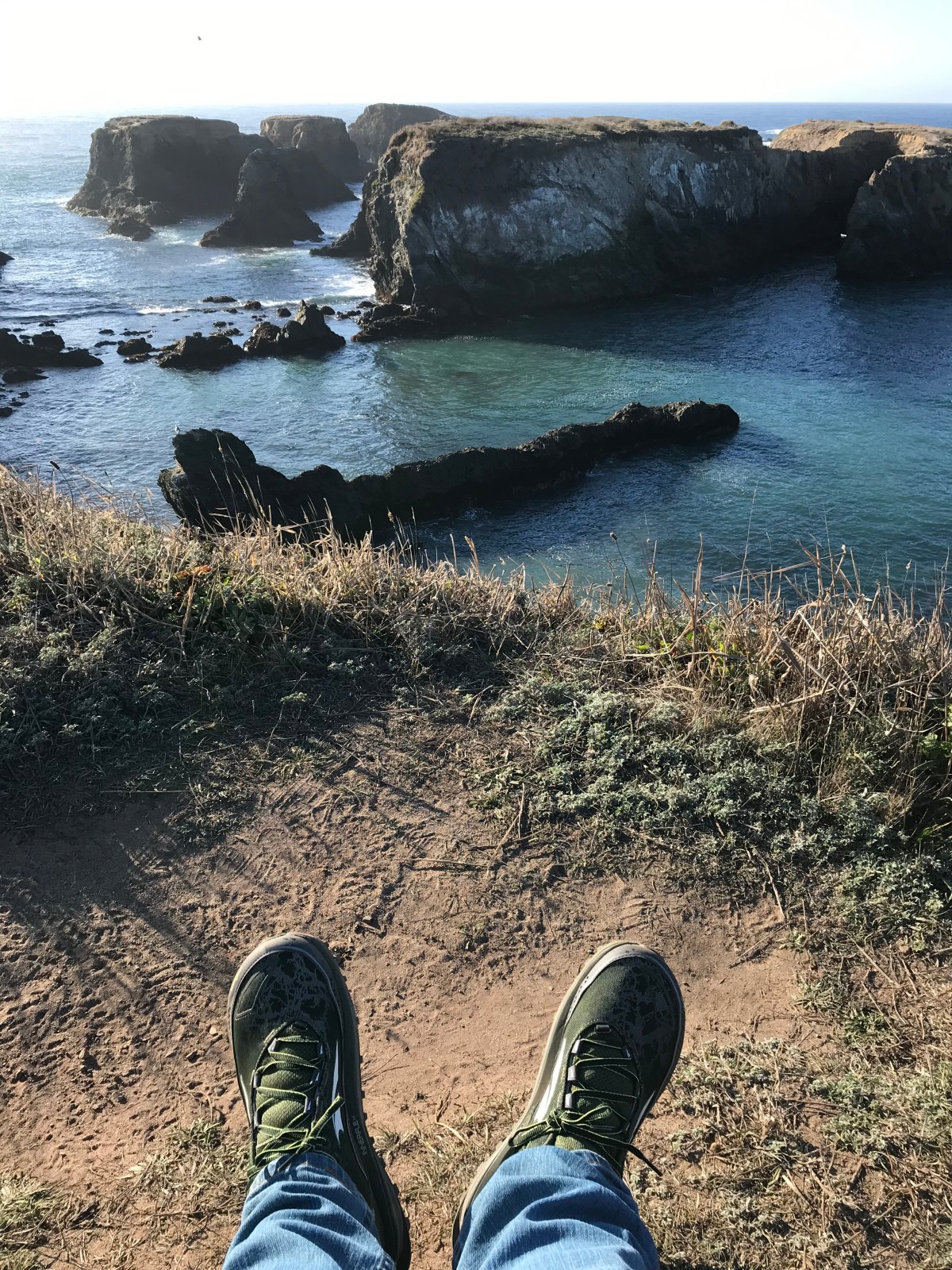
We also scoped from the Mendocino Headlands State Park.

A little nature loafing in between seawatches at Mendocino Headlands State Park. We had a glorious day on the Mendocino Coast. From here we spotted a peregrine, loons, black oystercatchers, mergansers, and five snow geese. The latter had never been recorded for this location!

Image

Robert Frost, New Hampshire.

I had a later flight from Logan International (8:45 PM) and I had time to burn before heading to the maze of Boston. On a whim I decided to head over to the New Hampshire town of Derry and visit a farm that the poet, and native San Franciscan, Robert Frost lived in from 1900 to 1911.

The farm house was closed for the season, most things start closing down after Columbus Day but the grounds around the white farmhouse were open for exploration.

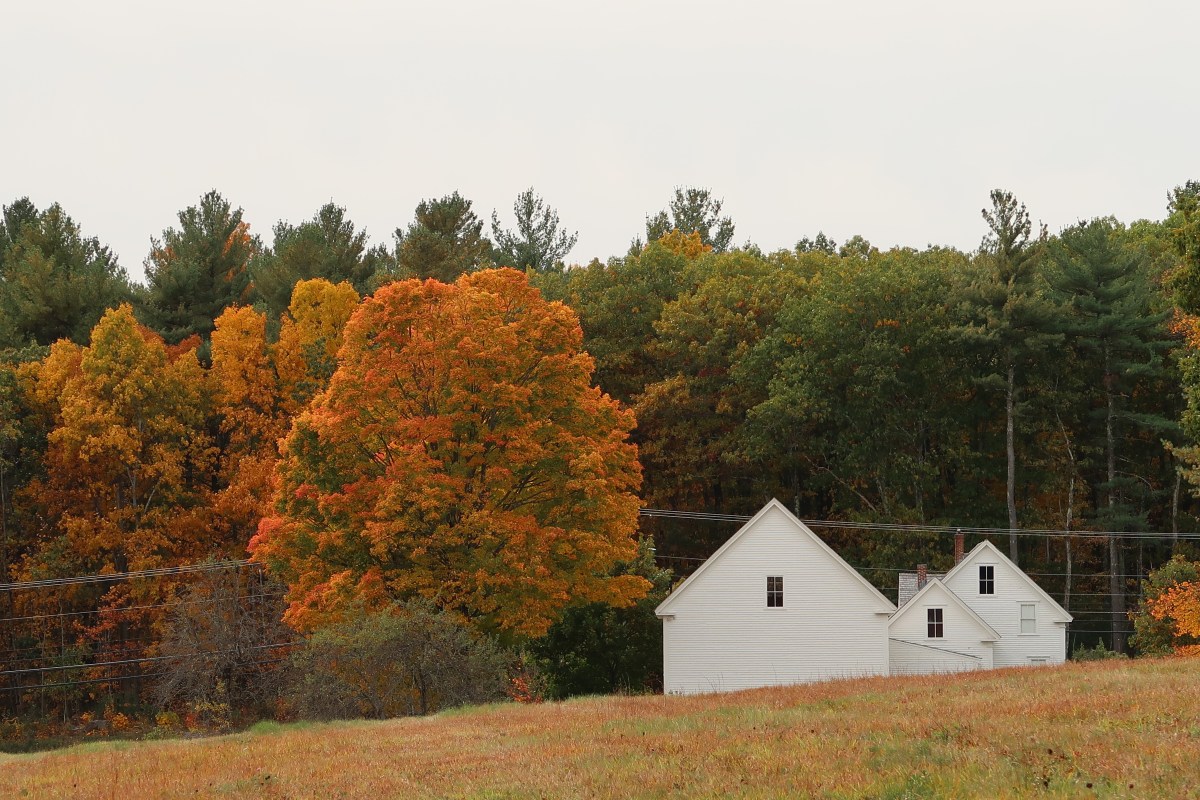
IMG_7252

The three farm building of Robert Frost’s farm. The building are all connected so you can go from building to building without having to brave the frigid winter temps.

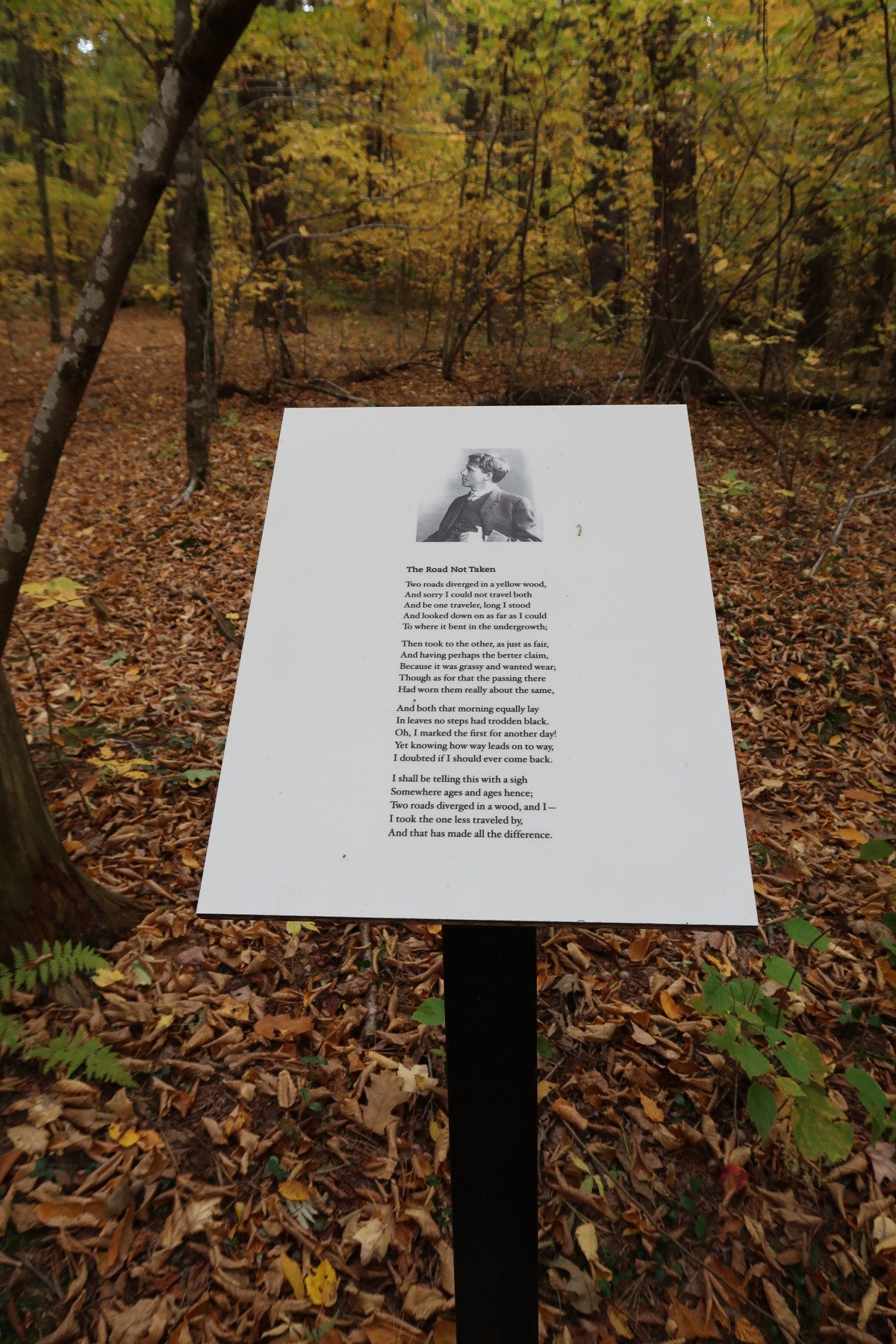
I walked through the grounds of the former orchard. Around the farm grounds were placed interpretive signs with some description as well as a Frost Poem printed in it’s entirety. According to a sign near the farm house:

He would call the first five years on this farm, “the core of my writing”. . . Frost called this farm the seedbed for his poetry and his thoughts returned here over and over again in ” the ache of memory,” to harvest poems throughout his life.

Many of his most famous poems were written at the farm and it’s geography certainly inspired the poet.

IMG_7258

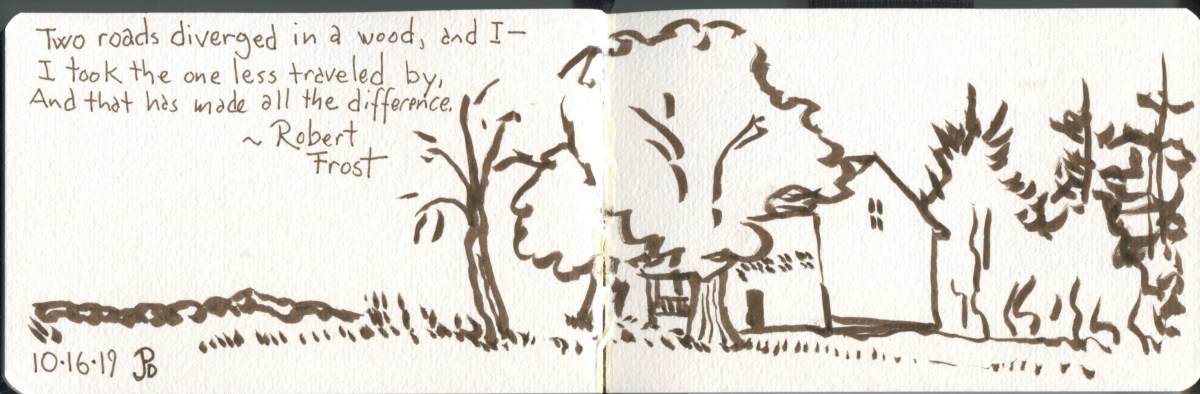
One the the signs at the fork of a path featuring Frost’s most well know poem, “The Road Not Taken”.

I did a rough sketch with my dark sepia brush pen in my small Aquabook watercolor book of the farm building and the trees around it (featured sketch). I decided to leave the sketch unpainted because I liked the lines of the work, which was done without a pencil. As I tell my students: embrace your mistakes!


Image

Lighthouses of Maine

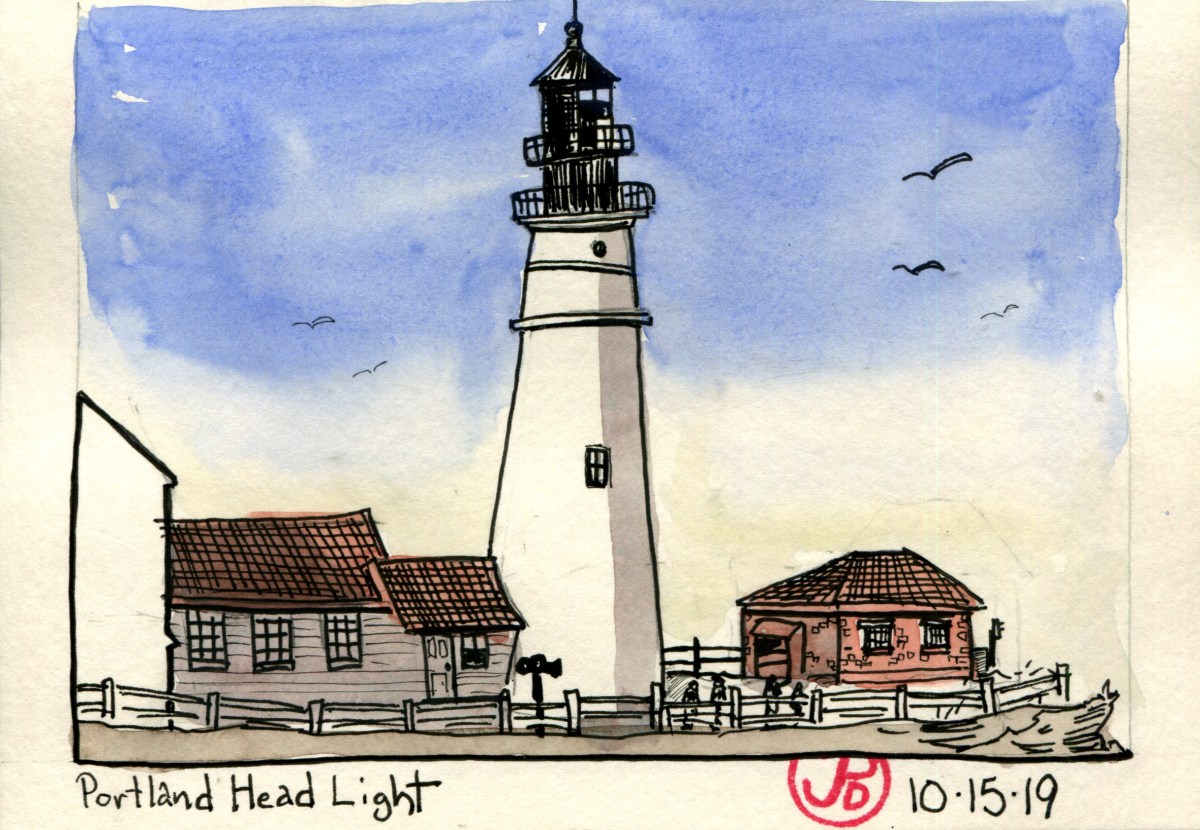
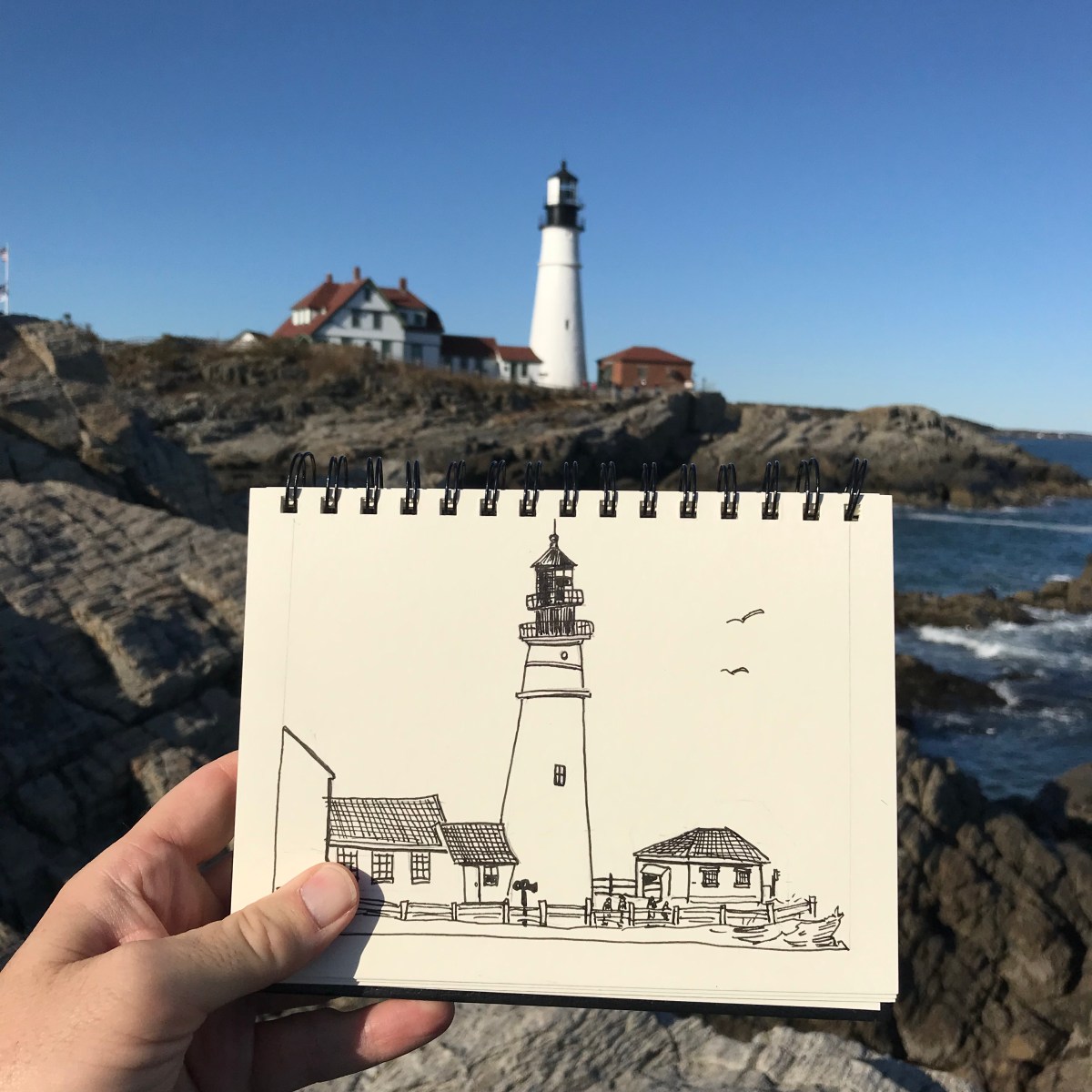
I couldn’t visit the Maine coast without sketching a lighthouse. I chose a lighthouse near my digs in South Portland: Portland Head Light. Which just happens to be one of Maine’s most famous sights. It is feature on posters, postcards, and paintings.

The Portland Head Lighthouse is Maine’s oldest lighthouse. Construction began in 1787 under the order of George Washington. It was completed on January 10, 1791.

The tower is 80 feet above ground and 101 feet above the water. The light is at the entrance of the main shipping lane into Portland Harbor and it’s light can be seen from 24 nautical miles.

Edward Hopper painted this lighthouse in 1927, albeit from a different angle. I felt in good company.
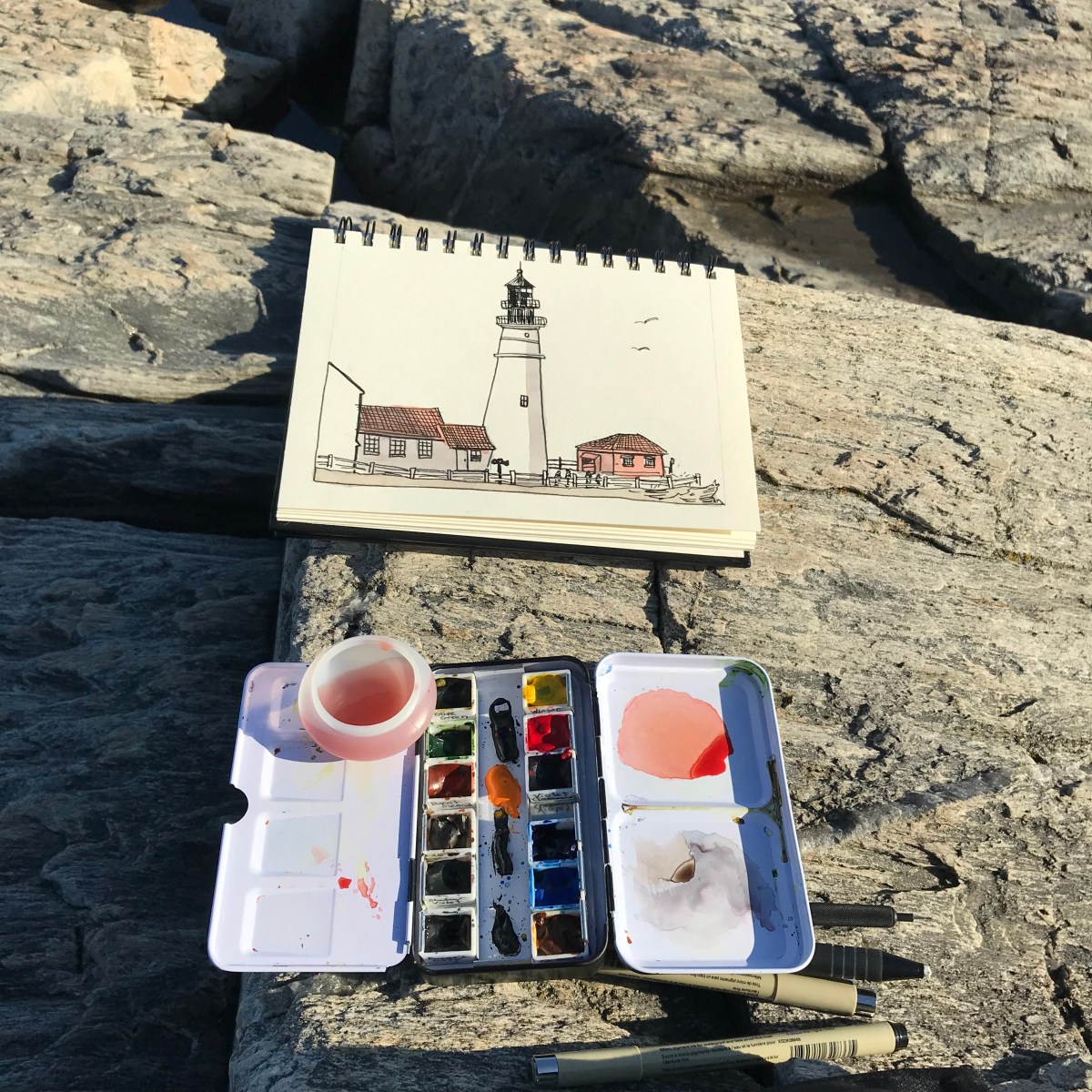
A little watercolor near the water. The rocks just north of the lighthouse provided the perfect sketcher’s seat. I had a raft of common eiders to keep me company.
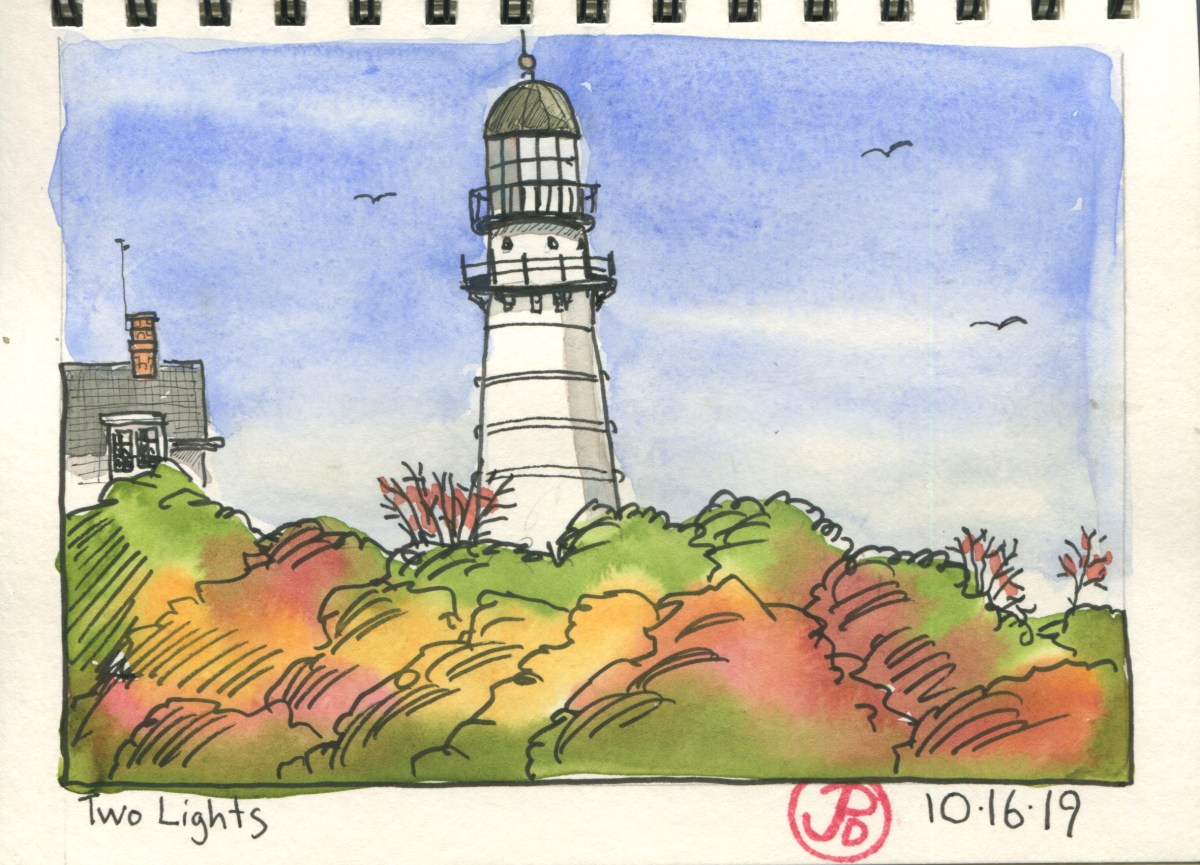
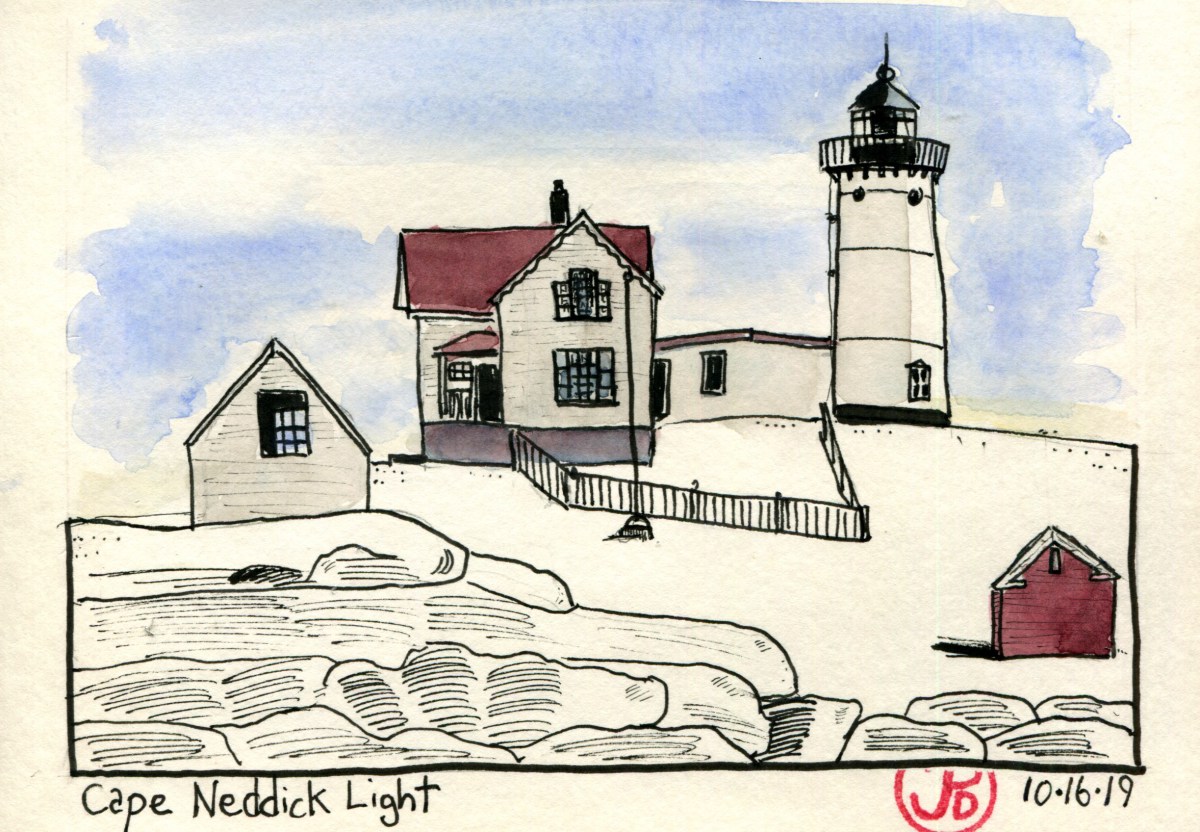
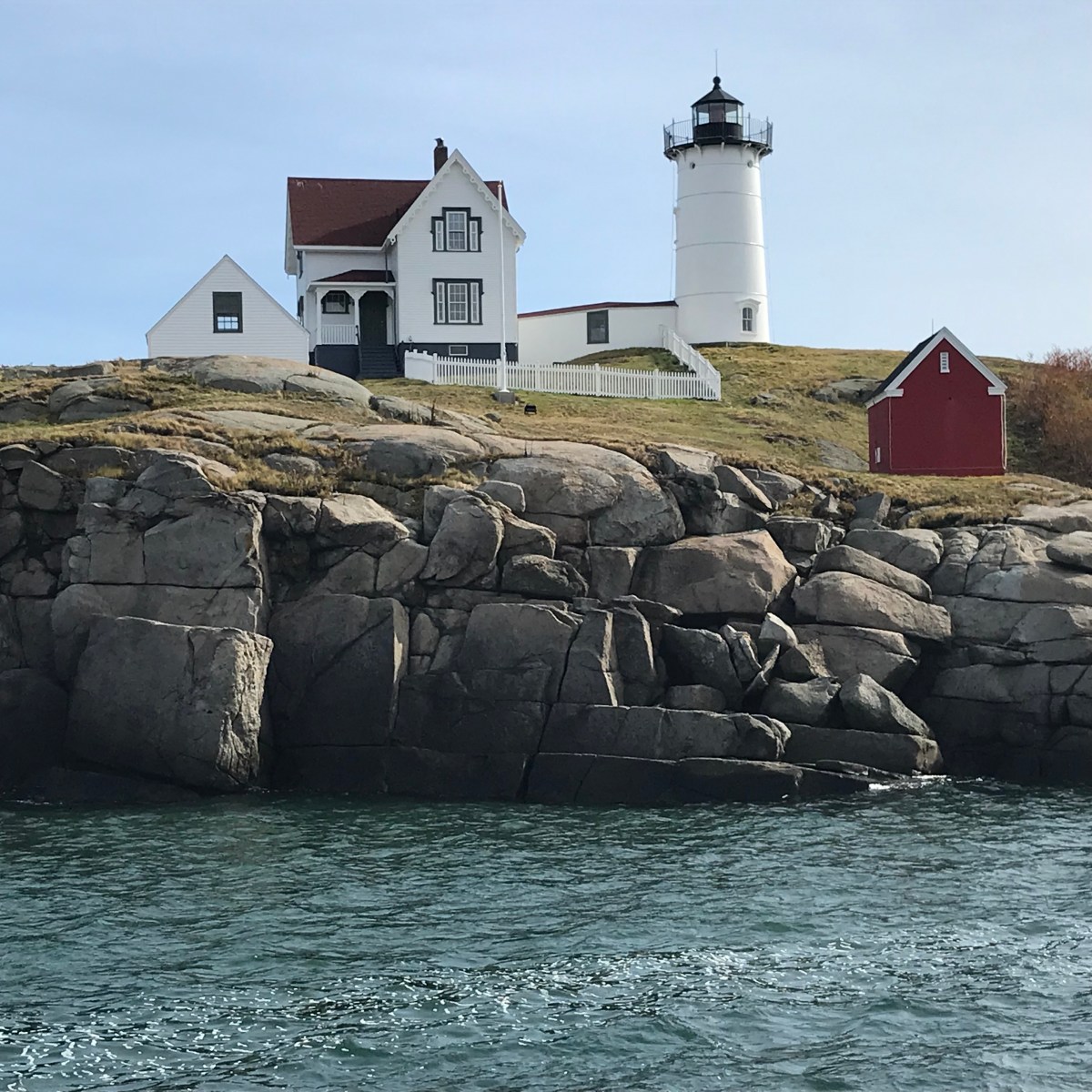
The next day I headed toward Cape Elizabeth to visit two iconic Maine lighthouses, both where painted by Edward Hopper. Two Lights at Cape Elizabethan the lighthouse at Cape Neddnick.

Scan 225

Cape Neddick

The Nubble Lighthouse near Old York, Maine.