The unfolding of the year
And now our season is here
All the balances are clear
Now that our time is here
~Season Song, Blue States
A student of mine, let’s just call her Amelia, keep requesting that I post more bird drawings. I’m sure she’s tried of trains and more trains. So I decided to do a bird sketch in these times of social distancing.
The previous weekend, before anyone really got the message about shelter-in-place, I headed out to the San Mateo Coast to do some sketching and birding. (Two sketches from that outing were posted in my blog: Sketch in the Time of Covid.)
I was birding mainly on the coast, looking for kittiwakes and northern fulmars but I decided to take a detour inland to do some birding in a riparian habitat.
I took a right turn off of Highway One on Tunitas Creek Road. I remember the first time I birded this road was on an afterwork excursion. When I told my fellow teacher where I was going. She said, “You going now?! I wouldn’t go there. Be careful.” She then told me that Tunitas Creek Road was haunted and she had grown up in Half Moon Bay and no sane local would ever be on that road at dusk or in the night. Yeah right, I though, sounds like the rural coast’s version of an “urban myth.”
I birded Tunitas Creek afterwork and had a nice experience and I didn’t see any ghosts. When I got back home I did and an internet search with “Tunitas Creek Road haunted” in the search window and I came across the website titled, “10 Scariest Haunted Roads in Northern California”. I looked at the website and I scrolled down, scanning the 10 entries, not seeing Tunitas Creek Road. I had to reach the bottom of the page until there was any mention of the road in question because Tunitas Creek Road was ranked number 1 as the most haunted road in Northern California!
There have been reports of a long-armed blue lady who had been seen haunting this road at night and also bodies strewn among the bushes, the spirit reminders of a long ago Native Californian slaughter. But I was here on a mild March Saturday to see what I could find in the roadside bushes. I was not looking for bodies but birds!
I parked in a dirt pullout and walked west down the road, birding by ear. This is the time when bird calls and songs that I have almost forgotten come back to me. These are the times when migrants from Mexico and Central and South American are slowly returning to their breed grounds, here in the trees and bushes of Tunitas Creek.
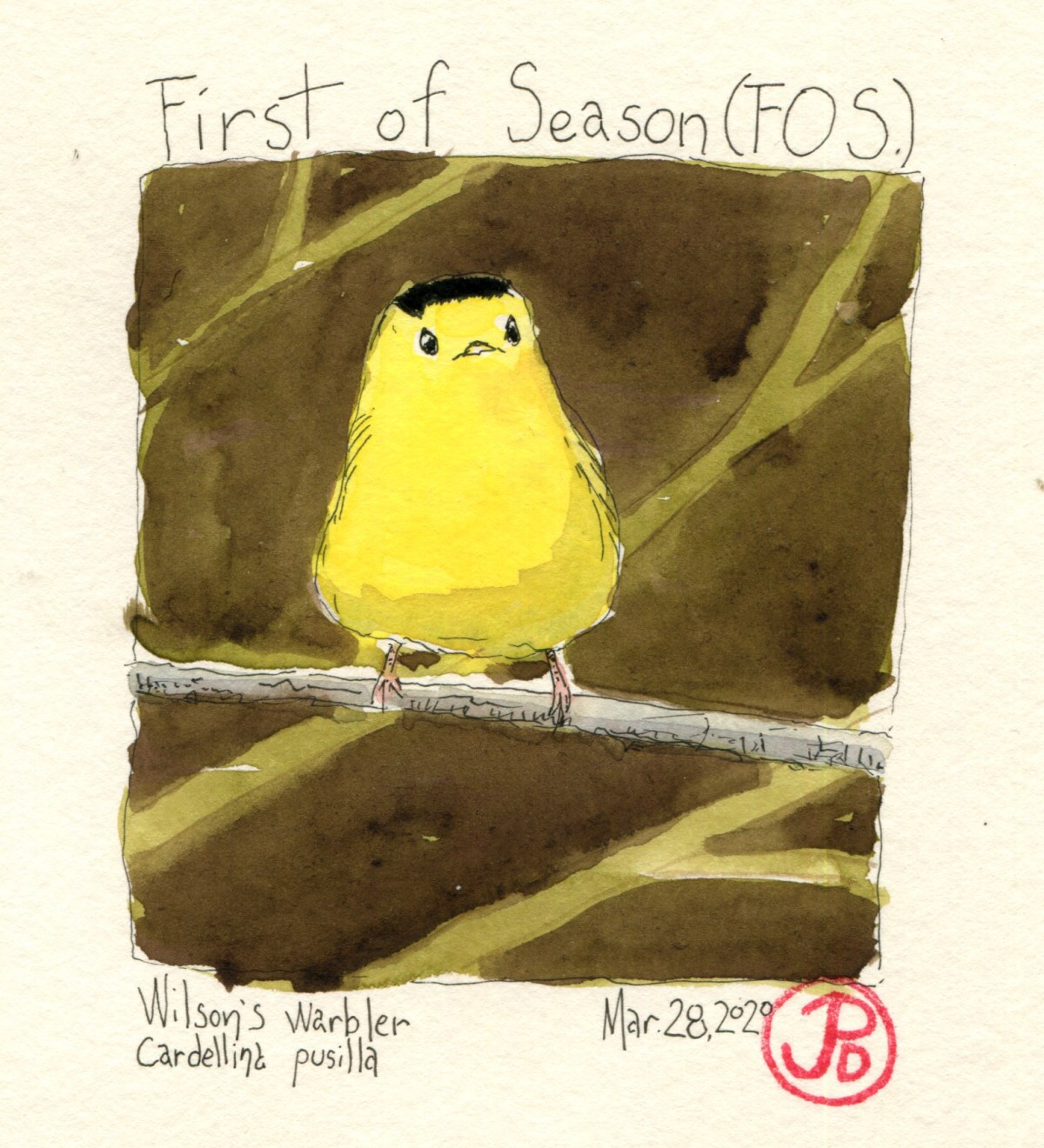
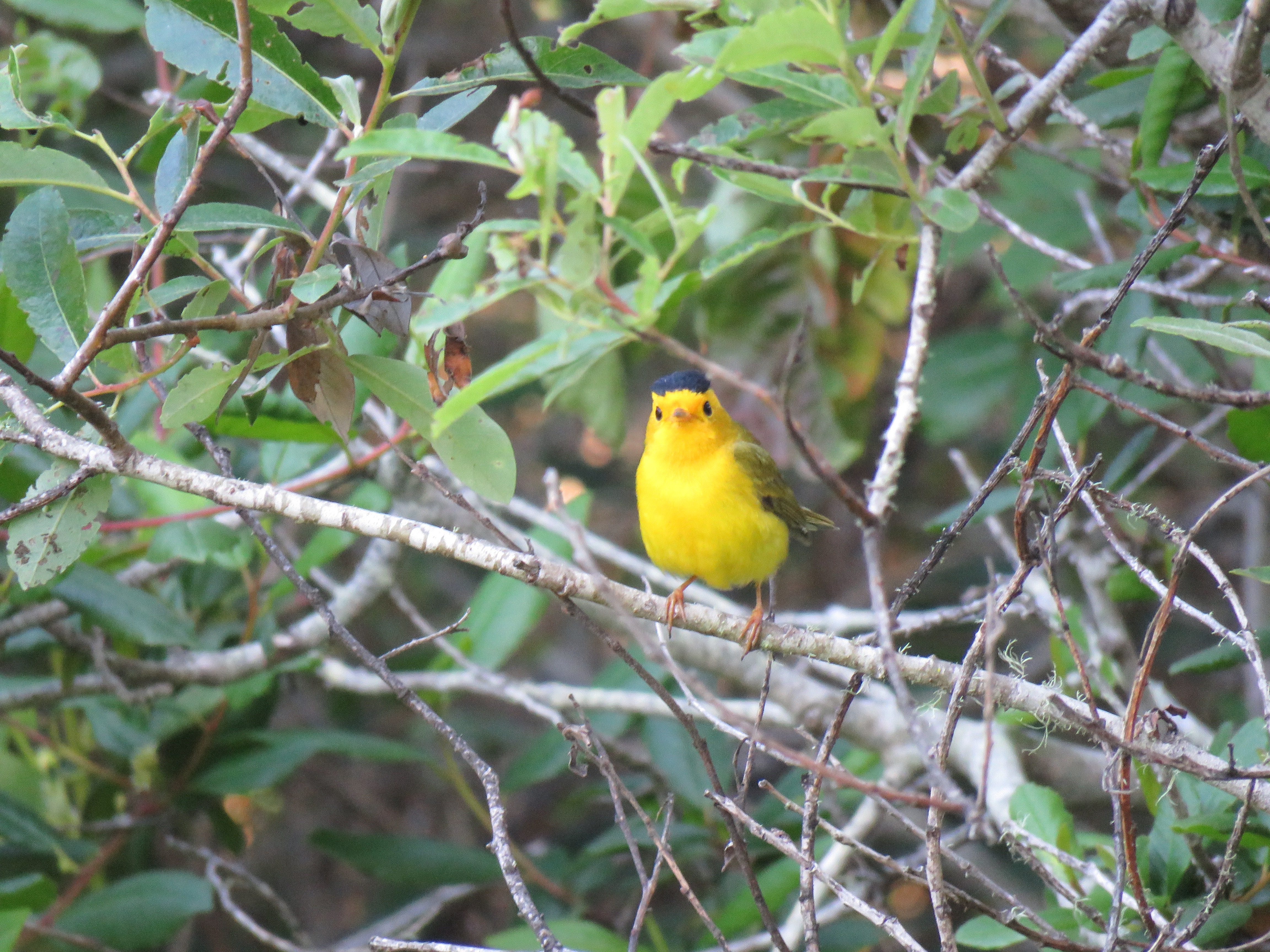
Across the creek came the song of a bird that I am very familiar with. A fellow birder described the call as sounding like one of those lawn water sprinklers. It was a call that I hear from the deck of my cabin in spring and summer. This was the call of the Wilson’s warbler.
This was the first Wilson’s that I had seen since the turning of the year and it would be noted as FOS, meaning “first of season”. This data provides ornithologist with an idea of the pattern of migratory birds over time. Are these warblers migrating at the same time every year or are the arriving earlier or later than usual?
I love this warbler. It’s one of our smallest warblers and the adult male is easily identified with it’s bright yellow face and body and it’s black “yamaka”. This warbler is always in motion and in the spring and summer, calling frequetly.
As I walked along the road I came across a loose feeding flock of bushtits and chestnut-backed chickadees. In the flock was a bird I hadn’t seen in a long while. This is a bird that is often confused with the over-wintering ruby crowned kinglet but once this bird sings, it is all vireo. This is Hutton’s vireo.
It was nice to see these migratory birds. It is nature’s way of signaling the changing of the seasons. From the cold dark days of winter to the longer, green days or spring. The air filled with the scent of flowers and sounds of birdsong.






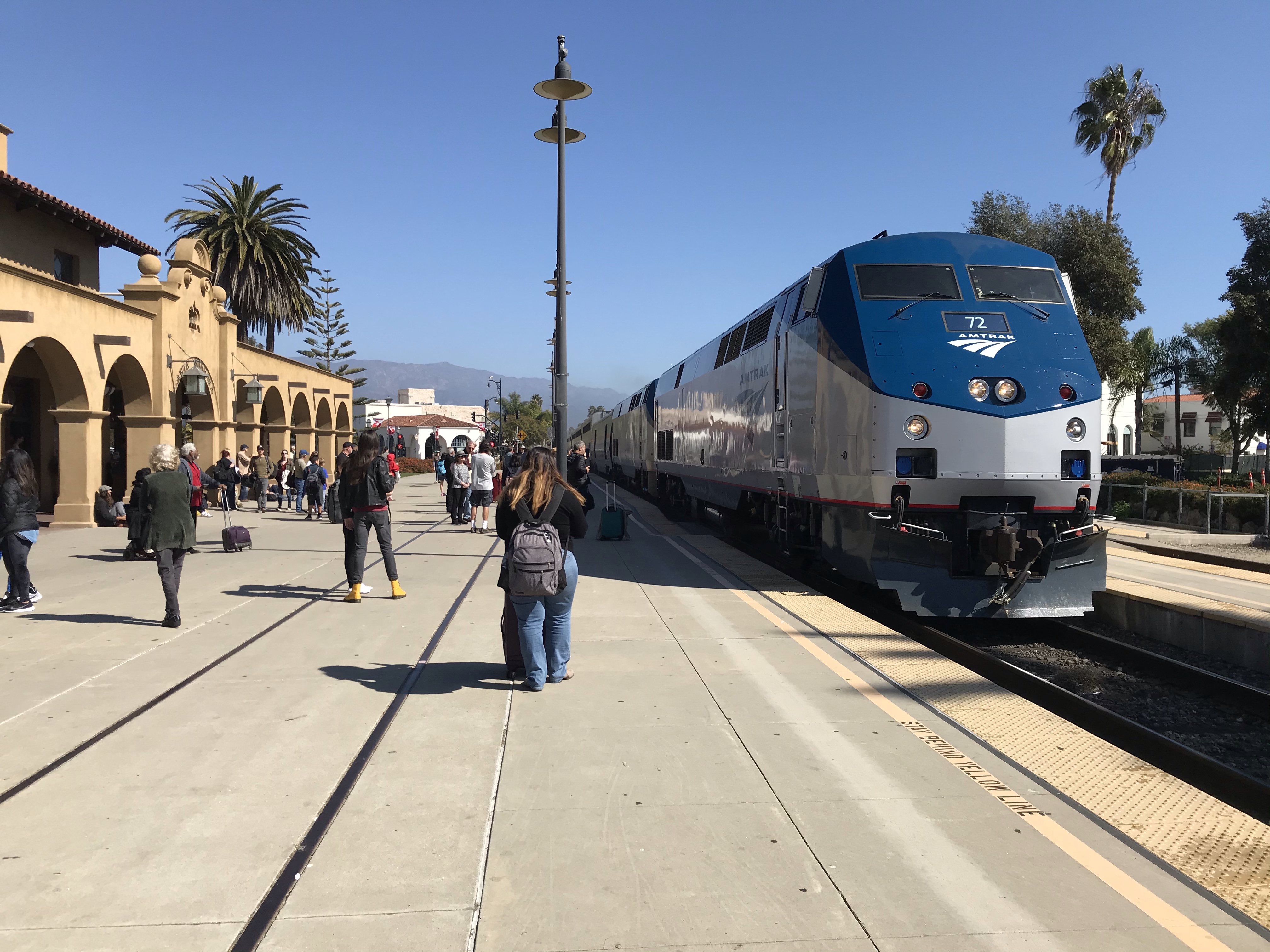


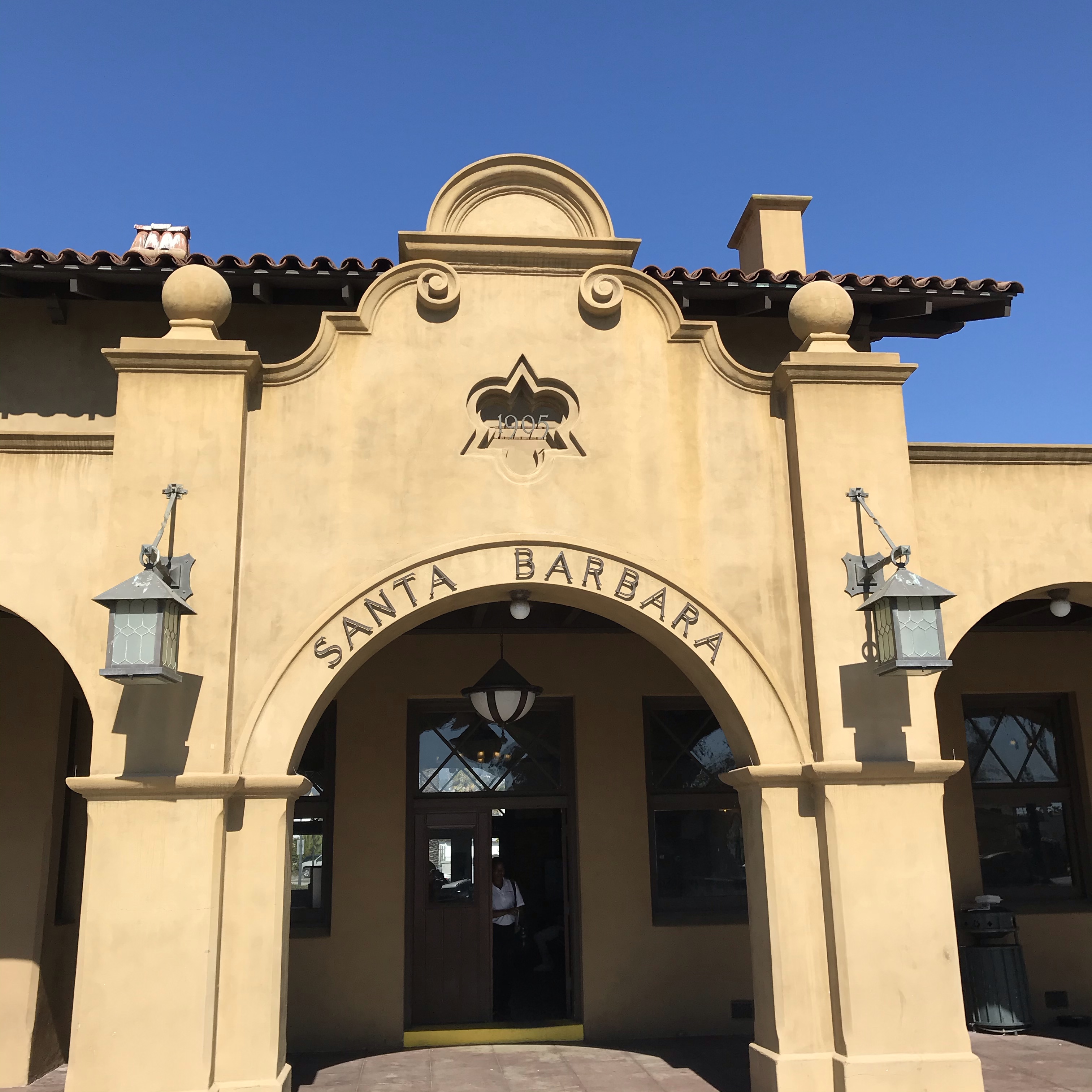

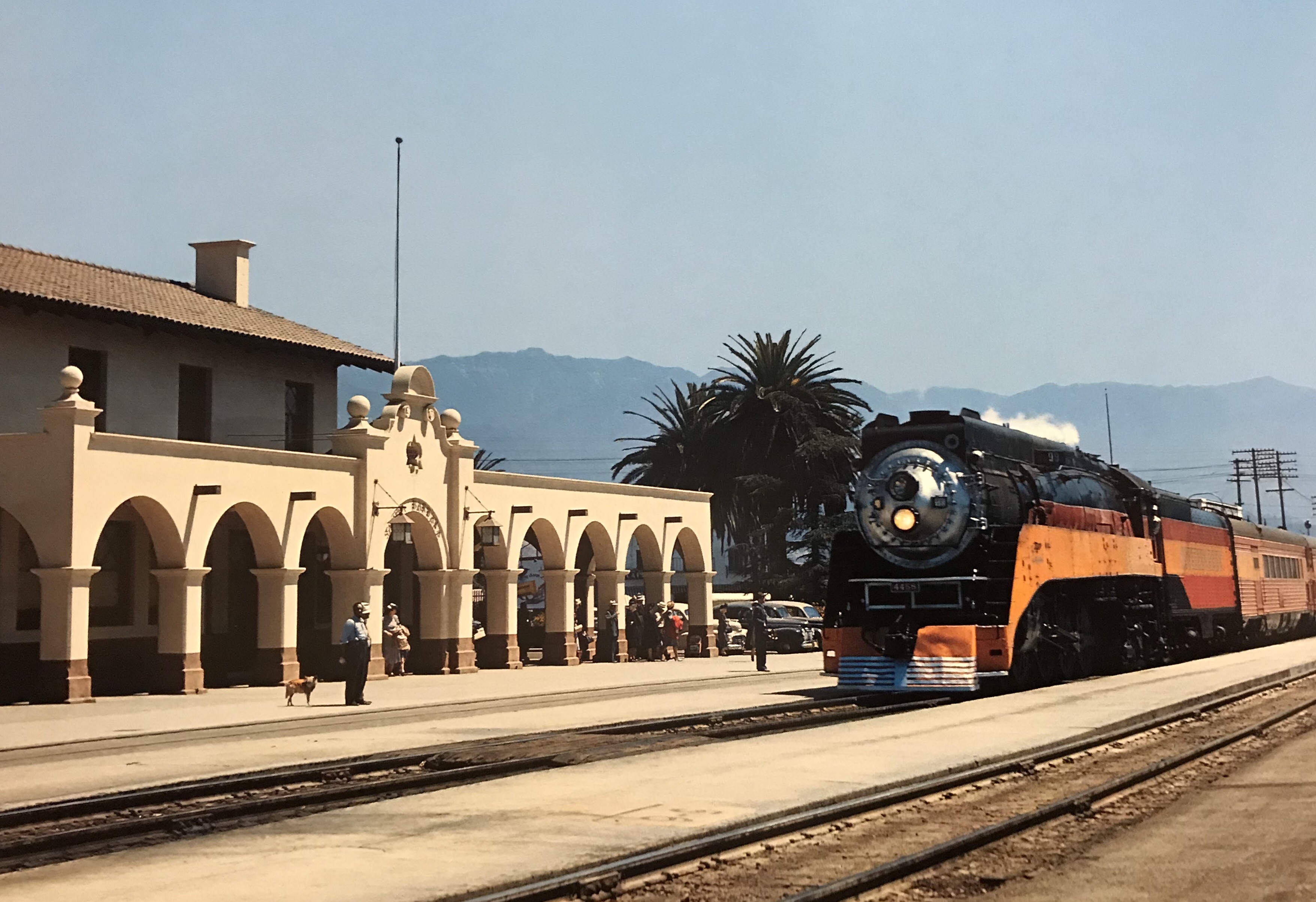

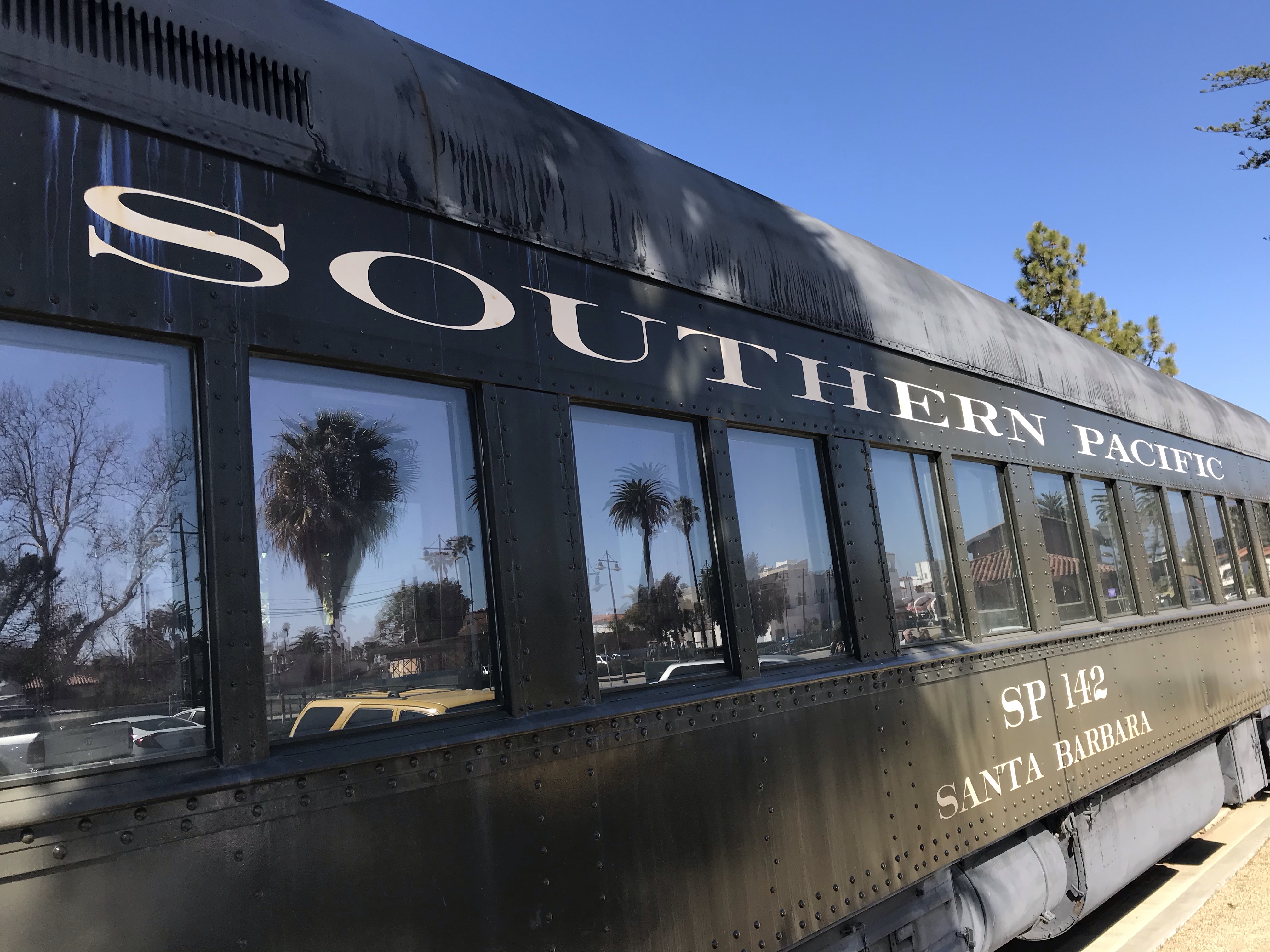
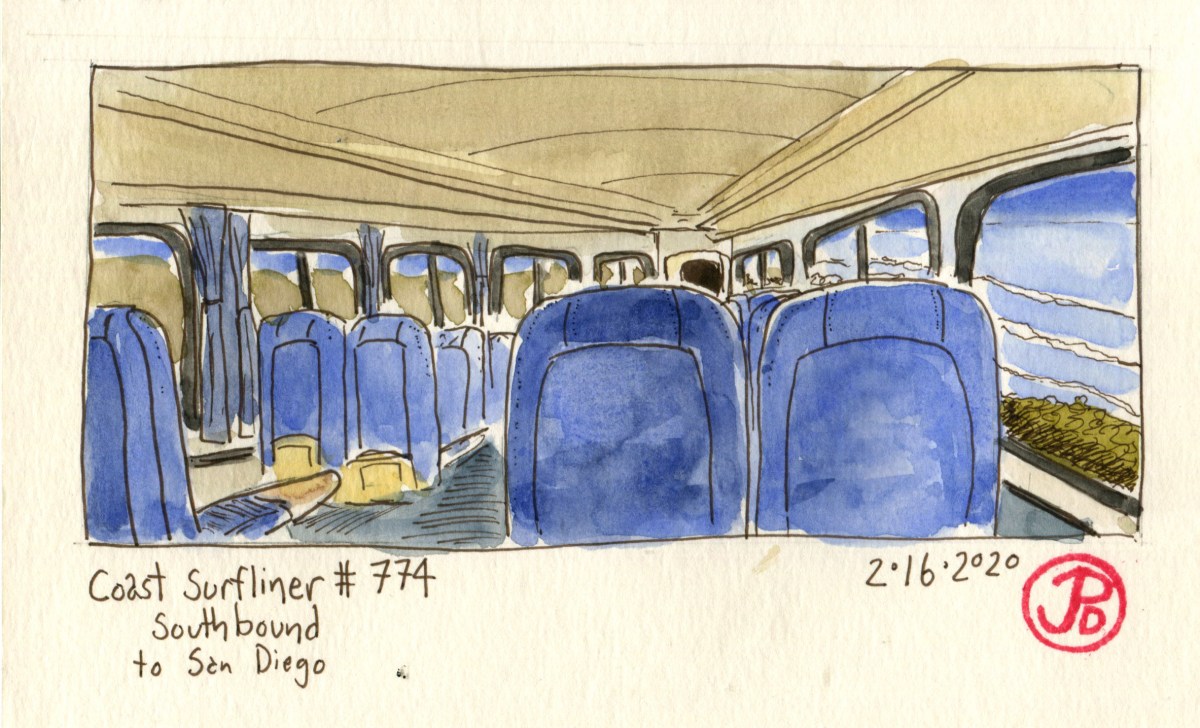
 The Coast Surfliner pulling into San Luis Obispo Station for its 6:55 AM departure. SLO is the northern most stop on the Surfliner.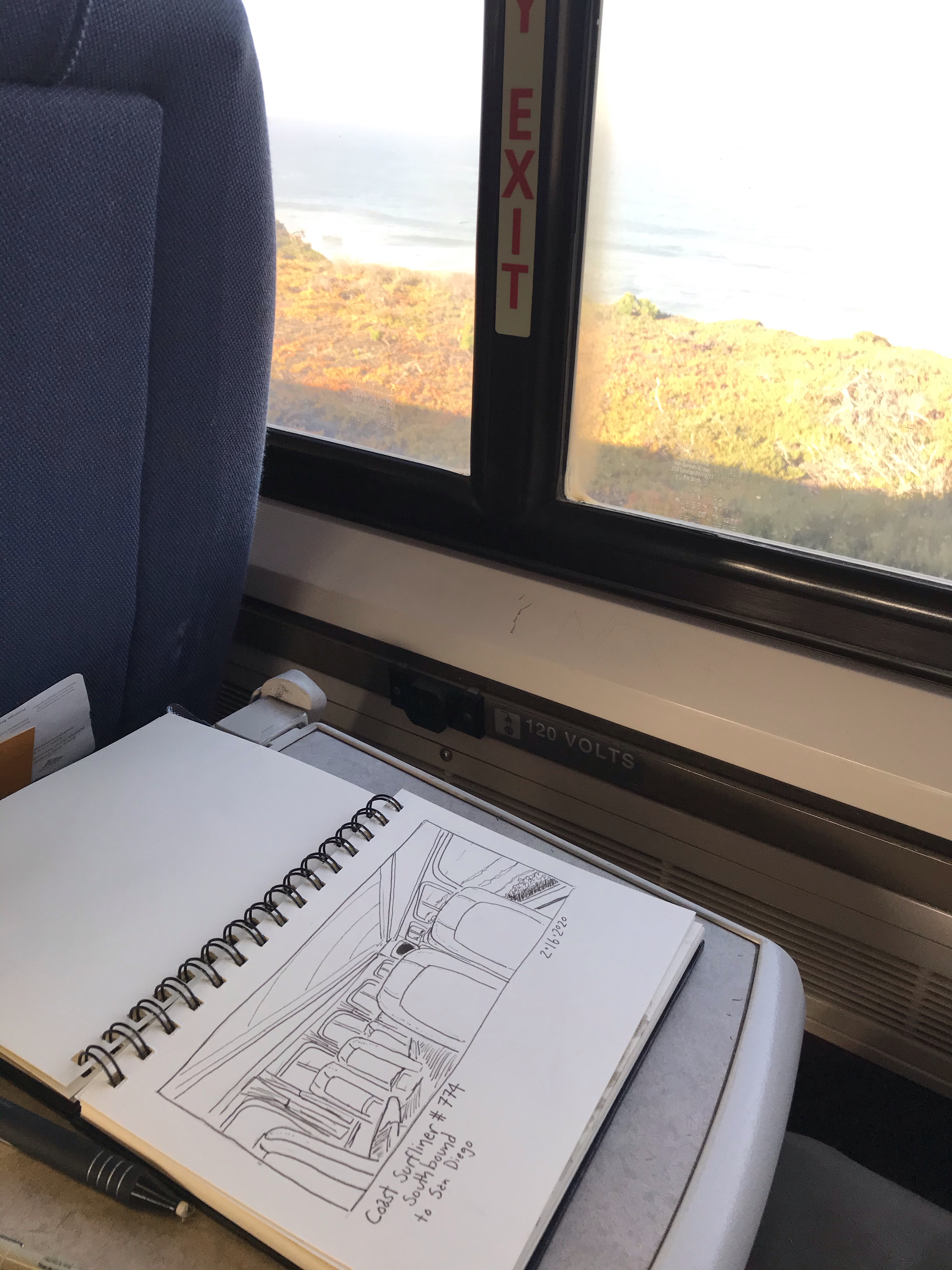
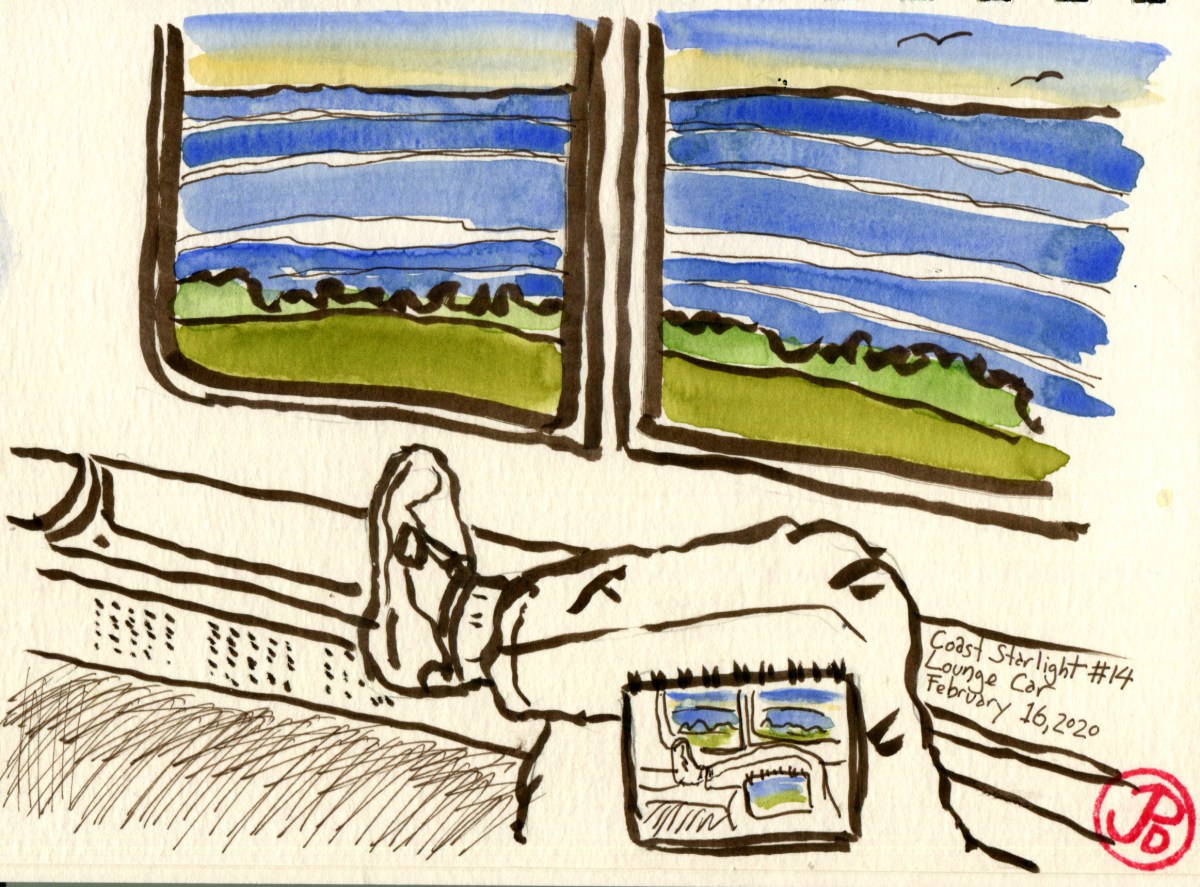
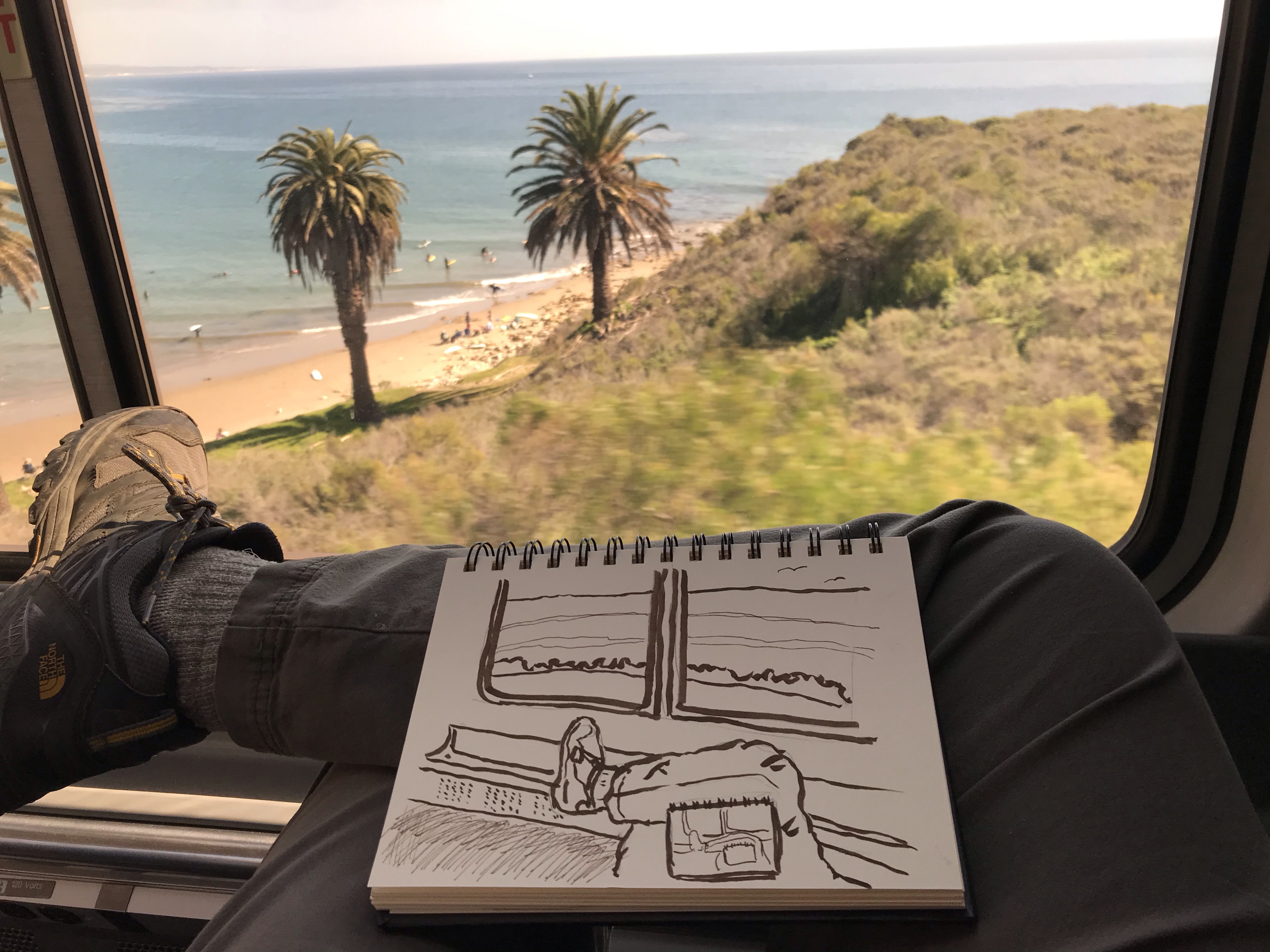
 Pelagic birding from the second story of the Coast Surfliner.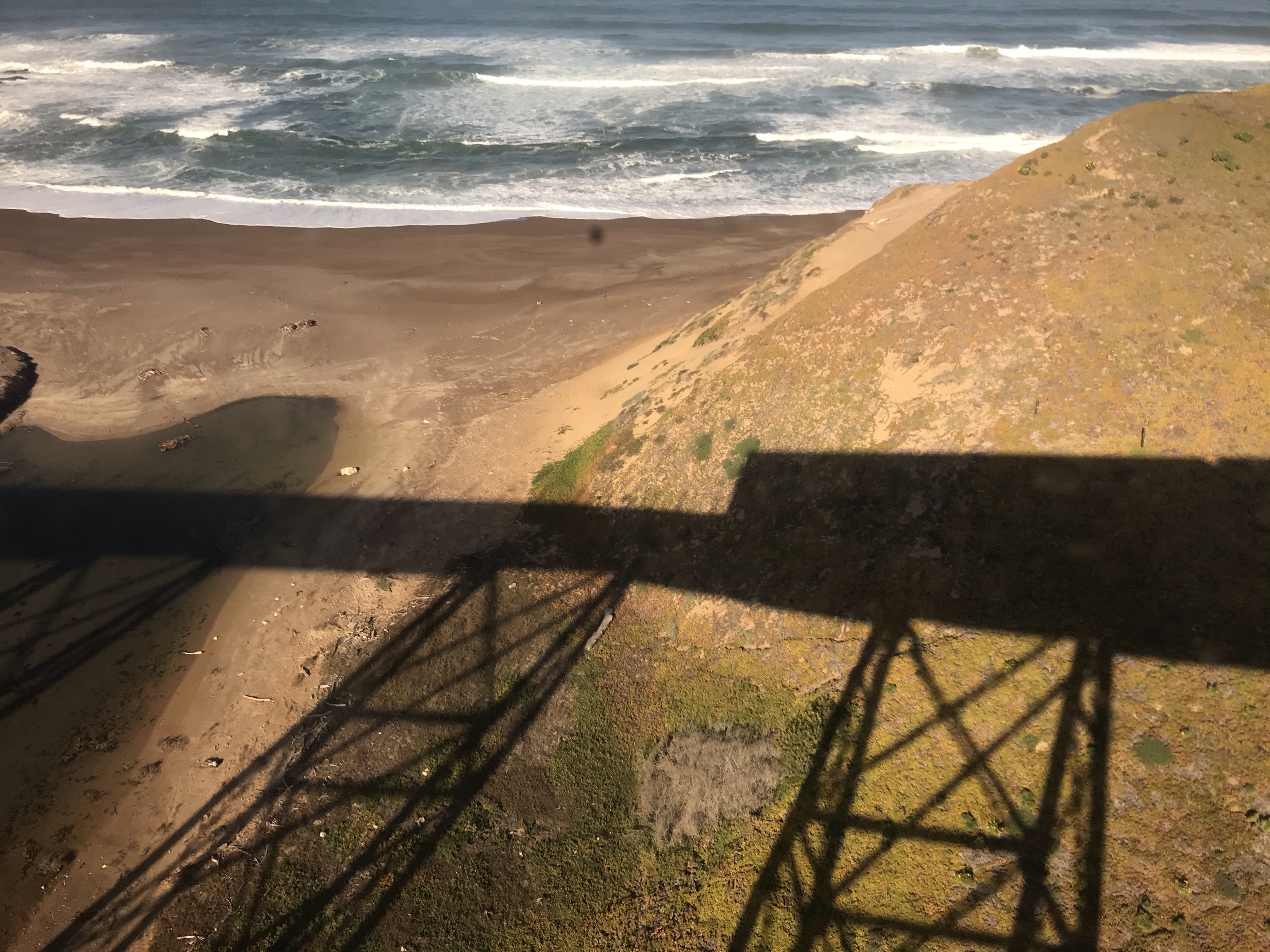
 The Coast Surfliner being pushed to San Diego as it leaves Santa Barbara Station running one hour late. Overall a wonderful ride, except for the breaking down part. Now it’s time to sketch!
