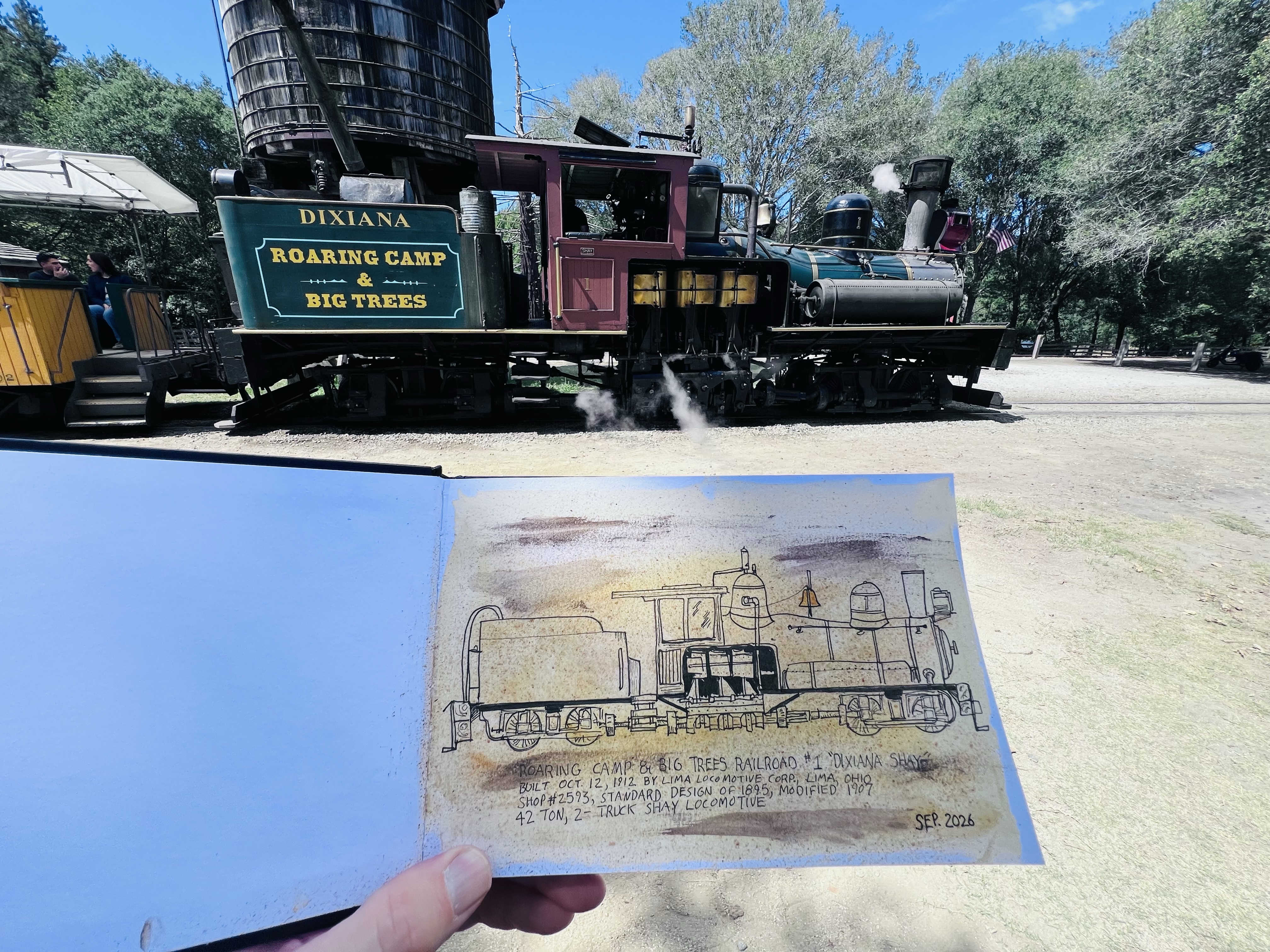
To really understand something, more than just taking a photograph in a fraction of a second, you should take the time to draw the object you hope to understand.
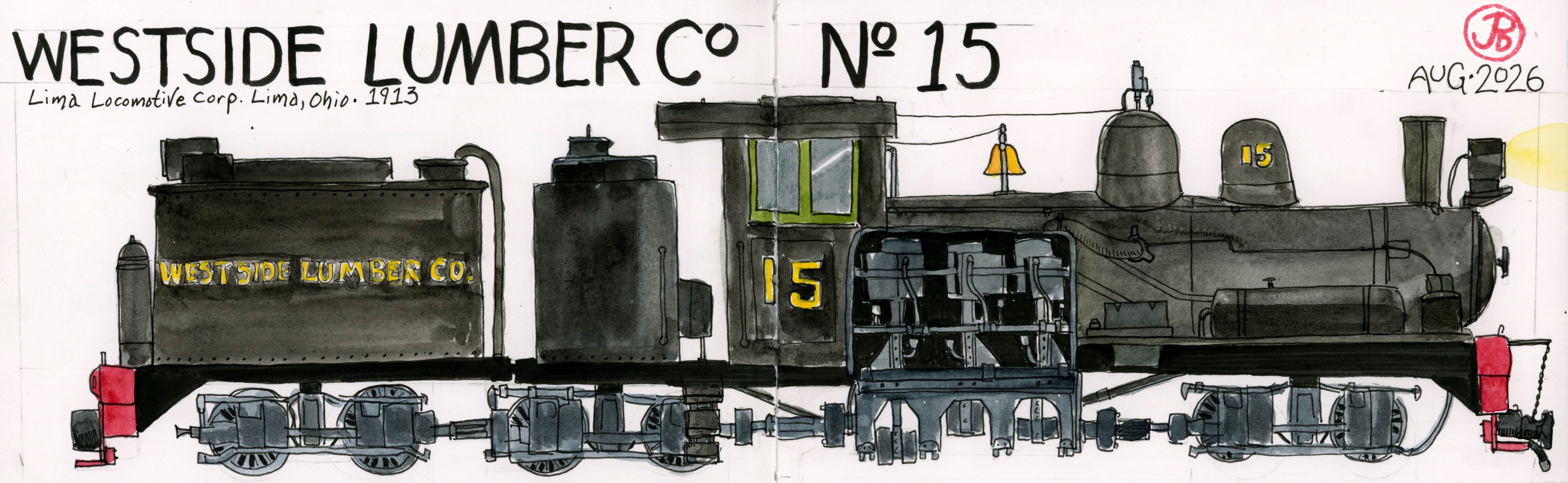
I wanted to understand the design and engineering of a Shay geared locomotive. I knew that at the end of the drawing, I would know a Shay so much better. My subject was the Westside Lumber Company three truck Shay No. 15 (this is a sister to the new Roaring Camp No. 14).
I was copying a picture from one of my favorite books when I was a kid: The Illustrated Encyclopedia of North American Locomotives by Brian Hollingsworth.
This was not a sketch but a drawing and it was very much more involved, meaning I was taking lots of measurements and applying them to my sketchbook, focusing on proportions and details. The drawing was done over a series of evenings. This was the opposite of a loose continuous-line sketch. I liked the process but it was taxing. I was wearing the hat of a draftsman not a sketcher.
After drawing a Shay in great detail, I wanted to sketch a real live Shay under steam, in a continuous-line way.
That’s easily done from my Santa Cruz digs by driving 15 minutes up Highway 9 to Roaring Camp & Big Trees Railroads.
I originally wanted to sketch the Shay and Heisler lined up next to each other at the engine shed. At the front gate I learned the difference of asking for permission and asking for forgiveness.
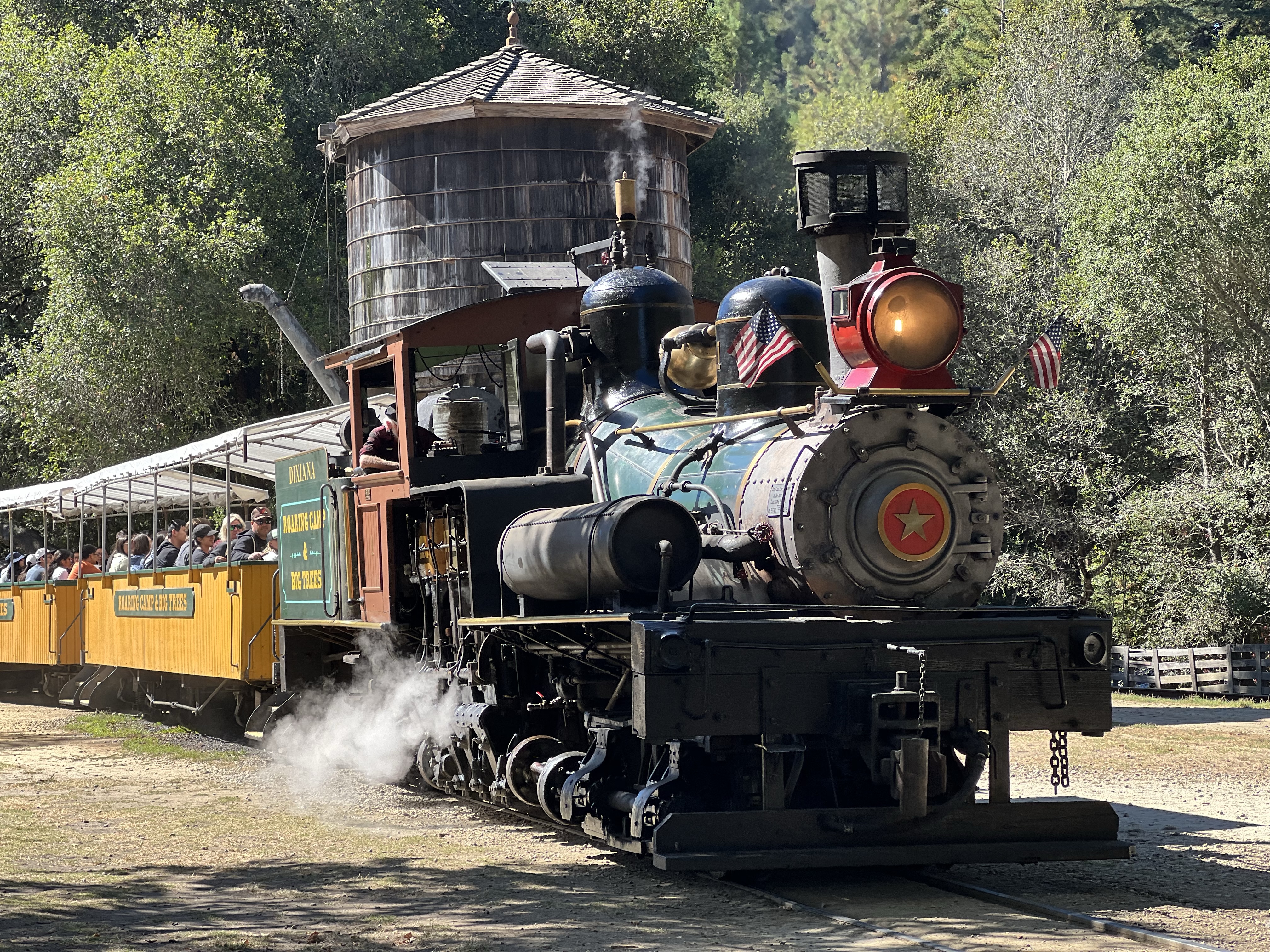
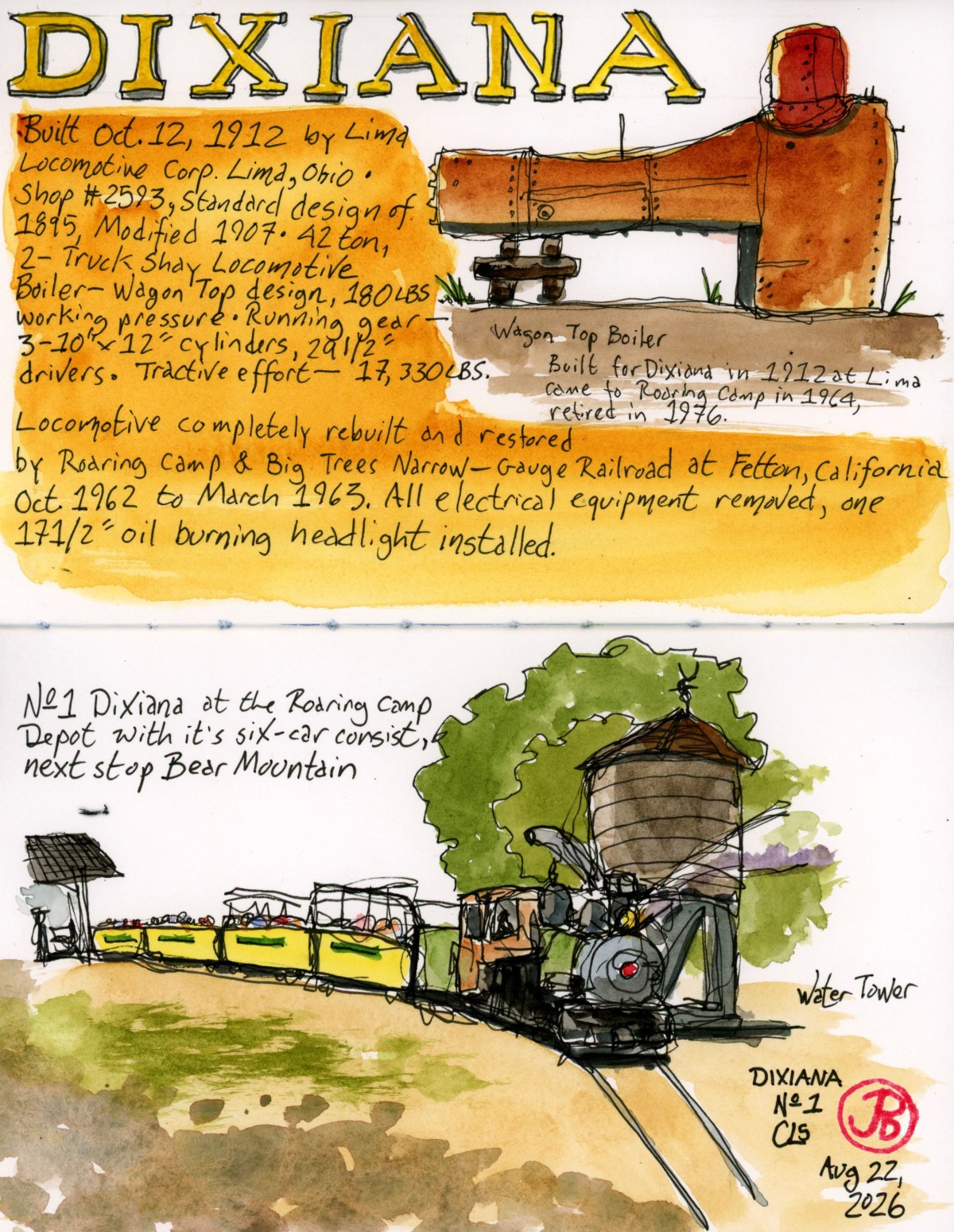
Now it was time for Plan B: sketching the Dixiana at the depot. I had sketched the locomotive from the same perspective before, but this time I wanted to render the scene in a continuous-line sketch. I knew that I would only have about 10 minutes to sketch the scene before the train departed for Bear Mountain.
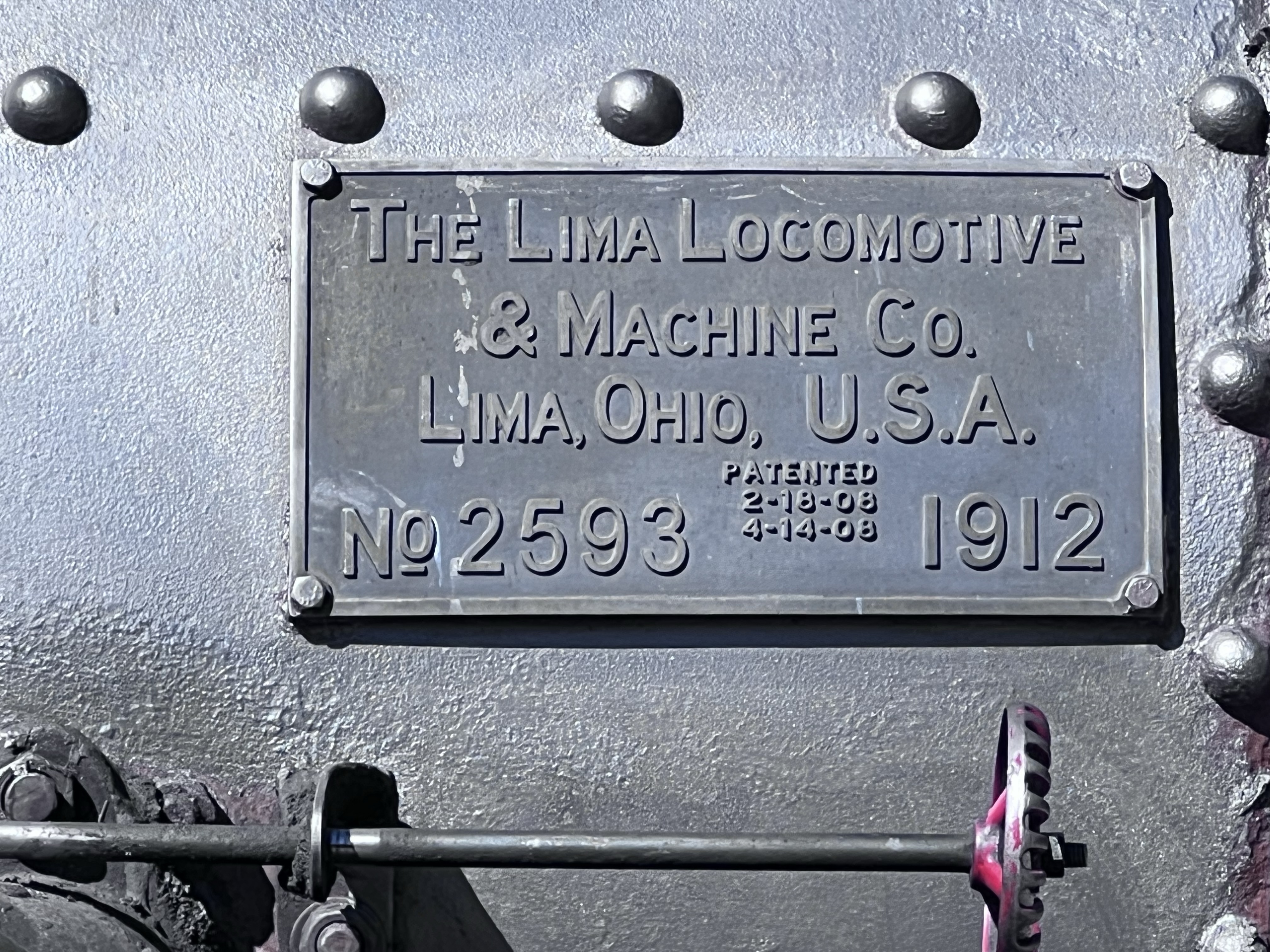
Before the train arrived, I sketched the old rusted wagon top boiler on display in the grounds. It was built by Lima in 1912 and used on the No. 1 until it was retired in 1976.
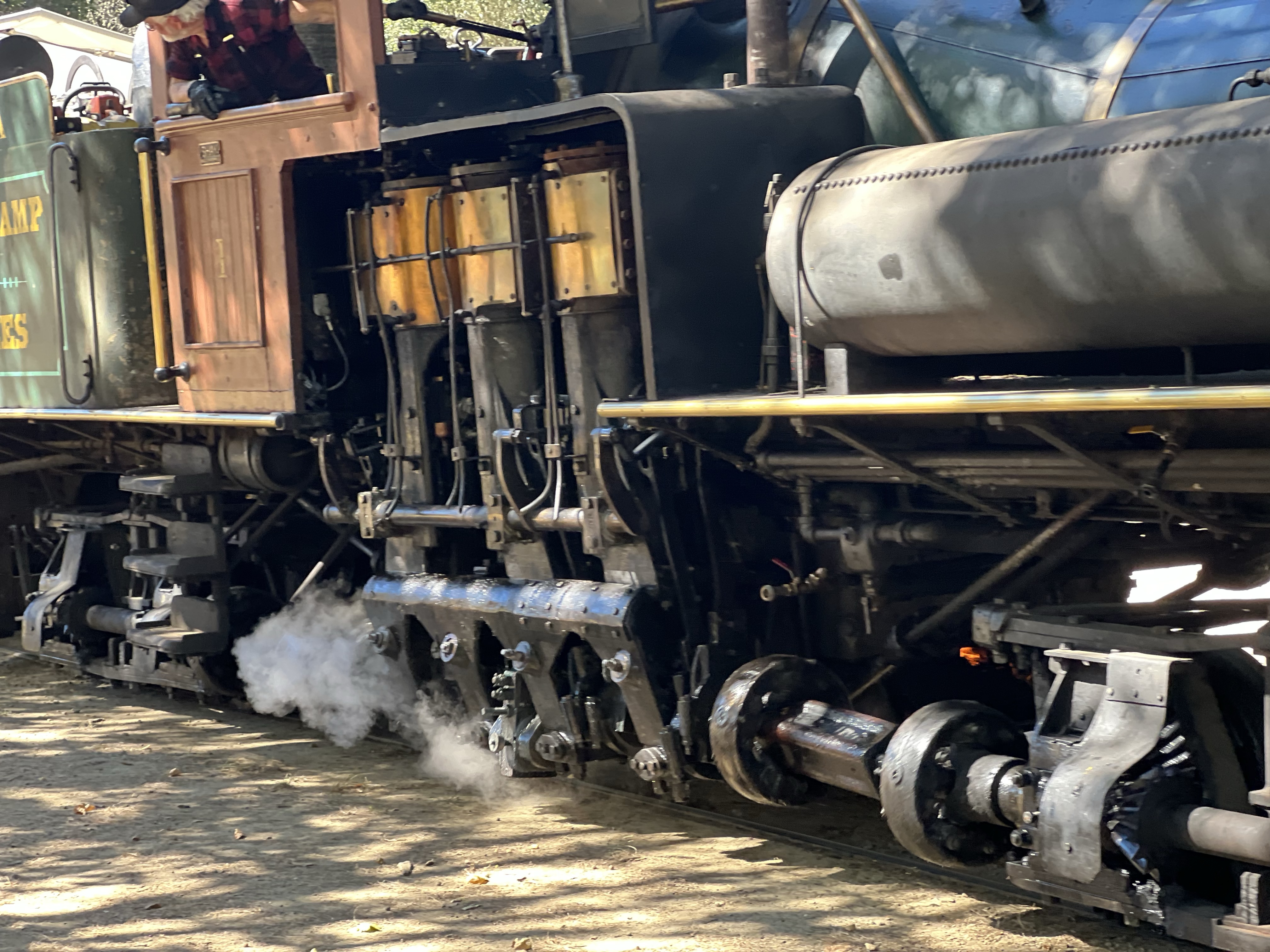
The two truck Shay backed into the depot from the engine house with her six car consist. Now it was time to sketch. The looser the better (featured sketch).