Sonoma Bits & Bobs

These are a collection of sketches that are related in their location, the Sonoma Coast.

From Mammoth Rock to Fort Ross to the north and into the Russian River Valley to the former lumber town of Duncans Mills.

Fort Ross

One morning I drove half an hour north from my digs to Fort Ross State Historic Park. Fort Ross is a sketching touchstone for me and I have returned here with my sketchbook many times. This time I chose a different angle sitting on a rock outside the fort looking towards the Russian Church. I had wanted to sketch from a similar perspective on a previous visit, but I was foiled by rainy conditions.

Duncans Mills

I have wanted to sketch the train station and caboose at Duncans Mills for a while but I had not found the right perspective. There were always cars parked in front and around the station so I sat on the end of the caboose with the back of the station in the background. The narrow gauge line was to the right but is name a paved parking lot.

The narrow gauge railroad came to the lumber town of Duncans Mills in the 1870s and rail, both passenger and freight, until train service was discontinued in 1935.

North Pacific Coast Railroad Caboose No. 2. This narrow gauge caboose was built in 1877.

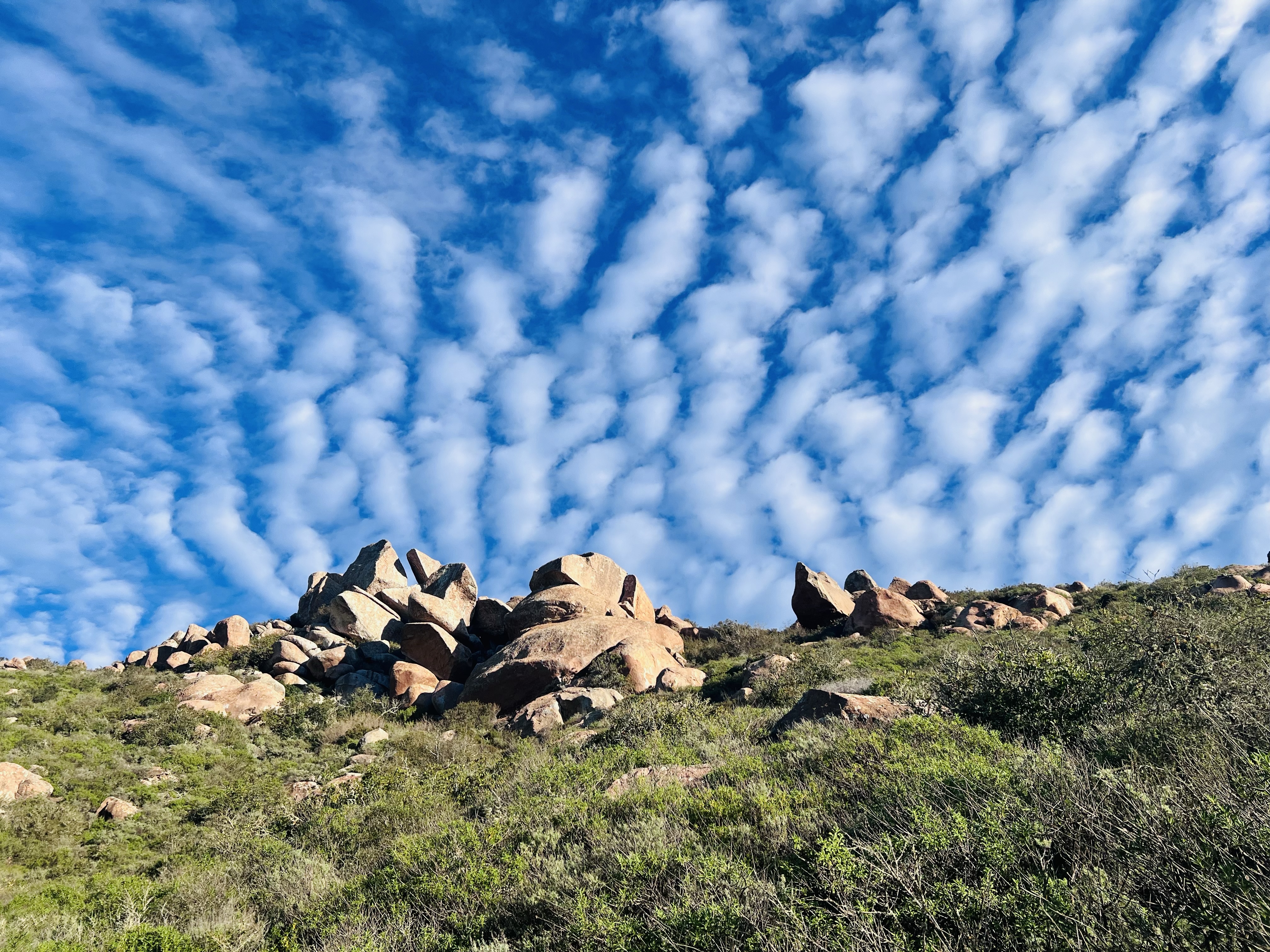
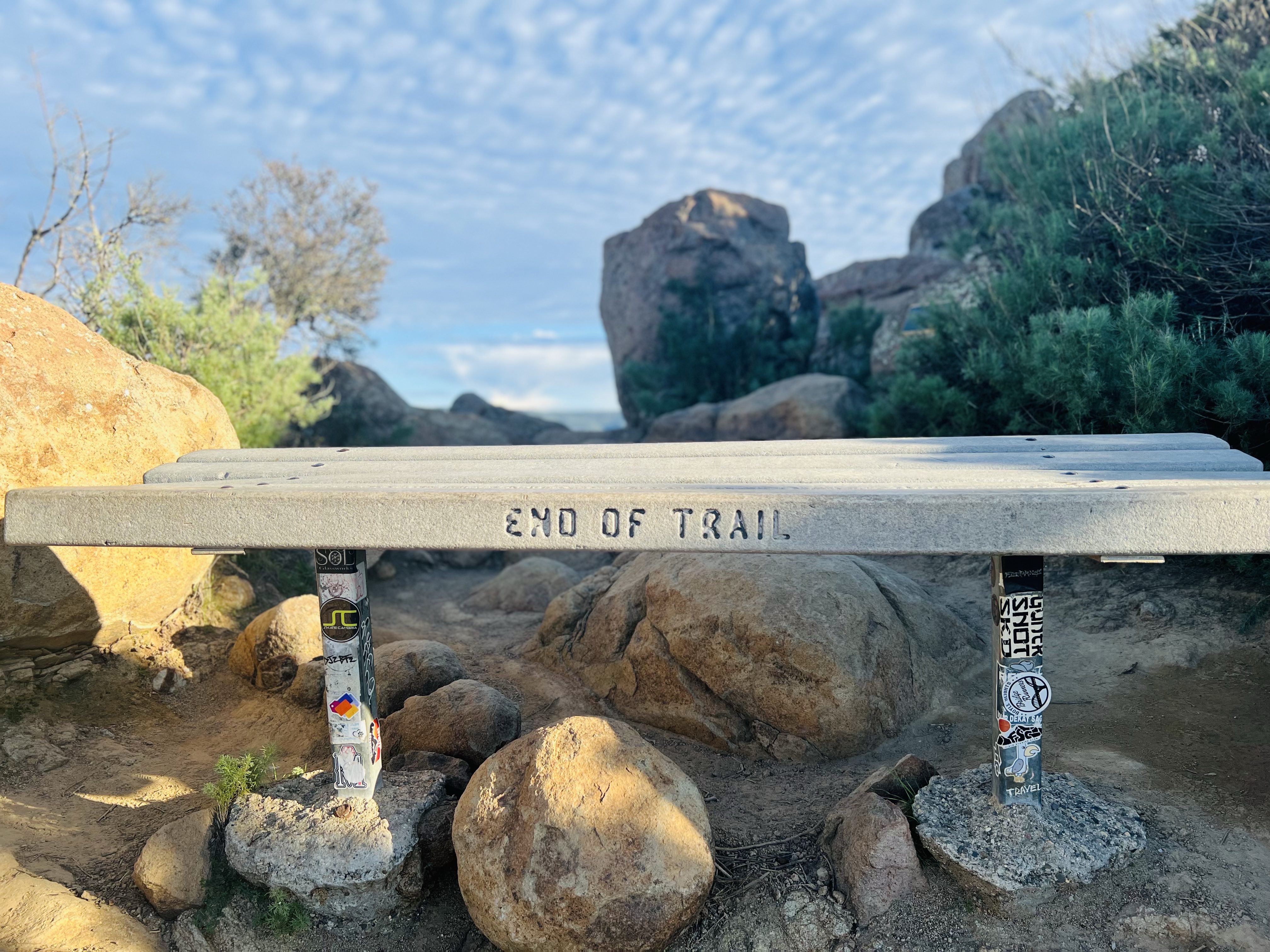
Sonoma Coast SP: Mammoth Rock

From my digs it was a short drive north to Goat Rock State Beach- Sonoma Coast State Park. My hiking/ sketching destination was Mammoth Rock. It was a blustery 30 minute hike to the large Mammoth Rock.

Wintery and windy weather is never an impediment to a good sketching experience. Driving, windy rain is another monster.
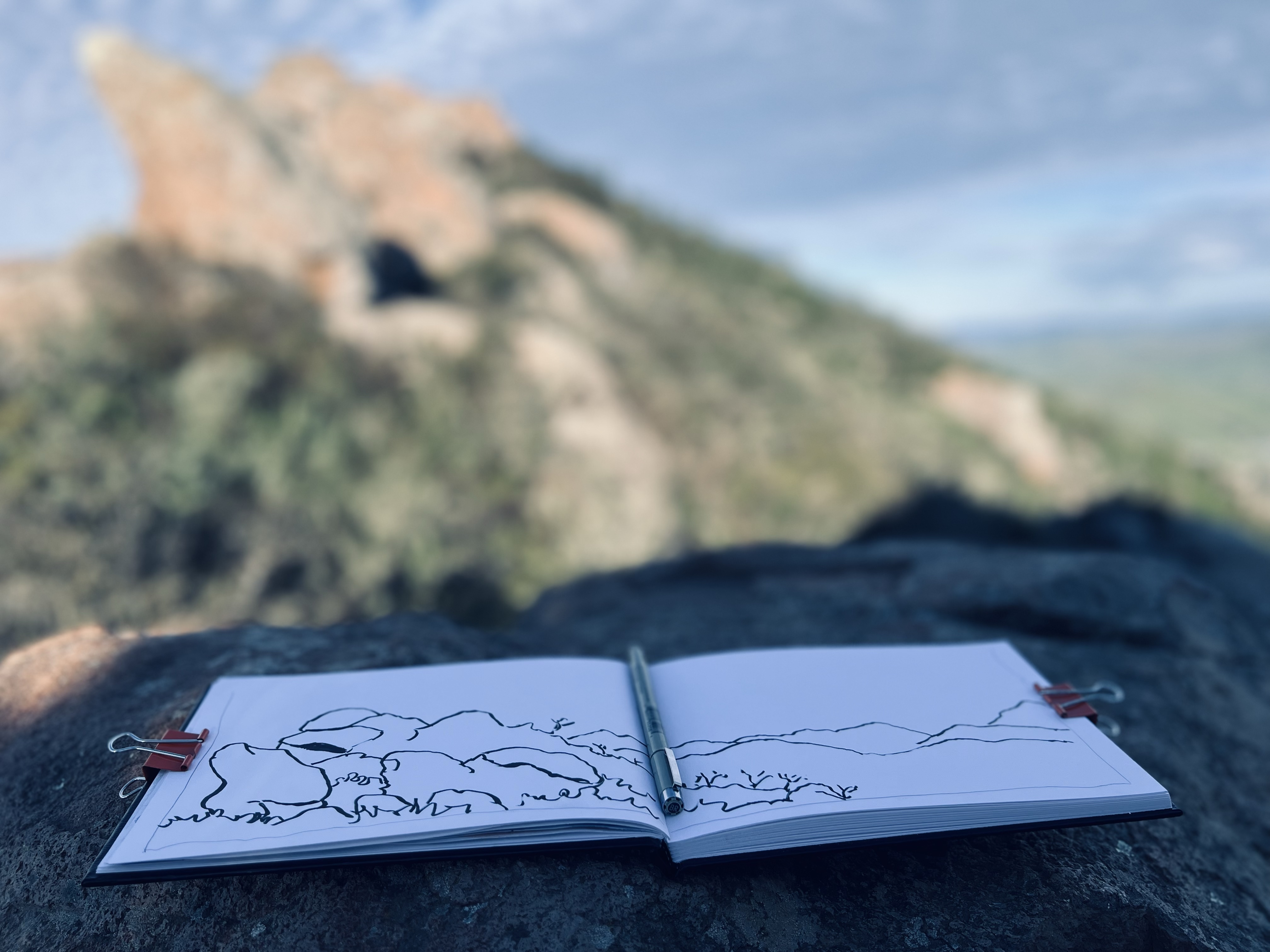
I found a perspective and started my sketch.

Sketching Bodega to Bodega Bay and The Birds

I wanted to sketch the actual bay of Bodega Bay but I wanted to find the right perspective (is there really such a thing).

I settled on a pullout near Spud Point Marina looking north.

It was near this location where Rose Gaffney’s house was located. Gaffney was a local rancher who led the protest against PG & E when they wanted to build a nuclear power plant at nearby Bodega Head.

Alfred Hitchcock wanted to use this location as “Mitch’s House” in his new film “The Birds” (1963). Gaffney was not a movie goer and had no idea who Hitchcock was.

The crew built a set with other outbuildings around Gaffney’s house. The house burned down in the late 1960s and the area today bears little resemblance to when the film was filmed here in the early 60s.
One filming location that has not changed since 1963 is the Potter Schoolhouse in Bodega (not to be confused with Bodega Bay, which is eight miles away).

This was the location used for the school during the corvid attack in The Birds.

The schoolhouse was built in 1873 out of local redwood. At the time of filming the building was no longer used as a school and the structure was derelict. Since filming took place the school was used as a bed and breakfast but now it is a private residence.

I pulled up on the street that the children ran down as they were attacked by a murder of crows. In the film they are running towards the Tides Restaurant in Bodega Bay. With a little movie magic, camera angles, and matte paintings it appears that the schoolhouse and the Tides are in the same location. In reality, eight miles separate the two locations.

While the school looks much the same, redwoods have now grown up around the schoolhouse and I included them in my sketch.

Image

Sketching Historic Monterey

Most think of the Monterey Aquarium when the namesake of Monterey Bay is mentioned.

As a fourth grade teacher I think of the depth of California History when I think of Monterey: Colton Hall, the Customs House, and the Larkin House.

This morning I would not be sketching any of these buildings (although I have already sketched two) I turned my journal to the many firsts in California to be found in Monterey: California’s First Theatre and brick building.

I started off with a warm up sketch of the San Nicola. The San Nicola is a 1939 wooden salmon trawler on display near the entrance to the Monterey Historical District. It is a reminder of Monterey’s fishing heritage.

After my warm-up sketch, it was now time to head to one of the first firsts in Monterey, California’s First Theatre.

Two whale ribs frame the entrance to the theatre.

The theatre was built in 1846 by Jack Swan. It was first used as a theatre in 1850 when the US Army officers of the 1st New York Volunteers put on plays to raise money.

My second first of the day was just around the corner, it is the first brick building in California.

A sketch in progress.

Now this bears a little bit of explanation. The early Spanish and Californios had built buildings with adobe bricks, the first “brick” building was built with European style fired bricks.

The structure was built by Gallant Dickinson in 1947. A well known resident of this building was Patrick Breen, a chronicler and survivor of the Donner Party. The building served as a restaurant in the early part of the 20th century.

Image

End of Wharf

In December of 2024 a winter storm hit the seaside city of Santa Cruz bringing with it 25 foot swells.

One structure that took the brunt of the surge was the Santa Cruz Municipal Wharf.

The current wharf was built in 1914 and at 2,745 feet is the longest wooden pier on the west coast of the United States.

Is the Santa Cruz What f still the longest wooden wharf on the west coast?

That all changed with the winter storms of December of 2024 which took 150 feet of the wharf into the bay on December 23. The section included the closed Dolphin Restaurant and a public restroom. The restroom washed ashore at the mouth of the San Lorenzo River, looking like a Mississippi River boat.

The wharf had been closed but then reopened January 4, 2025. I wanted to head out to the wharf, where I have many fond childhood memories, and sketch the new end of the wharf.

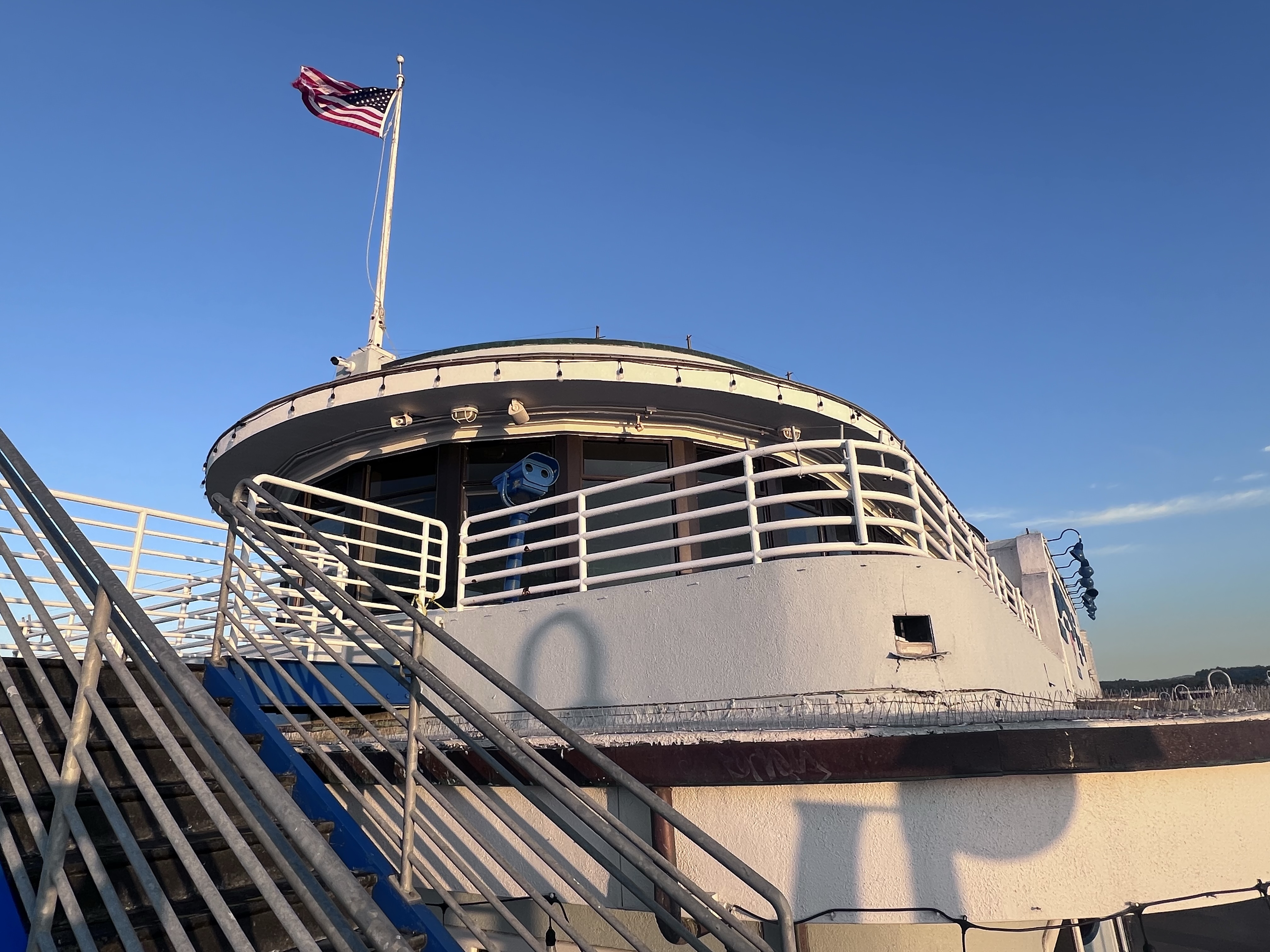
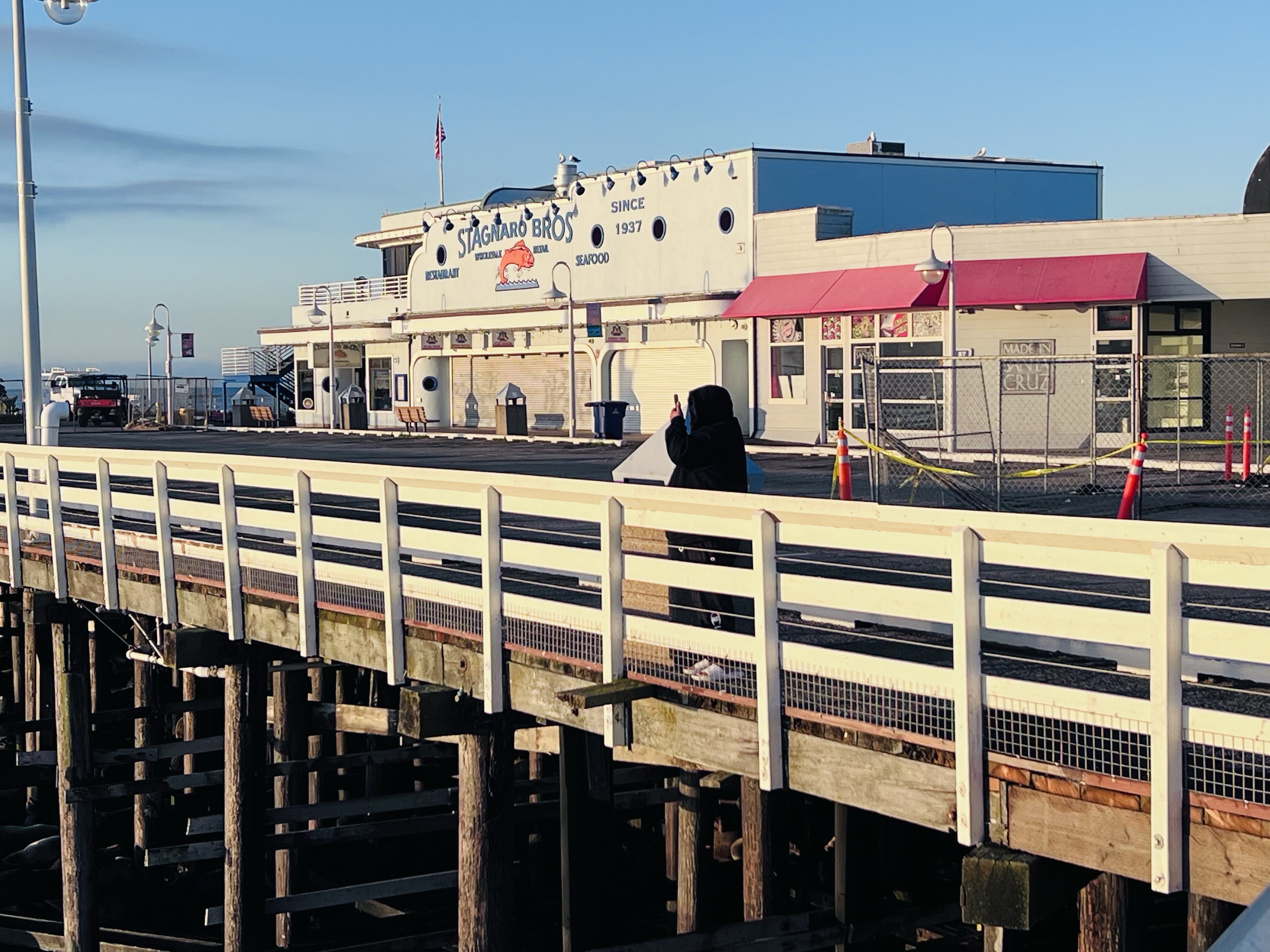
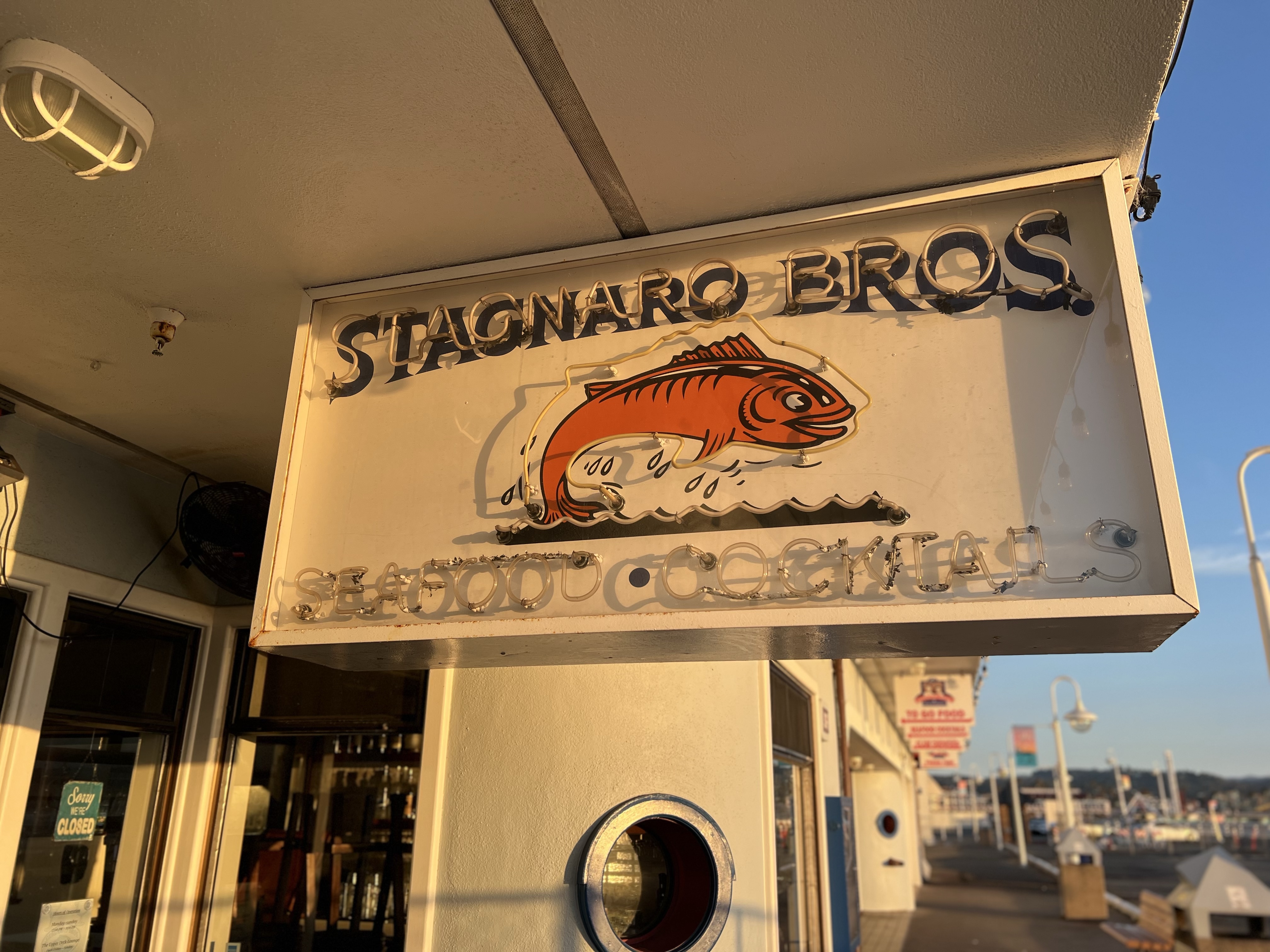
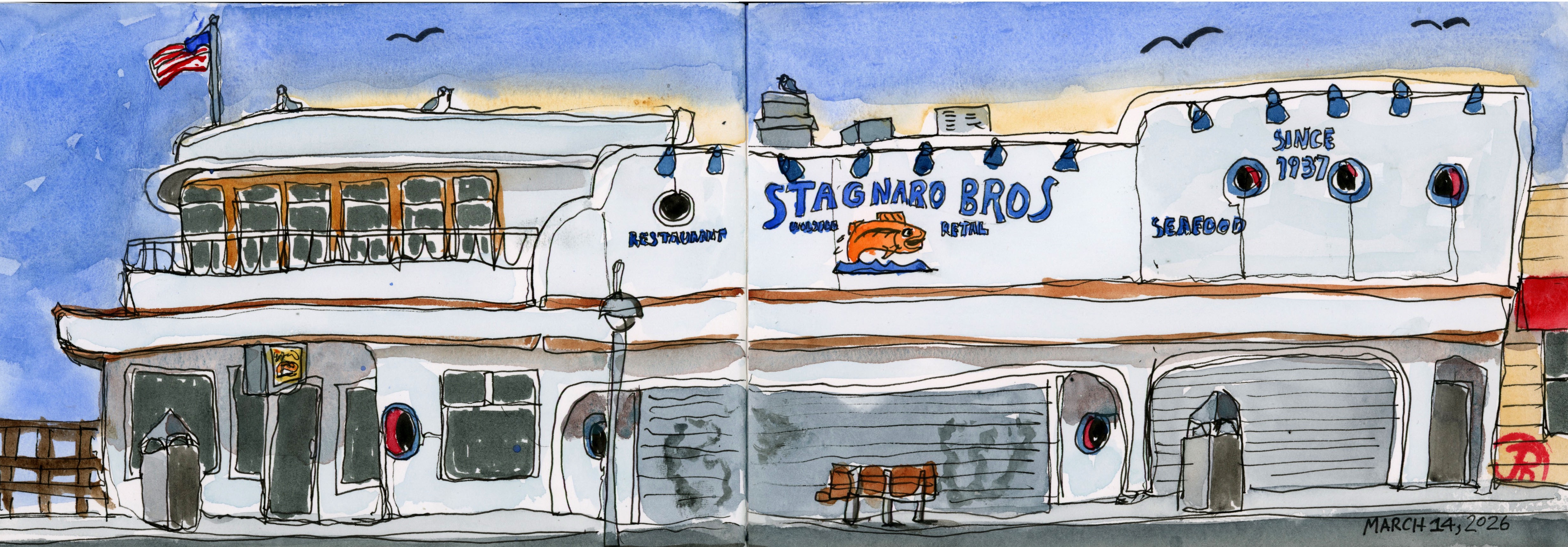
The Dolphin used to be the last restaurant at the end of the wharf. That honor now goes to the historic Stagnero’s. This restaurant and Gilda’s was a favorite of famed director Alfred Hitchcock who had a home in nearby Scott’s Valley.

The Stagnero Brothers restaurant is designed in a Streamlined Moderne style looking like an ocean-going vessel of the 1930s.

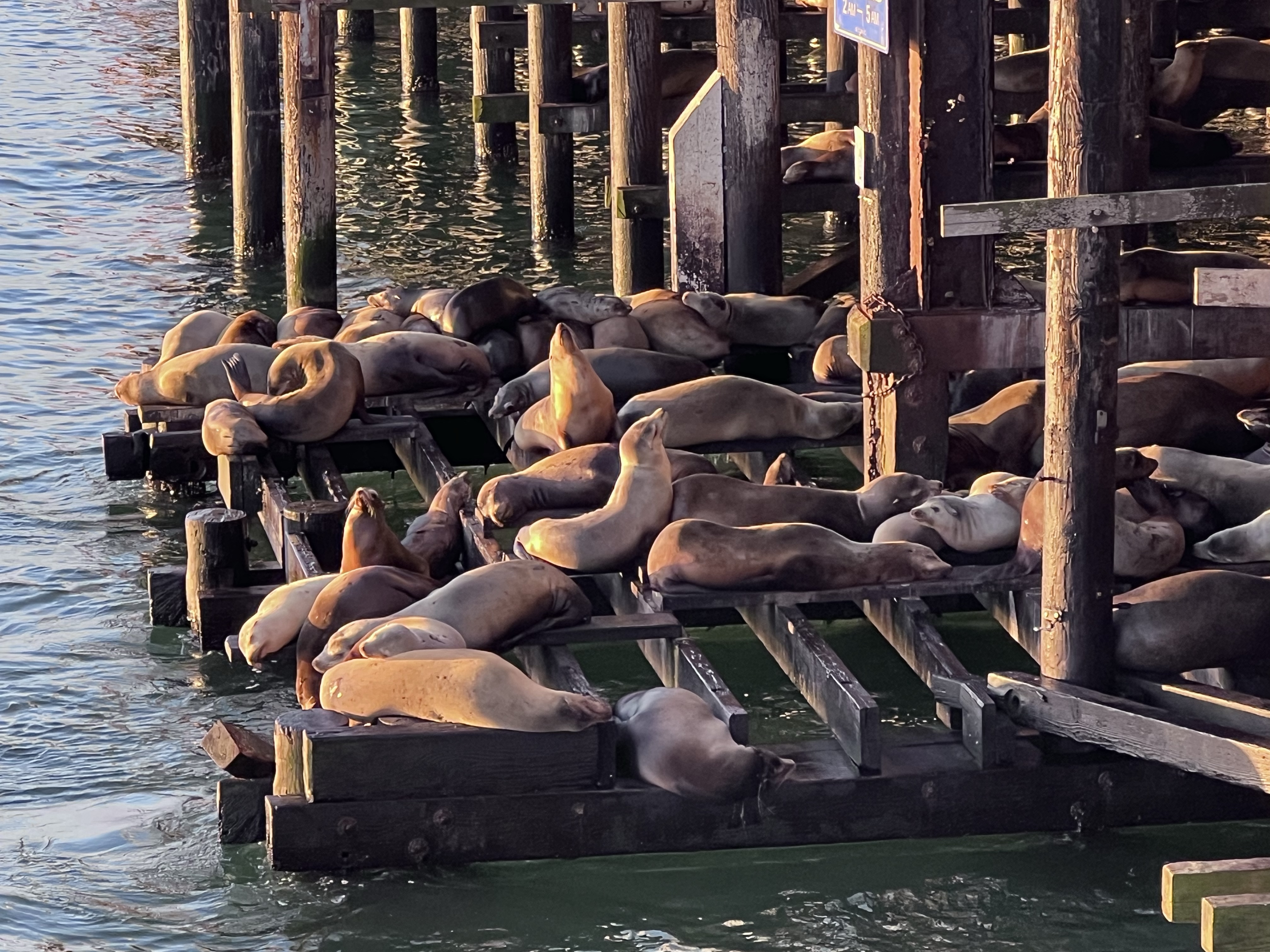
One of the draws at the end of the wharf where openings where you could look down at the resting California sea lions that used the wooden substructure as a haul out location.

The sea lions are still here, they use other sections of the wharf to haul out.

Near the beginning of the wharf there is an old wooden fishing boat which I also sketched.

It was early in the morning and there were already men fishing from the wharf. The wharf is no longer used for industrial fishing but is now used for recreational pursuits.

Image

HWY 40, Donner Pass

Early on a Monday morning I drove to Historic Highway 40, around Donner Summit, to do some sketching.

I love this highway corridor, it’s full of deep California history (native, pioneer, railroad, and highway) as well as personal family history. My parents met at the South Bay Ski Club whose cabin is on Highway 40 near Soda Springs. Without this ski club I would not have come into being.

Historic indeed, there is so much depth of history here.

At the summit I sketched a former gas station. The station was used to fuel highway snow clearing equipment used to keep the highway open in the winter.

The Lamson Cashion Donner Summit Hub is where a lot of the threads of Donner Pass come together (hence the name). Just a short list of the points of interest in this general area are: the petroglyphs, Pacific Crest Trail, the Donner Summit Bridge (the Rainbow Bridge), west entrance of Summit Tunnel 6, central shaft of Tunnel 6, and the Donner Summit Trail.

The repurposed gas station is now an information center at the Lamson Cashion Donner Summit Hub.

I then headed down the pass and over the famed “Rainbow Bridge”. I was keeping my eyes (at least one eye) to my left, searching for the mass of rusted metal that has been here for about 75 years. There it was.

My father always pointed out this ominous artifact when we would summer here on the shores of Donner Lake. We were historic rubberneckers.

There it is, rusted and compacted by heavy snow loads for almost 75 years.

Highway 40, east of Donner Summit is treacherous, as the Donner Party found out when they attempted to scale the pass in 1846. It is also treacherous for auto traffic on the winding, wet, and icy roadbed while heading down grade.

The wreck that my father pointed out is the truck chassis that went over the roadway and settled on a granite shelf sometime in the 1950s. There is not a lot of information about the truck, just that it’s not the “Turkey Truck”. That’s a story for a different post!

I pulled over and found a boulder seat to sketch from using a brush pen to keep it loose and sketchy to the soundtrack of the cooling winds through the pine branches and a male Wilson’s warbler emphatically singing from those branches. I was in Sierra heaven (featured sketch).

After sketching I headed down 40 towards Donner Lake and the Southern Pacific Railroad historic town of Truckee.

Aside from SP’s iconic cab forward locomotives, no other piece of railroad equipment is as renowned as the rotary snowplow for conquering the grades and gales of Donner Summit.

The rotary plow kept the line open in the deepest winters. And the California State Railroad Museum donated Southern Pacific’s SPMW 210. This historic piece of rail equipment now is on static display alongside the tracks it once kept open in the winter time.

This monster could cut through heavy snow. I usually sketch these plows head on but I decided on a different perspective.

While I have sketched these plows many times before, I decided to try from a different angle with a broken continuous-line sketch.

A reminder, courtesy of Union Pacific, that Truckee still remains a rail town. The eastbound freight was an empty covered hopper consist. How do I know it’s empty? Motive power. Only two locomotives on point and one at the end. If the consist was fully loaded, they would need more motive power to travel over Donner Summit.
Image

Nevada City Sketching

One sketching target in Nevada City is the Nevada Hose Company No. 1. (Just to avoid confusion, Nevada City is in California.) I have always wanted to sketch this historic building but had not gotten around to it.

This firehouse is very detailed and complex and it seemed like the perfect subject for a continuous-line sketch. I suppose this method can become an excuse if the sketch turns out all wrong! But there are no mistakes in sketching.

The historic firehouse was opened May 30, 1861 and was in use until 1938. Throughout its history the hose carts were under different motive power: human, horse, and combustion engine.

What’s surprising about this building is that it exists at all. Most wooden structures in Gold Rush towns were destroyed by fire. That would certainly be ironic, a firehouse destroyed by fire.

The firehouse is an iconic symbol for Nevada City.

After my morning’s sketch I drove off to look for other Nevada City sites to add to my sketchbook. I settled on a flat car on static display from the Nevada County Narrow Gauge Railroad.

The railroad ended near here, the depot was destroyed in a fire, and the opposite terminus ended parallel to the mainline in Colfax.

I rendered the car in a loose broken continuous-line sketch.

While reading the interpretive signs for the narrow gauge railroad I read a notice of the upcoming Steam Days at the Nevada County Narrow Gauge Railroad Museum where two of the locomotives in the museum’s collection would be under steam!

One of these days would be today, Father’s Day, and the museum would be opening in 45 minutes. So I knew where I would be next sketching next!

The star of the museum’s collection is the “Tahoe” No. 5. This 2-6-0 Mogul type is a narrow gauge steam locomotive that hauled freight and passengers on the line. The locomotive was built by Baldwin Locomotive Works in 1875 for the Carson Tahoe Logging & Fluming Company.

A period photo of No. 5 in front of the rail director’s house in Grass Valley.

The locomotive was purchased by the NCNGRR in 1899 where it was in service until the 1940s when it was purchased by the Frank Lloyd Productions to become a Hollywood locomotive. No. 5 was first featured in the John Wayne film, “The Spoilers” (1942).

By the 1970s the locomotive was sitting neglected on the Denver Street back lot at Universal. No. 5 was last featured in the doomed film, “The Twilight Zone”, in 1979. No. 5 was briefly featured in the first segment of the film, featuring actor Vic Morrow who was killed with two child actors in a helicopter accident.

The museum leased the locomotive from Universal and it returned to Nevada City in 1985.

When I first visited the museum with my stepfather, the No. 5 was on static display, having been a movie locomotive for Universal Studios. The locomotive had been electrified and pushed during movie production, and had not been under steam for a really long time. The locomotive was featured in about 100 film productions. So I was excited to see this 1875 locomotive under its own steam power.

Seeing the No. 5 under steam was a thing of beauty! It was like seeing the dead brought back to life.
The third driver is further back from the second to support the weight of the firebox.

Image

Mare Island and the Muddy Puppy

The former Naval base on Mare Island is a sketcher’s paradise. It’s full of cranes, condemned buildings, dry docks, bridges and rusted rails. Plenty of shapes and perspectives to add to my sketchbook.

On a recent journey to Vallejo to visit a friend, I headed to the ferry terminal across the Napa River from Mare Island to do a park bench continuous line sketch of the river front with the Balclutha moored to the dock (featured sketch).

The 1886 three master (aka Star of Alaska) is temporarily on display here while the pier at the San Francisco Maritime National Historic Park is rebuilt.

Also moored nearby is a modern bay ferry which I included in the sketch as a bookend to Bay Area maritime history.

Mare Island Mud Puppy

From my sketching position near the Vallejo Ferry Terminal I was looking across the Napa River towards the location of one of the most infamous sinkings in Mare Island history.

On May 15, 1969 the Sturgeon-class nuclear submarine the USS Guitarro was moored to the pier in the Napa River. The sub had been built and launched (July 27, 1968) on Mare Island and now was still under construction.

Two construction groups were working on different parts of the sub at the same time. They began adding water to the ballast tanks, unbeknownst to each other. The construction groups were warned that the Guitarro was riding low in the water but did not heed the warnings.

At 20:30 (8:30 PM) the groups, after returning from lunch, noticed the sub taking a downward angle and the Guitarro was taking on water from her forward hatches. At 20:55 the Guitarro sank to the bottom of the river leaving her sail above the waterline thus earning the dubious nickname: “Mare Island Mud Puppy”.

The sub was refloated a few days later and damages were estimated to be between $15 and $22 million. The sinking of the Guitarro put an end to submarine construction and repair at Mare Island. Mare Island Naval Shipyard was once the premier West Coast submarine port. The last sub built at Mare Island was the USS Drum in 1970.

The USS Guitarro was commissioned (32 months late) on September 9, 1972. She was in service until 1992 when she was decommissioned and scrapped at Puget Sound, Washington in 1994.

Image

Point Pinos Lighthouse

On NPR I heard a report on the Newshour about lighthouses and their women keepers.

One lighthouse featured was the Point Pinos Lighthouse in Pacific Grove, just northwest of Monterey. What I didn’t know but learned from the report was that the lighthouse is the oldest light in continuous use on the West Coast. So it seemed like a great Saturday morning sketch adventure.

The light first shown its beam on February 1, 1855. The current lens is a 3rd-order Fresnel Lens that was built in Paris, France in 1853 which is the lighthouse’s original lens. In clear weather the light can be seen from 17 miles at sea. In dense fog the foghorns are activated.

The first woman lighthouse keeper was Charlotte Layton. She became keeper when her husband, the first keeper at Point Pinos, was murdered by while taking part in a posse to capture the bandit Anastasio Garcia. Garcia got Layton first. She was the keeper from 1856-1860.

Perhaps the lighthouse’s most famous female keeper is Emily Fish, known as the “Socialite Keeper” for her entertaining at the lighthouse. She served as keeper from 1893 to 1914. While she was not the first woman lighthouse keeper at Pt. Pinos, she was the last.

Emily Fish’s bedroom at the lighthouse.

When I arrived at the lighthouse just after 11, I was greeted by Nancy, the docent interviewed on the Newshour. I told her I was here because of seeing the lighthouse featured on the news.

I jokingly asked her if she had signed many autographs yet.

The observation room with great views of the Pacific Ocean. You feel this was a room where Emily Fish spent time filling out the keeper logs.

I walked around the lighthouse to look for a sketching perspective and thought the view from the front would do just fine (featured sketch).

On the lighthouse grounds is the only remainder of the freighter Gipsy: her anchor. This is a reminder of why lighthouses exist, to let sailors at sea know where they are and that land is near. And hopefully the two shall not meet, well not at speed anyway.

The Gipsy hauled freight and people up and down the California Coast from San Francisco to San Diego. The ship was known as “Old Perpetual Motion”. On a foggy night on September 27, 1905, the ship was going from San Francisco to Monterey when the inexperienced relief captain mistook a red marker construction light for the marker at the end of Monterey wharf. The ship was wrecked on the rocks near McAbee Beach. The ship was a total loss.

Image

SFO From the Bay Trail

My Tuesday after work sketch took me to the San Francisco Bay Trail which parallels Runways 28R and 28L and Taxiway F.

These are the two runways that handle most international traffic at San Francisco International Airport. In my two hours there, I saw planes landing or taking off from airlines such as Cathay Pacific, Condor (German), Lufthansa, SAS, Aer Lingus, Virgin Atlantic, Qatar, Iberian, Swiss, TAP Air (Portugal), Turkish Airlines, Zipair (Japan), and British Airways. San Francisco is really an international destination.

This trail and Bayfront Park are a well known location for plane spotting as you have unobstructed views of planes taxiing, taking off, and landing.

I was here to see the large passenger jet that largely replaced Boeing’s 747 on long distance international routes.

In an uncanny coincidence a Lufthansa 747-8 was on Taxiway F headed to Runway 28R when I was driving down Millbrae Avenue toward the airport. After I parked and walked up to the Bay Trail the 747 was throttling up for takeoff. Only four airlines currently have 747s in their fleet: Lufthansa, Korean Air, Air China, and Rossiya.

One of the few Boeing 747s throttling up for takeoff on Runway 28R. This is a 747-8, the largest 747 and Boeing’s largest passenger jet. This “stretched” 747 was designed to compete with the A380.

I was here to see the big boy that competed with the 747, Airbus’s A380. Two airlines fly A380s out of SFO, British Airways and Emirates. BA flight 284 was scheduled to depart at 16:20. But the flight was running a little late, which seems to be the norm.

The Bay Trail in the foreground and British Airways A380 is pulling away from Gate A11. This is one of 12 in BA’s fleet.
Flight 284 on the Taxiway F for Foxtrot. This airplane is so large that the suffix “Super” is part of its call sign.
This photo shows the scale of the world’s largest passenger plane compared to others on the tarmac. The aircraft in front of the A380 is an Air Canada Boeing 737 Max 8.
A380 on its way to line up for takeoff as a much smaller United Airlines jet lands.
Gear up with the South San Francisco sign below and San Bruno Mountain above.

Sketching Notes

I found a tree stump seat with the taxiways and runways in front of me. I first sketched in the fill as the runways are surround by the bay on three sides. In the background I penciled in the East Bay hills and mountains including Mt. Diablo. The tide was low when I stared sketching but was slowly filling in during the two hours of my visit.

Later I would add two planes on the taxiway, based on photographs taken in the field.

To my left and in the distance I could see the red, white, and blue tail of the A380 at Gate A11.

Image

Loma Prieta Bell’s Sparrow

In late May I made my annual pilgrimage to the birding hotspot Loma Prieta (Upper Saddle).

I left my cabin at 6:40 AM and 35 minutes later I pulled into the dirt parking lot on the ridge that straddles Santa Cruz and Santa Clara Counties.

It can be very windy and hemmed in by dense fog up here but not today. I could look down and see fog covering Monterey Bay. Today it was clear and warm without much of a breeze. In fact it was already getting warm.

My target was the pair of Bell’s sparrows that had recently been seen here since mid May. This would be a Santa Clara County bird for me.

I walked down Mt. Madonna Road and aside from singing spotted towhees and wrentits, and a far off babbling California thrasher, it was pretty quiet. I did not hear or see any black-chinned or Bell’s sparrows.

On my way back to the parking lot I first heard and then saw a blue-grey gnatcatcher.

Blue-gray gnatcatcher.

As I headed to the parking lot there were now six other birders in the area, looking for the Bell’s.

As I reached my car a pair of birders had just spotted a pair of Bell’s sparrows right from the parking lot. So I figured I’d stay a bit longer.

I was rewarded about five minutes later when a bird flew towards me and perched on a nearby bush in front of me. Bell’s sparrow! A new county bird!

Bell’s sparrow.

Sketching Notes

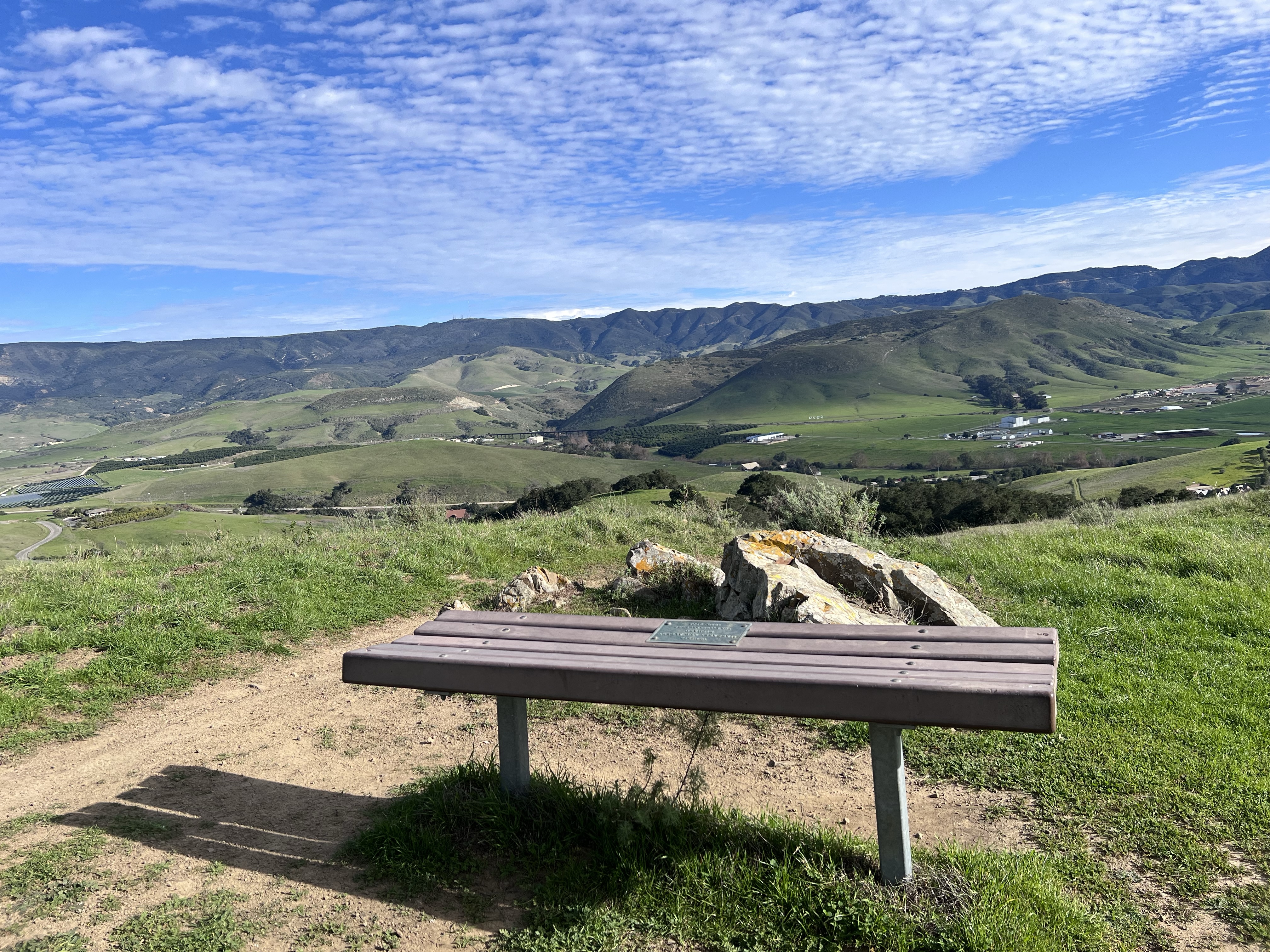
Loma Prieta Ridge is one of the best panoramic views in Santa Cruz County. So I took a pause in Bell’s sparrow spotting and opened my panoramic watercolor journal to capture the scene.

What a view, best in the county!

I left the lower left side blank. I initially was going to add a Bell’s sparrow but I hadn’t seen one yet. So I thought I would add a blue-grey gnatcatcher to that corner, based on my field photo.

After seeing the Bell’s from the parking lot, I returned to my original plan and the result is my featured sketch.