Image

Caltraining

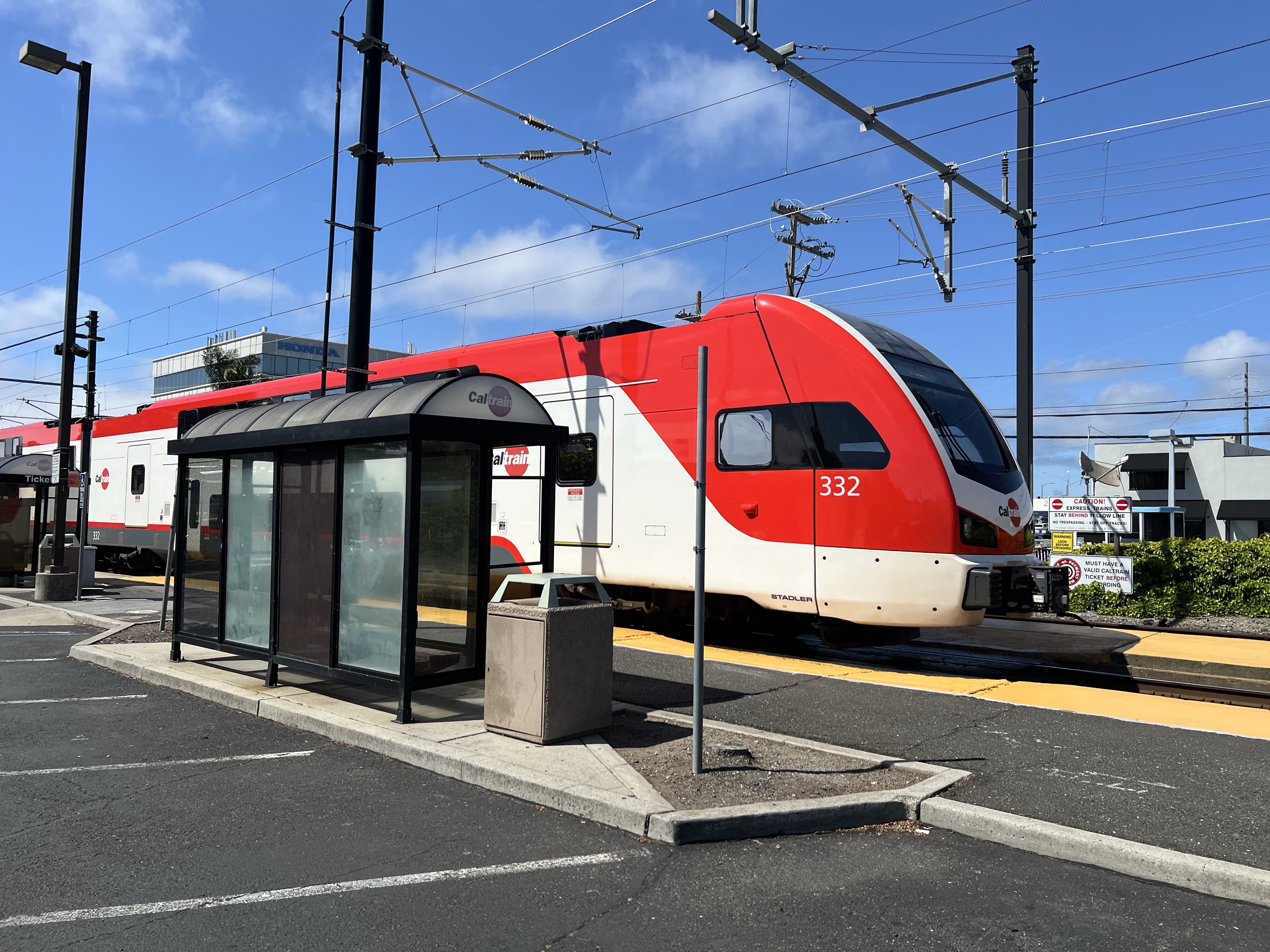
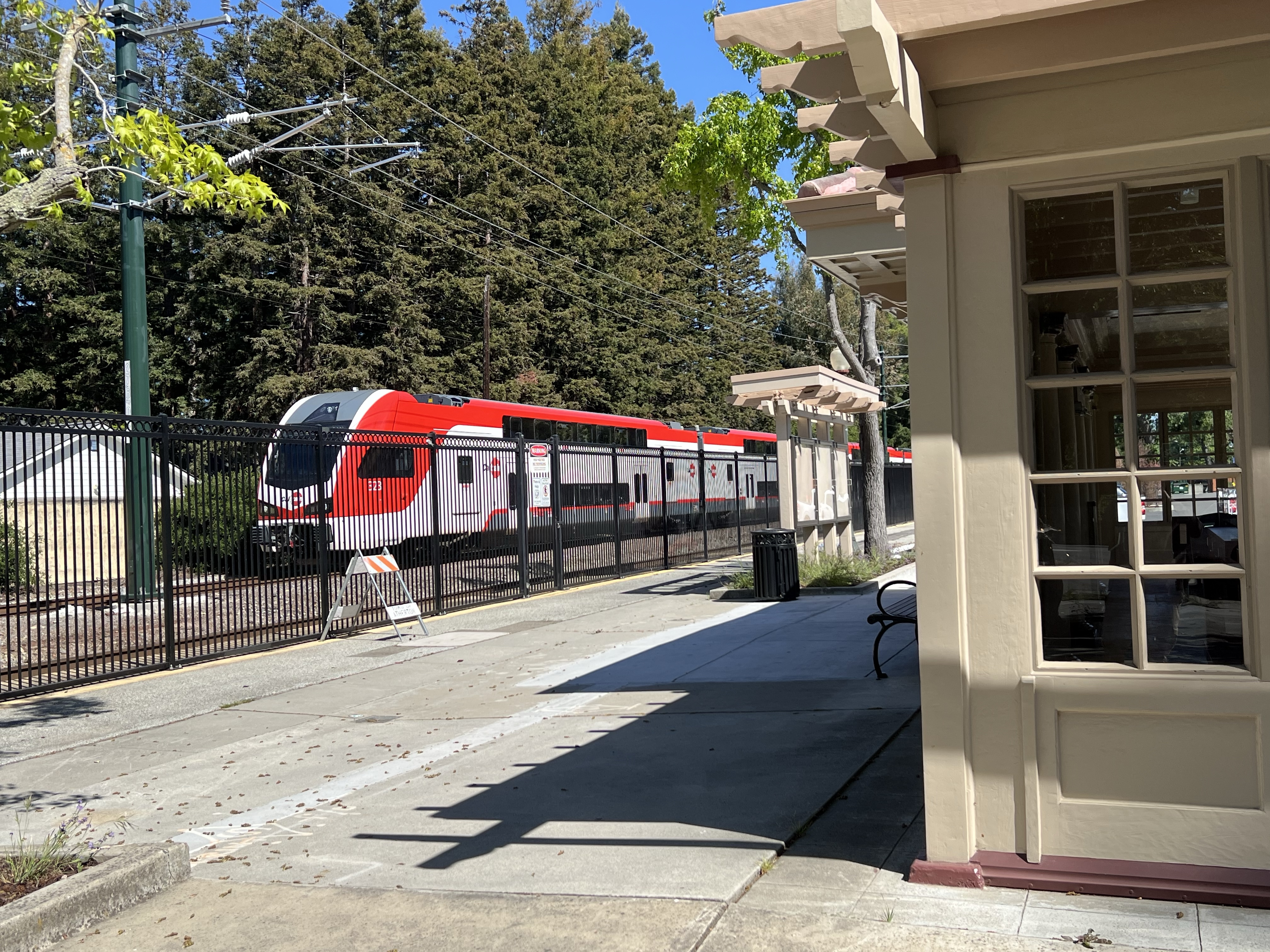
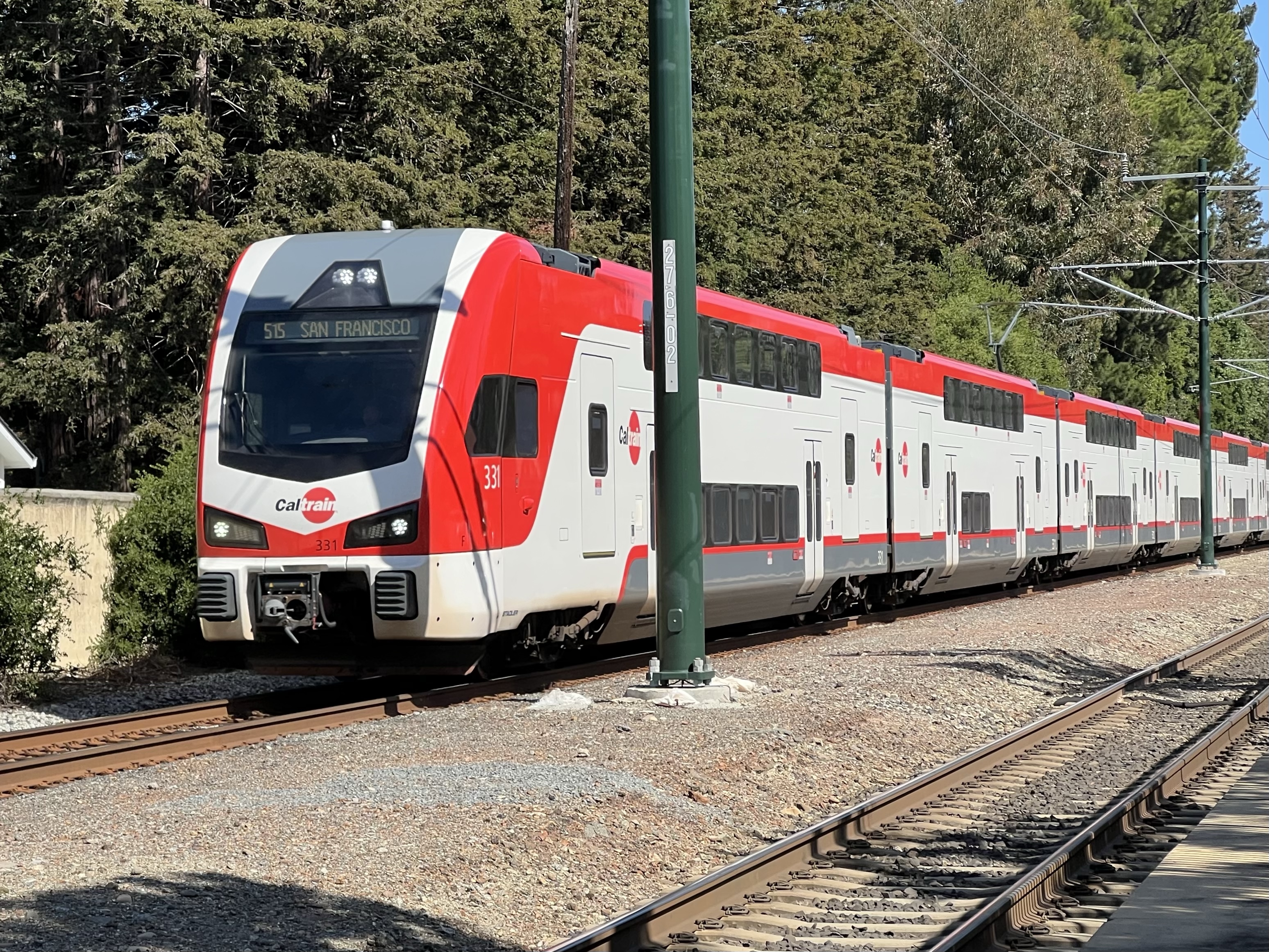
Last fall the new Sadler electric multiple unit sets (EMU) were put into service on the Caltrain route from San Francisco to San Jose and I had been meaning to ride aboard ever since.

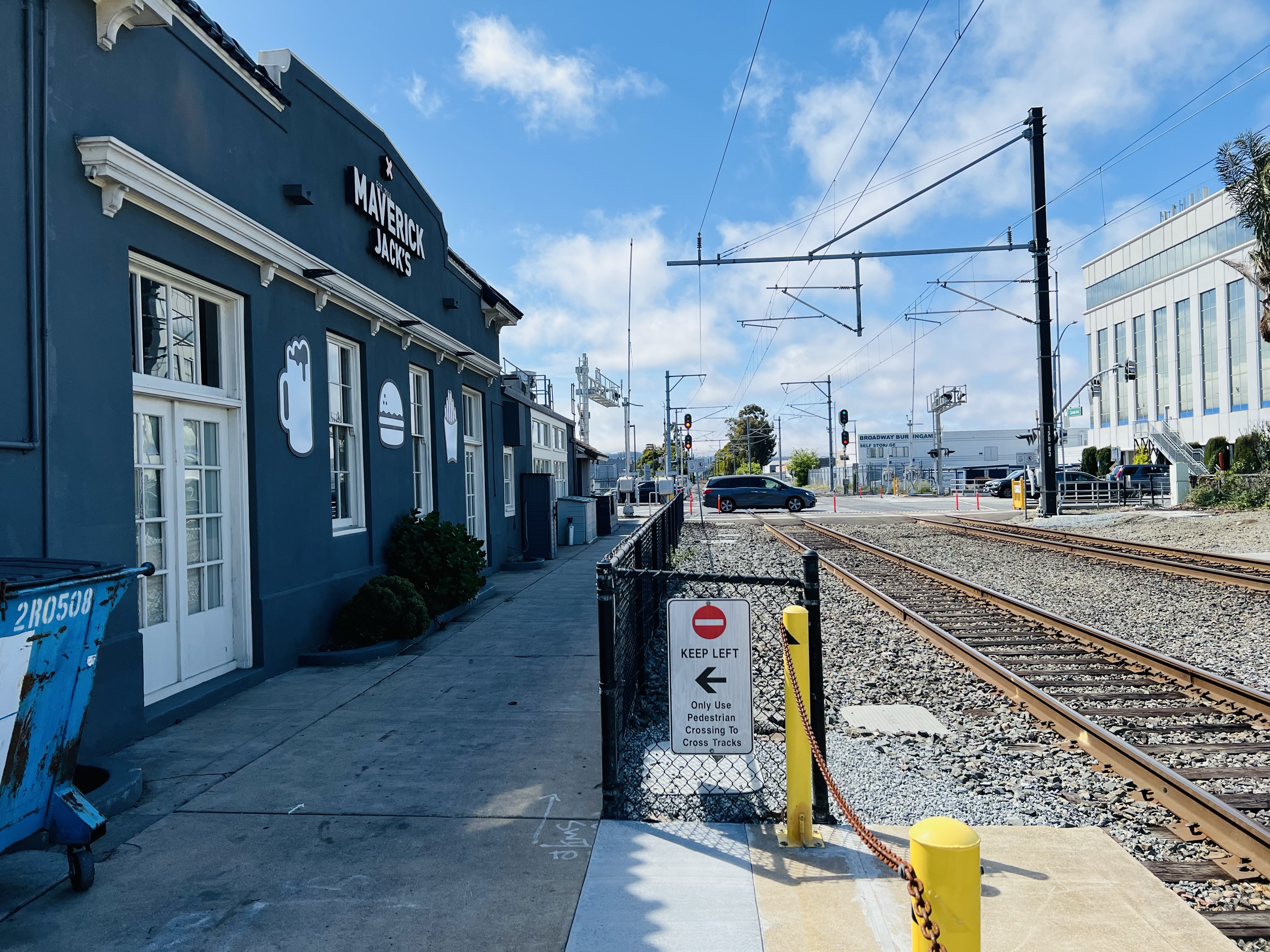
So on a gloomy spring morning in late April, I boarded an inbound N Judah to the Caltrain Station at 4th and King.

I was picking a travel window that was not going to be too chaotic with first pitch scheduled at 1:05 at the Giant’s game. Lots of fans use the N Judah and Caltrain to get to the game.

I planned to catch southbound train 610 departing at 9:55 AM and detrain in Palo Alto for lunch on University Avenue.

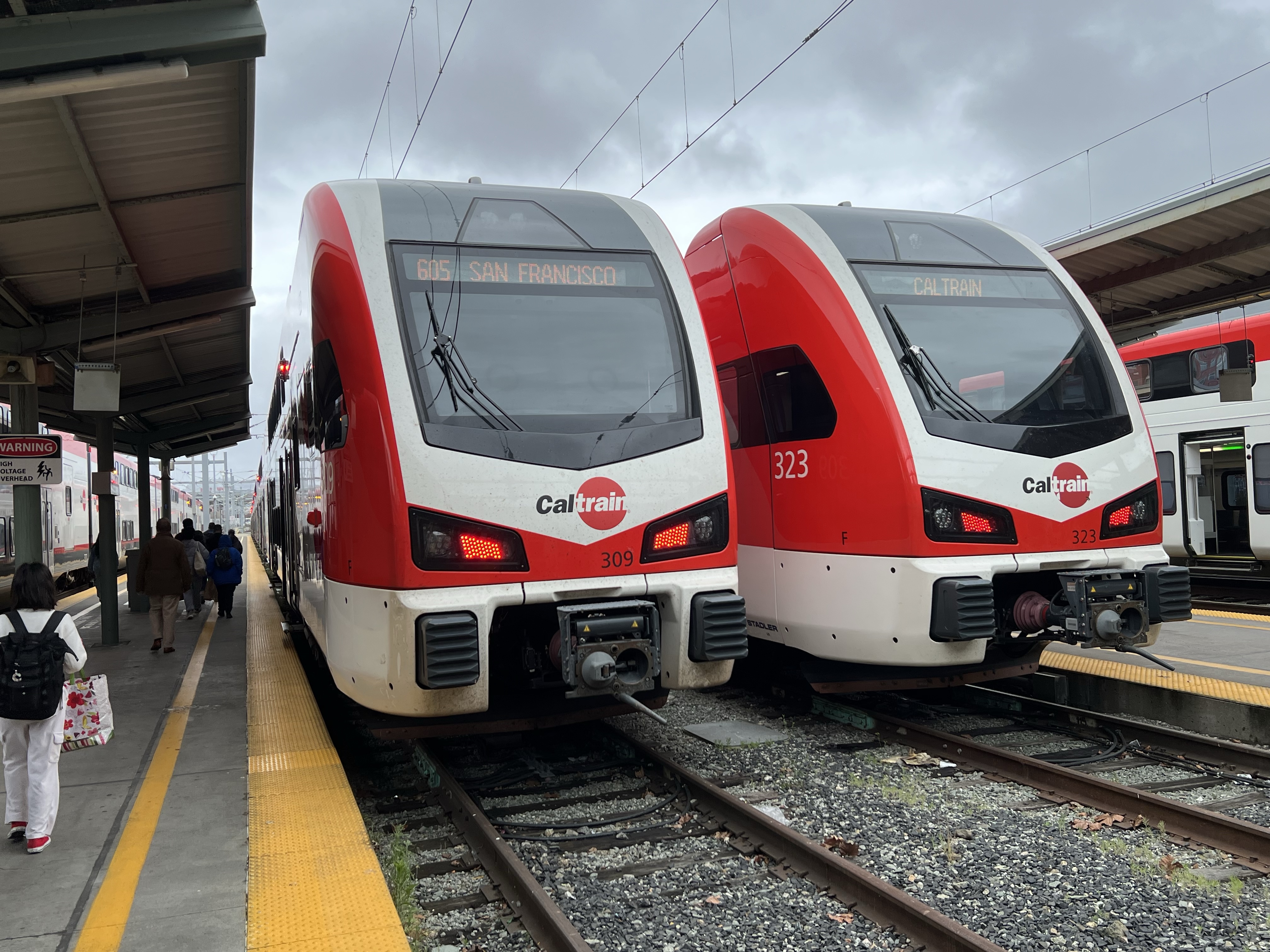
Two of the new EMUs at the San Francisco Caltrain Station.

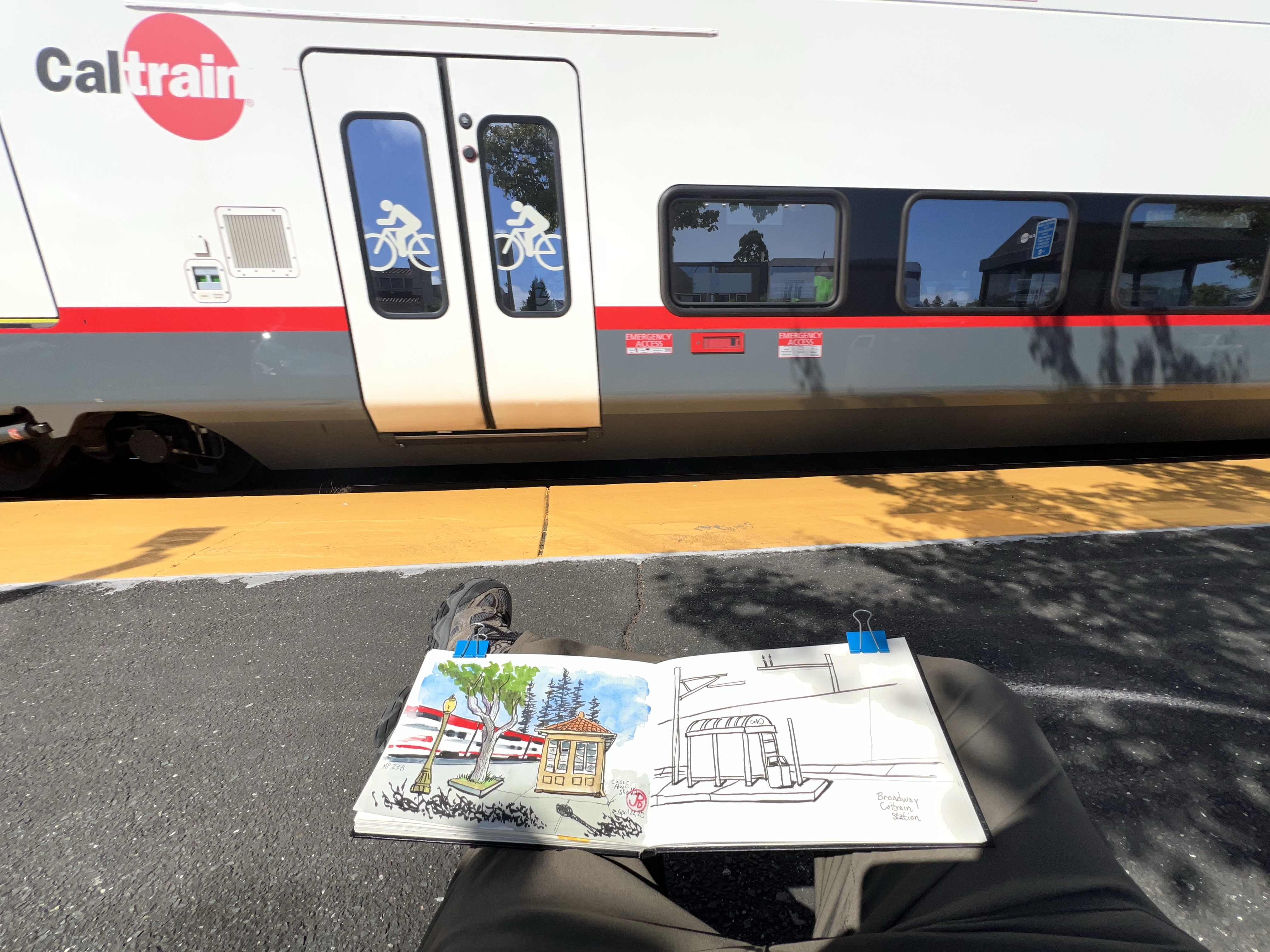
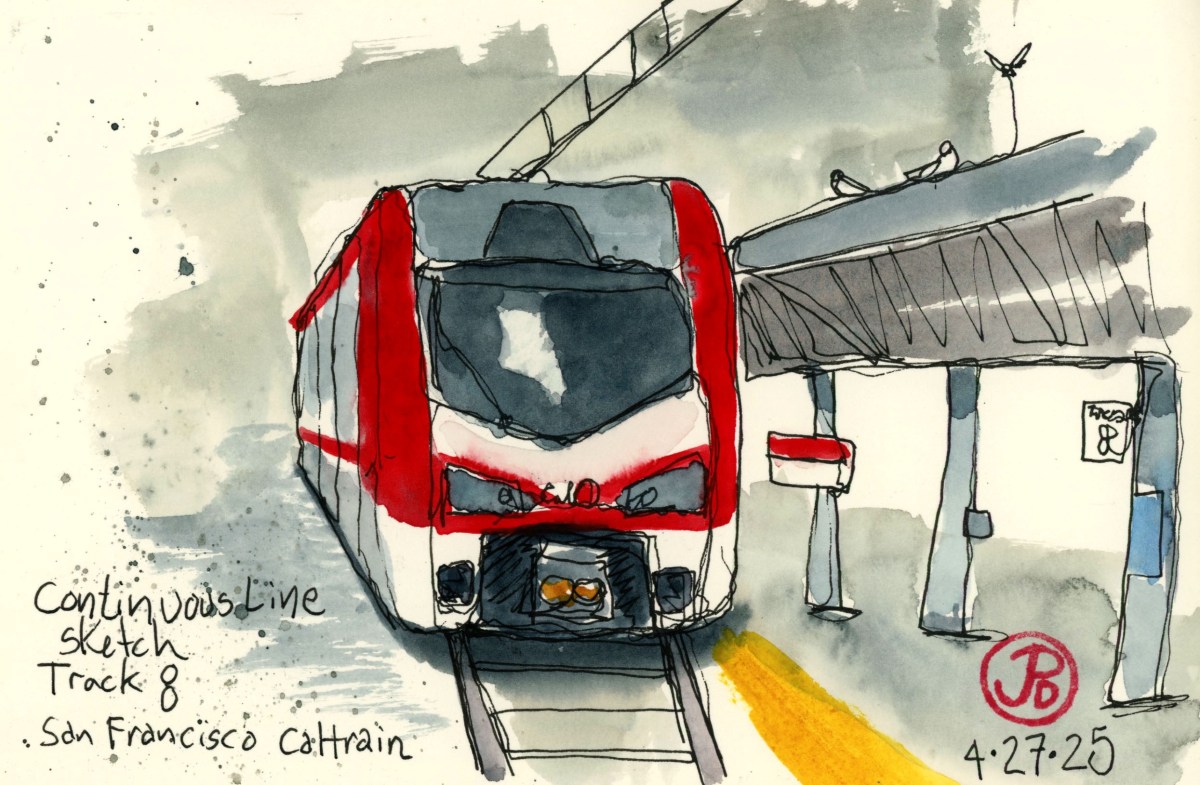
My goal was to bring one pen (TWSBI Eco) and one watercolor journal (Stillman & Birn Delta panoramic) and only use continuous line sketching.

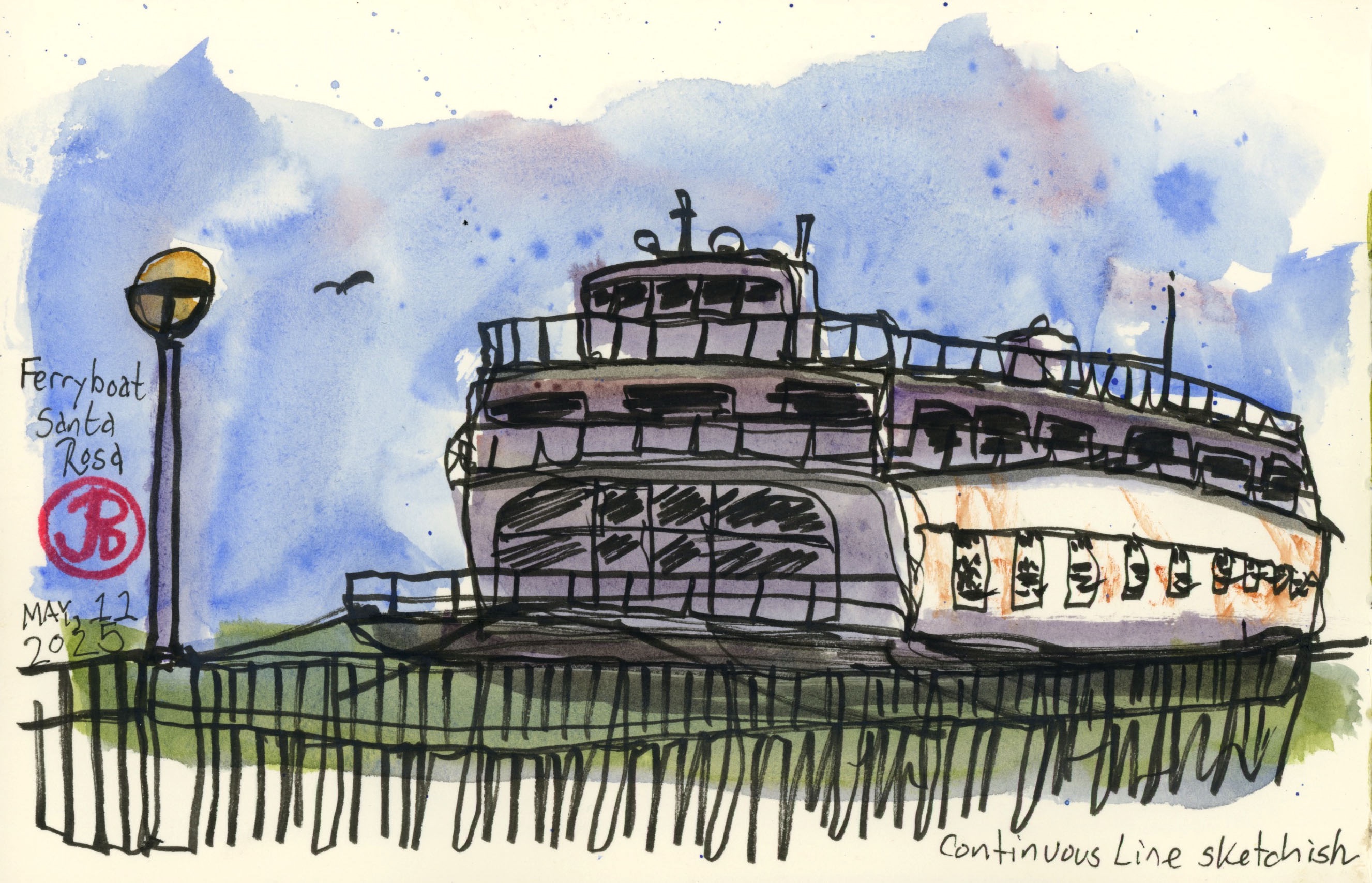
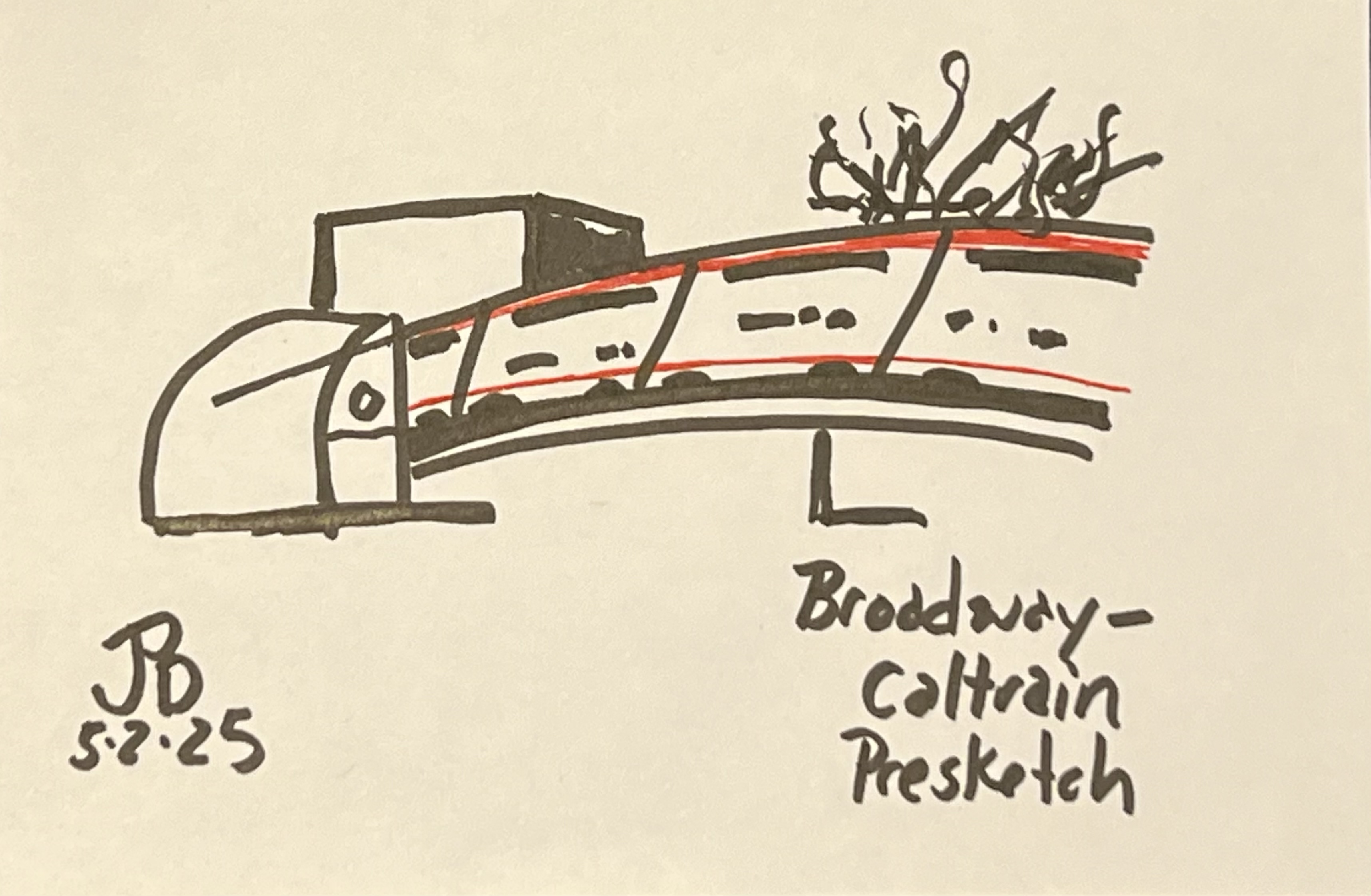
Before catching my train I sketched one of the new units on Track No. 8. (Featured sketch).

The gates opened and I boarded the train and was impressed with the bi-level design. I chose a seat on the top level sitting on the west facing side of the train (where all the historic stations are located).

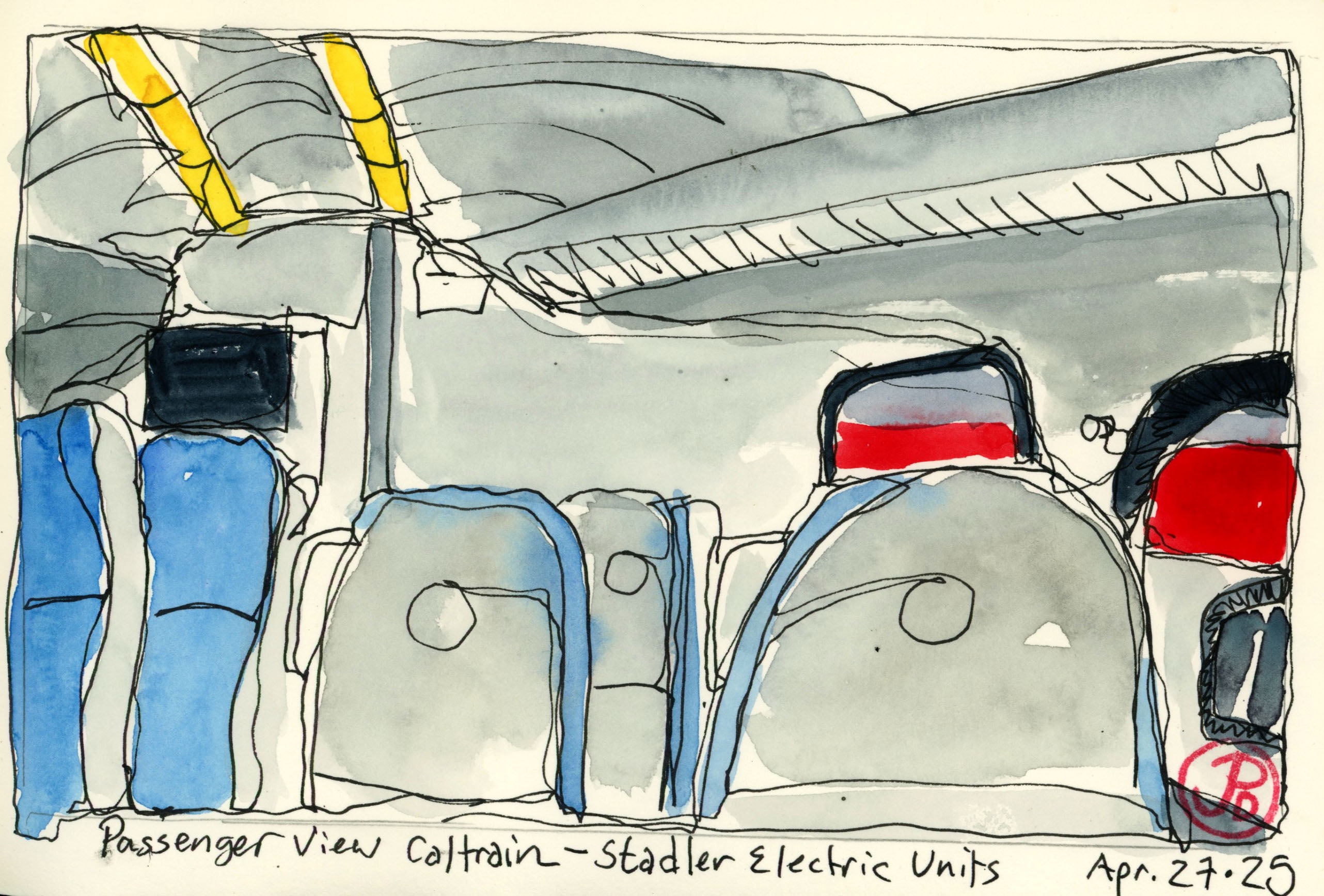
Before the train left I did a continuous line sketch of the interior from my upper deck seat-view. This sketching style loosens up your work including perspective. Normally I would pencil in the vanishing point and convergent lines but this sketching style is absolutely feral!

This takes a little getting used to because loosening up your sketching style causing you to loosen up your perspective of the style.

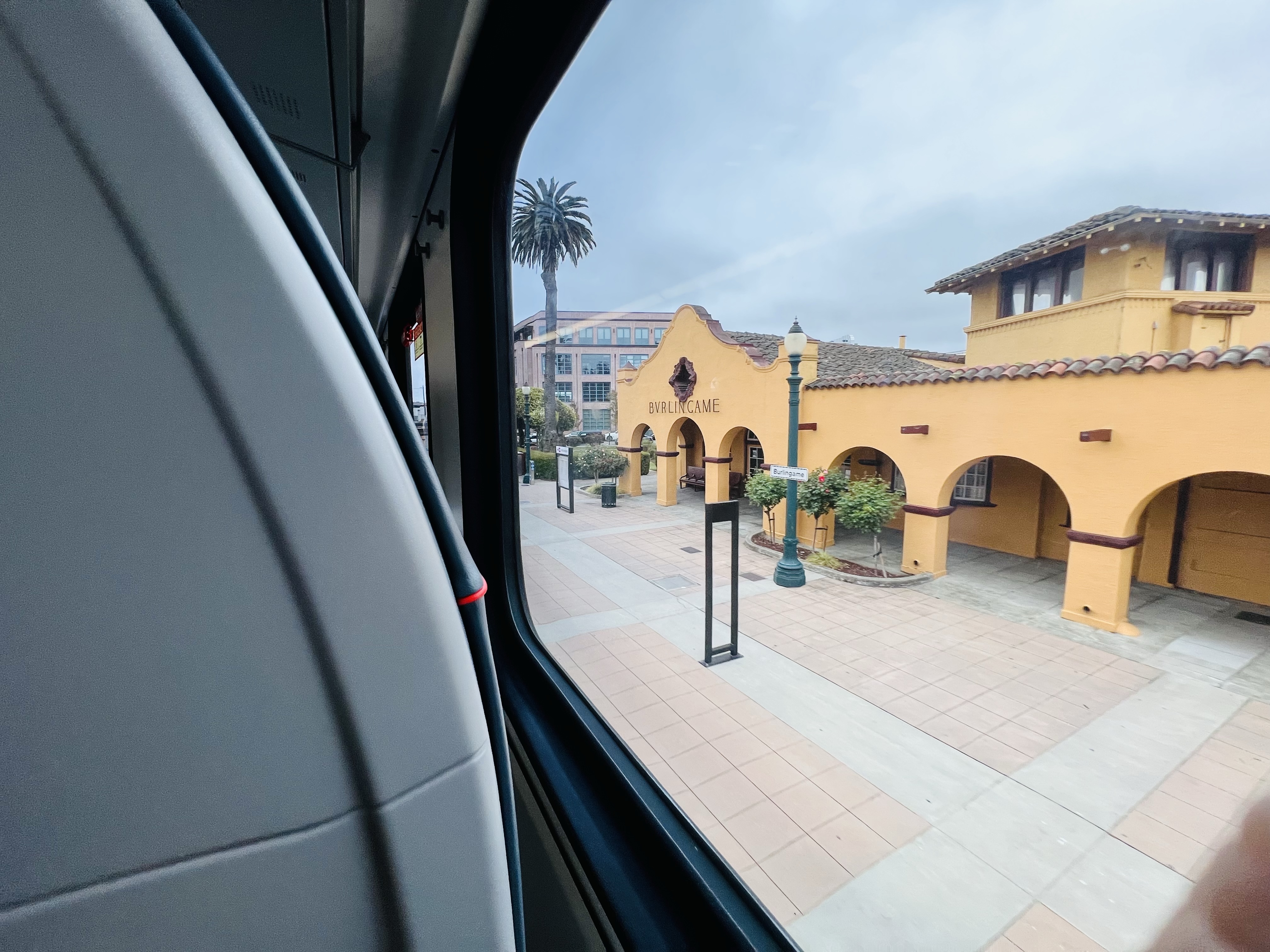
The view of one of my favorite stations on the line: Burlingame. This station is one of the earliest examples of the Mission Revival style and was highly influential in California when it was opened in 1894.
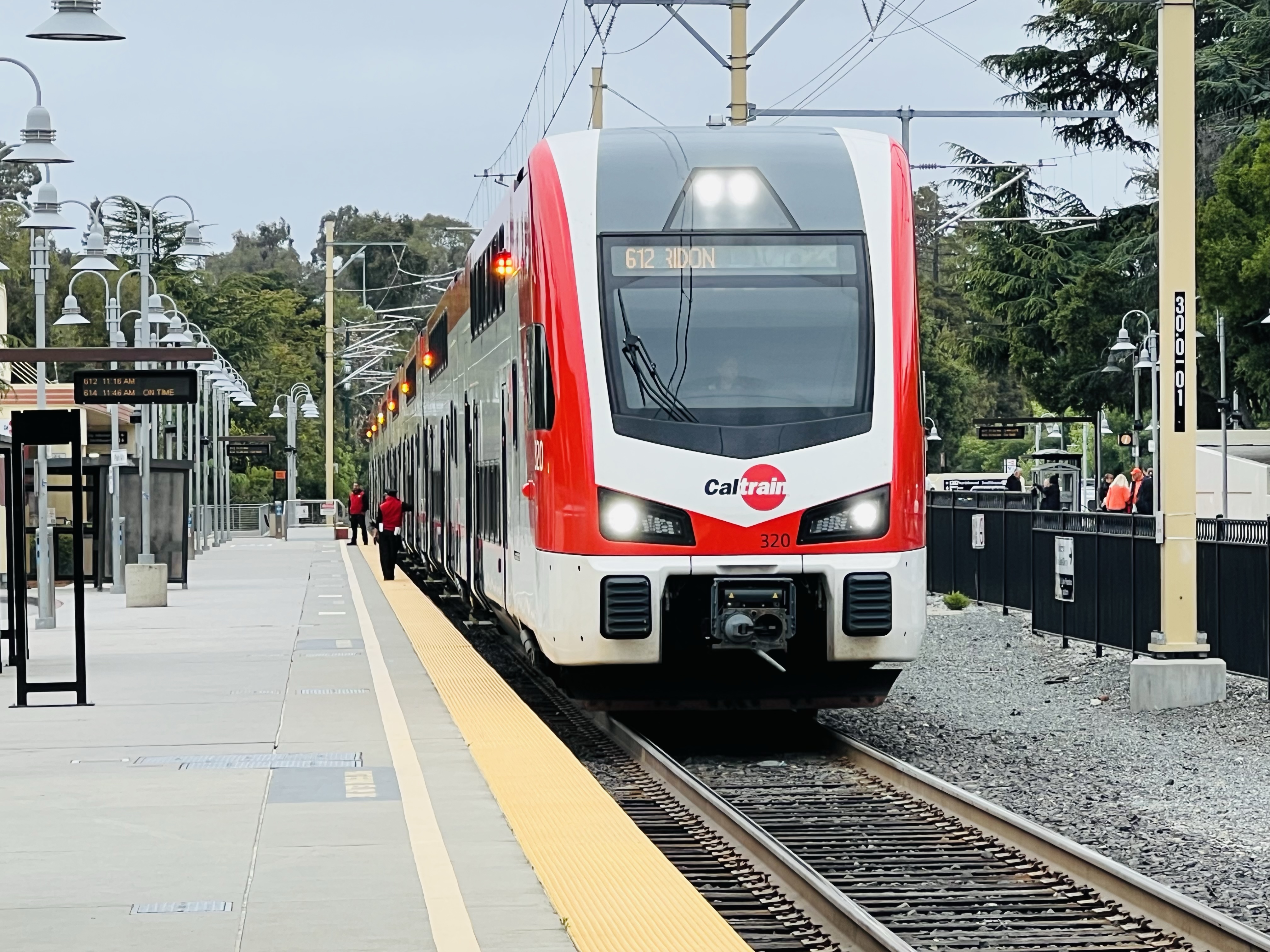
An EMU at Palo Alto, Caltrain’s second busiest station after San Francisco.
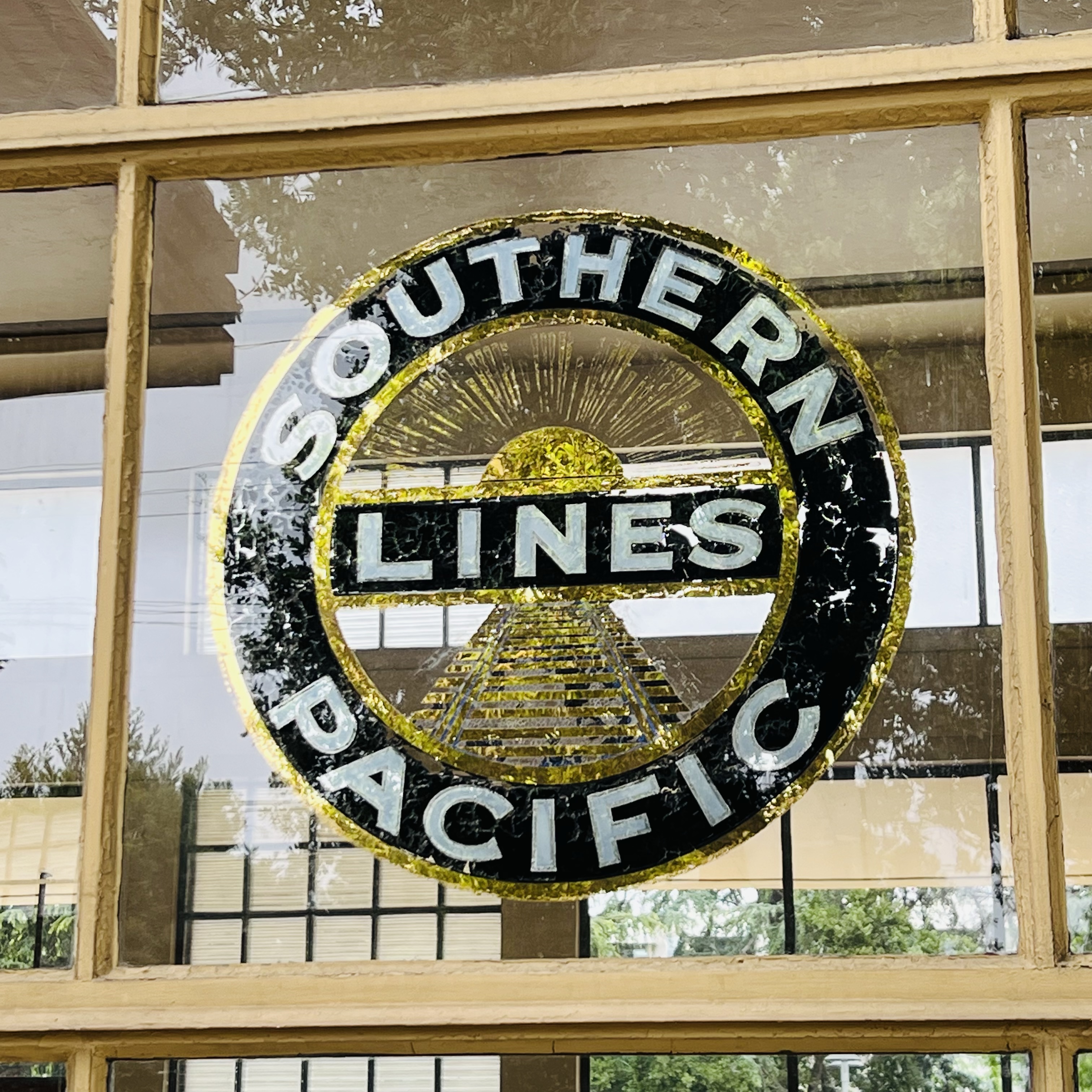
The emblem of the mighty SP when Palo Alto was a stop on the streamlined Daylight passenger service from San Francisco to Los Angeles. The most beautiful passenger train in the world (But I’m biased.)

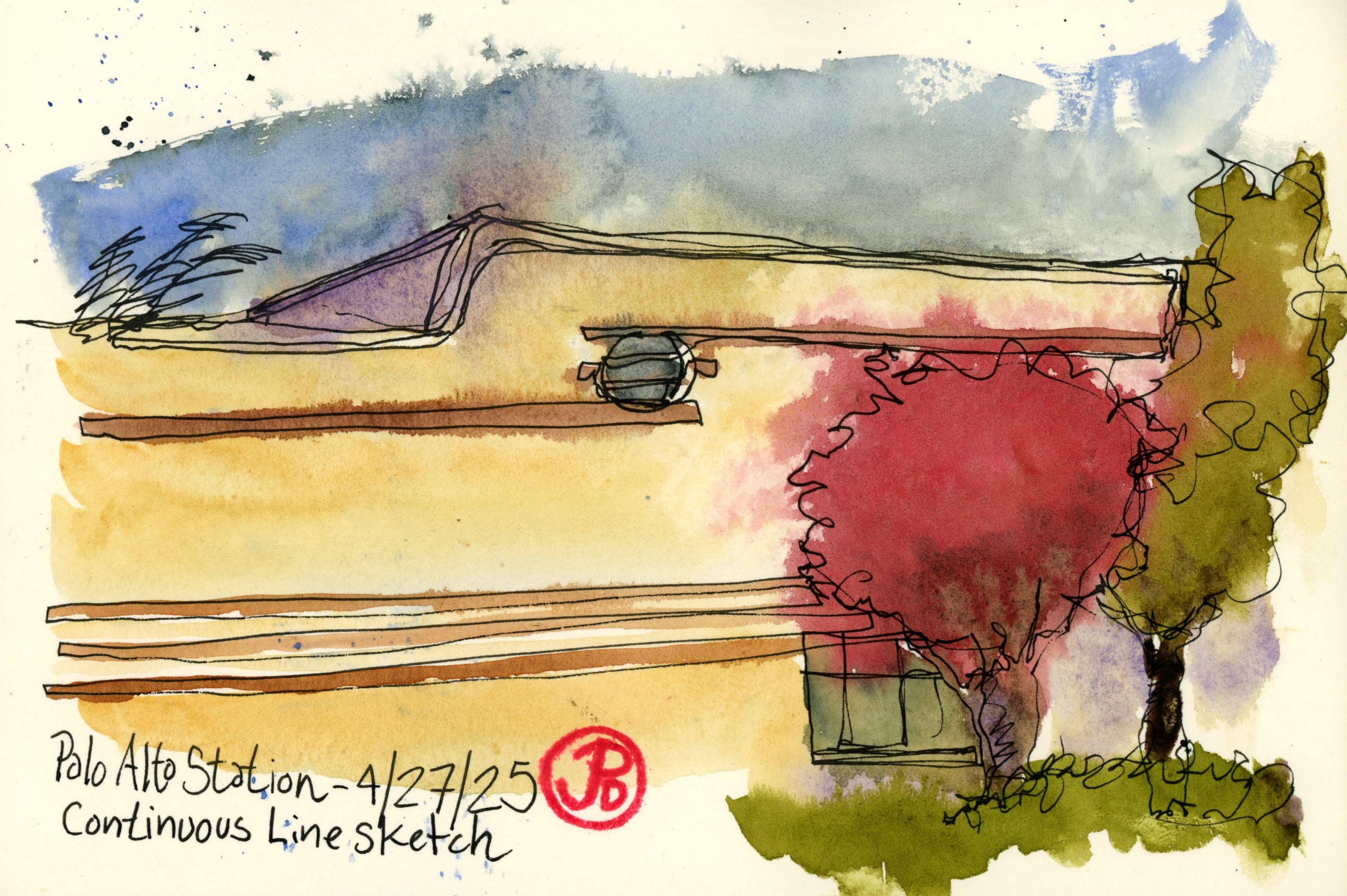
Before heading to lunch on University, I sketched another of my favorite stations on the line the Streamline Moderne Palo Alto station (1941) which looks like some kind of sea going vessel about to take to the air! The station was rebuilt to match the streamlined GS locomotives that were on point for the Coast Daylights.

Final Thoughts

Caltrain’s new EMUs provided a quiet, comfortable, and quick ride from San Francisco to Palo Alto. The interior is well designed and easy to navigate with screens at both ends of the car that shows the next stop as well as upcoming stops. The seven car units have a European feel that looks more like a fast tram or articulated streetcar rather than a high sped mainline train set.

One quibble with the design is that there is only one restroom aboard the train set. This is not a minor quibble as most stations on the line do not provide opened restrooms (including Palo Alto).

Image

Crockett Sketching

On a Saturday morning I headed up to Sugar Town on the Carquinez Strait.

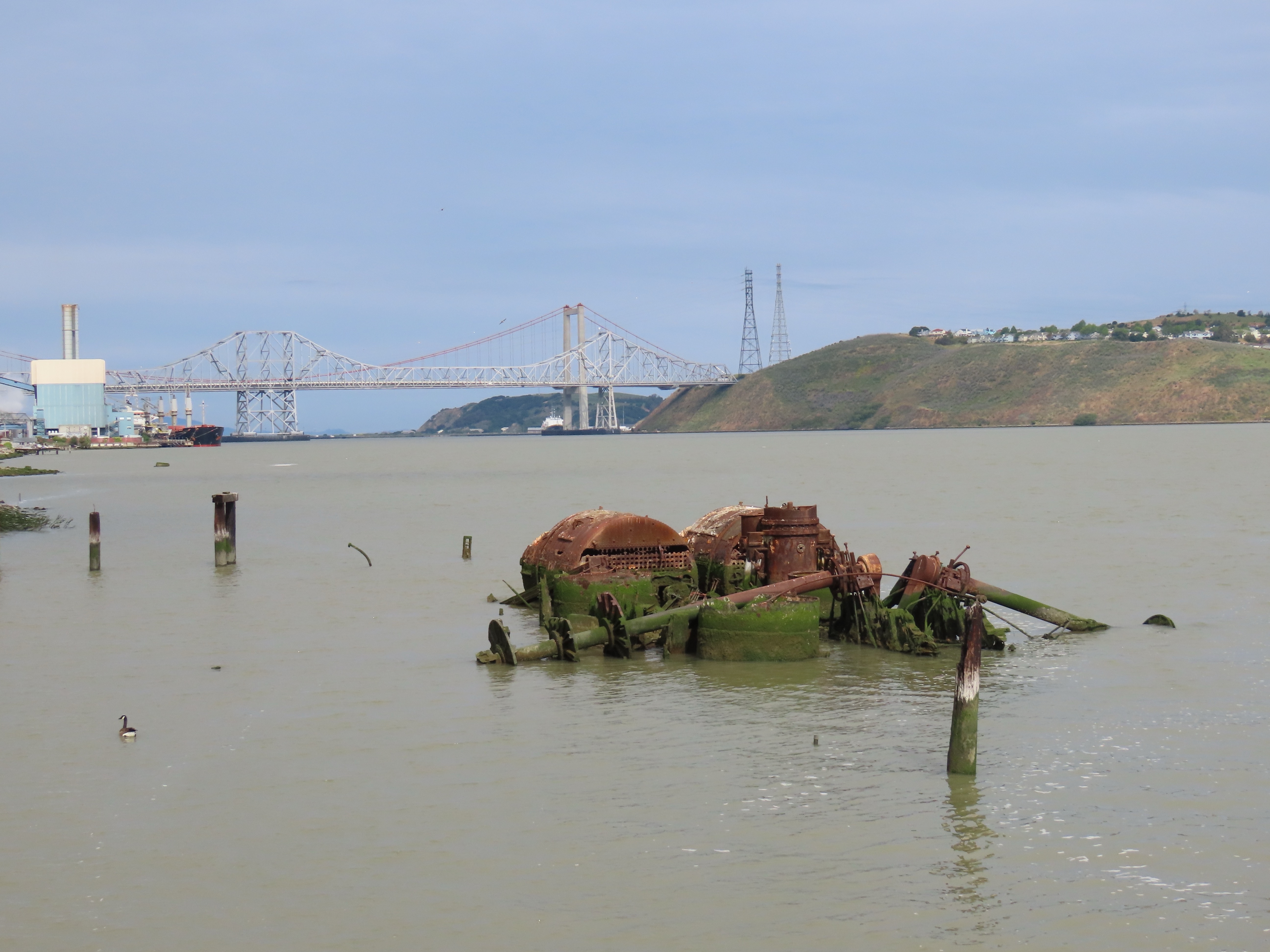
My sketching target: the former Crockett Southern Pacific Depot with the two parallel spans of the Carquinez Bridges in the background. The depot is now home to the Crockett Historical Museum. Open Wednesday and Saturday from 10am to 3pm. Ish!

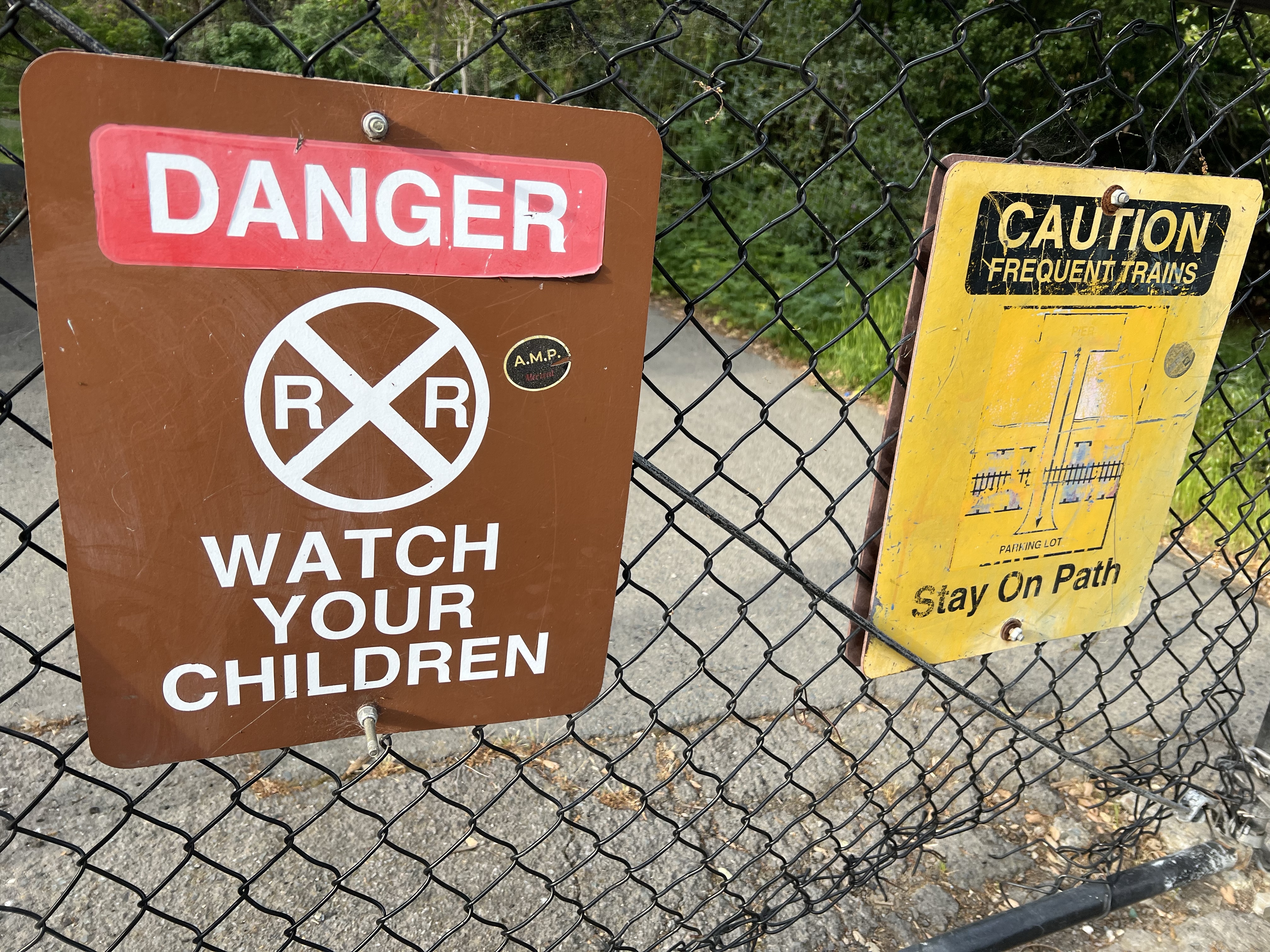
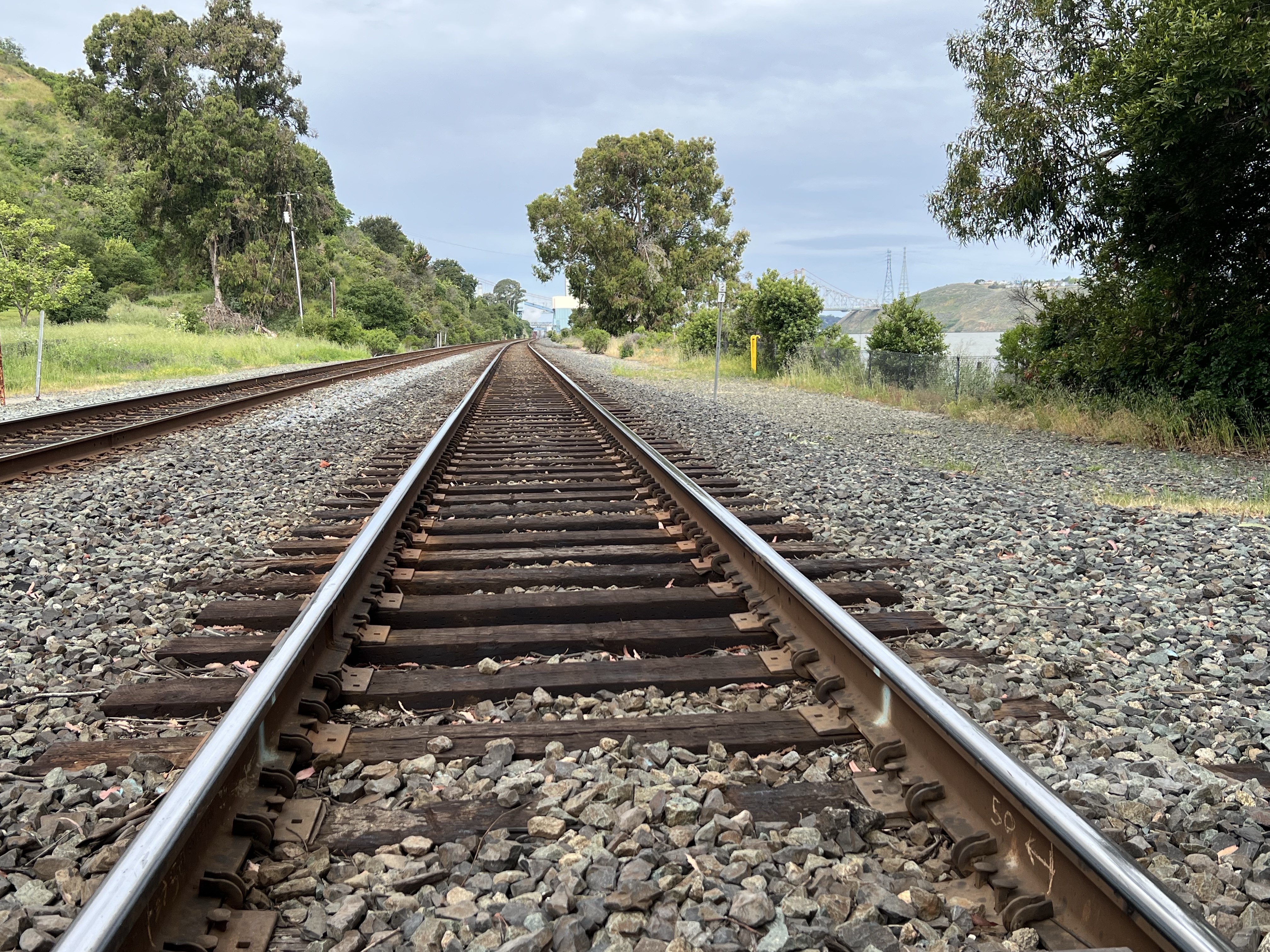
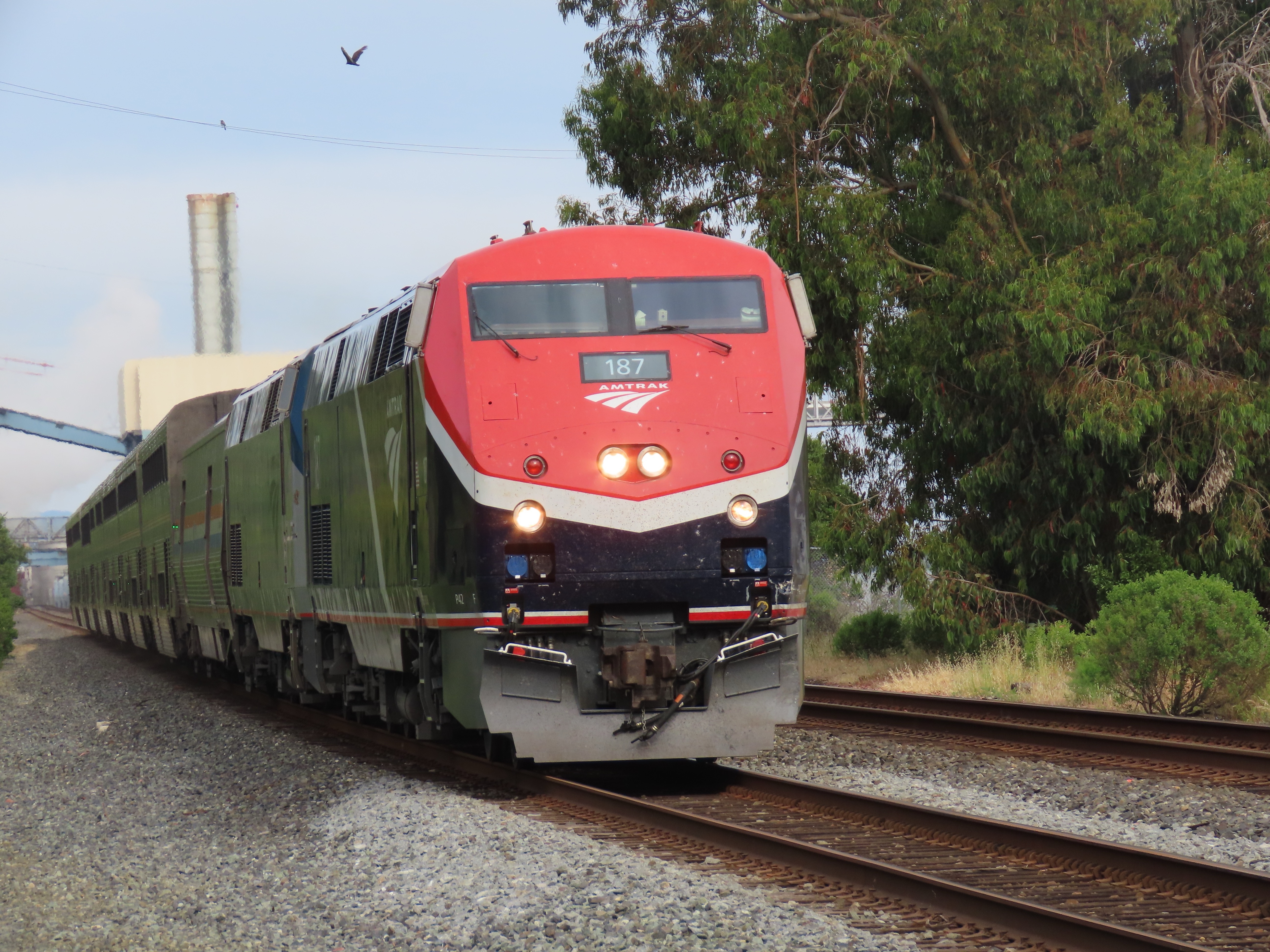
This is a busy place for rail with seven trains passing by including a California Zephyr, a Coast Starlight, a San Joaquin, Capital Corridors, and a Union Pacific freight during my two hours visit.

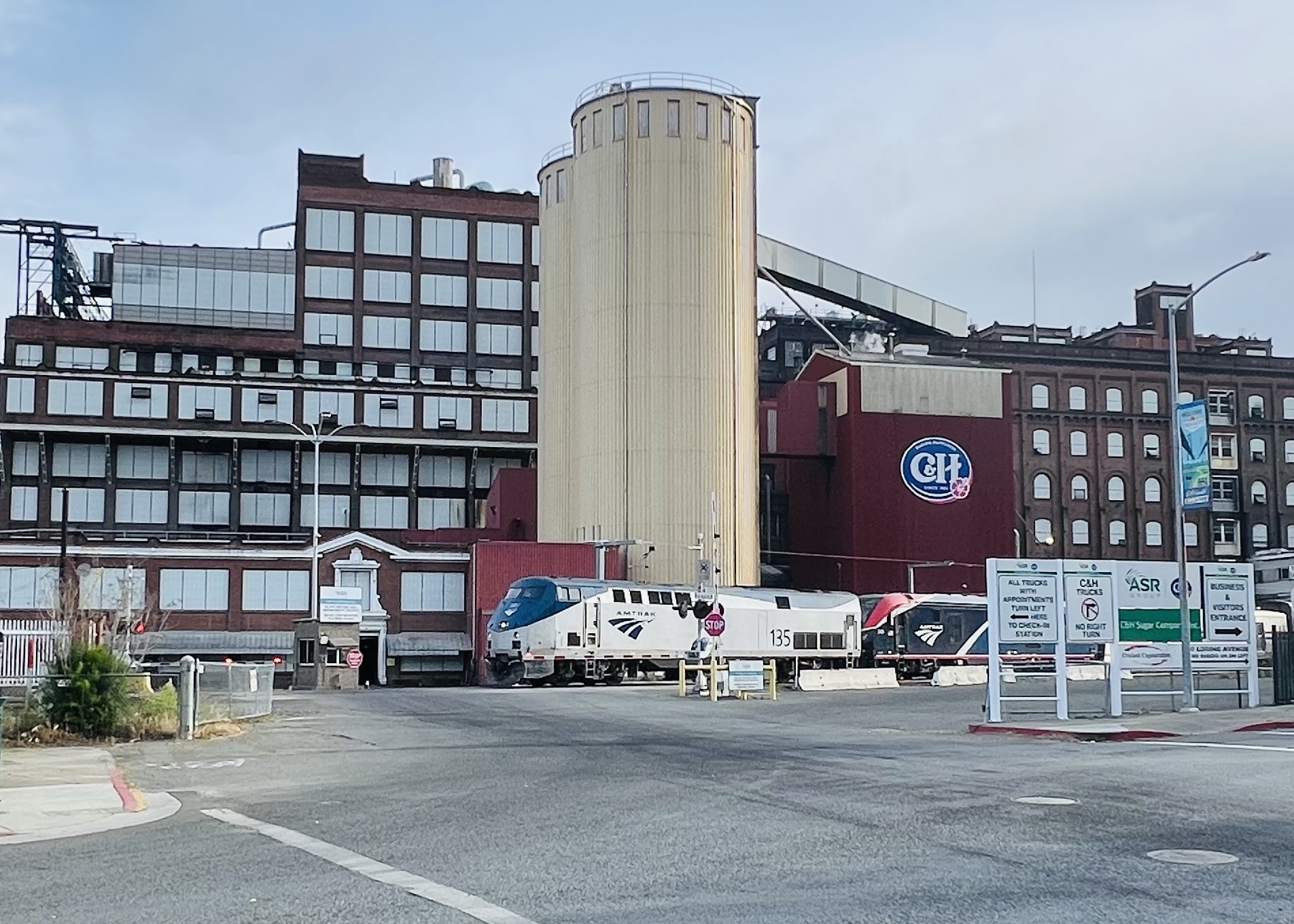
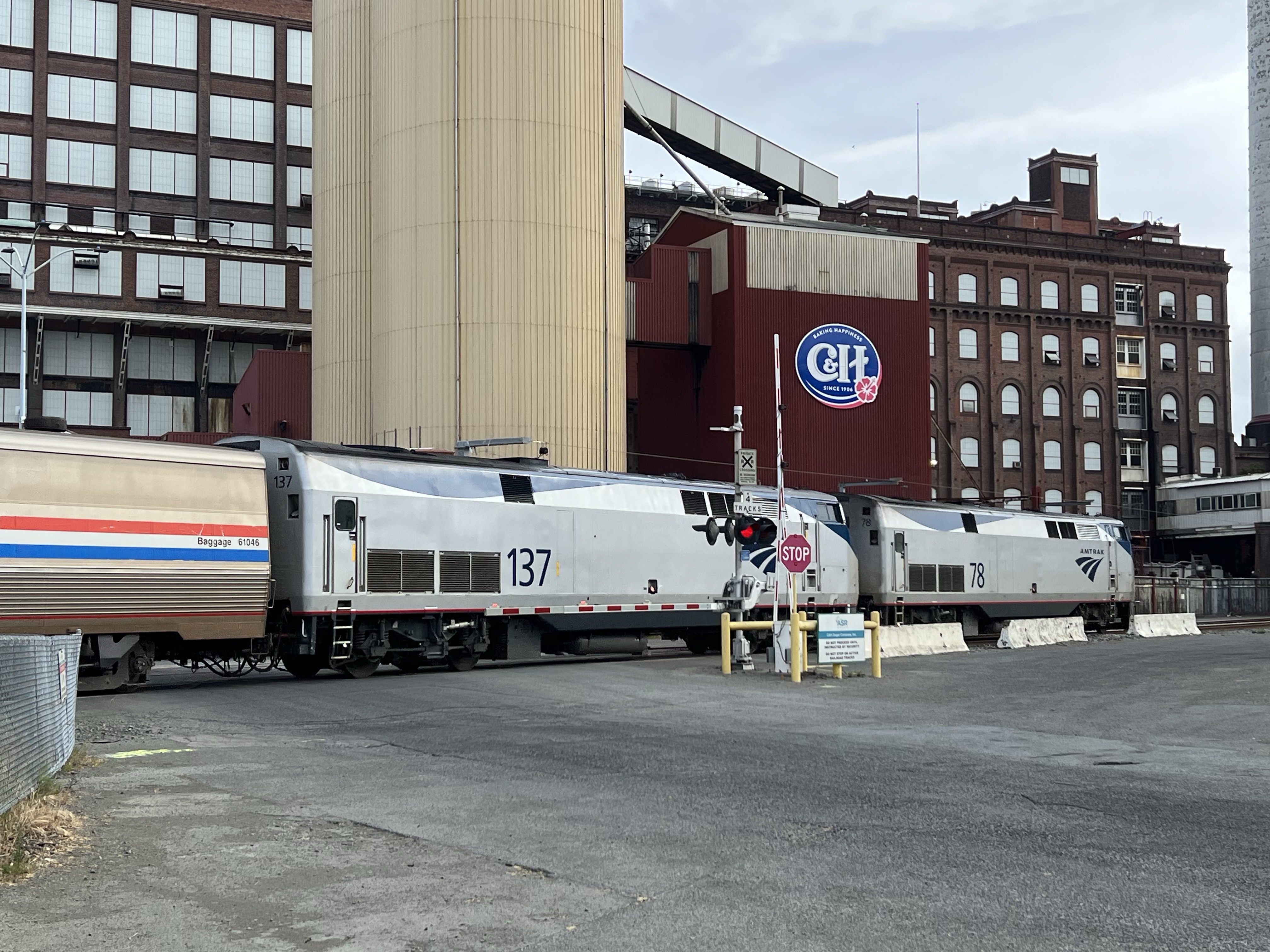
Coast Starlight No. 11 passes by the C & H Factory to its final destination of Los Angeles’ Union Station. The train was running a little late. Shocker!

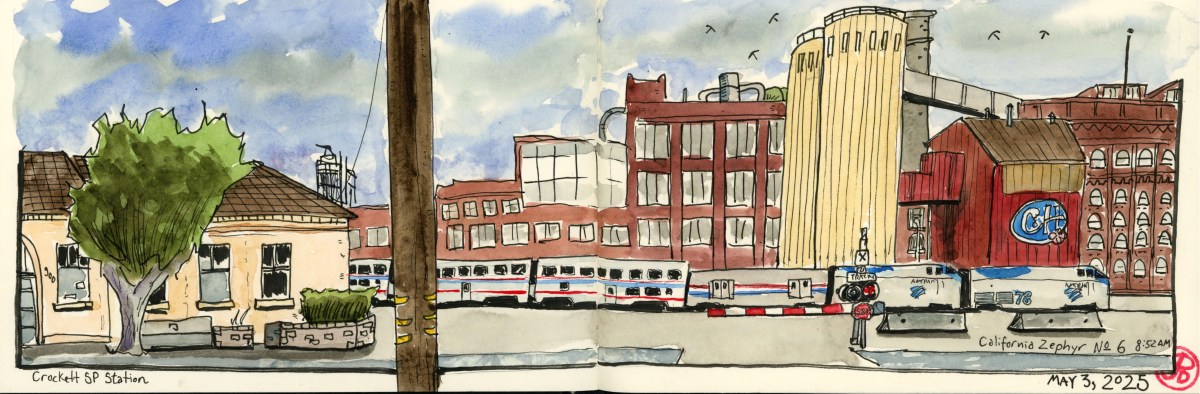
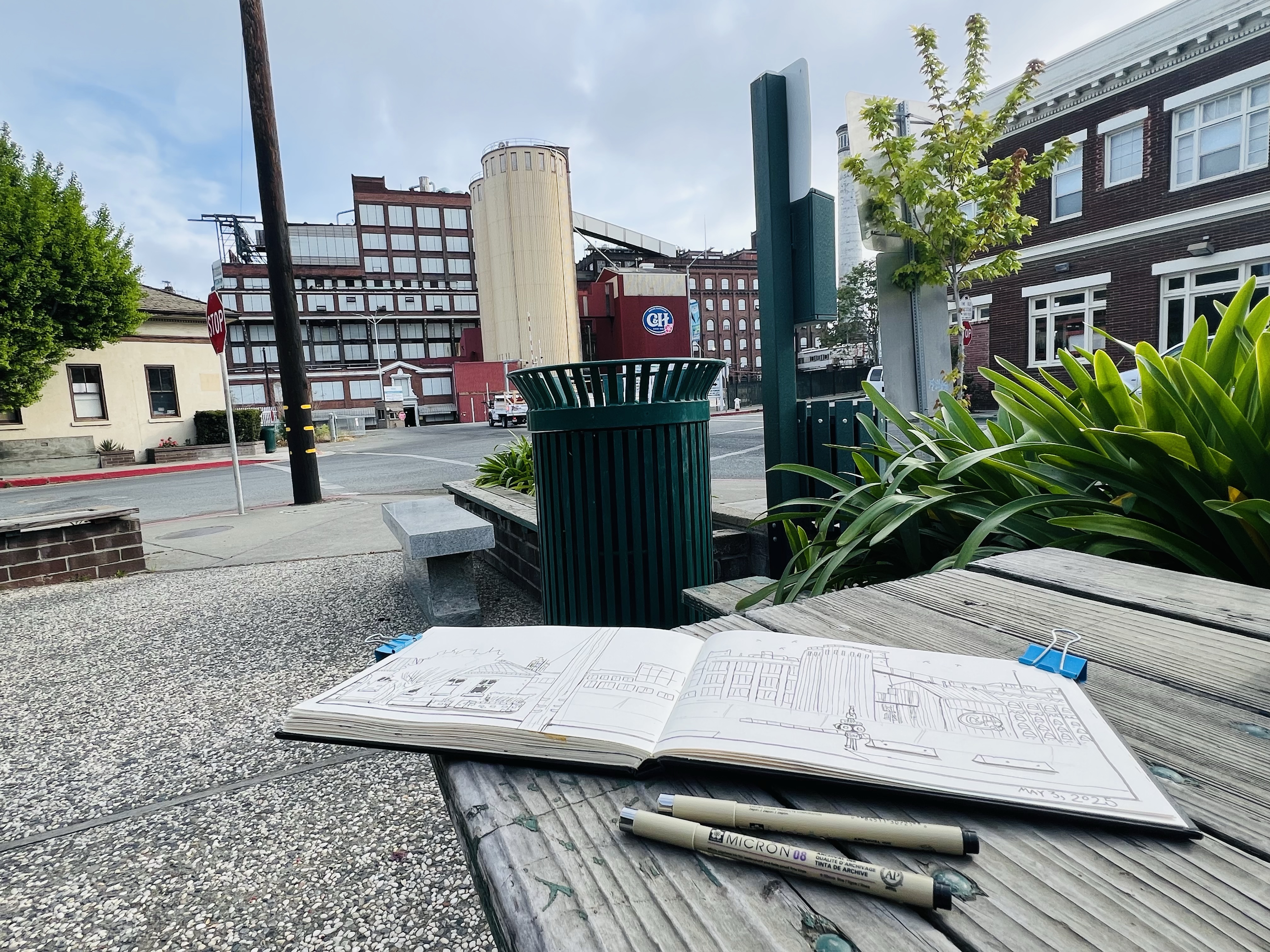
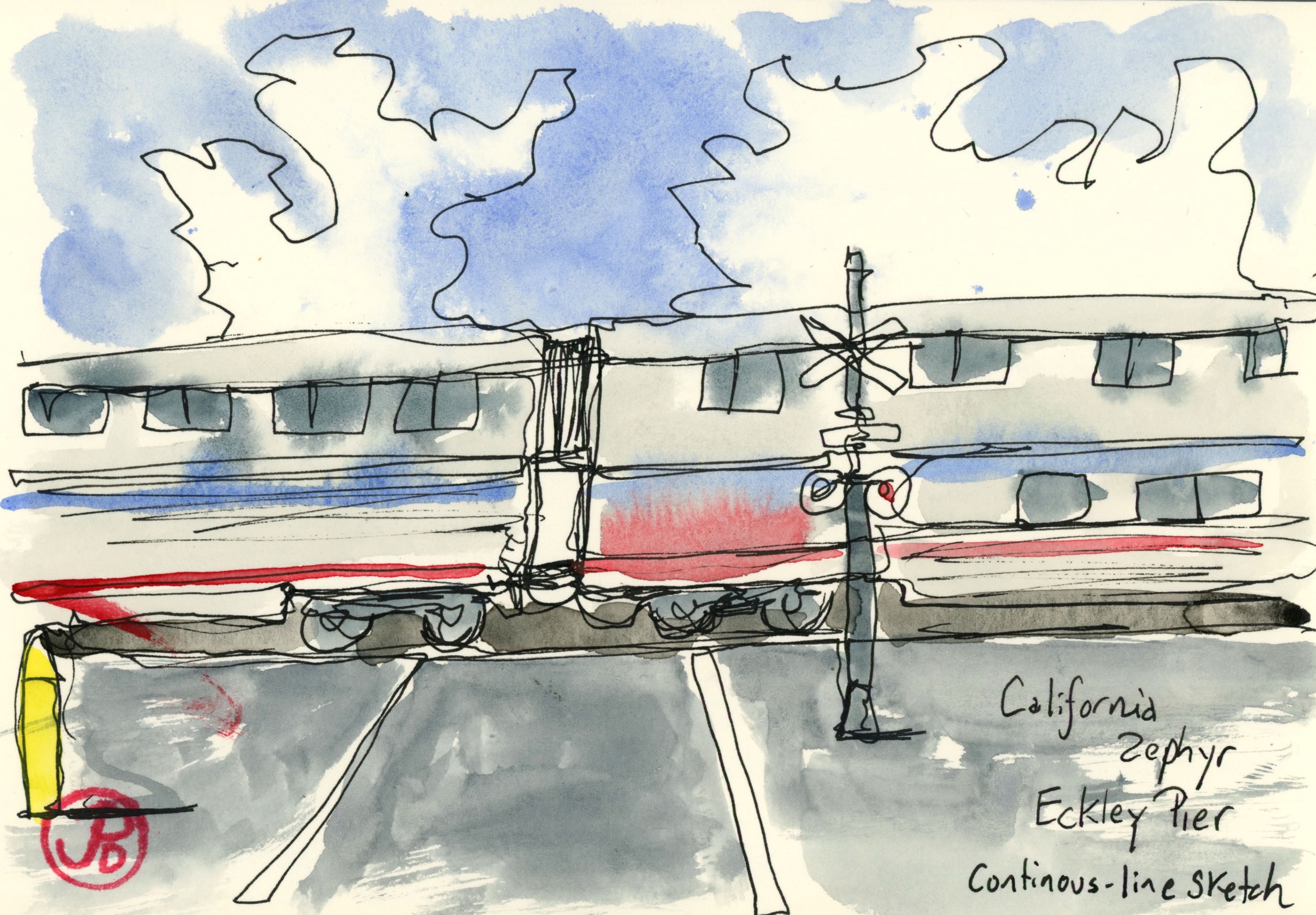
My sketching goal was to render the scene in a continuous line sketch. This means you never lift your pen for the entire sketch. No pencil, no erasing, no going back, this is truly sketching without a net!

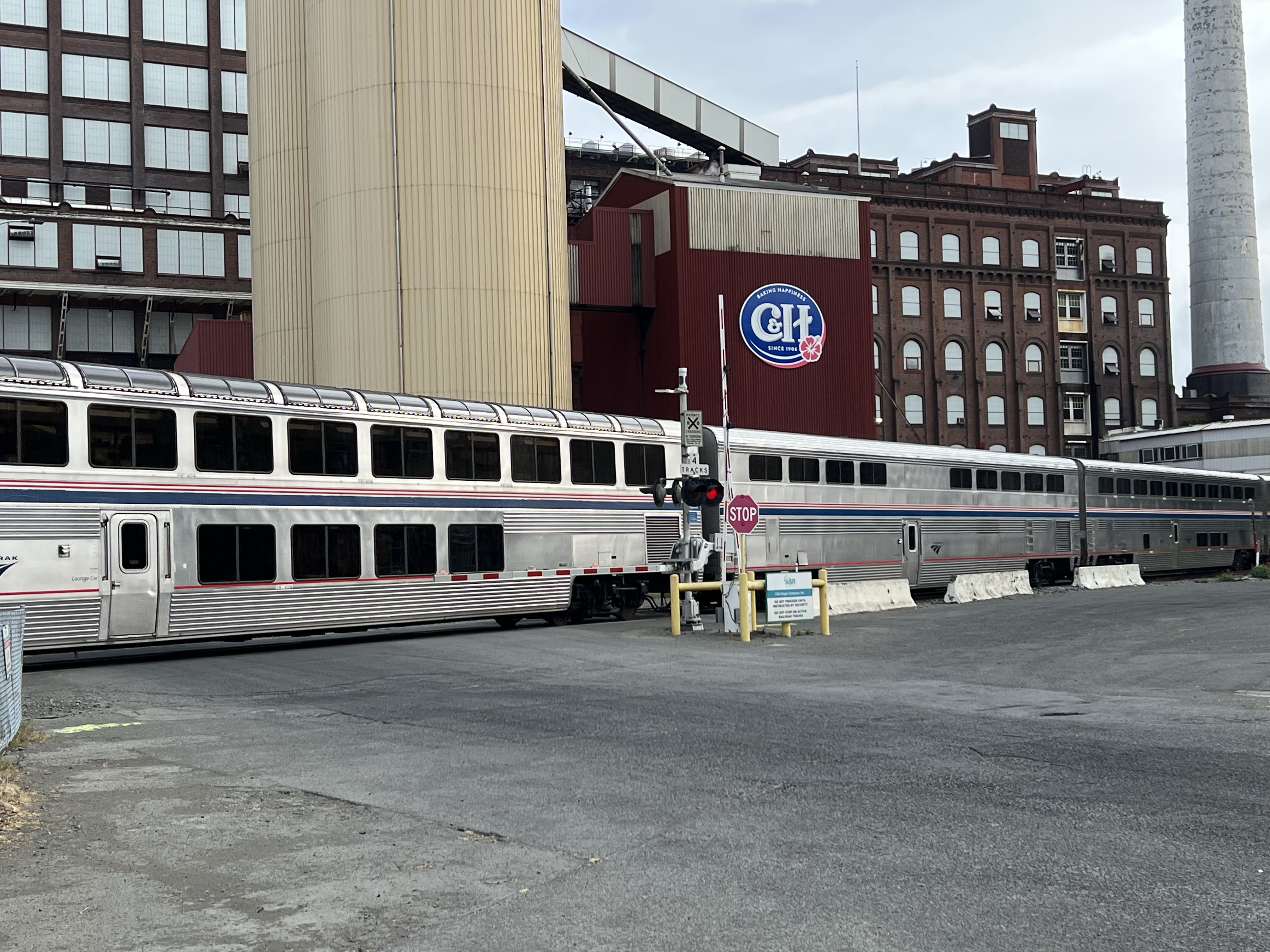
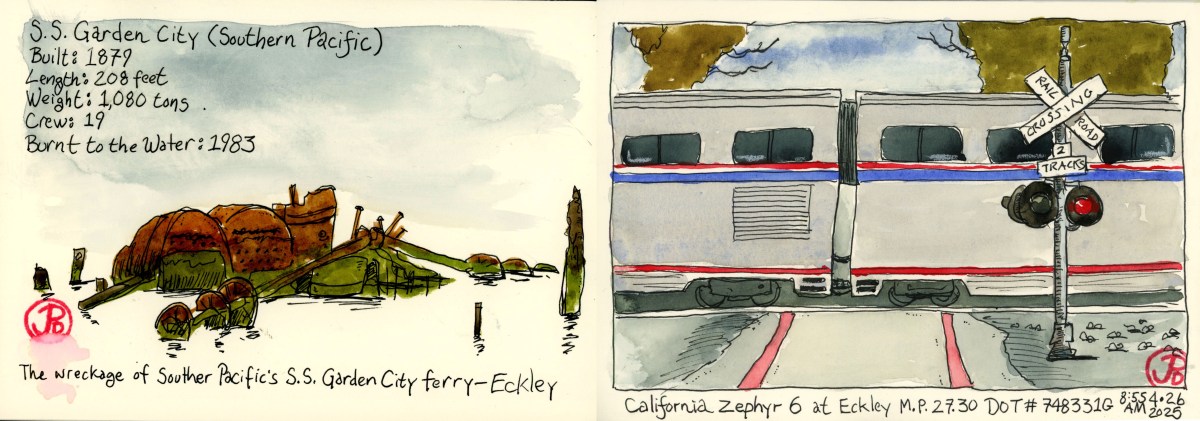
Eastbound California Zephyr Number 6 passing the former SP Depot at 8:56 AM without stopping. Final destination: Chicago.

I set up my sketching chair across the street from the depot just at the entrance to the company that made Crockett a company town, the C & H (California & Hawaii) sugar factory. For my sketch I used my TWSBI Eco fountain pen.

Nothing like starting the weekend with a field sketch!

Continuous line sketching can be challenging and I lifted my pen off the page once or twice (to photograph Zephyr Number 6) but I restarted where I left off. So my sketch is really a broken continuous line sketch.

In the end I like the imperfect lines of the sketch. This technique is a great way to loosen up your line work and in the end I am pleased with the result. It may not be the most accurate form of sketching but it sure has a lot of soul!

I added some wet on wet washes and paint splatter, which looseness, matches the line work.

When the museum finally opened at 10:25, I was drawn to the large 460 pound taxidermy sturgeon in a glass case. So I added it to the right side of the spread.

Main Street Crockett with Toot’s bar and the new span of the 2003 Carquinez Bridge towering over the town.

The trains never stop rolling through Crockett. This is a Sacramento-bound Capital Corridor train passing the sugar factory.
Image

Mercer Caverns

There was a time our 5th graders attended the Sierra Outdoor School (SOS) near Sonora for outdoor education. Before they arrived to do the Duffle Shuffle at their new digs, they headed over to Murphys to do some spelunking at Mercer Caverns, so I thought I wouldn’t mind heading 16 stories underground.

This cavern system is not for the faint of heart, the exceedingly tall, or the claustrophobic.
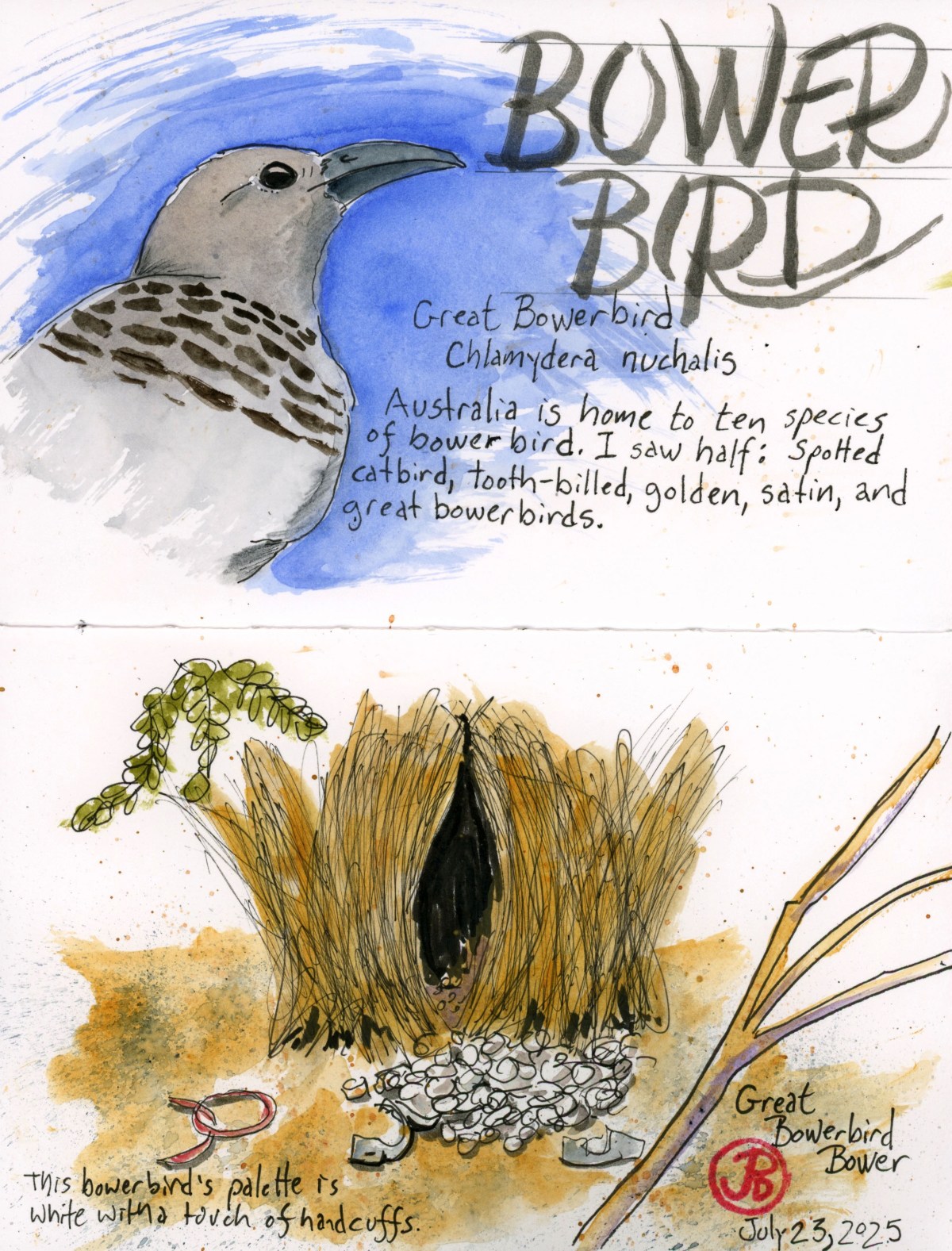
It was “discovered” by its namesake Walter Mercer. Why the quotes? Well native Californians knew of the cavern’s existence at least 1,500 years ago and native remains were found in the caverns.
But on September 1, 1885, Mercer chanced upon the caverns in a search for water. He failed as a gold miner but struck pay dirt with this discovery. Here he was mining the tourists and thrill seekers.

A young stalactite grows slowly, very slowly.

Our guided tour lasted about 45 minutes and luckily I only hit my head once (near the exit).

It was also near the exit that Mercer took a big fall when his rope failed and he fell 30 feet. The fall killed him, it just took twelve years to do so. The fall caused injury to his neck and back and this later led to tuberculosis of the spine. He finally died from his fall on November 1, 1900. Mercer was 46 years old.

While I could not bring my sketchbook into the caverns, I was able to sketch the shack near the entrance. And there was a seated shelter to protect my sketch from the drizzle. This provided the anchor of the sketch.

Some older stalactites.
Image

Martinez Sketching

I arrived a few hours early in Martinez before meeting my friend for lunch. I wanted to do some sketching around the Martinez AMTRAK Station.

The train station in Martinez is a busy place. While I was sketching, three Capital Corridor trains passed through.

On my last visit I wanted to sketch the Southern Pacific locomotive, with its odd consist of Santa Fe cars, on static display across from the station but I didn’t get around to it. I wanted to add it to a spread on my next visit (featured sketch).

Southern Pacific No. 1258 is an S-12 switcher steam locomotive built at the SP shops in Los Angeles. 38 locomotives where built in this class and there are 13 0-6-0 SP switchers preserved, more than any type of Southern Pacific locomotive built.

Switchers are not sexy nor classy like the GS locomotives. There epitomize function over form. The real workhorses of the Southern Pacific freight yards.

After sketching 1258, I headed to the other side of town to sketch the house of Martinez’s most famous resident.

This resident is the writer and naturalist John Muir. He lived here among the fruit orchards with his wife and family.

Muir married into the Strentzel family in 1880. The Strentzels had been farming the land, mainly fruit ranching, since the 1850s. Muir lived here, except when he was off traveling, from 1880 until his death in 1914.

I knew I wanted to do a sketch of the 1882 Italianate house but I needed to find the right perspective.

The touchstone for my sketch was the not-so-giant sequoia that Muir planted years ago. The tree has failed to live up to its name in the Martinez climate.

My Muir-sequoia-bench sketch.

I found a bench with the sequoia in the foreground and the Muir House in the background up the hill.

My favorite room in the Muir House. Muir’s “scribble den”.
Image

Sketching Touchstone: Pt. Arena Lighthouse

A sketching touchstone is a subject that I return to over and over again.

And the Pt. Arena Lighthouse certainly deserves the title.

I have sketched this beautiful lighthouse several other times, but from different angles.

Point Arena is a special place because it is the closest part of the United States to Hawaii. It is the furthest west you can get in the Lower 48.

I drove out to the lighthouse and pulled over at a dirt lot and started to sketch the scene before me.

I was a bit far off from previous sketches but I like the way the power poles and lines leads the eye to the lighthouse in the distance.

My constant companion during the sketch was the world’s largest songbird: the common raven. The corvid was finishing up a meal on a fence post.

The raven then proceeded to give a post-repast repertoire of its gronks, groans, and bill-slapping. It was hard to take my eyes off the entrainment as I was sketching the lighthouse. I added the raven to the closest power pole.

Image

California Registered Historical Landmark No. 714

The town of Mendocino has two California Registered Historical Landmarks, both are houses of worship.

I had already sketched the Temple of Kwan Tai on a previous visit and now I wanted to sketch the Mendocino Presbyterian Church.

I sketched the church from my curbside sketching blind and when I finished I walked over to get a closer look at the California State Historic Landmark Plaque.

The church was dedicated in 1868 and is the oldest church in continual use in California. As I was reading the plaque a kindly local asked if I wanted to have a look inside.

I replied in the affirmative and the kindly church lady put her dog indoor and returned with the key.

She gave me a brief tour and told me if I was brave (I was) that I could climb the ladder in the choir loft to see the chalk signatures of past pastors and church members on the inside of the bell tower (which I did).

She also said that I could ring the bell, so I grabbed the pull and did.

The church is built of the local wood, the wood that put Mendocino on the map: coast redwood.

Image

The Pygmy Forest of Jug Handle

I left my Caspar cottage at 8:45 and I walked down the road to Jug Handle State Natural Reserve.

I would he ascending the Biological Staircase of terraces, my final destination would be 2.5 miles from the trailhead on the third terrace. This is the 300,000 year old Pygmy forest!

One reason that the Biological Staircase is so appealing to the naturalist is that you pass through very different habitats, giving you a nice cross section of this rare part of Coastal California.

Weeks before I set off on my journey to the Pygmy forest, I did a sketch of a cross section of the five terraces to help me understand that ecosystems I would be traversing.

The trail was filled with large puddles and portions of the trail became a small stream bed from recent winter rains. This was a wet walk but well worth the mud and the blood and the tears. (Okay just mud, but lots of it.)

I had been on the trail for almost an hour when the tree cover opened up and the morning sun warmed my bones.

I was now nearing my destination: the Pygmy Forest! A small sign marked the beginning of the boardwalk.

A Pygmy forest occurs when the soil is nutrient poor and plant species are stunted as a result. A Pygmy forest is rare habitat that is only found in a few locations in Northern California. The boardwalk protects the valuable soil from visitor’s damaging footfalls.

The serpentine boardwalk through the Pygmy forest.

Half way through the board walk there was a pull out with benches and a 1968 plaque proclaiming the Pygmy forest as a California Registered Natural Landmark. I rested here, had a snack, and did a sketch of the view. I’ll admit the sketch is a bit loose and wild (featured sketch).

My return journey on the boardwalk.
Image

Mendocino Town-Sketching

The town of Mendocino is really a sketcher’s paradise.

I have sketched this town many times and there are endless angles, perspectives, and hidden gems to add to my sketchbook.

As a sketcher you can either “zoom” in or “zoom” out depending on what strikes your fancy (no zoom lens required). For much of my panoramic sketches I chose to zoom out with a wide angle perspective.

For the featured sketch I positioned myself across the street from the Blair House (used in Murder, She Wrote) right beside Heider Field. The sketch looks towards Lansing Street at a water tower, old buildings, and the Masonic Lodge. A rustic townscape.

On another day I took a wide angle perspective from the small park across the Big River mouth to draw the bluffs and the town (below).

A panoramic sketch of Mendocino.
What a view!

I did do a few sketches a little more “zoomed in”. One was of a water tower and the back of the Crown Hall and the other is at the Mendocino Headlands State Park and a black oystercatcher.

Black oystercatchers are easy to see at the Mendocino Bluffs.
Image

Sketching Ft. Bragg

While many painters, sculptors, and artists are attracted to the picturesque town to the south, Ft. Bragg has plenty of objects to sketch.

And I added a few to my sketchbook.

I hiked out on the Noyo Bluffs, north of the river mouth. My destination was the Noyo Center’s Crow’s Nest Interpretive Center.

This center has marine mammal skulls and bones, maps and diagrams, a tide pool tank, and a deck for whale watching.

I sat at a picnic table and sketched the interpretive center. All this hiking and sketching makes me thirsty.

Good thing I was in Fort Bragg, because on Highway One, near the train depot, is the North Coast Brewing Company. Across the street from the brewery is their pub where you can get a bite to eat and sample their brews.

North Coast has been brewing since 1988, well before I could legally drink. They always have creative names for their brews such as Scrimshaw, Old Rasputin, Brother Thelonious, Old No. 38 Stout (named after a California Western Railroad steam locomotive), and my favorite Red Seal Ale (sketched above).

Cheers from Fort Bragg!

Image

Train Sketching: Ft. Bragg

I have enjoyed sketching in the town of Fort Bragg, just to the north of Mendocino.

The genesis of Fort Bragg as a town was the huge strands of coast redwoods and lumber mills sprang up to harvest the timber.

Now how to get the lumber to markets like San Francisco to help build the growing city?

Lumber was shipped south by boat but once the California Pacific connected Ft. Bragg with Willitis and the Northwestern Pacific, milled lumber could be shipped by rail.

The rails of the past lives on as the Skunk Train. Now a tourist railroad.

I did some sketching at the train yard (featured sketch) including the water tower with the skunk logo.

The past and present of Skunk Train. A diesel pulling into the station with a water tower of the steam age in the background.