Image

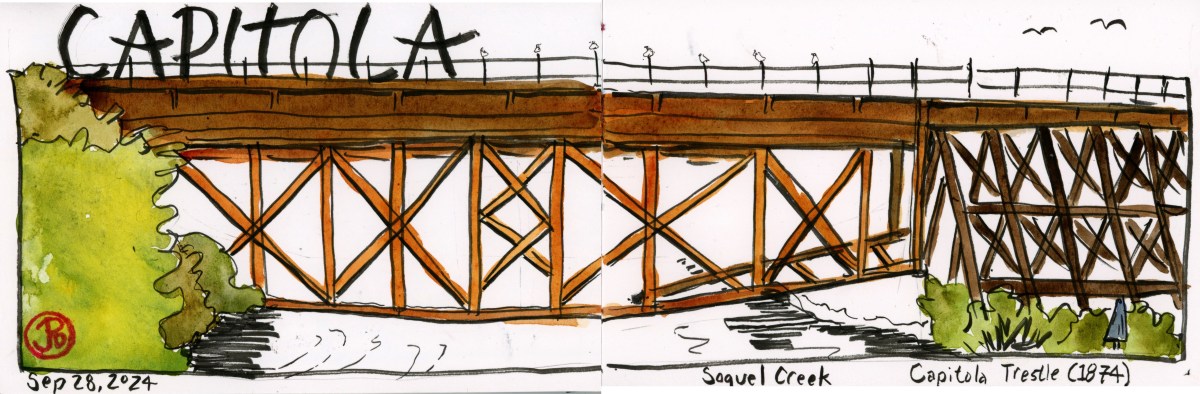
Capitola Trestle and Soquel Creek Bridge

Early Saturday morning found me in Capitola Village.

Capitola was founded in 1874 as a beachside resort and in the age before the personal automobile it owed its early popularity to the railroad.

The Santa Cruz Railroad, opened in 1876 and brought sun worshippers to Camp Capitola.

Southern Pacific took over the railroad in 1882. The SP brought beach goers to the small seaside town, passengers detraining at the new depot near the east end of the trestle, this location is known as Depot Hill.

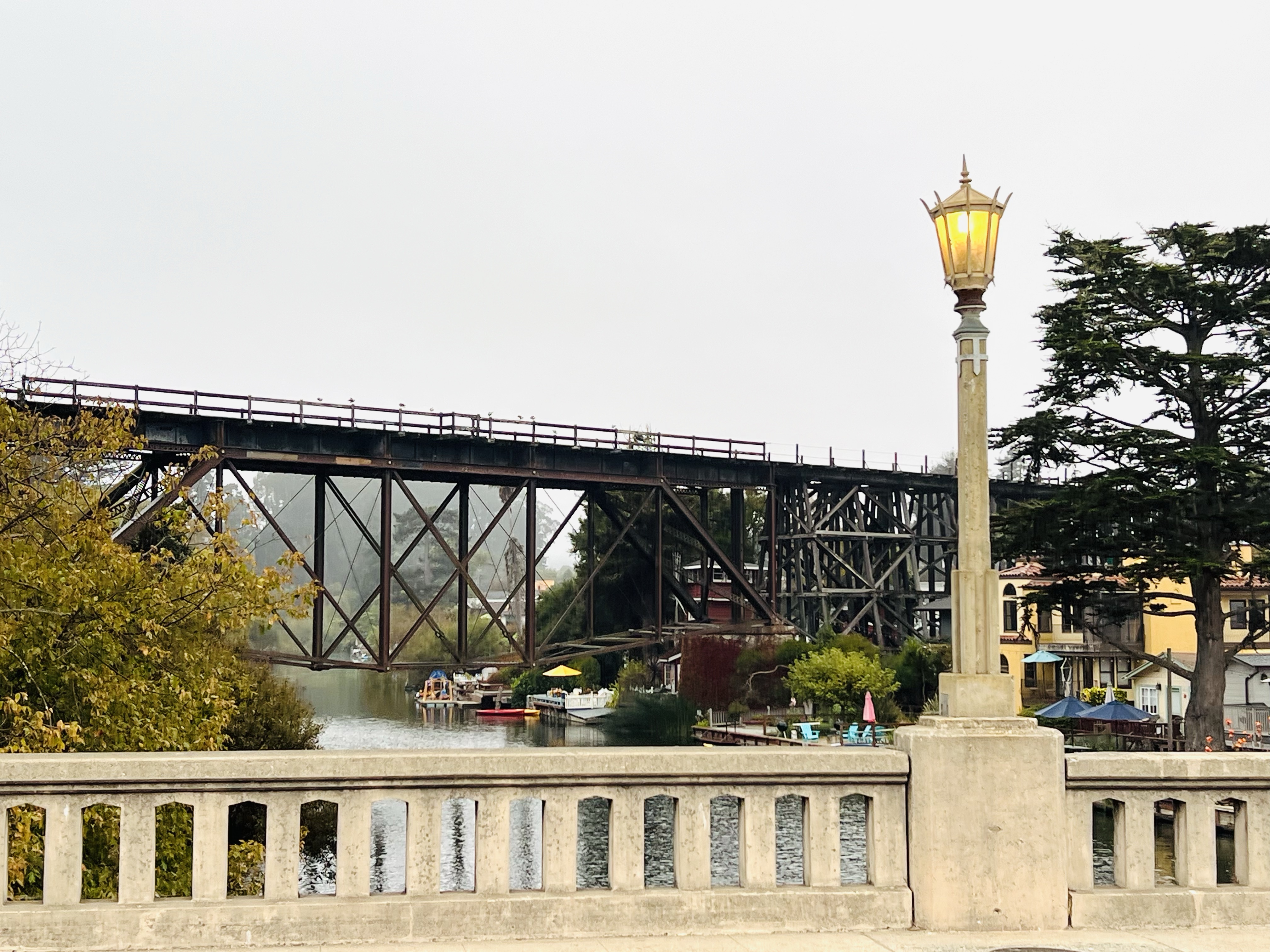
I chose my sketching position above Soquel Creek on the historic Stockton Avenue Bridge (1934) which parallels the trestle. The seaside air was wet with fog, I hoped it wouldn’t smear my ink drawing.

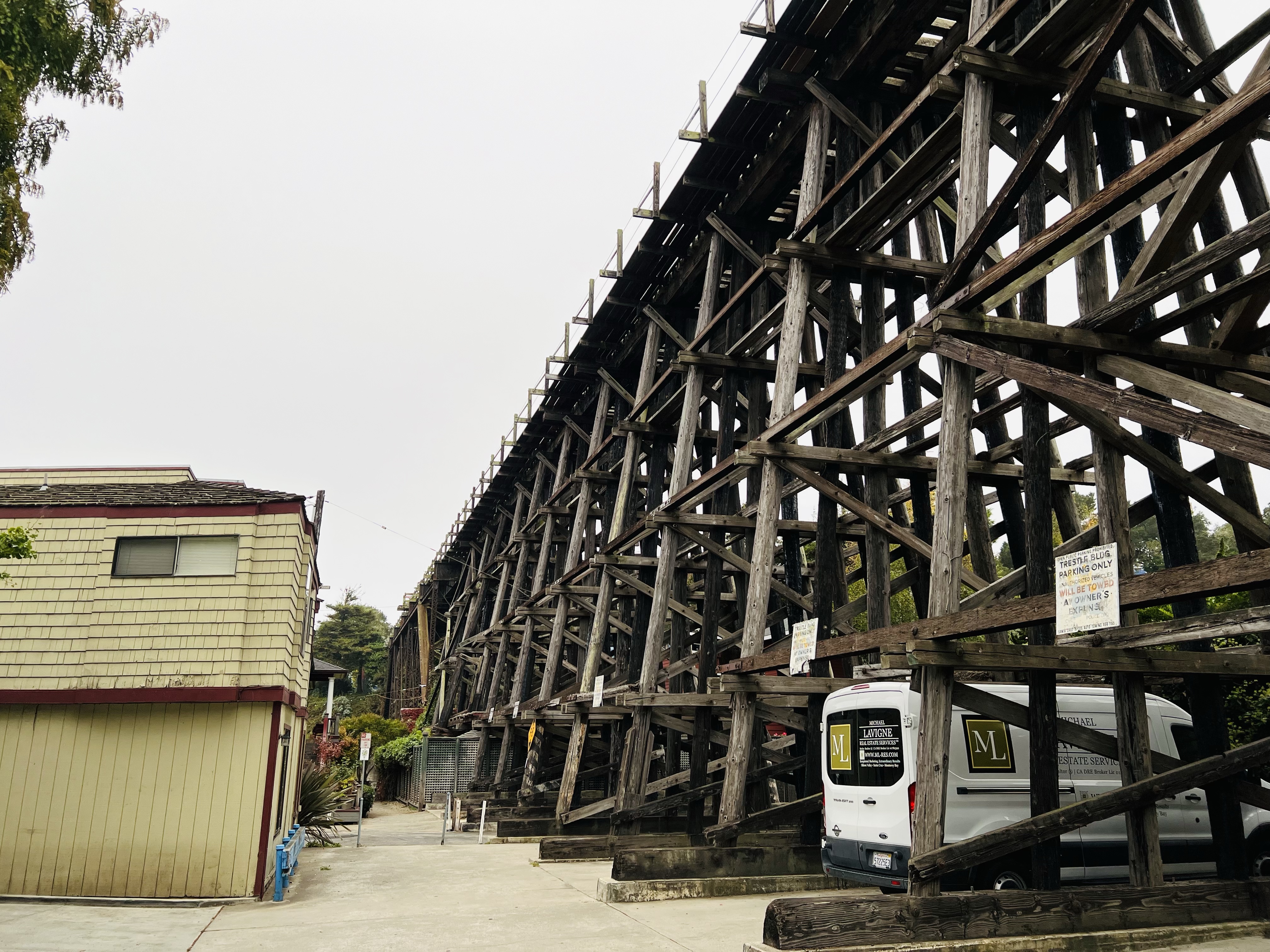
The wooden trestle over Capitola Avenue looking towards Soquel Creek. The Capitola Depot is about 100 yards behind me and up the hill. I have always loved the parking spots under the trestle (parking is a premium in Capitola Village).
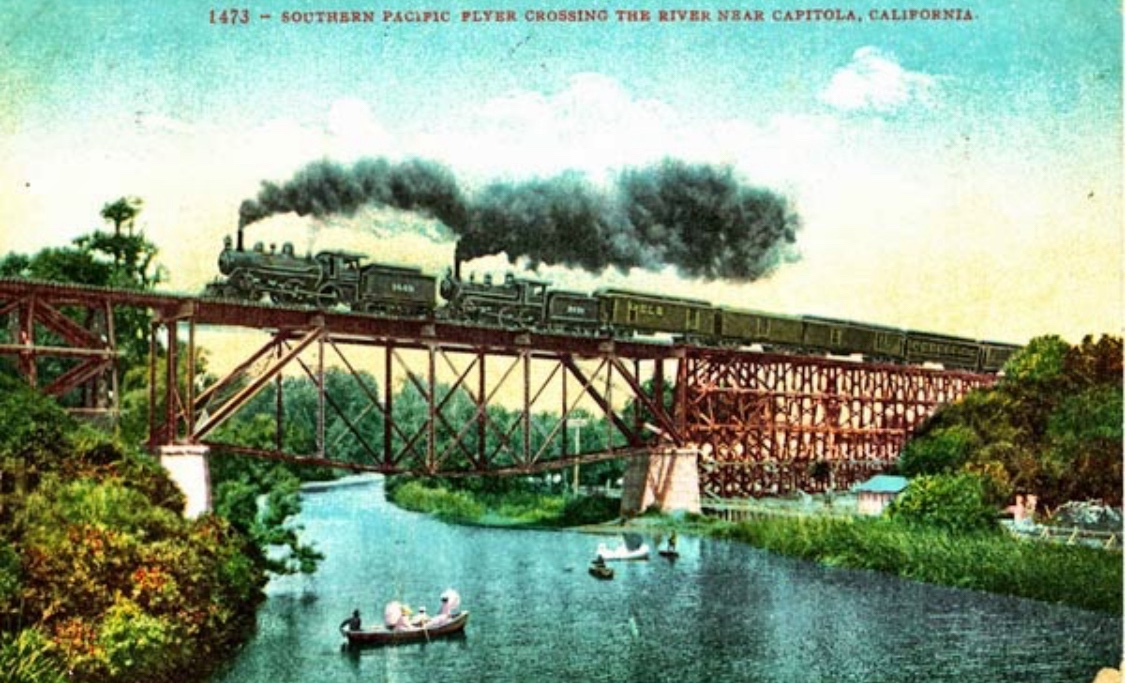
Colorized postcard (early 20th Century) of a double header passenger train with three baggage cars, crossing the trestle over Soquel Creek taking beach goers to Santa Cruz. This perspective is close to where I chose to sketch.
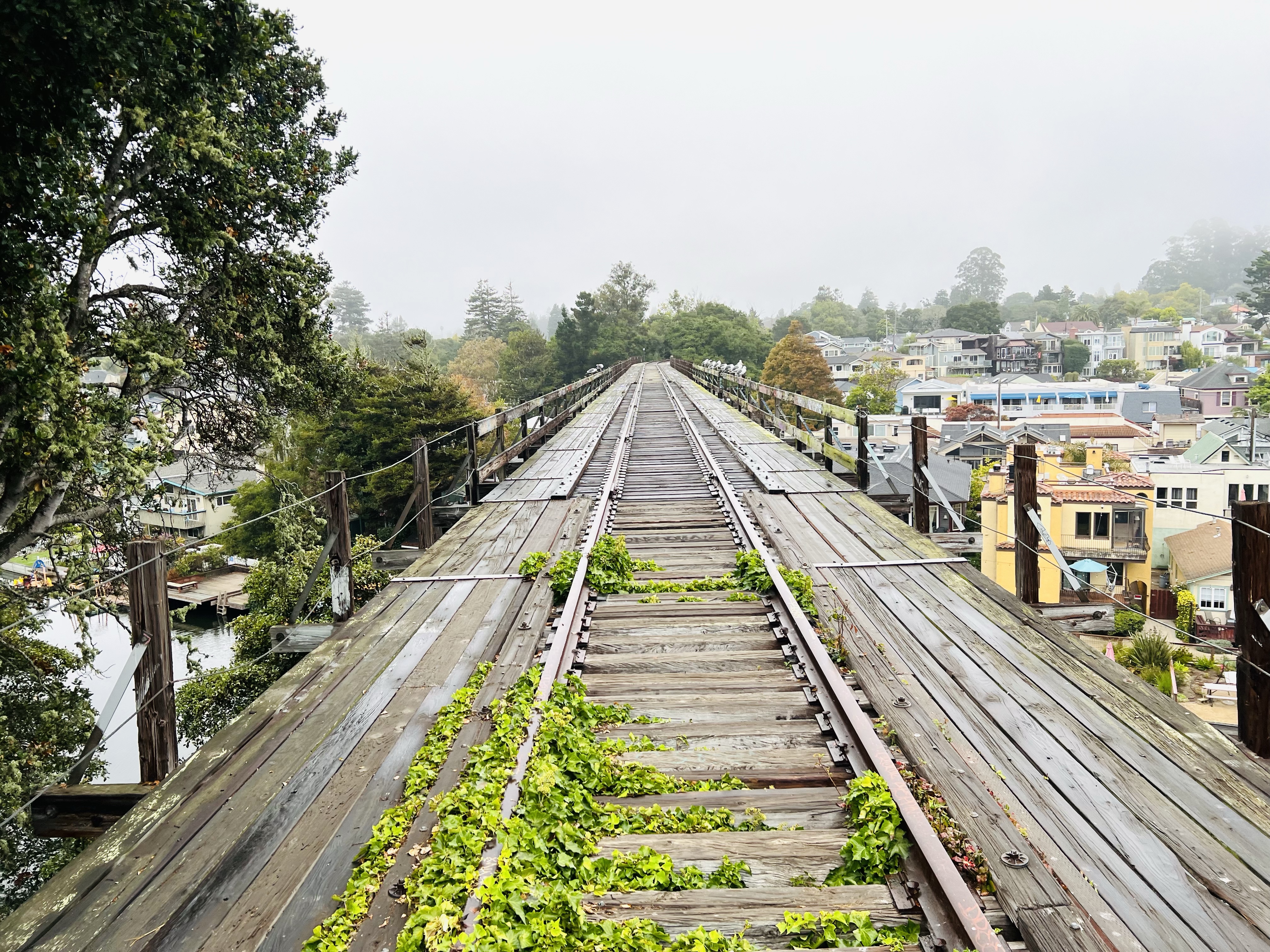
Looking down the trestle in direction of the Capitola Depot and beyond, the connection to the mainline at Watsonville Junction (15.7 miles down the line). The green growth around the tracks shows this track has not been active in over ten years.
Image

Muir Trestle, Martinez

I was meeting a friend in the East Bay city of Martinez and I had a little time to sketch before lunch.

Martinez is a hotbed of railroading with both the Union Pacific and BNSF passing through as well as some marquee passenger trains such as the Coast Starlight and the California Zephyr making stops at the Martinez AMTRAK station. And the Capitol Corridor commuter takes on passengers traveling north and south on shorter journeys.

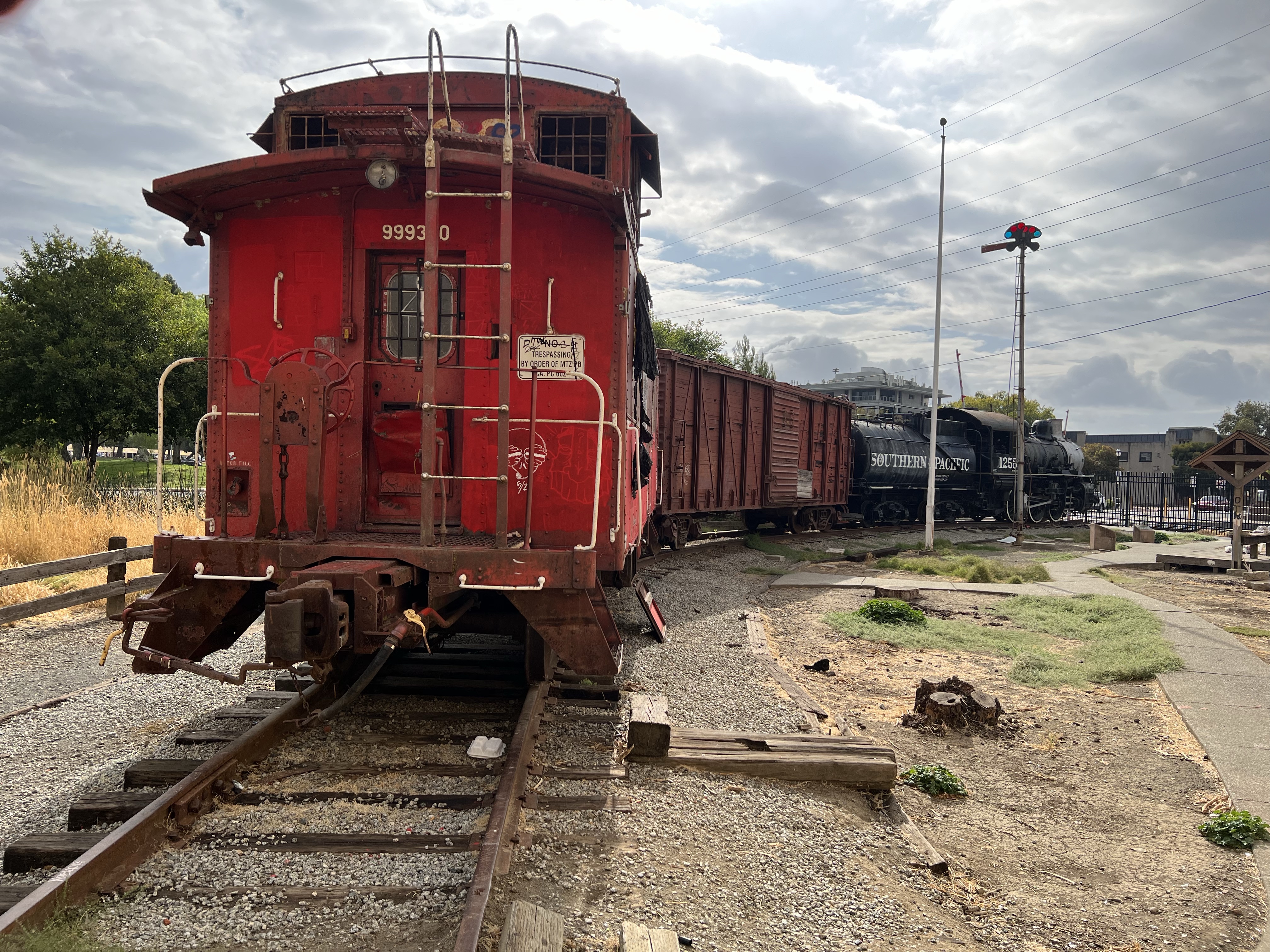
The California Zephyr Train No. 6, at the old Southern Pacific Depot in Martinez. This train is heading east to Chicago. To the right in the background is SP switcher 1258 on static display.

There would certainly be something to sketch here and I was going to start with a historic train trestle.

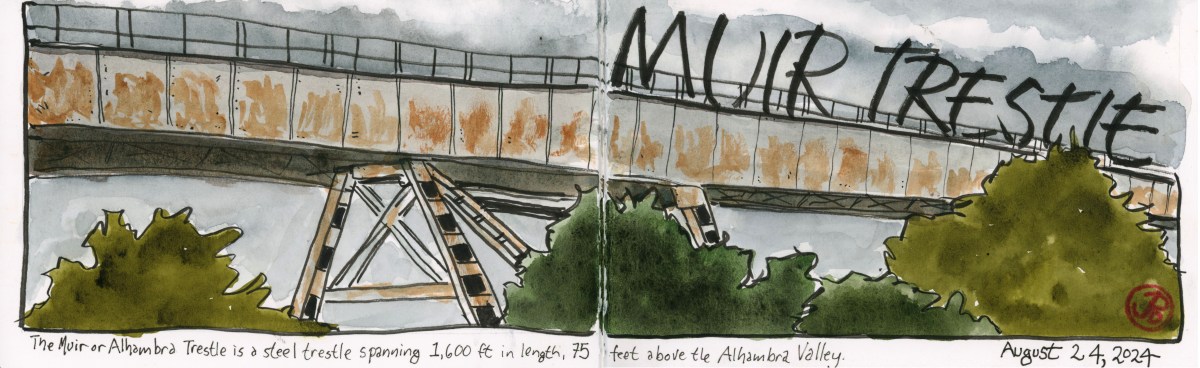
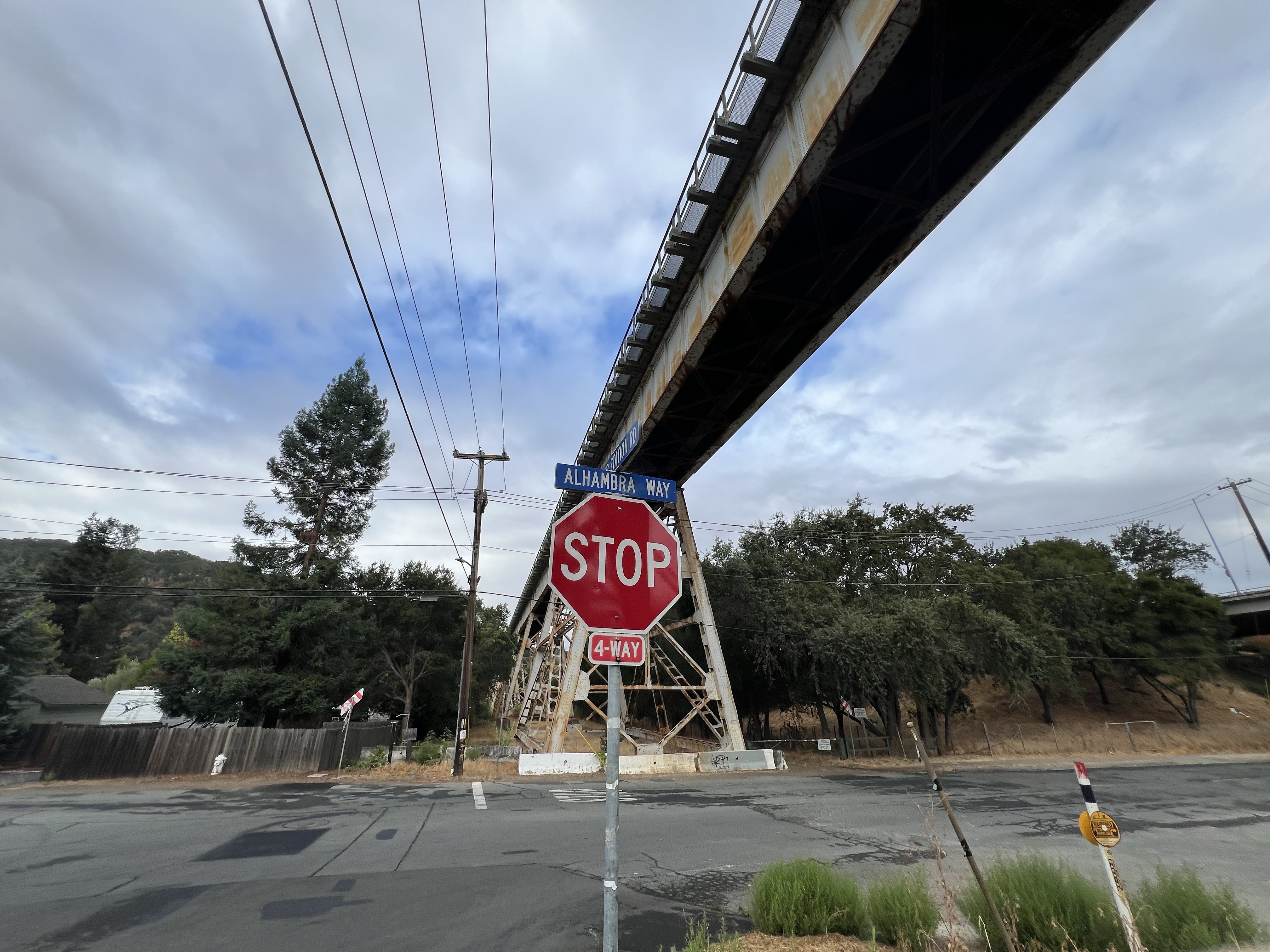
I parked at the Mount Walda Trailhead. Soaring above me was the 1,600 foot long steel Muir Trestle (aka the Alhambra Trestle). The single track trestle was so long that I could only see and sketch one section of it before it disappeared into the trees to the east. The trestle rises 75 feet above the roads, trees, and houses it crosses over.

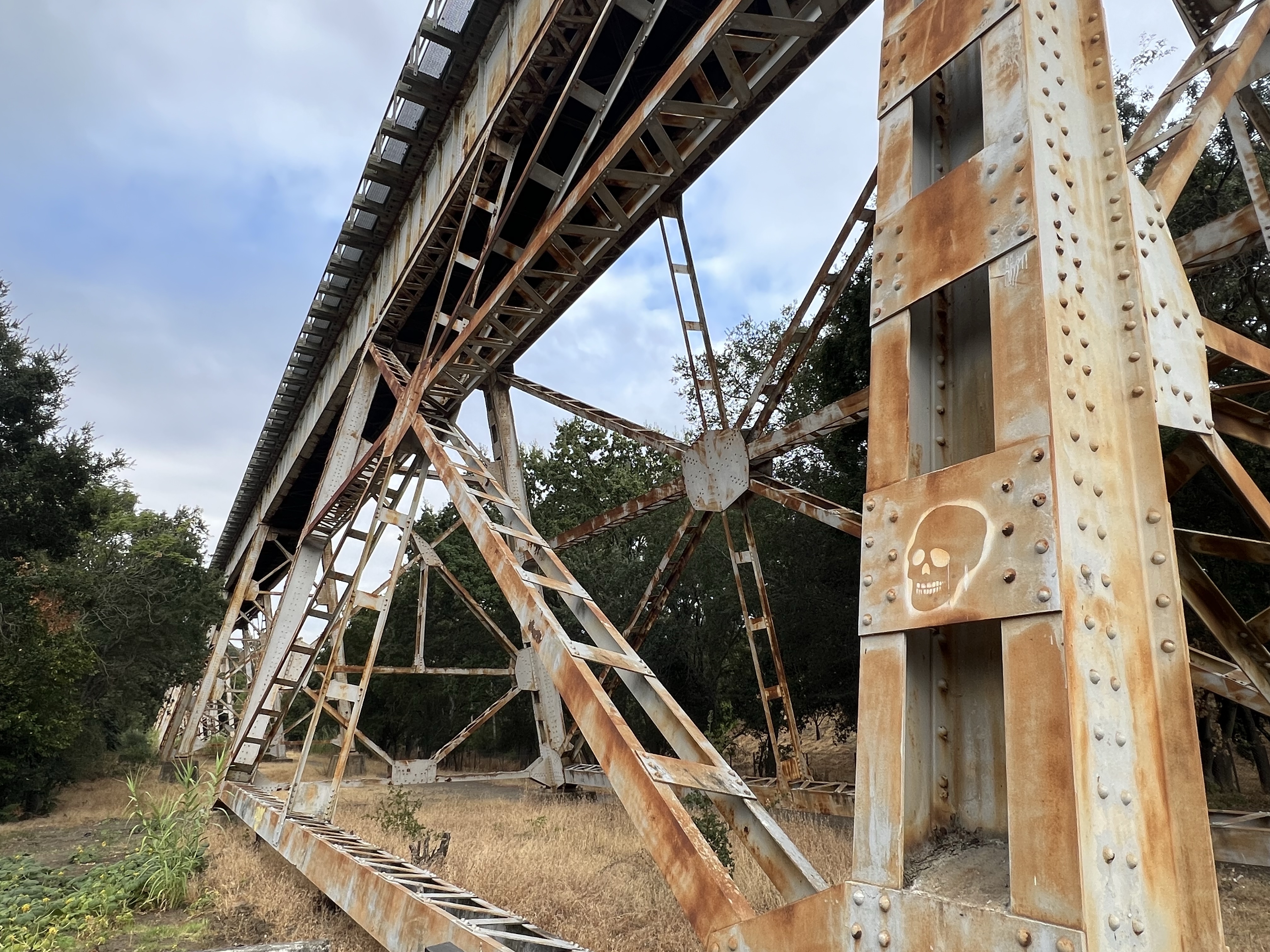
A detailed view of the steel supports of the Muir Trestle.

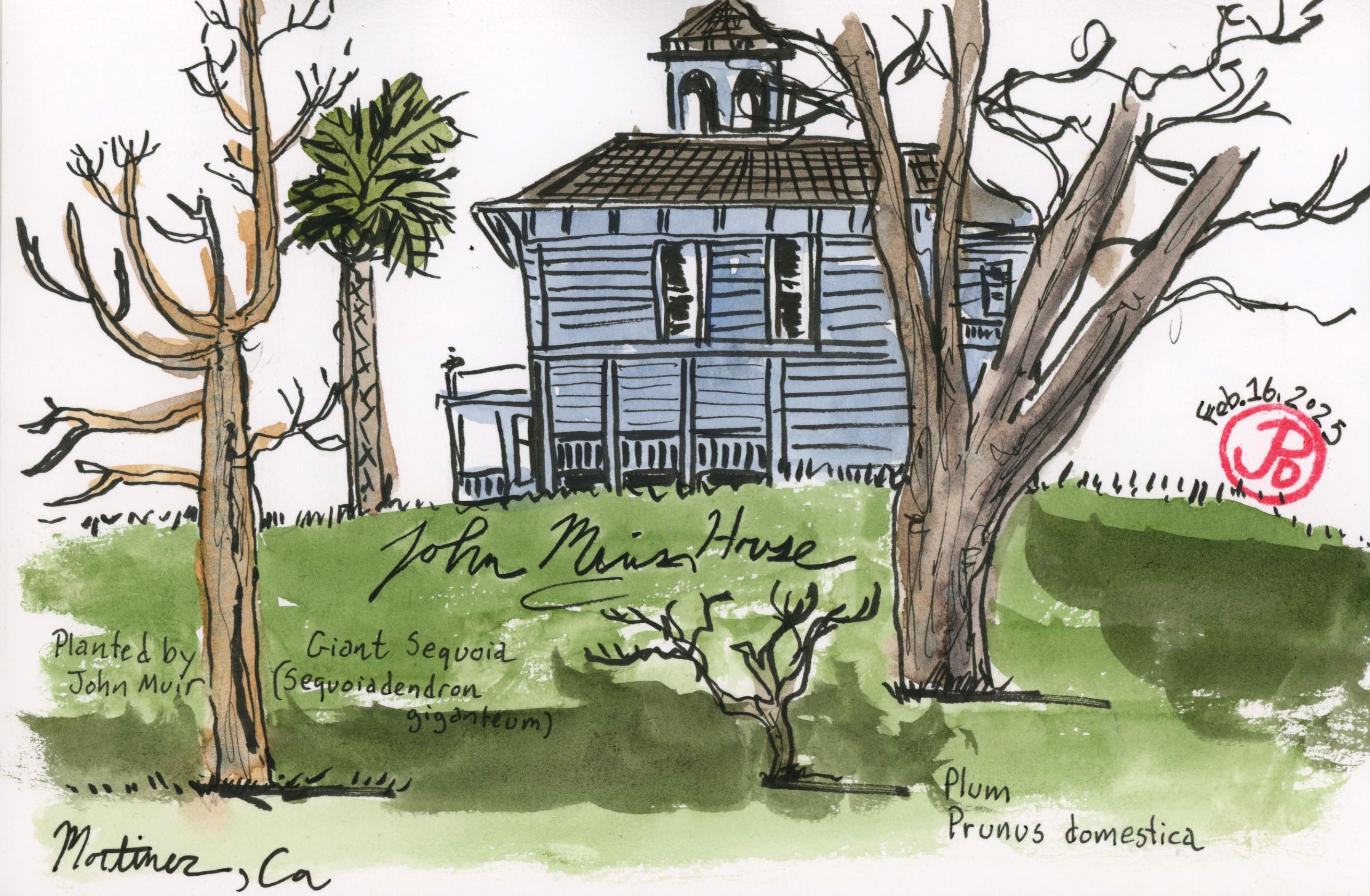
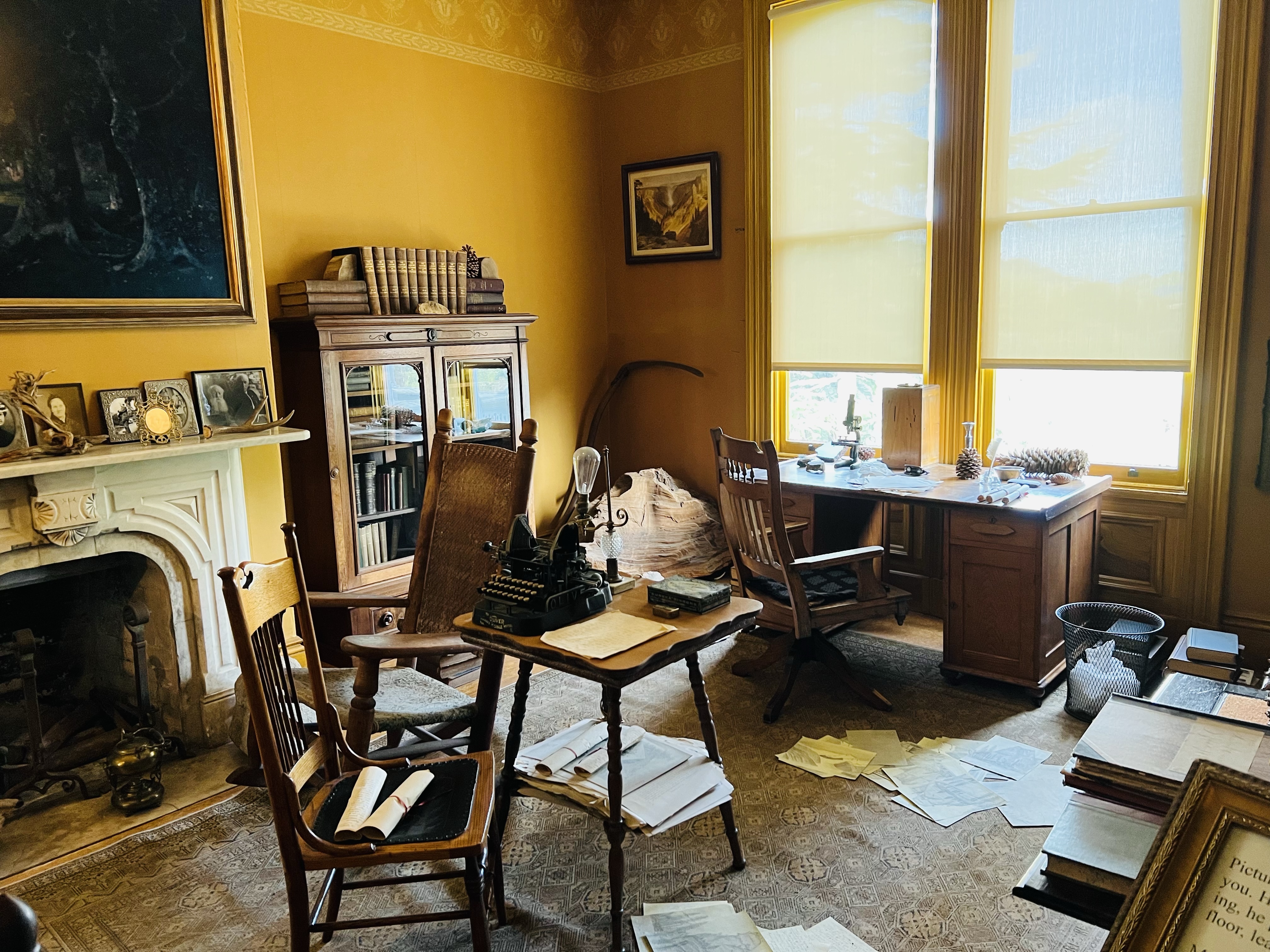
The trestle is within the John Muir National Historic Site. To the north is Muir’s Martinez home. Muir and his wife Wanda sold the land for the trestle for $10 and a lifetime rail pass to the San Francisco and San Joaquin Valley Railway. The original wooden trestle was built through a pear orchard and completed in 1897.

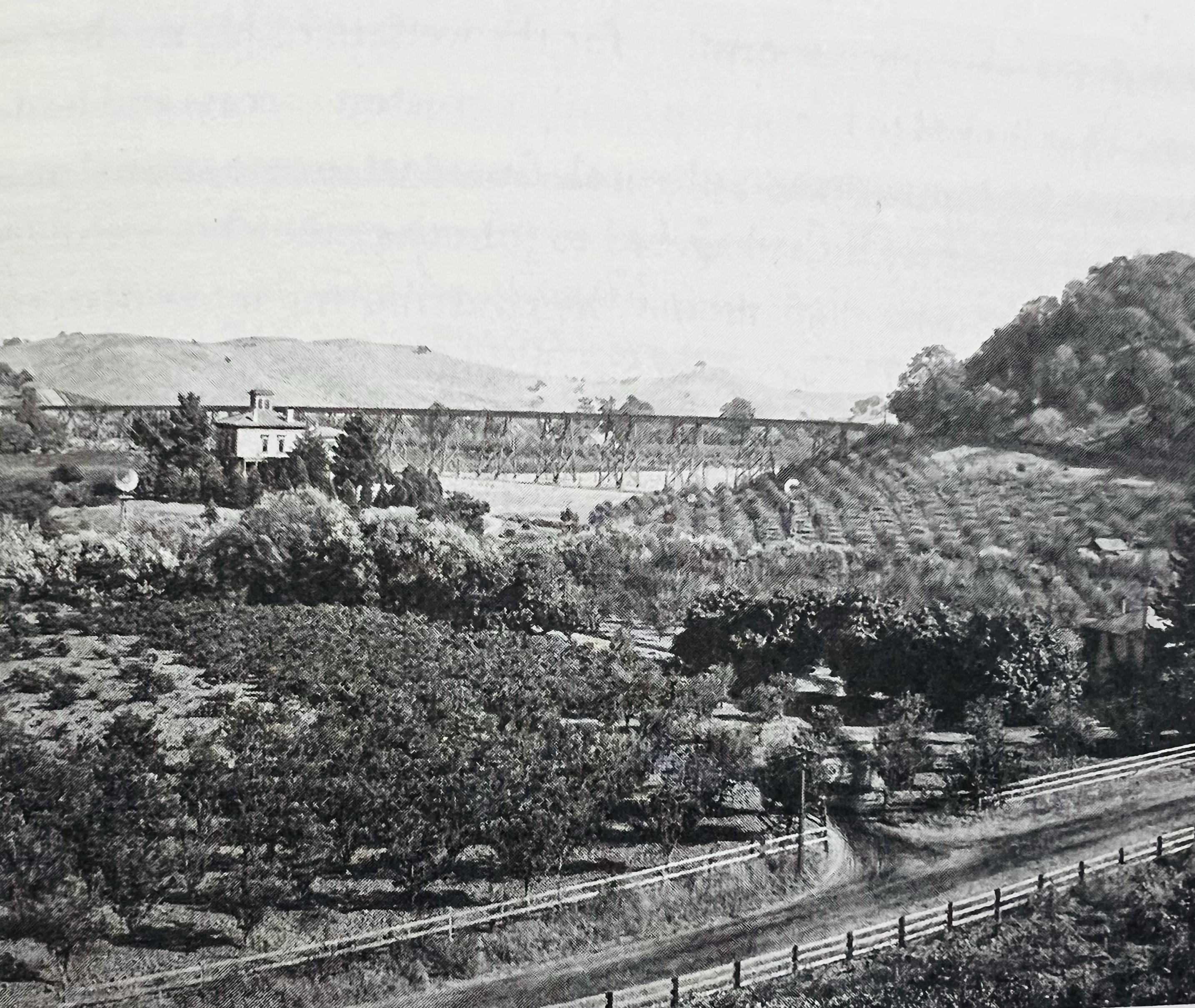
This is a historic photograph of the Stengel-Muir ranch in 1897. The Muir house is on the top left and the trestle is viable behind the house. At the time of the photograph, the trestle was constructed of wood.

At the eastern end of the trestle there was a passenger and freight station named Muir Station. The station is now long gone but is immortalized in a street that parallels the rails named Muir Station Road.

From this station Muir could ship his produce to Oakland or to the port in Martinez.

One of Muir’s neighbors in the Alhambra Valley was John Swett, Muir close friend. Swett was the State Superintendent of Public Education and is known as the “Father of California Public School”.

In 1898, Santa Fe purchased the line and it became their Valley Division. This division still exists as BNSF’s route from Richmond to Fresno.
The Muir Trestle from the intersection of Alhambra Way and Muir Station Road.

I took up a sketching position near the trailhead and started my drawing. The trestle above me is on the Stockton subdivision and is used by BNSF intermodal freight. There was no train crossing during my sketch.

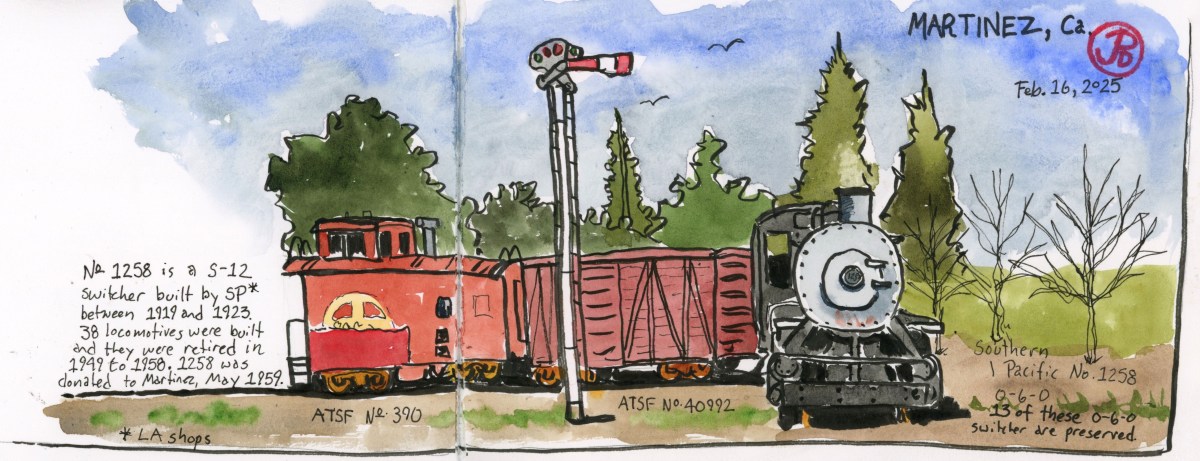
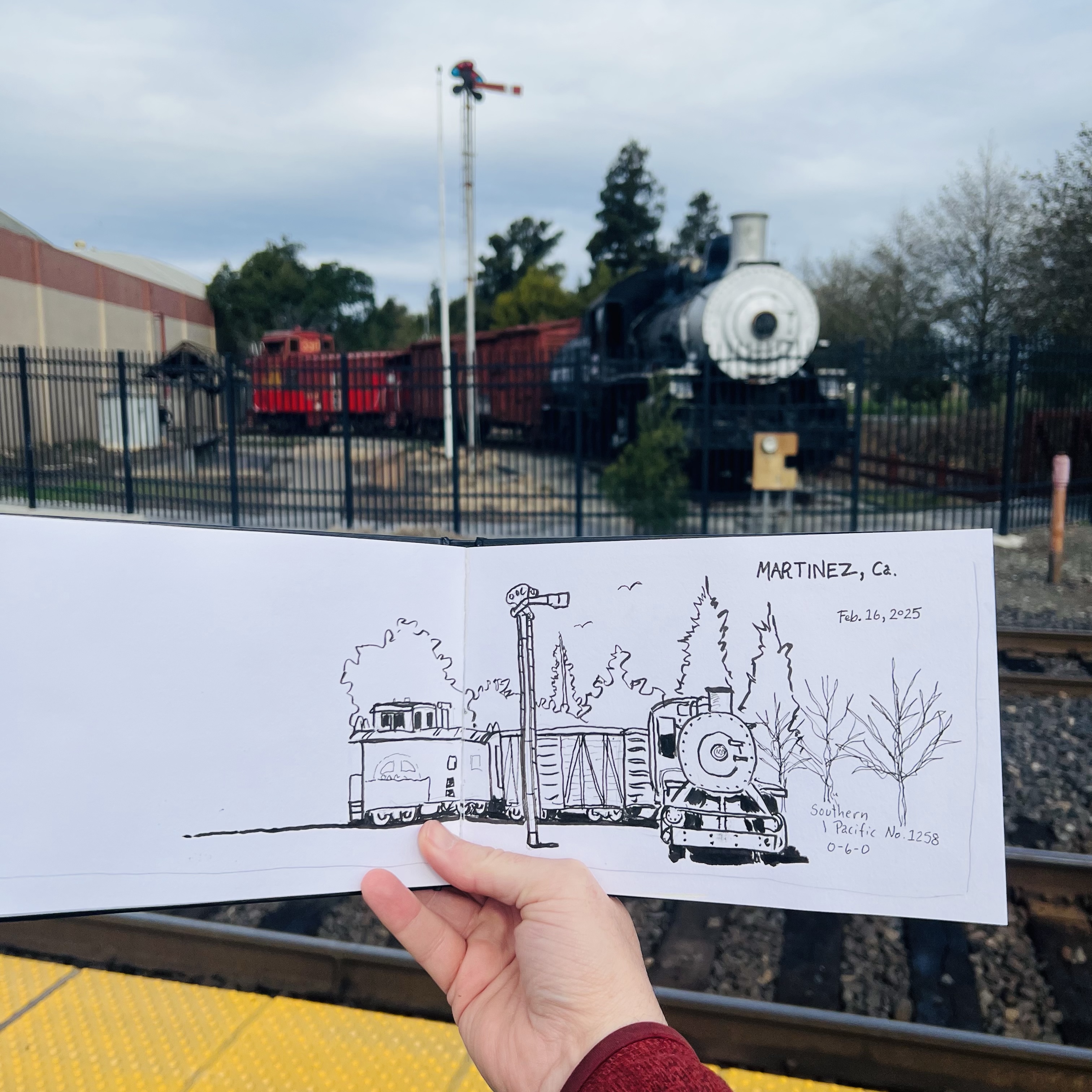
SP 0-6-0 switcher No. 1258 and its consist of a wooden box card and Santa Fe caboose 390 on display across the tracks from the AMTRAK station. The locomotive is in sad shape, missing some hardware like her bell and whistle.
Image

Ghost of the GS

At the Western Pacific Railroad Museum, there are many pieces of railroad equipment: locomotives, cabooses, rolling stock, and maintenance equipment.

It has been said that this railroad museum has the greatest amount of equipment from a single railroad family: Western Pacific (WP).

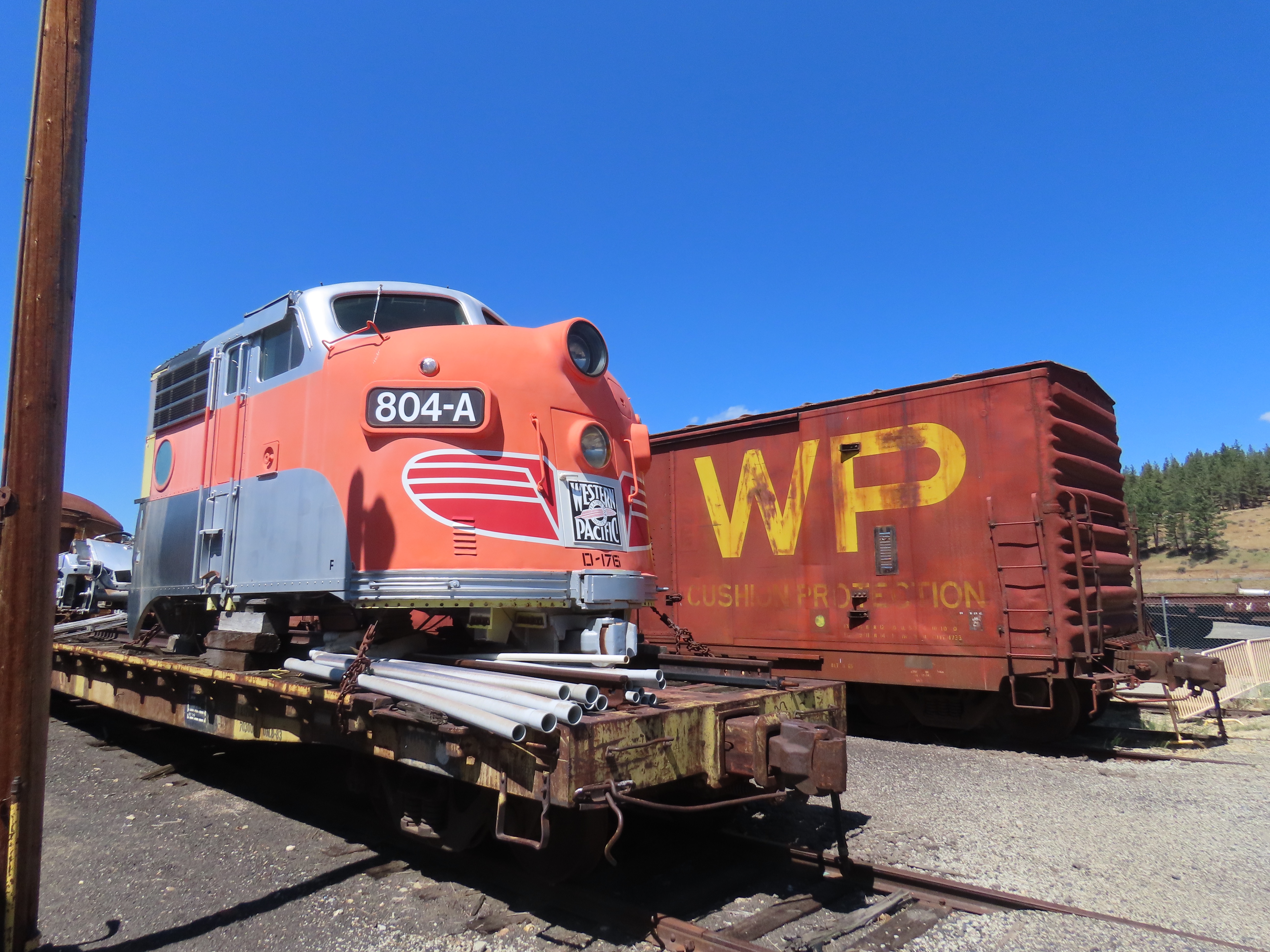
There is lots to explore at the WPRM and you are free to wander around the yard and look at the diesels and rolling stock. I was in search of an FP7 mock up of WP No. 804-A that was used to pull the California Zephyr. The mockup was just of the cab section and it was on display at Disney’s California Adventure park.

While looking for the cab I came upon an old tender that had the faded WP logo on its side. It was a six axle tender so it must have been attached to a substantially sized steam locomotive.

The mysterious tender.

I thought perhaps that this tender once belonged to the largest locomotive that WP owned and operated the 2-8-8-2 mallet or perhaps a 4-6-6-4 Challenger. The railroad owned 27 mallets, some of which operated up and down the Feather River Route. Sadly all 27 mallets were scrapped as the age of diesels took hold. Was this tender a last relic of the mighty mallets of the WP?

Turns out the answer was much more exciting!

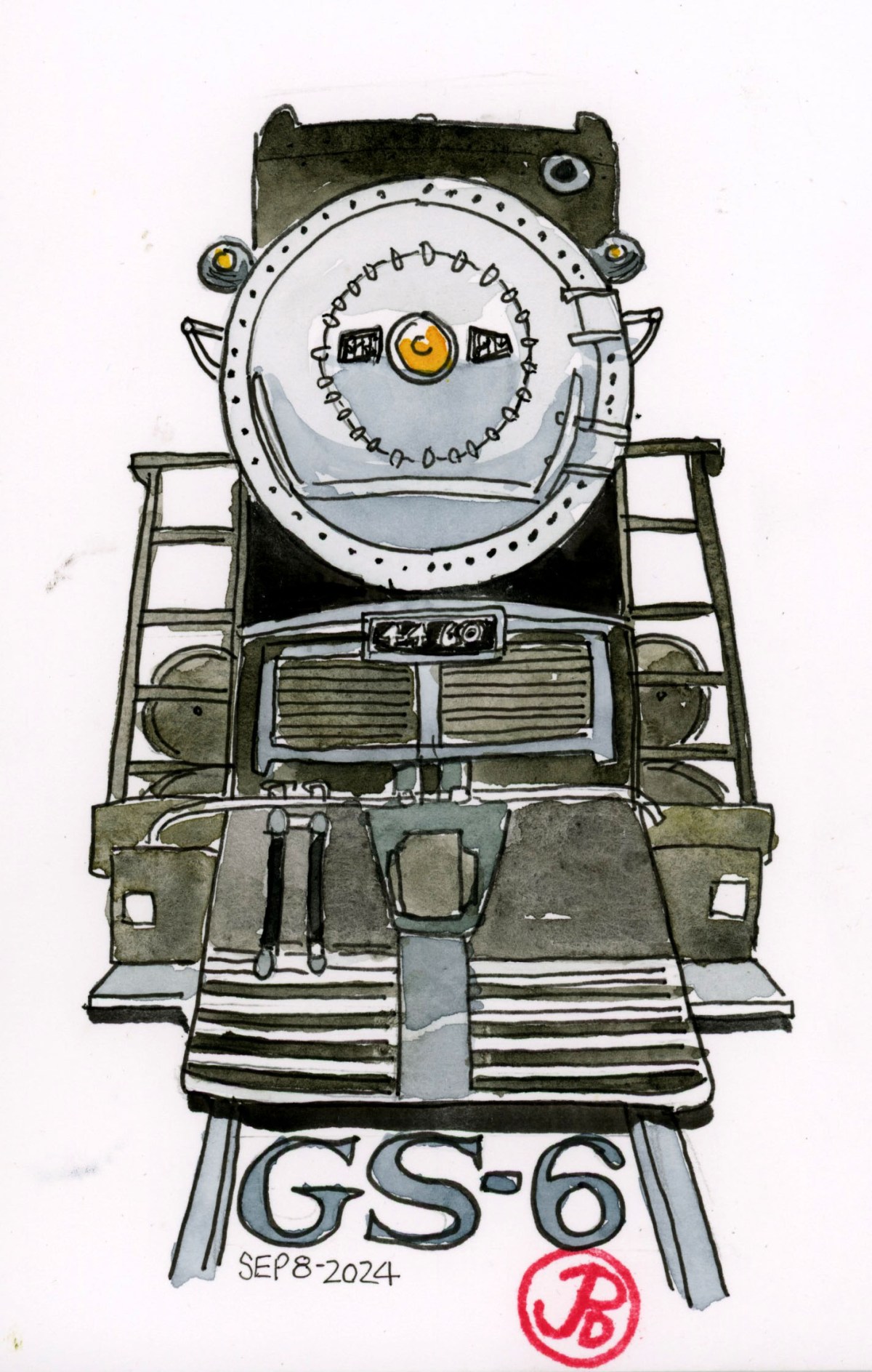
I found out from one of the volunteers that the tender belonged to a GS-6, No. 484. These Northern type 4-8-4s were some of the best passenger locomotives ever made for the Southern Pacific.

The GS originally stood for Golden State and the streamlined locomotives were on point of one of the most beautiful passenger trains, the Coast Daylight. The train took passengers from San Francisco to Los Angeles in under 10 hours. During the war when the GS-6s were produced in 1943, the GS meant “General Service” because the locomotives were designed for freight as well as passenger service.

During the war railroads needed approval from the War Production Board to order new locomotives. SP and WP both petitioned for a new order of passenger locomotives. They were turned down because they didn’t think streamlined passenger locomotives were necessary for the war effort.

The zenith of the GS class (Golden State or General Service) was the GS-4.

28 GS-4s were built by the Lima Locomotive Works in 1941-42. 10 GS-6s were built in 1943 under war time restrictions, meaning the locomotives had to also be used for freight service and lack the streamlining of the GS-4s. What I was unaware of is that Western Pacific had six GS-6s on its roster (No. 481-486).

During the end of the age of steam (the 1950-60s) many railroads scrapped their steam locomotive fleet. The idea of steam preservation did not take hold until the 1960s and 70s.

One GS locomotive that was preserved and put on static display in Oakes Park in Portland, Oregon was Southern Pacific GS-4 No. 4449. The locomotive was restored to working order and pulled the Freedom Train across the United States in the late 1970s.

A 2016 field sketch of the GS-4 No. 4449 at the Oregon Rail Heritage Center in Portland, Oregon.
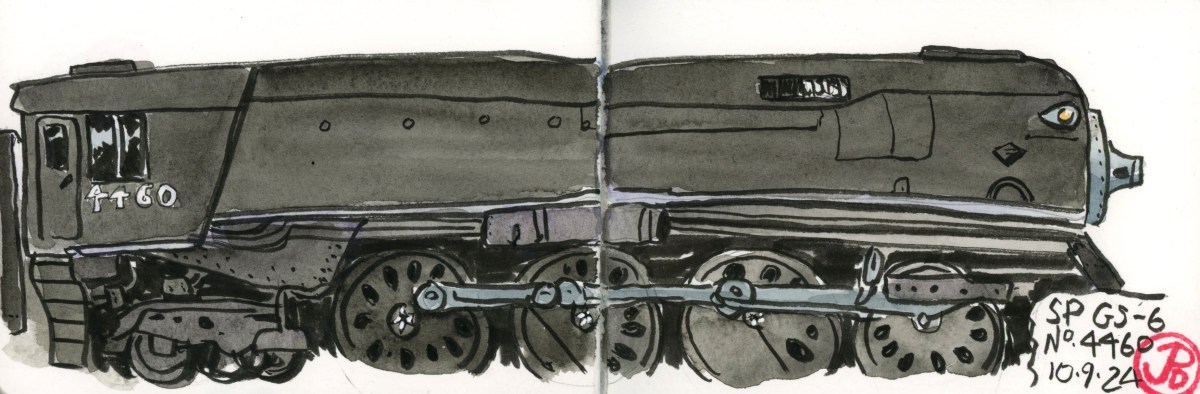
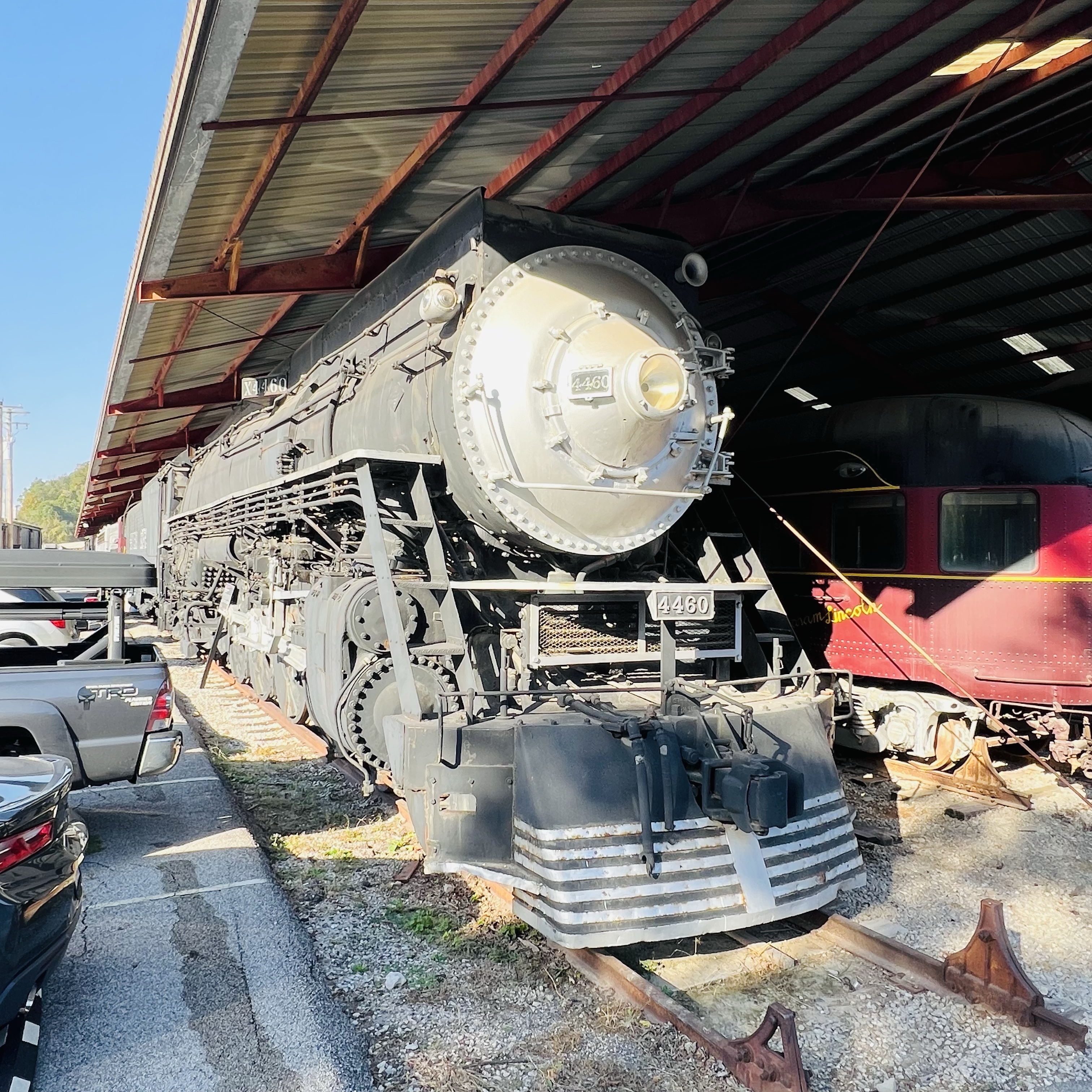
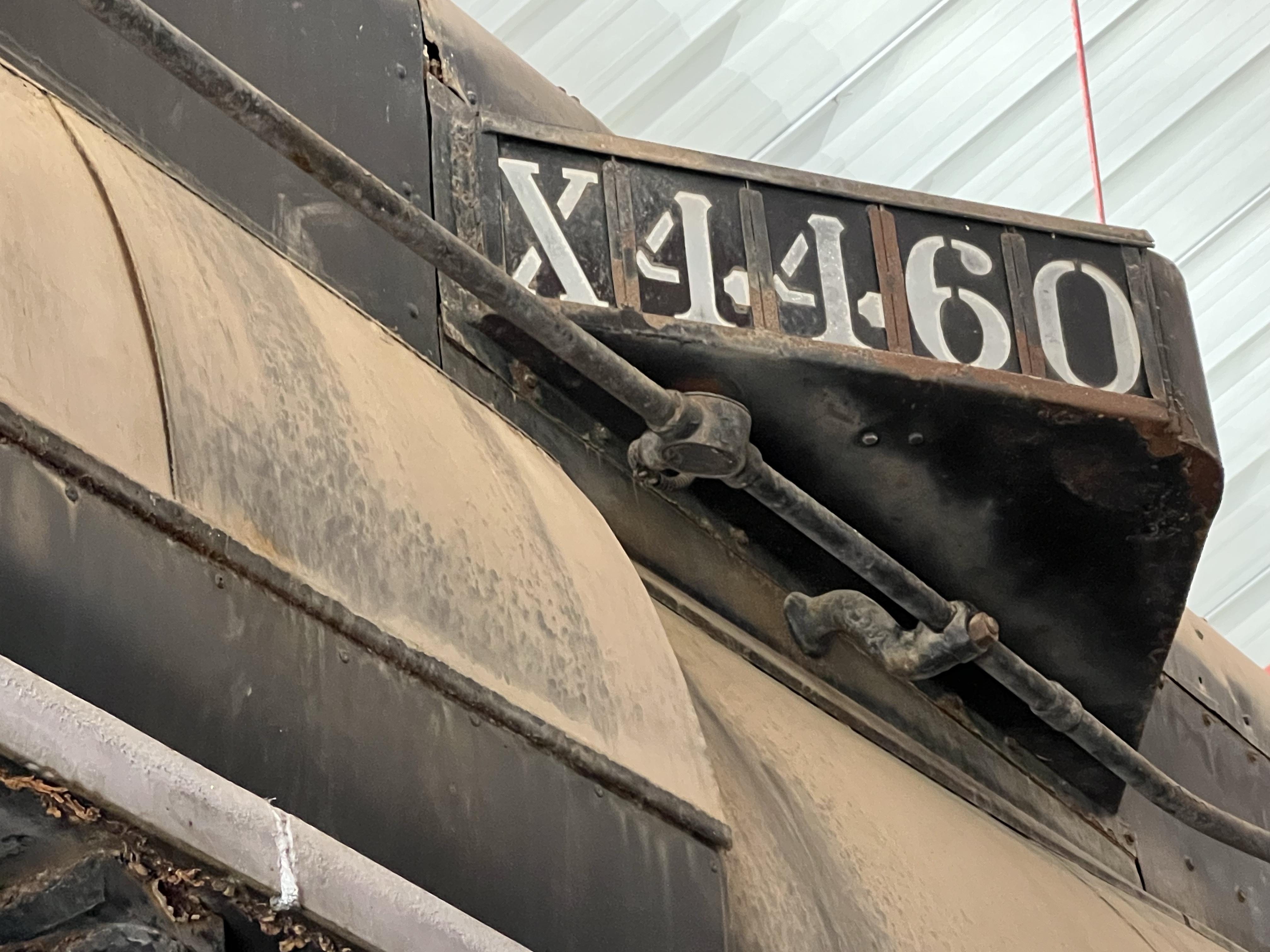
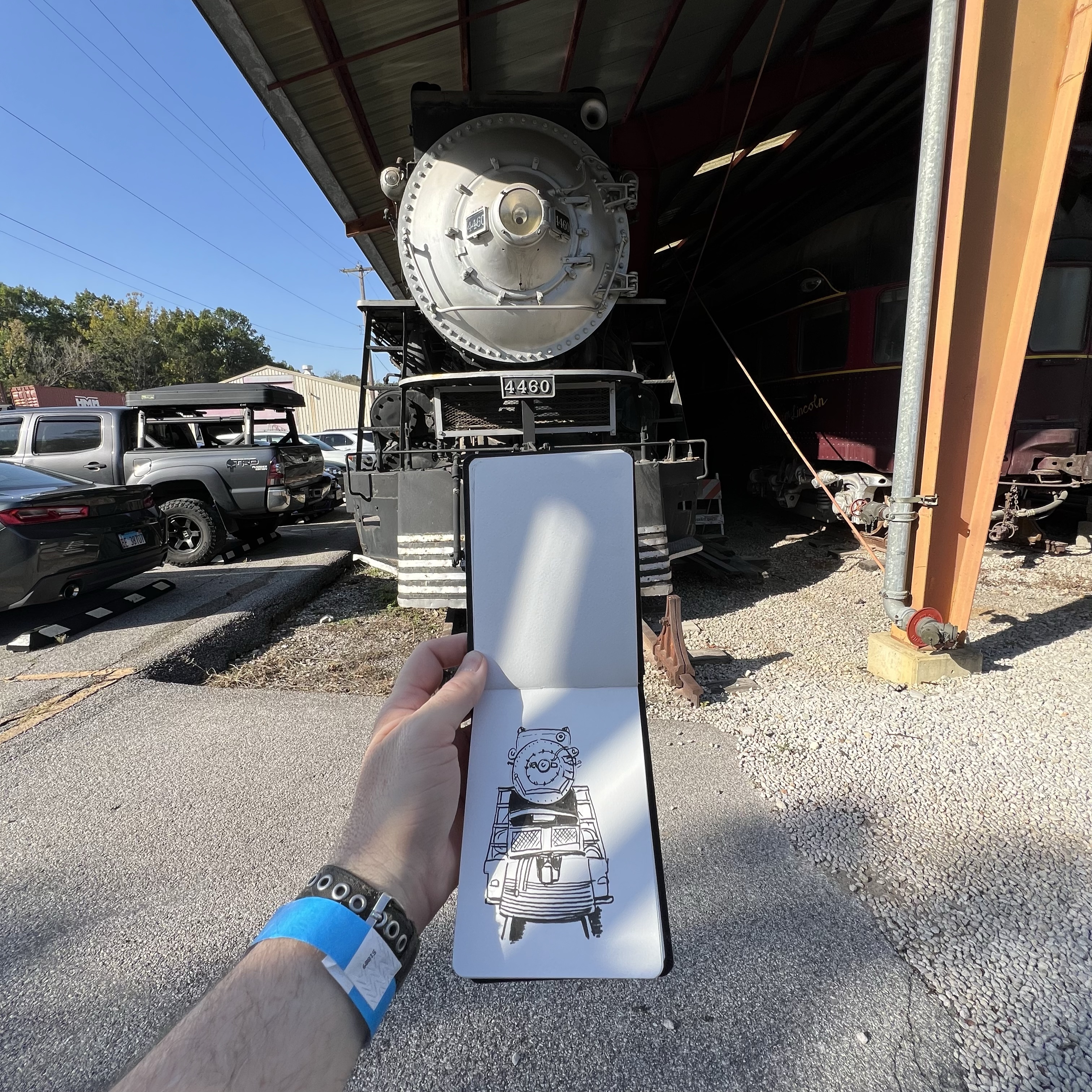
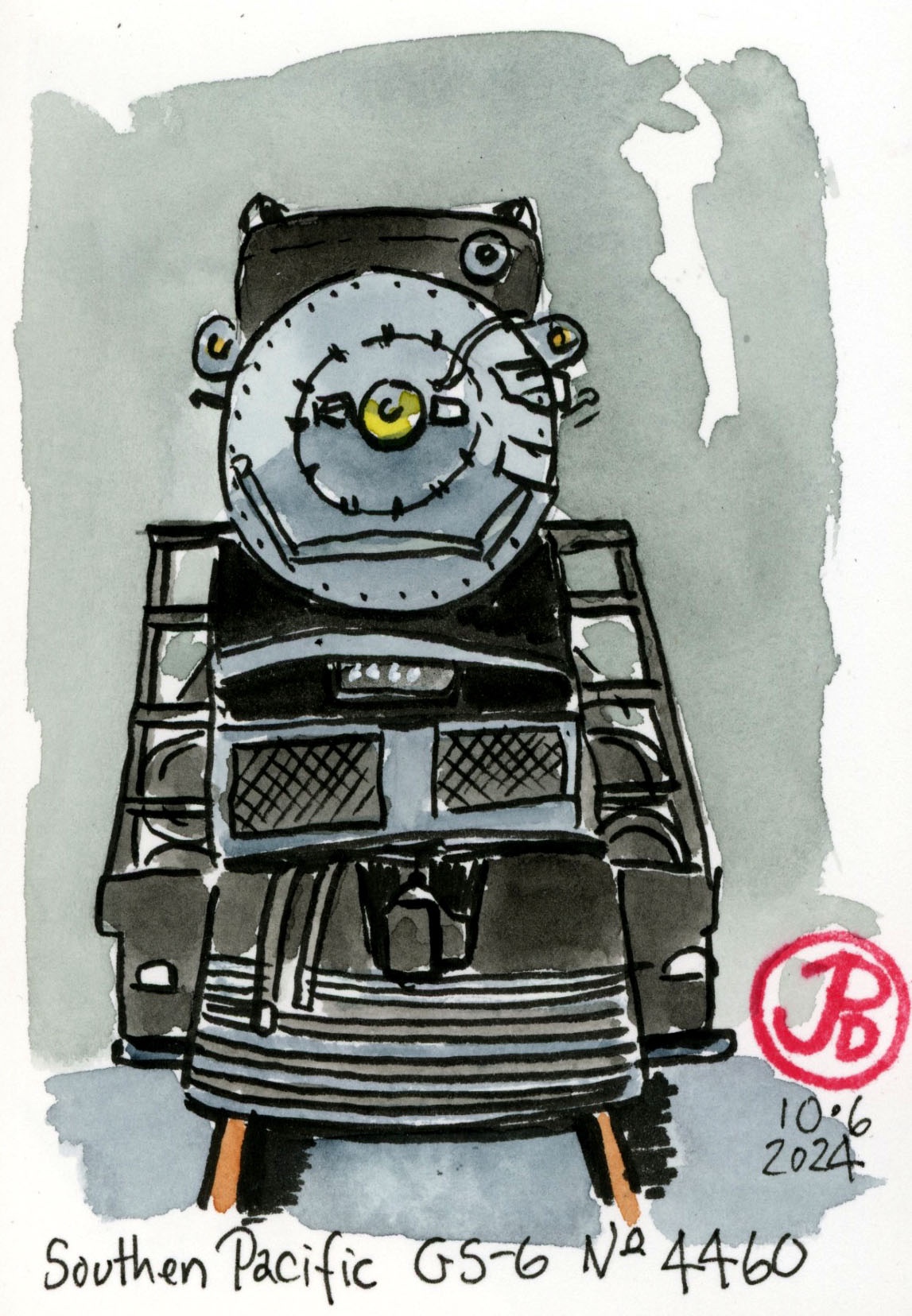
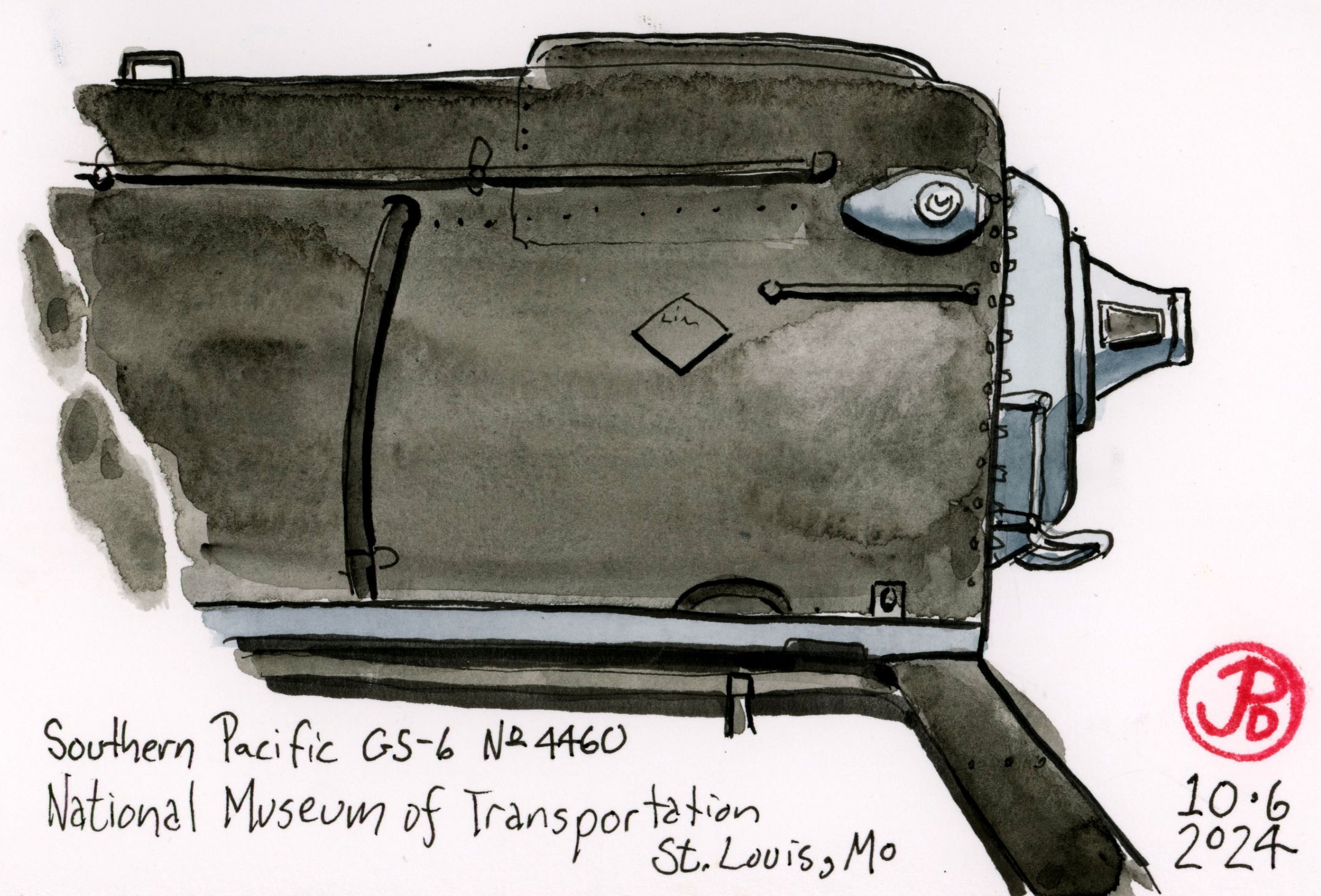
There is only one other GS class locomotive that is still is in existence. This is the GS-6 No. 4460.

4460 was the first GS-6 manufactured (built in July of 1943) and it is the last steam locomotive to operate on the Southern Pacific when it made an excursion run from Sacramento to Spark, Nevada in October 1958.

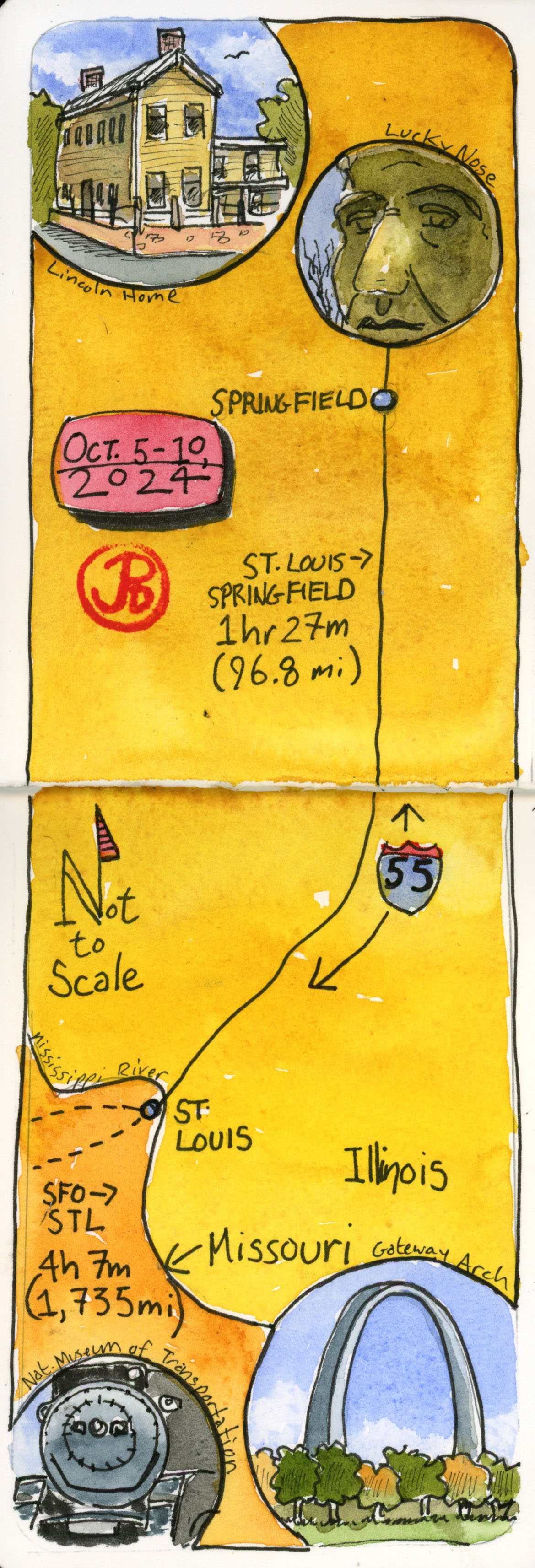
4460 was donated to the National Transportation Museum in St. Louis, Missouri in 1959.

Until my visit to Portola, I assumed there were only two relics of the Southern Pacific’s mighty GS class and finding the tender in the yard was like finding a piece of railroad history gold!

Image

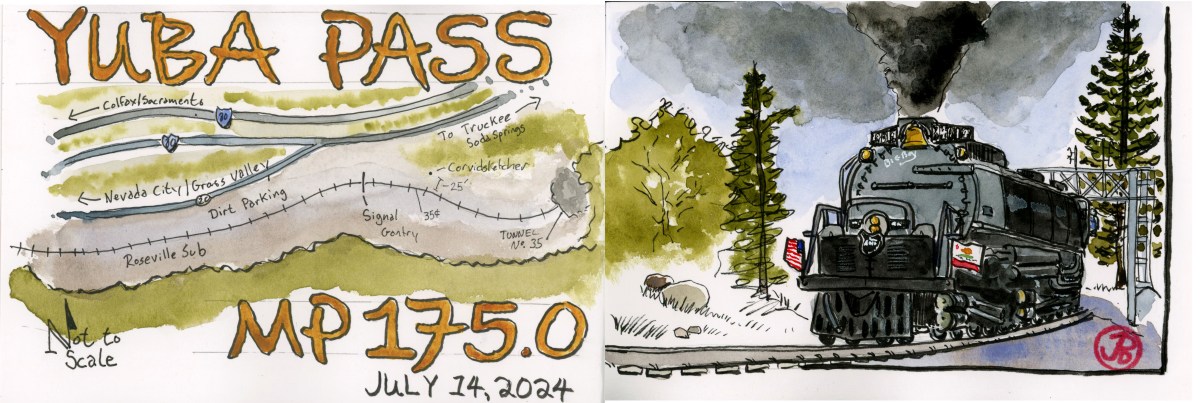
4014 on the Mountain Sub

One of the legendary railroad routes is the section of the Transcontinental Railroad that climbs the western flank of the Sierra Nevada Mountains up to Donner Pass. The construction of the railroad was an engineering marvel and much of the original route is still in use.

Southern Pacific used their AC articulated cab-forwards to tackle the grades and heavy freight over the pass and now the world’s largest articulated locomotive would be climbing up to Donner Pass for the very first time. And I planned to be there.

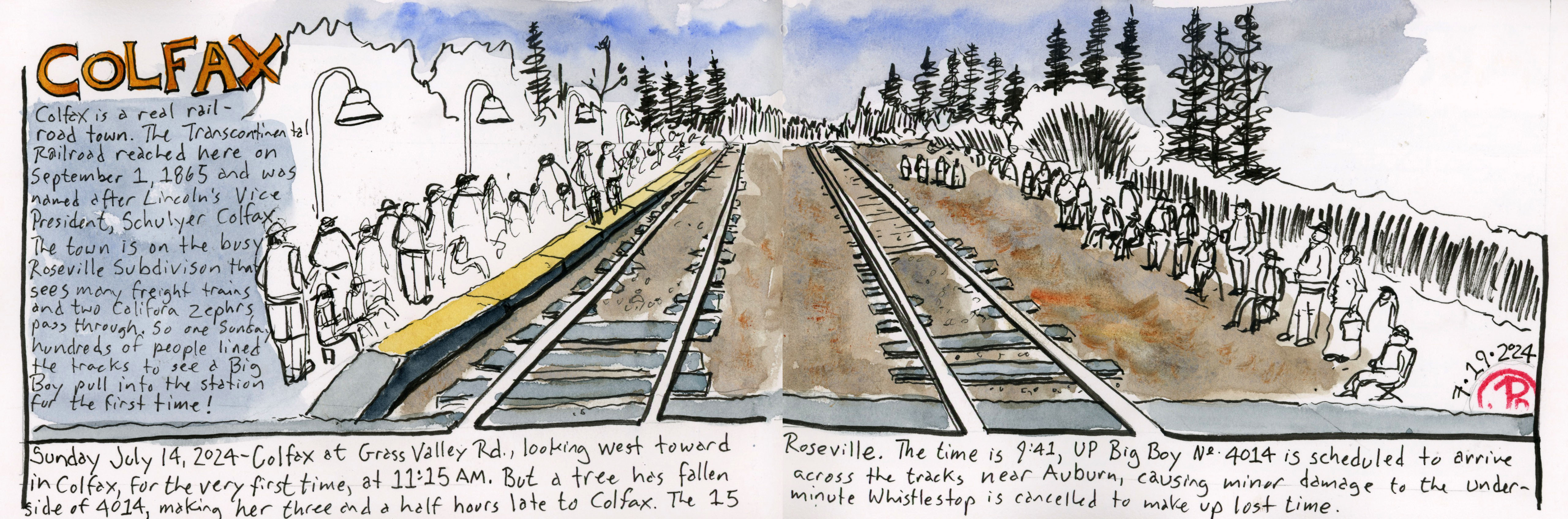
There was a planned 30 minute whistle stop at the historic railroad town of Colfax at 11:15.

I was in Colfax an hour and a half before arrival and more and more people were streaming into town.
4014 left Roseville on time but was halted when the train hit a tree that had fallen near Auburn. The UP tracking app noted that 4014 was “currently stopped near Auburn”. At first I thought it was just a maintenance stop but then word spread that Big Boy had hit a tree and there was some damage to the underside. This was not good. Especially for the hundreds of people waiting in the heat for 4014 at Colfax.
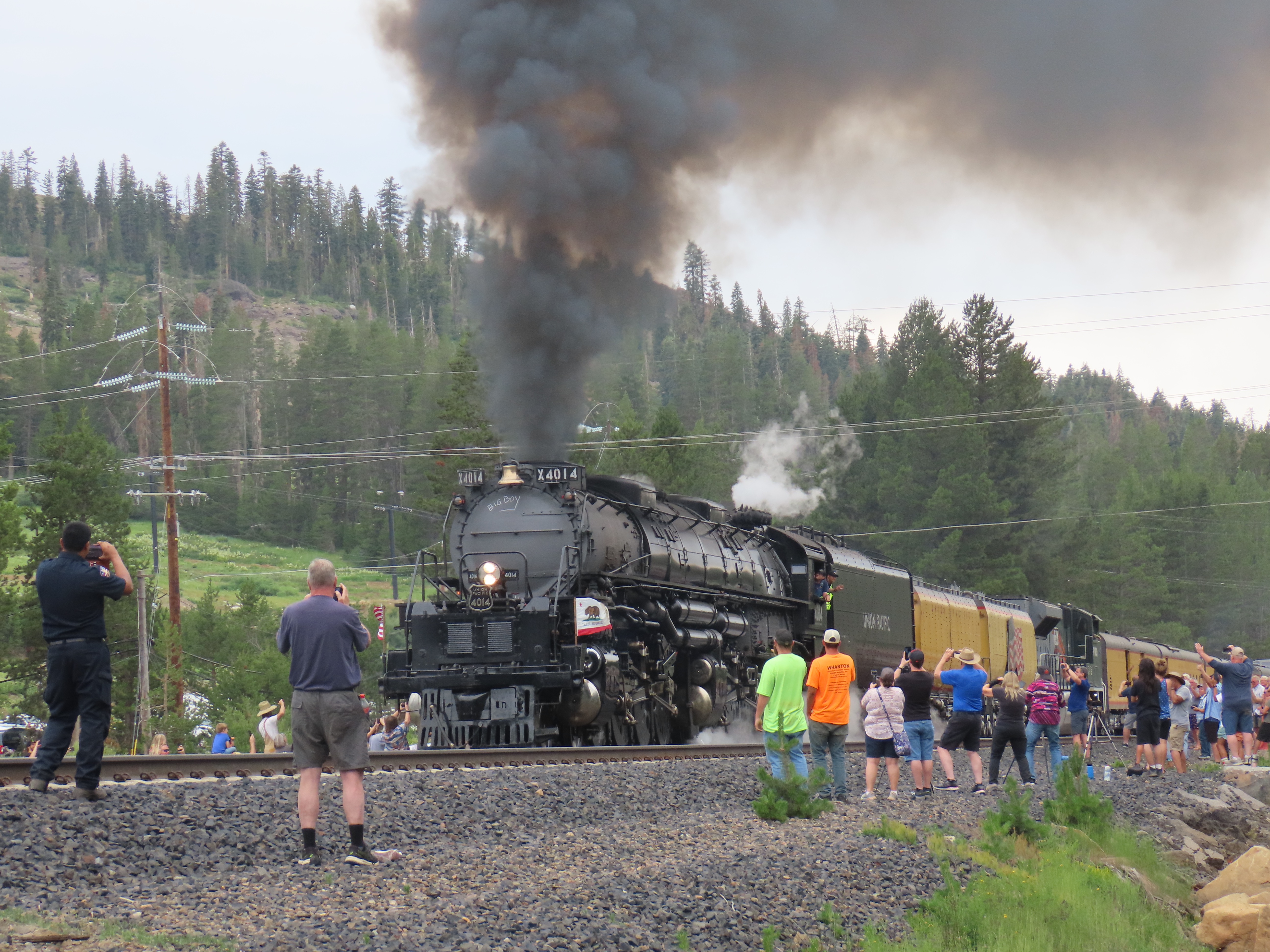
Word spread that the locomotive might have to be towed back to Roseville. The train was now an hour late. I decided to head back to Penn Valley, to air conditioning and the second half of the European Cup Final. I would continue to monitor the UP tracking site. But I had to beat the heat in Colfax.

Just after the game ended (Spain was European champions for the fourth time), the tracker read, “4014 currently moving near Auburn”.

My plan was to drive on Highway 20 to where it merged with Highway 80. This was Yuba Pass and I wanted to see Big Boy in this historic location.

I arrived and there were plenty of other rail fans lining the tracks at Yuba Pass. This was a good sign because 4014 was still climbing the grade and had not reached my position.

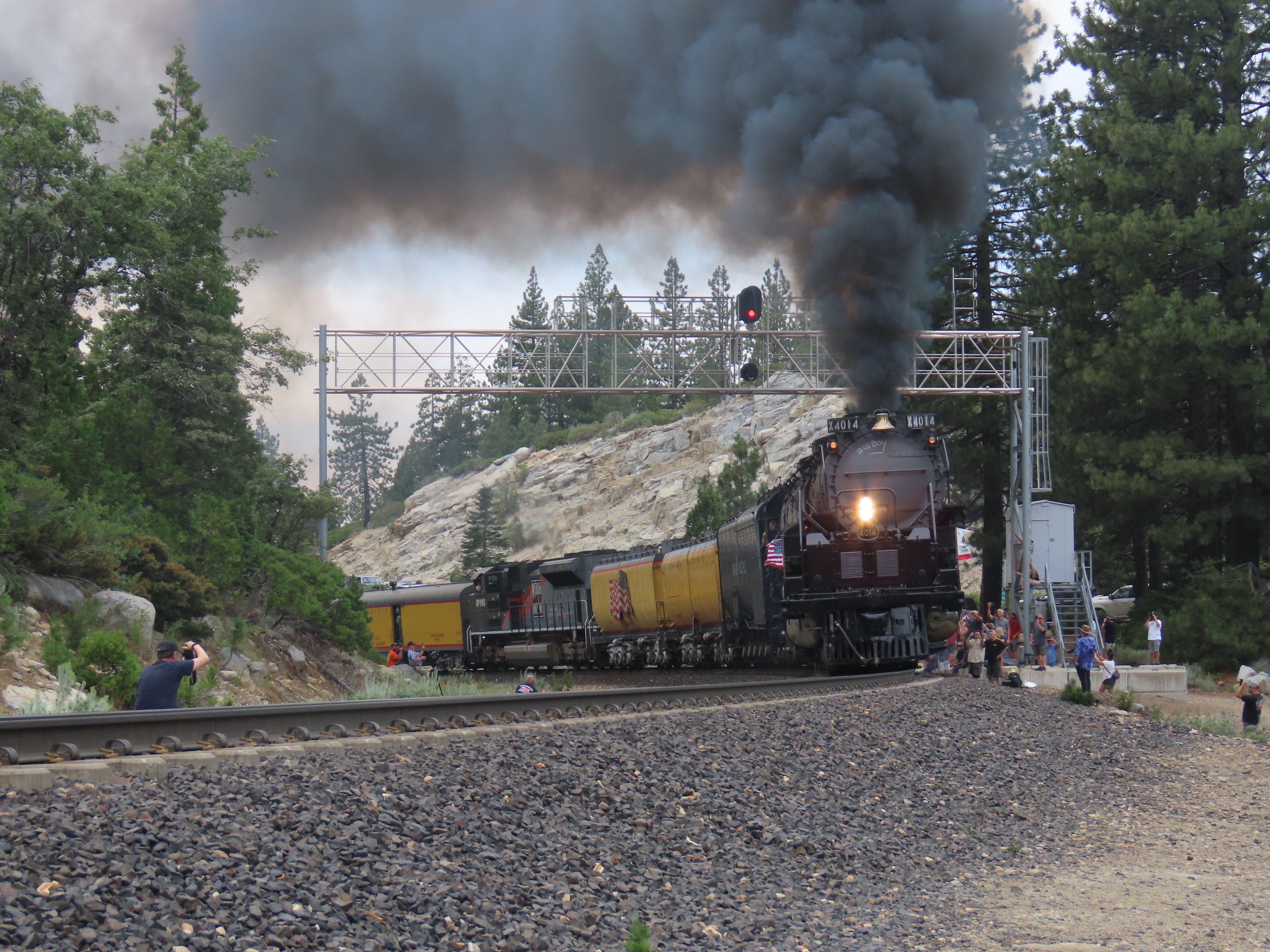
After about a 45 minute wait a plume of steam exhaust appeared down line and the mighty roar of the Big Boy filled the cut.

Then the iconic articulated giant appeared working up grade towards my position near the signal gantry. 4014 was putting on a show that enveloped all the senses.

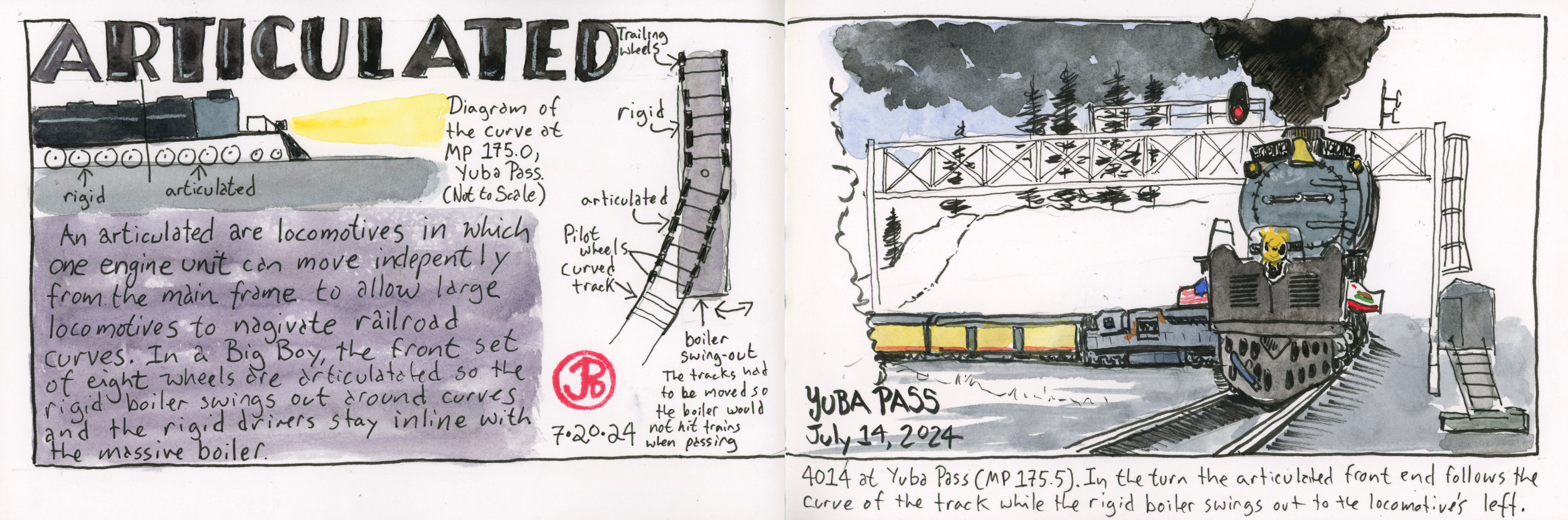
As 4014 rounded the curve, the articulated properties of the design were in full display. While the leading truck and front drivers rounded the curvature of the track the boiler remained rigid making it appear that the drivers and boiler were separating. Afterwards I did a spread to understand the articulation design (below).

After the train disappeared into the tunnel, I headed back to my car and was soon driving east on Highway 80. To my right, I could see the tell-tale exhaust up the hill on the railroad grade. Soon I was pacing with 4014 and I then pulled ahead and planned to head to Soda Springs to see the steam mammoth as she neared Donner Summit.

I made it to Soda Springs off Historic Highway 40 and the biggest challenge was finding a place to park as there were many people waiting trackside for the arrival of the Big Boy.

I found a parking spot and headed down to the grade crossing. There was a festive atmosphere around the tacks and to the south many Cal Fire trucks and personal (including Smokey) looked and listened down track for the first appearance of the 4-8-8-4.

4014 at Soda Springs.

Image

CalTrain Electric

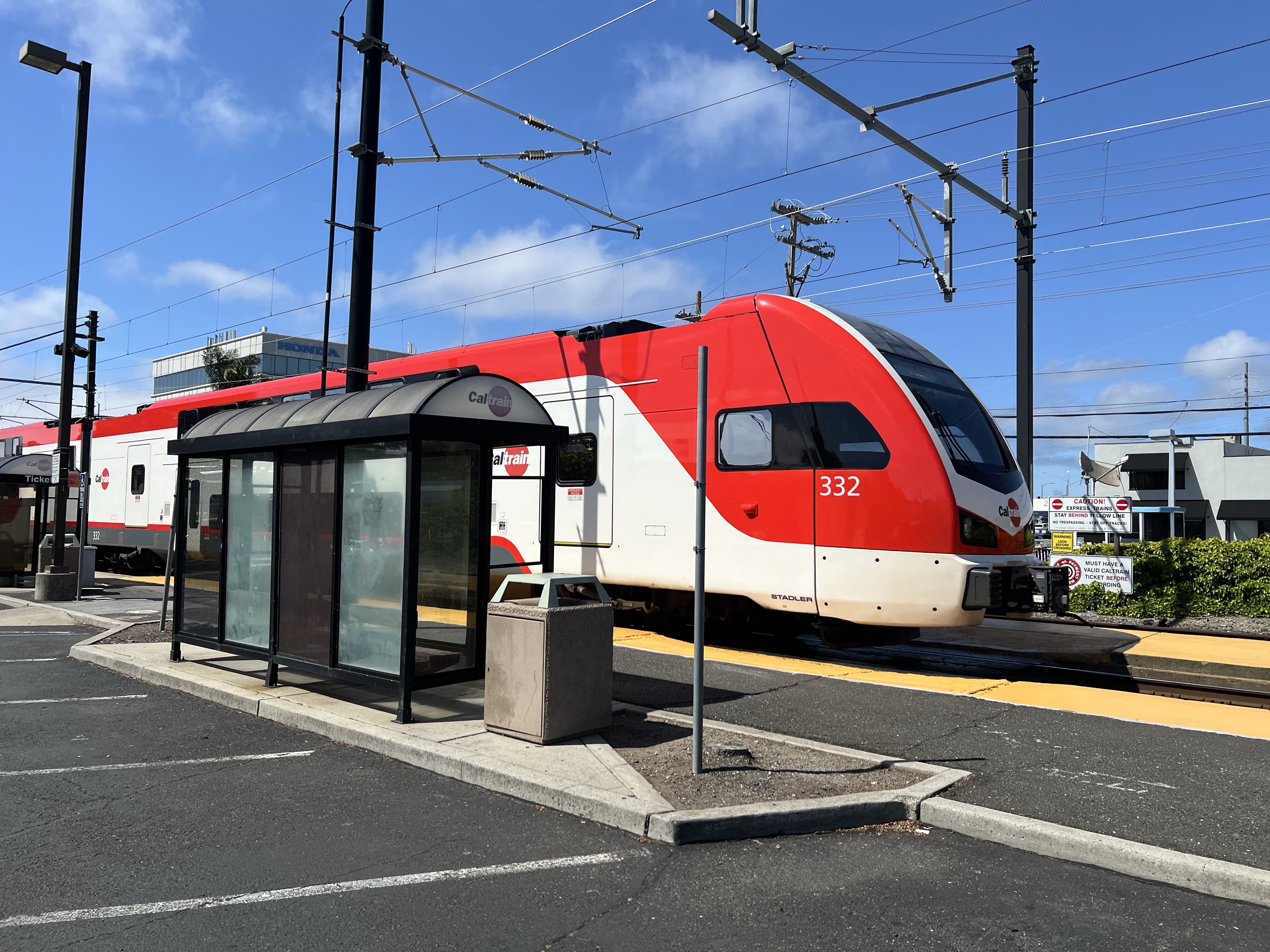
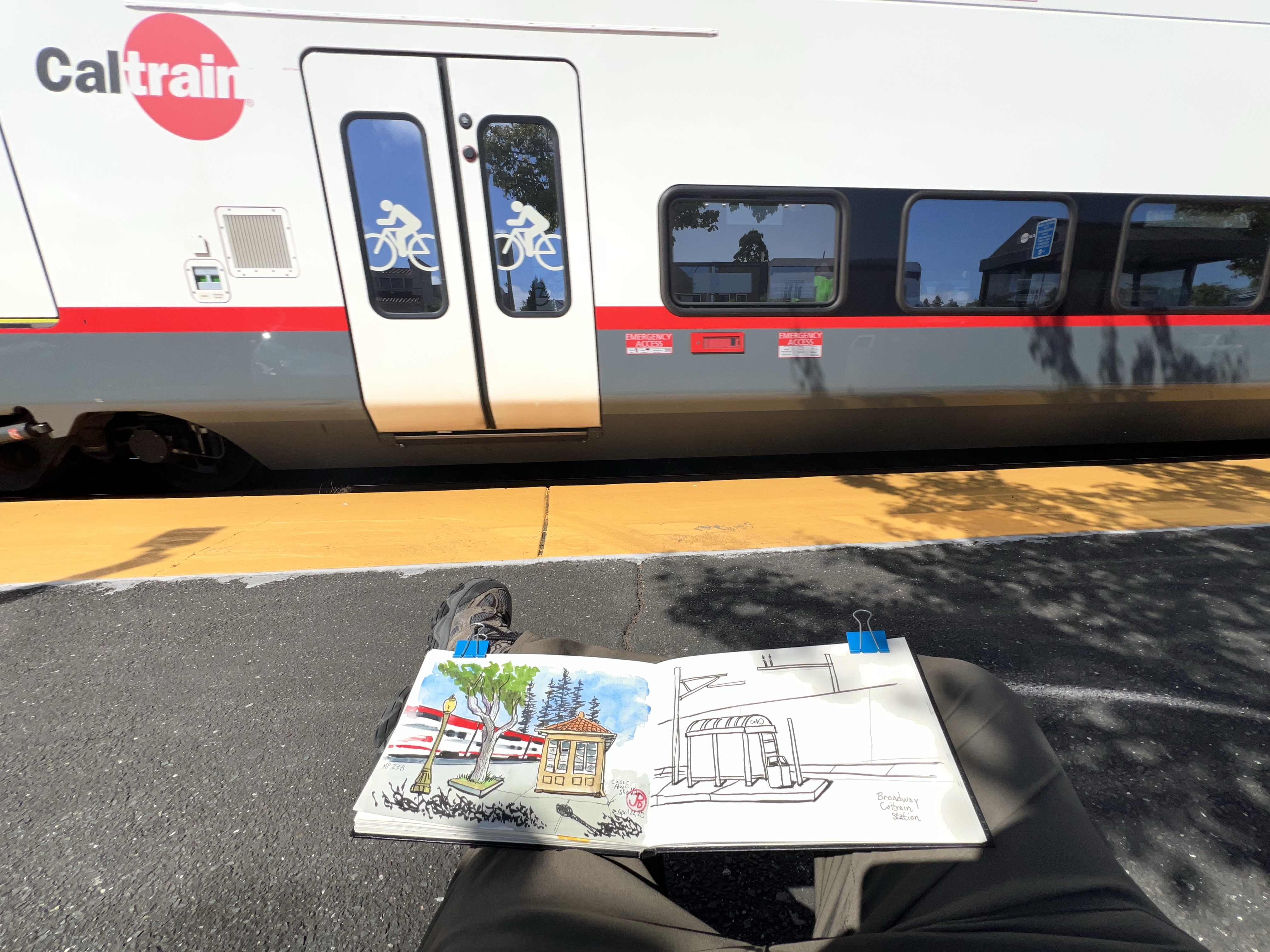
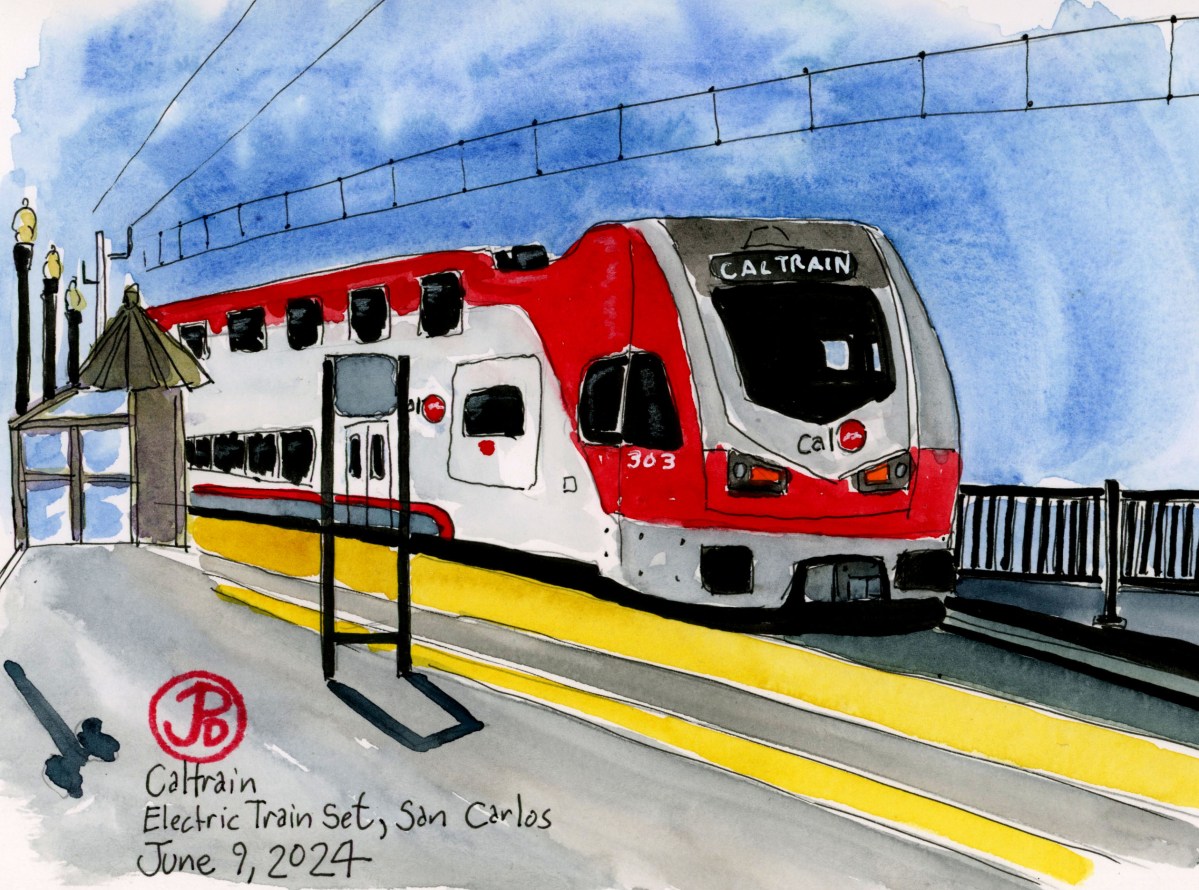
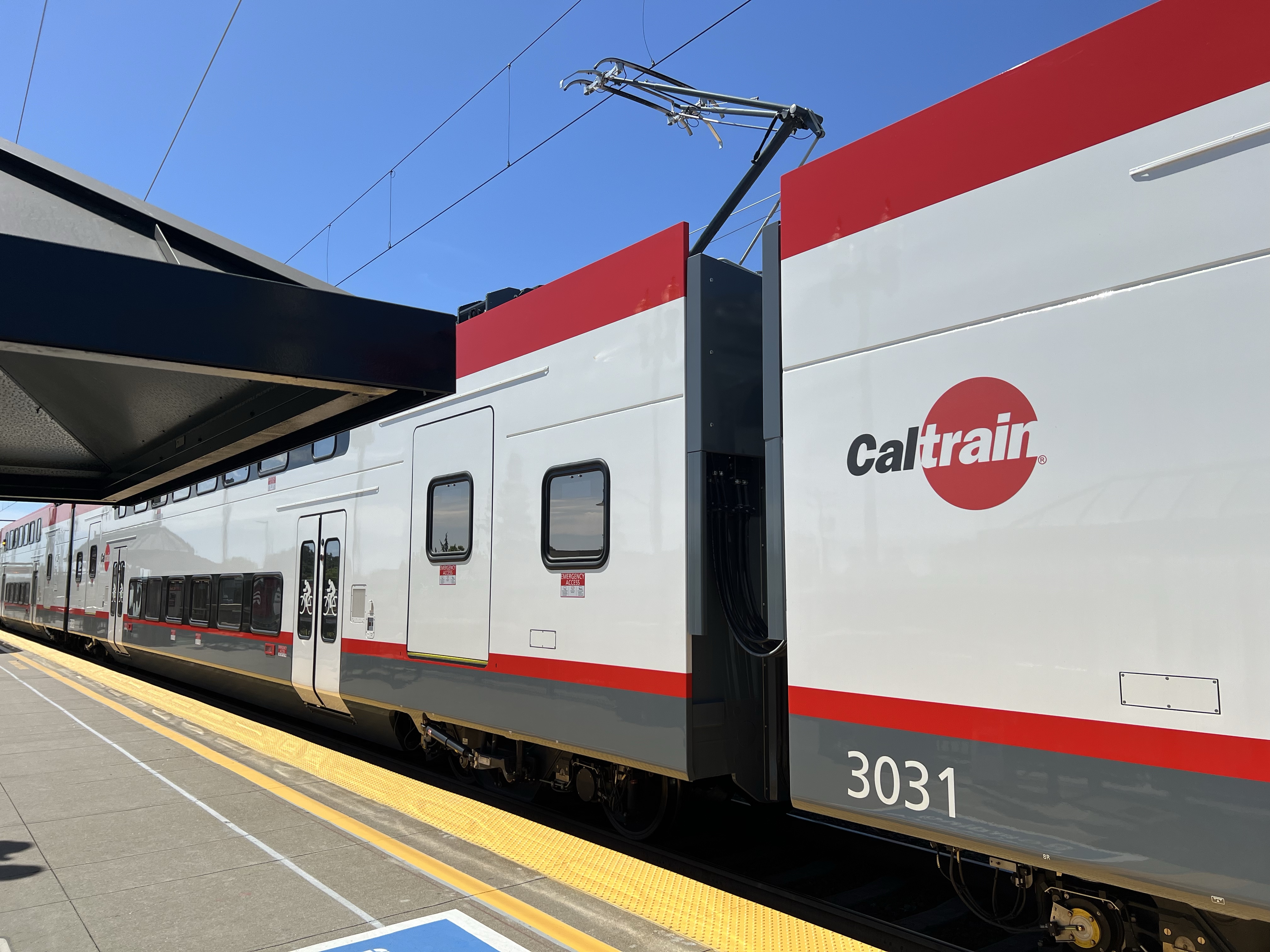
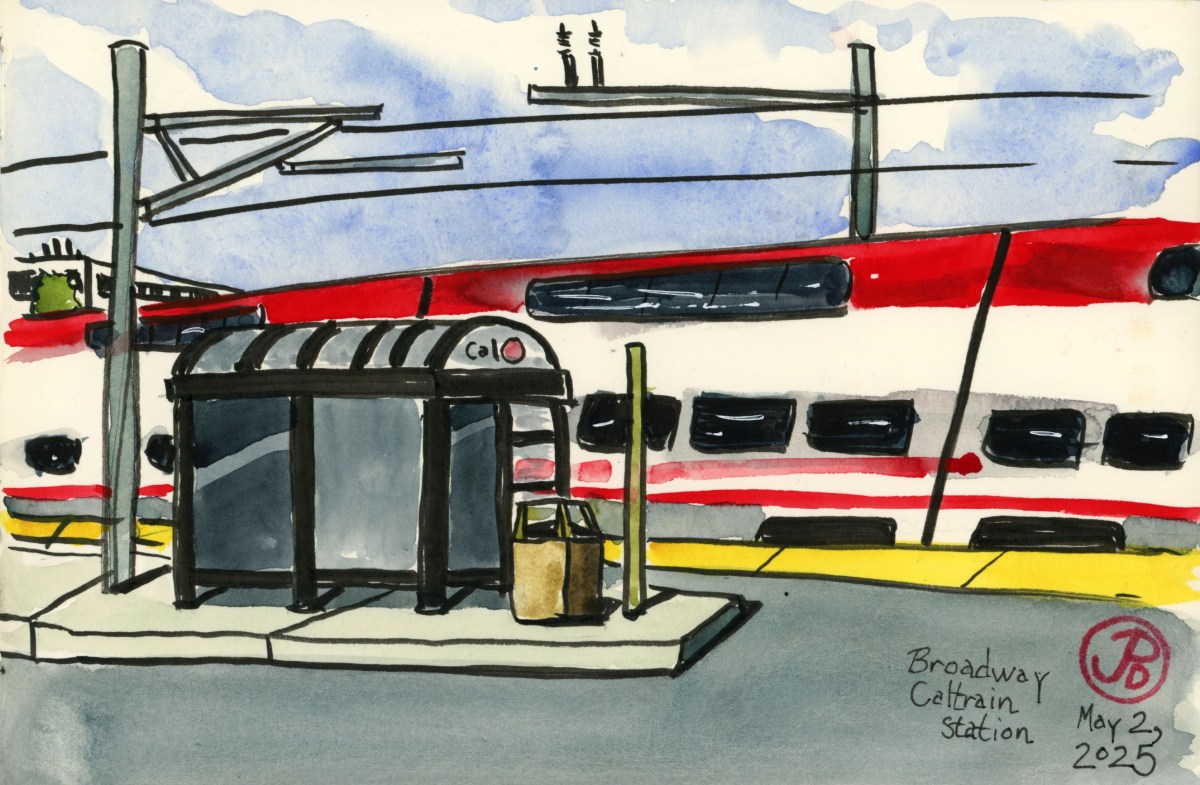
On a recent Saturday morning I had a pleasant surprise as I drove north on El Camino Real at San Carlos. At San Carlos Station was one of the new electric CalTrain sets.

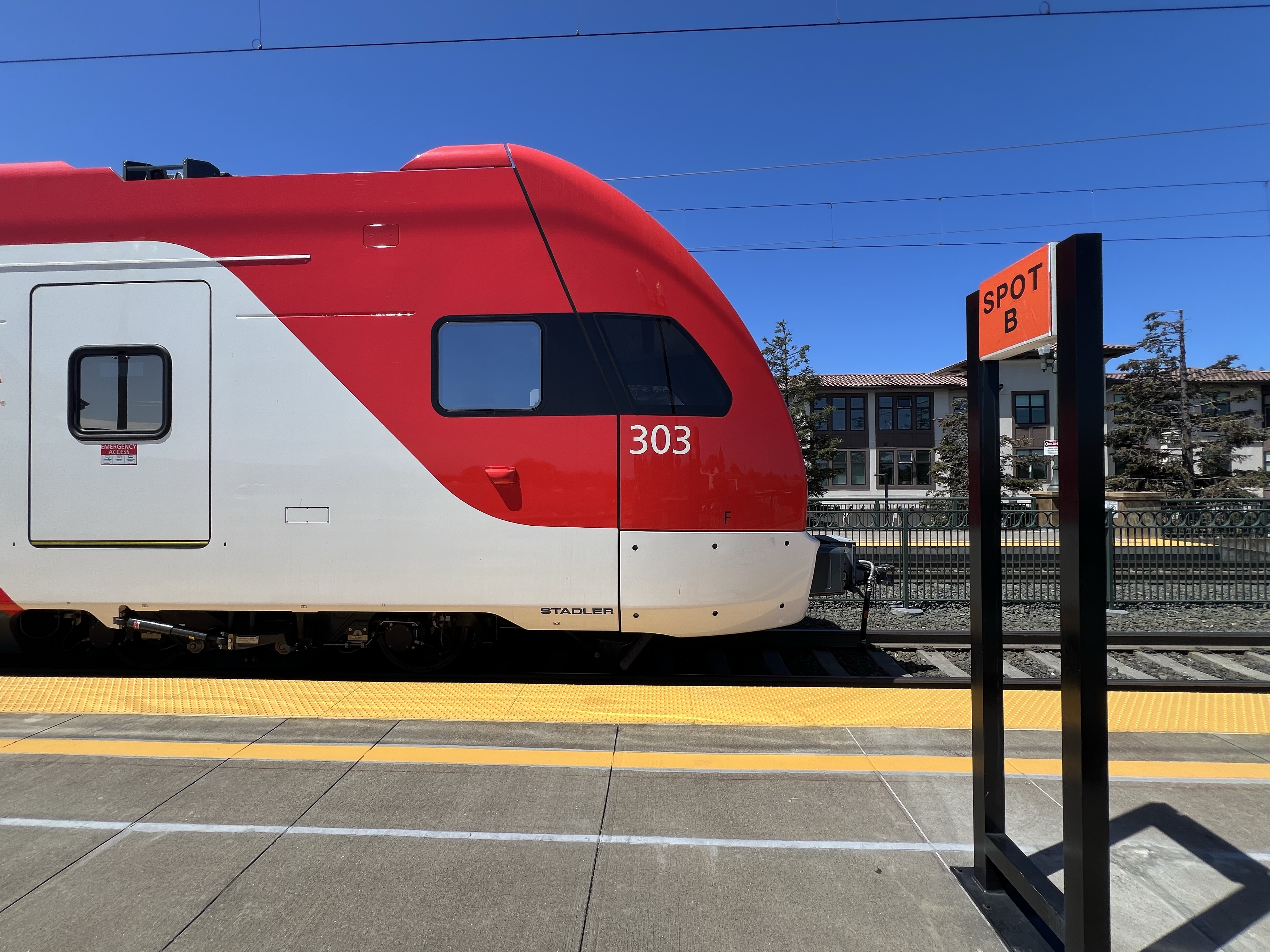
The new trains are built by Stadler, a Swiss-based train manufacturer. The company was founded in 1942 and is headquartered in Bussnang, Switzerland. The company has a factory in Salt Lake City, where Stadler will build 24 train sets for Caltrain.

The train sets are known as BEMUs which stands for battery-equipped electric multiple unit.

I parked, thinking that the train would surely have left the platform by the time I walked to the station but as I walked down San Carlos Avenue, the train was still stationary at the station.

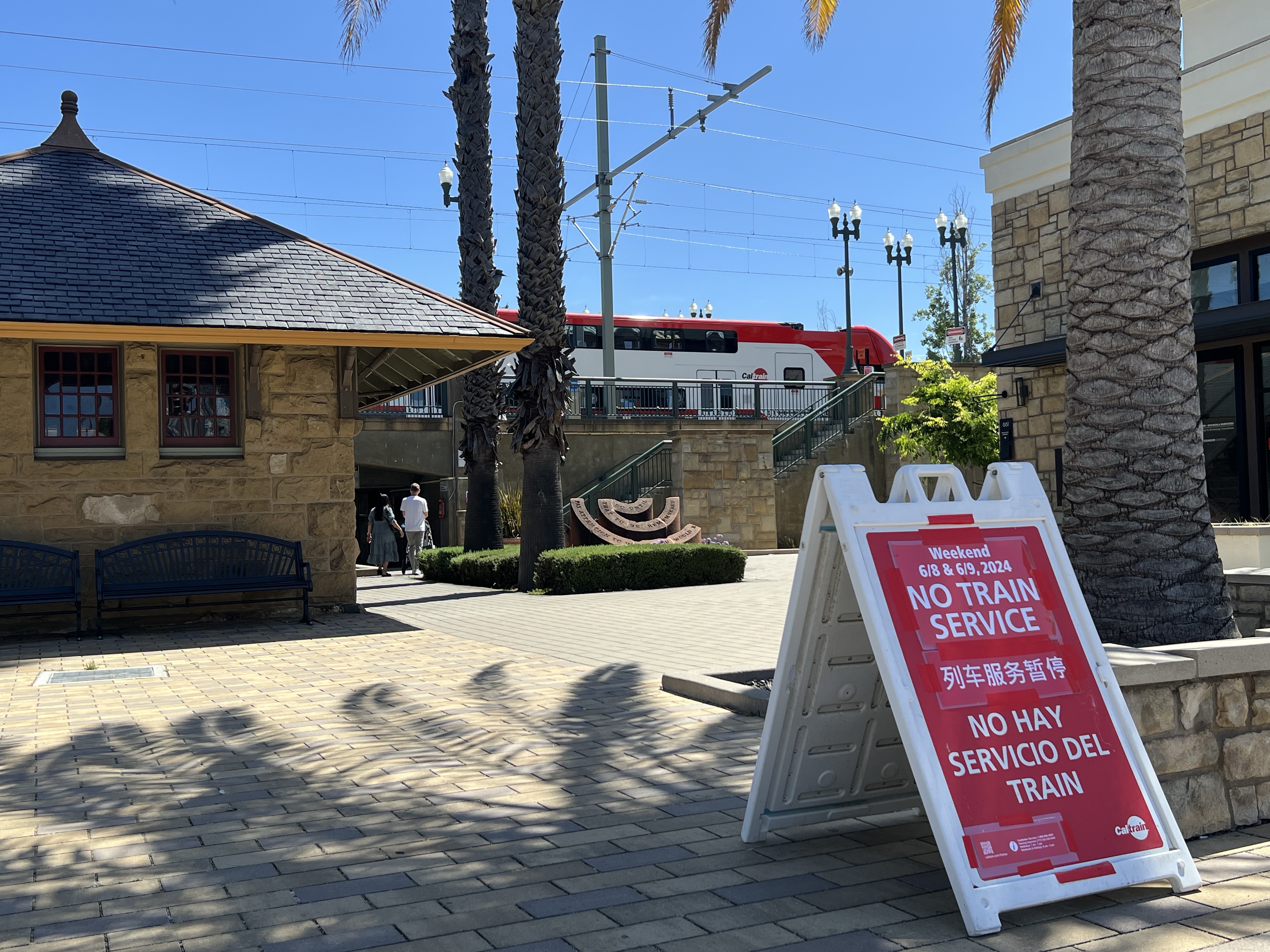
As I crossed El Camino, a placard stated “No Train Service”. The line was closed all weekend.

The line was closed from San Francisco to San Jose so Caltrain could test eight of the new electric train sets. The electrification of the line started in 2017 and electric trains are scheduled to start running on September 21, 2024.

If you think of some of the most iconic passenger trains in modern rail: Japan’s Shinkansen (“Bullet Train”), France’s TGV, Eurostar, Amtrak’s Acela, Chinese Railways CRH, the Bay Area rail corridor was finally being electrified to catch up with the rest of the world, although it would not come close the top speeds of modern Shinkansen (186 mph).

Three quarters of the world’s passenger service are powered by electricity. About time!

This is what powers the new train sets: the pantograph that delivers power from the wires above to the train set below.
Not sure if these new trains sets earn any style points. They look like a large streetcar or tram.
Image

Coastal Rail Trail

On a gray Saturday morning I decided to explore a recently opened section (opened in December 2020) of the Coastal Rail Trail in Santa Cruz.

The section I was exploring (Segment 7) is between Natural Bridges Drive and Bay Street. The walk takes about 30 minutes and the round trip covers about two miles.

As the name implies, the paved pedestrian trail parallels the former Southern Pacific Davenport branch line from Watsonville to Davenport.

As of the date of writing only two sections of the trail have been opened, one in Watsonville and the section I was walking on in Santa Cruz.

At grade crossings there are pedestrian signals that stops cars so you can cross the street safely. Well that’s the theory anyway. With the trail recently open, pedestrians should still use caution and not assume all vehicles will stop for you.

When the trail is completed, it will cover 32 miles from Davenport to Watsonville. There are also plans to introduce electric rail service using the former Southern Pacific right of way and trackage.

I started where the rail trail ends: Natural Bridges Way.

The Rail Trail passes by the former Wrigley Chewing Gum plant (left). The plant was in operation for more than 40 years and produced 20 million sticks of gum per day. The plant had a rail siding that is still visible today.

In my college days I remember visiting the gum factory with my roommate in an unsuccessful attempt to get a plant tour. The receptionist told us that they didn’t give tours but asked us if we would like some gum! We answered in the affirmative and then opened a drawer full of gum. I went for Big Red while my roommate picked Juicy Fruit.

The trail is level as it parallels the rail grade. Railroad grades normally don’t exceed 2%. The steepest mainline railroad grade is 3.3% on the Raton Pass grade in New Mexico. A railroad grade is expressed as a percentage the grade rises or falls over 100 feet of horizontal distance. So a 2% grade rises and falls two feet over a 100 feet distance. These gentle grades are ideal for walking and biking.

I passed by the New Leaf Market at Fair Ave, often my first stop when I head into town, as the trail and line turns slightly to the left skirting the Westside Circles neighborhood.

I came upon a scenic curve in the trail at Lennox Street as the rails and trail curve off to the right as it nears Bay Street. I pulled my sketchbook out of my bag and started sketching the view (featured sketch).

On the right of the spread I sketched the grade crossing sign at Dufour Street with Coastal Rail Trail sign below the crossbuck.

Image

OSH and San Jose History

Grasshopper and I headed down south to the county of my birth (Santa Clara) to sketch in it’s biggest city (San Jose). Our destination was in Kelly Park: the San Jose History Museum’s History Park.

This open air museum has a collection of about 30 historic buildings, some original and others replicas. Streetcar tracks run down the streets and on weekends, a vintage street car operates. What drew my attention was a train (of course!)

Stepping back in time.

On a set of tracks is Southern Pacific 0-6-0 switcher No. 1215 attached to a consist of a green boxcar, and a SP bay window caboose (No. 1589). What attracted my sketching attention was the green boxcar with the words “Orchard Supply Hardware” painted on the side.

Orchard Supply Hardware or OSH was founded as a co-op in 1931. Its founders were 30 farmers, mainly orchardists and fruit tree ranchers.

The name “Orchard Supply” harkens back to the time when Silicon Valley was then called the Valley of Heart’s Delight and was covered in apricot and cherry orchards.

Growing up in the 1970s in Sunnyvale, our house was built on a former apricot orchard. We even had a remnant tree in our backyard. There were still orchards on the edges of housing developments. The agrarian past, back then, did not seem so far away. Now it has all but disappeared.

OSH was part of my childhood. The second president, Al Smith, was a huge rail fan. He even had his office in a caboose. Starting in 1975, each year OSH would put out a calendar with paintings of trains. There was always one in our household.

In the 1960s Smith petitioned the city of San Jose to install a sign for OSH but he was denied. He did not give up. Instead he bought a boxcar from Southern Pacific and put it beside one of his stores on a rail siding. He then painted it bright green and painted “Orchard Supply Hardware” in big letters. This boxcar is now in the History Park along with a 1950s neon sign for the store. I sketched both (featured sketch).

After sketching the boxcar and neon sign we walked around the park looking for a new perspectives.

I chose to sit across the street from the replica of the Pacific Hotel. In the background is a half-scale replica of San Jose’s Electric Light Tower. The original 1881 tower was 237 feet tall. In 1915, the tower was damaged in a windstorm and it later collapsed.

While I was sketching I struck up a conversation with an elderly volunteer who had been volunteering at the museum for the past 20 years or so. We reminisced about the valley’s yesteryears (am I really that old!!) and we reflected on the changes to the South Bay. During our conversation I was well aware that it was volunteers like her that keep the hidden history from disappearing forever.

And she is a retired teacher, but of course she is keeping fleeting history alive! That’s just what teachers do.

Image

Gates of Heaven, Santa Clara County

On film critic Roger Ebert’s list of the Ten Greatest Films of All Time, only one film is an American documentary (two out of ten films are documentaries).

This is the Errol Morris 1978 documentary Gates of Heaven. The film is about two California pet cemeteries, one in the Napa Valley and the other in Los Altos.

The film opens in Los Altos at Highway 280 and Foothill (I grew up two highway exits away). This is the site of the Foothill Pet Cemetery and Morris spends time interviewing the founder Floyd “Mac” McClure and other investors in the pet cemetery.

Some of the clients of the cemetery are also interviewed, including the woman with the “singing” pup and for comic relief, the manager of an animal rendering plant.

Mac has a lot of passion for his dream of opening a pet cemetery, he puts love above profit but one feels he isn’t the best businessman. The owner of the land, a Mr. Dutton, decides to sell the land to a real-estate developer and the pets, all 450, have to be exhumed and reburied in the another pet cemetery (Bubbling Well Pet Memorial Park in Napa Valley).

The second part of the film interviews the Harberts family which runs the Bubbling Well Pet Memorial Park. But not before one of the best monologues in documentary history from a Los Altos elderly neighbor, Florence Rasmussen, who lives across the street from the cemetery.

The documentary was filmed in the summer of 1977 and I was in search of the location of the cemetery on a rainy late morning.

Looking at maps, I noticed a trail (Hammond-Snyder Loop Trail) up to a hill that would give me a view of area to the south of Highway 280 and east of Foothill.

I set off on the muddy trail past a red-tail hawk perched in an oak. There was a light drizzle. In about five minutes I found myself on a small hill partially fenced in with an interpretative sign.

Looking to the north I knew I was standing at the cameras location from the panning shot at the beginning of Gates of Heaven.

A screen capture of the first panning shot in the film. The green water tanks are still there. The bridge in the foreground right is Cristo Rey Drive over the Southern Pacific Permanente Cement Plant branch line. In the background is Highway 280.
This screen capture, from the same panning shot as above, comes to rest here: the location of the Foothill Pet Cemetery between Cristo Rey Drive and Highway 280.
Here is the same view of the cemetery today. The distance fades into drizzling skies. There are more houses and trees than there were in 1977. The roads are very much the same as 47 years ago.

I pulled my panoramic journal out of my pack and quickly began a pen brush sketch of the scene before me, my lines blurred and smudged in the drizzle. These “happy accidents” became part of the sketch.

Parts of the scene were still recognizable: the green waters tanks, the railroad, the Foothill Blvd entrance and exit ramps, Cristo Rey, and Highway 280.

Where the pet cemetery was located is now a housing development and the trees now seem much taller and more plentiful than when the panning shot was filmed here almost 47 years ago.

Do the residents of Serra Knoll Estates know their houses are built on the site of a pet cemetery?!
Oddly enough there is a Catholic Cemetery called “Gate of Heaven” just down the road from the former Foothill Pet Cemetery. Did Morris get the idea for his film’s title here? Maybe only he really knows.
Image

Schellville

Schellville is not really a town, just an intersection of a two lane highway and a country road in incorporated Sonoma County. But this is a very important railroad junction.

This is the last bastion of the once great Northwestern Pacific Railroad (NWP).

Schellville was an important rail junction on the NWP and there is a two mile rail yard south of the former train station.

The Schellville Depot has seen better days, just like the rest of the former Northwestern Pacific system. Now it is used for storage.

This was NWP’s only outlet to the greater Southern Pacific rail network. All passenger and freight traffic from Eureka in Humboldt County south to Willits, Santa Rosa, Petaluma and San Rafael in Marin County, had to pass through Schellville.

At one point, post World War II, 11,000 cars a month passed through the junction at Schellville. Many cars went on, under Southern Pacific steam, to the division point at Roseville.

Over the years, declining passenger and freight service, landslides, and the severe winter floods of 1964, sent NWP on a downward decline. The railroad was operated by Southern Pacific and once SP merged with Union Pacific in the mid-1990s, NWP changed hands many times, holding on to it’s diminished existence.

It seemed that the entire fleet of four locomotives where fenced in near the station. This motley collection were painted in the livery of other railroads.

NWP No. 1501 painted in the Southern Pacific “bloody nose” livery.

From the Y track at the station I headed north along the line, vineyards flanking either side of the rusted rails. I crossed a short trestle and before me stood a railroad graveyard, a mothballed fleet of NWP and SP diesels and rolling stock.

The mothball fleet is mainly Southern Pacific locomotives and a mix other other rolling stock. The locomotive on point is Northwestern Pacific EMD GP 9 No. 1922, faded and being returned to nature.
At the end of the diesels is Southern Pacific caboose 1971. The locomotive coupled to the caboose is the former Bessemer and Lake Erie F7 numbers 718 A and 716 B.

While these locomotives had seen better days I was surprised to see a Southern Pacific Steam Locomotive on a siding across 8th Street.

At first I couldn’t believe my eyes. Could this be one of a handful of operable SP steam locomotives? I could barely make out the road number.

It was P-8 Class No. 2572 a 4-6-2 “Pacific” type built by the Baldwin Locomotive Works in 1921.

2472 was retired in 1957 and donated to the city of San Mateo and put on public display at the San Mateo County Fairgrounds.

In 1976 a group decided to restore the SP workhorse to working order. The group, the Golden Gate Railroad Museum, had 2472 ready for Railfair 91 in Sacramento which feature another Southern Pacific legend, 4449.

For many years 2472 operated steam excursions in Niles Canyon but was moved to Schellville on March 1, 2020.

Image

NWP Black Point Bridge

An important bridge that kept Northwestern Pacific Railroad connected with the mainline rail network is the Black Point Bridge.

The 50 foot rail bridge at Black Point is a steel swinging truss bridge that turns perpendicular to the rail line to allow boat traffic on the Petaluma River to pass downstream to San Pablo Bay.

In the days of heavier rail traffic, the bridge was aligned with the railroad but now with fewer freight traffic, the bridge is open to allow river traffic to pass.

The Black Point Bridge, which spans the Petaluma River which is the boundary between Marin and Sonoma Counties, was built in 1911 and then rebuilt in 2011.

The Highway 37 bridge over the Petaluma River. The Black Point Bridge is just downstream from here.

Atop the bride is the Operator’s House where the bridge operator lived. He was in charge of opening and closing the bridge in the days when all the freight north to Eureka, had to cross this vital span to take freight to the rail junction at Schellville and beyond to the wider rail system. The bridge is now operated remotely.

On either side of the steel span, a wooden trestle reaches out into the river.

The marina at Port Sonoma has seen better days. The boat slips are now empty and the reeds are slowly taking over.

I parked in the overgrown parking lot, walked past the abandoned marina, and then headed down the river trail to find a good vantage point to sketch the bridge.

I parked my sketching chair near the outlet of the marina, took a sip of joe, and started to sketch (featured sketch).

A sketcher’s view and beautiful weather for a morning sketch.