Image

Kon-Tiki

Rafts, boats, and ships.

Things that float (sans Titanic).

How about a balsa wood raft? How about sailing it across the Southern Pacific Ocean?

Is this the definition of insanity? Well not if you’re a Norwegian anthropologist and adventurer named Thor Heyerdahl.

Thor was a boss, a man with vision, a man who looked in the face of reason and “truth” and created his own truth. He will always be a visionary that is blessed to us once in a generation; if we’re lucky.

To prove that Polynesia could have been colonized from South America, in 1947, Heyerdahl and five others (including a parrot named Lorita), sailed a balsa wood raft over 4,000 miles across the Pacific. The raft was named the Kon-Tiki.

The expedition set off from Callao, Peru on April 28, 1947. The raft sailed for 101 days covering 4,300 miles. The journey ended as the craft smashed into a reef at Raroia on August 7, 1947.

The Kon-Tiki is now displayed at the Kon-Tiki Museum on the Bydoy Peninsula in Oslo, Norway. The Kon-Tiki is one of my top sketching targets on my summer trip to Norway.

I find it serendipitous that the best way to get a museum dedicated to an epic sea voyage is by ferry. Also on the Bydoy Peninsula are the Vikingskipshuset, the Norwegian Martine Museum, and the Fram Museum

I did a sketch of Thor, wearing the Tiki mask that is painted on Kon-Tiki’s sail. I sketched with a bamboo dip pen and I’m pleased with the rustic, and sometimes uncontrollable looking lines.

Image

A Pillow Post

This is a post about my pillow (not to be confused with My Pillow). In fact this is not really a pillow but a pillow case. Well it’s not just a pillow case but also a stuff sack.

Why a post about such a mundane piece of fabric?

Well I hoped it would be the key to helping me pack light and stay warm in the Polar summer.

One of the keys to packing light and one-bag travel is to pack gear that serves more than one use.

In this case my 10 by 14 inch pillow case will double as a stuff sack/ packing cube for my Patagonia down jacket.

I’ve never liked my travel neck pillow that I have used on longer flights. One of the reasons is that you haul it around but you can only use it a few times because it is not a transformer. This neck pillow is just a neck pillow, and is be big and bulky.

The Elan Quest Stuffable Camping Pillow-Stuff Sack can be used as a pillow on flights and then the stuffing can be pulled out and worn to give me a warm layer in the Arctic Circle. The empty pillow case-stuff sack can be easy rolled up and stowed in my pack.

I tested the Elan Quest by stuffing my Patagonia down jacket into the case. It helps that the jacket stuffs into its own pocket so I had no issues fitting it into the pillow case.

The pillow case is two sided, one side is an a bright yellow nylon and the reverse side is a comfy gray fleece.

I look forward to using this pillow/stuff sack this summer!

Image

M/V Plancius

Aside from all day pelagic cruises, the last time I was on a cruise of length, more than 24 hours, was when I was much younger (11 years old, according to my mom). This was a cruise (think: Love Boat) from Vancouver, Canada to Alaska.

It was my first experience with a floating city. This ship had every thing you needed and many things you didn’t.

Today the capacity of an average cruise ship is 3,000 passangers with a crew of about 1,000. The largest cruise ship in the world, Icon of the Seas, has a capacity of over 7,000 passengers with a crew of just over 2,000. This ship is 1,197 feet in length, that’s 315 feet longer than the Titanic.

I, on the other hand, would be on a summer cruise on a ship with a paltry capacity of 108 and a crew of 49! This ship was just under 300 feet, a mere 30% of the Titanic’s length.

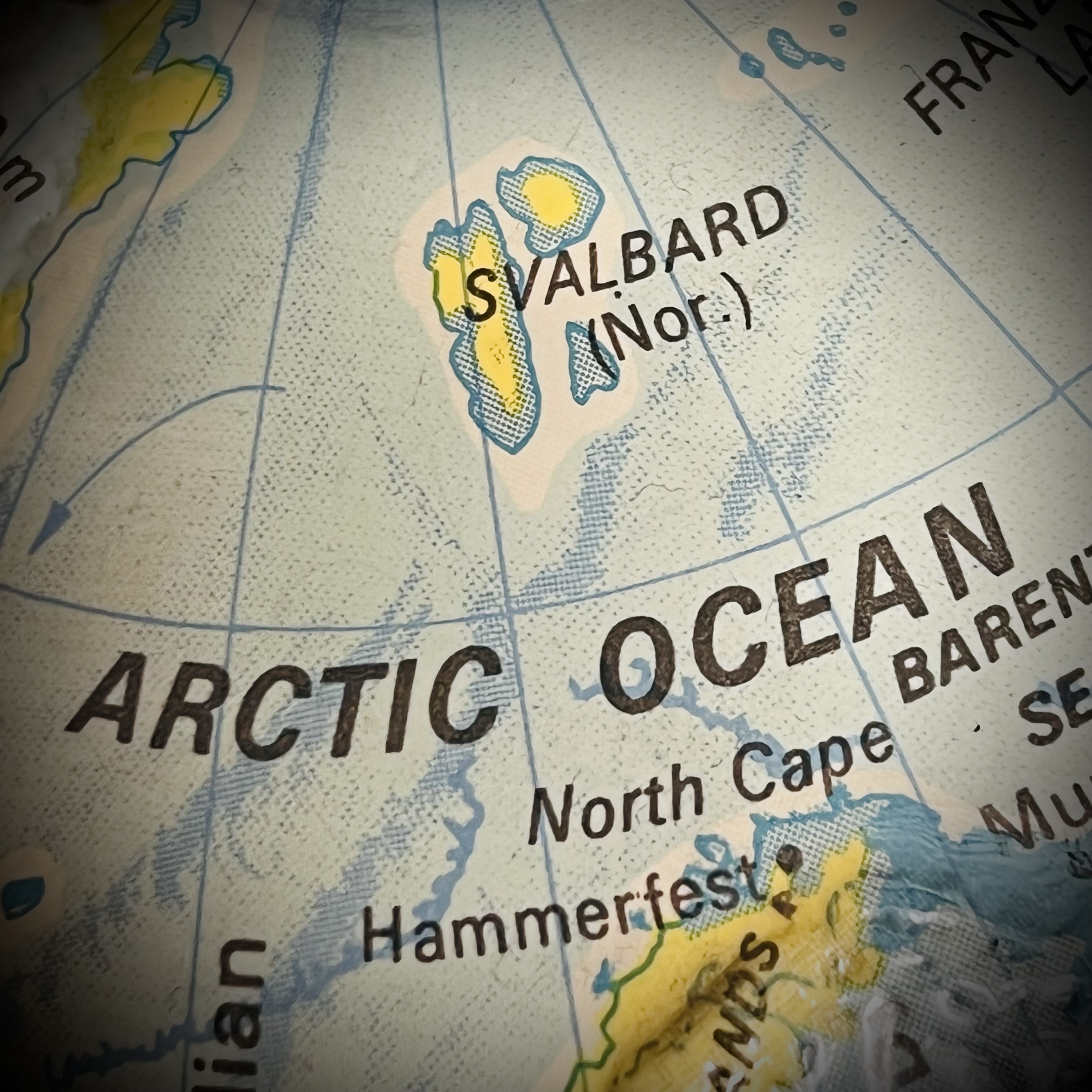
I would not be in the sunny climes of the Bahamas (there’s no ivory gulls or polar bears in the Bahamas!) but cruising 80 degrees North, around the Norwegian island archipelago, Svalbard.

My cruise ship will be the m/v Plancius. (The m/v stands for merchant vessel.)

The Plancius was built in 1976 as a scientific research vessel for the Royal Dutch Navy. She was then named “Hr. Ms. Tydeman” and served the navy until June 2004.

She was purchased by Oceanwide Expeditions and rebuilt to carry passengers in 2009. Rechristened the Plancius in honor of the Dutch astronomy and cartographer she now cruises in the Arctic and Antarctic. In my featured sketch I sketched Plancius, cast as an Arctic explorer, which he wasn’t. Let me go look for my artistic license (I hope it’s not expired!).

I would be sharing my berth with a complete stranger. I knew that he must an adventurer, on a quest to see a melting world.

I look forward to my summer Arctic cruise and the many sketching opportunities in my near future!

Image

The Arctic Toothwalker

High on my Arctic pinniped (fin-footed) wishlist is Odobenus rosmarus: the walrus.

Few animals scream “Arctic” in the same way as the Toco toucan screams “tropics” or “rainforest” or “Guinness”, as the walrus. These animals are the “sexy megafauna” that become the poster animal for the ecosystem. (Okay the toucan isn’t “mega” but its bill sure is). For the Arctic, I would certainly put polar bear at the top of this list, followed closely by the walrus.

This Arctic animal is also keynote species that are the “carnies in the coal mine” for their ecosystems. When the walrus population declines, we know that the Arctic is not healthy.

The walrus’s most prominent feature are its tusks. They are sported by both male and females and are really enlarged canines. Tusks on males can grow to three feet. They use these ivories for male scuffling and pulling their hefty bulk up onto ice.

The walrus is also one of the largest pinnipeds in the world, only exceeded by the Northern and Southern elephant seal. It can be said that it is the second largest pinniped in the Northern Hemisphere. Walrus are sexually dimorphic with males weighing almost two tons and growing to 12 feet in length.

Image

High Arctic Dreams

“I felt a calmness birds can bring to people; and, quieted, I sensed here the outlines of the oldest mysteries: the nature and extent of space, the fall of light from the heavens, the pooling of time in the present, as if it were water.”

― Barry López, Arctic Dreams

The major avian draw for traveling to the High Arctic is Pagophila eburnea, the “the ice-loving ivory-colored gull”. This would be an incredible lifer and the major totem for any birder visiting the top of the world.

Some cetaceans on my wishlist are the white whale (also known as the beluga whale), minke whale and fin whale.

I was also hoping to see some pinnepeds for the first time. They included: walrus and harp, ringed, and bearded seals.

Image

Search for the Prairie Ghost

Late January is the time to head to Solano County and look for the elusive Prairie Ghost. Also known as Dirt Claud Plover but officially by the improbable name mountain plover.

This plover is not found in the mountains but in the short grassland prairies or recently plowed fields. And unlike like other plovers it is not found near water (unless it’s a cattle trough).

Charadrius montanus winters in the fields of Solano County ( and other open places out west). To find this cryptic species you need a scope, luck, and lots of patience. The epicenter of wintering prairie ghosts is Robinson and Flannery Roads.

These country dirt roads are also a great place to view wintering raptors including harriers, merlin, prairie falcon, golden eagle, rough-legged, and ferruginous hawks.

Early on a Saturday morning, Grasshopper Sparrow and I headed to the Solano County birding hotspot known as “Robinson Road”. Mountain plover was his nemesis bird and after previous attempts, he had yet to add it to his life list.

Often this area can be shrouded in dense valley fog, making the plover that is already tough to spot, even tougher. But today, the skies were clear and sunny with vast visibility to find our quarry.

So it was that we found ourselves at 8:30 on Flannery Road looking south towards undulating green field being serenaded by western meadowlarks.

Now we were looking for feathered dirt clauds that had the power of “now you see me, now you don’t” invisibly. Once the plover turns its brown back to the viewer, hiding its white breast, it can be tough to find and it seems to melt into the dirt.

I scanned the fields with my binoculars, stopping at some prominent dirt clauds so I put the scope on them and they magically turned into mountain plovers. Lifer for Grasshopper!

Did that dirt claude just move? The mountain plover is no longer a nemesis bird for Grasshopper.

Sketching Notes: Before I headed out to Robinson Road, I sketched in the border and the outline of the mountain plover in the bottom left of my panoramic journal. I would add a field sketch of the fields on location. If we did not see the plovers I would outline the silhouette of the bird and leave it unpainted. But if we were successful, I would paint the outline in, which I did in the final sketch.

Image

Gates of Heaven, Santa Clara County

On film critic Roger Ebert’s list of the Ten Greatest Films of All Time, only one film is an American documentary (two out of ten films are documentaries).

This is the Errol Morris 1978 documentary Gates of Heaven. The film is about two California pet cemeteries, one in the Napa Valley and the other in Los Altos.

The film opens in Los Altos at Highway 280 and Foothill (I grew up two highway exits away). This is the site of the Foothill Pet Cemetery and Morris spends time interviewing the founder Floyd “Mac” McClure and other investors in the pet cemetery.

Some of the clients of the cemetery are also interviewed, including the woman with the “singing” pup and for comic relief, the manager of an animal rendering plant.

Mac has a lot of passion for his dream of opening a pet cemetery, he puts love above profit but one feels he isn’t the best businessman. The owner of the land, a Mr. Dutton, decides to sell the land to a real-estate developer and the pets, all 450, have to be exhumed and reburied in the another pet cemetery (Bubbling Well Pet Memorial Park in Napa Valley).

The second part of the film interviews the Harberts family which runs the Bubbling Well Pet Memorial Park. But not before one of the best monologues in documentary history from a Los Altos elderly neighbor, Florence Rasmussen, who lives across the street from the cemetery.

The documentary was filmed in the summer of 1977 and I was in search of the location of the cemetery on a rainy late morning.

Looking at maps, I noticed a trail (Hammond-Snyder Loop Trail) up to a hill that would give me a view of area to the south of Highway 280 and east of Foothill.

I set off on the muddy trail past a red-tail hawk perched in an oak. There was a light drizzle. In about five minutes I found myself on a small hill partially fenced in with an interpretative sign.

Looking to the north I knew I was standing at the cameras location from the panning shot at the beginning of Gates of Heaven.

A screen capture of the first panning shot in the film. The green water tanks are still there. The bridge in the foreground right is Cristo Rey Drive over the Southern Pacific Permanente Cement Plant branch line. In the background is Highway 280.
This screen capture, from the same panning shot as above, comes to rest here: the location of the Foothill Pet Cemetery between Cristo Rey Drive and Highway 280.
Here is the same view of the cemetery today. The distance fades into drizzling skies. There are more houses and trees than there were in 1977. The roads are very much the same as 47 years ago.

I pulled my panoramic journal out of my pack and quickly began a pen brush sketch of the scene before me, my lines blurred and smudged in the drizzle. These “happy accidents” became part of the sketch.

Parts of the scene were still recognizable: the green waters tanks, the railroad, the Foothill Blvd entrance and exit ramps, Cristo Rey, and Highway 280.

Where the pet cemetery was located is now a housing development and the trees now seem much taller and more plentiful than when the panning shot was filmed here almost 47 years ago.

Do the residents of Serra Knoll Estates know their houses are built on the site of a pet cemetery?!
Oddly enough there is a Catholic Cemetery called “Gate of Heaven” just down the road from the former Foothill Pet Cemetery. Did Morris get the idea for his film’s title here? Maybe only he really knows.
Image

The Rengstorff House

The Rengstorff House was one of the first houses built in Mountain View.

What piqued my interest in the circa 1867 house was an article in a Palo Alto weekly newspaper that a fellow teacher gave me. The article told the story of the Rengstorff House and the link to the countries largest mass kidnapping. What?!

The house was built by businessman Henry Rengstorff, a German immigrant that came to California to strike it rich during the Gold Rush. He made his money my farming and buying up land. He died in 1906 and afterwards, members of his family lived in the house until 1959.

The Rengstorff House at its new location.

The land that the house was on, was sold to a land developer. In the mid 1970s, three young men had the dream of buying the house, (which had been abandoned and was now dilapidated) moving it to a new location, restoring it, and then living in it because they had always wanted to live in a historic mansion.

The young men were from the affluent communities of Portola Valley and Atherton and came from wealthy families.

So they hatched a plan to raise funds to buy the Rengstorff House.

On July 15, 1976 in the tiny farm town of Chowchilla, California three armed assailants hijacked a school bus containing 26 children who were returning from a swim party at the local community pool. The bus was hidden in a local slough and the bus driver and children were transferred to two vans and driven 100 miles away to a rock quarry in Livermore.

The children and driver were transferred to a truck trailer that was buried in the ground and the entrance was covered. The kidnappers left and planned to ransom their victims for $5 million. When they called the Chowchilla Police Station with their ransom note, they couldn’t get through because the station was flooded with calls by concerned parents.

The children and driver escaped and the son of the owner of the rock quarry became the number one suspect.

All three kidnappers were captured and later sentenced to life in prison. All three are now out of prison on parole.

They were not able to buy the Rengstorff House and it was later relocated to Shoreline Park in Mountain View and is now a museum.

In between rain showers, I headed down to Mountain View to sketch the historic house. When I arrived there was a turkey vulture perched on the front gable.

After my sketch I walked around to the side to see if I could get a tour of the interior. The house was just closing for a private event.

I mentioned the recent article to the docent. She told me there were inaccuracies in the article and the writer didn’t even interview any staff at the museum about the story. When I asked about the Chowchilla Kidnappings, she replied, “We don’t talk about that.”

No wonder the Palo Alto Weekly didn’t consult the museum.

Image

Elephant Seals of Point Reyes Lifeboat Station

It’s always nice to head out to the Pacific Plate, a mere 90 minutes from my humble abode.

On this holiday Monday I was heading out to the outer point of Point Reyes National Seashore. My destination, Chimney Rock and the Point Reyes Lifeboat Station.

The new lifeboat station was built near Chimney Rock in 1927. Lifeboats could be quickly launch on rails into the calm waters of Drakes Bay. And over the years the lifeboat of Chimney Rock saved many a sailor.

With the advent of Coast Guard cutters and helicopters the station became redundant and was decommissioned on December 16, 1969.

The rails that launched lifeboats into Drakes Bay.

For over 150 years, no elephant seals were seen in Point Reyes and then in the early 1970s (after the lifeboat station was decommissioned), they returned to beaches at the Point Reyes Headlands. In 1981, a breeding pair was discovered at Chimney Rock. The seal population at Point Reyes has been growing ever since.

The beach on either side of the station was being used as an elephant seal birthing beach. The seals were mostly female with a few pups and one male beach master (featured sketch).

At the lifeboat station you could get surprisingly close to these large marine mammals.

I pulled out my sketchbook and started to draw the blubbery contours of the beach master. He was very accommodating, spending much of the sketch playing silent statue.

After my sketch he reared up and bellowed, claiming his patch of the earth and his harem.

The beach master in full bellow. Yes I was so close I could almost smell his breath!
Image

Chimney Rock

I headed out on the Chimney Rock Trail at outer Point Reyes. There were just two other cars in the parking lot.

Ravens and turkey vultures were my avian companions as I headed southeast on my way to Chimney Rock. Below, on hidden beaches I could hear the bellowing of elephant seals.

The trail view of the Historic Point Reyes Lifeboat Station with Drakes Bay.

The out-and-back trail is just under two miles and affords great views of Drakes Bay and the Pacific Ocean. On clear days you can see the Farallon Islands.

The Farillions seem much closer on the outer point.

On my return journey I sketched the Point Reyes Headlands from the trail (featured sketch). I liked the lines of the earth from this view and thought adding watercolor to the sketch would dampen its effect so I left it unpainted. With a sketch it is sometimes important to know when to stop.