Port Costa Part 2 (The Solano)

The “downtown” of Port Costa is only about a block long. The historic buildings here only hint at the size and importance of the town over 120 years ago.

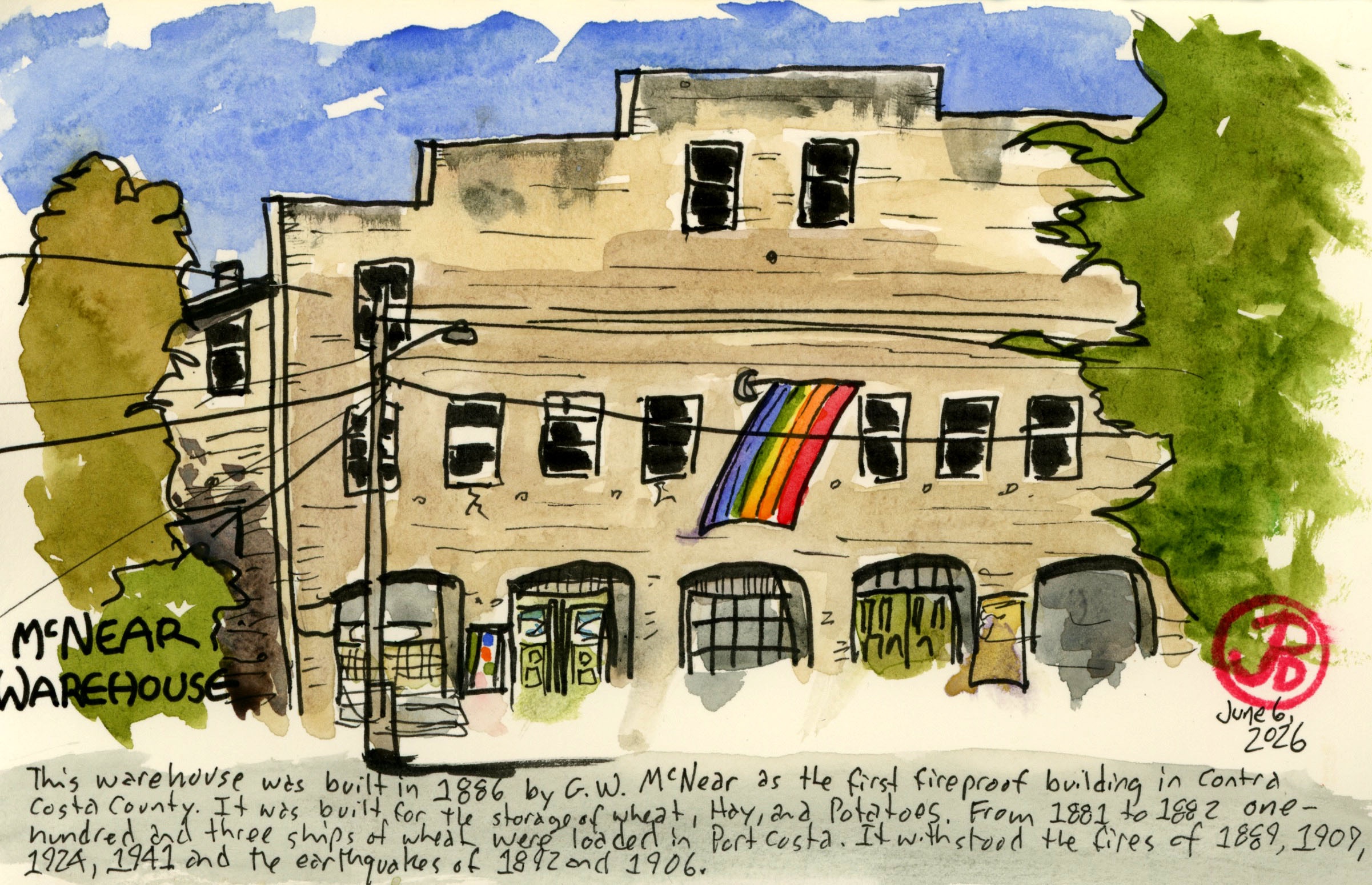
Standing in front of the massive McNear’s Warehouse you get a sense of the scale of importance of Port Costa.
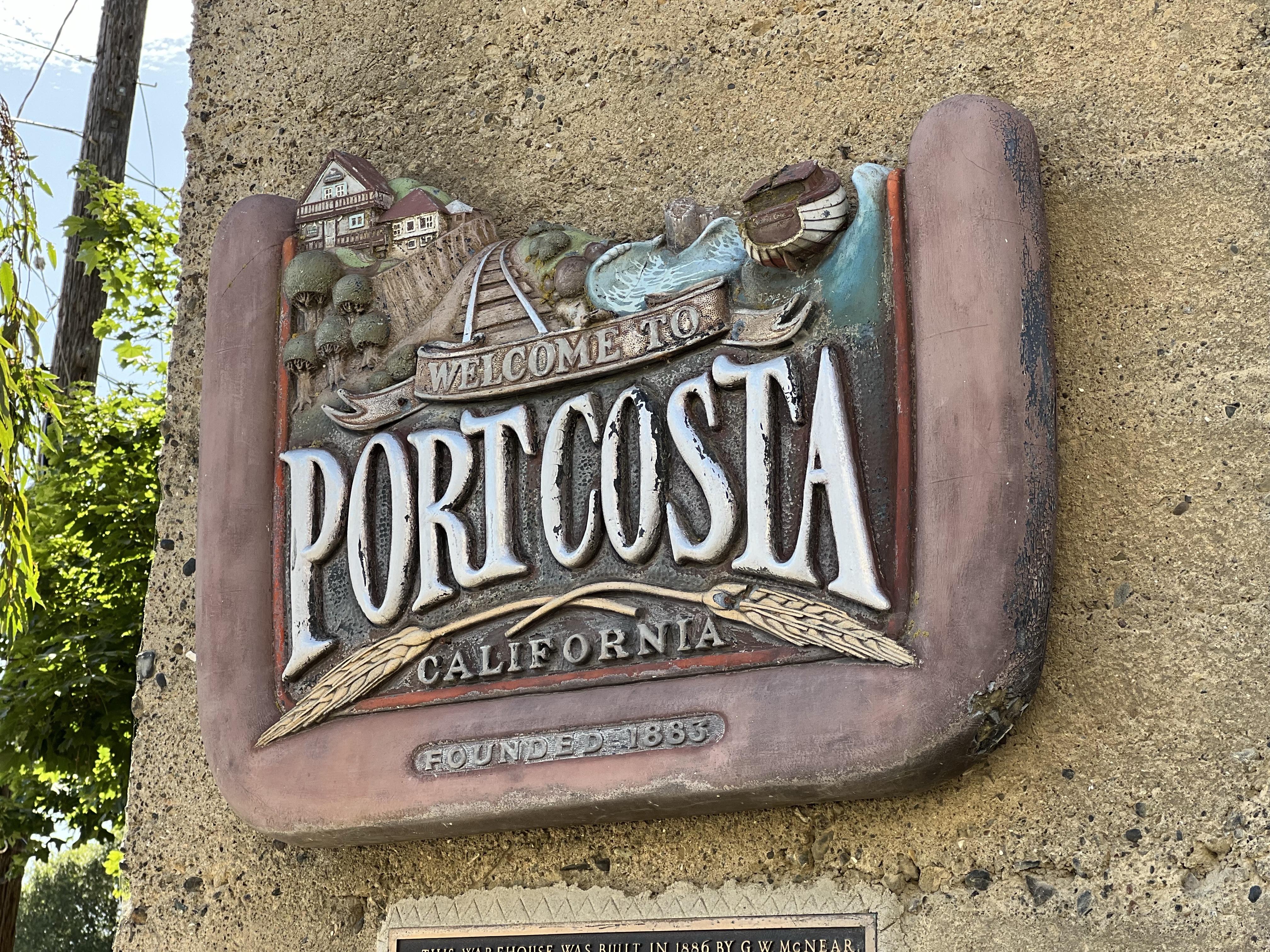
The wonderful sign on McNear’s Warehouse. The railroad is both central to the sign and to the history of Port Costa.

In the distant past, that one block contained a grocery store, a barber shop, a shoemaker, a Wells Fargo office, three hotels, a department store, and eight saloons!
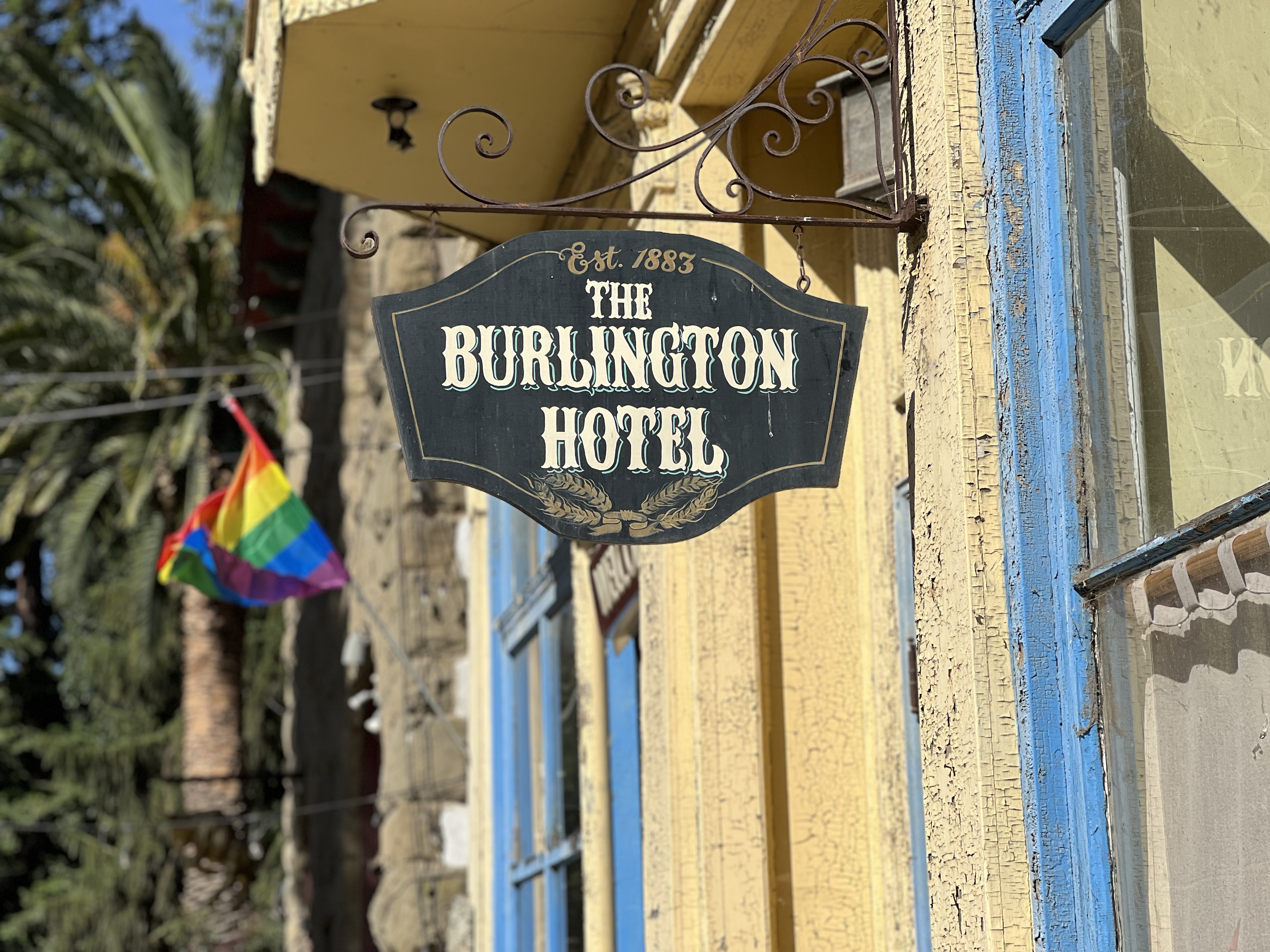
Now Port Costa has only one hotel and I’m not sure it’s open.

The concrete warehouse was built in 1886 by G. W. McNear. It was the first fireproof building in Contra Costa County having survived the fires of 1889, 1909, 1924, and 1941 (as well as withstanding two major earthquakes). It was built to store wheat, hay, and potatoes.

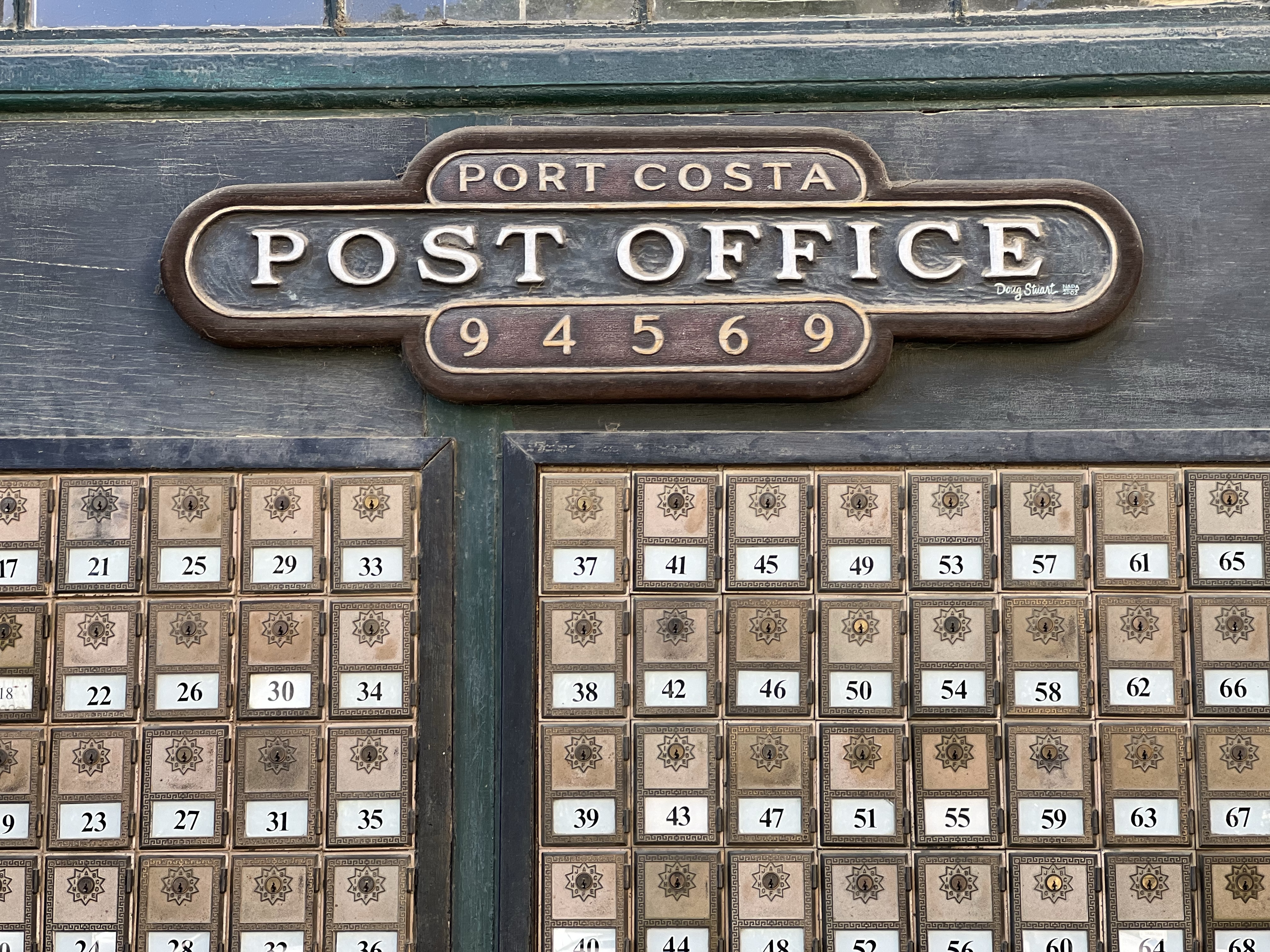
The warehouse now serves many purposes; restaurant, bar, post office, and apartments.
Port Costa was a busy railroad center and port. The railroad facilities included many spur tracks, a 70 foot turntable, an engine house, oil and water tanks, a passenger and freight depot, and many warehouses.
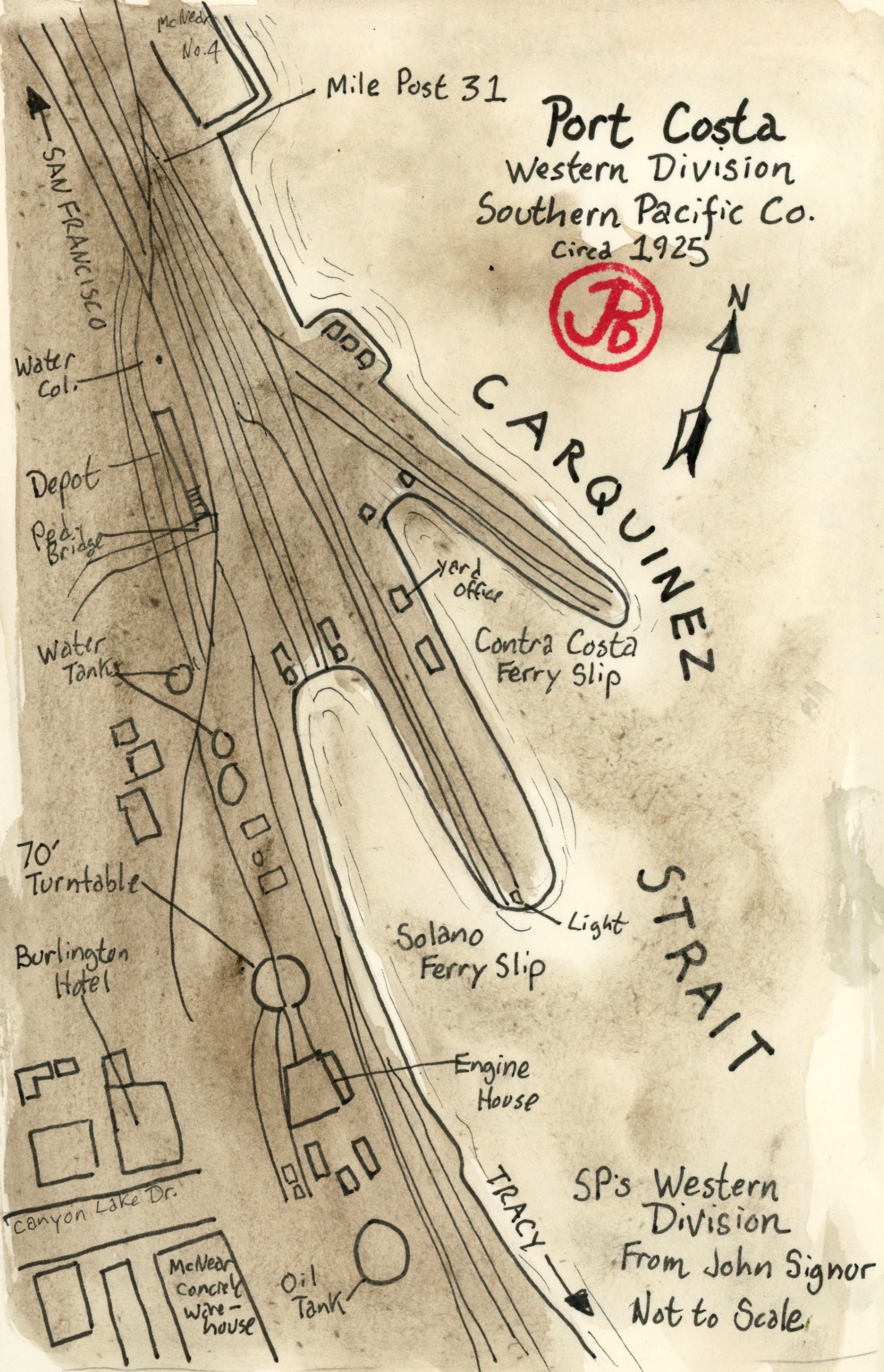
Map of Port Costa circa 1925, based on a John Signor illustration.

What made Port Costa tick was the railroad. At the edge of the Carquinez Strait there were two ferry boat slips where ferry boats loaded and unloaded trains, both passenger and freight, from the 10 minute crossing to Benicia. Because there was no railroad bridges spanning the strait, this was only way to cross and save time and many miles.

The train ferry Solano served for 51 years until the Benicia-Martinez Railroad Bridge was completed in 1930 for Southern Pacific, rendering the ferry obsolete.
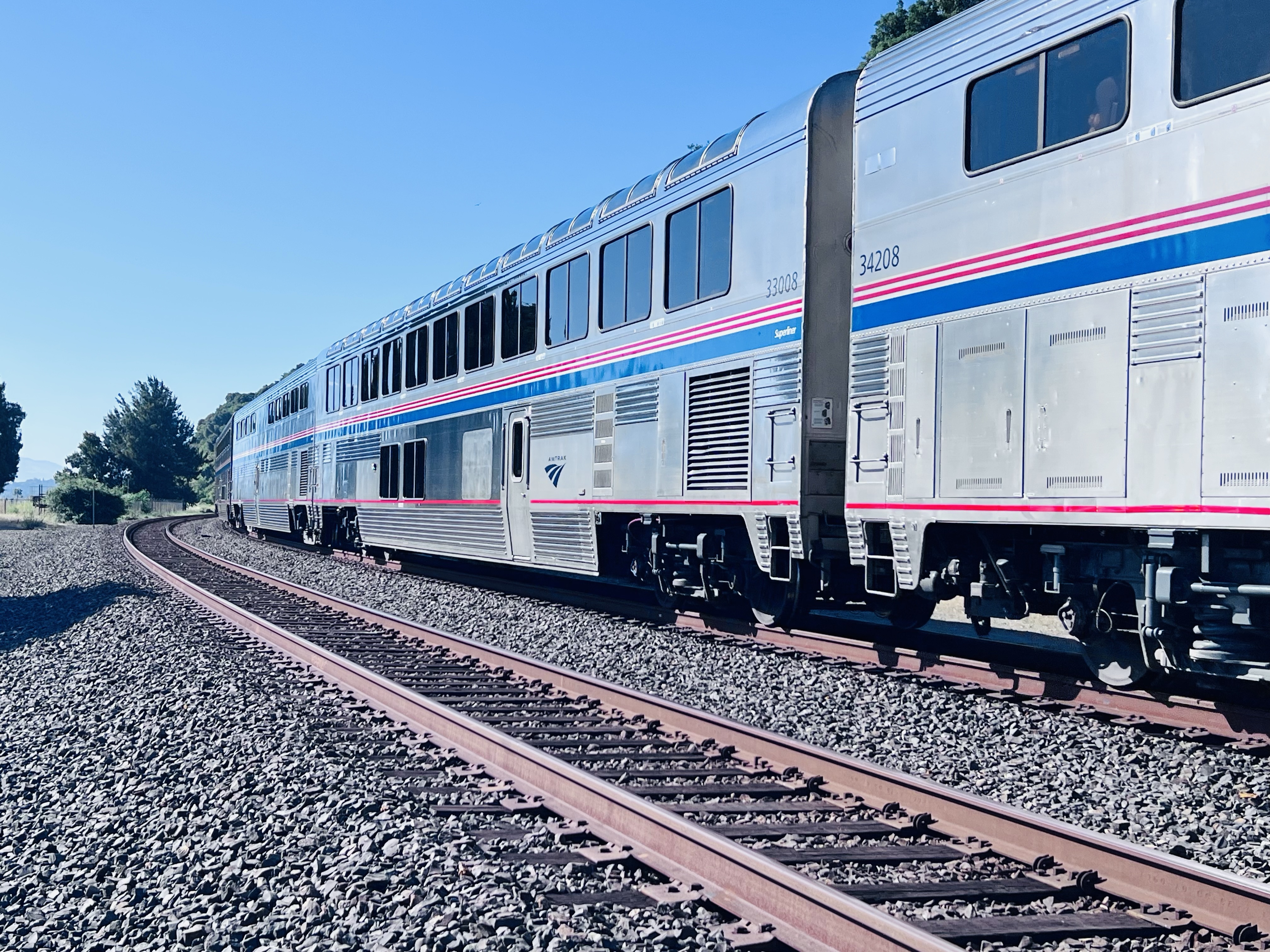
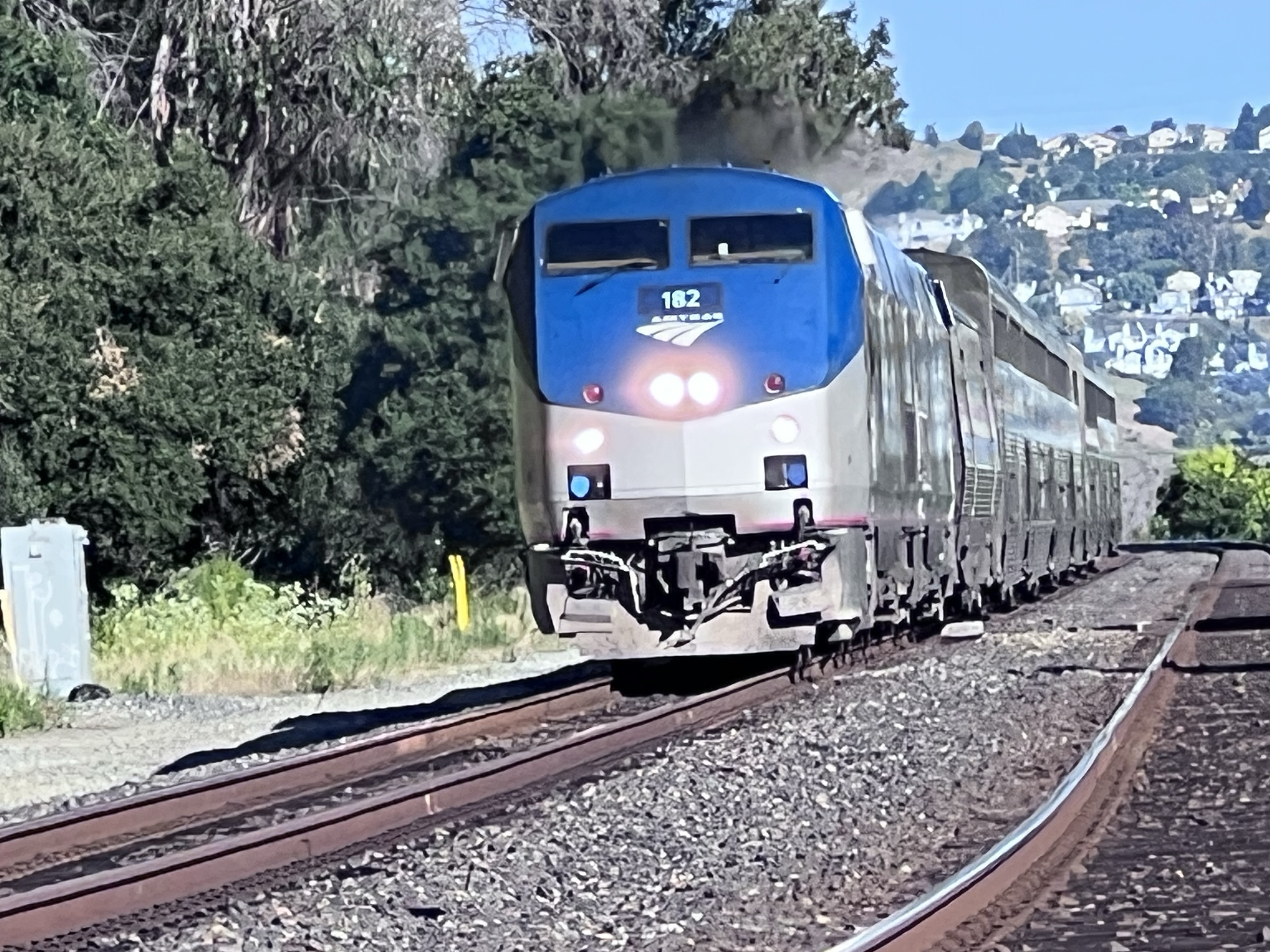
The Chicago bound California Zephyr passing through the former location of the ferry slips on the south side of Carquinez Strait. The train will cross over to the north side just past Martinez on the Benicia-Martinez Railroad Bridge (more about this bridge in the next post).

The first train ferry to operated between Benicia and Port Costa was the Solano which was built by the Central Pacific Railroad (later Southern Pacific) in 1879. She was 425 feet long and 116 feet wide. The steam powered side-wheeler was that largest train ferry of its type. It could ferry a 24 car passenger train with its locomotive or a 48 car freight train on the four sets of tracks on the lower deck. In a 24 hour period, the Solano would make 36 to 46 crossings. She was a real workhorse.
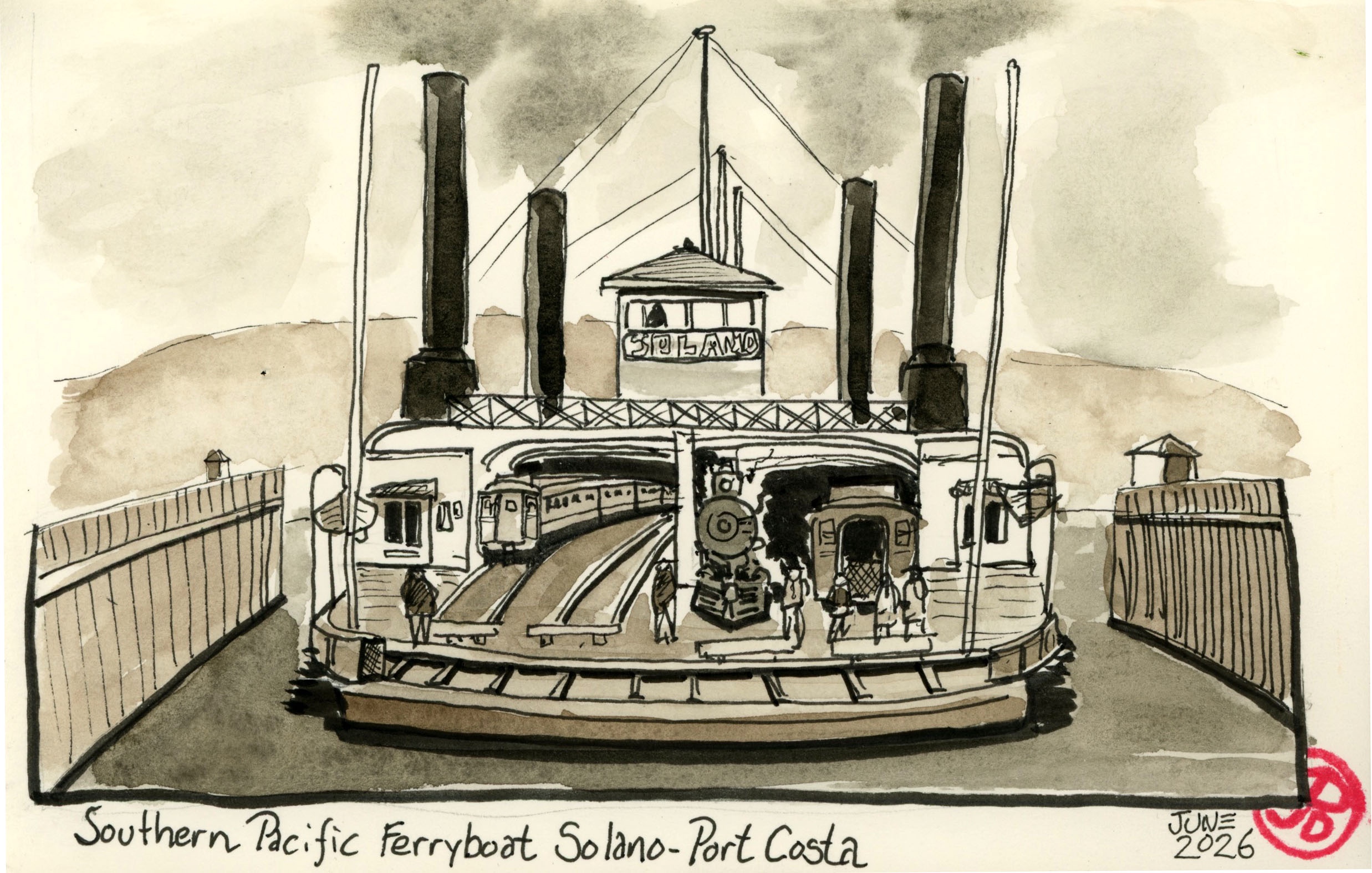
Sketched based on a period postcard of the Solano.

The Solano’s last run was on November 1, 1930 and she was decommissioned along with her sister ship the Contra Costa.

There were many steam powered ferries that moved people and freight on the waterways of the Bay Area. Today, very few exist. The Eureka at Hyde Street Pier and the Berkeley in San Diego come to mind. Some were turned into floating hotels and gambling boats but have since burned and been destroyed. Most were scrapped, very few were preserved for posterity.

I was amazing to find out that the Solano still existed! She was not preserved and is a far cry from her proud days as the largest train ferry in the world. She is to be found about 25 miles east of Port Costa in Antioch.

In 1931 the Solano was moved upstream to be used as a breakwater for a marina in Antioch. The hull was sunk where it remains to this day.
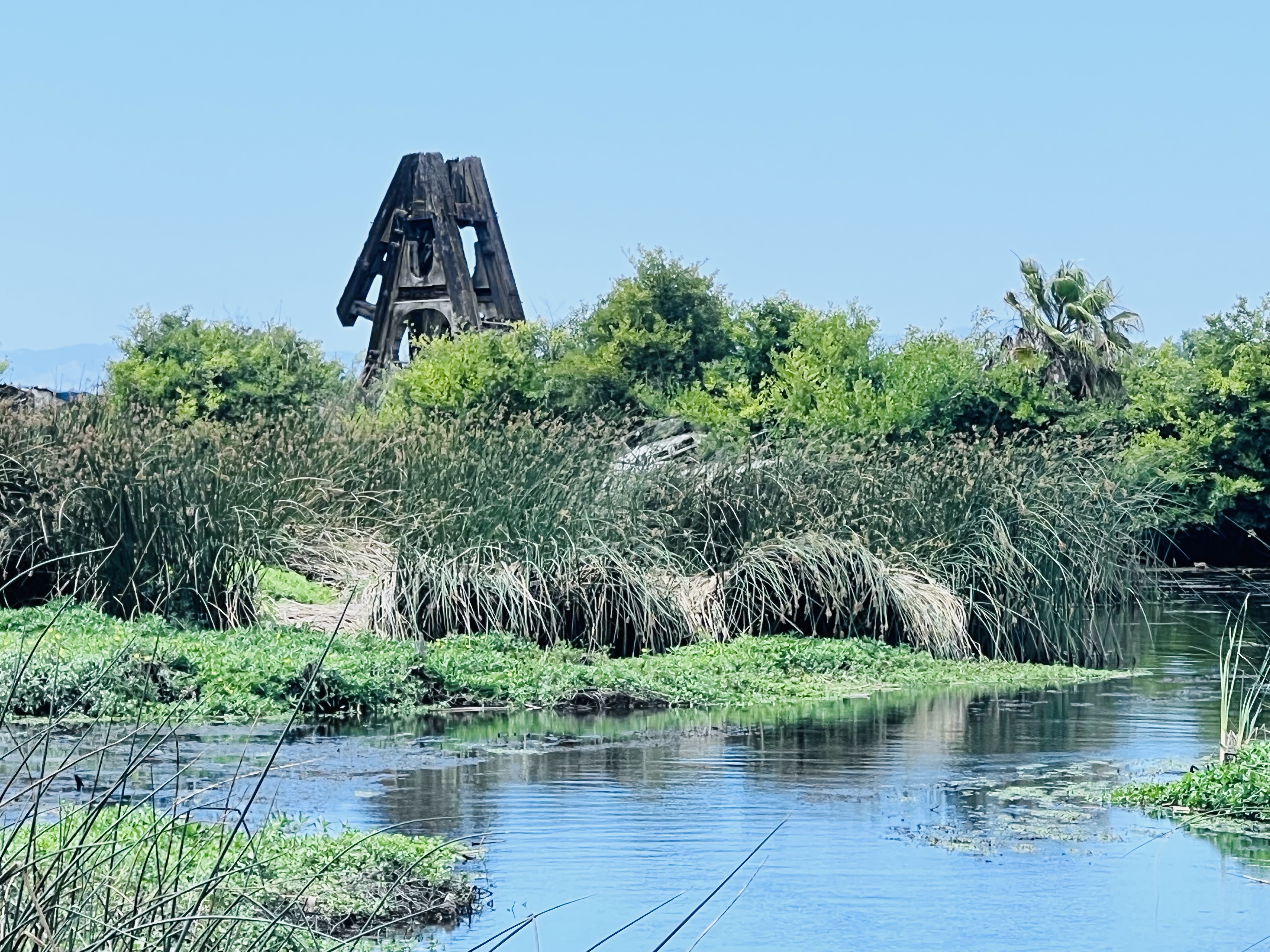
Looking at the massive hull it appears to be a verdant island and the only giveaway that it was once a mighty train ferry is a rusted A-shaped structure projecting above the green “island”.

The A-shaped structure is the walking beam of her engine. The second walking beam has fallen over.
Port Costa: Part 1

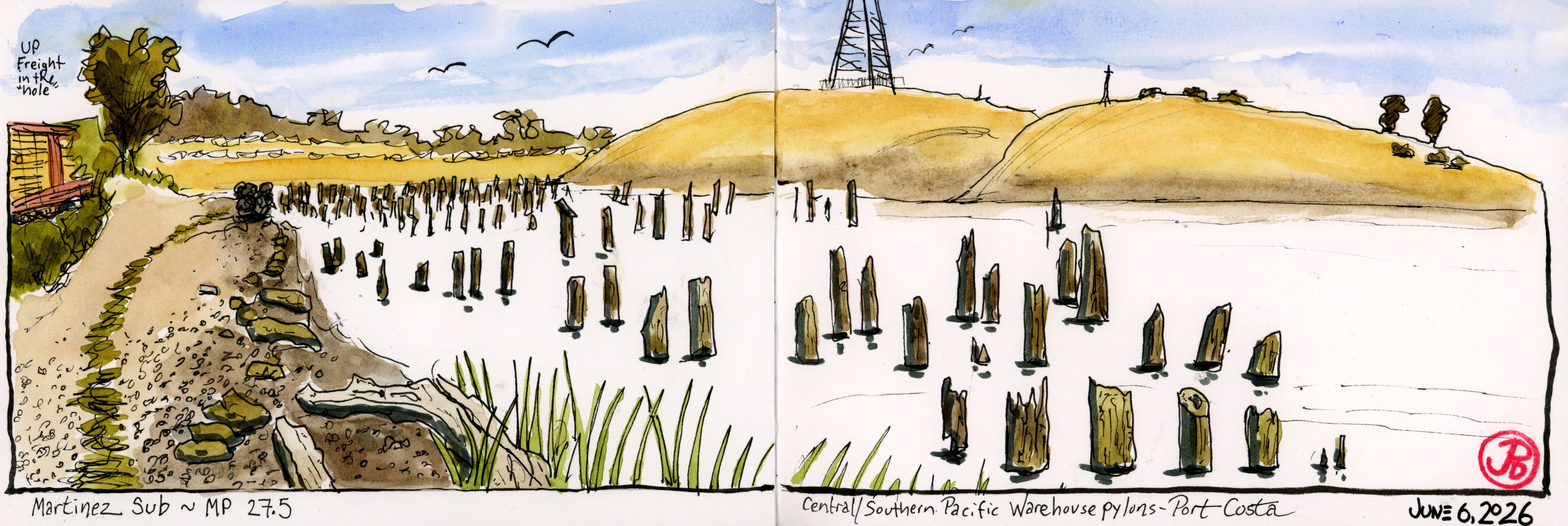
The first Saturday morning in June found me trackside in Port Costa sketching some California history.

I parked near the historic McNear’s Warehouse (more about this in another post) and walked west along the double parallel tracks looking for a sketching spot along the beach that spoke to me.

I had to be very aware here because my path is on the main line with a lot of passenger and freight traffic.

After about a five minute walk I found a short path down from the railbed to the shoreline with a nice sketching log to perch on and a great view before me.

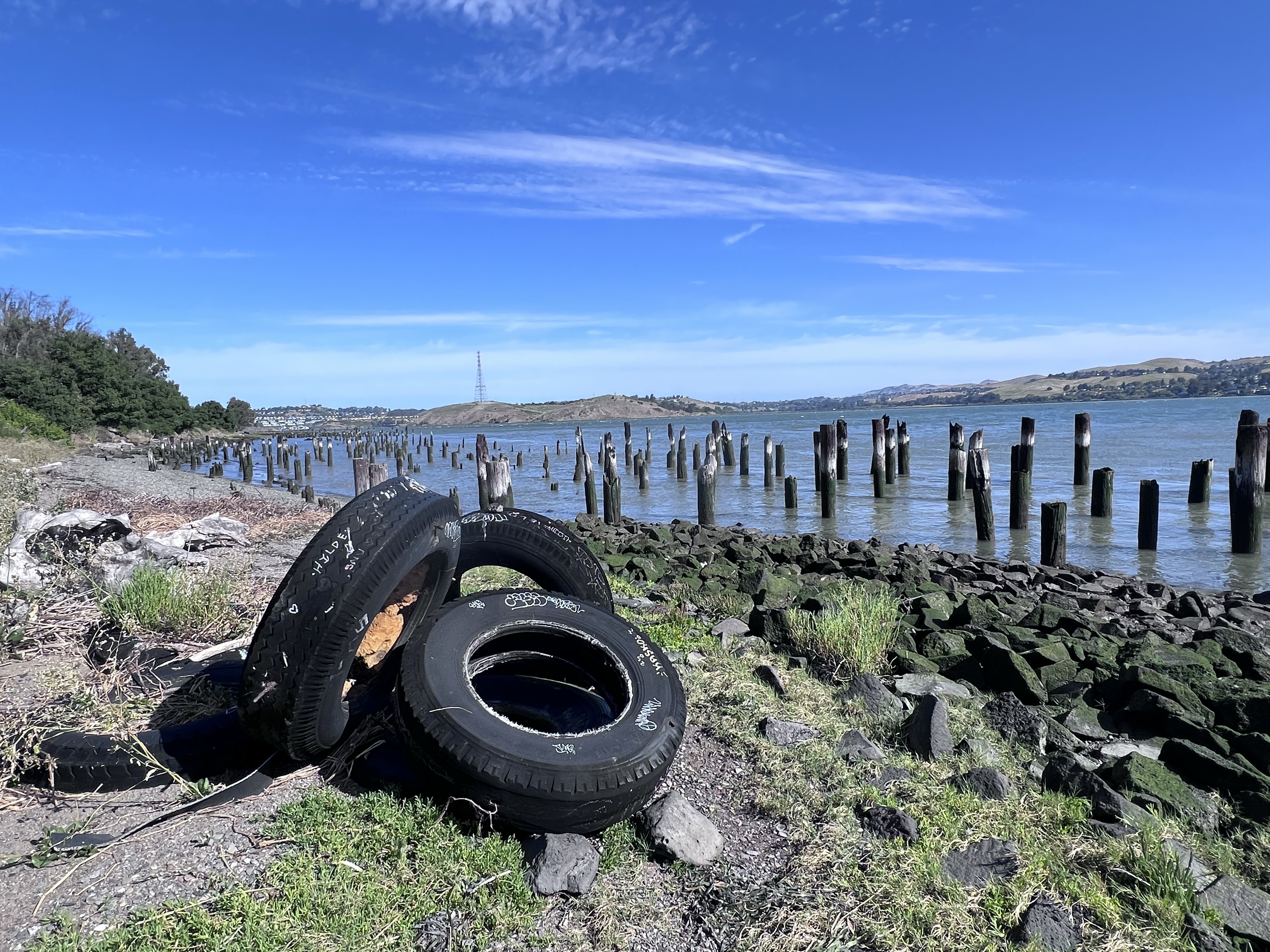
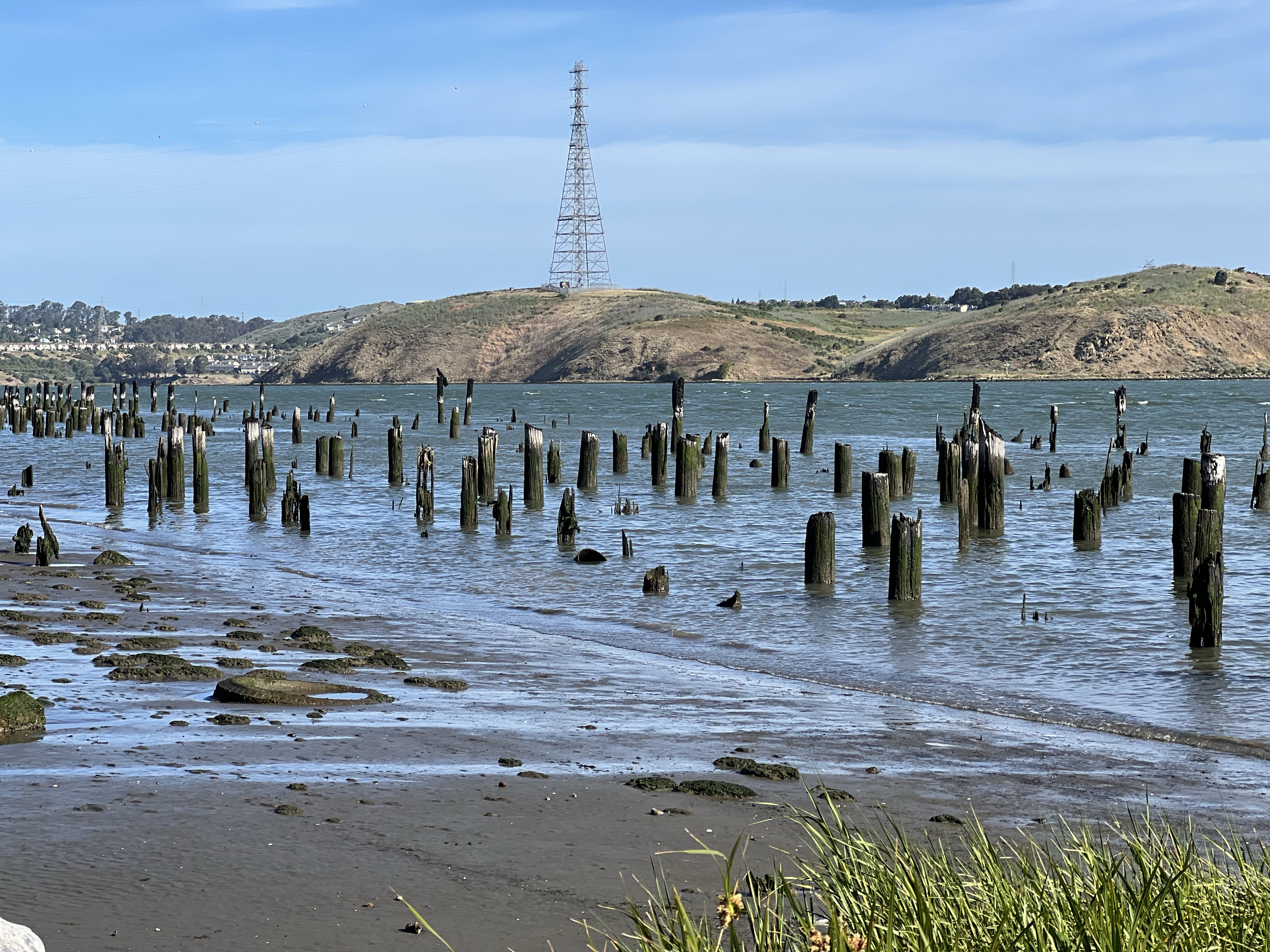
Before me were many wooden pylons breaking above the tide. So what’s the deal with a bunch of sticks?

Bunch of sticks!

The pylons were what remains of the railroad, storage warehouses, and ferry complex and spoke of a very busy past at Port Costa.

Engineers had a challenge fitting warehouses, ferry slips, and railroad maintenance buildings and tracks into the narrow strip of land between the shoreline and the steep hills on the southern edge of the Carquinez Strait. The solution was to build out into the water.

The pylons are the only evidence of the Central/Southern Pacific Railroad complex.

Of course any chapter of historical wooden structures involve one common element: fire. The complex burned and wood rot took what remained.

Before there where any rail bridges crossing the strait they had to use ferry boats that travelled a mile from Benicia to Port Costa, a trip that took about ten minutes.

Instead of unloading trains of their passengers or freight and reloading them onto boats for the short crossing, the trains themselves were loaded onto train ferry boats (locomotives and all) on four separate tracks.

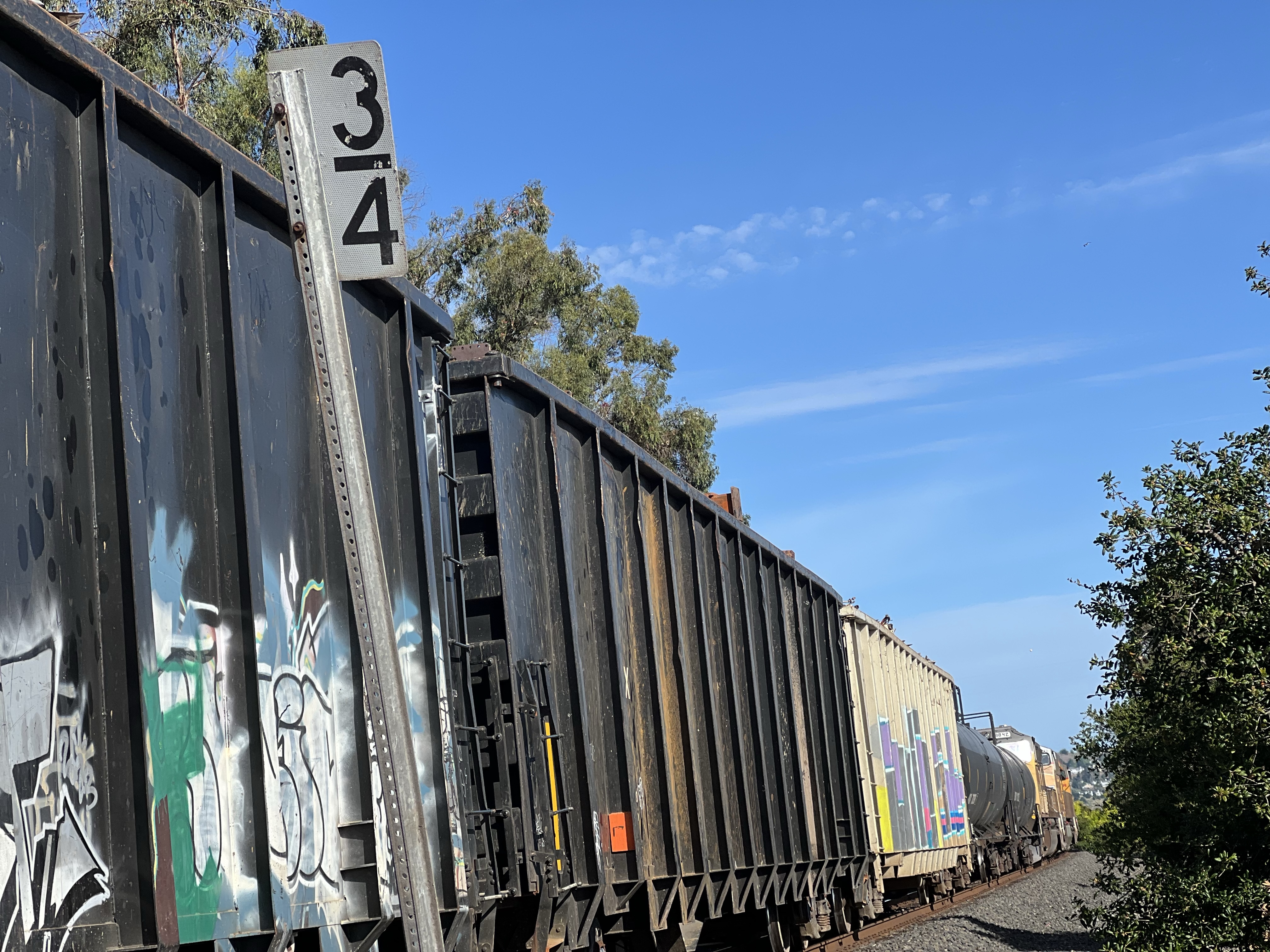
I started my sketch at mile marker 3/4 at 8:15 AM. I was keeping my eyes and ears on the double tracks to my left, especially as the clock approached 9 because the eastbound California Zephyr was due to pass Port Costa at about that time.

From previous posts it’s plain, I love the California Zephyr. I have traveled on the longest AMTRAK route four times and it was always a great experience.

In that 45 minutes, four trains passed (three passenger and one freight). This is a busy part of the high iron!

At 8:30 a mixed consist freight pulled into the “hole” to let two Capital Corridors pass.

A westbound freight waiting at mile post 3/4 for two passenger trains to pass.

The freight was stopped long enough for me to climb aboard and there were a few good rides on the consist but I resisted the urge to abandon teaching to take up the hobo life.

After the passenger trains passed, the UP freight got the high ball and the hiss of the brakes being released told me that the freight was about to move. The cars creaked to life and the train took up slack and resumed its westward journey.

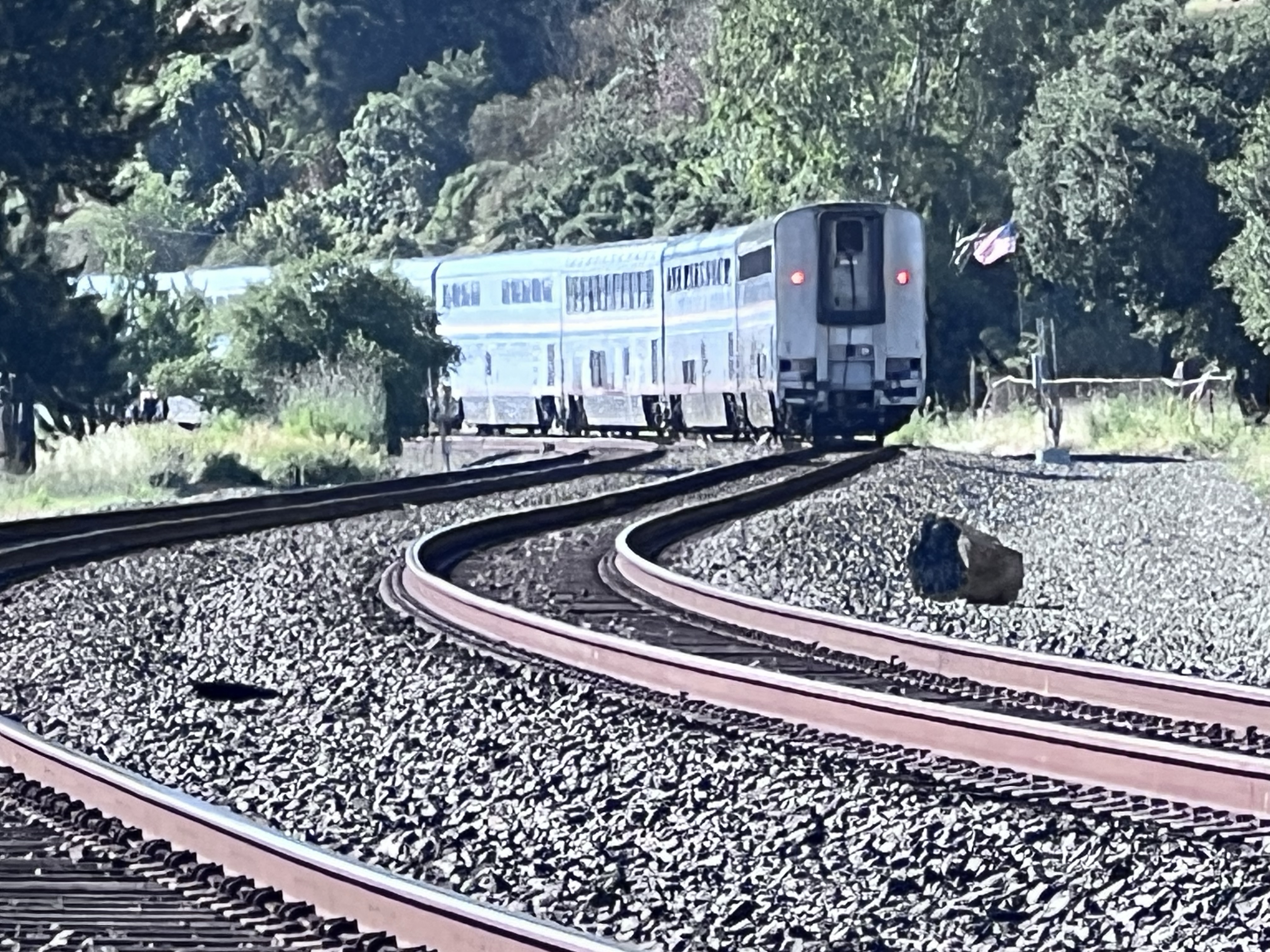
California Zephyr Train No. 6 passing the remains of the train and ferry complex at Port Costa.
Final destination, Chicago, Illinois. Just to the right of the end of the Zephyr is the town of Port Costa. More about this historic town in my next post.