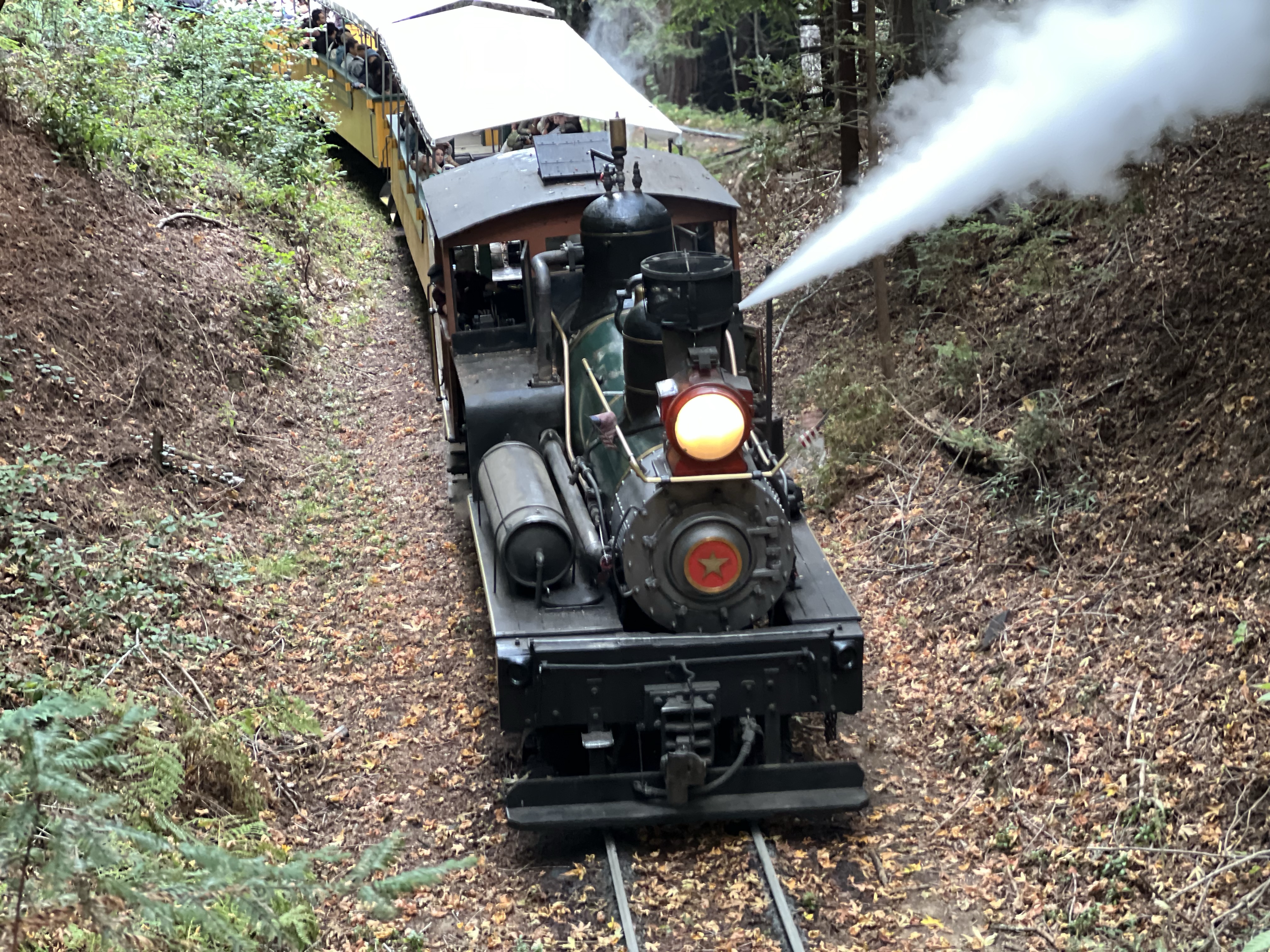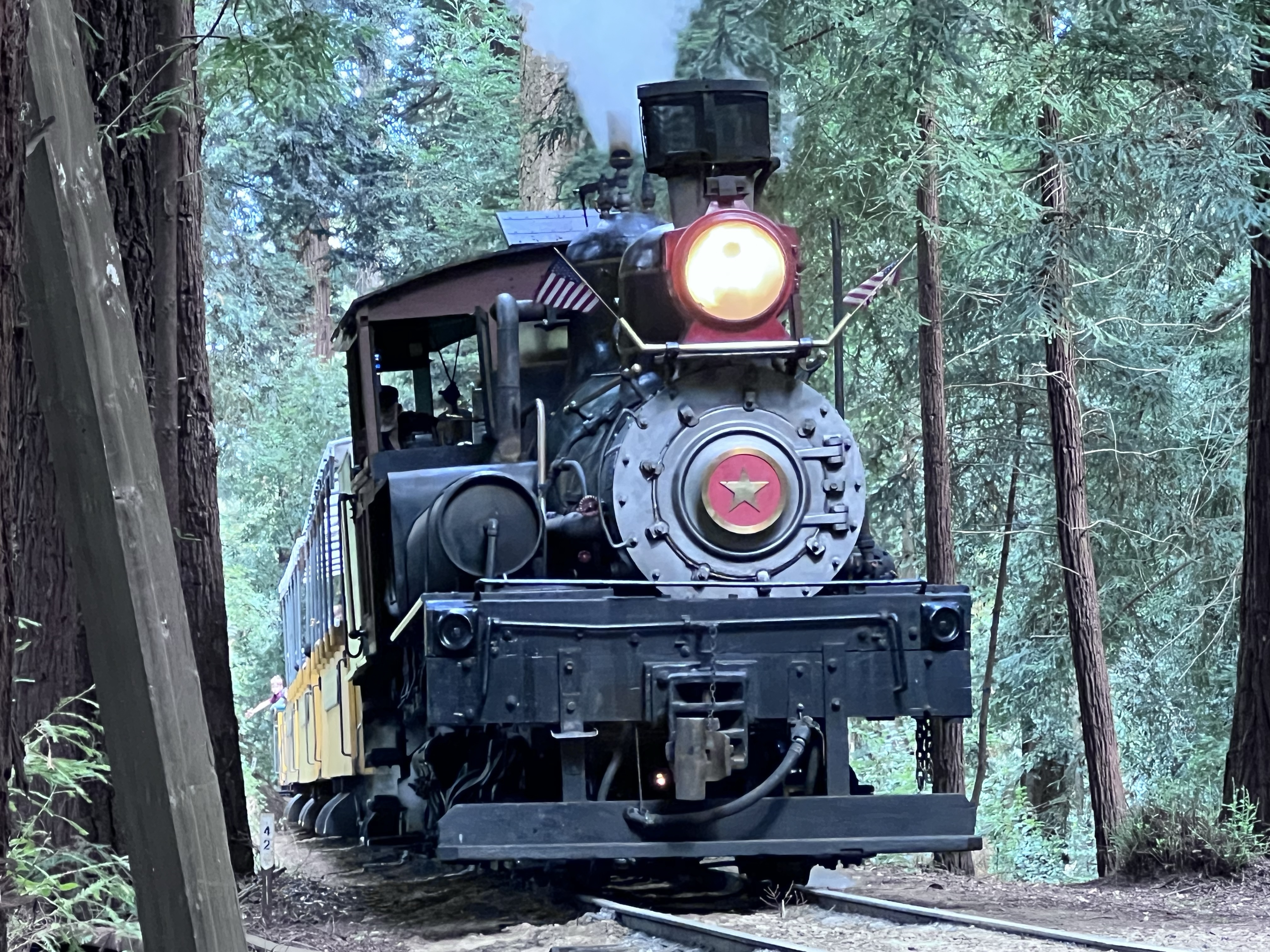
In the previous post I highlighted the tightest turning trestle in the United States, the Indian Creek Trestle on the Roaring Camp & Big Trees Narrow Gauge Railroad. While this is impressive, the Spring Canyon Trestles are even more impressive.
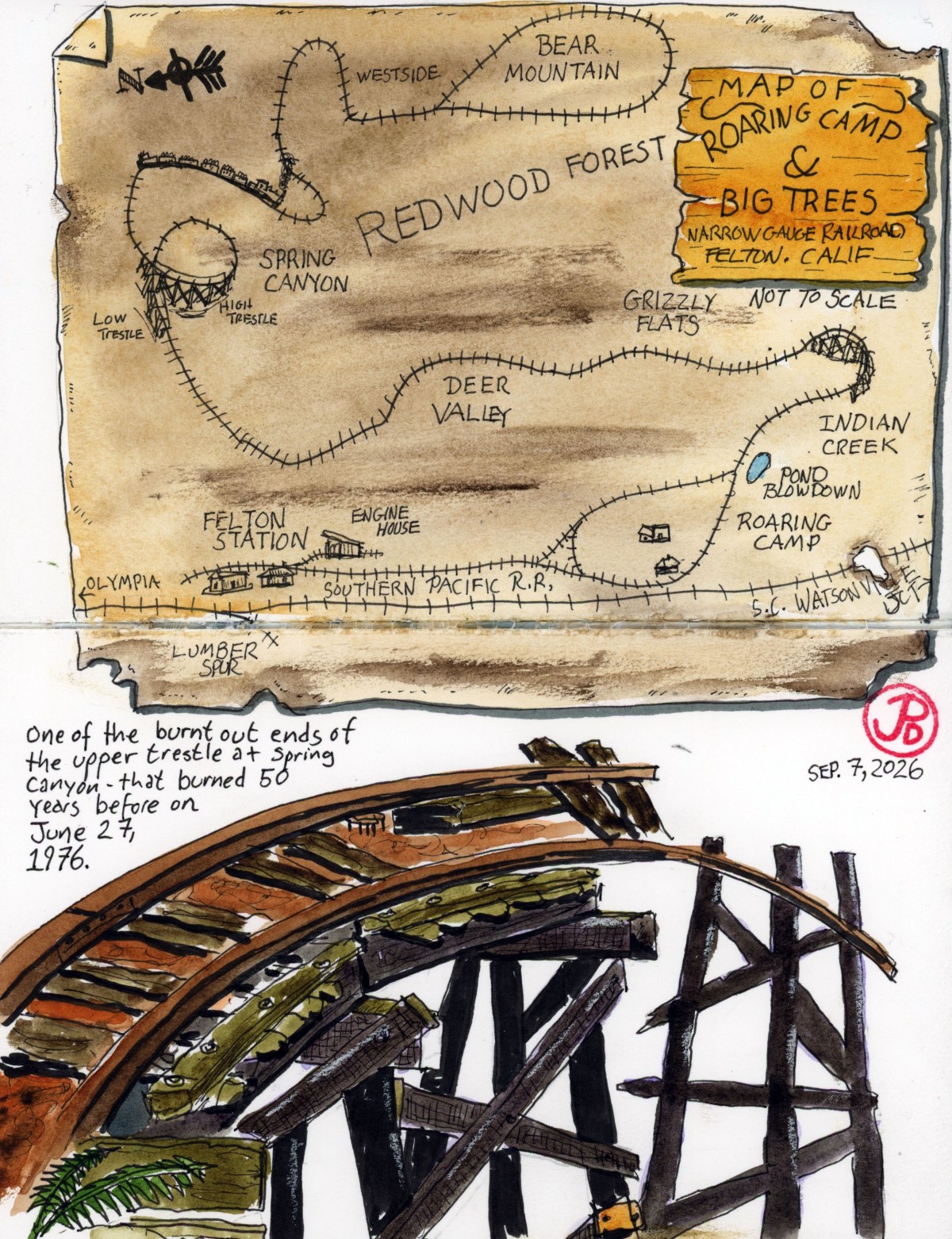
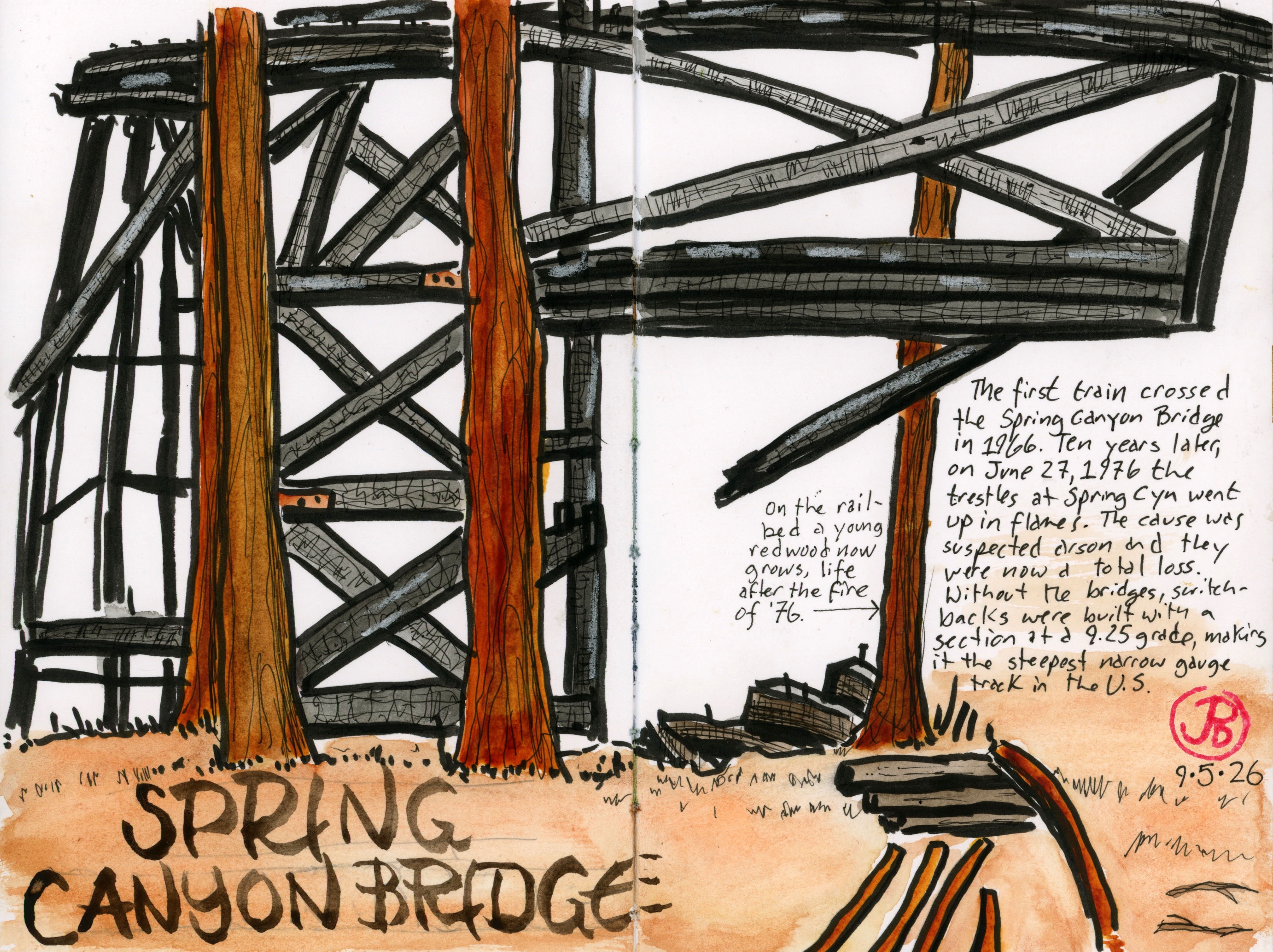
The trestles includes a lower trestle and an upper trestle. The uphill tracks passed under the upper trestle on the lower trestle, corkscrewed around and then crossing over the lower on the upper. The upper trestle railbed was 80 feet off the ground.
The two trestles were built in 1966 and the first train of passengers crossed the trestles in the same year.
50 years ago, on June 27, 1976, at approximately 6:30 PM, the trestles went up in flames. The work of ten years before was a total loss.
Locals reported hearing a loud explosion shortly before the fire started. It was suspected that the cause was arson, either from an environmentalist destroying the trestles to prevent logging (the railroad was a tourist attraction and never a logging operation) or a disgruntled employee. Neither theory has been proven and fire of 1976 is shrouded in mystery.
The ghosts of the past still remain at Roaring Camp in the charred black beams of the Spring Valley Trestles.
And I was here to see them and sketch the standing remains of the Spring Canyon Trestles.
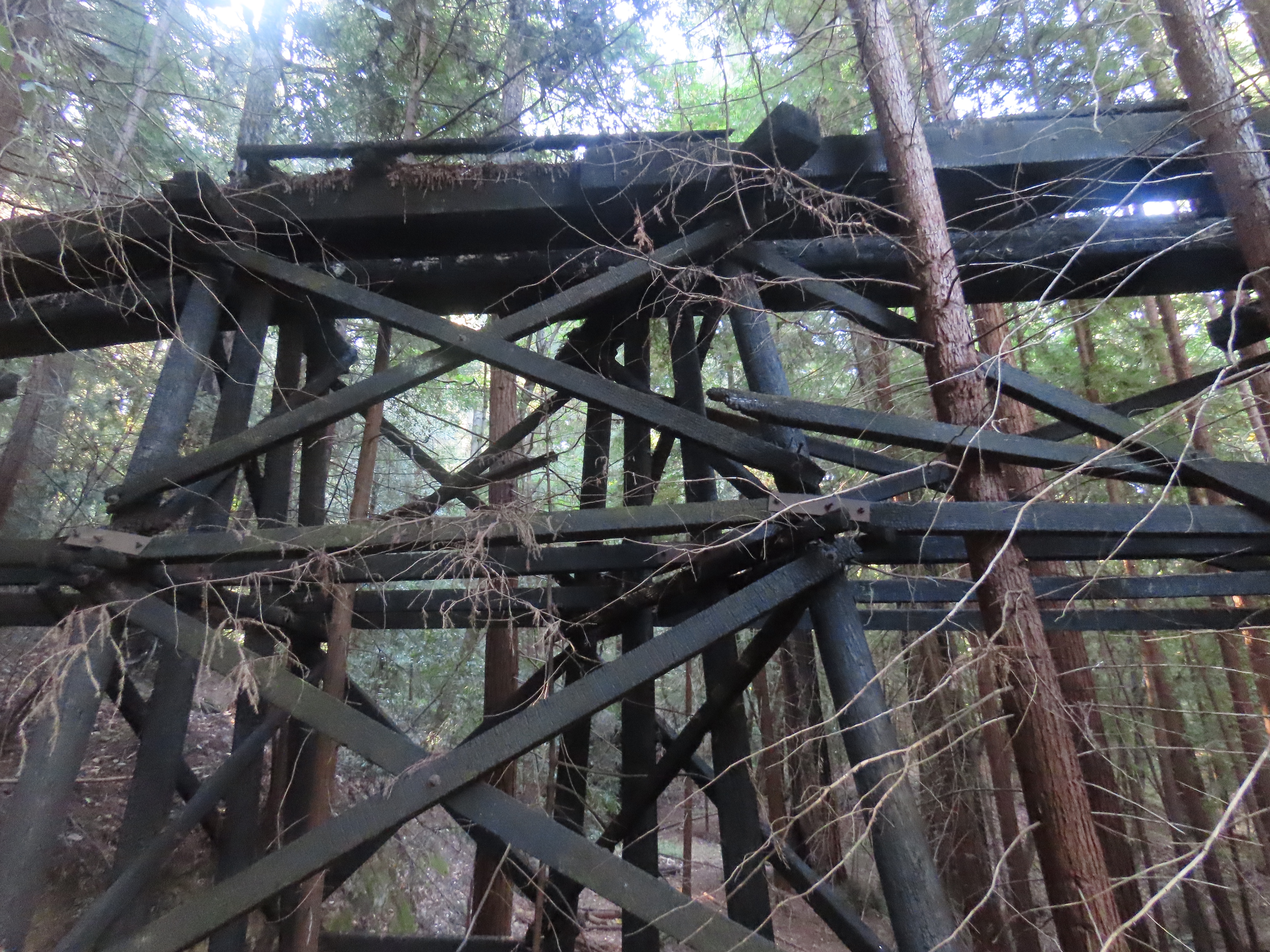
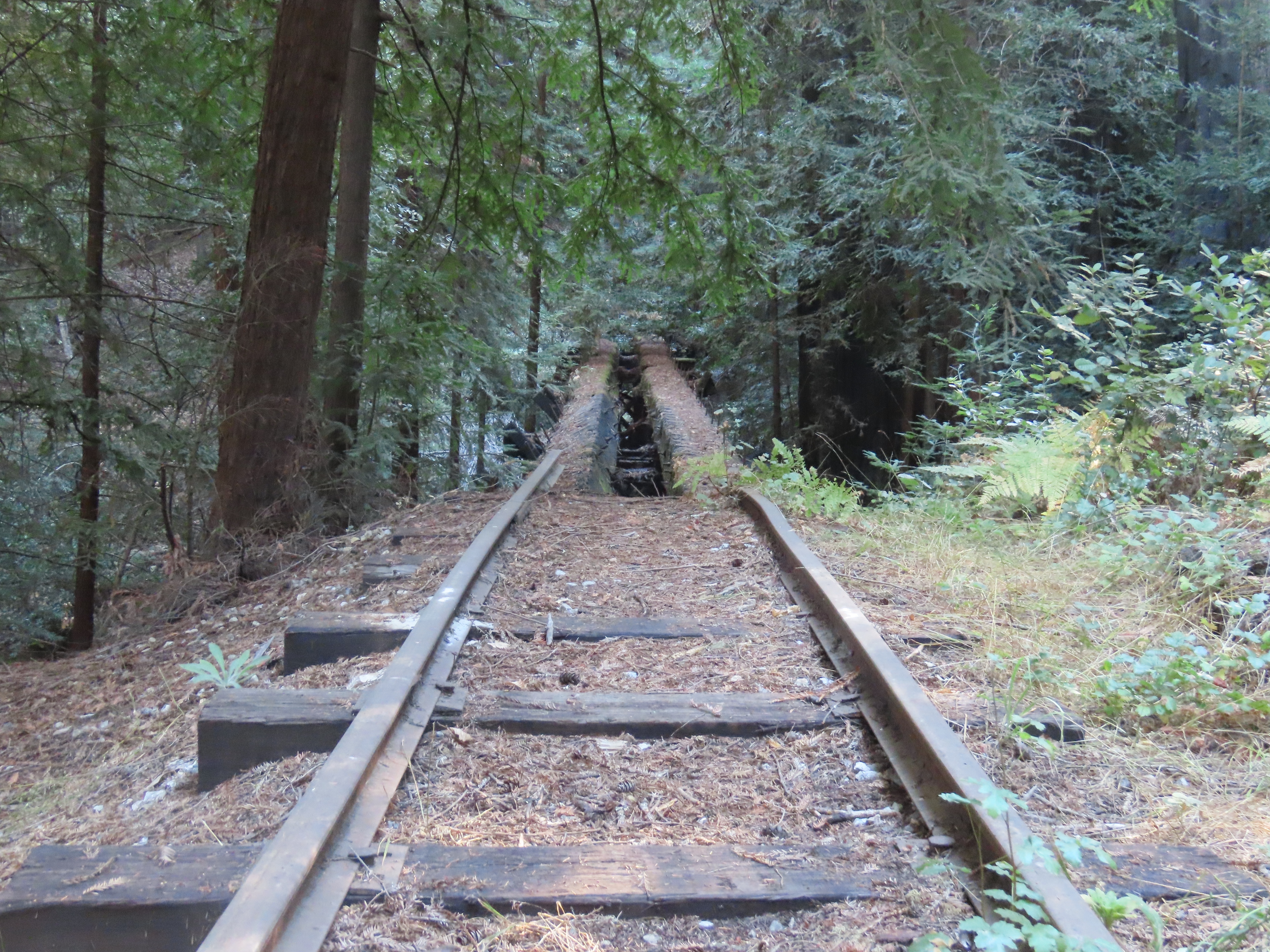
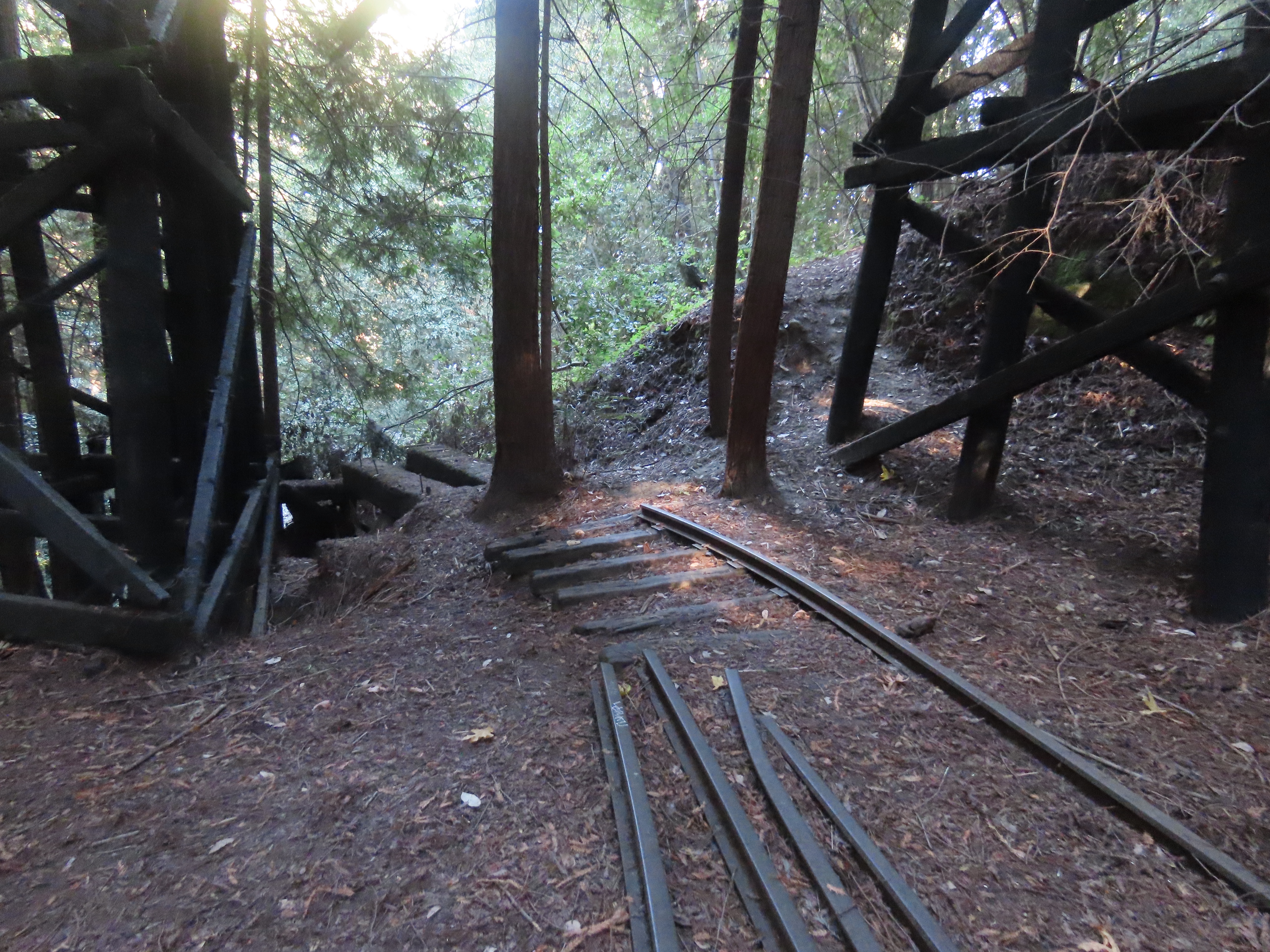
The Roaring Camp’s founder and owner Norman Clark wanted to rebuild the trestle but the insurance company would not allow another wooden trestle to be built, instead they preferred steel but this did not fit in with Clark’s vision for historical accuracy for a logging railroad.
Instead of rebuilding the two trestles (which would also be expensive) a fix was planned and engineered to take the railroad up and out of Spring Canyon without the trestles.
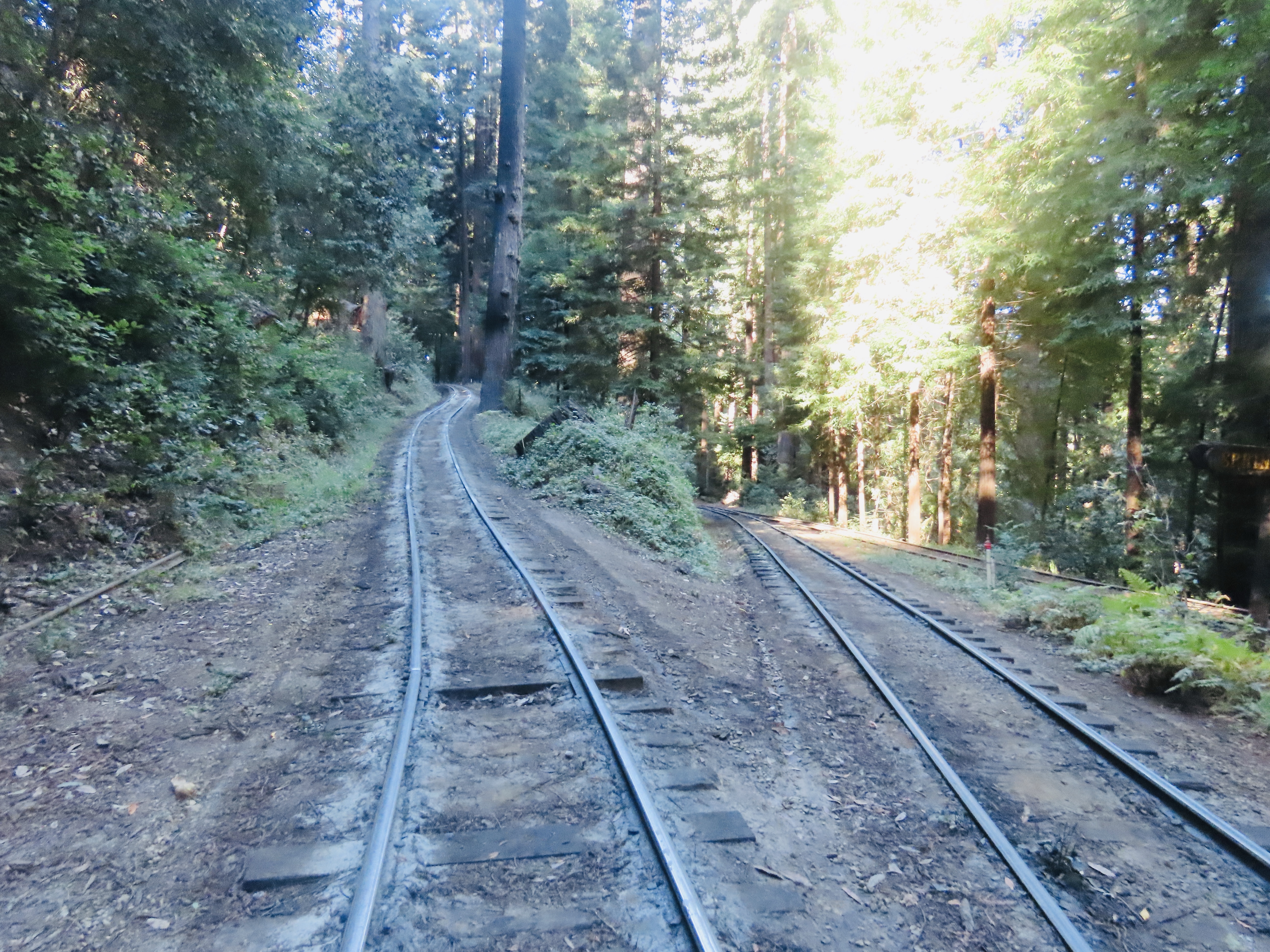
A series of switchbacks was constructed in the space of just four months and these switchbacks are still in use 50 years later.