Image

Sketch Crockett

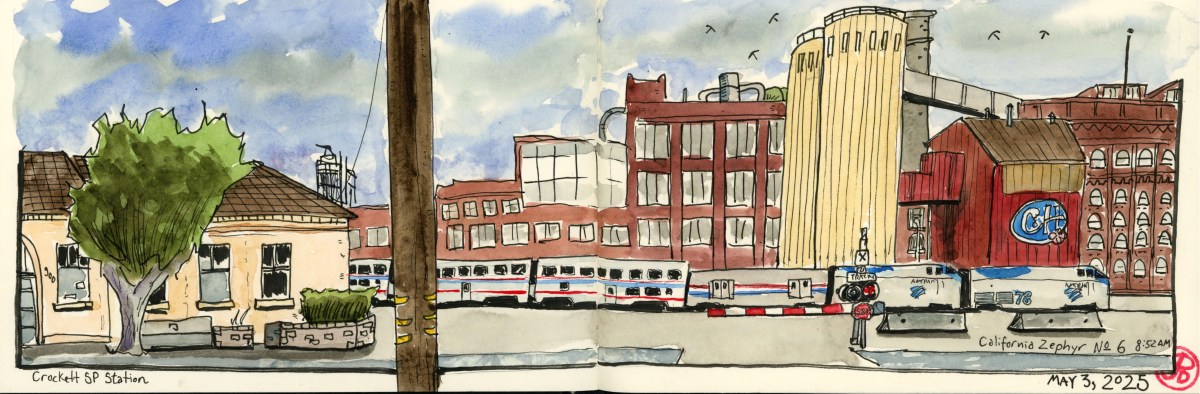
My Saturday morning sketch found me at the corner of Loring and Rolph Ave in the little corner park in Crockett.

Before me was the C & H factory with the Union Pacific mainline passing in front. To my left was the former Southern Pacific station (sketched on a previous Saturday) and is now a historical museum.

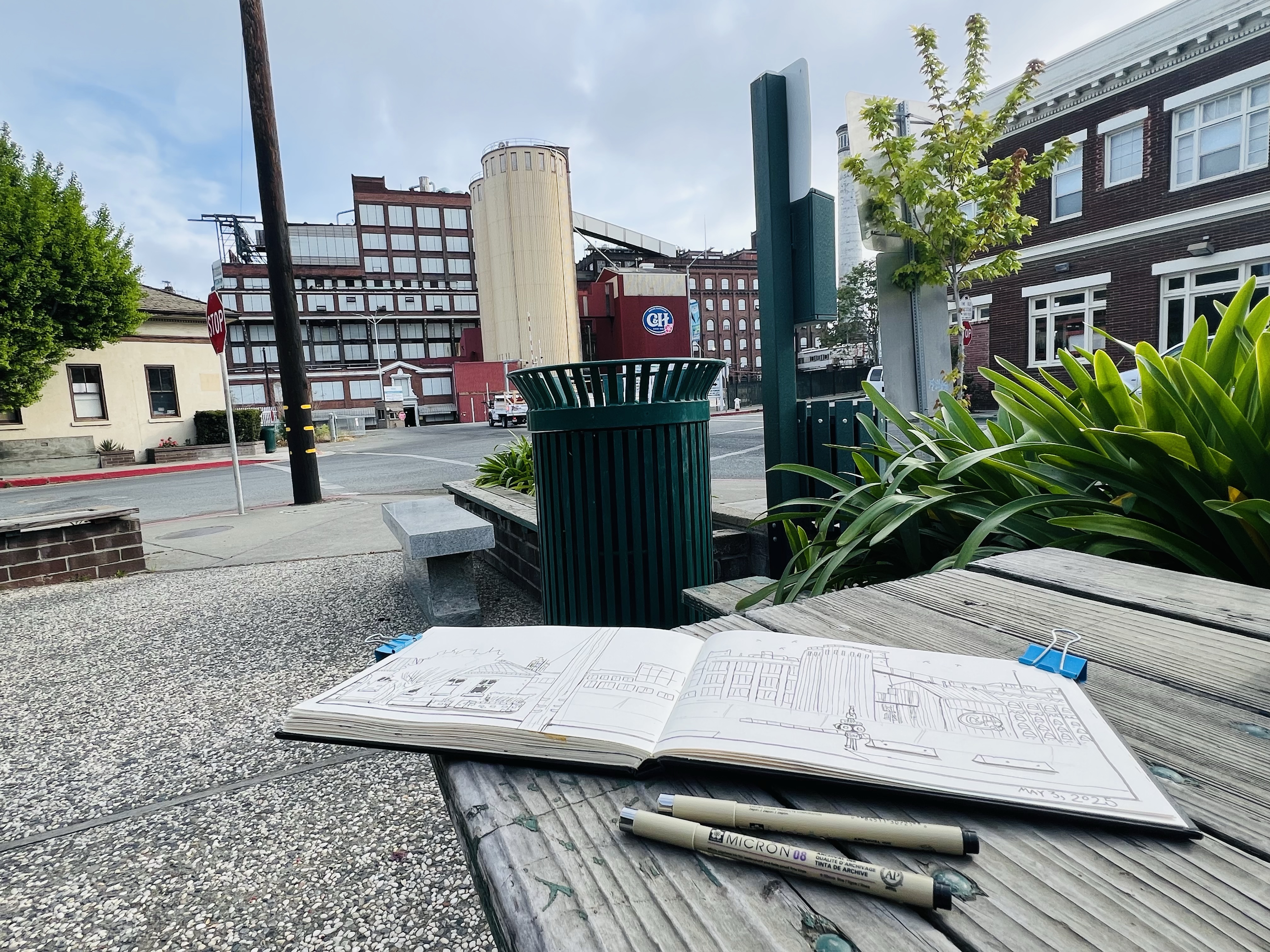
I planned to add my park perspective to my Stillman & Birn Delta panoramic journal. The factory is full of complicated angles and shapes as if the factory was built in stages and at different times (which it probably was). I employed a little sketcher’s shorthand to simplify the details.

In 1906 Crockett became “Sugar Town” when a cooperative of Hawaiian sugarcane growers bought a sugar beet factory and turned it into the California and Hawaiian Sugar Company (C & H). At the company’s peak, 95% of the town’s residents were C & H employees.

The southbound Coast Starlight No. 11 passes by the complex jumble of the C & H sugar factory at 8:01 AM.

Sketching the factory was a wonderful meditation, as it often is, turning chaos into order. I can think of few other pursuits that offers such satisfaction and peace of mind. I can almost feel my blood pressure drop when I put pen to paper.

Parkside sketching.

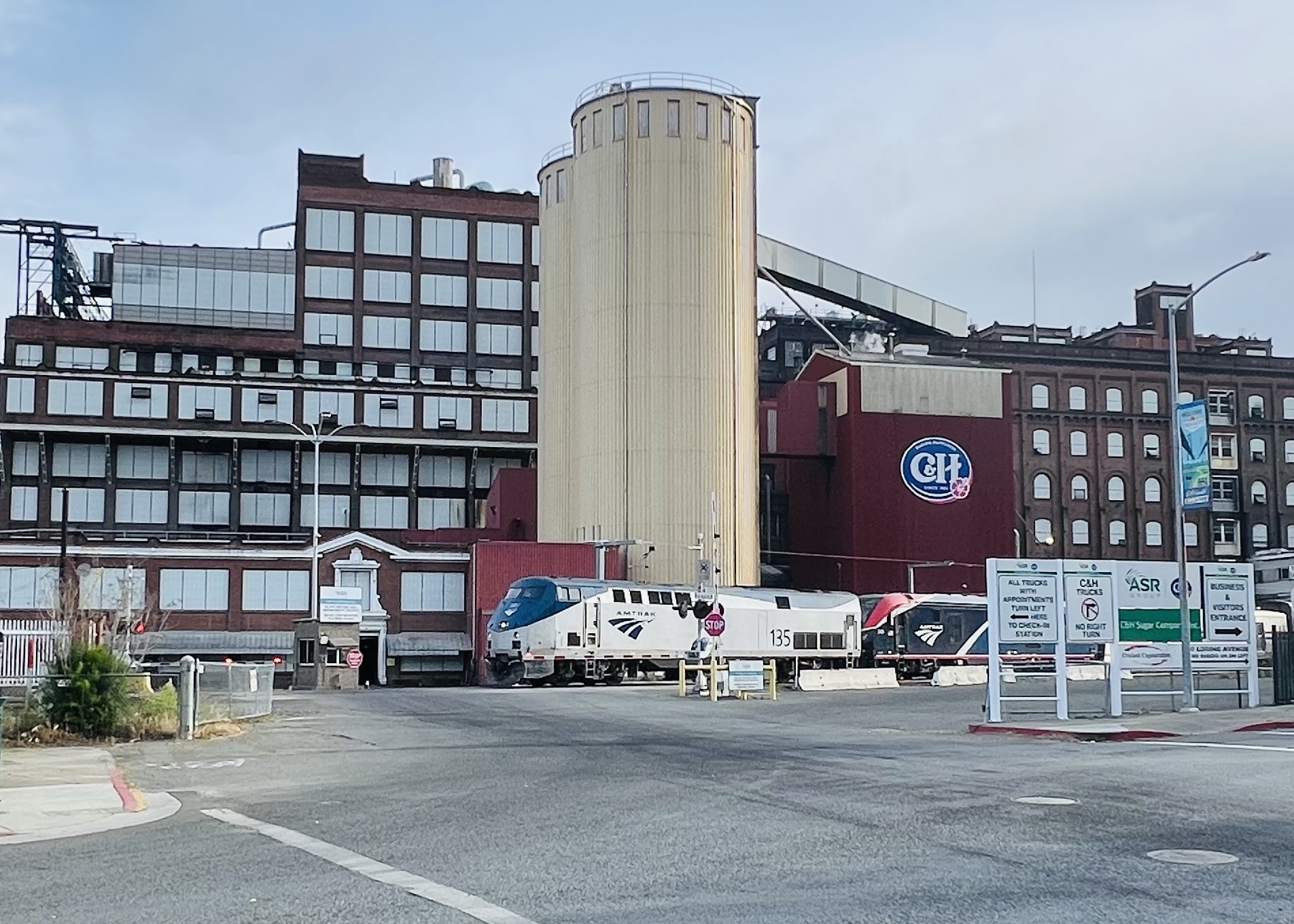
I employed a similar sketching techniques to past posts with putting a moving train in my sketch. I draw in the foreground and background and then add the train after it passes (usually from a photo reference).

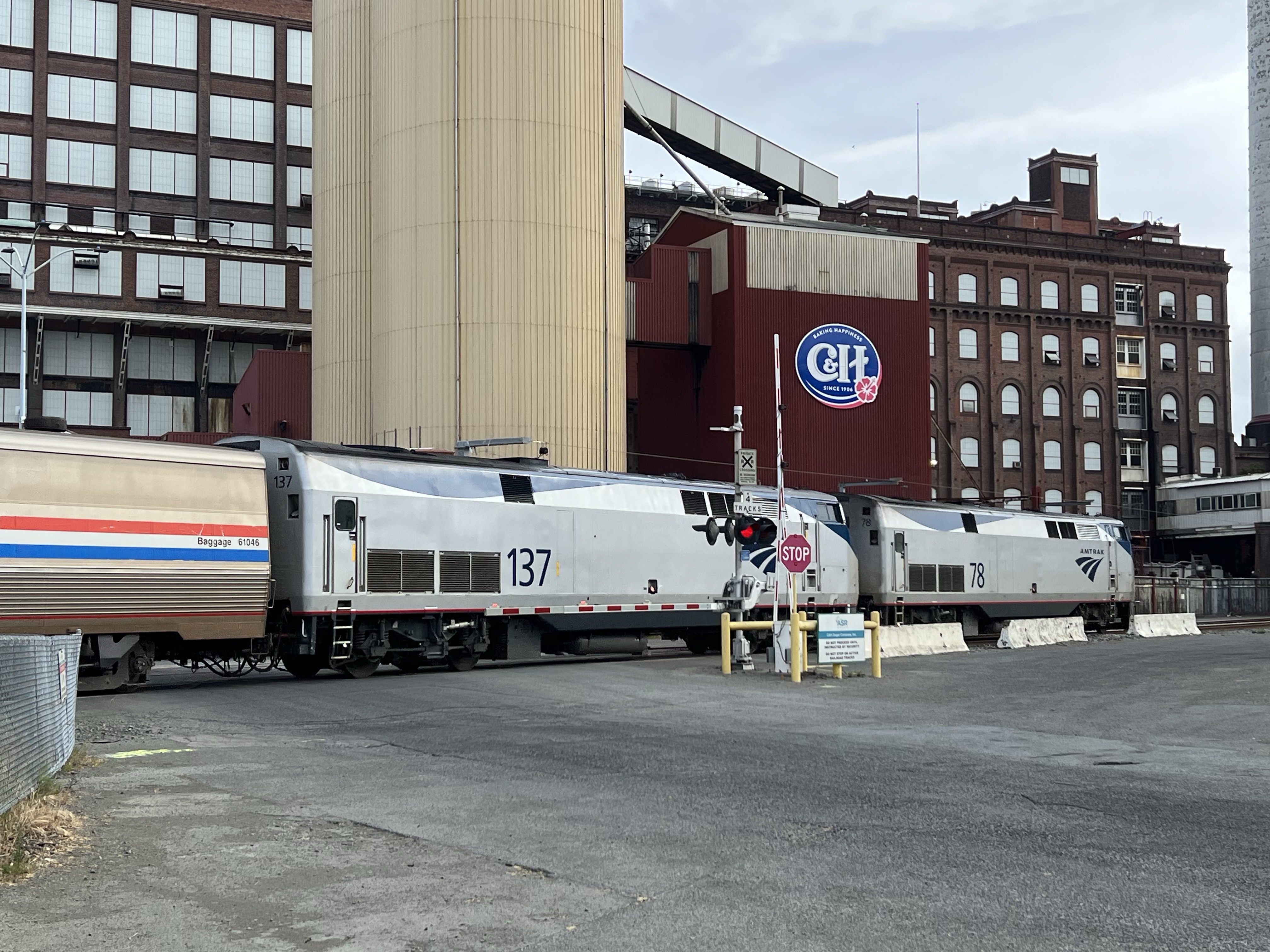
Two GE P42DCs (No. 78 and 137) on point of the California Zephyr. Next stop: Martinez, final destination: Chicago, Illinois.

The passenger train I sketched into the scene was California Zephyr No. 6. I guess I should explain my fascination with AMTRAK’s longest daily route.

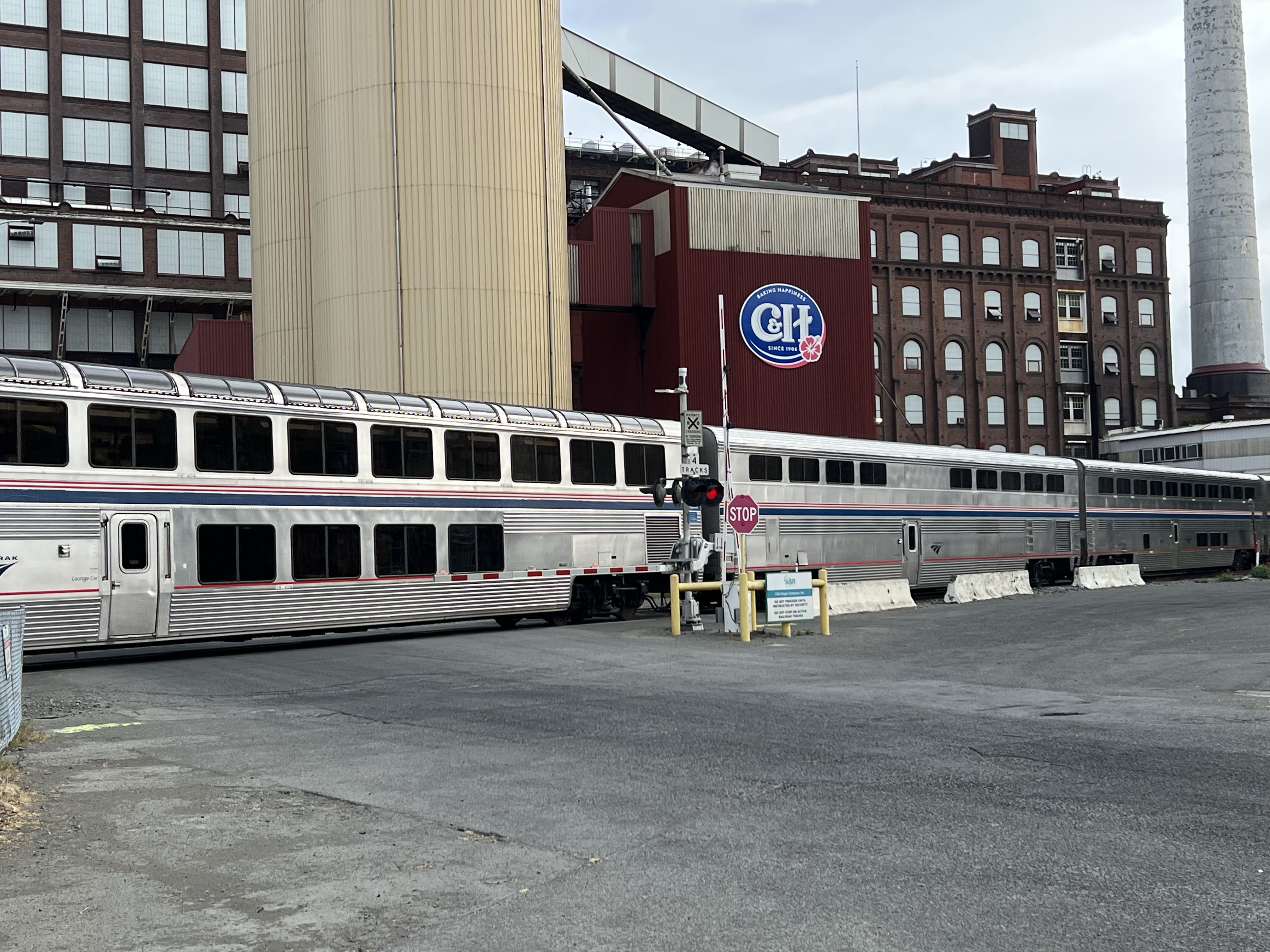
The Zephyr observation car crossing the entrance access to the C & H factory.

I have taken the Zephyr round trip twice, from Colfax, Ca to Denver, Co. The first time was for some Colorado birding and we where up in the Rocky Mountains at Loveland Pass looking for the elusive white-tailed ptarmigan.

It was here that I got a call from my mom and learned that my younger brother had died. I was leaving the next day from Union Station and it was a beautiful if not bittersweet rail journey.

The last trip I took with my stepdad was on the Zephyr and it was a great trip through one of the most scenic stretches of tracks in the United States. So whenever I see the Zephyr pass by, it puts a smile on my face.

Image

UP Eckley Crossing: 748331G (M. P. 27.30)

My Saturday morning sketch location was the pedestrian rail crossing at Eckley Pier in the Carquinez Strait Regional Shoreline.

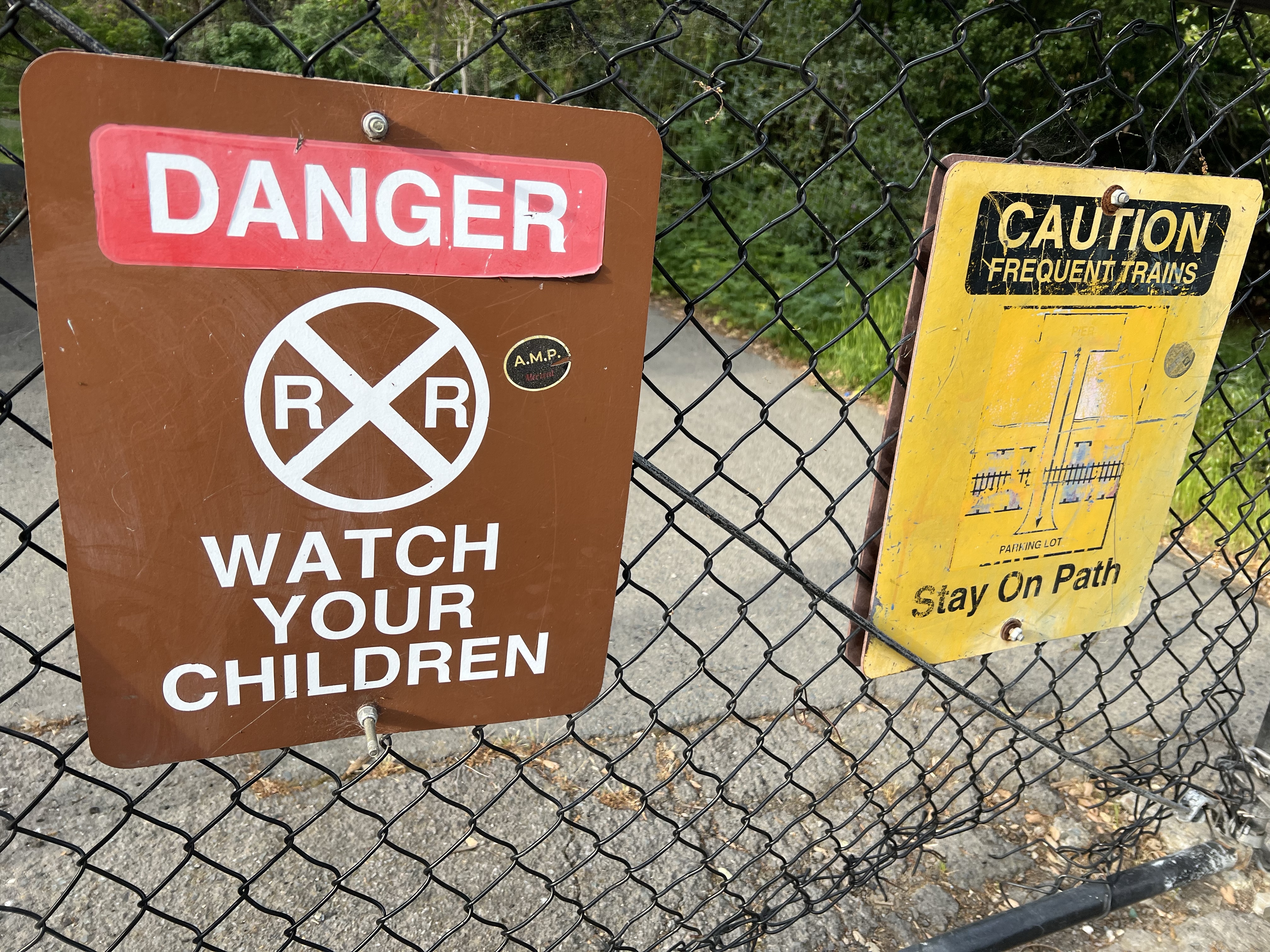
A sign any educator can appreciate.

This pedestrian crossing is quite unusual because there are no crossing gates preventing pedestrians, wanting to go to the fishing pier, from heading across two very busy tracks of the Union Pacific main line.

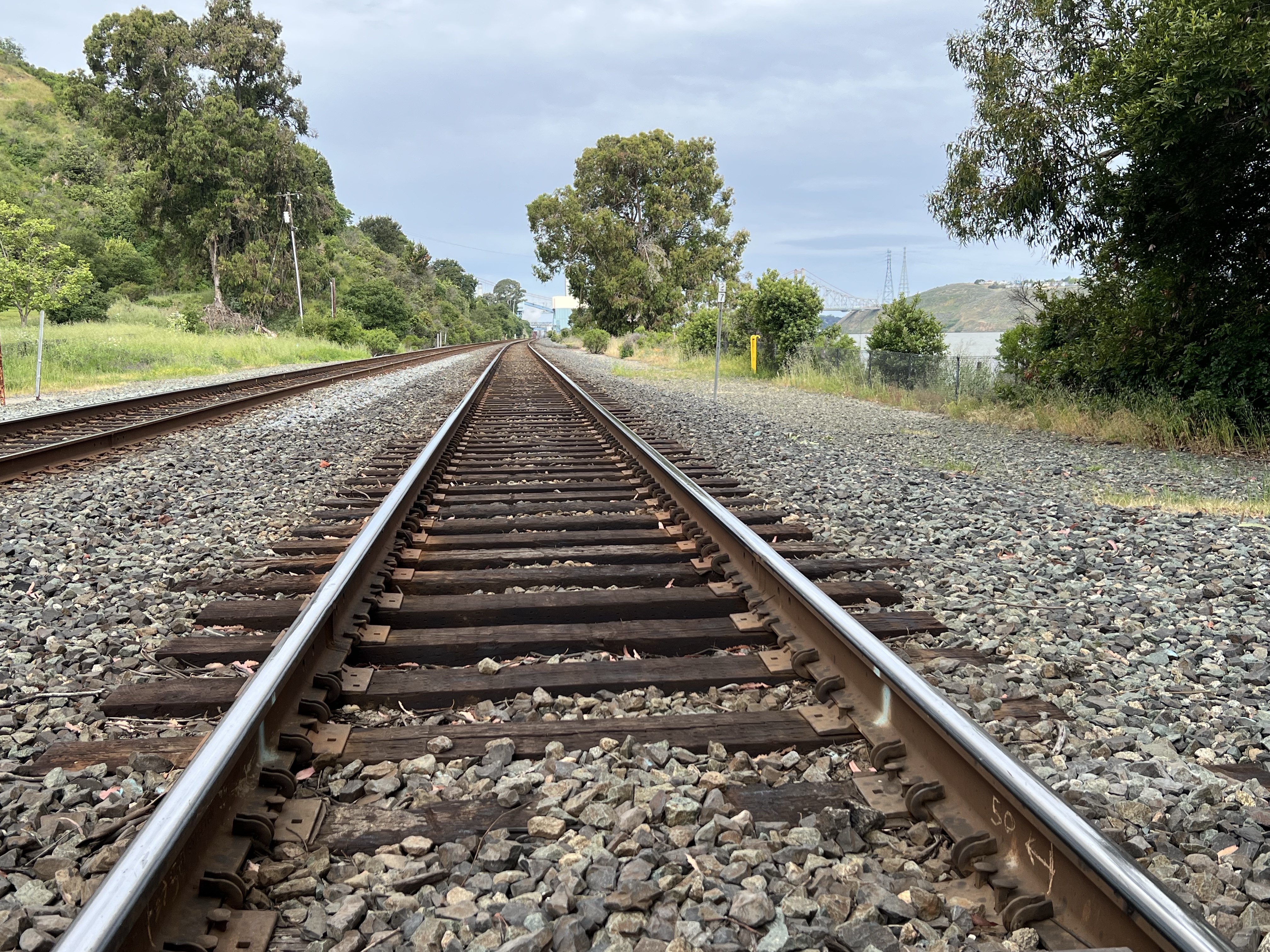
No rusted rails here but polished high iron from lots of use.

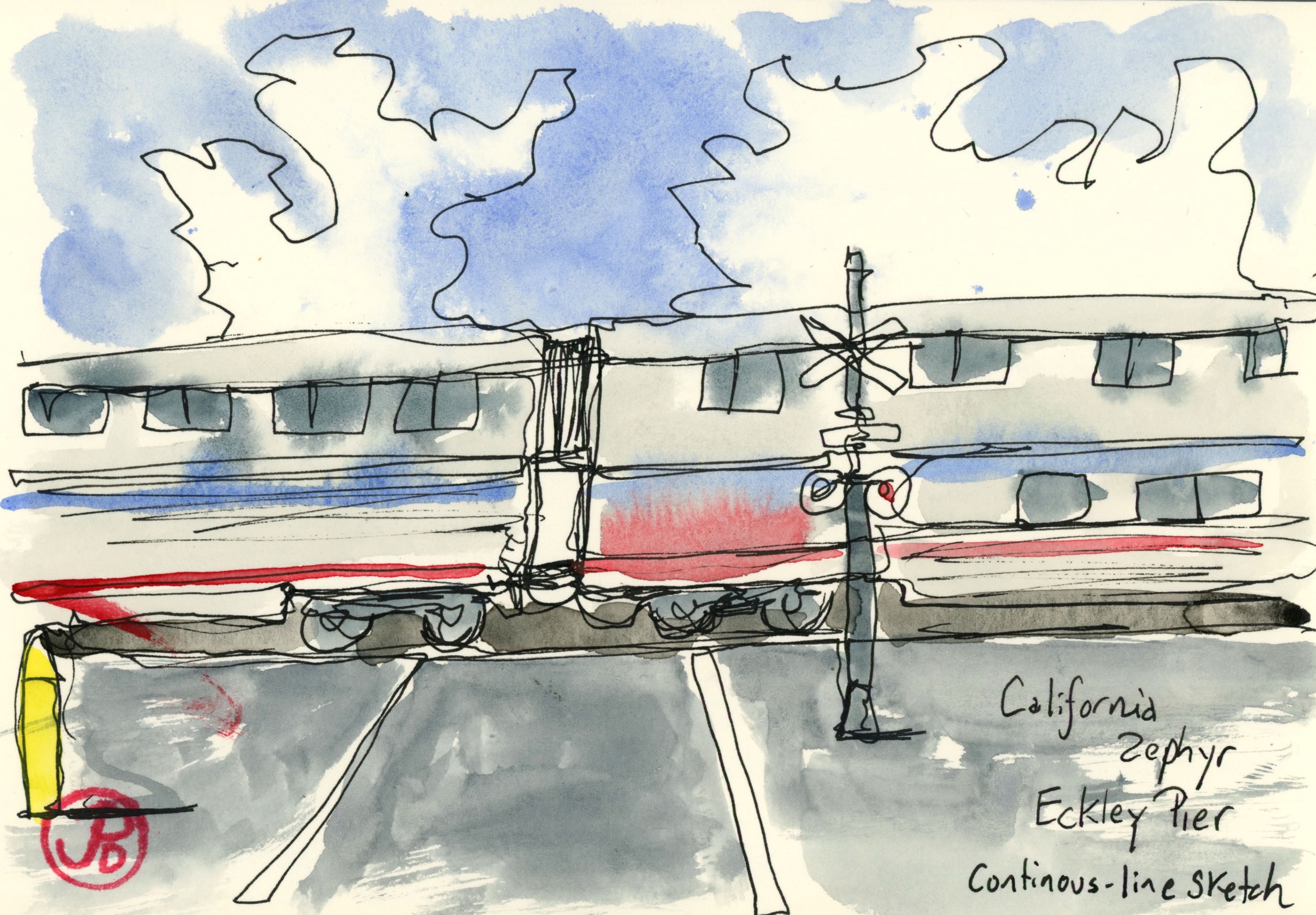
I got to the park at 8 AM, when the gates open, and I had plenty of time to catch the Chicago bound California Zephyr No. 6 as it was scheduled to skirt along the southern shore of the Carquinez Strait just shy of 9 AM.

The Zephyr is one of the longest routes operated by AMTRAK (2,438 miles) and as such has the lowest on-time percentage (33%) of any long distance route, primarily because the passenger service is at the whim of their host railroad’s (UP and BNSF) freight traffic. No. 6 should be on time because it left its western terminus of Emeryville at 8:25 AM. It usually gets behind schedule while stopped behind a freight in Nevada or Utah.

I took a position just south of the parallel tracks to sketch the light signal and crossbuck of the pedestrian crossing.

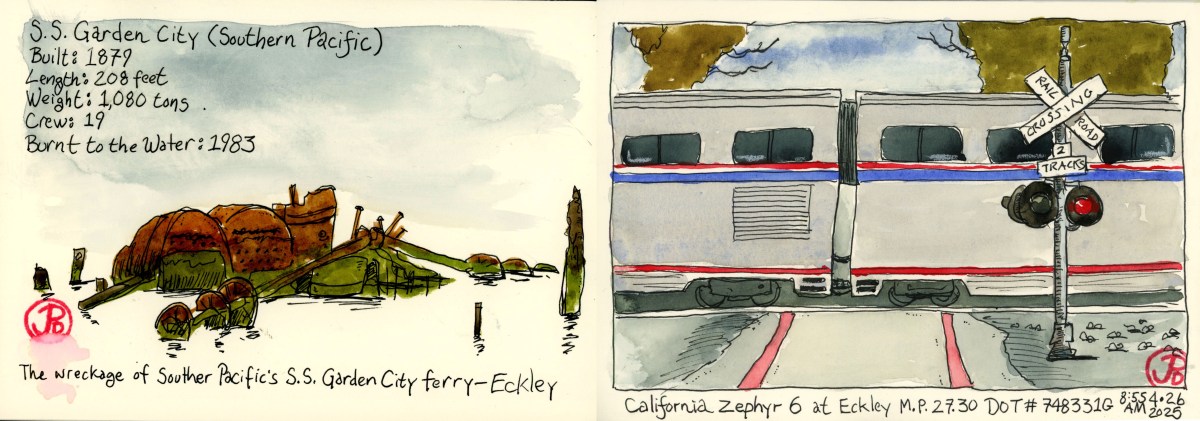
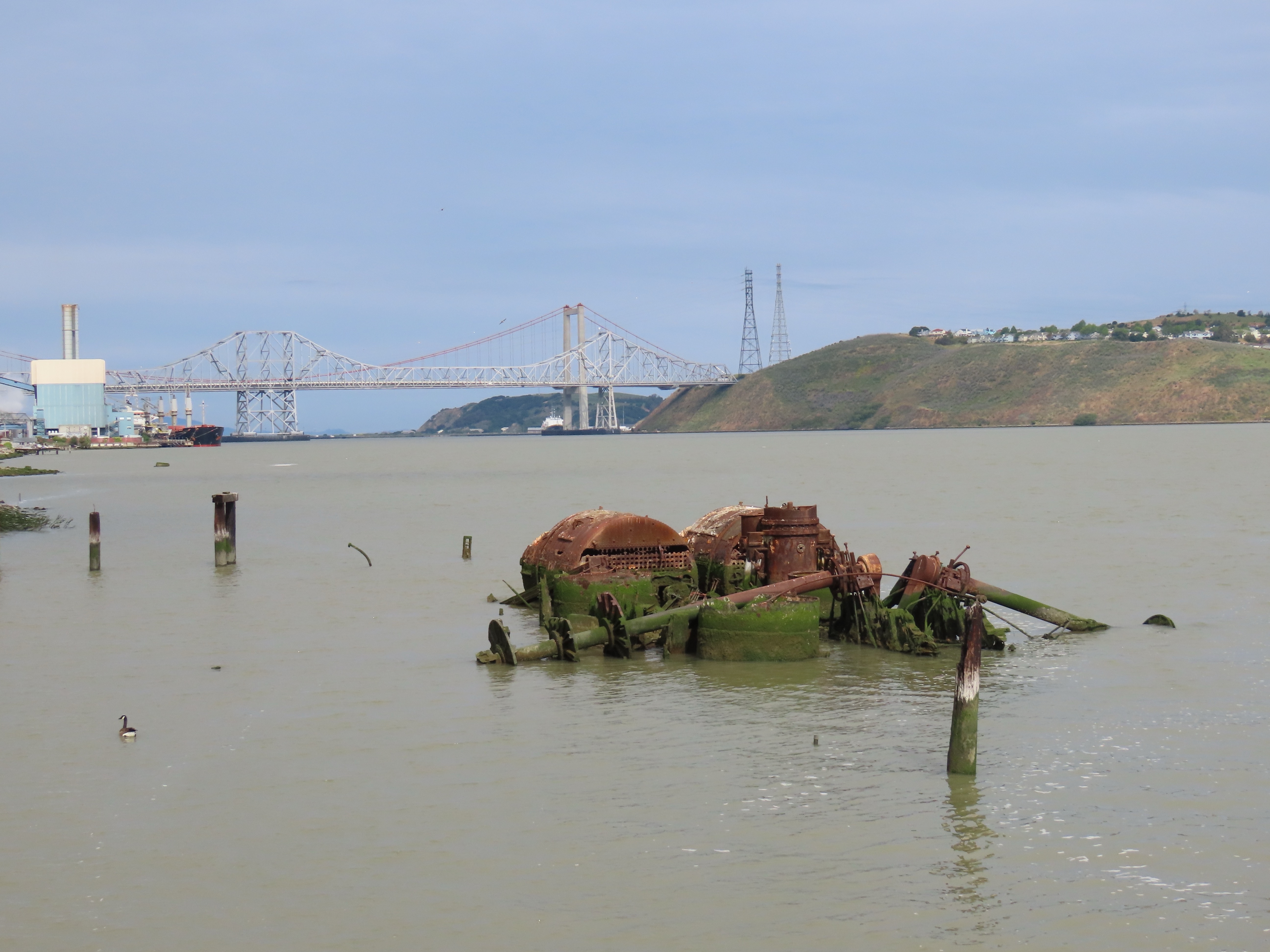
I also had time to get a sketch of another piece of railroad and nautical history: the rusted boilers and paddle wheel hubs of the SS Garden City.

The Garden City was a Southern Pacific ferry that ferried people and automobiles across the waters of the bay. She was built in 1879 and was 208 feet long and weighed 1,080 tons. The wooden side-wheeler had a crew of 19.

The construction of bridges like the Carquinez and Golden Gate rendered the ferries obsolete and in the 1930s, the Garden City was moored at a pier near the current Eckley Pier and it was used as a restaurant and fishing pier until she was abandoned in the 1970s. In 1983, the ferry burned to the boilers, which is about all that remains of this once proud vessel.

What’s left of the SS Garden City in the foreground and one of the bridges that made her obsolete in the background.

It was now nearing nine so I headed across the tracks to take up a position. Down rail the retort of the horn reached me as the Zephyr blew the crossing at Crockett. Shortly thereafter the crossing signal activated with red lights and bell and the Zephyr appeared around the bend.

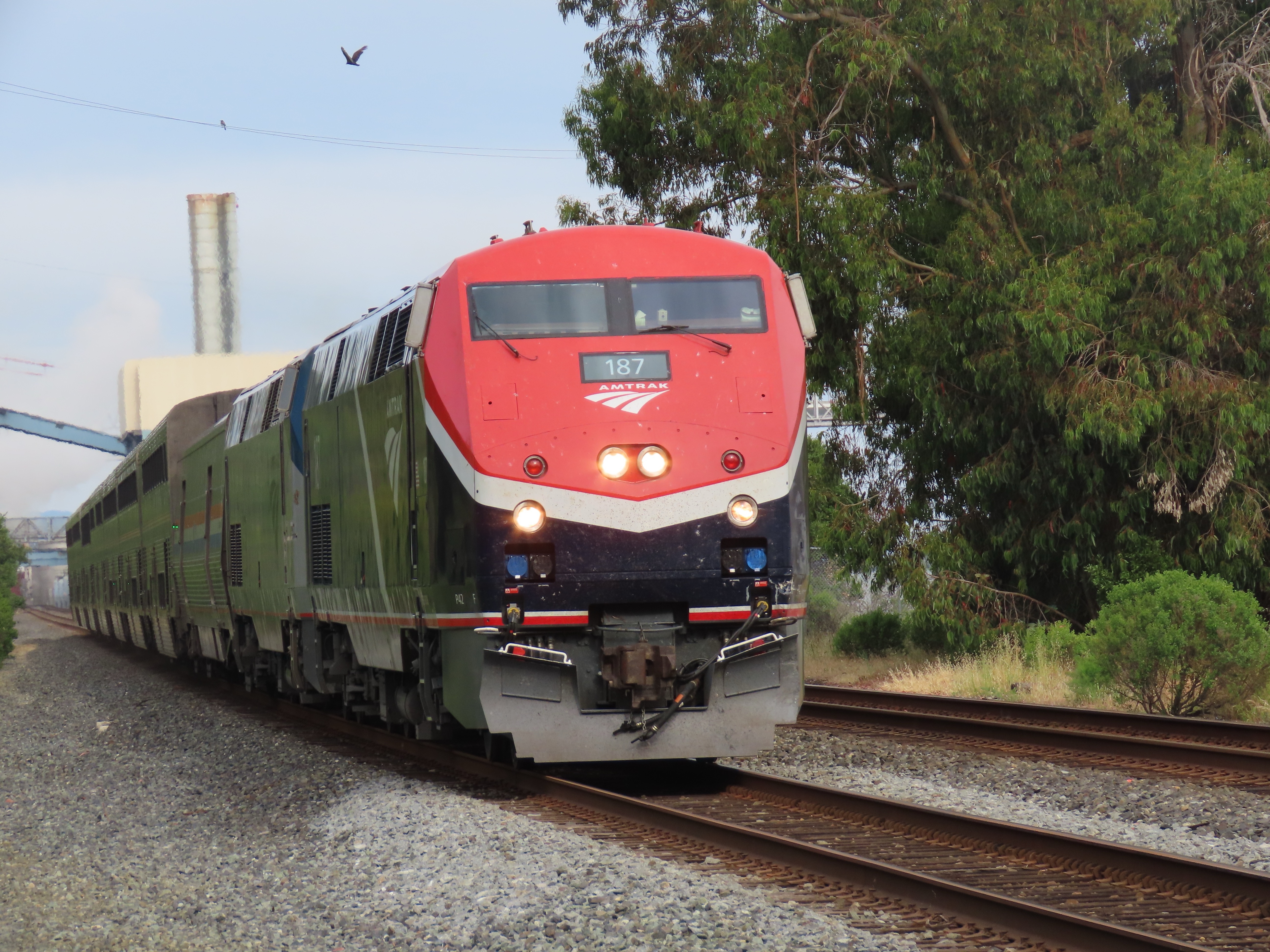
A GE P42DC 187 is on point of the California Zephyr as she heads towards her next stop: Martinez.
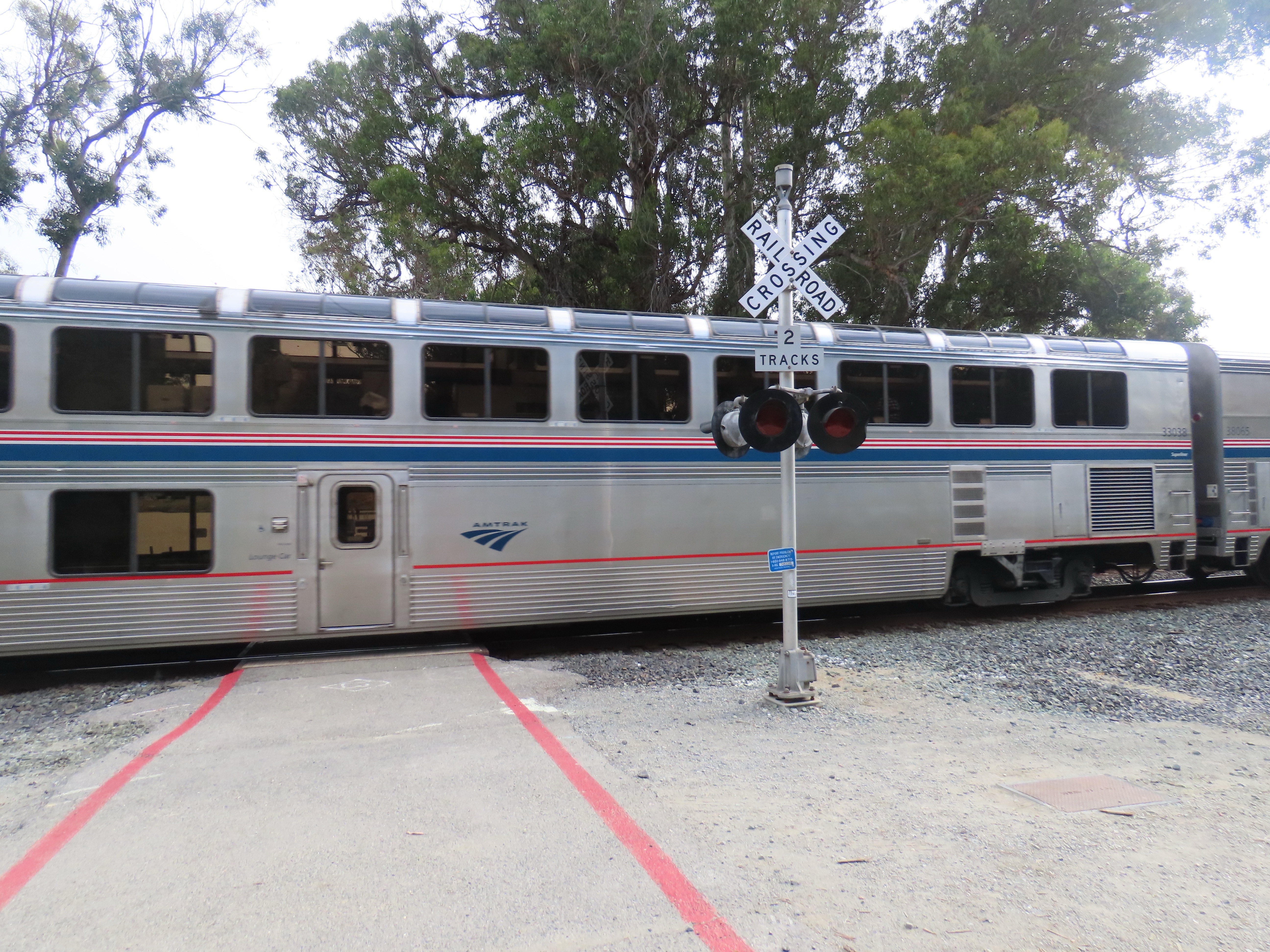
Zephyr No. 6 crossing the pedestrian walkway at Eckley. This is my favorite car to ride in while traversing the Sierras and the Rockies: the observation car!
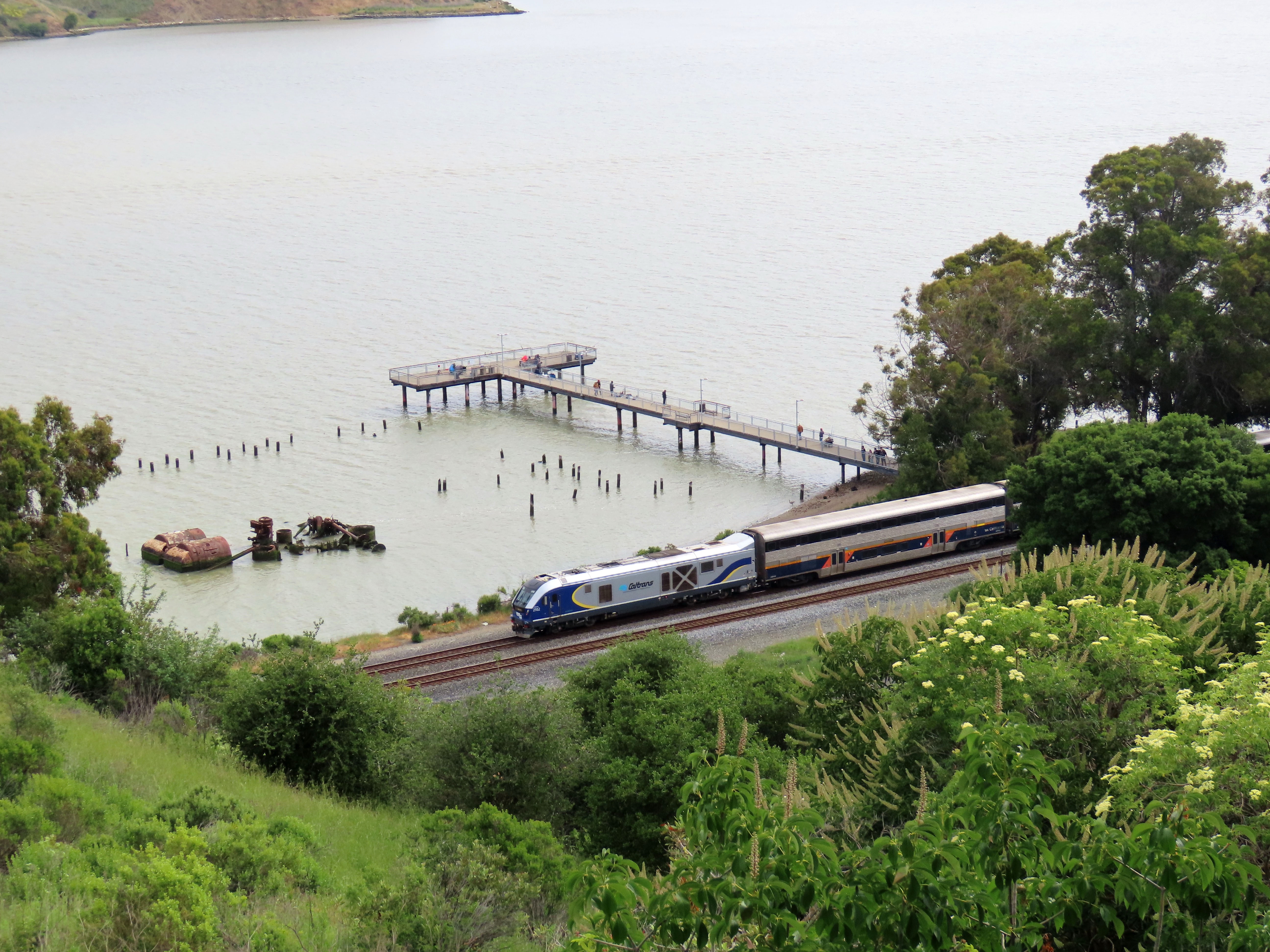
A Capital Corridor heads towards Crockett past the fishing pier and the ruins of the Garden City.

Sketching Notes

Before heading out to Eckley, I pre visualize my sketch. I practice sketching the perspective and location and drew the Superliner train cars that would be a part of the train’s consist so I would be able to draw the cars into my sketch after the train had past. This is using sketcher’s “muscle memory” so drawing the cars would become almost second nature.

A loose continuous line pre-sketch of the pedestrian crossing.

What I drew on location was the foreground and background eucalyptus and then I added the long distance Zephyr from memory. One thing I might do differently is to sketch the train looser to convey the sense of motion.

For my sketch of the Garden City, the core of the sketch was done as a continuous line sketch and I then lifted my pen and add more details.

Both sketches are with my TWSBI Eco fountain pen.

Image

Muir Trestle, Martinez

I was meeting a friend in the East Bay city of Martinez and I had a little time to sketch before lunch.

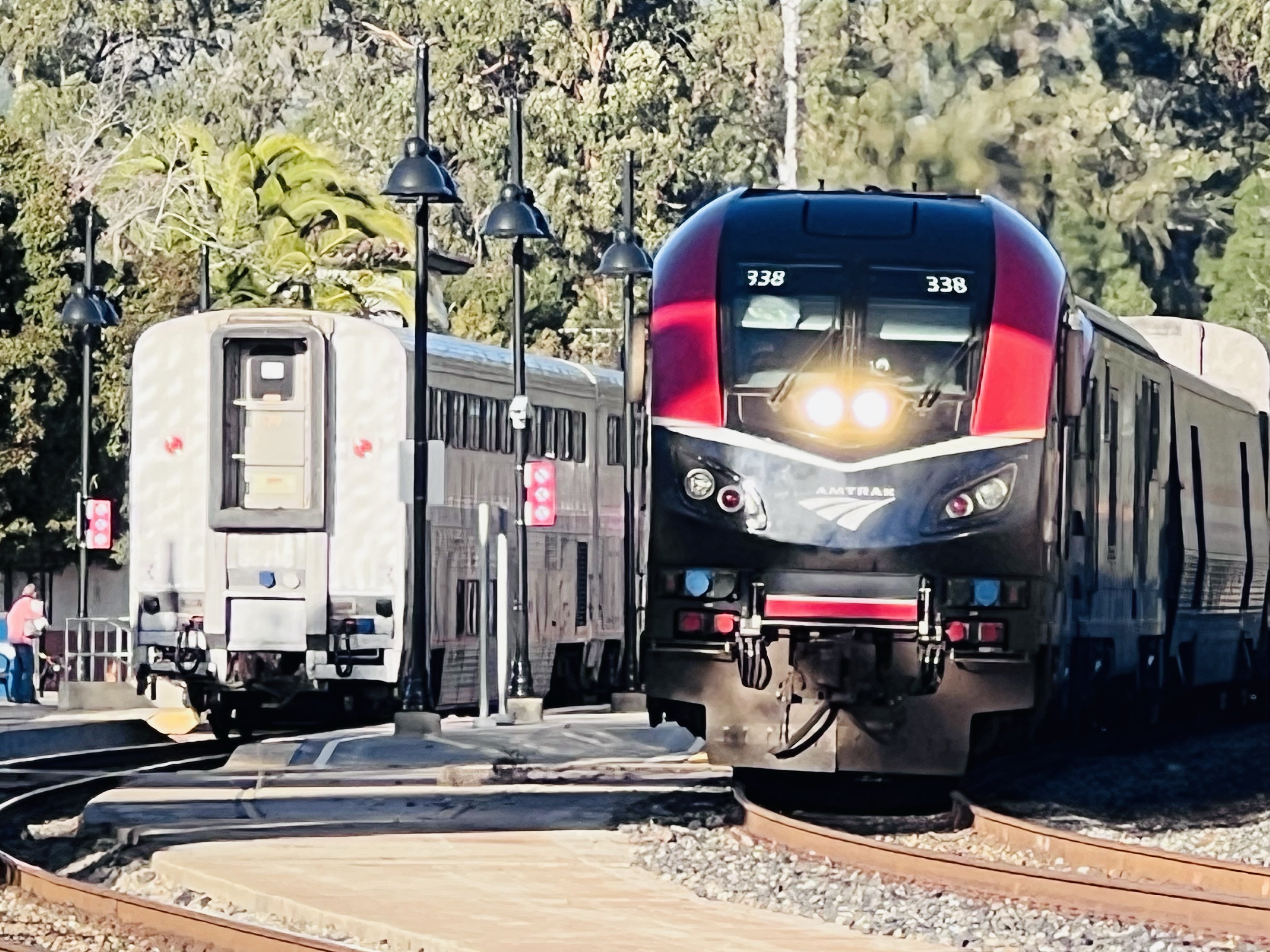
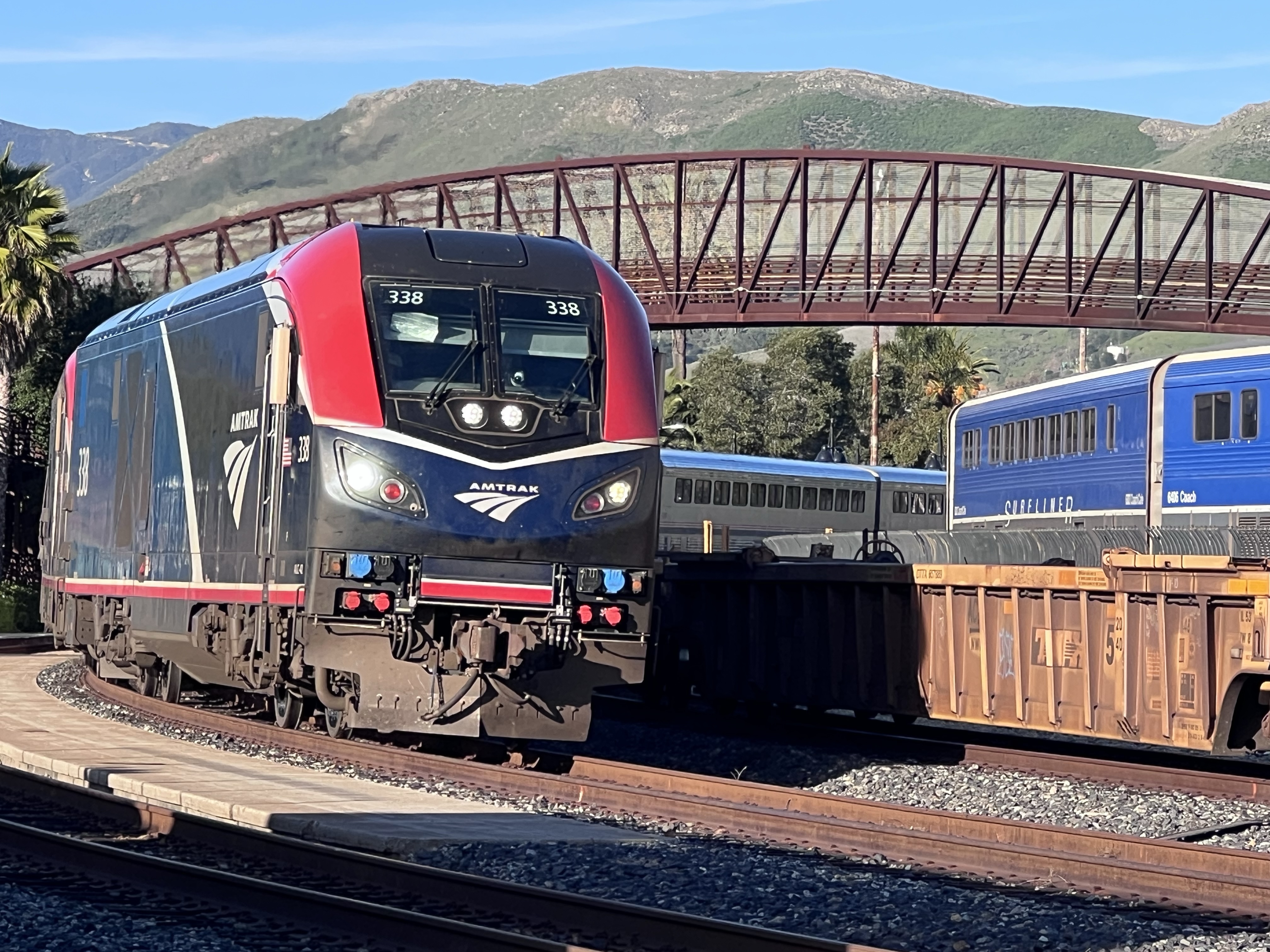
Martinez is a hotbed of railroading with both the Union Pacific and BNSF passing through as well as some marquee passenger trains such as the Coast Starlight and the California Zephyr making stops at the Martinez AMTRAK station. And the Capitol Corridor commuter takes on passengers traveling north and south on shorter journeys.

The California Zephyr Train No. 6, at the old Southern Pacific Depot in Martinez. This train is heading east to Chicago. To the right in the background is SP switcher 1258 on static display.

There would certainly be something to sketch here and I was going to start with a historic train trestle.

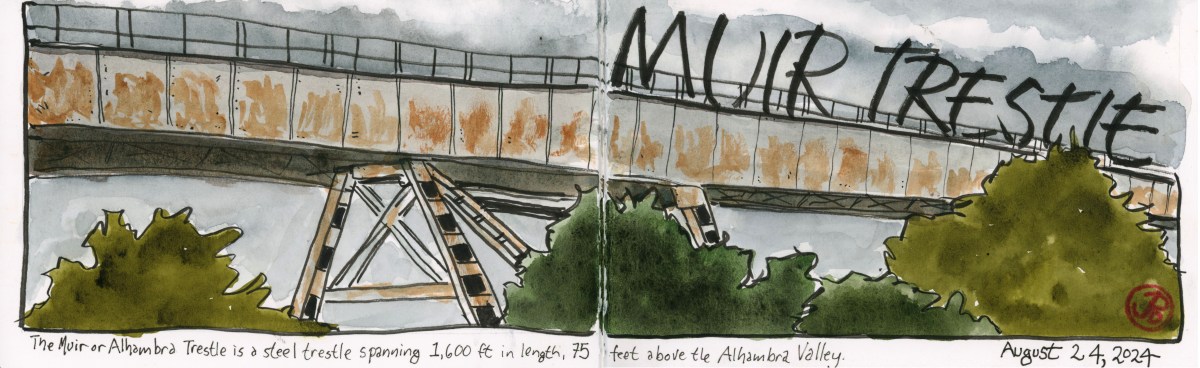
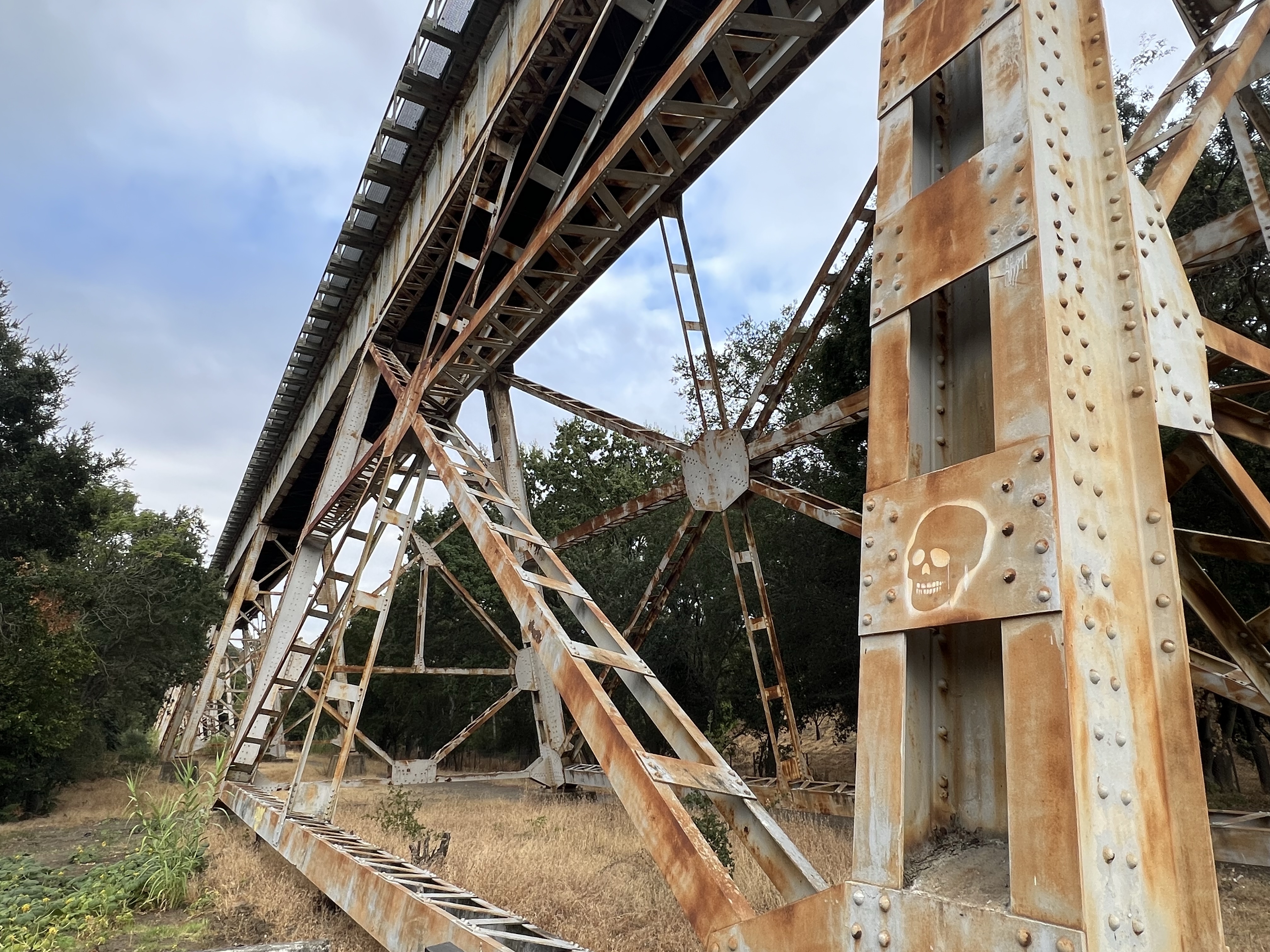
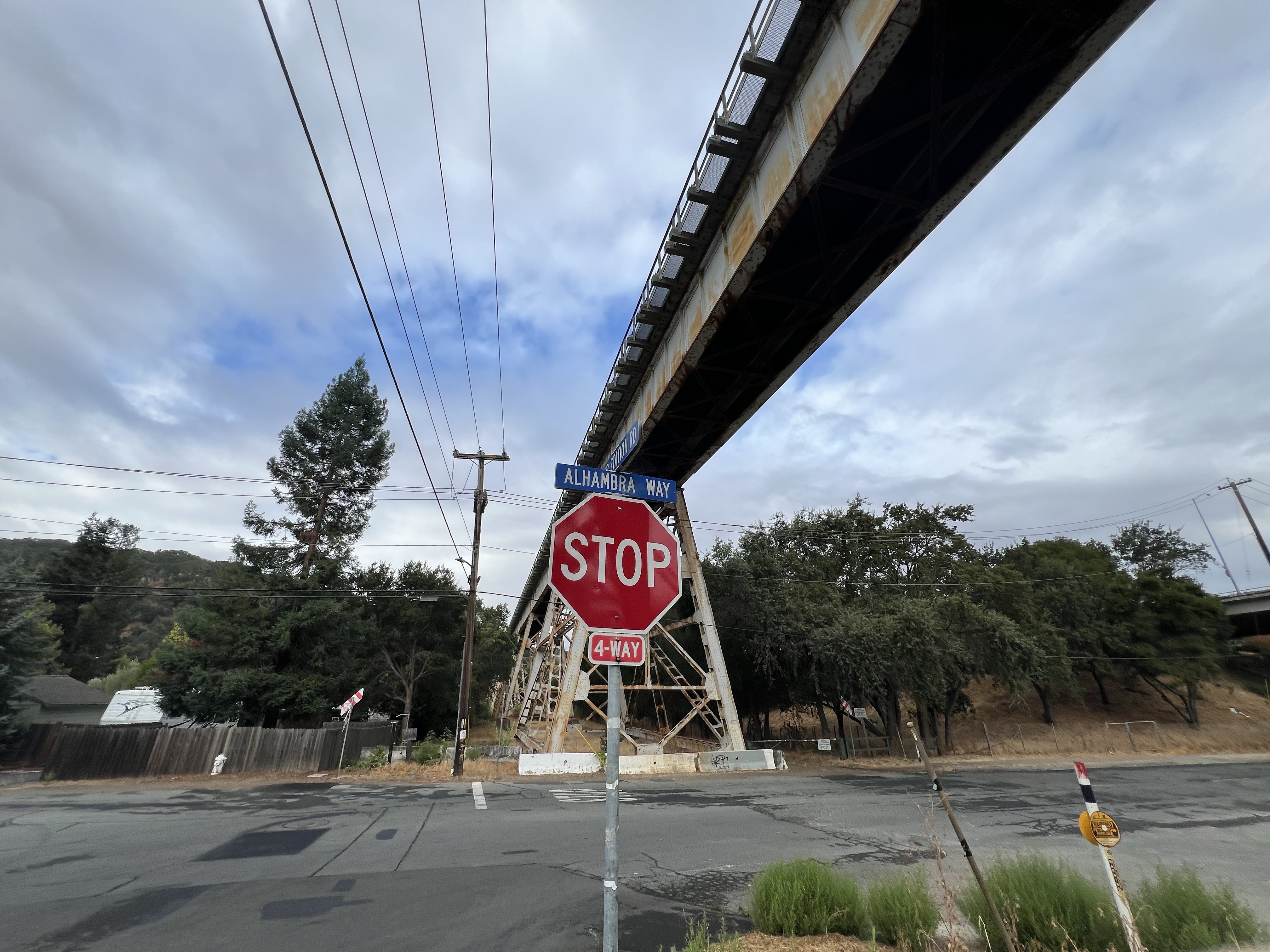
I parked at the Mount Walda Trailhead. Soaring above me was the 1,600 foot long steel Muir Trestle (aka the Alhambra Trestle). The single track trestle was so long that I could only see and sketch one section of it before it disappeared into the trees to the east. The trestle rises 75 feet above the roads, trees, and houses it crosses over.

A detailed view of the steel supports of the Muir Trestle.

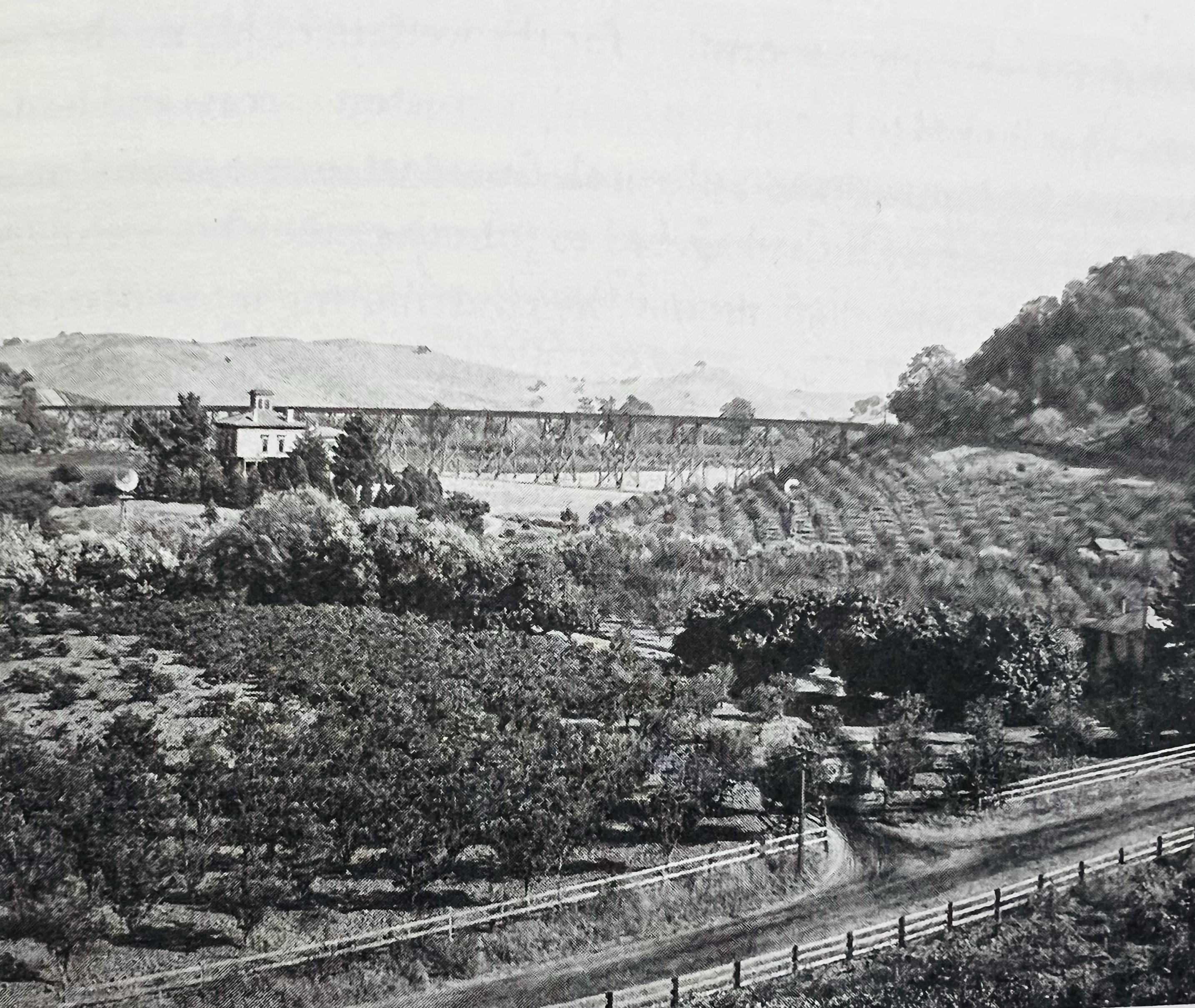
The trestle is within the John Muir National Historic Site. To the north is Muir’s Martinez home. Muir and his wife Wanda sold the land for the trestle for $10 and a lifetime rail pass to the San Francisco and San Joaquin Valley Railway. The original wooden trestle was built through a pear orchard and completed in 1897.

This is a historic photograph of the Stengel-Muir ranch in 1897. The Muir house is on the top left and the trestle is viable behind the house. At the time of the photograph, the trestle was constructed of wood.

At the eastern end of the trestle there was a passenger and freight station named Muir Station. The station is now long gone but is immortalized in a street that parallels the rails named Muir Station Road.

From this station Muir could ship his produce to Oakland or to the port in Martinez.

One of Muir’s neighbors in the Alhambra Valley was John Swett, Muir close friend. Swett was the State Superintendent of Public Education and is known as the “Father of California Public School”.

In 1898, Santa Fe purchased the line and it became their Valley Division. This division still exists as BNSF’s route from Richmond to Fresno.

The Muir Trestle from the intersection of Alhambra Way and Muir Station Road.

I took up a sketching position near the trailhead and started my drawing. The trestle above me is on the Stockton subdivision and is used by BNSF intermodal freight. There was no train crossing during my sketch.

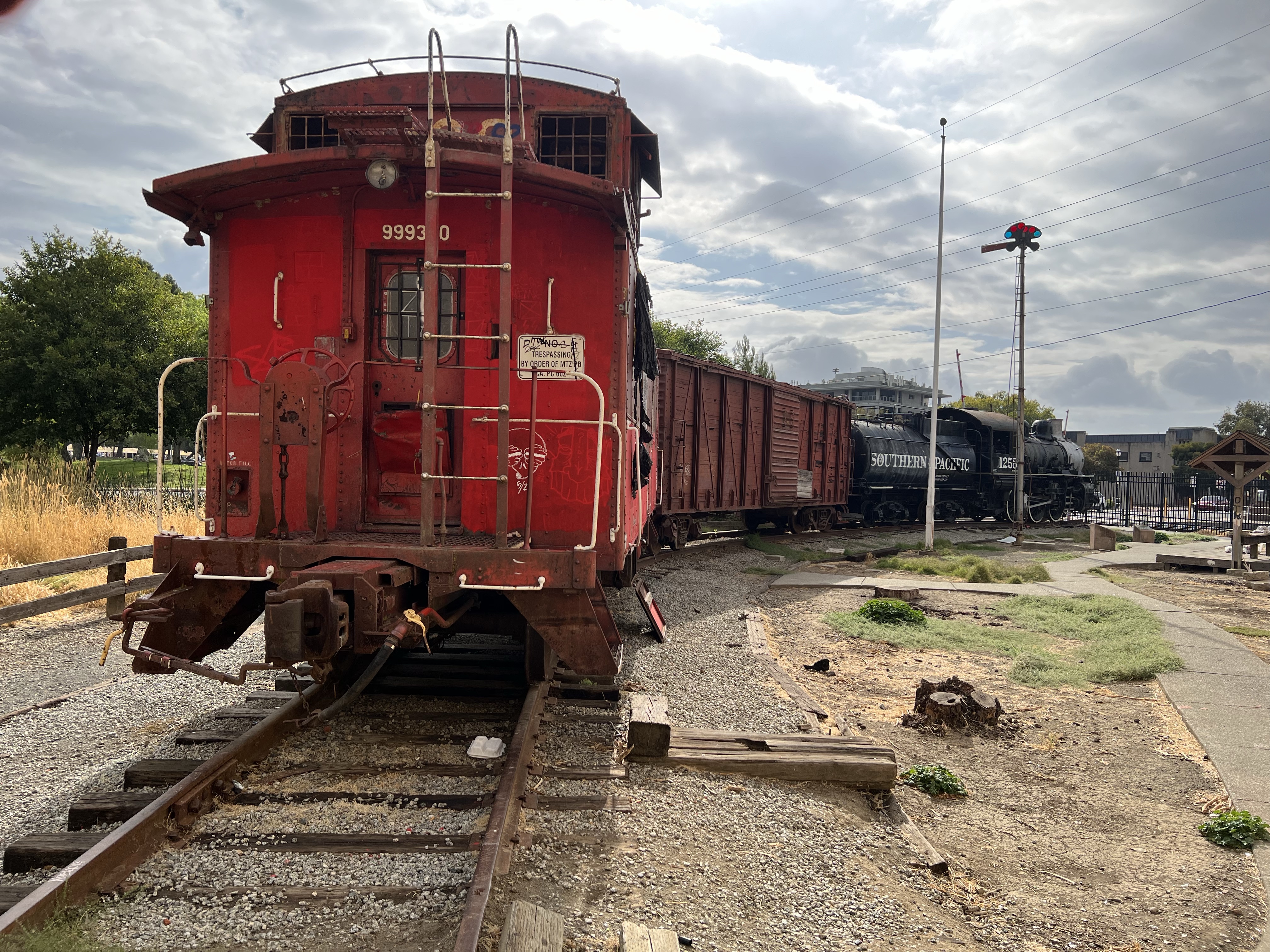
SP 0-6-0 switcher No. 1258 and its consist of a wooden box card and Santa Fe caboose 390 on display across the tracks from the AMTRAK station. The locomotive is in sad shape, missing some hardware like her bell and whistle.
Image

Zephyr Sketching (Westbound) Part 1

The California Zephyr Train # 5 was early coming into Denver’s Union Station. And we departed from the Mile High City, right on schedule.

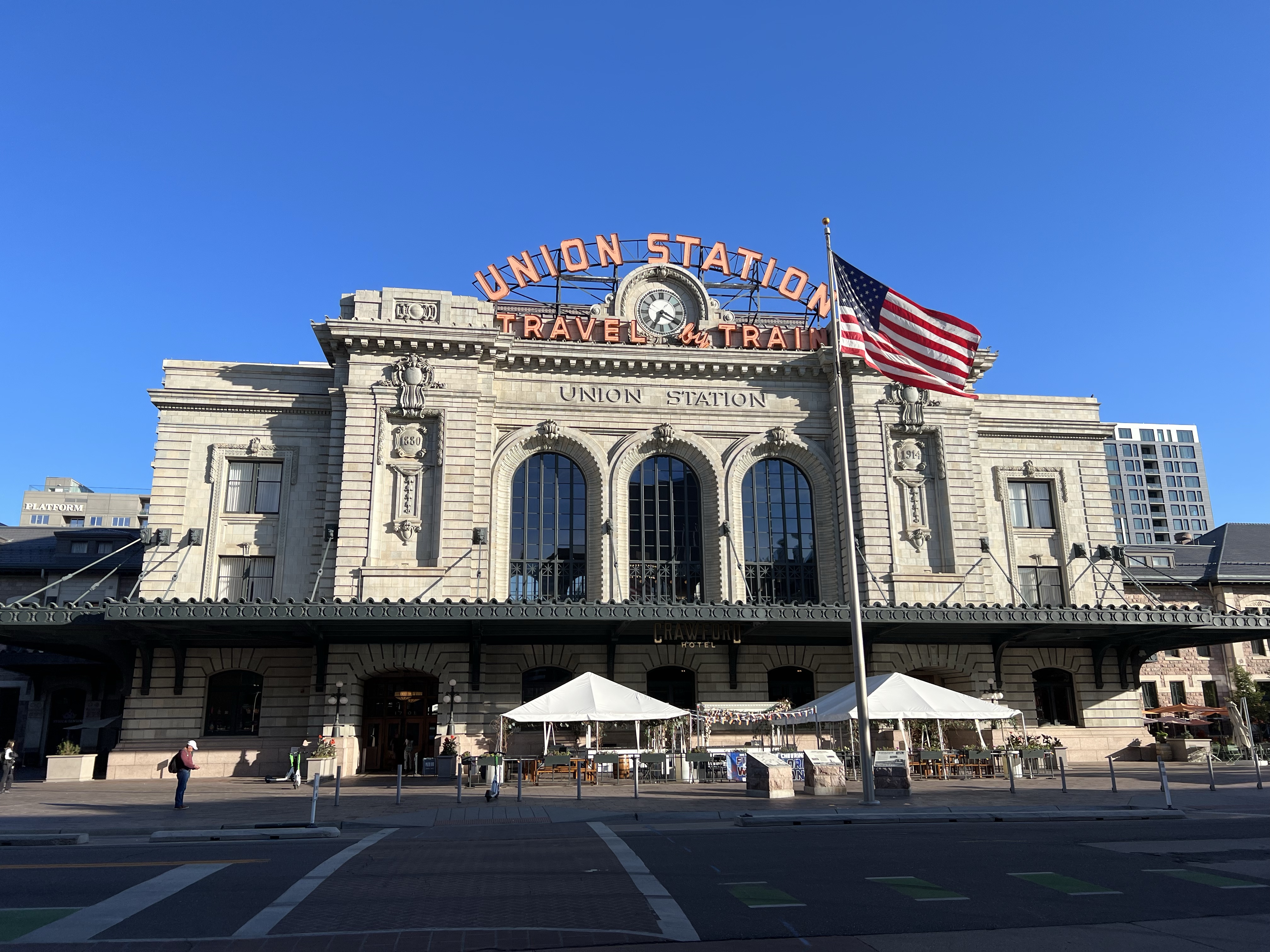
The stunning Union Station in Denver.

We climbing up into the Tunnel District, so named because the Zephyr passes through 28 tunnels. The king of all tunnels in this stretch, if not any stretch in North America, has to be the Moffat Tunnel. The tunnel is 6.2 miles long and crosses under the Continental Divide meaning that once we come out of the west portal of the tunnel, the waters will be flowing to the west coast and behind us, the water flows east. At 9,239 ft, the tunnel is the highest point anywhere on the AMTRAK system.

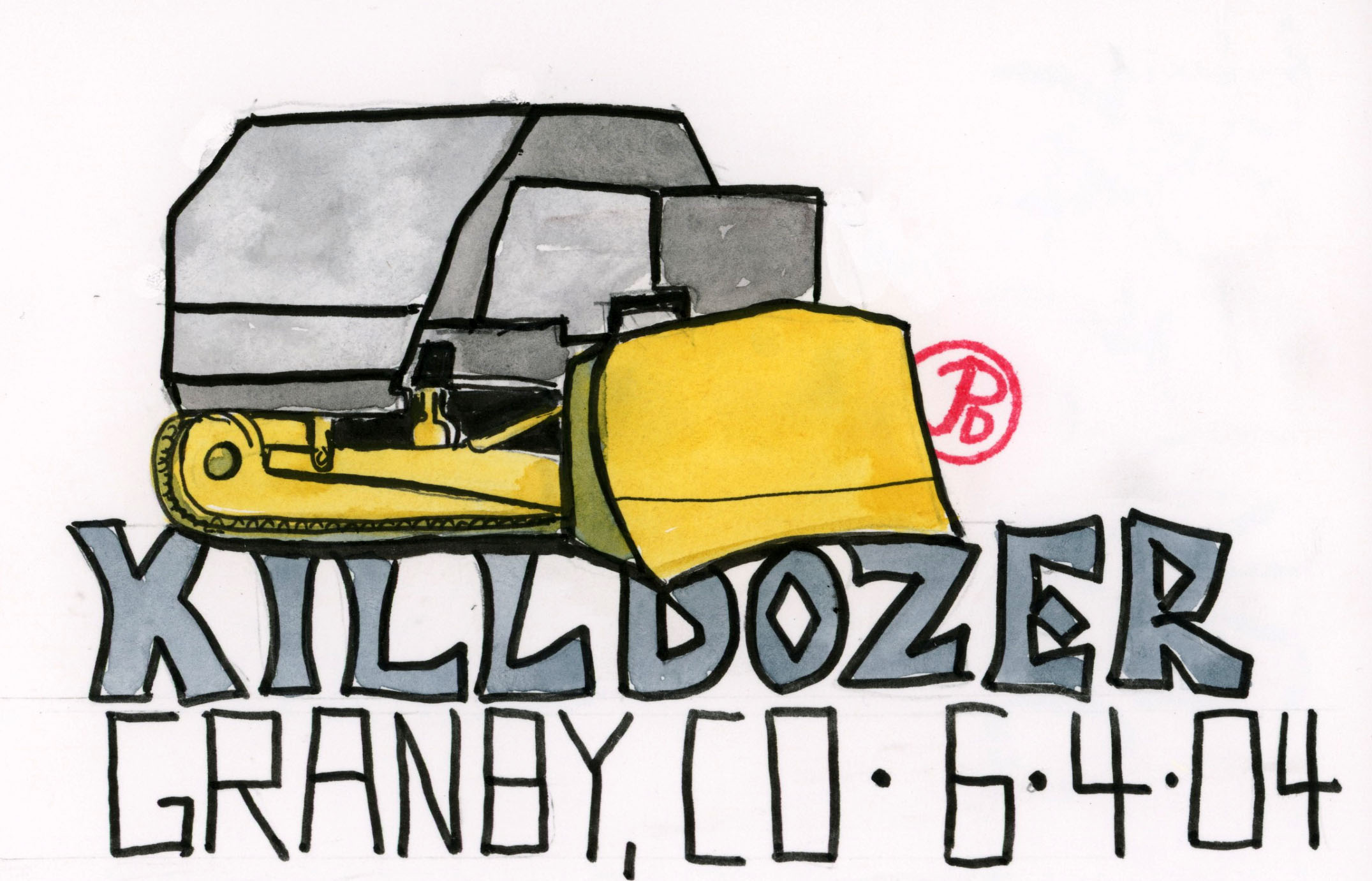
On the western side of the Moffat Tunnel is the stop of Fraser-Winter Park. The next stop on the western route is the small Colorado mountain town of Granby. The conductor told us the little story of Marin Heemeyer and his Killdozer.

Heeymeyer was from South Dakota but moved to Colorado where he became a popular member of the community and one of the best welders in the area. He opened a successful muffler business in Granby. Over the following years Heemeyer feuded with the city and others over zoning, building permits, sewage lines, and entry roads to his business. Over that time many in the community crossed Heeymeyer, which was a big mistake because Marv can really hold a grunge.

He bought a Komatsu D355A bulldozer and he sold his business and property and then rented a building on his former property from the new owners where he secretly modified the bulldozer. For over a year he worked on his bulldozer by fortifying it with steel and concrete creating an indestructible machine of destruction. On June 4, 2004 at about 3:00 PM Heemeyer put his plan into action.

During the two hours and seven minute bulldozer rampage, Heeymeyer destroyed 13 buildings (including the city hall, police station, the former mayor’s house, and newspaper offices). The killdozer caused seven million dollars of damage. The police where helpless to stop the bulldozer and the rampage only ended when the killdozer got stuck while destroying Gambles hardware store and Heeymeyer ended his own life.

In Utah, the two Zephyrs meet as the westbound Train 6 passes us on it’s way to Chicago.
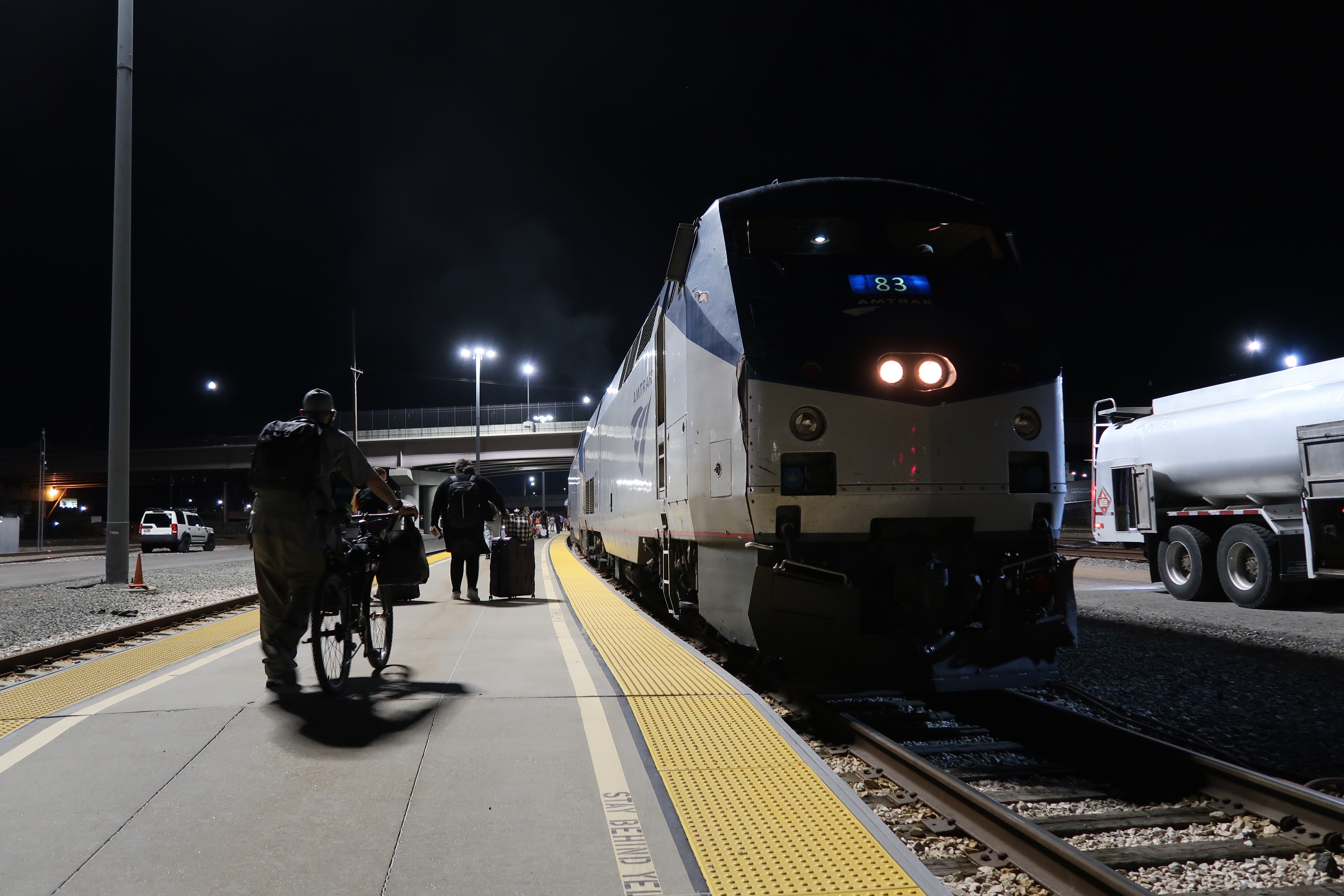
The poor souls of Salt Lake City have to wake up at an ungodly hour to catch the train. The California Zephyr pulls into the City of Saints at either 11:30 PM (Train 5) or 3:30 Am (Train 6). Here we get a stretch break and the locomotives are refueled. I took a stretch break because I rarely sleep on trains.
Image

Zephyr Sketching (Eastbound)

The California Zephyr Train number 6 pulled into Colfax Station running about 30 minutes late.

I was boarding the Zephyr with my mom and her husband Steve and we were heading to Denver, Colorado. We would be spending the night and eating three meals a day on the Zephyr. This is AMTRAK’s longest daily route and it is a village on rails.

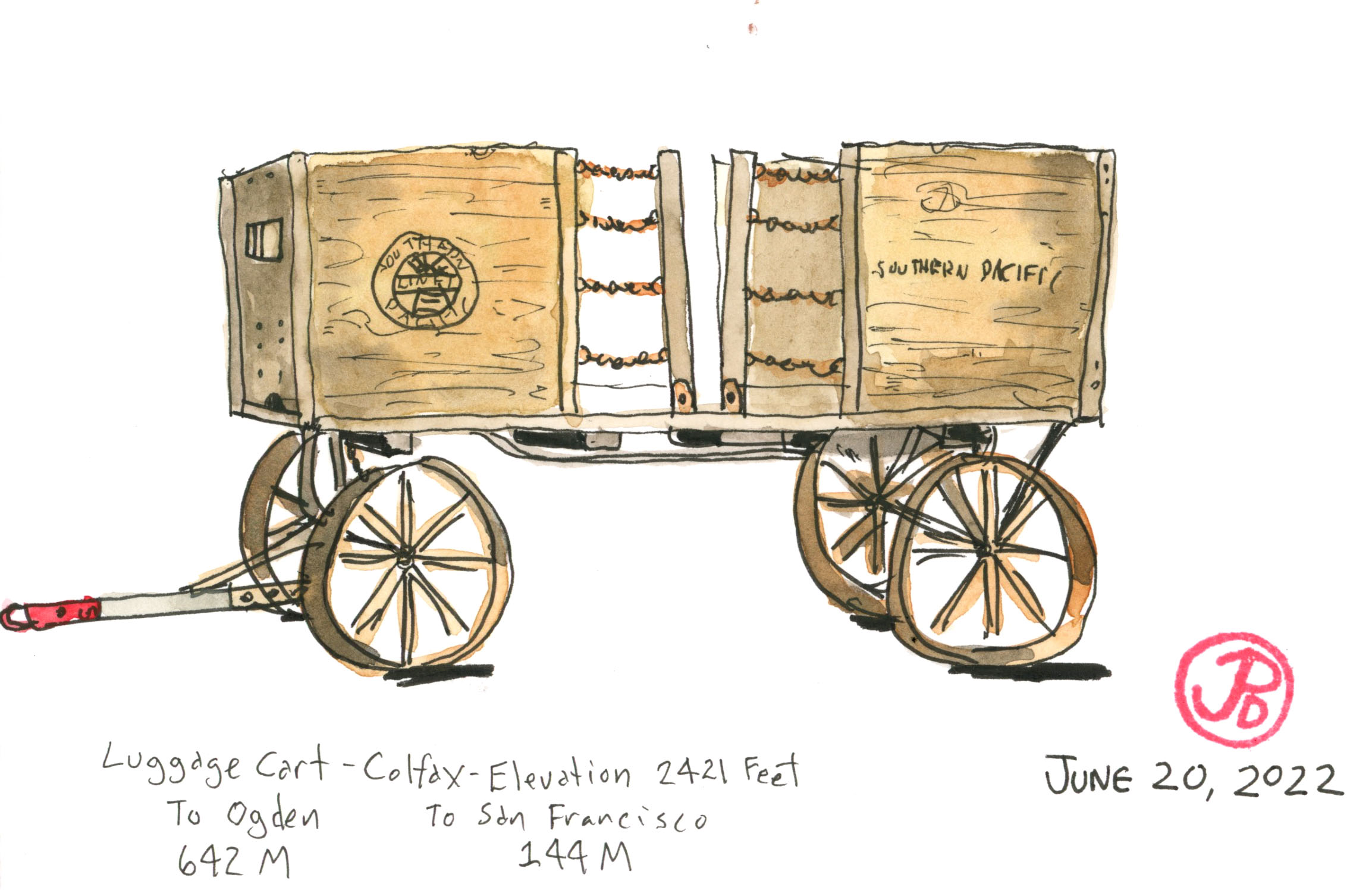
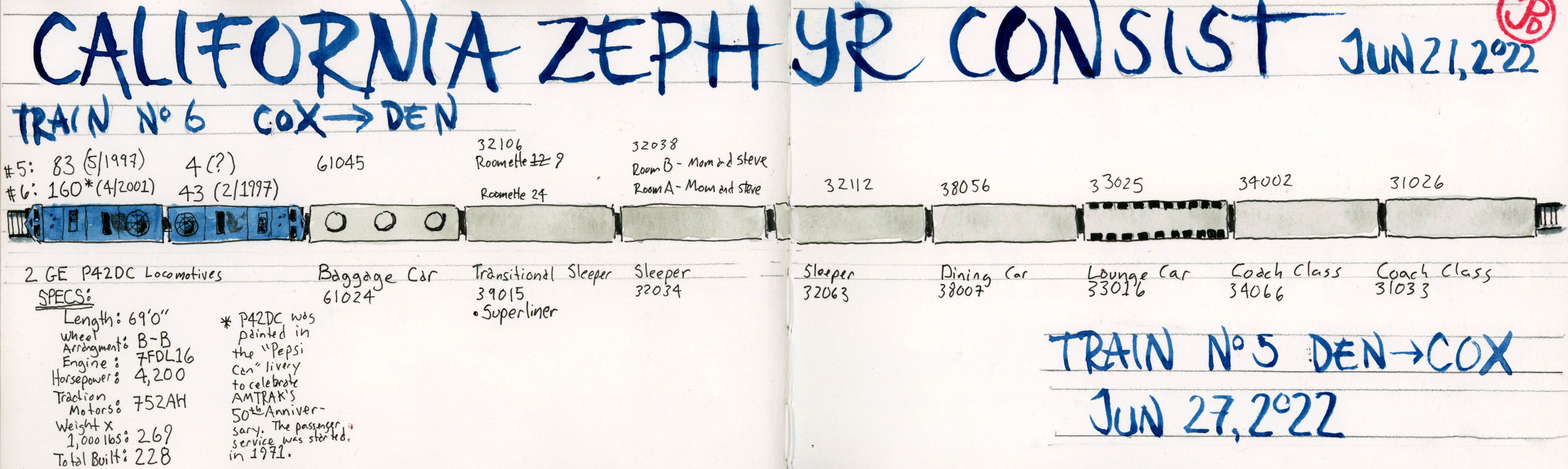
I did a few pre-trip sketches. The first is of the predicted consist of our train. A consist is the make up of the train, for instance: two locomotives, a baggage car, three sleeper cars, a diner car etc. I anticipated two locomotives and eight cars. Turns out I guessed right. I sketched them in and I would label them later during our first stretch break in Reno, Nevada. The second was the baggage cart outside Colfax Station, which I did the day before we boarded the Zephyr.

The eastbound California Zephyr pulls into Colfax. We were the only passengers who boarded. Mom and Steve are “racing” to the platform before the Zephyr’s short stop is over.

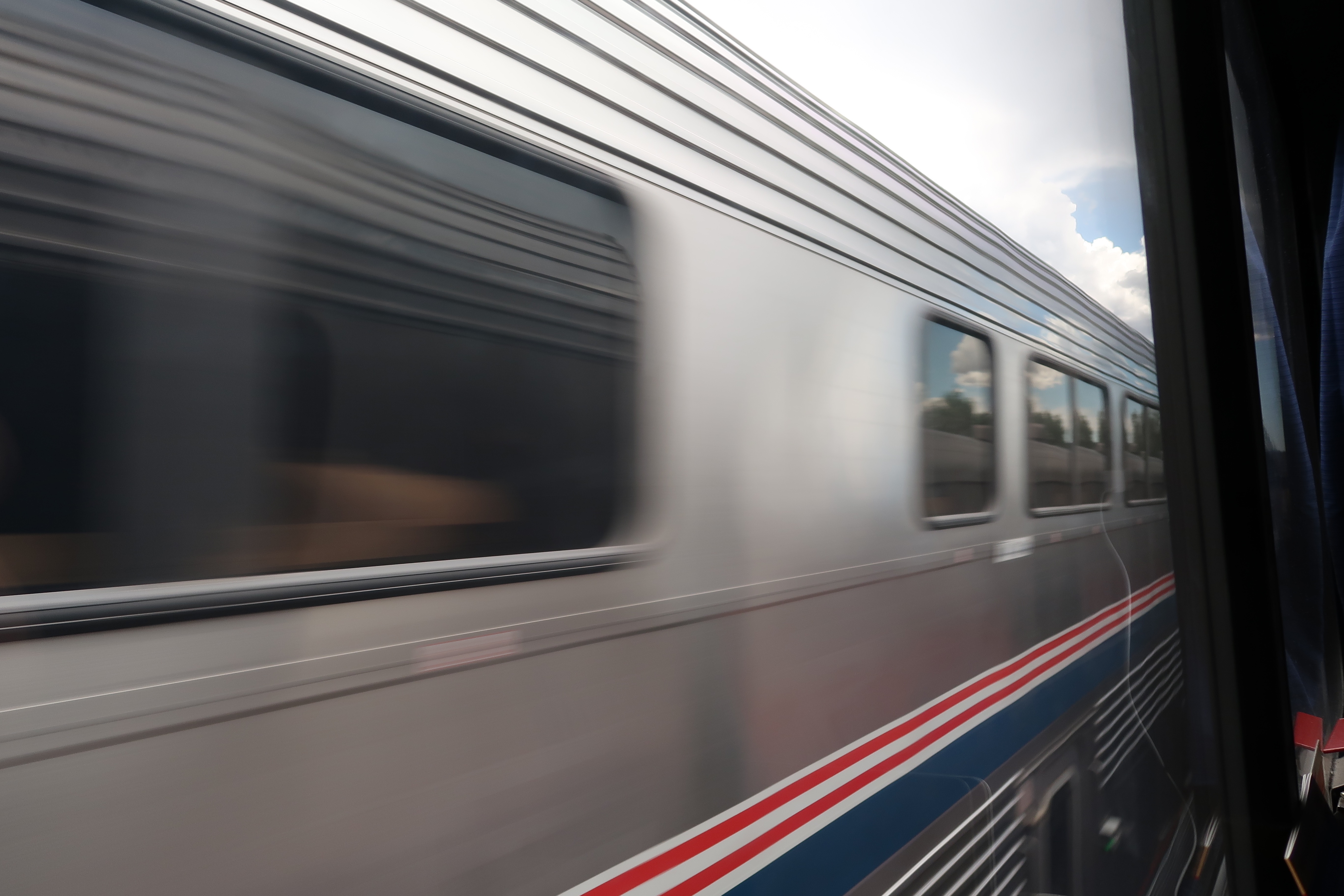
I was familiar with sketching from the California Zephyr from my previous trip last April. You have to sketch fast, taking in passing information creating an overall composite or impression. The brush pen was the perfect tool for Zephyr sketching.

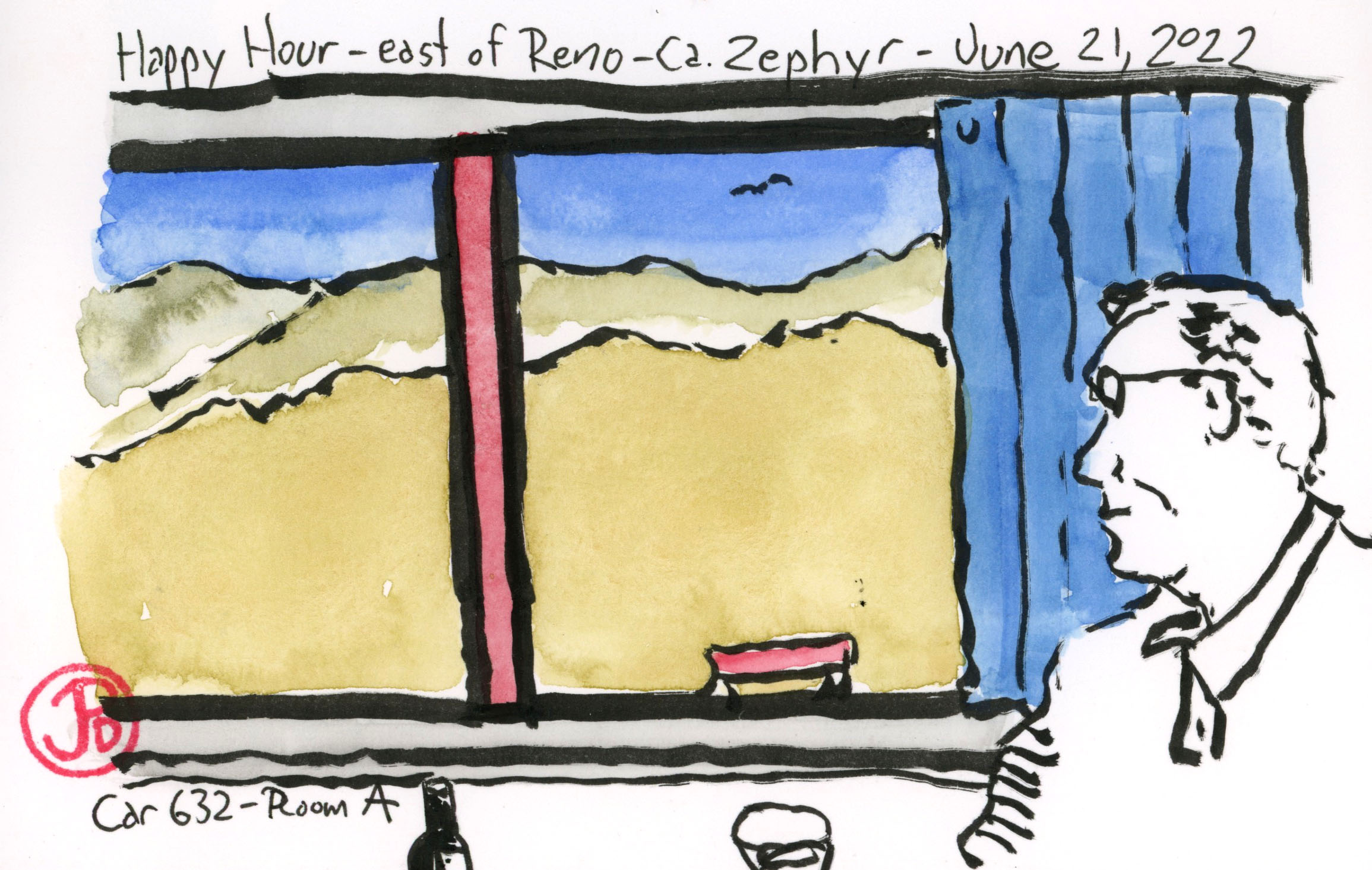
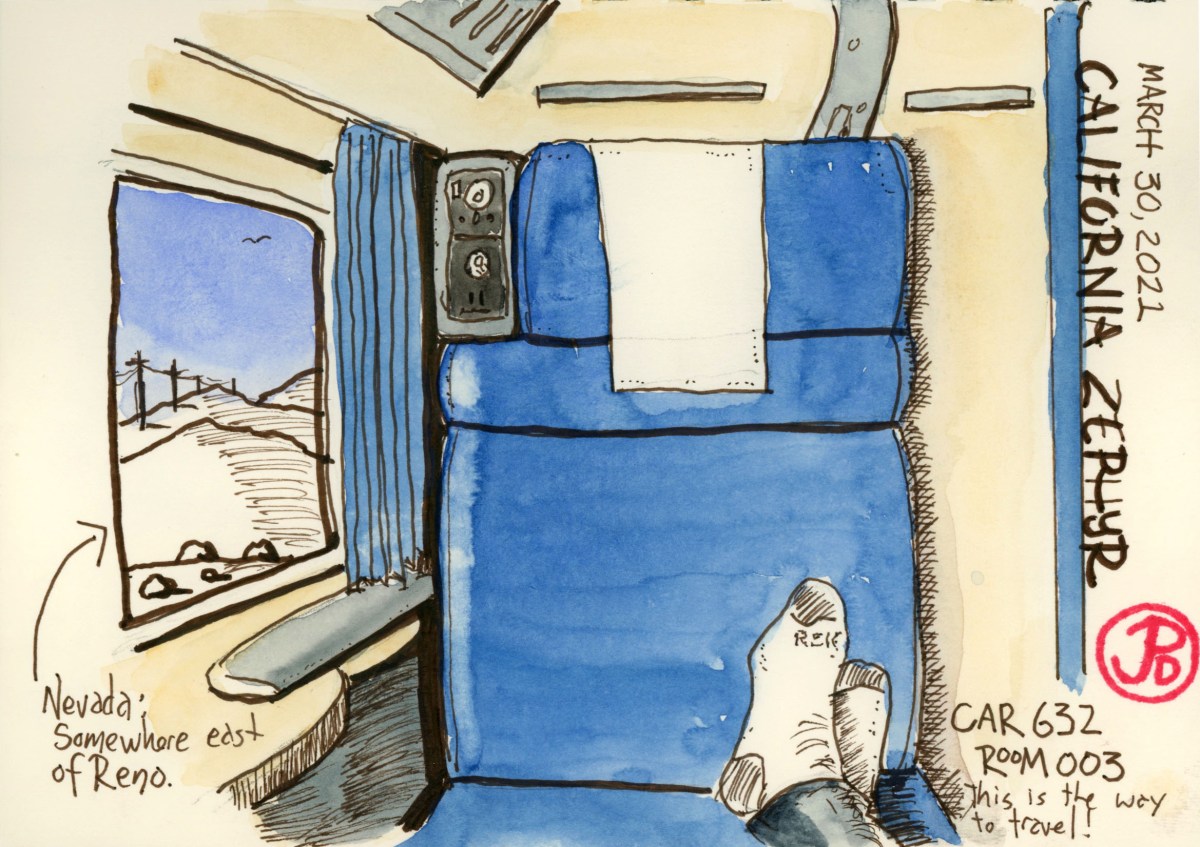
One of my favorite Zephyr sketches was done in Room A (Mom and Steve’s room) during happy hour. We where somewhere east of Reno.

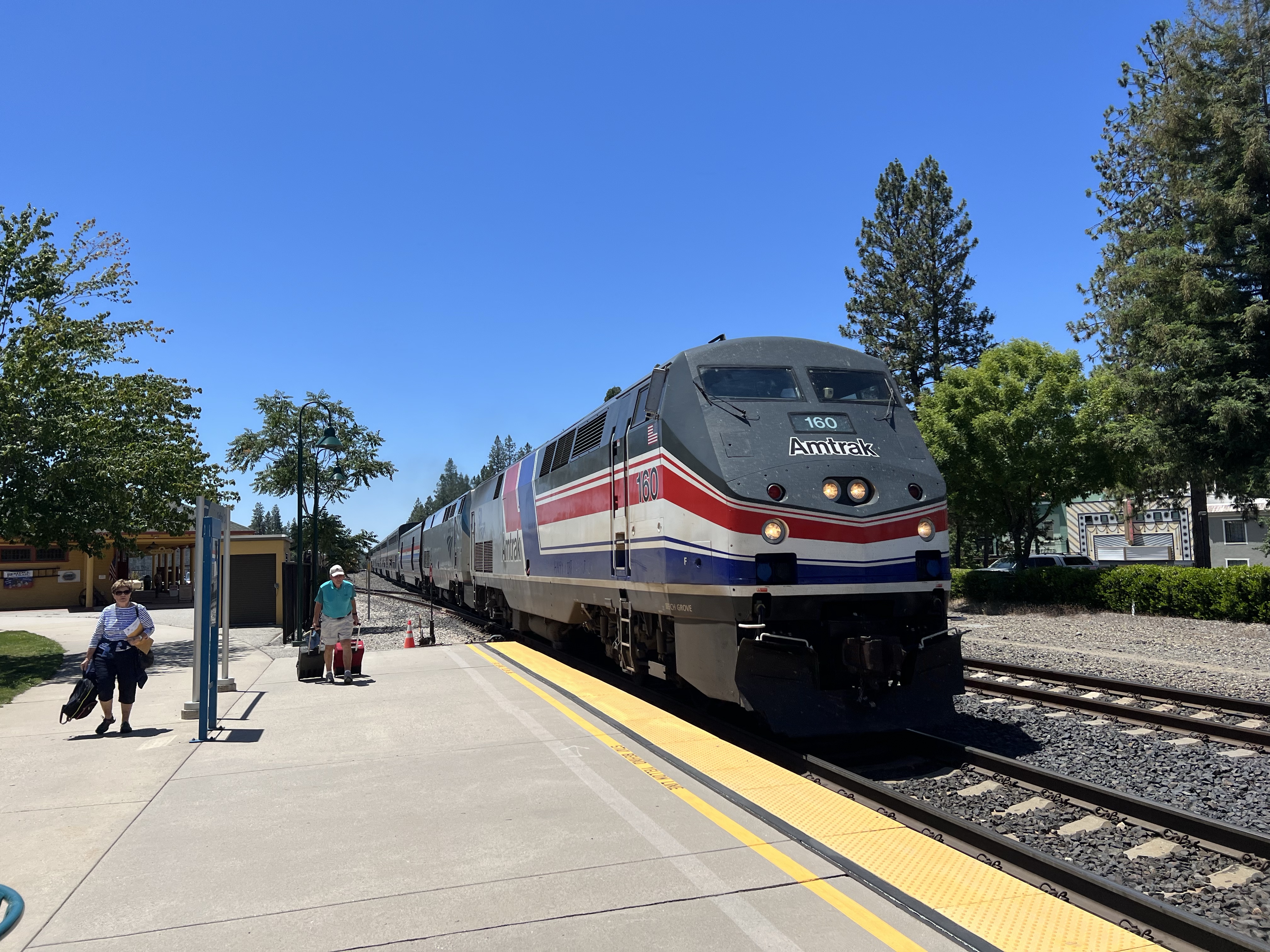
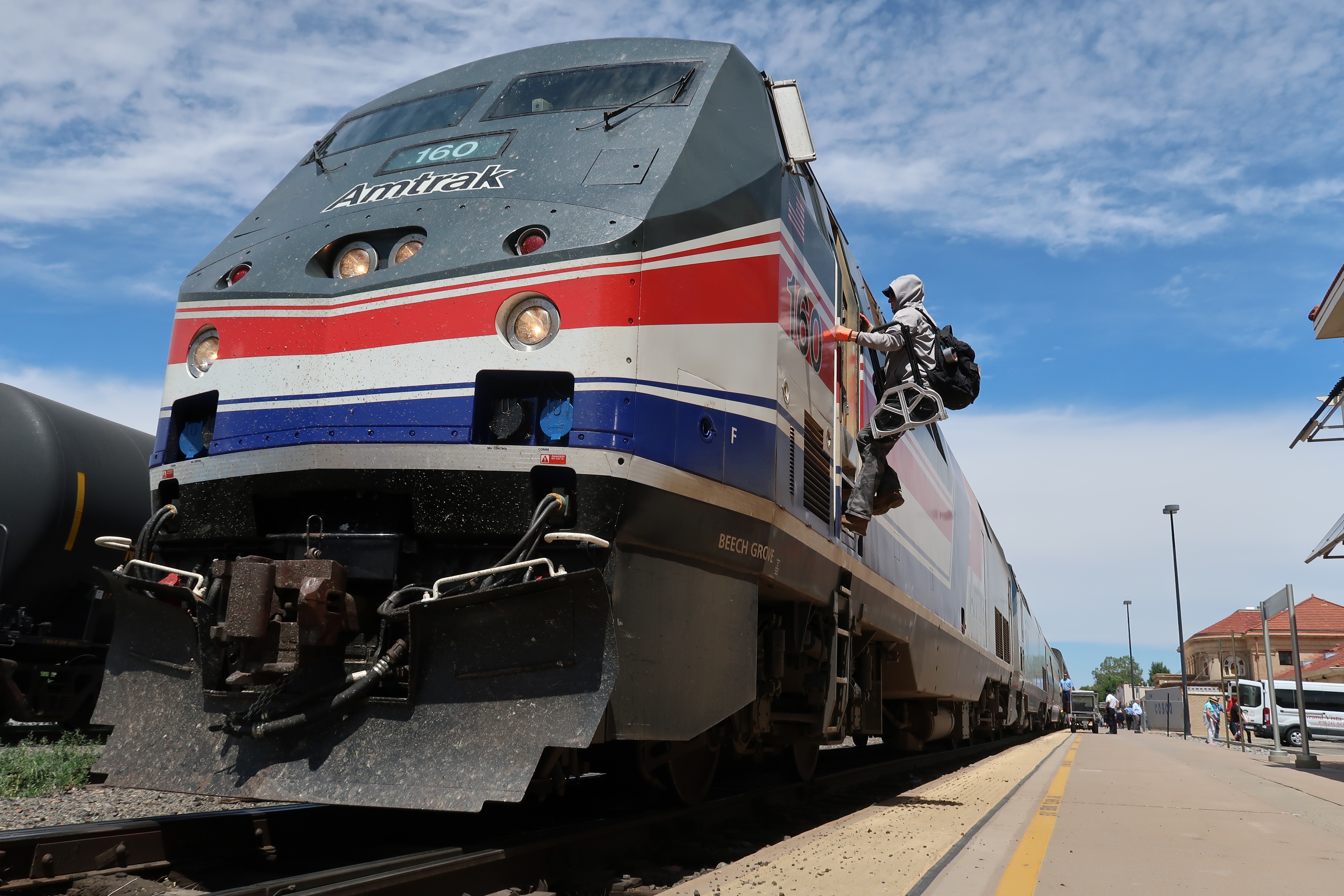
Crew change at Grand Junction, Colorado. Locomotive 160 painted in it’s “Pepsi Can” livery, to celebrate AMTRAK’s 50th anniversary.
Image

SLO Watertower

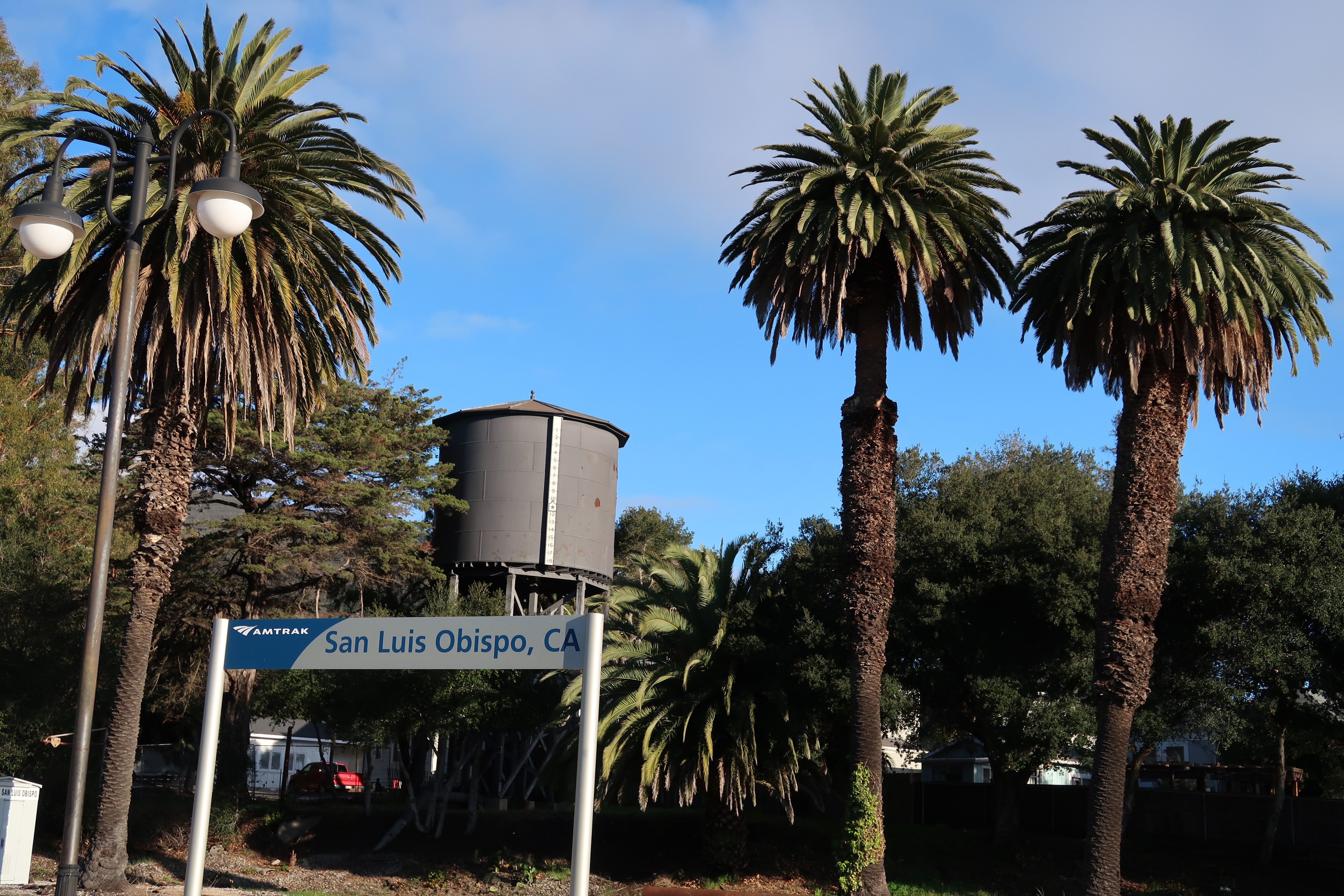
On my way back to the Bay Area from my Malibu adventure, I overnighted in San Luis Obispo. There was a water tower, across the line from the passenger depot that I wanted to add to my sketchbook. One of the few Southern Pacific water towers still standing in California.

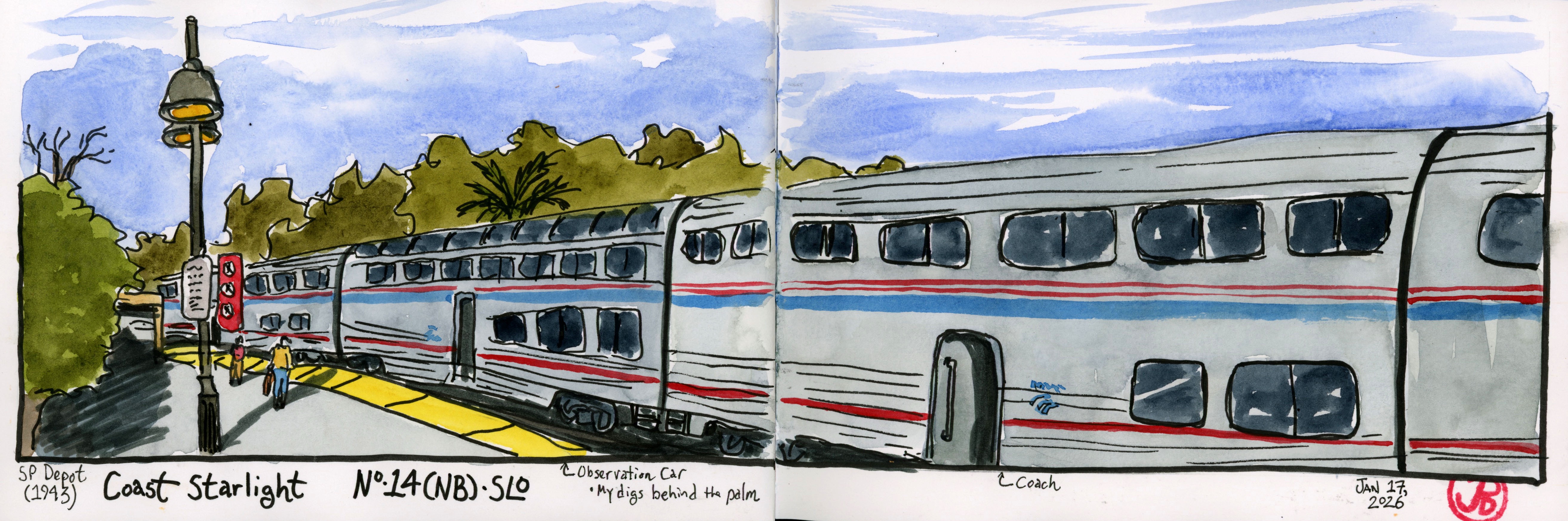
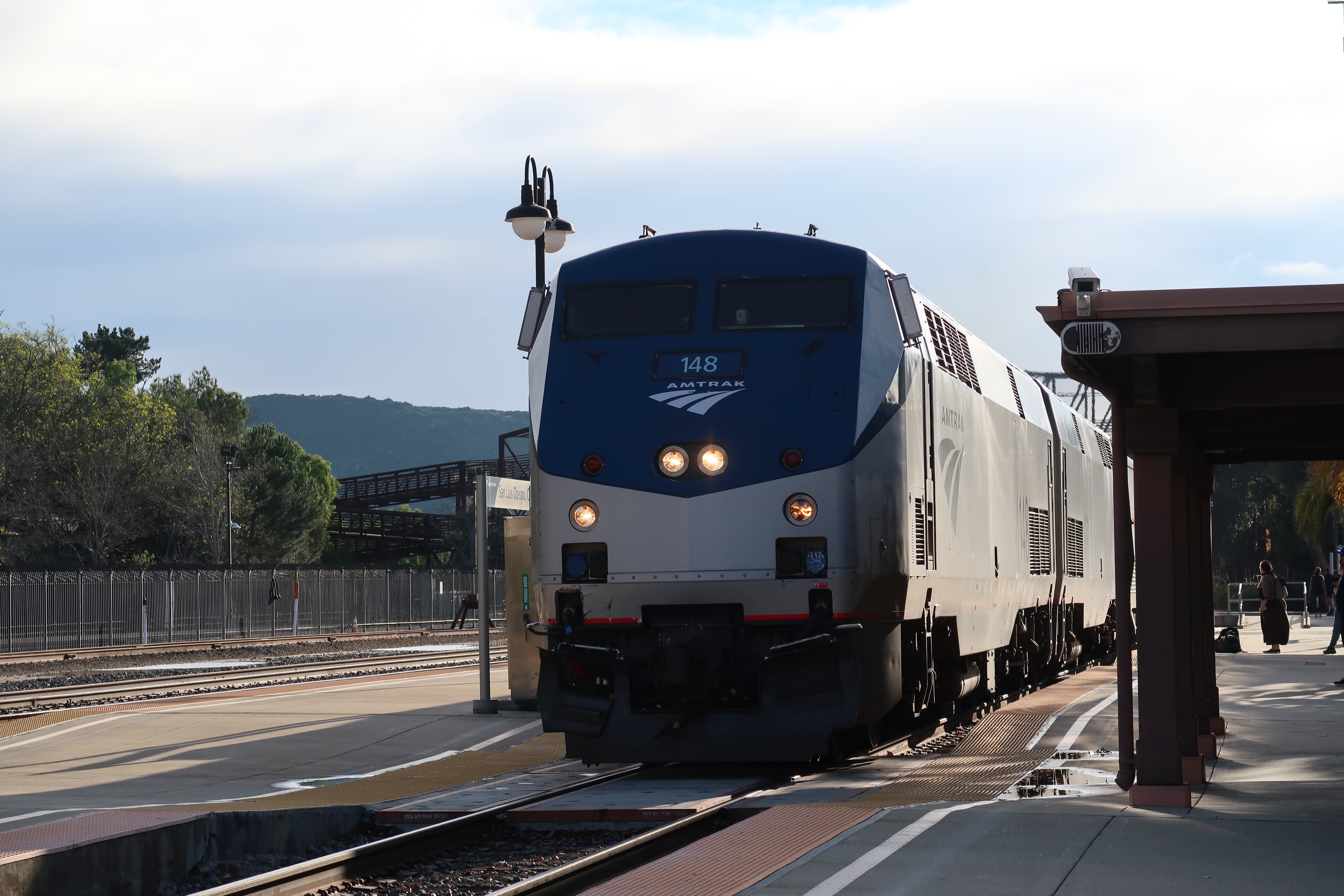
I timed my visit with the arrival of Train # 14, the northbound Coast Starlight. This is an AMTRAK route that starts in Los Angles and terminates in Seattle, Washington.

I had about 20 minutes to sketch the water tower before the 14 pulled into San Luis Obispo. The train was already running 30 minutes late. I picked my position and started to sketch. A voice over my shoulder ask if was riding coach or had a roomette.

The voice belonged to an AMTRAK conductor who was about to board the train, SLO is a crew changeover point. I told him I wasn’t boarding the train, just sketching the tower. We had a conversation about other Southern Pacific existing water towers. He recommend a very large tower in the desert of Arizona that I should visit.

The Coast Starlight arriving at San Luis Obispo, 30 minutes late.

With the recent heavy precipitation over Donner Pass, I wondered aloud if the rotary plows at Roseville had been put to work to clear the pass. The conductor didn’t know. Before long the Coast Starlight pulled into the station and I looked down at my sketchbook and I hadn’t gotten very far but I had a nice conversation with a railroad working man. Two rail nerds chewing the fat!

SLO is was is called a stretch stop, also known in another time as a smoke stop, where the Starlight pauses for about 20 minutes so passengers can get out and stretch their legs, or poison their lungs with nicotine. This is also where crews, engineers and conductors, change over.

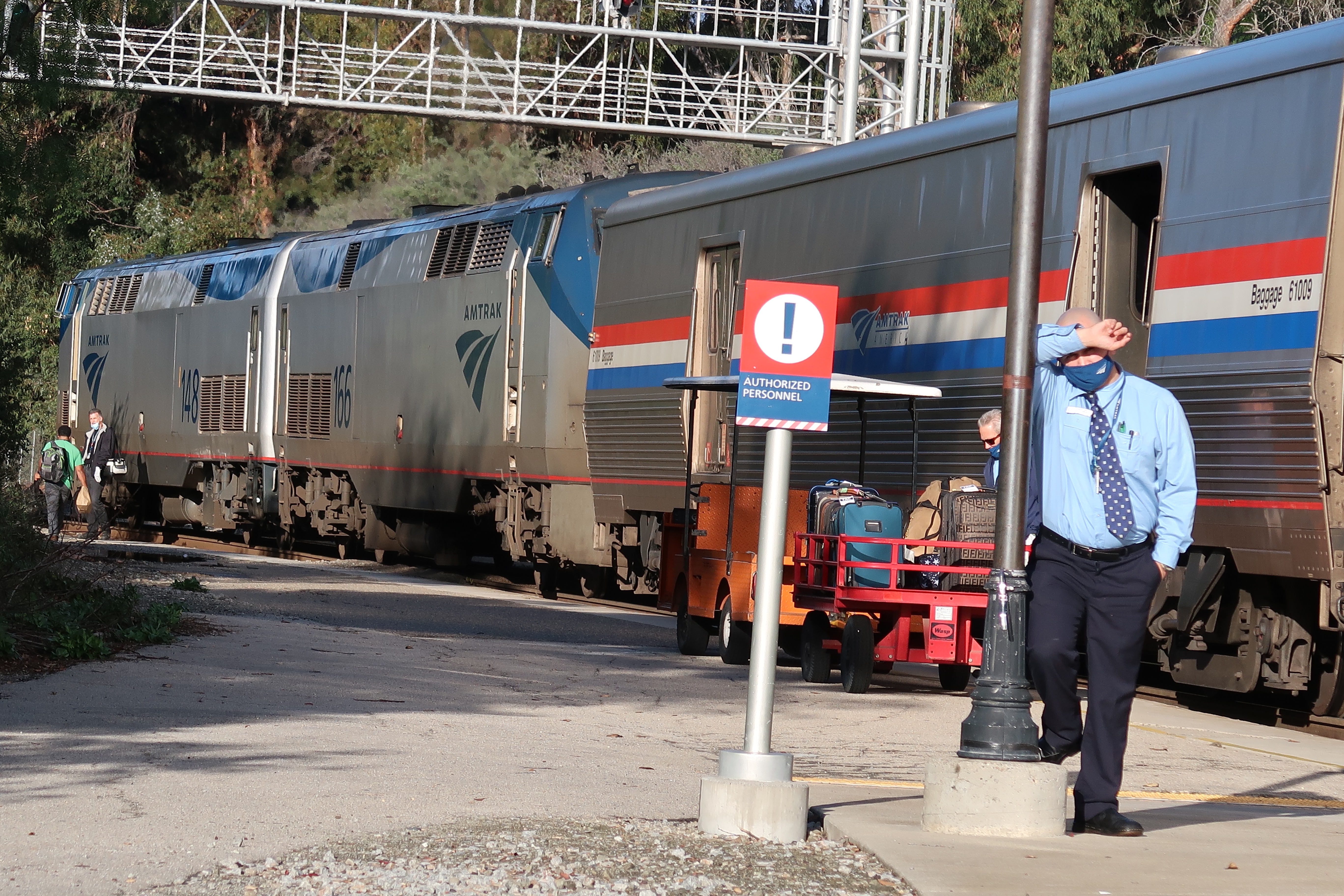
This photos says a lot. The conductor monitors the progress of boarding the train, baggage is being loading into the baggage car, and the engineers are changing over.

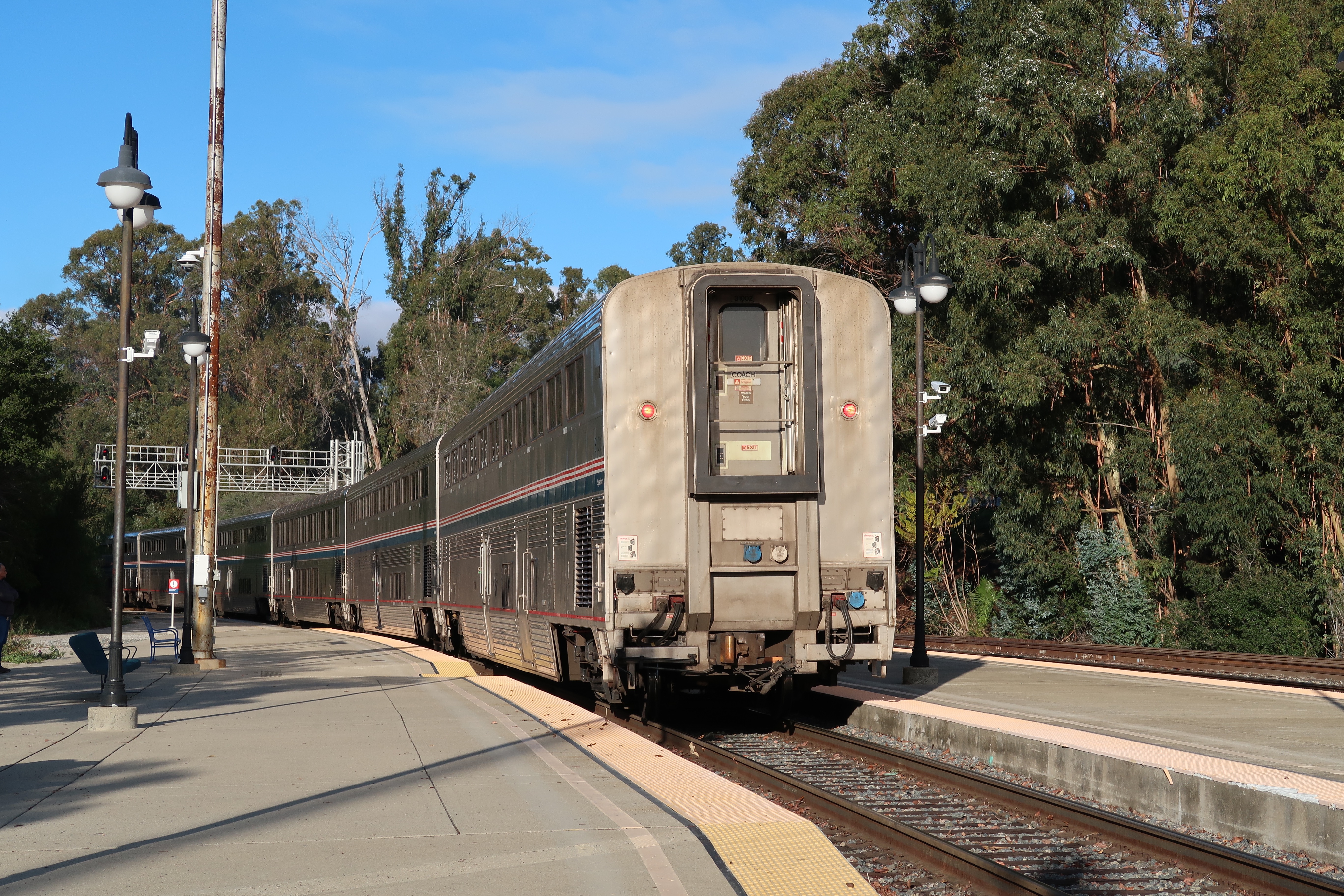
I couldn’t continue sketching because a double decker Superliner passenger car was now between myself and the historic water tower. So I watched the interactions on the platform instead. Passengers where doing laps, other where boarding, some hanging back from the train were vapping, and the train crew was in the process of changing over.

“All aboard!” And passengers filtered back into the cars. The locomotive sounded it’s horn. It was time for the Starlight to start its climb up the Horseshoe Curve on the Cuesta Grade and I watched the train slowly disappear around the curve.

I now turned back to the water tower and restarted my sketch.

The SLO 65,000 gallon water tower was built in 1940, at a cost of $2,130. The watertower was built across from the passenger station so steam locomotives could take on water without having to back into the yard further south down the track. At that time, ten passenger trains passed through SLO. The tank was in service until 1956, when steam was replaced with diesel on the coast line. The tower was preserved and restored by 1998.

Image

Sketching, Trackside

Colfax, California is on the original Transcontinental Railroad. At Colfax, the climb of the western flank of the Sierra Nevada Mountains begins in earnest. The town started as a railroad construction camp and then was renamed by Governor Stanford to honor Vice President Schuyler Colfax who visited to check the progress on the western side of the Transcontinental Railroad.
What is special about Colfax is that it is one of the few places on the California Zephyr’s 51 hour and 20 minute route where trains 5 (westbound) and 6 (eastbound), pass within minutes of each other. That is, if the Zephyr is running on time, which is not too often. In California, the AMTRAK passenger service runs on Union Pacific rail and freight always has right of way. It pays the bills after all.

Both Zephyrs where scheduled to be at Colfax within a few minutes of each other at about 12:30 PM. At about 12:15, people with their suitcases began to arrive at the platform. I love the romance of train travel. The farewells at the station as one prepares for a rail journey, often to see far off friends and family over the Christmas Holiday.

12:30 came and went and no Zephyr.

Both Trains 5 and 6 were late. This is AMTRAK after all, a passenger service not known for it’s punctuality. The Chicago-bound, Train #6 was running about 30 minutes late. It had left Emeryville in the morning at 7:21 AM.

The California Zephyr eastbound Train #6 arriving at Colfax, about 30 minutes late. This train’s final destination is Chicago.

Train #6 pulled into Colfax station at 12:59 PM. I had positioned myself on the east side of the grade crossing at Grass Valley Street. The Zephyr had an eight car consist with a baggage car and seven passenger cars and was pulled by two locomotives. The train was too long for the station platform so when the Zephyr stops at the station, it stops traffic on Grass Valley Street. I had no way of knowing which car would be stopped at the grade crossing. It lent a bit of improvisation and serendipity to the sketch. And I would only have a short time to sketch the scene because the Zephyr would be in the station for about three minutes as passenger boarded or disembarked.

The train slowed to a stop and the baggage car came into sketch-view. I would be sketching this car. Great, there are less windows on the baggage car! I quickly sketched in the form of the car and then worked inward to add details. I had all the information I needed in about two minutes of sketch-time (you do lose sense of time when sketching). I would later add a few more details and paint.

Train number 6 headed out of Colfax toward Cape Hope and the summit of the Sierra Nevada Mountains at Donner Pass and then on to Reno, Salt Lake City, Denver, and eventually Chicago. I checked the status of the westbound train train number 5. It was running an hour and a half late. In about 10 minutes I found out the reason why.

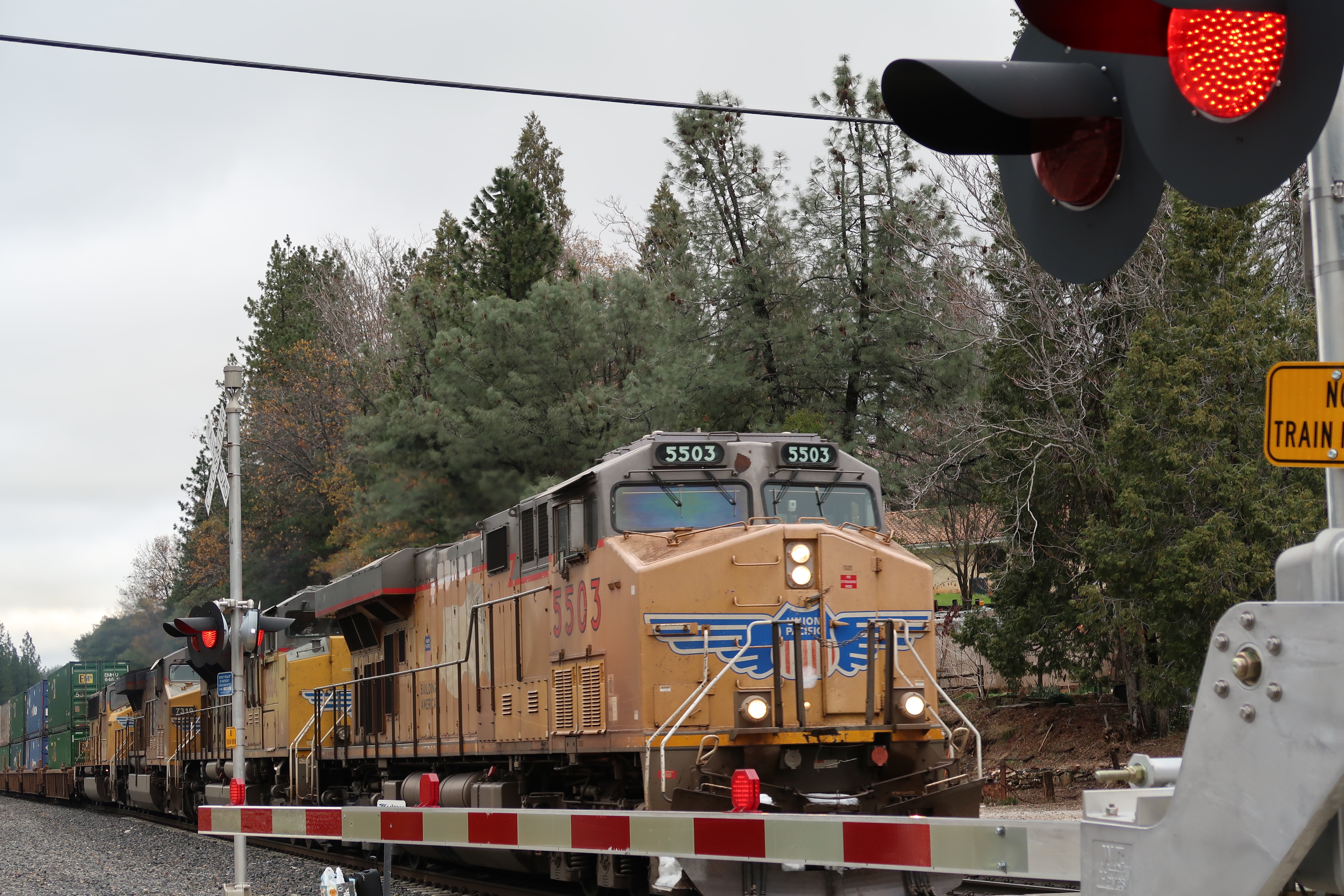
Coming down from the summit was a UP freight wearing a dusting of snow on it’s pilot as it headed down towards the Bay Area. The five locomotives (four on point and another at the end) where hauling a long container consist that keeps a lot of trucks off our highways. The Zephyr was running behind this train which explains why it was running an hour and a half late.

I didn’t wait for the westbound Zephyr, I had already gotten my sketch in the book!

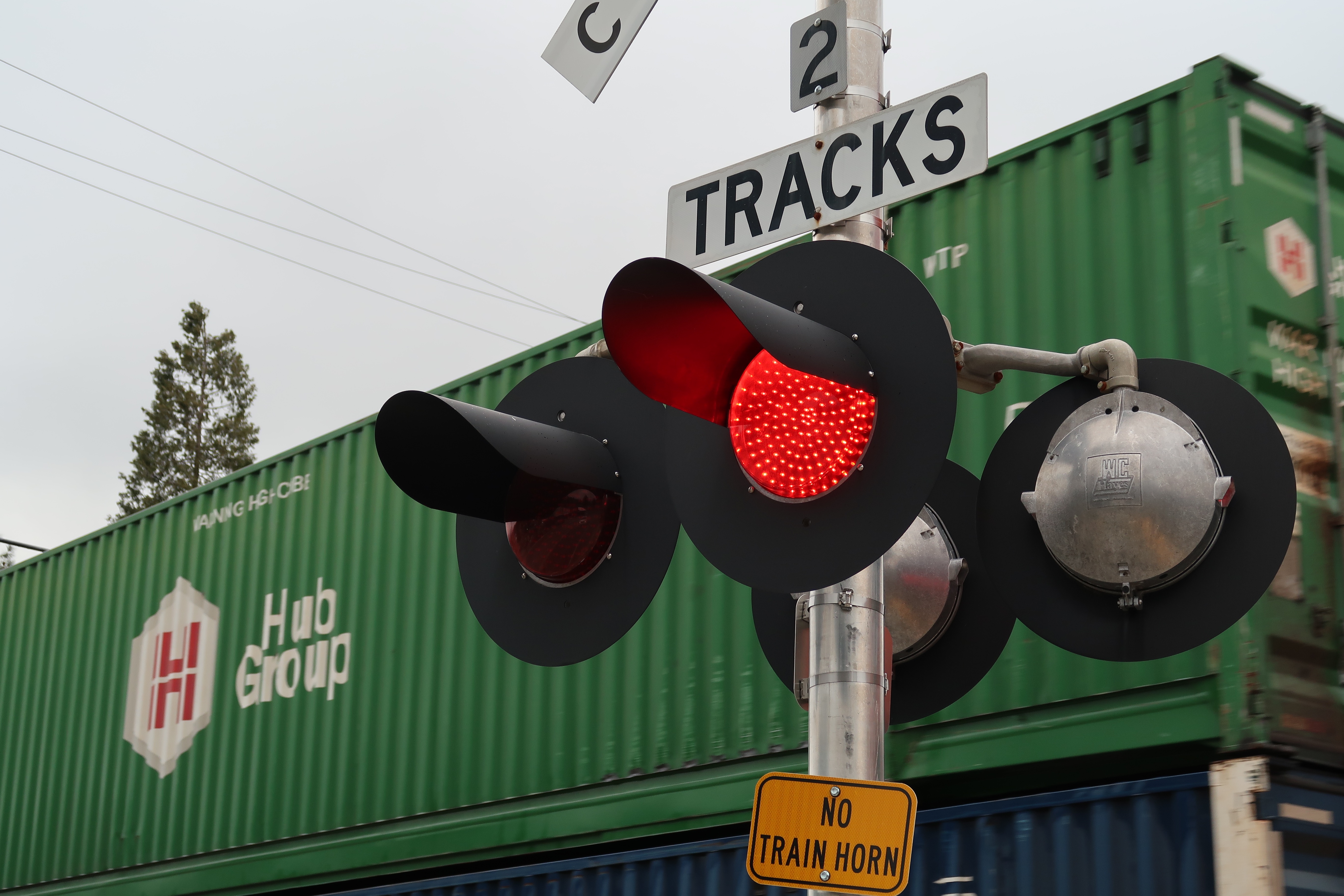
The train town of Colfax is a “No Train Horn” town.
Image

Davis Station

My brother spent almost half of his life in the Central Valley college town, Davis, California. He attended the University of California at Davis (UCD), worked in it’s public and private schools, got married, and raised his three children in “The City of All Things Right and Relevant!”

For Mother’s Day we where meeting my mother and sister-in-law in Davis so I arrived a little early to I sketch the historic train station and do a little railfanning.

Most towns start with a train station and Davisville, as Davis was then known, got their passenger depot in 1868. The original station burned down and the current station was built by Southern Pacific Railroad in 1913. The station is built in a Mission revival style. The University Farm, which later became UCD, opened five years before the current building was finished. At the time, the University wanted a befitting station to the town and the university stop. And they certainly got one!

Three passenger trains stop at Davis: the Capital Corridor, AMTRAK’s Coast Starlight, and the California Zephyr.

A view of Davis Station from Track 1. The SP stands for Southern Pacific. The bike racks in the foreground tells you this is Bike City, Davis.

I sat on the north side of the station and sketched it’s Mission Revival stylings. The station is island by three sets of tracks which at the time was an important stop on the Cal-P line. While I was sketching the station, I was very familiar with it’s curved lines, arches, and tile roof because I had sketched all of California’s Spanish Mission and a few Southern Pacific Mission Revival stations (Burlingame Station comes to mind). Davis Station and the Davis Tower are the only examples of Mission Revival in the city of Davis.

The interlocking control tower still stands just northeast of the station. This will have to be for another sketching day.
A Union Pacific freight blazes through Davis Station with it’s curved track. Union Pacific owns the tracks and freight, not passengers service, pays the bills for the railroad.
There were a few clues that a train was coming down the line at Davis Station. The first was that the signal light was green, meeting that whatever train was heading down the line had the “high ball”, in other words, the train had the right of passage. The other clue was that people began to arrive at the station with their flowers in pots or plastic; it was Mother’s Day after all.

At 10:40 AM, a westbound Union Pacific freight train sped through the curve at Davis Station on track 1, the engineer giving me a thumbs up as the train rumbled through. At 10:50 AM, on track 2, the eastbound Capital Corridor train #724, pulled into Davis to take on passengers on her way to California’s capital: Sacramento.

The westbound Train # 731 was right on time and pulled into Davis at 11:10 AM. This Capital Corridor passenger train was heading to San Jose.

On point was locomotive 2004. I looked down at the front truck, containing the leading axels of the locomotive and stenciled, in yellow, where the two letters “GP”. In an odd bit of coincidence, I has replaced the initials “SP” on the Davis Station with my brother’s initials, “GP”, as an honor to his memory.

A westbound Capitol Corridor train pulls into Davis Station on it’s way to San Jose. On point is Locomotive 2004, an EMD F59PHI with “California” styling. I should say so.
In one of those “I-can-make-this-sh*t-up” moments, the initials “GP”, my bother’s intials, were stenciled into the trucks of locomotive 2004. Unreal.

Image

California Zephyr #6: Colfax to Denver

“Trains seems to rattle out stories, as though the motion of the track acts to shake up thoughts and loosen tongues. There’s a world outside the window and a whole separate world within.” ~Ticket the Ride, Tom Chessyre (My California Zephyr book)

For a while now I have wanted to ride the California Zephyr, one of AMTRAK’s most scenic routes.

Last Spring, I had to cancel my train journey but this Spring Break I booked an abbreviated trip, not departing from Emeryville but Colfax and detraining in Denver instead of Chicago.

I chose Colfax because it is a 35 minute drive from my mother’s house in Penn Valley. The train was running two minutes late. When I would finish the journey to Denver, the number 6 was running two hours late. Freight trains are given priory over passage service like the California Zephyr.

Four other people boarded at Colfax, two middle aged women looked like they were headed to Reno. The two other travelers were a bit older and appeared to be heading further down the line. They are all traveling in coach. I never saw them again.

Colfax is not one of the “Fresh Air- Smoke Break” stops (oxymoron I know), so the Zephyr stops only long enough to pick up or drop off passengers.

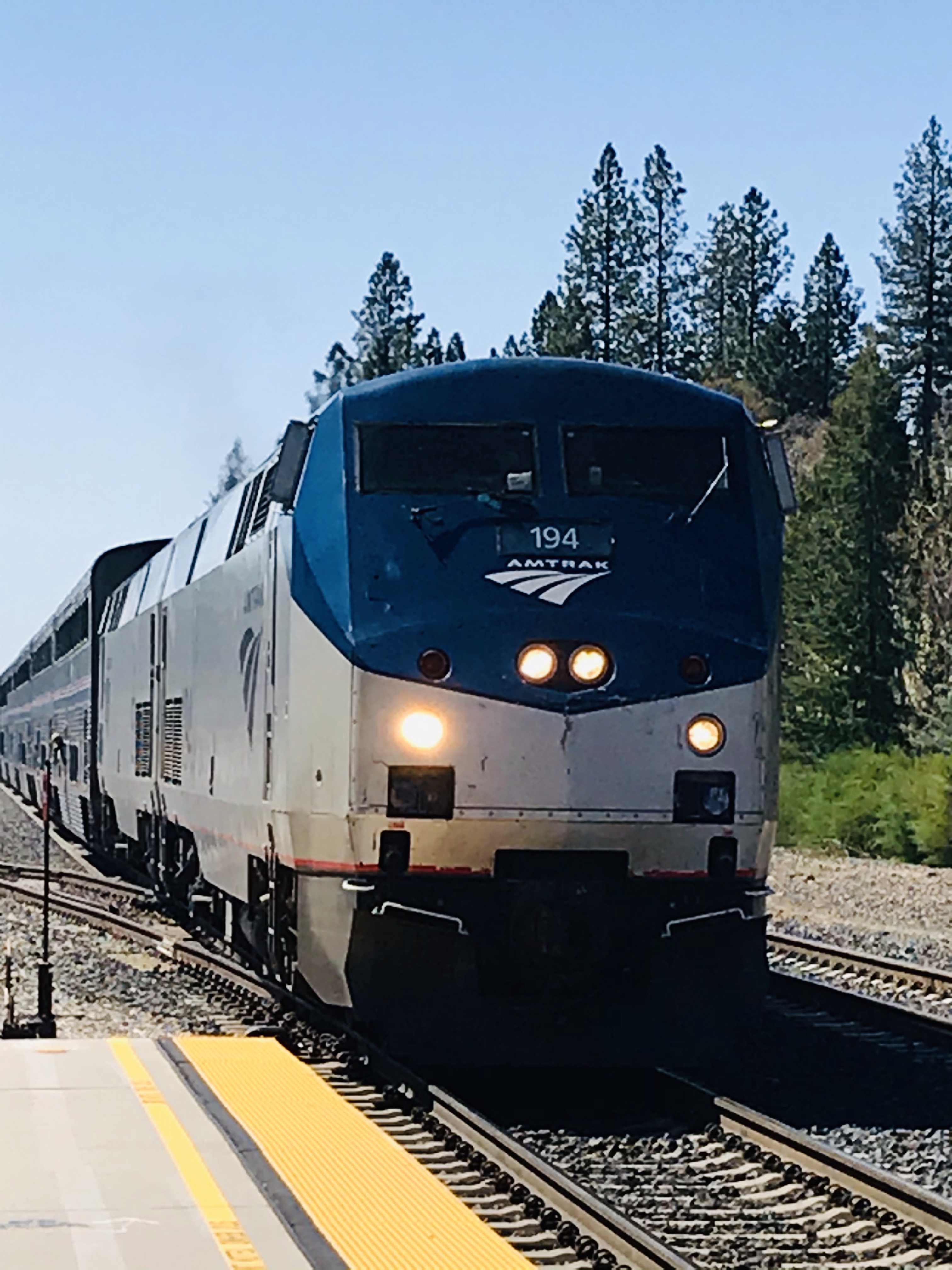
The California Zephyr train # 6 pulling into Colfax running two minutes late. On point is a General Electric P42DC, built September of 2001. Number 194 and 153 are now 20 years old.
Number six pulls into Colfax. The platform is too short for the two locomotives with the eight car consist. I am on the first car behind the locomotives, sleeper car 32048 and roomette number 003. This will be my address for the next 30 hours or so. Once I have boarded, the train slowly pulls forward so the Reno travelers can board the coach car, at the end of the train.
There is something wonderful about stepping off the platform and into another moving world. The California Zephyr is a self-contained world with everything you could possibly need: food, drink, a bathroom, and a bed (not to mention the amazing views).

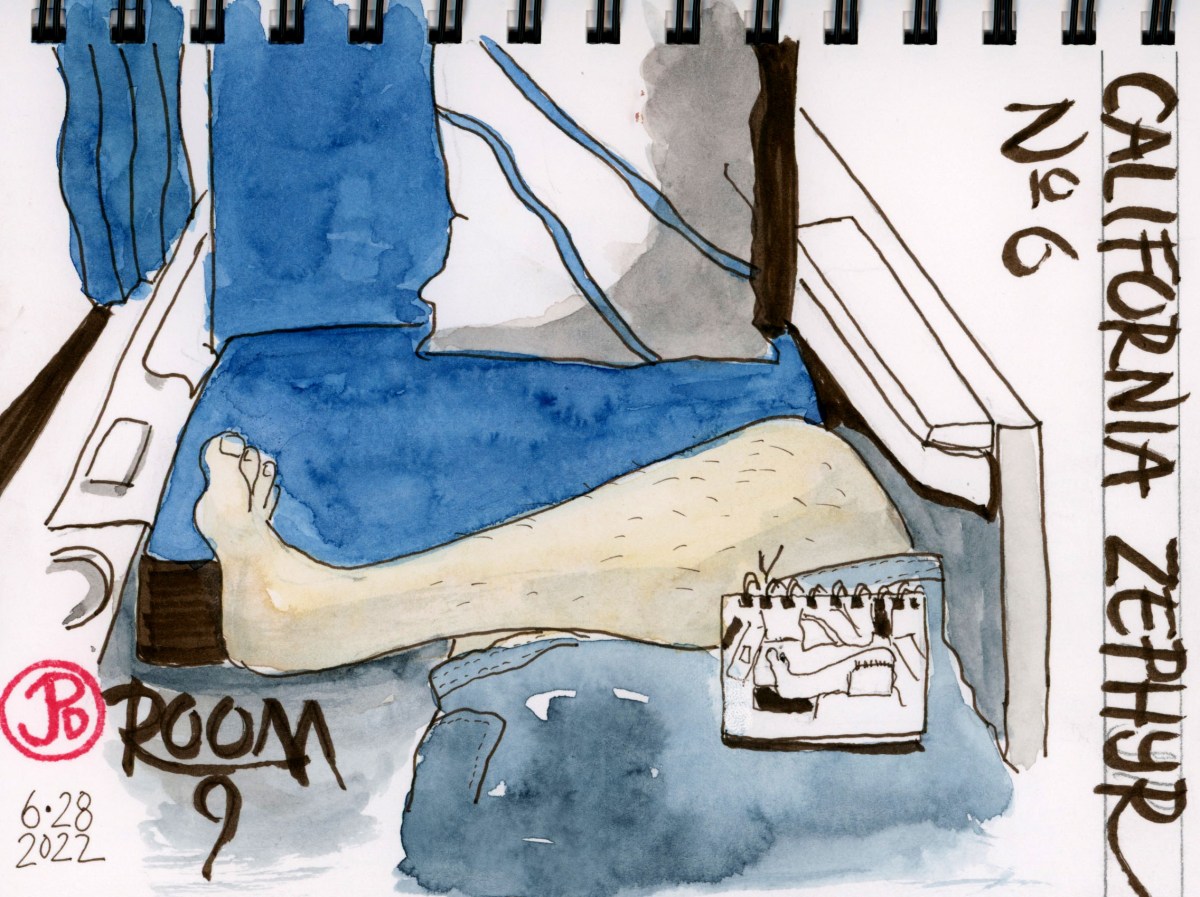
The locomotive throttled up and headed east out of Colfax and my car attendant showed me to my roomette (featured sketch). I set my bag down and I headed to the opposite side of the train to see the first of many views: Cape Horn. If there is one problem with the Zephyr is that there are great views on both sides of the train and unless your sitting in the observation car, your roomette faces only one side of the train.

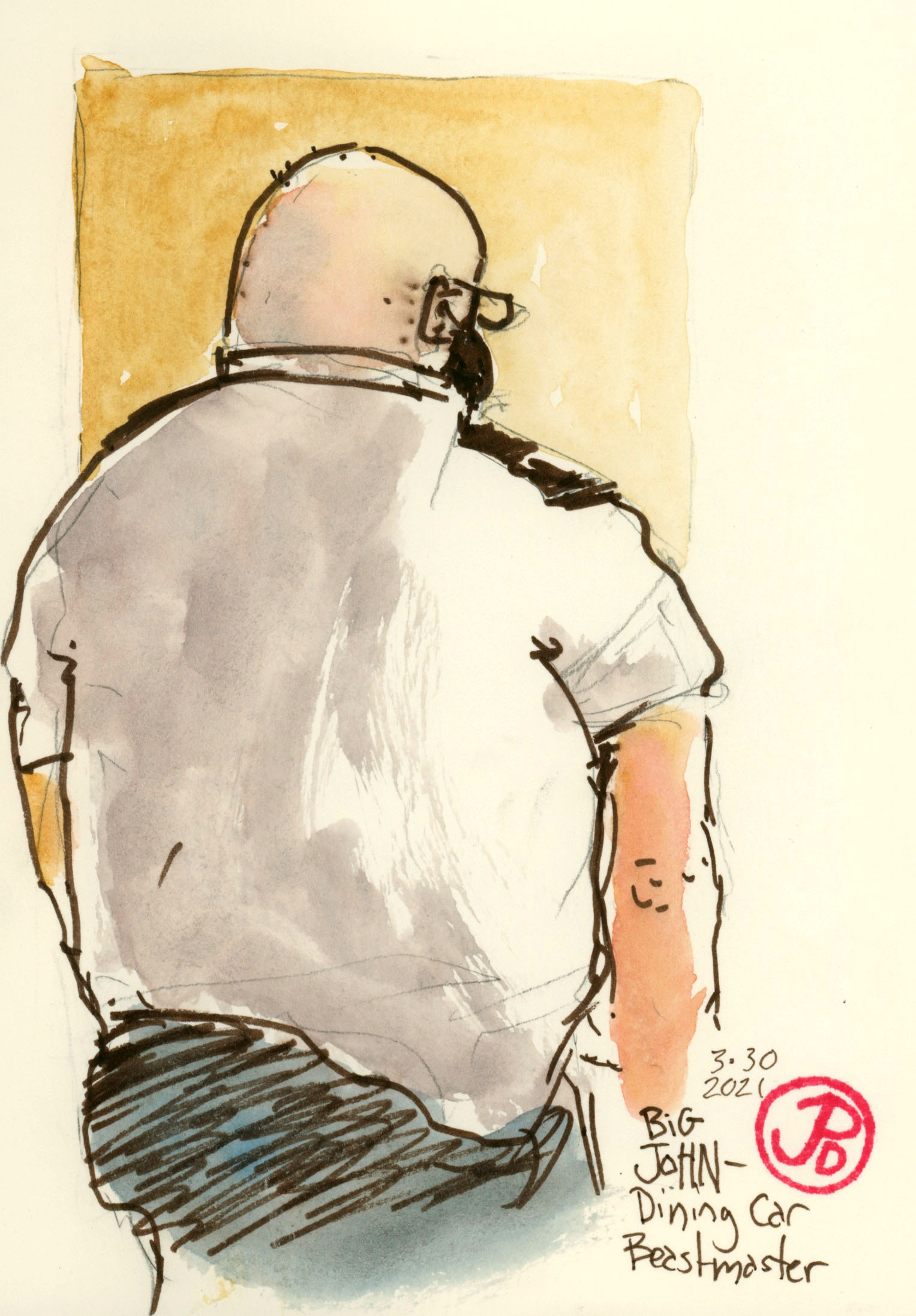
I book a late lunch in the dining car with the dining car attendant, John. I head to the observation car and wait for my name to be called. Here I do my first sketch abroad the Zephyr. Over the course of the journey I do many more.

John, also known as Big John, seems to have worked for Amtrak for a while. He reminds everyone that they are short staffed for this leg of the journey. This is because many of the Amtrak workers have been furloughed because of Corvid-19. At one point, one of the engineers helps out with lunch service. Don’t worry. Some engineers are on board and there was someone at the controls as we headed over the Sierra Nevada Mountains.

I enjoyed talking train talk with the engineer, now promoted to dining car assistant. He tells me a little about the locomotive and we discuss the recently restore Big Boy 4014, that largest steam locomotive in operation.

After lunch I head back to my roomette and do some more scenic sketches.

Image

Post 400: A Zephyr Deferred

Zephyr: (n) a gentle wind from the west.

Last spring break I booked a roomette on the California Zephyr, a 2,438 mile journey from Emeryville, Ca to Chicago, Il. This route passes through such cities as Sacramento, Truckee, Reno, Salt Lake City, Denver, Omaha, and Chicago. It is one of the most scenic routes on the AMTRAK network.

Last spring I was going to travel the entire route but then Covid 19 happened and I had to cancel the trip. I knew that this rail dream was deferred and at first chance I would rebook this trip because I have always wanted to travel by rail through the Sierra Nevada and the Rocky Mountains.

The opportunity came in spring break of 2021. Instead of traveling the whole route, I booked a round trip with a roomette from Colfax, Ca (near my mom’s house) to Denver, Co. This stretch includes the most scenic parts of the route and Denver provides it’s own destinations.

On this trip, I plan to do many quick sketches of train views along the route. At California Arts Supply in San Mateo, I got a custom Ronquad which is a 4 by 6 piece of card stock that would be a template for framing each sketch. I used my Ronquad on the featured sketch.

But why Denver and not Chicago? Both cities provide great sketching opportunities but Denver has an edge over Chicago: life birds! I had a few ABA lifers on my list: scaled quail, dusky grouse, American three-toed woodpecker, brown-capped and black rosy-finch, sharp-tail grouse, and the much sought after white-tailed ptarmigan. And while Chicago offers lots of architecture sketching opportunities, Denver has that too but also beautiful landscapes.

The Zephyr stops at the historic Union Station in downtown Denver and I booked a “Pullman” room in the hotel at the station, the Crawford Hotel. I admit this is a bit a splurge but I love the idea of stepping off the train in the evening, after a two day trip, and walking a short distance to my room in Union Station. It seems a throwback to a different era. An era when more people travelled by rail, when the airline industry was in it’s infancy.

As I do before any trip, I do a few sketches to build knowledge and excitement. The featured sketch is from the AMTRAK website for the California Zephyr. This location looks to be somewhere in the Rocky Mountains. I also like to do a map of my future journey. In this case, Train 6, from Colfax to Denver with all the stops in between.

California Zephyr map showing all the stops from Colfax, Ca to Denver, Co.