Image

Davis Station

My brother spent almost half of his life in the Central Valley college town, Davis, California. He attended the University of California at Davis (UCD), worked in it’s public and private schools, got married, and raised his three children in “The City of All Things Right and Relevant!”

For Mother’s Day we where meeting my mother and sister-in-law in Davis so I arrived a little early to I sketch the historic train station and do a little railfanning.

Most towns start with a train station and Davisville, as Davis was then known, got their passenger depot in 1868. The original station burned down and the current station was built by Southern Pacific Railroad in 1913. The station is built in a Mission revival style. The University Farm, which later became UCD, opened five years before the current building was finished. At the time, the University wanted a befitting station to the town and the university stop. And they certainly got one!

Three passenger trains stop at Davis: the Capital Corridor, AMTRAK’s Coast Starlight, and the California Zephyr.

A view of Davis Station from Track 1. The SP stands for Southern Pacific. The bike racks in the foreground tells you this is Bike City, Davis.

I sat on the north side of the station and sketched it’s Mission Revival stylings. The station is island by three sets of tracks which at the time was an important stop on the Cal-P line. While I was sketching the station, I was very familiar with it’s curved lines, arches, and tile roof because I had sketched all of California’s Spanish Mission and a few Southern Pacific Mission Revival stations (Burlingame Station comes to mind). Davis Station and the Davis Tower are the only examples of Mission Revival in the city of Davis.

The interlocking control tower still stands just northeast of the station. This will have to be for another sketching day.
A Union Pacific freight blazes through Davis Station with it’s curved track. Union Pacific owns the tracks and freight, not passengers service, pays the bills for the railroad.

There were a few clues that a train was coming down the line at Davis Station. The first was that the signal light was green, meeting that whatever train was heading down the line had the “high ball”, in other words, the train had the right of passage. The other clue was that people began to arrive at the station with their flowers in pots or plastic; it was Mother’s Day after all.

At 10:40 AM, a westbound Union Pacific freight train sped through the curve at Davis Station on track 1, the engineer giving me a thumbs up as the train rumbled through. At 10:50 AM, on track 2, the eastbound Capital Corridor train #724, pulled into Davis to take on passengers on her way to California’s capital: Sacramento.

The westbound Train # 731 was right on time and pulled into Davis at 11:10 AM. This Capital Corridor passenger train was heading to San Jose.

On point was locomotive 2004. I looked down at the front truck, containing the leading axels of the locomotive and stenciled, in yellow, where the two letters “GP”. In an odd bit of coincidence, I has replaced the initials “SP” on the Davis Station with my brother’s initials, “GP”, as an honor to his memory.

A westbound Capitol Corridor train pulls into Davis Station on it’s way to San Jose. On point is Locomotive 2004, an EMD F59PHI with “California” styling. I should say so.
In one of those “I-can-make-this-sh*t-up” moments, the initials “GP”, my bother’s intials, were stenciled into the trucks of locomotive 2004. Unreal.

Image

Yuba Pass, M. P. 177

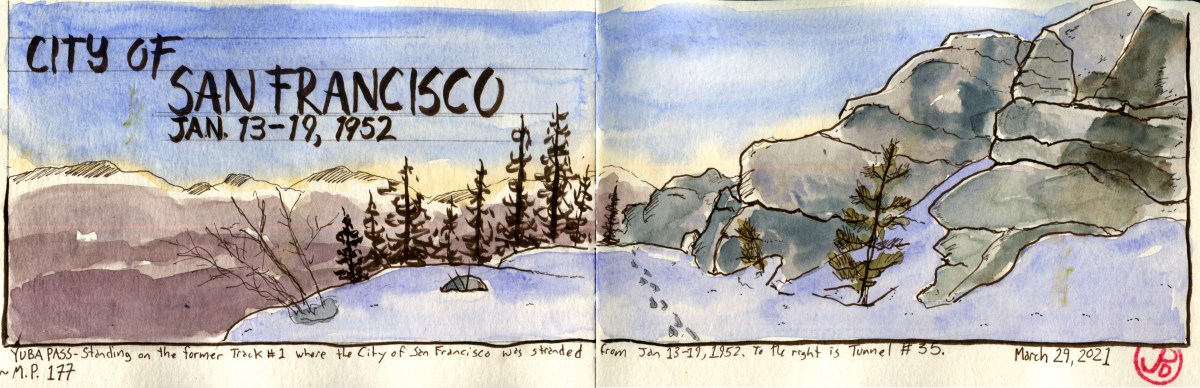
Ever since I had read about the stranding of the City of San Francisco in January 1952, I have wanted to visit the location and do a sketch.

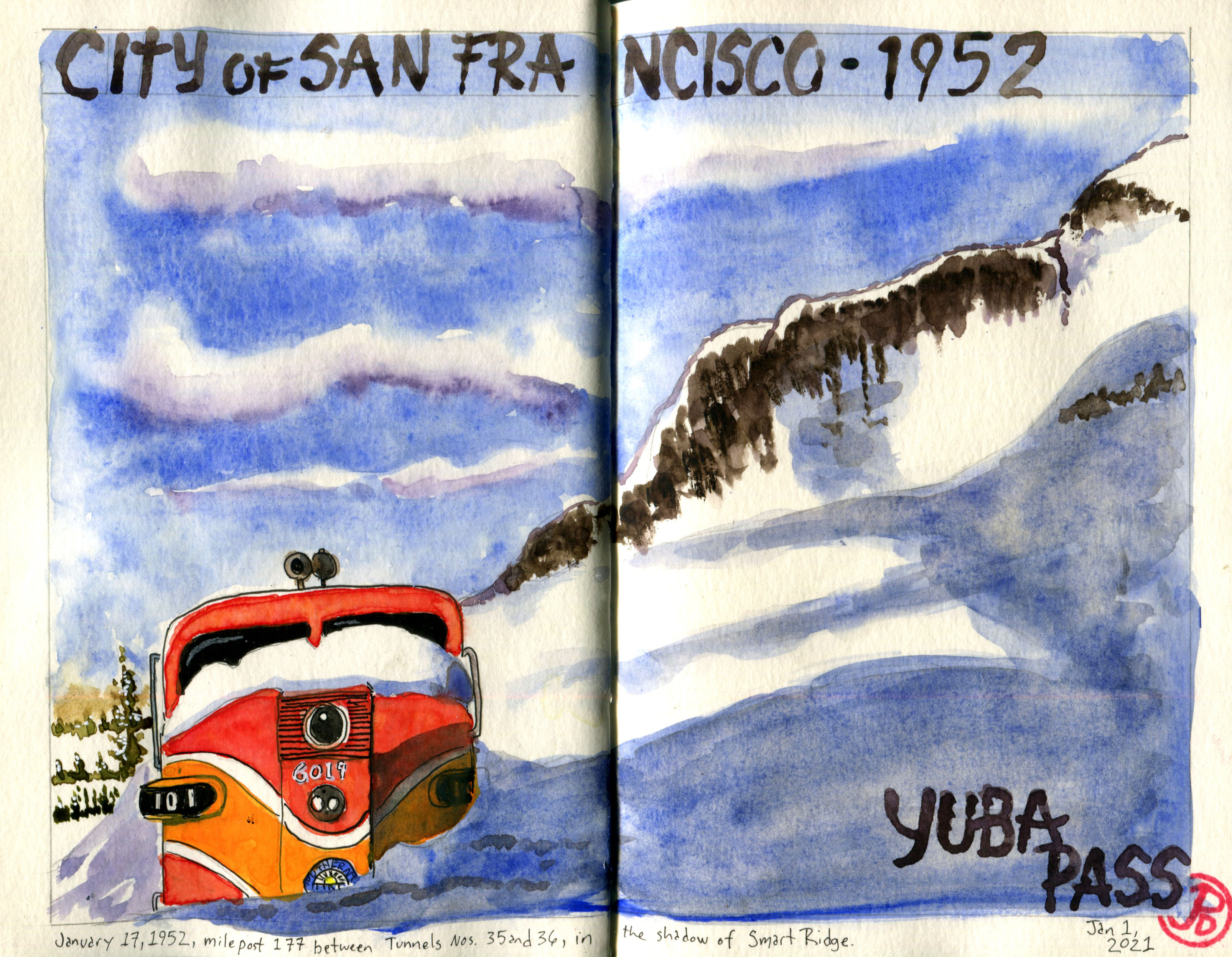
In January of 2021, I did a sketch of the stranded super liner that was based on a historical photo. Since that time I had wondered if the stranding site was accessible or if it was on a part of the line that was far from roads or trails. In January 1952, the whole landscape was snowbound, paralyzing all transportation routes. After some research, I found out that the site was ridiculously accessible because Milepost 177 was a ten minute walk from where Highway 20 joins Highway 80.

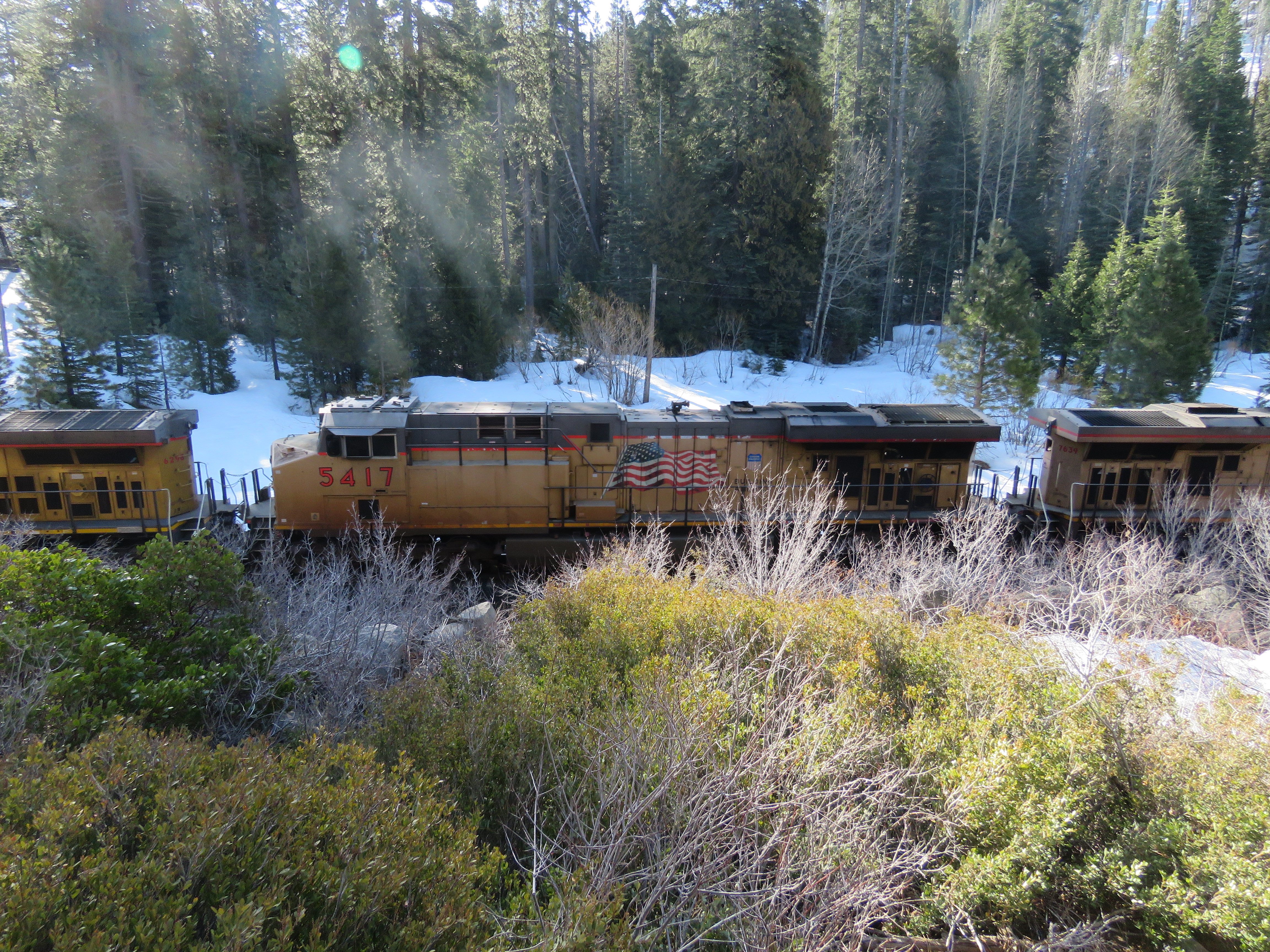
As I pulled off Highway 20, I donned my snowboots, an east bound Union Pacific freight passed by with a consist mainly featuring tanker cars. Freight has the right of way over passage service, it is the bread and butter of the contemporary railroad business.

A UP freight climbing towards Tunnel numbers 35 and 36 and off toward Donner Summit.

I wanted to find the exact location that the City of San Francisco became stranded: milepost 177, between Tunnels 35 and 36. But I also wanted to time my visit so I could see and photograph some trains at Yuba Pass. Well I just missed a freight train but my real prize was now running two minutes late and would depart Truckee at 9:39 AM.

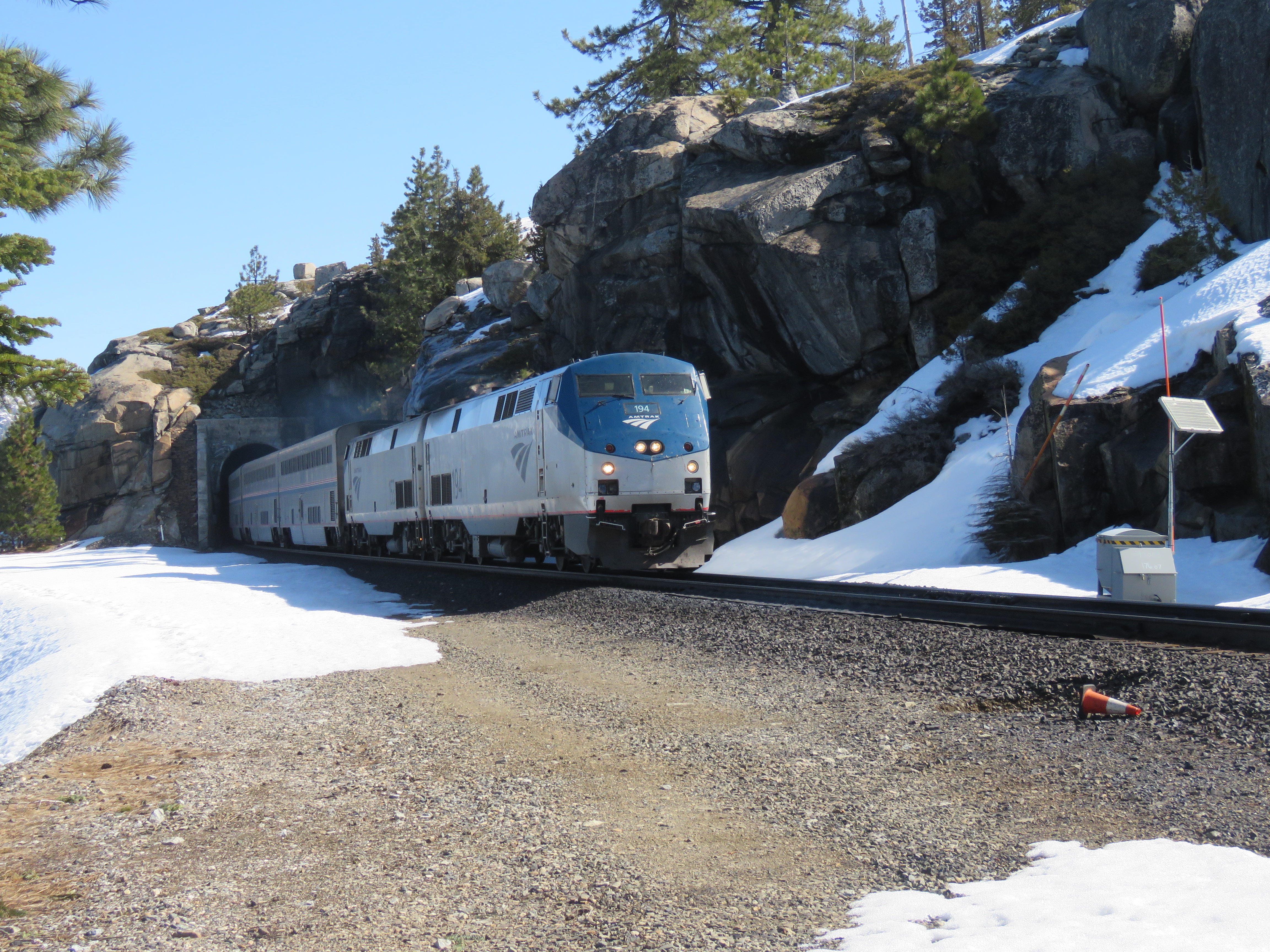
This was the passenger service that replaced the City of San Francisco. It is one of the longest, and some would argue, most beautiful, routes on the Amtrak system. This is the California Zephyr. The hike up to Yuba Pass was extra special because on the following day, I would be boarding the eastbound California Zephyr, Train #6, to Denver, Colorado. Nine days later I would be returning on the westbound, Train #5. This was the train I was waiting for.

I hiked along the former grade of Track #1, the route is currently single tracked. The hike was relatively easy because it was along a railroad grade and the snow wasn’t too deep. It took me about ten minutes to reach Tunnel # 35. The current track goes through the tunnel but the former track goes around Smart Ridge. It was in this area that the City of San Francisco became stranded in 1952.

I looked at a few arial reference photos and picked my spot, in the shadow of the rocky ridge. I sketched in the ridge on the right and the trees in the background and far off the spine of a mountain range. For this I used Micron dark sepia pens.

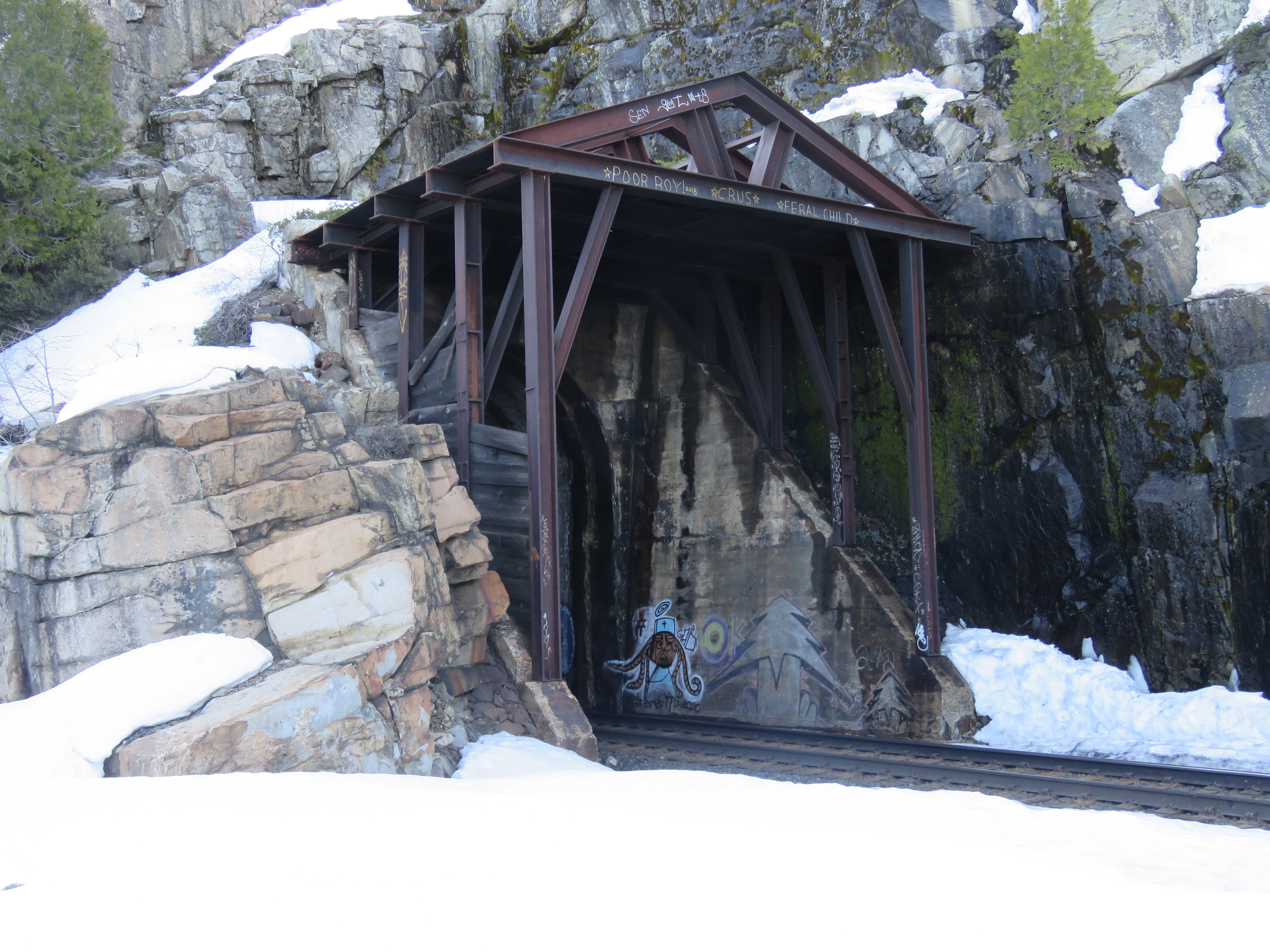
The west entrance of the 738 foot long Tunnel # 35.

I sketched for about 20 minutes and then I walked toward Tunnel #36 to find a good vantage point to photograph the Zephyr and I decided on standing near the eastern entrance of Tunnel #35 so I could photograph the train coming out of Tunnel #36. And then turn westward to capture the Zephyr as it disappeared into Tunnel # 35.

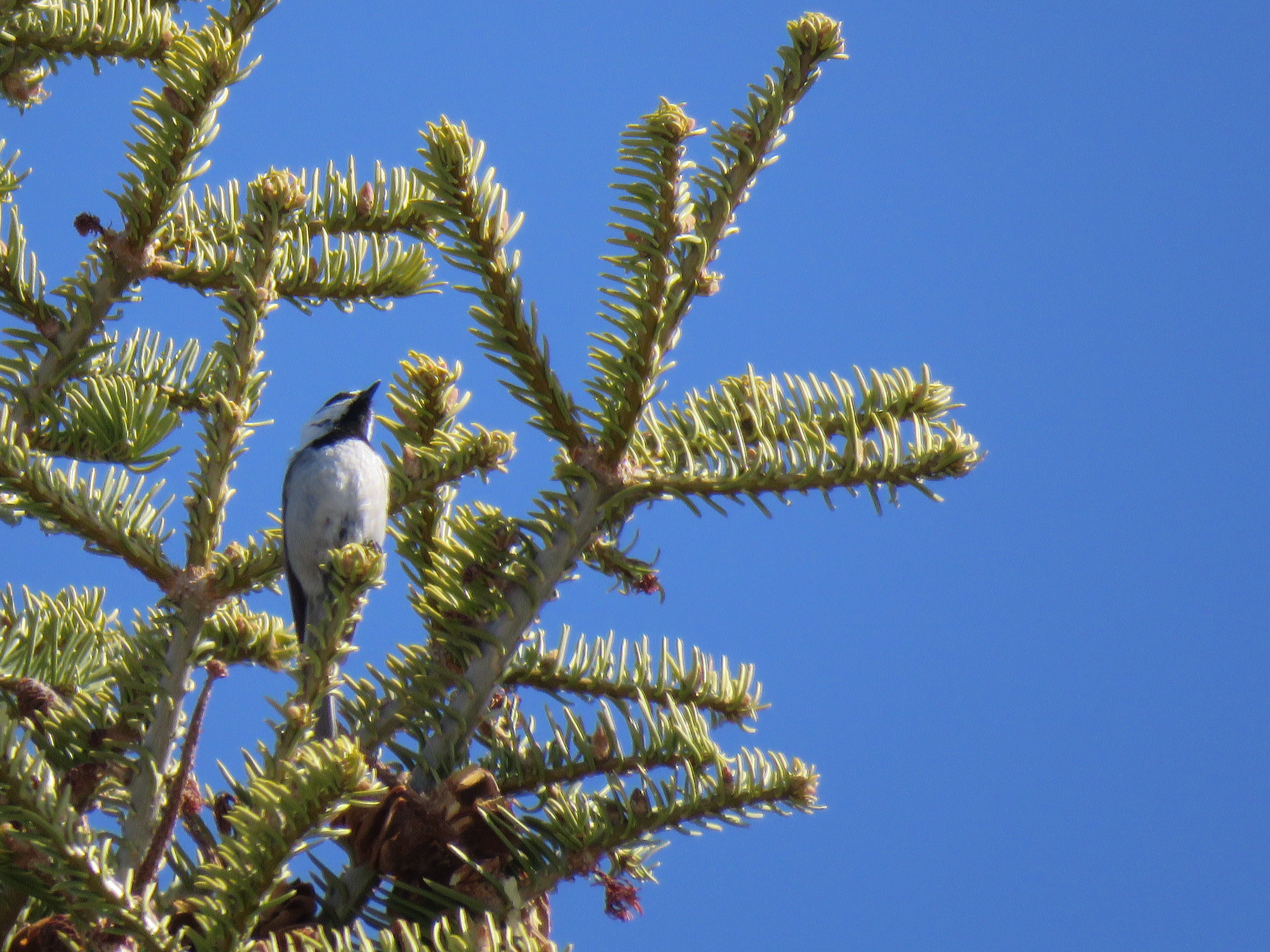
I had no idea when the train would be emerging from the tunnel but I filled my time being serenaded by the beautiful whistle of a mountain chickadee. This is the song of the western mountains. Spring was slowly arriving in the Sierras.

A mountain chickadee singing from the top of a pine. Bird and trains in the Sierra Nevada, I’m in heaven!!

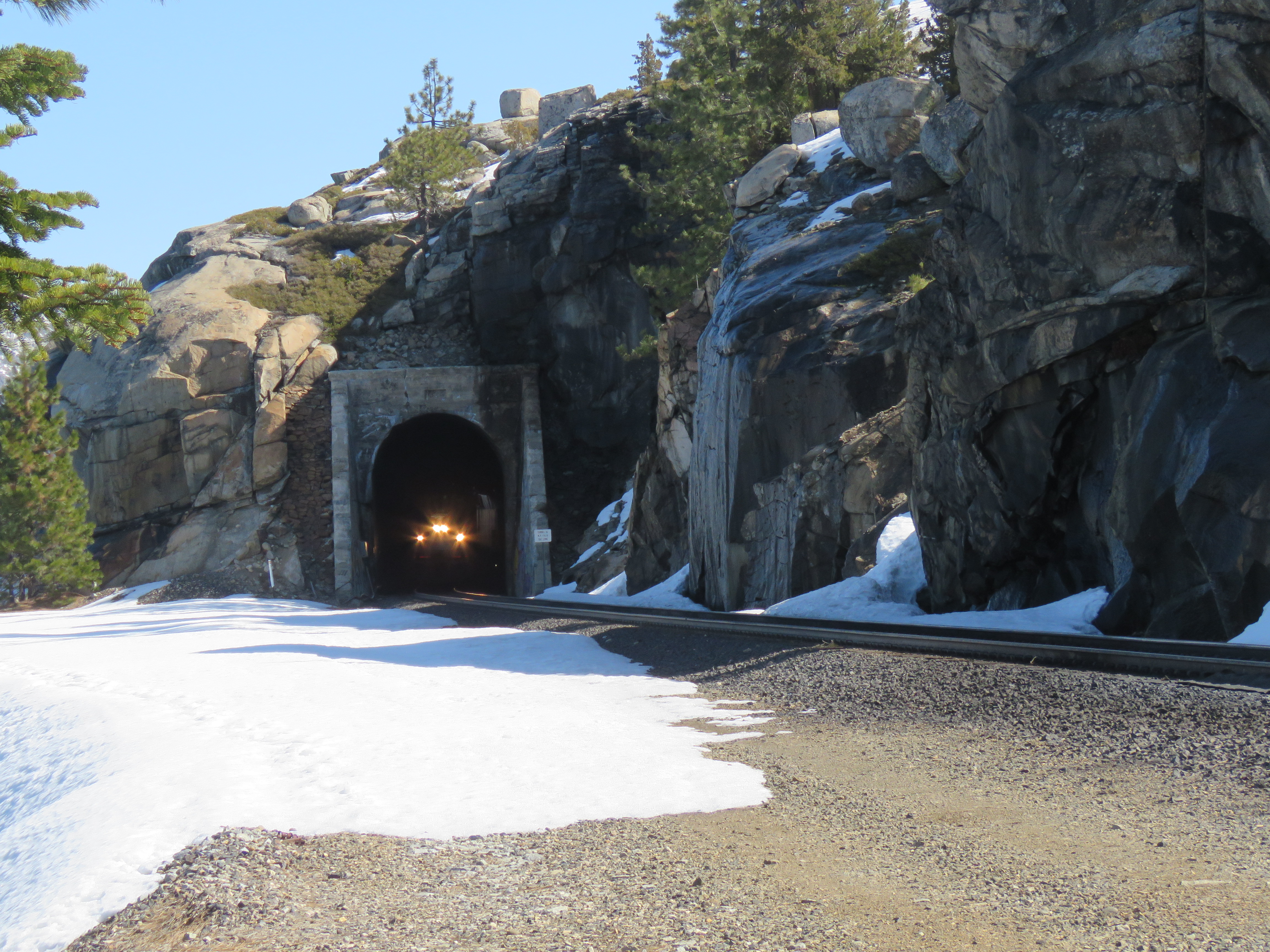
At 10:40, I saw the headlights of the westbound Zephyr.

A first sighting of the California Zephyr coming out of the east portal of the 326 foot long Tunnel #36. In the foreground is the rail bed of the former track #1.
California Zephyr train #5. This train started in Chicago.
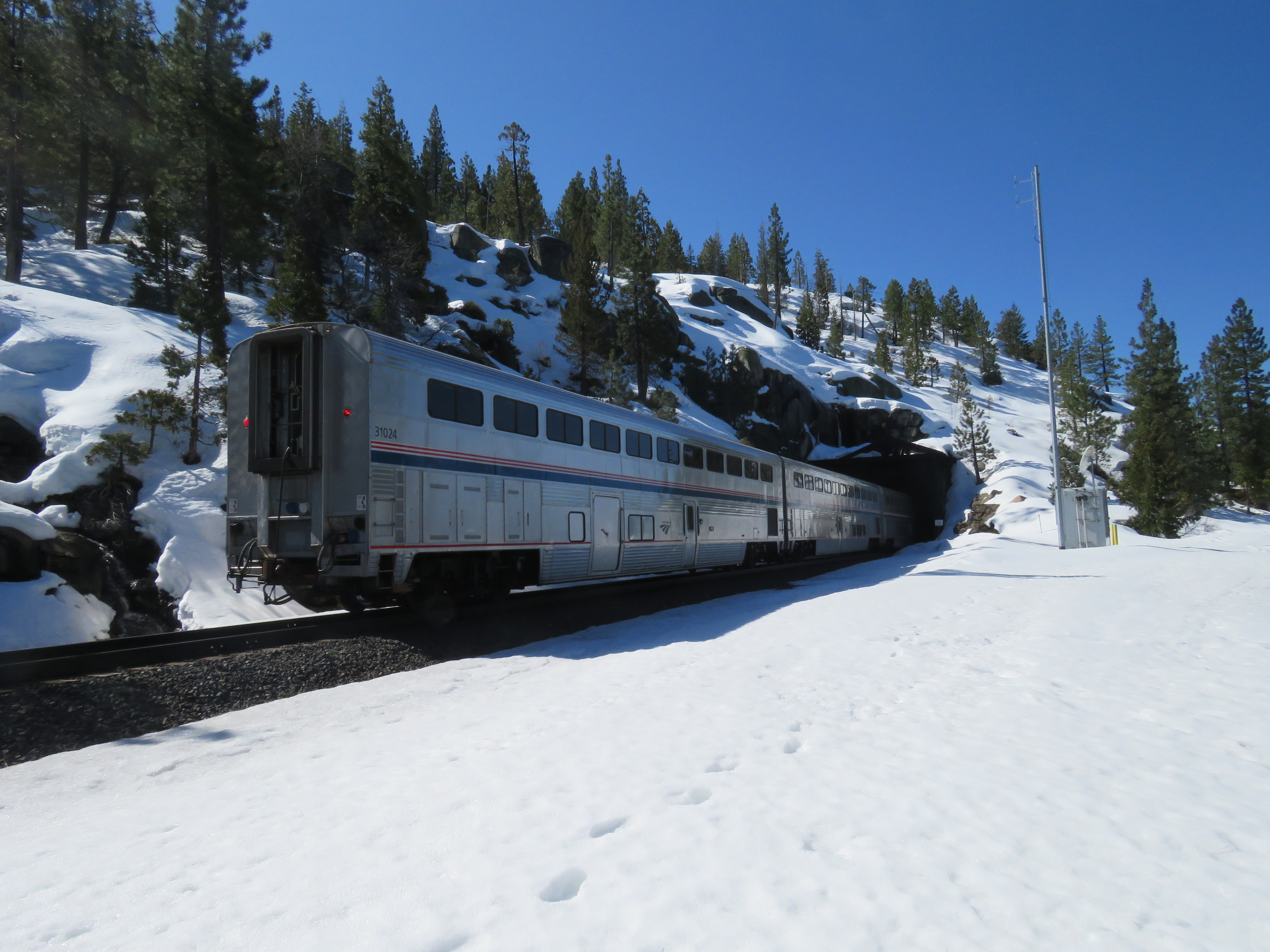
The Zephyr heading into Tunnel #35 as it climbs down the valley toward it’s next stop, Colfax. My footsteps are in the foreground.
Image

Union Pacific No. 844

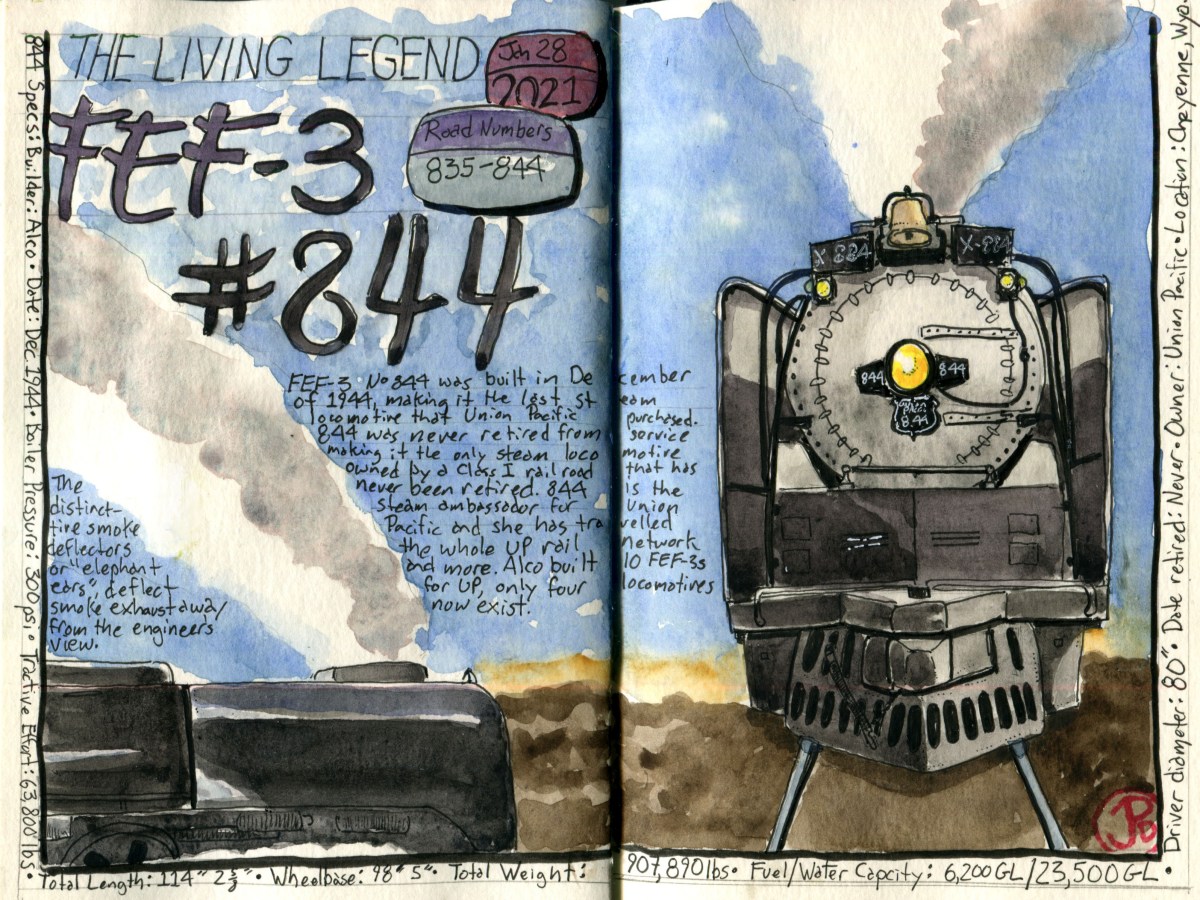
If Southern Pacific’s Queen of Steam is 4449 then Union Pacific’s Royalty must be 844.

The FEF class (4-8-4) No. 844 is known as “The Living Legend”. This class of passenger locomotive is a legend for it’s design and motive power but I want to stress the word “Living” because 844 is the only steam locomotive that has never been dropped from UP’s roster, making it the only steam locomotive, owned by a Class I railroad, that has never been retired.

The FEF-3 was designed to be a high speed passenger locomotive and 844 pulled such Union Pacific passenger services as the Overland Limited, Los Angeles Limited, Portland Rose, and Challenger. 844 really had three phases of life. First as a passenger locomotive, secondly, as diesels replaced steam on passenger routes, 844 hauled freight in 1957.

At the end of the age of steam, when steam was being replaced by diesel, Union Pacific had the foresight to preserve one of it’s classic locomotives and 844 entered into her third life as an ambassador to one of the world’s largest railroads: Union Pacific.

I was 10 years old when I first encounter Union Pacific 8444, as she was known then, at the offical opening of the California State Railroad Museum in 1981. She had to be renumbered because there was a diesel locomotive given the road number 844. For the event, two of the most emblematic survivors of the Northern class (wheel arrangement 4-8-4) were in attendance. Southern Pacific’s GS-4 4449, newly repainted in her Daylight livery and Union Pacific’s 8444. On the tracks outside the museum, which paralleled the Sacramento River, these two Superstars of Steam came pilot to pilot. What a sight to see!

844 is not as streamlined as 4449 but the 844’s steam deflectors, also know as “elephant ears”, gives this 4-8-4 a very unique appearance. The steam deflectors help to loft steam exhaust from the chimney or smoke stack to improve the engineer’s visibility and also to keep the exhaust out of the cab.

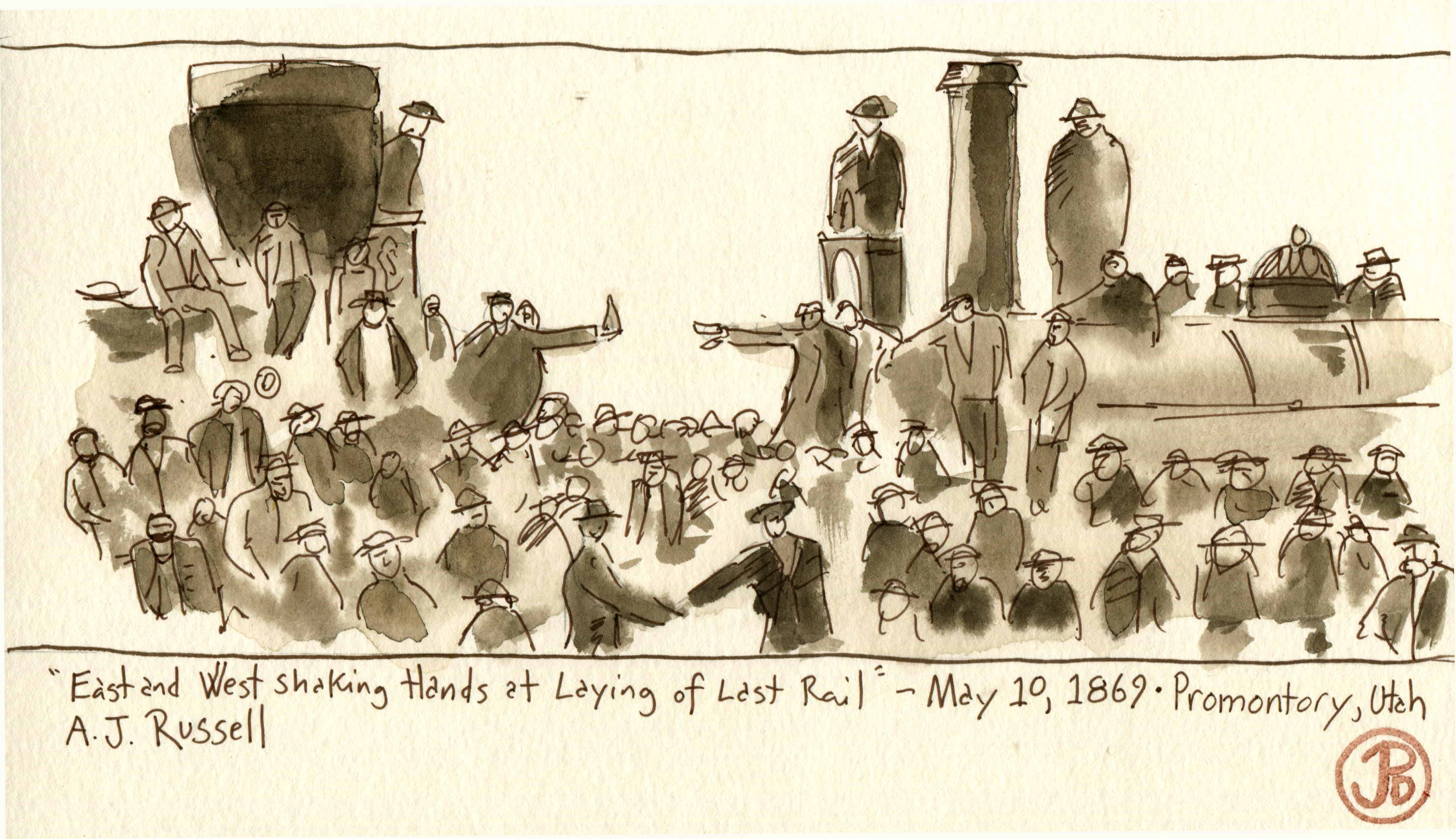
It was an echo of the famous photograph taken at the uniting of the Transcontinental Railroad at Promontory Point, Utah on May 10, 1869. 4449 represented the Central Pacific, later Southern Pacific and 8444 represent, and still does, Union Pacific.

Union Pacific’s steam ambassador has been all across Union Pacific’s rail network. She is a locomotive that brings people to the tracks to see her in action. One annal excursion is Cheyenne Frontier Days from Denver to Cheyenne. In May, 2019, 844 played second fiddle on the inaugural run of the recently restored Big Boy 4014 from Cheyenne to Ogden, Ut to commemorate the 150 Anniversary of the completion of the Transcontinental Railroad. Of course the Big Boy was on point as the lone example of the largest locomotive in operation.

At the ceremony, 844 and 4014 came pilot to pilot, echoing the the famous photograph taken 150 before when Central Pacific’s engine “Jupiter” and Union Pacific’s engine No. 119 came pilot to pilot on May 10, 1869.

The Union Pacific Steam Shop in Cheyenne, Wyoming . This is about as close as I got to seeing the “Air force 1” of Union Pacific: FEF-3 #844 on a visit in the October of 2017. The only sign of steam is the UP yellow tender outside one of the bay doors.
Image

Southern Pacific’s Cab Forward

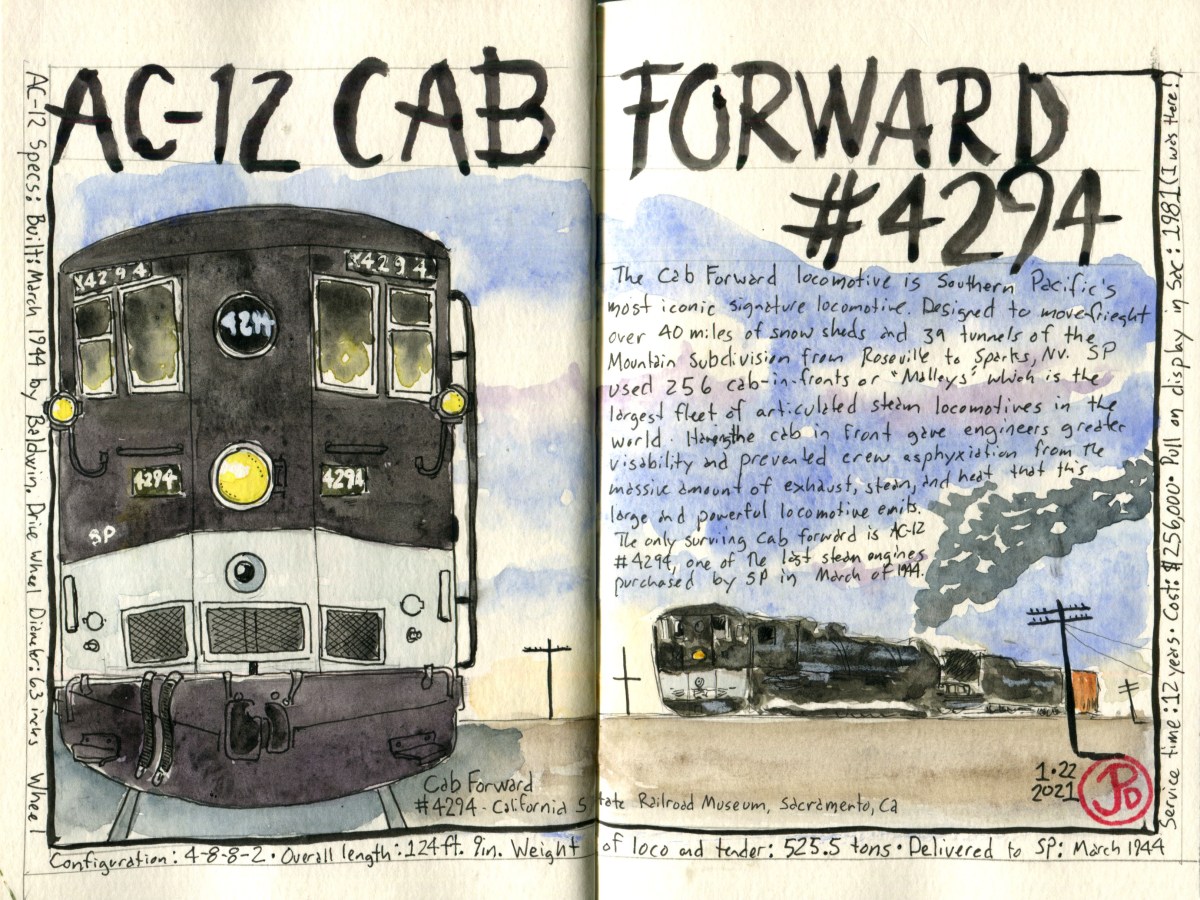
Southern Pacific’s signature, and most iconic locomotive was the 256 AC (Numbers 4000 to 4294) cab forward locomotives.

These were some of the largest and most unique locomotives in the United States. The AC-12 class is less than ten feet shorter than the largest steam locomotives ever built: Union Pacific’s “Big Boy”. The AC-12 locomotive and tender weighed more than a Boeing 747 and an Airbus A380, combined.

The reason the cab forwards were unique is that, as the name implies, the crew cab was in the front of the locomotive, like a modern diesel-electric locomotive, instead of the cab being in back, near the tender.

Having the cab in front gave the engineer and fireman unequalled views of the track ahead. But the real reason for the innovations was to conquers the steep grades of Sacramento’s Mountain Subdivision over the Donner Pass. This massive locomotives operated between Roseville, Ca and Sparks, Nv where a powerful locomotive was needed to tackle the steep grades and have the tractive effort to haul long freight trains over the Sierra Nevada Mountains. A locomotive of this size emits of lots of steam exhaust because a 4-8-8-2 was essentially two locomotives in one.

The Donner Pass route had 40 miles of snow sheds and 39 tunnels. This meant that in a standard locomotive, the crew could suffer from asphyxiation from the steam exhaust. By putting the cab forward, the exhaust stack was behind the crew and they avoided the caustic smoke, steam, and heat that these powerful locomotives emitted.

The cab forward proved to be a very successful locomotive for SP, with 256 of these engines used on it’s rail over the period of 50 years. The railroad had the largest fleet of articulated “Malleys” in the world. As a comparison, Union Pacific fleet contained 25 Big Boy locomotives.

In the 1950s, as diesel replaced steam, cab forwards spend the rest of there working life away from the mountains on the Coast Line and the Western Division. One of the last places cab forwards worked on Southern Pacific rail was the Cal-P line between Oakland and Roseville. 1958 was the last year a cab forward rode the rails, nine of these locomotives were taken out of service on September 24, 1958.

Out of the 256 cab forwards that were built, only one survives. The AC-12 number 4294 which is also the last steam locomotive that Southern Pacific ever purchased. 4294 was in service on March 19, 1944 and was taken off the the roster on March 5, 1956. She was only in service for 12 years.

While the other cab forwards were scrapped, 4294 was put in storage and then was put on static display on October 19, 1958, in front of the Sacramento train station. When the California State Rail Road Museum was opened, 4294 became the centerpiece amongst it’s collection of locomotives and rolling stock.

I was at the museum with my father in 1981 for the official opening of the museum. SouthernPacific’s GS-4 4449 and Union Pacific’s 844 (then numbered 8444) where in attendance and I will never forget when the two locomotive stood, pilot to pilot, on the track outside of the museum!

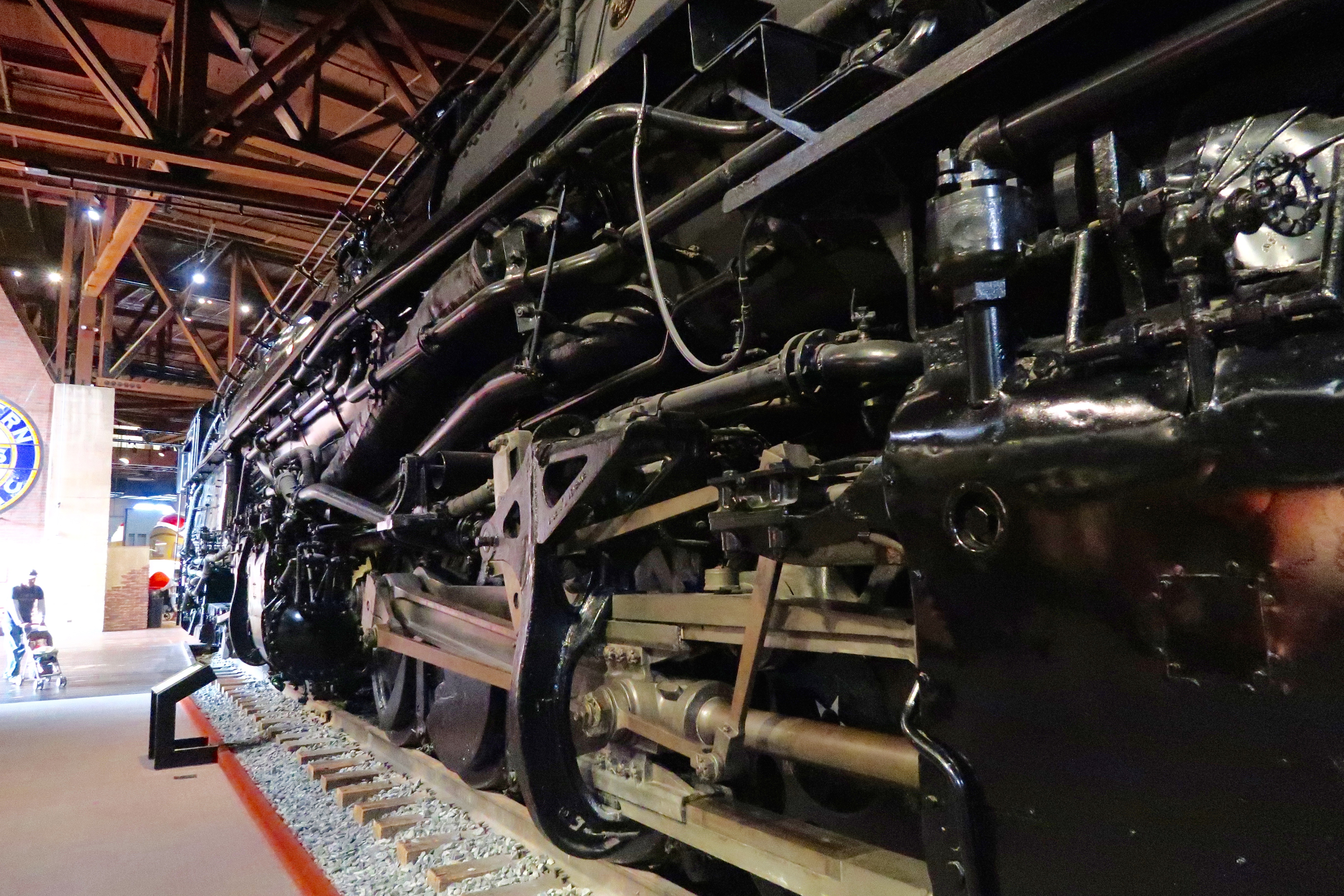
The massive running gear of the AC-12, Cab Forward. 4294 is the only surviving example of this locomotive.

The last time I have visited the museum was in November of 2017 where I did an aborted field sketch of the cab forward. There was something about the proportions of the locomotive that I did not get right. I had planned to return to the California State Rail Museum in the early Spring of 2020 but the cases of Covid-19 were growing at an alarming rate in the state and the museum eventually closed it’s doors for an indeterminate time.

So if I could not sketch the AC-12, at least I could sketch it from an image, which really is the next best thing.

Image

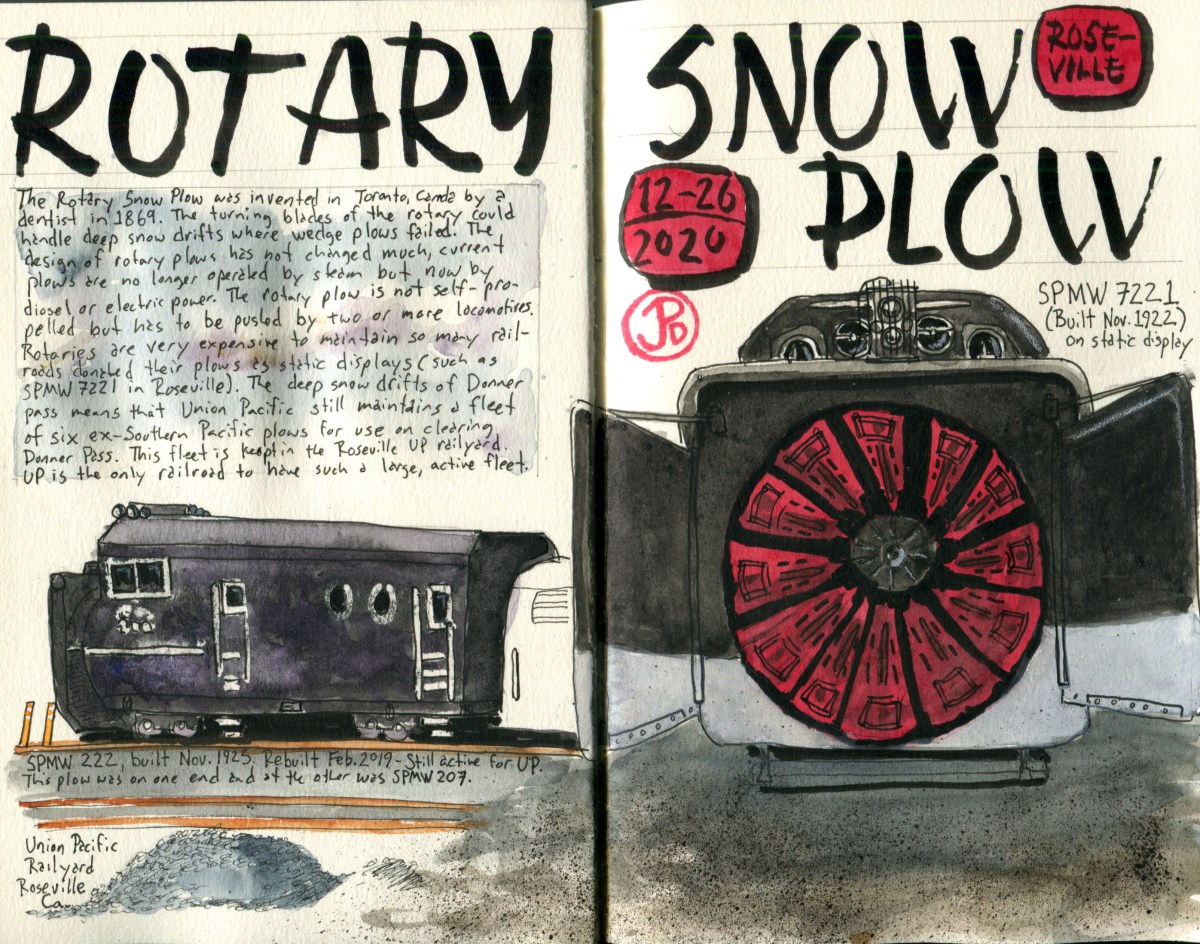
Rotary Snowplow: Workhouse of Donner Pass

Work on the railroad does to stop for weekends or holidays. And it certainly does not stop for inclement weather.

Some of the deepest snow can be found on the western slope of the Sierra Nevada Mountains and at the summit of Donner Pass. This was the same pass that turned away members of the doomed Donner Party in the Winter of 1846. This pass would not defeat the Southern Pacific Railroad from crossing the pass.

To keep the pass open the railroad, when spreaders and flangers failed, SP used their most powerful snow fighting weapon, the rotary snowplow.

The rotary plow was invented by a dentist in Toronto, Canada in 1869. The plow consists of a circular sent of blades that spins. The rotary plow is not self-propelled but is pushed by a locomotive or most likely locomotives. As the spinning blade cuts through the snow drift, the engineer can control which side of the track the chute, behind the blade assembly, throws the snow. Left or right.

Not much has changed with the design of rotary plows save for powering the prime mover. All early rotaries where powered by steam but they were later converted to diesel or electric power. In fact, most of the current fleet of rotary plows, used by Union Pacific, where built in the 1920s or 30s although they have been retrofitted and rebuilt since then.

The current rotaries still use a steam generator to help prevent some of the moving parts from icing up and seizing.

Most railroads use flanger or spreader plows but these plows meet their match when trying to push heavy snow from tracks. This is where the rotary plow has the distinct advantage. It does not need to be pushed by force, instead the rotating blades cut through snow like a hot knife through butter. And the rotary can throw snow away from the track.

The downside to rotary plows is that they are expensive to maintain. And depending on snowfall, the plows may not be put into service every snow season. It may be even ten years before the rotary is called into action. The plows are also labor intensive to operate with an average crew size of 12. The standard consist of a Southern Pacific rotary train would consist of two rotary plows (one on each each so they can remove snow in both directions), a B Unit for each rotary to supply electrical power and air pressure, and two or three locomotives.

As a result, most railroads have gotten rid of their rotaries and many have been donated to serve as static displays. Three former Southern Pacific plows are on display. One in Roseville, Truckee, and Sacramento, at the California Railroad Museum.

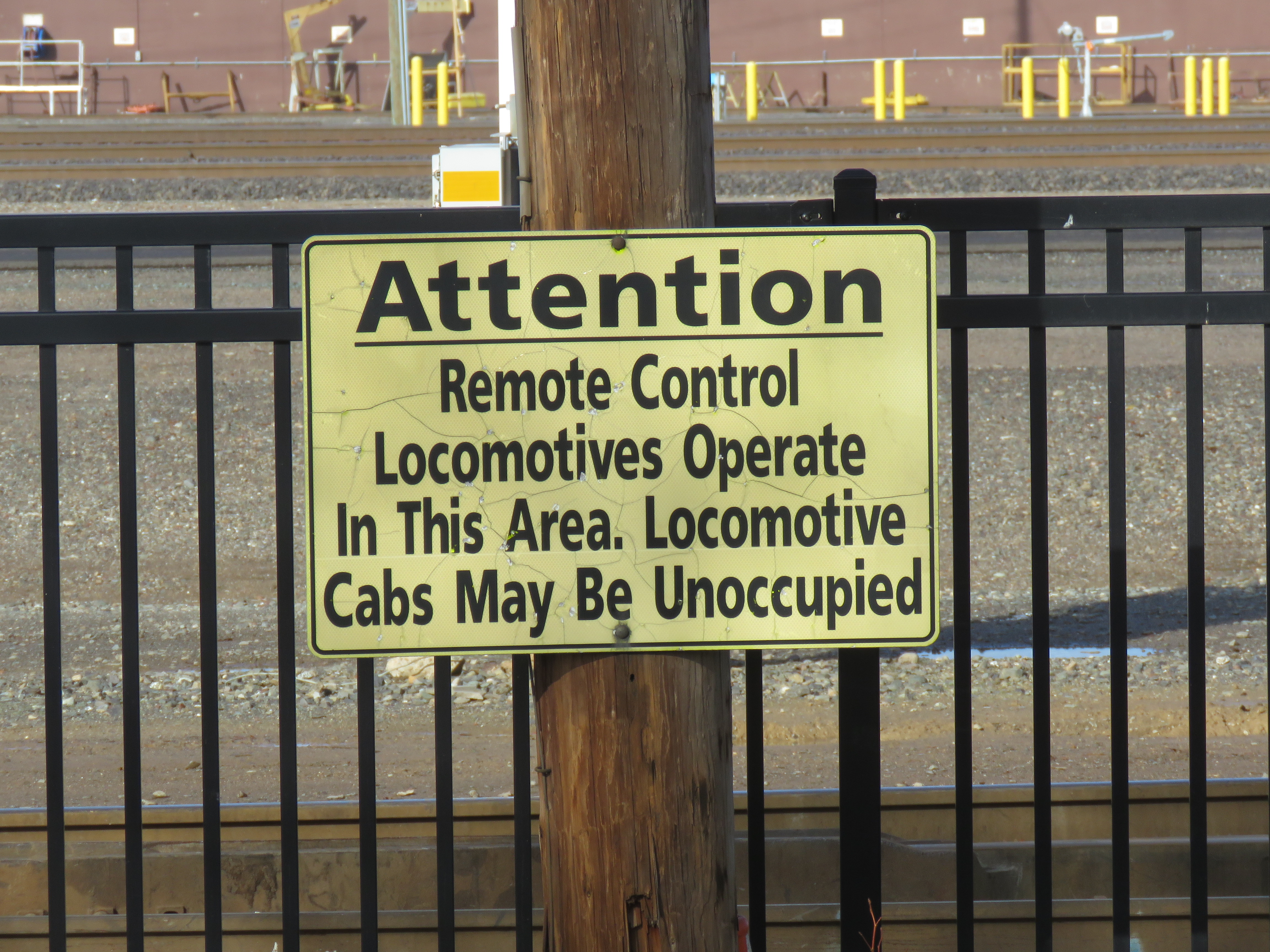
A very interesting sign at the Union Pacific (formerly Southern Pacific) rail yard in Roseville. I wonder if before this sign was installed, the Roseville Police got many calls about runaway locomotives!

What’s interesting about the rotary plow on static display at Roseville (SPMW 7221) is that it is near the tracks at the Union Pacific rail yard. The rotary was donated to the City of Roseville by Union Pacific in 2014. This is fitting because Roseville is where Union Pacific’s rotary plow fleet is based. As I looked down the tracks toward the rail yard, I noticed, on the far side where two rotaries.

Roseville has been a major division point on the Southern Pacific railroad. At it’s height, during the age of stream, the Roseville yard contained two roundhouses. Roundhouse No. 1 was a 32-stall roundhouse and Roundhouse No. 2 was specially built to house the larger Mallets (4-8-8-2) know as cab forwards. The turntable was large enough to turn these massive locomotives. These locomotive were reversed so the crew rode in the front and the exhaust behind them. This was to avoid asphyxiation in the long snow sheds over Donner Summit.

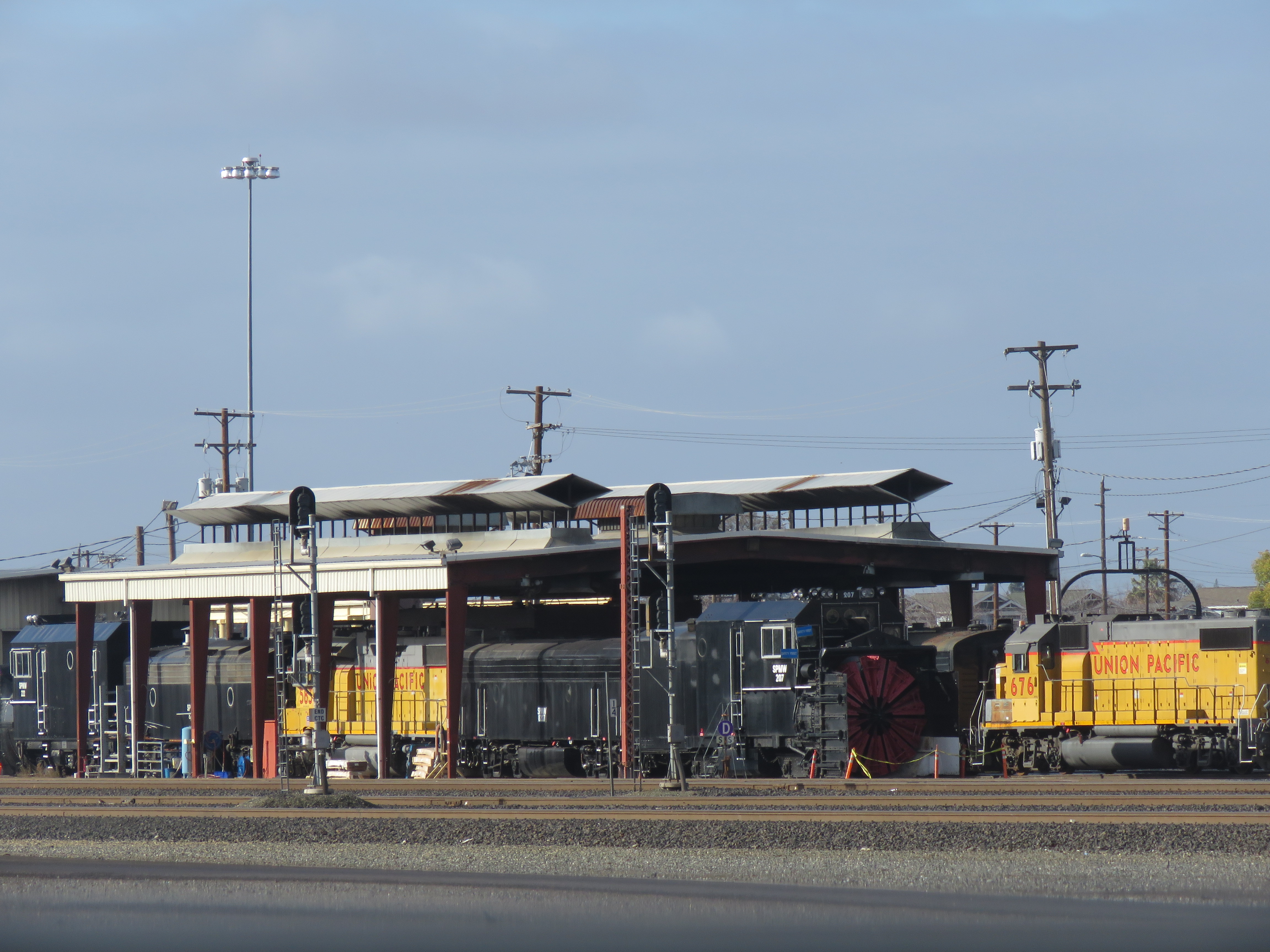
Union Pacific is one of the few Class I railroads that keeps a rotary fleet and they have the biggest fleet in America with six plows.

Two of Union Pacific’s six active rotary snowplows SPMW # 222 and 207.

The winter of 2017 was the third snowiest winter in recorded history on Donner Pass. The Union Pacific rotaries where put into use to clear the 13 feet deep snow to keep the line open between Roseville and Truckee.

Here is footage of rotaries at work at Donner Pass in February 2017. Credit to Jake Miille Photography.

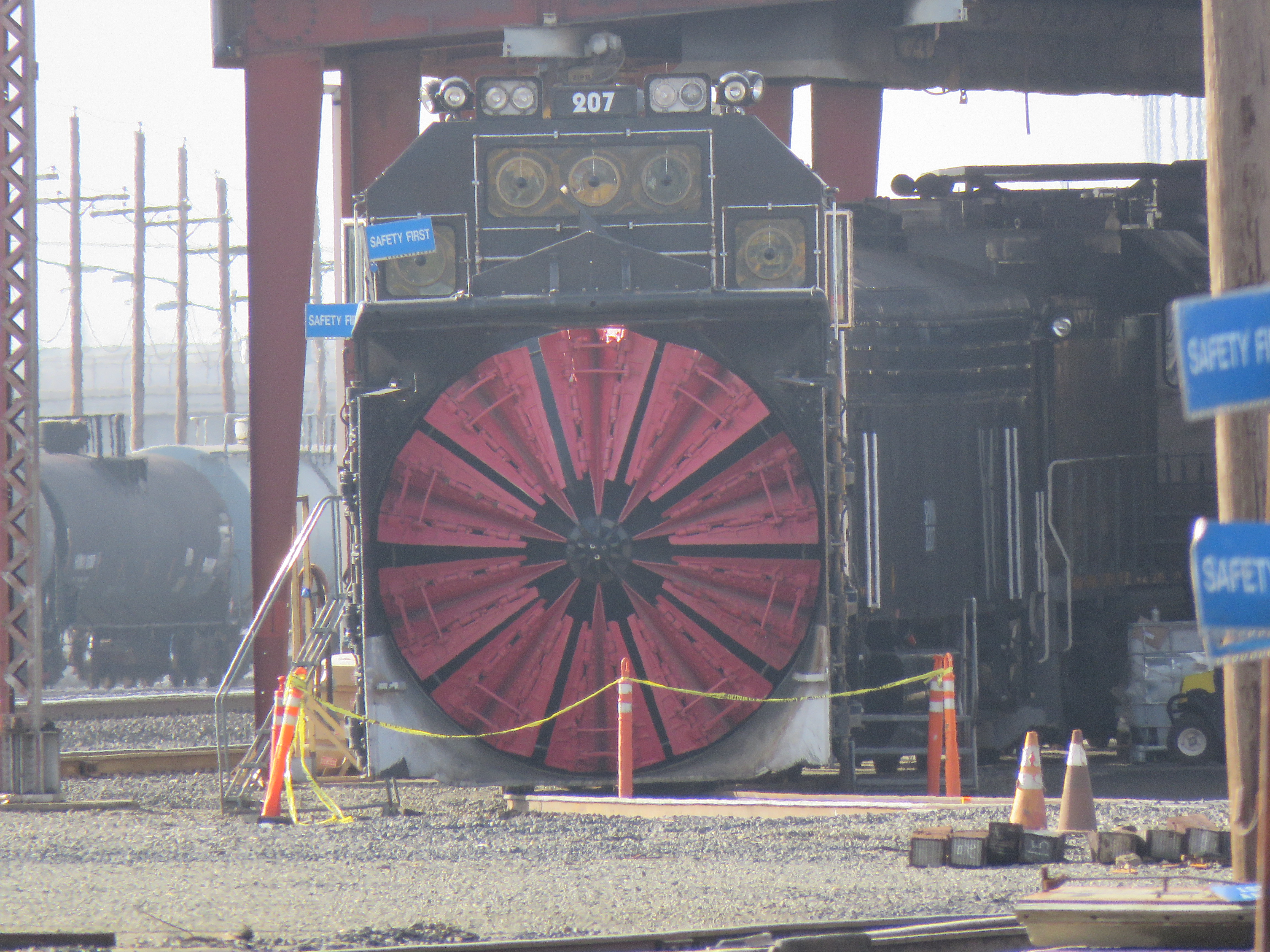
Head on view of SPMW 207 at the Roseville rail yard. This provides a view of the circular, rotating blade that cuts through snow. Number 207 awaits the call to head up towards Donner Pass to clear the line of snow. Number 207 was built in 1926 and has since been upgraded. The “SPMW” stands for “South Pacific Maintenance of Way”.
Image

Railroad Grade Crossing

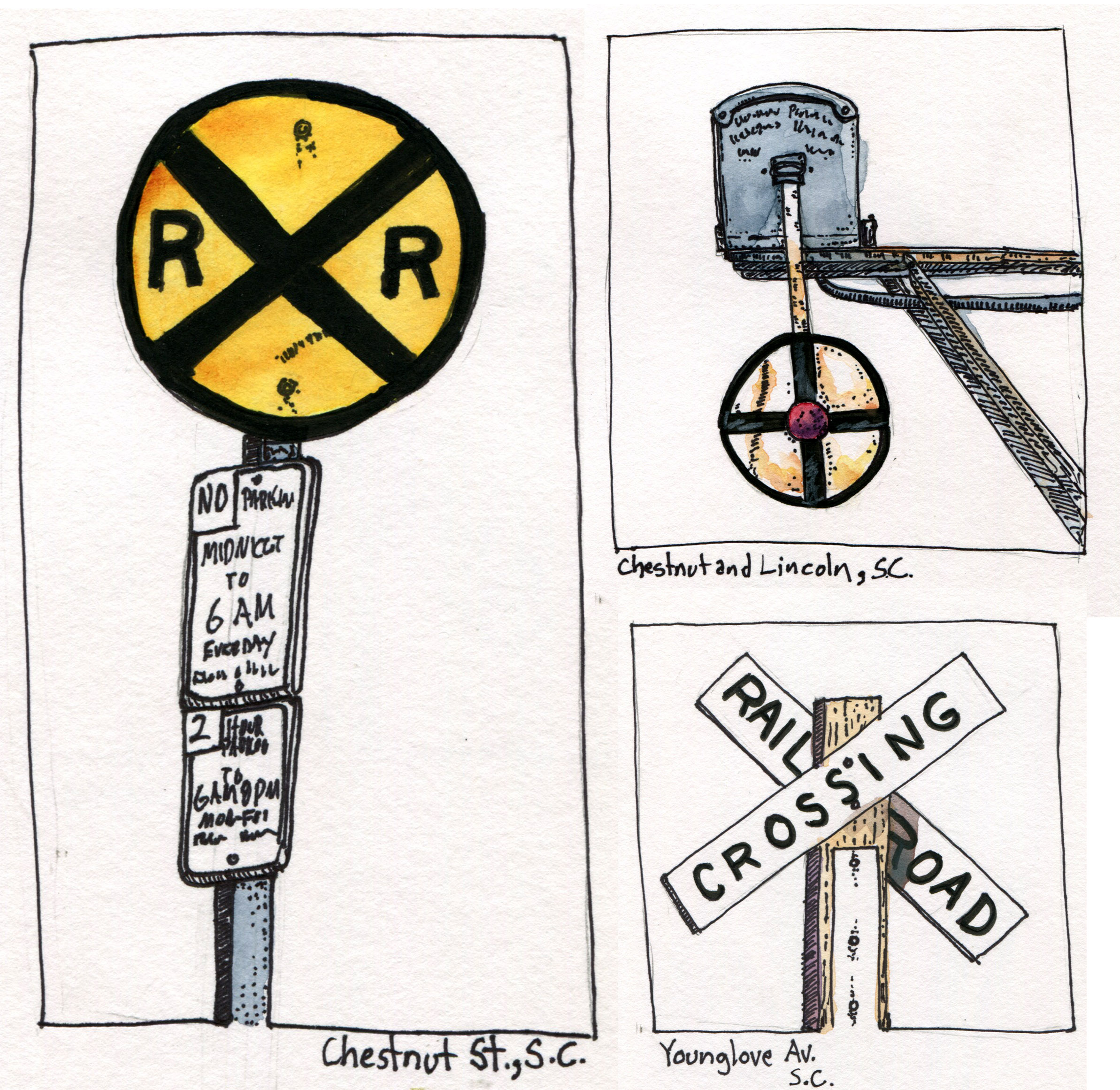
When it comes to train vs car, the train always wins.

In 2019, there were 2,216 collisions at railroad grade crossings. There are about 200,000 grade crossings in North America.

This number would be much, much higher without the safety equipment at the point where roadway and railway meet.

A grade crossing is where an automotive road crosses a railroad track (usually at 90 degrees). All crossings are required to have a least a sign or crossbuck, the “X” sign that reads “RAILROAD CROSSING”.

At heavily used roads and railroads, the crossing may have flashing lights with a warning bell and a gate. The grade crossing at Woodruff Lane in Marysville (featured sketch) has all the bells and whistles in grade crossings. No car wants to get in the way of a Union Pacific freight train.

In a later post about railroad semaphore, I noted that a freight train can take over a mile to come to a stop so if a car pulls in front of a train traveling at 55 miles an hour, even if the engineer applies the brakes, the car is toast.

With that in mind, a flashing, clanging, gated contraption makes a whole lot of sense.

And common sense tells us that when the warning lights are blinking or the safety arm is down, we should stop, no mater how much we may be in a hurry. It is odd that some motorist choose to ignore these warning signals and try to “beat” the train, usually with fatal consequences.

There are quite a few videos posted on youtube to demonstrate what happen when trucks and cars meet a fright train. Here is one such compilation:

You will never win with a game of chicken with a freight train.

A series on railroad grade crossing signs in Santa Cruz.
The grade crossing on the UP line from Marysville to Oroville. The approach from the other side is blind hence the cantilevered signal to the left. This grade crossing has about everything to make it as safe as it can be.
Image

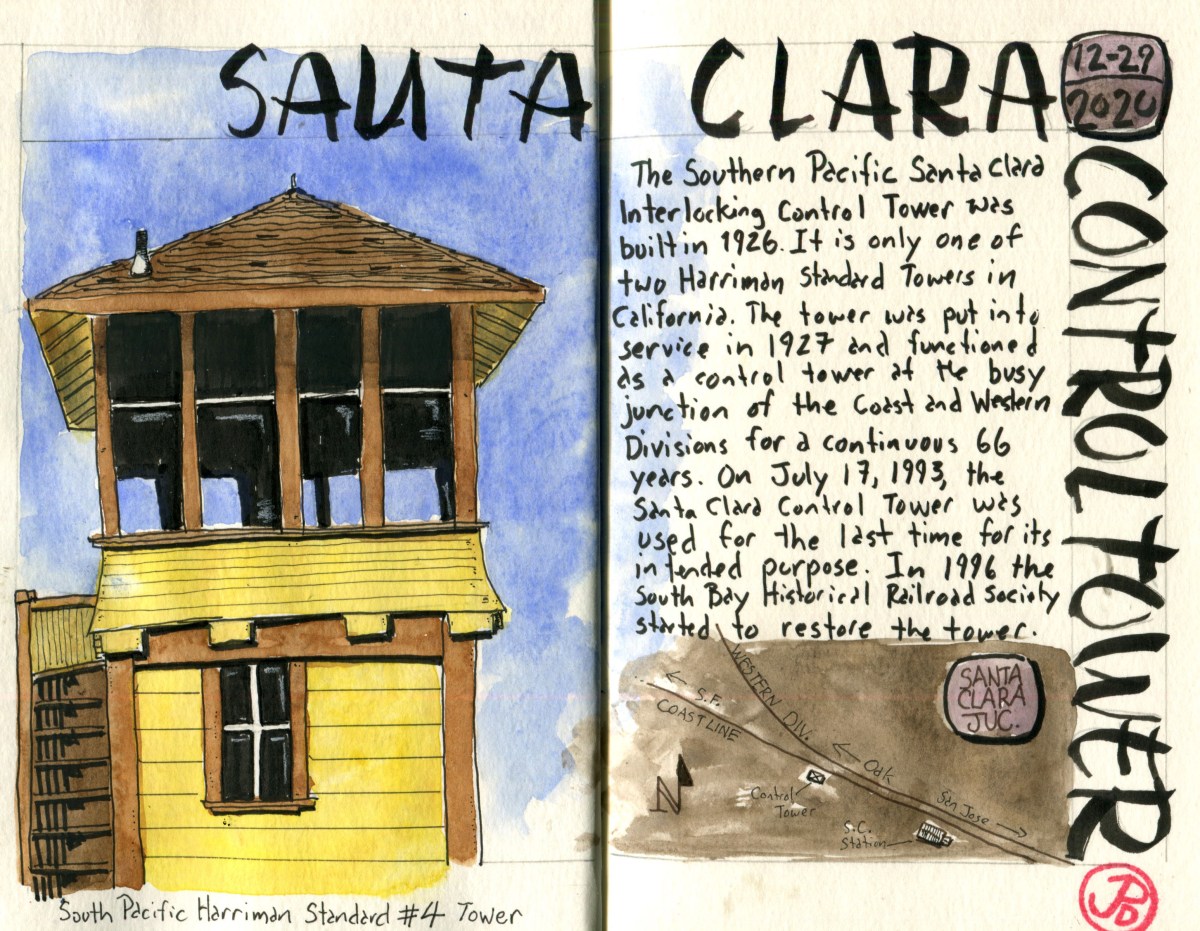
Santa Clara Control Tower

I have been sketching a few of the remaining Southern Pacific water towers in California but I had yet to add a control tower to my sketchbook.

There are about nine Southern Pacific interlocking control towers still in existence in California and 16 are still in existence on the former SP system. These control towers where once ubiquitous on America’s railroads at busy junctions or rail crossings. Interlocking control towers centralized a group of signals (semaphore and lights) that were controlled by an operator to control the rail traffic by communicating different orders: proceed, caution, or stop. Think of it like a traffic signal for trains.

The Santa Clara Southern Pacific Interlocking Control Tower was built by SP in 1926 and put into service in 1927. The tower was in continuous use for 66 years at this very busy junction of the Coast Line and the Western Division. In the 66 years of operation, many trains, both passenger and freight, passed by. The famed Coast Daylight sped by the tower, stopping to take on passengers in San Jose.

The tower was in use until July 17, 1993 when the control of all switches and signals were moved to a centralized control center in San Jose.

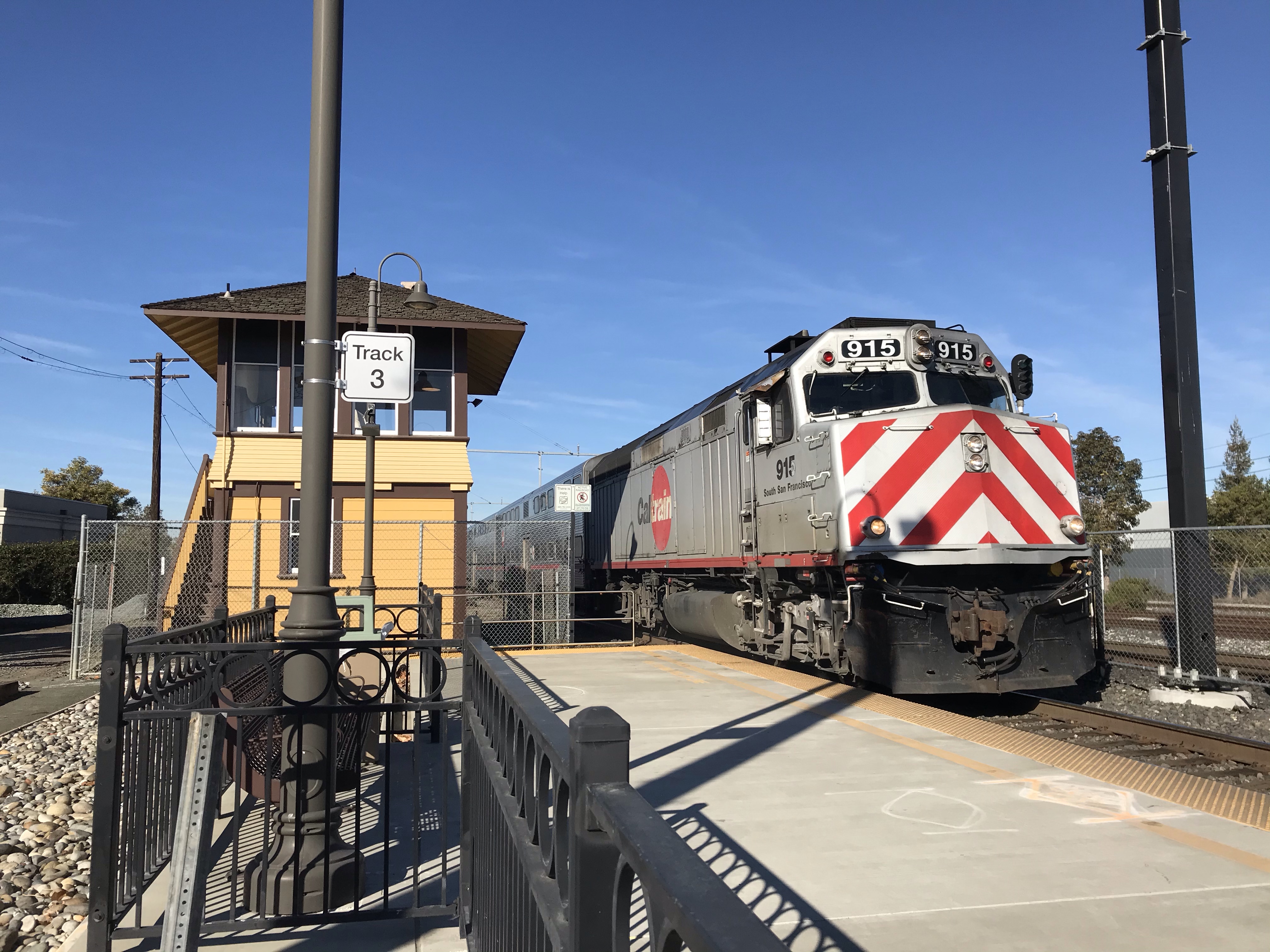
A Southbound Caltrain pulls into Santa Clara Station on its way to the end of its run in San Jose. To the left is the restored control tower. On point is locomotive 915 “South San Francisco”.

Santa Clara is a busy junction where the Coast Line and the Western Division meet. It is busy today with both passenger and freight traffic. The passenger trains that stop or pass this way are Caltrain, Capital Corridor, the Altamonte Corridor Express (ACE), and the Coast Starlight. Four main line track pass Santa Clara, tracks to the northeast are used by Union Pacific for freight. The other three train a primarily used for passenger service with some routes turning off here to head north, on the east side of the Bay, towards Oakland (the Western Division).

A northbound Caltrain passes the control tower as it pulls out of Santa Clara Station heading toward San Francisco. This consist is being pushed by locomotive 905 “Sunnyvale”, an EMD F40PH-2CAT.

Sketcher’s Folly: Oops I did it again. I made a sketching mistake. In my sketch of the California Theatre in Dunsmuir I left out an “I” and now I made the egregious mistake of misspelling the county of my birth: Santa Clara. What next? Misspelling my own name?! Well at least I’m making new mistakes!

Image

Dunsmuir

Dunsmuir is a train town.

At one time it was a company town for the Southern Pacific Railroad when 3,000 of it’s citizen’s where employed by Southern Pacific Railroad.

Dunsmuir was previously known as Pusher because this is where helper locomotives where either added or taken off trains. They were put on to make it up the Cantara Loop and the climb out of Dunsmuir as the line headed north. Helpers where also used on downslope freight trains to help with dynamic braking.

The town contains a railyard, shops, and a still functioning turntable to turn locomotives around. In it’s heyday, Dunsmuir had a population of 5,000, many of those working for the railroad, serving the labor intensive steam locomotives. When the stream locomotives were replaced by more efficient disel-electric locomotives, the town’s population was almost halved.

Today, the mainline sees two passenger trains and about 15 freight train daily. Most freight trains are now powered by three to four, 4,000 to 6,000 horsepower, diesel-electic engines, so the need to add engines has become obsolete.

Dunsmuir still feels very much like a train town even though Southern Pacific was aquired by Union Pacific in 1996.

The main street, Dunsmuir Avenue, is beautiful in it’s small town charm. And of course the main street parallels the main line.

The crown jewel of downtown Dunsmuir is the California Theatre. This 800 seat movie palace was opened in 1926. The theater featured a stage and a Wurlitzer pipe organ. The theater is only one block from the passenger station and, in it’s heyday, many of Hollywood’s finest and other dignataries visited the theater including Babe Ruth, the Marx Brothers, and Clark Gable.

In recent times the theater has faced some troubling times, after many stops and starts the theater closed in 2016. There was also a Masonic Lodge that met in the building for close to 70 years.

I parked on Dunsmuir Avenue and did a car sketch (great for social distancing) of the the epic sign and marque. I added a bit of artistic license when I added perhaps the best movie ever made featuring a locomotive, Buster Keaton’s masterpiece, The General (1926).

Across from the station is a mural on an oil tank. The mural was created by rail historian, artist, author, and former employee of the Southern Pacific and McCloud Railroad, John Signor. This is a sketch I did from my photograph. It features a Southern Pacific EMD SD45 T-2R diesel-electric locomotive and the famous Daylight GS-4, 4449. This mural represented the future and the past of the Southern Pacific Railroad. It is also a reminder of the name of the railroad that built Dunsmuir.
Only two passages trains stop at Dunsmuir Station. The north and southbound Coast Starlight, an Amtrak service from Seattle, Washington to Los Angeles, California. To catch the Coast Starlight at Dunsmuir, you have to get up very early in the morning (or simply just stay up). The southbound Train 11 arrives in Dunsmuir at 12:35 AM and northbound Train 14 arrives at 4:56 AM!
Dunsmuir is an important division point in the Shasta Division where train crews change over. In this case, a BNSF freight train with a consist of hopper cars, change it’s engineer and conductor. BNSF is granted trackage rights to use this route by the tracks owner: Union Pacific.

Note: Part of sketching, and life I might add, is making mistakes and with this sketch I made one. I am a native Californian and I made unforgivable mistake of misspelling my own state! That sometimes happens when you are so focused on form and not spelling. I added the missing “I” on the street below.

Image

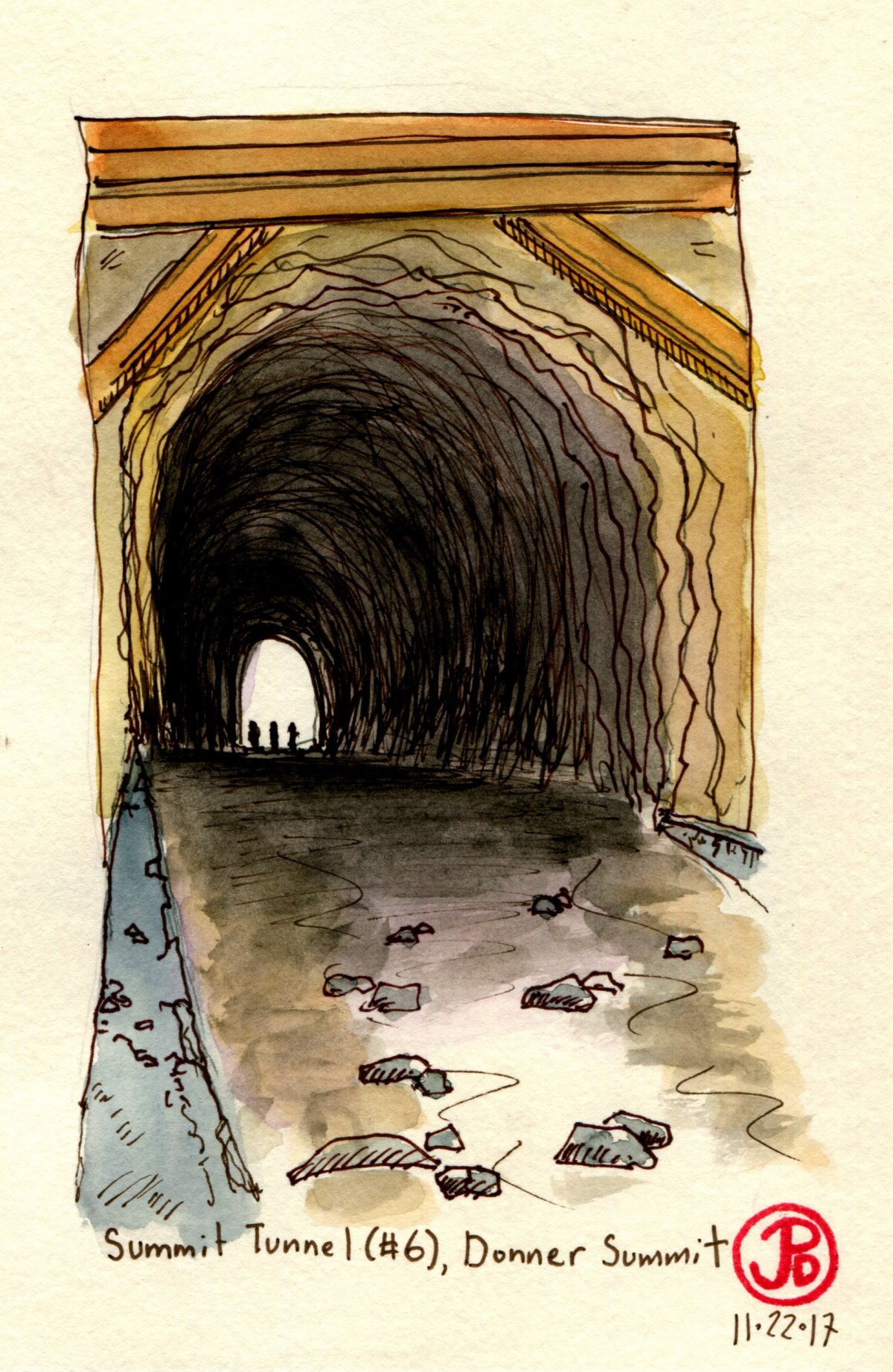
Summit Tunnel #6

The Central Pacific Railway had to bore thirteen tunnels through the Sierra Nevada, this proved to be the biggest challenge of the Transcontinental Railway. None is more of an engineering feat than Tunnel #6, known as the Summit Tunnel, the longest tunnel on the Central Pacific.

Like it’s name implies it is on the summit of the Sierra Nevada at Donner Summit (7,017 feet). This 1,659 foot long tunnel was bore through granite with Chinese laborers using, at first black powder, and then later the more powerful but more volatile, nitroglycerin. The tunnel was started both at the west and east portals and when they finally met, the two bores were just an inch off.

I hiked up from Donner Summit Road, old Highway 40 (the highway is the last incarnation  of the Emigrant Trail), to the east portal. I walked through Tunnel #7 heading west along the abandoned railway grade. The single track was abandoned in 1993 when the line was double tracked to the south.

I entered the Summit Tunnel, found a dry place to sit, and started to sketch the tunnel from the east portal (the featured sketch).

Looking west down the 1,659 feet of the Summit Tunnel (#6).

What impressed me about this tunnel was the sheer effort that went into conquering the Sierran Monolith. Over 12,000 Chinese labored in the mountains, year round, 24 hours a day to will this tunnel into existence. It took just over a year to complete the tunnel (November 30, 1867). The first passenger train passed through on June 18, 1868.

After my sketch, I headed east through Tunnels # 7 and 8 and into the snow sheds that hugged the mountainside down past Donner Lake and into Truckee. The snowsheds are now abandoned and are now canvases for mountain/ urban artists.

The snowsheds where the brainchild of Stanford and despite their cost, were essential to keeping snow off the line during the massive snow falls that are almost a seasonal tradition in these parts. Think: Donner Party. The first sheds were built of wood.

Snowsheds looking east where now a stream instead of trains now runs.

Image

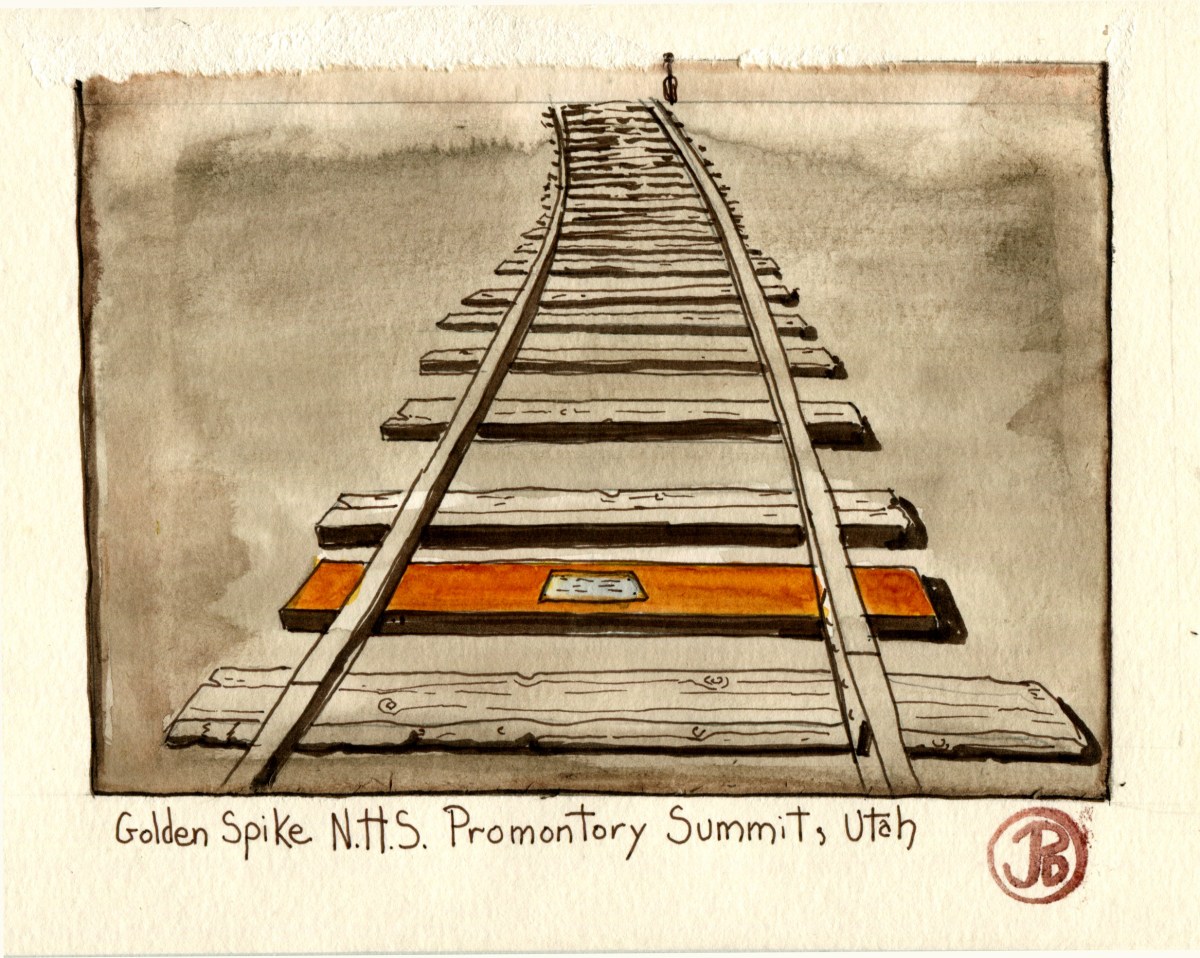
Golden Spike

On my final morning I left my digs at West Yellowstone early in the morning, on my way to Salt Lake City for my flight home but I had one more stop before I headed west to the Golden State. This trip was bookended with our railroading history. One one end was the Union Pacific Steam stronghold and the largest steam engines that ever rode the rails and on the other end I was going to one of the most revered locations in United States railroading history.

I headed off the highway, north of the Great Salt Lake, to a destination that has been described as “45 minutes from nowhere”.  Here I was in high desert and the temperature was heading into the low 70’s, a heat I hadn’t felt all trip.

My destination was where the Transcontinental Railroad met and was completed in 1869, known today as the Golden Spike National Historic Site. This was where the Central Pacific and the Union Pacific finally united the country from coast to coast thus making overland travel by wagon a thing of the past.

I had only a limited time here because I had to return my Jeep and make my flight so I did not have time for any field sketches. I took plenty of photographs and my feature sketch is based on one of these photographs.

Golden Spike

A drawing based on the famous photograph by A. J. Russell “East and West Shaking Hands at Laying of Last Rail”, May 10, 1869 at Promontory Summit, Utah.

Golden Spike Stanford

The Golden Spike at Stanford University’s Cantor Arts Museum. The spike was a gift to Leland Stanford and lends its name to the National Historic Site. The sketch was drawn from life in Palo Alto, Ca.